HOA Karen Spray-Painted My $200K Rolls-Royce to Seize It—She Never Knew My Cameras Had Already Buried Her
PART2
She looked toward the street.
I followed her eyes.
A white flatbed tow truck was turning the corner.
That was when I understood.
This was not random vandalism.
This was not Brenda losing her temper with a spray can.
This was a seizure.
Or what she believed would become one.
I looked at the driver as he slowed near my house.
Then at Brenda.
“You arranged a tow?”
“I arranged compliance.”
“On whose authority?”
“The board.”
“Show me the vote.”
“You’ve received multiple notices.”
“Show me the vote.”
She didn’t answer.
The tow truck stopped.
The driver climbed out.
Middle-aged guy.
Work boots.
Reflective vest.
He looked at the Rolls.
Then at me.
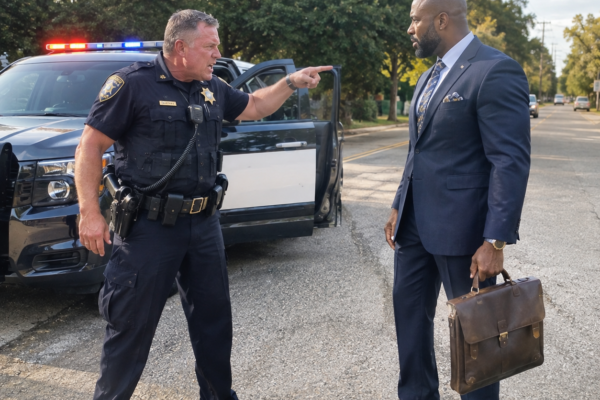
“You Marcus Holloway?”
“Yes.”
“I’ve got an HOA authorization to remove an abandoned vehicle.”
“It isn’t abandoned.”
He looked at Brenda.
She said immediately:
“He’s been refusing compliance for months.”
I held up my keys.
Pressed the starter.
The Rolls turned over.
Caught.
The old engine settled into a deep, smooth idle.
The tow driver looked at Brenda again.
“That’s not abandoned.”
“It’s a code violation.”
“That’s different.”
“You have a work order.”
“I also have insurance.”
Brenda’s face tightened.
I walked closer to him.
“This is private property.”
He nodded slowly.
“Driveway?”
“My deed.”
“Vehicle yours?”
“Title in my name.”
“Any court order?”
“No.”
He looked toward Brenda.
She said:
“The HOA has enforcement authority.”
The driver exhaled.
“Ma’am, I tow abandoned vehicles and repossessions. I don’t adjudicate property disputes.”
“You were contracted.”
“I was told the owner wasn’t present.”
That landed.
I looked at Brenda.
“You told him I wasn’t here?”
She said nothing.
The driver took out his phone.
“I’m canceling the tow.”
Brenda stepped toward him.
“You will not.”
He looked at her.
“Watch me.”
For maybe the first time since I had moved into Maplewood Estates, somebody else told Brenda Kensington no before I had to.
He got back into his truck.
Drove away.
Brenda stared after him.
Then she turned toward me.
“This isn’t finished.”
I held up the HOA notice.
“No.”
I looked at my car.
“You’re right.”
I had spent months trying to avoid a war with Brenda.
That ended at 6:18 on a Saturday morning while silver paint ran down the side of my Rolls-Royce.
What Brenda didn’t know was that I had three cameras pointed at that driveway.
One visible.
Two not.
What she didn’t know was that I had already been documenting her for weeks.
Her drive-bys.
Her false violation notices.
Her calls to my insurance company.
Her interest in my house.
Her quiet conversations with neighbors.
The signatures she had been buying.
The shell company connected to several distressed properties in Maplewood.
And the private real estate deals she thought nobody had connected to her HOA enforcement campaigns.
She believed she had finally put me in a corner.
Instead, she had just walked into the one place where I had been waiting for her.
Evidence.
Six months earlier, I had been a very different man.
My name is Marcus Holloway.
I spent thirty-two years as a machinist and manufacturing specialist for Boeing.
Precision work.
Tolerances.
Fixtures.
Tooling.
Inspection.
The kind of career where a measurement being off by a few thousandths can turn an expensive piece of metal into scrap.
I liked that world.
Numbers did not care whether you were charming.
Metal did not respond to intimidation.
You measured.
You checked.
You documented.
Then you either met specification or you didn’t.
My wife Elena used to say that was why I was terrible at cocktail parties.
She said I looked at every conversation like I was waiting for someone to provide a tolerance sheet.
She was probably right.
Elena was the opposite of me.
Warm.
Fast laugh.
Remembered birthdays.
Talked to strangers in grocery stores.
Made friends everywhere.
She taught middle-school art for twenty-seven years.
Our house was full of color because of her.
Ceramics.
Paintings.
Photographs.
Student gifts.
Half-finished projects.
She never threw anything away if a child had made it with genuine effort.
Then she got cancer.
Aggressive.
Unexpected.
The kind that reduces your entire life to appointments and numbers you never wanted to learn.
Tumor size.
White blood cell count.
Dose.
Days between treatments.
Months.
Weeks.
She died in March.
I was sixty-two.
And I discovered something nobody warns you about.
Silence is not the absence of noise.
It is its own thing.
It has weight.
A house that was peaceful when two people lived there became unbearable when only one remained.
I would wake up and expect to hear Elena humming in the kitchen.
I would come home and still glance toward the couch.
Sometimes I would start saying something out loud before remembering there was nobody to answer.
Friends tried.
My daughter called every day for the first month.
Then every few days.
People brought food.
I thanked them.
I ate almost none of it.
By October, I needed something that required my hands.
Something that couldn’t be solved by sitting and thinking.
That was when I found the Rolls.
My neighbor Jerry Wilkins had an old detached garage he barely used.
The previous owner of his property had died, and part of that man’s estate had been stored there for decades.
Furniture.
Old tools.
Boxes.
And beneath a dust-covered canvas tarp, a car.
Jerry called me because he knew I had restored engines before.
“You like old machines.”
“Depends how old.”
“Come look.”
We pulled back the cover.
I saw the grille first.
Then the hood.
Then that long roofline.
1965 Rolls-Royce Silver Cloud II.
At least according to the paperwork that came with it.
The car had not run in around thirty years.
Tires cracked.
Chrome pitted.
Leather hard.
Engine seized.
Rust starting in places that made me nervous.
Interior smelled like old wool, mildew, and dead ambition.
Jerry laughed.
“Ugly.”
“No.”
“No?”
I walked around it.
Even neglected, it had presence.
Some machines do.
The proportions were right.
The hand-built details.
The wood inside.
Heavy doors.
The kind of car created in an era when labor was cheaper than automation and craftsmen still expected someone to inspect the underside of a dashboard.
“It’s not ugly.”
Jerry shrugged.
“Estate wants it gone.”
“How much?”
“Eight thousand.”
I almost said no.
Then I opened the driver’s door.
The hinge moved with a heavy mechanical precision that somehow survived three decades of neglect.
Something in me woke up.
Maybe Elena would have laughed.
She used to tell me I always needed “one impossible thing.”
A motorcycle.
A radio.
An old drill press.
Some machine everybody else thought was too far gone.
The Rolls became that impossible thing.
I paid eight thousand.
Scheduled a flatbed.
Twenty minutes after it arrived at my house, Brenda Kensington appeared.
Maplewood Estates had seemed perfect when Elena and I moved there.
Quiet streets.
Mature trees.
Well-kept houses.
Moderate HOA.
Nothing excessive.
At least that was what we were told.
Brenda had been president for eight years.
Real estate agent for twelve.
She knew values, listings, lenders, title companies, contractors.
She also knew exactly how much pressure most homeowners could tolerate before they stopped arguing.
The first time she walked up my driveway, she wore tan heels and carried her phone like a weapon.
“Excuse me.”
I was helping the tow driver position the Rolls near my side garage.
She started photographing before introducing herself.
“Can I help you?”
“Are you the owner?”
“Of which?”
She looked at me.
“The property.”
“Yes.”
“And the vehicle?”
“Yes.”
She lowered the phone.
“I’m Brenda Kensington.”
“I know.”
“HOA president.”
“I know that too.”
Her smile hardened slightly.
“That vehicle violates our aesthetic standards.”
“It’s been here twenty minutes.”
“Time doesn’t change the violation.”
“It’s being restored.”
“Inoperable vehicles cannot remain visible.”
“I’m moving it into the garage.”
“Within seventy-two hours.”
I looked toward the open garage door.
“I said I’m moving it inside.”
She produced a citation.
Already written.
I stared at it.
“You wrote this before you came over?”
“We received a complaint.”
“Who?”
“Complaints are confidential.”
“The car arrived twenty minutes ago.”
She smiled.
“Maplewood residents are attentive.”
I took the citation.
That was when I noticed her looking past me at the Rolls.
Not with disgust.
Interest.
She walked toward the front.
Didn’t touch.
Looked at the grille.
Then through the window.
“Beautiful car.”
I stared.
“You just called it a violation.”
“Those things can both be true.”
“It’s not abandoned.”
“Shame when vehicles like this deteriorate.”
“It won’t.”
She looked at me.
“You plan a full restoration?”
“Yes.”
“How much are these worth?”
There it was.
Not aesthetics.
Value.
“Depends.”
“On?”
“Condition.”
“Obviously.”
She stepped back.
“Seventy-two hours, Mr. Holloway.”
Then she walked away.
I moved the Rolls into my garage that afternoon.
Citation solved.
Or so I thought.
Next day:
Engine hoist violation.
The hoist had been outside forty minutes while I unloaded equipment.
Then:
Noise complaint.
I was using an air compressor at 3:15 in the afternoon.
Then:
Improper waste storage.
Covered container holding old oil filters waiting for legal disposal.
Then:
Commercial activity.
Because UPS delivered restoration parts.
Then:
Vehicle orientation violation.
Apparently on one afternoon, I had rolled the Rolls halfway into the driveway nose-first rather than backing it in.
That was when I started reading the governing documents carefully.
Half the things Brenda cited did not exist.
The other half were stretched beyond recognition.
I appealed.
Written.
Polite.
References.
Photographs.
She denied.
I appealed again.
By the second week, I had fines totaling $1,475.
Jerry came over one evening.
He looked at the stack on my kitchen counter.
“She’s obsessed.”
“I noticed.”
“She’s been asking about you.”
I stopped.
“What?”
“Asked whether you were running a repair business.”
“I’m retired.”
“I told her.”
“What else?”
“She asked how long you’d owned the house.”
I looked at him.
“Why?”
“She said compliance history matters for enforcement.”
“That doesn’t answer why.”
Jerry leaned against the counter.
“She asked whether you planned to stay here.”
Something cold moved through me.
“When?”
“Yesterday.”
That night, I reviewed my cameras.
Brenda’s Escalade passed my house five times.
Next day:
Four.
Then six.
Sometimes slowly.
Sometimes she stopped at the corner.
Once, she parked across the street for eleven minutes.
I started a log.
Date.
Time.
Vehicle.
Duration.
Machinist habits.
Measure first.
Interpret later.
I researched Brenda.
Public information.
Real estate license.
Transaction history.
Corporate registrations.
Court records.
Two prior civil suits involving property acquisition disputes.
Both settled.
Neither proved wrongdoing.
But they bothered me.
In both, homeowners alleged aggressive HOA enforcement before selling distressed property.
One house later appeared in a transaction involving a company connected to a business partner of Brenda’s.
Could be coincidence.
Then my insurance company called.
“Mr. Holloway, we need to clarify business activity at your residence.”
“What business activity?”
“Automotive repair.”
“I don’t operate a business.”
“We received information suggesting customer vehicles are being serviced.”
“No.”
“How many vehicles do you repair?”
“One.”
“Yours?”
“Yes.”
“Any compensation?”
“No.”
“Advertising?”
“No.”
“Business license?”
“No because there is no business.”
Three hours.
Photographs.
Receipts.
Title.
Retirement documents.
Eventually the representative accepted that I was restoring a personal collector vehicle.
But my policy remained flagged for review.
I asked who made the report.
They wouldn’t say.
I knew.
Brenda had moved beyond fines.
She was trying to create independent records saying my property was a nuisance.
Insurance concerns.
Commercial activity.
Code violations.
Noise.
Waste.
The kind of paper trail that could be used to justify stronger HOA action.
Or make me exhausted enough to sell.
I started reading Washington vehicle law and local ordinances.
I found protections and exemptions applicable to hobby restoration and private vehicle work.
I wrote a formal legal response.
Sent certified mail.
Brenda replied with another fine.
That was the moment I stopped trying to convince her.
Instead, I decided to understand her.
I pulled property transaction data around Maplewood.
Homes that sold after prolonged HOA disputes.
Five caught my attention.
All five had received multiple violations in the year before sale.
Three sold below comparable market value.
Two were purchased through LLCs.
One LLC traced to a business address used by a real estate investor named Charles Wren.
Charles and Brenda had co-listed properties together.
Another LLC’s registered agent was Brenda’s brother.
Not proof of fraud.
But a pattern.
I went deeper.
Tax records.
Sale dates.
Renovation permits.
Resale dates.
One home sold to an LLC for $418,000 after a widow accumulated roughly $16,000 in fines and legal charges.
Five months later, the property resold for $612,000 after cosmetic work.
Another owner sold under pressure from alleged landscaping and structural violations.
Bought by a linked investment company.
Flipped.
Profit.
Then another.
It started to look less like aggressive HOA enforcement and more like a pipeline.
Identify vulnerable property.
Create pressure.
Increase costs.
Encourage sale.
Acquire below market.
Resell.
Brenda worked real estate.
Brenda controlled HOA enforcement.
That combination alone wasn’t illegal.
But if she was manipulating one to benefit from the other, that was different.
I needed more.
So I stopped talking.
I paid nothing I disputed.
Appealed everything.
Saved every envelope.
Recorded every phone call I was legally permitted to record.
Made notes after every conversation.
Backed up video.
I also put two hidden cameras near the driveway.
One inside the garage window.
One disguised near a bird feeder Elena had bought years earlier.
For the first time since she died, I touched that bird feeder with purpose instead of grief.
I remember thinking she would have approved.
Elena hated bullies.
She taught thirteen-year-olds for almost three decades.
Nobody understands small dictators better than a middle-school teacher.
The restoration continued.
And strangely, it saved me.
Every morning, I went into the garage.
The Rolls gave me problems that had solutions.
A seized fastener.
Corroded connector.
Warped panel.
Wrong clearance.
Old leather.
Unlike grief, metal tells you what it needs.
The engine came apart first.
Every component labeled.
Photographed.
Measured.
Cylinder work.
Bearings.
Seals.
Cooling system.
Carburetors rebuilt.
I restored the braking system.
Electrical harness.
Fuel delivery.
Suspension.
The body took months.
Rust repair.
Panel correction.
Block sanding.
Primer.
More sanding.
More primer.
Elena had always teased me for being obsessive about surfaces.
“You know normal people stop sanding eventually?”
“Normal people see scratches.”
“No, Marcus. You see scratches.”
When I worked on the Rolls, I could hear her saying it.
By the fifth month, the car looked transformed.
Deep black paint.
Polished chrome.
Wood trim repaired.
Leather softened and partially replaced.
Engine running.
The same neighbors who initially called it junk started stopping.
Kids watched from bicycles.
Jerry helped bleed brakes.
A retired electrician named Sam helped with a stubborn wiring issue.
Brenda hated that.
Because the car stopped looking like evidence of a violation.
It became beautiful.
And beautiful things create sympathy.
Her notices changed tone.
She started claiming I was using the vehicle to “attract unauthorized traffic.”
Then “commercial demonstrations.”
Then “unapproved gathering activity.”
One Saturday, three neighbors stood in my driveway while I started the engine.
Brenda arrived seven minutes later.
“Disperse.”
Jerry laughed.
“Disperse?”
“This property is not approved for community events.”
Sam looked around.
“We’re drinking coffee.”
“Then drink it at your own homes.”
I said:
“Brenda, leave.”
Her eyes moved toward the Rolls.
“How much do you have in it now?”
“None of your business.”
“Hundred thousand?”
I stared.
“Why do you care?”
“I’m trying to understand the risk you’re creating for the community.”
“By restoring a car?”
“By increasing traffic.”
She looked around.
Four people.
One was me.
Then she said:
“Cars like this attract theft.”
That sentence bothered me.
Not because it was wrong.
Because again she sounded less like an HOA president and more like someone assessing an asset.
I increased security.
Then came the signatures.
My neighbor Sheila knocked one afternoon holding a petition.
“Marcus.”
“What’s this?”
She looked embarrassed.
“Brenda asked me to sign.”
I read it.
A petition requesting enforcement action against “ongoing commercial vehicle operations at 117 Hawthorne Lane.”
My address.
“Do you believe I’m running a business?”
“No.”
“Then why sign?”
“I haven’t.”
She pointed toward the bottom.
Several names.
“Brenda said everyone else did.”
I recognized some.
Called Jerry.
He hadn’t signed.
His name was there.
I called Sam.
His name too.
He had not signed.
That changed everything.
Either somebody had forged signatures or the petition copy had been manipulated.
I asked Sheila if I could photograph it.
She agreed.
Then I quietly contacted three more listed homeowners.
Two denied signing.
One said Brenda had offered to waive an outstanding fence fine if she supported “community enforcement.”
Buying signatures with HOA power.
Now we had more than a pattern.
We had witnesses.
I called an attorney.
Her name was Rachel Moreno.
Real estate and HOA litigation.
I showed her everything.
She spent nearly four hours reviewing the files.
At the end, she looked at me.
“You’ve been busy.”
“I was a machinist.”
“That explains the folders.”
“Is that insulting?”
“No. Lawyers pray for clients who date photographs.”
She tapped the petition.
“This is serious.”
“Forgery?”
“Possibly.”
“Anything else?”
“The conflict between her real estate business and HOA enforcement concerns me.”
I showed her property transactions.
Rachel stopped smiling.
“Where did you get this?”
“Public records.”
“Did you contact anyone?”
“Not yet.”
“Good.”
She looked through the timeline again.
“Do not accuse her publicly yet.”
“I wasn’t planning to.”
“Let her keep writing.”
“Why?”
“Because every new false statement may help establish intent.”
That fit my instincts perfectly.
I waited.
Brenda escalated.
Formal notice of hearing.
Potential lien proceedings for accumulated fines.
Demand that I remove the Rolls from Maplewood.
Then an offer arrived.
Not from Brenda.
From an LLC called Evergreen Residential Partners.
Cash offer on my house.
$565,000.
The house was worth at least $760,000.
Offer expired in seventy-two hours.
I stared at it.
Then looked up Evergreen.
Registered agent:
Charles Wren.
Brenda’s real estate partner.
There it was.
Pressure.
Then lowball offer.
Exactly like the earlier properties.
I called Rachel.
She was silent after I explained.
“Keep the envelope.”
“Obviously.”
“Don’t respond.”
“Okay.”
“We may have enough to start making formal requests.”
That same week, Brenda personally visited.
She stood in my driveway.
“You received an offer.”
I stared at her.
“How do you know?”
“Real estate activity is visible.”
“Not before I answer it.”
She ignored that.
“Marcus, maybe this neighborhood isn’t right for you anymore.”
“Why?”
“You’ve been unhappy.”
“No.”
“You fight every rule.”
“I challenge fake rules.”
“You’re under significant fines.”
“Disputed fines.”
“Your insurance has concerns.”
“Because somebody lied to them.”
“You have a deteriorating vehicle.”
I looked behind me.
The Rolls gleamed in the garage.
Brenda corrected herself.
“A project vehicle.”
“Better.”
She smiled.
“You could walk away with cash.”
“Half market value?”
“Certainty has value.”
“So does property.”
She stepped closer.
“You’re retired.”
“Yes.”
“Living alone.”
That made me cold.
“Yes.”
“Sometimes people stay in homes because of memories long after the home stops serving them.”
Elena.
She was using Elena.
Rachel had told me not to accuse.
I almost failed.
Instead, I said:
“Get off my property.”
Brenda’s expression flattened.
“I’m trying to help you.”
“Off.”
She walked away.
That night I cried for the first time in months.
Not because Brenda hurt me.
Because I realized I had been letting grief make me smaller.
Elena would never have tolerated someone using her death to push me out of our home.
I went into the garage.
Sat beside the Rolls.
And decided I would finish the car.
Not sell.
Not move.
Finish it.
Then expose everything.
Two weeks later, Rachel sent formal document-preservation notices.
HOA records.
Fines.
Meeting minutes.
Petitions.
Property acquisition communications relevant to enforcement.
Conflict-of-interest disclosures.
Brenda responded by calling the requests harassment.
The board mostly stayed silent.
That told me something else.
Several members may not have known what she was doing.
Brenda had spent eight years becoming the HOA rather than simply leading it.
Then came the spray paint.
Friday night I went to bed around eleven.
At 5:50 Saturday morning, one camera sent a motion alert.
I was asleep.
At 6:12, Jerry called.
I didn’t answer.
At 6:15, he called again.
I woke up.
“Marcus.”
“What?”
“Get outside.”
“What happened?”
“Your car.”
I ran.
No shoes.
Pajama pants.
Sweatshirt.
Garage door was open.
I had left the Rolls partly in the driveway because I planned to photograph it in morning light for the insurer’s updated collector valuation.
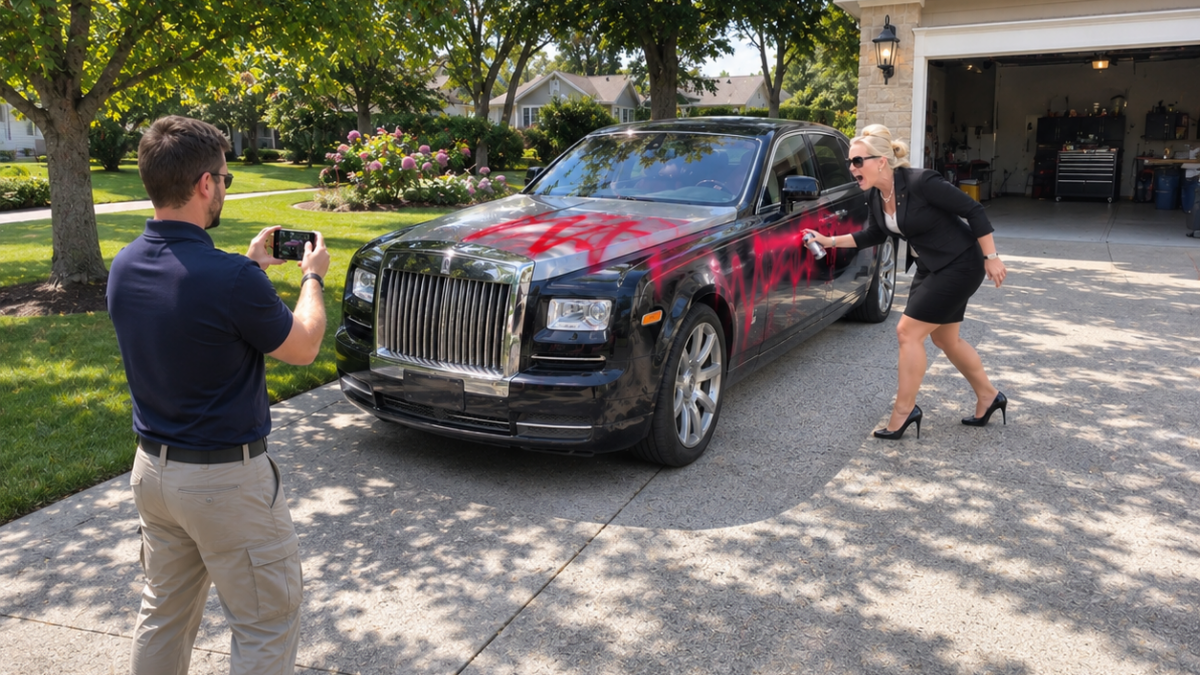
The driver’s side was covered in wet silver paint.
The smell hit me.
Then Brenda appeared at the street.
Clipboard.
Notice.
Tow truck coming.
The confrontation happened exactly as I described.
After the tow driver left, Brenda did too.
She believed I only had suspicion.
I had video.
I went inside.
Opened camera files.
5:43 a.m.
Brenda’s Escalade.
She parked one house away.
5:46.
She walked toward my property carrying a large tote.
5:48.
She stood beside the Rolls.
Looked around.
5:49.
Spray can.
She shook it.
Then sprayed.
Long deliberate passes.
Front fender.
Door.
Rear panel.
No hesitation.
No accident.
Then she placed the HOA notice beneath the wiper.
Took photographs.
Made a phone call.
Walked away.
The hidden bird-feeder camera caught her face clearly.
The garage camera caught the can.
The driveway camera caught her car.
I watched once.
Then again.
I felt no rage the second time.
Only certainty.
I called Rachel.
She answered groggy.
“Someone better be dead.”
“My Rolls has been spray-painted.”
She was instantly awake.
“What?”
“Brenda.”
“Do you know that or believe it?”
“I have video.”
Pause.
“Do not touch anything else.”
“Paint is wet.”
“Photograph first.”
“I have.”
“Police?”
“Calling next.”
“Marcus.”
“Yes?”
“Do not confront her again.”
“Already did.”
Long silence.
“Of course you did.”
“She admitted nothing.”
“Good.”
“She called it enforcement marking.”
Rachel was quiet.
Then:
“She said that?”
“Yes.”
“Write it down now.”
I did.
Police arrived.
Officer Daniel Cho.
He looked at the Rolls.
Then at me.
Then at the silver paint.
“This is original finish?”
“Restored.”
“Value?”
“Current appraisal just under two hundred thousand.”
His eyebrows rose.
“Okay.”
I showed him the video.
He watched without speaking.
Then again.
“That’s your HOA president?”
“Yes.”
“Any permission to mark the vehicle?”
“No.”
“Court order?”
“No.”
“Vehicle titled to you?”
“Yes.”
“Property yours?”
“Yes.”
He looked at the notice.
“Vehicle removed?”
“Tow company refused.”
Cho took photographs.
Collected the spray can after we found it in a public trash bin near the mailbox pavilion.
Same product.
Same color.
Could Brenda argue somebody else used it?
Maybe.
Video made that difficult.
Then I called my collector-car insurer.
The adjuster arrived Monday.
He nearly cursed when he saw the damage.
Industrial coating over fresh automotive finish is not something you wipe off.
Chemical compatibility.
Chrome contamination.
Possible clear coat damage.
Bodywork.
Panel refinishing.
Blending.
Disassembly.
The repair estimate climbed above $30,000 before anyone touched a tool.
Brenda had taken an HOA dispute and turned it into felony-level property damage territory depending on valuation and charging decisions.
But Rachel told me something important.
“The car is emotional.”
“Yes.”
“The larger case isn’t.”
“Meaning?”
“Don’t let the paint distract you from the house scheme.”
She was right.
Brenda probably expected me to focus only on the Rolls.
Instead, the vandalism opened doors.
Police report.
Insurance investigation.
Board scrutiny.
Neighbors talking.
And when people started talking, Brenda’s system started leaking.
Jerry came first.
“She tried to pay me.”
“What?”
“Not cash exactly.”
He explained.
Brenda offered to forgive a disputed $900 landscaping penalty if he signed a statement saying I regularly repaired other people’s cars.
He refused.
She reduced the fine anyway.
Interesting.
Sheila came next.
Brenda had promised expedited architectural approval for a deck if she signed the petition against me.
Another neighbor, Tom, admitted Brenda offered to erase late fees.
Another said she hinted that opposing her could complicate future resale paperwork.
Rachel collected affidavits.
Then we found the most important witness.
Marilyn Reeves.
Seventy-one.
Widow.
She had sold her Maplewood house three years earlier after accumulating more than $18,000 in HOA fines.
She now lived with her sister thirty miles away.
Rachel and I met her at a diner.
Marilyn brought a folder.
Brenda had personally represented the buyer.
Evergreen Residential Partners.
The same LLC that offered to buy my house.
Marilyn had received escalating violations after her husband died.
Lawn.
Paint.
Roof.
Mailbox.
Trash.
Parking.
Then legal fees.
Then threats of lien enforcement.
She sold for $390,000.
Evergreen renovated lightly.
Six months later, the house sold for $590,000.
Who got the listing?
Brenda Kensington.
Marilyn looked at me.
“I thought I was losing my mind.”
“You weren’t.”
“She kept saying I couldn’t afford to stay.”
Rachel asked:
“Did Brenda ever tell you Evergreen was connected to her business partner?”
“No.”
“Did she disclose any financial relationship?”
“No.”
Marilyn opened another envelope.
One letter stood out.
Brenda had written:
A VOLUNTARY SALE MAY BE THE MOST RESPONSIBLE WAY TO AVOID FURTHER COMMUNITY ENFORCEMENT COSTS.
Voluntary.
That word did a lot of work.
Rachel leaned back.
“This is getting ugly.”
It got uglier.
Through lawful discovery requests and records later obtained by investigators, financial relationships emerged.
Brenda had received referral fees from transactions involving properties subjected to intense HOA enforcement.
Some fees were disclosed in real estate paperwork.
Others flowed through consulting arrangements.
Charles Wren’s companies benefited from discounted acquisitions.
Brenda benefited from resale commissions and related fees.
She had used nonpublic HOA information to identify vulnerable owners.
Late payments.
Widows.
Medical hardship.
Long absences.
People least likely to fight.
My situation fit her pattern.
Retired.
Recently widowed.
Older.
Living alone.
Then a visibly neglected luxury vehicle appeared.
Maybe she assumed I needed money.
Maybe she saw the Rolls and thought both car and house could be acquired cheaply.
Her mistake was that the Rolls changed my life in the opposite direction.
Instead of making me vulnerable, restoration gave me something to fight for.
I finished the evidence packet.
Timeline.
Camera clips.
Fines.
Appeals.
Insurance report.
Petition signatures.
Lowball offer.
Company registrations.
Property sale comparisons.
Witness statements.
Marilyn’s file.
The spray-paint video.
Rachel sent relevant parts to the state real estate regulator and local investigators.
Then the HOA scheduled a special meeting.
Brenda tried to control it.
Of course she did.
The community room was packed.
Usually Maplewood meetings drew maybe twenty residents.
That night, more than one hundred people showed.
Standing room.
People along walls.
Neighbors who had never spoken to each other exchanging envelopes.
Brenda sat at the front.
Perfect hair.
Red blazer.
Pearls.
The board beside her looked uncomfortable.
She called the meeting to order.
“This meeting has been requested in response to misinformation being circulated regarding routine enforcement matters.”
I sat in the second row beside Rachel.
Brenda looked directly at me.
“Certain residents have chosen to weaponize personal grievances against the association.”
Rachel whispered:
“She means you.”
“I gathered.”
Brenda continued.
“We will not allow intimidation to undermine property values.”
That phrase.
Property values.
Always.
A board member named Anthony Pierce interrupted.
“Brenda.”
She stopped.
Anthony had barely spoken in three years.
“What?”
“Before we proceed, I want the board record to reflect that I was never informed of any vote authorizing vehicle seizure from Marcus Holloway’s property.”
Whispers.
Brenda’s expression changed.
“This is not the time.”
“It is exactly the time.”
Another board member spoke.
“Neither was I.”
Then another.
Three.
Four.
Brenda looked down the table.
“The president has emergency enforcement authority.”
Anthony said:
“Not to vandalize a car.”
The room erupted.
Brenda slammed the gavel.
“I did not vandalize anything.”
Rachel looked at me.
I nodded.
Time.
She walked to the front.
“My name is Rachel Moreno. I represent Mr. Holloway.”
Brenda’s jaw tightened.
“This is an HOA meeting, not a courtroom.”
“Then you should be relieved.”
A few people laughed.
Rachel plugged a drive into the projector.
First slide.
The original HOA citation issued twenty minutes after my Rolls arrived.
Second.
My title.
Third.
Photographs showing the car stored inside within the seventy-two-hour period.
Fourth.
Fine timeline.
Fifth.
Insurance complaint.
Sixth.
Petition.
Then the signatures.
Rachel said:
“Several residents whose names appear here deny signing.”
Hands rose around the room.
Jerry.
Sam.
Two others.
Brenda interrupted.
“Those statements are hearsay.”
Rachel smiled.
“They’re here.”
The room laughed again.
Then came the property transactions.
Marilyn Reeves’ house.
Purchase.
Resale.
Evergreen.
Charles Wren.
Brenda’s listing.
Another house.
Another.
Another.
Each one preceded by escalating HOA enforcement.
Brenda stopped looking composed.
She leaned toward the microphone.
“This presentation is defamatory.”
Rachel said:
“Then let’s stick to video.”
The room went dark.
5:43 a.m.
Brenda’s Escalade appeared.
Murmurs.
5:46.
Brenda walking toward my car.
Someone gasped.
5:49.
Spray can.
Long silver stripe across the Rolls.
The room became completely silent.
No whispers.
No chairs.
Nothing.
Only the hiss of aerosol from the video.
Brenda’s face on the screen.
Then her placing the notice under my windshield.
Rachel paused the frame.
There was Brenda.
Clear.
Unmistakable.
Red HOA enforcement folder under one arm.
Spray can in the other.
Rachel looked at the board.
“Routine enforcement?”
Brenda stood.
“That recording was obtained illegally.”
I spoke for the first time.
“No.”
Everyone turned.
“My driveway.”
“My camera.”
“My car.”
“My property.”
Brenda pointed at me.
“You have been harassing me for months.”
I almost laughed.
“You drove past my house five times a day.”
“Because you were violating rules.”
“You called my insurance carrier.”
“Because you were operating a business.”
“I wasn’t.”
“You brought criminal activity into this community.”
“What crime?”
She stopped.
I continued.
“Restoring my own car?”
Silence.
Then Marilyn Reeves stood.
Small woman.
Gray hair.
Hands shaking.
She held Brenda’s old letter.
“You did it to me too.”
Brenda stared.
Marilyn walked forward.
“You told me I couldn’t afford to stay.”
“That was financial guidance.”
“You fined me until I sold.”
“That is false.”
“You sold my house twice.”
“Mrs. Reeves—”
“You made money.”
The room shifted.
This was no longer my story.
That was Brenda’s real loss.
As long as it was Marcus versus Brenda, she could frame me as angry.
Difficult.
Grieving.
Obsessive.
But now Marilyn stood.
Then Jerry.
Then Sheila.
Then Tom.
Then a man from Oak Court who had never spoken at a meeting.
Then another resident.
Stories.
Waived fines in exchange for support.
Threatened approval delays.
Selective enforcement.
Real estate pressure.
Brenda kept trying to interrupt.
Eventually Anthony Pierce took the gavel.
“The chair is temporarily transferred pending board vote.”
“You cannot do that.”
“We just did.”
The board voted.
Six to one.
Brenda was suspended immediately from presidential authority pending investigation.
She stood behind the table.
Face pale.
“This is illegal.”
Anthony said:
“Sit down.”
She didn’t.
The community room doors opened.
Two county deputies entered.
Behind them was an investigator from the state real estate division.
You could feel the room change.
Brenda saw them.
Then looked at Rachel.
Then at me.
“This is your doing.”
I shook my head.
“No.”
She laughed bitterly.
“You think you’re innocent?”
“I think you spray-painted the wrong car.”
One deputy approached.
“Brenda Kensington?”
She lifted her chin.
“Yes.”
“We need to speak with you regarding several complaints and an active investigation.”
She looked around.
“This is political retaliation.”
Nobody answered.
The deputy continued.
“Please step outside.”
Brenda grabbed her handbag.
Then stopped.
“You’re arresting me?”
The deputy’s expression remained neutral.
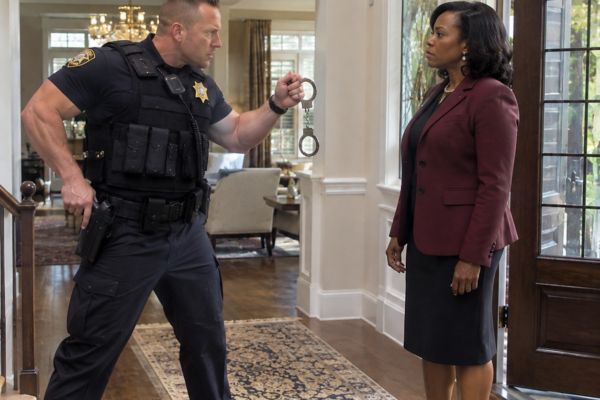
“Ma’am, turn around and place your hands behind your back.”
Gasps.
Brenda stared at him.
“For what?”
He listed the initial allegations being investigated.
Mail interference connected to enforcement notices.
False reports.
Property damage.
Real estate fraud-related conduct.
Other charges would depend on formal review.
Brenda looked at the room.
Neighbors she had controlled for eight years.
Nobody moved to help.
She looked at me.
I did not smile.
That surprised people later.
They expected triumph.
But when somebody is put in handcuffs, the situation becomes real in a way revenge fantasies never are.
I had wanted her stopped.
I had wanted the truth exposed.
I had not spent months imagining chains.
Brenda walked out between deputies.
The door closed.
Nobody spoke for several seconds.
Then Marilyn sat down and started crying.
That was the sound I remember more than the handcuffs.
Not celebration.
Relief.
The investigation lasted months.
That also matters.
The meeting did not magically prove every accusation.
Records had to be checked.
Witnesses interviewed.
Financial transactions traced.
Real estate regulators reviewed files.
The spray-paint vandalism was the simplest part because video was clear.
The larger pattern required work.
Some claims Brenda disputed.
Some allegations could not be proved strongly enough to pursue.
Others were supported.
Investigators found irregular communications involving HOA enforcement and private real estate transactions.
They documented false statements made to third parties.
They found evidence that pressure had been applied selectively against owners Brenda or her associates later approached about selling.
The forged or improperly obtained petition signatures became part of the broader record.
The mail-related issue stemmed from HOA correspondence that had been redirected, withheld, or handled outside proper procedures during certain enforcement campaigns.
Eventually Brenda reached a deal.
She avoided prison.
That disappointed a few neighbors who wanted a dramatic ending.
Reality is usually less cinematic.
Eighteen months of probation.
Substantial fines and restitution obligations.
Permanent revocation of her real estate license.
Restrictions connected to holding fiduciary or HOA leadership roles.
Civil settlements with several homeowners.
And a reputation destroyed by her own records.
Some people thought probation was too light.
Maybe.
I wasn’t the judge.
I wasn’t the prosecutor.
I wasn’t interested in pretending my anger was a sentencing guideline.
The part that mattered to me was that Brenda could no longer use a real estate license and HOA title together as weapons against people who trusted both.
Maplewood held new elections.
Anthony became interim president.
Then residents elected a completely new board.
Their first meetings were almost painfully boring.
Good.
Budget reports.
Open records.
Clear enforcement procedure.
No president issuing unilateral fines.
No selective waivers.
No real estate professionals using confidential owner hardship information without safeguards.
Conflict-of-interest policy.
Appeal process.
Written voting records.
Independent review for liens.
It sounded dull.
It was beautiful.
The Rolls went to a restoration paint specialist.
The silver coating had damaged the finish enough that several panels required stripping and repainting.
Chrome pieces removed.
Surface neutralized.
Panels corrected.
Weeks of work.
Insurance covered much of it after the vandalism determination.
Brenda’s restitution contributed where ordered.
But once again, the car gave me something useful to do while everything else moved slowly.
I spent mornings at the shop.
Helped where they allowed me.
Watched paint layers go back.
Primer.
Guide coat.
Block sand.
Sealer.
Black.
Clear.
Polish.
When the Rolls came home, it looked better than before the attack.
Not because damage was good.
I hate that kind of sentimental nonsense.
Damage is damage.
We repaired it.
That’s all.
But I knew the car differently now.
Every panel.
Every weakness.
Every repaired surface.
And the Rolls no longer felt like a project I had started because I couldn’t survive silence.
It had become proof that I had survived it.
Elena’s birthday came that spring.
I drove the Rolls to the cemetery.
First long drive after restoration.
The engine ran beautifully.
I parked.
Sat beside Elena’s grave.
Talked out loud like I used to at home.
“You would hate the color.”
I could almost hear her.
Too formal.
Too black.
Needs something cheerful.
She would have put a ridiculous scarf on the hood ornament.
I told her about Brenda.
Not every detail.
Just enough.
I told her the neighborhood had changed.
I told her I had made friends.
Real ones.
Then I admitted something that was harder.
“I’m okay.”
Saying it felt disloyal.
Widowers understand that.
Grief creates a strange guilt when life starts moving again.
But Elena had spent thirty-eight years trying to make me live more fully.
She would have been furious if I turned mourning into a permanent job.
I sat there until afternoon light changed.
Then drove home.
The next phase started almost accidentally.
A teenager named Caleb Morris knocked on my door.
Sixteen.
Lived three houses over.
He had watched the Rolls restoration from the sidewalk for months.
“Mr. Holloway?”
“Marcus.”
“My dad said you used to work at Boeing.”
“That’s true.”
“Can you teach me how to polish aluminum?”
I stared.
“Why?”
“I’m restoring a motorcycle tank.”
“What motorcycle?”
“Old Honda.”
“How old?”
“1978.”
“Bring the tank.”
Saturday morning, he did.
Then another kid came.
Then Jerry.
Then Sam.
Within a month, my garage hosted informal restoration mornings.
Not a business.
No money.
Just people learning.
Metal finishing.
Basic measurement.
Fasteners.
Surface preparation.
Tool safety.
One of the new board members suggested using the community center workshop room for a class.
I laughed.
“You’re asking the man Brenda accused of running an illegal auto shop to teach a community class?”
She smiled.
“Yes.”
Elena would have loved the irony.
So I agreed.
First class:
Twelve people.
Second:
Twenty-two.
Eventually we ran monthly sessions.
Classic-car basics.
Small-engine restoration.
How to evaluate rust.
Hand finishing.
Safe chemical handling.
A retired upholsterer taught interior work.
Sam taught electrical troubleshooting.
Jerry mostly drank coffee and criticized everybody.
It became one of the best things Maplewood had ever done.
The Rolls became the unofficial mascot.
People who had once seen an eyesore now asked to take wedding photos beside it.
I never charged.
The car wasn’t a business asset.
It was still mine.
That distinction mattered.
One afternoon, almost a year after the vandalism, I received a letter.
Handwritten.
No return address.
Brenda.
I almost threw it away.
Then opened it.
She did not ask forgiveness.
I appreciated that.
She wrote that probation had forced her to confront how far she had gone.
She claimed she had begun believing Maplewood’s property values were personally her responsibility.
Then she began believing owners who threatened those values were obstacles.
Then opportunities.
Then numbers.
She wrote:
I convinced myself that if I could make the neighborhood more valuable, the methods were justified. Eventually I stopped seeing people as owners of their own lives.
That line stayed with me.
There was more.
She said she had resented me because I refused to react the way others had.
Fines didn’t make me panic.
Threats didn’t make me sell.
The Rolls gained value instead of becoming a liability.
My house became more attractive, not less.
Every pressure campaign failed.
So she escalated.
Then she admitted the spray paint was anger.
Not strategy.
She had been awake most of the night after learning I had challenged another batch of fines.
She drove over before sunrise.
Saw the Rolls.
Saw everything she had failed to control.
And vandalized it.
Then tried to turn the vandalism into “enforcement” because admitting what she had done felt impossible.
I read that paragraph three times.
It explained something I had never fully understood.
Why spray paint?
If Brenda wanted the car gone, towing would have been enough.
If she wanted to buy my house, damaging a valuable asset made no financial sense.
The answer was simpler.
She was furious.
Powerful people sometimes create elaborate explanations for very ordinary emotions.
She was angry that I had said no.
I folded the letter.
Put it in a file.
Never replied.
Not because I hated her.
Because some conversations do not need a second round.
Brenda had consequences.
I had my life.
That was enough.
Three years later, Maplewood looked mostly the same.
Trees.
Sidewalks.
Lawns.
Same entrance sign.
Same mailboxes.
If you drove through without knowing the story, you would never guess anything unusual happened.
That’s how neighborhoods work.
Drama feels enormous while you’re inside it.
Then sprinklers come on.
Trash trucks arrive.
Kids grow.
People move.
The world refuses to preserve your conflict at full volume.
My house stayed mine.
I never accepted Evergreen’s lowball offer.
Property values rose anyway.
Ironically, the exposure of Brenda’s scheme improved trust enough that Maplewood became more desirable.
Imagine that.
Transparency helped property values more than intimidation.
The Rolls ended up appraised slightly above $200,000 after the restoration was completed.
People always focus on that number.
“Two hundred thousand?”
Yes.
But if someone offered me that amount tomorrow, I probably wouldn’t sell.
Not because the car is worth more financially.
Because value changed.
I bought it for eight thousand when I was a widower who couldn’t stand his own living room.
I rebuilt it because I needed a reason to wake up and solve something.
Brenda damaged it because she thought destroying the object would weaken the owner.
Instead, repairing it connected me to a community I had barely known.
Caleb, the teenager who asked about aluminum, eventually studied mechanical engineering.
He came home after his first semester and told me:
“You’re the reason.”
I said:
“Don’t blame me for tuition.”
He laughed.
Elena would have liked him.
Marilyn Reeves eventually recovered part of what she lost through civil settlement and other remedies.
Not everything.
Money rarely reverses years.
She returned to Maplewood once for a community meeting about homeowner protections.
The new board invited her.
She stood at the microphone.
Nervous.
Then said:
“The most dangerous thing Brenda ever told me was that everyone agreed with her.”
The room went quiet.
She continued.
“I never asked everyone.”
That became the lesson Maplewood remembered.
Not my Rolls.
Not Brenda in handcuffs.
That sentence.
I never asked everyone.
Bullying systems thrive on manufactured consensus.
Everybody agrees.
The board decided.
The neighbors complained.
Property values demand it.
Insurance requires it.
The law says.
All vague.
All powerful until someone asks:
Who exactly?
Show me.
Which rule?
Which vote?
Which statute?
Which complaint?
Which signature?
Once I started asking those questions, Brenda’s authority became smaller.
Not because I was special.
Because her power was partly built from assumptions.
That is why the forged petition mattered so much.
A page full of names looked overwhelming.
Then we called the names.
Half the support disappeared.
The same thing happened with the board vote authorizing my car’s supposed removal.
Brenda said “the board.”
But several members knew nothing.
Insurance concerns?
Based on her report.
Neighborhood complaints?
Many came from her.
Unsafe vehicle?
Independent inspections said otherwise.
Commercial activity?
No customers.
No money.
No business.
Strip away the vague group nouns and eventually Brenda stood alone.
One woman.
One spray can.
One camera recording.
Evidence has a way of making crowds disappear.
People sometimes ask why I didn’t confront Brenda earlier with everything I knew.
Because evidence is strongest before the other side knows exactly what you have.
If I had told her:
I know about Charles Wren.
She might have changed records.
If I said:
I know Jerry didn’t sign.
She might have stopped using petitions.
If I accused:
You’re targeting widows.
She would have prepared explanations.
Instead, I documented.
Rachel handled legal notices.
Investigators handled investigation.
I kept restoring my car.
Patience is not passivity.
That distinction saved me.
There were nights I wanted to post everything online.
Name her.
Shame her.
Show the neighborhood.
Rachel would say:
“Marcus, do you want applause or evidence?”
I hated that question.
Because the answer was obvious.
Evidence.
Public outrage feels good for a weekend.
A clean documented case lasts.
The Boeing years taught me similar discipline.
If a machined part fails inspection, you don’t scream at the caliper.
You measure again.
Record.
Trace the process.
Find where control broke.
Brenda was a process failure.
Maplewood allowed too much authority to concentrate in one person.
She controlled enforcement.
Had real estate knowledge.
Had relationships with vendors.
Influenced board agendas.
Residents rarely attended meetings.
Appeals were routed through people loyal to her.
Nobody audited patterns.
So her private interest and public role blurred.
Then disappeared.
That mattered more than whether Brenda was uniquely evil.
Systems should not require every leader to be a saint.
Good systems assume somebody eventually won’t be.
Maplewood’s new rules reflected that.
Conflict disclosure.
Independent fine review.
No president acting alone on lien matters.
Recorded votes.
Homeowner access to minutes.
Clear appeal deadlines.
Real estate professionals on the board required to disclose transactions involving community property.
No board member allowed to use nonpublic delinquency or hardship information for personal business purposes.
Obvious.
Afterward.
Most safeguards are obvious after failure.
One Saturday, I was teaching a class on paint correction at the community center.
A woman asked:
“Is that the same paint Brenda sprayed?”
She pointed at a sample panel where I was demonstrating chemical damage.
“No.”
“Did you save any?”
“The silver?”
“Yes.”
I smiled.
“The police did.”
People laughed.
Then she asked:
“Did you ever want to spray her car?”
The room laughed harder.
I waited.
Then said:
“For about thirty seconds.”
More laughter.
“But no.”
“Why not?”
“Because then we’d have two idiots with spray paint.”
That answer became more popular than anything technical I taught that day.
Revenge is seductive because it promises symmetry.
You damaged mine.
I damage yours.
You humiliated me.
I humiliate you.
But symmetry doesn’t restore anything.
It doubles the damage.
The better outcome was boring.
Insurance claim.
Evidence.
Repair.
Court.
Regulator.
Elections.
Systems.
That may not make as exciting a story.
But my Rolls still has its paint.
Brenda lost the license she used to profit from pressure.
That’s better math.
My daughter visited one summer.
She stood in the garage looking at the Rolls.
“You know Mom would hate this car.”
“I know.”
“She’d say it makes you look eighty.”
“She said that about my Buick.”
“She was right.”
We laughed.
Then my daughter ran her hand along the fender.
“Was this where Brenda painted it?”
“Yes.”
“You can’t tell.”
“That’s the point of good bodywork.”
She looked at me.
“Are you happy here now?”
I thought.
“Yes.”
“You sure?”
“Yes.”
She smiled.
“Good.”
That question meant more than the car.
For months after Elena died, my daughter had worried that leaving me alone in Maplewood was dangerous.
Not physically.
Emotionally.
The restoration changed that.
The fight changed that too, strangely.
Not because conflict heals grief.
It doesn’t.
But it forced me back into relationship with people.
Jerry.
Sam.
Sheila.
Marilyn.
Rachel.
Anthony.
Caleb.
A whole neighborhood that had existed around me while I was hiding inside silence.
Elena always believed community had to be practiced.
I had treated it like scenery.
Brenda treated it like leverage.
We were both wrong.
The new Maplewood became something better because residents stopped outsourcing all responsibility to the board.
Attendance increased.
People read documents.
They disagreed.
Sometimes loudly.
That was healthy.
A community where nobody argues may simply be a community where people are afraid.
One meeting got heated over short-term rental rules.
I sat in the back.
Two neighbors practically shouted.
Anthony finally laughed.
“I’m thrilled.”
Everybody stared.
He said:
“A year ago, nobody would’ve challenged the president.”
The room calmed.
He was right.
Democracy, even tiny HOA democracy, is messy when alive.
Elena would have appreciated that too.
She ran an art classroom.
Mess never scared her.
On the second anniversary of the vandalism, I woke before sunrise.
No reason.
I made coffee.
Walked into the garage.
The Rolls sat under soft lights.
Black paint reflecting cabinets.
I opened the garage door.
Cold morning air came in.
For a second, I remembered that first sight.
Silver paint.
Chemical smell.
Notice.
Brenda at the curb.
Anger returned faintly.
Then disappeared.
Memory doesn’t always ask permission.
I started the car.
Let it idle.
Smooth.
I backed into the driveway.
No violation notice.
No Brenda.
No tow truck.
Just morning.
Jerry was already outside.
Of course.
He raised his mug.
“You going somewhere?”
“Maybe.”
“Where?”
“Don’t know.”
“That’s expensive wandering.”
“Retirement.”
I drove.
No destination.
Two-lane roads east.
Trees.
Morning light.
The Rolls moved exactly as a machine like that should.
Slow confidence.
Heavy steering.
Old-world silence.
At a stoplight, a kid in the next car rolled down his window.
“What year?”
“Sixty-five.”
“How much?”
I laughed.
“Too much.”
He gave me a thumbs-up.
Light changed.
I drove on.
There was a time when the car represented grief.
Then battle.
Now it was just a car again.
A beautiful one.
But still a machine.
That is a healthy place for an object to return.
I think about Brenda sometimes.
Not often.
I heard she moved out of Maplewood after probation ended.
Different county.
No real estate license.
I don’t know what she does now.
I don’t need to.
People occasionally bring me rumors.
“Brenda is working for…”
“Brenda married…”
“Brenda says…”
I stop them.
Not interested.
Her story and mine overlapped.
Then separated.
That is allowed.
The evidence file remains in my office.
I kept everything.
Machinist habit.
Chronological.
Tabbed.
Citation notices.
Insurance correspondence.
Petition copy.
Camera logs.
Police report.
Rachel’s letters.
Settlement documents.
Brenda’s handwritten apology.
Sometimes Caleb uses the folders as an example when I teach documentation.
He once asked:
“Why keep all this if it’s over?”
“Because memory changes.”
“Meaning?”
“In five years, I might remember Brenda as worse than she was.”
He frowned.
“Worse?”
“Or better.”
“Paper doesn’t care.”
Exactly.
Records protect against everybody.
Including yourself.
That principle matters.
When people tell stories about conflict, heroes get cleaner and villains get uglier over time.
Reality isn’t so convenient.
Brenda did terrible things.
She also eventually admitted some of them.
I resisted her.
I also nearly lost my temper several times.
The board failed residents.
The board also corrected course.
Marilyn was manipulated.
She also ignored early warning signs because she trusted authority.
None of that excuses wrongdoing.
It makes the lesson useful.
If the story becomes:
Evil HOA woman versus perfect retired man—
nobody learns anything.
The truth is more ordinary.
A person with too much unchecked power started rationalizing unethical behavior.
Other people stopped paying attention.
Victims felt isolated.
Then documentation connected them.
That’s the mechanism.
That’s what can be recognized elsewhere.
When I teach restoration now, I sometimes use Brenda’s silver paint incident to explain surface contamination.
Students usually think I’m joking.
I show one photograph.
The room goes quiet.
“That was your car?”
“Yes.”
“Why?”
“Long story.”
Then I teach them the technical part.
Paint systems fail for reasons.
Solvents interact.
Layers matter.
Surface prep matters.
You cannot simply cover contamination and hope.
You have to remove compromised material.
Stabilize the substrate.
Rebuild properly.
That sounds like a metaphor.
Maybe it is.
Maplewood tried covering problems for years.
Brenda’s board looked polished.
Underneath, controls had failed.
When everything finally came out, we couldn’t just replace the president and pretend the structure was good.
Rules had to be stripped back.
Processes rebuilt.
Transparency added.
Same principle.
Good restoration is not cosmetic.
Neither is reform.
One afternoon, Anthony asked me to help review bids for a small community workshop renovation.
I laughed.
“Careful. Brenda accused me of commercial operations.”
He said:
“Then consider this rehabilitation.”
We reviewed contractors.
Three bids.
Clear scope.
Open vote.
Conflict disclosures.
It took longer than Brenda’s old method.
It was slower.
Less elegant.
More legitimate.
The workshop opened that fall.
We dedicated one wall to neighborhood crafts.
Woodworking.
Mechanical projects.
Painting.
Ceramics.
I donated one of Elena’s old student artworks.
A bright abstract piece she had kept for twenty years.
Nobody knew why she loved it.
Probably because the kid who painted it thought it was terrible.
That was Elena.
She saw potential under messy surfaces.
Maybe that is why I bought the Rolls.
Maybe I learned more from her than I realized.
At the dedication, my daughter stood beside me.
“You put Mom’s painting in an HOA building.”
“Community center.”
“She would’ve found this hilarious.”
“She would’ve found Brenda hilarious.”
“Eventually.”
We stood quietly.
Then my daughter said:
“You know what Mom would actually say?”
“What?”
“She’d say stop talking about Brenda.”
I laughed so hard I had to sit down.
Probably true.
So that became my final lesson.
Standing up matters.
Documenting matters.
Knowing your rights matters.
Building community matters.
But eventually, you have to stop letting the person who hurt you remain the main character in your life.
For months, Brenda occupied too much space in my head.
What notice next?
What complaint?
What scheme?
What evidence?
Necessary at the time.
Not forever.
The Rolls helped me see that.
When I first bought it, every hour in the garage was about escaping grief.
Then every hour became about resisting Brenda.
Eventually, I restored because I simply liked restoring.
That was freedom.
No audience.
No enemy.
Just work.
I still remember the exact morning she spray-painted the car.
The sound of the garage door.
Cold concrete under bare feet.
Silver paint dripping over black.
My first thought wasn’t about money.
It was Elena.
Eight months earlier, I had been too numb to care about anything.
Now someone had damaged something and I cared deeply.
That anger proved I was alive again.
Strange gift.
Not one I would have chosen.
But real.
Brenda thought the paint would break me.
Instead, it showed me I had something worth defending.
Then evidence did the rest.
That is the part I tell people when they ask what they should do against an abusive HOA.
Not “destroy them.”
Not “fight dirty.”
Those phrases feel satisfying and produce stupid decisions.
I tell them:
Read.
Save.
Photograph.
Ask for the rule in writing.
Ask for the vote.
Ask for the authority.
Appeal formally.
Track dates.
Keep receipts.
Talk to neighbors.
Get legal advice before escalating.
Separate what feels unfair from what you can prove.
And never assume everyone agrees just because somebody powerful says they do.
Brenda’s whole system depended on nobody comparing notes.
Once we did, the system ended.
One forged-looking petition became five conversations.
Five conversations became witnesses.
One lowball offer became public records.
Public records became a pattern.
One spray can became video.
Video became a police report.
The police report triggered scrutiny.
Scrutiny revealed conflicts.
Conflicts brought regulators.
Regulators ended her license.
No dramatic secret weapon.
Just evidence connected carefully.
The most damaging document in Brenda’s world was never a hidden confession.
It was ordinary paperwork viewed together.
Dates.
Names.
Money.
That’s how fraud usually looks when finally understood.
Not one giant lie.
Many small lies that only survive while separated.
I sometimes look at the Rolls and think about the original eight-thousand-dollar wreck.
Dust.
Seized engine.
Ruined leather.
Most people saw garbage.
I saw something worth rebuilding.
Brenda saw value too.
But her instinct was ownership.
Mine was restoration.
That difference defined everything.
She looked at vulnerable homes and saw opportunity.
I looked at damaged metal and saw work.
She pressured people to surrender.
I took things apart and put them back together.
One approach extracts value.
The other creates it.
Maybe that’s why she never understood me.
She thought everybody wanted what she wanted.
Money.
Control.
Leverage.
I wanted my house.
My car.
My grief left alone long enough to change shape.
That’s all.
A few years after everything, the Rolls won a regional preservation award.
Not concours.
Nothing huge.
Just a local classic-car event.
The judge walked around with a clipboard.
I laughed when I saw it.
He asked:
“What?”
“Long story.”
He gave the car high marks for finish.
When he reached the driver’s side, the side Brenda had painted, he leaned close.
“Excellent correction work.”
“Thank you.”
“Previous damage?”
“Yes.”
“What happened?”
“Bad neighborhood politics.”
He stared.
I didn’t explain.
The car received a small plaque.
I put it on a shelf.
Elena would’ve called it dust-catching clutter.
She was right.
The award mattered for about a week.
Then normal life resumed.
Classes.
Coffee.
Maintenance.
Occasional drives.
The best outcome wasn’t winning a trophy.
It was reaching a point where Brenda’s vandalism became one line in the restoration history rather than the definition of the car.
That is what healing looks like sometimes.
Not forgetting.
Reclassification.
This happened.
It mattered.
It no longer controls the whole file.
The same became true of Elena’s death.
I will never “move on” from her.
That phrase is useless.
I moved forward carrying her differently.
Some days grief is a weight.
Some days a voice.
Some days a joke only I hear.
Some days nothing at all.
The Rolls was part of that transition.
Brenda entered the story during the worst year of my life.
She assumed that made me weak.
What she didn’t understand was that grief had already stripped away a lot of things I used to fear.
Social embarrassment?
Fine.
HOA fines?
Paper.
Brenda being angry?
I had held my wife’s hand while she died.
Brenda’s disapproval wasn’t going to break me.
The danger wasn’t that I was fearless.
It was that I was patient.
Precision workers understand patience.
You cannot rush a measurement.
You cannot force a thread.
You cannot bluff a tolerance.
Brenda’s methods worked on panic.
I refused to panic.
Then the evidence accumulated.
One morning, years later, Jerry came over while I was cleaning the Rolls.
He leaned on my garage door.
“Remember when she tried to tow that thing?”
“Unfortunately.”
“You know the funniest part?”
“What?”
“She kept saying it lowered property values.”
I looked at him.
“And?”
“Your house just sold the model across the street for eighty grand more because the listing photos had your Rolls in the background.”
I laughed.
“That can’t be true.”
“Real estate agent told me.”
“Not Brenda, I assume.”
“No.”
He grinned.
“Property values.”
Sometimes irony is too neat.
I didn’t need that final joke.
But I accepted it.
Maplewood’s new board eventually removed most of Brenda’s old disputed fines from resident records after review.
Not automatically.
Case by case.
That was correct.
Some were valid.
Some were not.
Marilyn’s old case led to revised hardship procedures.
Owners facing illness, death, or financial crisis could request neutral review before enforcement escalated.
Again, boring.
Again, important.
The best reforms rarely make headlines.
They prevent future stories.
If Maplewood never produces another person like Brenda, nobody will write about the new procedures.
Good.
Success sometimes looks like nothing happening.
No widow pressured.
No forged petition.
No fake emergency.
No spray paint.
No handcuffs.
Just people living in houses.
That is what an HOA should protect.
Not a president’s ego.
The final time I looked through the old video, I watched Brenda shaking the spray can.
She paused before using it.
Three seconds.
Maybe four.
That pause fascinated me.
She had time to stop.
She looked at the car.
Looked toward my house.
Then sprayed.
People often imagine wrongdoing as momentum.
No choice.
Heat of the moment.
But sometimes there is a pause.
A quiet place where a person knows.
Brenda had that pause.
Then chose.
Everything afterward came from that.
My response had pauses too.
When I saw the damage.
When the tow truck arrived.
When I discovered the lowball offer.
When Marilyn cried.
When deputies walked into the meeting.
Each time I had choices.
Escalate emotionally.
Or act deliberately.
I did not always feel deliberate.
But I tried.
That is the only part of the story I’m proud of.
Not “destroying” Brenda.
She destroyed her own position.
I preserved enough evidence that other people could see it.
There is a difference.
My daughter once said:
“Dad, you didn’t ruin her life.”
“I know.”
“You sound like you’re trying to convince yourself.”
Maybe I was.
Watching consequences land can feel uncomfortable even when justified.
But compassion does not require denial.
Brenda was accountable for choices.
So was I.
That balance matters.
Today, the Rolls sits in my garage under a soft cover when I’m not driving it.
Not hidden.
Not abandoned.
No citations.
The neighborhood kids still ask to see it.
Caleb, now older, occasionally comes back to help with maintenance.
Jerry still brings coffee he claims is good and isn’t.
The community workshop still runs classes.
Elena’s painting is still on the wall.
Rachel sends a Christmas card every year with a note:
NO HOA EMERGENCIES THIS YEAR, PLEASE.
So far, I’ve honored the request.
Sometimes, just before closing the garage, I run my hand over the driver’s-side fender.
You cannot see where the silver paint was.
Not under normal light.
Not even close.
The repair is seamless.
But I know.
That’s true about many things.
A surface can be restored while the person who lived through the damage remembers exactly where it happened.
That does not make the restoration fake.
It makes it informed.
The Rolls is not valuable because it escaped damage.
It is valuable because it survived it properly repaired.
So did Maplewood.
So did I.
Brenda Kensington thought a spray can and an HOA notice could turn my $200,000 Rolls-Royce into leverage.
She thought fines could make me tired.
She thought false insurance reports could make me afraid.
She thought a petition full of questionable signatures could make me feel alone.
She thought a lowball offer would look generous after enough harassment.
She thought being HOA president meant she controlled the story.
But there was one thing Brenda never understood.
A story changes the moment the person being targeted starts keeping records.
I had the notices.
The appeals.
The camera footage.
The drive-by log.
The insurance call.
The petition.
The neighbors denying signatures.
The property transactions.
The LLC links.
Marilyn’s letters.
The lowball offer.
And finally, Brenda herself on video, standing beside my Rolls before sunrise with a spray can in her hand.
She thought she was marking my car for removal.
She was actually signing the last page of her own case.
By the time the deputies entered that HOA meeting, the argument was over.
Not because I shouted louder.
Not because I was richer.
Not because I had a better lawyer.
Because evidence had replaced her authority.
She lost the presidency.
She lost the real estate license.
She spent eighteen months under probation.
She paid fines and restitution.
The system she built to pressure vulnerable homeowners was dismantled.
The community rewrote the rules.
And the Rolls?
It stayed exactly where Brenda never wanted it.
In my garage.
On my property.
Finished.
Registered.
Restored.
Black paint flawless under the lights.
A car she once called abandoned became the reason half the neighborhood finally stopped abandoning each other.
That, more than the money, was what Elena would have understood.
She always said people reveal who they are when someone weaker needs them.
Brenda saw weakness and tried to profit from it.
The rest of us eventually saw what she was doing and decided not to look away.
That was how it ended.
Not with revenge.
With witnesses.
With documents.
With neighbors finally comparing what they knew.
With one community discovering that rules mean nothing if the person enforcing them believes they belong to her.
And with an old Rolls-Royce rolling down Maplewood’s main street on a clear Sunday morning, its engine smooth, its chrome bright, and not one trace of silver spray paint left anywhere on the body.
Every time I drive it, I remember Brenda’s face that morning.
“You were warned.”
She was right.
There had been a warning.
She simply misunderstood who it was for.