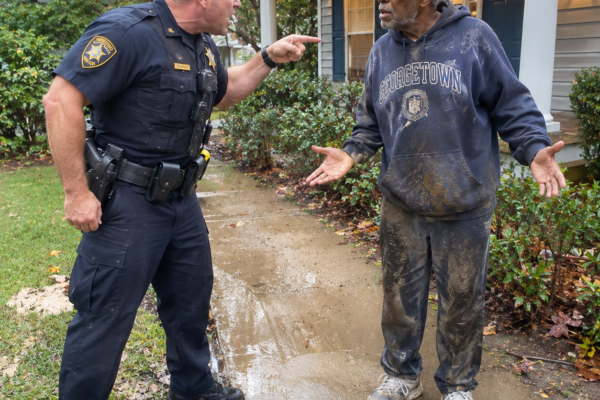
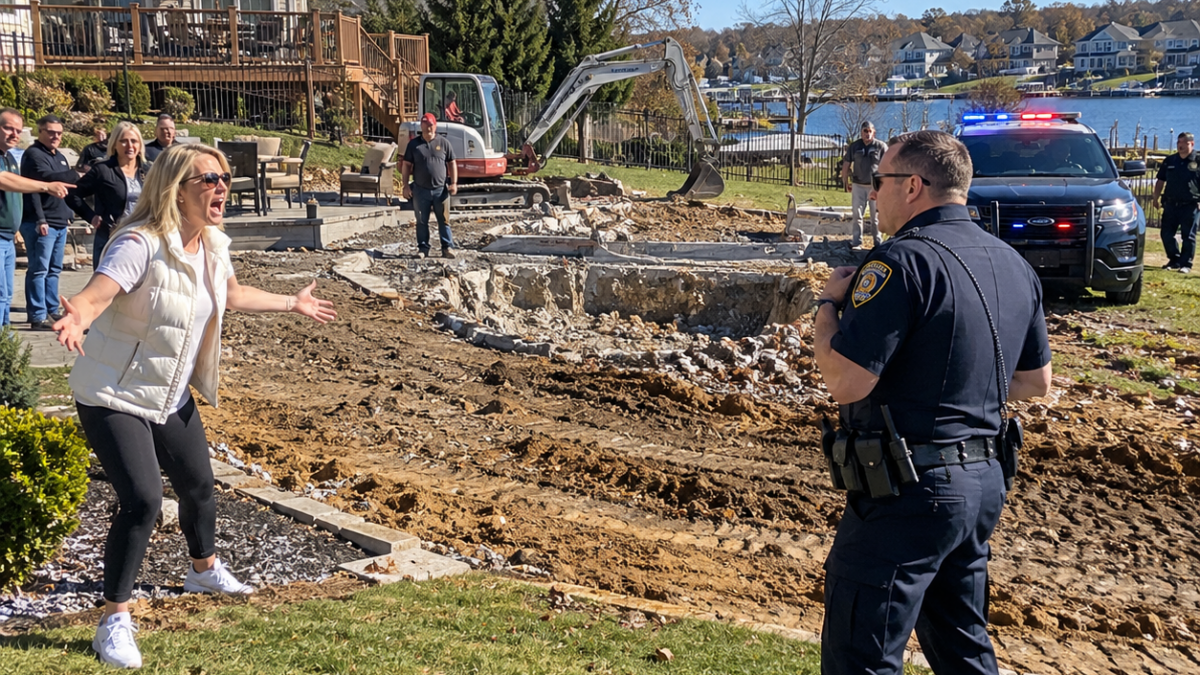
HOA Karen Screamed “WHERE’S MY POOL?!”—Then Called 911 After I Legally Erased It From My Backyard
PART2
That Thursday afternoon was the moment the entire illusion collapsed.
To understand how a woman ended up calling 911 because I removed my own swimming pool, you have to go back to the first time I caught her floating in it.
I bought the house on Fairwater Court seven years earlier.
The house itself was one of the reasons Angela and I chose the property.
Quiet street.
Good-sized lot.
Mature trees.
Enough privacy without feeling isolated.
The backyard included a standard residential in-ground swimming pool.
Thirty feet by fifteen.
Concrete construction.
Plaster finish.
A small attached spa on the south end.
Nothing extravagant.
The surrounding deck was modest.
A six-foot cedar fence enclosed the pool area.
I had the pool professionally inspected before closing.
The structure was sound.
The plumbing was good.
The pump would eventually need replacement, but otherwise everything was in respectable condition.
We bought the house.
The pool came with it.
I maintained it.
I paid for the chemicals.
I paid for the electricity.
I paid for the insurance.
I paid for the repairs.
I paid for the inspections.
I paid for the water.
I paid the property taxes on the lot beneath it.
That seems obvious.
Eventually it became necessary to say out loud.
Carol Fitch lived next door.
She had been there about four years before we moved in.
When Angela and I arrived, Carol was friendly.
Very friendly.
She came over during our first week carrying a plate of baked food and smiling like the unofficial mayor of Fairwater Court.
“Welcome to the neighborhood.”
“Thank you.”
“I’m Carol. Right next door.”
“David.”
“I know. I already met Angela yesterday.”
That should have told me something.
Carol knew everyone.
Who had children.
Who was remodeling.
Whose daughter had gone to college.
Who had bought a new car.
Who was late putting away their trash cans.
Which house had been rented.
Which couple was supposedly separating.
Which neighbor had complained about barking.
She possessed information with the effortless confidence of someone who had made neighborhood knowledge into a hobby.
At first, it was harmless.
She told us which grocery store had the best produce.
Which contractor to avoid.
Which lawn service charged too much.
She mentioned the previous owners of our house, the Pattersons.
“Wonderful people.”
“I’ve heard.”
“Oh, you’ll love the backyard in the summer.”
“We’re looking forward to it.”
“That pool gets perfect afternoon sun.”
I didn’t think anything of the sentence.
I should have.
Our first summer passed normally.
Angela and I used the pool mostly on weekends.
Occasionally after work.
Friends came over.
Family visited.
Nothing unusual happened until September.
It was still warm.
The pool was still open.
I came home early on a Friday afternoon.
I walked through the house, set my keys down, and glanced through the back door.
Someone was in the pool.
At first, I assumed Angela had come home early.
Then the person turned.
Carol.
She was floating in the shallow end on a foam noodle.
Bathing suit.
Sunglasses.
A cold drink sitting beside the pool.
Towel folded over one of our chairs.
She looked completely comfortable.
That was what struck me most.
Not sneaky.
Not guilty.
Comfortable.
Like she belonged there.
I stood inside for several seconds trying to understand what I was looking at.
Then I opened the door.
“Carol.”
She looked up.
“Oh. David.”
“What are you doing?”
The mild surprise in her voice irritated me more than panic would have.
“Oh, I hope you don’t mind.”
I looked at her.
She continued floating.
“I used to swim here all the time with the Pattersons.”
“The Pattersons don’t own the house anymore.”
“I know.”
She smiled.
“But I figured you wouldn’t mind.”
“Why?”
“The gate was open.”
That answer made no sense.
An unlocked gate is not permission.
An unlocked front door does not mean a neighbor can sit on your couch.
An open garage does not mean somebody can borrow your tools.
I kept my voice controlled.
“Please get out of the pool.”
Her smile disappeared slightly.
“Oh.”
“Now.”
She climbed out.
Not hurriedly.
She reached for her towel and began drying herself.
“I didn’t realize you’d be home early.”
That sentence told me more than she intended.
“You didn’t think I’d be home?”
“No, I just mean—”
“You came over because you believed nobody was here.”
Carol sighed.
“David, don’t make it sound sinister. The Pattersons let me use the pool all the time.”
“The Pattersons are gone.”
“I know that.”
“This is my house.”
“I know.”
“My backyard.”
“Yes.”
“My pool.”
Her eyes narrowed.
“Yes, David.”
“So you cannot come into my backyard and use my pool without asking me.”
“I said I’m sorry.”
“Good.”
She wrapped the towel around herself.
“I’ll ask next time.”
“There shouldn’t be a next time unless I explicitly say yes.”
She stared at me.
“What?”
“Please don’t come into my backyard without permission.”
Something changed in her expression.
Not much.
But enough.
For the first time, friendliness dropped away.
“You’re serious.”
“Yes.”
“The Pattersons really never cared.”
“I’m not the Pattersons.”
She gathered her things.
“Okay.”
“Thank you.”
“Of course.”
She walked out through the side gate.
That night I told Angela.
She stopped chopping vegetables.
“She was swimming?”
“Yes.”
“Alone?”
“Yes.”
“When nobody was home?”
“She thought nobody was home.”
Angela frowned.
“Was the gate unlocked?”
“She said it was.”
“Was it?”
“I thought I locked it.”
We looked at each other.
Neither of us said what we were thinking.
Had Carol opened it somehow?
Had I simply forgotten?
There was no way to know.
The next morning, I installed a combination lock.
Problem solved.
Or so I thought.
Three weeks later, I came home and found the lock lying on the deck.
Open.
Carol was back in the pool.
She saw me through the window.
And waved.
Actually waved.
I stepped outside.
“Carol.”
“Hi, David.”
“Get out.”
She frowned.
“I just got in.”
“I don’t care.”
She floated closer to the edge.
“I left you a note.”
“What?”
“I left you a note asking if I could use the pool.”
“I didn’t see a note.”
“I put it near your side door.”
“When?”
“This morning.”
“I’ve been at work.”
“Well, you didn’t respond, so I figured it was okay.”
I stared at her.
“No response means no permission.”
“That seems unnecessarily rigid.”
“No, it’s basic.”
She climbed out.
This time her movements were sharper.
More irritated.
“The Pattersons never made a big deal out of this.”
I had heard enough.
“I’m not the Pattersons.”
“You keep saying that.”
“Because you keep acting like their permission became mine.”
She grabbed her towel.
“You barely use the pool during the week.”
“That is irrelevant.”
“It just sits here.”
“It can sit here empty every day for the next twenty years. That still doesn’t make it yours.”
Her eyes widened.
“You’re being extremely territorial.”
“Yes.”
She looked surprised.
I continued.
“It is my property. I’ll be as territorial about it as I choose.”
She stared at me.
“That’s a terrible attitude for a neighborhood.”
“Coming into someone else’s locked backyard is a terrible attitude for a neighborhood.”
“I didn’t break anything.”
“How did you get the combination?”
She looked away.
“I figured it out.”
“How?”
“It wasn’t difficult.”
That answer bothered me.
The combination was not my birthday.
Not Angela’s birthday.
Not our address.
Not anything a casual neighbor would guess.
“Carol.”
“What?”
“Do not come back into this yard without permission.”
“You’ve made that very clear.”
“Good.”
She left.
That evening I changed the combination.
Then I added a key lock.
Two separate mechanisms.
Combination plus key.
I kept both keys.
One on my personal key ring.
One secured inside the house.
I checked them both.
Two weeks later, Angela found Carol in the pool again.
She came into my office.
“David.”
I looked up.
Her face told me immediately that something was wrong.
“What?”
“Your friend is swimming.”
“My friend?”
She pointed toward the backyard.
I stood.
“No.”
“Oh, yes.”
I walked to the window.
Carol was there.
Both gate locks had been opened.
Angela walked outside before I could stop her.
Carol looked up.
“Hi, Angela.”
Angela didn’t bother with greetings.
“Get out.”
Carol blinked.
“I’m sorry?”
“This is the third time.”
“Angela—”
“Get out of our pool.”
Carol’s face hardened.
“I’ve been using this pool for six years.”
“And?”
“The Pattersons always—”
“The Pattersons sold the house.”
“I know that.”
“Apparently not.”
Carol pulled herself out of the water.
Angela continued.
“You were told twice not to come back without permission.”
“I wasn’t hurting anyone.”
“You went through two locks.”
“I had access.”
“No, you didn’t.”
“The gate opened.”
Angela actually laughed.
It was not a friendly laugh.
“The fact that you figured out how to open a lock does not give you permission.”
Carol wrapped her towel around herself.
“I have been part of this neighborhood longer than you.”
Angela stepped closer.
“That doesn’t make our backyard yours.”
“You have no idea how things work on this street.”
Angela looked at the two open locks.
Then at Carol.
“I know how locks work.”
Carol’s jaw tightened.
Angela pointed toward the gate.
“Listen carefully. You do not come back into this yard. You do not use the pool. You do not open the gate. If you do this again, we call the police.”
“You’re threatening me?”
“No. I’m telling you exactly what will happen.”
“This is unbelievable.”
“No, Carol. What’s unbelievable is that we have to explain private property to an adult three times.”
Carol glared at her.
Then at me.
I said nothing.
There was nothing to add.
She left.
We replaced the entire gate locking system the next weekend.
Deadbolt hardware.
New strike.
Reinforced installation.
I had the fence inspected.
Six feet high.
Solid cedar.
No gaps.
No other access points.
That finally stopped Carol from entering the pool directly.
But it didn’t end the dispute.
She simply changed tactics.
Three weeks later, I received an HOA notice.
ARCHITECTURAL COMPLIANCE COMPLAINT.
The complaint involved my pool fence.
Specifically, the new deadbolt.
According to the complaint, the hardware was inconsistent with community architectural standards.
I immediately knew who had filed it.
The attached photographs confirmed it.
They had been taken from Carol’s side of the property.
I pulled the HOA standards.
The rule said exterior gate hardware should complement the fence material and remain consistent with the overall aesthetic.
My fence was natural cedar.
The deadbolt was oil-rubbed bronze.
If anything, it looked better than the old silver latch.
I photographed it.
Quoted the relevant rule.
Submitted my response.
Complaint dismissed.
Three weeks later, another one arrived.
This time:
IMPROPER EQUIPMENT STORAGE.
Carol had photographed the chairs and small table around the pool.
According to her, I was storing outdoor equipment in visible areas.
They were patio chairs.
Beside a swimming pool.
In summer.
I responded.
Complaint dismissed.
Then another.
Pool cover color.
Dismissed.
Another.
Garden hose reel placement.
Dismissed.
Another.
Hedge height.
Dismissed.
Another.
Back porch lighting.
Dismissed.
Another.
Pool pump noise.
The pump operated entirely within permitted hours.
Dismissed.
Another.
Potted plant placement near the rear gate.
Dismissed.
Then complaint number nine.
I still remember reading it twice because I genuinely thought I misunderstood it.
Carol alleged that sunlight reflecting off the pool water created an artificial light disturbance visible on the ceiling of my screened porch and affecting neighboring property.
Sunlight.
Reflecting off water.
On my porch.
She somehow attempted to turn that into an HOA violation.
Dismissed.
Nine complaints.
Fourteen months.
Nine dismissals.
Each one required a response.
Photographs.
Rule citations.
Emails.
Time.
Attention.
Every envelope from the HOA made my shoulders tighten.
Not because I feared losing.
Because I knew I would have to stop whatever I was doing and spend another hour proving something absurd.
Carol had learned something important.
She couldn’t enter the backyard anymore.
But she could still enter my life.
One complaint at a time.
So I documented everything.
Every filing.
Every response.
Every dismissal.
Every date.
Every photograph.
I installed a security camera overlooking the gate.
I kept clips of Carol approaching the property.
I saved neighborhood-app messages.
Notes.
Texts.
Comments relayed through mutual neighbors.
Eventually I had a thick folder on my desk.
One evening, after the ninth dismissal, Angela watched me slide another document into it.
“How long are you going to keep doing this?”
“Documenting?”
“Yes.”
“Until I have enough.”
“Enough for what?”
“I don’t know.”
She leaned against the desk.
“That is not reassuring.”
“I know.”
“What do you want?”
I looked at the folder.
“I want something permanent.”
“What?”
“I don’t know yet.”
“Court order?”
“Maybe.”
“Fence higher?”
“Wouldn’t solve the complaints.”
“Police report?”
“Would help the trespassing. Not everything else.”
She studied me.
“You’re tired.”
“Yes.”
“So am I.”
“I know.”
Angela looked through the window toward the backyard.
“What would actually stop all of it?”
At the time, I didn’t have an answer.
A few weeks later, I did.
The answer came from Ray Kimball.
Ray had worked on our house several times.
Twenty years in residential construction.
Careful.
Competent.
The kind of contractor who answered questions with details instead of sales language.
He came over one spring afternoon to discuss a kitchen project.
After we finished inside, he asked, “Anything else while I’m here?”
I looked through the back door.
“Yes.”
We walked outside.
He looked at the pool.
“What’s up?”
I explained Carol.
The unauthorized swimming.
The locks.
The nine complaints.
Ray listened without interrupting.
When I finished, he looked at the water.
Then at me.
“What are you thinking?”
“I’m thinking about removing it.”
“The pool?”
“Yes.”
“You mean filling it?”
“I mean gone.”
He raised his eyebrows.
“Completely?”
“Pool. Spa. Deck. Fence. Everything.”
Ray walked slowly around the edge.
“You want to reclaim the yard.”
“I want it to look like there was never a pool here.”
“That’s a real project.”
“I know.”
“Why?”
“I’m tired of defending it.”
He studied me.
“That’s an expensive way to solve a neighbor problem.”
“It also costs money every year to maintain.”
“True.”
“Angela wants a garden.”
“Okay.”
“I’m not asking whether it’s emotionally rational.”
He smiled slightly.
“What are you asking?”
“How?”
Ray became technical.
“Drain it first. Break the shell. Depending on county requirements, remove enough material to guarantee drainage. Fill with approved clean material. Compact in lifts. Grade. Topsoil. Seed.”
“How long?”
“Three or four active workdays if weather cooperates.”
“Permit?”
“Required.”
“Chance of denial?”
“For demolishing your own residential pool?”
“Yes.”
“Very low unless there’s some drainage, utility, structural, or zoning issue.”
“HOA?”
“Check your documents.”
I already planned to.
“But generally?”
“They may regulate the finished condition. Grade. Appearance. Drainage. They normally can’t force you to maintain a swimming pool simply because it exists.”
“What would it cost?”
He gave me the number.
Significant.
Not impossible.
The kitchen renovation would have to wait.
That evening I sat with Angela.
“I talked to Ray.”
“About the kitchen?”
“And the pool.”
She stopped reading.
“What about the pool?”
“I want to remove it.”
She stared at me.
“Completely?”
“Yes.”
“For Carol.”
“For us.”
“David.”
“For several reasons.”
“David.”
I sighed.
“Yes. Carol is one of them.”
“One?”
“Operating costs.”
She waited.
“Maintenance.”
She kept waiting.
“The complaints.”
“Keep going.”
“I’m tired of locks.”
She nodded.
“I’m tired of checking the camera.”
“Yes.”
“I’m tired of knowing that every feature of the pool can become another complaint.”
“Yes.”
“I’m tired of managing something I own around a person who believes she has a claim to it.”
Angela leaned back.
“And you want her to come home one afternoon and discover there is no pool.”
I looked at her.
She smiled faintly.
“You do.”
“Yes.”
“That part matters to you.”
“Yes.”
“Thank you.”
“For what?”
“For not pretending.”
I waited.
Angela looked toward the backyard.
“I’ve wanted a vegetable garden there for three years.”
“I know.”
“The south exposure is excellent.”
“I know.”
“If the pool disappeared…”
“There would be a large sunny yard.”
“With raised beds.”
“As many as you want.”
“Tomatoes.”
“Yes.”
“Peppers.”
“Yes.”
“Herbs.”
“Yes.”
She smiled.
“Call Ray.”
The next Monday, we submitted the demolition permit application.
I reviewed the CC&Rs carefully.
Nothing prohibited removing the pool.
I sent the HOA a certified letter.
Not a request.
A notice.
I stated that I intended to remove the in-ground pool under a county-approved demolition project and that the final landscaping would comply with applicable grading and appearance requirements.
Stuart Kincaid, the board chairman, called.
“David.”
“Stuart.”
“You’re taking out the pool?”
“Yes.”
“Can I ask why?”
“Several reasons.”
“Such as?”
“Cost. Maintenance. Future yard plans. And the compliance burden.”
He went quiet.
“Compliance burden.”
“Nine complaints in fourteen months.”
“I’m aware.”
“All dismissed.”
“I’m aware.”
“Every one required a response.”
“Yes.”
“I’m removing the source.”
“The pool.”
“The pool.”
Another pause.
Then Stuart said, “Carol is going to be extremely upset.”
There it was.
Not “the neighborhood.”
Not “the board.”
Carol.
I answered simply.
“Carol does not own my pool.”
“No. She doesn’t.”
“She has no recorded easement.”
“No.”
“No shared interest.”
“No.”
“No contractual access.”
“No.”
“Then her reaction isn’t relevant to the permit.”
“No.”
I could hear the discomfort in his voice.
Then Stuart said something I didn’t expect.
“David, I want you to know the board has noticed the pattern.”
“What pattern?”
“Carol’s complaints.”
I stayed quiet.
He continued.
“Nine complaints in fourteen months is excessive, especially when all nine were dismissed.”
“I agree.”
“The complaint process isn’t intended to be used as continuing pressure after a personal disagreement.”
“That is exactly how it has been used.”
“I know.”
That surprised me.
“Have you told Carol that?”
“We have spoken to her.”
“And?”
“She believes she is identifying legitimate violations.”
“Of course she does.”
Stuart sighed.
“Is there anything the board can do that would cause you to reconsider removing the pool?”
“No.”
“Nothing?”
“The permit is filed. Ray is scheduled.”
“You’ve decided.”
“Yes.”
He was quiet.
Then he said, “Angela still wants the garden?”
I smiled.
“She has diagrams.”
“That sounds serious.”
“You have no idea.”
“Then I hope the project goes well.”
“Thank you.”
The permit was approved eighteen days later.
No objection.
No hearing.
No dispute.
Approved.
Ray’s crew was scheduled Monday through Thursday.
Carol didn’t know.
I didn’t tell her.
Why would I?
She was not a co-owner.
Not an easement holder.
Not a party to the permit.
Not a contractor.
Not an HOA official whose approval was required.
She was simply the neighbor who had repeatedly used the pool without permission.
Carol taught at a school about twenty minutes away.
She normally left around 7:30 in the morning and returned around 4:30.
I knew that because after fourteen months of security footage, her routine had become obvious.
Ray arrived Monday morning around seven.
His crew unloaded equipment.
Pumps.
Breakers.
A compact loader.
Dump equipment.
Carol’s car passed the house as she left for work.
She didn’t stop.
From the street, she couldn’t see the pool.
The privacy fence blocked the backyard.
By midmorning, the water level was falling.
By afternoon, the pool was empty.
I stood at the edge of the exposed shell.
For years that space had been blue.
Now it looked strangely industrial.
Concrete.
Drains.
Stains.
Pipes.
Ray walked up beside me.
“Last chance.”
“For what?”
“To change your mind.”
I looked at him.
“You’re already charging me.”
“I’d happily charge you for putting water back.”
“No.”
“You sure?”
“Yes.”
He nodded toward the crew.
“Break it.”
The first impact echoed through the backyard.
Concrete fractured.
And with that sound, something in me relaxed.
By Monday evening, the pool shell was partially demolished.
The spa was gone.
Tuesday was louder.
More concrete.
More debris.
More fill.
I worked from home and periodically checked the progress.
The shape of the pool disappeared gradually.
First the edges lost definition.
Then the deep end became a cavity full of broken material and approved fill.
Then the outline vanished.
By Wednesday afternoon, the void had been filled in compacted layers.
Ray checked levels.
Drainage.
Grade.
“Tomorrow this looks like a yard.”
Thursday morning, the deck came out.
Then the fence.
The gate.
The deadbolt.
The combination-lock hardware I had once installed because Carol couldn’t accept the word no.
One of Ray’s workers held up the old gate hardware.
“You keeping this?”
“No.”
“Scrap?”
“Yes.”
I watched him throw it into the disposal pile.
That felt strangely satisfying.
By noon, the grading was finished.
Topsoil spread across the old pool footprint.
Seed went down.
The crew cleaned up.
Ray walked the yard with me.
“No drainage problems.”
“Good.”
“Grade falls away from the house.”
“Good.”
“Fill is compacted.”
“Good.”
“You’ll see some settling. Normal. We can come back if necessary.”
“Fine.”
He looked over the property.
“You really wouldn’t know.”
He was right.
The backyard looked larger.
Different.
Quiet.
At 4:15, Ray’s truck was gone.
I was outside checking the grade.
Then I heard Carol’s car.
Engine off.
Door close.
Silence.
A few seconds later:
“Where is the pool?”
I turned.
Carol stood at the edge of our properties.
“Hi, Carol.”
Her eyes were fixed behind me.
“Where is the pool?”
“I had it removed.”
“You what?”
“I removed it.”
Her face went blank.
She walked closer.
Not onto my property.
Close.
“You removed the pool?”
“Yes.”
“The whole thing?”
“Yes.”
She stared.
“The spa?”
“Gone.”
“The deck?”
“Gone.”
“The fence?”
“Gone.”
Her eyes moved over the dirt.
“Why?”
“Several reasons.”
“Such as?”
“Angela wants a vegetable garden.”
She stared at me.
“You demolished a swimming pool for vegetables?”
“That wasn’t the only reason.”
“What else?”
“Cost.”
She looked unconvinced.
“Maintenance.”
Still unconvinced.
“And the compliance problems.”
That hit.
“The compliance problems.”
“Nine HOA complaints in fourteen months.”
Her eyes hardened.
“All dismissed.”
“You think those complaints were about you?”
“They were filed by you.”
“They were legitimate concerns.”
“They were dismissed.”
“The board can be wrong.”
“Nine times?”
“They favor you.”
“Carol.”
“What?”
“Stop.”
She went quiet.
I gestured toward the yard.
“The pool is gone.”
She stared at it.
“I don’t understand why you would destroy something perfectly good.”
“Because it was mine.”
“That’s your answer?”
“That’s part of it.”
“You removed it because of me.”
“You were one of the reasons.”
She looked genuinely wounded.
“I used that pool for six years.”
“With permission from the Pattersons.”
“They treated it like something neighbors could enjoy.”
“Then they were generous.”
“And you’re not.”
“If generosity requires surrendering control of my property, no.”
“I never asked you to surrender anything.”
“You entered my locked yard three times.”
“I had permission before.”
“Before I owned the property.”
“You knew the arrangement.”
“No, I didn’t.”
“The Pattersons told everyone.”
“They didn’t tell me.”
“That isn’t my fault.”
“It also isn’t my obligation.”
She folded her arms.
“You knew I used it.”
“After I caught you in it.”
“Why are you saying caught like I committed a crime?”
“Because you entered my backyard without permission.”
“It was never like that before.”
“Before.”
She opened her mouth.
I continued.
“That word is the entire problem. Before I bought the house. Before the Pattersons sold it. Before the title transferred. Before I told you no. Before I installed locks. You keep treating before as if it controls now.”
Her face reddened.
“That pool was part of my life.”
“It was not part of your property.”
She stared at me.
Then she pulled out her phone.
“I’m calling someone.”
“Okay.”
“I’m serious.”
“So am I.”
She dialed.
A pause.
Then:
“I need to report something.”
Another pause.
“My neighbor removed a swimming pool.”
I could faintly hear the dispatcher’s voice but not the words.
Carol continued.
“It was shared.”
Pause.
“No, the pool was physically behind his house, but it was on the property line.”
I looked at her.
That was false.
Not slightly inaccurate.
False.
The nearest edge of the pool had been roughly fourteen feet inside my property.
Carol listened.
“He demolished it without my permission.”
Another pause.
Her voice rose.
“Because I used it!”
Pause.
“It was shared for six years.”
Pause.
“What do you mean whose deed?”
Longer pause.
“It was part of both properties in practice.”
Pause.
“No, I don’t have documents.”
Her tone changed.
Less confident now.
“But he can’t just destroy it.”
She listened again.
Then looked at me.
Her jaw tightened.
“Yes. I would like an officer.”
She ended the call.
“You really told them it was on the property line?”
“It was shared.”
“No, it wasn’t.”
“We’ll see.”
“Yes.”
We would.
About twenty minutes later, a patrol car arrived.
No lights.
No siren.
No urgency.
A sheriff’s deputy stepped out.
Deputy Alicia Torres.
She came to my door first.
“Mr. Reyes?”
“Yes.”
“I’m Deputy Torres. We received a complaint involving removal of a shared swimming pool.”
I stepped aside.
“Come in.”
She entered.
“Your neighbor says there was a pool between the two properties that you removed without her consent.”
“That’s not accurate.”
“Okay.”
“The pool was entirely on my property.”
“Do you have documentation?”
“Yes.”
That was one advantage of living through fourteen months of nonsense.
I had documentation for everything.
I brought out the property file.
Survey.
Deed information.
Permit.
Contractor documentation.
Torres unfolded the survey.
I pointed.
“My lot line.”
She followed it.
“Pool location.”
She looked.
“Closest edge is well inside the boundary.”
“Approximately fourteen feet.”
“There’s no shared ownership notation.”
“No.”
“No easement.”
“No.”
“No access agreement.”
“No.”
She looked at the permit.
“This is the demolition permit?”
“Yes.”
“Approved?”
“Yes.”
“Completed this week?”
“Yes.”
She read Ray’s documentation.
Then looked at me.
“So the structure was yours.”
“Yes.”
“The removal was permitted.”
“Yes.”
“And there was no legal interest belonging to your neighbor.”
“None.”
Torres closed the folder halfway.
“Then why does she believe it was shared?”
“That takes longer.”
“I have time.”
I explained.
The Pattersons.
Six years of permission.
The first time I found Carol swimming.
The second time.
The lock combination.
The third time.
The key lock.
Angela’s warning.
The deadbolt.
Then the HOA complaints.
Torres stopped me.
“How many?”
“Nine.”
“Nine complaints?”
“In fourteen months.”
“Related to the pool?”
“Pool, fence, deck, pump, furniture, landscaping near the pool, even reflected sunlight.”
She looked at me.
“Reflected sunlight?”
I pulled the complaint.
She read it.
Her eyebrows rose.
“This was dismissed?”
“All nine.”
“You kept all of them.”
“Yes.”
“Why?”
“I’m a systems engineer.”
She waited.
“Documentation is how I approach problems.”
“That explains the folder.”
“There are more folders.”
“I believe you.”
I showed her the security log.
Dates.
Times.
Unauthorized access.
Messages.
Notes.
Camera references.
Torres read quietly.
Then she asked, “Did you ever give Ms. Fitch permission to use the pool?”
“No.”
“Not once?”
“No.”
“Did your wife?”
“No.”
“Did you ever tell her she could continue the prior arrangement?”
“No.”
“Did you tell her she could not?”
“Repeatedly.”
“In writing?”
“Some communications are written. The first conversations were verbal. The locks make the position fairly obvious.”
She nodded.
“Fair.”
She closed the folder.
“Mr. Reyes, based on what you’ve shown me, there’s no law-enforcement issue with your pool removal.”
“I agree.”
“I’m going to speak with Ms. Fitch.”
“Of course.”
“I’m also going to explain something very clearly to her.”
I waited.
“The previous owner allowing her to swim does not give her ownership of your pool.”
“Yes.”
“The fact that she used it for six years does not give her the right to force you to maintain it.”
“Yes.”
“And unless there’s some legal document you haven’t shown me—and your survey and title information suggest there isn’t—she had no authority to approve or deny demolition.”
“That’s correct.”
Torres looked toward the folder.
“Keep this.”
“I will.”
“I mean keep all of it.”
“I intend to.”
She stood.
“Your neighbor isn’t going to like what I tell her.”
“No.”
Torres walked next door.
I went into the kitchen.
Angela looked up.
“Police?”
“Yes.”
“Carol called them?”
“Yes.”
“For the pool?”
“She said it was shared.”
Angela stared at me.
“She said what?”
“Shared.”
“It was fourteen feet inside our lot.”
“I know.”
“Did you show the survey?”
“Yes.”
“Permit?”
“Yes.”
“Complaints?”
“Yes.”
Angela shook her head.
“What did the deputy say?”
“There’s no law-enforcement issue.”
“Obviously.”
“She’s explaining that to Carol now.”
Angela looked toward the wall we shared with Carol’s side of the neighborhood.
“Is she going to stop?”
“I don’t know.”
“You always know.”
“No.”
“What do you think?”
I considered it.
“I think Carol has spent years believing use creates entitlement.”
“Yes.”
“She’s about to be told by someone in uniform that it doesn’t.”
“Yes.”
“What she does next depends on whether she can process that.”
Angela gave me a dry look.
“So she’s going to do something else.”
“Probably.”
We could hear Carol next door.
Not exact words.
Just the pattern.
Loud.
Fast.
Insistent.
Then questions.
Then more talking.
Then silence.
Then quieter talking.
About fifteen minutes later, Torres returned.
“She understands the law-enforcement position.”
“That sounds carefully worded.”
“It is.”
“What happened?”
“She maintains that she had an established right to use the pool because of the prior arrangement.”
“I assume you told her she didn’t.”
“I told her no criminal issue exists and that your property records show the pool belonged exclusively to your lot.”
“And?”
“She asked whether she has a civil claim.”
I almost smiled.
“What did you say?”
“I told her I’m not her civil attorney.”
“Good answer.”
“She may speak to one.”
“Also her right.”
Torres paused.
“Mr. Reyes.”
“Yes?”
“That folder.”
“Yes.”
“Do not lose it.”
“I won’t.”
“If this continues, your records are likely going to matter.”
“They already have.”
That evening, I called Robert Callaway.
Robert was a property attorney I had used twice before.
He understood my personality.
I would rather spend two hours understanding a legal boundary before acting than twenty hours fixing a mistake afterward.
I explained everything.
When I finished, Robert said, “Has she threatened litigation?”
“She asked the deputy about civil claims.”
“That’s not the same thing.”
“No.”
“Let’s assume she does.”
“Okay.”
“What right would she claim?”
“Six years of access.”
“Permission from the prior owner.”
“Yes.”
“No written agreement?”
“No.”
“No easement?”
“No.”
“No license in the deed?”
“No.”
“No disclosure at your purchase?”
“No.”
Robert paused.
“Then she has a problem.”
“What kind?”
“The kind where the thing she believes is a right is actually permission.”
“Explain.”
“The Pattersons gave her a license.”
“A license.”
“Informal permission to use the pool. Personal. Revocable. Not an ownership interest.”
“And that doesn’t transfer automatically?”
“No.”
“Why?”
“Because when the Pattersons sold the property, their personal permission did not burden the land unless something formal created that burden.”
“Which nothing did.”
“Correct.”
“What if she argues expectation?”
“She can.”
“Promissory estoppel?”
“She might.”
“Implied rights?”
“She might try.”
“Does she win?”
“Based on what you’re telling me? Unlikely.”
“Why?”
“You bought property with no recorded easement. No agreement. No disclosure. Then you explicitly revoked any possible continuing permission the moment she used the pool.”
“Several times.”
“Exactly.”
“And the locks?”
“Very useful.”
“The complaints?”
“Potentially very useful.”
“Why?”
“Because they show she knew there was a dispute.”
I nodded even though he couldn’t see me.
“She can’t plausibly say she believed I consented.”
“Correct.”
“And now the pool doesn’t exist.”
“That creates another problem for her.”
“What damages?”
“Difficult to quantify.”
“What is the dollar value of unauthorized access to somebody else’s pool?”
Robert laughed.
“That is one way to put it.”
“Can she sue anyway?”
“Anybody can file a lawsuit.”
“That’s not the question.”
“I know. Can she bring something a court will hear? Yes. Can she win meaningful damages on these facts? I would not want to be her attorney.”
Six weeks later, someone agreed to be her attorney.
His name was Dennis Walsh.
The demand arrived by certified mail.
Forty-two thousand dollars.
I read the number twice.
Then read the theory.
“Tortious interference with established property rights through deliberate destruction of a shared amenity.”
Shared amenity.
There it was again.
Carol’s entire worldview reduced to two words.
The letter cited six years of historic access.
It cited the Pattersons’ permission.
It claimed Carol had developed an established expectation that access would continue.
It compared the value of pool access to private pool rental rates.
It included emotional damages for the abrupt elimination of the amenity.
Forty-two thousand dollars.
I scanned the letter and sent it to Robert.
He called thirty minutes later.
“This is creative.”
“Bad creative or dangerous creative?”
“Mostly bad.”
“Mostly?”
“Never dismiss litigation entirely.”
“Understood.”
“But their problem is fundamental.”
“No legal right.”
“Exactly.”
“They call it established property rights.”
“They can call a cat a mortgage. The label doesn’t create the legal element.”
I smiled.
“What happens?”
“We respond.”
“With the folder?”
“With the folder.”
Robert’s filing was exhaustive.
Title history.
Survey.
No easement.
No recorded interest.
Case law distinguishing a personal license from a property right.
My statements revoking access.
Security records.
Lock changes.
All nine HOA complaints.
All nine dismissals.
The permit.
The contractor records.
The police contact.
Everything.
Carol’s attorney replied.
Robert responded again.
The court scheduled a hearing.
Judge Marion Stills handled the matter.
Robert had heard of her.
“She likes clean issues.”
“Is ours clean?”
“Very.”
“What’s the issue?”
“Did Carol own any legal interest in your pool?”
“No.”
“That’s our case.”
“What about all the emotion?”
“Noise.”
The hearing began with Walsh.
He spent nearly twenty minutes describing Carol’s history with the Pattersons.
Six summers.
Regular access.
Social understanding.
Neighborhood expectations.
Custom.
Practice.
He called Carol.
She sat at the witness stand.
He asked, “How long did you use the pool before Mr. Reyes purchased the property?”
“Six years.”
“With the prior owners’ knowledge?”
“Yes.”
“With their consent?”
“Yes.”
“How often?”
“Several times a week in the summer.”
“Did you consider the pool part of the social life between the two properties?”
“Yes.”
“How would you describe it?”
Carol looked toward the judge.
“A shared neighborhood amenity.”
I saw Judge Stills look down at her notes.
Walsh continued.
“When Mr. Reyes purchased the property, did you believe that arrangement would continue?”
“Yes.”
“Why?”
“Because it had existed for years.”
“Did anyone tell you before the purchase that the arrangement was ending?”
“No.”
“Did Mr. Reyes know you had previously used the pool?”
“Eventually.”
That word mattered.
Eventually.
Walsh quickly moved on.
“Did he remove the pool without informing you?”
“Yes.”
“Did you have an opportunity to object?”
“No.”
“How did you feel when you discovered it was gone?”
Carol’s voice became emotional.
“Devastated.”
“Why?”
“It was part of my life for years.”
“A shared neighborhood amenity?”
“Yes.”
Third time.
Judge Stills looked up.
“Counsel.”
Walsh stopped.
“Your Honor?”
“Was the pool on the plaintiff’s deed?”
“No, Your Honor.”
“Was any portion of the pool located on her property?”
“No.”
“Was there a recorded easement?”
“No.”
“A covenant granting access?”
“No.”
“A written agreement?”
“No.”
“Any ownership share?”
“No.”
Judge Stills looked at Carol.
“Then I want us to stop using the word shared unless you can establish something more than permission.”
Walsh straightened.
“Your Honor, our argument is that long-established shared use created an equitable interest.”
“That is different language.”
“Yes.”
“Proceed.”
He did.
Eight more minutes on equitable expectation.
Reliance.
Historic practice.
Implied access.
Then Judge Stills asked the question I had been waiting for.
“When Mr. Reyes purchased the property, was he told that your client expected permanent pool access?”
Walsh hesitated.
“We have not established that.”
“So no.”
“Not formally.”
“No.”
“No, Your Honor.”
“He bought property with no recorded burden?”
“Yes.”
“No disclosure of this arrangement?”
“None we can prove.”
“He then found your client using the pool?”
“Yes.”
“And told her she did not have permission?”
“That is disputed in characterization.”
Judge Stills looked toward our exhibits.
“I have multiple records showing he communicated that.”
Walsh tried again.
“He objected to the manner of access.”
Robert shifted slightly beside me.
Judge Stills noticed.
“The manner?”
“Yes.”
“Counsel, are you suggesting Mr. Reyes objected to unauthorized access but simultaneously granted authorized access?”
Walsh paused.
“Our position is that—”
“It is a yes-or-no question.”
“No.”
“Thank you.”
When our side began, Robert didn’t need twenty minutes.
He stood.
“Your Honor, the plaintiff never had a property right.”
Simple.
Direct.
“The previous owners gave her permission. That permission was a personal license. It was not recorded. It was not attached to the land. It was not disclosed to Mr. Reyes. It did not survive the sale in a form that obligated him.”
He placed one document before the court.
“Mr. Reyes then expressly terminated any possible informal continuation of that permission.”
Another.
“After unauthorized entry continued, he installed locks.”
Another.
“When those locks were defeated, he upgraded the security again.”
Another.
“Then, over fourteen months, Ms. Fitch filed nine separate HOA complaints involving this property.”
Judge Stills looked toward Carol.
“Nine?”
“Yes, Your Honor.”
“All dismissed?”
“Yes.”
“Any appeals?”
Robert looked at the record.
“Two.”
“Result?”
“Dismissed.”
The judge looked at Carol.
“Ms. Fitch.”
Carol straightened.
“Yes, Your Honor?”
“You filed nine complaints.”
“Yes.”
“All were rejected.”
“Yes, but—”
“You appealed two.”
“Yes.”
“Those were also rejected.”
“They did not consider the full history.”
Judge Stills leaned slightly forward.
“What legal right did you have to the pool?”
Carol blinked.
“I had been using it for six years.”
“That is history.”
“The Pattersons gave me permission.”
“That is permission.”
“Yes.”
“What legal right did you have after the Pattersons sold the property?”
Carol paused.
“I believed the arrangement continued.”
“Why?”
“Because nobody told me before the sale that it wouldn’t.”
Judge Stills looked directly at her.
“Did Mr. Reyes tell you after the sale that you did not have permission?”
Carol’s eyes shifted.
“He was very hostile about it.”
“That is not my question.”
“Yes.”
“Did his wife tell you?”
“Yes.”
“Did they install locks?”
“Yes.”
“Did you understand those locks were intended to prevent unauthorized entry?”
Carol said nothing.
“Ms. Fitch.”
“Yes.”
Judge Stills sat back.
“Then I will ask again.”
Silence.
“What legal right did you have to the pool?”
Carol looked toward Walsh.
Then back at the judge.
“I believed I had a right.”
Judge Stills answered immediately.
“Belief is not a property right.”
The courtroom went completely quiet.
Judge Stills looked down at the filings.
Then she began ruling from the bench.
“The plaintiff has not established any ownership interest, easement, covenant, contract, or other legally enforceable property interest in the swimming pool at issue.”
Carol stared straight ahead.
“The prior owners’ permission constituted, at most, a personal license for use during their ownership.”
Walsh began writing notes.
“That license did not become a permanent burden upon the property merely because the plaintiff enjoyed the arrangement for several years.”
The judge turned a page.
“The defendant purchased the property without any recorded encumbrance requiring him to provide the plaintiff access to the pool.”
Another page.
“Further, the record establishes that after purchase, the defendant communicated clearly that access was not authorized.”
Another.
“Physical security measures were installed.”
Another.
“Those measures were circumvented.”
Carol lowered her eyes.
“The record also establishes an extended course of HOA complaints made by the plaintiff against the defendant’s pool and related property features.”
Judge Stills paused.
“The plaintiff had repeated notice that her asserted interest was disputed.”
Then came the final point.
“The defendant subsequently removed his own swimming pool pursuant to a valid demolition permit.”
Walsh stood.
“Your Honor—”
She raised one hand.
“I’m ruling.”
He sat.
“There can be no tortious interference with a property right that did not exist.”
I felt Angela’s hand close around mine beneath the table.
“The claim is dismissed.”
Walsh looked down.
“With prejudice.”
That ended the claim permanently.
Then Judge Stills looked at Robert.
“Counsel, you requested fees.”
“Yes, Your Honor.”
“I’m inclined to award them.”
Carol looked up sharply.
Walsh stood again.
“Your Honor, we would object—”
“I’m aware.”
She looked at the complaint file.
“The weakness of the plaintiff’s claimed property interest should have been apparent from the title documentation, survey, and undisputed change in ownership.”
She continued.
“The litigation also appears to be an extension of a longstanding neighbor dispute rather than an effort to vindicate a plausible property interest.”
She looked at Robert.
“Submit your accounting within fourteen days.”
“Yes, Your Honor.”
The file closed.
That was it.
Outside the courtroom, Robert and I walked toward the elevators.
Angela was beside me.
Robert said, “Complete dismissal.”
“With prejudice.”
“Yes.”
“And fees.”
“Yes.”
“How much?”
“My estimate is twelve to fourteen thousand.”
I stopped.
“Carol pays that?”
“Depending on her agreement with counsel, responsibility may be allocated differently, but you’re not eating those legal expenses.”
“Good.”
Robert pressed the elevator button.
Then he looked at me.
“Can I ask you something?”
“Sure.”
“If you had known all of this was coming when you first found Carol in the pool, what would you have done differently?”
I thought about it.
The first swim.
The note.
The locks.
The second entry.
The third.
Angela threatening to call the police.
Nine complaints.
Demolition.
The lawsuit.
The courtroom.
“I would have installed cameras sooner.”
Robert nodded.
“I would have documented the trespass formally sooner.”
“Yes.”
“And I probably would have removed the pool sooner.”
He smiled.
“So basically the same strategy.”
“Just faster.”
“What about the slow timeline?”
“It helped.”
“How?”
“I didn’t react emotionally.”
Robert laughed.
“You removed a swimming pool partly because your neighbor annoyed you.”
“Legally.”
“Legally.”
“With a permit.”
“With a permit.”
“After fourteen months of documentation.”
“Yes.”
“That is not impulsive.”
“No.”
The elevator arrived.
Before the doors opened, Robert said, “Property disputes are strange.”
“I know.”
“The person with the better folder usually wins.”
I looked at him.
“That’s an oversimplification.”
“Of course.”
“I’m a systems engineer.”
“Here we go.”
“The folder is documentation architecture.”
Robert laughed.
“Documentation architecture.”
“You record what matters. You organize it. You preserve it. Then when the system is tested, the information is available.”
“The system was definitely tested.”
“And it held.”
The following spring, Angela built her garden.
Not casually.
Angela did nothing halfway when she cared about something.
She drew the raised-bed layout three times.
Measured sun exposure.
Tested soil.
Amended it.
Researched cedar.
Mapped irrigation.
Planned crop rotation before planting the first seed.
Where the deep end of the pool had once been, she planted tomatoes.
Where the spa had been, peppers.
Along the south edge, zucchini and herbs.
A trellis went up the second season.
Beans climbed it.
The yard transformed.
Not into something empty.
Into something new.
That mattered.
For months after the demolition, people tended to describe the backyard by what was missing.
No pool.
No spa.
No deck.
No fence.
But eventually that changed.
There were garden beds.
Green leaves.
Tomato vines.
Basil.
Peppers.
Lettuce.
Flowers Angela planted between vegetables because she said pollinators deserved good landscaping too.
One evening she came into the kitchen carrying a bowl overflowing with tomatoes.
She set them on the counter.
“The soil is excellent.”
“Ray said it would settle well.”
She looked through the window toward the garden.
“Do you miss the pool?”
“No.”
“Not at all?”
I thought about it.
“I miss swimming sometimes.”
“That counts.”
“I don’t miss managing it.”
She washed a tomato.
“What do you mean?”
“I don’t miss checking whether the gate is locked.”
“No.”
“I don’t miss watching cameras.”
“No.”
“I don’t miss another HOA envelope appearing because somebody decided the reflection of water was offensive.”
She smiled.
“That one was impressive.”
“Very creative.”
She sliced the tomato.
“What about Carol?”
“What about her?”
“She still lives next door.”
“Yes.”
“You still see her.”
“Sometimes.”
“Does that bother you?”
“No.”
“Why not?”
I looked outside.
“Because there’s nothing left to manage.”
Angela waited.
“There’s no pool.”
“Yes.”
“No gate.”
“Yes.”
“No lock.”
“Yes.”
“No access question.”
“Yes.”
“No argument about whether she can swim.”
“Yes.”
“No feature for her to claim as part of her life.”
Angela looked at me.
“The lawsuit decided that.”
“The law decided that before the lawsuit.”
“The lawsuit confirmed it.”
“Exactly.”
We stood quietly for a moment.
Then Angela said, “She sees this garden every day.”
“Probably.”
“What do you think she sees?”
I looked at the raised beds.
Tomatoes.
Peppers.
Green leaves moving in the evening breeze.
“I think she sees the pool that isn’t there.”
Angela nodded.
“And what do you see?”
“What is there.”
That was the difference between us and Carol.
Carol had never really been fighting over water and concrete.
She had been fighting over entitlement.
For six years, the Pattersons had been kind to her.
They had allowed her to swim.
Maybe they had told her to come over whenever she wanted.
Maybe they had treated her like family.
Maybe nobody ever locked the gate.
That arrangement may have been warm.
Generous.
Neighborly.
But generosity is not a deed.
Kindness is not an easement.
Permission is not ownership.
A previous homeowner’s friendship does not become an obligation attached to land forever.
Carol could not accept that.
The first time I told her no, she thought I was rude.
The second time, she thought I was unreasonable.
The third time, she treated my locks like obstacles to solve.
When physical access finally became impossible, she moved to the HOA.
Complaint after complaint.
Maybe she thought inconvenience would wear me down.
Maybe she thought the board would eventually force me to change the fence, the gate, the furniture, the pump, the landscaping until I simply gave her access again.
Maybe she wanted me to understand that saying no to her would be expensive.
She was right about one thing.
It became expensive.
Just not in the way she expected.
I spent money to remove the pool.
Then she spent money trying to prove she had a right to something that had never belonged to her.
The judge asked the only question that mattered.
“What legal right did you have?”
Carol had no answer.
Not because she was stupid.
Carol was not stupid.
That’s what made the entire situation interesting.
She had taken something emotionally true and confused it with something legally true.
Emotionally, she felt connected to the pool.
True.
Historically, she had used it.
True.
The Pattersons had given her permission.
True.
It was part of her summer routine.
True.
She may even have believed the arrangement would last forever.
Also true.
None of those facts created ownership.
That was the part she could never accept.
The day she came home and screamed “Where is my pool?” was the purest expression of the problem.
She didn’t plan the wording.
She didn’t think about it.
It came out naturally.
“My pool.”
That was how she saw it.
And when the physical object disappeared, her imagined ownership had nowhere to attach itself.
She called 911 because she needed someone with greater authority than me to restore the reality she preferred.
The deputy couldn’t.
So she tried civil court.
The judge couldn’t restore it either.
Because courts enforce rights.
They do not manufacture them simply because someone feels strongly enough.
I occasionally wondered whether removing the pool had been excessive.
There is, as I said, a version of this story where I am the villain.
A neighbor enjoyed a pool for six years.
New owner arrives.
Access ends.
Conflict grows.
New owner spends a substantial amount of money demolishing the pool.
Neighbor comes home and discovers it gone.
If that’s all you know, I understand how it looks.
But that version requires deleting almost everything that mattered.
It deletes the first trespass.
The second.
The third.
The lock she bypassed.
The second lock she somehow defeated.
The clear warnings.
Angela’s warning that police would be called.
The deadbolt.
The nine HOA complaints.
The appeals.
The security camera.
The notes.
The months of documentation.
The fact that Carol could have simply accepted no at almost any point and the pool would probably still exist.
That is the irony.
If Carol had respected the first boundary, I likely would never have removed the pool when I did.
Angela wanted a garden, yes.
The operating costs were real.
Maintenance was real.
Eventually we may have reconsidered whether we wanted to keep it.
But the urgency?
That came from Carol.
She turned ownership into management.
Every time I looked at the pool, part of my brain saw a potential problem.
Gate locked?
Camera working?
Pump complaint coming?
Did Carol leave another message?
Did the HOA send another notice?
Was somebody near the fence?
That is not how private property is supposed to feel.
Removing the pool wasn’t about revenge alone.
I won’t lie and pretend there was no satisfaction in knowing Carol would come home and discover it was gone.
There was.
Angela correctly called me out on that.
But satisfaction was not the foundation of the decision.
Permanence was.
I wanted a solution she could not unlock.
Could not appeal.
Could not photograph for another complaint.
Could not reinterpret.
Could not inherit from a former neighbor.
Could not call “shared.”
There was only one solution that met every requirement.
No pool.
The remarkable thing was how quickly the conflict disappeared afterward.
No more complaints about the pool pump.
There was no pump.
No complaints about the pool cover.
No cover.
No fence hardware.
No gate.
No patio furniture around the pool.
No reflected pool water.
No access dispute.
No swimming.
No question.
Nothing.
Carol remained Carol.
I remained next door.
But the object around which all the conflict had formed no longer existed.
That was the real victory.
Not watching her scream.
Not watching a deputy explain property law.
Not winning in court.
Not having fees awarded.
Those moments were satisfying in their own ways.
But the important result was quieter.
Peace.
Angela could go into the backyard without wondering whether Carol had been there.
I could come home without checking whether a lock had been manipulated.
An HOA envelope became ordinary mail again instead of an immediate source of irritation.
Our yard became ours.
Completely.
One summer evening, almost two years after the demolition, I sat behind the house while Angela worked in the garden.
The late sun hit the beds where the pool had once been.
I could still remember the old layout if I tried.
Deep end there.
Spa there.
Deck edge there.
Gate over there.
But the memory no longer dominated the space.
Angela held up a zucchini.
“This is ridiculous.”
I looked at it.
“That is not a zucchini.”
“It is absolutely a zucchini.”
“That’s a weapon.”
“I missed one for three days.”
“It has evolved.”
She laughed.
For a moment, everything felt normal.
Exactly what I had wanted.
No HOA drama.
No legal argument.
No neighbor confrontation.
Just a backyard.
Later that evening, I noticed Carol outside.
She stood near her property line.
For a moment, she looked toward our garden.
She didn’t speak.
Neither did I.
Years earlier, seeing her there would have made me alert.
What is she doing?
Why is she looking?
Is she coming over?
Is the gate locked?
Now there was no gate.
No pool.
Nothing to protect from her except the ordinary boundaries every property owner already has.
She eventually went inside.
I looked back at the garden.
That was when I finally understood something.
Carol had spent years believing that by pushing hard enough, filing enough complaints, and invoking enough authority, she could force the world back into the arrangement she preferred.
But boundaries become easier to enforce when there is nothing left to negotiate.
She could argue that I was selfish.
She could say the Pattersons had been kinder.
She could complain about how things used to be.
She could resent the garden.
She could look out her window every summer and remember the pool.
What she could no longer do was swim in it.
She could not unlock it.
She could not complain about its pump.
She could not call it shared property.
She could not sue for access to it.
She could not ask an HOA board to regulate it.
Because it no longer existed.
That was the permanent solution I had been looking for when Angela asked me, all those months earlier, how long I intended to keep documenting.
Until I have enough.
Enough for what?
Something permanent.
I eventually found it.
And I did it correctly.
Permit first.
HOA notice.
Licensed contractor.
Proper demolition.
Documented fill.
Correct grading.
Survey preserved.
Records preserved.
Every step clean.
Carol thought the dramatic moment was coming home and discovering an empty yard.
It wasn’t.
The dramatic moment had happened long before that.
It was the moment I decided that I would no longer spend my time defending a swimming pool from a woman who believed history gave her ownership.
Everything after that was implementation.
And because I did it correctly, every institution Carol appealed to reached the same conclusion.
The HOA dismissed her complaints.
The deputy told her the pool was mine.
My attorney told me her claim was weak.
The judge asked her for a legal right she could not name.
Then dismissed the case with prejudice.
There was nowhere left to appeal the fantasy.
The pool belonged to me.
I had the right to remove it.
So I did.
Today, when I think about Carol screaming, “Where is my pool?” I don’t remember the anger first.
I remember the confusion.
She genuinely could not understand what she was seeing.
A thing she had treated as permanent had vanished.
The access she thought she could pressure me into restoring could never be restored.
She had spent fourteen months trying to make my ownership conditional on her approval.
In the end, I made her approval irrelevant.
Completely.
Permanently.
Legally.
She called 911.
The deputy came.
Carol claimed I had destroyed a shared pool.
I opened my folder.
The survey said otherwise.
The deed said otherwise.
The permit said otherwise.
The law said otherwise.
Then she sued me for $42,000.
She claimed six years of swimming had created a legal right.
The judge asked one question:
“What legal right did you have?”
Carol answered:
“I believed I had a right.”
And the judge gave her the sentence she should have understood the first time I found her floating in my backyard.
“Belief is not a property right.”
That ended it.
No second lawsuit.
No second ending.
No final confrontation.
No dramatic revenge.
Just a garden growing where the pool used to be.
Angela got her raised beds.
I got my backyard back.
Carol got the answer she had refused to accept for years.
And the pool she kept calling hers?
It stayed exactly where I legally decided it belonged.
Gone.