My Son Forgot to Hang Up on Christmas—Then I Heard Why My Money Was Welcome but I Wasn’t.k
PART2:
I ended the call myself.
The kitchen became so quiet I could hear the refrigerator cycling.
I sat there with my phone in my hand.
No tears came.
That surprised me.
I had cried when Thomas died.
I had cried when Michael left for college.
I had cried at Rachel’s wedding.
I had cried when Liam was born and again when Grace wrapped her tiny hand around my finger.
But that Christmas night, there was only stillness.
Maybe because the words had not created something new.
They had named something I had been refusing to see.
Michael had been nine when his father died.
Rachel was six.
I was thirty-six.
Thomas Morgan collapsed at work from a ruptured cerebral aneurysm on an ordinary Tuesday in March.
He kissed me before breakfast.
Complained that the coffee was weak.
Left his gloves on the kitchen chair.
By four that afternoon, I was sitting in a hospital room being told that the man I expected to grow old beside was never coming home.
I had $1,100 in savings.
A mortgage.
Two children.
And no idea how I was going to make the numbers work.
For the first year after Thomas died, I operated almost entirely on fear.
Fear the furnace would break.
Fear somebody would get sick.
Fear Michael would need braces.
Fear Rachel would outgrow another winter coat.
Fear the bank would send a letter with words I could not fix.
I took a bookkeeping job at an insurance office during the day.
At night, after the children were asleep, I studied accounting.
Some nights I fell asleep at the kitchen table with a pencil in my hand.
Some mornings I woke before five and studied another hour before making breakfast.
Gas-station coffee.
Used textbooks.
Community college.
Then state courses.
Certification exams.
Eight years after Thomas died, I earned my CPA license.
I still remember taking Michael and Rachel out for pizza that night.
Michael was seventeen.
Rachel fourteen.
I held the certificate in my lap.
Michael said:
“So does this mean we’re rich?”
I laughed.
“No.”
“Then what was the point?”
Rachel punched him.
I said:
“It means we’re going to be okay.”
That was what money meant to me.
Not status.
Not luxury.
Safety.
Predictability.
The ability to breathe.
I opened Morgan Financial in a small rented office between a laundromat and a pharmacy.
One desk.
One filing cabinet.
One secondhand computer.
For the first six months, I did tax returns, payroll work, small-business bookkeeping, and anything else I was qualified to do.
I never became wealthy.
I became secure.
The mortgage got paid.
Retirement accounts grew.
Emergency savings grew.
The children went to college without crushing debt.
And whenever either of them needed help, I helped.
That was where the line first blurred.
Not because Michael demanded it.
At first, he barely asked.
When he married Nicole, I gave them $18,000 toward the wedding.
Not because they needed an $18,000 gift.
Because I could afford it, and I wanted their beginning to feel easier than mine had.
Three years later, they found a house.
White clapboard.
Four bedrooms.
Big maple in the front yard.
A finished basement.
Good school district.
They loved it.
They were $90,000 short of what they needed between their down payment and financing limits.
Michael called me.
“Mom, forget it.”
“What?”
“The house.”
“You love that house.”
“We can’t make the numbers work.”
I asked him to send me everything.
Purchase contract.
Loan estimate.
Income.
Debt.
Savings.
I reviewed it the same way I would review any client’s finances.
Then I called Linda Harper.
Linda had been my friend for more than twenty years.
She was a real-estate attorney in Burlington, practical to the point of cruelty and one of the few people in my life who never confused kindness with good judgment.
When I told her I was considering lending Michael the $90,000, she said:
“Gift or loan?”
“Loan.”
“Then treat it like one.”
“He’s my son.”
“Still a loan?”
“Yes.”
“Then paper it.”
She prepared a promissory note and recorded security against the house behind the primary mortgage.
Michael objected.
Not angrily.
Mostly hurt.
“You don’t trust me?”
“I trust you enough to lend you ninety thousand dollars.”
“Then why all this?”
“Because if something happens to me, your sister needs to know what exists.”
He accepted that.
For the first year, he and Nicole paid regularly.
Then Grace was born.
Nicole took unpaid leave.
Michael called.
“Can we pause six months?”
“Yes.”
Six became twelve.
Then there was a furnace issue.
Then medical bills.
Then the payments never really restarted.
I never pressed.
The note remained.
The balance remained.
But in my mind, Michael was raising two children.
I had enough.
Family first.
Then came Liam’s school.
He struggled in his public-school classroom.
Bright boy.
Dyslexia.
The private school they found offered excellent support.
Tuition was more than Michael and Nicole expected.
Michael called.
“Mom, I hate asking.”
“How much?”
“Seven hundred a month after aid.”
“For how long?”
“We don’t know.”
I started an automatic transfer directly to the school.
No money passed through Michael.
It felt responsible.
Then Grace wanted dance.
Then summer camp.
Then Michael’s transmission failed.
Then Nicole needed dental work their insurance barely covered.
Then they needed a roof repair.
Then the refrigerator died the same month property taxes were due.
Somewhere along the way, I began sending Nicole a standing monthly deposit.
Five hundred dollars.
I called it “the cushion.”
She used it for groceries, school things, children’s clothes, whatever came up.
At first, she thanked me every month.
Then every few months.
Then not at all.
I noticed.
I pretended I didn’t.
Rachel was different.
She lived in Connecticut with her wife, Megan.
They both taught at a community college.
Rachel had asked me for money exactly twice after college.
Once when her car died.
Once during a medical leave.
Both times she paid me back despite my telling her she didn’t have to.
She also called me every Sunday.
Michael called when something happened.
A broken appliance.
A school bill.
A scheduling issue.
An emergency.
I told myself that was simply the difference between children.
Not every relationship looks the same.
Christmas changed slowly.
For years, everyone came to Larks Lane.
Michael.
Nicole.
Rachel.
Megan.
Then Liam.
Grace.
I cooked too much food.
Thomas’s old stocking still hung at the end of the mantel.
We toasted him before dinner.
When Nicole’s parents bought a lake house near Stowe, Christmas moved there one year.
It made sense.
More bedrooms.
Bigger dining room.
Beautiful view.
The next year went there too.
I drove.
Then weather made the trip difficult.
The year after that, Nicole said:
“Maybe don’t worry about coming if the roads are bad.”
They weren’t bad.
I went anyway.
Then Rachel and Megan began spending alternating Christmases with Megan’s family.
Again, reasonable.
Families divide holidays.
I told myself not to become the mother who demanded every tradition remain frozen because she was afraid of being alone.
Last year, Michael invited me three days before Christmas.
“Sorry, Mom. Thought Nicole already called.”
I went.
This year, nobody called.
I had spent December assuming somebody would.
That was my mistake.
I kept buying gifts.
I ordered the telescope because Liam had become obsessed with astronomy.
I bought the lenses separately because the basic kit was poor quality.
The dollhouse took six weeks.
I didn’t build the wooden shell myself, but I painted it.
Wallpapered the rooms.
Made curtains.
Found miniature books for the shelves.
Grace loved tiny things.
I imagined her face.
Christmas Eve passed.
No invitation.
Christmas morning.
Nothing.
At noon, I almost called.
Stopped myself.
At five, I heated my dinner.
At seven fifteen, humiliation finally defeated pride.
I called.
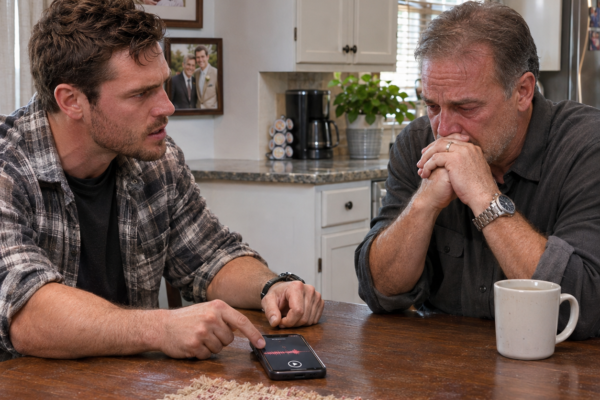
Then Michael forgot to hang up.
Now it was eight twenty.
I was still at the kitchen table.
The words replayed.
She actually thinks sending us money earns her a seat at the table.
I looked at the green ledger in the cabinet beside my desk.
I had started that ledger years ago.
Not because I intended to collect everything.
Because I was an accountant.
Numbers disappear emotionally when you don’t write them down.
The ledger recorded:
Wedding.
House loan.
School tuition.
Dental work.
Car repair.
Roof.
Summer camp.
Dance.
Deposits.
Emergency transfers.
I had never totaled it.
I was suddenly afraid to.
Not because I thought it would be too much money.
Because I thought the number might force me to admit that what I called occasional help had become a second household budget.
I made coffee.
At eight thirty-eight on Christmas night.
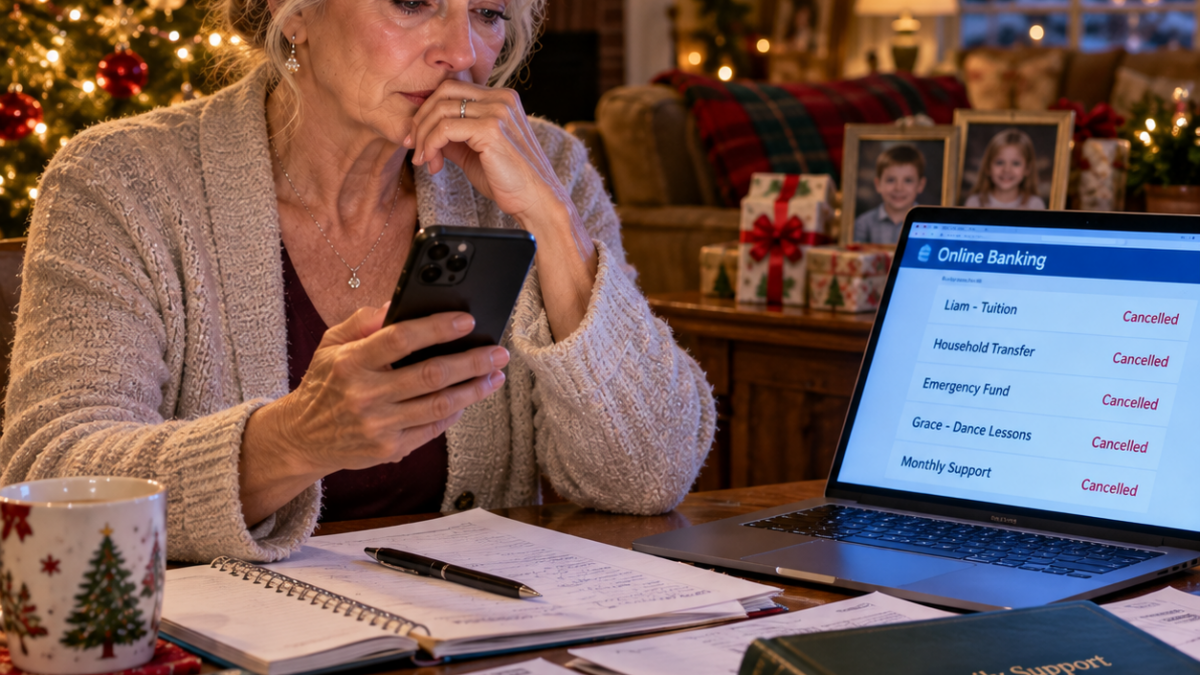
Then opened my laptop.
First:
Liam’s tuition.
$700 monthly.
Automatic payment scheduled January 3.
I opened the authorization.
Clicked cancel.
The website asked:
ARE YOU SURE?
I stared.
Liam had done nothing wrong.
That hurt.
Then I reminded myself:
Liam had parents.
I was his grandmother.
Not his father.
Not his mother.
If Michael and Nicole chose that school, they were responsible for funding it.
Cancel.
Next:
Nicole.
$500 monthly deposit.
Cancel.
Next:
The emergency savings transfer.
That one was less formal.
Every month, I automatically moved $300 into a separate savings account I had created years earlier and mentally labeled “Michael emergencies.”
It was in my name.
Whenever something happened, I pulled from it.
Car.
Furnace.
Dental work.
Appliances.
I stopped the contribution.
Then I looked at the balance.
$11,840.
My money.
I renamed the account.
TRAVEL
That made me laugh for the first time all evening.
Then I opened the green ledger.
I started with the wedding.
$18,000.
House loan.
Original $90,000.
Remaining principal after their early payments:
$82,450.
Private-school tuition to date:
$31,500.
Monthly household cushion over five years:
$30,000.
Grace’s dance:
$7,680.
Summer camps:
$8,400.
Transmission:
$4,900.
Dental emergency:
$6,200.
Roof contribution:
$11,000.
New refrigerator and washer:
$3,800.
A property-tax emergency Michael had promised to repay:
$5,600.
Smaller transfers.
Birthday cash beyond normal gifts.
Airfare.
Sports fees.
Music lessons.
A medical deductible.
A basement water problem.
By 11:43 p.m., the amount of money I had either gifted, advanced, or still had legally outstanding for Michael’s household exceeded $220,000.
I sat back.
Two hundred twenty thousand dollars.
That did not include Christmas presents.
Normal birthday gifts.
Meals.
Vacations.
College help before his marriage.
It did not include the things mothers rarely count.
Time.
Childcare.
Airport rides.
Weeks after births.
Food delivered during illnesses.
It was not an accusation.
It was simply a number.
And suddenly Michael’s joke sounded different.
He was right about one thing.
Money did not earn me a seat at the table.
I had never believed it should.
But if I didn’t have a seat at the table, I certainly did not need to keep paying for the table.
I closed the ledger.
Opened email.
Typed to Linda.
Can we talk tomorrow? I need to review Michael’s note and some financial boundaries. Nothing urgent tonight. Merry Christmas.
I almost deleted “Merry Christmas.”
Left it.
Then I went upstairs.
I slept three hours.
At 6:12 the next morning, my phone rang.
Michael.
I watched it.
Didn’t answer.
It stopped.
Thirty seconds later, again.
Then Nicole.
Then Michael.
A text appeared.
Mom, call me.
Another.
Is everything okay?
I laughed softly.
Everything had apparently become urgent before sunrise.
I got dressed.
Made coffee.
Fed the birds.
At seven twenty-eight, Michael called again.
I answered.
“Good morning.”
“Mom.”
He sounded worried.
“What happened?”
“To what?”
“Liam’s school payment.”
I looked out at the snow.
“What about it?”
“We got an email saying the automatic payer canceled January.”
“Yes.”
Silence.
“You canceled it?”
“Yes.”
“Why?”
“I’m no longer paying Liam’s tuition.”
Another silence.
Longer.
“Is this because of last night?”
“It’s because I reviewed my finances last night.”
“Mom.”
“What?”
“You heard us?”
“Yes.”
I heard him exhale.
Then a door closed on his end.
He had moved somewhere private.
“How much?”
“Enough.”
“What exactly did you hear?”
I almost smiled.
Interesting question.
Not:
What did I say?
How much did I hear?
“You said I thought sending money earned me a seat at your table.”
No response.
“You compared my help to buying stock in the family.”
“Mom—”
“And people laughed.”
“That wasn’t—”
“Don’t.”
My voice stayed calm.
“Please don’t tell me I misunderstood words that were spoken clearly.”
“We were joking.”
“I know.”
“That’s how families talk.”
“Not mine.”
He became quiet.
Then:
“I’m sorry you heard that.”
There it was.
The apology people use when they regret exposure more than conduct.
“I’m not sorry I heard it.”
“Mom.”
“I needed to.”
“You’re canceling Liam’s school because of a joke?”
“No.”
“That’s exactly what you’re doing.”
“No. I’m stopping payment because Liam has two employed parents.”
“This is going to hurt him.”
“Then pay the school.”
“You know what it costs.”
“Yes.”
“You agreed.”
“I volunteered.”
“For the school year.”
“No.”
I had checked.
No contract.
No written promise beyond each month’s payment authorization.
The school’s agreement was with Michael and Nicole.
Not me.
I said:
“I have paid for forty-five months.”
“That doesn’t mean you can just stop.”
“Actually, it does.”
His voice hardened.
“So this is punishment.”
“No.”
“What would you call it?”
“A boundary.”
He laughed bitterly.
“Jesus Christ.”
I let the silence sit.
Then he said:
“What about Nicole’s deposit?”
“Canceled.”
“Mom.”
“The emergency fund?”
“Also mine.”
“You’re cutting off everything.”
“Yes.”
“Over Christmas dinner.”
“No, Michael.”
I looked at Thomas’s old stocking still hanging from the mantel.
“This is not about one dinner.”
“Then what is it about?”
“I’ll explain when we can talk without you trying to make me feel guilty for stopping gifts.”
“Gifts?”
“Yes.”
“That tuition isn’t a gift to us. It’s for Liam.”
“Then you and Nicole should prioritize it.”
His voice rose.
“You know we have a mortgage.”
“So do millions of parents.”
“We bought that house because you helped us.”
“I know.”
“Now you’re acting like we’ve been living off you.”
I looked at the green ledger.
“You don’t want me to answer that while you’re angry.”
“Answer it.”
“No.”
“Answer it.”
“All right.”
I opened the ledger.
“Wedding: eighteen thousand.”
Silence.
“House loan, current principal: eighty-two thousand four hundred fifty.”
“That’s different.”
“Liam’s tuition: thirty-one thousand five hundred.”
“Mom.”
“Household deposits: thirty thousand.”
“Stop.”
“Emergencies and other expenses—”
“I said stop.”
So I stopped.
He breathed heavily.
Then:
“You totaled everything?”
“Yes.”
“Who does that to their own child?”
An old version of me would have apologized.
Instead:
“An accountant who finally realized she had no idea how much she was spending.”
“You’ve become unbelievable.”
“No.”
I looked around my quiet kitchen.
“I think I became too believable. Every time I said, ‘I’ll handle it,’ you believed I always would.”
He said nothing.
I continued.
“I’m not demanding repayment of gifts.”
“Sounds like it.”
“I am not.”
“What about the house?”
“That is a loan.”
“We know.”
“Do you?”
Another silence.
“We’ll discuss it after I speak with Linda.”
His voice changed.
“Why are you calling Linda?”
“Because she prepared the note.”
“You’re threatening our house now?”
“No.”
My voice sharpened for the first time.
“I said I am reviewing the loan. Do not turn everything I say into the worst possible version because fear works better for you than listening.”
He went quiet.
I almost apologized for the tone.
Didn’t.
Then he said:
“So what? We’re just not family now?”
That hurt.
Deeply.
“Michael.”
“What?”
“I am not the person who held Christmas nine miles from my house and forgot to invite me.”
“We didn’t forget.”
The truth arrived accidentally.
I closed my eyes.
“No.”
He realized.
“Mom—”
“You chose not to invite me.”
“It wasn’t like that.”
“Then explain it.”
“Nicole’s parents were hosting.”
“I’ve been there before.”
“There were already too many people.”
“The lake house has six bedrooms.”
“It isn’t about bedrooms.”
“I know.”
“Mom.”
“What is it about?”
He didn’t answer.
I waited.
Finally:
“You make things awkward.”
That was worse than the joke.
“How?”
“You ask questions about money.”
“When?”
“All the time.”
“I’m an accountant.”
“Exactly.”
I almost laughed.
“You feel judged.”
“Yes.”
“Have I criticized your spending?”
“You don’t have to.”
“Then what do I do?”
“You look.”
I stared at the snow outside.
“You excluded me because you believe I disapprove of your finances.”
“It’s not just that.”
“What else?”
“You always help and then…”
“And then what?”
“I don’t know.”
His frustration rose.
“It’s just there.”
“What is?”
“The fact that you help.”
That sentence did something the joke had not.
It made me understand him.
Not excuse him.
Understand.
My help had become a source of shame.
And rather than stop accepting it, Michael had found a way to resent me for giving it.
If I was controlling, he didn’t have to feel dependent.
If I thought money bought access, then his taking money became less embarrassing.
He could tell himself I was getting something out of the arrangement too.
A transaction.
Money for family.
Except I had never demanded that bargain.
He had invented it.
I said:
“Michael, I think we need some distance today.”
He sounded exhausted.
“Fine.”
“One thing.”
“What?”
“The children’s gifts are here.”
He said nothing.
“They have nothing to do with this.”
“Okay.”
“I would like them to have them.”
“We’ll figure it out.”
“No.”
I surprised both of us.
“I don’t want my grandchildren turned into a bargaining chip.”
“I wasn’t doing that.”
“Good. Then tell me when I can drop the gifts off.”
He sighed.
“Tomorrow.”
“What time?”
“Eleven.”
“I’ll be there.”
He hung up.
Linda called at nine.
“I saw your email at six and assumed somebody died.”
“No.”
“Good. Merry Christmas.”
“Merry Christmas.”
“What happened?”
I told her.
Not everything emotionally.
Enough.
She listened.
Then said:
“I wondered when you’d hit the wall.”
I stared at the phone.
“You wondered?”
“Evelyn.”
“What?”
“You lent them ninety thousand dollars.”
“Yes.”
“They stopped paying after a year.”
“Yes.”
“You said leave it alone.”
“Yes.”
“You’ve asked me three times in four years whether forgiving the loan would create tax issues.”
I said nothing.
Linda continued:
“You have been trying to turn a loan into a gift without admitting you resent it.”
That was uncomfortably accurate.
“I don’t want to foreclose on my son.”
“Who said anything about foreclosure?”
“He thinks—”
“I don’t care what he thinks today. What do you want?”
I looked at the ledger.
“I want to stop carrying them.”
“Good.”
“What do I do with the note?”
“Enforce it reasonably.”
“What does that mean?”
“They restart payments.”
“They may not be able to.”
“Then restructure.”
“And if they refuse?”
“Then you make a decision later.”
I rubbed my forehead.
“I don’t want his house.”
“Excellent, because you didn’t lend him ninety thousand to become a landlord.”
I laughed.
Linda continued:
“Send me the current balance and payment history. I’ll draft a letter.”
“A legal demand?”
“A professional reminder with options.”
“Isn’t that aggressive?”
“No.”
She paused.
“Evelyn, boundaries feel aggressive to people who benefited from the absence of them.”
I wrote that down.
Accountant habit.
Linda asked:
“You stopping everything else?”
“Yes.”
“Good.”
“Good?”
“Yes.”
“What about the grandchildren?”
“You can give your grandchildren whatever you choose.”
“So tuition?”
“Do you want to pay tuition?”
I thought.
Not automatically.
Not because Michael expected it.
“I don’t know.”
“Then don’t pay until you know.”
She was right.
At eleven the next morning, I drove to Michael’s house.
The telescope was in my trunk.
The dollhouse occupied the entire back seat.
Snowbanks lined their driveway.
Three cars were parked outside.
I recognized Nicole’s parents’ SUV.
So they were still there.
Wonderful.
Michael opened the door.
He looked tired.
“Merry Christmas.”
“It’s the twenty-sixth.”
“Mom.”
“Sorry.”
I shouldn’t have said it.
He stepped aside.
The living room looked exactly like Christmas should look.
Wrapping paper.
Coffee mugs.
Children’s toys.
A fire.
People.
Nicole’s parents.
Her sister.
Two cousins.
A table full of food.
The sight hurt more than I expected.
Grace saw me first.
“Grandma!”
She ran.
I barely had time to put my purse down before she hit me.
I held her.
Then Liam came.
“Grandma, you missed yesterday!”
There are moments when a child says something innocent and every adult in the room becomes guilty.
I looked at him.
“I know, sweetheart.”
“Why?”
Michael opened his mouth.
I answered first.
“Plans got mixed up.”
True enough.
Liam hugged me.
Nicole came from the kitchen.
Her face was pale.
“Evelyn.”
“Nicole.”
Her mother, Patricia, stood near the fireplace.
She looked uncomfortable.
That interested me.
Had she heard the joke?
Had she laughed?
I didn’t know.
I did not ask.
The children followed me outside.
Liam nearly lost his mind over the telescope.
Grace screamed when she saw the dollhouse.
Real joy.
For fifteen minutes, I forgot everything.
We carried the gifts in.
Liam wanted to set up the telescope immediately despite daylight.
Grace sat on the floor opening every tiny cabinet.
I had made miniature curtains with yellow flowers.
She noticed.
“You made these?”
“Yes.”
“For me?”
“Yes.”
She hugged me again.
Michael stood in the doorway watching.
His expression changed.
Not anger.
Something closer to shame.
Then Nicole said:
“Kids, why don’t you show Aunt Jenny upstairs?”
They protested.
Eventually went.
Adults remained.
I stood.
“I should go.”
Patricia stepped forward.
“Evelyn, wait.”
I looked at her.
“I want to say something.”
Nicole closed her eyes.
“Mom, please.”
“No.”
Patricia looked directly at me.
“I heard what Michael said last night.”
The room went silent.
Michael stared at the floor.
Patricia continued:
“I did not laugh.”
I hadn’t known.
“Some people did.”
She nodded.
“My brother did.”
A man near the window suddenly found the snow fascinating.
Patricia said:
“I should have stopped it.”
I didn’t answer.
“I didn’t.”
She looked ashamed.
“I’m sorry.”
“Thank you.”
She continued:
“And you should have been invited.”
Nicole said:
“Mom.”
Patricia turned.
“She should have.”
Nicole’s face reddened.
“It was our Christmas.”
“And Evelyn is their family.”
Silence.
I did not want Patricia fighting my battle.
“Thank you,” I said again. “But I’m not here for an argument.”
Michael finally spoke.
“Can we talk?”
“Not today.”
“Mom.”
“I mean it.”
“You already canceled everything.”
“Yes.”
“You’re talking to Linda.”
“Yes.”
“And now you won’t talk to me?”
“I talked to you this morning.”
“You announced decisions.”
“I explained boundaries.”
“You know what? Fine.”
His anger returned.
“Just fine.”
Nicole touched his arm.
He pulled away.
I picked up my coat.
Liam came running downstairs.
“Grandma, can you stay for lunch?”
My heart nearly split.
I looked at Michael.
He looked away.
I could have stayed.
Forced the issue.
Made him either accept me publicly or become the man who told his mother to leave in front of his children.
I would not do that to Liam and Grace.
“Not today.”
Liam looked disappointed.
“When?”
“How about Saturday?”
He looked at his father.
Michael hesitated.
Then nodded.
“Saturday.”
“Just us?”
Liam asked.
“Yes.”
Grace shouted from upstairs:
“Grandma! The little toilet opens!”
Everyone laughed despite themselves.
Even me.
I left.
Saturday, Michael dropped both children at my house.
He did not come inside.
Liam and I used the telescope after dark.
We found Jupiter.
He saw four moons.
He became so excited he nearly knocked the tripod over.
Grace spent two hours rearranging dollhouse furniture.
Then announced the parents were getting divorced because the father had put the bathtub in the kitchen.
I laughed until my stomach hurt.
Children have a gift for reducing adult tragedy to scale.
After they went home, I realized something.
I still had a family.
It just needed different architecture.
January arrived.
Linda sent Michael and Nicole a formal letter.
Not threatening foreclosure.
Three options.
Resume the original loan payment.
Refinance the remaining balance through a bank within six months.
Or enter a modified payment schedule based on verified income.
Michael called me the moment he received it.
“You actually sent a lawyer letter.”
“Linda sent it.”
“You know what I mean.”
“It’s a loan.”
“You haven’t cared about payments in years.”
“I care now.”
“Convenient.”
“Yes.”
That was not the answer he expected.
He went silent.
I said:
“Michael, if you cannot pay the original amount, choose the modified plan.”
“We have expenses.”
“So do I.”
“You’re retired.”
“Yes.”
“What expenses?”
I almost laughed.
“Do you hear yourself?”
Silence.
I continued:
“My retirement is not an empty space where your budget can expand.”
“That isn’t what I meant.”
“It is exactly what you meant.”
He sighed.
“We’ll talk to Linda.”
“Good.”
They chose the modified plan.
$725 a month.
Not enormous.
Sustainable based on their income.
Automatic transfer.
For the first time in almost eight years, the house loan began moving again.
The school tuition was harder.
Michael and Nicole met with Liam’s school.
They could not comfortably absorb the full $700 without changes.
The school increased aid slightly.
Michael sold a recreational snowmobile.
Nicole canceled a family club membership I hadn’t even known they had.
They reduced dining out.
Tuition remained.
They paid it.
I learned this from Liam, not from them.
“Dad says we have a budget now.”
I smiled.
“How exciting.”
“He hates it.”
“Most people do.”
“Mom said Grandma used to make budgets.”
“I still do.”
“Can you teach me?”
At eleven years old, Liam learned how to make a simple spending plan.
His father did not find that funny.
Rachel called in mid-January.
“I heard about Christmas.”
I closed my eyes.
“From who?”
“Michael.”
“Of course.”
“He says you cut them off.”
“I stopped voluntary payments.”
“That sounds less dramatic.”
“I’m an accountant.”
She laughed.
Then became serious.
“Are you okay?”
“Yes.”
“Really?”
“No.”
There.
I had become better at honesty.
Rachel was quiet.
“I thought you were invited.”
“What?”
“At Christmas.”
“You were there?”
“No. Megan and I were in Maine with her parents.”
“Oh.”
“Michael told me you didn’t want to drive because of the weather.”
I stared at the kitchen wall.
“What weather?”
“Exactly.”
Something cold moved through me.
He had told Rachel I chose not to come.
“Did you believe him?”
“Yes.”
“Why?”
“Because you hate driving at night in snow.”
That was true.
A reasonable lie works because it borrows truth.
Rachel said:
“Mom?”
“Yes.”
“I’m sorry.”
“You didn’t know.”
“I should’ve called you Christmas morning.”
“You were with Megan’s family.”
“That’s not an excuse.”
“No.”
I smiled faintly.
“But I appreciate it.”
Then Rachel said something unexpected.
“You do too much for him.”
I felt defensive immediately.
Interesting.
“For Michael?”
“Yes.”
“You don’t know everything.”
“I know enough.”
“Rachel.”
“Mom, every time something breaks at their house, Michael says, ‘I’ll call Mom.’”
I said nothing.
“He jokes about it.”
My chest tightened.
“What kind of jokes?”
“Not like Christmas.”
She paused.
“More like you’re his emergency bank.”
I stared at the ledger.
“Why didn’t you tell me?”
“Because you know.”
Did I?
Maybe.
Rachel continued:
“And because whenever I say anything, you defend him.”
That was true too.
“He has children.”
“So?”
“Your situation is different.”
“How?”
“No kids.”
“Exactly.”
Her voice sharpened.
“You treat responsible people like they need less love.”
That hurt because it was not about money anymore.
“What?”
“You call Michael more because something is always wrong.”
“I call you.”
“Sunday.”
“Yes.”
“And I love Sunday.”
She softened.
“But Mom, sometimes it feels like the only way to get more of you is to need rescuing.”
I sat down.
That was not the story I thought I was living.
I had believed Rachel needed less because she was stable.
I had been proud of her independence.
But pride at a distance can feel like neglect.
“I’m sorry.”
She became quiet.
“That was fast.”
“You’re right.”
“You don’t know that yet.”
“I know enough.”
I looked at Thomas’s photograph on the bookshelf.
After he died, I had built my identity around being the person who kept everyone safe.
Problems gave me a role.
Michael always had problems.
Rachel rarely did.
Without realizing it, I had rewarded crisis with attention.
Money.
Visits.
Phone calls.
Concern.
Rachel got congratulations.
Michael got rescue.
Neither was entirely fair.
“What do you need from me?” I asked.
Rachel laughed softly.
“Nothing.”
“Wrong answer.”
She paused.
“Come visit.”
“When?”
“Not because something’s wrong.”
I smiled.
“When?”
“February.”
“I’ll check my calendar.”
“You’re retired.”
“I have a busy social life.”
“You have bridge club on Thursdays.”
“Exactly.”
I went to Connecticut in February.
No emergency.
No bill.
No crisis.
Rachel and Megan took me to a little theater.
We cooked.
We talked about books.
I stayed four days.
On the third morning, Rachel made coffee and said:
“This is nice.”
“Yes.”
“See?”
“Yes.”
“No one had to break a transmission.”
I threw a napkin at her.
By spring, my finances looked different.
No tuition.
No monthly cushion.
No emergency contribution.
The loan payment arrived every month.
My discretionary spending increased by nearly fifteen hundred dollars simply because I had stopped treating Michael’s household as a standing obligation.
I felt guilty.
That surprised me.
I had expected freedom.
Instead, every month when money remained in my account, a voice whispered:
They could use that.
Liam needs things.
Grace needs things.
Michael has a mortgage.
Nicole works hard.
What kind of mother keeps money while her children have expenses?
Linda answered that during lunch one day.
“The kind whose children are adults.”
“That sounds cold.”
“No. Cold would be refusing to help during real catastrophe because you’re proving a point.”
“So what’s this?”
“Allowing normal adult expenses to belong to the adults who created them.”
I stirred soup.
“Liam’s tuition isn’t normal.”
“It’s a parenting choice.”
“He needs the school.”
“Then his parents prioritize it.”
I hated that she kept making sense.
Linda said:
“You confuse capacity with responsibility.”
I looked at her.
“If you can fix something, you think you should.”
“What’s wrong with that?”
“Nothing, until nobody else develops the muscle.”
I wrote that down too.
She rolled her eyes.
“Stop turning lunch into continuing education.”
In April, Michael missed a loan payment.
I noticed immediately.
Accountants notice.
I waited three days.
Then seven.
I did not call.
On day nine, the payment arrived with a late fee.
No explanation.
That was growth for both of us.
Old me would have called on day two:
Is everything okay?
Then discovered a car repair.
Then said:
Forget the payment this month.
New me let Michael solve his own problem.
In May, he called for something unrelated.
After ten minutes he said:
“Did you notice the payment was late?”
“Yes.”
“You didn’t say anything.”
“No.”
“I thought you would.”
“Why?”
“I don’t know.”
He sounded almost disappointed.
Then:
“We had to replace the water heater.”
“I’m sorry.”
“That’s it?”
“What would you like me to say?”
He laughed.
Not bitterly.
For the first time in months, genuinely.
“Nothing.”
“Did you figure it out?”
“Yes.”
“Good.”
A pause.
Then:
“It sucked.”
“I know.”
“How?”
“Your father and I owned appliances.”
He laughed again.
That was our first normal conversation since Christmas.
Not reconciliation.
A crack in the wall.
Over the summer, I traveled.
Nothing dramatic.
No world cruise.
I drove to Quebec with a friend.
Spent a week near the coast of Maine.
Used part of the renamed emergency fund to buy a better mattress.
That felt decadent.
Then I realized I had been putting off replacing my mattress for six years while paying for dance lessons.
I bought it.
Slept wonderfully.
In August, Grace called.
“Grandma, can you come to my recital?”
My instinct was to ask Michael.
Instead:
“When?”
She told me.
I wrote it down.
“I’ll be there.”
She whispered:
“Dad says you and him are fighting.”
Children always know.
“We disagree about some grown-up things.”
“Are you mad at me?”
“No.”
“Liam?”
“Never.”
“Mom?”
“No.”
“Dad?”
I paused.
“I was hurt by Dad.”
“Is that mad?”
“Sometimes.”
She considered.
“Can you still come?”
“Yes.”
I sat in the third row.
Not the front.
Not with Michael and Nicole.
There was an empty seat beside Nicole.
Whether intentionally left or not, I didn’t ask.
After the recital, Grace ran to me in costume.
I brought flowers.
Michael stood several feet away.
We made eye contact.
He came over.
“Thanks for coming.”
“I was invited.”
He winced.
I regretted it immediately.
“Sorry.”
“No.”
He nodded.
“I deserved that.”
Maybe.
But I was trying to become someone who didn’t need every opportunity to collect interest on old hurt.
I said:
“She was wonderful.”
He smiled.
“She practiced that turn for three months.”
“I remember paying for the first version of those lessons.”
There.
Another jab.
I closed my eyes.
“Sorry again.”
Michael almost laughed.
“You’re not good at this boundary thing without commentary.”
“No.”
“Maybe practice.”
“Fair.”
Nicole approached.
She had been more distant than Michael.
Not angry exactly.
Guarded.
“Hi, Evelyn.”
“Hi.”
“Grace is thrilled you came.”
“I wouldn’t miss it.”
Silence.
Then Nicole said:
“Can we have coffee sometime?”
I was surprised.
“Sure.”
We met two weeks later.
Not at either house.
A café near my office.
Nicole came without Michael.
She looked nervous.
“I want to explain something.”
I said nothing.
“Christmas.”
I waited.
“I didn’t invite you.”
“I know.”
“Michael wasn’t lying when he said he thought I had.”
I frowned.
“What?”
“He asked if I had talked to you.”
“And?”
“I said I would.”
“Why didn’t you?”
She looked down.
“Because I didn’t want you there.”
It hurt.
Honesty does not soften impact simply because we ask for it.
“Why?”
Nicole’s eyes filled.
“I felt judged.”
“By me?”
“Yes.”
“What did I do?”
“That’s the problem.”
She laughed once.
“You didn’t do much.”
I waited.
“You paid.”
“I see.”
“Every time something happened, Michael called you.”
“That was his choice.”
“I know.”
“And you agreed.”
“Yes.”
“That was yours.”
“Correct.”
She twisted the paper sleeve around her coffee cup.
“But it made me feel like we couldn’t run our own family.”
“Then why keep taking the money?”
She looked at me.
“Because we needed it.”
“That isn’t entirely true.”
Her face tightened.
“We needed the school.”
“Yes.”
“The roof.”
“Yes.”
“The wedding?”
She looked down.
“The dance?”
No answer.
“The deposits?”
Silence.
I leaned back.
“I don’t say that to shame you.”
“It sounds like shame.”
“Maybe because some of it should make you uncomfortable.”
She stared at me.
I continued:
“I’m uncomfortable too.”
“With what?”
“How much I gave.”
She seemed surprised.
“I thought helping was love.”
“Wasn’t it?”
“Yes.”
I nodded.
“Until I used helping to avoid saying no.”
Nicole looked at me carefully.
“Michael says you think we’re parasites now.”
“No.”
“Really?”
“Really.”
“What do you think?”
I considered.
“I think you became comfortable with a financial arrangement you would have been embarrassed to describe honestly.”
That hurt her.
“I think I became comfortable being needed.”
I added.
“That embarrassed me when I finally saw it.”
She relaxed slightly.
We sat.
Then Nicole said:
“The Christmas joke…”
I waited.
“I laughed.”
There it was.
I already suspected.
“Why?”
“Because I was angry.”
“At me?”
“Yes.”
“Because I wasn’t there?”
“No.”
She wiped one eye.
“Because I knew we hadn’t invited you.”
I said nothing.
“And when Michael made the joke, it made what we’d done sound justified.”
Exactly.
The same mechanism as Michael.
If I was trying to buy a seat, excluding me became a defense against manipulation rather than an act of cruelty.
Nicole said:
“I’m sorry.”
I believed her.
That mattered.
But I wasn’t ready to pretend one apology repaired years.
“I accept the apology.”
She nodded.
“That’s not forgiveness.”
“No.”
“Okay.”
I appreciated that she didn’t demand it.
Then she reached into her purse.
An envelope.
My stomach tightened.
She saw my face.
“Not money.”
Inside was a printed spreadsheet.
Their budget.
Actual.
Mortgage.
Utilities.
School.
Food.
Insurance.
Debt.
Retirement.
Everything.
“You’re showing me this?”
“Yes.”
“Why?”
“Because I want you to know we’re handling it.”
I looked through.
They had changed a lot.
Sold the snowmobile.
Dropped a second streaming package.
Canceled the club.
Nicole picked up occasional freelance design work.
Michael had increased retirement contributions only slightly, not irresponsibly cutting future savings to maintain appearances.
I pointed.
“You’re spending four hundred sixty dollars a month eating out.”
She looked embarrassed.
“It used to be almost nine hundred.”
I nearly choked.
“Nicole.”
“I know.”
I started laughing.
She did too.
That coffee did not fix us.
It made repair possible.
Autumn arrived.
Then November.
Christmas approached.
I did not ask what the plans were.
That was deliberate.
Rachel and Megan invited me to Connecticut.
I said yes.
Three days later, Michael called.
“What are you doing for Christmas?”
“Rachel’s.”
Silence.
“Oh.”
“Why?”
“We wanted you here.”
I looked at the calendar.
“Did Nicole ask you to call?”
“No.”
“Are you sure?”
“Mom.”
“What?”
“I want you here.”
My throat tightened.
“Why?”
He sounded hurt.
“Because you’re my mother.”
“That wasn’t enough last year.”
“I know.”
Silence.
Then he said:
“I want to talk before Christmas.”
“We’re talking.”
“In person.”
We met at my house the following Sunday.
Just Michael.
He stood in the foyer looking toward the telescope box that was no longer there.
The Christmas tree was up.
Smaller this year.
He took off his coat.
“I haven’t been here since…”
“Last winter.”
“I know.”
I made coffee.
We sat at the kitchen table.
Same table where I had totaled the ledger.
Michael looked older.
Maybe I did too.
He said:
“I’ve been trying to figure out how to say this without making it about money.”
I waited.
“I resented you.”
“I know.”
“No.”
He shook his head.
“I don’t think you understand why.”
“Then tell me.”
He stared at his coffee.
“When Dad died…”
I froze slightly.
Michael rarely talked about Thomas.
“You were everything.”
I said nothing.
“You worked. Studied. Fixed things. Knew everything. We never saw you panic.”
“I panicked constantly.”
“We didn’t know.”
“That was the goal.”
He nodded.
“Exactly.”
He looked up.
“I grew up thinking you could solve anything.”
That didn’t sound like resentment yet.
“Then when I became an adult, I kept proving it.”
I understood.
“Every time something went wrong…”
“I called you.”
“Yes.”
“And you fixed it.”
“Yes.”
“At first, I was grateful.”
“What changed?”
“Me.”
He swallowed.
“Eventually I hated that I still needed you.”
I thought of the Christmas call.
“So you made it my fault.”
“Yes.”
He didn’t resist the words.
“I told myself you liked having us dependent.”
“Sometimes I did.”
He looked surprised.
“Not like that.”
I continued.
“I liked being useful.”
He nodded.
“That made it easier.”
“For you?”
“To tell myself you needed it too.”
I sat back.
There it was.
Two people maintaining the same unhealthy arrangement for different emotional reasons.
Michael continued:
“Then Nicole started feeling judged.”
“She told me.”
“You talked?”
“Yes.”
He smiled faintly.
“Of course.”
“She showed me your budget.”
He groaned.
“She showed you?”
“Yes.”
“I’m never recovering from that.”
“You spend too much eating out.”
“Mom.”
“Sorry.”
He laughed.
Then grew serious again.
“Christmas last year… I knew we should invite you.”
“Why didn’t you?”
“Nicole didn’t want the tension.”
“And you?”
“I didn’t want to fight with her.”
There was no good answer hidden behind that.
“So you chose the easier person to hurt.”
His face broke.
“Yes.”
I looked away.
Snow moved outside the window.
He continued:
“The joke was…”
“Don’t tell me it was just a joke.”
“It wasn’t.”
I looked back.
“I knew exactly what I was doing.”
I waited.
“I was making you sound pathetic because if you were pathetic, I didn’t have to admit I had taken from you for years and then left you alone on Christmas.”
My eyes filled.
That was the apology I had needed.
Not:
Sorry you heard.
Not:
We were joking.
He understood what the cruelty had done for him psychologically.
It made him innocent.
“I’m sorry.”
I wiped my cheek.
Michael was crying too.
“I’m ashamed.”
I reached across the table.
Not to rescue him.
To take his hand.
Those are not the same thing.
He held mine.
“I don’t want your money.”
I smiled through tears.
“That’s dramatic.”
“No.”
He laughed shakily.
“I mean it.”
“You owe me eighty-two thousand dollars.”
“Seventy-seven now.”
That made me laugh.
“You know the balance?”
“Every month.”
“Good.”
“I hate Linda.”
“She likes you.”
“She absolutely does not.”
“She likes that you pay on time.”
He wiped his face.
Then said:
“I don’t want the tuition back.”
“I’m not offering.”
“Good.”
“The monthly deposit?”
“No.”
“Emergencies?”
“If I’m dying, you can help.”
“Reasonable.”
We laughed.
Then he became quiet.
“I want you at Christmas.”
“I already told Rachel yes.”
He nodded.
“I know.”
“I’m not canceling on her.”
“I know.”
“You can come to Connecticut.”
His eyebrows rose.
“Are we invited?”
“I haven’t asked.”
He laughed.
“Mom.”
“I’ll ask.”
Rachel said yes.
With one condition:
“No one brings financial spreadsheets.”
Michael said he could agree.
Nicole said she would burn hers.
Christmas that year was not magical.
That is important.
Real reconciliation does not erase awkwardness.
Michael and Nicole arrived with Liam and Grace.
Megan’s parents were there.
Rachel cooked.
I brought pie.
For the first hour, everyone was too polite.
Then Liam asked Michael whether Grandma was still his “bank.”
The room froze.
Apparently children hear everything.
Michael looked at me.
Then at Liam.
“No.”
“Why not?”
Michael thought carefully.
“Because Grandma is Grandma.”
Liam waited.
“And grown-ups are supposed to pay their own bills.”
Rachel coughed into her napkin to hide laughter.
Grace asked:
“Does Grandma pay her own bills?”
“Yes,” Michael said.
“All of them?”
“Yes.”
“That doesn’t seem fair.”
We all laughed.
The tension finally broke.
At dinner, there was a seat for me between Rachel and Liam.
No one announced it.
No one needed to.
Michael raised his glass.
My body tightened involuntarily.
He noticed.
“No speeches.”
“Good.”
He smiled.
“Merry Christmas.”
“Merry Christmas.”
That was enough.
The following year, the house loan balance fell below seventy thousand.
Then sixty.
Michael and Nicole refinanced eventually.
Not because I demanded it.
Interest rates improved, their finances strengthened, and they wanted the note with me gone.
Linda handled the release.
The day the refinance closed, Michael drove to my house.
He brought a bottle of champagne.
Cheap.
He placed the paid note on my kitchen table.
“Recognize the tradition?”
My eyes filled.
Thomas.
Best-looking piece of paper in America.
Michael took out a red marker.
Wrote:
PAID
across the copy.
I laughed and cried at the same time.
“Your father did exactly that.”
“I know.”
“How?”
“You told me about six hundred times.”
“Maybe three.”
“Six hundred.”
We opened the champagne.
Nicole joined later.
The grandchildren got sparkling cider.
I framed the copy.
Not because I needed evidence that Michael repaid me.
Because the debt had become symbolic of something both of us needed to finish.
He was no longer my financial dependent.
I was no longer his emergency system.
We could finally learn who we were without that arrangement.
I changed my estate plan too.
Not to punish Michael.
That was important.
I did not disinherit him.
I did not leave everything to Rachel because she had behaved better.
Children are not investment accounts where better performance earns a higher distribution.
But I did change the structure.
Part of my estate would go directly into trusts for Liam and Grace’s education and early adulthood.
Part to Michael.
Part to Rachel.
Some to a scholarship fund at the community college where I took my first accounting courses after Thomas died.
Linda asked:
“Are you sure?”
“Yes.”
“Does Michael know?”
“No.”
“Rachel?”
“No.”
“Good.”
“Why good?”
“Because dead people cause enough family fights without publishing the numbers in advance.”
Typical Linda.
I never told Michael.
He eventually stopped asking financial questions entirely.
Maybe too much.
One year, I mentioned I was replacing the roof.
He said:
“Need anything?”
I stared.
He immediately raised both hands.
“Not money. Help. Physical labor. Contractor referrals. Emotional support.”
I laughed.
“You can help move patio furniture.”
“Done.”
That was family.
Not money.
Contribution.
Presence.
Mutuality.
Liam eventually left the private school.
Not because of money.
By eighth grade, he wanted to attend the public middle school with friends.
His reading support had done its job.
Michael worried.
Nicole worried.
They decided together.
Nobody called me for permission.
I was proud of that.
Grace eventually quit dance for soccer.
All those years of dance payments did not make me angry.
They had brought her joy.
I did not reinterpret every gift as exploitation merely because the larger pattern had become unhealthy.
That would have been dishonest.
Many times, I gave freely.
Many times, Michael was genuinely grateful.
Many times, money solved a real problem.
The mistake was not generosity.
The mistake was allowing generosity to become infrastructure.
Families should help each other.
But help that becomes permanently budgeted by the recipient stops feeling like help.
It becomes entitlement.
And help that becomes essential to the giver’s identity can become something unhealthy too.
I had to learn both sides.
Rachel taught me part of that.
A few years after the Christmas call, she came to Vermont alone.
We were drinking wine on my porch.
She said:
“You know, you overcorrected.”
I looked at her.
“What?”
“You became weird about giving money.”
“I am careful.”
“You bought me a $22 toaster for my birthday.”
“You needed a toaster.”
“You once gave Michael eighteen thousand dollars for a wedding.”
“I learned.”
She laughed.
“You can still buy nice presents.”
“I bought Megan that scarf.”
“She picked it out.”
“So?”
“It cost thirty dollars.”
“Very nice scarf.”
Rachel stared.
I started laughing.
She joined.
Then she said:
“Mom, boundaries don’t require becoming stingy.”
“I’m not stingy.”
“You have travel money labeled in three separate accounts.”
“Diversification.”
“That is not what diversification means.”
I bought her a ridiculous espresso machine for Christmas that year.
Cash.
No conditions.
She called me:
“This is too much.”
I said:
“Thank you.”
“What?”
“That’s what you say when someone gives you a gift.”
She laughed.
Lesson learned.
I traveled more.
Quebec.
Maine.
Scotland with Rachel and Megan.
Arizona with an old college friend.
At seventy-two, I took Liam to Washington, D.C., because he had become interested in aerospace.
His parents paid half his airfare.
I paid mine.
We split his.
That arrangement would have seemed absurdly formal to old Evelyn.
New Evelyn liked clarity.
Grace and I took a weekend trip to Boston when she turned sixteen.
No one thought money earned access.
Time earned memories.
Not bought them.
Created them.
The green ledger remained in my desk.
For years, I couldn’t decide what to do with it.
Burn it?
Throw it away?
Keep it?
The numbers no longer mattered.
Michael had paid the house note.
Everything else had been given.
I never asked for the wedding money.
Never asked for tuition reimbursement.
Never asked for emergency transfers.
Those were gifts when I gave them.
Changing my feelings later did not turn them into loans.
That distinction mattered to me.
One afternoon, I opened the ledger.
Pages of handwriting.
Dates.
Amounts.
Notes.
Michael roof — $11,000
Liam school
Grace dance
Nicole dental
Then near the back:
December 25 — stopped automatic transfers.
I had written that without realizing.
Below it, nothing.
Not because I stopped giving.
Because I stopped accounting for love through money.
I tore out the blank pages.
Kept the filled ones.
Then wrote on the final page:
Paid where intended. Learned where necessary.
Accountants need closure.
At seventy-five, I sold Morgan Financial.
A younger CPA named Jenna had worked with me for twelve years.
She bought the practice gradually.
On my final day, the staff gave me a cake.
The icing showed a green ledger.
I laughed.
Apparently I had told the story enough that everyone knew.
Jenna gave a speech.
“Evelyn taught us the two most important rules in accounting.”
I groaned.
“Here we go.”
“One: numbers tell stories.”
True.
“And two: never become your adult son’s automatic payment system.”
Everyone laughed.
Michael was there.
He raised his hand.
“I object.”
“Overruled,” I said.
He laughed harder than anyone.
That mattered.
The shame had lost its power.
We could acknowledge what happened without living inside it.
Nicole hugged me after the party.
“You know what I regret most?”
“What?”
“Not inviting you.”
“More than the joke?”
“Yes.”
“Why?”
“The joke was ugly.”
She looked toward Michael across the room.
“But leaving you alone was a decision.”
That was true.
A careless sentence can come from anger.
Exclusion requires planning.
“I forgive you.”
I had never said it that directly before.
Her eyes filled.
“Really?”
“Yes.”
She hugged me again.
Forgiveness did not mean I wished I had kept paying.
It did not mean boundaries disappeared.
It meant the event no longer needed punishment.
That is different.
Michael eventually became the son I remembered.
Not because he returned to some earlier version.
Because we both grew into new ones.
He called without needing anything.
Sometimes too often.
“Mom, what are you doing?”
“Reading.”
“What?”
“A book.”
“What book?”
“Michael, why are you calling?”
“No reason.”
The first time he did that, I nearly cried.
No emergency.
No appliance.
No bill.
No school issue.
No request.
Just:
No reason.
The kind of call I had wanted for years without knowing how to ask for it.
One December, years after the original Christmas, Michael called.
“Mom, we’re doing Christmas here.”
“Okay.”
“You’re invited.”
“Thank you.”
“And before you say anything, you’re invited even if you bring nothing.”
I smiled.
“That was going to be my first question.”
“No money.”
“Fine.”
“No checks.”
“Fine.”
“No paying for catering.”
“Who is catering?”
“Mom.”
“I’m asking.”
“No.”
“Can I bring pie?”
“Yes.”
“Two?”
“One.”
“You’re controlling.”
“Boundary.”
I laughed so hard I had to sit down.
Christmas at Michael’s house looked different from the Christmas I overheard years earlier.
Same dining room.
Same fireplace.
The maple outside was enormous now.
Liam was in college.
Grace was applying.
Rachel and Megan came.
Nicole’s parents.
Patricia was older and walked with a cane.
At dinner, Michael placed me at the table between Grace and Patricia.
No special chair.
No announcement.
Just a seat.
Exactly what I had always wanted.
Not because I paid.
Not because I earned it.
Because I belonged.
After dinner, Liam brought out the telescope.
The same one.
Scratched now.
One leg repaired with a different screw.
“Still works.”
“Of course.”
We took it outside.
Snow crunched under our boots.
He pointed it toward Jupiter.
“Remember?”
“Yes.”
“I thought Christmas was the next day that year.”
My heart tightened.
“You did?”
“Dad said plans got messed up.”
I smiled sadly.
“That was one way to say it.”
He adjusted the focus.
“I found out later.”
I looked at him.
“How much later?”
“High school.”
“Who told you?”
“No one.”
He smiled.
“Families are terrible at secrets.”
Fair.
He looked through the telescope.
“Dad felt awful.”
“I know.”
“Were you going to stop paying for my school anyway?”
Direct.
Like Michael.
“No.”
“So it was because of Christmas.”
“Christmas made me look at something I should have looked at earlier.”
“Did you stop because you were angry?”
“Partly.”
He nodded.
“Thanks for admitting it.”
“I was also right to stop.”
“Both?”
“Yes.”
“Adults are annoying.”
“Correct.”
He moved aside.
I looked through.
Four tiny moons.
Same as the first night we used it.
Liam said:
“You know Dad talks about that Christmas.”
I stepped back.
“Why?”
“He says it was the year Grandma stopped being the family ATM.”
I raised an eyebrow.
“Charming.”
“He means it as a lesson.”
“What lesson?”
Liam shrugged.
“If someone helps you, don’t build a life that collapses when they stop.”
I stared at him.
“That’s actually good.”
“Dad has moments.”
“He does.”
Inside, Michael was washing dishes.
By hand.
Apparently his dishwasher had broken.
I watched him for a moment.
Then asked:
“What happened to the dishwasher?”
He looked over his shoulder.
“Don’t.”
“What?”
“It’s broken.”
“For how long?”
“Three days.”
“You need money?”
He pointed a wet spatula at me.
“Get out of my kitchen.”
Everyone laughed.
That laughter sounded different from the laughter I had heard through the phone years before.
That night, driving home, I thought about Thomas.
I wondered what he would have done.
For years, I used his death as justification for overprotecting the children.
They lost their father.
I had to compensate.
Money.
Security.
Availability.
Rescue.
But Michael was forty-one on that Christmas.
Rachel thirty-eight.
They were no longer children waiting for me to make the world safe.
Maybe I had kept performing emergency motherhood long after the emergency ended.
That realization brought grief.
But also relief.
Thomas had died.
Our family survived.
That did not mean I had to keep surviving for everyone forever.
I could live.
At seventy-eight, I still lived on Larks Lane.
People expected me to downsize.
I never did.
I liked the house.
The mortgage had been gone for decades.
The stairs still behaved.
The garden kept me busy.
I turned Michael’s old bedroom into a reading room.
Rachel’s became a guest room.
Thomas’s tools stayed in the basement.
The front entry looked different now.
No abandoned Christmas presents.
Just boots.
Coats.
Grandchildren coming through without knocking sometimes.
One Christmas morning, Michael arrived early.
Alone.
He carried a small box.
“I thought you weren’t coming until noon.”
“I wanted coffee.”
“Your house has coffee.”
“Yours is better.”
“That is false.”
He sat at the kitchen table.
I opened the box.
Inside was a small brass plaque.
I read it.
A SEAT AT THE TABLE — NO PAYMENT REQUIRED
I looked at him.
He looked nervous.
“Too much?”
I started laughing.
Then crying.
“Mom?”
“You’re an idiot.”
“I know.”
I hugged him.
Later, he screwed the plaque beneath the edge of my old dining table.
You had to bend down to see it.
That was perfect.
Not a public apology.
Not a performance.
Something between us.
A reminder.
The original joke no longer had the power to wound the way it once did.
But neither of us wanted to pretend it had never happened.
Some mistakes should leave a marker.
Not a scar you reopen.
A marker showing where the road changed.
That Christmas night years earlier, I believed I had discovered what my son truly thought of me.
I was partly wrong.
I had discovered what resentment, shame, dependency, and cowardice had allowed him to say.
People can become ugly without ugliness being their entire identity.
That does not excuse cruelty.
It explains why consequences and love can coexist.
If I had continued paying everything after hearing him, I would have taught him that my boundaries were meaningless.
If I had cut him out of my life forever, I would have taught both of us that one terrible season defined decades of love.
I did neither.
I stopped the money.
Kept the door open.
Those two decisions saved us.
Not quickly.
Not painlessly.
But honestly.
When people hear this story, they often focus on the cancellations.
Tuition canceled.
Monthly deposit canceled.
Emergency account renamed.
They imagine that was the powerful moment.
It did feel powerful for about ten minutes.
Then it felt terrifying.
Because when you stop financing people you love, you discover whether the relationship can survive without the transfer.
Mine nearly didn’t.
But that was information I needed.
For years, I had confused usefulness with belonging.
Michael had confused assistance with entitlement.
Nicole had confused shame with judgment.
Rachel had confused independence with needing less of her mother.
We were all telling ourselves stories that kept us comfortable.
One overheard sentence tore through them.
Painful.
Necessary.
I never regretted canceling those payments.
I regretted waiting so long that canceling them had to happen in anger.
I wish I had told Michael years earlier:
“I love you. I can help this time. But your household must be able to stand without me.”
I wish I had told Rachel:
“You don’t have to have a crisis for me to show up.”
I wish I had told myself:
“Your children can need less from you without loving you less.”
Those would have been healthier conversations.
But sometimes wisdom arrives late.
Late is still useful.
The telescope still works.
Grace kept the dollhouse until college.
When she finally outgrew it, she brought it to me.
“I can’t throw this away.”
“Then don’t.”
“What should we do?”
We donated it to a family shelter.
I repaired the curtains first.
Yellow flowers.
Still intact.
A little girl there hugged the house before we left.
Grace cried in the parking lot.
“Grandma.”
“Yes?”
“You spent so much time on that.”
“I know.”
“Doesn’t it hurt giving it away?”
“No.”
“Why?”
“Because I gave it once already.”
She frowned.
I smiled.
“A real gift doesn’t stay yours because you paid for it.”
That was another lesson the green ledger taught me.
Some money was loaned.
Some money was gifted.
Some help became unhealthy.
But once a gift was truly given, it was no longer leverage.
I never told Michael:
“Remember the eighteen thousand dollars?”
during an argument again.
I never brought up the roof.
The dance lessons.
The refrigerator.
Those were finished.
The house loan was different because it had always been a loan.
Clarity.
Again.
That word became the foundation of my later years.
Gift or loan.
Invitation or obligation.
Help or dependency.
Love or fear.
My life became easier when I stopped allowing categories to blur simply because saying the truth felt uncomfortable.
Linda died at eighty-one.
Cancer.
Before she did, I visited.
She was thin.
Still sarcastic.
I brought her soup she barely ate.
She said:
“Did Michael finish paying you?”
“Years ago.”
“Good.”
“You remember that?”
“I remember every client whose family almost turned a promissory note into therapy.”
I laughed.
“You weren’t my therapist.”
“Thank God.”
She closed her eyes.
Then:
“You did good.”
“With what?”
“Your son.”
I felt tears rise.
“You told me to enforce the loan.”
“I meant the rest.”
“What rest?”
“You didn’t use the law to punish him.”
I stared at her.
“I thought about it.”
“Everyone thinks about it.”
She opened her eyes.
“The trick is not mistaking legal leverage for moral wisdom.”
Even dying, Linda gave advice like invoices.
I held her hand.
“Thank you.”
“For what?”
“Making me paper the loan.”
She smiled.
“I saved Christmas.”
“You absolutely did not.”
She laughed.
It became one of our last jokes.
After she died, I found the first promissory note copy in my files.
Her handwriting in the margin:
Evelyn—love him enough to keep this clear.
I had never noticed the sentence.
Maybe she wrote it later.
Maybe it had been there twenty years.
Either way, I framed that too.
My house became crowded with strange financial memorabilia.
Paid mortgages.
Paid family loan.
Green ledger.
Brass plaque.
Some people collect art.
Accountants are different.
Now, when I sit at that dining table, I can still remember Christmas night at sixty-eight.
The lights.
The cold turkey.
The gifts by the door.
The phone glowing in my hand.
Michael’s voice.
“She actually thinks sending us money earns her a seat at the table.”
He was wrong.
Sending money did not earn me a seat.
Neither did motherhood.
Neither did sacrifice.
A seat offered only because someone owes you is not belonging.
I wanted something simpler.
To be invited because they wanted me there.
Eventually, I was.
And when that finally happened, I didn’t pay a cent for it.
That was the part Michael had needed to learn.
It was also the part I had needed to learn.
Love is not a recurring transfer.
It is not a loan balance.
It is not tuition.
It is not saving someone from every broken appliance, every bad month, every expensive choice.
Sometimes love is giving.
Sometimes love is stopping.
Sometimes it is saying:
“I believe you are capable of carrying what belongs to you.”
And sometimes it is sitting quietly while the person you raised becomes angry because you finally put down the weight they had forgotten you were carrying.
I thought canceling those payments might cost me my son.
For a while, it almost did.
Instead, it gave him back to me.
Not the dependent boy I remembered.
Not the resentful man who laughed at me on Christmas.
A grown son capable of calling for no reason.
Capable of paying his own mortgage.
Capable of admitting when he was ashamed.
Capable of making a place for his mother without checking what she had brought.
And it gave me back to myself too.
That mattered just as much.
I was thirty-six when Thomas died and I became the person who held everything together.
At sixty-eight, I finally understood I was allowed to put some things down.
The family did not collapse.
The children did not collapse.
Michael’s house did not disappear.
Liam stayed in school.
Grace kept dancing until she wanted something else.
Life continued.
The only thing that disappeared was the belief that I was responsible for preventing every person I loved from ever feeling financial discomfort.
That belief had cost me more than money.
It had cost me clarity.
Christmas comes every year.
Some are joyful.
Some painful.
Most become memories faster than we expect.
But I will never forget the Christmas when my son forgot to hang up.
For a long time, I thought the worst thing I heard that night was that they believed my money was welcome while I wasn’t.
Now I see something else.
That accidental call gave me a truth nobody had been brave enough to say to my face.
My help had stopped being appreciated.
It had become expected.
And expectation had quietly begun poisoning love on both sides.
So I ended the expectation.
Not the love.
That distinction changed everything.
I canceled the payments.
Closed the laptop.
Let my adult son carry his own life.
And years later, when I sat at his Christmas table with nothing in my purse except my keys and a lipstick I never remembered to use, Michael poured me wine and asked:
“Comfortable, Mom?”
I looked around.
Liam.
Grace.
Nicole.
Rachel.
Megan.
Patricia.
My son.
A full table.
My place among them.
“Yes,” I said.
Then I smiled.
“Very.”
And for the first time in years, nobody owed anybody anything.