The HOA Sent Two Fake Cops to Drag My Wife Out of Our Lake Cabin—Then I Walked Out of the Woods.k
part2:
The problem started two years before the men came for Elena.
Marcia became HOA president after serving one term as vice president.
At first, I barely noticed.
She was efficient.
People liked that.
The clubhouse roof had leaked for months.
She got it repaired.
The marina insurance needed renewal.
She negotiated a better package.
The landscaping company had been overbilling.
She caught it.
Even Elena said:
“At least she gets things done.”
That was true.
It was also how Marcia began believing resistance meant people simply hadn’t understood that she knew better.
The first letter arrived in June.
LAKEWOOD SHORES SHORELINE COMPLIANCE NOTICE.
It claimed our dock rails did not meet community standards.
Elena read it at breakfast.
Then looked at me.
“We’re not in the HOA.”
“No.”
“Do they know that?”
“They should.”
I called the management company.
A young man named Trevor answered.
I gave him our parcel number.
He checked.
Pause.
Then:
“You’re correct.”
“Your parcel isn’t listed among association lots.”
“Good.”
“I’ll mark the notice as issued in error.”
That should have ended it.
A month later, another letter.
Exterior paint.
Then one about shoreline vegetation.
Then “guest parking.”
Each time, Elena answered.
Not angrily.
She sent a copy of the deed.
A map.
Same short sentence:
Our property is not subject to the Lakewood Shores declaration. Please correct your records.
For a while, that worked.
Then Marcia called personally.
“Elena.”
“Yes?”
“This is Marcia Denning.”
“I know.”
“We need to discuss the cabin.”
“What about it?”
“You’ve been receiving compliance notices.”
“By mistake.”
“They are not mistakes.”
Elena looked at me across the kitchen.
I could hear Marcia because the phone was on speaker.
Elena said:
“Our deed doesn’t place the property in Lakewood Shores.”
Marcia replied:
“Your parcel benefits from neighborhood roads and community improvements.”
“That doesn’t make us members.”
“You access the lake through the same corridor.”
“Our driveway reaches the county road directly.”
“You use Lakewood infrastructure.”
“What infrastructure?”
Silence.
Then:
“The point is your property sits within the community boundary.”
“Geographic proximity doesn’t create a covenant.”
I smiled.
Elena had spent eighteen years as a paralegal before changing careers.
She enjoyed documents.
Marcia did not appreciate being corrected.
“We’ll have counsel review.”
“Please do.”
No lawyer ever contacted us.
Instead, the letters stopped.
For six months.
Then Lakewood Shores launched something called the Heritage Lake Experience.
That was the first time money entered the story.
The HOA owned two small cottages near the community marina.
Originally, they had been caretaker buildings.
Marcia convinced the board to renovate them as short-term rentals for visiting relatives and prospective buyers.
That was controversial but apparently lawful under the HOA’s documents and local zoning once permits were obtained.
The rentals did well.
Very well.
Weekend lakefront rates were high.
Then Marcia expanded.
A third home entered the program voluntarily.
Then a fourth.
Owners signed management agreements.
The HOA collected a percentage to support common expenses.
Still fine.
If people wanted to rent their houses through an association-run program, that was their business.
Then a glossy website appeared.
LAKEWOOD SHORES LUXURY RETREATS.
Professional photography.
Sunrise docks.
Wine by fire pits.
Kayaks.
Private shoreline.
The home page included a drone photograph of the north shore.
Our cabin was right in the center.
Elena noticed first.
“Cole.”
I came over.
“What?”
She zoomed in.
Our dock.
Our porch.
Our property.
Underneath:
EXPANDING SOON — EXCLUSIVE NORTH SHORE HERITAGE CABINS.
I stared.
“Maybe stock concept.”
“That’s our actual roof.”
It was.
Same copper chimney cap I’d installed.
Same dock.
Same red canoe.
I emailed the site administrator.
No reply.
Elena emailed Marcia.
Response:
The photograph depicts the general Lakewood Shores area and does not constitute a representation regarding individual property participation.
Technically careful.
Practically irritating.
Then a real estate broker called us.
“Would you consider joining the rental program?”
“No.”
“The HOA believes your property could command over nine hundred dollars per night during peak season.”
“No.”
“You haven’t heard the proposal.”
“I don’t need to.”
He remained polite.
“So that’s a firm no?”
“Yes.”
He thanked me.
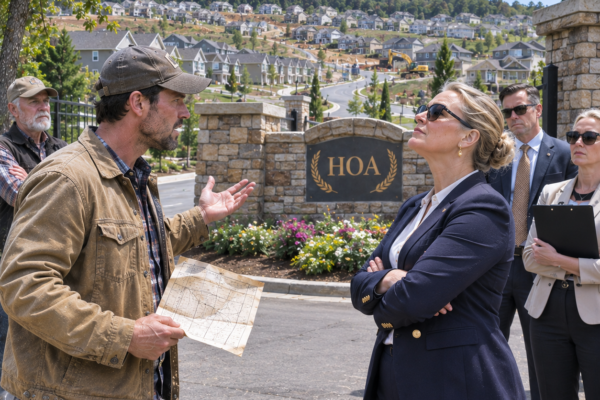
Three weeks later, Marcia appeared at the cabin.
No appointment.
White SUV.
Folder.
Elena and I were repairing a screen door.
Marcia stepped onto the porch.
“Beautiful place.”
“Thank you.”
She opened the folder.
Revenue projections.
Professional management.
Cleaning.
Guest screening.
Insurance options.
Estimated annual gross:
$118,000.
Elena whistled.
Marcia smiled.
“Exactly.”
I closed the folder.
“No.”
She blinked.
“Cole.”
“We don’t want strangers staying here.”
“You wouldn’t have to manage anything.”
“Still no.”
“This is a remarkable opportunity.”
“For someone.”
“Do you understand what that income could do?”
“Yes.”
“Then why refuse?”
Elena answered.
“Because we live here.”
Marcia looked at her.
“Not full-time.”
“Enough.”
She smiled tightly.
“This property is underused.”
That sentence changed my opinion of her.
Underused.
As though the cabin’s purpose could be measured by occupancy revenue.
I said:
“It isn’t available.”
Marcia gathered the papers.
“Think about it.”
“I have.”
“You may feel differently when the north shore plan develops.”
I looked at her.
“What plan?”
She smiled.
“Nothing final.”
Then left.
That night, Elena searched HOA meeting minutes available online.
North Shore Tourism Initiative.
Interesting.
The plan involved:
Expanded short-term rentals.
Coordinated dock access.
Lake tours.
Premium lodging packages.
Possible acquisition or management of “legacy shoreline parcels.”
Plural.
There were three non-HOA parcels along our section.
Ours was the largest and most attractive.
One belonged to an elderly couple who used it only summers.
Another was vacant woodland.
Ours had the finished cabin.
Elena looked at me.
“They’ve built a business plan around property they don’t control.”
“Looks like it.”
“Is that legal?”
“Planning isn’t ownership.”
“But it’s strange.”
“Yes.”
We called an attorney.
Melissa Park.
Real estate and association law.
She reviewed our deed.
Title history.
Subdivision plat.
Declaration.
Amendments.
Then said:
“You’re outside.”
“Completely?”
“Based on everything I see.”
“No recorded annexation.”
“No covenant burden tying your parcel to the HOA.”
“No mandatory membership.”
“Any road easement?”
“Public county road.”
“Lake access?”
“Direct shoreline.”
She leaned back.
“Then the HOA has no general governance authority over your parcel.”
Elena asked:
“Can they keep sending violations?”
“They can send paper.”
“That doesn’t make the paper enforceable.”
Melissa wrote the association.
Formal.
Short.
Stop representing that the Barrett parcel is subject to HOA regulation.
Stop issuing violation notices.
Do not use photographs or marketing language suggesting our participation in rental operations without permission.
The HOA’s attorney responded.
He agreed the parcel was not subject to the declaration.
That should have ended it permanently.
For almost a year, it did.
Then Marcia’s rental program exploded.
A regional travel influencer stayed at one of the cottages.
Videos went viral.
Bookings tripled.
The board approved hiring a full-time property coordinator.
Then neighbors began complaining.
Parking.
Noise.
Guests wandering onto private docks.
Kayaks pulled onto wrong shorelines.
The HOA tightened rules for participating rentals.
Fine.
But the north shore remained the website’s main visual attraction.
Our cabin kept appearing in aerial backgrounds.
Melissa sent two more letters.
Photographs changed.
Then returned later from different angles.
It became irritating rather than threatening.
Until the elderly couple two parcels down sold.
Buyer:
Lakewood Shores Community Holdings LLC.
I stared at the county record.
Elena said:
“They’re buying land now.”
Apparently the HOA had formed an affiliated holding entity after attorney review because the association itself had restrictions on acquiring noncommon property.
The board approved the purchase.
Legal.
The home joined the rental program.
Now our cabin sat between HOA-controlled rental property and the vacant woodland parcel.
Six months later, that woodland parcel sold too.
Different LLC.
Same registered mailing address as a development partner working with Lakewood Shores.
Suddenly we were the only privately held nonparticipating lakefront property in the center of Marcia’s “heritage cabin” cluster.
That was when offers began.
$610,000.
No.
$680,000.
No.
$750,000.
Elena laughed.
“She’s going to offer enough eventually.”
“No.”
“You wouldn’t sell for a million?”
“No.”
“Two?”
I looked at her.
“You’d sell for two?”
She smiled.
“I’d think dramatically.”
The offers stopped.
Then violation letters returned.
Not from the HOA this time.
From something called Lakewood Shoreline Compliance.
Different letterhead.
Same address.
They claimed:
Unsafe dock.
Improper shoreline drainage.
Unpermitted exterior modifications.
Unauthorized occupancy.
Unauthorized occupancy caught my attention.
We had owned the cabin for decades.
Melissa wrote again.
The HOA attorney answered that Lakewood Shoreline Compliance was a “contracted community standards vendor” and that any communication with us had been sent in error.
Again.
Error.
Then two men began driving by.
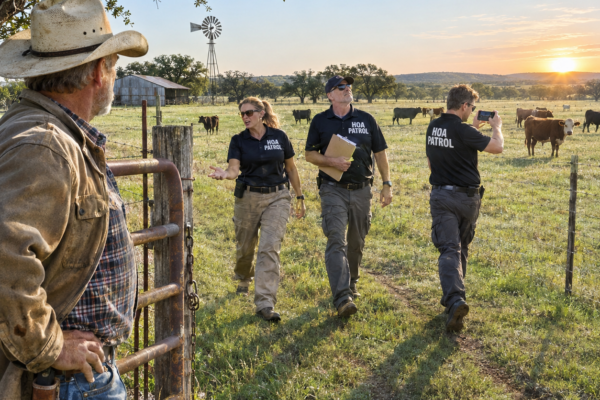
Dark gray SUV.
Blue reflective striping.
Magnetic emblem.
LAKEWOOD SHORELINE ENFORCEMENT.
I saw them twice.
Elena saw them more.
“They slow down at the driveway.”
“License plate?”
She had photographed it.
Registered to Shoreline Protective Services LLC.
Private security contractor.
I checked state licensing.
The company existed.
Its owner was Paul Haskins.
Former corrections officer.
Licensed for unarmed security services.
Interesting, because one of the two men I saw wore what looked like a holster.
Could have been pepper spray.
Could have been an empty equipment carrier.
I didn’t assume.
Melissa sent a notice to the HOA:
Any private security contractor is not authorized to enter the Barrett property absent emergency circumstances or owner consent.
The association attorney replied:
Understood.
I saved it.
The morning everything happened was a Saturday in October.
Cold enough for a jacket.
No snow yet.
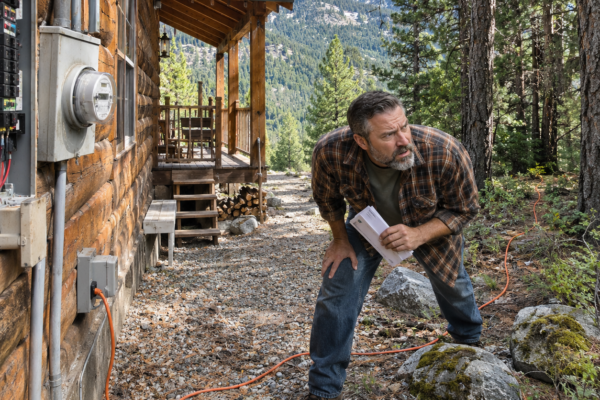
Elena and I had driven up Friday evening.
I woke early and walked a trail on the east side of our property to inspect a section where beavers had started working near a drainage inlet.
I carried a length of lightweight chain and hand tools because I needed to move a fallen branch.
Nothing tactical.
No ambush.
No plan.
Elena stayed at the cabin.
She opened windows.
Put on coffee.
Swept pine needles from the porch.
At 8:18, I heard a vehicle.
Didn’t think much about it.
At 8:21, I heard Elena shout.
Not words.
A sharp sound.
Pain.
I dropped the branch tool.
Started back.
The trees screened the cabin from my position.
When I came through the last pines, I saw the SUV.
Dark gray.
Blue reflective tape.
Two men.
One had Elena by the wrist.
The other stood behind her gripping her upper arm.
She was trying to pull free.
I ran.
Not silently like some movie assassin.
Boots on needles.
Branches.
Gravel.
The bald man heard me first.
Turned.
He loosened Elena’s wrist.
I shouted:
“Let her go!”
The second man tightened his hold.
Bad decision.
Not because I was a retired SEAL.
Because when somebody has clearly told you to release a person on private property, continuing to hold her creates a much more serious situation.
The bald man raised one hand.
“Stay back.”
I stopped about ten feet away.
“Let my wife go.”
“This property is under repossession.”
“No, it isn’t.”
“We have an enforcement order.”
“From whom?”
“Lakewood Shores.”
“Elena, are you hurt?”
She said:
“They grabbed me.”
That was enough.
I pulled out my phone.
“I’m calling the sheriff.”
The bald man moved toward me.
“No phones.”
That changed things again.
I backed up.
“Stay away from me.”
He reached for the phone.
I knocked his hand aside.
He lunged.
We collided against the hood of their SUV.
I turned him and pinned him forward long enough to create space.
Not a cinematic spine-breaking strike.
Not revenge.
Control.
He yelled.
The second man still had Elena.
I shouted:
“Release her.”
He pulled her backward.
Elena did something we’d practiced years before when I taught her basic escape principles.
She dropped her center of gravity.
Not because she was a trained fighter.
Because becoming suddenly heavy makes dragging someone harder.
His balance shifted.
She twisted.
I moved toward them.
The man released her arm and swung at me.
Wild.
I blocked.
Pushed him backward.
He fell against the porch rail.
The bald man came off the hood behind me.
I turned.
For maybe twenty seconds, everything became ugly.
Grabbing.
Shoving.
One punch from him clipped my jaw.
I drove him back against the SUV.
The second man tried to come around me.
Elena had moved inside the doorway.
Good.
I said:
“Stay inside and call 911.”
She did.
The slick-haired man—his name, I later learned, was Devin Shaw—reached for something on his belt.
I couldn’t tell what.
I stepped back.
“Don’t.”
He froze.
It was a collapsible baton.
Still closed.
I said:
“Put it down.”
He didn’t.
The bald man, Paul Haskins, grabbed my jacket from behind.
I broke the grip.
Turned.
Took him down onto the gravel.
Nothing elegant.
My knee hurt immediately.
Age does not care what you did in the Navy.
Devin extended the baton.
That sound is distinctive.
Metal snapping open.
I backed away.
He raised it.
Then a voice from the porch:
“Sheriff is coming!”
Elena.
Devin hesitated.
That hesitation ended the fight.
I stepped farther back.
Hands up.
“It’s over.”
Paul was on the ground.
Breathing hard.
Devin stood with the baton.
No one moved.
Then Elena came out only far enough to point her phone toward them.
She was recording now.
I said:
“Put the baton down.”
Devin looked at Paul.
Then toward the road.
Then dropped it.
Good.
Nobody needed a broken rib.
Nobody needed an unconscious body.
Nobody needed me proving I could hurt people more efficiently.
The threat had stopped.
So I stopped.
Paul sat up.
“You assaulted us.”
I laughed once.
“You were dragging my wife off our porch.”
“We have authority.”
“No.”
“Elena?”
She held up her bruised arm.
“No.”
Paul looked at his phone lying beside the SUV.
I reached for it.
Then stopped myself.
Not mine.
Evidence later.
I moved it farther away with my boot only because I didn’t want him using it to call someone who might tell them to leave before deputies arrived.
Then reconsidered.
Bad idea.
I didn’t need to control their communications.
I backed off.
Elena remained on the phone with dispatch.
She told them:
“Two men entered our property.”
“They grabbed me.”
“My husband intervened.”
“No weapons being used now.”
“One baton is on the ground.”
That last detail changed the response.
Deputies arrived in about twelve minutes.
Not five.
Our cabin was rural.
Sheriff Thomas Briggs came first because he happened to be nearby.
Two patrol units followed.
Nobody arrived knowing who the hero was.
Good.
Briggs stepped out.
“Everyone show hands.”
We did.
“Step apart.”
We did.
One deputy moved the baton.
Another separated Paul and Devin.
Briggs looked at Elena.
“You called?”
“Yes.”
“What happened?”
“They said they were repossessing the cabin.”
“They grabbed me.”
“Both?”
“Paul grabbed my wrist first.”
“The other grabbed my arm.”
Briggs looked toward them.
Paul said:
“We’re authorized by Lakewood Shores.”
Briggs frowned.
“For what?”
“Property enforcement.”
“Are you law enforcement?”
“No.”
“Security.”
“Then why are you using the word repossession?”
Paul started explaining.
Briggs held up a hand.
“One at a time.”
He asked me.
I gave the shortest version possible.
He did not congratulate me.
Did not say:
You ended it clean.
Did not care that I had been in the Navy until later when basic identity information came up.
He looked at the physical evidence.
Elena’s bruising.
Porch camera.
Our driveway camera.
The SUV.
Documents inside it.
Then:
“Anybody need medical?”
Paul’s face was scraped.
My jaw hurt.
Devin complained about his wrist.
Elena’s arm was bruised.
Paramedics checked everyone.
No broken bones.
No dramatic ambulance departure.
Devin went to urgent care later.
Paul declined transport.
Deputies detained both men while sorting what happened.
Then Briggs called a supervisor and county prosecutor.
That was correct.
Private-security authority can be complicated.
Trespass.
Citizen’s arrest laws.
Property-agent authority.
The deputies did not invent felonies on the driveway.
They collected facts.
One document inside the SUV changed the investigation.
Not a warrant.
Not a court repossession order.
A one-page sheet:
LAKEWOOD SHORES PROPERTY RECOVERY DIRECTIVE.
BARRETT CABIN.
Objective:
Vacate unauthorized occupants.
Secure building.
Deliver possession to Community Holdings representative.
Signed:
Marcia Denning, HOA President.
I stared.
Elena said:
“She signed that?”
Briggs said:
“Don’t touch it.”
Good.
The directive contained no court case number.
No writ.
No sheriff’s execution order.
No judge.
Nothing that allowed private security to dispossess us.
Paul told investigators Marcia had said the cabin had “reverted to HOA control” after repeated shoreline violations.
That made no legal sense.
But he said she showed them documents.
What documents?
A packet.
Most were violation letters.
An HOA map.
A proposed north shore development plan.
And something labeled:
PROPERTY CONTROL CERTIFICATION.
That document purported to say our parcel had become subject to Lakewood Shores after “constructive annexation.”
Melissa nearly laughed when she saw it later.
“There is no magic constructive annexation because the president types the phrase.”
The deputies called the county records office.
Deed remained ours.
No transfer.
No foreclosure.
No lien sale.
No judgment.
No recorded HOA interest.
Nothing.
Paul and Devin were taken to the sheriff’s office for interviews.
Not hauled away in neck braces.
Not crying.
Not instantly convicted.
Elena and I stayed at the cabin.
A deputy photographed her injuries.
We turned over copies of camera footage.
Our porch camera had captured almost everything from the moment they approached.
That mattered more than my military background ever could.
The video showed:
SUV arrives.
Paul exits.
Elena speaks.
Paul displays papers.
Argument.
Paul takes Elena’s wrist.
She pulls away.
Devin moves behind her.
Grabs upper arm.
They begin moving her toward the steps.
I arrive.
I demand release.
Paul approaches me.
Physical confrontation.
Elena escapes.
Baton appears only near the end.
Threat stops.
Everyone separates.
Clear enough.
Briggs called that afternoon.
“Paul and Devin are being booked.”
“For what?”
“Initial charges include assault and unlawful restraint.”
“Prosecutor will review impersonation issues and anything related to the property documents.”
“Marcia?”
“Being interviewed.”
“Arrested?”
“Not at this point.”
That was the first moment the real story diverged sharply from the version neighbors later told.
No sunset raid.
No queen of the HOA dragged from her mansion in handcuffs.
Investigators needed evidence.
They got warrants later.
For HOA records.
Security-company communications.
Rental-program accounts.
Email.
Phones.
Not because Paul yelled:
Marcia made me do it!
And everybody immediately believed him.
Because investigators corroborated.
Texts.
Contracts.
Payment records.
Board minutes.
Emails.
The first useful text came from Paul Haskins’s phone after a warrant.
Paul:
Do you have actual court paperwork for Barrett?
Marcia:
The HOA documents are sufficient. We need possession before Monday.
Paul:
If they refuse?
Marcia:
Remove unauthorized occupants from the property and secure it.
Paul:
Police standby?
Marcia:
No. They will only complicate a civil association matter.
That sentence hurt her.
Another:
They will argue they are outside HOA. Do not debate. Execute the directive.
Then the message that explained the timing:
Prospective rental partner tours north shore Monday. Cabin must be available for inspection.
There it was.
Not personal hatred.
Money.
Access.
A business opportunity.
The rental program had recently entered negotiations with a hospitality company called Northstar Lakeside Management.
Northstar wanted to take over marketing and booking for all Lakewood Shores rental inventory.
Projected five-year agreement:
Millions in gross booking activity.
Our cabin appeared on a preliminary inventory map.
Not as owned.
As:
PENDING CONTROL — HERITAGE CABIN #1.
I looked at that phrase for a long time.
Pending control.
Elena said:
“They already put us in the portfolio.”
“Looks like it.”
“Without owning us.”
“Yes.”
Investigators dug into the rental program.
It wasn’t as simple as Marcia pocketing cash directly.
That part of the original rumors was wrong.
Most revenue went into legitimate HOA accounts.
Owners in the rental program received their share.
The association retained management percentages.
Books existed.
Taxes filed.
But there were problems.
A consulting company called Denning Hospitality Strategies received payments from vendors.
Marcia owned it.
Some payments were disclosed.
Some were not.
Northstar had agreed to pay Denning Hospitality a “transition advisory fee” if the expanded north-shore inventory reached a target number of units.
Our cabin was part of that count.
If Northstar got the additional properties, Marcia stood to earn a substantial consulting payment.
That financial interest had not been disclosed to the full HOA board when she pushed the expansion.
Now motive had evidence.
Not:
She wanted our cabin because she was obsessed.
More specific.
She wanted the north-shore inventory expanded because a larger portfolio helped secure a management deal from which her private company could benefit.
That was worse than personality.
Board members were furious.
Most had believed the HOA was simply increasing community revenue.
A director named Helen Brooks had actually voted against the Northstar negotiations because she thought the association was turning into a hotel operator.
She became an important witness.
Helen had emailed Marcia:
We cannot promise properties we do not own or manage.
Marcia replied:
Control issues are being resolved.
Helen:
Does Barrett have an agreement?
Marcia:
Not yet. Legal posture is evolving.
Legal posture.
No lawyer had said that.
The HOA’s own counsel had repeatedly stated our parcel was outside the declaration.
Investigators found those emails too.
One from counsel three months before the attempted removal:
Marcia,
For clarity, the Barrett parcel is not currently subject to Lakewood Shores’ declaration and cannot be treated as association-controlled property absent voluntary annexation, conveyance, or another legally valid change in title/status. Violation notices should cease.
Marcia replied:
Understood.
That one word mattered.
She knew.
Everything after could no longer be explained as simple misunderstanding.
Paul and Devin’s cases moved first.
Both were private security contractors.
Paul owned the company.
Devin worked for him.
Neither was a police officer.
Their uniforms and badges looked official enough that prosecutors examined the state’s impersonation statute.
The evidence showed Paul had told Elena:
“This property is being repossessed.”
He never explicitly said:
I am a police officer.
But the vehicle markings, badge presentation, “HOA enforcement” designation, and asserted authority to remove occupants created a factual issue.
Ultimately the plea agreements focused on charges easier to prove from video:
Unlawful restraint.
Assault.
Criminal trespass after refusal to leave.
And, for Paul, conspiracy tied to executing the false property-recovery directive.
The police-impersonation count was not the centerpiece.
Paul lost his security license.
Received a custodial sentence followed by supervision.
Devin’s sentence was lighter because he cooperated, had no ownership role in the security company, and provided messages showing he had questioned the authority before arriving.
He still participated.
He still grabbed Elena.
Cooperation did not erase that.
The court considered both.
I attended sentencing only because Elena wanted to.
Paul apologized.
I believed some of it.
He said:
“I thought the HOA had lawful control.”
The prosecutor asked:
“Then why didn’t you call the sheriff when the occupants refused?”
Paul looked down.
That was the question.
He had accepted paperwork because it gave him the authority his client wanted him to have.
Verification would have risked losing the job.
Devin said:
“I knew something felt wrong.”
Elena stared at him.
After court she said:
“That makes me angrier.”
“Why?”
“Because he knew.”
“Feeling wrong isn’t knowing.”
“He still grabbed me.”
“Yes.”
She was allowed to be angry.
Marcia’s case took longer.
Nearly eighteen months.
She resigned as president immediately after the board received the first investigative documents.
Technically, the board suspended her authority first.
Then the members voted to remove her from the presidency under the bylaws.
She resigned from the board before a second removal process concluded.
No cheering crowd.
No dramatic police escort.
She attended by video on advice of counsel.
Her attorney argued she genuinely believed the HOA had an equitable right to control our property because of historical boundary disputes and the rental expansion.
That argument ran into the counsel emails.
Understood.
Hard word to explain away.
Financial investigators then traced Denning Hospitality.
Marcia had received $34,000 in consulting payments connected to vendors doing business with the HOA.
Some had been disclosed on tax records.
That wasn’t the issue.
The issue was conflict disclosure to the association.
The Northstar transition agreement offered another $75,000 if specified inventory targets were met.
Our cabin appeared in the inventory schedule.
That created a much clearer incentive.
Still, prosecutors did not charge her with every crime neighbors demanded.
No attempted kidnapping charge simply because security tried to drag Elena away.
No twenty-year sentence because people were furious.
The eventual case centered on conspiracy to commit unlawful restraint, falsification and use of misleading association documents, and financial-conflict-related offenses supported by records.
Some charges survived.
Some were reduced.
Some resolved through restitution and plea negotiations.
She received prison time.
Not decades.
Then supervision.
Financial restitution to the HOA and affected parties.
Restrictions on fiduciary roles during supervision.
Civil consequences separate.
Northstar terminated negotiations.
That cost Lakewood Shores expected revenue.
But the board later concluded the association should never have been running an aggressive commercial expansion in the first place.
The rental program was scaled back.
Existing homeowners with valid voluntary agreements could complete their terms.
No new HOA-controlled acquisitions for a period established by the board.
An outside manager handled remaining rentals.
Every property in the program had to show recorded ownership or a signed management agreement before appearing on marketing material.
Obvious.
Now written.
The board commissioned an independent audit.
That was where the story became less satisfying and more useful.
Not everything Marcia had done was improper.
The clubhouse roof contract?
Clean.
Marina insurance?
Clean.
Landscaping savings?
Real.
Two rental cottages?
Properly authorized.
Several vendor relationships?
Legitimate.
That mattered.
Removing someone for serious misconduct does not require rewriting her entire history as fraud.
The audit separated good decisions from conflicts.
The new president, Helen Brooks, insisted on that.
At the first meeting after Marcia left, a homeowner shouted:
“Void everything she ever approved.”
Helen said:
“No.”
The room quieted.
“If a contract is lawful, properly approved, and beneficial, we don’t destroy it because we dislike the person who signed it.”
“If a decision was unauthorized, conflicted, or fraudulent, we correct it.”
“That is governance.”
I liked Helen immediately.
She hated meetings.
That helped too.
The HOA also sent us a formal letter.
Not admitting ownership because it had none.
Acknowledging:
The Barrett parcel is not subject to Lakewood Shores HOA jurisdiction.
No association personnel or contractors have authority to enter for enforcement.
No HOA marketing may depict the cabin as rental inventory without written owner permission.
No access.
No inspection.
No “pending control.”
Melissa framed that phrase in an email:
CONGRATULATIONS. YOUR CABIN IS OFFICIALLY NOT THEIRS, WHICH IT NEVER WAS.
I laughed.
Civil litigation followed.
Of course.
Elena and I sued Paul, Devin, Shoreline Protective Services, and Marcia.
The HOA and insurer became involved because Marcia had acted in her official role while also exceeding lawful authority.
Coverage questions took months.
Did the policy cover intentional conduct?
Negligent supervision?
Board actions?
Contractor actions?
Lawyers argued.
Eventually settlement.
Medical expenses for Elena’s arm.
My minor injuries.
Property damage to porch railing.
Attorney fees where recoverable.
Compensation for the unlawful intrusion and restraint claims.
No half-million-dollar cinematic check.
Enough to matter.
Not enough to make what happened worth it.
We used part to improve the cabin’s security.
Cameras.
Gate sensor.
Better lighting.
Not fortress measures.
Just enough that Elena did not have to wonder who was driving up.
For almost a year, she froze whenever a dark SUV appeared.
That’s something the dramatic version leaves out.
It loves the fight.
Not the aftermath.
Elena had bruises for ten days.
Fear lasted longer.
She stopped sweeping the porch alone for months.
Would check the window before opening the door.
Asked me twice whether we should sell.
That hurt.
The cabin had been the safest place in her childhood memories.
Marcia almost changed that.
We went to counseling.
Together at first.
Then separately.
I had my own problem.
Anger.
Not at Paul.
Not exactly.
At myself.
I kept replaying the first seconds.
What if I had been five minutes farther into the woods?
What if Elena had been alone longer?
What if Devin had a gun instead of a baton?
What if I had hit harder?
What if someone had died?
I had spent years around violence professionally.
I knew better than to romanticize how quickly physical force can go wrong.
Still, internet versions of our story began circulating.
Retired Navy SEAL destroys fake HOA cops who touched his wife.
I hated it.
Elena hated it more.
One video animation showed me breaking a man’s arm and punching him unconscious.
Never happened.
Another claimed I wrapped a chain around my fist.
False.
The chain was twenty yards away near the branch I’d been moving.
Another said Elena whispered:
“Finish him.”
She absolutely did not.
When I showed her that line, she stared at me.
“Finish him?”
“Apparently.”
“Who writes this garbage?”
“People who have never seen an assault.”
She shook her head.
“I was trying not to throw up.”
Exactly.
Fear isn’t cinematic.
Neither is force.
The real moment that mattered was not me beating anyone.
It was Elena shouting:
“Sheriff is coming!”
And Devin stopping.
Threat ended.
Force ended.
That is what should happen.
My prior training mattered mostly because I understood that once the threat stops, you stop.
No punishment.
No lesson.
No revenge.
Courts handle lessons.
Sometimes badly.
Still better than somebody with adrenaline deciding how many punches justice requires.
Sheriff Briggs understood that.
During the investigation, one reporter asked him:
“Was Barrett’s military background responsible for the attackers’ injuries?”
Briggs answered:
“No.”
“The evidence indicates Mr. Barrett used force during an active physical confrontation involving his wife.”
“His employment history does not determine whether that force was lawful.”
I sent him a thank-you note.
Not because he defended me.
Because he refused the mythology.
A year later, Paul Haskins wrote Elena.
Not me.
The letter came through attorneys.
He apologized for grabbing her.
Said Marcia had convinced him we were unlawful occupants refusing a final property directive.
Elena read it.
Then said:
“Do you believe him?”
“Partly.”
“So do I.”
She folded the letter.
“He still could have checked.”
“Yes.”
“He still could have called the sheriff.”
“Yes.”
“That’s what I can’t get past.”
I understood.
Marcia had supplied false authority.
Paul chose not to verify because the false authority was useful.
Both mattered.
Devin eventually testified in Marcia’s case.
His cooperation reduced his sentence.
Neighbors called him a rat.
I thought that was childish.
If someone participated in wrongdoing and later gives truthful evidence, that does not erase his conduct.
It also should not be mocked.
Truth is useful even when it comes late.
He testified that Marcia had held a meeting with them two days before the cabin visit.
She described us as:
Defiant occupants.
Obstruction to association control.
Last holdout.
She gave them the Property Recovery Directive.
Paul asked:
“What if they won’t leave?”
Marcia answered:
“Remove them from the structure and secure it.”
Devin asked:
“Sheriff involved?”
Marcia:
“No.”
That mattered.
She deliberately wanted private enforcement instead of lawful civil process.
Why?
Because lawful civil process would require showing a court her right to possession.
She had none.
Shortcuts are attractive when the proper process would expose the weakness of your claim.
That became the central lesson for me.
Marcia had lawyers.
Money.
Board authority.
If she honestly believed the HOA owned our cabin, she could have filed a civil action.
Quiet title.
Declaratory judgment.
Whatever her counsel believed appropriate.
She didn’t.
Because counsel had already told her the title was ours.
So she created a piece of paper that looked like authority and handed it to people willing to act on appearances.
That is more dangerous than someone simply yelling:
This is mine.
Documents can make nonsense feel official.
Letterhead.
Signatures.
Words like directive.
Repossession.
Compliance.
Enforcement.
People stop asking what legal mechanism sits underneath.
Paul did.
Devin did partly.
Some board members did for years.
I didn’t because Elena liked deeds more than people.
She deserves credit.
The cabin became peaceful again slowly.
One morning about eighteen months after the incident, Elena took the broom outside.
I noticed through the kitchen window.
She swept the whole porch.
Alone.
When she came inside, I said nothing.
She knew I had seen.
“Don’t make it a thing.”
“I wasn’t.”
“You were thinking about making it a thing.”
“Maybe.”
She smiled.
That was healing.
Quiet milestones nobody records.
The rental website changed too.
No more north-shore “pending” properties.
Every listing displayed:
OWNED OR MANAGED BY PARTICIPATING PROPERTY OWNER.
The HOA added a governance policy:
No third-party property may be advertised, inspected, occupied, accessed, or represented as future association inventory without documentary ownership or a signed agreement from the owner.
Helen asked me to review the language.
I said:
“You have lawyers.”
“Yes.”
“I want the sentence to make sense to normal people.”
Fair.
I suggested one addition:
Planning does not create property rights.
They included it.
I love boring sentences like that.
Three years later, Northstar returned.
Not to the HOA.
To us.
A representative called.
Would we ever consider renting the cabin directly?
I almost hung up.
Then Elena said:
“Ask how much.”
I stared at her.
She grinned.
We met them.
Different management team.
No Marcia.
No HOA control.
They offered more than I expected.
Elena said:
“No.”
I laughed in the car.
“You made them present everything just to say no?”
“I wanted the pleasure of being asked.”
That was worth the meeting.
We never rented.
The cabin stayed ours.
Morning coffee.
Grandchildren.
Fishing.
Friends.
Occasional empty weeks where nobody “optimized” the asset.
Underused.
Beautifully.
The board eventually sold one of the HOA-owned cottages because commercial management had become too complicated.
Helen wrote in the annual report:
The Association’s purpose is community governance, not maximizing hospitality inventory.
I laughed for ten minutes.
Marcia would have hated that sentence.
Maybe that’s unfair.
People can change.
I don’t know whether she did.
After her release, she did not return to Lakewood Shores.
Her house had been sold during the legal proceedings.
Partly to satisfy ordinary financial needs and settlement obligations.
Not confiscated.
No cinematic forfeiture.
She moved somewhere outside the county.
I never contacted her.
She never contacted me.
That was enough.
Sheriff Briggs retired.
His replacement was younger.
Less colorful.
Probably better.
At Briggs’s retirement barbecue, he asked me:
“You know what’s funny?”
“What?”
“People still tell me you called my direct line because everyone at the lake knew who you were.”
“I called 911.”
“I know.”
“Apparently that’s not dramatic enough.”
He drank his iced tea.
“Nothing is.”
Then:
“You did good that day.”
I looked at him.
“Careful.”
“What?”
“You’ll create another internet quote.”
He laughed.
Then clarified:
“You stopped when they stopped.”
That meant something.
“Thanks.”
Because that was the part I had worried about.
Could I have hurt them worse?
Yes.
Would that have been justice?
No.
I had force available.
The question was when it became unnecessary.
That boundary matters as much as property boundaries do.
Maybe more.
Elena and I celebrated our fortieth anniversary at the cabin.
Our daughter arranged dinner on the dock.
Family.
Eight people.
No HOA.
No rental guests.
No photographers.
At sunset, Elena leaned against me.
Same lake.
Same porch behind us.
She said:
“Do you ever think about selling now?”
“No.”
“Really?”
“You?”
“No.”
Then:
“Maybe if someone offers three million.”
I stared.
She smiled.
“Four.”
“Traitor.”
She laughed.
That sound mattered more than any court result.
After dinner, our grandson asked about the security camera near the porch.
“Why do you have so many?”
Elena said:
“Because two dumb men came here once.”
He looked delighted.
“What happened?”
I said:
“Grandma told them to leave.”
“Did they?”
“Eventually.”
Elena kicked my boot.
Good.
He did not need the violent version at eight.
When he was older, we told him.
He asked:
“Were you scared?”
I said:
“Yes.”
“You were a SEAL.”
“So?”
He frowned.
“Aren’t SEALs not scared?”
I laughed.
“That would be a terrible military program.”
Elena said:
“Your grandpa was scared because people he loved were in danger.”
He looked at me.
“So what does training do?”
“Helps you make decisions while scared.”
“Did you beat them up?”
“No.”
“I stopped them.”
“That sounds less cool.”
“It is.”
He seemed disappointed.
Good.
Children can enjoy action movies.
Real life should be less cool.
I still have the Property Recovery Directive.
Original is evidence.
Copy in my home file.
Sometimes I pull it out.
LAKEWOOD SHORES PROPERTY RECOVERY DIRECTIVE.
Big words.
Official formatting.
Signature.
Nothing underneath.
No deed.
No order.
No court authority.
A fake bridge between wanting something and owning it.
That piece of paper fascinates me more than Marcia’s emails.
Because so much harm comes from people confusing presentation with legitimacy.
Uniforms.
Badges.
Letterhead.
Titles.
President.
Enforcement.
Repossession.
None of them create underlying rights by themselves.
A real process leaves a trail.
Recorded title.
Contract.
Court order.
Statute.
Valid covenant.
Consent.
Something.
Marcia’s directive had only confidence.
That was not enough.
But it nearly was.
If Elena had been more frightened, maybe she leaves.
If I had not returned when I did, perhaps they pressure her into the SUV.
Maybe Paul changes his mind.
Maybe a neighbor sees.
Maybe sheriff arrives.
We will never know.
That’s why I refuse to build the story around me appearing from the trees like some avenging warrior.
The system should not depend on a former SEAL happening to be nearby.
Elena deserved protection if she’d been alone.
Any homeowner would.
Any elderly couple.
Any single mother.
Any person without military training.
Rights that depend on your ability to physically enforce them are not much of a legal system.
The important part was what happened after.
Deputies came.
Records checked.
Video preserved.
Courts reviewed.
Licenses revoked.
Board corrected.
Money traced.
The cabin remained ours because the deed already said it was ours.
I did not win it in a fight.
That distinction is everything.
People still occasionally email me versions of the story.
One title:
FAKE HOA COPS TOUCH SEAL’S WIFE—INSTANT REGRET.
Delete.
Another:
NAVY SEAL DESTROYS HOA THUGS.
Delete.
Another:
HOA PRESIDENT SENT MEN TO STEAL HIS CABIN—SHE GOT 40 YEARS.
Delete.
None interest me.
If I had to title it myself, maybe:
They brought a fake repossession order to the one house they had already been told they didn’t own.
Less viral.
More accurate.
Elena says I am terrible at titles.
She’s right.
The phrase that stayed with her was something Marcia wrote in an email:
Control issues are being resolved.
Elena framed that one.
Not literally.
Mentally.
She says:
“Whenever someone says ‘control issue,’ ask whose control.”
Smart woman.
Lakewood Shores eventually stopped using the word enforcement almost entirely.
Violations became compliance notices.
Security became security.
Appeals had written procedures.
Outside properties were marked clearly on association maps.
The north-shore planning map now shows our parcel in white with:
NON-HOA PRIVATE PROPERTY.
Excellent.
One map label prevented more nonsense than a dozen threatening letters.
The HOA also adopted a conflict policy.
Board members had to disclose financial interests in vendors, management firms, or transactions.
Independent approval required.
Marcia’s consulting arrangement had exposed a gap.
Again, obvious afterward.
Still useful.
Helen served two terms.
Then stepped down voluntarily.
No scandal.
No empire.
She told me:
“I’m tired of people emailing about dock ladders.”
I said:
“That is the healthiest reason anyone has ever left an HOA board.”
She agreed.
A younger board took over.
I barely know their names.
Perfect.
The more ordinary Lakewood Shores became, the more I felt the story had truly ended.
Not at sentencing.
Not settlement.
When I stopped knowing who the HOA president was.
That’s peace.
Years later, the cabin roof needed replacing.
We hired a crew.
One worker noticed the faded blue marks where the fake-enforcement SUV had scraped the edge of the gravel during the confrontation.
“Want us to fix that section?”
I looked.
Barely visible.
“Sure.”
They resurfaced the driveway.
By evening, gone.
I expected to feel something.
I didn’t.
Damage disappears.
Memory doesn’t need matching scars.
The next morning, Elena swept the porch.
I made coffee.
Sunrise came over the lake.
Same view Marcia once wanted to package as “exclusive heritage inventory.”
I sat.
No guests.
No booking calendar.
No revenue target.
A duck landed near the dock.
Elena said:
“Terrible use of a premium asset.”
I laughed so hard coffee came through my nose.
Marcia’s phrase had become a joke.
Underused property.
Yes.
Gloriously underused.
That is one of the privileges of ownership.
You may choose not to maximize it.
You may leave a room empty.
A field unmonetized.
A cabin quiet.
A dock without paying guests.
Property rights include inefficient choices.
That bothered Marcia because she saw revenue where we saw memory.
Neither vision was inherently evil.
The problem was when she decided hers overrode ours.
The fight was only the visible consequence.
The real mistake happened earlier.
When Marcia asked:
Why refuse?
And did not accept:
Because we want to.
People who cannot accept voluntary no eventually search for ways to convert it into required yes.
Pressure.
Rules.
Fees.
Documents.
Authority.
That’s what happened.
The first violation letter was not dangerous.
The next wasn’t either.
But every time the HOA ignored the deed, it rehearsed the idea that our boundary could be treated as negotiable.
Then the rental program gave that rehearsal money.
Then Marcia’s private consulting fee added personal incentive.
Then the fake directive gave security contractors paper to act on.
Step by step.
No one morning created the whole thing.
That is why I tell people to pay attention early.
Not fight everything.
Document.
Ask:
What is the authority?
Where is it recorded?
Who approved this?
What process applies?
Most mistakes dissolve there.
Ours didn’t.
Marcia had already received those answers.
She continued.
That made the eventual consequences appropriate.
But even then, Elena never wanted Marcia destroyed.
She wanted the cabin left alone.
At sentencing, the victim advocate asked whether Elena wanted to make a statement.
She did.
Her statement was three paragraphs.
The last line:
I do not need Ms. Denning to lose everything. I need her to understand that wanting my home did not create a right to remove me from it.
That’s Elena.
Better than anything I could have written.
The judge referenced it.
Not dramatically.
Simply said:
“The court agrees that the distinction between desire, organizational authority, and lawful property rights is central to this case.”
Exactly.
Afterward, a reporter asked Elena:
“Do you feel justice was served?”
She said:
“Ask me in five years.”
I loved that.
Five years later, I asked.
We were sitting on the dock.
“Justice?”
“What?”
“You told that reporter to ask in five years.”
She thought.
Then:
“Yes.”
“Because Marcia went to prison?”
“No.”
“Because I can sit here without checking the driveway every thirty seconds.”
That was the answer.
Accountability is partly external.
Sentences.
Restitution.
Reforms.
But the person harmed measures something else.
Can I sleep?
Can I open the door?
Can I enjoy the place again?
Can I hear an SUV without freezing?
That recovery took longer than court.
It mattered more.
We are older now.
The cabin is eventually going to our daughter.
The deed is already addressed in our estate plan.
Clear.
Survey updated.
No ambiguity.
Melissa insisted.
“I’m not letting your grandchildren fight Lakewood Shores in 2045.”
Fair.
The updated title packet contains a note:
Parcel is not subject to Lakewood Shores declaration. No HOA rights except any specifically recorded easements, if applicable.
There aren’t any.
Clean.
I also left our daughter the Property Recovery Directive copy.
She asked:
“Why keep garbage?”
“Because people forget.”
“What am I supposed to do with it?”
“Read the deed first.”
She rolled her eyes.
Good.
Parents should be slightly annoying until death.
One summer, Lakewood Shores asked permission to use a photograph of our shoreline in a historical exhibit.
They asked.
In writing.
Purpose.
Duration.
No commercial rental advertising.
Credit optional.
Elena said:
“Yes.”
I said:
“That easy?”
“They asked.”
There it is.
Permission is often cheaper than entitlement.
The exhibit went in the clubhouse.
Caption:
NORTH SHORE, CIRCA 1972 — PRIVATE CABINS BEFORE LAKEWOOD SHORES DEVELOPMENT.
Our cabin in the background.
Granddad’s old boat.
Beautiful.
We attended the opening.
Helen was there.
Sheriff Briggs too, retired.
Someone joked:
“Cole, your cabin finally joined the HOA.”
I said:
“Over my dead body.”
Elena elbowed me.
Everyone laughed.
No tension.
That is another sign something has healed.
You can joke without trying to rewrite history.
The property remained private.
The HOA remained an HOA.
Both could coexist once everyone stopped pretending one needed to control the other.
If I learned anything, it is that authority should become more precise as stakes increase.
Marcia did the opposite.
When letters failed, she invented stronger language.
When stronger language failed, she hired enforcement.
When enforcement still faced a deed she couldn’t overcome, she created a recovery directive.
Each escalation became less legally grounded and more forceful.
That is backwards.
The more serious the action, the stronger the legal basis should become.
Removing someone from property?
Court.
Writ.
Lawful process.
Not an HOA president’s signature.
That simple principle would have prevented everything.
Paul’s scraped face.
Devin’s injured wrist.
Elena’s bruises.
My knee.
Criminal cases.
Lost careers.
Legal bills.
Fear.
All of it.
Sometimes people say:
“But if you hadn’t come out of the woods, Marcia would have gotten the cabin.”
No.
Maybe she would have gotten Elena off the property temporarily through intimidation.
Maybe security would have locked the door.
But title would remain ours.
Police would come.
Courts would intervene.
The deed would not evaporate.
That’s another reason the violent mythology is wrong.
I did not save ownership with my hands.
Ownership was already recorded.
I protected Elena from an immediate physical assault.
Different thing.
The law protected the property afterward.
That division matters.
It is also why I do not like the phrase:
They picked the wrong wife.
Elena wasn’t protected because she married me.
She was protected because nobody had the right to drag her from her own porch.
If I had been three states away, the answer should have been the same.
Call the sheriff.
Preserve evidence.
Stop the unlawful removal.
The system failed briefly because private contractors acted first.
Then corrected.
Not perfectly.
Enough.
The last time I saw Paul was at a restitution hearing.
He looked older.
So did I.
He walked past with counsel.
Stopped.
“Mr. Barrett.”
I looked at him.
He said:
“I should have called the sheriff.”
“Yes.”
That was all.
No threat.
No handshake.
He walked on.
Maybe he wanted forgiveness.
Maybe not.
But he finally identified the exact moment he should have chosen differently.
Not when I appeared.
Not when the fight started.
Before the SUV ever arrived.
Call the sheriff.
Verify authority.
Cheap exit.
Same with Marcia.
Call counsel.
Follow the deed.
Cheap exit.
Same with Devin.
Refuse to grab Elena.
Cheap exit.
Bad outcomes often become inevitable only after people ignore a chain of inexpensive exits.
That is what I remember now.
Not the fight.
The exits.
And one quiet Saturday years later, while Elena stood on the porch sweeping pine needles exactly where those men had once grabbed her, I looked across the lake and realized Lakewood Shores had finally become what it should have been all along.
A neighboring association.
Nothing more.
Its rules ended where its authority ended.
Its rental program ended where our property began.
Its president’s ambitions no longer crossed our driveway.
And our cabin was once again just a cabin.
Not inventory.
Not a revenue target.
Not a strategic holdout.
Home.
That was all Elena and I had ever asked it to remain.
And after everything Marcia had done to turn our refusal into something she believed she could override, the final answer was still the same one we’d given her from the beginning.
No.