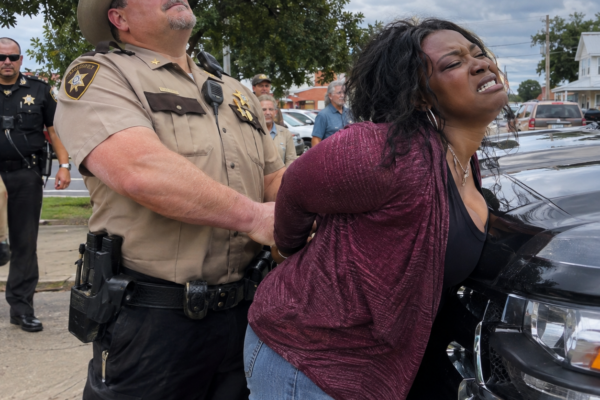
HOA President Sent Cement Trucks Across My Family Farm and Destroyed My Father’s Irrigation Lines—She Never Expected All Three Trucks to Sink Into My Land
HOA President Sent Cement Trucks Across My Family Farm and Destroyed My Father’s Irrigation Lines—She Never Expected All Three Trucks to Sink Into My Land
“MOVE YOUR FILTHY COWS, YOU WORTHLESS FARM BOY! MY HUSBAND’S TWELVE-MILLION-DOLLAR DEVELOPMENT IS MORE IMPORTANT THAN YOUR DEAD DADDY’S PATHETIC PATCH OF DIRT! IF YOU DON’T GET OUT OF OUR WAY, THOSE CEMENT TRUCKS WILL RUN RIGHT OVER YOU!”
That’s what Tammy Bridgewater, president of the Ridgeline Estates HOA, told me while three fully loaded cement mixers rolled across my private hayfield.
I stood beside my broken fence, watching their enormous tires crush the coastal Bermuda grass my father had spent forty years cultivating.
Then the lead truck rolled directly over our underground irrigation system.
CRACK.
Water erupted through the earth.
The second truck followed.
Then the third.
By the time they reached the construction site, they’d destroyed thousands of dollars in hay, damaged my fences, and shattered irrigation pipes my father had installed with his own hands.
I demanded they stop.
Tammy laughed from beside her pearl-white Cadillac Escalade.
“YOUR DADDY LEFT YOU SOME DIRT, GARRETT. GET OVER IT! MY HUSBAND BUILDS MILLION-DOLLAR HOMES. WE DON’T NEED PERMISSION FROM SOME BROKE CATTLE RANCHER!”
What she didn’t know was that my family had owned those 280 acres since 1961.
The construction easement she claimed gave her trucks access had expired years earlier.
And I’d already served formal warnings forbidding her husband’s company from crossing my property.
She ignored every one.
Instead, she threatened to sue me, tried to have my farm declared a public road, and even accused my cattle of contaminating the neighborhood’s water supply.
But there was something Tammy had never bothered to learn about me.
Before returning home to care for my father’s ranch, I’d spent twelve years serving with the United States Army Corps of Engineers.
I understood heavy equipment, drainage, and unstable ground better than she could imagine.
And while Tammy was busy threatening me, I’d discovered that her husband’s development was hiding serious environmental violations—and that hundreds of thousands of dollars in HOA money had disappeared into his company.
Then she called with one final warning.
“MONDAY MORNING. SIX O’CLOCK. THREE CEMENT TRUCKS. THEY’RE COMING ACROSS YOUR LAND WHETHER YOU LIKE IT OR NOT!”
I looked toward the southeast field.
The irrigation repairs were finished. The drainage work had changed the ground. And the warning signs and legal notices had already been prepared.
On Monday morning, three enormous mixers approached the same unauthorized shortcut.
Tammy believed nothing had changed.
But when the lead truck crossed into my field, I heard a sound I’d learned to recognize during my years as a military engineer.
The ground beneath forty tons of machinery was beginning to give way.
PART2
At first, it sounded like a heavy branch snapping beneath a wheel.
Then came a deep, wet groan from the soil.
The lead cement mixer lurched forward.
Its driver hit the brakes, but the massive vehicle continued settling as the ground beneath its front wheels failed.
I stood behind my fence, watching the cab dip toward the field.
The drum kept turning.
A few seconds earlier, the truck had been moving confidently along the same shortcut Bridgewater Development had used for months.
Now its front end was sinking into saturated earth.
The second driver reacted.
I heard his brakes.
The truck began turning away from the first.
But the ground beside the route was unstable too.
His wheels broke through the surface, and the vehicle tilted sharply.
Then the third driver tried to stop.
Three enormous machines were suddenly struggling in the soft ground of my southeast field.
I grabbed my phone and reported what was happening, including the presence of the drivers and the danger posed by the heavy vehicles.
Whatever I thought of the Bridgewaters, I wanted those men out of their cabs safely.
They were workers sent along a route their employer had insisted was legal.
They weren’t the people who’d threatened me at HOA meetings or ignored my written complaints.
The last thing I wanted was somebody getting hurt.
Within minutes, all three drivers had gotten clear.
The mixers remained stranded in the field, their immense weight settling into the clay.
I could hear metal creaking.
Wet concrete was beginning to spill from one of the damaged vehicles.
Then the sound I’d been expecting arrived from the county road.
An engine.
A white Cadillac Escalade.
Tammy Bridgewater stepped out wearing expensive sunglasses and shoes completely unsuited for a muddy cattle field.
She stared at the trucks.
Then she looked at me.
“WHAT THE HELL DID YOU DO?”
I didn’t answer immediately.
For months, she’d been telling me that my property belonged to anyone important enough to use it.
Now three cement mixers sat helplessly in the ground she’d dismissed as worthless dirt.
But the scene in front of us was only the final chapter of a fight that had begun long before that Monday morning.
To understand how the president of a wealthy HOA ended up standing beside three stranded construction trucks on my family’s ranch, you have to go back to the day I returned home after my father died.
My name is Garrett Caldwell.
I was forty-seven when I inherited the farm.
I’d spent twelve years on active duty in the United States Army, serving in engineering assignments that took me far from the Texas Hill Country where I’d grown up.
Four deployments.
Years of working around heavy equipment, temporary bridges, drainage systems, construction sites, and difficult terrain.
I learned to respect the ground beneath my feet.
Not because dirt was mysterious.
Because it wasn’t.
Every kind of soil behaved differently under pressure.
Dry limestone wasn’t saturated clay.
A firm-looking surface didn’t necessarily mean the ground beneath it could support a loaded vehicle.
And when people ignored those differences, things could go badly wrong.
My father understood land in a different way.
He hadn’t studied engineering.
He’d spent his life working cattle, repairing fences, managing water, and watching the weather.
He could look at a pasture and tell me whether it would produce enough hay for the season.
He knew when to move the herd.
He knew which creek beds would stay muddy after a hard rain.
He understood the farm because he’d spent forty years listening to what it told him.
The Caldwell family had owned those 280 acres in Kendall County since 1961.
My grandfather bought the land with savings earned through decades of pipeline work.
He wasn’t wealthy.
But he wanted something permanent.
A place where his children could grow up knowing exactly where they belonged.
My father inherited the ranch and raised cattle there for forty years.
Then pancreatic cancer took him.
Eleven weeks.
That was all the time between the diagnosis and his funeral.
Eleven weeks to watch a strong man become too weak to walk to the barn.
Eleven weeks to realize how many things I’d never asked him.
Eleven weeks to regret all the conversations I’d postponed because I assumed there would always be another Christmas, another summer, another visit home.
When he died, I was still trying to understand how life could change so quickly.
He left me the farm.
I left Colorado Springs, loaded my belongings into a rented moving truck, and drove south.
I had no interest in turning the land into a subdivision or selling it to developers.
I wanted to keep it operating.
The farm wasn’t perfect.
The farmhouse needed a roof.
Several sections of fencing were worn.
The barn stalls needed repairs.
The irrigation system was aging.
But the cattle were healthy, the water was good, and the hayfields still produced strong coastal Bermuda grass.
The first morning after I moved back, I sat on the front porch drinking black coffee.
The wind moved through the live oaks.
A woodpecker hammered at a dead cedar post.
Somewhere near the barn, a calf called for its mother.
For the first time in years, there were no radios demanding updates, no heavy vehicles grinding past my quarters, and no distant construction noise.
Just the sounds of the land my father had loved.
I remember looking toward the eastern pasture and thinking:
This is what he wanted me to have.
Not because he wanted me rich.
Because he wanted me home.
I spent the first six months repairing what had been neglected while Dad was sick.
Some mornings, I started before dawn.
I’d feed the cattle, check the water troughs, and work on the fences until the sun climbed high enough to make the metal too hot to handle comfortably.
The old barn got a new roof.
I replaced damaged wire along the eastern boundary.
I repaired the stock tanks.
I cleaned the irrigation controls and inspected the lines.
By the end of most days, my hands were cracked and my shoulders ached.
But it was good work.
Honest work.
The kind of exhaustion that lets you sleep without lying awake thinking about everything you haven’t done.
The first spring was beautiful.
Coastal Bermuda came up thick in the lower fields.
The pasture carried that sweet smell of fresh grass after the morning dew burned off.
The cattle gained weight.
A red-tailed hawk began circling above the south ridge almost every afternoon.
I could stand outside and imagine my father walking toward me from the barn, wiping his hands on a rag and asking whether I’d checked the western fence.
For a while, the farm felt peaceful.
Then Tammy Bridgewater arrived.
And peace became something I had to fight to keep.
Ridgeline Estates bordered my property to the east.
Six years earlier, it had been a peach orchard.
Now it was a residential development with hundreds of homes, carefully maintained lawns, stone-front houses, and large garages.
The third phase of construction was underway.
I had no objection to the people who lived there.
Most were ordinary families looking for a comfortable place to raise their children.
Some were friendly.
A few waved when they passed my driveway.
Others came by occasionally to buy hay or ask about livestock.
The problem wasn’t the neighborhood.
It was the people running it.
Tammy Bridgewater had been HOA president for nine years.
She drove a pearl-white Cadillac Escalade and wore designer sunglasses even when the sun wasn’t particularly bright.
Her hair was always immaculate.
Her clothing looked expensive.
And she carried a clipboard as though it were proof that everyone around her should obey.
Her husband, Lyall Bridgewater, owned Bridgewater Development LLC.
His company was building the expansion of Ridgeline Estates.
That arrangement gave the couple an unusual amount of influence.
Lyall controlled the construction.
Tammy controlled the homeowners association.
And together, they seemed to believe that the property surrounding their development existed for their convenience.
Tammy appeared at my farmhouse three weeks after I returned.
I was repairing a section of fence when her Escalade rolled up the driveway.
She stepped out and looked around.
“Mr. Caldwell?”
I wiped my hands.
“That’s me.”
“I’m Tammy Bridgewater, president of the Ridgeline Estates Homeowners Association.”
“Nice to meet you.”
She looked past me toward the barn.
“I noticed your cattle fence along the eastern boundary.”
“What about it?”
“It’s a little rustic for our community’s visual standards.”
I glanced toward the fence.
It was a perfectly ordinary cattle fence.
Wooden posts.
Wire.
Built to keep livestock where they belonged.
“It’s a cattle fence on a cattle farm,” I said.
She smiled tightly.
“Of course. But modern developments have certain expectations.”
“Then I imagine your development should maintain the property it owns.”
Her smile weakened.
“We’re all part of the same community, Mr. Caldwell.”
“Not legally.”
She looked annoyed.
“I’m simply encouraging cooperation.”
I nodded.
“And I’m simply maintaining my farm.”
Tammy handed me a welcome packet.
Inside were suggested improvements to my property.
New fencing.
Changes to the barn exterior.
Landscaping recommendations.
Even suggestions concerning where agricultural equipment should be stored.
I read the packet after she left.
Then I checked my property documents.
My farm wasn’t part of Ridgeline Estates.
It wasn’t subject to the HOA’s covenants.
And Tammy had no governing authority over my cattle, barn, or fences.
I put the packet in the recycling bin.
I assumed that would be the end of it.
I should have known better.
The first truck tracks appeared on a Tuesday morning.
I’d gone out to check the southeast hayfield when I noticed deep ruts cutting through the grass.
At first, I thought a delivery truck might have turned around in the wrong place.
Then I saw the tire pattern.
Heavy construction equipment.
Fresh concrete residue lay in several grooves.
The tracks ran from the county road across approximately two hundred yards of my field and disappeared through the trees toward the Ridgeline expansion.
I followed them.
The tires had flattened a long strip of Bermuda grass.
Some sections were compressed into the soil.
Others had been torn up completely.
Near the tree line, the track became particularly deep.
Whatever had crossed the field had been carrying substantial weight.
I knew the tread pattern.
Cement mixers.
I stood looking at the damage.
Someone had driven a loaded construction vehicle across my private agricultural land without asking permission.
No warning.
No conversation.
No note.
Nothing.
I drove around to the official construction entrance.
The site was busy.
A crane moved above newly graded building pads.
Workers were tying rebar.
Heavy trucks maneuvered through clouds of limestone dust.
I found Lyall Bridgewater beside a white pickup bearing his company’s logo.
“Mr. Bridgewater?”
He barely looked up from his phone.
“Yes?”
“Somebody drove a cement mixer across my hayfield.”
He kept scrolling.
“There’s an access easement through your southeast corner.”
“An easement?”
“Been there since the original plat.”
“Who authorized the trucks to use it?”
He finally looked at me.
“It’s a recorded access route.”
“I’d like to see the document.”
“Talk to my wife.”
I stared at him.
“Your wife?”
“She’s familiar with the property arrangements.”
Then he returned to his phone.
The conversation was over as far as he was concerned.
I stood there for another moment, listening to a concrete mixer backing toward a foundation.
The warning alarm beeped through the dust.
Behind Lyall, men in hard hats worked around fresh concrete.
He was building a multimillion-dollar development.
And he couldn’t be bothered to explain why his trucks were crossing land he didn’t own.
I turned and walked back to my pickup.
I had no intention of arguing with somebody who thought his wife’s HOA title could substitute for property records.
I decided to check the records myself.
That afternoon, I went to the Kendall County records office.
And what I found changed everything.
The clerk at the county records office brought me a stack of documents.
Old plats.
Recorded amendments.
Property descriptions.
Access agreements.
I sat at a table beneath fluorescent lights and began reading.
It took less than an hour to find what Lyall had been talking about.
An access easement did exist.
Or, more accurately, it had existed.
The original Ridgeline development plat contained a temporary construction-access easement across the southeast corner of my farm.
The agreement dated back to 2003.
At the time, the land east of ours was being evaluated for future development.
The temporary route allowed construction-related access under specific conditions.
But the important part was the expiration provision.
The easement had ended in 2019 when a later development amendment was recorded.
There was no valid renewal in the documents I found.
No new access agreement.
No authorization from my father.
And no authorization from me.
The language was clear.
The permission had been temporary.
The temporary period was over.
I requested certified copies of the relevant records.
Then I drove home.
By the time I reached the farmhouse, the afternoon sun was dropping behind the limestone ridge.
I sat at the kitchen table and spread the documents out.
The truck tracks were still visible beyond the window.
Lyall had told me the access route was established.
Tammy had implied that her association controlled the surrounding property.
But the recorded documents said otherwise.
The route across my farm was no longer authorized.
I had inherited the land subject to its actual recorded rights, not whatever arrangement a developer wished still existed.
If Bridgewater Development wanted to cross my hayfield, it would need my permission or another valid legal basis.
And I hadn’t given it either.
I thought about calling Lyall immediately.
Then I remembered how he’d dismissed me at the construction site.
Talk to my wife.
Fine.
I’d talk to his wife.
And this time, I’d bring the paperwork.
The next Ridgeline HOA meeting was held the following week.
My farm wasn’t part of the association, but the governing documents permitted nearby property owners to attend certain meetings and speak during public comment.
I arrived carrying a legal pad and copies of the recorded easement.
Tammy sat at the front table.
She was wearing a cream-colored blazer and her usual expensive sunglasses, which she’d finally removed indoors.
When public comment began, I raised my hand.
“Mrs. Bridgewater, I’d like to discuss the construction trucks crossing my farm.”
She smiled.
“Of course, Mr. Caldwell.”
I stood.
“Your husband’s company has been using a route through my southeast hayfield.”
“Yes. The established construction access.”
“That access was temporary.”
She reached into her folder.
“Actually, we have a recorded easement.”
She held up a document.
I recognized it immediately.
The original agreement.
Not the later amendment.
Not the record showing the temporary access had expired.
Just the older document.
She waved it toward the room.
“This clearly establishes access across Mr. Caldwell’s property.”
I looked at the paper.
“What’s the recording date?”
She frowned.
“That’s not particularly relevant.”
“I think it is.”
“This is a matter of public record.”
“Then I’m glad we’re discussing public records.”
Her eyes narrowed.
“Mr. Caldwell, the association and its developers have relied on this route for years.”
“An expired agreement doesn’t become permanent simply because somebody continues using it.”
A few people turned toward me.
Tammy smiled again, but this time it looked forced.
“I’m afraid you don’t fully understand the legal arrangements.”
I could have taken out the amendment right then.
I could have shown the room exactly when the easement ended.
But I wanted a record of what Tammy was claiming.
So I asked another question.
“Are you stating that your husband’s trucks currently have a valid right to cross my land?”
“Yes.”
“And you’re relying on that document?”
“That’s correct.”
I wrote down her answer.
She looked irritated.
“Is there anything else?”
“Not tonight.”
I sat down.
Tammy moved on to the next agenda item.
But I had what I needed.
She’d publicly claimed an active access right based on an agreement that the county records showed had expired.
And she had done so in front of homeowners who trusted her to understand the rules.
I drove home with a growing suspicion.
Maybe Tammy hadn’t bothered to check the updated records.
Maybe she knew exactly what they said and was betting I wouldn’t.
Either way, she was wrong.
I hoped the confrontation would make Bridgewater Development reconsider.
For nearly three weeks, no trucks crossed the farm.
The field began recovering.
I repaired a damaged fence post and checked the affected grass.
I thought the issue might finally be finished.
Then one Thursday morning, at 6:12, I heard diesel engines.
I was mixing cattle feed in the barn when the noise reached me.
A low, grinding rumble.
Heavy enough that I felt it through the ground before I saw the vehicles.
I stepped outside.
Three fully loaded cement mixers were moving across the southeast hayfield.
Single file.
Their drums turning slowly.
The tires flattened the grass beneath them.
The drivers followed the same route as the earlier truck.
I stood beside the barn, unable to believe what I was seeing.
The first mixer crossed the lower section of the field.
Its enormous weight pressed deep ruts into the soil.
The second followed.
Then the third.
Between them, they crushed a broad strip of coastal Bermuda that was only weeks away from its first cutting.
That hay represented real income.
I’d already spent months preparing the field.
Now the crop was disappearing under construction tires.
Then the lead truck reached the low area near the irrigation line.
I heard the impact.
A dull crack.
Followed by a sharp hiss.
Water burst from the ground.
I started moving before I fully understood what had happened.
The irrigation pipe beneath the field had broken.
The water pressure forced soil upward, creating a spreading muddy patch where the truck had crossed.
The second vehicle rolled through.
The damage widened.
By the time the third mixer passed, the ground was torn open.
The trucks continued toward the Ridgeline site.
Nobody stopped.
Nobody got out.
Nobody came to the farmhouse to report the damage.
I stood beside the broken line, watching water pour into the tire ruts.
My father had installed that irrigation system.
He’d spent two summers digging trenches and laying pipe.
He’d been proud of it.
When I was younger, I sometimes complained about helping him maintain it.
Now I would have given almost anything to hear him tell me exactly which valve to close.
I shut off the supply.
Then I walked the damaged route.
The trucks had destroyed sections of the hay crop.
They’d deepened the soil ruts.
They’d damaged fence posts near the tree line.
And they’d crushed the irrigation infrastructure.
I photographed everything.
Ninety-seven pictures.
Wide views showing the route.
Close views of the broken pipe.
Fence damage.
Tire tracks.
Water pooling in the field.
I recorded measurements and dates in the small notebook I carried for farm work.
By the time I finished, the sun was high enough to make the exposed soil look almost white.
I stood in the middle of the destroyed grass and felt something change.
I wasn’t simply irritated anymore.
The Bridgewaters knew I’d challenged their access.
They knew I disputed the easement.
Yet they’d sent the trucks anyway.
They were treating the farm as something they could damage without consequences.
That afternoon, I contacted an attorney about the property damage and the expired access agreement.
Then I prepared formal notices.
One went to Tammy as HOA president.
Another went to Lyall and Bridgewater Development.
The notices identified the property, explained that the temporary easement had expired, and expressly forbade further unauthorized entry.
I sent them through a method that preserved proof of delivery.
I wanted no uncertainty.
No claim that somebody had misunderstood a conversation.
No argument that I hadn’t objected.
The Bridgewaters were being told in writing.
The route was closed to them unless they obtained lawful authorization.
Eight days later, Tammy responded.
Not with a proposal to compensate me.
Not with an apology.
She filed a complaint against my barn.
The county inspector arrived on a Wednesday.
He drove a white truck and wore steel-toed boots.
He introduced himself politely and explained that the county had received a complaint alleging an unauthorized commercial livestock operation.
I stared at him.
“On this farm?”
“Yes, sir.”
I gestured toward the cattle.
“We’ve been ranching here for generations.”
He nodded.
“I understand. I still need to review the allegations.”
I cooperated.
He examined the barn, corrals, hay storage, water facilities, and surrounding agricultural activity.
He asked how long the operation had existed.
I told him about my grandfather purchasing the land in 1961.
I explained that my father had raised cattle there for forty years.
The inspector took notes.
Then he returned to his truck to review the applicable information.
After a while, he walked back toward me.
“Mr. Caldwell, based on what I’ve reviewed, your established agricultural operation is protected under the applicable provisions of Texas law.”
“So there’s no violation?”
“Not from what we’ve found today.”
He handed me the relevant documentation.
I thanked him.
Then he hesitated.
“Can I give you some advice?”
“Of course.”
“Keep good records.”
I smiled faintly.
“I intend to.”
He looked toward the east.
“This isn’t the first complaint we’ve received from Mrs. Bridgewater.”
“How many?”
He shook his head.
“Let’s just say you’re not the only person who’s had difficulties.”
From information that later emerged, Tammy had filed fourteen complaints against neighboring property owners over the preceding two years.
All had been dismissed.
Fourteen attempts to use county enforcement against people she disliked.
The pattern was becoming impossible to ignore.
She couldn’t force me to obey HOA rules because I wasn’t a member.
So she tried using county regulators instead.
And when that failed, she moved to public accusations.
Two days later, Hank Perkins came to see me.
Hank lived north of my property.
He was sixty-eight and had retired after a career as a county surveyor.
He knew the local land records better than almost anyone.
He was the sort of man who rarely raised his voice.
But when he spoke about boundaries, you listened.
I found him leaning against the fence beside my driveway.
“Morning, Garrett.”
“Morning, Hank.”
He held up his phone.
“Have you seen what Tammy’s posting?”
“No.”
“You should.”
He showed me the Ridgeline Estates Facebook group.
Tammy had written a long message about alleged agricultural runoff contaminating the neighborhood’s water supply.
She referred to livestock waste, environmental risks, and the supposed need for immediate action against neighboring farm operations.
She didn’t need to name me repeatedly.
Everyone knew which cattle farm bordered the development.
I read the post slowly.
“This is ridiculous.”
Hank nodded.
“That’s what I thought.”
“My cattle pasture is nowhere near the drainage route she’s describing.”
“I know.”
“The watershed gets tested.”
“I know that too.”
He put the phone away.
“People are worried.”
“About something that isn’t happening.”
“Fear doesn’t need much evidence, Garrett.”
I looked toward Ridgeline.
The roofs of the new houses were just visible beyond the cedar trees.
Hank continued.
“She’s telling families their drinking water is in danger. That gets attention.”
I rubbed my forehead.
“So now I’m poisoning the neighborhood because I don’t want trucks crossing my farm.”
“That’s how she’s presenting it.”
I took a breath.
“Thanks for telling me.”
Hank leaned against the fence again.
“You know, your dad would’ve had a few things to say about this.”
I smiled.
“He would’ve said them directly.”
Hank laughed.
“He certainly would.”
Then his expression became serious.
“Garrett, don’t let her bait you into something stupid.”
“I won’t.”
“She’s got money and connections.”
“I’ve got the deed.”
Hank nodded.
“Good place to start.”
Over the next month, I repaired the broken irrigation line.
The work was exhausting.
I ordered replacement materials, arranged the necessary equipment, and spent several days restoring the damaged sections.
The July heat was brutal.
By midafternoon, the sun made every metal surface uncomfortable to touch.
Sweat ran into my eyes.
My shoulders ached.
And every time I looked at the broken pipe, I thought about Dad working in the same field.
The irrigation system wasn’t just an expense.
It was part of what made the farm productive.
Without it, the hay crop would suffer.
And without good hay, the cattle operation became more expensive.
By the time the repairs were complete, I’d spent roughly $12,000 on restoring the damaged infrastructure and related work.
I walked the field afterward, checking the repaired line.
Water flowed correctly.
The soil had been restored as well as possible.
I felt some relief.
Then Lyall sent the trucks again.
Six in the morning.
Same unauthorized route.
Heavy tires crossing the hayfield.
The first mixer rolled straight over the newly repaired area.
A few seconds later, the line cracked.
Water erupted from the ground.
Again.
I stood beside the fence staring at the spreading puddle.
For a moment, I couldn’t move.
I’d spent days repairing damage they had no right to cause.
And they had destroyed it again in less than two minutes.
I called the Kendall County Sheriff’s Office.
Deputy Clay Stanton arrived within the hour.
He listened to my account.
He photographed the damaged irrigation system.
He measured the tire tracks.
He reviewed the documentation concerning the expired easement.
Then he prepared an incident report.
When we finished, he leaned against his cruiser.
“Mr. Caldwell, I understand why you’re upset.”
“Do you?”
He nodded.
“I do.”
“They crossed my land after receiving written notice.”
“I see that.”
“They destroyed a repair I just finished paying for.”
He looked toward the broken pipe.
“I understand.”
“Then what happens?”
He sighed.
“Property-access disputes can be complicated. The strongest immediate remedy may be through civil court. If deputies witness a criminal trespass or establish the required elements, that’s different.”
I looked at him.
“Isn’t a written trespass warning enough?”
“It can be important evidence, but the full circumstances matter. I don’t want to promise an arrest before the facts are evaluated.”
I appreciated that he wasn’t inventing an answer.
But it was difficult to hear.
The Bridgewaters had ignored the expired easement.
They’d ignored my objections.
They’d ignored formal written notices.
And now their trucks had damaged my farm again.
Yet nobody had been stopped.
I thanked Stanton for the report.
Then I returned to the irrigation line.
I stood looking at the water soaking into the soil.
I knew one thing.
If I kept repairing the field while Bridgewater Development kept driving through it, the cycle would never end.
I needed a different approach.
And Tammy was already preparing her next move.
Tammy’s next move was more dangerous than another code complaint.
She wanted the county to turn her husband’s illegal shortcut into an official public-access route.
I learned about the proposal when Hank called.
“Garrett, you ought to look at the next county commission agenda.”
“What am I looking for?”
“Something about construction access near Ridgeline.”
I opened the agenda on my laptop.
There it was.
A proposal concerning the historical access route across the southeast corner of my farm.
Tammy was lobbying Commissioner Doyle Fletcher to consider recognizing it for public use.
I read the description twice.
The private construction easement had expired in 2019.
Now she wanted the county to give the route a new legal status.
And she was using the language of public safety and community access to do it.
I called my attorney.
We discussed the proposal and gathered the relevant records.
The deed.
The expired easement.
The original plat.
The amendment terminating the temporary access.
And the photographs of the property damage.
I wasn’t going to let a political argument erase what those documents established.
At the county meeting, Tammy presented a polished slideshow.
The first image showed the eastern boundary of my property.
The second displayed what she called a historic access corridor.
Then came photographs of Bridgewater Development’s trucks crossing the field.
She treated those images as proof that the route should remain available.
I found that extraordinary.
She was using evidence of unauthorized use to argue that the unauthorized use should become permanent.
Tammy stood at the podium looking confident.
“Ridgeline Estates has hundreds of families who depend on responsible development and safe construction access.”
I listened.
“The road through the Caldwell property has served our community for years. Closing it creates unnecessary delays, safety concerns, and costs.”
A commissioner asked about the recorded easement.
Tammy held up the older agreement.
“The access has a long history.”
I waited for her to mention its expiration.
She didn’t.
Then she presented a petition signed by forty-two homeowners.
It requested that the county maintain access for construction and emergency purposes.
I studied the names.
Some were people who probably believed what Tammy had told them.
They weren’t necessarily trying to take my property.
They thought they were supporting neighborhood improvements.
But a petition from residents of another development couldn’t simply create a public road across a private farm.
When the public-comment period opened, I approached the microphone.
“My name is Garrett Caldwell. My family has owned the affected land since 1961.”
I placed certified copies of the relevant records on the table.
“The route being discussed was a temporary construction easement. It expired in 2019.”
I showed the commissioners the recorded amendment.
“There is no current agreement authorizing Bridgewater Development to cross my property.”
Commissioner Fletcher leaned forward.
“Mr. Caldwell, are you willing to discuss an access arrangement?”
“I’ve never refused a legitimate discussion.”
“Then perhaps the parties can negotiate.”
“I’d be happy to consider an offer based on fair compensation, a defined route, written obligations, and protection for the agricultural property.”
I looked toward Tammy.
“But driving through my hayfield, destroying irrigation pipes, and then asking the county to recognize that conduct as public access isn’t negotiation.”
The room became quiet.
I continued.
“The photographs Mrs. Bridgewater presented show vehicles crossing my land. They do not establish a right to do so.”
Hank sat near the back.
He gave me a small nod.
I returned to my seat.
The commissioners reviewed the documents.
Fletcher looked uncomfortable.
He asked several questions about the expired easement and the recorded property rights.
Finally, he moved to table the matter for additional review.
The proposal wasn’t approved.
For the moment, my property remained protected from the designation Tammy was seeking.
But as the meeting ended, I noticed Lyall speaking quietly to Fletcher near the exit.
They stood close together.
Lyall said something I couldn’t hear.
Fletcher nodded.
Then they separated.
I wasn’t going to invent an accusation based on a conversation I hadn’t heard.
But given everything that had happened, I wanted to know whether there were financial relationships connecting the developer to county officials.
That decision led to the most important discoveries of the entire dispute.
The following morning, I began requesting records.
I asked Kendall County for documents concerning the access route and related planning decisions.
I sought environmental records associated with Ridgeline’s third-phase construction from the Texas Commission on Environmental Quality.
And through appropriate homeowner requests and other available processes, I began examining the association’s financial information.
I wasn’t expecting everything to arrive immediately.
Public records take time.
Some requests require clarification.
Others produce documents that need careful review.
But I knew the value of patience.
In the military, engineering decisions often depended on understanding conditions that weren’t visible from the surface.
A bridge might look solid.
The road leading to it might appear firm.
But without the relevant measurements and records, appearances could be dangerously misleading.
This dispute was beginning to feel similar.
Tammy’s public statements were the surface.
I wanted to know what was underneath.
Over the next several weeks, the documents began arriving.
The first group confirmed what I’d already found at the courthouse.
The temporary construction easement had expired in 2019.
There was no valid renewal in the records.
No additional agreement with me.
No properly documented extension authorizing the current route.
I placed those documents in a folder labeled Property Access.
The second group concerned environmental compliance.
Phase three of Ridgeline Estates involved approximately forty-seven acres of disturbed land.
That was a substantial construction project.
I reviewed the available stormwater records and couldn’t locate the required pollution-prevention documentation for the work being performed.
Construction sites of that scale can create serious runoff problems.
Rainwater moving across exposed soil can carry sediment into nearby drainage channels and waterways.
That’s one reason stormwater management requirements exist.
The absence of the appropriate records raised questions that a regulator needed to examine.
I couldn’t personally declare the project in violation based solely on an incomplete file.
But I could document the concern and submit it to the agency responsible for reviewing it.
And I knew enough about construction sites to recognize that inadequate drainage and erosion controls weren’t harmless paperwork mistakes.
I added the environmental documents to a second folder.
Then came the financial records.
Those were far worse.
Ridgeline homeowners had been contributing money to a community improvement fund for years.
According to the budgets, the money was supposed to support projects that would benefit residents.
A playground.
A walking trail.
A community garden.
Ordinary improvements for a large subdivision.
But when I examined the spending records, I found payments totaling approximately $340,000 to Bridgewater Development LLC.
Lyall’s company.
I looked for the completed projects.
There was no playground corresponding to the expenditure.
No finished walking trail.
No community garden.
The payments existed.
The promised improvements didn’t.
I examined the company names, dates, descriptions, and approval information.
Then I called Hank.
“Can you come over?”
“What’s wrong?”
“I think I found something homeowners need to see.”
He arrived that afternoon.
We sat at my kitchen table.
I spread the financial summaries in front of him.
He adjusted his reading glasses.
“What’s this?”
“Community improvement money.”
He read the total.
“Three hundred forty thousand?”
“Yes.”
“Where’d it go?”
I pointed to the recipient.
“Bridgewater Development.”
Hank stared at the page.
“Lyall’s company?”
“Yes.”
“What’s the money supposed to pay for?”
“Playground, trail, garden, and related improvements.”
Hank leaned back.
“None of those exist.”
“Exactly.”
He looked through another page.
“Has anybody asked about this?”
“I don’t know. But somebody needs to.”
Hank rubbed his forehead.
“That woman has been lecturing everybody about property values while sending their money to her husband.”
“The records raise serious questions about those transfers.”
He shook his head.
“You’re still being polite.”
“I’m trying to be accurate.”
He looked at me.
“Your father was a lot less polite.”
I smiled faintly.
“I know.”
Then I showed him the next document.
And even Hank stopped talking.
Janine Fletcher was listed on Bridgewater Development’s payroll.
Janine was Commissioner Doyle Fletcher’s wife.
The same commissioner Tammy had been lobbying to recognize an access route across my property.
Her reported compensation was $4,200 a month.
The records identified her as a community liaison consultant.
I searched the available information for evidence of what services she provided.
There was no clear job description in the material I’d obtained.
No documented reports.
No meeting summaries.
No obvious record of completed consulting work.
That didn’t prove by itself that the payments were improper.
People can provide legitimate services without every detail appearing in a public file.
But the connection demanded scrutiny.
The developer whose trucks were crossing my property was paying the wife of the county commissioner involved in the access proposal.
And the commissioner had been considering a public-road designation that could benefit that same developer.
I looked at Hank.
“Do you see why this concerns me?”
He nodded.
“That’s a conflict nobody should ignore.”
“Exactly.”
He examined the payment amount.
“Forty-two hundred every month.”
“That’s what the records show.”
“And Lyall was whispering to Fletcher after the meeting.”
“I saw them talking. I don’t know what they said.”
Hank looked at me.
“Fair enough.”
I gathered the papers.
“The financial relationship needs to be reviewed by the proper authorities.”
Hank nodded.
“What are you going to do?”
“Put the records together and let the investigators examine them.”
He stood.
Then he looked toward the hayfield.
“And those trucks?”
I glanced out the window.
The damaged grass was slowly beginning to recover.
“For now, I’m concentrating on stopping the unauthorized access and protecting the farm.”
Hank studied me for a moment.
“You’ve got that Army look again.”
“What Army look?”
“The one you get when somebody’s about to discover you don’t quit.”
I laughed.
But he wasn’t entirely wrong.
The more I learned, the more determined I became.
The Bridgewaters had treated my farm like a shortcut.
Now their finances, environmental compliance, and political connections were raising questions far beyond the damaged irrigation system.
And Tammy had no idea how much documentation I’d gathered.
I contacted Cooper Briggs next.
Cooper and I had served together during engineering assignments.
He was one of the most careful men I’d ever worked with.
After leaving the service, he’d established a civil engineering firm in San Antonio.
When I called, I explained the recurring damage to my southeast field.
“Three cement mixers?” he asked.
“Repeatedly.”
“And they’re crossing an expired access route?”
“Yes.”
“What’s the ground like?”
“Limestone higher up. Soft clay in the lower section.”
“Drainage?”
“That’s part of what I want you to examine.”
He agreed to come out.
The following Saturday, we walked the property together.
The morning was cool.
Dew soaked our boots.
Cedar pollen drifted in the breeze.
Cooper examined the truck ruts and the surrounding drainage.
He reviewed the topography and the locations of the irrigation lines.
Then he studied the lower ground where the heavy vehicles had repeatedly crossed.
“This section is unstable,” he said.
“I know.”
“The surface can look firm when the conditions underneath are very different.”
I nodded.
The repeated traffic and damaged irrigation had altered the field.
The soil was disturbed.
Water had accumulated in places where it shouldn’t.
And the drainage needed proper restoration.
Cooper continued examining the area.
We discussed legitimate agricultural drainage improvements that could protect the irrigation system and direct surface water away from the damaged parts of the field.
I also wanted to restore the land so I could eventually produce hay there again.
But I knew that heavy vehicles entering the property without authorization created risks beyond crop damage.
They could become stuck.
A vehicle might tip.
Someone could be injured.
Cooper took the problem seriously.
We documented the conditions and planned the required fieldwork as agricultural drainage and soil restoration.
The work would have to respect the property’s natural water flow and avoid causing damage to neighboring land.
We also discussed keeping unauthorized construction vehicles off the field through lawful notices and enforcement.
I didn’t want another confrontation with drivers.
I wanted the Bridgewaters to stop using my land.
Yet every time I looked at the tire tracks, I could hear Tammy’s voice.
My husband’s project is worth twelve million dollars.
As though that meant my property was worth nothing.
As though her husband’s business justified driving forty-ton machines over a family farm.
Cooper looked toward the eastern tree line.
“Have they been formally warned?”
“More than once.”
“And they keep coming?”
“Yes.”
He shook his head.
“Then whoever manages that construction site is taking a serious risk.”
I looked at the damaged field.
“That’s what I’ve been trying to tell them.”
I hired Wade Tully, an attorney in Boerne who handled property disputes and related litigation.
He was practical, thorough, and entirely unimpressed by Tammy’s position.
When we first met, I brought the easement records, the survey information, the photographs, and the county incident report.
Wade read everything.
Then he looked at me.
“Your neighbors are building on their own land?”
“Yes.”
“And they’ve been crossing yours for construction access?”
“Yes.”
“Despite the expiration of the temporary easement?”
“Correct.”
“And they’ve received written objections?”
“Twice.”
He leaned back.
“Then we need to document the property damage carefully and pursue the appropriate remedies.”
We prepared a civil claim covering damage to the irrigation system, lost hay, soil restoration, and other losses.
At that stage, the documented claim was approximately $47,000.
We also organized the trespass information for the sheriff’s office and prepared an environmental complaint for the appropriate regulator.
I forwarded the records concerning the missing stormwater documentation.
I didn’t ask anyone to assume that every suspicious transaction or permitting problem was automatically a crime.
I asked the responsible agencies to examine the evidence.
Wade seemed pleased by that approach.
“People get into trouble when they turn a property dispute into a personal war,” he told me.
“I’ve noticed.”
“Stay focused on what you can prove.”
I nodded.
“And don’t let Tammy decide the terms of the argument.”
That advice was harder to follow.
Because Tammy seemed determined to make the entire dispute personal.
A few days after I hired Wade, another certified letter arrived.
This one came from Bridgewater Development.
It threatened to seek more than $50,000 in damages for construction delays supposedly caused by my obstruction of an established access route.
I read the letter.
Then I read it again.
They were threatening to sue me because I was refusing to allow unauthorized vehicles to cross my farm.
I took the letter to Wade.
He reviewed it without much expression.
Then he set it down.
“Let them file if they believe they have a valid claim.”
“You don’t sound worried.”
“I’d rather examine the actual legal arguments than respond to the size of the number in a threatening letter.”
I smiled.
“That’s probably why I hired you.”
He returned the letter.
“Keep it. It’s part of the record.”
And the record was getting thicker.
Tammy called another emergency HOA meeting.
This time, she asked Ridgeline homeowners to support a collective demand for public access across my farm.
She presented the proposal as a community safety issue.
Construction delays.
Emergency access.
Neighborhood growth.
The usual arguments.
But residents were beginning to hear another side of the story.
They’d seen the expired easement information.
Some had learned about the damaged irrigation system.
Others were asking where the community improvement money had gone.
Tammy wanted all 340 households to sign her petition.
Only six agreed.
I learned that from a homeowner who attended the meeting.
“She was furious,” he told me.
“I can imagine.”
“She kept saying nobody understood how important the development was.”
“Did she explain why they needed my property instead of using an authorized route?”
He shook his head.
“No.”
That was the question Tammy never wanted to answer.
The development had legitimate construction entrances.
Using my hayfield was more convenient.
It saved time.
It saved money.
And Lyall seemed to believe those advantages justified ignoring the property boundary.
A week later, he called me directly.
For the first time, he sounded interested in negotiation.
“Garrett, let’s be practical.”
“I’m listening.”
“I’ll buy the southeast corner.”
I looked toward the pasture.
“How much are you offering?”
“Fifteen thousand dollars. Cash. Clean deal.”
I almost laughed.
That portion of the property was worth many times his offer.
And selling it would interfere with the layout and operation of the farm.
“I’m not interested.”
“It’s a fair offer.”
“No, Lyall. It isn’t.”
“You’re making a mistake.”
“Then you’ll have to find another route.”
He went quiet.
Finally, he said, “You’re holding up a major project over a patch of grass.”
I looked out at the land my father had worked.
“It’s not a patch of grass. It’s my farm.”
He hung up.
I placed the phone on the table.
The Bridgewaters had tried intimidation.
They’d tried fines and complaints.
They’d tried to use the county to recognize a public road.
Now Lyall had offered me a fraction of the land’s value and expected me to thank him.
I wasn’t going to accept.
And I wasn’t going to be frightened into selling.
Tammy wasn’t willing to accept Lyall’s failure.
She contacted the county surveyor’s office and requested another review of the boundary between my farm and Ridgeline Estates.
The man she spoke with was Gil Ordway.
He’d been working with county land records for two decades.
Gil called me that evening.
“Mr. Caldwell, I wanted you to know Mrs. Bridgewater contacted our office.”
“What about?”
“She asked whether the boundary between your property and the development could be reconsidered.”
I looked toward the eastern fence.
“Reconsidered?”
“She suggested there might be discrepancies in the historical surveys.”
“Are there?”
“Not in the records I’ve examined. Your boundaries have been consistently documented for decades.”
I nodded.
“Thank you.”
He hesitated.
“One more thing. She wanted the review expedited and offered to pay for special handling.”
I rubbed my forehead.
“What did you tell her?”
“That our office follows established procedures.”
I smiled faintly.
“Sounds reasonable.”
Gil continued.
“The recorded boundary doesn’t change because someone dislikes where it is.”
I thanked him again.
After the call, I sat on the porch watching the evening light settle over the pasture.
My father used to say that land disputes revealed a lot about people.
Some wanted to know exactly where a boundary stood so they could respect it.
Others wanted the boundary moved because it interfered with their plans.
Tammy belonged firmly in the second category.
She’d spent months searching for someone willing to tell her the answer she wanted.
When the deeds didn’t support her claim, she waved an expired easement.
When the county didn’t grant her road proposal, she looked for another survey.
When I refused to sell, she threatened litigation.
She never seriously considered the simplest solution.
Ask permission.
Negotiate a fair agreement.
And accept no as an answer when the owner declined.
That Sunday, I received a call from a woman named Paula Whitfield.
She lived in Ridgeline Estates, lot 187.
We’d never met.
She spoke cautiously.
“Mr. Caldwell, I hope I’m not bothering you.”
“Not at all.”
“I attended the county commission meeting where you discussed the access road.”
“Okay.”
“I think there’s something you should know.”
I sat down.
“Go ahead.”
“The HOA has been charging us a road maintenance fee.”
“How much?”
“Seventy-five dollars a month.”
“For which road?”
She hesitated.
“The construction access route.”
I looked toward the southeast field.
“The route across my property?”
“Yes.”
I was silent.
Paula continued.
“They told us the money was necessary to maintain access for the third phase of the development.”
“How long have you been paying it?”
“Three years.”
I sat forward.
“Paula, are you saying the HOA collected a separate monthly fee from homeowners specifically to maintain the route through my farm?”
“That’s what the statements say.”
“Do you have copies?”
“Yes.”
“Would you be willing to provide them to my attorney?”
“That’s why I called.”
I thanked her.
Then I did the arithmetic.
Three hundred forty households.
Seventy-five dollars a month.
Thirty-six months.
If every household had been assessed and paid the full amount over that period, the total came to $918,000.
Nearly a million dollars.
For a road on my property that Bridgewater Development had no valid permission to use.
And the actual condition of that route?
It wasn’t a maintained road.
It was a pair of tire tracks cutting through my hay crop.
I looked down at the notebook on the table.
The numbers didn’t make sense.
Homeowners were being charged to maintain something that didn’t legally belong to their association.
Meanwhile, the route itself was destroying my irrigation system.
And the developer benefited from the shortcut.
I called Wade Tully.
When I explained what Paula had found, he asked for the statements immediately.
“This needs to be examined alongside the community improvement transfers,” he said.
“That’s what I thought.”
“Don’t assume every homeowner paid the entire amount until we verify the records.”
“I understand.”
“But if these figures are supported, it’s a substantial issue.”
I looked toward the farm.
“Another substantial issue.”
Wade sighed.
“Garrett, this case keeps getting bigger.”
I knew.
And it was about to become more dangerous.
The drainage restoration was nearly complete by then.
Cooper had helped assess the damaged field, and I’d arranged the necessary agricultural work.
The repeated heavy traffic and broken irrigation had created unstable conditions in the lower pasture.
Water had been collecting beneath areas that appeared relatively firm from a distance.
I carried out the drainage improvements, including three trenches across the affected part of the field, to restore the water movement and protect the agricultural ground.
I kept the engineering and land-management documentation.
I also knew the area was not suitable for unauthorized heavy construction traffic.
It was no longer the firm-looking shortcut Lyall’s drivers had treated as a road.
From a distance, the repaired agricultural surface blended into the surrounding field.
But the underlying drainage work had changed the conditions.
I documented the site and maintained the warnings that vehicles were not authorized to cross my land.
Looking back, the prospect of heavy trucks entering that area was dangerous, and I should have treated the possibility of someone getting hurt as seriously as the damage to the property.
At the time, I was furious that the Bridgewaters kept ignoring my notices and sending their employees through an agricultural field that had already suffered repeated damage.
I wanted the trespassing stopped.
And I was determined that if they ignored the warnings again, the evidence would be impossible to dismiss.
I installed additional cameras to document activity near the southeast boundary.
They recorded the approach and the property line.
Hank helped verify the location of the boundary markers.
Wade ensured that the legal notices accurately described the land and the prohibition on entry.
Then Tammy called.
It was a Wednesday afternoon.
I was checking cattle near the barn when my phone rang.
“Mr. Caldwell.”
I recognized her voice immediately.
“Tammy.”
“I’m informing you that Bridgewater Development will conduct the final concrete pour for phase three next Monday.”
I waited.
“Three cement mixers will use the established access route across your southeast parcel, beginning around six in the morning.”
I looked toward the field.
“Tammy, you have received written notice that the temporary easement expired.”
“We’ve discussed this.”
“And you do not have my permission to use the route.”
She laughed.
“Save the legal speeches, Garrett.”
“I’m not giving you a speech. I’m telling you not to send construction vehicles onto my property.”
“Those trucks are coming through whether you like it or not.”
“Then you’re knowingly ignoring the notices.”
Her voice sharpened.
“If you interfere with our construction schedule, we’ll sue you into the ground.”
I took a breath.
“You should have your attorney review the records.”
“My husband employs attorneys who handle projects worth more than your entire farm.”
“Then they should know how to obtain a valid easement.”
She was silent for a second.
Then she snapped, “Monday. Six o’clock. Be out of the way.”
The call ended.
I stood beside the barn with my phone in my hand.
There it was.
A specific date.
A specific time.
Three vehicles.
And a direct statement that the company intended to enter despite my refusal.
I preserved the call record and informed Wade.
He arranged for another formal warning to be delivered.
We also contacted law enforcement about the anticipated trespass.
I didn’t want to confront the drivers.
I wanted deputies to know in advance that there was an ongoing dispute involving large construction vehicles.
I contacted the environmental regulator again about the stormwater concerns.
And I made sure the records I’d gathered were available for review.
The financial transfers.
The expired easement.
The community road fees.
The documented property damage.
The connection between Bridgewater Development and the commissioner’s household.
I also spoke with Vicky Holland, a reporter with a San Antonio television affiliate who had been examining local development issues.
She was interested in the financial questions and the environmental complaint.
I told her that there might be activity worth documenting at the farm on Monday.
Then I returned to the house.
For the first time in months, I had a clear picture of what was happening.
Tammy wasn’t simply an overbearing HOA president.
She and her husband had built a business arrangement that appeared to benefit from ignoring the rights of people outside their development.
And the records suggested that homeowners inside Ridgeline had been paying for advantages they weren’t actually receiving.
The field was only one part of the story.
But it was the part Tammy had chosen to turn into a confrontation.
On Sunday evening, I sat in my father’s rocking chair.
He’d bought it at a garage sale in Johnson City thirty years earlier.
The wood was worn smooth.
One joint creaked whenever I leaned back.
Dad used to sit there after a long day, watching the cattle move through the pasture while the sun went down.
I remembered him drinking coffee and telling me that people often underestimated what it took to keep a farm alive.
They saw open land.
Grass.
Fences.
Cattle.
They didn’t see the years of maintaining irrigation, managing soil, paying taxes, repairing equipment, and surviving difficult seasons.
They didn’t see the work buried beneath the surface.
That was exactly what Tammy had failed to understand.
To her, the southeast field was an empty shortcut.
To me, it was productive land that required constant care.
It fed the cattle.
It generated income.
And it contained infrastructure my father had built.
I stared toward the east.
Beyond the tree line, construction equipment was moving around the Ridgeline site.
I could hear the faint beeping of a truck reversing.
They were preparing for Monday.
I thought about calling Tammy one last time.
Then I remembered her voice.
Those trucks are coming through whether you like it or not.
There wasn’t much left to discuss.
The warning notices had been delivered.
The property records were clear.
The sheriff’s office had been informed.
And the environmental complaint had been submitted for review.
I looked down at my father’s notebook.
He’d used it for feed calculations and irrigation reminders.
I had added dates, measurements, and records of the damage.
The pages were filled with the history of the dispute.
I closed it.
Then I sat quietly until the last light disappeared behind the limestone ridge.
Monday morning arrived cool and gray.
Dew clung to the grass.
The cattle were quiet.
I was near the eastern fence when the first diesel engine became audible.
The sound grew louder.
Then the first white cement mixer appeared on the county road.
Bridgewater Development’s logo was visible on the door.
The truck slowed near the unauthorized entrance.
For a moment, I wondered whether the driver might stop.
Perhaps somebody at the construction company had finally reviewed the legal notices.
Perhaps Lyall had decided the shortcut wasn’t worth another dispute.
Then the truck turned into my field.
The second followed.
Then the third.
Fully loaded mixers.
Heavy machinery crossing agricultural land after repeated written warnings.
I watched them follow the familiar route.
The lead truck reached the lower section.
And the ground failed.
That was the moment I’d described at the beginning.
The first vehicle lurched sharply.
The driver tried to stop, but the wheels were already sinking into saturated earth.
The second driver attempted to avoid the obstacle.
His truck also became trapped as the unstable ground gave way.
The third braked, but the enormous vehicle lost traction and settled into the soft field.
Within seconds, all three cement mixers were stranded.
The drums were still turning.
Concrete spilled from a damaged chute.
The drivers were frightened, but they managed to get clear.
I called emergency services and kept away from the unstable vehicles.
I didn’t attempt to pull them out with my farm equipment.
I wasn’t going to place myself or anyone else beneath a tilted truck or near a load that might shift.
Heavy recovery equipment would be needed.
And every minute mattered.
Wet concrete doesn’t wait for property disputes to be settled.
Tammy arrived several minutes later.
Her Escalade stopped abruptly beside the road.
She climbed out and stared across the field.
Three enormous cement trucks sat at awkward angles in the soft clay.
The hay was torn.
Mud surrounded the wheels.
Concrete was spilling onto the ground.
For several seconds, she couldn’t speak.
Then she turned toward me.
“WHAT DID YOU DO TO OUR TRUCKS?”
I stood behind the fence.
“The drivers entered a private agricultural field after repeated warnings. The ground wasn’t suitable for those vehicles.”
She pointed toward the stranded mixers.
“You sabotaged our construction!”
“The property had been undergoing documented drainage restoration.”
“YOU DESTROYED THREE TRUCKS!”
I looked at the vehicles.
“They’re stranded. The recovery crews will have to assess the damage.”
Her face flushed.
“My husband is going to sue you for everything you’ve got!”
I remained calm.
“Your husband can speak with my attorney.”
She stared at me.
“DO YOU HAVE ANY IDEA HOW MUCH THOSE TRUCKS COST?”
I thought about the irrigation system she’d laughed at.
The hay she’d dismissed.
The fence posts her drivers had snapped.
“I imagine he knows the value of his equipment,” I said. “It would’ve been better if he’d respected the value of mine.”
She took a step toward the fence.
Then stopped.
The mud was too deep for her shoes.
For a moment, the scene was almost absurd.
A woman who had spent months threatening me from behind a clipboard now stood helplessly on the roadside while her husband’s enormous machines sat trapped in a field she had repeatedly called worthless.
But I didn’t laugh.
There were three shaken drivers nearby.
There was property damage everywhere.
And I knew that the legal dispute had just become far more serious.
Then the sheriff’s cruiser appeared.
Deputy Clay Stanton stepped out.
He looked toward the trucks.
Then toward the field.
Then at me.
“Mr. Caldwell.”
“Morning, Deputy.”
He took in the scene.
“Looks like we’ve got a lot to sort out.”
Tammy rushed toward him.
“ARREST HIM! HE DESTROYED OUR EQUIPMENT!”
Stanton held up one hand.
“Ma’am, I need everybody to remain calm.”
“He dug up the field to ruin our project!”
The deputy looked toward the boundary.
“First, we’re going to establish exactly who was authorized to be where and make sure everyone is safe.”
I handed him the property documents, the notice history, and the relevant contact information.
He examined the materials.
Then he began speaking with the drivers.
Tammy kept insisting that the trucks had a right to cross my land.
Stanton asked her to identify the current easement.
She referred to the old agreement.
I provided the recorded amendment.
The one showing that the temporary access had expired in 2019.
The deputy reviewed it.
Then he looked at Tammy.
“Mrs. Bridgewater, the recorded documents are important here. We need to determine the circumstances of the entry and the field conditions before making any conclusions.”
She stared at him.
“You’re taking his side?”
“I’m investigating what happened.”
It was an answer Tammy clearly wasn’t accustomed to hearing.
Before she could respond, another vehicle pulled up.
Dark green.
State markings.
An inspector stepped out carrying a folder.
Her name was Elena Marsh.
She was there in connection with the environmental complaints concerning Ridgeline’s third-phase construction.
And her arrival was about to create a second disaster for the Bridgewaters.
Elena Marsh approached the construction site entrance with the calm expression of someone who had already reviewed a substantial file.
Tammy looked at her suspiciously.
“Who are you?”
“Texas Commission on Environmental Quality. I’m here concerning the stormwater compliance issues associated with phase three.”
Tammy’s eyes narrowed.
“There’s been some kind of misunderstanding.”
Elena looked toward the exposed construction area beyond the tree line.
“We’ve been reviewing the documentation submitted for this project.”
“Our permits are in order,” Tammy insisted.
“Then the responsible company representative can provide the required records.”
At that moment, Lyall’s white pickup arrived.
He climbed out, saw the stranded trucks, and stopped.
His face drained of color.
For several seconds, he stared at the field.
Then he looked toward Tammy.
“What happened?”
She pointed at me.
“He destroyed our trucks!”
Lyall took several steps toward the first mixer.
The enormous vehicle was tilted forward, its wheels buried in clay.
Concrete had begun collecting beneath one side.
The second truck was leaning at an angle that made recovery look extremely difficult.
The third remained trapped farther back.
Lyall stopped walking.
He understood heavy machinery.
He knew what prolonged immobilization could mean for vehicles carrying wet concrete.
I watched his expression change as he realized the financial implications.
Then Elena Marsh approached him.
“Mr. Bridgewater?”
He turned.
“Yes?”
“I’m here regarding phase three’s stormwater compliance.”
He looked irritated.
“Can this wait? We’ve got an equipment emergency.”
“The project has significant unresolved environmental compliance issues.”
She handed him the official documentation.
The review found that the development lacked the required stormwater management plan and associated compliance measures for the work being performed.
Construction activity was ordered to stop pending correction of those deficiencies.
Lyall stared at the notice.
“You can’t shut down the project.”
Elena remained calm.
“The required conditions have to be satisfied before the affected work can continue.”
Tammy stepped forward.
“This development represents millions of dollars in investment!”
“That doesn’t eliminate the environmental requirements,” Elena replied.
Lyall looked at the document again.
Then toward his stranded trucks.
I almost felt the weight of what he was realizing.
The access shortcut had failed.
Three expensive mixers were immobilized.
His construction schedule was collapsing.
And state regulators had identified problems serious enough to halt the project.
The company had spent months saving time by driving across my farm.
Now every shortcut it had taken was becoming expensive.
A news van arrived a few minutes later.
Vicky Holland climbed out with her cameraman.
The camera captured the stranded trucks, the damaged field, the investigators, and the construction site in the background.
Tammy immediately turned toward the reporter.
“This man deliberately sabotaged our vehicles!”
Vicky looked toward me.
“Mr. Caldwell, can you explain what happened?”
I kept my answer simple.
“These vehicles crossed my privately owned agricultural property after repeated written notices that they had no current easement or permission. The field had sustained damage from earlier crossings, and drainage restoration was underway. The ground failed beneath the trucks.”
Vicky glanced toward the mixers.
“Did you know they intended to use this route today?”
“Yes. Mrs. Bridgewater told me they were coming despite the warnings.”
“Did you inform authorities?”
“Yes. The relevant notices and complaints were submitted before today.”
I didn’t attempt to dictate the legal conclusion.
Investigators would have to determine the circumstances, including the drainage work, the warnings, and the drivers’ decisions.
The property dispute was serious.
So was the danger created when heavy construction vehicles entered unstable agricultural ground.
Vicky nodded.
Then she asked about my background.
“Are you a civil engineer?”
“I served twelve years in Army engineering assignments.”
Tammy looked toward me.
It was the first time I’d mentioned my military experience in front of her.
I continued.
“I’ve worked around heavy construction equipment for much of my adult life. I know that agricultural ground and a properly engineered construction road are not the same thing.”
Tammy stared at me.
Without her sunglasses, she looked different.
Less intimidating.
More like an ordinary person who had finally encountered consequences she couldn’t talk her way out of.
Lyall walked over.
His voice was low.
“Garrett, we need to discuss how to resolve this.”
I looked toward the trucks.
“Have your attorney contact mine.”
He stared at me.
For months, he’d refused to discuss the expired easement seriously.
Now, with his equipment stranded and his project under regulatory scrutiny, he suddenly wanted a conversation.
I wasn’t going to negotiate in a damaged field while workers waited for recovery equipment.
He nodded stiffly.
Then walked away.
The recovery operation lasted four days.
Two heavy recovery cranes were eventually brought in.
Crews worked carefully around the unstable ground.
The damaged vehicles had to be removed without creating another accident.
The entire process was expensive and difficult.
Bridgewater Development’s recovery costs came to approximately $112,000.
The mixers themselves were valued at roughly $180,000 each.
All three were ultimately treated as total losses after the incident and the damage involving their concrete loads.
More than half a million dollars in equipment.
Gone.
Lyall’s financial problems didn’t end there.
The environmental investigation resulted in approximately $95,000 in penalties for the violations associated with phase three.
The construction stoppage extended for seven months while the company attempted to satisfy the required conditions.
That delay disrupted the project and intensified the scrutiny surrounding Bridgewater Development’s operations.
Meanwhile, the county began examining the financial information I’d submitted.
Auditors reviewed the Ridgeline HOA’s accounts.
The transfers from the community improvement fund were confirmed.
Approximately $340,000 in homeowner dues had been directed to Bridgewater Development over five years.
The promised playground, walking trail, and community garden had not been built with those funds.
Investigators also examined the separate road maintenance charges.
Homeowners had been assessed $75 per month for access connected to a route that had expired years earlier.
The records supported approximately $918,000 in improper collections over the three-year period.
As more information became public, residents began examining other decisions Tammy had made during her presidency.
The stories poured out.
A woman said Tammy had forced her to remove a vegetable garden, claiming it attracted rodents.
Another described how a wheelchair ramp application for her elderly mother had been delayed for months over aesthetic concerns.
Families produced threatening letters about mailbox colors, exterior fixtures, and landscaping details.
The complaints shared a common theme.
Tammy had used the HOA’s enforcement system to pressure homeowners into compliance while resisting scrutiny of her own decisions.
I wasn’t surprised.
I’d seen exactly how she operated.
But it was different hearing residents describe years of similar treatment.
People inside Ridgeline had been afraid of their HOA president.
People outside the development, like me, had been expected to surrender property rights for her convenience.
And the financial investigation showed why the Bridgewaters had been so determined to keep everyone quiet.
The revelation concerning Janine Fletcher created another scandal.
Vicky’s reporting described the $4,200 monthly payments connected to her consulting position with Bridgewater Development.
The reports also examined Commissioner Doyle Fletcher’s involvement in the proposed public-access designation across my farm.
The relationship drew attention from county ethics officials.
Fletcher maintained that the matter had been misunderstood.
But the questions were serious.
His wife had received money from a company seeking a county decision that could benefit its construction operations.
And the company had struggled to establish a valid right to use the property at the center of that decision.
Eleven days after the television report aired, Commissioner Fletcher resigned.
I watched the coverage from my kitchen.
Hank was sitting across from me.
He shook his head.
“Never thought I’d see that.”
“What?”
“Doyle Fletcher leaving office because of a road that never should’ve existed.”
I looked toward the southeast field.
“Funny how one property line can become a bigger problem than people expect.”
Hank smiled.
“Your dad would’ve enjoyed this.”
“He would’ve enjoyed the county finally respecting the deed.”
Hank laughed.
“He would’ve enjoyed a few other parts too.”
I knew what he meant.
But I wasn’t ready to laugh about the trucks.
Not yet.
There was still too much damage to repair.
And the legal proceedings weren’t finished.
Tammy and Lyall faced criminal allegations related to the improper diversion of HOA money and the broader financial arrangement.
The precise charges and their resolution became matters for the courts.
But the consequences for Tammy’s public position arrived much sooner.
Ridgeline Estates called an emergency community meeting.
This time, Tammy wasn’t standing at the front with her clipboard.
She was facing homeowners who had spent years paying assessments and following rules she insisted were mandatory.
The vote to remove her as HOA president was overwhelming.
Three hundred twelve in favor.
Four against.
Nine years of power ended by a show of hands.
I wasn’t a member of the association, so I didn’t vote.
But Paula Whitfield called me afterward.
“Garrett, it’s over.”
“What happened?”
“She was removed.”
I sat down.
“By how much?”
“Three hundred twelve to four.”
I let out a long breath.
Paula continued.
“She tried to speak, but people kept asking about the missing money.”
“Did she answer?”
“Not in a way that satisfied anyone.”
I looked at the farm through the kitchen window.
“How are the homeowners taking it?”
“Some are angry. Some are embarrassed. Mostly, I think they’re relieved.”
I understood.
It takes a long time for people to recognize when someone has used their trust against them.
And sometimes it takes even longer to admit how much power they’ve allowed that person to have.
But once the truth was visible, Tammy’s old threats had little effect.
She was no longer the woman who could make an entire neighborhood fall silent with a letter.
She was a former HOA president being forced to answer questions about where the money had gone.
My own settlement with Bridgewater Development took longer.
Wade Tully handled the negotiations.
We documented the irrigation losses, damaged hay, restoration work, repeated trespasses, legal expenses, and the economic effects on the farm.
The case also had to address the circumstances surrounding the drainage work and the trucks’ losses.
I didn’t assume that owning the land automatically settled every question about responsibility for what happened.
That’s why I needed a good attorney.
Wade worked through the evidence and the competing claims.
Eventually, we reached a settlement.
Bridgewater Development agreed to pay me $220,000.
That covered the property damage and associated losses resolved through the agreement.
I remember sitting in Wade’s office on the day we signed.
He placed the final documents in front of me.
“Garrett, read everything one more time.”
I did.
Then I looked at him.
“Two hundred twenty thousand dollars.”
“Yes.”
“That’s more than I ever wanted from them.”
“You wanted them to stop damaging your land.”
“Exactly.”
He nodded.
“Unfortunately, getting to that point cost a great deal.”
I picked up the pen.
My father used to tell me that money couldn’t replace good soil.
You could buy fertilizer.
You could repair equipment.
You could install new irrigation.
But productive land took time to recover.
I signed the agreement.
Then I shook Wade’s hand.
“You earned your fee.”
He smiled.
“Glad you think so.”
I left his office and drove home.
For the first time since the first truck tracks appeared, I felt as though the dispute was truly moving toward an end.
But the biggest surprise came a month later.
The newly elected Ridgeline board contacted me.
They asked whether I would consider negotiating a legitimate easement across the southeast corner of my farm.
I almost laughed when I read the request.
After everything that had happened, somebody was finally asking permission.
I agreed to meet.
The new board representatives were polite and well prepared.
They brought maps.
They explained what access their remaining construction work required.
They asked about the impacts on my cattle operation and hay production.
And, most importantly, they acknowledged that my land was private property.
One representative said, “Mr. Caldwell, we understand the previous arrangement wasn’t handled properly.”
I nodded.
“That’s putting it mildly.”
He looked embarrassed.
“We’d like to start over.”
I considered that.
For months, I’d been treated as though refusing free access made me unreasonable.
Now the board wanted to negotiate like ordinary neighbors.
I told them what I would require.
Fair market compensation.
A legally defined route.
Proper maintenance obligations.
Protection for the irrigation infrastructure.
Clear responsibility for damage.
And a written agreement reviewed by counsel.
There would also be a periodic review of the financial terms.
The representatives listened.
They didn’t threaten me.
They didn’t mention how much the development was worth.
They didn’t suggest that my father’s farm was an obstacle to progress.
They simply discussed the arrangement.
Eventually, we reached an agreement.
A legitimate easement.
Proper documentation.
Fair compensation.
And maintenance responsibilities spelled out clearly.
It was the sort of arrangement Lyall could have proposed from the beginning.
Instead, he’d spent months damaging my property and threatening me.
I looked at the final agreement after signing.
Then I thought about how much trouble could have been avoided if the Bridgewaters had simply respected the word no.
The new HOA board also addressed the road maintenance fees.
After reviewing the records and arranging the necessary financial recovery, the association refunded the improper collections.
The total came to approximately $918,000.
Homeowners received money they hadn’t expected to see again.
Paula called me when her refund arrived.
“Garrett, I just got the check.”
I smiled.
“Good.”
“I still can’t believe we were paying for a road nobody had permission to use.”
“Neither can I.”
She laughed.
Then her voice softened.
“Thank you for not giving up.”
I looked toward the pasture.
“I was just trying to protect the farm.”
“You helped the rest of us too.”
After we ended the call, I sat quietly for a moment.
I hadn’t started this fight to expose the HOA’s finances.
I hadn’t intended to become involved in county ethics investigations or environmental enforcement.
I’d simply wanted construction trucks off my land.
But Tammy had made the mistake of assuming that nobody would question the system she’d built around herself.
Once the documents were examined, the financial problems became impossible to ignore.
And the families who had trusted her finally had a chance to rebuild their community.
I used $50,000 from the settlement to establish the Caldwell Farm Youth Agriculture Program.
It was something I’d thought about for years.
My father had always believed children should understand where food came from and how much work went into maintaining agricultural land.
He also believed that learning to repair a fence or care for an animal taught lessons that couldn’t be found in a textbook.
So I created a summer program for local kids.
They visited the farm and learned basic cattle management, soil conservation, safe equipment practices, and agricultural responsibility.
We also taught them how to read property surveys and understand the importance of recorded land boundaries.
Not because I wanted them to spend their lives fighting HOAs.
Because I wanted them to understand that property rights come with responsibilities.
You respect your neighbor’s land.
You ask permission before crossing it.
You document agreements.
And you don’t assume that somebody else’s property belongs to you because using it would be convenient.
The first summer, fourteen kids attended.
They were between ten and sixteen years old.
We walked the fence lines together.
We checked water troughs.
We talked about erosion and the importance of preserving healthy soil.
They learned how to identify areas where heavy equipment could cause damage.
And they discovered that farm work was considerably harder than it looked from the road.
One Saturday, a twelve-year-old girl raised her hand.
Her name was Shelby.
I had to smile at the coincidence.
“Mr. Caldwell?”
“Yes?”
“Why didn’t you just call a lawyer when those trucks kept coming?”
“I did.”
She looked confused.
“Then why did you have to fix the field too?”
I considered the question.
“Because a lawyer can help protect your rights, but the land still needs somebody to care for it.”
She nodded slowly.
I continued.
“The law doesn’t repair an irrigation pipe by itself. It doesn’t grow hay. And it doesn’t make damaged ground healthy again.”
She looked toward the pasture.
“So you had to do both.”
“Exactly.”
She smiled.
“That sounds like a lot of work.”
I laughed.
“It was.”
Then she asked another question.
“Would you do it again?”
I looked at her.
“I’d protect the farm again. But there are things I’d handle differently. When heavy equipment and unstable ground are involved, making sure nobody gets hurt has to come first.”
She thought about that.
Then she nodded.
“Okay.”
We returned to the lesson.
And as I watched those kids working together, I realized the program was becoming one of the most meaningful things I’d ever done.
My father would’ve loved it.
The southeast field eventually recovered.
The drainage areas were made safe, and the damaged ground was restored.
The irrigation lines were repaired.
New coastal Bermuda grass was planted.
Hank came over with his tractor and helped with the final grading and soil work.
We worked together for two days.
Neither of us said much.
That’s how Hank was.
He wasn’t the kind of man who delivered speeches about friendship.
He simply arrived when someone needed help.
On the second afternoon, he stopped his tractor near the fence.
I walked over.
He pointed toward the lower pasture.
“Looks good.”
“Getting there.”
He studied the fresh soil.
“Your dad would’ve enjoyed seeing this field fixed.”
I nodded.
“I think so.”
Hank looked toward the place where the trucks had been stranded.
Then he smiled.
“He probably would’ve had something to say about those mixers too.”
I laughed.
A real laugh.
The kind that comes from finally feeling a weight lift off your chest.
“Yeah,” I said. “He probably would’ve.”
Hank climbed back onto his tractor.
We finished the work as the sun began dropping behind the ridge.
When the field was graded and the new grass was beginning to take hold, I stood near the eastern boundary and looked across it.
There were no enormous tire ruts.
No broken irrigation pipes spraying water.
No stranded cement mixers.
Just open pasture, recovering soil, and the sound of cattle moving through the grass.
For the first time in months, the land looked like a farm again.
That evening, I sat in my father’s rocking chair.
The sun was setting behind the limestone hills, turning the clouds orange and copper.
A red-tailed hawk circled over the southern pasture.
Somewhere near the barn, a calf called softly.
The irrigation system was working.
The cattle were healthy.
And the farm was finally quiet.
I thought about the day Dad told me he wanted me to come home someday.
At the time, I’d laughed.
I had a military career.
I was seeing places he’d never visited.
I thought there would be plenty of time to decide what to do after I left the service.
Then he became sick.
And suddenly, time was the one thing neither of us had enough of.
Now I understood why he’d held on to the ranch through every difficult season.
It wasn’t simply land.
It was a record of everything our family had built.
My grandfather’s savings.
My father’s forty years of work.
The fences we’d repaired together.
The irrigation system he’d installed.
The hayfields he’d taught me to manage.
Tammy Bridgewater had looked at that history and seen an inconvenient shortcut.
She’d called it worthless dirt.
She’d told me her husband’s twelve-million-dollar project mattered more.
And she’d sent heavy construction vehicles across my property because she believed I wouldn’t be able to stop her.
But the records were there.
The boundary was there.
The expired easement was there.
And so were the financial documents that eventually exposed what had been happening inside Ridgeline Estates.
The three stranded trucks became the image everyone remembered.
But they weren’t the whole story.
The real story was about what happens when people mistake influence for ownership.
When they believe a title, a clipboard, or an expensive lawyer means they no longer have to respect anyone else’s rights.
Tammy thought the rules belonged to her.
In the end, the rules were what she couldn’t escape.
And the most important outcome wasn’t the damage to Bridgewater Development’s equipment.
It was that the trespassing stopped, the financial misconduct was exposed, the homeowners recovered their money, and the farm my father left me survived.
I leaned back in the rocking chair.
The old wood creaked beneath my weight.
I could almost hear Dad telling me to stop worrying and enjoy the evening.
So I did.
I watched the last sunlight disappear.
And I listened to the quiet.
Tammy Bridgewater sent three fully loaded cement trucks across my family farm because she thought her husband’s money gave her the right to ignore my property line. The trucks ended up stranded in the ground, her husband’s development was shut down for seven months, and the financial investigation exposed hundreds of thousands of dollars in diverted HOA funds and nearly a million in improper road fees.
But the victory I cared about most was simpler.
The hay was growing again.
The cattle were grazing.
And nobody crossed the Caldwell property without permission.
My father left me 280 acres of Texas land. Tammy thought she could turn it into her husband’s private road. She learned that a boundary isn’t a suggestion—and neither is the word NO.