HOA Karen Turned My Private Garage Into Her Family’s Free Parking Lot—So I Locked All Three Trucks Inside for 72 Hours
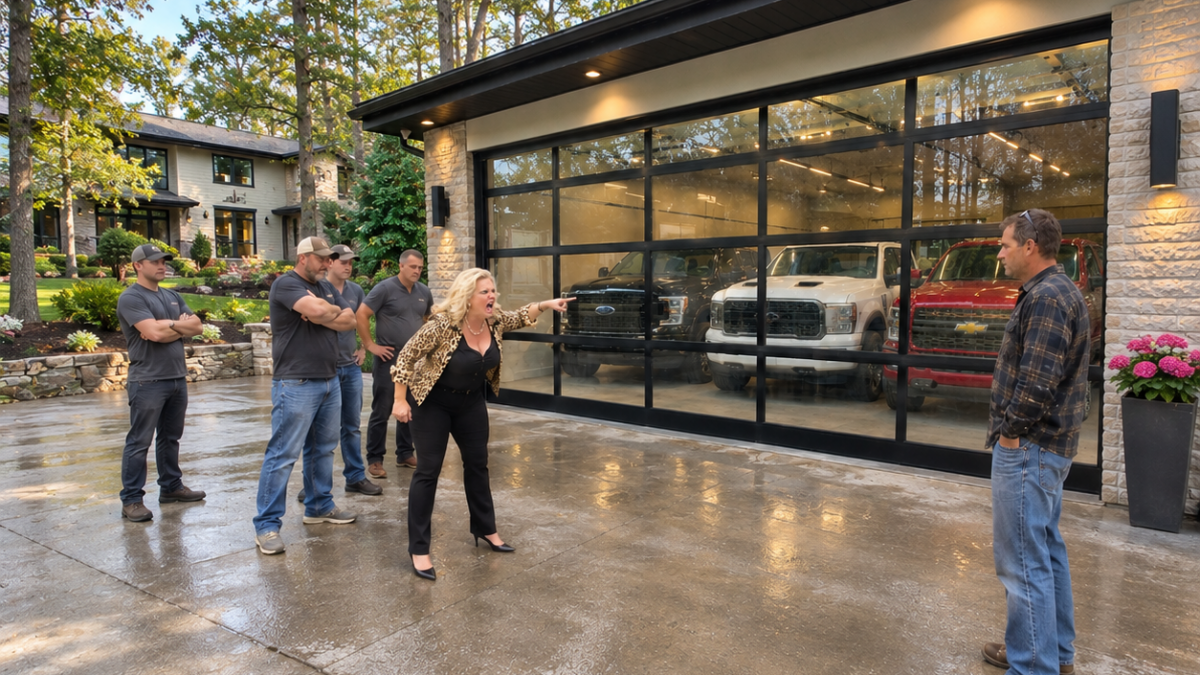
PART2
Her eyes hardened.
“Don’t make this difficult.”
I looked at the damage around me.
“You broke into my building.”
“Don’t be dramatic.”
“You cut my lock.”
“Derek handled access.”
“You moved my property.”
“It was clutter.”
“You damaged my motorcycle.”
“That thing has been in pieces for years.”
I felt something cold settle inside me.
Then she picked up one of my grandfather’s chisels.
Boxwood handle.
Worn smooth by his hand.
He had made cabinets in Spartanburg for four decades.
I had inherited six of his chisels after he died.
Wendy turned this one between two manicured fingers.
“This is what I’m talking about.”
“What?”
“Junk.”
She set it on the concrete.
Not on the bench.
Not in the tool roll.
On the floor.
Then brushed her fingertips together as though the tool had dirtied her.
“My grandfather made that handle.”
She looked at the chisel.
“Then your grandfather had terrible taste.”
That was the moment my anger became useful.
In the Army, anger is only valuable after you put it on a leash.
Before that, it makes you stupid.
I spent sixteen years as a combat engineer.
MOS 12B.
I built things that needed to survive.
I destroyed things that didn’t.
I had worked under mortar fire.
Built defensive positions.
Helped throw a temporary bridge across the Arghandab when half the people around us believed it couldn’t be done in the time we had.
I had spent enough of my life around explosives, bad plans, and worse commanders to know that the person yelling loudest is rarely the person with the strongest position.
Wendy wanted me to lose control.
I could see it.
She wanted shouting.
Threats.
Maybe she wanted me to put my hands on one of her trucks.
Then she could become the victim.
So I did the opposite.
I smiled.
“Okay.”
Her expression changed.
“What?”
“Okay.”
“Good.”
She assumed I meant she had won.
She turned toward the door.
I said, “Leave the garage.”
She glanced back.
“You don’t give me orders.”
“I do inside my garage.”
“You’re being ridiculous.”
“Out.”
For maybe three seconds, neither of us moved.
Then she laughed lightly.
“All right, Cole. When you calm down, call me.”
“I won’t.”
She walked outside.
Her heels clicked against my driveway.
She got into her white Escalade.
Drove away.
And left three trucks inside my building.
That was Friday evening.
By Saturday morning, those three trucks were behind locks that would have made a military armorer smile.
And for the next seventy-two hours, Wendy Prescott learned exactly how expensive it can become when you mistake someone else’s silence for surrender.
My name is Cole Barrett.
I was forty-four when Wendy decided my garage was hers.
I moved to Brier Ridge Estates in 2019 because I was tired.
Not physically.
Not exactly.
I had left the Army after sixteen years.
Long enough to miss parts of it.
Long enough to know I didn’t want the rest.
I had been a combat engineer.
Some people hear engineer and imagine offices.
Calculators.
Blueprints.
Clean hard hats.
That wasn’t my version.
We built and cleared whatever needed building or clearing.
Roads.
Bridges.
Defensive positions.
Breaching obstacles.
Route work.
There were nights in Afghanistan when I would have traded everything I owned for one uninterrupted hour of sleep in a room with no radio.
By the time I got out, what I wanted sounded embarrassingly small.
Quiet.
A workbench.
A garage.
A place where nobody needed me before sunrise.
A lawn I could mow without checking for wires.
I found Brier Ridge six miles south of Greenville, South Carolina.
Eighty-four homes.
Colonial variations.
Brick fronts.
Vinyl siding.
Decorative shutters that had never shut anything.
The developer had planted Bradford pears along the sidewalks because someone in 2004 had apparently decided fragile trees were a good metaphor for suburban planning.
Half split during ice storms.
The HOA replaced them with crepe myrtles.
Pink flowers every July.
The Blue Ridge foothills rose beyond the neighborhood.
On clear mornings, you could see real mountains behind rows of houses where adults argued about trash cans.
I bought Lot 47.
Three-bedroom ranch.
Corner parcel.
Quarter acre.
Attached two-car garage.
None of that sold me.
What sold me sat behind the house.
Detached.
Three bays.
Metal roof.
Two-hundred-amp electrical service.
Dedicated 240-volt outlets.
Commercial overhead doors.
Sealed concrete slab.
Built originally by a mechanic who had used it as a private shop.
The realtor called it a bonus building.
I called it the reason I signed.
Bay one belonged to my Triumph.
A 1972 Bonneville T120.
I found it half-disassembled in a shed outside Travelers Rest.
Wrong seat.
Wrong bars.
Tank dented.
Engine seized.
I spent three years restoring it piece by piece.
Engine rebuilt.
Frame stripped.
Wiring redone.
Chrome cleaned.
Fuel tank waiting for Aubergine paint matched to factory specifications.
Bay two was woodworking.
My father’s bench stood in the center.
Quarter-sawn white oak.
Six feet long.
Four inches thick.
Built in 1986.
Tail vise he machined himself.
Drawers underneath filled with tools that belonged to three generations of Barrett men.
Planes.
Chisels.
Marking gauges.
Dovetail saws.
Squares.
Awls.
Tools don’t have to be expensive to become irreplaceable.
They just need someone dead to have held them before you.
Bay three stayed mostly open.
Projects.
Trailer.
Whatever needed space.
My garage had one rule.
Mine.
That didn’t mean neighbors weren’t welcome.
Phil Odom borrowed tools.
I helped Mrs. Gilliam fix a loose porch rail.
Once I let two teenagers from down the street use Bay Three to replace the suspension on a Jeep because their fathers didn’t own enough tools.
Permission mattered.
That was it.
Ask.
I’ll probably say yes.
Don’t ask?
Different conversation.
For five years, everybody understood.
Then Wendy Prescott stopped asking anyone for anything.
Wendy moved to Brier Ridge in 2015.
Within six months, she ran for HOA president.
Nobody opposed her.
People joked about that later.
At the time, Wendy made opposition feel exhausting before it started.
She was polished to a level most human beings can’t maintain without staff.
Platinum hair.
Perfect clothes.
French-tip nails.
Jewelry that looked understated only because it cost enough not to need attention.
She drove a white Cadillac Escalade with camel leather.
Every morning around 8:15, she cruised through Brier Ridge.
One hand on the wheel.
Green drink in the other.
Looking.
Trash bin visible after seven?
Violation.
Basketball hoop too near sidewalk?
Notice.
Contractor trailer overnight?
Fine.
Boat in driveway?
Fine.
Truck parked on the street?
Fine.
She issued everything on heavy paper.
Monogrammed envelopes.
Signed in gold ink.
Gold.
I wish I were exaggerating.
Her husband, Derek, ran DMW Prescott Landscapes.
Small operation.
Decent reputation at one point.
He drove the white F-350.
Company logo on the door.
Red Silverado belonged to the business too.
Their twenty-two-year-old son Brandon drove the black Ram.
Lift kit.
LED bars.
Exhaust loud enough to shake siding.
The Prescotts had more trucks than driveway space.
Their own two-car garage had not held a vehicle in years.
Wendy had filled it.
Exercise equipment.
Boxes.
Scrapbooking supplies.
Holiday decorations.
Old rugs.
Wine rack.
Ceramic angels.
Broken treadmill.
Anything except the vehicles garages are designed to hold.
So trucks ended up wherever Wendy decided.
Street.
Driveway.
Neighbor’s empty parking area.
Once she parked Derek’s F-350 in Ed Callaway’s driveway for an entire week while Ed was in Florida.
Ed called her.
She said:
“You weren’t using it.”
He complained.
She told him the board had authorized temporary use.
That phrase became one of her favorites.
Temporary use.
Community necessity.
Protective designation.
Emergency authority.
Wendy treated the bylaws like a box of refrigerator magnets.
Move words around until they say what she wants.
Most residents gave up rather than fight.
That was her real power.
Not beauty.
Not money.
Not the title.
Exhaustion.
Wendy understood that an ordinary person might win eventually but often wouldn’t spend twelve hours proving a seventy-five-dollar fine was nonsense.
She counted on that.
Mrs. Eleanor Gilliam learned it the hard way.
Seventy-nine.
Widowed.
Lived alone near the front entrance.
Two years before my garage incident, Wendy moved twelve bins of HOA Christmas decorations into Eleanor’s carport.
Inflatable snowmen.
Six-foot nutcracker.
Lights.
Extension cords.
Artificial wreaths.
Eleanor asked her to remove them.
Wendy said the board had designated the carport temporary community storage.
Eleanor asked again.
Wendy arrived at her door dressed like she was attending a charity luncheon and calmly explained that refusal could create “compliance complications.”
Eleanor stopped asking.
That was how Wendy operated.
She did not break down doors herself.
She made people feel unreasonable for owning them.
I watched.
Kept quiet.
I wasn’t afraid.
I simply didn’t have a fight with her.
Until April.
A structural engineering firm in Charleston needed someone to inspect an 1887 brick warehouse being converted into condominiums.
Historic masonry.
Floor loading.
Roof framing.
Crack mapping.
Ten days.
Maybe twelve.
Good job.
I packed.
Locked the house.
Locked the detached garage.
Standard Ablo padlock on the side door.
Overhead doors locked from inside.
Cameras on.
Four cameras, all uploading to a cloud server in Charlotte.
I left Tuesday morning.
I was gone eleven days.
Wendy only needed three.
Phil Odom later told me what happened.
Retired postal carrier.
Sixty-one.
Still woke at five because his body apparently believed retirement was a clerical error.
Day three.
Around seven in the morning.
Phil walked his beagle past my house.
Derek Prescott was backing the F-350 toward my detached garage.
Phil stopped.
“Derek.”
Derek looked out the window.
“What?”
“What are you doing?”
“Parking.”
“At Cole’s?”
Derek got out.
Held up a single sheet of HOA paper.
Wendy’s gold signature at the bottom.
“Board resolution.”
Phil asked:
“Cole know?”
“Board action.”
“That wasn’t my question.”
“It’s official.”
It wasn’t.
The so-called board resolution had two signatures.
Wendy.
Carol Spinks.
Seven-member board.
No meeting notice.
No quorum.
The other five weren’t even told.
The document cited Section 11.4.
Section 11.4 allowed the association to take reasonable protective action regarding common infrastructure during certain emergencies or extended owner absences.
My garage was not common infrastructure.
Not close.
The deed said Cole J. Barrett.
County permit said Cole J. Barrett.
Inspection certificate said Cole J. Barrett.
Tax records said Cole J. Barrett.
Wendy’s gold pen said something else.
Derek chose the gold pen.
He pulled bolt cutters from the F-350.
Walked to my side entry.
Cut the lock.
Phil heard the shackle hit concrete.
He said that sound bothered him.
Because once it happened, everybody knew this wasn’t misunderstanding.
Derek went inside.
Opened all three overhead doors.
Backed the F-350 into Bay One.
Brandon arrived with the Ram.
He drove into Bay Two and scraped the weather stripping along the door frame.
Then Derek returned with the Silverado.
Bay Three wasn’t completely empty.
My workbench partly overlapped the space.
So he moved it.
By pushing.
Not lifting.
Not asking.
The oak legs scraped my sealed floor.
Tool cabinet tipped.
Drawers opened.
Sockets went everywhere.
A marking gauge fell.
Rosewood handle snapped at the neck.
Three chisels disappeared under the Silverado.
Then Derek opened the passenger door.
Metal edge hit the Triumph tank.
Gouge.
Deep.
Right through the primer.
My cameras recorded all of it.
Then Wendy arrived.
White linen pants.
Silk blouse.
Designer sandals.
Phil said the strangest thing was how calm she looked.
Like moving into somebody else’s garage was normal.
She walked through.
Looked at my tools.
Picked up my grandfather’s chisel.
Set it on the floor.
Brushed her fingers clean.
Then she told Derek:
“That junk was in the way.”
Afterward, she closed the doors.
Put a bright brass lock on the side entrance.
Walked out.
Phil watched from his porch.
Wendy noticed him.
She waved.
Three fingers.
Slow.
Royal.
That part almost made me laugh when he told me.
Almost.
I returned Friday at 5:30.
First thing I noticed was the lock.
Bright brass.
Cheap.
Not mine.
I knew my hardware.
I stood looking at it.
Then looked through the small side window.
Truck.
Truck.
Truck.
My workbench moved.
Tool cabinet down.
Triumph damaged.
I didn’t open anything immediately.
I went inside my house.
Set down my travel bag.
Opened the laptop.
Downloaded the camera recordings.
Watched.
Derek cutting the lock.
Trucks entering.
Tools falling.
Tank getting gouged.
Wendy touching the chisel.
“Junk.”
I watched that clip twice.
Then closed the laptop.
At that point, most people probably expect the story where I go across the street screaming.
I didn’t.
I drove to a hardware supplier.
Bought three Abloy Protec2 padlocks.
High-security cylinders.
Hardened construction.
Bolt-cutter resistant.
Drill resistant.
Expensive.
Worth it.
Three American Lock hardened steel hasps.
A Medeco high-security deadbolt.
Restricted keyway.
Case-hardened chain.
Carriage bolts.
Steel reinforcement.
I went home.
Started working.
By two in the morning, every door was secure.
Overhead doors chained through internal roller brackets.
Hinges reinforced.
External hardware fitted with smooth carriage-bolt heads so nobody could simply put a wrench on them.
Side entry upgraded.
Three high-security locks.
Wendy’s brass padlock went into my recycling bin.
I didn’t damage the trucks.
Didn’t touch them.
Didn’t disconnect batteries.
Didn’t flatten tires.
Didn’t move them.
I simply secured my own garage.
My building.
My doors.
My locks.
Inside happened to be three vehicles Wendy’s family had put there without consent.
I went to sleep at 2:30.
Best sleep I’d had during the entire Charleston job.
At six, Phil was on his porch.
He looked toward the garage.
Then toward me.
“You locked them in.”
“I secured my building.”
He drank coffee from a U.S. Postal Service mug.
“How long?”
“As long as necessary.”
Phil nodded.
“Good.”
Saturday.
6:45 a.m.
Hour zero.
Derek arrived.
Truck keys in one hand.
Phone in the other.
Walked to the side door.
Tried his brass lock.
Gone.
Tried my new lock.
Nothing.
Walked to the overhead doors.
Pulled.
Nothing.
Looked at the welded reinforcement.
Walked around the garage.
Tried another door.
Nothing.
Then he rang my bell.
I opened with coffee.
“Morning.”
“Cole.”
“Derek.”
“I need the F-350.”
“I assumed.”
“Open the garage.”
“No.”
His eyebrows came together.
“What?”
“You cut my lock.”
“Wendy had authorization.”
“You damaged my property.”
“That was an accident.”
“You parked three trucks inside my building.”
“It was temporary.”
“And now I have secured the building.”
“You can’t hold my vehicles.”
“I’m not holding anything.”
He laughed once.
“What do you call this?”
“My garage being locked.”
“My truck is inside.”
“Whose decision was that?”
His face reddened.
“Wendy has a resolution.”
“Two votes.”
“The board approved it.”
“Two out of seven is not approval.”
“She’s president.”
“That doesn’t improve the math.”
He stepped closer.
“I have work.”
“Then you should have stored your work truck somewhere you had permission to use.”
“I didn’t put it here for fun.”
“No.”
“You put it here because your wife told you another man’s garage belonged to her.”
He pointed toward me.
“You have one hour.”
I took another sip of coffee.
“I’ve got as long as I want.”
“Cole.”
“My deed.”
“My building.”
“My locks.”
“You break into my garage, damage my property, and then threaten me because I locked my own doors?”
His jaw worked.
I continued.
“If you want the vehicles, talk to an attorney.”
He turned.
Walked away.
Fifteen minutes later, Wendy arrived.
Full armor.
White silk blouse.
Pearl cuff links.
Cream trousers.
Designer heels.
Diamond earrings.
Cartier watch.
Hermès Kelly bag.
Leather clipboard.
I have seen soldiers put on less equipment for patrol.
She crossed the lawn.
“Cole, honey.”
I nearly laughed.
“Honey?”
“I think we’ve had a miscommunication.”
“No.”
“The board authorized temporary use of an auxiliary structure.”
“No.”
“I’d be happy to explain the governing authority.”
“I’ve read the CC&Rs.”
“Clearly not carefully.”
“Three times.”
Her smile flickered.
“There is no ‘auxiliary community storage’ provision.”
She opened her clipboard.
“Section 11.4.”
“Common infrastructure.”
“Structures affecting community needs.”
“My garage isn’t common.”
“It is within Brier Ridge.”
“My home is within Brier Ridge.”
“Exactly.”
“That doesn’t make my kitchen common.”
“You’re being deliberately obtuse.”
“And you passed this resolution without quorum.”
She ignored that.
“Derek needs his vehicles.”
“Then Derek should have left them somewhere legal.”
Her smile grew harder.
“Let’s be adults.”
“I agree.”
“Open the garage.”
“No.”
Silence.
“Cole.”
“No.”
“I’m HOA president.”
“Yes.”
“That position has authority.”
“Over the association.”
“Yes.”
“Not my personal garage.”
She lowered the clipboard.
“You’re going to regret this.”
I stared at her.
“I’ve been threatened by men holding rocket-propelled grenades, Wendy.”
Her nostrils flared.
“Your clipboard and your shoes aren’t doing it.”
That ended the friendly tone.
“You think you’re clever.”
“No.”
“You think being ex-military makes you special.”
“No.”
“You think you can humiliate my family.”
“I think your family broke into my garage.”
She turned away.
At the Escalade, she looked back.
“This isn’t over.”
“Good.”
Forty-five minutes later, a Greenville County sheriff’s deputy arrived.
Carter Hayes.
Young.
Professional.
The careful expression cops use when a domestic-looking call could become ridiculous.
He walked up.
“Mr. Barrett?”
“Yes.”
“We received a complaint that you’re unlawfully detaining vehicles.”
“I figured.”
“Mind explaining?”
“Sure.”
I had everything ready.
Deed.
Building permit.
Inspection report.
CC&Rs.
Section 11.4 highlighted.
Wendy’s resolution.
Then the video.
Carter watched Derek cut my padlock.
He watched the trucks enter.
Tool cabinet fall.
Silverado hit my Triumph.
Wendy walk through.
Chisel.
Floor.
Hands brushed together.
Carter paused the video.
“How long were you gone?”
“Eleven days.”
“You gave anyone permission?”
“No.”
“Any emergency involving the building?”
“No.”
“HOA own any interest in the garage?”
“No.”
He looked through the deed again.
Then at me.
“I don’t see a legal basis for compelling you to open your own structure.”
“Thank you.”
“The vehicles were placed there without your permission.”
“Yes.”
“You may have a complaint for trespass and property damage.”
“I’m documenting.”
Carter nodded.
Then glanced toward the hardware.
“These locks yours?”
“As of last night.”
He smiled.
“Army?”
“Sixteen years.”
“What?”
“Combat engineer.”
“My dad was Twelfth Engineers.”
“Good outfit.”
Carter looked at the garage.
“He’d appreciate the setup.”
“I hope so.”
Before leaving, he stopped at Wendy’s driveway.
I couldn’t hear the conversation.
I didn’t need to.
Her face told me enough.
She had expected a deputy to become an extension of her HOA authority.
Instead, he told her the thing nobody had said clearly enough in years.
She did not own everything inside Brier Ridge.
Saturday evening.
Hour twelve.
Wendy hired a locksmith.
Gary Delano.
Greenville Lock and Key.
He arrived in a white service van.
Walked around my garage.
Examined the Abloy locks.
Hasps.
Deadbolt.
Hinge reinforcement.
Then he looked at Wendy.
“You own this property?”
She lifted her chin.
“I am president of Brier Ridge.”
“That wasn’t my question.”
“This is an association matter.”
Gary looked toward my house number.
Then Wendy’s house across the street.
“Whose address is this?”
“Cole Barrett.”
“Then I need Cole Barrett’s authorization.”
“I am authorizing you.”
“You can’t.”
“I have board authority.”
“Not enough.”
“Open the doors.”
“No.”
Wendy’s voice became quieter.
“I’ll pay double.”
“No.”
“Triple.”
Gary shook his head.
“I’d need to cut hardened hardware.”
“So cut it.”
“Could damage vehicles.”
“I accept that.”
“You don’t own them all.”
“My family does.”
Gary shrugged.
“Still not your building.”
He packed up.
Wendy stood in my driveway watching him leave.
Her clothes were expensive.
Her jewelry was expensive.
Her car was expensive.
None of it opened a lock.
Engineering is wonderfully democratic that way.
Steel does not care what handbag you carry.
Sunday morning.
Hour twenty-eight.
Derek’s phone rang.
Bill Harrove.
Developer in Simpsonville.
Derek had landed a $45,000 landscaping contract.
Biggest job his company had booked that spring.
Thirty-six pallets of Bermuda sod scheduled Monday morning.
Industrial mower.
Sod cutter.
Hydraulic auger.
Specialized tools.
A lot of it stored in the beds and toolboxes of the F-350 and Silverado.
Behind my locks.
Bill asked:
“You ready?”
Derek tried to sound normal.
“We’ve got an equipment issue.”
“What issue?”
“Access.”
“To your own trucks?”
Derek didn’t answer.
Bill said:
“Sod arrives seven tomorrow.”
“I know.”
“If your crew isn’t ready, I replace you.”
“Give me a day.”
“I don’t have a day.”
“Bill.”
“No.”
Derek lost the contract.
Forty-five thousand dollars.
Was that my goal?
No.
I didn’t know about the contract when I locked the garage.
I didn’t make Derek park his equipment there.
I didn’t schedule his work.
Consequences do not become revenge simply because the person experiencing them dislikes the timing.
Sunday afternoon.
Hour thirty-four.
Brandon had his own problem.
He was supposed to start a construction job Monday.
First steady work in six months.
His Ram was inside.
Could he have taken Uber?
Yes.
Borrowed a car?
Probably.
But Brandon had built his entire identity around that truck.
Two months behind on payments.
Lift kit.
Wheels.
Lights.
Exhaust.
A machine financed partly because Wendy told him the Prescotts “needed to look successful.”
He missed a Saturday date.
Then a Sunday cookout.
By Sunday afternoon he was pacing across the street.
Every few minutes he looked toward my garage.
I swept my driveway.
He watched me.
I waved.
He didn’t.
At four, Wendy called an emergency HOA meeting.
Urgent community matter.
Full attendance requested.
Eight households came.
Eight out of eighty-four.
Apparently seventy-six families had better things to do on Sunday afternoon than solve Wendy’s parking problem.
I attended only because Phil texted me afterward with the details.
Lena Whitfield stood up.
No relation to Wendy.
Retired high school principal.
Silver hair.
Reading glasses on a chain.
The sort of woman who could silence a cafeteria without a microphone.
Wendy proposed a motion.
Compel Lot 47 owner to provide immediate access to designated community storage.
Lena raised her hand.
“Wendy.”
“Yes?”
“I want to make sure I understand.”
Wendy smiled.
“Of course.”
“You designated Cole Barrett’s privately owned garage as community storage.”
“Temporarily.”
“While he was out of town.”
“For operational necessity.”
“Your husband cut his lock.”
Wendy’s smile thinned.
“Access was necessary.”
“You parked your family’s three trucks inside.”
“They serve community-related business needs.”
“Does Brandon’s lifted Ram serve community needs?”
Silence.
One person coughed.
Lena continued.
“You damaged his tools.”
“I did not personally damage anything.”
“His motorcycle?”
“Again, I did not—”
“And now you want us to vote to force him to open the garage?”
“This is a community matter.”
Lena shook her head.
“No.”
“Excuse me?”
“It is a Prescott family matter.”
The room went quiet.
“You put your trucks in his building.”
“Talk to a lawyer.”
Wendy’s face hardened.
“I am capable of interpreting our governing documents.”
“Apparently not.”
Nobody seconded the motion.
It died.
Wendy left.
Monday morning.
Hour forty-two.
Derek came back.
This time he brought two gas-station coffees.
Not fancy.
Not strategic.
Humbled coffee.
He stood on my porch.
“Cole.”
“Derek.”
“Man to man.”
Dangerous phrase.
I waited.
“I messed up.”
“Yes.”
“I shouldn’t have cut the lock.”
“No.”
“I’m sorry about the motorcycle.”
I said nothing.
“My business is getting killed.”
Still nothing.
“About a hundred ten thousand in equipment inside.”
“That’s a lot.”
“I need it.”
“I know.”
“Can we figure this out?”
I looked at him.
For the first time, Derek didn’t look angry.
He looked tired.
I almost felt sorry for him.
Then I remembered my grandfather’s marking gauge.
The dry snap on video.
The tool cabinet falling.
Derek pushing my father’s bench.
The Silverado door hitting the Triumph.
I said:
“I didn’t put your trucks in there.”
“No.”
“I didn’t cut my own lock.”
“No.”
“I didn’t invent a fake resolution.”
“No.”
“Your wife did that.”
He looked toward his house.
“She did.”
“Then when she is ready to fix what she did, she knows where I live.”
Derek nodded.
Turned away.
Then stopped.
“Wendy says you’re trying to destroy us.”
I almost laughed.
“Derek, I was in Charleston.”
He looked back.
“You did this while I wasn’t even here.”
He walked home.
Sat on his front steps.
Drank both coffees.
All morning.
While Wendy scrambled, I built my case.
That is what engineers do.
Structure first.
Saturday, I had downloaded every camera file.
Original timestamps.
Cloud copies.
Separate storage.
Sunday, I hired Jim Riddle.
Licensed property appraiser.
He documented damage.
Workbench scrape.
Concrete floor.
Tool cabinet.
Drawer slides.
Broken tools.
Triumph fuel tank.
Door weather stripping.
Initial estimate:
$7,600.
Some things could be priced.
Some couldn’t.
My grandfather’s rosewood marking gauge wasn’t valuable on eBay.
It was valuable because it was his.
Courts don’t reimburse memories.
They reimburse replacement cost.
That distinction hurt more than the dollar amount.
Sunday afternoon, I visited Eleanor Gilliam.
Seventy-nine.
Small brick house near the entrance.
She invited me inside.
Sweet tea.
Clean living room.
Photographs of her husband everywhere.
“Mrs. Gilliam.”
“Cole, if you’re here about Wendy, sit down.”
I smiled.
“That obvious?”
“Only thing anybody talks about.”
I asked about the carport.
Her mouth tightened.
“Two years.”
“She still has decorations in there?”
“Yes.”
“Did you ever authorize it?”
“No.”
“Would you write a statement?”
Eleanor set down her glass.
Then looked at me.
“Young man.”
“Yes, ma’am.”
“I’ve been waiting two years for someone to ask.”
Three pages.
Careful cursive.
Dates.
Conversations.
Wendy’s language.
Community storage.
Board authority.
Compliance consequences.
Eleanor signed.
Monday morning.
Hour forty-eight.
I called Ryan Kesler.
Former Army JAG.
We served together at Fort Bragg.
Now he practiced real estate litigation in Greenville.
I brought folders.
Deed.
CC&Rs.
Video.
Resolution.
Appraisal.
Gilliam statement.
Ryan read everything.
Then leaned back.
“Cole.”
“What?”
“This is easy.”
“Nothing involving Wendy is easy.”
“Legally.”
“Go on.”
“Breaking and entering allegations.”
“Trespass.”
“Property damage.”
“Potential fraudulent association filing.”
“Pattern evidence from Gilliam.”
He tapped the resolution.
“No quorum.”
“I know.”
“Section doesn’t authorize this.”
“I know.”
“You want civil?”
“Yes.”
“Criminal referral?”
“Yes.”
“Vehicles?”
“Still inside.”
Ryan looked at me.
“You planning to release them?”
“Eventually.”
“When?”
“After Wendy understands what comes next.”
Ryan smiled.
“You always waited until the last possible second to blow a charge.”
“Timing.”
“You used to say that.”
“You used to write the legal justification.”
He laughed.
“Fair.”
Tuesday morning.
Hour sixty.
Six a.m.
My doorbell rang.
Wendy.
I almost didn’t recognize her.
No white blazer.
No pearls.
No designer heels.
No handbag.
Gray cashmere robe over a wrinkled camisole.
Hair clipped back badly.
No makeup.
Eyes red.
She looked like a person.
That was new.
“Cole.”
“Morning.”
“Please.”
She didn’t say anything else.
I opened the door wider.
“Sit.”
She lowered herself onto the porch step.
Cashmere against concrete.
For someone who spent years refusing ordinary discomfort, that told me everything.
I remained standing.
“Derek lost the Harrove job.”
“I heard.”
“Forty-five thousand.”
“I know.”
“Brandon got fired.”
“He hadn’t started yet.”
“They replaced him.”
“Okay.”
“Derek slept in the guest room.”
I waited.
Wendy rubbed her face.
“He says this is my fault.”
Silence.
“He’s right.”
That was the first honest sentence I ever heard Wendy Prescott say.
I sat on the other side of the porch.
“Two years ago, you took Eleanor Gilliam’s carport.”
Wendy froze.
“What?”
“You heard me.”
“That was different.”
“No.”
“She wasn’t using—”
I looked at her.
She stopped.
“You put twelve bins of HOA decorations in a seventy-nine-year-old widow’s carport.”
“She had space.”
“She asked twice.”
Wendy looked away.
“You told her the board had designated it community storage.”
“It was temporary.”
“Two years.”
Silence.
“You counted on her being tired.”
Wendy looked back at me.
“You counted on people deciding that fighting you cost more than surrendering.”
Her hands tightened in her lap.
“Then you tried it on me.”
“Cole—”
“You had Derek cut my lock.”
She said nothing.
“You moved my father’s workbench.”
Nothing.
“You broke my grandfather’s tool.”
Nothing.
“You damaged a motorcycle I’ve spent three years restoring.”
Her eyes filled.
“You did all that under a resolution passed by two people on a seven-member board.”
“I thought—”
“No.”
I kept my voice calm.
“Don’t tell me you thought it was valid.”
She lowered her head.
I continued.
“Four security cameras.”
“Cloud backup.”
“Full video.”
“Your husband cutting the lock.”
“The property damage.”
“You walking through my garage.”
Her shoulders sagged.
“My attorney has a civil complaint ready.”
She looked up.
“How much?”
“Damage estimate is seventy-six hundred right now.”
She swallowed.
“Criminal referral is prepared too.”
Her face changed.
“Cole.”
“Eleanor Gilliam signed a statement.”
“Why would you involve her?”
“I didn’t involve her.”
“You did.”
She stood.
“You had no right—”
I stood too.
“Careful.”
She stopped.
“You don’t get to tell a woman you bullied for two years whether she’s allowed to speak.”
Wendy sat again.
The anger evaporated.
“What do you want?”
There it was.
For seven years, Wendy had asked that question only after everybody else asked what she wanted.
I had thought about the answer.
I could demand money first.
Public apology.
Resignation.
Maybe more.
But this wasn’t about destroying her family.
I wanted the pattern stopped.
“Three things.”
She nodded.
“First, written retraction of the garage resolution.”
Her face tightened.
“Cole—”
“Permanent HOA record.”
“Every board member gets a copy.”
“You acknowledge that the vote lacked quorum and that the HOA had no authority over my private garage.”
She said nothing.
“Second.”
I waited.
“You resign.”
Her eyes snapped to mine.
“No.”
“Then the legal process continues.”
“Cole.”
“You asked what I want.”
“I built that board.”
“That might be the problem.”
“I have seven years invested.”
“So do the residents.”
She shook her head.
“I can fix this.”
“You can’t fix yourself while you’re still holding the same power you abused.”
“That’s unfair.”
“Your husband cut my lock.”
Her mouth closed.
“Third.”
She stared at the concrete.
“Clear Eleanor Gilliam’s carport.”
“All of it.”
“Decorations.”
“Bins.”
“Nutcracker.”
“Everything.”
“By the end of the week.”
“Where am I supposed to put it?”
I actually laughed.
“Your garage.”
She glared at me.
“It’s full.”
“That sounds like a Prescott problem.”
For a few seconds, I thought Wendy might stand up and leave.
Then she asked:
“If I do this?”
I answered carefully.
“My civil claim for damages still gets resolved.”
Her face fell.
“I am not giving away the cost of what you broke.”
She nodded.
“But if you sign the retraction, resign, clear Mrs. Gilliam’s property, and cooperate on the damage settlement, I will tell Ryan to hold the criminal referral unless further facts require otherwise.”
“You can do that?”
“I can decide whether I personally push that complaint.”
She looked toward the garage.
“And the trucks?”
“After the paperwork is signed.”
Her eyes closed.
For a long time, neither of us spoke.
Cardinal in the pine tree.
Sprinkler ticking somewhere.
Morning traffic starting on the two-lane road beyond Brier Ridge.
Finally Wendy stood.
“Get the papers.”
At 7:15, she sat at my kitchen table.
Ryan had emailed the retraction.
I printed it.
Wendy read every line.
For once, she read something before signing it.
Her hand shook.
Then she signed.
Blue ink.
Not gold.
I noticed.
I doubt she did.
At eight, she emailed the HOA board.
Resignation.
Effective immediately.
No vague “personal reasons.”
No health excuse.
She acknowledged that she had authorized actions beyond valid HOA authority regarding my garage.
At nine, I walked outside with my keyring.
Derek stood across the street.
Brandon beside him.
Wendy watched from her porch.
I unlocked the side door.
Removed the chain.
First overhead door.
F-350.
Dome light had been left on.
Battery dead.
Derek stared.
Said nothing.
His friend brought jumper cables.
Thirty minutes.
Then the diesel fired.
Derek backed it out.
Second door.
Brandon’s Ram.
Right rear tire flat.
Roofing nail.
Apparently one fell when the tool cabinet tipped.
I had not put it there.
The universe occasionally writes small jokes.
Brandon stared at the tire.
Then at me.
I shrugged.
He put on the spare.
Third door.
Silverado.
No major vehicle damage.
But the interior had picked up the smell of stale coffee and mothballs from boxes Wendy had apparently stuffed in one of the tool areas.
Derek pulled it out last.
No thank-you.
No apology.
Fine.
I wasn’t looking for either.
Wendy remained on her porch.
Different clothes now.
Immaculate again.
But posture changed.
Shoulders lower.
No clipboard.
No smile.
Three trucks crossed the street one by one.
The entire seventy-two-hour occupation ended in about forty minutes.
My garage was mine again.
The civil matter settled three weeks later.
$7,600 documented property damage.
Additional professional, repair, and related costs.
Total:
$9,800.
Wendy paid from her personal account.
Not HOA funds.
That mattered to me.
The residents had not broken my property.
She had.
The check cleared Thursday.
The following month, Brier Ridge elected a new board.
Lena Whitfield became president.
Unopposed.
Her first act was not buying stationery.
It was reviewing Wendy’s old resolutions.
Seven years.
They found eleven actions taken without proper quorum.
Three supposed property designations with no authority in the CC&Rs.
Two fines based on rules that did not exist as written.
Multiple emergency decisions that had never faced full board review.
Wendy’s power looked impressive because nobody had inspected the foundation.
I’m a structural engineer.
Foundations interest me.
A building can look beautiful right until the load reaches the crack everyone ignored.
Wendy’s board had been that building.
Gold ink above.
Rot underneath.
Section 11.4 was rewritten.
Emergency powers narrowed.
Property access clearly defined.
No board action involving a privately owned structure without actual legal authority.
Basic stuff.
Boring.
Good governance is usually boring.
Eleanor Gilliam’s carport was cleared Saturday morning.
I went over.
Derek and Brandon arrived with the F-350.
They hauled bins.
Inflatable snowmen.
Nutcracker.
Decorations.
Eleanor sat at her kitchen window.
Sweet tea.
Watching.
At one point, Derek lifted a box labeled CHRISTMAS VILLAGE — FRAGILE.
He looked toward me.
“Where does Wendy want this?”
I said:
“Ask Wendy.”
He sighed.
“Garage.”
“Sounds right.”
When the carport was empty, Eleanor walked outside.
Looked at the concrete.
No decorations.
No bins.
Just her own space.
She smiled.
“Two years.”
“I know.”
“You know what I’m going to put here?”
“What?”
“Nothing.”
I laughed.
“Best use.”
She touched my arm.
“Thank you.”
“No.”
I looked at her.
“Thank you for writing it down.”
That mattered.
Because Wendy’s garage stunt wasn’t a one-time loss of judgment.
It was a pattern.
And patterns are how people finally understand abuse of authority.
I spent the next month repairing my shop.
Concrete resurfaced.
Tool cabinet rebuilt.
Drawer slides replaced.
Sockets cleaned.
New chisels.
New marking gauge.
But not the same marking gauge.
You can replace function.
Not history.
My grandfather’s rosewood handle was gone.
I kept the broken pieces.
They’re in a small drawer in my father’s bench.
No reason except I couldn’t throw them away.
The Triumph’s tank went to a specialist.
Metal repaired.
Primer.
Then Aubergine.
Two coats.
Clear.
By August, the bike was done.
I rolled it into sunlight.
Chrome.
Dark wine-colored tank.
Engine fired on the third kick.
The sound filled the driveway.
Phil came over.
“Worth the trouble?”
I looked at the bike.
“Ask me after ten miles.”
I rode north toward Travelers Rest.
Foothills.
Curves.
Morning air.
For the first time in months, I didn’t think about Wendy.
I thought about my grandfather.
His hands on tools.
My father’s workbench.
How strange it is that family history often survives through objects nobody else would pay much for.
That’s why Wendy calling them junk had bothered me more than the trucks.
The trucks were trespass.
The word was contempt.
She saw my garage as empty space.
I saw three generations.
People like Wendy often confuse things they don’t value with things that have no value.
Those are different.
Derek’s landscaping company survived.
Barely.
Losing the Harrove contract hurt.
Then two clients canceled spring bookings after hearing his equipment hadn’t been available when promised.
He had to rebuild slowly.
One yard.
One commercial job.
One crew at a time.
I never celebrated that.
Derek had made his choice when he cut my lock.
But he also had employees.
Families depended on his company.
I didn’t want them ruined.
Eventually he recovered.
We never became friends.
We became something more useful.
Neighbors who understood the boundary.
If he saw me outside, he nodded.
I nodded.
No extra conversation required.
Brandon found another job.
He sold the Ram eventually.
Bought a used Tacoma.
Less impressive.
More affordable.
Phil said that might have been the healthiest outcome of the whole episode.
As for Wendy?
She stayed in Brier Ridge.
That surprised some people.
They assumed humiliation would make her sell.
Wendy wasn’t built that way.
She adapted.
The morning patrol stopped.
No clipboard.
No Escalade cruising slowly past trash cans.
She walked sometimes.
White sneakers.
Earbuds.
Head down.
The designer wardrobe didn’t disappear.
She still wore expensive clothes.
Still had the hair.
Still had the jewelry.
But something had changed.
The clothes no longer entered a room before she did.
That’s the only way I can explain it.
Before, Wendy wore elegance like rank insignia.
Afterward, it was just clothing.
The community stopped confusing presentation with authority.
That was healthy for everyone.
Lena ran meetings differently.
Residents could ask questions.
Board votes happened with quorum.
Minutes were circulated.
No gold ink required.
One night, several months later, I attended a meeting because Lena wanted feedback on new property-access language.
Wendy sat near the back.
First time I’d seen her in the clubhouse since her resignation.
She didn’t speak.
At the end, Lena asked:
“Any objections?”
Wendy slowly raised her hand.
The entire room turned.
Lena nodded.
“Yes?”
Wendy said:
“I think the language should specify what happens during an actual fire or emergency where an owner is unavailable.”
Reasonable question.
Lena considered.
“Good point.”
They adjusted the draft.
No fight.
No humiliation.
No power play.
That was when I realized Wendy might actually have learned something.
Not enough to erase what happened.
But enough to understand that authority needs limits.
After the meeting, she approached me.
“Cole.”
“Wendy.”
She looked toward the parking lot.
“I saw the motorcycle.”
“Finished.”
“It looks good.”
“Thanks.”
Silence.
Then:
“I was cruel about your grandfather’s tools.”
I did not expect that.
“No argument.”
“I shouldn’t have said what I said.”
“No.”
She nodded.
“I’m sorry.”
I studied her.
No audience nearby.
No clipboard.
No strategic smile.
I believed her.
“Thank you.”
That was it.
I didn’t hug her.
Didn’t tell her everything was fine.
Some things aren’t fine.
But an apology can be accepted without pretending the damage never happened.
I went home.
Opened the garage.
Triumph in Bay One.
Workbench in Bay Two.
Bay Three empty.
Exactly as it should be.
I added one small thing to the side door.
A sign I made from scrap walnut.
Nothing flashy.
Inside only.
Where nobody sees it except me.
It says:
TRESPASSERS WILL BE SECURED.
Phil saw it once.
“You enjoy that too much.”
“Maybe.”
“You know most people would write No Trespassing.”
“Boring.”
He laughed.
By then, the story had spread beyond Brier Ridge.
Not the legal details.
The simple version.
HOA president parked three trucks in veteran’s garage.
Veteran locked garage.
Trucks stuck for seventy-two hours.
People liked that version because it felt clean.
Instant justice.
But that wasn’t really what happened.
The locks were only the visible part.
The actual lesson took longer.
It was about consent.
Authority.
Paperwork.
Patterns.
The difference between retaliation and simply refusing to rescue someone from the consequences of a choice they made themselves.
I did not steal Wendy’s trucks.
I didn’t sabotage them.
I didn’t tow them somewhere secret.
I didn’t damage them.
I didn’t demand cash for release.
I locked my building.
That’s all.
The Prescott family had created the problem by placing their property inside mine without permission.
Then they discovered that access to another person’s property is not guaranteed just because retrieving your belongings becomes inconvenient.
That distinction mattered legally.
It mattered morally too.
I sometimes wonder what would have happened if I had come home and simply opened the garage.
Maybe Wendy would have moved the trucks.
Maybe she would have apologized eventually.
Probably not.
More likely she would have learned that she could do it again.
Perhaps another neighbor would travel.
Another driveway.
Another shed.
Another widow.
People repeat behavior that works.
The seventy-two hours stopped the pattern because for once, the cost landed on the person creating it.
That’s why Mrs. Gilliam mattered so much.
Wendy had already tested the method.
Eleanor was tired.
Alone.
Didn’t want conflict.
So Wendy learned that “community storage” was a phrase she could use to convert someone’s private space into something convenient.
My garage was simply the next larger version.
If I had backed down, there would have been another.
Maybe not a garage.
Maybe a yard.
A shed.
A parking pad.
Who knows.
Power expands until it hits something solid.
That weekend, the solid thing happened to be Finnish padlocks.
I still use those locks.
Not because I’m afraid of Wendy.
Because they’re excellent locks.
Wendy once complained that I had turned the garage into “Fort Knox.”
That wasn’t accurate.
Fort Knox has more guards.
My garage had better door geometry.
Ryan eventually told the story at a dinner with some of our old Army friends.
He exaggerated.
Of course.
According to Ryan, I had created a “three-bay tactical vehicle detention facility.”
I corrected him.
“Garage.”
He said:
“Hardened garage.”
“Fine.”
Someone asked:
“Did you really keep three trucks locked in for three days?”
“About seventy-two hours.”
“Were you worried they’d sue?”
“Yes.”
“What would’ve happened?”
“We would’ve gone to court.”
“You were that sure?”
“No.”
That surprised them.
I continued.
“Being right doesn’t mean you’re not nervous.”
That’s important.
People retell conflicts like the person holding evidence always knows how it ends.
I didn’t.
Wendy had money.
HOA legal resources.
Connections.
Could she have filed something?
Yes.
Could a judge have ordered access while sorting ownership issues?
Maybe.
Could Derek have accused me of conversion or wrongful detention?
Ryan thought we’d beat it, but lawsuits cost money even when the facts favor you.
I wasn’t fearless.
I was prepared.
Different.
Preparation lets you act while afraid.
That’s most of what the Army taught me.
Not fearlessness.
Check equipment.
Know exits.
Know the mission.
Document.
Don’t improvise because somebody louder pressures you.
The garage conflict was obviously nothing like combat.
Nobody’s life was in danger.
But the mental habit translated.
Assess.
Record.
Act within your position.
Don’t give the other side unnecessary ammunition.
Wendy was hoping for emotion.
I gave her documentation.
That became the pattern of the entire seventy-two hours.
Derek threatened.
I documented.
Wendy demanded.
I documented.
Sheriff arrived.
I showed documents.
Locksmith arrived.
He looked at ownership.
Board meeting happened.
Residents read rules.
Mrs. Gilliam wrote a statement.
Ryan prepared a case.
At no point did I need to yell louder than Wendy.
That might be the part she hated most.
She understood status.
Appearance.
Social pressure.
She didn’t know what to do with somebody who kept asking for legal basis.
Eventually she ran out of phrases.
Community necessity.
Emergency designation.
Board authority.
Temporary use.
None changed the deed.
That’s the funny thing about property records.
They’re boring until somebody wants what they describe.
Then boring becomes beautiful.
A year after the incident, I refinished my father’s workbench.
Not because the Prescotts ruined it.
They scratched one leg and shifted it.
The bench had survived worse.
But I wanted to renew it.
I flattened the top.
Cleaned the vise.
Repaired one drawer.
Rubbed oil into the oak.
As the grain darkened, I found small marks I remembered from childhood.
A saw slip.
Burn from a hot tool.
Pencil line my father never sanded away.
Those imperfections mattered.
Wendy’s idea of value came from surfaces.
Perfect nails.
Perfect hair.
Perfect car.
Perfect presentation.
The bench taught the opposite.
Value can increase because something shows use.
Her whole system depended on making things look official.
Gold signature.
Letterhead.
Clipboard.
Board title.
But the underlying structure was bad.
My father’s bench looked worn.
The underlying structure was excellent.
Maybe that’s why engineers are suspicious people.
We spend our lives looking behind finishes.
A beautiful facade supported by rotten framing is still a dangerous building.
A polished HOA president with no valid authority is the same problem wearing better shoes.
Brier Ridge changed after Wendy.
Not dramatically.
Nobody burned down the clubhouse.
Nobody dissolved the HOA.
It simply became less theatrical.
Trash cans still had rules.
Lawns still had standards.
There were arguments about fences.
One resident wanted chickens.
Another absolutely did not want chickens.
Normal neighborhood stuff.
But the board stopped treating disagreement as disobedience.
That’s a big improvement.
Lena’s favorite phrase during meetings became:
“Show me where it says that.”
I liked her immediately.
Someone would claim:
“We’ve always done it this way.”
Lena:
“Show me where.”
“This is board tradition.”
“Show me.”
“Wendy said—”
“Wendy isn’t president.”
Short meetings.
Useful leadership.
Eleanor eventually sold her house and moved closer to her daughter.
Before leaving, she asked me to come over.
The carport was empty.
She handed me a small wooden box.
Inside was an old Stanley plane.
No. 4.
Used.
Good condition.
Her husband’s.
“Take it.”
“I can’t.”
“You can.”
“Mrs. Gilliam—”
“Eleanor.”
“Eleanor.”
She smiled.
“Harold used it.”
“I know.”
“He’d rather it be in a workshop than an estate sale.”
I took the plane.
It sits on my father’s bench now.
Beside the replacement marking gauge.
That object means more to me than the $9,800 settlement.
Maybe that sounds sentimental.
Fine.
I am sentimental about tools.
Tools tell the truth about people.
A polished chisel that has never cut anything is decoration.
A worn one that still holds an edge has a life.
The Prescott trucks eventually became less significant in my memory.
Machines.
Replaceable.
The important things were smaller.
Broken rosewood.
Scraped oak.
Eleanor’s handwritten statement.
Wendy signing in blue.
The sound of the first lock opening after seventy-two hours.
Derek standing silently while his F-350 needed a jump.
Those are the moments that remain.
People online would probably describe what I did as malicious compliance.
Maybe.
I think it was simpler.
Boundaries.
Wendy told me boundaries mattered every week.
Mailbox boundaries.
Parking boundaries.
Trash boundaries.
Fence boundaries.
Architectural boundaries.
She simply didn’t believe boundaries applied to her.
My locks corrected that misunderstanding.
A door is a physical boundary.
A deed is a legal boundary.
Consent is a human boundary.
She crossed all three.
Then discovered she could not order them back open.
That was the seventy-two-hour lesson.
Not:
Never mess with an Army veteran.
That’s too simple.
Not:
Buy expensive locks.
Although I recommend good locks.
The lesson was:
Authority borrowed from other people’s hesitation disappears the moment somebody checks the source.
Wendy’s authority worked because people assumed.
She’s president.
She must know.
She has a resolution.
Must be valid.
She says community storage.
Must exist.
The sheriff looked.
No.
The locksmith looked.
No.
Lena looked.
No.
Ryan looked.
No.
Eleanor finally looked back at her own experience.
No.
Once enough people said no, Wendy’s crown turned back into what it always was.
A volunteer board position.
Nothing more.
Years later, I ran into Wendy at a grocery store.
I was buying sandpaper, coffee, and steaks because apparently my life can be summarized by those three things.
She was in the produce aisle.
No designer armor.
Simple jeans.
White shirt.
Hair still perfect.
Some habits survive.
She looked at my cart.
“Hosting?”
“Phil’s birthday.”
“How old?”
“Sixty-five.”
She smiled.
“He still watches everything from that porch?”
“Every molecule.”
She laughed.
Genuine.
Then she hesitated.
“Derek’s doing better.”
“Good.”
“Business came back.”
“Good.”
“Brandon got married.”
“Really?”
“Last fall.”
“Tell him congratulations.”
“I will.”
We stood there.
Two people who once spent seventy-two hours on opposite sides of hardened steel.
Then Wendy asked:
“Do you still have those locks?”
“Yes.”
She laughed again.
“I figured.”
Then she walked away.
No apology needed.
That had happened years earlier.
No revenge.
No final humiliation.
Just two neighbors in a grocery store.
I preferred that ending.
Because the best proof that somebody no longer controls your life is when seeing them becomes ordinary.
My garage remains behind my house.
Three bays.
Bay One, Triumph.
Bay Two, woodworking.
Bay Three, projects.
Father’s bench.
Grandfather’s broken marking gauge pieces in the drawer.
Eleanor’s plane on the top.
Security cameras still upload.
Good locks still on the doors.
I travel for work sometimes.
Nobody parks there.
Not because the neighborhood fears me.
Because now everybody understands what private means.
Simple word.
It took Wendy seventy-two hours to learn it.
She parked three trucks inside my garage like she had found a free parking lot.
She believed a fake board resolution changed ownership.
She believed two signatures outweighed a deed.
She believed designer clothes made intimidation look legitimate.
She believed people would always be too tired, too polite, or too uncertain to tell her no.
Then she picked the wrong garage.
Not because I was tougher than everyone else she bullied.
Because I had cameras.
Records.
Patience.
And a very good understanding of locks.
I came home Friday evening to three trucks sitting on top of everything I valued.
By Tuesday morning, Wendy had lost her board position.
Her husband had lost a contract.
Her fake resolution was permanently retracted.
Mrs. Gilliam got her carport back.
I received compensation for the damage.
And all three trucks finally rolled out of my garage under my terms, after seventy-two hours in the dark.
The trucks eventually drove away.
The damage got repaired.
The Triumph got painted.
The board changed.
Life moved forward.
But the small walnut sign still hangs inside my side door.
TRESPASSERS WILL BE SECURED.
Most days, I don’t even notice it.
Then I lock up at night.
The metal clicks.
And every now and then I remember Wendy standing in my garage, holding my grandfather’s chisel between two manicured fingers and telling me my building belonged to the HOA.
She thought possession was authority.
She thought confidence was permission.
She thought my silence meant weakness.
Seventy-two hours later, she knew better.
Because a bad resolution may look powerful on expensive paper.
But against a deed, four cameras, a sheriff who reads the facts, an attorney who reads the bylaws, and three pieces of hardened Finnish engineering?
It’s still just paper.