“You Owe Us $1,000 for Swimming,” the HOA President Said While I Was Dripping Wet on My Own Dock. Then She Claimed My Family’s Lake Was “Community Property,” Piled On Daily Fines, and Slid a Contract Across Her Table Giving the HOA Half the Access Rights. I Was Ready to Call It a Power Grab—Until She Mentioned My Dead Dog..k
“You Owe Us $1,000 for Swimming,” the HOA President Said While I Was Dripping Wet on My Own Dock. Then She Claimed My Family’s Lake Was “Community Property,” Piled On Daily Fines, and Slid a Contract Across Her Table Giving the HOA Half the Access Rights. I Was Ready to Call It a Power Grab—Until She Mentioned My Dead Dog.
“You owe us one thousand dollars for swimming.”
For a few seconds, I honestly thought Linda Sterling was joking.
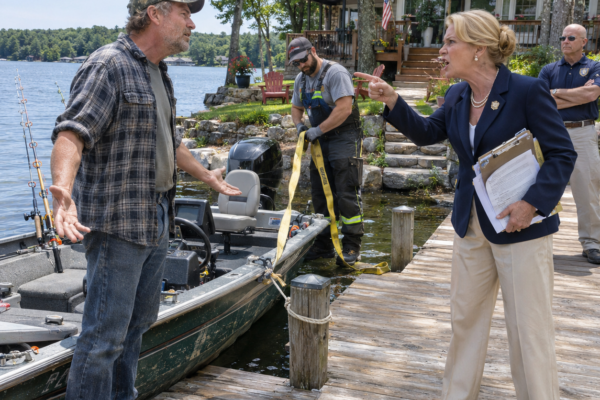
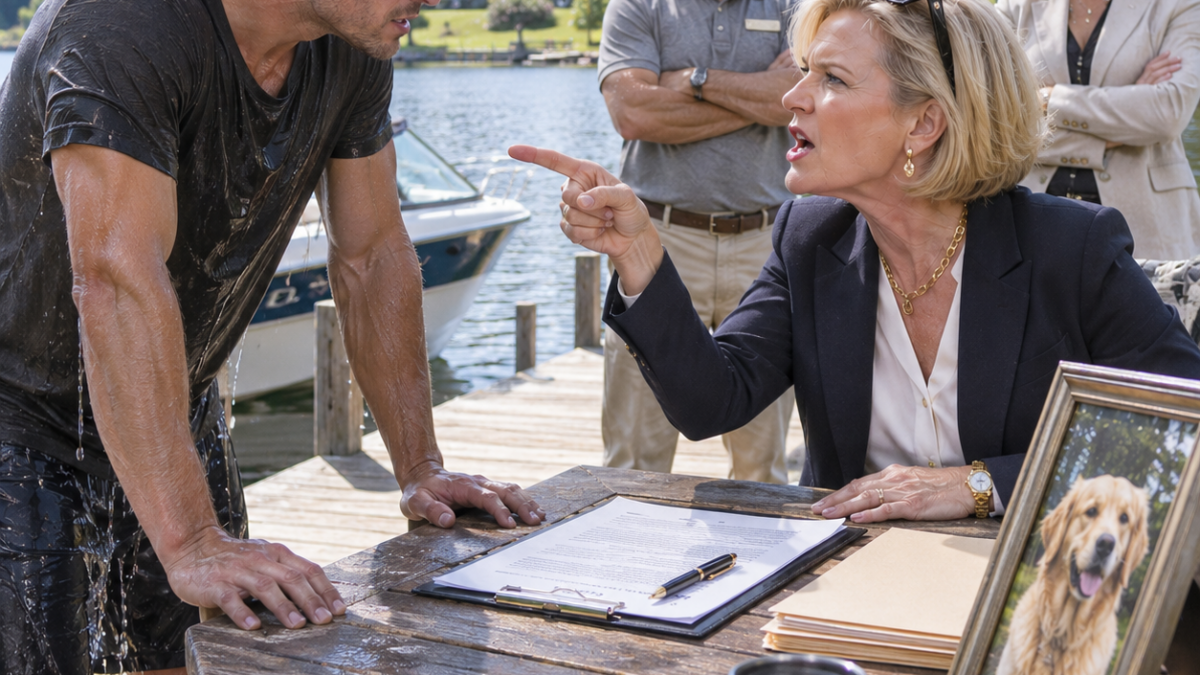
I was standing waist-deep in the lake behind the cottage my grandmother had left me, water dripping from my hair, while the newly elected president of Lakeside Manor HOA stood on my dock holding a clipboard like she had just caught me dumping toxic waste.
“Say that again,” I said.
Linda glanced at the pink citation in her hand.
“One thousand dollars. Environmental-impact assessment.”
“This is my lake.”
She gave me the patient smile people use when they think they’re explaining something obvious to a child.
“Not under the updated community rules.”
I swam toward the ladder.
The cottage behind her had been in my family since 1923. My grandfather had rebuilt the dock in the seventies. My grandmother taught me to swim in that water when I was six.
Lakeside Manor didn’t exist until decades later, when a developer built eighty-seven homes around the southern and eastern sides of the lake.
My parcel had never been part of it.
I climbed onto the dock and grabbed my towel.
“Linda, my property isn’t in your HOA.”
“All contiguous water features now fall under community environmental management.”
“According to whom?”
“The board.”
“The board can vote itself ownership of my property?”
Her smile disappeared.
“You’re being deliberately difficult.”
“No. I’m a history teacher. I’m professionally difficult about documents.”
She held up a little handheld meter with blinking lights.
“This detected abnormal contamination.”
I stared at it.
“You tested the water while I was swimming?”
“I don’t need to explain our enforcement procedures to you.”
“What contamination?”
“Chemical runoff.”
“From me?”
“Human activity changes water chemistry.”
“So does a duck.”
Her jaw tightened.
“That attitude is exactly why stronger enforcement became necessary.”
She wrote something else on the citation.
“An additional one hundred fifty dollars per day will accrue until you provide certified environmental compliance.”
I actually laughed.
It wasn’t because the situation was funny.
I was exhausted.
I was forty-five years old, had just survived three hours of parent-teacher conferences at Blackwood High, and had come home wanting ten quiet minutes in cold water.
Instead, an HOA I didn’t belong to had apparently invented a thousand-dollar swimming ticket.
Linda tore the pink sheet from her clipboard and held it toward me.
I didn’t take it.
“Leave it on the table.”
“You’re refusing service?”
“I’m refusing to stand here in a towel and pretend this makes sense.”
She slapped the citation onto the patio table.
That was when I noticed the tag hanging from the zipper of her designer handbag.
Not a store tag.
A pawn ticket.
It was folded almost completely under the strap, but I could see the little bar code and the words LOAN DUE.
Linda noticed me looking.
She yanked the bag against her side.
Then her phone buzzed.
She checked the screen.
For the first time since I had known her, genuine fear crossed her face.
She declined the call immediately.
“Just pay the fine, Mr. Cole.”
Her voice had changed.
Less commanding.
More urgent.
“There have already been problems around this water because residents refuse to act responsibly.”
“What problems?”
She looked toward the lake.
“Animals. Runoff. People who think property ownership means they can do whatever they want.”
Something inside me tightened.
“What animals?”
Linda hesitated.
Then she shrugged.
“Irresponsible pet owners have caused incidents before.”
Three years earlier, my golden retriever, Buster, had collapsed after drinking from a drainage channel near this lake.
He had been eleven.
The veterinarian found signs of acute chemical exposure but could never identify the source.
I had spent two days sitting on the floor of an emergency animal hospital with Buster’s head in my lap before his kidneys failed.
Linda knew that.
Everybody who had lived here then knew it.
I stared at her.
“What exactly happened three years ago?”
Her face went still.
“I have no idea what you’re talking about.”
“You just said there were incidents involving pets.”
“I said irresponsible pet owners.”
“Which incidents?”
She picked up her clipboard.
“This conversation is over.”
She turned and walked toward the shore.
“Linda.”
She kept walking.
“You came onto my property to fine me for swimming, but now you suddenly don’t want to talk?”
She stopped at the end of the dock.
Without turning around, she said, “Pay what you owe, Ethan. You don’t want this becoming more complicated.”
Then she left.
I stayed outside until the cold finally drove me indoors.
At 11:40 that night, I sat at my kitchen table with my laptop open and searched the local newspaper archive.
I tried Buster’s name first.
Nothing.
Then “Lakeside Manor chemical runoff.”
An article appeared from three years earlier.
The headline made my stomach drop.
THREE DOGS SICKENED AFTER SHORELINE TREATMENT NEAR LAKESIDE MANOR
I opened it.
The HOA had hired a landscaping contractor to treat invasive vegetation along a drainage strip near the lake.
Residents had complained afterward about a chemical smell.
Three dogs became seriously ill within days.
One of them had been Buster.
The article quoted the chairwoman of the HOA beautification committee.
Linda Sterling.
She had insisted the contractor followed community standards and blamed “uncontrolled pets entering restricted treatment areas.”
I read that sentence twice.
Then I noticed something else.
The treatment site described in the article wasn’t on HOA property.
According to the accompanying photograph, it was along the drainage strip that crossed the back corner of my grandmother’s parcel.
I looked toward the dark window over my sink.
The thousand-dollar swimming fine suddenly felt less ridiculous.
Because if Linda had been willing to trespass onto my family’s land three years ago and treat it as HOA property, maybe she wasn’t confused now.
Maybe she had been practicing. Pasted text(3)
Part 2:
“You owe us one thousand dollars for swimming.”
For a few seconds, I honestly thought Linda Sterling was joking.
I was standing waist-deep in the lake behind the cottage my grandmother had left me, water dripping from my hair, while the newly elected president of Lakeside Manor HOA stood on my dock holding a clipboard like she had just caught me dumping toxic waste.
“Say that again,” I said.
Linda glanced at the pink citation in her hand.
“One thousand dollars. Environmental-impact assessment.”
“This is my lake.”
She gave me the patient smile people use when they think they’re explaining something obvious to a child.
“Not under the updated community rules.”
I swam toward the ladder.
The cottage behind her had been in my family since 1923. My grandfather had rebuilt the dock in the seventies. My grandmother taught me to swim in that water when I was six.
Lakeside Manor didn’t exist until decades later, when a developer built eighty-seven homes around the southern and eastern sides of the lake.
My parcel had never been part of it.
I climbed onto the dock and grabbed my towel.
“Linda, my property isn’t in your HOA.”
“All contiguous water features now fall under community environmental management.”
“According to whom?”
“The board.”
“The board can vote itself ownership of my property?”
Her smile disappeared.
“You’re being deliberately difficult.”
“No. I’m a history teacher. I’m professionally difficult about documents.”
She held up a little handheld meter with blinking lights.
“This detected abnormal contamination.”
I stared at it.
“You tested the water while I was swimming?”
“I don’t need to explain our enforcement procedures to you.”
“What contamination?”
“Chemical runoff.”
“From me?”
“Human activity changes water chemistry.”
“So does a duck.”
Her jaw tightened.
“That attitude is exactly why stronger enforcement became necessary.”
She wrote something else on the citation.
“An additional one hundred fifty dollars per day will accrue until you provide certified environmental compliance.”
I actually laughed.
It wasn’t because the situation was funny.
I was exhausted.
I was forty-five years old, had just survived three hours of parent-teacher conferences at Blackwood High, and had come home wanting ten quiet minutes in cold water.
Instead, an HOA I didn’t belong to had apparently invented a thousand-dollar swimming ticket.
Linda tore the pink sheet from her clipboard and held it toward me.
I didn’t take it.
“Leave it on the table.”
“You’re refusing service?”
“I’m refusing to stand here in a towel and pretend this makes sense.”
She slapped the citation onto the patio table.
That was when I noticed the tag hanging from the zipper of her designer handbag.
Not a store tag.
A pawn ticket.
It was folded almost completely under the strap, but I could see the little bar code and the words LOAN DUE.
Linda noticed me looking.
She yanked the bag against her side.
Then her phone buzzed.
She checked the screen.
For the first time since I had known her, genuine fear crossed her face.
She declined the call immediately.
“Just pay the fine, Mr. Cole.”
Her voice had changed.
Less commanding.
More urgent.
“There have already been problems around this water because residents refuse to act responsibly.”
“What problems?”
She looked toward the lake.
“Animals. Runoff. People who think property ownership means they can do whatever they want.”
Something inside me tightened.
“What animals?”
Linda hesitated.
Then she shrugged.
“Irresponsible pet owners have caused incidents before.”
Three years earlier, my golden retriever, Buster, had collapsed after drinking from a drainage channel near this lake.
He had been eleven.
The veterinarian found signs of acute chemical exposure but could never identify the source.
I had spent two days sitting on the floor of an emergency animal hospital with Buster’s head in my lap before his kidneys failed.
Linda knew that.
Everybody who had lived here then knew it.
I stared at her.
“What exactly happened three years ago?”
Her face went still.
“I have no idea what you’re talking about.”
“You just said there were incidents involving pets.”
“I said irresponsible pet owners.”
“Which incidents?”
She picked up her clipboard.
“This conversation is over.”
She turned and walked toward the shore.
“Linda.”
She kept walking.
“You came onto my property to fine me for swimming, but now you suddenly don’t want to talk?”
She stopped at the end of the dock.
Without turning around, she said, “Pay what you owe, Ethan. You don’t want this becoming more complicated.”
Then she left.
I stayed outside until the cold finally drove me indoors.
At 11:40 that night, I sat at my kitchen table with my laptop open and searched the local newspaper archive.
I tried Buster’s name first.
Nothing.
Then “Lakeside Manor chemical runoff.”
An article appeared from three years earlier.
The headline made my stomach drop.
THREE DOGS SICKENED AFTER SHORELINE TREATMENT NEAR LAKESIDE MANOR
I opened it.
The HOA had hired a landscaping contractor to treat invasive vegetation along a drainage strip near the lake.
Residents had complained afterward about a chemical smell.
Three dogs became seriously ill within days.
One of them had been Buster.
The article quoted the chairwoman of the HOA beautification committee.
Linda Sterling.
She had insisted the contractor followed community standards and blamed “uncontrolled pets entering restricted treatment areas.”
I read that sentence twice.
Then I noticed something else.
The treatment site described in the article wasn’t on HOA property.
According to the accompanying photograph, it was along the drainage strip that crossed the back corner of my grandmother’s parcel.
I looked toward the dark window over my sink.
The thousand-dollar swimming fine suddenly felt less ridiculous.
Because if Linda had been willing to trespass onto my family’s land three years ago and treat it as HOA property, maybe she wasn’t confused now.
Maybe she had been practicing.
The next morning I called Marcus Holloway.
Everybody called him Mac.
He had been my father’s partner in the county sheriff’s department for fifteen years before Dad died. Mac had retired from law enforcement six years ago and now did occasional private-investigation work for attorneys and insurance companies.
He answered before seven.
“Someone better be dead.”
“Not currently.”
“That is not a reassuring answer.”
“I need coffee and common sense.”
“Your house or mine?”
“Mine.”
He arrived forty minutes later wearing work boots, jeans, and the same battered canvas jacket he had owned since I was in college.
I put the citation and newspaper article in front of him.
Mac read both.
Then he read the article again.
“You think Linda poisoned Buster?”
“I think Linda authorized chemical treatment on land she didn’t own. Buster drank from the runoff. So did two other dogs.”
“That isn’t the same thing as proving she poisoned him.”
“I know.”
“You don’t sound like you know.”
I sat back.
He was right.
The article had pulled me straight back into that animal hospital, into the smell of disinfectant and Buster’s labored breathing.
I wanted Linda responsible because responsibility would make the memory easier to organize.
Mac tapped the newspaper clipping.
“This is worth looking into. But you need facts, not rage.”
“I’m a history teacher. Facts are my whole personality.”
He looked at the $1,000 citation.
“Apparently sarcasm is the other half.”
We started with the property records.
My grandmother’s parcel had a separate legal description dating back generations.
It was excluded from the Lakeside Manor plat.
There was no recorded declaration binding it to the HOA.
There was, however, a narrow easement allowing residents to use a marked walking path on the far southern edge of the property to reach a community beach.
Nothing gave the HOA control of my cottage.
Nothing gave it authority over my dock.
And nothing called my private cove “community property.”
I emailed copies to Linda and the HOA management address.
Her response came nine minutes later.
THE BOARD DISPUTES YOUR INTERPRETATION.
That afternoon another violation appeared.
$400 for “excessive aquatic disturbance.”
The listed offense was splashing.
The following morning came $550 for an “unauthorized structural modification.”
I had replaced one rotten dock board.
By Friday, Linda claimed I owed $3,100.
I stopped laughing.
I also started talking to my neighbors.
George Miller, a retired machinist who lived across the county road, had been fined $1,100 for parking his pickup in his driveway while repairing a lawn mower for a friend.
Mrs. Higgins, a seventy-eight-year-old widow, had been charged $800 because her Christmas wreath remained on her front door until January 12.
A young couple named Aaron and Melissa Reyes had paid $650 after Linda claimed their children’s portable basketball hoop blocked “emergency sightlines.”
None of those amounts matched the fine schedule in the HOA documents residents showed me.
“What happens if you challenge her?” I asked George.
“You get another letter.”
“From the management company?”
He snorted.
“What management company? Linda stopped using them after she got elected.”
That interested me.
“Who handles the books?”
“Sarah Jenkins. Treasurer.”
“Does Sarah approve the fines?”
George looked toward the road before answering.
“Sarah barely looks people in the eye anymore.”
Three nights later Sarah knocked on my door.
It was after nine.
She stood on the porch hugging a banker’s box to her chest.
“I need to show you something.”
I let her in.
Sarah was thirty-eight, a single mother with a twelve-year-old daughter and the permanently tired expression of someone who measured life in deadlines.
She set the box on my dining table.
“I know you’re fighting Linda.”
“I’m challenging fines.”
“She calls it fighting.”
“What’s in the box?”
“Copies.”
“Of?”
“Everything I could take without removing originals.”
She lifted out bank statements, invoices, check registers, reimbursement forms, and board minutes.
The problem became obvious within twenty minutes.
Lakeside Manor had paid more than $38,000 over eighteen months to a company called Environmental Solutions LLC.
The invoices described shoreline testing, runoff monitoring, vegetation control, and “environmental compliance enforcement.”
Sarah had never seen anyone perform most of those services.
“Who owns the company?”
“I didn’t know until yesterday.”
She slid over a state business-registration printout.
The registered agent had the same mailing address as Linda’s sister.
My stomach tightened.
“That doesn’t automatically mean Linda owns it.”
“I know.”
Sarah pulled out another document.
It was a reimbursement request for $7,800.
Approved by Linda.
The supporting invoice had the same font, same formatting error, and same invoice number as one of the Environmental Solutions bills.
“That’s not the worst part,” Sarah said.
She showed me the playground account.
Parents had approved a special assessment the previous year to replace an unsafe playground near the community center.
Nearly $42,000 had been collected.
Only $4,300 remained.
No playground had been ordered.
“Where did the money go?”
“I don’t know.”
“Have you asked?”
Sarah laughed once, without humor.
“She told me the funds were temporarily reallocated.”
“By board vote?”
“There was no vote.”
“Then why didn’t you stop it?”
Her eyes filled.
“I tried.”
The answer came out barely above a whisper.
“She told me she would tell my employer I had falsified association records.”
“Did you?”
“No.”
“Then why would they believe her?”
“Because she has copies with my signature.”
Sarah pushed a page toward me.
The signature looked like hers.
She said it wasn’t.
I looked up.
“This needs an attorney.”
“I can’t afford one.”
“No. The HOA needs one.”
By noon the next day, the association’s longtime counsel had received Sarah’s documents.
His response was immediate.
He instructed the board to preserve all financial records and warned Linda in writing not to authorize further expenditures without proper approval.
He also confirmed something else.
He had never approved my fines.
He had never seen the so-called Environmental Protection Code 15C.
There was no such provision in the recorded Lakeside Manor documents.
Linda had invented it.
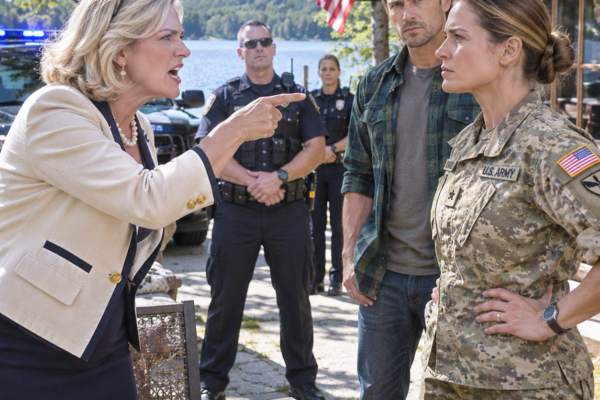
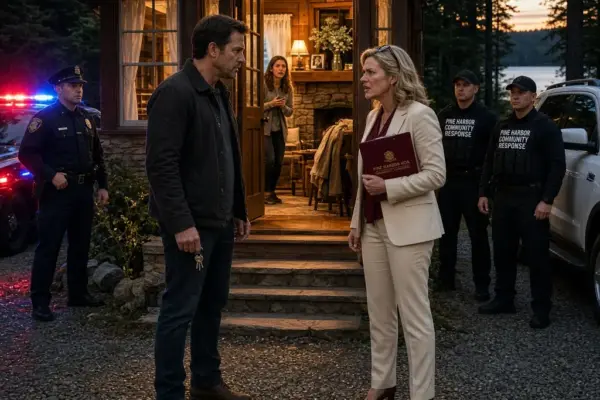
Two days later she came to my house.
She was wearing a cream coat and carrying a leather portfolio.
No clipboard.
No meter.
No pink citation slips.
“I’d like to reset our relationship,” she said.
“That’s an ambitious opening.”
“I’m trying to be reasonable.”
“You fined me three thousand dollars for swimming and replacing a board.”
“Those penalties can be waived.”
“Penalties issued by an HOA I don’t belong to.”
She ignored that.
“I have a settlement proposal.”
“Of course you do.”
She opened the portfolio.
Inside was a six-page agreement.
The title read SHARED WATER ACCESS AND ENVIRONMENTAL STEWARDSHIP AGREEMENT.
The first page sounded harmless.
By page three, it became something else.
If I signed, the HOA would receive permanent access to my lakefront parcel for monitoring, maintenance, improvements, recreational programming, and future community projects.
I would also give the association approval authority over dock use and shoreline changes.
Then I reached the assignment clause.
The HOA could transfer certain rights to approved partners.
“What partner?” I asked.
Linda crossed her legs.
“That’s not relevant.”
“It’s relevant if you want me to sign away access to my family property.”
“You aren’t signing it away.”
“I’m giving you control.”
“You’re sharing responsibility.”
“For half the lakefront.”
“You don’t need all that water.”
I looked at her.
She actually said it.
“You inherited more than one person reasonably needs,” she continued. “The rest of the community has eighty-seven families.”
“And?”
“And responsible people compromise.”
I put the agreement down.
“No.”
Her expression hardened.
“You haven’t considered it.”
“I considered it while reading it.”
“You’re a schoolteacher, Ethan. Do you really want to spend twenty thousand dollars fighting attorneys over something you barely use?”
“There are no attorneys threatening me.”
“There will be.”
“Yours already told you my fines aren’t valid.”
That hit her.
Her eyes narrowed.
“Sarah has been talking.”
“Your attorney has been talking.”
“She had no right to remove confidential documents.”
“Copies of financial records she is responsible for as treasurer?”
Linda stood.
“You have no idea what you’re inserting yourself into.”
“I’m beginning to.”
She gathered the agreement.
I stopped her before she reached the door.
“One question.”
She turned.
“What happened to the playground money?”
Her face changed.
Only slightly.
But I saw it.
“Ask Sarah.”
“I did.”
“Then you have your answer.”
“No. I have bank statements.”
Her voice dropped.
“Be careful, Ethan.”
“About what?”
“About accusing people of crimes because you’re angry over a dog.”
There it was again.
Buster.
I hadn’t mentioned him.
“How do you know I’m looking into that?”
Linda’s lips parted.
Then closed.
“I live in a small community.”
“So you know I found the article?”
“I know you’re obsessed.”
“With why three dogs got sick after a chemical treatment you supervised?”
“The contractor followed instructions.”
“What instructions?”
She opened the door.
“That happened years ago.”
“On my grandmother’s property.”
She froze.
I continued.
“The drainage strip was ours then. It’s mine now.”
Linda looked at me over her shoulder.
“You should sell the cottage.”
“Why?”
Her answer came too quickly.
“Because you don’t belong here.”
Then she walked out.
That night Mac called.
“Check your email.”
He had searched public civil filings.
Linda’s house was in foreclosure.
She was behind on the mortgage and facing a scheduled sheriff’s sale if the arrears were not cured.
That explained the pawn ticket.
It didn’t prove she stole HOA money.
But desperation and access to other people’s accounts were a combination worth taking seriously.
The association attorney thought so too.
He contacted the county district attorney’s office.
Sarah agreed to provide records.
I gave them every notice Linda had sent me.
George, Mrs. Higgins, and the Reyeses provided theirs.
The investigators asked us not to confront Linda about the financial documents.
For almost two weeks, nothing happened.
Then Linda changed tactics.
The fines stopped.
The threats stopped.
Instead, flyers appeared announcing an “Emergency Lakeside Manor Member Meeting.”
The subject was the future of the lake.
Because I wasn’t an HOA member, I wasn’t invited.
George brought me a copy.
The meeting agenda contained one line that mattered:
COMMUNITY WATER ACCESS ACQUISITION.
“What the hell does that mean?” George asked.
“I think it means Linda plans to ask everybody to approve something she couldn’t get me to sign privately.”
The meeting was scheduled for Thursday.
On Tuesday, I received a certified letter from an attorney I had never heard of.
Not the HOA’s regular counsel.
The letter claimed Lakeside Manor possessed “historic equitable rights” to recreational use of the entire lakefront and offered me $35,000 in exchange for a permanent easement.
I sent it to my own real-estate attorney, Rachel Moore.
Her response was six words.
Do not sign a damn thing.
Rachel examined my title, the HOA declaration, the subdivision plat, and the old family deeds.
Then she found what Linda had been trying to work around.
My grandmother’s parcel included not only the cottage and shoreline but also a recorded ownership interest in the lakebed along the western cove.
Lakeside Manor residents had limited recreational access through a separate community beach.
Their easement did not cross my dock.
It did not permit commercial activity.
And it did not allow the HOA to assign my property rights to anyone else.
“Why would they need an assignable easement?” I asked.
Rachel leaned back.
“Usually because they want to assign it.”
“To whom?”
“Find that out.”
Sarah found it first.
She called me the next evening.
“Have you heard of Blue Heron Development?”
“No.”
“They’re giving a presentation Thursday.”
“For what?”
“A private club.”
I felt my shoulders tighten.
“What kind of club?”
“Dock expansion. Event pavilion. Rental boats. Lakefront memberships for people outside the neighborhood.”
There it was.
Linda wasn’t trying to protect the lake.
She was trying to monetize it.
The next morning I found a glossy concept packet online.
Blue Heron proposed a “boutique lake lifestyle facility” with twenty-four boat slips, an events lawn, paddle rentals, a lakeside restaurant, and paid memberships.
The only practical access route for part of the project crossed my shoreline.
And the proposed dock expansion extended into the portion of lakebed tied to my parcel.
I finally understood Linda’s obsession.
My property wasn’t an inconvenience.
It was the missing signature.
Thursday evening, I attended the meeting with Rachel.
The community center was packed.
Linda stood at the front beside a projector.
A rendering of the proposed Blue Heron Lake Club filled the screen.
She saw me immediately.
“You’re not a member.”
“No.”
“Then leave.”
Rachel stepped beside me.
“We represent property directly affected by the proposal.”
Linda’s smile became brittle.
“There is no proposal affecting his property.”
A man in a gray suit near the projector looked over.
Rachel held up the Blue Heron site plan.
“Then somebody should probably tell your developer.”
That changed the room.
The man approached.
“Who are you?”
“Rachel Moore. Counsel for Ethan Cole.”
His name was Daniel Price, vice president of acquisitions for Blue Heron Development.
He looked from Rachel to me.
“You’re the western-cove owner?”
“Yes.”
His expression shifted.
“Ms. Sterling told us your access issue was resolved.”
Linda cut in.
“It will be.”
“No,” I said. “It won’t.”
Whispers spread through the room.
Linda stepped to the microphone.
“This individual has spent weeks obstructing reasonable community improvements because he believes inheriting an outdated cottage gives him veto power over eighty-seven families.”
George called from the third row.
“It gives him veto power over his own land.”
A few people laughed.
Linda’s face reddened.
She clicked to the next slide.
Projected on the wall was a photograph of my cottage.
“Mr. Cole has refused environmental compliance, refused lake-use standards, refused shoreline improvements, and accumulated thousands of dollars in violations.”
Rachel spoke loudly enough for the room to hear.
“His property is not subject to your HOA declaration.”
Daniel Price turned toward Linda.
“You told us it was disputed.”
“It is.”
“No,” Rachel said. “The recorded documents are clear.”
Linda struck the table with her hand.
“This is not a courtroom.”
“No,” I said. “Which is probably fortunate for you.”
That was when Sarah stood.
She had a banker’s box in her arms.
Linda saw it and went pale.
“Sit down, Sarah.”
Sarah walked toward the front.
“I need to tell everyone something.”
“You are out of order.”
“I’m the treasurer.”
“You are suspended.”
“You can’t suspend an elected officer because you don’t like what she found.”
The room erupted.
Sarah opened the box.
“The HOA collected forty-two thousand dollars for the playground.”
Parents immediately started talking.
She held up a bank statement.
“There is four thousand three hundred left.”
Someone shouted, “Where’s the rest?”
Sarah looked at Linda.
“Ask her.”
Linda stepped away from the microphone.
“This is an accounting misunderstanding.”
“No,” Sarah said.
Her voice shook, but she kept going.
“Thirty-eight thousand dollars also went to Environmental Solutions LLC. The company is registered through Linda’s sister’s address. Several invoices describe work that residents say never happened.”
Daniel Price slowly closed his presentation folder.
Linda pointed at Sarah.
“You stole confidential records.”
“I copied records I’m responsible for maintaining.”
“You are destroying this association.”
“No,” Sarah said. “I’m showing them what happened to their money.”
Then George stood.
“So what about Ethan’s fines?”
Sarah pulled out another sheet.
“They were never approved by the board.”
People started shouting.
Linda grabbed the microphone.
“You are listening to frightened, confused people who do not understand how an association is run.”
Mrs. Higgins stood next.
“I understand eight hundred dollars for a Christmas wreath.”
Laughter broke out.
Then the side door opened.
Two investigators from the county district attorney’s office entered with a sheriff’s deputy.
Nobody cheered.
Nobody moved.
The lead investigator walked toward Linda.
“Ms. Sterling, we need to speak with you regarding association financial records.”
Linda’s face drained.
“This meeting is private.”
“I understand.”
“You have no authority to interrupt—”
“We have a warrant for records at your residence and for electronic devices identified in the affidavit.”
The room went silent.
Not because anybody suddenly knew she was guilty.
Because they finally understood the issue was no longer neighborhood gossip.
Linda looked at me.
“This is you.”
“No.”
“You did this.”
“Sarah found the records.”
“You poisoned everyone against me.”
The investigator asked her to step outside.
Linda resisted verbally, but not physically.
She left still insisting the HOA was the victim of a coordinated attack.
The meeting collapsed behind her.
Daniel Price cornered Rachel and me near the back wall.
“We were told the western access had board approval.”
“It didn’t,” Rachel said.
“We were told Ethan had agreed in principle.”
“I didn’t.”
Price rubbed his forehead.
“Did he ever sign anything?”
“No.”
“Then Blue Heron is done here until our counsel reviews title.”
They were gone before most residents left the building.
The criminal case took months.
That was far less satisfying than the instant justice people imagine when they tell stories later.
Investigators subpoenaed bank records.
They interviewed vendors.
They examined Sarah’s disputed signatures.
Some payments that had looked suspicious turned out to be legitimate.
Others did not.
Environmental Solutions had received tens of thousands of dollars for work investigators could not substantiate.
Money from HOA accounts had also been transferred through reimbursements into expenses prosecutors alleged were personal.
The playground money had been raided to keep other accounts afloat.
Linda’s foreclosure explained her desperation, but not her choices.
The old chemical-treatment incident was investigated separately.
That part hurt the most.
The landscaping contractor still had records.
Three years earlier, Linda had authorized a strong herbicide application along the drainage strip despite a written warning that rain was expected.
The contractor had recommended postponing the job.
Linda insisted they proceed because the HOA had a landscaping inspection that weekend.
Stormwater carried residue into the low drainage area.
The veterinary cases followed.
There was no evidence Linda had intentionally poisoned Buster.
There was evidence she had pushed an unnecessary treatment onto property the HOA did not own and ignored the contractor’s warning.
For three years, I had wanted somebody to tell me exactly why Buster died.
When Rachel finally showed me the report, certainty didn’t feel like victory.
It felt heavy.
Linda had not targeted my dog.
She had simply cared more about appearance than risk.
In some ways, that was harder to forgive.
She eventually pleaded guilty to charges related to theft from the association and falsification of records.
The court ordered restitution.
She lost the HOA presidency long before sentencing.
The members voted her out by a margin large enough that even George stopped complaining about how long the meeting took.
Blue Heron withdrew its proposal.
The board canceled every invalid fine issued under Linda’s invented environmental code.
Mine disappeared with the rest.
But the lake-access issue remained.
Lakeside Manor residents still used the community beach.
I still owned the western cove and my dock.
The new board president, a retired accountant named Diane Mercer, came to see me one Saturday morning.
She brought coffee instead of citations.
Already an improvement.
“We need a clean agreement,” she said.
“For what?”
“For the access everybody has actually been using for thirty years.”
“That easement already exists.”
“Yes. But it’s poorly described, and half the neighborhood thinks you’re going to lock the lake.”
“I never said that.”
“I know.”
She sipped her coffee.
“Linda told them you would.”
Of course she had.
Rachel and the HOA’s new attorney spent two months sorting through the old language.
We ended up with a simple arrangement.
The association would pay $5,000 per year toward maintenance of the shared shoreline access, liability insurance, and upkeep related to resident use.
In return, the existing recreational easement would be clarified.
No commercial rentals.
No marina.
No transfer to outside developers.
No control over my dock.
No invented environmental authority.
The agreement required renewal every five years.
When Diane presented it to the members, George raised his hand.
“So after all this, we’re paying Ethan five grand a year?”
Diane corrected him.
“We’re paying toward the maintenance costs associated with rights the community is using on property it doesn’t own.”
George looked at me.
“Still funny.”
“A little,” I admitted.
The measure passed overwhelmingly.
Sarah stayed on as treasurer long enough to rebuild the books, then resigned.
The playground was finally installed the following spring.
Mrs. Higgins put her Christmas wreath up in November and left it there until February.
Nobody fined her.
George continued repairing lawn mowers in his driveway.
The world somehow survived.
My teaching suspension never happened because, in reality, anonymous neighborhood complaints were not enough to remove a tenured teacher from a classroom without investigation.
Linda had tried.
Twelve nearly identical complaints reached the district office within two days.
My principal called me in.
He placed the letters on his desk.
“You want to explain why twelve people suddenly think a history teacher is a threat to civilization?”
“HOA dispute.”
He closed his eyes.
“I hate suburbs.”
“So do I.”
The district reviewed the complaints, found no connection to my work, and closed the matter.
That was it.
No dramatic firing.
No sudden career as a millionaire corruption guru.
I went back to teaching the War of 1812 to teenagers who remained unconvinced it had any relevance to their lives.
In a strange way, I was grateful for that.
The source of Linda’s power had never been genius.
It had been everybody’s willingness to treat her paperwork as authority.
Once residents started asking where the rule was written, who approved the expense, what the deed actually said, and whether the board had voted, her entire system began to collapse.
I started using that lesson in class.
Not Linda.
Not the HOA.
But the principle.
Institutions mattered.
Records mattered.
Procedure mattered.
Authority had boundaries.
My students found this more interesting after I told them, without names, that grown adults could apparently invent a $1,000 fine for swimming.
The final piece came the following summer.
The county completed a review of the old drainage area and required the HOA to restore native vegetation along part of it.
I volunteered my section of shoreline.
We planted sedges, rushes, and native grasses.
No aggressive chemicals.
No bright warning signs.
No clipboard.
One afternoon I found a family at the community beach throwing tennis balls into the water for their golden retriever.
The dog launched himself off the shore with the complete lack of dignity unique to happy retrievers.
For a second, I saw Buster.
Not sick.
Not lying beneath fluorescent lights at the animal hospital.
Six years old again, exploding out of the lake with a stick in his mouth and half the water in Wisconsin flying off his coat.
I had to turn away.
George was beside me.
“You okay?”
“Yeah.”
He followed my gaze.
“Good dog.”
“Looks like one.”
We stood there until the retriever shook himself all over his owners.
George laughed.
I did too.
Linda’s house was eventually sold.
I didn’t buy it.
I didn’t want it.
I didn’t turn it into a vacation rental with a mocking name.
By then, revenge seemed like another form of letting her occupy space in my life.
A young couple moved in instead.
They had two children and absolutely no interest in HOA politics.
Perfect.
The last time I saw Linda was nearly two years after the afternoon she walked onto my dock.
She had completed the custodial portion of her sentence and was working at a discount home-goods store in a town about thirty miles away.
I recognized her at the register before she recognized me.
She looked older.
Not destroyed.
Not transformed into some cautionary caricature.
Just tired.
Her eyes met mine.
For a moment neither of us spoke.
Then she looked at the item in my hand.
A cheap floating thermometer for the lake.
Of all things.
She scanned it.
“Eight ninety-nine.”
I paid.
Before I left, she said, “Ethan.”
I stopped.
She stared down at the register.
“I’m sorry about your dog.”
There were a hundred things I could have said.
That sorry didn’t undo anything.
That Buster had died because she wanted a drainage strip looking perfect before an inspection.
That she had blamed pet owners because admitting the truth would have made her look careless.
Instead I asked, “Did you know the contractor wanted to postpone the treatment?”
She nodded.
That was all I needed.
“Then I hope you understand why I can’t tell you it’s okay.”
Her eyes filled, but she didn’t argue.
“I understand.”
I left.
I’m still at the cottage.
I still teach history.
Every Tuesday after school, if the weather cooperates, I swim.
Sometimes Diane walks past on the community path and waves.
Sometimes George yells from across the road that the water is too cold and I’m an idiot.
He is usually right.
The HOA still exists.
That surprises people when I tell the story.
We didn’t burn it down.
We fixed what had been abused.
There are still dues.
Still meetings.
Still arguments about snow removal and road maintenance.
But fines require actual authority now.
Major expenditures require two approvals.
Financial statements go to every member quarterly.
And nobody gets to invent ownership by printing it on pink paper.
The five-thousand-dollar annual access payment goes into a separate maintenance account.
Most years, I don’t touch all of it.
Whatever remains helps maintain the shoreline and drainage area.
The arrangement isn’t glamorous.
That’s why it works.
One warm evening last August, I floated on my back near the end of my dock.
The sun was dropping behind the pines.
Kids were shouting near the community beach.
A dog barked.
Somewhere across the lake, somebody was badly grilling hamburgers.
I thought about the first day Linda stood over me with that clipboard and announced I owed her a thousand dollars for touching water my family had lived beside for a century.
Back then, I thought the story was about a ridiculous fine.
Then I thought it was about corruption.
For a while I thought it was about Buster.
In the end, it was simpler.
Linda had spent years convincing people that confidence was the same thing as authority.
All it took to stop her was for enough people to finally ask her to prove it.
I swam to the ladder, climbed onto my dock, and reached for my towel.
On the patio table sat the old pink citation.
I had kept it.
Not because I needed the reminder.
Because every once in a while, when Diane complains about a difficult board meeting, I hold it up and ask whether she plans to start charging me for swimming again.
She always gives me the same answer.
“Only if you splash too loudly.”
Then we both laugh.
And I jump back in.