My Restaurant Manager Ordered a Spoiled Ribeye Served to a Man He Thought Was Homeless, Then Fired the Waitress Who Secretly Warned Him. She Was Two Months Behind on Rent and Had Risked Her Only Income to Protect a Stranger. What Neither of Them Knew Was Why I’d Walked Into Augustine’s Wearing Worn-Out Clothes—or Who Actually Owned the Restaurant.K
My Restaurant Manager Ordered a Spoiled Ribeye Served to a Man He Thought Was Homeless, Then Fired the Waitress Who Secretly Warned Him. She Was Two Months Behind on Rent and Had Risked Her Only Income to Protect a Stranger. What Neither of Them Knew Was Why I’d Walked Into Augustine’s Wearing Worn-Out Clothes—or Who Actually Owned the Restaurant.
The first thing Daniel Shaw said about me was that people like me were bad for business.
He didn’t say it to my face.
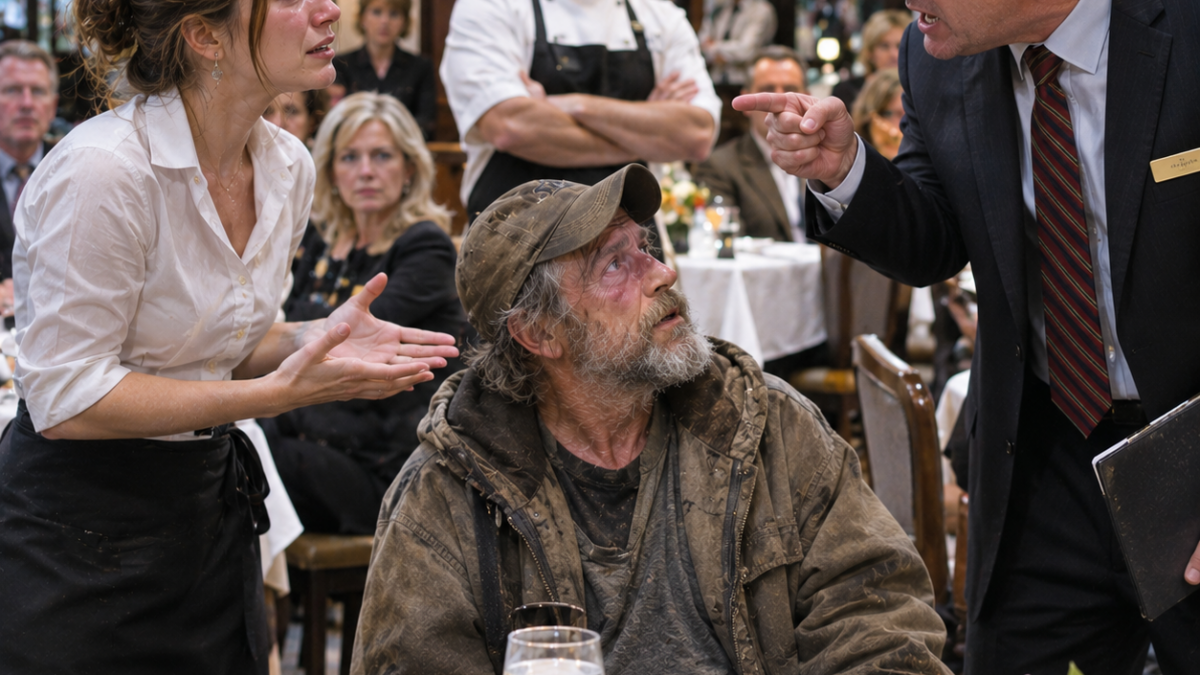
He said it to the hostess, six feet away from where I stood, as though my worn jacket and muddy work boots had somehow made me deaf.
“Put him at table nine, behind the partition. I don’t want our regular customers looking at that.”
The hostess, a young woman named Brianna, glanced at the empty tables beside the front windows.
“But, Mr. Shaw, he asked for a window seat.”
Daniel leaned closer to her.
“Did you hear me?”
“Yes, sir.”
I stood there holding my old canvas backpack, watching two women finish their lunch beside the very windows where I’d asked to sit.
Augustine’s was one of the nicest restaurants in Columbus, Ohio. White tablecloths, polished silverware, fresh flowers, and a kitchen known for its dry-aged steaks.
I’d walked through its front doors looking like someone who had spent the night at a bus station.
And its general manager had already decided what kind of man I was.
“Table nine is fine,” I told Brianna.
She looked relieved.
“This way, sir.”
I followed her past the windows, through the main dining room, and into a dimmer section near the service corridor.
The table was clean. The chair was comfortable. But anyone walking through the front entrance would have been unlikely to notice me.
A few minutes later, a waitress approached carrying a glass of water.
“Good afternoon. I’m Naomi Carter, and I’ll be taking care of you.”
She smiled as though I were any other customer.
“Have you eaten here before?”
“Not in a while.”
“Well, then you’ve picked a good day. Chef made roasted tomato bisque this morning, and if you like steak, the dry-aged ribeye is worth every penny.”
I opened the menu.
The steak was forty-eight dollars.
Not the most expensive meal in Columbus, but certainly not what Daniel imagined a man wearing my clothes could afford.
“I’ll have the soup and the ribeye. Medium rare.”
Naomi wrote down the order without hesitating.
“Excellent. Would you like bread with your soup?”
“Please.”
“Coming right up.”
Before she left, I asked, “You’re not going to check whether I can pay?”
Her smile disappeared.
“Has someone made you feel like you need to prove that?”
I glanced toward the front of the restaurant.
Naomi followed my eyes.
Then she looked back at me.
“Sir, you came in for lunch. My job is to make sure you enjoy it.”
I watched her walk away.
Daniel had been running Augustine’s for eight months.
During that time, complaints about rude service had increased, staff turnover had nearly doubled, and certain food expenses had begun looking strange on our monthly reports.
I wanted to see what was happening when nobody expected me.
So I’d left my usual clothes at home, pulled on an old jacket, and arrived without warning.
I hadn’t expected the situation to become dangerous.
My soup arrived hot, fragrant, and delicious.
Naomi brought fresh bread and checked whether I needed anything.
Then, while I was finishing the last spoonful, I heard an argument beyond the swinging kitchen doors.
“That’s the tray Chef tagged for disposal,” a male voice said.
Daniel answered sharply.
“I know what tray it is.”
“We can’t serve that meat.”
“Cook it properly and stop making problems.”
My spoon stopped halfway to the bowl.
There was a brief silence.
Then Daniel spoke again.
“It’s for the guy at nine. You think he’s going to know the difference? Put enough rosemary butter on it, and he’ll be grateful.”
I looked toward the kitchen.
A minute later, Naomi emerged carrying my empty soup bowl.
Her face was pale.
“Everything all right?” I asked.
She set the bowl on her tray.
“Yes, sir.”
But her fingers were trembling.
She glanced over her shoulder.
Daniel was standing near the kitchen entrance, watching the dining room.
Naomi leaned toward me.
“Would you like another glass of water?”
“I’m fine, thank you.”
She placed a folded paper napkin beside my plate.
Her voice dropped almost to a whisper.
“Please read that before your next course.”
Then she walked away.
I waited until Daniel turned toward the register.
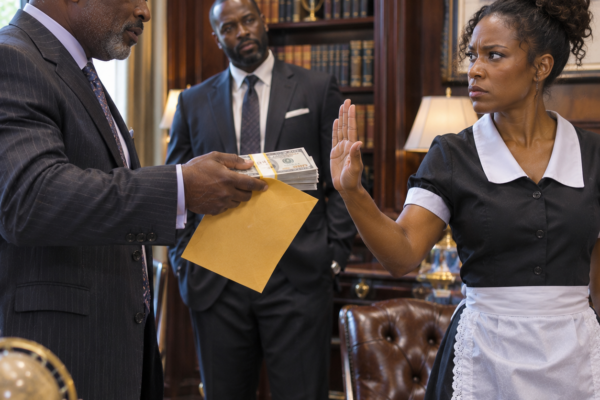
Inside the napkin was a small piece of paper.
Four words were written in blue ink.
DO NOT EAT THE STEAK.
Beneath them, in smaller handwriting:
The meat was marked unsafe. I’m sorry.
I folded the note and slipped it into my pocket.
Ten minutes later, a plate arrived carrying a perfectly seared ribeye with golden potatoes, green beans, and a spoonful of rosemary butter melting across the meat.
It looked beautiful.
I didn’t touch it.
Naomi approached cautiously.
“Is something wrong with your steak, sir?”
“No,” I said quietly. “I think you’ve already told me everything I need to know.”
Relief crossed her face.
Unfortunately, Daniel saw it.
He marched toward our table.
“Why hasn’t he eaten?”
Naomi straightened.
“I was just checking on him.”
Daniel looked at the untouched plate.
Then at her.
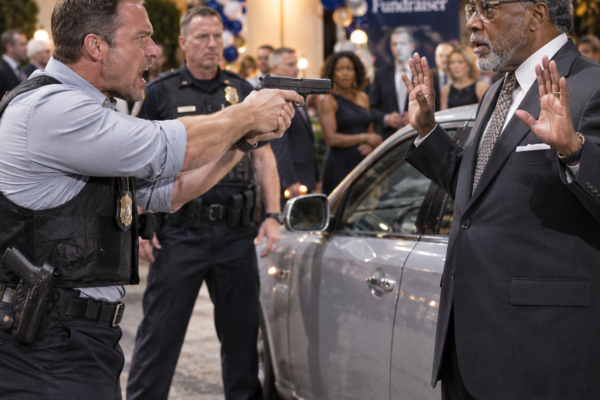
“Come into my office. Now.”
Twenty minutes later, I found Naomi beside the employee entrance, stuffing her apron into a canvas bag.
Her eyes were red.
“He fired me,” she said before I could speak. “And he told me he’d make sure nobody else in this city hired me.”
I felt my stomach tighten.
“Because you warned me?”
She nodded.
“I’ve worked here four years. I’m two months behind on rent. I don’t have savings, and I don’t have another job.”
She looked down at her bag.
“Daniel said I threw away my entire future over someone who couldn’t even afford lunch.”
I took a step toward her.
“Naomi, I need to tell you something.”
She shook her head.
“Please don’t thank me. I can’t handle that right now.”
“I’m not here just to thank you.”
She looked up.
“Then what?”
I glanced toward the restaurant’s rear entrance.
“Daniel has made a very serious mistake. And I’m going to need you to trust me long enough to help put it right.”
Part 2:
The first thing Daniel Shaw said about me was that people like me were bad for business.
He didn’t say it to my face.
He said it to the hostess, six feet away from where I stood, as though my worn jacket and muddy work boots had somehow made me deaf.
“Put him at table nine, behind the partition. I don’t want our regular customers looking at that.”
The hostess, a young woman named Brianna, glanced at the empty tables beside the front windows.
“But, Mr. Shaw, he asked for a window seat.”
Daniel leaned closer to her.
“Did you hear me?”
“Yes, sir.”
I stood there holding my old canvas backpack, watching two women finish their lunch beside the very windows where I’d asked to sit.
Augustine’s was one of the nicest restaurants in Columbus, Ohio. White tablecloths, polished silverware, fresh flowers, and a kitchen known for its dry-aged steaks.
I’d walked through its front doors looking like someone who had spent the night at a bus station.
And its general manager had already decided what kind of man I was.
“Table nine is fine,” I told Brianna.
She looked relieved.
“This way, sir.”
I followed her past the windows, through the main dining room, and into a dimmer section near the service corridor.
The table was clean. The chair was comfortable. But anyone walking through the front entrance would have been unlikely to notice me.
A few minutes later, a waitress approached carrying a glass of water.
“Good afternoon. I’m Naomi Carter, and I’ll be taking care of you.”
She smiled as though I were any other customer.
“Have you eaten here before?”
“Not in a while.”
“Well, then you’ve picked a good day. Chef made roasted tomato bisque this morning, and if you like steak, the dry-aged ribeye is worth every penny.”
I opened the menu.
The steak was forty-eight dollars.
Not the most expensive meal in Columbus, but certainly not what Daniel imagined a man wearing my clothes could afford.
“I’ll have the soup and the ribeye. Medium rare.”
Naomi wrote down the order without hesitating.
“Excellent. Would you like bread with your soup?”
“Please.”
“Coming right up.”
Before she left, I asked, “You’re not going to check whether I can pay?”
Her smile disappeared.
“Has someone made you feel like you need to prove that?”
I glanced toward the front of the restaurant.
Naomi followed my eyes.
Then she looked back at me.
“Sir, you came in for lunch. My job is to make sure you enjoy it.”
I watched her walk away.
Daniel had been running Augustine’s for eight months.
During that time, complaints about rude service had increased, staff turnover had nearly doubled, and certain food expenses had begun looking strange on our monthly reports.
I wanted to see what was happening when nobody expected me.
So I’d left my usual clothes at home, pulled on an old jacket, and arrived without warning.
I hadn’t expected the situation to become dangerous.
My soup arrived hot, fragrant, and delicious.
Naomi brought fresh bread and checked whether I needed anything.
Then, while I was finishing the last spoonful, I heard an argument beyond the swinging kitchen doors.
“That’s the tray Chef tagged for disposal,” a male voice said.
Daniel answered sharply.
“I know what tray it is.”
“We can’t serve that meat.”
“Cook it properly and stop making problems.”
My spoon stopped halfway to the bowl.
There was a brief silence.
Then Daniel spoke again.
“It’s for the guy at nine. You think he’s going to know the difference? Put enough rosemary butter on it, and he’ll be grateful.”
I looked toward the kitchen.
A minute later, Naomi emerged carrying my empty soup bowl.
Her face was pale.
“Everything all right?” I asked.
She set the bowl on her tray.
“Yes, sir.”
But her fingers were trembling.
She glanced over her shoulder.
Daniel was standing near the kitchen entrance, watching the dining room.
Naomi leaned toward me.
“Would you like another glass of water?”
“I’m fine, thank you.”
She placed a folded paper napkin beside my plate.
Her voice dropped almost to a whisper.
“Please read that before your next course.”
Then she walked away.
I waited until Daniel turned toward the register.
Inside the napkin was a small piece of paper.
Four words were written in blue ink.
DO NOT EAT THE STEAK.
Beneath them, in smaller handwriting:
The meat was marked unsafe. I’m sorry.
I folded the note and slipped it into my pocket.
Ten minutes later, a plate arrived carrying a perfectly seared ribeye with golden potatoes, green beans, and a spoonful of rosemary butter melting across the meat.
It looked beautiful.
I didn’t touch it.
Naomi approached cautiously.
“Is something wrong with your steak, sir?”
“No,” I said quietly. “I think you’ve already told me everything I need to know.”
Relief crossed her face.
Unfortunately, Daniel saw it.
He marched toward our table.
“Why hasn’t he eaten?”
Naomi straightened.
“I was just checking on him.”
Daniel looked at the untouched plate.
Then at her.
“Come into my office. Now.”
Twenty minutes later, I found Naomi beside the employee entrance, stuffing her apron into a canvas bag.
Her eyes were red.
“He fired me,” she said before I could speak. “And he told me he’d make sure nobody else in this city hired me.”
I felt my stomach tighten.
“Because you warned me?”
She nodded.
“I’ve worked here four years. I’m two months behind on rent. I don’t have savings, and I don’t have another job.”
She looked down at her bag.
“Daniel said I threw away my entire future over someone who couldn’t even afford lunch.”
I took a step toward her.
“Naomi, I need to tell you something.”
She shook her head.
“Please don’t thank me. I can’t handle that right now.”
“I’m not here just to thank you.”
She looked up.
“Then what?”
I glanced toward the restaurant’s rear entrance.
“Daniel has made a very serious mistake. And I’m going to need you to trust me long enough to help put it right.”
She stared at me for a moment before giving a tired, humorless laugh.
“Are you a lawyer?”
“No.”
“Health inspector?”
“No.”
“Then I don’t understand what you’re offering.”
I wanted to tell her everything right there. But Daniel had already appeared behind the glass door, and I could see him watching us.
“Do you have somewhere you can go for the next hour?” I asked.
“Home. Assuming my landlord hasn’t changed the locks.”
“Has your landlord filed for eviction?”
“Not yet. We’ve got a written payment arrangement. I missed the last deadline.”
I took a breath.
“Then go home, Naomi. I need to make a couple of calls, and I’ll contact you this afternoon.”
Her expression hardened.
“Please don’t promise me something just to make yourself feel better.”
That stopped me.
I had spent most of my adult life believing I could solve problems by making a phone call.
Naomi didn’t have that luxury.
“You’re right,” I said. “I haven’t earned your trust. But the restaurant has records of what happened today, and I intend to make sure those records are examined.”
She looked toward the building.
“Daniel controls everything in there.”
“Not everything.”
I asked permission to take her phone number. After a moment’s hesitation, she gave it to me.
Then she picked up her bag and walked toward the employee parking lot.
I watched until she disappeared around the corner.
Only then did I take out my phone.
My first call went to Marta Ruiz, our director of restaurant operations.
“Eric?” she answered. “I thought you were visiting the Cincinnati property today.”
“Plans changed. I’m at Augustine’s.”
There was a pause.
“Is everything all right?”
“No. We have a serious food-safety incident.”
I told her exactly what I’d witnessed, including the conversation outside the kitchen, Naomi’s written warning, and the untouched steak.
Marta’s voice became very quiet.
“Are you certain you heard Daniel order them to use meat that had been rejected?”
“Yes.”
“Did you eat any of it?”
“No.”
“Thank God.”
I looked back toward the restaurant.
“We need to stop service of the affected product immediately. I want the kitchen to secure the relevant food and records, and I want the local health authority notified. Nobody is to serve another steak from that inventory.”
“I’m calling the executive chef now,” Marta said.
“And Marta?”
“Yes?”
“Daniel just fired the employee who warned me.”
Another pause.
“Then we have more than one problem.”
She promised to reach Augustine’s within forty minutes.
I stayed nearby.
For twelve years, that restaurant had been the most personal business I owned.
My father, Augustine Townsend, had spent thirty-four years working as a cook in hotels, retirement communities, and neighborhood diners around central Ohio.
He believed a good meal could make someone feel welcome in a place where they otherwise might not belong.
When I was sixteen, he used to bring home leftover rolls from the bakery where he worked weekends.
He would warm them in our oven, put butter on the table, and tell my mother, “A person can have a bad day and still deserve a decent supper.”
Dad died before I opened Augustine’s.
I named the restaurant after him because I wanted something of his to remain in the world.
For the first five years, I practically lived there.
I washed dishes when the dishwasher broke. I carried deliveries, helped interview servers, and stayed after midnight balancing the register.
Eventually, the restaurant became successful enough to support a second business, then a third. I stepped back from daily operations and hired experienced managers to run the locations.
Daniel had been recruited eight months earlier after our previous general manager retired.
Marta interviewed him. His references were strong, and his financial reports looked impressive.
I had approved his appointment without meeting him.
At the time, that seemed like an ordinary business decision.
Now I stood outside my own restaurant in clothes Daniel had considered too shabby for the dining room, wondering how much damage had happened while I admired those impressive financial reports from a distance.
I didn’t have to wonder long.
When Marta arrived, she went straight into the kitchen and informed Daniel that dinner service would be suspended until the immediate safety concerns were addressed.
I entered behind her.
Daniel was standing beside the office door when he recognized my clothes.
His expression darkened.
“You again?”
Marta turned.
“Daniel, this is Eric Townsend.”
Daniel looked at her.
Then at me.
He gave a short laugh.
“Very funny.”
Marta didn’t smile.
“Eric owns Augustine’s.”
For several seconds, Daniel remained motionless.
I watched him trying to reconcile the man he’d humiliated with the name printed on the company’s ownership documents.
“Mr. Townsend?”
“That’s right.”
“I didn’t recognize you.”
“I noticed.”
He straightened his jacket.
“Sir, I had no idea you were visiting.”
“That was intentional.”
He looked toward Marta.
“I wish someone had told me. We would have prepared a proper welcome.”
“I’m less interested in the welcome than the food you ordered served to table nine.”
His expression changed.
“What food?”
“The ribeye from the tray Chef marked for disposal.”
Daniel glanced toward the kitchen.
“Oh, that. There was a misunderstanding.”
“A cook told you the meat couldn’t be served.”
“He was being overly cautious.”
“You told him to hide the quality with seasoning.”
“That isn’t what I meant.”
I took Naomi’s note from my pocket.
“Then explain this.”
He read it.
His face reddened.
“That’s the employee I fired. She has a history of overstepping.”
“Her name is Naomi Carter.”
“I know her name.”
“You threatened to ruin her career because she stopped me from eating that steak.”
Daniel looked at Marta as if expecting support.
“This is being blown completely out of proportion.”
Marta opened the folder she’d brought from her car.
“Daniel, we’re documenting this as a formal investigation. You’re being placed on administrative leave while we review the incident. You’ll need to surrender your keys and company access card for now.”
He stared at her.
“You can’t be serious.”
“We are.”
He turned to me.
“Eric, I’ve brought your food costs down almost eighteen percent. Your labor costs are the best they’ve been in years.”
I looked at him.
“Then we’ll examine how you accomplished that.”
His expression hardened again.
“You’re going to believe a waitress over your general manager?”
“I’m going to examine the evidence.”
Marta stepped toward the office.
“Let’s complete the handover, Daniel.”
He followed her reluctantly.
I went into the kitchen.
Luis Ortega, our executive chef, stood beside the stainless-steel preparation counter. He’d worked at Augustine’s for nearly seven years.
When he saw me, he looked ashamed.
“Eric.”
“Tell me what happened.”
He removed his kitchen cap.
“One tray of beef was flagged this morning after we found a problem with the cooler temperature records. The product had been held in uncertain conditions overnight. I marked it for disposal.”
“Why was it still in the kitchen?”
“I had it separated while we recorded the loss. Daniel came in before we finished.”
“And ordered you to serve it.”
Luis nodded.
“I refused initially. He said he’d take responsibility and told my line cook to prepare it anyway.”
“Why didn’t you stop him?”
Luis looked toward the swinging doors.
“He’s been threatening people’s jobs for months.”
I waited.
Finally, he said, “That’s not an excuse. I should have shut down the station.”
He was right.
Fear of losing a job could explain a decision without making it safe.
“Was anyone else served from that tray?”
“I don’t believe so. We caught the order before the remaining pieces were used.”
“We need to verify that.”
“I know.”
“Has the affected inventory been secured?”
“Yes. Marta told us to label and isolate it. We’re preserving the temperature logs, delivery records, and the order ticket.”
I nodded.
“Good. Nobody discards anything relevant until we’ve documented it and coordinated with the health officials.”
Luis looked exhausted.
“What’s going to happen to everyone?”
“I don’t know yet.”
That was the truth.
I wasn’t going to promise that every employee would escape consequences.
But I also wasn’t going to let Daniel use the fear he’d created to protect himself.
“We’ll handle this fairly,” I said. “And we’re not serving another meal until we know the kitchen is safe.”
The next two days were among the hardest I’d experienced as a restaurant owner.
Columbus Public Health was notified, and we cooperated with its food-safety review.
We voluntarily suspended service while the affected products were isolated, records preserved, and food-handling procedures checked. The health officials identified problems with temperature documentation and storage controls that needed correction.
Our kitchen team completed the required corrective work, and we arranged additional staff training before reopening.
At the same time, Marta and our outside accountant began reviewing Augustine’s purchasing records.
The numbers were troubling.
Daniel had reported significant savings in food costs.
But the restaurant’s customer complaints had risen, and the consistency of several popular dishes had declined.
We examined invoices from our established suppliers and compared them with delivery logs, bank transactions, and inventory records.
The discrepancies weren’t limited to one questionable steak.
For months, Daniel had been approving purchases through a specialty distributor called Buckeye Premier Provisions.
Its invoices described premium dry-aged beef and other high-end ingredients.
Yet some of the meat delivered to Augustine’s had come from a lower-cost wholesaler.
There were gaps in the documentation supporting the premium purchases.
And some payments had been approved using purchase orders that didn’t match what the kitchen actually received.
Our accountant couldn’t immediately determine whether the differences represented fraud, sloppy recordkeeping, or unauthorized substitution.
That distinction mattered.
I wasn’t going to accuse someone of stealing simply because the figures looked suspicious.
But the information was serious enough to justify a full independent review.
While investigators worked, I kept thinking about Naomi.
I’d promised to call her.
I hadn’t forgotten.
That same afternoon, after Daniel was removed from the building, I finally did.
She answered cautiously.
“Hello?”
“Naomi, it’s the customer from table nine.”
There was a pause.
“Did you get home?”
“Yes.”
“Are you all right?”
“That’s a pretty big question right now.”
“I understand.”
“No, I don’t think you do.”
She sounded exhausted.
“I just spent an hour applying for jobs online. Three restaurants want references from my last manager. My last manager is the man who threatened to ruin me.”
I sat down at my desk.
“Naomi, I owe you an explanation.”
“About what?”
“My name is Eric Townsend.”
Silence.
Then she said, “All right.”
“I own Augustine’s.”
Another silence.
Longer this time.
“Excuse me?”
“Augustine’s is my restaurant.”
I heard her breathing change.
“The restaurant where I just got fired?”
“Yes.”
“You’re telling me you’re the owner?”
“I am.”
She didn’t speak for several seconds.
Then she laughed bitterly.
“Is this some kind of joke?”
“No.”
“Because if it is, I really can’t handle it today.”
“It’s not a joke.”
I explained that I had visited without identifying myself because of the complaints and financial irregularities.
I told her Daniel had been placed on administrative leave, that dinner service had been suspended, and that we’d reported the food-safety incident.
When I finished, she whispered, “You knew?”
“I knew who I was. I didn’t know what Daniel would do.”
“You let him think you couldn’t afford a meal.”
“Yes.”
“And you watched what happened.”
“Yes.”
Her voice tightened.
“So you were testing us.”
I rubbed my forehead.
“That’s one way to describe it.”
“It’s the only way I can describe it from where I’m standing.”
I had no answer.
She continued.
“Do you understand what I was thinking when I gave you that note?”
“Tell me.”
“I thought you were somebody who had already been humiliated enough. And I knew if Daniel found out, I’d lose my job.”
I looked down at the note on my desk.
“I know.”
“No, Eric. You know now. At the time, you had a way out. I didn’t.”
That struck harder than anything Daniel had said.
She was right.
I’d entered the restaurant with the power to end the situation whenever I chose.
Naomi had entered her shift needing the wages.
I could have revealed my identity the moment I heard Daniel threaten the kitchen.
Instead, I’d waited to see what would happen.
In that delay, Naomi had been fired.
“I’m sorry,” I said.
She was quiet.
Then she asked, “What happens now?”
“We’re reviewing your termination. Marta wants to speak with you about returning to work, and we’ll make sure the wages you’re owed are handled properly.”
“Am I getting my job back?”
“If you want to return, we want to discuss that. Your warning was the right thing to do.”
She gave a weary sigh.
“I don’t know whether I can walk back into that building.”
“I understand.”
“Do you?”
“I’d like to. But I know I’ve given you reasons to doubt me.”
I asked whether she would meet Marta and me the following morning somewhere neutral.
She agreed reluctantly.
Before hanging up, she said, “Please don’t make me into a hero in front of everybody. I was scared out of my mind.”
“I won’t.”
After the call ended, I sat alone in the office.
Naomi’s words had unsettled me.
I’d gone to Augustine’s intending to uncover dishonesty.
But I hadn’t considered the dishonesty in my own approach.
I had allowed people to believe I was powerless because it gave me a better view of how they behaved.
That didn’t justify Daniel’s actions.
Nothing did.
But it also didn’t make my decision harmless.
That evening, I drove to my mother’s house.
Lorraine Townsend was seventy-one, opinionated, and still convinced that my success in business was mostly the result of her feeding me properly when I was a child.
She opened the door before I reached the porch.
“Well, you look terrible.”
“Good evening to you too, Mom.”
She stepped aside.
“Come in. I’ve got chicken in the oven.”
I followed her into the kitchen.
She stopped beside the counter and studied me.
“Something’s happened.”
I took off my jacket.
“Something happened at Augustine’s.”
Her expression changed.
“Is anyone hurt?”
“Not as far as we know.”
“Then sit down and tell me.”
I told her everything.
The clothes.
Daniel’s behavior.
The spoiled steak.
Naomi’s warning.
The firing.
The investigation.
Mom listened without interrupting.
When I finished, she folded her hands.
“Let me make sure I understand.”
I nodded.
“You dressed like somebody who didn’t have much money because you wanted to see how people would treat you.”
“Yes.”
“And the manager treated you badly.”
“Very badly.”
“And a waitress risked losing her job to keep you from getting sick.”
“Yes.”
Mom looked at me for a long moment.
“Then what are you doing sitting in my kitchen?”
I blinked.
“I’m investigating—”
“I know you’re investigating. You’d better be.”
She pushed her chair back.
“But that young woman is worrying about her rent while you’re telling me how shocked you are.”
“We’re meeting tomorrow.”
“Good.”
She pointed toward the refrigerator.
“Your father would have been furious.”
“At Daniel?”
“At Daniel first.”
I looked down.
“And at me?”
Mom sat again.
“Your father believed people deserved respect whether they had money or not. He didn’t believe you had to trick somebody to find out whether they were decent.”
I was quiet.
“You’ve worked so hard building businesses that you’ve started looking at people like they’re figures in a report,” she continued.
“That’s not fair.”
“Maybe not. But I think you need to hear it.”
I leaned back.
Mom softened her voice.
“You wanted the truth, Eric. Well, you found it. Now you’ve got to do something useful with it.”
I looked toward the family photograph on her kitchen wall.
Dad stood in the backyard wearing an apron, holding a plate of hamburgers.
He had been a cook all his life.
He’d never owned a restaurant.
When I opened Augustine’s, I told myself I was fulfilling his dream.
But somewhere along the way, I’d become more interested in expansion plans and operating margins than in what happened at the tables.
“I should have noticed sooner,” I admitted.
Mom nodded.
“Probably.”
I almost smiled.
“You’re not going to make me feel better?”
“I made you dinner. That’s as far as I’m going.”
I laughed.
Then she reached across the table and squeezed my hand.
“Make it right, son. Not because that girl saved you. Make it right because it’s your responsibility.”
The following morning, Naomi arrived at a small coffee shop near downtown Columbus.
She wore jeans and a blue sweater. Her hair was pulled back in a loose ponytail, and she carried a folder of employment documents.
Marta had arrived early.
I stood when Naomi approached.
“Thank you for coming.”
She nodded without smiling.
We sat at a table near the window.
I ordered coffee for everyone, then let Marta speak first.
“Naomi, we’ve reviewed the circumstances of your termination,” she began.
Naomi’s hands tightened around her cup.
“We’ve confirmed that you warned a guest about a legitimate food-safety concern. You should not have been punished for that.”
Naomi looked down.
“Daniel said I was undermining management.”
“He was wrong,” Marta replied.
She opened her folder.
“We’re rescinding the termination and correcting your employment record. We’ll compensate you for the shifts you lost because of his decision and restore your regular schedule if you want to return.”
Naomi’s eyes filled.
“Really?”
“Yes.”
“What about what Daniel said? About making sure nobody hires me?”
“We’ll provide an accurate employment reference, and he no longer has authority to speak for Augustine’s while he’s under investigation.”
I leaned forward.
“I’m also arranging for an outside firm to review our reporting procedures. Employees need a way to raise safety concerns without putting their jobs at risk.”
Naomi nodded slowly.
Marta continued.
“We have an employee hardship assistance program. It’s available to staff facing an immediate financial emergency. If you’d like, we can help you apply.”
Naomi looked at me.
“Is that because of what happened?”
“The program already exists,” Marta explained. “The eligibility rules apply to everyone. We want to make sure employees actually know it’s available.”
For the first time, Naomi seemed to relax.
She looked between us.
“I don’t want special treatment.”
“Neither do we,” I said.
“I just want to work somewhere that doesn’t make me afraid to tell the truth.”
Marta nodded.
“That’s what we want too.”
Naomi took a breath.
Then she asked, “What’s going to happen to Daniel?”
“The investigation is ongoing,” Marta said. “He won’t be returning to manage the restaurant while we review the findings.”
Naomi looked down at her hands.
“I don’t want revenge.”
“I know,” I said.
“I just don’t want him doing this to somebody else.”
That was a different matter.
And it was something we could address.
Over the next week, Augustine’s reopened after completing the required food-safety corrections.
Marta temporarily took over management with help from Luis and the senior service staff.
The kitchen adopted stricter procedures for identifying and isolating questionable products.
Any employee could raise a food-safety concern directly with the executive chef or operations director.
And managers were required to document how those concerns were resolved.
The changes weren’t glamorous.
They involved logs, training sessions, and uncomfortable conversations.
But they mattered.
Luis met with every member of the kitchen team.
He told them plainly that he had failed to stop an unsafe order.
He didn’t blame Daniel for every decision.
He admitted his own responsibility.
Then he asked the cooks what they needed to feel able to refuse dangerous instructions.
One young cook said, “We need to know we won’t get fired.”
Luis nodded.
“Then that’s where we start.”
Meanwhile, the financial investigation continued.
Our accountant found a pattern involving the specialty distributor.
Some invoices described products that the vendor couldn’t verify delivering.
Several purchase orders had been approved by Daniel without the required secondary review.
And the distributor’s ownership records showed a connection to one of Daniel’s relatives.
That didn’t automatically prove theft.
But it raised serious questions about conflicts of interest and the accuracy of the invoices.
We hired an independent forensic accountant to examine the transactions.
She reviewed bank records, supplier confirmations, receiving logs, and electronic approvals.
The preliminary findings suggested that more than thirty thousand dollars in questionable payments had been processed over the previous nine months.
Some payments appeared to cover premium ingredients that Augustine’s had never received.
Other transactions lacked adequate supporting documentation.
Our attorney advised us to preserve the records and refer the suspected financial misconduct to the appropriate authorities for further review.
We did.
I didn’t tell the staff that Daniel was a thief.
I told them the truth.
We had found significant irregularities, and independent professionals were examining them.
The food-safety violations and retaliation against Naomi were already sufficiently documented to justify action.
After Daniel was given an opportunity to respond to the findings, we terminated his employment.
He disputed the decision.
He claimed he’d been trying to protect the restaurant’s profitability.
He said the cost pressures were worse than I understood.
He insisted the contaminated steak had been a mistake, not a deliberate attempt to hurt anyone.
But the evidence showed he had overridden a safety warning.
And when Naomi intervened, he had retaliated against her.
Whatever the financial investigation eventually established, those decisions alone made it impossible for him to remain in charge.
The legal and financial questions continued separately.
I wasn’t interested in turning his dismissal into a public spectacle.
I wanted accountability, accurate records, and a restaurant where customers could eat safely.
The day after Daniel’s employment ended, I asked Naomi to meet me in Augustine’s dining room before opening.
She arrived carrying a notebook.
“I thought we were reviewing the new service procedures,” she said.
“We are. But there’s something else I want to discuss.”
She sat across from me.
Marta joined us with a folder.
I looked at Naomi.
“Before Daniel came here, Augustine’s had a strong reputation for treating customers well. Lately, we’ve lost some of that.”
Naomi nodded.
“People notice.”
“I know they do.”
I leaned forward.
“Marta tells me you’ve been helping train new servers.”
“I’ve done that for years.”
“And you’ve helped coordinate shifts when managers were unavailable.”
“Sometimes.”
“You also handled customer complaints during the reopening.”
She looked uncomfortable.
“I was just helping.”
“Naomi, that’s what good management often looks like.”
She frowned.
“What are you saying?”
I glanced at Marta.
“We’d like to offer you a paid position as assistant dining room manager, with a structured training program.”
Naomi stared at me.
“Assistant manager?”
“Yes.”
“I’ve never been a manager.”
“You’ve been doing parts of the job without the title,” Marta said. “We’d teach you the financial and administrative pieces.”
Naomi looked at the folder.
“Why me?”
“Because you understand the work,” I said. “You know the customers, you know the staff, and you’ve demonstrated that you’re willing to make difficult decisions.”
She shook her head.
“I don’t know anything about budgets.”
“You can learn budgets.”
“I’ve never dealt with vendor contracts.”
“You wouldn’t be responsible for vendor contracts at the beginning.”
“What if I make mistakes?”
“You will,” Marta said calmly. “Every manager does. The important thing is learning from them and knowing when to ask for help.”
Naomi looked down.
For a long moment, she said nothing.
Then she asked, “Is this because I warned you about the steak?”
I considered the question.
“That brought your judgment to my attention,” I said. “But I wouldn’t offer you a management position if I didn’t believe you had the skills to grow into it.”
She looked toward the front windows.
Sunlight fell across the tables.
“Daniel used to say I wasn’t management material.”
“What did he mean by that?”
“He said I cared too much about customers. That I spent too much time trying to solve problems instead of moving people through the dining room.”
I shook my head.
“Then he misunderstood the business.”
Naomi gave a small laugh.
“I’d like to try.”
Marta smiled.
“Good. We’ll go through the training schedule together.”
Naomi opened the folder.
Inside was a written job offer, a salary, and a three-month development plan.
She read it carefully.
Then she looked up.
“That’s more money than I’ve ever made.”
I nodded.
“It’s a real management job. It should come with management pay.”
She pressed her fingers against the edge of the paper.
“I don’t know what to say.”
“You don’t have to decide today.”
“No,” she said quickly. “I want to do it.”
She smiled for the first time since that afternoon outside the restaurant.
“I really want to do it.”
The next few months were not easy.
I would have been doing Naomi a disservice if I’d pretended otherwise.
She had to learn scheduling software, labor budgets, vendor procedures, payroll approvals, and the uncomfortable art of addressing employee performance problems.
She discovered that being liked by everyone was impossible.
One server complained that Naomi was too strict about closing duties.
Another accused her of favoritism when she refused a last-minute schedule change.
An impatient customer demanded a refund after eating nearly an entire meal.
Naomi called Marta several times during her first month.
Sometimes she sounded frustrated.
Sometimes she sounded close to tears.
But she kept learning.
One afternoon, she came into my office holding a stack of customer feedback cards.
“I think I’m doing something wrong.”
I looked up.
“What happened?”
“Two employees told me I’m being too demanding. I asked them to complete the cleaning checklist before leaving, and they said Daniel never made them do that.”
I set down my pen.
“Did you ask them to do anything unreasonable?”
“No.”
“Were the tasks part of their responsibilities?”
“Yes.”
“Then why do you think you’re wrong?”
She sighed.
“Because they were upset.”
I smiled.
“People being upset doesn’t automatically mean you made a bad decision.”
She sat down.
“I used to think managers just told people what to do.”
“And now?”
“Now I realize half the job is explaining why something matters.”
I nodded.
“That’s a useful lesson.”
She looked at the feedback cards.
“I don’t want to become Daniel.”
“You won’t avoid that by letting everyone do whatever they want.”
She looked up.
“Then how?”
“By being consistent. By listening. By explaining your decisions. And by accepting responsibility when you’re wrong.”
Naomi considered that.
Then she stood.
“I think I need to go talk to those servers again.”
“Sounds like a good plan.”
She stopped at the door.
“Eric?”
“Yes?”
“Thank you for not telling me I’m perfect.”
I laughed.
“Believe me, Naomi, nobody working in this business is perfect.”
She smiled.
“Good to know.”
Her progress became obvious as the weeks passed.
Customer complaints decreased.
Staff turnover stabilized.
The dining room ran more smoothly.
But the most important change was harder to measure.
Employees began speaking up.
When a delivery arrived with questionable refrigeration records, a prep cook rejected it and documented the issue.
When a server noticed that a customer had been seated away from the windows because of his appearance, she raised the concern immediately.
When a dishwasher reported broken safety equipment, management arranged repairs instead of telling him to stop complaining.
None of those events made headlines.
They were ordinary decisions.
And they were the decisions that determined whether Augustine’s deserved its reputation.
Three months after Naomi accepted the assistant manager position, Marta invited me to a performance review.
She’d prepared a detailed assessment of Naomi’s work.
“She’s progressing faster than I expected,” Marta said.
“That’s good.”
“She understands the dining room. Her scheduling has improved, and she’s developing strong relationships with the kitchen team.”
I looked through the report.
“What still needs work?”
“Financial forecasting. She sometimes underestimates how quickly labor expenses change when business slows.”
“Can we continue training her?”
“Absolutely.”
Marta hesitated.
“I think she’s ready to take responsibility for the dining room operation. With continued mentorship, she could eventually manage the whole restaurant.”
I smiled.
“Then let’s build a plan that gets her there.”
We agreed to promote Naomi to dining room manager, with broader responsibilities and continued support.
The general manager position would remain under experienced interim leadership until she was ready.
I didn’t want to hand Naomi a title she wasn’t equipped to carry.
And I didn’t want her first real opportunity to become another test she hadn’t agreed to take.
When I told her about the promotion, she stared at me.
“Again?”
I laughed.
“You’ve earned it.”
She shook her head.
“I still remember being terrified to tell you not to eat that steak.”
“So do I.”
“I thought my life was over when Daniel fired me.”
“I know.”
She looked toward the dining room.
“It’s strange.”
“What is?”
“For years, I thought being a good waitress meant keeping people happy no matter what.”
“And now?”
“Now I think it means knowing when something isn’t right, even if somebody gets angry.”
I nodded.
“That applies to management too.”
She smiled.
“I guess I’m learning.”
One evening, several months after the incident, my mother came to Augustine’s for dinner.
She hadn’t visited since the management changes.
I met her at the entrance.
She wore her favorite blue coat and carried the small handbag she’d used for church and special occasions for as long as I could remember.
She looked around the dining room.
“Well, this place is looking good.”
“Thanks, Mom.”
“Don’t get too proud. I haven’t tasted the food yet.”
I laughed.
Naomi approached us.
“Good evening. Welcome to Augustine’s.”
Mom smiled.
“And you must be Naomi.”
Naomi stopped.
“Yes, ma’am.”
“I’m Lorraine Townsend.”
Recognition crossed Naomi’s face.
“Oh! It’s wonderful to meet you.”
Mom took both her hands.
“Honey, I’ve heard an awful lot about you.”
Naomi laughed nervously.
“I hope most of it was good.”
“All of it that mattered.”
I watched Naomi’s expression soften.
Mom looked around the dining room.
“Now, where do you recommend we sit?”
Naomi glanced toward the front windows.
“Would you like a table with a view?”
Mom smiled.
“I’d love one.”
Naomi led us to a table overlooking the street.
It was the table I’d originally asked for on the day I arrived in my old clothes.
I looked at the chair.
For a moment, I could almost hear Daniel ordering Brianna to hide me behind the partition.
Naomi noticed my hesitation.
“Is everything okay?”
I nodded.
“Everything’s fine.”
She handed us the menus.
“Our tomato bisque is especially good tonight.”
Mom raised an eyebrow.
“Better than mine?”
Naomi grinned.
“I wouldn’t dare say that without trying yours first.”
Mom laughed.
“I like her.”
We ordered soup and steaks.
When Naomi returned with our drinks, Mom asked whether she had a moment to sit down.
Naomi glanced toward the service station.
The dining room was quiet, and another manager was on duty.
“I have a few minutes.”
She joined us.
Mom studied her.
“Eric told me what happened that day.”
Naomi looked uncomfortable.
“I just did what I thought was right.”
“I know.”
Mom reached across the table.
“My husband used to say that you could learn almost everything important about a person by watching how they treated somebody who had nothing to offer them.”
Naomi looked at me.
I smiled.
“Dad said that a lot.”
Mom nodded.
“He believed it too.”
Naomi looked down at her hands.
“I didn’t know who Eric was.”
“That’s what makes your decision meaningful,” Mom said.
Naomi was quiet for a moment.
Then she looked at me.
“Can I tell you something?”
“Of course.”
“When I lost my job, I went home and sat on my kitchen floor.”
Mom’s expression softened.
“I didn’t even turn on the lights,” Naomi continued. “I kept thinking about my rent. About my landlord. About where I’d go if I lost my apartment.”
She swallowed.
“And I kept hearing Daniel tell me I’d ruined my future for a stranger.”
I looked at her.
“I wish I’d told you who I was sooner.”
“I know.”
She gave me a small smile.
“But I’ve thought about something else since then.”
“What?”
“If I had known you owned Augustine’s, warning you wouldn’t have been brave. It would have been the obvious thing to do.”
I considered that.
“You would’ve been protecting your boss.”
“Exactly.”
She looked around the dining room.
“But I didn’t know. I thought you were just a man who wanted a good lunch and didn’t have anybody to stand up for him.”
Mom reached for her hand.
“That’s the kind of person my husband would have wanted working here.”
Naomi’s eyes filled.
For a moment, the three of us sat quietly.
Then Mom looked toward the kitchen.
“Well, I don’t mean to interrupt this lovely conversation, but I was promised a steak.”
Naomi laughed.
“Coming right up.”
She stood and returned to work.
Mom watched her go.
“You’ve done well with that one.”
I nodded.
“She did most of the work.”
Mom looked at me.
“Did you learn anything?”
I smiled.
“Quite a bit.”
“Good.”
She opened her napkin.
“Your father would’ve wanted you to.”
Dinner was excellent.
The soup was rich, the bread was warm, and the steaks arrived cooked exactly as we’d ordered.
Naomi checked on us twice, then left us alone to enjoy the meal.
As we finished dessert, I looked toward the far corner of the dining room.
Table nine was occupied by an elderly couple celebrating their anniversary.
The man wore an old brown jacket.
His wife had a small cloth purse resting beside her chair.
They weren’t dressed like people who spent much time in expensive restaurants.
But their server was laughing with them, bringing extra bread, and treating their evening like it mattered.
Nobody had hidden them behind a partition.
Nobody had questioned whether they could afford dinner.
They had been welcomed because they were customers.
People.
Exactly as they deserved to be.
My mother followed my gaze.
“What are you thinking about?”
I looked at her.
“Dad.”
She smiled.
“Me too.”
I thought about the years Augustine’s had been open.
The awards.
The positive reviews.
The expansion plans.
The financial reports I’d once studied with such pride.
All of those things mattered to a business.
But they weren’t enough to tell me whether it was a good place.
That required paying attention to the people inside it.
To the cook who said an ingredient wasn’t safe.
To the waitress who refused to ignore a dangerous order.
To the employee who was afraid of losing a paycheck.
And to the customer who only wanted to sit down and enjoy a meal.
I had built Augustine’s because I wanted to honor my father.
For a while, I’d forgotten what he would have considered the most important part.
Now, watching Naomi move through the dining room, I felt as though I was finally beginning to understand.
Mom placed her hand over mine.
“Your father would be proud of you, Eric.”
I looked at her.
“Would he?”
She smiled.
“He’d be proud that you admitted you were wrong. And he’d be even prouder that you did something about it.”
I looked toward Naomi.
She was kneeling beside a little boy who’d dropped his spoon, reassuring him that nobody was upset.
Then she stood, brought him a clean spoon, and made his parents laugh.
It was a tiny moment.
The kind nobody would mention in a financial report.
But it was exactly the kind of moment Dad had built his life around.
I squeezed my mother’s hand.
“Thanks, Mom.”
She smiled.
“Now pay the bill. I didn’t raise you to eat for free.”
I laughed.
When Naomi brought the check, I reached for my wallet.
Mom stopped me.
“Wait.”
I looked up.
She took a pen from her handbag and wrote something on the receipt.
Then she slid it toward Naomi.
Naomi read it.
Her smile faded into an expression I couldn’t quite name.
She looked at Mom.
“Thank you.”
Mom nodded.
“Keep doing what you’re doing, sweetheart.”
After Naomi left, I glanced at the receipt.
Beneath the total, Mom had written:
Your kindness would have made Augustine proud.
I sat there for a moment, looking at my father’s name.
Then I folded the receipt and slipped it into my wallet.
Outside, evening traffic moved past the restaurant’s glowing windows.
Inside, the dining room was full.
And for the first time in a long while, I was certain Augustine’s was becoming the place my father had hoped it would be.