HOA Karen Fined My Legal Fishing Boat $500 a Day and Threatened to Tow It From My Own Dock—I Refused to Let Her Turn My Waterfront Into Her Yacht Club.k
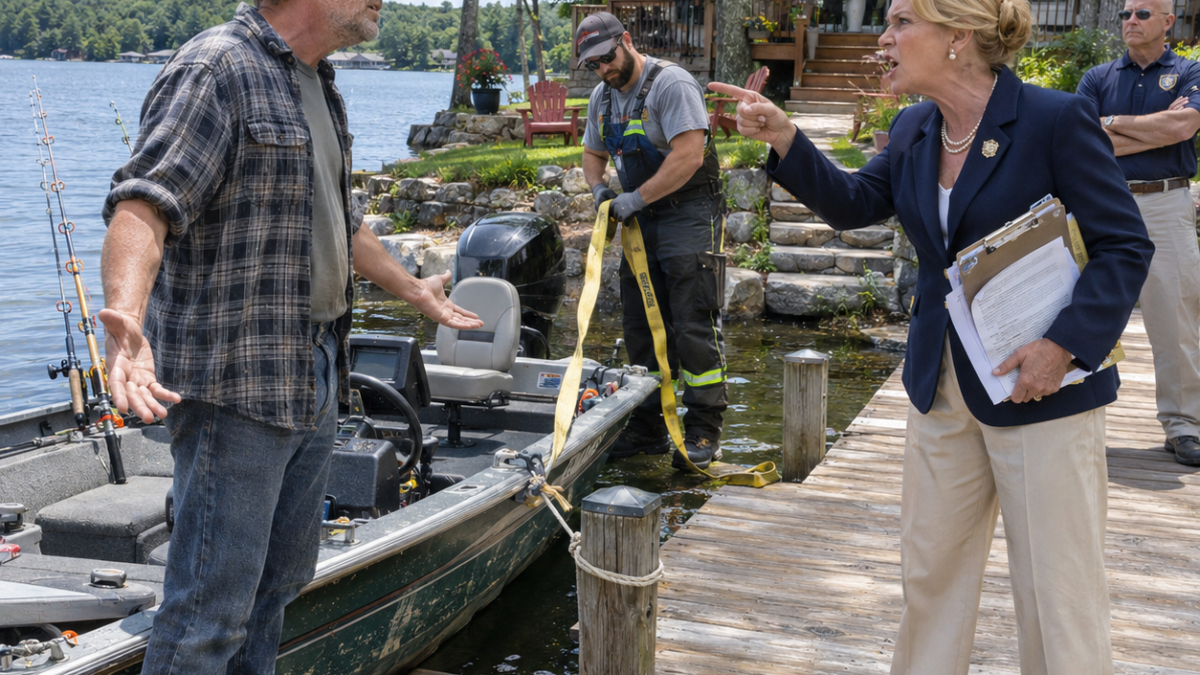
HOA Karen Fined My Legal Fishing Boat $500 a Day and Threatened to Tow It From My Own Dock—I Refused to Let Her Turn My Waterfront Into Her Yacht Club
HOA Karen called my perfectly legal fishing boat an “eyesore,” then began stacking fines high enough to threaten the waterfront home my uncle left me.
When I refused to remove it, she targeted my visitors, accused me of running a commercial fishing business, and promised the HOA would “solve the problem” for me.
Then she mentioned the marina—and I realized my old Boston Whaler was never the thing she really wanted gone.
“Five hundred dollars a day.”
Victoria Langley said it slowly, like she wanted me to feel each word.
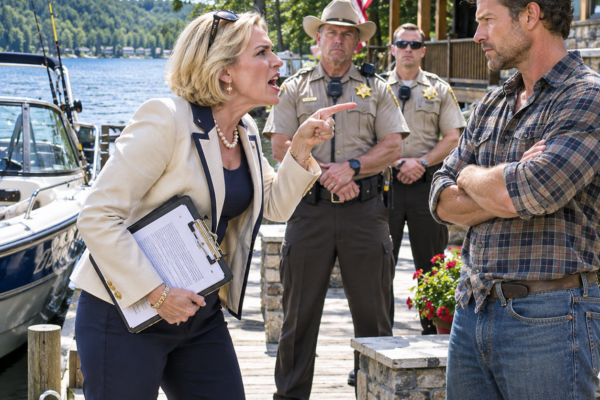
We were standing on my dock at 7:12 on a Monday morning, the Florida sun barely above the mangroves, while my 1987 Boston Whaler rocked gently against the pilings behind me.
Tide Runner was twenty-two feet of faded white fiberglass, rebuilt wiring, an old but immaculate outboard, and enough memories to matter more than anything with polished chrome at the Sunset Cove marina.
Victoria looked at it like somebody had dumped a washing machine into the bay.
“You have until Friday.”
“To do what?”
“Remove the vessel.”
“From my dock?”
“Correct.”
“Why?”
She lifted the clipboard against her chest.
“Sunset Cove has marine appearance standards.”
“I read them.”
“Apparently not carefully enough.”
“They prohibit derelict vessels, commercial equipment, uncovered storage, and boats in visible driveways.”
Her sunglasses tilted slightly.
“Tide Runner is inconsistent with waterfront standards.”
“That’s not a rule.”
“The board has interpretive authority.”
“No, Victoria. The board has enforcement authority over actual covenants.”
Her smile vanished.
I had seen that expression before on chief petty officers when a young mechanic pointed out that the manual said something inconvenient.
Victoria hated manuals too.
She stepped closer.
“Mr. Harper, you inherited this property three months ago. Some of us have spent decades protecting Sunset Cove.”
“I spent twenty years keeping Coast Guard cutters running. I’m comfortable with maintenance.”
“This isn’t about maintenance.”
“Then we’re finally making progress.”
Her crimson nails tightened around the clipboard.
Behind her, two polished yachts sat in the community marina across the narrow basin. One probably cost more than my house.
Victoria glanced toward them.
Then back at Tide Runner.
“Your boat lowers the visual standard of the waterfront.”
There it was.
Not unsafe.
Not illegal.
Not leaking fuel.
Not unregistered.
Old.
Working-class.
Mine.
“If you don’t remove it,” she continued, “the fines escalate. After that, the association can pursue collection remedies.”
“You’re threatening my house over a fishing boat.”
“I’m explaining consequences.”
“This boat is registered, seaworthy, and berthed at a private dock.”
“According to you.”
“According to Florida registration, the county parcel map, and my uncle’s deed.”
Victoria smiled.
“Your uncle misunderstood several things about this waterfront.”
That sentence landed differently.
“What things?”
She turned toward the marina.
“The relationship between private owners and community marine access.”
My stomach tightened.
“What does the marina have to do with my boat?”
“More than you realize.”
She walked back toward the shoreline.
At the top of the dock, she stopped.
“If you’re smart, Nathan, you’ll stop making this difficult before the board has to examine everything attached to this parcel.”
Then she left.
I stood there listening to the low slap of water against Tide Runner’s hull.
My uncle Raymond had said almost the same thing before he died.
Not about Victoria.
About Sunset Cove.
If they ever come after the boat, check the marina papers before you answer anybody.
That afternoon, I drove to the bank, opened his safe-deposit box, and found a sealed envelope with four words written across the front in his handwriting.
MARINA ACCESS — DO NOT SURRENDER.
part 2
My name is Nathan Harper.
I was forty-five when Victoria Langley decided the boat I loved was too ugly for the neighborhood she thought she owned.
I had spent twenty years in the United States Coast Guard as a machinery technician.
Engines.
Hydraulics.
Generators.
Pumps.
Fuel systems.
The kind of work nobody notices until something stops working twenty miles offshore.
I wasn’t an admiral.
Wasn’t a rescue swimmer.
Didn’t have a chest full of medals I displayed over the fireplace.
I was the guy elbow-deep in machinery trying to make sure the people doing the glamorous work had an engine when they needed one.
I liked that.
Machines are honest.
If a pump fails, it fails for a reason.
Bad bearing.
Corrosion.
Blocked line.
Poor maintenance.
You find the cause.
You fix it.
People are harder.
I retired after twenty years, divorced six months later, and spent the next year pretending those two events were unrelated.
My ex-wife, Jennifer, would probably tell you retirement revealed we had spent years running on scheduling rather than marriage.
She might be right.
We didn’t destroy each other.
No cheating.
No custody war.
No dramatic courtroom.
We divided things, signed papers, and became two people who still wished each other happy birthday without wanting to share a kitchen.
Then Uncle Raymond died.
He had no children.
My father had been his younger brother, gone ten years already.
Raymond left me the waterfront place in Sunset Cove.
Small stucco house.
Private dock.
One-car garage.
Two palms that should have been removed during the Bush administration.
And Tide Runner.
The boat had technically belonged to me since I was twenty-six, but Raymond kept it while I was stationed around the country.
A 1987 Boston Whaler Outrage.
Faded.
Scarred.
Mechanically perfect.
Raymond and I rebuilt the transom together one winter.
Rewired the console.
Replaced fuel lines.
Changed engines twice over the years.
People at Sunset Cove tied up vessels with air-conditioned cabins and joystick docking systems.
Tide Runner had a compass, a cooler, and a bilge pump I trusted with my life.
I loved her.
Sunset Cove looked expensive without admitting it.
About two hundred homes wrapped around a protected artificial basin connected to a larger coastal bay through a narrow canal.
Some houses had private docks.
Others used the community marina.
The HOA maintained roads, landscaping, two gates, a clubhouse, and some waterfront common areas.
The marina was more complicated.
I didn’t understand how complicated until Victoria forced me to learn.
My property sat on the north side of the water, outside the original central development but inside the later association boundary for limited purposes.
Raymond had signed an annexation agreement years earlier for road access, utilities, and ordinary community services.
The house paid assessments.
The deeded dock remained private.
At least that’s what I believed.
For my first three months, the HOA barely noticed me.
Then Victoria did.
Victoria Langley was fifty-two, a real-estate broker, HOA president for eight years, and the kind of person who could transform the words “friendly reminder” into a threat.
Blond hair cut perfectly.
White Lexus.
Oversized sunglasses.
Tailored jackets even in ninety-degree heat.
She knew everybody’s sales price.
Everybody’s renovation.
Everybody’s divorce.
Everybody’s boat.
Our first serious conversation happened on my dock.
She arrived while I was changing Tide Runner’s lower-unit oil.
“That’s quite an old vessel.”
I looked up.
“Morning.”
“How old?”
“1987.”
Her face reacted like I’d said 1887.
“Does it run?”
“Better than your Lexus.”
She didn’t appreciate that.
“I only ask because Sunset Cove has waterfront appearance expectations.”
“I read the declaration.”
“Good.”
She looked around.
“Raymond resisted modernization.”
“Raymond resisted most nouns ending in ‘-ization.'”
Again, no laugh.
Victoria pointed toward Tide Runner.
“You might consider replacing it.”
“No.”
“I can recommend a broker.”
“No.”
“You haven’t heard the options.”
“I’m emotionally committed to disappointing salespeople.”
Her jaw tightened.
That should have been nothing.
A strange conversation.
Instead, the certified letter came eleven days later.
UNACCEPTABLE WATERFRONT VESSEL.
Remove within thirty days.
Initial enforcement amount:
$200 per day after the compliance deadline.
I requested the exact provision.
Management cited Section 8.14.
I read it.
Three times.
Section 8.14 prohibited:
Derelict vessels.
Unregistered vessels.
Commercial fishing vessels.
Watercraft stored on lawns or driveways.
Major repair work visible from common areas.
Tide Runner was none of those.
I appealed.
That’s how I ended up in the clubhouse.
Victoria sat center table.
Four other board members beside her.
Fifty folding chairs.
Burnt coffee.
Air-conditioning turned cold enough to preserve evidence.
I brought:
Registration.
Insurance.
Recent marine survey.
Engine-service records.
Photographs.
Section 8.14.
“I’d like the board to identify the violation.”
Victoria leaned toward her microphone.
“The issue is compatibility.”
“With what?”
“The character of Sunset Cove.”
“Section 8.14 doesn’t say compatibility.”
“The board has authority to interpret the declaration as a whole.”
A director named Thomas Reed shifted in his chair.
“Victoria, the boat’s operational.”
She glanced at him.
“That isn’t the sole question.”
I looked at the board.
“What is the sole question?”
Victoria answered.
“Whether it belongs in a community of this standard.”
The room went silent.
There it was again.
Belongs.
I wore work boots.
Drove a twelve-year-old pickup.
Owned an old boat.
My hands looked like mechanic’s hands because that’s what they were.
Victoria’s problem wasn’t Tide Runner’s seaworthiness.
It was that I didn’t match the brochure.
She continued.
“Perhaps you’d be more comfortable in a neighborhood better aligned with your lifestyle.”
I almost laughed.
Instead:
“Is that going in the minutes?”
Her face tightened.
“The appeal is denied.”
Four to one.
Thomas voted for me.
The fines started thirty days later.
Two hundred per day.
Then Victoria called another “compliance review” and persuaded the board to increase future penalties to five hundred per day after an additional hearing.
My attorney would later question whether they had followed every procedural requirement before stacking those amounts.
At the time, I didn’t have an attorney.
I had a file cabinet.
Coast Guard training made me dangerous to bureaucrats for one reason.
I like paper.
Every notice.
Envelope.
Date.
Photograph.
Email.
Minutes.
I saved everything.
Victoria responded by expanding the battlefield.
My friend Marcus drove over to borrow a compression tester.
Parking warning.
FedEx truck waited outside while I signed for an engine part.
Courtesy notice about commercial deliveries.
I pressure-washed Tide Runner.
Violation warning for “marine service activity.”
I changed spark plugs.
Commercial repair allegation.
Then the county sent an inspector.
Complaint:
Unlicensed charter-fishing operation.
I laughed when he told me.
“Do you see customers?”
“No.”
“Advertising?”
“No.”
“Coolers lined up?”
“No.”
“Charter license?”
“No.”
“Because I don’t charter.”
He checked my registration and asked a few questions.
Complaint closed.
I requested a copy.
Complainant identity was restricted in the version I received, but the timing was obvious.
Still, obvious is not proof.
I wrote in my log:
County complaint. Source unknown.
That discipline mattered later.
Then I opened Raymond’s envelope.
Inside were documents dating back to 1964.
Some older.
The first was a survey showing the shoreline before Sunset Cove existed.
Raymond didn’t originally own the entire property.
My grandfather did.
When developers began assembling land in the late eighties, the Harper family sold part of its acreage.
But they retained two narrow parcels.
One was the house lot where I lived.
The other surprised me.
Parcel 14-B.
Long.
Narrow.
Running along the north bank of what became the marina access canal.
Then came a 1994 agreement.
SUNSET COVE MARINA ACCESS AND SERVICE AGREEMENT.
I sat at Raymond’s kitchen table reading until midnight.
The central marina basin had been excavated inland on developer property.
To connect it to navigable water, the developer needed a canal corridor through land still owned by Raymond and another family.
Rather than sell outright, Raymond granted a thirty-year access and maintenance agreement covering part of his shoreline parcel.
The marina operator could use the canal corridor and a narrow service road.
In return:
Annual payment.
Dredging obligations.
Bulkhead maintenance.
Insurance.
No expansion beyond sixty slips without written consent.
The agreement could be assigned only under specific conditions.
Term:
Thirty years.
Renewal by written agreement.
I checked the date.
Expiration:
December 31, 2024.
Eight months away.
My stomach tightened.
Then I found Raymond’s notebook.
Not a legal instrument.
Just notes.
But useful notes.
2018:
HOA wants marina control. Told them access agreement isn’t theirs automatically.
2019:
Victoria asking about buying 14-B again. No.
2020:
Marina payment routed through HOA now. Need assignment documents. Never received.
2022:
They added slips? Count.
2023:
If Nathan takes house, explain canal before Victoria pressures him. She wants marina expansion.
Then:
If they ever come after the boat, check the marina papers before you answer anybody.
I called an attorney the next morning.
Her name was Rachel Morgan.
Fifty-one.
Waterfront property and association litigation.
No patience for drama.
I spread everything across her conference table.
Boat violations.
Deed.
Parcel 14-B.
Marina agreement.
Raymond’s notes.
Rachel read for almost an hour.
Then:
“This is interesting.”
“Good interesting?”
“Expensive interesting.”
“Of course.”
She pulled the marina agreement closer.
“Do not lock anything.”
“I wasn’t going to.”
“Do not put chains across the canal.”
“I wasn’t going to.”
“Do not interfere with boats.”
“Rachel.”
“I’m saying it now because every waterfront owner who discovers leverage immediately becomes twelve years old.”
“I spent twenty years in the Coast Guard.”
“That makes me more worried, not less.”
Fair.
“Do I own the marina entrance?”
“Not that simple.”
“What do I own?”
“Parcel 14-B appears to include upland, bank, and portions of the artificial canal corridor as described here. We need current title work, surveys, and the regulatory history. Navigable-water and submerged-land issues can become complicated quickly.”
“So no evil-laugh gate?”
“Correct.”
“You’re ruining this.”
“Good.”
“What about the agreement?”
“The marina’s rights may depend heavily on it.”
“HOA owns the marina?”
“Do they?”
I didn’t know.
Rachel did title work.
The result was stranger.
Sunset Cove HOA did not own the marina basin.
A separate nonprofit corporation did.
Sunset Cove Marina Association, Inc.
Different entity.
Overlapping directors.
Same management office.
Victoria served as president of both.
That was the first conflict.
The marina association operated sixty-eight slips.
The original agreement allowed expansion only with written approval beyond sixty.
Raymond’s file contained no consent.
Rachel requested marina records.
Then invoices.
Payments.
Insurance certificates.
Assignment documents.
Victoria’s answer was immediate.
Another boat notice.
Then an HOA-wide email:
One waterfront owner is attempting to undermine long-established community marine access for personal leverage.
No name.
Everybody knew.
The next day, Edith Monroe knocked on my door.
Seventy-eight.
Five feet tall.
Wide straw hat.
She looked at Tide Runner.
“Ugly boat.”
“Thank you.”
“My husband would’ve liked it.”
She handed me a grocery bag.
Inside were old HOA meeting packets.
“I was secretary before Victoria.”
“Why do you have these?”
“Because Victoria used to rewrite minutes.”
I stared.
“That’s a serious claim.”
“That’s why I kept drafts.”
Edith sat at my kitchen table for three hours.
She didn’t give me a conspiracy.
She gave me context.
Victoria’s obsession with the marina went back years.
Sunset Cove had two classes of residents.
People with private waterfront.
People using common marina amenities.
Marina slips had become valuable.
Waitlist long.
Victoria wanted to expand.
More slips.
Larger yachts.
Improved clubhouse.
Higher dues from premium marina members.
Raymond had resisted because expansion meant more traffic through the canal corridor and more dredging along his property.
“He told her sixty means sixty,” Edith said.
“What did she say?”
“That old agreements shouldn’t control modern property values.”
That sounded like Victoria.
Then Edith showed me minutes.
2019:
Marina Expansion Study.
2020:
North Canal Acquisition.
2021:
Harper Parcel Negotiation.
Raymond repeatedly declined.
After his health declined, discussions stopped.
Then he died.
Then I inherited.
Then three months later, Tide Runner became unacceptable.
Rachel looked at the timeline.
“Now we have motive for pressure.”
“Can we prove it?”
“Not yet.”
Discovery eventually would.
Before that, Victoria made more mistakes.
She started spreading the word that I was an “unstable former serviceman.”
One neighbor told me directly.
Another business owner refused marina fuel service because he “didn’t want trouble with the board.”
I documented who said what.
No grand lawsuit yet.
Just evidence.
Then I filed a complaint with the state real-estate regulator regarding Victoria’s conduct as a broker because she had approached me twice with offers to list my property while simultaneously acting as HOA president during enforcement.
Her first proposal came by email.
If Sunset Cove is no longer compatible with your needs, Langley Coastal Realty would be pleased to discuss a confidential sale.
I forwarded it to Rachel.
She called.
“That was stupid.”
“Whose side are you on?”
“Yours. That’s why I’m excited.”
The regulator didn’t revoke her license overnight.
It opened a file.
Asked questions.
That’s how real processes work.
Slowly.
Meanwhile, the marina records came in.
The thirty-year agreement had been assigned from the original developer to the marina corporation in 2001.
Valid.
Then came the problem.
Annual access payments were supposed to go to Raymond.
They had stopped fourteen years earlier.
Not because nobody paid.
The marina’s books showed an annual line item:
NORTH CHANNEL ACCESS RESERVE.
Money was being collected.
But instead of being paid to Raymond, it was transferred into an HOA-managed marina reserve account.
Rachel stared at the spreadsheet.
“Did your uncle ever mention not receiving payments?”
I found his tax records.
No access income after 2010.
His notebook:
Asked management about channel fee. They claim common ownership now. Wrong.
Another note:
Do not sue while Helen sick.
Helen was my aunt.
She died in 2012.
Raymond apparently never followed through.
The amount mattered.
But the larger issue was the contract.
Failure to pay could become a default.
Default did not mean I could immediately lock yachts inside.
Rachel repeated that so often I started saying it with her.
Default means legal process.
Then we found the expansion.
Eight additional slips.
Built five years earlier.
No written Harper consent.
Another potential breach.
Then environmental records.
Dr. Rachel Torres worked for an independent coastal consulting firm hired by our attorney to examine marina maintenance.
Different Rachel.
I called her Dr. Torres to preserve everyone’s sanity.
She found recurring fuel sheen reports.
Washwater entering the basin from an unapproved cleaning area.
Deferred bulkhead repair.
A dredging project that had disturbed more material near my bank than earlier plans contemplated.
Nothing made the marina a federal toxic-waste site.
It did create regulatory exposure and expensive cleanup obligations.
The marina’s permit files had issues.
Again:
Not cinematic.
Useful.
Victoria responded by sending security officers to my dock.
“Marine safety inspection.”
I told them to leave.
They did.
Then she called a board meeting.
Standing-room only.
My alleged balance by then was approaching thirty thousand dollars depending on which fines they counted.
Victoria stood behind the podium.
“Nathan Harper is exploiting technicalities to threaten an amenity two hundred families depend on.”
I raised my hand.
She ignored me.
Thomas Reed interrupted.
“What technicality?”
Victoria looked at him.
“The marina access arrangement.”
“Is it expired?”
“Not yet.”
“Did we stop paying?”
“Accounting treatment changed.”
“Did Raymond agree?”
“Raymond was notoriously difficult.”
Wrong answer.
The room shifted.
I stood.
“Can I speak now?”
Victoria sighed.
“Three minutes.”
I walked to the microphone.
“I am not shutting the marina.”
Murmurs.
“I haven’t blocked the canal.”
More murmurs.
“I haven’t interfered with a single boat.”
Victoria said:
“Yet.”
I looked at her.
“I asked you to withdraw fines against my legal boat and comply with the agreement governing access across my property.”
She crossed her arms.
“You are holding the community hostage.”
“No. I’m asking who took fourteen years of access payments and why they never reached my uncle.”
That landed.
People started looking at Victoria.
She snapped:
“Those funds were lawfully retained for marina maintenance.”
Rachel stood beside the wall.
“Under what amendment?”
Victoria looked toward her.
“Who are you?”
“Rachel Morgan. Mr. Harper’s attorney.”
The room got quieter.
Rachel continued.
“The access agreement identifies the payee. We’re asking for the document that changed that.”
Victoria said:
“Our counsel will respond.”
Rachel nodded.
“Good.”
Then Edith stood.
She carried one of her old binders.
“Victoria.”
“Edith, please don’t.”
“I wrote the minutes when Raymond objected.”
Victoria’s face changed.
Edith continued.
“He never agreed to give up the payments.”
“That was fifteen years ago.”
“Paper ages better than memory.”
I liked Edith.
A lot.
The board did not resolve anything.
But homeowners started asking questions.
Who owned the marina?
Why were HOA dues subsidizing a separate marina corporation?
Why did some people pay marina fees while everyone contributed to certain maintenance?
Why were there sixty-eight slips if the agreement allowed sixty without consent?
Why was Victoria president of both organizations?
The answer wasn’t necessarily corruption.
But governance had become tangled enough that nobody could explain it cleanly.
Then Victoria made the mistake that changed the case.
She sent me a purchase offer.
Not personally.
Through Langley Coastal Realty.
Offer:
My house.
Dock.
Parcel 14-B.
Tide Runner excluded.
Price below recent waterfront comparables.
Cover email:
Acceptance would resolve all ongoing HOA enforcement issues and permit necessary modernization of community marina access.
I read it twice.
Then called Rachel.
“She tied the fines to the sale.”
“I see that.”
“Is that as bad as it looks?”
“It’s not good.”
“Understatement.”
“Professional habit.”
We filed suit.
Declaratory relief.
Injunctive relief regarding the boat fines.
Accounting related to the marina agreement.
Contract claims.
Conflict-of-interest allegations where supported.
No RICO.
No extortion empire.
No cinematic federal indictment.
Property and corporate governance law were enough.
The judge issued temporary relief preventing the HOA from recording or enforcing disputed boat-related liens while the underlying authority question was litigated.
Tide Runner stayed at my dock.
The fines stopped growing.
Victoria called the order “procedural.”
She was right.
So was I when I said:
“Procedures are the only reason you haven’t towed my boat.”
Then discovery opened everything.
Emails.
Victoria to the marina board:
Nathan is not Raymond. Apply pressure early before he develops attachment to the property.
Another:
The vessel issue gives us leverage.
Another:
If he sells, Parcel 14-B can be consolidated and expansion becomes straightforward.
Thomas replied:
Are we enforcing boat rules or negotiating property?
Victoria:
Both goals align.
There.
Not my imagination.
Not class insecurity.
Paper.
The old boat had become leverage to pressure a sale.
Rachel asked me what I wanted.
“Keep my house.”
“Obviously.”
“Keep Tide Runner.”
“Obviously.”
“Get the marina into compliance.”
“Define.”
“Pay what they owe. Fix the shoreline. Stop pretending the HOA owns the corridor.”
“And the access agreement?”
That was harder.
I could refuse renewal when it expired.
That would put the marina in crisis.
Not because every yacht would become permanently trapped.
Alternative access could potentially be engineered.
But not quickly.
The existing artificial canal was the only permitted water connection to the marina basin.
Closing it without planning would create safety, navigation, and property issues.
I had leverage.
Raymond’s last note came back.
Protect the community.
Not destroy it.
That mattered.
Then Dr. Torres’s environmental report arrived.
The marina needed repairs.
Fuel-management procedures.
Washwater controls.
Bulkhead work.
Dredging review.
Expensive.
Victoria had spent years talking about expansion while maintenance lagged.
I began to understand Raymond.
He wasn’t protecting access because he wanted to hold everyone hostage.
He was protecting the agreement because once the corridor disappeared into the marina corporation, nobody could force the operator to respect limits.
The contract was the brake.
Victoria wanted it gone.
The court ordered mediation.
Victoria arrived with two attorneys.
I came with Rachel.
Marina corporation had separate counsel.
HOA had separate counsel now because its insurer realized Victoria’s overlapping positions were a problem.
Five lawyers.
One retired mechanic.
America.
The mediator asked what I would accept for Parcel 14-B.
“Not selling.”
Victoria laughed.
“Then why are we here?”
I looked at her.
“Because an agreement can be renewed without me selling.”
Her expression changed.
That was the first time I think she understood I wasn’t planning to destroy the marina.
Rachel laid out our proposal.
New twenty-five-year access agreement.
Annual payment at appraised market value.
Independent accounting.
Sixty-slip cap until environmental and infrastructure review justified expansion.
Required maintenance.
Insurance.
No HOA authority over my private dock beyond recorded covenants actually applicable to my residential lot.
Withdrawal of boat fines.
No retaliation.
Transparent separation between HOA finances and marina corporation finances.
Conflict disclosures.
Environmental remediation.
Victoria called it extortion.
The mediator said:
“He’s offering continued access.”
She went quiet.
Her own marina counsel told her privately something she did not like.
The old agreement was expiring.
Their breaches were real.
They needed certainty.
No lender wanted to finance marina improvements while access rights were disputed.
No yacht owner wanted a slip in a basin whose only authorized canal corridor was tied up in litigation.
The pressure shifted.
Victoria fought anyway.
She rejected the first proposal.
Then the second.
Then tried to pass a board resolution declaring the marina canal a “historic community access route.”
Rachel laughed when she saw it.
“A board vote doesn’t rewrite title.”
“Can I put that on a shirt?”
“No.”
Then the HOA’s independent audit arrived.
No three-million-dollar theft.
What it found was enough.
HOA money had subsidized marina expenses without consistently documenting the basis.
Marina revenues and HOA reserves had occasionally been commingled before accountants separated them at year-end.
Victoria had participated in transactions involving waterfront properties while also acting as a real-estate broker.
Not always illegal.
Poorly disclosed.
She had used enforcement communications in at least two cases shortly before sending owners real-estate solicitations.
That was a serious conflict.
The state real-estate regulator expanded its review.
Homeowners got angry.
Not because I trapped yachts.
Not yet.
Because ordinary families discovered they had helped subsidize an exclusive marina where many couldn’t get a slip.
At the next meeting, Victoria walked into a different room.
People looked at her now.
Not away.
Thomas made a motion requiring her to recuse from all matters involving my property and the marina litigation.
Four to one.
Victoria voted no.
Then Edith spoke.
“I’d like the minutes to say the president voted against recusing herself from a transaction where her brokerage offered to purchase the affected property.”
The secretary looked terrified.
Then typed.
I nearly applauded.
Victoria’s power wasn’t collapsing because I yelled louder.
It was collapsing because people had started writing things down accurately.
The lawsuit reached summary proceedings on the boat rule first.
The judge reviewed the declaration.
Section 8.14.
Tide Runner’s registration.
Survey.
Private dock.
Board records.
The HOA argued broad aesthetic authority.
Rachel asked where that authority permitted the board to ban a seaworthy registered vessel from a deeded private dock based solely on age and appearance.
The HOA’s own independent counsel gave the court a careful answer.
The documents did not say what Victoria had claimed they said.
The boat fines were vacated.
Every one.
My account dropped to zero.
I took Tide Runner out the next morning.
Not as protest.
Fishing.
Caught nothing.
Best day I’d had in months.
The marina case remained.
Expiration approached.
December 31.
Marina counsel asked the court for temporary continued access if no new agreement was reached.
Reasonable request.
They argued immediate closure could create unsafe conditions and harm innocent slip holders.
Rachel agreed.
That surprised Victoria.
I didn’t want to trap families’ boats to prove a point.
The court entered a temporary transition order.
Existing vessels could use the canal.
No new long-term slip contracts.
No expansion.
Marina operator had to maintain insurance and begin environmental corrections.
Parties had ninety days to complete renewal negotiations or develop a safe relocation plan.
That’s how the famous gate scene actually happened.
Not with me throwing a chain across navigable water.
Ninety days expired.
Victoria had stalled until the final week, believing I would panic.
I didn’t.
By then, most yacht owners knew their slips were at risk.
Some relocated voluntarily.
Others demanded the marina board settle.
The court extended limited outbound access for safe vessel removal but prohibited bringing new vessels into the basin after a date certain.
The county harbor authority required a temporary floating control boom at the canal entrance to enforce that restriction safely.
No steel chain at water level.
No danger to navigation.
On the land side, the marina’s service road crossed Parcel 14-B.
Its old access license expired with the main agreement.
The marina agreed that its service gate would be closed except for supervised maintenance and relocation work.
I stood there the morning the gate locked.
Chain through chain-link.
Padlock clicking.
Diesel exhaust.
Salt air.
Behind the fence sat trailers, lifts, service vehicles, and rows of expensive boats.
In the basin beyond, several yachts still bobbed at their slips waiting for scheduled removal.
Owners were furious.
Mostly at Victoria.
She had spent months telling them I was bluffing.
One man yelled at me:
“You’re trapping our boats!”
I walked toward him.
“No.”
I pointed toward the posted transition order.
“You have outbound access by appointment. Nobody’s trapping anything. Your board had three months to sign a renewal or move you.”
He read it.
Then looked toward Victoria.
She was on the phone near her Lexus.
Face red.
That was the chaos people later turned into legend.
The truth was less reckless and more satisfying.
Nobody’s million-dollar yacht became my hostage.
But for the first time in thirty years, everyone had to acknowledge that marina access existed because somebody else’s property rights made it possible.
And Victoria had spent years pretending that someone was the HOA.
The next marina meeting was brutal.
Slip owners filled the clubhouse.
Some didn’t even live in Sunset Cove.
One man had flown down from Atlanta.
Victoria stood behind the podium.
“Nathan Harper is abusing an ancient technicality.”
I was tired of that word.
I stood.
“Your marina signed the agreement.”
She looked at me.
“Before most residents lived here.”
“So?”
“Times change.”
“Then contracts get renegotiated.”
“You’re demanding money.”
“The old agreement required money.”
“You want control.”
“No.”
I pointed toward the marina board.
“I want the people operating sixty-eight slips through my uncle’s corridor to stop pretending the corridor appeared naturally.”
Dr. Torres presented next.
Bulkhead deficiencies.
Fuel-control issues.
Washwater.
Dredging recommendations.
No dramatic hazmat suits.
Just expensive maintenance everybody had postponed.
Then the accountant presented the financial separation problem.
HOA funds.
Marina funds.
Overlapping officers.
Poor disclosures.
Victoria interrupted repeatedly.
Thomas finally said:
“Victoria, sit down.”
The room froze.
Nobody had spoken to her like that in years.
She stared at him.
“I’m president.”
Thomas answered:
“Tonight you’re one vote.”
Then he made the motion.
Remove Victoria Langley as HOA president.
The bylaws allowed officer removal by board vote even though her director seat required a separate process.
Seconded.
Four to one.
Victoria voted for herself.
Removed.
The marina corporation held a separate vote the following week.
Same result.
She resigned both director seats before owner recall petitions were completed.
Her real-estate license wasn’t magically revoked the next morning.
The regulator eventually disciplined her for failures involving conflict disclosure and professional conduct tied to documented solicitations.
Fine.
Continuing education.
Public disciplinary record.
Her brokerage terminated its relationship with her.
That hurt.
Reputation mattered to Victoria.
Her marriage?
I have no idea what happened inside it.
They stayed together for at least another year.
I refuse to turn somebody else’s spouse into a revenge prop.
The new HOA president was Thomas.
The new marina president was a woman named Rachel Torres.
Yes.
Dr. Torres.
Apparently environmental scientists are terrible at saying no when neighborhoods ask them to fix things.
She called me.
“I hate you.”
“Why?”
“I’m president now.”
“That’s your own bad judgment.”
“We need the access agreement.”
“Have your lawyer call mine.”
“You’re enjoying this.”
“A little.”
The new agreement took six weeks.
Twenty-five years.
Renewal options.
Market-based annual fee.
Environmental maintenance fund.
Independent accounting.
No more than sixty active slips until infrastructure upgrades and regulatory approvals supported expansion.
The extra eight slips were phased out as contracts expired rather than abruptly removed.
Access corridor maintained by the marina.
My private dock protected.
No HOA regulation of Tide Runner except generally applicable safety, nuisance, and recorded covenants that actually applied.
Dispute-resolution process before emergency litigation.
And one clause Raymond would’ve loved:
Nothing in the agreement creates public access rights to the Harper parcel.
Signed.
Recorded.
Boring.
Beautiful.
The marina gate reopened.
The floating restriction came down after the harbor authority received confirmation.
Boats returned.
Not all.
Some owners had left permanently.
Fine.
The basin survived.
Sunset Cove survived.
Property values did not collapse because a 1987 Boston Whaler existed within sight of a yacht.
Imagine that.
The annual access payments created another question.
What should I do with them?
I could’ve kept every dollar.
Legally, they were mine under the agreement.
I kept part.
Property taxes don’t accept moral symbolism.
The rest funded something Raymond would’ve liked.
The Harper Maritime Scholarship.
Small at first.
One scholarship annually for a student from a Coast Guard family, marine-trades program, or local working waterfront household.
No giant foundation.
No gala.
No giant portrait of me looking heroic.
First recipient was a seventeen-year-old named Luis Ramirez who wanted to become a marine electrician.
His father repaired boats at the same marina.
Victoria had once cited his work van for being “commercially unattractive.”
Luis graduated two years later and got hired at a yard in Tampa.
He mailed me a picture of himself standing beside a generator room.
I framed that.
Edith became something like an honorary aunt.
She did not become HOA president.
“Absolutely not,” she said.
“Why?”
“I have a life.”
At seventy-eight, Edith’s life consisted primarily of gardening, bridge, and knowing everybody’s secrets.
Fair.
She did join the finance committee for six months.
Terrified everyone.
Every invoice initialed.
Every transfer explained.
Thomas lasted one term as president.
Then quit.
“Too many emails.”
“You wanted transparency.”
“I didn’t know transparency meant seventy-three questions about mulch.”
“Democracy.”
“Go to hell.”
We became friends.
The Ramirez family hadn’t been “forced out” as the original gossip claimed.
That was another exaggeration.
They had been fined aggressively.
They had considered moving.
They stayed.
The Thompsons’ garden had been targeted.
They appealed.
Eventually won.
Not every Victoria story ended in tragedy.
That was important.
Her power survived partly because people retold everything in the most dramatic form until ordinary homeowners dismissed all criticism as gossip.
The documents were worse than gossip because they were precise.
She had abused discretion.
Used aesthetic enforcement selectively.
Mixed private real-estate interests with HOA authority.
Pushed a property owner toward sale while the marina benefited from acquiring his land.
Ignored contractual obligations.
Created financial confusion.
Those were enough.
No invented crimes required.
Tide Runner became a neighborhood celebrity.
I hated that.
Kids pointed.
Adults joked.
Some yacht owners who once looked at her like trash asked about the engine.
One afternoon, a man named Peter from Slip 18 walked onto my dock.
His yacht cost around a million dollars.
I was replacing Tide Runner’s bilge hose.
“You know what’s funny?”
“Usually no.”
“My boat has four joystick stations.”
“That’s unnecessary.”
“Correct.”
“Two generators?”
“Three.”
“Obscene.”
He smiled.
“Your boat starts more reliably.”
“Because your yacht has enough electronics to launch satellites.”
He crouched.
“You ever want to sell it?”
“No.”
“Had to ask.”
Victoria’s house went on the market eventually.
Not in disgrace overnight.
She stopped appearing at meetings.
Sold about eighteen months later.
Moved to Naples, according to Edith.
Of course Edith knew.
The final time I saw Victoria was at the marina.
New board had invited former officers to pick up stored records.
She stood at the end of Dock C.
I almost walked away.
Then she said:
“Nathan.”
I stopped.
“Victoria.”
She looked toward Tide Runner.
“Still have it.”
“I told you I would.”
She laughed faintly.
“I never understood that boat.”
“What’s to understand?”
“It’s ugly.”
I smiled.
“Finally, something we agree on.”
That surprised her.
She looked toward the canal.
“They changed everything.”
“Some things needed changing.”
“The marina used to have prestige.”
“It still has boats that cost more than my retirement account.”
“That’s not what I mean.”
I knew.
“People respected standards.”
“People feared fines.”
“Same result sometimes.”
“No.”
She looked at me.
“You enjoyed humiliating me.”
I considered lying.
“Some moments.”
Her eyes hardened.
“At least you’re honest.”
“But I didn’t want the marina closed.”
“You used it against us.”
“I used the agreement.”
“You knew what would happen.”
“Yes.”
“You could’ve renewed immediately.”
“Could you have withdrawn the boat fines immediately?”
Silence.
She looked toward Tide Runner.
“That boat had nothing to do with the marina.”
“Exactly.”
That landed.
Victoria lowered her eyes.
For the first time, she seemed to understand the symmetry.
She had used my boat because she wanted something else.
I used the marina agreement because she forced me to defend what was already mine.
Not the same morally.
But connected.
She said:
“I thought Raymond was being selfish.”
“He probably thought you were too.”
“He refused every expansion.”
“He wanted limits.”
“The community grew.”
“Then negotiate.”
“He wouldn’t.”
“Did you offer market value?”
She didn’t answer.
I nodded.
“That’s what I thought.”
Victoria looked toward the water.
“You know why I hated that boat?”
“Because you’re allergic to fiberglass before 2005?”
She almost smiled.
“No.”
I waited.
“Because it made Sunset Cove look ordinary.”
That may have been the most honest thing she ever said.
I looked around.
Men loading coolers.
A child carrying a fishing rod.
A mechanic rolling a tool cart.
Women drinking coffee near the clubhouse.
A yacht captain washing salt off teak.
Tide Runner tied beside my dock.
“Victoria.”
“What?”
“It is ordinary.”
Her expression tightened.
“That’s not an insult.”
She said nothing.
Then left.
I watched her walk to the parking lot.
I never saw her again.
Sunset Cove didn’t become a public marina after her departure.
That would’ve ignored the property rights of the people actually paying for it.
It did become less exclusive in smaller ways.
The marina created six community-use kayak racks.
A supervised fishing pier opened on an existing HOA common parcel.
Kids could fish there.
Residents without yachts got access to more than a view of wealthy people’s boats.
The environmental cleanup improved water quality.
Washwater controls installed.
Fuel-spill kits maintained.
Bulkhead rebuilt.
The association published annual finances.
Nobody described those changes as revolutionary.
Good.
Revolutions are exhausting.
I started taking Tide Runner offshore again.
Short trips.
Redfish.
Snook.
Occasional grouper when weather cooperated.
Sometimes Luis came home and went with me.
He hated my wiring.
“Why is this splice here?”
“It has survived twenty years.”
“That’s not an answer.”
“You young technicians have no respect.”
“You taught me to check the manual.”
“I regret that.”
He smiled.
Circle completed.
Raymond’s notebook remains in my desk.
I reread it once a year.
Not the whole thing.
Just the marina pages.
He was right about some things.
Wrong about others.
He thought Victoria eventually wanted to privatize everything.
I think she wanted something subtler.
Control over what counted.
Which boat belonged.
Which homeowner fit.
Which water use looked respectable.
Who deserved an exception.
Who needed pressure.
That kind of authority becomes dangerous because every individual decision looks small.
Boat appearance.
Parking.
Dock maintenance.
Landscaping.
Slip assignment.
Then somebody stacks enough small decisions together and realizes one person has been deciding what an entire community is allowed to look like.
That’s not governance.
That’s taste wearing an ID badge.
I don’t hate HOAs.
People are disappointed when I say that.
Sunset Cove needs one.
We share roads.
Storm drains.
Landscaping.
Gates.
Clubhouse.
Common shoreline.
Someone has to collect money and maintain those things.
The marina needs governance too.
Boats require rules.
Fuel handling.
Insurance.
Storm preparation.
Dock standards.
Pump-out.
Electrical safety.
Those aren’t tyranny.
They’re why your neighbor’s floating palace doesn’t burn down beside your fishing boat.
The problem is authority without boundaries.
Victoria thought “protecting values” meant she could stretch any provision until it reached whatever annoyed her.
The boat clause didn’t ban Tide Runner.
She made it ban Tide Runner.
The HOA didn’t own my canal parcel.
She behaved as though long use had made ownership irrelevant.
The marina contract didn’t permit unlimited expansion.
She treated Raymond’s refusal as obstruction rather than a property right.
Every time the documents stopped, she kept going.
That’s what nearly destroyed her.
Not me.
Paper.
One evening, years after the fight, Thomas came over carrying beer.
We sat on my dock.
Sunset orange across the bay.
Tide Runner moving gently against the fenders.
Across the basin, yachts glowed under dock lights.
Thomas pointed.
“Remember when everybody said you trapped them?”
“I remember.”
“You kind of did.”
“No.”
“Emotionally.”
“I’ll accept emotionally.”
He laughed.
“Victoria told everyone you’d chain the canal.”
“Rachel would’ve killed me.”
“You wanted to.”
“For about eight minutes.”
“Why didn’t you?”
“Because Coast Guard training frowns on creating navigational hazards to win HOA arguments.”
“Government ruining fun again.”
We drank.
Then Thomas said:
“Would Raymond like what you did?”
I looked toward the canal.
New bulkhead.
Clean water.
Sixty active slips.
Fishing pier farther south.
Kayaks.
People.
“I think he’d complain.”
Thomas nodded.
“Then approve.”
“Exactly.”
I still receive access payments every year.
Automatic transfer.
Audited.
Transparent.
A portion goes to taxes and maintenance.
A portion to the scholarship.
No mystery.
No reserve account absorbing money nobody can trace.
The scholarship eventually supported five students.
Not hundreds.
Five lives are enough.
People love scale because it sounds important.
Raymond would have said one competent marine mechanic is worth more than fifty mission statements.
I agree.
Tide Runner turned forty.
I threw a birthday party.
That’s embarrassing to admit.
Edith brought a cake decorated like the boat.
It looked worse than the real thing.
Peter from Slip 18 gave me a polished brass plaque:
SUNSET COVE’S MOST EXPENSIVE EYESORE
I mounted it under the console.
Victoria would have hated it.
Perfect.
The boat is older now.
So am I.
Engines change.
Fiberglass gets repaired.
Electronics replaced.
But some mornings are exactly the same as my first month after retirement.
Coffee.
Salt air.
Sun rising over the basin.
No phone.
No board meeting.
No fine.
I sit on the dock and listen.
Water against pilings.
Rigging tapping masts.
An outboard starting somewhere across the marina.
Ordinary sounds.
That’s what Victoria never understood.
She thought property values came from eliminating everything ordinary.
Old boats.
Work trucks.
Practical people.
Anything that reminded Sunset Cove it wasn’t a private resort brochure.
But neighborhoods aren’t brochures.
They’re places where people live.
Some arrive in yachts.
Some in pickup trucks.
Some fish from boats older than their children.
Standards matter.
So do limits.
The day the marina service gate finally reopened under the new agreement, I stood beside it with Rachel.
Thomas unlocked the chain.
Pulled the gate wide.
Maintenance trucks rolled through.
Owners boarded boats.
The floating control boom had already been removed.
Traffic resumed.
Rachel looked at me.
“Happy?”
“Yes.”
“You wanted it closed.”
“I wanted them to know I could say no.”
“Different.”
“Very.”
She nodded toward Tide Runner.
“Still ugly.”
“You’re fired.”
“You paid the final invoice.”
“Then you’re retroactively fired.”
She laughed.
That might be the whole story.
Victoria thought power was getting the last word.
I learned power is knowing where your rights end—and where somebody else’s begin.
I couldn’t seize her yacht.
Couldn’t trap innocent boat owners.
Couldn’t close navigable water because I was angry.
Couldn’t invent authority any more than she could.
What I could do was insist that my deed mattered.
That Raymond’s agreement mattered.
That Tide Runner’s legal status mattered.
That board minutes mattered.
That contracts meant something even when expensive people found them inconvenient.
And once everybody had to operate inside those boundaries, the whole place got quieter.
Not perfect.
Quieter.
That’s enough for me.
This morning I took Tide Runner out before sunrise.
Same scarred hull.
Different engine.
Coffee in the console holder.
Twenty minutes offshore, I shut her down.
Drifted.
No marina behind me.
No Lexus.
No clipboard.
No board.
Just open water.
Raymond used to say the ocean doesn’t care what anybody paid for their boat.
A million-dollar yacht and a twenty-year-old skiff both sink if somebody ignores the hole.
He would’ve appreciated Victoria.
Not as a person.
As a lesson.
I started the engine.
Tide Runner fired on the first turn.
Of course she did.
I pointed her home.
And when Sunset Cove appeared in the morning haze, the marina looked exactly like what it should have been all along.
Not Victoria’s empire.
Not my revenge.
Just a place where everyone finally knew which water was shared, which land was private, and which rules actually belonged to whom.
THE STORY ENDS HERE
HOA Karen Fined My Legal Fishing Boat $500 a Day and Threatened to Tow It From My Own Dock—I Refused to Let Her Turn My Waterfront Into Her Yacht Club
HOA Karen called my perfectly legal fishing boat an “eyesore,” then began stacking fines high enough to threaten the waterfront home my uncle left me.
When I refused to remove it, she targeted my visitors, accused me of running a commercial fishing business, and promised the HOA would “solve the problem” for me.
Then she mentioned the marina—and I realized my old Boston Whaler was never the thing she really wanted gone.
“Five hundred dollars a day.”
Victoria Langley said it slowly, like she wanted me to feel each word.
We were standing on my dock at 7:12 on a Monday morning, the Florida sun barely above the mangroves, while my 1987 Boston Whaler rocked gently against the pilings behind me.
Tide Runner was twenty-two feet of faded white fiberglass, rebuilt wiring, an old but immaculate outboard, and enough memories to matter more than anything with polished chrome at the Sunset Cove marina.
Victoria looked at it like somebody had dumped a washing machine into the bay.
“You have until Friday.”
“To do what?”
“Remove the vessel.”
“From my dock?”
“Correct.”
“Why?”
She lifted the clipboard against her chest.
“Sunset Cove has marine appearance standards.”
“I read them.”
“Apparently not carefully enough.”
“They prohibit derelict vessels, commercial equipment, uncovered storage, and boats in visible driveways.”
Her sunglasses tilted slightly.
“Tide Runner is inconsistent with waterfront standards.”
“That’s not a rule.”
“The board has interpretive authority.”
“No, Victoria. The board has enforcement authority over actual covenants.”
Her smile vanished.
I had seen that expression before on chief petty officers when a young mechanic pointed out that the manual said something inconvenient.
Victoria hated manuals too.
She stepped closer.
“Mr. Harper, you inherited this property three months ago. Some of us have spent decades protecting Sunset Cove.”
“I spent twenty years keeping Coast Guard cutters running. I’m comfortable with maintenance.”
“This isn’t about maintenance.”
“Then we’re finally making progress.”
Her crimson nails tightened around the clipboard.
Behind her, two polished yachts sat in the community marina across the narrow basin. One probably cost more than my house.
Victoria glanced toward them.
Then back at Tide Runner.
“Your boat lowers the visual standard of the waterfront.”
There it was.
Not unsafe.
Not illegal.
Not leaking fuel.
Not unregistered.
Old.
Working-class.
Mine.
“If you don’t remove it,” she continued, “the fines escalate. After that, the association can pursue collection remedies.”
“You’re threatening my house over a fishing boat.”
“I’m explaining consequences.”
“This boat is registered, seaworthy, and berthed at a private dock.”
“According to you.”
“According to Florida registration, the county parcel map, and my uncle’s deed.”
Victoria smiled.
“Your uncle misunderstood several things about this waterfront.”
That sentence landed differently.
“What things?”
She turned toward the marina.
“The relationship between private owners and community marine access.”
My stomach tightened.
“What does the marina have to do with my boat?”
“More than you realize.”
She walked back toward the shoreline.
At the top of the dock, she stopped.
“If you’re smart, Nathan, you’ll stop making this difficult before the board has to examine everything attached to this parcel.”
Then she left.
I stood there listening to the low slap of water against Tide Runner’s hull.
My uncle Raymond had said almost the same thing before he died.
Not about Victoria.
About Sunset Cove.
If they ever come after the boat, check the marina papers before you answer anybody.
That afternoon, I drove to the bank, opened his safe-deposit box, and found a sealed envelope with four words written across the front in his handwriting.
MARINA ACCESS — DO NOT SURRENDER.
part 2
My name is Nathan Harper.
I was forty-five when Victoria Langley decided the boat I loved was too ugly for the neighborhood she thought she owned.
I had spent twenty years in the United States Coast Guard as a machinery technician.
Engines.
Hydraulics.
Generators.
Pumps.
Fuel systems.
The kind of work nobody notices until something stops working twenty miles offshore.
I wasn’t an admiral.
Wasn’t a rescue swimmer.
Didn’t have a chest full of medals I displayed over the fireplace.
I was the guy elbow-deep in machinery trying to make sure the people doing the glamorous work had an engine when they needed one.
I liked that.
Machines are honest.
If a pump fails, it fails for a reason.
Bad bearing.
Corrosion.
Blocked line.
Poor maintenance.
You find the cause.
You fix it.
People are harder.
I retired after twenty years, divorced six months later, and spent the next year pretending those two events were unrelated.
My ex-wife, Jennifer, would probably tell you retirement revealed we had spent years running on scheduling rather than marriage.
She might be right.
We didn’t destroy each other.
No cheating.
No custody war.
No dramatic courtroom.
We divided things, signed papers, and became two people who still wished each other happy birthday without wanting to share a kitchen.
Then Uncle Raymond died.
He had no children.
My father had been his younger brother, gone ten years already.
Raymond left me the waterfront place in Sunset Cove.
Small stucco house.
Private dock.
One-car garage.
Two palms that should have been removed during the Bush administration.
And Tide Runner.
The boat had technically belonged to me since I was twenty-six, but Raymond kept it while I was stationed around the country.
A 1987 Boston Whaler Outrage.
Faded.
Scarred.
Mechanically perfect.
Raymond and I rebuilt the transom together one winter.
Rewired the console.
Replaced fuel lines.
Changed engines twice over the years.
People at Sunset Cove tied up vessels with air-conditioned cabins and joystick docking systems.
Tide Runner had a compass, a cooler, and a bilge pump I trusted with my life.
I loved her.
Sunset Cove looked expensive without admitting it.
About two hundred homes wrapped around a protected artificial basin connected to a larger coastal bay through a narrow canal.
Some houses had private docks.
Others used the community marina.
The HOA maintained roads, landscaping, two gates, a clubhouse, and some waterfront common areas.
The marina was more complicated.
I didn’t understand how complicated until Victoria forced me to learn.
My property sat on the north side of the water, outside the original central development but inside the later association boundary for limited purposes.
Raymond had signed an annexation agreement years earlier for road access, utilities, and ordinary community services.
The house paid assessments.
The deeded dock remained private.
At least that’s what I believed.
For my first three months, the HOA barely noticed me.
Then Victoria did.
Victoria Langley was fifty-two, a real-estate broker, HOA president for eight years, and the kind of person who could transform the words “friendly reminder” into a threat.
Blond hair cut perfectly.
White Lexus.
Oversized sunglasses.
Tailored jackets even in ninety-degree heat.
She knew everybody’s sales price.
Everybody’s renovation.
Everybody’s divorce.
Everybody’s boat.
Our first serious conversation happened on my dock.
She arrived while I was changing Tide Runner’s lower-unit oil.
“That’s quite an old vessel.”
I looked up.
“Morning.”
“How old?”
“1987.”
Her face reacted like I’d said 1887.
“Does it run?”
“Better than your Lexus.”
She didn’t appreciate that.
“I only ask because Sunset Cove has waterfront appearance expectations.”
“I read the declaration.”
“Good.”
She looked around.
“Raymond resisted modernization.”
“Raymond resisted most nouns ending in ‘-ization.'”
Again, no laugh.
Victoria pointed toward Tide Runner.
“You might consider replacing it.”
“No.”
“I can recommend a broker.”
“No.”
“You haven’t heard the options.”
“I’m emotionally committed to disappointing salespeople.”
Her jaw tightened.
That should have been nothing.
A strange conversation.
Instead, the certified letter came eleven days later.
UNACCEPTABLE WATERFRONT VESSEL.
Remove within thirty days.
Initial enforcement amount:
$200 per day after the compliance deadline.
I requested the exact provision.
Management cited Section 8.14.
I read it.
Three times.
Section 8.14 prohibited:
Derelict vessels.
Unregistered vessels.
Commercial fishing vessels.
Watercraft stored on lawns or driveways.
Major repair work visible from common areas.
Tide Runner was none of those.
I appealed.
That’s how I ended up in the clubhouse.
Victoria sat center table.
Four other board members beside her.
Fifty folding chairs.
Burnt coffee.
Air-conditioning turned cold enough to preserve evidence.
I brought:
Registration.
Insurance.
Recent marine survey.
Engine-service records.
Photographs.
Section 8.14.
“I’d like the board to identify the violation.”
Victoria leaned toward her microphone.
“The issue is compatibility.”
“With what?”
“The character of Sunset Cove.”
“Section 8.14 doesn’t say compatibility.”
“The board has authority to interpret the declaration as a whole.”
A director named Thomas Reed shifted in his chair.
“Victoria, the boat’s operational.”
She glanced at him.
“That isn’t the sole question.”
I looked at the board.
“What is the sole question?”
Victoria answered.
“Whether it belongs in a community of this standard.”
The room went silent.
There it was again.
Belongs.
I wore work boots.
Drove a twelve-year-old pickup.
Owned an old boat.
My hands looked like mechanic’s hands because that’s what they were.
Victoria’s problem wasn’t Tide Runner’s seaworthiness.
It was that I didn’t match the brochure.
She continued.
“Perhaps you’d be more comfortable in a neighborhood better aligned with your lifestyle.”
I almost laughed.
Instead:
“Is that going in the minutes?”
Her face tightened.
“The appeal is denied.”
Four to one.
Thomas voted for me.
The fines started thirty days later.
Two hundred per day.
Then Victoria called another “compliance review” and persuaded the board to increase future penalties to five hundred per day after an additional hearing.
My attorney would later question whether they had followed every procedural requirement before stacking those amounts.
At the time, I didn’t have an attorney.
I had a file cabinet.
Coast Guard training made me dangerous to bureaucrats for one reason.
I like paper.
Every notice.
Envelope.
Date.
Photograph.
Email.
Minutes.
I saved everything.
Victoria responded by expanding the battlefield.
My friend Marcus drove over to borrow a compression tester.
Parking warning.
FedEx truck waited outside while I signed for an engine part.
Courtesy notice about commercial deliveries.
I pressure-washed Tide Runner.
Violation warning for “marine service activity.”
I changed spark plugs.
Commercial repair allegation.
Then the county sent an inspector.
Complaint:
Unlicensed charter-fishing operation.
I laughed when he told me.
“Do you see customers?”
“No.”
“Advertising?”
“No.”
“Coolers lined up?”
“No.”
“Charter license?”
“No.”
“Because I don’t charter.”
He checked my registration and asked a few questions.
Complaint closed.
I requested a copy.
Complainant identity was restricted in the version I received, but the timing was obvious.
Still, obvious is not proof.
I wrote in my log:
County complaint. Source unknown.
That discipline mattered later.
Then I opened Raymond’s envelope.
Inside were documents dating back to 1964.
Some older.
The first was a survey showing the shoreline before Sunset Cove existed.
Raymond didn’t originally own the entire property.
My grandfather did.
When developers began assembling land in the late eighties, the Harper family sold part of its acreage.
But they retained two narrow parcels.
One was the house lot where I lived.
The other surprised me.
Parcel 14-B.
Long.
Narrow.
Running along the north bank of what became the marina access canal.
Then came a 1994 agreement.
SUNSET COVE MARINA ACCESS AND SERVICE AGREEMENT.
I sat at Raymond’s kitchen table reading until midnight.
The central marina basin had been excavated inland on developer property.
To connect it to navigable water, the developer needed a canal corridor through land still owned by Raymond and another family.
Rather than sell outright, Raymond granted a thirty-year access and maintenance agreement covering part of his shoreline parcel.
The marina operator could use the canal corridor and a narrow service road.
In return:
Annual payment.
Dredging obligations.
Bulkhead maintenance.
Insurance.
No expansion beyond sixty slips without written consent.
The agreement could be assigned only under specific conditions.
Term:
Thirty years.
Renewal by written agreement.
I checked the date.
Expiration:
December 31, 2024.
Eight months away.
My stomach tightened.
Then I found Raymond’s notebook.
Not a legal instrument.
Just notes.
But useful notes.
2018:
HOA wants marina control. Told them access agreement isn’t theirs automatically.
2019:
Victoria asking about buying 14-B again. No.
2020:
Marina payment routed through HOA now. Need assignment documents. Never received.
2022:
They added slips? Count.
2023:
If Nathan takes house, explain canal before Victoria pressures him. She wants marina expansion.
Then:
If they ever come after the boat, check the marina papers before you answer anybody.
I called an attorney the next morning.
Her name was Rachel Morgan.
Fifty-one.
Waterfront property and association litigation.
No patience for drama.
I spread everything across her conference table.
Boat violations.
Deed.
Parcel 14-B.
Marina agreement.
Raymond’s notes.
Rachel read for almost an hour.
Then:
“This is interesting.”
“Good interesting?”
“Expensive interesting.”
“Of course.”
She pulled the marina agreement closer.
“Do not lock anything.”
“I wasn’t going to.”
“Do not put chains across the canal.”
“I wasn’t going to.”
“Do not interfere with boats.”
“Rachel.”
“I’m saying it now because every waterfront owner who discovers leverage immediately becomes twelve years old.”
“I spent twenty years in the Coast Guard.”
“That makes me more worried, not less.”
Fair.
“Do I own the marina entrance?”
“Not that simple.”
“What do I own?”
“Parcel 14-B appears to include upland, bank, and portions of the artificial canal corridor as described here. We need current title work, surveys, and the regulatory history. Navigable-water and submerged-land issues can become complicated quickly.”
“So no evil-laugh gate?”
“Correct.”
“You’re ruining this.”
“Good.”
“What about the agreement?”
“The marina’s rights may depend heavily on it.”
“HOA owns the marina?”
“Do they?”
I didn’t know.
Rachel did title work.
The result was stranger.
Sunset Cove HOA did not own the marina basin.
A separate nonprofit corporation did.
Sunset Cove Marina Association, Inc.
Different entity.
Overlapping directors.
Same management office.
Victoria served as president of both.
That was the first conflict.
The marina association operated sixty-eight slips.
The original agreement allowed expansion only with written approval beyond sixty.
Raymond’s file contained no consent.
Rachel requested marina records.
Then invoices.
Payments.
Insurance certificates.
Assignment documents.
Victoria’s answer was immediate.
Another boat notice.
Then an HOA-wide email:
One waterfront owner is attempting to undermine long-established community marine access for personal leverage.
No name.
Everybody knew.
The next day, Edith Monroe knocked on my door.
Seventy-eight.
Five feet tall.
Wide straw hat.
She looked at Tide Runner.
“Ugly boat.”
“Thank you.”
“My husband would’ve liked it.”
She handed me a grocery bag.
Inside were old HOA meeting packets.
“I was secretary before Victoria.”
“Why do you have these?”
“Because Victoria used to rewrite minutes.”
I stared.
“That’s a serious claim.”
“That’s why I kept drafts.”
Edith sat at my kitchen table for three hours.
She didn’t give me a conspiracy.
She gave me context.
Victoria’s obsession with the marina went back years.
Sunset Cove had two classes of residents.
People with private waterfront.
People using common marina amenities.
Marina slips had become valuable.
Waitlist long.
Victoria wanted to expand.
More slips.
Larger yachts.
Improved clubhouse.
Higher dues from premium marina members.
Raymond had resisted because expansion meant more traffic through the canal corridor and more dredging along his property.
“He told her sixty means sixty,” Edith said.
“What did she say?”
“That old agreements shouldn’t control modern property values.”
That sounded like Victoria.
Then Edith showed me minutes.
2019:
Marina Expansion Study.
2020:
North Canal Acquisition.
2021:
Harper Parcel Negotiation.
Raymond repeatedly declined.
After his health declined, discussions stopped.
Then he died.
Then I inherited.
Then three months later, Tide Runner became unacceptable.
Rachel looked at the timeline.
“Now we have motive for pressure.”
“Can we prove it?”
“Not yet.”
Discovery eventually would.
Before that, Victoria made more mistakes.
She started spreading the word that I was an “unstable former serviceman.”
One neighbor told me directly.
Another business owner refused marina fuel service because he “didn’t want trouble with the board.”
I documented who said what.
No grand lawsuit yet.
Just evidence.
Then I filed a complaint with the state real-estate regulator regarding Victoria’s conduct as a broker because she had approached me twice with offers to list my property while simultaneously acting as HOA president during enforcement.
Her first proposal came by email.
If Sunset Cove is no longer compatible with your needs, Langley Coastal Realty would be pleased to discuss a confidential sale.
I forwarded it to Rachel.
She called.
“That was stupid.”
“Whose side are you on?”
“Yours. That’s why I’m excited.”
The regulator didn’t revoke her license overnight.
It opened a file.
Asked questions.
That’s how real processes work.
Slowly.
Meanwhile, the marina records came in.
The thirty-year agreement had been assigned from the original developer to the marina corporation in 2001.
Valid.
Then came the problem.
Annual access payments were supposed to go to Raymond.
They had stopped fourteen years earlier.
Not because nobody paid.
The marina’s books showed an annual line item:
NORTH CHANNEL ACCESS RESERVE.
Money was being collected.
But instead of being paid to Raymond, it was transferred into an HOA-managed marina reserve account.
Rachel stared at the spreadsheet.
“Did your uncle ever mention not receiving payments?”
I found his tax records.
No access income after 2010.
His notebook:
Asked management about channel fee. They claim common ownership now. Wrong.
Another note:
Do not sue while Helen sick.
Helen was my aunt.
She died in 2012.
Raymond apparently never followed through.
The amount mattered.
But the larger issue was the contract.
Failure to pay could become a default.
Default did not mean I could immediately lock yachts inside.
Rachel repeated that so often I started saying it with her.
Default means legal process.
Then we found the expansion.
Eight additional slips.
Built five years earlier.
No written Harper consent.
Another potential breach.
Then environmental records.
Dr. Rachel Torres worked for an independent coastal consulting firm hired by our attorney to examine marina maintenance.
Different Rachel.
I called her Dr. Torres to preserve everyone’s sanity.
She found recurring fuel sheen reports.
Washwater entering the basin from an unapproved cleaning area.
Deferred bulkhead repair.
A dredging project that had disturbed more material near my bank than earlier plans contemplated.
Nothing made the marina a federal toxic-waste site.
It did create regulatory exposure and expensive cleanup obligations.
The marina’s permit files had issues.
Again:
Not cinematic.
Useful.
Victoria responded by sending security officers to my dock.
“Marine safety inspection.”
I told them to leave.
They did.
Then she called a board meeting.
Standing-room only.
My alleged balance by then was approaching thirty thousand dollars depending on which fines they counted.
Victoria stood behind the podium.
“Nathan Harper is exploiting technicalities to threaten an amenity two hundred families depend on.”
I raised my hand.
She ignored me.
Thomas Reed interrupted.
“What technicality?”
Victoria looked at him.
“The marina access arrangement.”
“Is it expired?”
“Not yet.”
“Did we stop paying?”
“Accounting treatment changed.”
“Did Raymond agree?”
“Raymond was notoriously difficult.”
Wrong answer.
The room shifted.
I stood.
“Can I speak now?”
Victoria sighed.
“Three minutes.”
I walked to the microphone.
“I am not shutting the marina.”
Murmurs.
“I haven’t blocked the canal.”
More murmurs.
“I haven’t interfered with a single boat.”
Victoria said:
“Yet.”
I looked at her.
“I asked you to withdraw fines against my legal boat and comply with the agreement governing access across my property.”
She crossed her arms.
“You are holding the community hostage.”
“No. I’m asking who took fourteen years of access payments and why they never reached my uncle.”
That landed.
People started looking at Victoria.
She snapped:
“Those funds were lawfully retained for marina maintenance.”
Rachel stood beside the wall.
“Under what amendment?”
Victoria looked toward her.
“Who are you?”
“Rachel Morgan. Mr. Harper’s attorney.”
The room got quieter.
Rachel continued.
“The access agreement identifies the payee. We’re asking for the document that changed that.”
Victoria said:
“Our counsel will respond.”
Rachel nodded.
“Good.”
Then Edith stood.
She carried one of her old binders.
“Victoria.”
“Edith, please don’t.”
“I wrote the minutes when Raymond objected.”
Victoria’s face changed.
Edith continued.
“He never agreed to give up the payments.”
“That was fifteen years ago.”
“Paper ages better than memory.”
I liked Edith.
A lot.
The board did not resolve anything.
But homeowners started asking questions.
Who owned the marina?
Why were HOA dues subsidizing a separate marina corporation?
Why did some people pay marina fees while everyone contributed to certain maintenance?
Why were there sixty-eight slips if the agreement allowed sixty without consent?
Why was Victoria president of both organizations?
The answer wasn’t necessarily corruption.
But governance had become tangled enough that nobody could explain it cleanly.
Then Victoria made the mistake that changed the case.
She sent me a purchase offer.
Not personally.
Through Langley Coastal Realty.
Offer:
My house.
Dock.
Parcel 14-B.
Tide Runner excluded.
Price below recent waterfront comparables.
Cover email:
Acceptance would resolve all ongoing HOA enforcement issues and permit necessary modernization of community marina access.
I read it twice.
Then called Rachel.
“She tied the fines to the sale.”
“I see that.”
“Is that as bad as it looks?”
“It’s not good.”
“Understatement.”
“Professional habit.”
We filed suit.
Declaratory relief.
Injunctive relief regarding the boat fines.
Accounting related to the marina agreement.
Contract claims.
Conflict-of-interest allegations where supported.
No RICO.
No extortion empire.
No cinematic federal indictment.
Property and corporate governance law were enough.
The judge issued temporary relief preventing the HOA from recording or enforcing disputed boat-related liens while the underlying authority question was litigated.
Tide Runner stayed at my dock.
The fines stopped growing.
Victoria called the order “procedural.”
She was right.
So was I when I said:
“Procedures are the only reason you haven’t towed my boat.”
Then discovery opened everything.
Emails.
Victoria to the marina board:
Nathan is not Raymond. Apply pressure early before he develops attachment to the property.
Another:
The vessel issue gives us leverage.
Another:
If he sells, Parcel 14-B can be consolidated and expansion becomes straightforward.
Thomas replied:
Are we enforcing boat rules or negotiating property?
Victoria:
Both goals align.
There.
Not my imagination.
Not class insecurity.
Paper.
The old boat had become leverage to pressure a sale.
Rachel asked me what I wanted.
“Keep my house.”
“Obviously.”
“Keep Tide Runner.”
“Obviously.”
“Get the marina into compliance.”
“Define.”
“Pay what they owe. Fix the shoreline. Stop pretending the HOA owns the corridor.”
“And the access agreement?”
That was harder.
I could refuse renewal when it expired.
That would put the marina in crisis.
Not because every yacht would become permanently trapped.
Alternative access could potentially be engineered.
But not quickly.
The existing artificial canal was the only permitted water connection to the marina basin.
Closing it without planning would create safety, navigation, and property issues.
I had leverage.
Raymond’s last note came back.
Protect the community.
Not destroy it.
That mattered.
Then Dr. Torres’s environmental report arrived.
The marina needed repairs.
Fuel-management procedures.
Washwater controls.
Bulkhead work.
Dredging review.
Expensive.
Victoria had spent years talking about expansion while maintenance lagged.
I began to understand Raymond.
He wasn’t protecting access because he wanted to hold everyone hostage.
He was protecting the agreement because once the corridor disappeared into the marina corporation, nobody could force the operator to respect limits.
The contract was the brake.
Victoria wanted it gone.
The court ordered mediation.
Victoria arrived with two attorneys.
I came with Rachel.
Marina corporation had separate counsel.
HOA had separate counsel now because its insurer realized Victoria’s overlapping positions were a problem.
Five lawyers.
One retired mechanic.
America.
The mediator asked what I would accept for Parcel 14-B.
“Not selling.”
Victoria laughed.
“Then why are we here?”
I looked at her.
“Because an agreement can be renewed without me selling.”
Her expression changed.
That was the first time I think she understood I wasn’t planning to destroy the marina.
Rachel laid out our proposal.
New twenty-five-year access agreement.
Annual payment at appraised market value.
Independent accounting.
Sixty-slip cap until environmental and infrastructure review justified expansion.
Required maintenance.
Insurance.
No HOA authority over my private dock beyond recorded covenants actually applicable to my residential lot.
Withdrawal of boat fines.
No retaliation.
Transparent separation between HOA finances and marina corporation finances.
Conflict disclosures.
Environmental remediation.
Victoria called it extortion.
The mediator said:
“He’s offering continued access.”
She went quiet.
Her own marina counsel told her privately something she did not like.
The old agreement was expiring.
Their breaches were real.
They needed certainty.
No lender wanted to finance marina improvements while access rights were disputed.
No yacht owner wanted a slip in a basin whose only authorized canal corridor was tied up in litigation.
The pressure shifted.
Victoria fought anyway.
She rejected the first proposal.
Then the second.
Then tried to pass a board resolution declaring the marina canal a “historic community access route.”
Rachel laughed when she saw it.
“A board vote doesn’t rewrite title.”
“Can I put that on a shirt?”
“No.”
Then the HOA’s independent audit arrived.
No three-million-dollar theft.
What it found was enough.
HOA money had subsidized marina expenses without consistently documenting the basis.
Marina revenues and HOA reserves had occasionally been commingled before accountants separated them at year-end.
Victoria had participated in transactions involving waterfront properties while also acting as a real-estate broker.
Not always illegal.
Poorly disclosed.
She had used enforcement communications in at least two cases shortly before sending owners real-estate solicitations.
That was a serious conflict.
The state real-estate regulator expanded its review.
Homeowners got angry.
Not because I trapped yachts.
Not yet.
Because ordinary families discovered they had helped subsidize an exclusive marina where many couldn’t get a slip.
At the next meeting, Victoria walked into a different room.
People looked at her now.
Not away.
Thomas made a motion requiring her to recuse from all matters involving my property and the marina litigation.
Four to one.
Victoria voted no.
Then Edith spoke.
“I’d like the minutes to say the president voted against recusing herself from a transaction where her brokerage offered to purchase the affected property.”
The secretary looked terrified.
Then typed.
I nearly applauded.
Victoria’s power wasn’t collapsing because I yelled louder.
It was collapsing because people had started writing things down accurately.
The lawsuit reached summary proceedings on the boat rule first.
The judge reviewed the declaration.
Section 8.14.
Tide Runner’s registration.
Survey.
Private dock.
Board records.
The HOA argued broad aesthetic authority.
Rachel asked where that authority permitted the board to ban a seaworthy registered vessel from a deeded private dock based solely on age and appearance.
The HOA’s own independent counsel gave the court a careful answer.
The documents did not say what Victoria had claimed they said.
The boat fines were vacated.
Every one.
My account dropped to zero.
I took Tide Runner out the next morning.
Not as protest.
Fishing.
Caught nothing.
Best day I’d had in months.
The marina case remained.
Expiration approached.
December 31.
Marina counsel asked the court for temporary continued access if no new agreement was reached.
Reasonable request.
They argued immediate closure could create unsafe conditions and harm innocent slip holders.
Rachel agreed.
That surprised Victoria.
I didn’t want to trap families’ boats to prove a point.
The court entered a temporary transition order.
Existing vessels could use the canal.
No new long-term slip contracts.
No expansion.
Marina operator had to maintain insurance and begin environmental corrections.
Parties had ninety days to complete renewal negotiations or develop a safe relocation plan.
That’s how the famous gate scene actually happened.
Not with me throwing a chain across navigable water.
Ninety days expired.
Victoria had stalled until the final week, believing I would panic.
I didn’t.
By then, most yacht owners knew their slips were at risk.
Some relocated voluntarily.
Others demanded the marina board settle.
The court extended limited outbound access for safe vessel removal but prohibited bringing new vessels into the basin after a date certain.
The county harbor authority required a temporary floating control boom at the canal entrance to enforce that restriction safely.
No steel chain at water level.
No danger to navigation.
On the land side, the marina’s service road crossed Parcel 14-B.
Its old access license expired with the main agreement.
The marina agreed that its service gate would be closed except for supervised maintenance and relocation work.
I stood there the morning the gate locked.
Chain through chain-link.
Padlock clicking.
Diesel exhaust.
Salt air.
Behind the fence sat trailers, lifts, service vehicles, and rows of expensive boats.
In the basin beyond, several yachts still bobbed at their slips waiting for scheduled removal.
Owners were furious.
Mostly at Victoria.
She had spent months telling them I was bluffing.
One man yelled at me:
“You’re trapping our boats!”
I walked toward him.
“No.”
I pointed toward the posted transition order.
“You have outbound access by appointment. Nobody’s trapping anything. Your board had three months to sign a renewal or move you.”
He read it.
Then looked toward Victoria.
She was on the phone near her Lexus.
Face red.
That was the chaos people later turned into legend.
The truth was less reckless and more satisfying.
Nobody’s million-dollar yacht became my hostage.
But for the first time in thirty years, everyone had to acknowledge that marina access existed because somebody else’s property rights made it possible.
And Victoria had spent years pretending that someone was the HOA.
The next marina meeting was brutal.
Slip owners filled the clubhouse.
Some didn’t even live in Sunset Cove.
One man had flown down from Atlanta.
Victoria stood behind the podium.
“Nathan Harper is abusing an ancient technicality.”
I was tired of that word.
I stood.
“Your marina signed the agreement.”
She looked at me.
“Before most residents lived here.”
“So?”
“Times change.”
“Then contracts get renegotiated.”
“You’re demanding money.”
“The old agreement required money.”
“You want control.”
“No.”
I pointed toward the marina board.
“I want the people operating sixty-eight slips through my uncle’s corridor to stop pretending the corridor appeared naturally.”
Dr. Torres presented next.
Bulkhead deficiencies.
Fuel-control issues.
Washwater.
Dredging recommendations.
No dramatic hazmat suits.
Just expensive maintenance everybody had postponed.
Then the accountant presented the financial separation problem.
HOA funds.
Marina funds.
Overlapping officers.
Poor disclosures.
Victoria interrupted repeatedly.
Thomas finally said:
“Victoria, sit down.”
The room froze.
Nobody had spoken to her like that in years.
She stared at him.
“I’m president.”
Thomas answered:
“Tonight you’re one vote.”
Then he made the motion.
Remove Victoria Langley as HOA president.
The bylaws allowed officer removal by board vote even though her director seat required a separate process.
Seconded.
Four to one.
Victoria voted for herself.
Removed.
The marina corporation held a separate vote the following week.
Same result.
She resigned both director seats before owner recall petitions were completed.
Her real-estate license wasn’t magically revoked the next morning.
The regulator eventually disciplined her for failures involving conflict disclosure and professional conduct tied to documented solicitations.
Fine.
Continuing education.
Public disciplinary record.
Her brokerage terminated its relationship with her.
That hurt.
Reputation mattered to Victoria.
Her marriage?
I have no idea what happened inside it.
They stayed together for at least another year.
I refuse to turn somebody else’s spouse into a revenge prop.
The new HOA president was Thomas.
The new marina president was a woman named Rachel Torres.
Yes.
Dr. Torres.
Apparently environmental scientists are terrible at saying no when neighborhoods ask them to fix things.
She called me.
“I hate you.”
“Why?”
“I’m president now.”
“That’s your own bad judgment.”
“We need the access agreement.”
“Have your lawyer call mine.”
“You’re enjoying this.”
“A little.”
The new agreement took six weeks.
Twenty-five years.
Renewal options.
Market-based annual fee.
Environmental maintenance fund.
Independent accounting.
No more than sixty active slips until infrastructure upgrades and regulatory approvals supported expansion.
The extra eight slips were phased out as contracts expired rather than abruptly removed.
Access corridor maintained by the marina.
My private dock protected.
No HOA regulation of Tide Runner except generally applicable safety, nuisance, and recorded covenants that actually applied.
Dispute-resolution process before emergency litigation.
And one clause Raymond would’ve loved:
Nothing in the agreement creates public access rights to the Harper parcel.
Signed.
Recorded.
Boring.
Beautiful.
The marina gate reopened.
The floating restriction came down after the harbor authority received confirmation.
Boats returned.
Not all.
Some owners had left permanently.
Fine.
The basin survived.
Sunset Cove survived.
Property values did not collapse because a 1987 Boston Whaler existed within sight of a yacht.
Imagine that.
The annual access payments created another question.
What should I do with them?
I could’ve kept every dollar.
Legally, they were mine under the agreement.
I kept part.
Property taxes don’t accept moral symbolism.
The rest funded something Raymond would’ve liked.
The Harper Maritime Scholarship.
Small at first.
One scholarship annually for a student from a Coast Guard family, marine-trades program, or local working waterfront household.
No giant foundation.
No gala.
No giant portrait of me looking heroic.
First recipient was a seventeen-year-old named Luis Ramirez who wanted to become a marine electrician.
His father repaired boats at the same marina.
Victoria had once cited his work van for being “commercially unattractive.”
Luis graduated two years later and got hired at a yard in Tampa.
He mailed me a picture of himself standing beside a generator room.
I framed that.
Edith became something like an honorary aunt.
She did not become HOA president.
“Absolutely not,” she said.
“Why?”
“I have a life.”
At seventy-eight, Edith’s life consisted primarily of gardening, bridge, and knowing everybody’s secrets.
Fair.
She did join the finance committee for six months.
Terrified everyone.
Every invoice initialed.
Every transfer explained.
Thomas lasted one term as president.
Then quit.
“Too many emails.”
“You wanted transparency.”
“I didn’t know transparency meant seventy-three questions about mulch.”
“Democracy.”
“Go to hell.”
We became friends.
The Ramirez family hadn’t been “forced out” as the original gossip claimed.
That was another exaggeration.
They had been fined aggressively.
They had considered moving.
They stayed.
The Thompsons’ garden had been targeted.
They appealed.
Eventually won.
Not every Victoria story ended in tragedy.
That was important.
Her power survived partly because people retold everything in the most dramatic form until ordinary homeowners dismissed all criticism as gossip.
The documents were worse than gossip because they were precise.
She had abused discretion.
Used aesthetic enforcement selectively.
Mixed private real-estate interests with HOA authority.
Pushed a property owner toward sale while the marina benefited from acquiring his land.
Ignored contractual obligations.
Created financial confusion.
Those were enough.
No invented crimes required.
Tide Runner became a neighborhood celebrity.
I hated that.
Kids pointed.
Adults joked.
Some yacht owners who once looked at her like trash asked about the engine.
One afternoon, a man named Peter from Slip 18 walked onto my dock.
His yacht cost around a million dollars.
I was replacing Tide Runner’s bilge hose.
“You know what’s funny?”
“Usually no.”
“My boat has four joystick stations.”
“That’s unnecessary.”
“Correct.”
“Two generators?”
“Three.”
“Obscene.”
He smiled.
“Your boat starts more reliably.”
“Because your yacht has enough electronics to launch satellites.”
He crouched.
“You ever want to sell it?”
“No.”
“Had to ask.”
Victoria’s house went on the market eventually.
Not in disgrace overnight.
She stopped appearing at meetings.
Sold about eighteen months later.
Moved to Naples, according to Edith.
Of course Edith knew.
The final time I saw Victoria was at the marina.
New board had invited former officers to pick up stored records.
She stood at the end of Dock C.
I almost walked away.
Then she said:
“Nathan.”
I stopped.
“Victoria.”
She looked toward Tide Runner.
“Still have it.”
“I told you I would.”
She laughed faintly.
“I never understood that boat.”
“What’s to understand?”
“It’s ugly.”
I smiled.
“Finally, something we agree on.”
That surprised her.
She looked toward the canal.
“They changed everything.”
“Some things needed changing.”
“The marina used to have prestige.”
“It still has boats that cost more than my retirement account.”
“That’s not what I mean.”
I knew.
“People respected standards.”
“People feared fines.”
“Same result sometimes.”
“No.”
She looked at me.
“You enjoyed humiliating me.”
I considered lying.
“Some moments.”
Her eyes hardened.
“At least you’re honest.”
“But I didn’t want the marina closed.”
“You used it against us.”
“I used the agreement.”
“You knew what would happen.”
“Yes.”
“You could’ve renewed immediately.”
“Could you have withdrawn the boat fines immediately?”
Silence.
She looked toward Tide Runner.
“That boat had nothing to do with the marina.”
“Exactly.”
That landed.
Victoria lowered her eyes.
For the first time, she seemed to understand the symmetry.
She had used my boat because she wanted something else.
I used the marina agreement because she forced me to defend what was already mine.
Not the same morally.
But connected.
She said:
“I thought Raymond was being selfish.”
“He probably thought you were too.”
“He refused every expansion.”
“He wanted limits.”
“The community grew.”
“Then negotiate.”
“He wouldn’t.”
“Did you offer market value?”
She didn’t answer.
I nodded.
“That’s what I thought.”
Victoria looked toward the water.
“You know why I hated that boat?”
“Because you’re allergic to fiberglass before 2005?”
She almost smiled.
“No.”
I waited.
“Because it made Sunset Cove look ordinary.”
That may have been the most honest thing she ever said.
I looked around.
Men loading coolers.
A child carrying a fishing rod.
A mechanic rolling a tool cart.
Women drinking coffee near the clubhouse.
A yacht captain washing salt off teak.
Tide Runner tied beside my dock.
“Victoria.”
“What?”
“It is ordinary.”
Her expression tightened.
“That’s not an insult.”
She said nothing.
Then left.
I watched her walk to the parking lot.
I never saw her again.
Sunset Cove didn’t become a public marina after her departure.
That would’ve ignored the property rights of the people actually paying for it.
It did become less exclusive in smaller ways.
The marina created six community-use kayak racks.
A supervised fishing pier opened on an existing HOA common parcel.
Kids could fish there.
Residents without yachts got access to more than a view of wealthy people’s boats.
The environmental cleanup improved water quality.
Washwater controls installed.
Fuel-spill kits maintained.
Bulkhead rebuilt.
The association published annual finances.
Nobody described those changes as revolutionary.
Good.
Revolutions are exhausting.
I started taking Tide Runner offshore again.
Short trips.
Redfish.
Snook.
Occasional grouper when weather cooperated.
Sometimes Luis came home and went with me.
He hated my wiring.
“Why is this splice here?”
“It has survived twenty years.”
“That’s not an answer.”
“You young technicians have no respect.”
“You taught me to check the manual.”
“I regret that.”
He smiled.
Circle completed.
Raymond’s notebook remains in my desk.
I reread it once a year.
Not the whole thing.
Just the marina pages.
He was right about some things.
Wrong about others.
He thought Victoria eventually wanted to privatize everything.
I think she wanted something subtler.
Control over what counted.
Which boat belonged.
Which homeowner fit.
Which water use looked respectable.
Who deserved an exception.
Who needed pressure.
That kind of authority becomes dangerous because every individual decision looks small.
Boat appearance.
Parking.
Dock maintenance.
Landscaping.
Slip assignment.
Then somebody stacks enough small decisions together and realizes one person has been deciding what an entire community is allowed to look like.
That’s not governance.
That’s taste wearing an ID badge.
I don’t hate HOAs.
People are disappointed when I say that.
Sunset Cove needs one.
We share roads.
Storm drains.
Landscaping.
Gates.
Clubhouse.
Common shoreline.
Someone has to collect money and maintain those things.
The marina needs governance too.
Boats require rules.
Fuel handling.
Insurance.
Storm preparation.
Dock standards.
Pump-out.
Electrical safety.
Those aren’t tyranny.
They’re why your neighbor’s floating palace doesn’t burn down beside your fishing boat.
The problem is authority without boundaries.
Victoria thought “protecting values” meant she could stretch any provision until it reached whatever annoyed her.
The boat clause didn’t ban Tide Runner.
She made it ban Tide Runner.
The HOA didn’t own my canal parcel.
She behaved as though long use had made ownership irrelevant.
The marina contract didn’t permit unlimited expansion.
She treated Raymond’s refusal as obstruction rather than a property right.
Every time the documents stopped, she kept going.
That’s what nearly destroyed her.
Not me.
Paper.
One evening, years after the fight, Thomas came over carrying beer.
We sat on my dock.
Sunset orange across the bay.
Tide Runner moving gently against the fenders.
Across the basin, yachts glowed under dock lights.
Thomas pointed.
“Remember when everybody said you trapped them?”
“I remember.”
“You kind of did.”
“No.”
“Emotionally.”
“I’ll accept emotionally.”
He laughed.
“Victoria told everyone you’d chain the canal.”
“Rachel would’ve killed me.”
“You wanted to.”
“For about eight minutes.”
“Why didn’t you?”
“Because Coast Guard training frowns on creating navigational hazards to win HOA arguments.”
“Government ruining fun again.”
We drank.
Then Thomas said:
“Would Raymond like what you did?”
I looked toward the canal.
New bulkhead.
Clean water.
Sixty active slips.
Fishing pier farther south.
Kayaks.
People.
“I think he’d complain.”
Thomas nodded.
“Then approve.”
“Exactly.”
I still receive access payments every year.
Automatic transfer.
Audited.
Transparent.
A portion goes to taxes and maintenance.
A portion to the scholarship.
No mystery.
No reserve account absorbing money nobody can trace.
The scholarship eventually supported five students.
Not hundreds.
Five lives are enough.
People love scale because it sounds important.
Raymond would have said one competent marine mechanic is worth more than fifty mission statements.
I agree.
Tide Runner turned forty.
I threw a birthday party.
That’s embarrassing to admit.
Edith brought a cake decorated like the boat.
It looked worse than the real thing.
Peter from Slip 18 gave me a polished brass plaque:
SUNSET COVE’S MOST EXPENSIVE EYESORE
I mounted it under the console.
Victoria would have hated it.
Perfect.
The boat is older now.
So am I.
Engines change.
Fiberglass gets repaired.
Electronics replaced.
But some mornings are exactly the same as my first month after retirement.
Coffee.
Salt air.
Sun rising over the basin.
No phone.
No board meeting.
No fine.
I sit on the dock and listen.
Water against pilings.
Rigging tapping masts.
An outboard starting somewhere across the marina.
Ordinary sounds.
That’s what Victoria never understood.
She thought property values came from eliminating everything ordinary.
Old boats.
Work trucks.
Practical people.
Anything that reminded Sunset Cove it wasn’t a private resort brochure.
But neighborhoods aren’t brochures.
They’re places where people live.
Some arrive in yachts.
Some in pickup trucks.
Some fish from boats older than their children.
Standards matter.
So do limits.
The day the marina service gate finally reopened under the new agreement, I stood beside it with Rachel.
Thomas unlocked the chain.
Pulled the gate wide.
Maintenance trucks rolled through.
Owners boarded boats.
The floating control boom had already been removed.
Traffic resumed.
Rachel looked at me.
“Happy?”
“Yes.”
“You wanted it closed.”
“I wanted them to know I could say no.”
“Different.”
“Very.”
She nodded toward Tide Runner.
“Still ugly.”
“You’re fired.”
“You paid the final invoice.”
“Then you’re retroactively fired.”
She laughed.
That might be the whole story.
Victoria thought power was getting the last word.
I learned power is knowing where your rights end—and where somebody else’s begin.
I couldn’t seize her yacht.
Couldn’t trap innocent boat owners.
Couldn’t close navigable water because I was angry.
Couldn’t invent authority any more than she could.
What I could do was insist that my deed mattered.
That Raymond’s agreement mattered.
That Tide Runner’s legal status mattered.
That board minutes mattered.
That contracts meant something even when expensive people found them inconvenient.
And once everybody had to operate inside those boundaries, the whole place got quieter.
Not perfect.
Quieter.
That’s enough for me.
This morning I took Tide Runner out before sunrise.
Same scarred hull.
Different engine.
Coffee in the console holder.
Twenty minutes offshore, I shut her down.
Drifted.
No marina behind me.
No Lexus.
No clipboard.
No board.
Just open water.
Raymond used to say the ocean doesn’t care what anybody paid for their boat.
A million-dollar yacht and a twenty-year-old skiff both sink if somebody ignores the hole.
He would’ve appreciated Victoria.
Not as a person.
As a lesson.
I started the engine.
Tide Runner fired on the first turn.
Of course she did.
I pointed her home.
And when Sunset Cove appeared in the morning haze, the marina looked exactly like what it should have been all along.
Not Victoria’s empire.
Not my revenge.
Just a place where everyone finally knew which water was shared, which land was private, and which rules actually belonged to whom.