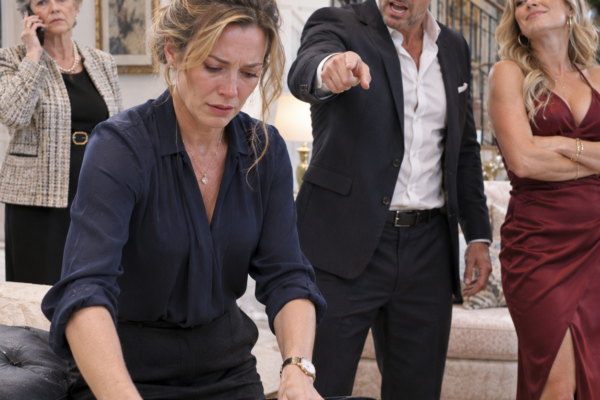
“Your Millionaire Mother Has Been Begging for Rice for Seven Months,” the Shopkeeper Told Me When I Returned From Dubai. I’d Sent Mom $3,000 Every Month, but My Wife Had Padlocked Her Pantry, Taken Her Sewing Machine, and Was Planning a Lavish Graduation Party. I Stayed Quiet Until the Celebration—Then Opened the Notebook Mom Had Hidden Beneath Her Mattress…k
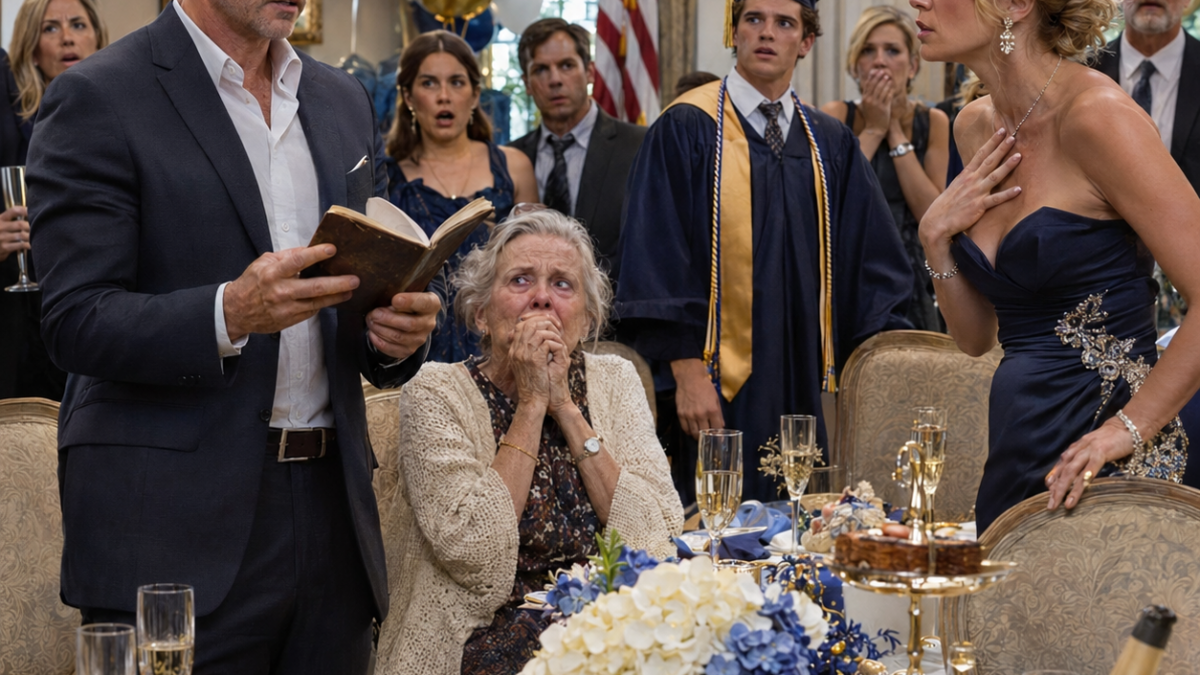
“Your Millionaire Mother Has Been Begging for Rice for Seven Months,” the Shopkeeper Told Me When I Returned From Dubai. I’d Sent Mom $3,000 Every Month, but My Wife Had Padlocked Her Pantry, Taken Her Sewing Machine, and Was Planning a Lavish Graduation Party. I Stayed Quiet Until the Celebration—Then Opened the Notebook Mom Had Hidden Beneath Her Mattress…
The first time I saw my seventy-year-old mother begging for food, she was promising a grocery store owner she’d pay for one pound of rice on Thursday.
It was Tuesday.
Her hands were shaking.
Her dress hung so loosely from her shoulders that I barely recognized it as the blue one she’d sewn for herself years earlier.
And behind her, a woman named Gwen Tabor was laughing.
“Well, there she is. The millionaire’s mama, buying groceries on credit again.”
My mother lowered her head.
“Thursday, Opal. All at once. I promise.”
The shopkeeper, Opal Grimes, pushed the bag of rice across the counter.
“Loretta, take it home. We’ll worry about the money another day.”
Mom tried to count the change in her purse anyway.
I stood just outside the shop, staring through the front window.
I’d been home from Dubai for forty-three minutes.
My family wasn’t expecting me until the following Friday.
I’d planned to surprise my mother, take her to lunch, and spend the afternoon listening to her complain that I worked too much.
Instead, I was watching her beg for rice.
I stepped toward the door.
Opal spotted me through the glass.
Her face changed.
She hurried outside before I could enter.
“Dalton Whitlock?”
“Yes.”
“Lord have mercy. Aren’t you supposed to be overseas?”
“I got in early.”
She glanced back toward the counter.
Then took my arm.
“Don’t go in there just yet.”
I stared at her.
“That’s my mother.”
“I know exactly who she is.”
“Why is she asking for credit?”
Opal swallowed.
“She’s been doing it for seven months.”
I felt something tighten in my chest.
“Seven months?”
“Every week, almost. Sometimes rice. Sometimes beans. Occasionally a little bread.”
“That isn’t possible.”
Opal looked straight at me.
“Son, I’ve been keeping the account myself.”
I shook my head.
“I send her three thousand dollars every month.”
The color drained from Opal’s face.
“How much?”
“Three thousand. On the first. For three years.”
She glanced toward Mom again.
Then lowered her voice.
“Your mother doesn’t know that.”
For several seconds, I couldn’t speak.
I’d spent the last three years helping build a logistics operation in Dubai. The business had done well enough that people back home had begun calling me a millionaire.
That label embarrassed me.
I’d grown up in a house where my mother stitched wedding dresses until two in the morning to keep the electricity on.
Money, to me, meant she would never have to do that again.
Thirty-six months.
Three thousand dollars each month.
One hundred eight thousand dollars sent home for her living expenses.
My wife, Celeste, handled the arrangements.
Whenever I asked about Mom, Celeste assured me she was eating well, taking her medication, and enjoying a quiet retirement.
And now Opal was telling me she’d been buying rice on credit for seven months.
“Why didn’t you call me?”
“She made me promise I wouldn’t.”
“Why?”
“She said you were working hard overseas and couldn’t afford more trouble.”
I looked through the window.
Mom was apologizing to Gwen for holding up the line.
Opal caught my arm again.
“There’s something else.”
I faced her.
“Somebody put a padlock on her pantry.”
I stared.
“Her pantry?”
“A real padlock, Dalton. I saw it last Christmas when I brought her soup.”
“Who did that?”
Opal didn’t answer immediately.
Then she said, “Your wife has the key.”
I stood there listening to a truck rumble past the store.
The whole world seemed to have narrowed to one question.
What had Celeste been doing to my mother while I was on the other side of the world?
Opal looked frightened.
“Your mama doesn’t want trouble. If she knows I’ve told you, she’ll think she’s done something wrong.”
I thought about that.
Then I stepped away from the door.
“Let her finish shopping.”
“What are you going to do?”
I looked at my rental car.
“I’ll give her an hour. Then I’ll come to her house like I just got off the plane.”
Opal nodded.
“That may be wise.”
Before leaving, I turned back.
“Don’t throw away that ledger.”
She looked at me.
“Why?”
“Because I’m going to want to know every time my mother came here hungry.”
Opal’s expression hardened.
“Then you’d better bring a folder, son. I’ve got seven months of dates.”
My name is Dalton Whitlock.
I was forty-seven years old, married for twenty-four years, and the father of a daughter who had just finished nursing school.
Until that Tuesday, I believed I’d done everything a successful son and husband was supposed to do.
I’d worked hard.
Provided for my family.
Paid my mother’s bills.
And trusted my wife to handle things while I was overseas.
What I hadn’t done was come home often enough.
That mistake would haunt me long after I discovered what Celeste had done.
An hour after leaving Opal’s store, I pulled into the driveway of my childhood home on Pecan Lane.
The little white house looked tired.
The shutters needed painting.
Weeds had spread across the flower bed.
And the porch light was broken.
My father had installed that light before he died.
He used to leave it burning when I worked late as a teenager.
Seeing it dark bothered me more than I expected.
I knocked.
Mom opened the door.
For a moment, she simply stared.
Then she put both hands over her mouth.
“Dalton?”
“Hi, Mama.”
She began crying.
I stepped forward and hugged her.
She felt frighteningly small.
“Oh, baby. You didn’t tell me you were coming.”
“Wanted to surprise you.”
“I haven’t straightened up a thing.”
“I didn’t come to inspect your house.”
She laughed weakly.
Then she pulled away.
“You still take two sugars?”
“Yes, ma’am.”
“Sit down. I’ll make coffee.”
I followed her into the kitchen.
That’s when I saw the pantry.
The wooden door had a new metal hasp fastened across it.
A heavy padlock hung from the latch.
I stopped.
“Mama, what’s that?”
She glanced over her shoulder.
“Oh. Mice were getting into things.”
I looked at her.
“Mice open doors now?”
She didn’t smile.
“Celeste says it’s safer.”
“Who has the key?”
Mom turned toward the coffee pot.
“Sit down, baby.”
“Mama.”
She kept filling the kettle.
“Who has the key?”
“Celeste.”
“Why?”
“She says I eat at all hours. It’s not good for me.”
I stared at the lock.
Then opened the refrigerator.
A pitcher of water.
A half-empty container of cold rice.
A small jar of margarine.
Nothing else.
“Where’s your food?”
Mom looked embarrassed.
“I’m going shopping Thursday.”
“Where’s your medicine?”
“Oh, I don’t need much.”
I touched her forehead.
She was burning up.
“Mama, you’ve got a fever.”
“It’ll pass.”
“When did you last eat something hot?”
She looked toward the window.
“Been a little while.”
I pulled out a chair.
“Sit down.”
“But your coffee—”
“Please, Mama.”
She sat.
I knelt in front of her.
“How much money does Celeste give you each month?”
Her face changed.
“Whatever she can.”
“How much?”
“Sometimes twenty dollars. Sometimes a little more.”
I closed my eyes.
Then opened them again.
“I send you three thousand dollars on the first of every month.”
Mom stared.
“Three thousand?”
“Yes.”
“Every month?”
“For three years.”
Her lips parted.
For several seconds, she didn’t make a sound.
Then she whispered, “Celeste told me your business was struggling.”
I felt sick.
“She said you sent what you could. She said we had to be careful.”
I looked toward the pantry.
“And she kept the rest?”
Mom shook her head quickly.
“Don’t be hard on her. She takes care of the bills.”
“What else does she do?”
Mom looked down.
“She says I shouldn’t go out so much. People talk.”
“About what?”
“About old women who can’t manage things.”
I stared at her.
Then she said something I will remember for the rest of my life.
“I asked her to forgive me for eating.”
I couldn’t move.
My mother had raised me alone after my father died.
She’d skipped meals so I could have seconds.
She’d mended her own shoes to buy me school clothes.
And now she was apologizing to my wife because she’d eaten food in her own house.
I put my hands over hers.
“Mama, you never have to apologize for being hungry.”
Her eyes filled.
I stood, pulled out my phone, and arranged a same-day medical visit for her fever and weakness.
Then I went to the store.
I bought chicken, vegetables, potatoes, bread, fruit, milk, and enough groceries to fill the refrigerator.
When I came back, I cooked the first hot meal Mom had eaten in weeks.
She took three cautious spoonfuls.
Then stopped.
“You don’t have to finish it all,” she said.
I looked at her.
“It’s for you.”
“But there should be some left for tomorrow.”
“There’s plenty for tomorrow.”
She stared at the bowl.
“Really?”
I sat beside her.
“Eat, Mama.”
Her hands trembled as she reached for another spoonful.
And when she began crying into the soup, I had to look away.
Not because I was embarrassed by her tears.
Because I was afraid that if I started crying too, I wouldn’t be able to stop.
That evening, while Mom slept, I found a thin blue notebook beneath her mattress.
The first page contained seven words written in her careful, uneven handwriting.
So I won’t forget.
Beneath them:
Because later she says I imagined it.
I sat on the edge of the bed and began reading.
And every page made me understand how completely I’d failed to see what was happening in my own family.
The notebook contained no dramatic accusations.
That made it worse.
Mom hadn’t written that Celeste was cruel or dishonest.
She’d recorded what happened and then tried to explain why she might deserve it.
April 3. Celeste took my bank card. She says she will keep it safe. I said yes. I don’t want trouble.
May 19. Asked for a little meat. She says meat is too heavy at my age. I had rice and water. It was good.
August 7. Papers for the pharmacy. Celeste said sign here. I did.
October 14. She put a lock on the pantry. Says I eat too much.
I looked toward the kitchen.
The padlock was still hanging there.
I turned another page.
December 8. Sewing machine is gone. Celeste says it was making too much noise. My Harold bought it with his first paycheck.
Dad had been dead for thirty-five years.
That machine was one of the few things Mom still owned that he’d bought with his own money.
I could picture it perfectly.
An old Singer treadle machine in a wooden cabinet.
Mom’s scissors in the top drawer.
A box of buttons beneath the work surface.
And a stack of order slips she never threw away.
I kept reading.
Called Dalton five times. Couldn’t get through. Maybe I’m too old to work these phones.
Then came the entry from her seventieth birthday.
Today I am seventy. Ate yesterday’s rice by myself. Too old for parties anyway. My Sunday dress hangs on me.
I covered my mouth.
I’d sent flowers that day.
Celeste had told me Mom was celebrating with several friends.
She’d even sent me a photograph of a birthday cake.
I remembered calling to wish Mom a happy birthday.
Celeste answered and said she was already asleep.
Now I realized I hadn’t spoken to my mother at all.
At the bottom of the last page, she’d written:
Whoever reads this, don’t tell Dalton. He sends what he can. I don’t want to be a burden.
I closed the notebook.
Then I walked into the bathroom, turned on the faucet, and cried.
I didn’t want Mom to hear me.
She was already frightened enough.
But I had spent years telling myself that sending money was the same as taking care of her.
I’d accepted Celeste’s explanations because they allowed me to keep working.
I didn’t have to interrupt an important meeting.
I didn’t have to buy another plane ticket.
I didn’t have to wonder whether the person I’d married was telling me the truth.
It had been convenient to believe everything was fine.
And Mom had paid for that convenience.
The next morning, I returned to Opal’s store.
She brought out a thick ledger with a cracked green cover.
“Every date,” she said. “Every amount.”
I opened it.
Mom’s name appeared on page after page.
One pound of rice.
Two cans of beans.
A loaf of bread.
Sometimes a little cooking oil.
The amounts were small.
That didn’t make them easier to look at.
“Seven months,” I whispered.
Opal nodded.
“She asked me not to call you.”
“Why did you keep helping her?”
Opal looked offended.
“Because she’s Loretta Whitlock.”
I waited.
“Your mama made my Rosie’s wedding dress. Rosie was marrying a good man, but we didn’t have enough money for anything fancy. Loretta made that dress and wouldn’t take a dime.”
Opal wiped her eyes.
“You think I was going to let her go hungry over a grocery bill?”
I reached across the counter.
“Thank you.”
She pushed the ledger toward me.
“Make copies. But the original stays here.”
“Of course.”
Then she looked at me.
“Find out where the money went, Dalton.”
I nodded.
“That’s exactly what I’m going to do.”
My attorney, Elias Bennett, met me at his office before lunch.
I’d worked with him for more than a decade.
He’d handled business agreements, real estate transactions, and the legal work connected to my overseas investments.
He was careful with words, especially when someone was angry.
I told him everything.
He listened without interrupting.
Then he said, “Your mother needs protection and independent medical care. We also need to establish what authority Celeste holds over her finances.”
I placed the notebook on his desk.
Elias read several pages.
His expression darkened.
“Has your mother agreed to have her financial records reviewed?”
“She’s frightened Celeste will find out.”
“Then explain what we’re doing and let her decide. We don’t want to replace one person controlling her affairs with another.”
He was right.
I went home and sat beside Mom.
I explained that I’d been sending money and needed to understand what had happened to it.
She listened nervously.
Then she asked, “Will Celeste be angry?”
“Probably.”
Mom looked down.
“I don’t like trouble.”
“I know. But you have a right to know what’s happening with your money.”
After a long silence, she nodded.
“All right, son.”
She signed the bank authorization in front of me.
Slowly.
One letter at a time.
“L-o-r-e-t-t-a,” she whispered.
I smiled sadly.
“Still the same handwriting.”
She glanced up.
“You remember when I learned?”
“I was six.”
“Forty-one years old, going to night classes at the church. Your daddy would’ve laughed to see me practicing my letters.”
I shook my head.
“He would’ve been proud.”
She smiled.
We went to the bank that afternoon.
Catherine Ellis, the branch manager, recognized us immediately.
She’d known Mom for years.
“Mrs. Whitlock, it’s good to see you.”
Mom looked embarrassed.
“Hello, Catherine.”
Once the authorizations and identity checks were completed, Catherine reviewed the relevant account records with us.
The first surprise was that my transfers weren’t going into Mom’s old savings account.
They were going into an account labeled HOUSEHOLD ACCOUNT.
Celeste had arranged it three years earlier using a power of attorney Mom had signed.
She was also listed as a joint owner.
“Who changed the destination for my monthly transfers?” I asked.
Catherine examined the records.
“You did, Mr. Whitlock. Here’s the instruction bearing your signature.”
I stared at it.
Then I remembered the morning I flew to Dubai.
Celeste had been standing at the front door with a folder in her hand.
Sign here, baby. We’re late.
I’d signed without reading.
I thought I was authorizing her to help with routine bills.
Instead, I’d directed my mother’s monthly support into an account Celeste controlled.
Catherine brought up the transaction history.
“For the first sixteen months, significant amounts were withdrawn in cash.”
I leaned closer.
“What happened after that?”
“For the next twenty months, twenty-seven hundred dollars went out the day after your monthly deposit.”
“Where?”
Catherine turned the screen.
BRANDI VALE.
I stared.
Brandi was Celeste’s younger sister.
She owned a dress shop on Main Street and had been struggling to keep it open.
“How much in total?”
“Fifty-four thousand dollars.”
Mom looked at me.
“Brandi gets my money?”
I couldn’t answer.
Then Catherine opened another file.
“There are three loans in your mother’s name.”
My stomach dropped.
“Loans?”
“Approximately thirty-eight thousand dollars in original principal.”
Mom shook her head.
“I never borrowed that.”
The applications listed a business called Loretta’s Alterations, supposedly earning $96,000 a year.
I stared at the income figure.
Mom hadn’t operated a full-time alterations business in years.
Her sewing machine had been taken away.
She’d been buying rice on credit.
Yet somebody had declared she earned almost a hundred thousand dollars annually.
“Where did the loan money go?” I asked.
Catherine explained that the available records showed payments connected to Brandi’s shop and a deposit at the Oakwood Room.
I froze.
The Oakwood Room was where Celeste planned to hold our daughter Maisie’s graduation party.
One of Mom’s loans had apparently helped finance an event she wasn’t even invited to attend.
Catherine showed us copies of the signed applications that the bank could provide for review.
I put Mom’s fresh signature beside them.
The differences were striking.
The loan signatures were fast and smooth.
Mom’s was slow and deliberate.
She had formed every letter separately for as long as I could remember.
“These aren’t hers,” I said.
Catherine studied the papers.
“That will need a formal investigation.”
She also recalled an unusual incident involving the third loan.
A younger woman had appeared at the branch claiming to be Loretta Whitlock’s daughter.
She’d brought an identification copy and documents that appeared already signed.
Mom looked bewildered.
“But I don’t have a daughter.”
Catherine nodded.
“That’s one of the concerns we’re referring for investigation.”
We gathered the records available to us and arranged the necessary fraud reports.
Outside the bank, Mom sat silently in the passenger seat.
I reached for her hand.
“Mama?”
She looked toward the window.
“I thought if I was careful, there’d be enough.”
I swallowed.
“There was always enough.”
She turned toward me.
“Then why did she keep telling me there wasn’t?”
I couldn’t answer.
Not yet.
But I knew where I was going next.
I was going to find the sewing machine.
And after that, I was going to find out why my own mother couldn’t call me.
Abner Collins ran a secondhand furniture store near the edge of town.
When I described Mom’s old Singer, he pointed toward the back room.
“Come with me.”
There it stood.
The dark wooden cabinet was scratched, but the brass plate was still attached.
The iron treadle was worn smooth.
I recognized a little burn mark near the right corner where I’d once placed a hot soldering iron while trying to repair a school project.
I touched it.
“That’s hers.”
Abner nodded.
“A fancy woman brought it in last December. Had a man with her who carried it from a black SUV.”
“Did she give you a name?”
“No. Said her mother-in-law had died and she was clearing the house.”
I looked up.
“My mother is alive.”
Abner’s expression changed.
“Lord.”
“How much did you pay?”
“One hundred fifty dollars.”
I reached for my wallet.
He raised a hand.
“Don’t. Let me keep it safe until things are sorted.”
He opened a drawer in the machine cabinet.
Inside lay a stack of old order slips.
Every one bore Mom’s careful handwriting.
Names, measurements, prices, and her signature.
Twenty-eight years of work.
Twenty-eight years of writing her name one letter at a time.
I photographed the slips and asked Abner to preserve his record of the purchase.
Then I called Elias.
“We’ve found another witness.”
He listened.
“Good. And Dalton?”
“Yes?”
“Don’t confront Celeste until we’ve secured the documents and taken appropriate steps to protect your mother.”
I promised.
Then I drove Mom to the phone company’s local office.
With her consent, we reviewed the settings on her line.
There was a block preventing outgoing calls to my number.
It had been there for five months.
Incoming calls from me had been redirected to Celeste.
The changes had been made under the family account that I had allowed my wife to administer.
I stared at the screen.
“She stopped Mom from calling me.”
The representative showed us the dates and confirmed the account settings.
Mom began crying.
“I thought I’d forgotten how to use the phone.”
I took her hand.
“You didn’t forget anything.”
I remembered every conversation I’d had with Celeste.
Your mother’s sleeping.
She’s fine.
She doesn’t feel like talking today.
I’d accepted those answers because I trusted the woman giving them.
That evening, I called my wife.
She answered cheerfully.
“Baby! Isn’t it the middle of the night over there?”
I looked at Mom’s empty pantry.
“Couldn’t sleep.”
“Oh, sweetheart. You work too hard.”
“How’s Mama?”
“Wonderful. I took her pot roast today. She ate like a horse.”
I closed my eyes.
“And her medicine?”
“All taken care of.”
I let the silence stretch.
Then I said, “Maybe I’ll move my flight up.”
“Don’t change anything, baby. Friday, like we planned. I’ve got everything handled.”
I looked at the notebook.
“All right.”
“Love you.”
I ended the call without answering.
Mom was sitting at the kitchen table.
“Did she sound angry?”
“No, Mama.”
Mom looked relieved.
That almost broke me again.
The following Saturday, Celeste came to Mom’s house as she usually did.
I stayed in the adjoining hall, ready to intervene if necessary.
I’d told Mom I wanted to see how Celeste behaved when she believed I was overseas.
She agreed reluctantly.
Celeste’s heels clicked across the kitchen floor.
“Where did all this food come from?”
“Opal helped me.”
Celeste made a disgusted sound.
“Wonderful. Now everyone will think you’re living on charity.”
Mom said nothing.
Then I heard papers slap against the table.
“Sign these.”
“What are they?”
“Pharmacy forms.”
“Could I read them first?”
“For heaven’s sake, Loretta. You’re so slow. Just sign where I tell you.”
I gripped the doorframe.
Mom asked a question that made my throat tighten.
“Celeste, could I come to Maisie’s graduation party? I’d sit in the back.”
“No.”
“Just for a little while.”
“People ask questions when you’re around.”
Mom’s voice was barely audible.
“She’s my granddaughter.”
Celeste lowered her voice.
“If you tell Dalton or Opal anything about our arrangements, Vernon can sign one paper and have you placed in a nursing home. Nobody believes a confused old woman.”
I almost stepped into the kitchen.
Then Mom whispered, “Please don’t.”
Celeste laughed.
“Then learn to cooperate.”
When she finally left, I went to Mom.
She was sitting with an unsigned paper in front of her.
Her hands shook.
“Who is Vernon?” I asked.
“A doctor. Celeste’s friend.”
“Has he examined you?”
“Not that I remember.”
I looked at the form.
It concerned medical decision-making authority.
It wasn’t pharmacy paperwork.
That afternoon, Elias began reviewing it alongside the older power of attorney.
I also learned that Dr. Vernon Fisk had helped arrange a nursing job for my daughter, Maisie, at Magnolia Care.
Maisie had recently completed nursing school.
She was twenty-three, smart, hardworking, and the best thing Celeste and I had ever raised together.
I met her quietly at a café.
She threw her arms around me.
“Dad! Mom said you weren’t coming until Friday!”
“I wanted to surprise you.”
We talked about graduation.
Then I asked about Grandma.
Maisie looked uncomfortable.
“Mom says she likes being alone now.”
“When did you last see her?”
“Two months ago.”
“How did she look?”
“Thin. Really thin.”
She looked down.
“Mom said old people shrink.”
I took a breath.
“Maisie, whatever happens at your party, remember that none of this is your fault.”
She frowned.
“Dad, you’re scaring me.”
I held her hand.
“I love you. That won’t change.”
Then I asked about Vernon Fisk.
She smiled uncertainly.
“He’s an old family friend. He helped me get the job.”
“How often is he around?”
“Mostly when Mom needs him.”
I nodded.
I didn’t say more.
The truth was beginning to form, but I didn’t yet know how much of it I could prove.
During the next several days, Elias and I worked through the evidence.
The bank transfers.
The disputed loans.
The false income figures.
The phone restrictions.
The records concerning the sewing machine.
Mom’s notebook.
And the threatening documents Celeste had tried to make her sign.
Elias warned me that Celeste would likely argue she’d been exercising valid authority under the power of attorney.
She might also claim Mom was suffering from memory problems and had authorized the transactions before her condition deteriorated.
We needed medical evidence independent of Vernon Fisk.
Mom was terrified of seeing another doctor.
She believed an examination might be used to place her in a care facility.
I sat beside her one evening and explained the difference between a physician evaluating her health and someone using medical paperwork to take away her choices.
She listened carefully.
Then nodded.
“I’ll go. But I want you there.”
“Of course.”
I also asked her whether she still wanted to attend Maisie’s graduation celebration.
She looked down.
“People will know I was buying rice on credit.”
I took her hands.
“That isn’t something you should be ashamed of.”
She began crying.
“I kept quiet so I wouldn’t make trouble for you.”
I shook my head.
“Keeping quiet didn’t protect you, Mama. Look how I found you.”
She stared at me.
Then asked, “What will you tell them?”
I placed her notebook on the table.
“The truth. But you decide which parts I’m allowed to read.”
For a long time, she looked at the pages.
Then she opened the book and marked several entries.
“All right.”
She stood, went to her bedroom, and returned holding a faded blue dress.
“I made this for your graduation.”
I smiled sadly.
“You looked beautiful in it.”
She touched the fabric.
“It used to fit better.”
“We’ll get it adjusted.”
She nodded.
Then, for the first time since I’d come home, I saw something besides fear in her eyes.
Determination.
On Saturday evening, I walked into the Oakwood Room with my mother on my arm.
Celeste was standing beneath a chandelier wearing a dress from Brandi’s shop.
When she saw me, her face lit up.
“Dalton! You’re home!”
Then she noticed Mom.
Her smile vanished.
“Loretta?”
I looked at her.
“Hello, Celeste.”
She leaned close.
“What is she doing here?”
“Celebrating her granddaughter.”
“You told me she wasn’t coming.”
I smiled without warmth.
“No. You told her she wasn’t coming.”
Across the room, Maisie saw us.
“Grandma!”
She hurried over and hugged Mom.
Mom began crying.
I watched my daughter hold the woman she’d been told didn’t want visitors.
Then I looked toward the front table.
“Come on, Mama.”
Mom hesitated.
“Where are we sitting?”
“Right up front.”
I pulled out the chair beside Maisie.
Celeste stared.
The evening continued.
Photographs.
Music.
Dinner.
A speech recognizing Maisie’s nursing-school graduation.
Then the master of ceremonies handed me the microphone.
I looked across the room at the people my wife had invited.
Nearly a hundred friends and relatives.
Every person she’d told that Mom was being cared for.
I opened my folder.
And began.
“Before anything else, I want to say how proud I am of my daughter.”
Maisie smiled nervously from the front table.
“She worked weekends while studying nursing. She earned this celebration, and nothing I’m about to say changes that.”
I paused.
Then I looked toward Mom.
“I also want you to meet the woman who taught me what sacrifice really means.”
I pointed to her.
“That’s Loretta Whitlock. My mother.”
People turned.
“She was widowed at thirty-three. She raised me by sewing dresses at night. There were times when all we had was rice.”
I swallowed.
“But I never went to bed hungry. She ate whatever remained in the pot.”
The room quieted.
“For the last three years, I’ve been working overseas. I believed Mom was comfortable because I sent her three thousand dollars every month.”
I lifted the first bank statement.
“Two weeks ago, I came home and found her borrowing rice from a grocery store.”
Celeste stood.
“Dalton, what are you doing?”
I continued.
“Her pantry was padlocked. Her refrigerator was nearly empty. She’d been told I wasn’t sending enough money.”
I opened Mom’s notebook.
“She kept a record.”
I read the entry from her birthday.
Today I am seventy. I ate yesterday’s rice by myself.
Somebody near the back gasped.
I looked toward the floral arrangements.
“While somebody was spending thousands of dollars decorating this room, my mother was eating cold rice alone.”
Celeste approached the stage.
“This is family business!”
I looked at her.
“Then why didn’t you tell the family?”
I held up the records.
“Twenty transfers of twenty-seven hundred dollars went to Brandi Vale. Fifty-four thousand dollars.”
Brandi went pale.
“Three loans were taken out in Mom’s name. Thirty-eight thousand dollars. Some of that money went toward this celebration.”
Celeste reached for the microphone.
“You’re lying!”
I turned toward her.
“Then explain why Mom’s loan applications claim she earns ninety-six thousand dollars a year from a business she can no longer operate.”
I looked toward the front table.
“And explain why somebody sold the sewing machine my father bought her, telling the buyer she was dead.”
Celeste’s expression hardened.
“Your mother’s confused, Dalton.”
I took out the disputed signatures.
“She learned to write at forty-one. Every signature she’s made for decades is slow and deliberate. These loan applications are signed in a completely different hand.”
I placed the documents on the table.
“And the bank is investigating.”
Celeste pointed toward Mom.
“She doesn’t remember what she signs!”
I looked at my wife.
“Being seventy doesn’t make her a liar.”
Then I admitted something the room needed to hear.
“One signature in these records really is mine. Three years ago, I signed a banking instruction without reading it.”
I paused.
“That was my mistake. I handed over responsibility and called it care.”
I looked at Mom.
“And she suffered for it.”
I stepped down from the stage.
Mom was crying.
I knelt beside her.
“You don’t have to stay quiet anymore.”
She shook her head.
“Please, Dalton. Not here.”
I took her hand.
“You’re safe.”
Then I pulled her chair closer to Maisie.
“Would you like some more dinner, Mama?”
She looked at the plate.
“May I?”
My throat tightened.
“As much as you want.”
Maisie reached for the breadbasket.
“More bread, Grandma?”
Mom began crying again.
Then Celeste spoke.
“Since everybody wants documents, I have some too.”
She pulled a folded certificate from her handbag.
At the top was the name Dr. Vernon Fisk.
Beneath it:
MODERATE DEMENTIA.
The certificate claimed Mom had significant memory loss and confusion.
It was dated October 14.
Celeste looked around the room.
“That’s why I manage her affairs. She’s been ill for months.”
I stared at the date.
October 14.
The same morning Mom had bought rice from Opal.
Celeste continued.
“I have her power of attorney. I have a health-care proxy. Brandi was paid to look in on her. Dalton abandoned his mother for three years, and now he wants to pretend he’s a hero.”
The room was silent.
Then she pointed at me.
“On Monday, I’m petitioning for guardianship. Someone has to protect Loretta from herself.”
I looked at the certificate.
Then at Vernon Fisk, seated near the front.
He wouldn’t meet my eyes.
For the first time, I understood why Celeste had seemed so confident.
She wasn’t merely prepared to deny the missing money.
She was prepared to claim that the person who could contradict her was incapable of telling the truth.
Monday morning, the petition arrived.
Celeste sought emergency guardianship in the county probate court.
She relied on Fisk’s certificate and the disputed health-care documents.
An emergency temporary order was issued pending an expedited hearing, with limited authority over Mom’s immediate care.
Mom was transferred to Magnolia Care for evaluation.
I stood beside the transport vehicle, holding her hand.
“Don’t fight them, son,” she whispered.
“I’ll challenge the order.”
She looked frightened.
“I don’t want to stay there.”
“I know.”
I kissed her forehead.
“Friday. I’ll be there Friday.”
Once the vehicle left, Elias turned toward me.
“We need an independent court evaluation, the original documents, and a way to prevent any disputed property transaction.”
“Property transaction?”
He showed me the newest discovery.
Celeste had prepared a sale of Mom’s house to a company called Ridgeview Holdings.
Purchase price: $61,000.
The property’s estimated market value was approximately three times that amount.
The buyer’s registered agent was Vernon Fisk.
Closing was scheduled for Friday at two o’clock.
I stared.
“She’s selling Mom’s home to her own doctor?”
“That’s what the paperwork proposes. We’re notifying the closing attorney and seeking emergency relief.”
Then Elias said something I couldn’t forget.
“If the guardianship proceeds without a proper challenge, Celeste may try to use the capacity finding to support the older power of attorney and defend the transactions.”
I looked at him.
“Then we stop it.”
“With evidence.”
I nodded.
“With evidence.”
On Wednesday evening, Maisie came to see me.
She looked exhausted.
“Grandma’s at Magnolia,” she whispered.
“I know.”
“Dr. Fisk ordered lorazepam three times a day after she arrived.”
I stared.
“Why?”
“There’s no documented examination supporting the new order that I could find in her chart. She’s been sleepy and disoriented.”
“The court evaluator sees her Friday morning.”
“I know.”
Maisie’s voice broke.
“Mom told me to write that Grandma didn’t recognize me.”
“Did she?”
“No. She knew exactly who I was. She asked whether I’d eaten.”
I took her hands.
“Then write what happened. Nothing more.”
Maisie nodded.
“I’ve reported my concerns to the nursing director.”
Then she began crying.
“There’s something else.”
I waited.
“Mom told me Dr. Fisk is my biological father.”
I closed my eyes.
I’d known there was a serious possibility for years. When Maisie was ten, I’d overheard Celeste speaking to Brandi. Later, I’d learned enough to understand that the secret was real, though I hadn’t known how to tell my daughter.
“Did you know?” she whispered.
I nodded.
Tears ran down her face.
“Then why didn’t you tell me?”
“I should have talked to you sooner. I’m sorry.”
She stepped backward.
“Mom said you’d stop loving me.”
I reached for her.
“Maisie, look at me.”
She did.
“I remember teaching you to ride a bicycle. I remember you falling asleep on the couch waiting for me to get home. I remember your first day of school.”
Her mouth trembled.
“Those memories don’t disappear because a different man contributed your DNA.”
She began sobbing.
“I’m your dad because I chose to be. And I’d choose you again tonight.”
She threw her arms around me.
We stood there holding each other until she stopped shaking.
Then she wiped her eyes.
“Grandma needs us.”
I nodded.
“Yes, she does.”
And together, we finished collecting the evidence that would give Mom a chance to speak for herself on Friday.
The strongest evidence came from two people nobody had considered important.
Opal Grimes and Gwen Tabor.
Elias discovered that Fisk’s dementia certificate claimed he’d examined Mom at his office at 10:30 a.m. on October 14.
Opal’s ledger recorded Mom buying rice at 10:20 that same morning.
Her store was forty minutes from Fisk’s office.
The two accounts couldn’t both be true.
Then Gwen admitted she’d seen Fisk carrying Mom’s sewing machine into a black SUV the previous December.
Abner’s sales records supported her recollection.
The doctor claiming Mom was confused had helped remove one of her most treasured possessions.
Finally, Elias examined the health-care proxy Celeste had produced.
It was supposedly signed the previous September.
But the particular version of the form used hadn’t been released until February.
Months after the claimed signing date.
When I heard that, I remembered Mom’s words.
She says don’t bother with the date. She’ll fill it in.
The documents were beginning to tell the same story Mom had written in her notebook.
Friday morning, I arrived at the courthouse with Elias, Maisie, Opal, and Gwen.
The court-appointed evaluator had examined Mom earlier that morning.
When the hearing began, the evaluator testified that Mom was oriented to person, place, and time.
She understood her finances.
She remembered her household expenses.
She could explain the disputed transactions.
The evaluation found no evidence supporting the claimed moderate dementia diagnosis.
There were, however, concerns about recent sedation and the lack of documented assessment supporting the medication regimen.
Celeste’s attorney asked for a recess.
During it, he approached Elias with a proposed agreement.
Celeste would withdraw the full guardianship request.
In return, we would stop supporting the financial investigation and agree not to interfere with certain pending transactions.
Elias read the document.
Then showed me a paragraph near the bottom.
The proposed agreement allowed the sale of Mom’s house to Ridgeview Holdings to proceed that afternoon.
I looked at Celeste.
Even now, she wanted the house.
I handed the document back.
“No.”
When the hearing resumed, Elias presented the disputed signatures.
Then the medical certificate.
He asked Fisk about the alleged examination.
“October fourteenth. Ten-thirty a.m. At your office?”
“Correct.”
Elias produced Opal’s ledger.
“At ten-twenty, Loretta Whitlock was buying rice forty minutes away.”
Fisk shifted in his seat.
“Perhaps the time was entered incorrectly.”
Opal testified next.
She identified her own handwriting and explained that she’d recorded the purchase when Mom was standing at the counter.
Gwen testified about seeing Fisk remove the sewing machine.
Abner’s statement and transaction records supported her account.
Then Elias presented the disputed health-care proxy.
The form’s release date did not match the date on which Celeste claimed Mom had signed it.
Celeste’s attorney attempted to explain the discrepancy.
The judge asked for the supporting records.
None were produced.
Then Mom was invited to speak.
She stood slowly.
I moved to help her.
She shook her head.
She wanted to walk to the witness chair herself.
The judge addressed her gently.
“Mrs. Whitlock, do you understand why we’re here?”
Mom nodded.
“Because my daughter-in-law says I can’t remember things.”
“And what would you like the court to know?”
Mom looked toward Celeste.
Then spoke clearly.
“I remember being hungry.”
The courtroom went silent.
“I remember the pantry being locked. I remember asking Opal for rice. I remember when my sewing machine disappeared.”
Her voice trembled.
“And I remember signing papers because I was told they were for medicine.”
The judge asked about her handwriting.
Mom held up her hands.
“I learned to write at forty-one, after my husband died. I’ve never signed my name quickly.”
She looked at the disputed loan papers.
“Those aren’t my signatures.”
Then she turned toward me.
“I’m angry with my son.”
I lowered my head.
She continued.
“He should have come home sooner.”
My eyes filled.
“Yes, Mama.”
“But being angry with him doesn’t make me confused.”
She faced the judge again.
“And being seventy doesn’t make me a liar.”
Maisie testified after her.
She explained that Mom had recognized her at Magnolia Care.
She described the medication concerns she’d reported and confirmed she had refused to make a false chart entry.
When Celeste attempted to interrupt, the judge stopped her.
After reviewing the testimony and records, the court denied the continuing guardianship petition and vacated the emergency temporary order.
Mom’s right to make her own decisions was restored.
The challenged financial authority and proposed property sale were addressed through protective orders and the ongoing legal proceedings.
The sale to Ridgeview Holdings would not take place.
The judge also referred the evidence concerning the disputed documents and medical certificate to the appropriate investigative and professional authorities.
Mom began crying.
I reached for her hand.
“You’re coming home.”
She looked at me.
“Today?”
“Today, Mama.”
The criminal investigations continued separately.
Celeste, Brandi, and Vernon were required to answer for the evidence concerning the financial transfers, loan applications, and falsified documents.
Fisk also faced professional scrutiny over his medical records and treatment decisions.
The bank suspended collection activity on Mom’s disputed loans while the fraud claims were investigated.
Elias began the process of correcting her financial and credit records.
There were still legal battles ahead.
But Mom was no longer trapped in a care facility while other people decided whether to sell her home.
And that mattered more than any amount of money.
Two weeks later, Abner delivered the Singer sewing machine.
Mom stood beside the front window as he carried it inside.
When he set it down, she touched the wooden cabinet.
“Harold bought me this.”
I nodded.
“I know.”
She opened a drawer.
Inside were the old order slips.
Twenty-eight years of dresses, alterations, measurements, and carefully written names.
She sat at the machine and turned the wheel slowly.
Then she began crying.
I knelt beside her.
“It’s home, Mama.”
She looked at me.
“So am I.”
The following Thursday, we went to Opal’s store.
Mom carried an envelope containing the money she owed.
Opal tried to refuse it.
“Loretta, you don’t owe me a thing.”
Mom smiled.
“That’s exactly why I’m paying.”
They embraced across the counter.
Gwen was standing near the canned vegetables.
She approached slowly.
“Loretta, I said things about you that I’m ashamed of.”
Mom studied her.
Then glanced toward Opal’s ledger.
“Well, Gwen, perhaps you’d better pay your own tab. Opal has been patient with you too.”
Opal burst out laughing.
So did Mom.
It was the first time I’d heard her laugh that freely since coming home.
Later that summer, Maisie began spending Sunday afternoons learning to sew.
Mom taught her how to measure a hem, thread a needle, and keep a straight seam.
“Slow down, baby,” she’d say. “One stitch at a time.”
Sometimes I sat nearby and listened.
I was no longer working in Dubai.
I’d sold my overseas business interest and rearranged my affairs so I could remain close to home.
Mom wasn’t pleased about that at first.
“You didn’t have to give up your work for me.”
“I know.”
“Then why did you?”
I sat across from her.
“Because I spent three years sending money and telling myself that meant I was here.”
She looked toward the kitchen table.
“Money doesn’t sit down and eat supper with you, son.”
I swallowed.
“No, Mama. It doesn’t.”
We arranged help for the tasks she wanted assistance with.
I offered to organize her bills and replace her phone.
Then Mom raised one finger.
“Ask me first.”
I smiled.
“Yes, ma’am.”
She didn’t need another person taking over her life.
She needed people who would respect that it was hers.
One evening, after Maisie left, Mom asked me to carry two chairs onto the porch.
We sat together watching the sun disappear behind the houses on Pecan Lane.
The porch light above us was still broken.
I stood.
“I should’ve fixed that weeks ago.”
Mom looked up.
“Then fix it tomorrow.”
I laughed.
“Yes, ma’am.”
She took my hand.
“Dalton?”
“Yeah, Mama?”
“When you do, leave it on at night.”
I looked at her.
“Why?”
She smiled.
“Let folks see somebody lives here.”
I squeezed her hand.
For three years, I’d believed that sending money home was enough to prove I loved my mother.
But love wasn’t a bank transfer.
It was listening when she spoke.
Showing up when she needed someone.
And making sure nobody ever convinced her she had to apologize for taking up space in her own home.
The next evening, I replaced the porch light.
When darkness settled over Pecan Lane, the little white house glowed warmly behind its blue shutters.
Mom stood at the doorway, watching.
“Looks nice, doesn’t it?” she asked.
I smiled.
“Yes, Mama.”
Then I went inside and sat down for supper.
This time, when she reached for another piece of bread, nobody told her she wasn’t allowed.
And when she asked me to pass the potatoes, I passed the whole bowl.