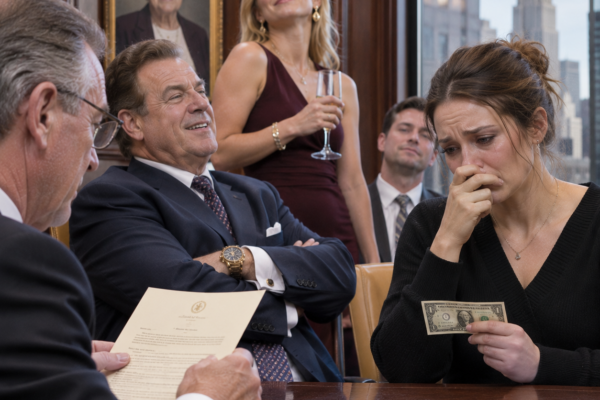
“Give Kyle Your Car or Get Out of My House,” Dad Snapped When I Found My Brother Warming Up the $7,200 SUV I’d Bought After Two Years on the Bus. Mom Called Me Selfish, Though I’d Paid Their Power Bill Twice. I Packed and Drove From Boise to Montana That Night. Eleven Years Later, Dad Asked Me for a Favor He Never Expected Me to Refuse.k
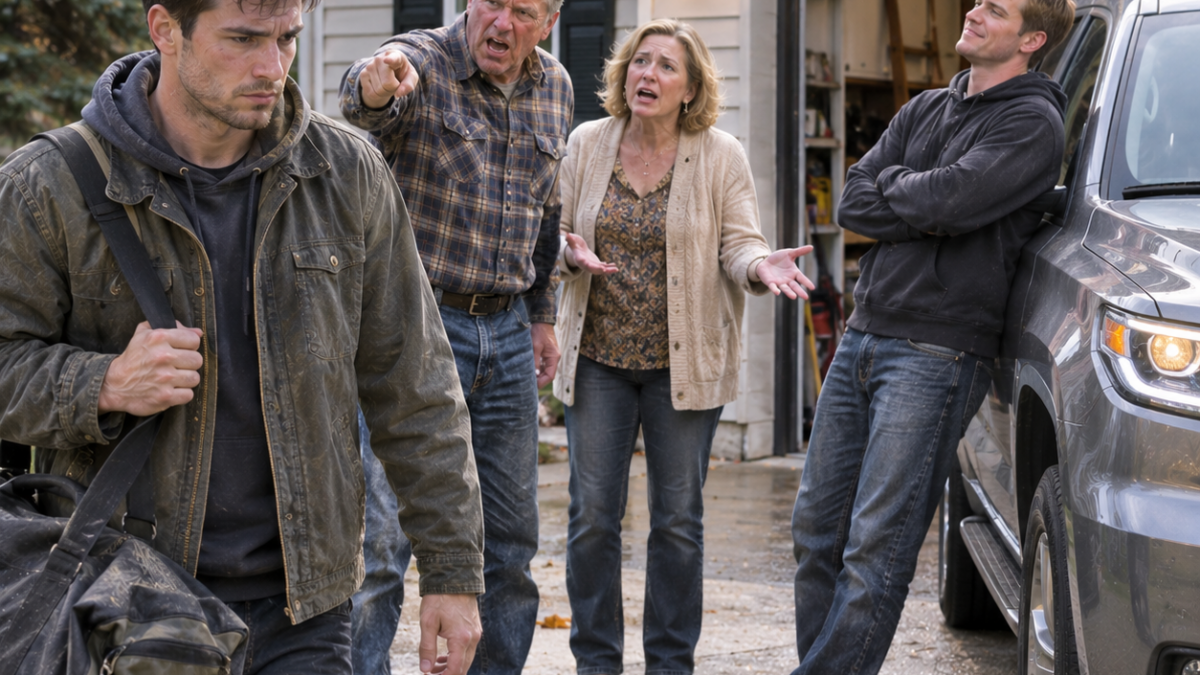
“Give Kyle Your Car or Get Out of My House,” Dad Snapped When I Found My Brother Warming Up the $7,200 SUV I’d Bought After Two Years on the Bus. Mom Called Me Selfish, Though I’d Paid Their Power Bill Twice. I Packed and Drove From Boise to Montana That Night. Eleven Years Later, Dad Asked Me for a Favor He Never Expected Me to Refuse.
“Get out of my car, Kyle.”
My older brother looked at me through the windshield of my red SUV, both hands resting on the steering wheel while the engine idled in our driveway.
He wasn’t supposed to have the keys.
I’d locked them in my bedroom before going to bed.
But there he sat at seven on a freezing Idaho morning, adjusting the heater and radio as though the vehicle belonged to him.
“Relax, Jenna,” he said through the open window. “I’m just warming it up.”
“For what?”
“I’ve got interviews this week.”
“Then take your own car.”
He laughed.
“Mine doesn’t start.”
“Then charge the battery.”
He gave me the expression I’d hated since childhood.
The one that said I was being difficult simply because I wasn’t giving him what he wanted.
“Dad said I could use yours.”
I stared at him.
“Dad doesn’t own this car.”
“Jenna, don’t start.”
I held out my hand.
“Engine off. Give me the key.”
That’s when my father stepped onto the porch.
“What’s all the noise about?”
I turned toward him.
“Did you give Kyle my spare key?”
Dad folded his arms.
“Your brother needs reliable transportation. He’s trying to get his life together.”
“Then he needs to fix his car.”
“He has interviews.”
“So do thousands of people who take the bus.”
Dad’s face hardened.
“Don’t be selfish.”
My name is Jenna Pruitt. I was twenty years old that morning, living with my parents and older brother in Boise, Idaho.
I’d worked since I was sixteen.
Grocery stores.
Weekend shifts at a hardware store.
Evening cleaning jobs.
Anything that paid enough to help me save for a car.
For two years, I’d taken the bus to work.
In winter, I stood at stops with numb fingers while snow collected on my jacket.
In summer, I walked home from the final stop after dark.
I skipped vacations, packed lunches, and saved every dollar I could.
Finally, I bought a used red SUV for $7,200.
Cash.
No loan.
No help from my parents.
It wasn’t fancy.
It had a scratch along the passenger door, faded upholstery, and a heater that took several minutes to warm up.
But it started every morning.
And it was mine.
Kyle was twenty-three, three years older than me, and had been given more second chances than anyone I’d ever known.
When he quit his first job, Dad bought him a replacement car.
When he fell behind on bills, Mom paid them.
When he spent three weeks complaining that his current car wouldn’t start, nobody thought to charge the battery or arrange repairs.
Instead, Dad went into my bedroom, took my spare key, and handed it to him.
“Jenna,” Dad said, stepping into the driveway, “you live under my roof. Your mother cooks your meals. Sharing a car with your brother is the least you can do.”
I felt something inside me go still.
“I paid the electric bill twice last winter when your hours were cut.”
Dad’s expression changed.
“That doesn’t give you the right to disrespect me.”
“I’m not disrespecting you. I’m asking for my property back.”
Kyle sighed dramatically.
“Are you seriously doing this over a car?”
I looked at him.
“You didn’t even ask.”
He shrugged.
“I knew you’d say no.”
“Then you already knew the answer.”
Dad came down the porch steps.
“Enough. Kyle needs the vehicle. You’re going to let him borrow it.”
“No.”
He stopped.
“What did you say?”
“I said no.”
For a few seconds, nobody spoke.
Then Dad pointed toward the street.
“If you can’t help your own family, maybe it’s time you found your own roof. Start acting like a grown woman.”
Mom appeared in the doorway.
“Please, everybody, calm down.”
But Dad was staring at me.
Waiting.
He expected the same thing that always happened.
I’d argue, he’d raise his voice, Mom would plead for peace, and eventually I’d surrender whatever Kyle wanted.
This time, I held out my hand.
“Spare key, Kyle.”
He stared at me.
Then he shut off the engine, climbed out, and dropped the key into my palm.
“Happy now?”
I didn’t answer.
I walked past Dad and went inside.
An hour later, Mom found me packing my clothes into two duffel bags.
“Jenna, what is all this?”
“What does it look like?”
“Your father didn’t mean it.”
“He told me to leave.”
“He was upset.”
“He handed Kyle a key to something I paid for.”
She sat on my bed.
“Your brother’s going through a hard time.”
I stopped folding a sweater.
“Mom, I’ve been going through a hard time for two years.”
She looked up.
“Nobody noticed because I kept going to work.”
Her eyes filled.
“Where would you even go?”
“Montana.”
“Montana?”
“Billings. There’s an auto repair shop there that needs somebody at the front desk.”
She stared at me.
“You’ve been planning this?”
I looked toward the red SUV outside my window.
“I’ve been planning to have a life of my own since I was sixteen.”
Mom began crying.
“Don’t do something you can’t take back.”
I zipped the first bag.
“Staying is the thing I can’t take back.”
That evening, I loaded everything I could fit into the SUV.
Dad didn’t come outside.
Kyle stood by the kitchen window, smirking.
As I pulled away, I heard him tell Mom, “Bet she’s back by breakfast.”
I drove north through Idaho with $1,200 in savings, two bags of clothes, and no promise of a job.
By the time I reached a gas station outside Billings, my hands were shaking from exhaustion.
I found the number I’d written on a folded receipt two weeks earlier.
Then I called.
“Dolan’s Auto.”
“Hi. My name’s Jenna Pruitt. I called about the front-desk opening.”
A man’s voice answered.
“Well, I’ll be. You actually came.”
I looked through the windshield at the cold Montana morning.
“I’m at a gas station off the interstate.”
He chuckled.
“Then come on by. We’re the ugly building with the tires out front.”
I hung up.
For the first time in my life, nobody knew where I was going next.
Nobody could hand my brother my keys.
Nobody could tell me I owed them everything because they’d given me a place to sleep.
I started the engine and turned toward the repair shop.
I didn’t know whether the owner would hire me.
I didn’t know where I’d sleep that night.
And I certainly didn’t know that the man waiting behind that battered shop counter would eventually offer me something my own family never had.
A chance to build a future that belonged entirely to me.
Part 2:
The first time my father told me to leave home, I was sixteen.
He didn’t mean it then, either.
At least, that’s what Mom said afterward.
I’d refused to give Kyle the money I’d saved from my summer job because he wanted new tires for a car he’d bought without checking whether he could afford the repairs.
Dad called me selfish.
I told him Kyle could get a job.
Dad pointed toward the door and said nobody was forcing me to live under his roof.
Mom cried.
Kyle stood behind Dad, smiling.
And I handed over three hundred dollars because I had nowhere else to go.
Four years later, Dad used the same threat.
This time, I had a car.
And I didn’t give him the opportunity to take back his words.
“Turn it off, Kyle.”
My brother was sitting behind the wheel of my red SUV, adjusting the heater.
It was seven in the morning, and frost covered the windshield.
He glanced at me through the open driver’s window.
“Relax, Jenna. I’m just warming it up.”
“With my keys?”
“Dad gave them to me.”
I stared at him.
“Where’d he get them?”
Kyle shrugged.
“Kitchen drawer.”
The spare key had been in a small envelope inside my bedroom desk. I’d put it there myself.
Dad must have taken it while I was working the previous evening.
“Get out.”
“Come on. I’ve got interviews.”
“Your car is parked right there.”
He looked toward the old sedan in the driveway.
“It doesn’t run.”
“It’s been sitting for three weeks. Have you even charged the battery?”
He rolled his eyes.
“Why should I spend money fixing that thing when you’ve got a perfectly good SUV?”
That was Kyle.
He wasn’t embarrassed by the question.
To him, my belongings were simply family resources he hadn’t yet been given permission to use.
My father came outside before I could answer.
“Jenna, what’s going on?”
“Kyle’s taking my car.”
“Borrowing it,” Dad corrected.
“Without asking.”
“He needs something reliable for his job interviews.”
“So he can take the bus.”
Dad frowned.
“Don’t be ridiculous.”
“I took it for two years.”
He stepped off the porch.
“Your brother is trying to get back on his feet.”
“Then help him repair his car. Don’t give him mine.”
Dad’s expression hardened.
“You live under my roof, young lady.”
There it was.
The phrase he’d used whenever he couldn’t answer my argument.
I was twenty years old, and I’d been working since sixteen.
I paid my share of household expenses.
I bought my own clothes.
I handled my phone bill, insurance, and car expenses.
The previous winter, when Dad’s warehouse hours were cut, I’d paid the electric bill twice to keep the lights on.
But whenever Kyle needed something, I became a child who owed everyone obedience.
“Dad, I paid seventy-two hundred dollars for that SUV.”
“Money isn’t everything.”
“It was when I was standing at bus stops in February saving for it.”
He shook his head.
“You’re making a family problem out of a car.”
“No. Kyle is.”
“That’s enough.”
He pointed toward the road.
“If you can’t share with your own brother, you can find your own roof. Start acting like a grown woman.”
For several seconds, I looked at him.
I wanted him to reconsider.
To see what he was asking.
To remember the nights I’d come home exhausted and still handed Mom money for groceries.
He didn’t.
He waited for me to apologize.
I held out my hand to Kyle.
“Give me the key.”
Kyle looked at Dad.
Dad looked away.
My brother shut off the engine and tossed the spare key into my palm.
“Happy now?”
I walked inside without answering.
Then I packed.
Mom found me putting clothes into two duffel bags.
“Jenna, honey, what are you doing?”
“Leaving.”
She looked frightened.
“Your father didn’t mean it.”
“He said I should find my own roof.”
“He was angry.”
“So was I.”
She sat on the edge of the bed.
“Kyle needs help right now.”
I folded my work uniforms.
“Mom, Kyle has needed help for as long as I can remember.”
“That’s not fair.”
“Neither is taking something I worked two years to buy.”
She looked toward the window.
“Where are you going?”
“Billings.”
“Montana?”
“Yes.”
“Why?”
“There’s an auto repair shop that needs someone for the front desk.”
She stared.
“You have a job?”
“Not yet. I spoke to the owner two weeks ago. He said I could come in if I got there.”
“That’s not a plan.”
“It’s more of a plan than staying here until Kyle needs the next thing I’ve bought.”
Mom started crying.
“Don’t do something you can’t take back.”
I zipped my bag.
“I’ve spent four years making decisions I can’t take back just to keep everyone else happy.”
She didn’t answer.
By eight that evening, everything I owned that mattered fit inside my SUV.
I had twelve hundred dollars left in savings.
The car had a full tank.
I carried my Social Security card, driver’s license, birth certificate, insurance documents, and the title proving the SUV was mine.
I didn’t leave any keys behind.
Mom stood on the porch.
Dad stayed in the living room.
Kyle watched from the kitchen window.
As I closed the rear hatch, I heard him laugh.
“Bet she’s back by breakfast.”
I drove away.
The hardest part wasn’t leaving the house.
It was passing the grocery store where I’d worked weekends since high school.
I knew the people there.
I knew which managers would give me extra shifts.
I knew the bus routes, the streets, and the places where I could buy a cheap dinner.
Everything familiar was behind me.
Ahead was a road north through Idaho and into Montana.
I stopped twice for coffee.
At one rest area, I sat in the driver’s seat and cried so hard I could barely breathe.
Then I wiped my face, started the engine, and kept going.
By morning, I was outside Billings.
I found a gas station, washed my face in the restroom, and called Dolan’s Auto.
A man answered after three rings.
“Dolan’s.”
“Hi. This is Jenna Pruitt. We spoke about the front-desk position.”
There was a pause.
Then he chuckled.
“Well, I’ll be. You actually came.”
“I’m in Billings.”
“Already?”
“I drove overnight.”
“Have you eaten?”
I blinked.
“What?”
“Breakfast, kid. Have you eaten breakfast?”
“Not really.”
“Then get something before you drive over. We’re the ugly building with the tires stacked out front.”
His name was Hank Dolan.
I didn’t know it yet, but he was about to become the first person in my adult life who helped me without asking what I intended to give his family in return.
The shop stood beside a busy road, between an equipment rental yard and a building-supply warehouse.
Its sign was faded.
The parking lot had more potholes than paint.
And four aging vehicles sat near a chain-link fence, waiting for repairs.
I parked beside the office and went inside.
A gray-haired man in a stained work shirt stood behind the counter.
He looked at my overnight bag.
“That everything you own?”
“Most of it.”
He nodded as though I’d said something ordinary.
“Know anything about cars?”
“I check my own oil. Change wiper blades. I know how to check tire pressure.”
He grinned.
“That’s more than some people working here.”
I smiled nervously.
“I can learn the rest.”
He leaned against the counter.
“I need somebody to answer phones, schedule work, order parts, and explain to customers what my mechanics found without making them feel stupid.”
I nodded.
“Eleven dollars an hour to start.”
I tried not to react.
It wasn’t much.
But it was a beginning.
“When can you work?” he asked.
I swallowed.
“Is now too soon?”
Hank looked at me for a moment.
Then he reached beneath the counter and pulled out a blue work shirt.
“You’re going to need this.”
I took it.
It had the Dolan’s Auto logo above the pocket.
He pointed toward a small desk behind the counter.
“Put your bag there. We’ll talk about payroll paperwork, and then I’ll show you how not to accidentally schedule six customers for the same lift.”
I laughed.
For the first time since leaving Boise, the sound surprised me.
It came out naturally.
As though the person I’d been before the driveway argument hadn’t disappeared completely.
I set my bag beside the desk.
Then I went to work.
My first week at Dolan’s Auto was a disaster.
I answered the telephone too slowly.
I mispronounced a part name badly enough that one mechanic laughed until he had to sit down.
I scheduled a tire rotation in a time slot already reserved for a brake repair.
And I spent twenty minutes trying to figure out why the shop printer kept producing blank pages before Hank informed me the paper was loaded upside down.
He never raised his voice.
He corrected me, showed me how to fix the mistake, and moved on.
That was new.
At home, every mistake became proof that Kyle deserved more understanding than I did.
At Dolan’s, a mistake was something you learned to prevent.
Hank had three full-time mechanics and a part-time bookkeeper.
Luis Ortega was the senior technician.
He was thirty-eight, patient, and capable of explaining complicated repairs in language customers could understand.
Sam Whitaker handled tires, inspections, and routine service.
He was quieter than Luis and had a habit of leaving notes on my desk when he thought I was working too long without eating.
The third mechanic, Peter, was younger and talked constantly about restoring old pickups.
Together, they kept a steady stream of customers moving through the shop.
My job was to make sure nobody got lost between the phone call and the finished repair.
At first, I knew almost nothing.
When a customer asked about a failing alternator, I’d have to ask Luis what an alternator did.
When someone wanted to know why an oil leak mattered, I’d ask Hank.
When a parts supplier mentioned a four-cylinder engine, I’d check the vehicle details three times.
Some people were patient.
Others weren’t.
Three weeks after I started, a man came into the office furious because his car hadn’t been finished by the time we’d estimated.
“You said noon,” he snapped. “It’s almost three.”
I checked the repair order.
“I’m sorry, sir. We found an additional problem during the inspection.”
“I came in for an oil change.”
“I know.”
“So change the oil and give me my keys.”
I looked through the workshop window.
Luis had the vehicle on a lift.
The rear brake line was badly corroded, and the system had shown a serious problem during his inspection.
I could have told the man the oil change was finished and let him leave.
It would have been easier.
But I remembered standing on the roadside during a snowstorm because my old bus had broken down.
I knew how frightening an unreliable vehicle could be.
“Sir, I don’t want to tell you your car is ready when we’ve found something that may make it unsafe to drive.”
He folded his arms.
“Are you trying to sell me repairs I don’t need?”
“No. Would you give me ten minutes? I’ll ask Luis to show you the line and explain what he found.”
He looked ready to argue.
Then he nodded.
“Ten minutes.”
Luis showed him the damage.
The man went quiet.
Afterward, he agreed to have the brake line repaired.
When he left, Hank came over.
“You handled that right.”
“I thought he was going to yell at me for an hour.”
Hank shrugged.
“Let him be mad. Mad customers come back. Customers you lie to don’t.”
I wrote that down when I got home.
By then, home was a rented room in the house of a retired teacher named Mrs. Callahan.
She lived in a quiet neighborhood on the west side of Billings.
The room was small, with a narrow bed, dresser, and desk beneath the window.
The bathroom was shared.
The kitchen had a shelf assigned to me.
And Mrs. Callahan insisted that anyone living under her roof label leftovers rather than accuse someone else of stealing them.
I liked her immediately.
The rent was manageable.
I paid it every month on time.
I bought groceries, started a savings account, and worked as many hours as Hank would reasonably give me.
For the first time, I wasn’t expected to cover another adult’s financial emergencies.
The money I earned could go toward a future I chose.
Then I made a mistake that cost the shop money.
A customer needed a replacement component for a four-cylinder car.
I ordered the part for the six-cylinder version.
It arrived the following morning.
The technician discovered the error after the vehicle had been sitting on the lift for several hours.
The correct replacement wouldn’t arrive until late afternoon.
I felt sick.
I’d delayed the repair, wasted labor time, and inconvenienced a customer who needed the car for work.
I found Hank in the office.
“I ordered the wrong part.”
He looked up.
“Yep.”
“I can stay late. I’ll call the supplier. I’ll tell the customer myself.”
Hank set down his pen.
“Before you order next time, read the part number back. Then read it again.”
“I know.”
“Now you do.”
I waited for the lecture.
He didn’t give one.
Finally, I said, “Aren’t you angry?”
He leaned back.
“Jenna, everybody pays for one expensive lesson. The trick is not paying for the same one twice.”
I nodded.
Then he added, “And don’t hide mistakes. That’s how a hundred-dollar problem becomes a thousand-dollar problem.”
I never ordered the wrong engine configuration again.
More importantly, I stopped expecting every error to prove I didn’t deserve the job.
Hank treated me as someone capable of improving.
It made me want to live up to that trust.
Three months after leaving Boise, Mom called.
I was eating dinner at Mrs. Callahan’s kitchen table when my phone rang.
“Hi, honey.”
“Hi, Mom.”
She asked about the weather.
Whether I was eating enough.
Whether the car was running.
Then her voice became careful.
“Your father thinks you’ve made your point.”
I set down my fork.
“What point?”
“He thinks it’s time you came home.”
“Did he say he wants me home?”
There was a pause.
“He said you’ve made your point.”
I looked toward the window.
Snow was falling against the glass.
“Mom, I’m not making a point.”
“Jenna—”
“I’m making a life.”
She went silent.
Then she said the sentence I’d heard in one form or another since childhood.
“You never did need anybody.”
That hurt.
Because it wasn’t true.
I’d needed her when Dad took my savings at sixteen.
I’d needed someone to defend me when Kyle treated my belongings as his own.
I’d needed my parents to notice how hard I was working.
What she meant was that I’d learned not to ask.
“I needed people,” I said quietly. “I just learned to manage without help.”
Mom didn’t respond.
We ended the conversation politely.
Afterward, I sat at the table until Mrs. Callahan came in.
She saw my expression.
“Family?”
I nodded.
She poured herself some tea.
“You can love people without giving them the keys to your life, dear.”
I stared at her.
Then smiled.
Apparently Montana was full of older people who said exactly what I needed to hear.
Over the next several years, the shop became more than a job.
I learned to read repair estimates.
Understand labor times.
Evaluate parts suppliers.
Handle warranty claims.
And explain to customers why the cheapest possible repair wasn’t always the best one.
Hank showed me how the business made money and how easily it could lose money through poor scheduling or unnecessary waste.
I studied bookkeeping in evening classes at a community college.
Later, I took courses in business management.
I worked long days.
Made mistakes.
Learned.
And slowly became the person customers asked for when they called.
“Is Jenna there?”
That became a familiar question.
Hank teased me about it.
“Pretty soon they’ll forget I own the place.”
I smiled.
“Then maybe you should answer the phone more often.”
He laughed.
It was easy to forget that I’d arrived with two bags and twelve hundred dollars.
Until somebody from Boise called and reminded me.
Kyle didn’t contact me during the first year.
Dad sent one birthday message.
Hope you’re doing okay.
I replied, I am. Thank you.
He didn’t ask what I did.
Mom called occasionally, but our conversations stayed on safe subjects.
Weather.
Relatives.
Holidays.
Nobody asked what I’d learned or whether I was proud of my work.
And eventually, I stopped waiting for them to.
I had customers who trusted me.
Coworkers who respected me.
A room I paid for myself.
And a red SUV that started every morning.
For the first time, those things were enough.
By my fifth year at Dolan’s, Hank trusted me with most of the front-office decisions.
He still owned the business.
He still arrived before seven, drank terrible coffee, and complained whenever one of the mechanics left a tool where it didn’t belong.
But more and more often, he’d look through the office doorway and ask, “Jenna, what do you think?”
Sometimes it was a staffing question.
Sometimes a difficult customer.
Sometimes a repair estimate we needed to present honestly without making the customer feel pressured.
I’d learned that running a shop wasn’t about knowing more than every mechanic.
Luis knew engines better than I ever would.
Sam could diagnose certain electrical problems from symptoms I barely understood.
Hank knew suppliers, contractors, and customers who’d been coming to Dolan’s for thirty years.
My contribution was making those different pieces work together.
I kept the schedule realistic.
Reviewed costs.
Followed up on unpaid invoices.
Made sure customers understood the work they were approving.
And learned when a problem needed to go to the person with more expertise.
Hank used to say that a good front desk could save a shop from its own success.
“We can fix a hundred cars,” he told me. “But if nobody knows which ones are promised for Tuesday, we’re in trouble.”
I’d come to Montana thinking I needed only a paycheck.
Now I was learning how a small company survived.
At twenty-six, I moved into my own apartment.
It had a living room with enough space for a real sofa, a small balcony, and a kitchen where nobody complained about how I spent my grocery money.
I bought a dining table.
Then waited three months before buying chairs because I wanted to pay cash.
Sam helped me carry them upstairs.
He was thirty-one by then, and we’d become friends outside work.
He looked at the empty apartment.
“Jenna, you know you can buy furniture without turning it into a financial investigation.”
I laughed.
“I like knowing I can pay for things.”
“Fair enough.”
He set down the last chair.
“Have you ever thought about replacing that red SUV?”
I looked toward the parking lot.
“Nope.”
“Why not? You’ve got enough miles on it to circle the planet.”
“It’s paid for.”
“So is a bicycle.”
I threw a dish towel at him.
But I kept the SUV.
Over the years, I’d replaced brakes, tires, belts, and several parts that eventually wore out.
I knew its service history better than most technicians knew their own vehicles.
Hank occasionally offered to help me find something newer.
I always declined.
Not because I couldn’t afford a replacement.
Because the red SUV reminded me of something important.
It was the first expensive thing I’d ever owned that nobody had handed me.
Nobody had co-signed a loan.
Nobody had given me money.
And nobody had the right to take its keys.
Eventually, I bought a modest gray crossover for daily driving.
I kept the red SUV at the shop as a parts-running vehicle.
It wasn’t worth much in the used-car market.
But it was reliable and useful, and I liked seeing it beside the building.
By my eighth year, Hank’s knees were giving him trouble.
He’d spent more than three decades standing on concrete, lifting parts, and climbing around vehicles.
Some mornings, he’d stop beside the front counter and wait for the stiffness to pass before walking to his desk.
I encouraged him to see his doctor.
He did.
The advice was predictable.
Less physical work.
Better management of his health.
And serious consideration of retirement.
Hank hated that last part.
“Retirement,” he muttered one afternoon, “sounds like something people do when they’re finished being useful.”
I sat opposite him.
“You’ve built a business people trust. That doesn’t disappear because you stop standing in it every day.”
He looked at me.
“You been practicing speeches?”
“No. Just telling you what I’d tell a customer who kept ignoring a problem because the repair was inconvenient.”
He chuckled.
“Smart mouth.”
But the conversation stayed with him.
A few months later, he called me into his office after closing.
The shop was quiet.
Luis had gone home.
Sam was finishing a vehicle in the last bay.
Hank sat behind his desk with a folder in front of him.
“Jenna, my knees are done.”
I lowered myself into the chair.
“What did the doctor say?”
“Enough that I’m listening.”
I waited.
He slid the folder toward me.
“I want you to buy the place.”
For a moment, I thought he was joking.
Then I saw the paperwork.
A business valuation.
Property details.
Equipment inventory.
Financial statements.
And notes from Hank’s accountant.
I looked up.
“Hank, I don’t have that kind of money.”
“The bank does.”
I shook my head.
“That’s a lot of debt.”
“Not if the numbers support it.”
He leaned forward.
“I’ll carry a note for part of the purchase price myself. The bank can finance the rest, and you’ve got savings for the equity contribution and operating cushion.”
I stared at him.
“You’d trust me with everything you built?”
He smiled.
“Jenna, you’ve been here ten years. You know the customers. You know the mechanics. You know which invoices should make me nervous and which suppliers I can trust.”
He tapped the folder.
“And you’ve never once told somebody their car was safe when you knew it wasn’t.”
I felt tears filling my eyes.
“Hank—”
“You think I’d sell this place to someone who only knows how to cut labor costs?”
I laughed through the tears.
He continued.
“I want it to stay the kind of shop where a person gets an honest answer.”
I looked down at the documents.
Buying a business wasn’t like buying a used car.
There were liabilities to examine.
Contracts to review.
Equipment to evaluate.
Loans to negotiate.
And the risk that one bad year could erase a decade of savings.
I told Hank I needed professional advice.
He nodded approvingly.
“Good. I’d worry if you didn’t.”
I hired an attorney and an independent accountant to review the transaction.
They examined the financial records, property title, equipment, existing obligations, and customer revenue.
I met with the bank.
Prepared operating projections.
And calculated how much cash the business needed to continue functioning safely after the sale.
Hank was right.
The shop was healthy enough to support a carefully structured purchase.
Not without risk.
But without pretending that risk didn’t exist.
The transaction closed several months later.
I was thirty.
And I owned Dolan’s Auto.
The first morning after the closing, Hank arrived with a cardboard box containing some of his personal belongings.
He looked around.
“So. You putting your name on the sign?”
I shook my head.
“No.”
“Why not?”
“People trust Dolan’s. You’ve earned that name.”
He studied me.
“It’s your shop now.”
“I know.”
“Then quit letting me rearrange it.”
I laughed.
He smiled.
Then, for the first time since I’d known him, he went home before lunch.
The next day, he came back with donuts.
Retirement, apparently, was going to take practice.
I kept Luis, Sam, Peter, and the rest of the staff.
Over the following year, we upgraded our scheduling software, improved the customer waiting area, replaced aging diagnostic equipment, and reorganized the parts inventory.
I hired a new service coordinator so I could spend more time on purchasing, staffing, and financial management.
The workdays were still long.
Some mornings began before seven.
Some evenings I stayed until the last vehicle was safely secured.
But I was doing it for a business I owned.
Hank remained available when I needed advice.
He didn’t interfere with everyday decisions.
When I asked what he thought about a major equipment purchase, he’d ask whether I’d checked the numbers.
When I worried about a difficult staffing choice, he’d remind me that people deserved clear expectations and fair treatment.
He’d built Dolan’s Auto.
Now he was teaching me how to lead it without becoming somebody I didn’t want to be.
Eleven years after I left Boise, I received a call from Mom.
It was a Wednesday evening.
I was at the shop reviewing payroll when her name appeared on my phone.
“Hi, honey.”
“Hi, Mom.”
She asked how I was.
Then she mentioned Dad’s warehouse hours had been cut again.
They were behind on several expenses.
Kyle had separated from his wife, and the divorce was becoming expensive.
He was sleeping on their couch.
And his car situation was, once again, a disaster.
I closed the payroll file.
“Mom, are you asking me to buy Kyle a car?”
“No, honey. I’m not asking for anything.”
“You’re telling me he needs a vehicle.”
There was a pause.
“I just wanted you to know what’s happening.”
I leaned back.
Then Mom said Dad had been talking about visiting.
“He wants to fix things between you.”
I looked toward the old photograph on my desk.
Hank had taken it the day I bought the shop.
Luis, Sam, Peter, and I stood beside the sign, smiling.
“Does Dad want to visit,” I asked, “or does Kyle need something?”
Mom hesitated.
“Kyle wants to come, too. He says he needs to get out of Boise for a while.”
I closed my eyes.
Eleven years.
And somehow, the conversation sounded exactly like the one we’d had over my SUV.
Still, a part of me wanted my father to see what I’d built.
I didn’t need him to approve.
But I wanted him to understand who I’d become after he told me to find my own roof.
“You can visit,” I said.
Mom sounded relieved.
“Oh, Jenna.”
“But I’m not paying Kyle’s bills. I’m not giving him a vehicle. And I’m not signing for a loan.”
“Of course.”
She paused.
“Are you still answering phones at that repair shop?”
I looked through the office window at the service bays.
Luis was speaking with a customer.
Sam was working at a lift.
A young technician was cleaning his tools.
“Something like that,” I answered.
I could have told her everything.
I almost did.
But the minute my family knew I owned a business, I knew what Kyle would ask for.
So I left the answer alone.
Mom said plane tickets were too expensive.
They’d drive Dad’s pickup.
I frowned.
“The old truck? Mom, that thing’s got almost three hundred thousand miles on it.”
“Your father says it’ll make it.”
I looked toward the red SUV parked outside the shop.
“Text me when you leave.”
Two days later, at 4:37 in the afternoon, my phone rang again.
This time it was Dad.
“Jenna?”
I stood up.
“What’s wrong?”
“The truck quit.”
“Where are you?”
“About forty miles outside Billings.”
I closed my eyes.
“Are you safely off the road?”
“Yes.”
“Stay there. Don’t try to start it again.”
Dad was quiet.
Then he asked, “What are you going to do?”
I looked toward the tow truck outside the service bay.
“I’m coming to get you.”
I found them on the shoulder of the interstate with their hazard lights flashing.
Dad’s pickup was sitting crooked beside the guardrail.
The hood was raised.
Mom stood near the passenger door wearing a jacket that was too light for the Montana wind.
Kyle was leaning against the truck, staring at his phone.
I pulled the tow truck onto the shoulder, activated the warning lights, and stepped down.
Dad looked at me.
For a moment, neither of us spoke.
He seemed older than I remembered.
His hair had gone mostly gray, and the lines around his mouth were deeper.
But the expression was familiar.
He still looked like a man who disliked needing assistance.
“Jenna.”
“Hi, Dad.”
He glanced at the tow truck.
“You drive one of these now?”
“When it’s family.”
Mom came around the pickup and hugged me.
She held on longer than I expected.
“Oh, honey. Look at you.”
“Hi, Mom.”
Kyle stayed where he was.
“Nice truck,” he said.
I ignored the tone.
“Everybody okay?”
Dad nodded.
“Engine started sputtering. Lost power. Now it won’t fire.”
“Could be fuel delivery. We’ll know once it’s in the shop.”
I got them into the tow truck, secured their pickup, and called Luis to let him know we were coming.
Dad watched me use the radio.
“You’ve done this before?”
“A few times.”
He looked toward the controls.
“Didn’t know you worked recovery.”
“Most days I don’t.”
That seemed to confuse him.
I didn’t explain.
Back in Billings, I drove straight to Dolan’s Auto.
Luis was waiting outside bay two.
I climbed down.
“Bay two, Luis. Check the fuel system first, and look over the lines while you’re in there.”
“You got it, boss.”
Dad turned.
“Boss?”
Luis was already guiding the tow truck into position.
I helped Mom down from the passenger side.
Then I opened the office door.
“Come inside. I’ll get you something warm to drink.”
Kyle walked in first.
He looked around the renovated waiting area, the clean tile floor, the service counter, and the framed photographs showing the shop’s history.
“Nice place,” he said.
“Thanks.”
Dad stopped beside the large photograph of Hank outside the original building.
“I thought Dolan owned this shop.”
“He did.”
Before Dad could ask another question, Hank came through the side door carrying a paper bag of donuts.
He was seventy now and walked more slowly than he used to.
But he still knew how to enter a room as though he belonged in it.
“Jenna, Luis says we’ve got family visiting.”
I smiled.
“Hank, this is my dad, my mom, and my brother Kyle.”
Hank shook Dad’s hand.
“Hank Dolan. I’m the name on the sign.”
Dad looked surprised.
“So you’re the owner.”
Hank shook his head.
“Nope. She owns the place.”
He pointed toward me.
“Bought it off me last year. Best deal I ever made.”
The room went quiet.
Mom looked at me.
Dad looked toward the office.
Kyle’s eyes moved across the shop as though he was suddenly calculating the value of everything he could see.
“You own this?” Dad asked.
“Yes.”
“All of it?”
“The business and the property, through the company.”
He stared.
“You never said.”
I felt the old ache return.
Eleven years of phone calls.
Eleven years of short conversations.
Eleven years in which he’d never once asked what I did beyond answering the phone.
“You never asked, Dad.”
Hank glanced at me.
Then at my father.
He didn’t interrupt.
That was one of the things I loved about him.
He understood when somebody needed space to tell the truth.
Mom walked toward the wall of photographs.
There was one from my first week.
I stood behind the original counter in a shirt that was slightly too big for me.
Another showed the opening of our remodeled waiting room.
A third showed me standing beside Hank after the sale.
Mom touched the edge of the frame.
“You’ve been doing all this?”
I nodded.
“For a while.”
Kyle cleared his throat.
“So you’re doing pretty good, huh?”
I looked at him.
“Business is steady.”
“That’s great.”
Something about his sudden enthusiasm made me wary.
But I wasn’t going to start an argument in front of my employees.
I took them into my office.
It was nothing fancy.
A desk.
Two chairs.
A filing cabinet.
A coffee maker.
A window overlooking the service bays.
Mom looked around.
“Your own office.”
“It’s a desk and a coffee maker, Mom.”
“With your name on the door.”
I smiled.
“Yeah.”
Dad asked about his pickup.
I told him we’d check it as soon as Luis finished the preliminary inspection.
Kyle wandered outside.
When I found him, he was standing beside the old red SUV.
He ran a hand along the roof.
“No way.”
I stopped.
“What?”
“Is that the same one?”
“Same one.”
He laughed.
“You still have it?”
“It’s our parts runner.”
He opened the passenger door and looked inside.
The seats were worn.
The dashboard had faded.
But the engine was still reliable, and the shop used it almost every day.
“Figures,” Kyle said. “You always did hang on to stuff.”
I looked at him.
“I hang on to things that work.”
He shut the door.
Then his eyes moved toward my gray crossover parked nearby.
“Which one’s yours?”
“The gray one.”
He nodded slowly.
“Nice.”
I didn’t answer.
An hour later, Luis confirmed Dad’s truck needed a fuel-pump replacement.
He also recommended a few maintenance items that weren’t immediately necessary but deserved attention given the vehicle’s age and mileage.
We discussed the work.
Dad approved the fuel-pump repair.
When he asked what it would cost, I told him I’d charge only for the parts.
Labor was on me.
He frowned.
“I’ll pay.”
“Then pay for parts. The pump and related supplies come to four hundred eighty dollars.”
He hesitated.
Then nodded.
“What about a place to stay?”
“There’s a motel about ten minutes away on foot. I can drive you.”
Mom looked disappointed.
I understood.
They’d probably expected an invitation to stay at my house.
Maybe I’d offer one eventually.
But they’d just arrived, and I needed time.
“I can help you get settled at the motel,” I said.
Dad nodded.
“We’ll get a room.”
Kyle stayed behind after they left the office.
He shut the door.
Then sat opposite my desk.
“Mom told you about my divorce?”
“She did.”
He rubbed his face.
“Lawyer took pretty much everything. I’m trying to get back on my feet.”
I waited.
“I’ve got interviews back in Boise,” he continued. “But without a car, it’s hard.”
“You’ve been saying that since you were twenty-three.”
He ignored the remark.
Then smiled.
“Look, you’ve got two vehicles. You don’t even use the red one yourself. Let me take it back to Boise. Just for a while.”
I stared at him.
Eleven years.
He’d had eleven years to learn how to ask for help respectfully.
And his first private conversation with me after discovering I owned a business was another demand for my car.
“No.”
His smile disappeared.
“Jenna, come on.”
“The red SUV belongs to the shop now. It runs parts every day.”
“Then give me the gray one.”
“No.”
He leaned forward.
“You’re doing great. Look at this place.”
“That doesn’t make my belongings available to you.”
He sighed.
“Fine. Help me buy something.”
“I can recommend a reliable used vehicle once you know what you can afford.”
“Then co-sign a loan.”
“No.”
“Why not?”
“Because I don’t sign for debt I can’t control.”
He looked offended.
“I’m your brother.”
“I know.”
“After all these years, you’re still holding that night against me?”
I sat back.
“This isn’t about that night, Kyle.”
“Then what is it about?”
I looked directly at him.
“It’s about this morning. You came here, discovered I owned a business, and immediately started asking for my cars.”
He didn’t answer.
I opened a drawer and removed a sheet of paper.
Then I put it in front of him.
“Here’s what I can offer.”
He glanced down.
A job description.
PARTS RUNNER — $17 PER HOUR.
He looked up.
“Are you serious?”
“Yes. We need somebody to drive between the shop, suppliers, and local customers. You’d use the red SUV during your shifts.”
He stared at the paper.
“You want me running parts for my little sister?”
“I want you to earn money.”
He laughed bitterly.
“That’s humiliating.”
I shook my head.
“It’s honest work. There’s a room for rent two blocks away. I rented one like it when I started here.”
He looked away.
“Six months of paychecks, some savings, and I’ll help you find a dependable used car at dealer auction. At cost. No gift, no loan in my name.”
He pushed the paper back.
“I can’t believe this.”
I looked at him.
“Kyle, I’m offering you the same thing somebody offered me eleven years ago.”
He stood.
“A minimum-wage job?”
“Seventeen an hour, with a proper schedule and room to advance if you earn it.”
He shook his head.
“You own an entire garage, and that’s all you can do?”
I thought about Hank standing behind the old counter.
About eleven dollars an hour.
About the room in Mrs. Callahan’s house.
About every mistake I’d made and learned from.
Then I said, “I’m offering you a way to have a car nobody can take from you.”
Kyle stared at me for a moment.
Then he walked out.
I left the job description on my desk.
His shift was scheduled to start at eight the next morning.
I suspected he wouldn’t be there.
But I wanted him to have the chance.
Kyle didn’t show up at eight.
At eight-fifteen, I checked the parking lot.
At eight-thirty, I called his phone.
No answer.
At nine, I gave the route to one of our regular employees and returned to my paperwork.
I wasn’t angry.
I’d expected it.
But that didn’t make it less disappointing.
At ten-thirty, Dad came into my office.
He closed the door behind him.
“We need to talk.”
I looked up.
“Morning, Dad.”
“Kyle told me about your job offer.”
“Good.”
“He’s thirty-four years old, Jenna.”
“I know.”
“He isn’t starting at the bottom.”
I set down my pen.
“That’s exactly where I started.”
Dad sighed.
“You were twenty. It’s different.”
“Why?”
“He has experience.”
“Doing what? The position he wants requires scheduling, customer service, inventory control, and knowledge of the repair business. He doesn’t have that experience.”
“He can learn.”
“Yes. That’s why I offered him a job.”
Dad rubbed his forehead.
“You’ve got a whole office here. Put him in charge of something.”
I stared at him.
“Dad, I have people working here who’ve spent years learning their jobs.”
“Then let him help you run the place.”
I felt my jaw tighten.
“I’m not taking responsibilities away from qualified employees so Kyle can avoid starting at an entry-level position.”
Dad looked around the office.
“Running all this must be difficult for one woman.”
I let the silence sit between us.
Then I said, “I’ve been running it for a year, with an experienced team. I worked here ten years before I bought it.”
He shifted.
“I’m only saying your brother could help.”
“Then he can come to work at eight.”
Dad frowned.
“He was up late.”
“I know.”
“He’s going through a divorce.”
“I know that, too.”
“He needs a chance to start over.”
I leaned forward.
“I offered him one. Seventeen dollars an hour. A company vehicle during working hours. A predictable schedule. A room nearby. And help buying a car once he saves enough money.”
Dad looked away.
“He was embarrassed.”
I thought about the old counter where Hank had first offered me eleven dollars an hour.
“Then he needs to decide whether his embarrassment matters more than having a job.”
Dad stood beside the window.
For a while, neither of us spoke.
Then he said, “Your mother cried for a month after you left.”
I looked down.
“I cried, too.”
He turned.
“Jenna—”
“You told me to leave because I wouldn’t give Kyle the keys to a car I bought.”
“I was angry.”
“You sounded very sure.”
He sighed.
“I never thought you’d actually drive off.”
That was when something finally clicked.
I’d spent eleven years wondering whether Dad regretted telling me to leave.
Now I understood.
He hadn’t expected to lose me.
He’d expected me to surrender.
“You figured I’d cool off and hand him the keys by morning,” I said.
Dad didn’t answer.
“You always thought I’d give in eventually.”
He sat down.
“Yes.”
The honesty surprised me.
He rubbed his hands together.
“I thought I was keeping peace in the family.”
“By making me give Kyle whatever he wanted?”
He looked at me.
“I didn’t see it that way then.”
“That’s because you weren’t the one losing things.”
He nodded slowly.
I continued.
“You told me to act like a grown woman. A grown woman doesn’t have to hand over what she paid for just because somebody else wants it.”
Dad looked toward the workshop.
Then back at me.
“I didn’t think you had anywhere to go.”
“I almost didn’t.”
His expression changed.
I told him about the overnight drive.
About arriving in Billings with twelve hundred dollars.
About sleeping in a rented room.
About starting work at eleven dollars an hour and being terrified I’d lose the job if I made a mistake.
Dad listened.
For once, he didn’t interrupt.
When I finished, he asked, “Why didn’t you tell us how hard it was?”
I looked at him.
“Would you have come to help me?”
He opened his mouth.
Then closed it.
I didn’t need to make him feel worse.
But I wasn’t going to rescue him from the answer.
Eventually, he said, “I don’t know.”
I nodded.
“Neither do I.”
A few minutes later, Luis knocked.
“Jenna, the pickup’s ready.”
“Thanks.”
Dad stood.
“What do I owe?”
“Four hundred eighty for the parts. I covered the labor.”
He reached for his wallet.
I printed the invoice, accepted payment, and handed him the keys.
He looked at the receipt.
Then toward the parking lot where my old red SUV sat.
“Still,” he said quietly, “you could help Kyle.”
I thought about the last eleven years.
Then I remembered something Hank had said after my first expensive parts-ordering mistake.
“Dad, everybody pays for one expensive lesson. The trick is not paying for the same one twice.”
He looked at me.
“What does that mean?”
“You’ve been paying for the same lesson since Kyle was twenty-three.”
He frowned.
I continued.
“When his car breaks, you give him another one. When his money runs out, you cover his bills. When he doesn’t show up for work, you explain why he couldn’t.”
Dad looked down.
“And every time you catch him,” I said, “he learns he doesn’t have to stand up on his own.”
For a long moment, he said nothing.
Then he went outside.
Kyle was leaning against the gray crossover.
Mom stood beside the repaired pickup.
I followed Dad into the parking lot.
Kyle immediately straightened.
“So? Did you talk to her?”
Dad held up his truck keys.
“It’s fixed.”
Kyle looked irritated.
“That’s not what I meant.”
Dad glanced toward me.
Then back at Kyle.
“If you need a vehicle, you can take mine.”
I stared at him.
Kyle smiled.
“Finally.”
“I’m driving this one home,” Dad continued. “You’re not taking Jenna’s car.”
Kyle’s expression collapsed.
“What?”
Dad held the keys more tightly.
“Your sister towed my truck in, had it repaired, and charged me only for the parts. She’s offered you work, and you didn’t show up.”
Kyle folded his arms.
“I’m not running errands for my little sister.”
“Then find another job.”
“Are you serious?”
Dad nodded.
“Very.”
Kyle pointed toward the building.
“She owns a whole garage! She could buy me a car without even noticing the money!”
Dad looked at him.
“That’s not the point.”
“Then what is?”
“It’s hers.”
I felt my eyes fill.
Dad continued.
“It was hers eleven years ago, too.”
Kyle stared at him.
“Are you kidding me? You’re picking her over me?”
Dad shook his head.
“I’m not picking one of my children over the other. I’m saying your sister doesn’t owe you a vehicle.”
Kyle laughed bitterly.
“Fine. Give me your truck, then.”
Dad opened the driver’s door.
“I’m driving it home. Get in the back.”
Kyle looked at the aging pickup.
“That thing’s junk!”
“It’s running,” Dad answered. “Thanks to your sister.”
Kyle swore.
Dad didn’t raise his voice.
“Back seat or the bus. Your choice.”
Mom stood quietly beside them.
For once, she didn’t tell me to understand Kyle’s difficult circumstances.
She didn’t ask me to give him one more chance.
She simply watched as he climbed into the back seat.
Before getting behind the wheel, Dad turned toward me.
“Jenna.”
“Yes?”
He looked as though the words were painful.
“I was wrong.”
I waited.
“About the car. About telling you to leave. About expecting you to give in every time.”
I nodded.
“Thank you.”
He looked toward the shop.
“You built something good here.”
“I had help.”
He swallowed.
“I wish I’d known.”
“You could have asked.”
He nodded.
“I know.”
Then he stepped closer.
“I’m sorry, Jen.”
It wasn’t a perfect apology.
There were still years between us that neither of us knew how to discuss.
But for the first time, Dad wasn’t defending what he’d done.
He was acknowledging it.
I hugged him.
He held me tightly.
When we stepped apart, Mom was crying.
She hugged me, too.
“I used to say you never needed anybody,” she whispered.
“I remember.”
“That wasn’t fair.”
I didn’t answer immediately.
Then I said, “I needed you, Mom.”
She nodded against my shoulder.
“I know that now.”
They left that afternoon.
Kyle didn’t say goodbye.
I watched the truck turn onto the road.
Then I went back inside.
Sam was waiting near the counter.
“Everything okay?”
I took a slow breath.
“Not completely.”
He nodded.
“Want coffee?”
I smiled.
“Please.”
Three weeks passed.
Kyle never called about the job.
Mom sent a few messages.
Dad called once to ask how business was going.
Not to ask for money.
Not to ask about a car.
Just to ask.
I answered.
We talked for fifteen minutes.
It was awkward.
But it was a start.
Then, on a Saturday afternoon, I heard a familiar pickup in my driveway.
Dad climbed out carrying a paper bakery bag.
Mom followed with a small box.
I opened the front door.
“Hi, Dad.”
“Your mother said to call first.”
I raised an eyebrow.
“Did you?”
He held up his phone.
“I called twice.”
I’d been working in the backyard and hadn’t heard it.
I smiled.
“Then come in.”
Dad handed me the bag.
“Peach pastries. The bakery near the motel. Your mother says you like them.”
I looked inside.
He’d remembered.
We sat at the kitchen table.
Mom admired the house.
It was a modest place with a backyard and a garage that held more tools than furniture.
I’d bought it after deciding I wanted somewhere permanent.
Hank and Sam had helped me move in.
Mrs. Callahan had sent me a housewarming card.
Now my parents were sitting in the same kitchen, looking at the life I’d built without them.
Dad noticed a framed photograph on the shelf.
Hank and I stood beside the Dolan’s Auto sign on the day I bought the business.
“He seems like a good man,” Dad said.
“He is.”
Dad looked down.
“Your mother told me he gave you a job when you arrived.”
“He did.”
“I’d like to thank him.”
I studied my father.
Then nodded.
“You can tell him yourself sometime.”
Dad was quiet.
A few minutes later, he noticed an old receipt displayed in a simple frame near the bookshelf.
He stood and walked over.
It was the bill of sale for my red SUV.
SOLD TO JENNA PRUITT — $7,200 — PAID IN FULL.
Dad looked at it for a long time.
“You kept this?”
“Yes.”
“Why?”
I stood beside him.
“First thing I ever owned that nobody handed me.”
His eyes filled.
He touched the edge of the frame.
“I told myself I was helping your brother.”
I waited.
“But I wasn’t helping him. I was catching him every time he fell.”
He looked toward me.
“And I made you pay for it.”
I felt the familiar ache in my chest.
This time, I didn’t need to argue.
Dad continued.
“You told me you bought the car with your own money. You were right. I knew you were right.”
He swallowed.
“I just didn’t want Kyle upset with me.”
I looked at him.
“So you let him be upset with me instead.”
Dad nodded.
“Yes.”
For the first time, I believed he understood.
He looked toward the receipt again.
“Took me eleven years to say it.”
I waited.
Then he turned toward me.
“I’m proud of you, Jen.”
I felt tears running down my cheeks.
“Thanks, Dad.”
He hugged me.
I let him.
That evening, after Mom and Dad had gone to their motel, I drove to the shop.
The parking lot was empty except for the red SUV.
I unlocked it and sat behind the steering wheel.
The interior smelled faintly of old upholstery and the cardboard boxes we used for parts deliveries.
I ran my hand along the dashboard.
Eleven years earlier, Kyle had sat in that seat without permission.
Dad had told me to give him the keys or leave.
I’d driven north with twelve hundred dollars, no job, and nowhere to sleep.
Now the same SUV belonged to the business I’d purchased through years of hard work.
I had employees who depended on me.
A home of my own.
A future I no longer needed anyone’s permission to pursue.
My phone rang.
It was Dad.
“Hi, Jen.”
“Hi, Dad.”
“Your mother wanted to know whether we could come back next month.”
I smiled.
“Call first.”
He chuckled.
“We will.”
A pause.
Then he asked, “How are you doing, really?”
I looked through the windshield at Dolan’s Auto.
“Good, Dad.”
I meant it.
“Actually good.”
After we hung up, I sat for another moment.
Then I climbed out, locked the SUV, and walked toward my gray crossover.
I’d spent eleven years learning something that should have been simple.
Saying no wasn’t punishing Kyle.
It didn’t mean I hated my parents.
It didn’t mean I couldn’t help someone who was struggling.
It meant help could be offered without surrendering ownership of my own life.
If Kyle ever wanted a job, I’d consider him under the same standards as anyone else.
If Mom and Dad wanted to visit, my door could be open.
And if my father wanted to rebuild our relationship, I was willing to meet him halfway.
But my savings, my business, my home, and my vehicles were no longer bargaining chips in somebody else’s family argument.
I looked back at the old red SUV beneath the shop lights.
That vehicle had carried me out of Boise when I had almost nothing.
It had carried parts through Montana winters.
And it had remained reliable long after everyone else thought I should give it away.
I smiled.
Then I turned off the lights and headed home.
The door was open now.
But the keys stayed with me.