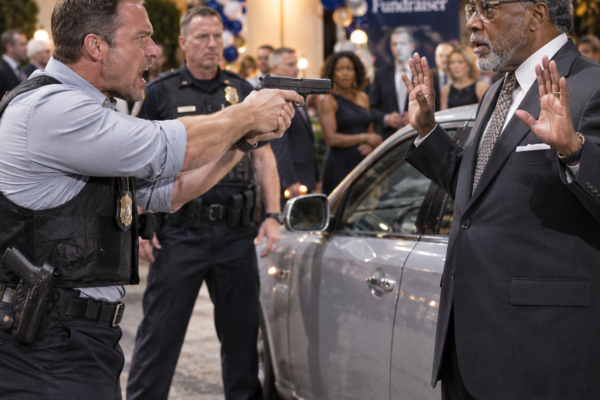
A Savannah Officer Shot Me While I Was in My Army Uniform Helping a Grandmother Move Her Stalled Car. My Sixteen-Year-Old Daughter Was Waiting for Me at Her Awards Ceremony. Police Said I Reached for a Weapon, and the Sergeant Told the Whole City I Was Dangerous. But One Young Officer Had Seen My Empty Hands—and His Silence Was About to Cost Him.K
Part 2:
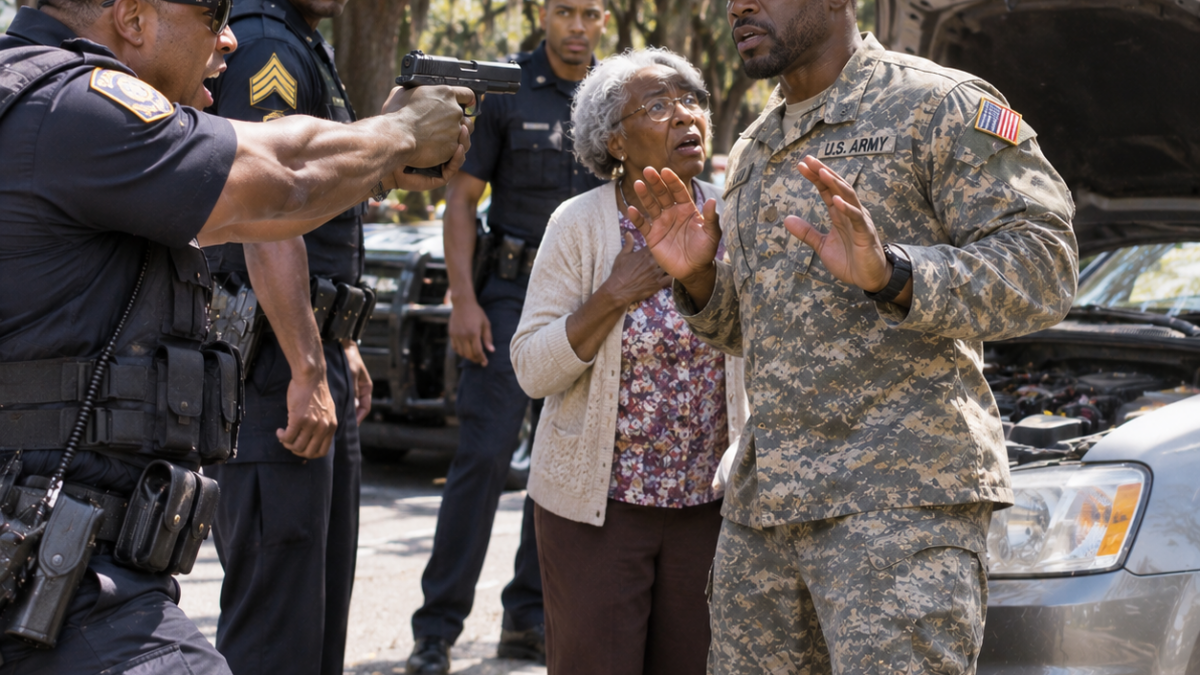
“He was helping me! That man was helping me!”
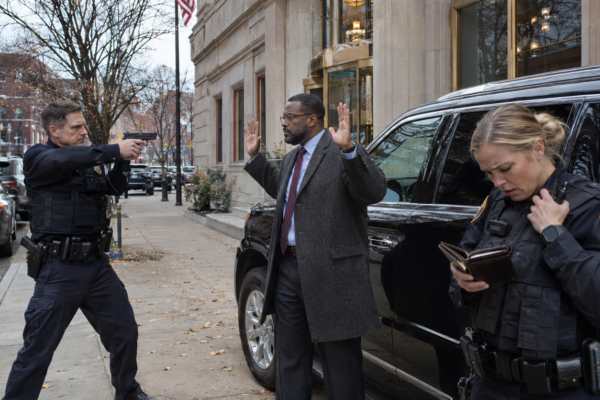
The elderly woman’s screams cut through the traffic on Magnolia Avenue as a police officer pointed his pistol at my chest.
I was wearing my Army combat uniform. My hands were raised. My own SUV was parked behind the patrol car, and the silver sedan beside me belonged to a sixty-seven-year-old woman whose engine had died in the middle of the road.
None of that seemed to matter.
“Turn around!” the officer shouted.
“I’m turning around, sir.”
“Keep your hands where I can see them!”
“They’re right here.”
His partner stood near the patrol car, watching with an expression I couldn’t read.
“Ethan,” the younger officer said, “the lady says he was helping her. We can check—”
“Stay out of it, Ramirez.”
I could see the older officer’s finger moving against the trigger.
Three miles away, my sixteen-year-old daughter was waiting for me to take my seat at her school awards ceremony.
I’d promised her I wouldn’t miss this one.
I had already broken too many promises.
My name is Marcus Bennett. I was thirty-five years old, a staff sergeant in the United States Army, and a father who had spent fifteen years learning how to remain calm when things went wrong.
I’d served overseas, trained young soldiers in emergency medicine, and spent countless hours teaching people how to keep someone alive during the worst minutes of their lives.
That Thursday afternoon, I was supposed to be doing something much simpler.
I was supposed to be watching my daughter receive an award for the documentary she’d spent six months making.
Nia had called me that morning.
“Dad, you’re still coming, right?”
“I’ll be there.”
“You said that before.”
I hadn’t forgotten.
Two years earlier, I’d missed her debate championship because of an unexpected training assignment. Six months before that, I’d missed the first screening of her student film.
Each time, she’d told me she understood.
Each time, I’d seen how disappointed she was.
“This time,” I promised, “I’ll be sitting in the front row.”
She laughed.
“You’ll embarrass me.”
“That’s part of the job.”
I’d planned to stop at her favorite bakery for a lemon cake on the way.
Instead, at 4:37 p.m., I came around a bend on Magnolia Avenue and saw a silver sedan stopped halfway into the right lane.
Cars were swerving around it.
An older woman stood beside the driver’s door, trying to wave approaching traffic away.
I pulled my black SUV onto the shoulder and switched on the hazard lights.
“Ma’am, are you all right?”
“My car just quit,” she said. “It won’t start.”
“Let’s get you someplace safer.”
She introduced herself as Evelyn Parker, a retired nurse who’d lived in Savannah most of her life.
Together, we managed to move the sedan closer to the shoulder. I was checking whether it was safely out of traffic when a patrol cruiser stopped behind my SUV.
Two officers got out.
The older one, whose badge identified him as Ethan Keller, walked directly toward me with his hand near his holster.
“Step away from the vehicle.”
I immediately stepped back.
“Officer, I’m helping this lady. Her car broke down.”
“Who owns the sedan?”
“She does.”
Evelyn nodded.
“Yes, Officer. It’s my car.”
Keller barely looked at her.
“Where’s your vehicle?”
“The black SUV behind your cruiser.”
“Identification.”
“Yes, sir. My military ID is in my wallet. May I reach for it?”
“Don’t move.”
I froze.
His younger partner, Officer Leo Ramirez, looked toward Evelyn.
“Ma’am, did you ask this gentleman for assistance?”
“Yes. He’s been wonderful. I don’t understand what the problem is.”
Keller’s expression hardened.
“Sir, turn around.”
I raised my hands higher.
“I’m complying.”
My phone began vibrating inside my uniform pocket.
Nia.
I knew it was her because I’d assigned her number a particular vibration pattern years earlier.
“Officer, my daughter’s calling,” I said. “I’m not going to touch the phone.”
“Then keep still.”
“I am.”
The phone vibrated again.
I took a slow breath.
A truck passed behind us, rattling the loose plastic trim on Evelyn’s sedan. I turned my head slightly toward the sound.
Keller drew his pistol.
Evelyn screamed.
“Officer! He hasn’t done anything!”
I stopped moving.
Both my hands were still raised.
Ramirez stepped forward.
“Ethan, hold on. His hands are empty.”
“Turn around!” Keller shouted again.
“I’m trying to do exactly what you’re asking.”
“Now!”
I began turning slowly.
I could feel the sun against the back of my neck.
I remember thinking that if I survived the next few seconds, I would have to explain to Nia why I’d been late again.
Then Ramirez shouted something.
I heard a sharp crack.
And before I understood that Keller had fired, my right arm stopped working.
The impact spun me sideways.
My shoulder struck the door of Evelyn’s sedan, and I slid onto the pavement. A burning pain spread from my upper arm across my ribs.
I tried to catch myself with my right hand. Nothing happened.
Blood was already soaking through my sleeve.
“Don’t move!” Keller shouted.
I stared up at him.
His pistol was still aimed at me.
“I’m not moving.”
“Keep your hands where I can see them.”
I looked at my right arm, lying useless beside me.
“My arm won’t move.”
Keller took another step forward.
“You reached for your waistband.”
“No, I didn’t.”
“You made a sudden move.”
I knew enough about police reports and military incident statements to recognize what was happening. The officer wasn’t asking whether I needed help. He was establishing his explanation while witnesses could hear it.
I forced myself to concentrate on breathing.
I’d trained soldiers to manage severe bleeding. Now I needed that training myself.
Using my left hand, I pressed against the wound in my right upper arm.
The pain nearly made me black out.
“I’m bleeding,” I said.
Keller didn’t lower his weapon.
Ramirez moved between us.
“Ethan, put it away. He’s injured.”
“Stay back.”
“He needs an ambulance.”
“Then call one.”
“I already did.”
Ramirez knelt near me.
“Sergeant, can you hear me?”
“Yes.”
“I’m Leo. I’m going to help you.”
I could see his hands shaking as he opened a medical pouch.
He pressed a dressing against my arm and helped maintain pressure while I tried to stay conscious.
Evelyn stood several feet away, crying.
“He was helping me,” she kept saying. “I watched the whole thing.”
I wanted to tell her it wasn’t her fault.
But speaking had become difficult.
Across the street, a young man wearing a pizza-delivery uniform stood beside his car, recording with his phone.
Keller noticed him.
“Stop recording and move along.”
The young man didn’t move.
“I’m on a public sidewalk,” he said.
Keller started toward him.
Ramirez looked up sharply.
“Ethan! We need to secure the scene and help this man.”
For the first time, Keller seemed to understand that the situation had grown beyond his control.
Sirens approached from the east.
I closed my eyes.
The last sound I remember before the paramedics arrived was my phone vibrating again.
Nia was still calling.
I woke up beneath fluorescent lights.
My mouth was dry, and my right arm felt as though someone had driven a hot piece of metal through it.
A monitor beeped beside the bed.
I tried to move.
“Marcus?”
My wife was sitting next to me.
Danielle held my left hand with both of hers.
“Don’t try to sit up.”
“Where am I?”
“Memorial Health.”
I looked at my shoulder.
A thick dressing covered my upper arm, and a sling held it close to my body.
“What happened to my ribs?”
“The bullet passed through your arm and grazed your side. They operated to clean the wound and repair damaged tissue.”
I swallowed.
“Am I okay?”
Her face tightened.
“The surgeon says you’re stable. There was significant bleeding, but they didn’t find damage to the major artery. You’re going to need physical therapy.”
I stared at the ceiling.
Then I remembered.
“Nia.”
Danielle looked toward the doorway.
Our daughter stood there wearing the dark green dress she’d chosen for the awards ceremony.
She held a small gold-colored plaque against her chest.
Her eyes were red.
“Hey, baby girl.”
She crossed the room.
I tried to lift my right arm.
Pain shot through my shoulder.
“Don’t,” she whispered.
She leaned over carefully and hugged my left side.
“I’m sorry,” I said.
“Dad, don’t.”
“I promised I’d be there.”
She pulled back and stared at me.
“You got shot.”
“I know.”
“Then stop apologizing for missing my stupid ceremony.”
“It wasn’t stupid.”
Her mouth trembled.
For a moment, she looked six years old again.
Then she asked, “Why did the police shoot you?”
I’d spent years explaining frightening things to young soldiers. I’d taught them how to control panic, how to make decisions when somebody was injured, and how to keep working when fear made their hands shake.
But I couldn’t find an answer for my own daughter.
“I don’t know,” I finally said.
She looked at my bandaged arm.
“Were you scared?”
“Yes.”
Her face crumpled.
“Were you scared you were going to die?”
I looked at Danielle.
She was crying silently.
Then I turned back to Nia.
“Yes.”
Nia put her arms around me again.
This time, I didn’t apologize.
I just held her with the arm that still worked.
That evening, a television in my hospital room carried a press conference from the Savannah Police Department.
A gray-haired sergeant named Harold Pike stood behind a podium.
He spoke in a measured voice.
“Officers were responding to information concerning a potentially stolen vehicle. During the encounter, an individual failed to comply with repeated commands and made a movement consistent with reaching for a weapon.”
Danielle sat forward.
“What?”
Pike continued.
“Officer Keller discharged his firearm in response to a perceived threat. The matter remains under investigation.”
A reporter asked about body-camera footage.
Pike glanced at his notes.
“Officer Keller’s camera appears to have experienced a technical problem. We are reviewing available recordings.”
I looked at Danielle.
“He’s lying.”
She reached for the remote.
“Marcus, don’t watch this.”
“Leave it on.”
A photograph of me in my Army uniform appeared beside Pike’s face.
Beneath it, a headline read: Officer-Involved Shooting During Suspected Vehicle Investigation.
My stomach tightened.
I had stopped to help an elderly woman.
I had identified myself.
I had raised my hands.
And now the city was being told I’d acted like a threat.
Danielle turned the television off.
“We need a lawyer.”
I nodded.
“We do.”
She looked at me.
“Not because you did anything wrong. Because they’re already trying to tell everybody what happened before you’ve even been able to speak.”
I looked toward the door.
Nia was in the hallway, talking quietly to her grandmother.
I hoped she hadn’t heard the press conference.
Then Danielle said something I would remember for the rest of the case.
“Marcus, I know you respect the uniform you wear. But respect doesn’t mean you have to protect another man’s uniform when he uses it to hurt you.”
I closed my eyes.
For the first time since the shooting, I began to feel something stronger than pain.
Anger.
Not the kind that makes you shout or break things.
The kind that tells you somebody is trying to take away your name, and you cannot afford to let them.
By the following morning, footage of the shooting was spreading across social media.
The young pizza driver was named Tyler Brooks. He was nineteen, worked evenings delivering food, and had stopped at the intersection when he saw Keller holding a gun on me.
His video began after the confrontation had already started.
It showed me turning with my hands raised.
It showed Ramirez stepping forward.
Then it showed the gunshot.
Forty seconds.
That was all the public had.
Some people watched it and demanded Keller’s arrest.
Others insisted there must have been something before the recording that justified his actions.
One commenter wrote that military training made me dangerous even without a weapon.
Another suggested I’d been trying to steal Evelyn’s car.
I stared at that accusation on Danielle’s phone.
Evelyn had stood there telling the officers I was helping her.
She was the owner of the car.
How much clearer could the situation have been?
Danielle took the phone away.
“You shouldn’t be reading this.”
“People believe it.”
“Some people do. Plenty of others are asking questions.”
I looked toward the window.
“I’m worried about what Nia’s going to see.”
Danielle sat beside me.
“Then we’ll talk to her. We won’t pretend this isn’t happening.”
Later that afternoon, a woman in a dark blue suit entered my hospital room.
She introduced herself as Captain Olivia Chen, an Army legal officer assigned to assist with coordination between my command, medical team, and outside investigators.
“I need to be clear about my role,” she said. “I can help you understand military administrative issues and connect you with appropriate resources. For a civil claim or potential lawsuit against the police, you’ll need independent counsel.”
I appreciated that she didn’t arrive pretending she could solve everything.
Danielle had already contacted a Savannah attorney, Angela Mercer, who handled civil rights and serious injury cases.
Angela was scheduled to visit the following morning.
Captain Chen sat down.
“Have investigators spoken with you?”
“Briefly. A state investigator came earlier.”
“The Georgia Bureau of Investigation has been asked to conduct the independent shooting investigation. Your command intends to cooperate.”
I nodded.
“Good.”
She studied me.
“Is there anything you need right now?”
I almost told her I needed nothing.
That was the answer I’d given for most of my adult life.
Instead, I looked at my useless right arm.
“I need to know whether I’ll be able to do my job again.”
She didn’t offer an easy promise.
“Your medical team will assess that over time. You don’t have to make career decisions from a hospital bed.”
I stared at the sling.
“I’m used to being the person who helps somebody else.”
“I understand.”
“Now I can’t even reach the water on my bedside table.”
She moved the pitcher closer.
“Then let somebody help you today.”
I looked away.
That was harder than I wanted to admit.
Evelyn Parker visited two days later.
She brought a homemade lemon pound cake and a handwritten card.
When she entered, she stopped beside the bed and began crying.
“Mr. Bennett, I am so sorry.”
“Please don’t apologize, ma’am.”
“If my car hadn’t broken down—”
“Your car didn’t pull the trigger.”
She pressed her lips together.
“I’ve been thinking about that all weekend.”
I invited her to sit.
She told me she’d worked as a nurse for thirty-four years, much of it in emergency and surgical recovery.
“I’ve seen a lot of frightened people,” she said. “I’ve seen people make terrible decisions because they panicked.”
She looked directly at me.
“But you didn’t panic. You were so calm that I thought surely the officer would listen.”
I swallowed.
“He didn’t.”
“No.”
She opened her purse and removed a folded statement.
“I wrote down everything I remember. The times, where we were standing, what each person said. I gave a copy to the state investigators.”
“Thank you.”
“I also told them I’d testify if they needed me.”
I looked at her.
“You don’t owe me that.”
“Yes,” she said firmly, “I do.”
I shook my head.
“You don’t owe me anything for helping with your car.”
She leaned forward.
“Then let me put it differently. I owe the truth to the people who weren’t standing on that road.”
I couldn’t argue with that.
Before leaving, she took my left hand.
“Your daughter was on the news yesterday.”
I frowned.
“Nia?”
“She was with your wife. A reporter asked whether your family had a statement. Your daughter said she wanted people to remember her father had stopped to help someone.”
I looked toward the doorway.
Nia had been quiet all morning.
Now I understood why.
That evening, I asked her about it.
She sat beside my bed, turning the award plaque over in her hands.
“Mom didn’t want me talking to reporters,” she admitted.
“She was probably right.”
“I didn’t tell them anything private.”
“I know.”
She looked at me.
“They kept calling it a confrontation. Like you and that officer were having some kind of argument.”
I nodded.
“I heard.”
“You were just helping a lady.”
“Yes.”
She rubbed her thumb across the edge of the plaque.
“Dad, what happened before the video started?”
I told her everything I remembered.
I didn’t soften the details.
But I didn’t pretend I knew what Keller had been thinking.
When I finished, she looked at me.
“That’s the part nobody can see.”
“What?”
“The thirty seconds before the shooting.”
I nodded.
“That’s what the investigation needs to establish.”
She stared at her award.
“Maybe that’s what people always forget to ask about. What happened before somebody decided you were dangerous?”
I watched her carefully.
She had her mother’s determination and my habit of refusing to leave a question alone.
“Nia, you don’t have to make this your responsibility.”
“I know.”
“You can finish school, make movies, spend time with your friends. You don’t owe anybody a project about what happened to me.”
She looked up.
“I don’t want to make a movie about you getting shot.”
“Then what do you want?”
“I want to understand how people decide who’s suspicious before they’ve even spoken to them.”
I had no answer.
She stood.
“I know you don’t want me getting involved.”
“I’m worried about you.”
“I know, Dad.”
She kissed my forehead.
“But you always taught me to ask questions before accepting somebody else’s answer.”
Then she left me alone with that.
I didn’t meet Officer Leo Ramirez until several weeks after the shooting.
By then, I knew his name from the reports and Tyler’s video, but I hadn’t understood what he’d been risking.
His role became clearer when Angela Mercer received records from the state investigation that could legally be shared with us.
The independent investigation had begun immediately after I was shot.
GBI investigators had collected witness statements, scene photographs, dispatch logs, and the patrol officers’ equipment. They had also requested preservation of the body-camera recordings through the department’s contracted digital evidence system.
Keller’s camera had apparently stopped recording shortly before the shooting.
But Ramirez’s camera had not.
The first copy made available through the department’s internal portal had been labeled unavailable because of a failed processing transfer.
That technical warning became the explanation Pike’s office repeated publicly.
It wasn’t the end of the matter.
The camera vendor’s system retained an original recording and an audit history showing when footage had uploaded, who had attempted to access it, and which accounts had changed its classification.
According to the records investigators later obtained, Ramirez’s footage had reached the secure system on the evening of the shooting.
Pike’s credentials appeared in the history of an administrative restriction placed on the file.
The footage hadn’t vanished.
It had been kept from ordinary review while the public was told the recording was unavailable.
Ramirez knew his camera had been running.
After the shooting, he’d reported that fact to Pike.
He’d also refused to sign a statement claiming he’d seen me reach for my waistband.
I learned the details months later, but I still remember how Angela explained them.
“Marcus, Officer Ramirez documented his objections before he knew whether anybody would recover the recording.”
I looked at her.
“He told them I was unarmed?”
“He said your hands were visible and he saw no weapon.”
“Why didn’t they listen?”
Angela sighed.
“That’s one of the questions investigators are asking.”
I looked at Danielle.
She was sitting beside the hospital window, holding a folder of medical bills and appointment summaries.
For days, she’d been trying to keep our household running while protecting Nia from the worst of the public attention.
Now she looked at me.
“One officer told the truth,” she said. “Someone needs to make sure they don’t bury him with it.”
I thought about Ramirez kneeling beside me with blood on his hands.
He had been frightened.
I remembered that clearly.
But he’d helped me anyway.
And afterward, when the easiest thing would have been to agree with his senior officer, he’d refused.
I wasn’t ready to call him a hero.
I didn’t know him well enough.
But I knew he hadn’t fired the gun.
And I knew he’d made a choice that could cost him the career he’d only recently begun.
Eleven days after the shooting, I stood in a physical therapy room holding a soft rubber ball.
“Try squeezing it,” the therapist said.
I tried.
My fingers barely moved.
I looked down at my hand.
“Again?”
“Only as much as you can comfortably manage.”
I concentrated.
Pain spread from my upper arm into my shoulder.
The ball shifted slightly.
Then I dropped it.
I stared at the floor.
The therapist picked it up.
“That’s enough for today.”
“No.”
“Sergeant Bennett—”
“I can do it.”
She crouched beside my chair.
“Marcus, healing isn’t a test you pass by ignoring pain. You have damaged muscle, swelling, and nerves that need time to recover.”
I looked away.
I’d spent fifteen years being able to depend on my body.
I could carry medical equipment, lift wounded soldiers, and work for hours with little sleep.
Now I couldn’t button my shirt without help.
That morning, Danielle had tied my shoes.
I’d thanked her, but the helplessness had stayed with me.
At home, I became impatient.
I snapped when Nia tried to carry a laundry basket.
I refused help opening a jar and spent ten minutes struggling with it before Danielle quietly took it from me.
One evening, she found me sitting alone in the garage.
My old Army medical bag lay open beside me.
I was trying to fasten a small buckle using only my injured hand.
I couldn’t.
Danielle leaned against the doorway.
“How long have you been out here?”
“Not long.”
“Marcus.”
I dropped the buckle.
“Twenty minutes.”
She sat beside me.
“Why?”
“Because I need to know I can still do the things I used to do.”
She looked at the bag.
“And if you can’t do them today?”
I stared at the floor.
“Then I don’t know what I’m supposed to be.”
Danielle was quiet.
Then she took my left hand.
“You’re still my husband. You’re still Nia’s father. You’re still the man who stopped to help somebody on the road.”
I swallowed.
“That’s not enough to do my job.”
“No. But you don’t have to decide the rest of your career tonight.”
I leaned against her.
For the first time since the hospital, I let myself cry.
By the sixth week, the investigation had expanded beyond Keller’s decision to shoot me.
GBI Special Agent Rebecca Sloan met with Angela and me at her office.
She was careful about what she could disclose.
“Mr. Bennett, we’re examining the basis for the officers’ presence on Magnolia Avenue,” she said.
I frowned.
“Wasn’t there a stolen vehicle report?”
She paused.
“That’s what the department initially stated.”
“Are you saying there wasn’t?”
“We’re verifying the timeline and the origin of that information.”
I leaned forward.
“Keller didn’t ask the woman whether I’d threatened her. He didn’t check my license plate. He didn’t even let me get my military ID.”
Sloan nodded.
“That’s consistent with several witness statements.”
“Then what was he looking for?”
She closed her folder.
“I can’t answer that yet.”
I left frustrated.
But a few days later, Evelyn called.
“Marcus, there’s something you should know.”
“What happened?”
“A man from the newspaper asked whether I’d heard about other people having trouble with Officer Keller.”
I sat down.
“Other people?”
She hesitated.
“A veteran named Calvin Brooks says Keller pulled a gun on him during a traffic stop last year.”
I closed my eyes.
“Did Calvin file a complaint?”
“He says he did.”
“What happened?”
“According to him, nothing.”
After our call, I told Angela.
She cautioned me not to contact potential witnesses directly while investigators were collecting statements.
But Nia was already asking questions of her own.
With the guidance of her media teacher, Hannah Cole, she had begun working on a student documentary called Thirty Seconds.
Her project wasn’t about reconstructing the shooting.
She wanted to interview people who had been judged before they could explain themselves.
She spoke to a delivery driver who’d been repeatedly questioned about why he was parked outside an expensive apartment building.
She interviewed a retired teacher who described being ignored when she tried to correct a police report.
And she eventually met Calvin Brooks, the Army veteran Evelyn had mentioned.
Calvin had lost part of his left leg during military service.
He told Nia that Keller had stopped his pickup because it displayed a temporary registration.
“He kept asking who I stole the truck from,” Calvin said on camera. “I showed him my paperwork. He wouldn’t even look at it until another officer arrived.”
Nia asked, “Did you feel threatened?”
Calvin looked directly into the camera.
“When somebody with a gun has already decided you’re lying, it doesn’t matter how calmly you explain yourself. You start worrying about what movement he’ll misunderstand.”
I watched the interview from our living room.
My stomach tightened.
He was describing the exact fear I’d felt.
Not fear of being questioned.
Fear of being judged before the questioning began.
Danielle sat beside me.
“Are you okay?”
I nodded.
But I wasn’t.
I wondered how many people had stood in front of Keller with empty hands and simply been fortunate that he hadn’t fired.
The investigation uncovered its most important lead through the officers’ route that afternoon.
Keller’s patrol car had entered Magnolia Avenue from outside his assigned area.
Investigators found no properly documented dispatch instruction explaining the deviation.
More troubling, the stolen-vehicle alert cited in Pike’s preliminary report had been entered into the system at 4:48 p.m.
Eleven minutes after Keller shot me.
The original dispatch recording from earlier that afternoon contained only a vague, unrelated vehicle complaint several blocks away.
It did not direct Keller to stop my SUV or question me.
That discrepancy led investigators to examine communications among Keller, Pike, and several officers assigned to property control.
The information came to my family slowly, through updates from Angela and the public court filings that followed.
A firearm seized during a narcotics arrest had disappeared from the police evidence inventory.
The electronic record showed conflicting transfers and corrections.
One entry had been approved using Pike’s account.
A second entry had been changed forty-eight hours later.
Neither had the supporting documentation required for the transfer of a seized weapon.
Investigators found other missing-property records.
Cash.
Electronics.
Ammunition.
Several guns.
At first, it looked like poor inventory management.
Then an officer from the evidence unit admitted she’d been instructed to change property codes without receiving the underlying paperwork.
Another officer disclosed that Keller sometimes conducted unofficial vehicle stops at Pike’s request.
They called them ghost stops.
No dispatch record.
No ordinary patrol explanation.
Sometimes no report at all.
The Georgia Bureau of Investigation brought the information to federal authorities, who began a separate public-corruption investigation.
According to the later filings, Pike had been moving seized property out of police custody through a civilian intermediary.
A missing handgun had become the focus of an internal audit.
Pike believed that weapon was being transported through Savannah in a dark SUV.
He’d told Keller to locate the vehicle before anyone outside their circle noticed the missing property.
Keller went looking.
He saw my black SUV parked near a disabled sedan.
Then he saw me.
A Black man in Army camouflage beside a vehicle that didn’t belong to him.
He didn’t verify the plate.
He didn’t listen to Evelyn.
He saw the combination he expected to see and treated everything I said as an excuse.
The federal investigation eventually established that Keller had already been involved in the unofficial stops.
That meant he wasn’t simply an officer who’d misunderstood a dispatch call.
He was participating in an unauthorized search for a vehicle connected to stolen police evidence.
And when he shot the wrong man, the people involved tried to make the paperwork fit a different story.
I learned that final detail from Angela months later.
She sat across from me in her office and explained what investigators had recovered.
“The body-camera audio contains part of a phone conversation that occurred before the stop,” she said.
“Between Keller and Pike?”
“Yes. Investigators have matched the call to other records. Pike gave him information about a dark SUV.”
I looked at the photograph of my vehicle lying on her desk.
It was an ordinary black SUV.
Nothing unusual.
The kind hundreds of families drove.
I had spent years saving money to buy it.
Now its color had become part of the reason an officer decided I was dangerous.
Angela spoke gently.
“Marcus, I know this is difficult.”
I shook my head.
“Do they have evidence that race influenced how Keller treated me?”
She considered her answer.
“They’re examining his prior stops, statements, and the differences between how he questioned you and how he treated other people. The evidence of the illegal operation explains why he was there. It doesn’t excuse his assumptions or his use of force.”
I looked at her.
“I don’t want anybody pretending this was only a paperwork problem.”
“Neither do the investigators.”
I leaned back.
For weeks, I’d tried to find a way to make that afternoon make sense.
Now I understood something worse than a simple mistake.
Keller had been looking for trouble he couldn’t admit he was looking for.
When he encountered me, he decided I must be part of it.
And after the shooting, men with more authority had tried to make his assumption look like fact.
The missing handgun was recovered from a civilian gun broker outside Savannah.
The search also uncovered messages connecting Pike’s intermediary to several unauthorized property transfers.
One message, sent before my shooting, identified Keller as the officer who would handle the vehicle stop.
The case was no longer limited to whether Keller had used excessive force.
It involved falsified records, missing evidence, and officers who had used their badges to carry out business they could never lawfully explain.
When federal prosecutors announced charges against Keller and Pike, Danielle and I watched the news from our kitchen table.
Keller faced a federal civil rights charge alleging willful deprivation of my rights under color of law, along with charges relating to the alleged obstruction and false records.
Pike faced separate corruption and obstruction charges.
Both men were entitled to defend themselves in court.
But the public finally knew that investigators had found much more than a disagreement about a sudden movement.
I didn’t celebrate.
Nia seemed surprised.
“Aren’t you happy?” she asked.
“I’m relieved.”
“What’s the difference?”
I looked at my right hand.
After months of therapy, I could hold a coffee cup again. I could drive, dress myself, and complete most daily tasks.
But lifting my arm overhead still hurt, and certain movements sent a sharp pulling sensation through my shoulder.
“I’m glad they’re being held accountable,” I told her. “But none of this gives us back that afternoon.”
She looked down.
“I know.”
I touched her shoulder with my left hand.
“That’s why we have to make sure the rest of our lives don’t belong to what happened on that road.”
She nodded.
But I could tell she was still trying to understand what that meant.
I was, too.
I met Leo Ramirez in person several months before the trial.
Our attorneys had helped arrange the conversation after investigators completed the interviews that required us to remain separate.
He arrived at a quiet conference room wearing a plain blue shirt.
Without his patrol uniform, he looked younger than I remembered.
He stopped when he saw my arm.
“Sergeant Bennett.”
“Marcus is fine.”
He shook my left hand.
For a moment, neither of us spoke.
Then Leo looked down.
“I’ve wanted to apologize since that day.”
I pulled out a chair.
“Sit down.”
He did.
“I should have stopped Keller sooner,” he said.
“You told him my hands were empty.”
“I should’ve stepped in front of him.”
“You couldn’t know he was going to fire.”
Leo shook his head.
“I knew he was escalating. I’ve seen him do it before.”
I watched him carefully.
“Then why didn’t you report it?”
He looked at the table.
“Because every time somebody complained about Keller, the supervisor told us he got results. He was experienced. I was new.”
He swallowed.
“I kept thinking I’d figure out how to deal with it later.”
I understood that kind of regret.
I’d been replaying every second of Magnolia Avenue myself.
“If you could go back,” I asked, “what would you change?”
“I’d challenge him earlier. I’d call a supervisor before he pointed his weapon. I’d stop pretending another officer’s mistakes aren’t my responsibility.”
I nodded.
“Those are things worth learning.”
He looked surprised.
“You don’t hate me?”
“I was angry that nobody stopped him.”
“I know.”
“But you helped keep me alive. You refused to sign a false statement. You told investigators what you saw.”
Leo’s eyes filled.
“They’ve been making my life miserable.”
I waited.
He told me some officers had stopped speaking to him.
Someone had written RAT inside his locker.
He’d requested reassignment while the investigation continued.
His father, a retired patrolman, had urged him not to withdraw his statement.
“He told me a badge doesn’t make somebody honorable,” Leo said. “It just gives them more ways to hurt people if they aren’t.”
I thought about that.
Then I looked directly at him.
“You can’t change the shot Keller fired. But you can decide what kind of officer you’re going to be afterward.”
Leo wiped his face.
“That’s what I’m trying to do.”
I believed him.
Not because he was perfect.
Because he had already paid a price for telling the truth and was still willing to tell it.
The trial began fourteen months after the shooting.
By then, I had returned to limited Army duties and completed most of my formal rehabilitation.
My strength had improved, though my right arm still tired more easily than before.
I wore a dark suit to court.
Danielle sat behind me with Nia and Evelyn.
Keller sat at the defense table beside his attorney.
He looked directly at me once.
Then he looked away.
During my testimony, the prosecutor asked me to describe why I’d stopped on Magnolia Avenue.
“An elderly woman’s car was blocking traffic,” I said. “I thought she might be hit.”
“Did you know her?”
“No.”
“Were you trying to take her car?”
“No.”
“Did you possess a weapon during the encounter?”
“No.”
“Did you reach for your waistband?”
“No.”
“What were you doing when Officer Keller fired?”
“Turning slowly, as he’d ordered me to.”
The prosecutor paused.
“Did you believe your life was in danger?”
I took a breath.
“Yes.”
Keller’s attorney approached for cross-examination.
He asked about my military service.
My deployments.
My weapons training.
My experience handling dangerous situations.
Then he stopped in front of the jury.
“Staff Sergeant Bennett, you’ve been trained to respond quickly to threats, haven’t you?”
“Yes.”
“You’ve been trained to use deadly force when necessary?”
“Yes.”
“You’ve learned how to disarm armed opponents?”
“Yes.”
He glanced toward the jurors.
“So Officer Keller was facing a man with extensive combat training and the ability to seriously injure another person.”
I looked at him.
“He was facing a man whose hands were raised.”
The attorney paused.
“But you were capable of violence?”
“Like many people.”
“And you knew that turning suddenly could cause an officer to perceive a threat?”
“I didn’t turn suddenly. I followed his instructions.”
The attorney looked toward the judge, then back at me.
“You’re saying your military training made you completely calm?”
“No.”
“Then you were frightened?”
“Very.”
“So your movements may not have been as controlled as you remember?”
I considered the question.
“I can’t tell you how I looked from every angle. I can tell you I never reached for a weapon, and both my hands were empty.”
He returned to the defense table.
I looked toward Danielle.
She gave me a small nod.
I’d told the truth.
That was all I could do.
Evelyn testified the following morning.
She described her stalled car, my assistance, and Keller’s refusal to listen.
The defense asked whether her age and fear might have affected her memory.
Evelyn sat straighter.
“I was a nurse for thirty-four years,” she said. “I know fear can affect memory. That’s why I wrote down what happened that evening and gave investigators a statement before I saw the news.”
“Are you certain of every detail?”
“No,” she answered. “I couldn’t tell you what color the truck behind us was.”
She looked toward the jury.
“But I remember the soldier’s hands. They were raised when the officer shot him.”
I wanted to stand up and thank her.
Instead, I stayed in my seat.
Leo testified after Evelyn.
He described Keller’s commands, my compliance, and his attempts to de-escalate the encounter.
Then the prosecutor asked whether he’d been pressured to change his statement.
“Yes.”
“By whom?”
“Sergeant Harold Pike.”
“What did he want you to say?”
“That I saw Staff Sergeant Bennett reach toward his waistband.”
“Did you?”
“No.”
“Did you tell Sergeant Pike that?”
“Yes.”
“And what happened?”
“He told me I was too inexperienced to know what I’d seen.”
The prosecutor walked toward the evidence monitor.
“Officer Ramirez, did you wear an operational body camera that afternoon?”
“Yes.”
“Did you intentionally disable it?”
“No.”
“Did you report that it had been recording?”
“Yes.”
The prosecutor asked a digital evidence specialist to explain how the original footage had been recovered and authenticated through the recording provider’s secure system.
Then the video played.
For the first time, I watched the entire encounter from Ramirez’s perspective.
I saw myself standing beside Evelyn’s sedan.
I heard her telling the officers I was helping.
I heard Keller ordering me to turn around.
I saw my empty hands.
Then I heard Ramirez’s voice.
“Ethan, don’t shoot!”
A fraction of a second later, Keller fired.
Danielle gripped my left hand.
I stared at the monitor.
For months, I’d wondered whether my memory had betrayed me.
Whether perhaps I’d moved farther than I realized.
Whether the fear had changed the sequence of what I’d seen.
Now I watched it happen.
I hadn’t reached for anything.
I hadn’t threatened anyone.
I had simply been trying to survive the commands of a man who’d already decided I was dangerous.
The video ended.
I looked down at the scar beneath my sleeve.
The courtroom remained quiet until the judge instructed the next witness to proceed.
Later, the prosecution presented the false dispatch timeline, the administrative records restricting access to the video, and evidence connecting Keller to Pike’s unauthorized vehicle searches.
The defense challenged the interpretation of those records and argued that Keller had perceived a threat in a rapidly developing encounter.
The jury heard both sides.
Then it deliberated.
On the third day, we returned to court.
I sat beside Danielle.
Nia held my left hand.
The jury foreperson stood.
On the federal civil rights count, the verdict was guilty.
On the count concerning falsified records intended to obstruct the investigation, guilty.
The foreperson continued through the remaining counts.
I barely heard the final words.
Danielle covered her face.
Nia leaned against my shoulder.
I stared at the jury box.
For fourteen months, people had argued about whether I had deserved to be shot.
Now twelve people had examined the evidence and rejected Keller’s version of what happened.
After court, a reporter approached me outside the courthouse.
“Staff Sergeant Bennett, do you feel vindicated?”
I looked toward Danielle and Nia.
“I feel grateful the jury considered the evidence.”
“Do you think justice has been served?”
“The verdict matters,” I said. “But the work isn’t finished.”
“What do you mean?”
I took a breath.
“An innocent man shouldn’t have to survive a gunshot before anyone checks whether an officer’s explanation is true.”
Then I took my daughter’s hand and walked away.
The months after the verdict were quieter than the months before it.
Keller awaited sentencing. Pike’s separate corruption prosecution continued, supported by the evidence records, recovered firearms, and testimony from officers who had cooperated.
The Savannah Police Department announced changes to its evidence-handling and body-camera procedures. Recordings would have additional independent preservation safeguards, and unexplained changes to evidence classifications would be subject to review.
Those changes didn’t guarantee another officer would never make a terrible decision.
But they made it harder for supervisors to conceal what happened afterward.
Leo eventually transferred into a training assignment. He sent me a letter explaining that he wanted new officers to understand that intervening when a colleague crossed a line was part of their duty, not a betrayal of it.
I kept the letter.
My own life was changing, too.
The Army medical board determined that I could continue serving with certain limitations while my recovery progressed.
I moved into a training role that combined emergency medicine with decision-making under stress.
I taught soldiers how to recognize panic, communicate clearly, and avoid letting fear turn uncertainty into an unnecessary use of force.
Sometimes, during training, I caught younger soldiers looking at the scar on my arm.
I didn’t hide it.
But I didn’t make it the center of every lesson, either.
What mattered was whether they understood the responsibility that came with authority.
At home, Danielle and I worked on rebuilding something less visible.
Trust in ordinary days.
I had trouble sleeping for months.
Sometimes a sudden noise would wake me.
Sometimes a police cruiser behind our car would make my stomach tighten.
Danielle never told me to forget the shooting.
She encouraged me to continue counseling, attend therapy, and talk honestly when I was having a difficult day.
Slowly, those days became less frequent.
Then Nia finished her new documentary.
She called it Hands Visible.
It wasn’t a movie about me.
She interviewed drivers, veterans, teachers, and residents about what happened when people in authority made assumptions before listening.
Evelyn appeared in it.
So did Calvin Brooks.
Nia used images of ordinary hands throughout the film.
Hands holding car keys.
Hands carrying groceries.
Hands repairing engines.
Hands helping someone across a street.
The final scene showed a father sitting at a kitchen table while his teenage daughter placed a small award plaque beside him.
Only our hands were visible.
I recognized the moment.
It was the night I came home from the hospital.
I hadn’t known she’d filmed it.
When the school selected her documentary for a statewide student film competition in Atlanta, she asked whether Danielle and I could attend the screening.
I looked at the date.
For once, nothing on my work calendar conflicted.
“I’ll be there,” I said.
Nia smiled.
“You’d better.”
On the evening of the competition, we sat together in the front row.
Nia wore a navy dress and kept twisting her fingers in her lap.
Danielle leaned toward her.
“Stop worrying. You’ve already done the hard part.”
Nia gave a nervous laugh.
“Easy for you to say.”
I put my left hand over hers.
“Whatever happens, we’re proud of you.”
She looked at me.
“You’re really okay being here?”
I knew what she meant.
Her film included painful memories.
People would recognize our family’s story.
But I wasn’t afraid of seeing the truth anymore.
“Yes,” I said. “I’m okay.”
When Hands Visible won the student documentary award, Nia looked genuinely stunned.
Danielle jumped to her feet.
I stood beside her, applauding.
My right arm still hurt when I raised it too high.
I raised it anyway.
Nia stepped onto the stage and accepted her award.
Then she looked toward the audience.
For a moment, she seemed to forget everyone else was there.
She was looking directly at me.
I smiled.
And she smiled back.
Afterward, she ran toward us with the award in her hands.
“Dad!”
I caught her carefully as she hugged me.
“You did it, baby girl.”
She laughed through her tears.
“You actually made it.”
I kissed the top of her head.
“I told you I’d be here.”
She leaned back and looked at me.
“I know.”
This time, there wasn’t any disappointment hiding behind the words.
Danielle slipped her arm around my waist, and we walked toward the parking lot together.
My phone vibrated.
A message from work.
For a second, I felt the familiar urge to check it immediately.
Then I silenced the phone and put it away.
Nia noticed.
“Everything okay?”
“Everything’s fine.”
“You sure?”
I smiled.
“I’m exactly where I need to be.”
We walked outside into the warm Georgia evening.
My daughter carried her award.
My wife held my hand.
And for the first time in a long time, I wasn’t thinking about the officer who had shot me or the things he’d nearly taken away.
I was thinking about the sixteen-year-old girl walking beside me, the woman who had stayed with me through every difficult day, and all the ordinary evenings we still had ahead of us.
I opened the car door for Danielle.
Nia climbed into the back seat, still talking excitedly about the competition.
Then I settled behind the wheel.
My arm moved a little stiffly as I fastened my seat belt, but I could manage it.
I started the engine.
“Where to?” Danielle asked.
I looked at Nia in the rearview mirror.
“How about we stop for lemon cake?”
Her face lit up.
“Seriously?”
“Seriously.”
She laughed.
“Dad, it’s almost ten.”
“Then we’d better find a bakery that’s still open.”
Danielle shook her head, smiling.
I pulled out of the parking lot with my family beside me.
The road ahead was clear.
And this time, I was taking my daughter home.