At Grandma’s Will Reading, My Uncle Got Her Manhattan House, My Cousin Smirked, and I Received Exactly One Dollar After Caring for Her for Three Years. Everyone Thought She Had Humiliated Me. Then Her Second Attorney Called at 7:38 the Next Morning and Said, “Pack for Three Days—and Bring That Dollar. Your Grandmother Left You Something Nobody in That Room Knows Exists.”.k
At Grandma’s Will Reading, My Uncle Got Her Manhattan House, My Cousin Smirked, and I Received Exactly One Dollar After Caring for Her for Three Years. Everyone Thought She Had Humiliated Me. Then Her Second Attorney Called at 7:38 the Next Morning and Said, “Pack for Three Days—and Bring That Dollar. Your Grandmother Left You Something Nobody in That Room Knows Exists.”
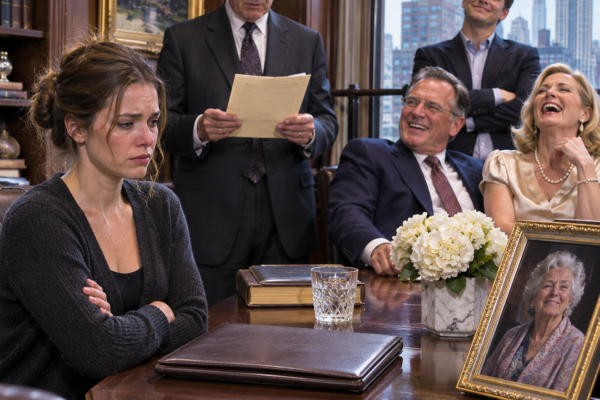
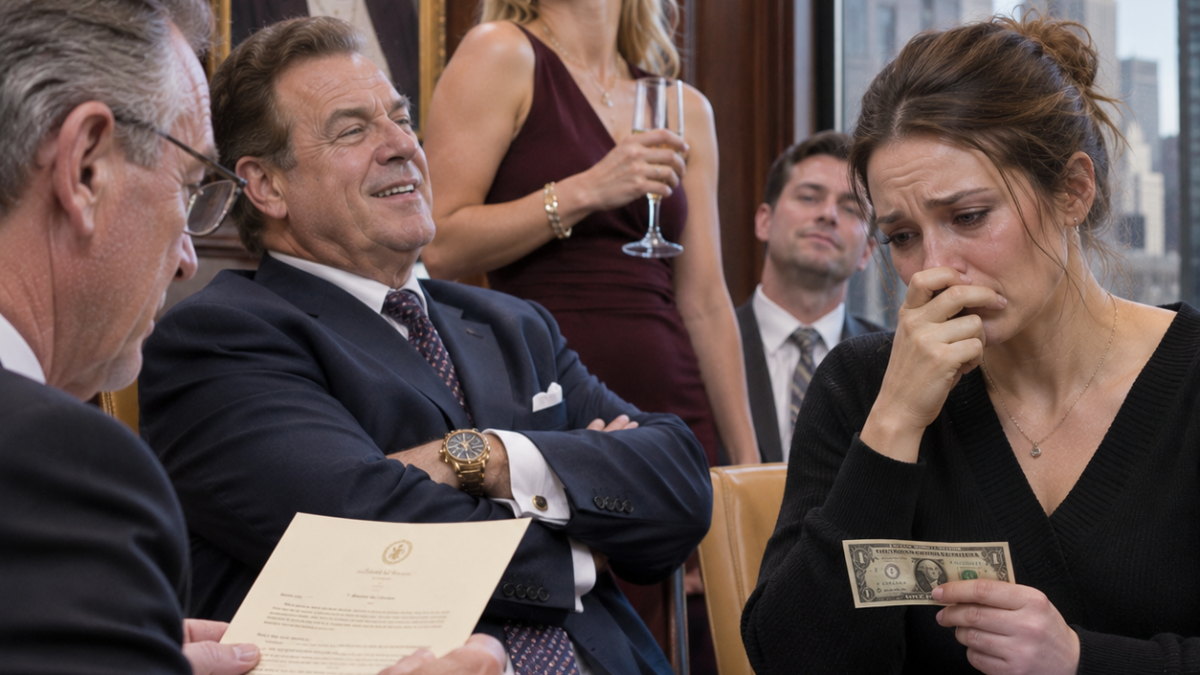
The lawyer slid the envelope across the table.
Inside was one dollar.
Not one thousand.
Not one percent.
One dollar.
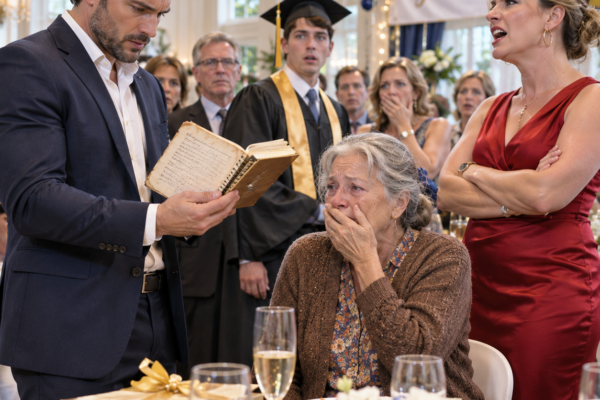
My uncle Gordon leaned back in his chair and smiled as if he had been waiting all morning for that moment.
“Let that sink in, kiddo.”
I stared at the bill.
Across the conference table, Gordon’s wife, Celeste, was already studying photographs of the six paintings Grandma had left her.
My cousin Wade gave a short laugh.
“Don’t spend it all in one place.”
Nobody stopped him.
Nobody even looked uncomfortable.
That hurt more than the money.
I had spent the last three years helping care for my grandmother, Josephine Harlan.
Jo to everyone who loved her.
I changed her sheets when she could no longer manage them.
Drove her to appointments.
Made tea at two in the morning when pain kept her awake.
Sat beside her bed during snowstorms.
Read the newspaper out loud when her hands shook too badly to hold it.
I never did any of that for an inheritance.
But one dollar?
That felt deliberate.
The family attorney continued reading.
“The residence on Seventy-Fourth Street, to my son, Gordon Harlan.”
Gordon nodded once.
“My investment accounts administered through this estate, to my son, Gordon.”
His smile widened.
“The six paintings listed in Schedule B, to my daughter-in-law, Celeste Harlan.”
Celeste touched Gordon’s wrist.
Then came me.
“To my granddaughter, Lucy Harlan, daughter of my late son, Daniel Harlan…”
The attorney paused.
“…one dollar.”
Wade laughed first.
By the time the will reading ended, my hands were shaking so badly I almost left the dollar on the table.
Then the lawyer read one final sentence.
“Any private arrangements I have made elsewhere will be handled by a separate fiduciary.”
Gordon sat forward.
“What arrangements?”
“That is all this document says.”
“Who is the fiduciary?”
“I don’t know.”
For the first time that morning, Gordon stopped smiling.
I went home to my tiny apartment in Queens and cried harder than I wanted to admit.
Not because I wanted Grandma’s Manhattan house.
Because I couldn’t understand why she had chosen to make a public point of giving me almost nothing.
Then I remembered something she had said three nights before she died.
We were alone.
Snow pressed against the windows.
Her voice was barely above a whisper.
“Lucy?”
“I’m here.”
“Someone is going to knock.”
“What?”
“A stranger. Maybe with a letter. Maybe with a key.”
I thought the medication was confusing her.
“Who?”
“Trust her.”
“Who am I trusting?”
She squeezed my fingers.
“You’ll know.”
Then:
“Promise me you’ll open the door.”
“I promise.”
At 7:38 the next morning, my phone rang.
“Lucy Harlan?”
“Yes.”
“My name is Miriam Banks. I was your grandmother’s other attorney.”
I sat up.
“My grandmother had another attorney?”
“For matters your family lawyer never handled.”
I looked at the dollar lying on my kitchen table.
Miriam continued.
“I’ll be outside your building at seven tomorrow morning.”
“For what?”
“Pack for three days.”
“Where are we going?”
“Upstate.”
“Miriam—”
“And bring the dollar.”
I stared at it.
“Why?”
Her answer was quiet.
“Because the dollar isn’t your inheritance, Lucy.”
“What is it?”
“A receipt.”
The next morning, a dark green Volvo waited at the curb.
Miriam was sixty-two, silver-haired, and dressed like someone who had stopped caring whether anyone approved of sensible shoes.
Before I even closed the car door, I asked:
“Why did Grandma do that to me in front of everybody?”
“To see what you would do.”
“What was I supposed to do?”
“Exactly what you did.”
“I cried.”
“That was allowed.”
“I almost walked out.”
“Also allowed.”
“What wasn’t?”
“Begging. Threatening. Cruelty. Filing an emergency challenge because you thought love entitled you to more money.”
I stared at her.
“That’s insane.”
“Your grandmother was complicated.”
“That’s one word for it.”
Miriam drove north.
Three hours later, city buildings had disappeared.
Snow-covered fields replaced them.
Then woods.
Then a narrow road beside a frozen creek.
A weathered wooden sign appeared.
SPARROW HILL
Beyond it stood twelve small houses scattered across a wide piece of land.
A chapel.
A barn.
A main house.
Smoke rising from chimneys.
An elderly woman in a red coat stood on a porch waving before our car had fully stopped.
Miriam parked.
The woman walked toward me.
“So you’re Lucy.”
“How do you know me?”
She studied my face.
“Your grandmother talked about you every month for thirty years.”
My chest tightened.
Behind her, an old man carried firewood.
Another woman played violin badly through an open window.
A nurse crossed between two cottages.
I turned to Miriam.
“What is this place?”
She handed me a thick folder.
“Two hundred eighty acres. Twelve houses. Ten residents. And a trust your grandmother created years ago.”
“For who?”
Miriam looked toward the cottages.
“For them.”
Then she gave me the number that changed the meaning of everything I had heard at the will reading.
“Your grandmother funded Sparrow Hill with approximately $3.6 million in investments. The trust names you as successor trustee.”
I stared at her.
“Me?”
“And contingent beneficiary if the trust ever legally terminates.”
“What does that mean?”
“It means if you preserve it, this place belongs to its purpose.”
“And if I don’t?”
“You serve one full year before you can sell the land or close the homes.”
I looked across the snow at ten people whose families had nowhere else to put them.
Miriam’s voice softened.
“Your grandmother didn’t leave you a fortune, Lucy.”
She placed the folder in my hands.
“She left you a decision.”
Part 2:
The lawyer slid the envelope across the table.
Inside was one dollar.
Not one thousand.
Not one percent.
One dollar.
My uncle Gordon leaned back in his chair and smiled as if he had been waiting all morning for that moment.
“Let that sink in, kiddo.”
I stared at the bill.
Across the conference table, Gordon’s wife, Celeste, was already studying photographs of the six paintings Grandma had left her.
My cousin Wade gave a short laugh.
“Don’t spend it all in one place.”
Nobody stopped him.
Nobody even looked uncomfortable.
That hurt more than the money.
I had spent the last three years helping care for my grandmother, Josephine Harlan.
Jo to everyone who loved her.
I changed her sheets when she could no longer manage them.
Drove her to appointments.
Made tea at two in the morning when pain kept her awake.
Sat beside her bed during snowstorms.
Read the newspaper out loud when her hands shook too badly to hold it.
I never did any of that for an inheritance.
But one dollar?
That felt deliberate.
The family attorney continued reading.
“The residence on Seventy-Fourth Street, to my son, Gordon Harlan.”
Gordon nodded once.
“My investment accounts administered through this estate, to my son, Gordon.”
His smile widened.
“The six paintings listed in Schedule B, to my daughter-in-law, Celeste Harlan.”
Celeste touched Gordon’s wrist.
Then came me.
“To my granddaughter, Lucy Harlan, daughter of my late son, Daniel Harlan…”
The attorney paused.
“…one dollar.”
Wade laughed first.
I wish I could tell you I handled it with perfect dignity.
I didn’t.
My face burned.
My throat closed.
I folded the dollar twice because my fingers needed something to do.
Three years.
That number kept repeating inside my head.
Three years of hospital chairs.
Three years carrying grocery bags upstairs.
Three years learning which blanket Grandma wanted when she was cold and which one irritated her skin.
Three years watching her become smaller inside a bedroom that had once seemed enormous when I was a child.
I had never asked her what I would inherit.
Not once.
But the humiliation of receiving one dollar in front of people who had barely visited her made every hour of caregiving feel mocked.
Gordon apparently saw it on my face.
“Lucy.”
I looked at him.
“Three years changing my mother’s sheets, and you really thought that bought you a house?”
Celeste murmured:
“Gordon.”
He ignored her.
“You’re young. You’ll recover.”
I said:
“I didn’t ask for her house.”
“Then there’s no problem.”
Wade leaned forward.
“Seriously, Luce. You spent two years at a real firm in Midtown. Act like you understand estates.”
That hurt too.
Wade and I had never been close.
He was Gordon’s son.
Thirty-one.
Smart enough to make every bad decision sound temporary.
He had worked as a junior financial analyst for two years, then bounced through three jobs.
My father, Daniel, had been Gordon’s younger brother.
Dad died when I was sixteen.
After that, Grandma became the center of what remained of my side of the family.
Gordon visited on holidays.
Celeste came when there were people to see her coming.
Wade appeared whenever Grandma invited everyone to dinner.
I was there on Tuesdays.
And Saturdays.
And whenever the nurse called.
The family lawyer kept reading.
There were smaller gifts.
Jewelry.
A charitable bequest.
Personal items.
Then one final sentence:
“Any private arrangements I have made elsewhere will be administered by a separate fiduciary under documents maintained independently from this estate.”
Gordon sat forward.
“What arrangements?”
The attorney shook his head.
“This will does not specify.”
“Who is the fiduciary?”
“I don’t know.”
“You were my mother’s lawyer.”
“For this estate, yes.”
“That answer makes no sense.”
“It is the only answer I have.”
For the first time that morning, Gordon’s confidence flickered.
I noticed.
Then hated myself for noticing.
I didn’t want a secret fortune.
I wanted Grandma back.
The reading ended.
Gordon and Celeste walked out discussing when the Manhattan house could be listed.
Wade passed me near the elevator.
He looked at the folded dollar in my hand.
“Frame it.”
“Go away, Wade.”
His smile faded.
For half a second, I thought he might apologize.
He didn’t.
I went home.
My apartment in Queens was small enough that I could stand in the kitchen and touch the living-room wall with one hand.
I sat on the floor instead.
Cried.
Got angry.
Felt ashamed for being angry.
Then cried again.
Eventually, I put the dollar on the kitchen table.
That was when I remembered the last strange conversation Grandma and I had.
Three nights before she died, snow covered Manhattan.
She was weak.
Morphine helped the pain but left her sleepy.
I sat beside her bed.
She looked toward the window.
“Is it snowing at Sparrow Hill?”
I thought she was confused.
“It’s snowing everywhere, Grandma.”
She smiled.
“Smart mouth.”
“Learned from you.”
Her eyes closed.
I thought she was asleep.
Then:
“Lucy?”
“I’m here.”
“Somebody is going to knock.”
“Who?”
“A stranger.”
“Should I call the police?”
Another smile.
“With a letter. Or a key.”
“What are you talking about?”
“Open the door.”
I took her hand.
“Okay.”
“Promise.”
“I promise.”
“Trust her.”
“Who?”
She didn’t answer.
I had forgotten the conversation until that dollar was sitting in front of me.
My phone rang at 7:38 the next morning.
Unknown number.
I almost ignored it.
Then remembered.
“Hello?”
“Lucy Harlan?”
“Yes.”
“My name is Miriam Banks. I represented your grandmother.”
“I met her lawyer yesterday.”
“You met one of them.”
I stood.
“What?”
“I handled matters Josephine kept separate from her probate estate.”
“Why?”
“Because she wanted them separate.”
“What matters?”
“I’m not discussing them over the telephone.”
Of course she wasn’t.
Lawyers love making ordinary sentences sound like sealed government intelligence.
“Where are you?”
“Outside your building.”
I went to the window.
A dark green Volvo sat near the curb.
“You said you weren’t discussing this by phone, but you’re already here?”
“I’m efficient.”
I almost laughed.
Almost.
“What do you want?”
“Pack for three days.”
“Where are we going?”
“Upstate.”
“How far?”
“Three hours.”
“Why?”
“Because your grandmother asked me to bring you.”
My eyes went to the dollar.
Miriam said:
“And bring what you received yesterday.”
“The dollar?”
“Yes.”
“Why?”
“Because it isn’t your inheritance.”
I went quiet.
“What is it?”
“A receipt.”
Thirty minutes later, I was in the passenger seat.
Miriam Banks was sixty-two.
Silver hair cut short.
Black wool coat.
No nonsense.
She drove like someone who believed speed limits were personal recommendations but stop signs were sacred.
I asked the question before we crossed the bridge.
“Why did Grandma humiliate me?”
Miriam glanced over.
“She didn’t.”
“I received one dollar while everybody laughed.”
“I know.”
“You were there?”
“Outside the room.”
“Why didn’t you come in?”
“Nobody invited me.”
“That didn’t stop you from knowing everything.”
“Josephine predicted most of it.”
“Predicted what?”
“Gordon’s reaction.”
“Wade’s?”
“Yes.”
“Mine?”
Miriam took a breath.
“She hoped.”
I looked out the window.
“That sounds manipulative.”
“It was.”
At least she didn’t pretend otherwise.
“Why?”
“Because your grandmother knew that if she told you privately you might inherit something valuable, you would walk differently around your family.”
“What does that mean?”
“Gordon notices weakness. He also notices secrets.”
“You’re saying Grandma staged that reading to test me?”
“Yes.”
“For what?”
“To see whether humiliation changed your character.”
I laughed bitterly.
“What was the correct answer?”
“There wasn’t one.”
“That is not how tests work.”
“For Josephine, it was.”
Miriam kept driving.
“She expected you might cry.”
“I did.”
“Fine.”
“I wanted to leave.”
“Fine.”
“I hated them.”
“Also fine.”
“What would have failed?”
“If you begged Gordon. Threatened Celeste. Challenged the will before understanding it. Treated Josephine’s care like an invoice you expected the estate to pay.”
I looked at her.
“That’s cruel.”
“Yes.”
“Did you tell her that?”
“Frequently.”
That made me like Miriam slightly.
Not much.
But slightly.
The city disappeared.
Then towns.
Then snow-covered fields.
We turned onto narrower roads.
Miriam asked:
“Do you remember Josephine going to doctors over the last three years?”
“Of course.”
“Three specific appointments?”
I thought.
“One with Dr. Roth. One in Brooklyn. Another near Columbia.”
“Those weren’t treatment visits.”
“What were they?”
“Capacity evaluations.”
I turned toward her.
“What?”
“Your grandmother anticipated Gordon might challenge whatever she did outside the probate estate.”
“Why would he?”
“Money.”
“That simple?”
“Usually.”
The doctors had tested cognition.
Date.
Season.
Memory.
Counting backward.
Financial understanding.
Legal comprehension.
Grandma had done crossword puzzles in the waiting rooms.
In ink.
Miriam said:
“She knew exactly what she was signing.”
Then we reached Sparrow Hill.
A wooden sign beside a narrow road.
Snow on both sides.
Two hundred eighty acres, I later learned.
Twelve small houses.
A chapel.
A barn.
A large kitchen building.
A creek.
Woods climbing toward a low ridge.
It didn’t look like an inheritance.
It looked like a forgotten village.
An elderly woman in a red coat stood on a porch before we stopped.
Miriam smiled.
“Pepper.”
A black-and-white dog came running first.
The woman followed.
She looked at me carefully.
“So you’re the granddaughter.”
“Yes.”
“I’m Opal.”
“Opal?”
“Your grandmother’s oldest friend.”
Then she hugged me.
I stood stiffly for one second.
Then hugged her back.
“You knew Grandma?”
“Sixty-five years.”
I pulled away.
“What?”
Opal smiled.
“Come inside before your lawyer freezes.”
“I heard that,” Miriam said.
Inside the main house smelled like coffee, bread, and wood smoke.
An elderly man sat repairing a lamp at the kitchen table.
“That’s Augie,” Opal said. “Thirty-nine years on the railroad. Can fix anything except his own hearing.”
Augie looked up.
“I heard that.”
From somewhere nearby came a badly played violin.
Opal sighed.
“Sister Frances.”
The violin stopped.
A voice called:
“I heard that too.”
For the first time since the will reading, I laughed.
Then Miriam put a folder in front of me.
“Sparrow Hill Care Trust.”
I opened it.
Property schedule.
Two hundred eighty acres.
Twelve residential cottages.
Main house.
Chapel.
Outbuildings.
Investment portfolio.
Approximate value:
$3.6 million.
I looked up.
“Grandma owned all of this?”
“The trust did.”
“Who owns the trust?”
“That’s not quite how trusts work.”
“Pretend I’m stupid.”
“You aren’t.”
“Today I am.”
Miriam sat across from me.
“Josephine transferred this property and investment portfolio into a separate trust years ago. She served as trustee during her lifetime. I was co-trustee for legal administration. Upon her death, you became successor trustee.”
I stared.
“Me?”
“Yes.”
“Why?”
“Because she trusted you.”
“That is a terrible reason to put someone in charge of 280 acres.”
“She had others.”
“What?”
“She watched you for years.”
I looked at the numbers again.
“Three point six million.”
“In investments.”
“And the land?”
“Separate.”
“How much is the land worth?”
Miriam hesitated.
“Depending on development assumptions, perhaps eight to ten million.”
My hands stopped moving.
“Eight million?”
“Potentially.”
“Gordon knows?”
“Not yet.”
My stomach tightened.
“What do I actually inherit?”
Miriam answered carefully.
“You are successor trustee and contingent remainder beneficiary if the trust terminates lawfully. But this isn’t a pile of money you can take home.”
“What is it?”
“A job.”
Then she showed me the operating budget.
Investment income:
roughly $180,000 a year.
Annual expenses:
around $600,000.
Nurses.
Aides.
Utilities.
Taxes.
Food.
Medical transport.
Repairs.
Insurance.
Doctor visits.
I did the math.
“You’re losing more than four hundred thousand a year.”
“Yes.”
“How long does the money last?”
“At the current rate? Not long enough.”
“How many people live here?”
“Ten.”
I looked toward the window.
“Twelve houses.”
“Two are empty right now.”
“Who are these people?”
Opal answered.
“People who got left.”
That was the phrase.
Left.
Augie’s son had not spoken to him in years.
Sister Frances had nowhere appropriate after her convent closed.
Dr. Mayfield had worsening memory loss and no family willing to take her.
One resident’s children had sold the family farm and moved out of state.
Another had spent months cycling through temporary shelters after a niece emptied her account.
This wasn’t a nursing home exactly.
It wasn’t licensed like a large facility.
It was a supported residential community with home-care staff, visiting medical providers, and private cottages.
Grandma had built it slowly.
Quietly.
I asked:
“Why didn’t I know?”
Opal smiled sadly.
“Because Jo never wanted this place to become a family story about generosity.”
“What does that mean?”
“She wanted it to be about the people who lived here.”
Then Miriam showed me the condition.
For one year after Grandma’s death, the successor trustee could not sell Sparrow Hill or close the residential program except under court order for genuine necessity.
After one year, I could seek sale, restructuring, or closure under the trust’s terms.
I looked at her.
“So Grandma trapped me.”
“No.”
“That looks like a trap.”
“She gave you one year before you could turn this into money.”
“That sounds like a trap with nicer grammar.”
Miriam accepted that.
“What happens if I refuse?”
“I continue as administrative trustee until the funds fail. Eventually, we wind down under court supervision.”
“And the residents?”
“We find whatever placements are available.”
“Where?”
“County facilities. Nursing beds. Assisted living if anyone qualifies and can afford it.”
Opal looked down.
“Somewhere with an empty bed.”
I needed air.
I walked outside.
Snow had started again.
Behind one cottage, Augie had built a small bird feeder from scrap wood.
Sister Frances resumed murdering the violin.
Pepper followed me.
I sat on the porch steps.
I had come expecting a hidden inheritance.
Instead, Grandma had given me a failing care community.
I cried again.
Pepper put his head on my knee.
A few minutes later, Miriam came outside.
“I can’t do this.”
“You may be right.”
That surprised me.
“You’re supposed to tell me Grandma chose wisely.”
“I’m your lawyer now, not her publicist.”
I laughed through tears.
“What if I walk away?”
“You can decline trusteeship.”
“And then?”
“The trust continues until its money is gone.”
“How long?”
“Under seven years if costs rise normally. Possibly much less.”
I looked toward the cottages.
“That’s awful.”
“Yes.”
“What did Grandma expect?”
“That you would look before deciding.”
“I’m looking.”
“Good.”
I asked for three months.
Not a year.
Three months to understand the place.
Miriam agreed.
“The clock still runs from Josephine’s death.”
“I understand.”
“Your grandmother actually wanted you to commit to the full year immediately.”
“Then she should have left instructions that made sense.”
Miriam smiled.
“She would like you.”
“She did like me.”
“I mean now.”
I stayed in Cottage Four.
Bare bedroom.
Old dresser.
Quilt.
Desk.
No luxury.
The first morning, Opal knocked at six.
“Dr. Mayfield had a bad night.”
I followed her.
Dr. Mayfield was seventy-eight.
Former pediatrician.
Elegant even in a nightgown.
Some mornings she knew exactly where she was.
Other mornings she waited for a son who had been dead twelve years.
That morning she had tried to walk toward the creek.
We found her near the chapel.
Afterward, the nurse said:
“She needs memory-care support we don’t really have.”
“What does that cost?”
“More than we’re paying.”
There it was again.
Money.
Every humane decision had a number.
More aides.
Better door alarms.
Medical transport.
Night coverage.
Food.
Heat.
I spent two weeks reading ledgers.
Grandma’s handwriting filled margins.
Augie needs dental.
Frances heating oil higher this winter.
Mayfield night confusion increasing.
Opal refuses new boots—buy them anyway.
I cried over the boots.
Then Gordon found us.
Of course he did.
He had hired a lawyer to investigate the “separate fiduciary” clause.
County deeds led him to the trust.
He called me.
“Twelve cottages?”
“Yes.”
“And two hundred eighty acres?”
“Yes.”
“What did she leave you?”
“A responsibility.”
“Lucy.”
“What?”
“How much?”
I didn’t answer.
He already knew enough.
Three days later, Gordon arrived in a Mercedes with Celeste and a property-development consultant.
He stood on the rise above the chapel looking across the land.
“This is worth a fortune.”
Opal disliked him immediately.
Miriam came outside.
“Gordon.”
“Miriam Banks.”
They had apparently met once before.
Gordon ignored the residents.
He looked at the slope.
“You could divide this into five-acre lots.”
“Wetlands reduce that,” the consultant said.
“Even so?”
“Maybe fifty marketable parcels, depending on approvals.”
Gordon looked at me.
“Two hundred thousand each?”
“Potentially.”
He smiled.
“Eight to ten million.”
I hated hearing Sparrow Hill translated into lots.
Gordon walked toward Cottage Seven.
“These structures come down.”
Opal said:
“People live there.”
He barely looked at her.
“Temporarily.”
That sentence changed something in me.
Not because it was illegal.
Because it revealed the difference between us.
He saw temporary people and permanent value.
Grandma had seen permanent people in temporary trouble.
Inside the main house, Gordon made an offer.
We could sign a purchase agreement now.
Closing after my one-year restriction ended.
He had investors interested.
Five hundred thousand to me immediately through a lawful option structure if Miriam approved.
Another $2.5 million when the sale closed.
The remainder, after costs and taxes, would be divided under an arrangement benefiting Gordon.
I stared at him.
“Why would you get the rest?”
“Because my mother should have left it to the family.”
“She didn’t.”
“She wasn’t thinking clearly.”
Miriam opened a folder.
“She anticipated that argument.”
Three capacity evaluations.
Three independent physicians.
Three years.
All confirming Grandma understood her assets, family relationships, and estate decisions.
Gordon went quiet.
Miriam added:
“She completed the crossword in each waiting room.”
“In pen,” I said.
Miriam smiled.
“In pen.”
Gordon turned on me.
“You think this is funny?”
“No.”
“You think you’re qualified to run this place?”
“No.”
“Then sell it.”
“I can’t for a year.”
“You can sign now and close later.”
“No.”
“Lucy, you finish nursing school. Buy an apartment. Live a normal life.”
“I’m not in nursing school.”
He waved that away.
“You understand my point.”
“No. You don’t understand Grandma’s.”
His jaw tightened.
“She used you.”
“Maybe.”
“She knew you’d feel guilty.”
“Probably.”
“She gave you a failing operation and made you call it love.”
That one landed.
Because I had thought the same thing.
Then Opal spoke from the doorway.
“Josephine built this place because sixty-five years ago she needed one like it.”
Gordon turned.
“What?”
That was when I learned Grandma’s real story.
She married at seventeen.
Her first husband hit her.
The night he broke her wrist, she boarded a Greyhound with two dresses and a hairbrush.
Nineteen years old.
One eye swollen shut.
She arrived upstate with nowhere to go.
Opal’s husband was postmaster then.
He brought her home.
Grandma was so frightened she slept on their porch for a week before she would enter the house.
Eventually, she worked.
Nursing school.
Met my grandfather.
Built a life.
After Grandpa died, she returned to Opal’s porch.
Sat there three days.
Then said:
“I’m going to build a place for people who get left at somebody’s door.”
That became Sparrow Hill.
I had never known.
Gordon hadn’t either.
He looked irritated rather than moved.
“That doesn’t make the economics work.”
“No,” I said. “It doesn’t.”
He leaned toward me.
“Then be an adult.”
“I am.”
“Sell when you can.”
“No.”
“You’ve been here three weeks.”
“I know.”
“You don’t even understand the finances.”
“I understand enough.”
His voice dropped.
“You’re choosing strangers over family.”
I looked at him.
“No. Grandma already chose.”
He left.
And then Wade showed up.
Not with Gordon.
Alone.
It was almost dark.
He stood near the road carrying a backpack.
I barely recognized him.
Unshaven.
Thinner.
Same expensive coat from the will reading, but dirty.
“What are you doing here?”
He looked toward the cottages.
“My dad drove up earlier.”
“I know.”
“He told me what you stole.”
“I didn’t steal anything.”
“I know.”
That surprised me.
He looked down.
“The day of the will reading, I laughed because for once I wasn’t the person getting humiliated.”
I said nothing.
“I lost my job in November.”
I remembered he had said he was consulting.
He wasn’t.
“Celeste kicked me out in December.”
“Why?”
“Drinking.”
He swallowed.
“I lost my apartment in January. Been sleeping in my car. Walmart lot in Jersey mostly.”
My anger disappeared so fast it embarrassed me.
“You’ve been homeless?”
“Don’t make that face.”
“What face?”
“The pity face.”
“I’m trying not to punch you for laughing at me.”
“That’s better.”
He smiled faintly.
Then:
“Dad told me to come. He thought we were both coming to see what you stole.”
“Where is he?”
“Probably halfway back to Manhattan.”
“He left you?”
“He forgets I exist when I’m inconvenient.”
I looked toward Cottage Four.
Empty except for my things.
Then toward Cottage Seven.
Dr. Mayfield was standing at the window.
“Stay tonight.”
Wade looked at me.
“Seriously?”
“One night.”
“I haven’t slept in a bed in seven weeks.”
That decided it.
The next morning, Sparrow Hill nearly lost Dr. Mayfield.
She slipped out before dawn.
The creek was high from melting snow.
We found her half a mile down the lane.
Mild hypothermia.
Confused.
Waiting for her son.
At the clinic, the doctor said:
“She needs proper memory-care precautions.”
We knew.
We just couldn’t afford them.
Wade sat beside me in the hallway.
“I can help.”
“With what?”
“Trust restructuring.”
I looked at him.
“You can barely structure breakfast.”
“Fair.”
Then he reminded me.
Before his life fell apart, he spent two years as a junior analyst at a Midtown firm that worked on trusts, charitable foundations, and nonprofit restructurings.
“I’m not a lawyer.”
“Good, because we have one.”
“But I know grant packages. I know financial models. I know how foundations look at these structures.”
Miriam had already identified three options.
Fundraising.
A state aging-services grant Grandma started before she died.
And a court petition to modify the trust’s administrative structure so outside foundations could fund care directly without violating the original private-trust restrictions.
Grandma’s current trust structure was the problem.
Some foundations would not fund an arrangement where a family member remained contingent remainder beneficiary.
Miriam believed a court could approve a restructuring that preserved Grandma’s charitable purpose, created stronger oversight, and separated my personal remainder interest from funded care operations.
The state grant deadline was eleven weeks away.
Wade said:
“Give me sixty days.”
“For what?”
“To be useful.”
“And if you aren’t?”
“I leave.”
I looked at him.
“You don’t get to freeload.”
“Wouldn’t dream of it.”
“Cottage Four. Rent deducted when you earn money.”
“Fair.”
“You work.”
“Yes.”
“And Tuesday nights there’s a recovery meeting in town.”
His face changed.
“That part required?”
“Yes.”
He looked away.
Then:
“Fine.”
Wade became useful.
Annoyingly useful.
He rebuilt the budget model.
Found costs Grandma had been estimating too conservatively.
Separated residential care from capital maintenance.
Identified a foundation willing to consider funding memory-care staff if the trust restructuring went through.
Miriam drafted the court petition.
We requested authority to establish a nonprofit operating entity under the trust, preserving the property for the charitable purpose while allowing restricted grants.
The land remained protected.
The one-year restriction remained.
My ability to sell later was not expanded.
If anything, my personal financial interest became less direct.
Gordon called that proof I had been manipulated.
I called it the first thing that made the numbers look survivable.
The state grant application consumed eleven weeks of our lives.
Medical needs.
Staffing.
County demographics.
Operating budgets.
Care protocols.
Letters from physicians.
Fire inspection.
Accessibility.
Wade worked at the kitchen table until midnight.
Then went to Tuesday meetings.
Some nights he came back angry.
Some nights quiet.
Once he disappeared for six hours.
I thought he had relapsed.
He returned with coffee and said:
“I wanted to drink. So I sat in the parking lot outside the liquor store until it closed.”
I didn’t know what to say.
So I said:
“Good.”
He nodded.
“Yeah.”
Gordon sued.
Of course he did.
Capacity.
Undue influence.
Improper trust administration.
He challenged the separation between Grandma’s probate estate and Sparrow Hill.
Miriam expected it.
The three doctors testified through records and deposition.
Grandma understood everything.
She knew Gordon.
Knew me.
Knew the property.
Knew the trust.
Knew exactly why she had created the one-year condition.
Then Gordon’s own finances came into discovery.
His company had liens.
Loans.
Cash-flow problems.
He had made commitments based on what he expected from Grandma’s estate.
The Manhattan house wasn’t enough.
His need for Sparrow Hill was no longer theoretical.
That didn’t make him evil.
It made his motives clear.
At one hearing, he approached me outside court.
“You’re destroying me.”
“No.”
“You helped her hide millions.”
“I didn’t know this place existed.”
“You could end it.”
“How?”
“Agree to sale after the year.”
“No.”
“My company is gone if you don’t.”
“I’m sorry.”
“You don’t sound sorry.”
“I am.”
“Then help me.”
I thought about Grandma.
Then about Dr. Mayfield near the creek.
Augie repairing heaters.
Frances playing terrible violin.
Opal’s porch.
“I can’t save your company by closing ten people’s homes.”
His face hardened.
“They are not your family.”
“Neither is your company.”
He walked away.
That was crueler than I intended.
I regretted it.
Not the decision.
The sentence.
Six months after Grandma died, the court approved the trust modification.
Not because I asked nicely.
Because Miriam showed the modification better preserved Grandma’s stated purpose.
The trust retained ownership of Sparrow Hill.
A nonprofit operating entity could now receive charitable grants restricted to care.
An independent advisory board was added.
I remained successor trustee, but major asset sales required independent review and, during the restricted period, court approval.
It was more oversight.
I wanted that.
Then the foundation committed.
Ten years of support for direct-care staffing, subject to annual reporting.
The exact amount varied with need.
Enough to cut our structural deficit substantially.
The state grant still hadn’t been decided.
We were closer.
Not safe.
Closer.
Then Gordon’s company failed.
His lenders called loans.
The Manhattan house Grandma left him ended up pledged against business debt.
Celeste left.
She took the paintings.
Gordon moved into an airport hotel.
I heard from Wade.
He had called his father.
No answer.
Two months later, Gordon called me.
His voice sounded different.
Smaller.
“My mother ruined me from the grave.”
“No.”
“She knew what would happen.”
“Maybe.”
“You helped her.”
“I didn’t even know Sparrow Hill existed.”
“You could’ve sold.”
“The year isn’t over.”
“You would’ve found a way if you wanted.”
That was probably true.
I changed the subject.
“Are you drinking?”
He laughed bitterly.
“Ask your son.”
“He’s your son.”
Silence.
Then:
“Wade says you’ve been sober.”
“He has.”
“He always was dramatic.”
I didn’t argue.
I said:
“When you’re sober, come up here.”
“What?”
“There’s an empty cottage.”
“You’re joking.”
“No.”
“After everything?”
“You’d pay rent.”
He laughed again.
“You think I need charity.”
“No. I think you need somewhere to go.”
“I’m not one of your abandoned old people.”
“Good. Then you can chop firewood.”
He hung up.
I assumed that was the end.
It wasn’t.
Two months later, Wade told me Gordon had started attending a recovery meeting near the hotel.
No drinks for eight weeks.
I didn’t call.
Some doors have to be opened from the other side.
The state grant came through in month ten.
$240,000 over three years.
Eighty thousand a year.
Not enough by itself.
Combined with the foundation commitment and restructuring, it changed the forecast.
We had been more than $400,000 short annually.
Now the projected deficit was just over $100,000 before fundraising and ordinary operating improvements.
Wade created a modest donor program.
No emotional exploitation.
No “save these abandoned seniors” campaign.
Just clear numbers.
Local businesses contributed food.
The county expanded home-visit coverage.
A church donated winter heating assistance.
A regional hospital funded a part-time nurse practitioner visit.
The principal stopped bleeding at a catastrophic rate.
Not perfect.
Sustainable enough.
At month eleven, Dr. Mayfield moved into Cottage Seven after we upgraded it for memory care.
Door alarms.
Safer bathroom.
Night staffing.
She still waited for her son some evenings.
We stopped correcting her harshly.
Instead:
“Let’s go inside where it’s warm. We’ll call him from there.”
Sometimes dignity means entering someone’s version of the day instead of forcing yours onto them.
Wade understood that better than I expected.
He became close to Augie.
Augie taught him to repair small engines.
Wade taught Augie how to use online banking without clicking every fake fraud warning on the internet.
Fair exchange.
Then came the one-year anniversary of Grandma’s death.
Miriam gathered everyone in the chapel.
I hated ceremonies by then.
Grandma apparently loved them.
Miriam stood at the front with a folder.
“The successor trustee has now served one full year.”
People looked at me.
“Under the original trust terms, Lucy may now seek to sell the land, terminate the residential program, or continue Sparrow Hill, subject to the modified governance provisions approved by the court.”
Opal stared at me.
Augie looked at his shoes.
Wade knew already.
I had decided weeks before.
“We’re staying.”
Sister Frances said:
“Thank God.”
Then:
“I mean that professionally.”
Everyone laughed.
Miriam wasn’t finished.
“Josephine left one additional letter.”
“For me?”
“No.”
The chapel door opened.
Gordon stood there.
Thin.
Older.
He had a cheap winter coat and no Celeste beside him.
Wade froze.
Gordon looked around.
“I was told there might be room.”
Nobody spoke.
Then Miriam handed him an envelope.
“To be opened only if my son Gordon comes to Sparrow Hill after Lucy’s first year.”
Gordon’s hands shook.
Inside was one dollar.
He laughed once.
Then covered his eyes.
Miriam read Grandma’s note.
“My son,
The dollar is the same receipt I gave Lucy.
It will not buy you anything at the bank.
Here, it buys a door, if she is willing to open it.
I loved you even when I did not trust the choices you were making.
Those are different things.
If you are reading this, you came.
That matters.
Jo.”
Gordon looked at me.
“I laughed at you.”
“Yes.”
“I told you to let it sink in.”
“Yes.”
He swallowed.
“Go ahead.”
I could have.
Instead I said:
“Breakfast is at eight.”
He stared.
“You’re serious?”
“You’re on eggs.”
Wade started laughing.
Gordon looked at him.
“What?”
“Augie likes his hard. Ten minutes.”
For a second, nobody moved.
Then Gordon sat down.
Not healed.
Not forgiven completely.
Not transformed by one letter.
Just seated.
That was enough for one day.
Sparrow Hill continued.
The first year became two.
Then three.
The nonprofit structure improved fundraising.
The foundation renewed.
The state grant helped bridge staffing.
We still had hard months.
Roofs leak.
Medical needs grow.
Investments have bad years.
People die.
That is another thing nobody tells you about inheriting a place built for vulnerable people.
Success does not mean keeping everyone forever.
It means keeping promises while they are here.
Opal died in her sleep in year three.
Ninety-one.
She left instructions to be buried beside her husband behind the chapel.
Grandma had written the same instruction.
So we buried them near each other.
No black clothing required unless people already owned it.
That was Grandma’s rule.
Sister Frances played violin.
Badly.
Nobody stopped her.
After the service, Miriam gave me one final envelope.
Grandma’s handwriting.
Lucy.
Inside was a note dated ten years earlier.
“Keep the kettle on at five.
Knock on Number Seven.
Carry somebody else’s grandmother home from the creek at three in the morning.
You cannot sell that.
You cannot split it.
That is the only kind of thing worth leaving anybody.
Thank you for keeping the porch.”
I read it twice.
Then a third time.
At the bottom:
My cornbread recipe is in the kitchen drawer. Do not let Opal tell you hers is better. She lies.
I laughed so hard I cried.
Wade found me sitting behind the chapel.
“You okay?”
“No.”
“Good.”
He sat beside me.
He had been sober almost four years by then.
Worked full-time managing grants and operations.
Not because I rescued him.
Because he rebuilt himself and happened to do part of that work at Sparrow Hill.
Gordon was still there too.
Cottage Two.
He paid rent.
Worked mornings in the kitchen.
Attended meetings twice a week.
He and Wade were not magically close.
Some wounds do not disappear because everybody chooses sobriety.
But they spoke.
That was more than before.
One winter evening, snow began falling just before dark.
I was in the kitchen making coffee.
Dr. Mayfield had died the previous spring, peacefully, with Wade and a night aide beside her.
Cottage Seven stood empty for several weeks.
Then someone knocked.
A woman about sixty.
Thin coat.
Small suitcase.
She stood on the porch with a social worker.
“They said there might be room.”
I looked past her at the snow.
For one second, I heard Grandma’s voice.
Someone is going to knock.
I opened the door wider.
“There’s room.”
The woman stepped inside.
Behind me, Gordon was boiling eggs.
Wade was arguing with Augie about thermostat settings.
Sister Frances’s violin sounded from the chapel.
Terrible as ever.
I reached into my pocket.
The original dollar Grandma left me was still there.
Not the same pair of jeans, obviously.
I had carried it in my wallet for years.
Folded twice.
Soft at the edges.
A receipt.
That was what Miriam called it.
For a long time, I thought the dollar proved Grandma had chosen me.
Eventually, I understood it meant the opposite.
It reminded me that Sparrow Hill was never mine in the way Gordon thought land should belong to somebody.
I held responsibility.
Not possession.
Grandma had not hidden a fortune because she wanted me to become rich.
She hid a promise because she needed to know who might keep it after she was gone.
The Manhattan house disappeared into Gordon’s debts.
The paintings went with Celeste.
The accounts in the probate estate were spent, invested, taxed, divided, and eventually became ordinary money in ordinary lives.
Sparrow Hill remained.
Not because land is sacred.
Not because Grandma’s decisions were perfect.
Not because I was a saint.
It remained because enough people kept choosing it.
Miriam.
Opal.
Wade.
The nurses.
The county doctor.
The foundation.
The store that donated food.
Gordon, eventually.
Me.
That was the part Gordon had missed when he first drove up and saw eight to ten million dollars in buildable acreage.
He asked what the land was worth.
Grandma had spent forty years asking what it was for.
Those questions sound similar.
They lead to completely different lives.
I still have the dollar.
So does Gordon.
His is taped inside the kitchen cabinet above the egg timer.
Mine stays in my wallet.
Every now and then, someone new asks why.
I tell them:
“It’s a receipt.”
“For what?”
“For opening the door.”
They usually look confused.
That’s fine.
I was confused too.
At Grandma’s will reading, I thought one dollar meant she had decided I was worth almost nothing.
It took me a year to understand she had done the opposite.
She had trusted me with the one thing in her life that money could destroy faster than it could save.
A place for people who had nowhere else to go.
And every winter, when snow starts covering the road to Sparrow Hill, I still hear the last question I asked her before she fell asleep.
“Is it snowing there, Grandma?”
Now I know exactly where she meant.