At 4:00, Dad Put On His Funeral Suit and Introduced Me to a Quiet Stranger While I Still Had Grease on My Face From Mom’s Bakery Oven. By Nightfall, My Ex Was Demanding I Sign Away Half Her Building for a Developer—and I Learned Dad Had Called In a 23-Year-Old Debt He’d Never Once Mentioned.k
At 4:00, Dad Put On His Funeral Suit and Introduced Me to a Quiet Stranger While I Still Had Grease on My Face From Mom’s Bakery Oven. By Nightfall, My Ex Was Demanding I Sign Away Half Her Building for a Developer—and I Learned Dad Had Called In a 23-Year-Old Debt He’d Never Once Mentioned.
At four o’clock, my father was wearing the suit he had worn to my mother’s funeral.
That was the first thing that scared me.
The second was the man sitting at our kitchen table drinking tea from one of Mom’s good china cups.
Dad hadn’t opened that cabinet in four years.
“Hazel,” he said carefully, “this is Roman Kessler.”
I looked down at myself.
Work boots.
Flour on my jeans.
Grease across one cheek from spending the afternoon trying to revive the bakery oven.
“You told me to wear something nice.”
Dad’s mouth twitched.
“You said that was clean grease.”
“It is.”
Roman stood.
Tall.
Gray at the temples.
Dark suit.
A scar running across the palm of his right hand.
Outside the window, two men waited beside a black sedan in the rain.
I looked at them.
Then at Roman.
“What do you do?”
“I manage risk.”
“So you’re an accountant.”
He almost smiled.
“A glorified one.”
“With bodyguards?”
“They’re patient men.”
I sat.
The bakery below us had belonged to my mother for thirty years.
Rosemary Quinn’s Bakery.
I had run it for four since she died.
Most days, I felt less like its owner than its hostage.
The oven had failed that afternoon.
A wedding cake was due Monday.
Our front display case had started leaking condensation.
And Dad had suddenly decided tea at four o’clock with a mysterious accountant required his funeral suit.
Roman asked about the oven.
“Pilot stays lit?”
“For a minute.”
“Then dies?”
“Yes.”
“Thermocouple.”
I stared at him.
“A ten-dollar part.”
“And an accountant knows that because?”
“Where I grew up, nobody came to fix anything.”
For some reason, that answer bothered me less than the bodyguards.
Roman stayed forty minutes.
He asked about Mom.
About the bakery.
About the cardamom buns I had added after she died.
“She would’ve hated them,” I said.
“Why bake them?”
“She would’ve eaten three while complaining.”
That actually made him laugh.
When he left, he paused at the door.
“Keep your back door locked tonight.”
I stared at him.
“Do all accountants flirt like that?”
“Windy night.”
“That isn’t an answer.”
“No.”
He left.
I turned on Dad.
“Who was that?”
Dad looked older than he had an hour earlier.
“An old friend.”
“You don’t have old friends who travel with security.”
He wouldn’t explain.
I found out the next morning.
Someone had shattered the bakery’s front window.
Nothing taken.
No register emptied.
No mixer stolen.
Just glass across Mom’s black-and-white tile floor.
Then Brett Kimball walked in.
My ex-fiancé.
The man who had told me two years earlier that the bakery was “an emotional asset with terrible margins.”
He looked at the broken glass and smiled without smiling.
“Rough night, Haze?”
“Don’t call me that.”
“I’m working with Calvin Dorsey now.”
I knew the name.
Everybody on our block did.
Dorsey Development had been buying buildings one by one for a luxury condominium project.
Brett placed a folder on the counter.
“He owns half this building.”
I laughed.
“No, he doesn’t.”
“Ask your father.”
That stopped me.
“Your mother left you her fifty percent,” Brett continued. “Your father’s half was transferred years ago as security on a loan. Dorsey acquired it.”
“Dad never sold.”
“He signed a deed.”
Then Brett gave me the choice.
Sell my half.
Take a check.
Walk away.
Or Dorsey would go to court, force a partition sale, and let legal fees eat whatever remained.
I waited until Dad came downstairs.
Then I put the papers in front of him.
His face went gray.
When Mom got sick, he told me, her insurance stopped covering the treatment that had actually been helping.
The bills kept coming.
Dad borrowed $55,000 through Brett, who said he knew a private lender.
Dad signed loan papers in a hospital family room without reading them carefully.
Mom was dying on the other side of the wall.
“I borrowed money,” Dad whispered.
“I never gave away the building.”
But the document Brett carried said otherwise.
A notarized deed showed Dad transferring his half of Rosemary’s Bakery.
And the signature looked real enough to ruin us.
Dad looked at me.
Then at the broken window.
“I’m sorry.”
I reached across the counter.
“We’ll fix it.”
“I don’t know how.”
Neither did I.
Not yet.
But that night, Roman Kessler returned.
He looked at the broken glass.
Then at the forged-looking deed.
Then at my father.
And Dad finally told me why this stranger had come into our lives.
Twenty-three years earlier, Roman had stumbled bleeding into Dad’s tailor shop during a winter storm.
Three men were chasing him.
Dad stitched his hand with silk thread, hid him in the back room, and lied to the men at the door.
Roman had promised they would be square someday.
Dad never called in the debt.
Not when Mom got sick.
Not when the bills buried him.
Not once.
Until Dorsey’s men threatened me.
“I asked Roman for one thing,” Dad said.
“What?”
“To keep my daughter safe.”
I looked at Roman.
“No.”
Dad blinked.
“Hazel—”
“I’m not owing some dangerous man a favor because Brett forged paperwork.”
Roman’s expression didn’t change.
“I can make Dorsey disappear from this deal.”
“No.”
“Hazel.”
“No threats. No broken bones. Nobody bleeds on my mother’s floor.”
Roman watched me.
Then asked:
“What do you want?”
I looked at the deed again.
“I want to prove they lied.”
That was when he smiled.
“All right.”
I pointed at him.
“Legally.”
“Your way.”
I didn’t know yet that Brett had made one mistake so stupid it was almost insulting.
He had chosen the date of Mom’s funeral as the day Dad supposedly signed the deed in front of him.
And 112 people had signed the funeral guest book proving Dad never left my side.
Part 2:
At four o’clock, my father was wearing the suit he had worn to my mother’s funeral.
That was the first thing that scared me.
The second was the stranger sitting at our kitchen table drinking tea from one of Mom’s good china cups.
Dad hadn’t opened that cabinet in four years.
Not since we came home from the cemetery.
“Hazel,” he said carefully, “this is Roman Kessler.”
I looked down at myself.
Work boots.
Flour on my jeans.
Grease across one cheek.
A yellow pencil stuck through my hair.
“You told me to wear something nice.”
Dad glanced at the grease.
“You said that was clean.”
“It is clean grease.”
The stranger stood.
He was maybe fifty.
Tall.
Gray beginning at his temples.
Expensive suit without any obvious label.
He had the stillness of a man who never needed to fill silence just to prove he belonged in it.
When he offered his hand, I noticed the scar.
A pale line cut diagonally across his palm.
Old.
Deep.
Outside, two men stood near a dark sedan in the rain.
Neither looked like a chauffeur.
I sat across from him.
“So, Roman. What do you do?”
“I manage risk.”
“Risk.”
“Yes.”
“So an accountant.”
His mouth moved slightly.
“A glorified accountant.”
“With two bodyguards standing in the rain like lawn ornaments?”
Dad closed his eyes.
“Hazel.”
“What?”
Roman looked toward the window.
“They don’t mind rain.”
“That’s good because Dad apparently isn’t inviting them in.”
Dad had been strange all morning.
At nine, he called and asked me to come upstairs at four for tea.
Not coffee.
Tea.
From Mom’s cups.
Then he told me to wear something nice.
I assumed he was trying to introduce me to another widower’s son.
Since Mom died, Dad had decided my unmarried condition was an administrative failure he could correct through scheduling.
A dentist.
A pharmacist.
One divorced accountant who spent twenty minutes explaining municipal bonds.
Roman did not look like any of them.
He looked around our kitchen.
“You live upstairs?”
“Dad does. I live in the apartment above the bakery next door.”
“The bakery was your mother’s?”
“Thirty years.”
“And now?”
“Mine for four.”
“How’s business?”
“Depends which bill you ask.”
That was true.
Rosemary Quinn’s Bakery occupied the first floor of a narrow brick building on Seventy-Fourth Street.
Mom and Dad owned the building together.
Dad had run a tailor shop in the smaller storefront until he retired.
Mom had built the bakery from a six-table coffee shop into one of those neighborhood places people measured their lives around.
Birthday cakes.
Christenings.
Graduation pastries.
Funeral trays.
Wedding cakes for children whose parents she had once sold cookies to after school.
Then ovarian cancer took her.
I inherited Mom’s half of the building and the bakery business.
Dad kept his half of the real estate.
For four years, I had tried to preserve everything exactly as she left it while simultaneously discovering that preservation is expensive.
Ovens break.
Insurance rises.
Butter prices become personal enemies.
Customers love “the old-fashioned charm” right up until you explain why a handmade cake costs more than supermarket sheet cake.
That afternoon, our oldest oven had stopped holding flame.
Roman nodded toward the floor.
“Pilot lights?”
“Yes.”
“Won’t stay lit?”
“Yes.”
“Thermocouple.”
I stared.
“A ten-dollar part.”
“How does an accountant know that?”
“Where I grew up, nobody came to repair anything.”
“Where’d you grow up?”
“Not far.”
He looked at Dad.
Dad looked at his tea.
Something passed between them.
I noticed.
Before I could ask, the bakery phone rang downstairs.
I answered from the kitchen extension.
A bride confirming Monday’s cake.
Three tiers.
Lemon.
Raspberry filling.
Buttercream flowers.
The dead oven had become a crisis.
When I hung up, Roman asked:
“What do you bake that your mother didn’t?”
That surprised me.
“Nobody asks that.”
“What’s the answer?”
“Cardamom buns.”
“Would she like them?”
“She’d hate them.”
Roman raised an eyebrow.
“Then eat three while explaining why I ruined cinnamon.”
He smiled.
Dad did too.
For twenty minutes, the evening almost became normal.
Then Roman stood.
He shook Dad’s hand first.
When he reached the door, he looked at me.
“Keep the back door locked tonight.”
I leaned against the counter.
“Do all accountants flirt like that?”
“Windy tonight.”
“That’s not an answer.”
“No.”
Then he left.
I watched the sedan pull away.
Dad began collecting cups.
“Who is he?”
“An old friend.”
“You don’t have friends who arrive with security.”
“I had a life before you were born.”
“I’m starting to suspect it was significantly more interesting than the one you described.”
He didn’t laugh.
That scared me more than anything Roman had said.
“Dad?”
“Lock the door.”
“Why?”
“Please, Hazel.”
I stared.
“What’s happening?”
“Nothing yet.”
“Yet?”
He kissed my forehead.
That was all I got.
The bakery window broke at 2:14 the next morning.
The alarm company called first.
I ran downstairs wearing sweatpants and Mom’s old cardigan.
Front display window.
Gone.
Glass everywhere.
Nobody inside.
Nothing stolen.
The cash drawer remained untouched.
The wedding cake sketches were still on the counter.
The police officer who arrived took photographs.
Gave me a report number.
Asked about enemies.
I almost laughed.
“I sell bread.”
“Disgruntled employee?”
“No.”
“Relationship issue?”
“My ex is annoying, not violent.”
“Business dispute?”
I thought about Roman.
Then Dad.
“No.”
At least I hoped not.
By seven, I had plywood covering the window.
At eight-thirty, Brett Kimball walked in.
Brett and I had been engaged for eighteen months.
We met when he handled a small refinancing issue for one of Mom’s friends.
He worked in real estate and had a notary commission.
Charming.
Ambitious.
Good hair.
Good suits.
Good at making selfishness sound like strategy.
Two years earlier, he told me I should sell the bakery.
Mom had been dead less than eighteen months.
“You’re preserving grief,” he said. “Not a business.”
I gave back his ring.
He missed Mom’s burial because of an “urgent client matter.”
I never forgave that either.
Now he stood beside my broken window.
“Rough night, Haze?”
“Don’t call me that.”
He smiled.
“I’m with Calvin Dorsey now.”
That name I knew.
Dorsey Development had spent the past year acquiring properties along Seventy-Fourth.
Laundromat.
Hardware store.
Three apartment buildings.
A dental office.
His plan was a condominium development with retail space below.
Our building sat directly in the middle.
“I don’t care who you work for.”
“You should.”
Brett placed a leather folder on the counter.
“Calvin owns half this building.”
I stared.
“No.”
“Your father’s half.”
“No.”
“Ask Leonard.”
My stomach tightened.
I opened the folder.
The first document looked like a deed.
Dad’s name.
Property description.
Transfer of his fifty-percent interest.
Consideration tied to a private loan.
Notary acknowledgment.
Brett Kimball.
My ex-fiancé.
I looked up.
“You notarized this?”
“Yes.”
“Dad never sold his half.”
“He used it as security.”
“That is not the same thing.”
“It became the same thing after default.”
I kept reading.
Another assignment transferred the interest to Dorsey.
Brett leaned on the display case.
“Calvin wants the entire block. You own the other half through Rosemary’s estate.”
“So?”
“So you sell.”
“No.”
“Hazel.”
“No.”
He sighed like I was being childish.
“He’ll file a partition action. Court can order sale of the property if co-owners can’t agree. Lawyers get paid. Experts get paid. Months go by. You lose the bakery anyway.”
I hated that part because it wasn’t completely ridiculous.
Co-owned property disputes can become ugly.
That didn’t mean Dorsey actually owned half.
“How much?”
Brett blinked.
“What?”
“How much are you offering for my half?”
“Four hundred thousand.”
That told me something.
The building was worth more.
Much more.
“No.”
“You haven’t thought.”
“I thought.”
“Your oven is dead.”
I looked at him.
He nodded toward the kitchen.
“You can’t afford a commercial replacement. Your window is plywood. You’re three late winters away from bankruptcy.”
“You’ve been checking.”
“Business is public enough.”
“You want Mom’s building.”
“Calvin wants the block.”
“And you get what?”
He smiled.
“Paid.”
Of course.
Dad came downstairs twenty minutes later.
I put the deed in front of him.
The color disappeared from his face.
That scared me.
“Dad?”
He sat.
Brett stayed.
Dad looked at the signature.
Then at the date.
His hands began shaking.
“What is this?”
“You tell me.”
“I borrowed money.”
“How much?”
“Fifty-five thousand.”
Brett said:
“The principal obligation was ninety-six.”
Dad looked at him.
“No.”
“Leonard—”
“No.”
I turned to Dad.
“When?”
His voice dropped.
“When your mother got sick.”
The room went silent.
Mom’s treatment had been expensive.
I knew that.
I knew insurance stopped covering one drug after her response plateaued.
I knew Dad fought every denial.
I knew he sold his old truck.
I knew he cashed out a retirement account.
I did not know there had been a private loan.
“Why didn’t you tell me?”
“You had enough.”
“How much?”
“Fifty-five thousand.”
“From Dorsey?”
“I didn’t know his name then.”
He looked at Brett.
“Brett brought the papers.”
My stomach turned.
Brett said:
“Your father needed money.”
Dad continued.
“Your mother was in the hospital. There was a family room beside her room. Brett came. He pointed where to sign.”
“Did you read it?”
Dad looked ashamed.
“No.”
I reached for his hand.
“You were sitting outside Mom’s room.”
“I should’ve read.”
“Dad.”
“I thought it was a loan.”
Brett interrupted.
“It was.”
“Did he sign away the building?”
Brett said:
“He executed security documents.”
Dad slammed his palm onto the counter.
“I never signed a deed.”
Brett’s expression hardened.
“Then you’re calling a notarized instrument fraudulent.”
“Yes.”
The word hung there.
Brett closed the folder.
“You’re emotional.”
I almost laughed.
“Get out.”
“Haze—”
“Now.”
He leaned toward me.
“Dorsey gives you until Tuesday.”
“For what?”
“To sign the sale agreement.”
“Or?”
“He files.”
“Good.”
Brett’s smile returned.
“You’re still bad at math.”
“You’re still bad at funerals.”
That hit him.
Good.
He left.
Dad sat at one of Mom’s café tables.
He looked older than he had that morning.
“I’m sorry.”
“Stop saying that.”
“I was trying to save her.”
“I know.”
“I couldn’t save her.”
I sat beside him.
“No.”
His eyes filled.
“I thought at least I could save the bakery.”
I held his hand.
“We’ll fix it.”
“How?”
“I don’t know.”
That was the truth.
Then someone knocked.
Roman Kessler stood outside.
He looked at the plywood.
“You used the front.”
“Apparently your warning was directionally incorrect.”
His expression changed.
“I know.”
“How could you possibly know about my window?”
He glanced at Dad.
Then me.
“I had someone watching the back.”
“You had what?”
“Your father asked me to protect you.”
The anger hit fast.
“Dad.”
Roman raised a hand.
“Don’t blame him.”
“I’ll decide that.”
“Fair.”
“You knew Dorsey?”
“Yes.”
“How?”
“Professionally.”
“What does that mean?”
“It means he knows my name.”
I looked at the two men outside.
Then at Dad.
“Somebody starts telling me the truth. Right now.”
Dad sat.
Roman remained standing.
Twenty-three years earlier, Dad still operated Quinn Tailoring on Fulton Avenue.
One winter night, just before closing, his back door opened.
A nineteen-year-old man stumbled inside.
Soaked.
Bleeding heavily from one hand.
A knife had cut through the palm.
Dad had no medical training beyond first aid.
He cleaned it.
Used a needle and silk thread because that was what he had.
Roman held up his hand.
Same scar.
Dad stitched him on a cutting table.
Then three men knocked at the front door.
They were looking for Roman.
Dad lied.
Said he had been alone all night.
The men left.
Before sunrise, Roman told him:
“Someday we’re square.”
Dad never called.
Not once in twenty-three years.
Not when Mom got sick.
Not when bills piled up.
Not when he borrowed from Brett.
I looked at Dad.
“Why now?”
He couldn’t meet my eyes.
“Dorsey’s men came to me last week.”
“What men?”
“They told me you needed to sign.”
“Threatened you?”
“Not me.”
My chest tightened.
Dad finally looked at me.
“They said if you made this difficult, you might get hurt.”
Roman’s face went still.
“I went to police,” Dad continued. “They said to call if something happened.”
“So you called Roman.”
“Yes.”
“What did you ask him for?”
Dad’s eyes filled.
“To keep my daughter safe.”
I turned toward Roman.
“No.”
Dad blinked.
“Hazel.”
“I’m not owing a man like him anything.”
Roman’s eyebrow lifted.
“A man like me?”
“I don’t know what you are.”
“Accurate.”
“But Brett walked into my bakery this morning like Dorsey owns the city. Then you walk in and suddenly everybody acts afraid of you.”
Roman said nothing.
I remembered what one of Dorsey’s messengers had said years later in the original chain of events: Kessler was a name people knew.
I looked at him.
“You’re not an accountant.”
“I said I manage risk.”
Dad almost laughed.
I didn’t.
“What can you do?”
Roman answered:
“I can make Dorsey leave this building alone.”
“How?”
He paused.
I hated the pause.
“No.”
“You haven’t heard the answer.”
“I heard enough.”
“Hazel—”
“Nobody bleeds.”
Roman looked almost offended.
“That is not my only tool.”
“Good. Because nobody bleeds on Mom’s floor.”
He studied me.
Then:
“What do you want?”
I looked at the deed.
“I want to prove Brett lied.”
“Legally?”
“Yes.”
“Slowly?”
“If necessary.”
Roman nodded.
“Your way.”
That changed him in my mind.
Not into a good man.
I still didn’t know what kind of man he was.
But he listened.
We started with paper.
Dad’s loan documents.
Bank statements.
Hospital records.
Deed.
Notary acknowledgment.
Dorsey’s assignment.
Brett’s emails.
Roman offered lawyers.
I accepted one.
Not because I wanted favors.
Because Dad’s building was at risk and pride was a terrible litigation strategy.
The attorney was Elaine Porter.
She was sixty.
Commercial real estate.
No visible fear of Roman.
That made me trust her.
She examined the deed.
“Notarized deeds carry presumptions.”
“So we’re doomed?”
“No.”
“But?”
“If Leonard denies signing, we need evidence.”
Dad said:
“I didn’t.”
“I believe you. Court wants proof.”
“What proof?”
“Where were you on the date?”
I looked at the deed again.
May 9.
Something inside me stopped.
“Dad.”
“What?”
“May ninth.”
He stared.
Then his face changed.
Mom’s funeral.
From the first hymn until the last shovel of dirt, Dad had never left me.
Neither had I.
One hundred twelve people signed the funeral guest book.
We had photographs.
Church records.
Cemetery records.
Video from my cousin.
The funeral director.
Pallbearers.
Family.
Dad stood beside me the entire morning.
The deed said he personally appeared before Brett Kimball at 10:42 a.m. and signed.
At 10:42 a.m., Dad was in the second pew of St. Anne’s beside me.
Brett had been there too.
At first.
He left before the burial.
I remembered.
His phone rang during the reception outside the church.
He told me:
“Emergency closing.”
Then disappeared.
I almost threw up.
“He used Mom’s funeral.”
Elaine said:
“Maybe. We prove before we accuse.”
Then Roman found another discrepancy.
The loan amount.
Dorsey’s records showed $96,000 advanced through Brett’s office.
Dad had received $55,000.
Four checks.
Total exactly fifty-five.
Where was the other forty-one?
Brett’s trust account.
Maybe fees.
Maybe something else.
We needed records.
Roman said:
“Dorsey won’t like forty-one thousand disappearing.”
Elaine looked at him.
“You are not contacting Dorsey privately.”
“I wasn’t going to.”
She stared.
Roman smiled.
“Probably.”
I pointed between them.
“My way.”
Roman looked at me.
“Your way.”
Tuesday approached.
Brett expected me to sign.
Instead, I called him.
“Bring Dorsey.”
Silence.
“You’re signing?”
“I want one question answered first.”
“What?”
“Bring him.”
Brett sounded pleased.
“Tuesday. Noon.”
We prepared.
Not a trap in the criminal sense.
A documented meeting.
Elaine arranged for witnesses.
Marta Ruiz, a city council member who had been gathering complaints about aggressive development acquisitions, agreed to attend after reviewing our evidence.
She had been looking into Dorsey Development for almost a year but had few people willing to speak publicly.
A local reporter, Dana Moss, waited nearby.
Not hidden with recording equipment.
Just ready if something newsworthy happened.
Elaine remained in the back office.
Roman stayed across the street in his car because I ordered him to.
He objected.
I won.
At eleven-fifty, Dad put on the funeral suit again.
I stared.
“You don’t have to wear that.”
“I know.”
“Why?”
“Today matters.”
I fixed his tie.
Mom had chosen it.
Navy blue.
Tiny silver dots.
“You look nice.”
“So do you.”
I had flour on my sleeve.
Dad smiled.
“Your mother would approve.”
At noon, Brett entered first.
Calvin Dorsey followed.
Calvin was older than I expected.
Early sixties.
Beautiful coat.
Controlled voice.
Nothing theatrical.
Men like him didn’t need to shout.
He looked around Mom’s bakery.
“Mrs. Quinn did good business here.”
“Hazel.”
“Hazel.”
Brett placed the sale agreement down.
Yellow tabs.
“Five minutes.”
I ignored it.
“Mr. Dorsey, how much did you lend my father?”
Brett cut in.
“It’s in the documents.”
“I asked Mr. Dorsey.”
Calvin looked annoyed.
“Ninety-six thousand.”
Dad whispered:
“No.”
I placed four bank copies on the counter.
“Dad received fifty-five.”
Brett said:
“Origination charges. Carry costs. Legal fees.”
“Forty-one thousand?”
“You don’t understand private lending.”
Calvin looked at Brett.
“Forty-one?”
Brett shifted.
“Calvin, these arrangements—”
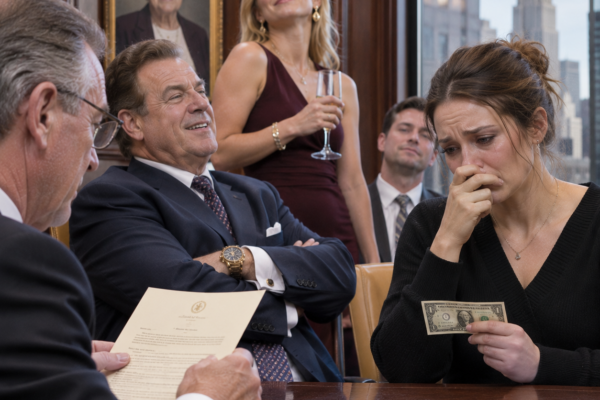
I put the deed beside the checks.
“One more thing.”
Brett’s face tightened.
“The deed transferring Dad’s half is dated May ninth.”
“So?”
“My mother’s funeral.”
Silence.
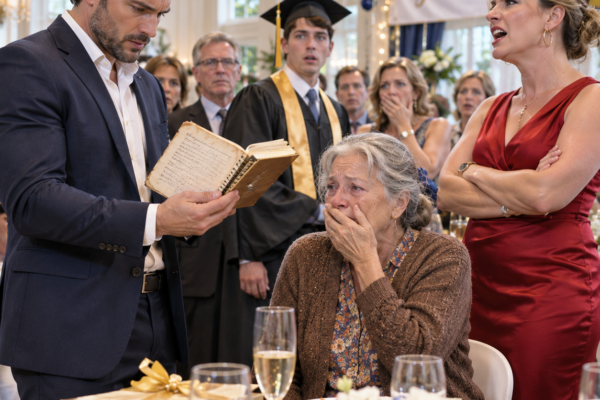
Dad placed the guest book on the counter.
Mom’s name embossed on the cover.
I opened it.
One hundred twelve signatures.
Photographs beside it.
A printed funeral program.
Church timestamp.
Cemetery records.
“At 10:42 a.m., when this notary acknowledgment says Dad stood in Brett’s office and signed, Dad was sitting beside me at St. Anne’s.”
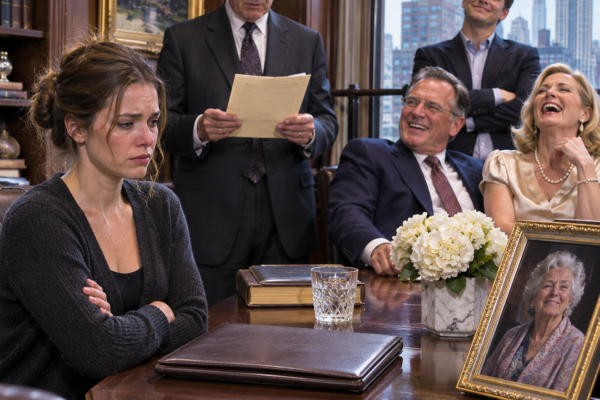
Calvin looked at Brett.
Brett went pale.
“People leave funerals.”
“Dad didn’t.”
“He could have signed earlier.”
“The acknowledgment says he personally appeared before you at 10:42.”
“That could be a clerical error.”
Marta Ruiz stepped from the back room.
“Then it’s a very serious clerical error, Mr. Kimball.”
Brett turned.
His face changed completely.
“Marta.”
“Councilwoman Ruiz.”
“This is a private matter.”
“Not anymore.”
Elaine joined us.
She placed a formal preservation notice on the counter.
“Mr. Kimball, you should retain counsel before making further statements.”
Calvin looked at the deed.
Then the checks.
Then Brett.
“Where is my forty-one thousand?”
“Calvin, don’t do this here.”
“Where is it?”
“Fees.”
“Show me.”
Brett said nothing.
Calvin turned toward me.
“I do not hold paper I know may be forged.”
That was not morality.
It was self-preservation.
I understood that.
“What about Dad’s actual loan?”
Calvin looked at him.
“Fifty-five?”
Dad nodded.
I said:
“We’ll repay fifty-five through counsel on written terms. Every dollar he actually received.”
Brett interrupted:
“You can’t rewrite the deal.”
Calvin didn’t even look at him.
“Quiet.”
That one word ended Brett’s authority in the room.
Calvin said:
“Fifty-five. Documented. Payment schedule.”
Elaine answered:
“Subject to review.”
“Fine.”
“And the building interest?”
Calvin picked up the deed.
“My lawyer will record a disclaimer and quitclaim any interest derived solely from this instrument pending review.”
I wanted the entire thing canceled immediately.
Elaine squeezed my wrist.
Paper first.
Always paper first.
Then Calvin looked at Brett.
“How many?”
Brett swallowed.
“What?”
“How many deals have your seal on them?”
“Calvin.”
“How many?”
Brett looked toward Roman’s car through the window.
That was the first time he realized Roman was there.
His face collapsed.
Then he looked at me.
“Haze.”
“No.”
“You loved me.”
“I did.”
“Then help me.”
I stared at him.
“My mother was being buried while you were using my father’s name.”
“It wasn’t like that.”
“What was it like?”
“I was trying to keep the deal together.”
“For who?”
“For everybody.”
“That answer always means yourself.”
He moved toward me.
Elaine stepped between us.
Brett stopped.
I took out my phone.
Called the police non-emergency number Elaine had already discussed with an investigator.
“My name is Hazel Quinn,” I said.
“I need to report suspected forgery involving a recorded deed and a notarial acknowledgment.”
Brett closed his eyes.
That was the beginning.
Not the end.
Real investigations are slow.
The deed was examined.
Dad gave handwriting exemplars.
The notary journal became evidence.
Brett’s journal had no legitimate entry for Dad’s supposed appearance.
His electronic calendar placed him at his office after leaving Mom’s funeral.
Bank records showed the $96,000 from Dorsey entered a transaction account Brett controlled.
Only $55,000 reached Dad.
Some of the missing amount went to unexplained “consulting fees” paid to an entity connected to Brett.
Some went toward personal debt.
The exact financial crimes became a matter for prosecutors.
What mattered to us was simpler.
Dad had not signed away the building.
Dorsey’s attorney recorded documents releasing the claimed half-interest.
County records reflected Dad’s ownership again.
The $55,000 became an ordinary documented debt.
No invented ninety-six.
No secret deed.
Monthly payments.
Reasonable interest negotiated through counsel.
Dad insisted on paying.
“It was my debt.”
I didn’t argue.
Four days after Dana Moss’s first article ran, three other property owners contacted Marta Ruiz.
Then a fourth.
Same notary seal.
Same pattern.
Private loans.
Quick transfers.
Pressure to sell.
Not every case was identical.
Some documents were legitimate.
Others raised questions.
The city temporarily froze approvals on several Dorsey projects while title issues were reviewed.
Calvin was furious.
Mostly at Brett.
Partly at himself.
He had built a system that rewarded speed and never asked enough questions about how Brett acquired signatures.
His company didn’t disappear overnight.
There was no dramatic midnight escape.
He hired lawyers.
Auditors.
Cleaned up transactions.
Paid settlements where necessary.
Several projects survived.
Others collapsed.
Brett’s consequences were more direct.
His notary commission was suspended.
His real-estate license came under review.
Criminal charges followed after investigators finished tracing the forged deed and diverted funds.
He eventually pleaded to charges his attorney negotiated with prosecutors.
I did not attend sentencing.
I had wedding cakes to make.
That part mattered.
While lawyers and reporters obsessed over documents, the bakery still had to survive.
The dead oven?
Roman was right.
Thermocouple.
Twelve dollars and forty cents after tax.
He installed it himself the morning after our meeting with Dorsey.
I watched him kneel in front of the oven in a tailored shirt with the sleeves rolled up.
“You know there are repair people.”
“You said Monday wedding cake.”
“You’re supposed to manage risk.”
“An angry bride is risk.”
I handed him a wrench.
He fixed it.
Then ordered a lemon cake.
“Small.”
“For who?”
“My wife.”
I froze.
He looked at me.
“She died six years ago.”
“Oh.”
“Today was her birthday.”
I softened.
“Lemon?”
“Her favorite.”
I boxed one.
When he reached for his wallet, I shook my head.
“On the house.”
“I don’t accept free things.”
“You repaired a commercial oven for twelve dollars.”
“That was different.”
“How?”
“I wanted cake.”
“You still get cake.”
He tried to leave money.
I pushed it back.
“Tell her happy birthday from Rosemary’s.”
His face changed.
For one second, Roman Kessler looked less like a dangerous man and more like a widower.
He took the cake.
“Thank you.”
That became the first thing between us that wasn’t about Dad’s debt.
The next was the window.
The glass company repaired it.
$2,800.
When I asked for the invoice, the owner said it had been paid.
“By who?”
He smiled.
“Customer requested privacy.”
I knew.
Roman came for tea Sunday.
I put the invoice beside his cup.
“I don’t owe you.”
“I know.”
“Then why did you pay this?”
“You wouldn’t take five dollars for a cake.”
“That is completely different.”
“Explain.”
“I was being kind.”
“So was I.”
“Your kindness has bodyguards.”
He smiled.
“Sometimes.”
“I’m paying you back.”
“No.”
“Yes.”
“No.”
“Roman.”
“Hazel.”
Dad watched from the other side of the kitchen.
Delighted.
Traitor.
Finally I said:
“Tea.”
Roman looked confused.
“Tea?”
“Sundays. Four o’clock. Mom’s cup. Until we’re even.”
“And when will that be?”
“I’ll tell you.”
He looked at Dad.
Dad tried to hide a smile.
“That sounds dangerous.”
“You manage risk.”
Sundays became a habit.
Not romance immediately.
I wasn’t ready.
Roman did not push.
Some weeks he came alone.
Sometimes Dad joined.
Sometimes Roman repaired something.
Once I caught him replacing a loose cabinet hinge.
“You know you can visit without earning labor credits.”
“I was bored.”
“You’re incapable of sitting still?”
“I sit still professionally.”
“That sounds ominous.”
He laughed.
I learned pieces of him slowly.
Not everything.
I didn’t want everything.
His reputation was real.
He had spent much of his life around businesses where influence mattered more than paperwork and where people were occasionally afraid of the wrong things.
But by the time I met him, he was legitimate enough that Elaine could run his companies through databases without finding what she expected.
Security.
Commercial property.
Transportation.
Insurance consulting.
“Risk management,” annoyingly, was not entirely a joke.
Whatever his younger life had been, Dad had saved him from something violent.
Roman had remembered for twenty-three years.
That loyalty frightened me less once I saw what he did with it.
He kept his promise.
Not one threat to Brett.
No visit to Dorsey’s home.
No mysterious intimidation.
When I asked for lawyers, he gave me lawyers.
When I asked him to stay in the car, he stayed in the car.
Mostly.
He did get out once.
Marta Ruiz saw him through the window.
She nearly laughed.
“Mr. Kessler.”
“Councilwoman.”
“You staying out of this?”
“Under strict instruction.”
She looked at me.
“Smart woman.”
Roman nodded.
“I’ve noticed.”
Dad’s guilt took longer to fix.
He believed everything started because he borrowed the money.
I kept telling him:
“Borrowing isn’t forgery.”
“I signed papers I didn’t read.”
“Because Mom was dying.”
“That’s no excuse.”
“It is context.”
He struggled with that.
Men like Dad thought responsibility meant accepting blame for every consequence that followed their mistake.
But borrowing $55,000 did not authorize Brett to invent another $41,000.
It did not authorize a fake deed.
It did not create a right to threaten me.
Dad owed a debt.
He paid the debt.
That was where responsibility ended.
Eight months after the forged deed was released, we refinanced a small portion of the building legitimately.
Transparent terms.
Independent attorney.
No emergency hospital room.
No Brett.
We paid Dorsey’s loan faster than scheduled.
Dad brought the final confirmation into the bakery.
“Done.”
I hugged him.
He cried.
I did too.
Then he looked embarrassed.
“You know your mother would tell us we’re scaring customers.”
“There are no customers.”
He checked the clock.
“Three minutes until opening.”
“Then cry faster.”
He laughed.
That was the first morning the building felt fully ours again.
Not because the county record changed.
Because Dad stopped looking at the walls like they were evidence of his failure.
The bakery recovered slowly.
The newspaper story brought attention.
I hated that at first.
People came in asking:
“Is this the bakery from the forged-deed story?”
I wanted to throw bread at them.
Instead, I sold them cardamom buns.
Business improved.
A local food writer reviewed us.
She loved the buns Mom would have complained about.
We replaced the display case.
Repaired the upstairs plumbing.
Eventually bought a second oven.
Roman objected.
“The old one works.”
“The old one is older than Dad.”
Dad called from the kitchen:
“I heard that.”
Roman looked at me.
“It has character.”
“It has rust.”
“Surface.”
“It caught fire last winter.”
“Briefly.”
“You weren’t here.”
“Your father told me.”
“Dad!”
Again, traitor.
A year after Brett’s arrest, Calvin Dorsey came into the bakery.
Alone.
I almost asked him to leave.
He removed his hat.
“I’m not here about property.”
“Good.”
He placed an envelope on the counter.
Inside was a copy of an independent audit.
Several transactions through Brett had been identified as problematic.
Dorsey’s company had reimbursed two families for fees improperly charged through those deals.
He looked uncomfortable.
“I should have known.”
“Yes.”
“I didn’t.”
“That is not the same thing as being innocent of responsibility.”
He accepted that.
“I know.”
I studied him.
“Why bring this to me?”
“Because your question started the audit.”
“What question?”
“Where did the forty-one thousand go?”
He looked toward Mom’s photograph behind the register.
“That question cost me a lot of money.”
“Good.”
He almost smiled.
“Roman says you’re difficult.”
“Roman says that?”
“No. He says you’re exact.”
“That sounds more like him.”
Calvin left.
We never became friends.
I didn’t need him punished forever.
I needed him to understand that delegating wrongdoing does not erase the benefit you receive from it.
His company survived.
Different counsel.
Different acquisition procedures.
No Brett.
The block changed too.
Some buildings sold.
Some didn’t.
A revised condominium plan went through without our property.
The project wrapped around us instead of swallowing us.
Rosemary’s Bakery remained a narrow brick interruption between two newer buildings.
Developers hated it.
Customers loved it.
I put a small brass plaque near the front door.
Not about the lawsuit.
Not about Mom’s cancer.
Just:
ROSEMARY QUINN’S BAKERY
EST. 1989
Dad touched it the day we installed it.
“She would’ve liked that.”
“She’d complain the font is too fancy.”
“Absolutely.”
Then he asked:
“You ever think about selling?”
“Yes.”
He looked surprised.
“Really?”
“Every February.”
“Why February?”
“Business is terrible and everyone is miserable.”
“You wouldn’t.”
“Probably not.”
That mattered.
I finally understood there was a difference between choosing to keep the bakery and feeling trapped by Mom’s memory.
For years, I had believed selling would mean betraying her.
Then Brett tried to force the sale.
That made me defensive.
After we won, I had to relearn that ownership included the right to choose differently someday.
Mom had not spent thirty years baking so I could spend thirty more resenting an oven.
I kept the bakery because I wanted it.
That was healthier.
Roman and I became something more than tea on Sundays.
Slowly.
Painfully slowly according to Dad.
One evening Roman invited me to a hospice fundraiser.
The hospice had cared for his wife.
It had also cared for Mom during her last month.
“Come with me.”
“Is this a date, Mr. Kessler?”
“Accountants call it interest.”
“You’re still using that accountant joke?”
“It worked once.”
“It did not.”
I wore Mom’s dark green dress.
The one she had saved for anniversaries.
And, because I could not resist, I put the same yellow pencil through my hair.
Roman stared when I came downstairs.
“Your hair.”
“What about it?”
“The pencil.”
“Mom’s.”
“You’re wearing it to a gala?”
“I thought she should come.”
Dad stood behind me.
His eyes filled.
Roman noticed.
He offered Dad his handkerchief.
Dad took it.
“That yours?”
“My father gave it to me.”
“When?”
“The morning I left home.”
Dad looked at him.
“You kept it?”
Roman nodded.
“That night twenty-three years ago, everyone wanted something from me. You were the first person who only asked if my hand hurt.”
Dad looked down at the handkerchief.
“You were a kid.”
“I didn’t feel like one.”
I understood something then.
Dad thought Roman owed him because Dad saved his life.
Roman believed the debt was different.
Dad had treated him as human when everyone else saw a problem.
That is the kind of debt people remember.
The gala was beautiful.
Roman behaved.
Mostly.
At one point, a city developer approached and asked whether Rosemary’s Bakery might finally be for sale.
Roman looked at me.
I answered:
“Not tonight.”
The developer laughed.
Roman didn’t.
I nudged him.
“My way.”
“Your way.”
Years passed.
Dad slowed down.
He still came downstairs every morning.
Sat near the window.
Folded bakery boxes.
Talked to customers.
Corrected me whenever I changed one of Mom’s recipes.
Roman came Sundays.
Four o’clock.
Mom’s cup.
Eventually I stopped pretending the tea was repayment.
I never told him.
He knew.
Brett wrote once from prison.
Not a dramatic apology.
Three pages.
He said he had convinced himself Dad would eventually sell anyway.
That the building was “underutilized.”
That I would thank him when I had money instead of debt.
He wrote:
I kept telling myself I was making inevitable things happen faster.
That sentence was more honest than anything he said while free.
I did not write back.
Not because I hated him forever.
Because some relationships end when you finally understand the other person’s logic.
Brett believed outcomes could excuse methods.
If the building was going to sell someday, why not forge the deed now?
If Dad needed money, why not inflate the loan?
If I would eventually move on, why not force me?
Everything became acceptable once he decided the future for everyone else.
That was the opposite of love.
Love leaves the other person choices.
Dad had done something similar in a gentler way when he invited Roman for tea without telling me why.
I told him so.
“You manipulated me.”
Dad looked offended.
“I introduced you.”
“You told me to dress nice because you wanted Roman to see me.”
“I wanted him to know who he was protecting.”
“You could’ve told me.”
“You would’ve refused.”
“Exactly.”
Dad smiled.
“You walked in with grease on your face.”
“You deserved that.”
“And the pencil.”
“Yes.”
“You looked exactly like your mother.”
That was why he had wanted Roman there.
Not romance.
Not repayment.
Dad wanted Roman to see me as a person before he saw me as a debt.
It worked.
Maybe too well.
Dad died seven years after the forged-deed case.
Peacefully.
At home.
His half of the building passed to me.
Clean title.
No secret liens.
No private loans.
His estate folder was almost aggressively organized.
Elaine laughed when she saw it.
“He learned.”
“He became paranoid.”
“Same skill set, different mood.”
Inside Dad’s safe was Roman’s old handkerchief.
Dad had washed and folded it.
A note attached:
Return this. He’ll pretend he doesn’t care.
Roman did pretend.
Then cried.
That was the only time I saw him do it.
We buried Dad beside Mom.
Brett was long gone from our lives.
Calvin Dorsey sent flowers.
Marta Ruiz attended.
Elaine came.
Half the block closed early.
Roman stood beside me from the first hymn until the last shovel of dirt.
He did not leave.
Afterward, back at the bakery, I opened Mom’s china cabinet.
Two cups.
Tea at four.
Roman sat where he had the first day.
I put Dad’s handkerchief on the table.
He touched it.
“Leonard.”
“He said you’d pretend.”
“He knew me.”
“Yes.”
We sat quietly.
Then Roman looked around the bakery.
“What happens now?”
“With what?”
“This.”
I understood.
For the first time, the building belonged entirely to me.
No parents.
No co-owner.
No debt.
No lawsuit.
No obligation except what I chose.
I looked at Mom’s photograph.
Dad’s empty chair.
The repaired window.
The ovens.
The flour dust.
The pencil beside the register.
“We open tomorrow at six.”
Roman nodded.
“That sounds right.”
It was.
Not forever.
Just tomorrow.
That is enough.
People sometimes ask me whether Roman saved the bakery.
No.
He protected us while we saved it.
There is a difference.
Dad’s twenty-three-year-old favor gave us breathing room.
Roman’s lawyers helped.
His reputation kept Dorsey’s people from trying anything stupid after the broken window.
But the bakery survived because a date on a deed did not match reality.
Because Mom’s funeral guest book still existed.
Because Dad kept bank records.
Because Brett’s notary journal failed to support his own certification.
Because $41,000 could not disappear without creating questions.
Because we chose evidence over fear.
That matters to me.
Dad thought he needed to call in an old debt from a powerful man because I was in danger.
Maybe he did.
But power did not win the case.
Paper did.
Memory did.
One hundred twelve names in a funeral book did.
The truth did.
And Roman, to his credit, let it.
Today, Rosemary’s Bakery still stands on Seventy-Fourth Street.
The condo towers are taller now.
The neighborhood changed.
Rents rose.
New cafés opened.
Half the customers who knew Mom are gone.
But every Sunday at four, I still put two cups on the kitchen table.
Sometimes three, because Roman says Dad should still have one.
The cardamom buns remain our best seller.
Mom would be furious.
Then eat three.
The old thermocouple oven finally died for good.
We replaced it.
Roman complained.
I reminded him he is an accountant.
He reminded me he never said that.
The pencil still goes in my hair when I am busy.
He always tells me to leave it.
And whenever someone asks how we met, I say:
“My father invited an accountant to tea because my ex-fiancé was trying to steal a building.”
Roman says that is deliberately misleading.
I tell him:
“You manage risk. Handle it.”
He does.
And every time I unlock the bakery in the morning, I think about the one thing Brett never understood.
A building can have a price.
A business can have a price.
Even a city block can have a price.
But that does not mean the person holding the deed is obligated to sell simply because somebody wealthier has already decided what should replace it.
Mom spent thirty years making that corner smell like bread.
Dad spent the rest of his life trying to protect what she built.
Roman carried a debt for twenty-three years because one frightened tailor chose to open a door to a bleeding stranger.
And I learned that protecting an inheritance does not mean clinging blindly to the past.
It means making sure the choice about what happens next remains yours.
Brett tried to take that choice with a forged signature.
Dorsey tried to buy it with pressure.
Dad tried to protect it with an old favor.
Roman offered to defend it with fear.
In the end, I chose something simpler.
A guest book.
Four checks.
A date.
A notary seal.
And the truth.
That was enough.