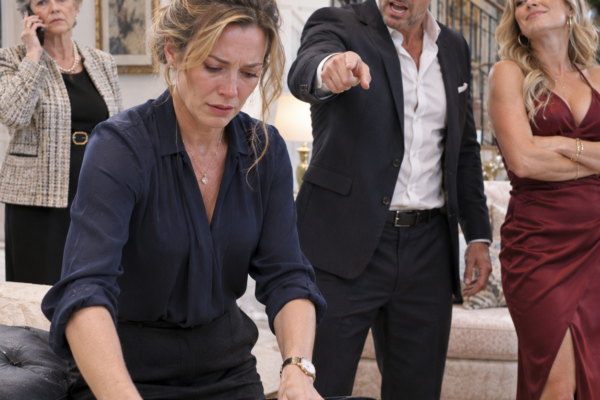
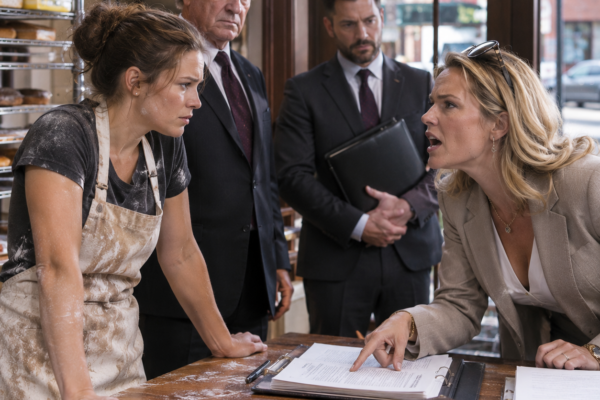
My Fiancée Humiliated an Older Woman in My Foyer, Told the Housekeeper She Was “Incompetent,” and Said People Like Them Would Never Get Past the Gate Once She Became Mrs. Carter. Then I Walked In and Said, “Mom?” I Ended the Engagement That Night—but What We Found About Vanessa’s $800,000 Transfer Made the Truth Far More Complicated.k
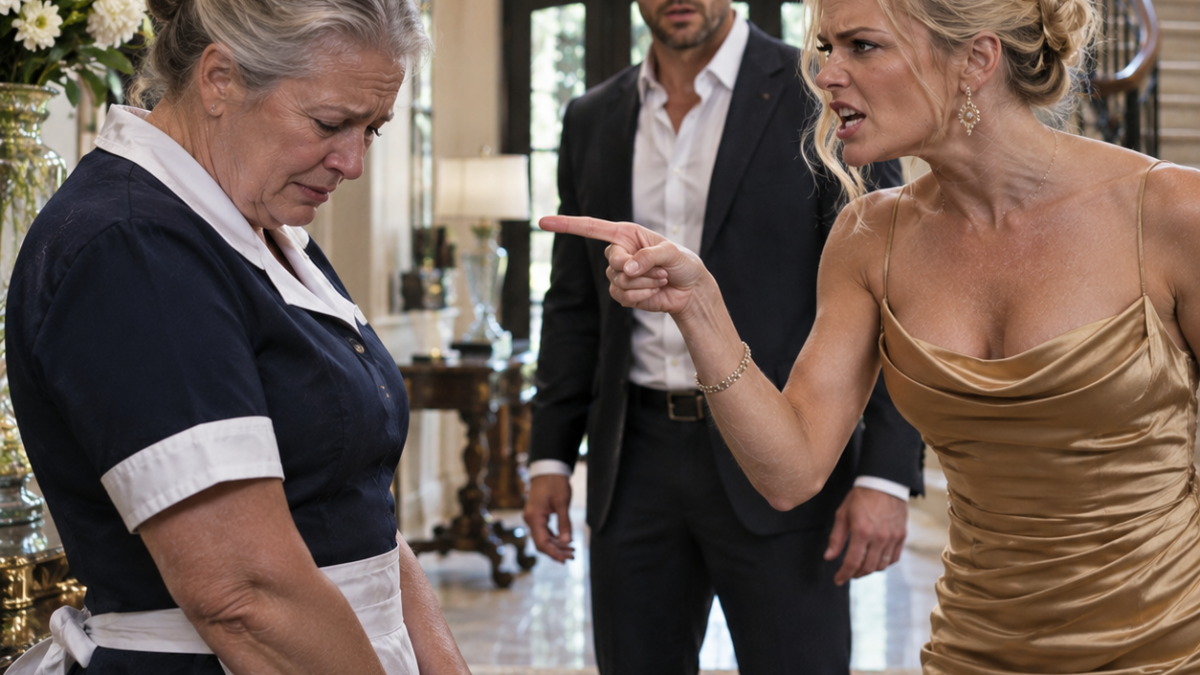
My Fiancée Humiliated an Older Woman in My Foyer, Told the Housekeeper She Was “Incompetent,” and Said People Like Them Would Never Get Past the Gate Once She Became Mrs. Carter. Then I Walked In and Said, “Mom?” I Ended the Engagement That Night—but What We Found About Vanessa’s $800,000 Transfer Made the Truth Far More Complicated.
The woman sitting in my foyer wore a gray cardigan, sensible shoes, and no jewelry except a plain wedding band she had refused to remove after my father died.
Vanessa saw none of that as information.
She saw an old woman who did not look wealthy.
That was enough.
“Adrian may be a while,” Vanessa told her.
My mother smiled politely. “I’m not in a hurry.”
“Would it be all right if I waited inside?”
Vanessa glanced toward the drawing room.
“This is fine.”
Meaning the foyer.
My mother understood.
She always understood.
Her name is Evelyn Carter.
She had agreed to something I hated from the beginning.
She wanted to meet Vanessa without Vanessa knowing who she was.
Not because Mom enjoyed games.
Because she had been watching the woman I planned to marry treat people differently depending on what she thought they could do for her.
I defended Vanessa.
For months.
“She’s nervous around you.”
“You’ve never met.”
“She knows what my family is worth.”
“That’s exactly my concern.”
I accused Mom of looking for reasons not to like her.
Mom answered:
“If I’m wrong, Vanessa loses nothing.”
So that afternoon, Mom arrived at my house in an old cardigan, without her usual driver beside her, and told the staff only that she was there to see me.
Vanessa happened to be there first.
Our housekeeper, Rebecca, brought Mom water.
A napkin slipped from the tray.
Vanessa’s voice sharpened instantly.
“Seriously? Can you do anything without making a mess?”
Rebecca froze.
“I’m sorry, ma’am.”
Mom said quietly:
“It was a napkin, not a disaster.”
Vanessa turned toward her.
“I wasn’t speaking to you.”
“No,” Mom said. “You were speaking to another human being.”
Vanessa stared.
“You seem very comfortable correcting people in a house that isn’t yours.”
“Respect doesn’t belong to the house.”
That was when Vanessa told her to leave.
Mom refused.
Vanessa called security.
Before they reached the foyer, I came through the front door.
Vanessa hurried toward me.
“Adrian, thank God. This woman says she knows you and refuses to leave.”
I looked at the woman standing beside the table.
Then at Vanessa.
“Mom?”
Vanessa’s face emptied.
“She’s your mother?”
“Yes.”
Mom never raised her voice.
“You never asked who I was.”
Vanessa began explaining.
She said she had been protecting me from people who wanted my money.
Then Mom told me about the phone call she overheard.
Vanessa had laughed to a friend and said:
“When I’m Mrs. Carter, people like that won’t get past the gate.”
I looked at Vanessa.
“Did you say that?”
“I was angry.”
“That wasn’t my question.”
Her eyes filled.
“Yes.”
I asked Rebecca what happened.
Vanessa tried to interrupt.
I stopped her.
Rebecca told me about the napkin.
The insult.
Security.
Everything.
Vanessa reached for my hand.
“Adrian, I made a mistake.”
“No.”
She stared at me.
“You made choices.”
I removed the engagement ring from her hand and set it on the foyer table.
“The wedding is canceled.”
She left believing that was the worst thing that would happen.
I believed it too.
Then, four days later, my family office called.
They had been reviewing an unrelated account reconciliation.
One transfer stood out.
$800,000.
Authorized under Vanessa’s signature.
Moved into an account controlled by her brother, Marcus Vale.
Marcus emptied most of it the morning I ended the engagement.
Then my security director found two airline reservations.
One for Marcus.
One for Vanessa.
Departure date:
The day after our wedding.
My mother looked at me across the desk.
“There’s more.”
“How much more?”
“Vanessa was nearly two million dollars in debt.”
I felt something cold settle in my chest.
Mom continued.
“And before you proposed, she met with a divorce attorney.”
That was the moment my anger stopped being about what Vanessa had done to an old woman in my foyer.
Because suddenly I no longer knew whether the woman I had planned to marry had ever been marrying me for me at all.
Part 2:
The woman sitting in my foyer wore a gray cardigan, sensible shoes, and no jewelry except a plain wedding band she had refused to remove after my father died.
Vanessa saw none of that as information.
She saw an old woman who did not look wealthy.
That was enough.
“Adrian may be a while,” Vanessa told her.
My mother smiled politely.
“I’m not in a hurry.”
“Would it be all right if I sat inside?”
Vanessa glanced toward the drawing room.
“This is fine.”
Meaning the foyer.
My mother understood.
She always understood.
Her name is Evelyn Carter.
She had agreed to something I hated from the beginning.
She wanted to meet Vanessa without Vanessa knowing who she was.
Not because Mom enjoyed games.
Because she had been watching the woman I planned to marry treat people differently depending on what she thought they could do for her.
I defended Vanessa.
For months.
“She’s nervous around you.”
“She’s never met me.”
“She knows what my family is worth.”
“That’s exactly my concern.”
I accused Mom of looking for reasons not to like her.
Mom answered:
“If I’m wrong, Vanessa loses nothing.”
That was hard to argue with.
My name is Adrian Carter.
I was thirty-eight when I came within three months of marrying Vanessa Hale.
By then, the Carter name meant more to strangers than it did to me.
My father built a logistics company from two trucks and a rented warehouse.
By the time he died, Carter Distribution had become a national operation.
I joined after college.
Expanded into technology, cold-chain infrastructure, and commercial real estate.
We eventually sold a controlling stake in the logistics division and kept the rest through a family holding company.
The press liked calling me a billionaire.
I hated it.
Not because it was inaccurate enough to fight over.
Because once people hear a number like that, they stop treating ordinary decisions as ordinary.
Dating becomes suspicious.
Friendships become complicated.
Every request for help carries another question behind it.
Would this person ask if my last name were different?
Vanessa knew all of that.
We met at a charity auction.
She was thirty-four.
Elegant.
Funny.
Quick.
She worked in luxury event design and had built a respectable business.
She didn’t act impressed by my money.
That impressed me.
For the first six months, she refused expensive gifts.
When I sent a car for her, she took a taxi instead.
When I offered to invest in her company, she said:
“If I fail, I want it to be my failure.”
Mom liked that answer when I told her.
At first.
Then she began noticing smaller things.
Vanessa was warm to senior executives.
Cold to waiters.
Patient with donors.
Sharp with assistants.
Once she criticized a hotel bellman in front of twenty people because he placed a suitcase on the wrong cart.
Another time she told Rebecca, our housekeeper, that “people in service work should understand invisibility is part of professionalism.”
Rebecca never complained.
Mom heard about it from someone else.
I explained it away.
Stress.
Wedding planning.
Pressure.
Vanessa had also become obsessed with security.
Who entered the property.
Who had access to me.
Which relatives might ask for money.
Which charities were “using” my name.
At first, I thought she was trying to protect me.
Mom thought otherwise.
“She likes controlling the gate,” she told me.
“She’s planning to live here.”
“Exactly.”
“Mom.”
“I’m not asking you to leave her.”
“It sounds like it.”
“I’m asking who she is when she believes someone has nothing to offer.”
That sentence led to the test.
I disliked calling it that.
It sounded manipulative.
Maybe it was.
Mom arrived in an old Volvo she kept at her country house.
No driver.
No pearls.
No tailored coat.
Gray cardigan.
Plain skirt.
She asked security to tell no one who she was.
Then she walked into my home.
Vanessa happened to arrive twenty minutes before me.
Our foyer camera captured most of what happened.
The rest Mom and Rebecca told me.
Vanessa asked:
“Who are you?”
“Someone Adrian knows.”
“Do you have an appointment?”
“He told me I could come.”
Vanessa looked at the front desk log.
My staff had been instructed to let Mom in.
That irritated her.
“Wait here.”
Mom asked if she could sit inside the drawing room.
Vanessa refused.
Then Rebecca brought water.
Mom reached for the glass.
Vanessa said:
“Not that one. Use one from the kitchen.”
Rebecca froze.
Mom noticed.
“This glass is fine.”
Vanessa looked at her.
“It’s crystal.”
“I know.”
“Then you understand.”
Mom did.
Vanessa was protecting the glass from the woman.
Not the woman from embarrassment.
Then came the napkin.
Rebecca dropped it.
Vanessa snapped.
Mom objected.
Vanessa told her she was too comfortable correcting people in a house that wasn’t hers.
Mom answered:
“Respect doesn’t belong to the house.”
That should have ended the conversation.
Instead, Vanessa asked:
“What exactly is wrong with people like you?”
Mom asked.
Vanessa hesitated.
Then said:
“People like you don’t belong in places like this.”
Mom asked:
“If I wore diamonds instead of this cardigan, would you speak to me differently?”
Vanessa answered:
“Of course.”
Mom thanked her.
“For what?”
“For being honest.”
Vanessa called security.
I arrived before they escorted Mom out.
When Vanessa ran toward me, relieved, I thought somebody had broken in.
Then I saw Mom.
“Mom?”
Vanessa stopped.
“She’s your mother?”
“Yes.”
Her first response told me almost everything.
“She never told me.”
Mom said:
“You never asked.”
Vanessa began explaining.
She thought Mom was asking for money.
She thought Mom was manipulating staff.
She thought she was protecting me.
Then Mom told me about the phone call.
Vanessa had been speaking to a friend.
“I’m telling you, when I’m Mrs. Carter, people like that won’t get past the gate.”
I asked:
“Did you say that?”
Vanessa looked at me.
“Adrian, I was angry.”
“That wasn’t my question.”
“Yes.”
I asked Rebecca what had happened.
Vanessa said:
“You don’t need to involve her.”
I looked at her.
“I asked Rebecca.”
Rebecca spoke quietly.
“Mrs. Hale was upset because I dropped a napkin.”
“She called you incompetent?”
Rebecca looked uncomfortable.
“Yes.”
Vanessa interrupted.
“That’s not how it happened.”
I said:
“I wasn’t asking you.”
That hurt her.
I saw it.
I still did it.
Then I asked the question that had been sitting underneath everything.
“You thought Mom was after my money.”
“Yes.”
“And what were you after?”
Vanessa stared at me.
“You.”
“Then why did money matter so much?”
“Because everyone wants something from you. I’m tired of watching it.”
“Why treat staff like they’re beneath you?”
“I don’t.”
Rebecca’s face said otherwise.
Vanessa looked at her.
Then at Mom.
“I made a mistake.”
Mom said nothing.
I looked at Vanessa.
“No.”
She swallowed.
“No?”
“You made choices.”
Then I took her hand.
Removed the ring.
Set it on the foyer table.
“The wedding is canceled.”
Vanessa’s face changed.
“You don’t mean that.”
“I do.”
“One afternoon?”
“It isn’t one afternoon.”
“You’re choosing your mother.”
“I’m choosing what I just saw.”
She started crying.
“I love you.”
“I believe you believe that.”
“Adrian.”
“I can’t marry someone I don’t trust.”
She left.
Mom stayed.
I expected her to say:
I told you so.
She didn’t.
She sat beside me.
“I never asked you to leave her.”
“You didn’t have to.”
“That doesn’t mean this feels good.”
It didn’t.
I spent the next several days canceling the wedding.
Venue.
Catering.
Security.
Guest accommodations.
A nightmare of money and logistics.
I ignored Vanessa’s calls.
I ignored her messages.
Then something happened that had nothing to do with Mom’s test.
Our family office flagged an $800,000 transfer.
It had moved from a jointly controlled project account associated with one of Vanessa’s event ventures into a private account belonging to her brother Marcus.
The account existed because months earlier I had agreed to provide Vanessa’s company access to a working-capital facility under strict limits.
I had not personally monitored every transaction.
That was what accountants were for.
Now the accountants wanted to know why $800,000 had left.
Vanessa’s digital authorization was attached.
My chief financial officer, Rebecca Lin, sat across from me.
“That is her signature.”
“Could it be copied?”
“Electronic authorization. Her credentials.”
“Where did it go?”
“Marcus Hale.”
“Her brother.”
“Yes.”
“Where is it now?”
“Mostly gone.”
“How?”
“Several transfers to creditors, one private company, hotel expenses, and two large cash-equivalent movements.”
I stared.
“When?”
“Most of it moved the morning after the engagement ended.”
That felt deliberate.
Then my security team found the airline tickets.
Marcus.
Vanessa.
International departure.
The day after our wedding.
I felt sick.
Mom came to my office.
She knew some of it already.
“There’s something else.”
“What?”
“She had debt.”
“How much?”
“Close to two million personally and through her business, depending on guarantees.”
I looked at her.
“How do you know?”
“Marcus approached me months ago.”
“For what?”
“Half a million dollars.”
“You never told me.”
“He asked me not to.”
“Why didn’t you help?”
“I asked to see the books.”
“And?”
“He refused.”
That sounded like Marcus.
Vanessa’s older brother had always impressed me as the kind of man who used confidence as a substitute for information.
He ran their father’s manufacturing company.
Or claimed to.
Their father, Thomas Hale, had suffered a stroke two years earlier.
Marcus stepped in.
Vanessa told me business was struggling because of supply disruptions.
Apparently it was worse.
Mom continued.
“I warned Vanessa not to let Marcus use her.”
“She knew?”
“She knew he was in trouble.”
“That isn’t the same thing as knowing she transferred my money.”
“I know.”
Then Mom gave me the detail that hurt most.
Vanessa had met with a divorce attorney before I proposed.
I stood.
“When?”
“Six weeks before.”
“For what?”
“I don’t know exactly.”
“You had her followed?”
“No.”
“My attorney uses the same firm. Conflict check surfaced later when your wedding agreements were being reviewed.”
That was plausible.
And awful.
I called Vanessa before Mom could stop me.
She answered instantly.
“Adrian.”
“We need to talk about Marcus.”
Silence.
“What about him?”
“The $800,000.”
Another silence.
“Where did you get that?”
“So it is your authorization.”
“Adrian—”
“Did you transfer it?”
“Yes.”
My chest tightened.
“Why?”
“Marcus said the company was about to collapse.”
“So you moved money you didn’t own.”
“I thought I could put it back.”
“With what?”
“He said receivables were coming.”
“And you believed him?”
“He’s my brother.”
“That isn’t an answer.”
“It is when you’ve spent your whole life protecting someone.”
I asked about the tickets.
“What tickets?”
“One for Marcus. One for you.”
“I didn’t book a ticket.”
“Departure the day after our wedding.”
“What?”
Her confusion sounded real.
I hated that I could no longer trust my own judgment.
She said:
“Send me the details.”
“Why?”
“Because if Marcus booked something in my name, I want to know.”
I sent a screenshot.
Five minutes later, she called.
Her voice shook.
“I never booked this.”
“Can you prove it?”
“I have his messages.”
“Send them.”
“I’d rather show you.”
We met in a private conference room at my attorney’s office.
No mansion.
No foyer.
No emotional ambush.
Rebecca Lin sat with me.
Vanessa arrived alone.
No makeup.
No dramatic entrance.
She handed over her phone.
Marcus’s messages began months earlier.
Dad’s company is drowning.
Then:
I need temporary liquidity.
Then:
Do not involve Adrian. He’ll insist on lawyers and kill the deal.
Vanessa replied:
I’m telling him when Dad is stable.
Marcus:
Not yet. If Adrian knows how bad this is, he’ll think we’re using him.
Another:
The money only moves for weeks.
Vanessa:
I can authorize working capital but not family withdrawals.
Marcus:
Call it vendor stabilization.
Vanessa had pushed back.
Then eventually signed.
That mattered.
It did not excuse her.
She had known the description was false.
I asked:
“You understood this wasn’t a legitimate vendor payment?”
“Yes.”
“Then why sign?”
“My father’s company had payroll due.”
“You could have told me.”
“I was ashamed.”
“Of what?”
“That my family was failing while I was marrying someone whose family has more money than we could spend in ten lifetimes.”
“That is not shame. That is pride.”
“Maybe.”
“What about the divorce attorney?”
She closed her eyes.
“I did meet one.”
“Why?”
“Because Marcus told me if I married you without understanding the prenup, I’d be stupid.”
“And what did you ask?”
“What would happen if the marriage ended.”
“That’s all?”
“Yes.”
“Did you ask what you could take?”
“I asked what rights I would have.”
“Before I proposed.”
“I knew you were going to.”
That was painful.
Not automatically proof she planned to divorce me.
But painful.
Then Rebecca found the ticket metadata.
Booked through an account Marcus controlled.
Three days before Vanessa signed the $800,000 transfer.
That changed something.
Marcus planned to run before he even had the money.
Vanessa looked stunned.
“He booked mine before I signed?”
“Yes.”
“He told me ‘be ready after the wedding.’”
“What did you think that meant?”
“The company restructuring. We had meetings scheduled.”
“Internationally?”
“I didn’t know there were tickets.”
I believed she didn’t know.
That did not erase the transfer.
Trust is not a math problem where one true answer cancels another false one.
She could be deceived and still culpable.
I said:
“Marcus used you.”
Her eyes filled.
“Then you believe me.”
“I believe he used you.”
She reached toward me.
“That isn’t the same as saying you did nothing wrong.”
Her hand stopped.
I continued.
“You signed a transfer you knew I wouldn’t approve.”
“Yes.”
“You hid it.”
“Yes.”
“You ignored Mom’s warning.”
“Yes.”
“You humiliated her because you thought she had no status.”
“Yes.”
She cried.
“I know.”
I asked for every message.
She gave me the phone.
No deletion.
No selective screenshots.
Everything.
Before leaving she asked:
“What about us?”
I answered:
“There is no us right now.”
She nodded.
Then left.
Mom wanted to see the messages.
Rebecca reviewed them first.
There were several that helped Vanessa.
One in particular.
Marcus:
Don’t tell Adrian anything until we’re clear.
Vanessa:
Until Dad is safe. Then I’m telling him everything.
Another showed Marcus urging her to keep funds hidden.
She refused to move additional money.
That didn’t absolve her.
It showed the picture was more complicated than fraud planned from the beginning.
Then Rebecca found a second set of books.
That was the real break.
Hale Manufacturing had internal financial statements showing losses.
But the bank statements did not match.
Payments were flowing to a consulting company called Northstar Procurement.
Northstar was controlled through another entity tied to Marcus.
Nearly three years of transfers.
Small at first.
Then larger.
The same executive authorization code approved most.
Marcus’s.
He had helped create the company’s crisis.
Then used the crisis to pressure Vanessa.
I called her.
“Come in.”
She arrived that afternoon.
Rebecca spread the records across the table.
“Do you know Northstar Procurement?”
Vanessa stared.
“No.”
“It received payments from your father’s company for almost three years.”
“How much?”
“Just over $1.4 million.”
Her face went white.
“Who owns it?”
Rebecca slid another document forward.
A corporate filing.
Marcus’s holding company.
Vanessa sat down.
“He stole from Dad.”
“That’s what the records suggest.”
“He told me suppliers were demanding cash.”
“Some were. Others weren’t.”
Vanessa began scrolling through her phone.
“Every time he asked me for help, he said payroll was at risk.”
Rebecca said:
“Payroll was at risk because money was leaving.”
Vanessa looked at me.
“I have to tell Dad.”
“Yes.”
“He’ll break.”
“Maybe.”
She stood.
“I’m doing it anyway.”
That was the first decision she made in months that had nothing to do with keeping me.
She went to her father.
Told him everything.
The transfer.
Marcus.
The hidden company.
Her own role.
No excuse.
No version that made her innocent.
Thomas Hale was devastated.
He refused to speak to Marcus.
Then refused to speak to Vanessa for two weeks.
She accepted that.
Marcus was found at a hotel near the airport.
Not fleeing in some cinematic chase.
Sitting in a room with luggage, lawyers calling, and several accounts frozen after emergency civil filings.
I went with counsel.
Vanessa did not.
Marcus looked angry when he saw me.
“What are you doing here?”
“I came about the money.”
“Talk to your accountants.”
“I did.”
“You don’t understand what happened.”
“I understand Northstar.”
That changed his face.
He recovered.
“Legitimate vendor.”
“Owned by you.”
“Management fee vehicle.”
“Undisclosed.”
He shrugged.
“My father approved compensation.”
Rebecca’s investigation later showed Thomas had approved some management bonuses.
Not Northstar.
I asked about Vanessa’s ticket.
Marcus admitted it.
“I thought she’d come.”
“Did she agree?”
“No.”
“Why book it?”
“She always changes her mind when family needs her.”
That sentence explained their relationship.
He had spent years making Vanessa responsible for every crisis.
She had mistaken that burden for loyalty.
Then he said something worse.
“Your mother knew Dad’s company was drowning.”
“I know.”
“She refused to help.”
“She asked for the books.”
“She knew we didn’t have time.”
“That isn’t involvement.”
“She could have saved us.”
“No. She could have given you money without asking where it was going.”
He looked away.
Eventually Marcus admitted he lied to Vanessa about the urgency of several payments.
He admitted the airline ticket was his idea.
He admitted he moved funds through Northstar.
His lawyers handled the rest.
Civil claims.
Forensic accounting.
Corporate litigation.
Potential criminal referrals.
No instant handcuffs.
No melodramatic confession resolving everything in ten minutes.
Real financial misconduct unravels through records.
And records were everywhere.
Vanessa became essential to rebuilding them.
She knew the Hale company’s vendors.
Contract history.
Internal codes.
Which managers Marcus bypassed.
Which invoices looked wrong.
Rebecca told me:
“She can trace this faster than anyone.”
I said:
“Use her.”
“Even after everything?”
“This isn’t about our relationship.”
That distinction mattered.
Vanessa worked with the forensic team.
Every message.
Every authorization.
Every spreadsheet.
She signed a statement acknowledging her own transfer.
She did not ask for immunity from consequences.
She did not ask me to forgive her.
That made me notice her differently.
Not romantically.
Not yet.
Just differently.
Mom asked to meet her.
Vanessa arrived at the house.
Same foyer.
Same table.
No ring.
No security drama.
Mom stood.
Vanessa didn’t begin with:
I’m sorry if you were offended.
She said:
“I judged you by your clothes and treated you like you mattered less because I thought you had nothing.”
Mom said nothing.
Vanessa continued.
“I spoke cruelly to Rebecca. I used this house like status belonged to me before I had any right to it. Then I blamed fear instead of admitting arrogance.”
Mom asked:
“Are you apologizing because Adrian left?”
“No.”
“Think carefully.”
Vanessa swallowed.
“I started because he left.”
Mom waited.
“But I’m here because what I did was wrong even if he never speaks to me again.”
That was better.
Mom said:
“I’m not the only person.”
“I know.”
Rebecca came into the foyer.
Vanessa turned toward her.
“I treated you like you were beneath me.”
Rebecca’s expression stayed guarded.
“You did.”
“I was wrong.”
“You were.”
“I’m sorry.”
Rebecca nodded.
“An apology doesn’t erase it.”
“I know.”
“Then prove you learned something.”
Vanessa said:
“I will.”
She left.
Mom looked at me.
“Don’t confuse accountability with redemption.”
“I’m not.”
“Good.”
“And don’t confuse punishment with wisdom.”
I looked at her.
“You rehearsed that?”
“Maybe.”
Months passed.
Marcus’s scheme became clearer.
He had siphoned money.
Hidden vendor relationships.
Manipulated internal reporting.
Used his father’s illness as cover.
The $800,000 Vanessa moved did go largely toward actual creditors, but under false pretenses and without proper authorization.
That mattered legally.
Her action was improper.
Her intent was not what I first feared.
She hadn’t planned to steal from me and flee after our wedding.
Marcus had planned around her.
That distinction did not repair trust automatically.
Vanessa also had to confront her own debt.
Almost two million sounded dramatic, but it wasn’t all consumer spending.
Much came from business guarantees, failed expansion leases, and obligations tied to her father’s company.
Still serious.
Still hidden.
She closed two unprofitable divisions of her event business.
Sold an apartment she could no longer justify.
Entered structured repayment plans.
No Carter money.
No secret rescue.
Mom offered once to connect her with a restructuring adviser.
Vanessa accepted the introduction.
Nothing more.
That impressed Mom.
It impressed me too.
I did not tell Vanessa.
For six months, we barely spoke except about the investigation.
Then Rebecca called.
“Marcus signed a civil settlement.”
“What does it do?”
“Returns remaining funds. Transfers Northstar assets into recovery. Cooperates with the company audit. Criminal exposure is separate.”
“And Hale Manufacturing?”
“Survives, maybe.”
“Thomas?”
“Still furious.”
“Vanessa?”
“Working there three days a week without salary while they rebuild accounting.”
I smiled despite myself.
“That sounds like her father.”
Rebecca laughed.
“No. It sounds like guilt.”
That was probably fair.
One afternoon Vanessa came to my office.
No appointment.
My assistant let her in because by then we had stopped pretending she was a stranger.
She put a folder on my desk.
“What’s this?”
“Final forensic report.”
“I already have it.”
“This is my copy.”
“Why bring it?”
She sat.
“Because I wanted to tell you something without Marcus, your mother, Rebecca, or a lawyer in the room.”
I waited.
“I loved you badly.”
That was not what I expected.
She continued.
“I thought loving you meant protecting my place beside you.”
“Vanessa—”
“Let me finish.”
I did.
“I judged everyone who looked like they might take something from you because I was terrified you would eventually realize I didn’t belong in your world.”
“So you treated them like they didn’t belong.”
“Yes.”
“That isn’t fear alone.”
“I know.”
She looked toward the window.
“I wanted your life to validate mine.”
That was painfully honest.
“And Marcus?”
“I spent my whole life fixing his emergencies. Dad praised me for being the responsible one. Marcus learned that if he made the crisis big enough, I’d step in.”
“Until $800,000.”
“Until you found it.”
I didn’t let her soften it.
“You signed it.”
“Yes.”
“You could have told me.”
“Yes.”
“You didn’t.”
“No.”
She nodded.
“I’m not asking you to forget any of that.”
“Then why are you here?”
“To tell you I’m done protecting lies.”
She stood.
At the door, she paused.
“I met with that divorce attorney because I was scared of the prenup.”
I said nothing.
“I wanted to know what happened if you left me.”
“That doesn’t sound unusual.”
“It wasn’t. But I hid it because I knew how it would look.”
“Everything hidden eventually looks worse.”
“I know that now.”
She left.
I thought about that conversation for weeks.
Mom noticed.
She always noticed.
“You’re thinking about Vanessa.”
“No.”
“You’ve had the same newspaper open for twenty minutes.”
I folded it.
“Maybe.”
Mom poured tea.
“She hurt people.”
“I know.”
“She also changed.”
“Maybe.”
“That answer is safer.”
“What do you want me to do?”
“Nothing.”
“That sounds unlike you.”
“I wanted truth. You have more of it now.”
“Would you forgive her?”
Mom looked toward the window.
“I already did.”
“That’s not what I asked.”
“I know.”
“Would you trust her?”
“Not yet.”
That was my answer too.
Vanessa kept working.
Not for me.
For herself.
She helped rebuild her father’s company.
Cooperated fully with investigators.
Paid back the unauthorized transfer under a structured settlement involving her business proceeds and recovered Marcus funds.
The Carter account was made whole through a combination of recovery, insurance where applicable, and repayment agreements.
She did not walk away from the consequences.
Her father eventually spoke to her again.
Slowly.
Marcus faced his own legal outcome.
He lost control of the company.
Several assets were seized or transferred under settlement.
His conduct was referred to prosecutors.
The exact criminal resolution took longer than the family drama.
That was fine.
Real accountability often does.
The wedding date came and went.
I spent that day at Mom’s house.
She did not mention it.
I did.
“Today would’ve been the wedding.”
“I know.”
“You remembered.”
“Of course.”
“Do you think I made the right decision?”
She looked at me.
“At the time?”
“Yes.”
“Yes.”
“And now?”
“That is a different question.”
I hated when she did that.
“What would you do?”
“Adrian, I married your father at twenty-four after knowing him eight months.”
“That sounds irresponsible.”
“It was.”
“Helpful.”
“He became the best man I knew.”
“Also helpful.”
She smiled.
“People are not frozen at their worst day.”
“Vanessa had more than one worst day.”
“So have you.”
“Not comparable.”
“No. But comparison isn’t the point.”
I understood.
Forgiveness did not require reunion.
Change did not erase damage.
But damage did not forbid change either.
Months later, I attended a charity dinner benefiting a women’s employment program.
Vanessa was there.
Not at a sponsor table.
Working registration.
Her company had donated planning services.
She wore a simple black dress.
No diamonds.
I almost laughed at the symbolism.
She saw me.
“Adrian.”
“Vanessa.”
“How’s your mother?”
“Still terrifying.”
Vanessa smiled.
“She should be.”
We spoke for five minutes.
No drama.
Then ten.
Then, unexpectedly, thirty.
She asked about Rebecca.
Not performatively.
Actually asked.
Then told me Rebecca had recommended a housekeeper training nonprofit to the charity.
That sounded exactly like Rebecca.
At the end of the evening, Vanessa said:
“Coffee?”
I almost said no automatically.
Then stopped.
“Another day.”
Her face fell slightly.
Then I added:
“Not never.”
She nodded.
“That’s fair.”
Our first coffee lasted forty minutes.
No ring.
No promises.
We talked about debt.
Family.
Shame.
Power.
I asked:
“If Mom had arrived in diamonds that day?”
Vanessa looked down.
“I would have treated her better.”
“That’s the problem.”
“I know.”
“Do you?”
“Yes.”
“How?”
“Because now I notice when I’m tempted to be kinder to someone important.”
That answer was better than:
I treat everyone perfectly now.
Nobody does.
Change is often noticing the old instinct before it becomes behavior.
We had coffee again.
Then dinner.
Mom knew.
Of course.
She said nothing until the third dinner.
Then:
“Slowly.”
“That’s exactly what we’re doing.”
“Slower.”
“Mom.”
“Slower than that.”
Vanessa laughed when I told her.
“She still doesn’t trust me.”
“No.”
“Do you?”
“More than before.”
“That is a terrible romantic answer.”
“It’s the honest one.”
“I’ll take it.”
The biggest test came when Thomas Hale’s company stabilized.
A private equity group offered to buy it.
Enough money to make Vanessa comfortable again.
Her father wanted to accept.
Vanessa reviewed the deal.
Then discovered a clause that would have cut employee pensions substantially.
Years earlier, she would have focused first on what the sale meant for her family.
This time, she told her father:
“We fix the pension treatment or walk.”
Thomas was furious.
Then agreed.
The buyer improved the terms.
Deal closed.
Employees kept most of what mattered.
Vanessa received nothing directly.
Her father used proceeds to settle corporate liabilities.
She was fine with that.
When she told me, I asked:
“You’re not angry?”
“About what?”
“That Marcus took three years of money and you get no payout.”
She thought.
“No.”
“Really?”
“I’m tired of measuring family by what I get.”
That sounded like something Mom would say.
I did not tell Vanessa that either.
A year after the canceled wedding, Mom invited Vanessa to tea.
No disguise.
No test.
Her real house.
Her real jewelry.
Her real name.
Vanessa arrived early.
Rebecca brought tea.
Vanessa stood automatically.
“Can I help?”
Rebecca stared at her.
Then handed her the sugar bowl.
“Don’t drop it.”
Vanessa laughed.
Mom did too.
That was forgiveness in our family.
Not speeches.
Sugar bowls.
Mom later told Vanessa:
“I forgave you months ago.”
Vanessa’s eyes filled.
“I don’t deserve that.”
“Forgiveness isn’t wages.”
Vanessa looked at me.
Mom continued:
“Don’t waste what you learned.”
“I won’t.”
“You might.”
That surprised her.
Mom smiled.
“People relapse into old habits all the time. Character isn’t a graduation ceremony.”
Vanessa nodded.
“I’ll remember.”
Mom said:
“No. Practice.”
That sentence stayed with all of us.
The investigation into Marcus eventually concluded.
He admitted enough financial misconduct to resolve the strongest claims through a combination of criminal plea, restitution, and civil settlement.
The details were ugly.
Hidden fees.
Self-dealing.
Unauthorized transfers.
False vendor arrangements.
His father removed him permanently from any management role.
Thomas never fully recovered emotionally.
He loved his son.
That made accountability harder, not easier.
Vanessa visited Marcus once after sentencing.
She told me afterward.
“What did he say?”
“That I betrayed him.”
“What did you say?”
“That I stopped protecting him.”
“And?”
“He cried.”
“So did you?”
“Yes.”
She stared at her hands.
“I still love him.”
“I know.”
“Does that make me stupid?”
“No.”
“It feels like it.”
“Love and trust aren’t the same.”
She looked at me.
“You sound like your mother.”
“Terrifying.”
That night, I realized I trusted Vanessa with something again.
Not money.
Not marriage.
My uncertainty.
That was more important.
We began again slowly.
No engagement.
No move back into the mansion.
Vanessa kept her apartment.
I kept my own schedule.
We saw each other two or three times a week.
She rebuilt her business smaller.
No debt-fueled expansion.
No hidden guarantees.
She published transparent pricing.
Paid assistants better.
Rebecca noticed before I did.
“She says thank you now.”
“She didn’t before?”
“Not consistently.”
“That’s depressing.”
“It’s progress.”
Then one evening, Vanessa asked Rebecca something directly.
“Was I really that bad?”
Rebecca considered lying.
Didn’t.
“Yes.”
Vanessa laughed painfully.
“Thank you.”
“For what?”
“Answering honestly.”
Mom, sitting nearby, smiled.
Same words she had used in the foyer.
Vanessa noticed.
“So this is what irony feels like.”
Mom said:
“It builds character.”
Two years after the canceled wedding, I proposed again.
Not with the original ring.
That one stayed in a safe.
Vanessa had asked me to sell it.
I didn’t.
It belonged to a version of us that ended.
The new ring was simpler.
We were sitting in Mom’s garden.
No gala.
No photographer.
No audience.
I asked:
“Do you want to try this again?”
Vanessa looked at me.
“Marriage?”
“Yes.”
“Are you sure?”
“No.”
She laughed.
“That may be the most romantic thing you’ve ever said.”
“I’m sure about you. I’m respectful of uncertainty.”
“Your mother wrote that.”
“She did not.”
“Sounds like her.”
I held out the ring.
“Slowly.”
Vanessa started crying.
“Yes.”
Mom appeared from behind the hedge.
I stared.
“You were listening?”
“This is my garden.”
Vanessa laughed harder.
Mom hugged her.
Then whispered something I couldn’t hear.
Later I asked Vanessa.
“What did she say?”
“Don’t make me regret it.”
“That sounds like her.”
Our second wedding plan looked nothing like the first.
No three-hundred-person ballroom.
No magazine photographer.
No seventeen-foot floral installation Vanessa had once insisted was “necessary.”
Sixty guests.
Mom.
Rebecca.
Thomas.
A few close friends.
Even some employees from Vanessa’s company.
No Marcus.
That was his choice and ours.
We did not pretend consequences had vanished.
At the rehearsal dinner, Vanessa stood.
She thanked people.
Then said:
“I once believed being important meant controlling who got through the gate.”
The room went quiet.
She continued.
“I was wrong. The people worth keeping close are usually the ones who remind you that the gate was never the point.”
Mom cried.
Rebecca pretended not to.
I did not pretend.
The wedding itself was simple.
When Vanessa reached the front, she looked at Mom first.
Mom nodded.
No test.
No hidden identity.
Just trust earned slowly enough to survive being watched.
Years later, people who hear our story usually focus on the first afternoon.
The gray cardigan.
The insult.
The reveal.
“Mom?”
It is a satisfying scene.
Easy lesson.
Treat everyone well because the person you dismiss might secretly be powerful.
I hate that lesson.
It misses everything.
My mother did not deserve respect because she was Evelyn Carter.
Rebecca did not deserve respect because she worked for my family.
The woman in the gray cardigan deserved respect because she was a person.
Vanessa’s failure was not that she accidentally insulted a billionaire’s mother.
Her failure was that she believed kindness should rise with status.
The money investigation taught us another version of the same lesson.
I initially wanted Vanessa to be either innocent or guilty.
Victim or conspirator.
Truth was harder.
Marcus deceived her.
She still signed.
She did not know about the airline ticket.
She still hid the transfer.
She intended to help her father.
She used money that was not hers to use.
She loved me.
She also cared too much about what marrying me meant socially.
Those things could all be true at once.
Accountability became meaningful only when we stopped demanding a simple villain.
Marcus had done the most deliberate harm.
But even he believed, at least partly, that he was saving the family company.
Then he stole from it.
People can use noble language while protecting themselves.
Vanessa learned that.
So did I.
Mom once asked me:
“What would have happened if Marcus never stole the money?”
“What do you mean?”
“If the only problem were the foyer.”
“I still would have ended the engagement.”
“For good?”
I thought.
“I don’t know.”
“That’s honest.”
“Would you have forgiven her?”
“I did.”
“I mean before she changed.”
“No.”
That mattered.
Forgiveness did not mean access.
Vanessa had to change without knowing whether I would return.
That was why I eventually believed the change.
She apologized to Mom when there was no wedding to save.
She apologized to Rebecca when there was no ring to win back.
She exposed Marcus even though it damaged her own family.
She handed over messages that also proved her own misconduct.
She rebuilt debt without asking me to erase it.
That was evidence.
Not perfect evidence.
Enough.
My mother still wears that gray cardigan.
Vanessa hates it now.
Not because it is ugly.
Because Mom wears it whenever she wants to make a point.
Last Christmas she arrived at our house in it.
Vanessa opened the door.
“Absolutely not.”
Mom looked offended.
“What?”
“You know exactly what you’re doing.”
“It’s warm.”
“You own twelve better sweaters.”
“Eleven.”
“You donated one.”
“I’m generous.”
Rebecca, who still visits for holidays even though she no longer works full-time for us, laughed from the dining room.
Vanessa stepped aside.
“Fine. Come in.”
Mom smiled.
“Am I allowed past the gate?”
Vanessa stared.
“Keep walking, Evelyn.”
That became the family joke.
Not a cruel one.
A reminder.
The gate never mattered.
The person standing at it did.
And when Vanessa and I eventually had a daughter, Mom gave us one piece of advice.
“Teach her to notice who people are when nobody important is watching.”
Vanessa answered:
“Especially me.”
Mom reached for her hand.
“Especially all of us.”
That is the version of the story I keep.
Not the broken engagement.
Not the $800,000.
Not Marcus’s downfall.
Not the canceled wedding.
The lesson was never that wealthy people should disguise themselves to test others.
It was that character is easiest to fake when everyone in the room matters to you.
The harder question is what you do with the person you believe cannot help you, hurt you, promote you, or open a door.
Vanessa failed that question once.
Badly.
Then she spent years answering it differently.
That did not erase the first answer.
It made the later ones worth believing.