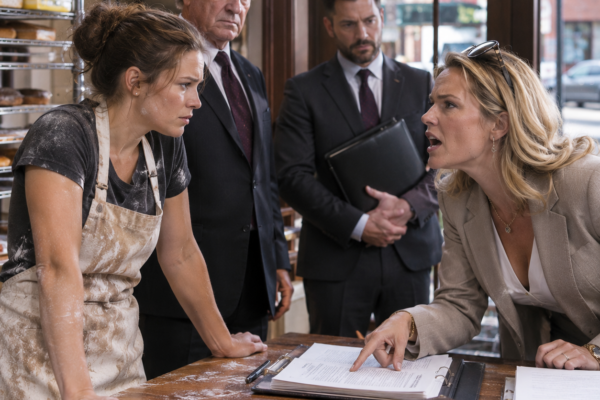
My Manager Fired Me in Front of a Saturday Crowd Because I Left Register Three to Help an Older Woman Who Collapsed and Could Barely Breathe. “You’re a Cashier, Not a Nurse,” He Snapped. I Handed Over My Badge and Stayed Beside Her Anyway—Then the Woman Asked My Name Before the Ambulance Doors Closed..k
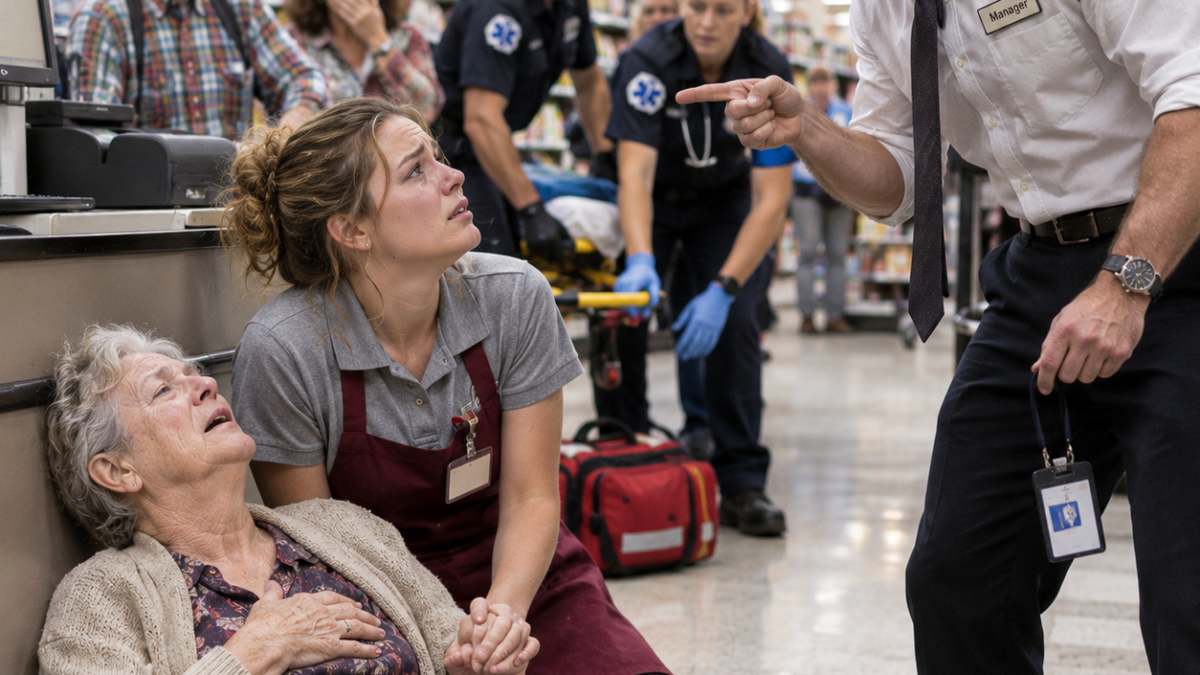
My Manager Fired Me in Front of a Saturday Crowd Because I Left Register Three to Help an Older Woman Who Collapsed and Could Barely Breathe. “You’re a Cashier, Not a Nurse,” He Snapped. I Handed Over My Badge and Stayed Beside Her Anyway—Then the Woman Asked My Name Before the Ambulance Doors Closed.
“Ma’am, look at me. Can you hear me?”
The older woman’s hand trembled against the tile floor.
“My bag,” she whispered. “Please.”
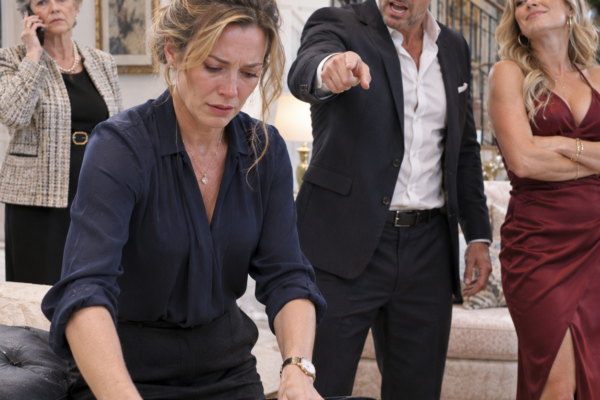
I was already kneeling beside her when my manager came marching down aisle seven.
“Ava! What are you doing?”
“She collapsed.”
People had begun gathering near the produce section.
The woman’s breathing sounded shallow and tight.
I reached for the purse beside her.
“My medication,” she said.
My manager pointed toward the front of the store.
“Close that bag and get back to register three.”
I stared at him.
“She can barely breathe.”
“You are a cashier, not a nurse.”
“I know.”
“Then stop pretending to be one. Customers are waiting because you walked away.”
Someone behind him said, “Call 911.”
“I already did,” I answered.
My manager’s face hardened.
“Ava, get off that floor and return to your register.”
“I’m staying until paramedics get here.”
He lowered his voice.
“This is your last warning.”
The woman squeezed my wrist.
I could feel how frightened she was.
I looked at my manager.
“No.”
His expression changed.
“Take off your badge.”
“What?”
“You heard me. You’re fired.”
A dozen customers were close enough to hear.
“You’re firing me because I won’t leave a woman who just collapsed?”
“I’m firing you because you repeatedly abandon your assigned register and disobey direct instructions.”
The older woman looked up at me.
“You lost your job because of me?”
“No, ma’am.”
I removed my name badge and placed it on the floor beside my knee.
“I lost it because I wouldn’t leave you alone.”
The paramedics arrived seven minutes later.
Her name was Evelyn Hart.
She was seventy-four.
She had come to the store alone to buy tomatoes, carrots, fresh rosemary, and a few ingredients for a dinner she used to cook with her late husband.
She had felt weak before she entered.
She told herself she would be fine.
She wasn’t.
Before the ambulance doors closed, she looked at me.
“What’s your name?”
“Ava Morgan.”
She repeated it.
Slowly.
Like she was memorizing it.
“Ava Morgan.”
Then the doors shut.
By five that afternoon, I was sitting at my father’s kitchen table with no job.
Dad poured me coffee.
“You did the right thing.”
“The right thing doesn’t pay rent.”
“No.”
“I was already barely making enough.”
“I know.”
“I should have gone back to the register.”
Dad looked at me.
“Would you have?”
I thought about Evelyn’s hand around my wrist.
“No.”
“Then stop punishing yourself for knowing who you are.”
The next morning, I put on my best blouse and started applying for work.
Six years in customer service.
Retail.
Front counter.
Scheduling.
Billing.
Basic office support.
I had started community college years earlier but dropped out when Dad got sick and money got tight.
Every application seemed to want the same thing.
Associate degree required.
The first company interviewed me anyway.
The manager liked me.
Then she looked at my résumé.
“You have the experience.”
“Yes.”
“But not the credential.”
“No.”
“I’m sorry.”
I thanked her and left.
When I got home, Dad asked:
“How’d it go?”
“I need one person to take a chance on me.”
What I didn’t know was that while I was hearing another door close, Evelyn Hart was walking back into the grocery store with her son.
She found my former manager.
“I’m looking for Ava Morgan.”
“She doesn’t work here anymore.”
“I know.”
Her son stepped beside her.
“She was fired for helping my mother.”
The manager stiffened.
“She had been warned about leaving her station.”
Evelyn looked at him.
“I could barely breathe, and you were worried about a checkout line?”
He said nothing.
Evelyn did not demand my address.
She did not threaten him.
She simply said:
“Call Ava. Give her my number. Tell her Evelyn Hart came back looking for her.”
That evening, my phone rang.
It was the store.
Then a second number.
A man’s voice.
“Ava Morgan?”
“Yes.”
“My name is Daniel Hart. You helped my mother yesterday.”
I sat up.
“Is she okay?”
“She’s home. Stable. And she has been talking about you all day.”
I smiled before I could stop myself.
“That sounds like her.”
“She wants to thank you.”
“She doesn’t owe me anything.”
“I know. Come anyway.”
The next morning, I learned Daniel Hart was the CEO of Hart Group, a regional services company with several hundred employees.
That made me suspicious immediately.
“I don’t want a job because I helped your mother.”
He smiled.
“Good.”
“Good?”
“I’m not offering you a job.”
He slid a business card across the table.
“I’m offering you an interview.”
“For what?”
“Client services.”
“I don’t have a degree.”
“The posting doesn’t require one.”
“And if I interview badly?”
“You won’t get hired.”
For the first time since I was fired, I laughed.
Daniel smiled.
“My mother says you stayed when leaving would’ve been easier.”
“That doesn’t mean I can do the job.”
“No.”
He pushed the card closer.
“That’s what the interview is for.”
Part 2:
“Ma’am, look at me. Can you hear me?”
The older woman’s hand trembled against the tile floor.
“My bag,” she whispered. “Please.”
I was already kneeling beside her when my manager came marching down aisle seven.
“Ava! What are you doing?”
“She collapsed.”
People had begun gathering near the produce section.
The woman’s breathing sounded shallow and tight.
I reached toward the purse beside her.
“My medication,” she said.
My manager pointed toward the front of the store.
“Close that bag and get back to register three.”
I stared at him.
“She can barely breathe.”
“You are a cashier, not a nurse.”
“I know.”
“Then stop pretending to be one. Customers are waiting because you walked away.”
Someone behind him said:
“Call 911.”
“I already did.”
My manager’s face hardened.
“Ava, get off that floor and return to your register.”
“I’m staying until paramedics get here.”
He lowered his voice.
“This is your last warning.”
The woman squeezed my wrist.
I could feel how frightened she was.
I looked at my manager.
“No.”
His expression changed.
“Take off your badge.”
“What?”
“You heard me. You’re fired.”
A dozen customers were close enough to hear.
“You’re firing me because I won’t leave a woman who just collapsed?”
“I’m firing you because you repeatedly abandon your assigned register and disobey direct instructions.”
The older woman looked up at me.
“You lost your job because of me?”
“No, ma’am.”
I removed my name badge and placed it on the floor beside my knee.
“I lost it because I wouldn’t leave you alone.”
My name is Ava Morgan.
I was thirty-two years old when I got fired from Wilton Market.
Six years in customer service.
Four of them at Wilton.
I knew every register.
Every price override.
Every coupon rule.
Which regular customers needed help reading the card machine.
Which parents always forgot one thing and sent their children sprinting back through the store.
Which customers were lonely enough to turn a thirty-second transaction into a five-minute conversation.
I didn’t mind.
People were the part of retail I actually liked.
Management was another story.
Our store manager was Dennis Pike.
Forty-eight.
Efficient.
Impatient.
The kind of man who treated a checkout line longer than four people like a moral failure.
Dennis had started watching me more closely about six months earlier.
It began with small things.
A woman came through my line six dollars short.
She started putting back coffee.
I paid the difference myself.
Dennis called me into the office.
“This is a supermarket, not your charity project.”
“It was my money.”
“You delayed the line.”
“It took fifteen seconds.”
“That’s not the point.”
“What is the point?”
“The point is that when you’re on register three, your job is register three.”
I understood.
Mostly.
Then Mr. Collins came through.
He was eighty-three and walked with a cane.
He bought two heavy bags.
His car was maybe twenty steps from the entrance.
I asked the next cashier to watch my light and helped him carry them.
Dennis saw me.
“Ava.”
“I’m coming.”
“Now.”
Mr. Collins said:
“She’s just helping me.”
Dennis answered:
“She can help you by doing the job she was hired to do.”
That embarrassed Mr. Collins.
I hated that more than being scolded.
Afterward, Dennis warned me.
“Leave your station again without authorization and you’re done.”
I said:
“What if someone needs help?”
“Call a floor associate.”
“What if there isn’t one?”
“Call a supervisor.”
“What if it’s urgent?”
He stared.
“You always have an answer.”
“No. I have a question.”
He wrote me up.
I signed it.
That mattered later.
Because when I got fired, it wasn’t technically over one isolated incident.
Dennis had documentation.
He would say I had a pattern.
I would say the pattern was helping customers when nobody else was available.
Both could be true.
That Saturday morning started normally.
Rain outside.
Busy store.
Weekend crowd.
I opened register three at eight.
By ten, every lane had a line.
Around eleven-thirty, I noticed an older woman near the produce section.
She wore a pale blue coat and carried a reusable grocery bag.
She stood still for too long.
One hand on the edge of a display.
Then she sat down hard on the floor.
Not intentionally.
Her knees just gave way.
I turned off my register light.
“Denise, watch my line.”
Denise at register four looked over.
“What?”
“Someone fell.”
I ran.
The woman was conscious.
Barely.
Pale.
Breathing quickly.
I did what our basic first-aid training taught us.
I didn’t diagnose.
Didn’t force medication into her mouth.
Didn’t move her unnecessarily.
I called 911.
Asked if she knew her name.
Evelyn.
Asked if she knew where she was.
“Grocery store.”
Good.
She reached weakly toward her purse.
“My bag.”
“What do you need?”
“Medication.”
I opened the bag only after she asked.
She pointed to a small prescription bottle and an inhaler.
I told the dispatcher what she said and followed instructions.
That was when Dennis arrived.
He didn’t begin with:
Is she okay?
He began with:
“What are you doing?”
Maybe that unfairly defines him.
Managers panic too.
Lines were backing up.
Customers were angry.
He may have thought I was creating more risk by getting involved.
But once he saw Evelyn struggling to breathe, his priority should have changed.
It didn’t.
“Get back to register three.”
“I can’t.”
“You can.”
“She needs someone here.”
“Paramedics are coming.”
“They aren’t here.”
“Ava.”
“No.”
That was when he fired me.
The paramedics arrived seven minutes after my 911 call.
Seven minutes is nothing until you are sitting on a floor holding the hand of someone who thinks she might die.
Evelyn kept apologizing.
That broke my heart.
“I ruined your day.”
“You didn’t.”
“I should’ve stayed home.”
“You’re allowed to buy groceries.”
“I knew I felt weak.”
“You’re okay.”
“I got you fired.”
“Let’s deal with your breathing first.”
The paramedics checked her.
Oxygen.
Vital signs.
Questions.
They asked what medications she had taken.
I stepped back.
One paramedic asked:
“Are you family?”
“No.”
Evelyn said:
“She stayed.”
The paramedic looked at my name badge on the floor.
Then at Dennis.
He said nothing.
Neither did I.
Before they loaded Evelyn, she asked:
“What’s your name?”
“Ava Morgan.”
She repeated it.
“Ava Morgan.”
“Yes, ma’am.”
“I won’t forget.”
“You don’t owe me anything.”
“I still won’t forget.”
The ambulance left.
Dennis pointed toward the office.
“We need to complete termination paperwork.”
I looked at him.
“You’re serious?”
“You openly refused a direct instruction after prior warnings.”
I wanted to argue.
Instead, I followed him.
He gave me the final paycheck information.
Benefits termination.
Appeal contact.
Return-of-property form.
I signed where accurate.
Refused to sign one statement saying I acknowledged “abandoning my workstation without cause.”
Dennis frowned.
“You need to sign.”
“No, I don’t.”
“It confirms receipt.”
“Then change the wording to receipt only.”
He did.
Maybe I learned something from all those years dealing with customer forms.
I took my coat.
Left through the front door.
Denise caught me outside.
“Ava.”
I turned.
She hugged me.
“I’m sorry.”
“You didn’t fire me.”
“I should’ve said something.”
“What?”
“That you were right.”
“Wouldn’t have helped.”
“Still.”
She slipped my old badge into my hand.
“You forgot this.”
I looked at it.
“Keep it.”
“No.”
She closed my fingers around it.
“Someday you’ll want to remember.”
I didn’t believe her.
I kept it anyway.
Dad was at home when I arrived.
Charles Morgan.
Sixty-one.
Retired city bus driver.
Widower for nine years.
He looked at the clock.
“You rob the place?”
“They fired me.”
He stood.
“For what?”
I told him.
His face changed.
“They fired you for helping a sick woman?”
“I had prior write-ups for leaving the register.”
“To help people.”
“Still write-ups.”
Dad poured coffee.
Then said:
“You lost a paycheck today.”
“Helpful.”
“You didn’t lose your values.”
“Values don’t pay rent.”
“No.”
“That’s the problem.”
He sat across from me.
“Would you do it differently?”
I thought about Evelyn’s hand.
“No.”
“Then stop wishing you were somebody who would.”
That was Dad.
Not poetic often.
Then suddenly something like that.
I cried.
Not dramatically.
Quietly.
Mostly because losing a job at thirty-two felt different from losing one at twenty-two.
At twenty-two, you think another job is around the corner.
At thirty-two, you know rent dates.
Health insurance.
Car insurance.
Groceries.
Dad had his pension.
I lived in the small apartment above his garage and paid him below-market rent.
He could have told me not to worry.
He didn’t.
He knew I needed to worry enough to move.
The next morning, I updated my résumé.
Six years customer service.
Cash handling.
Scheduling.
Complaint resolution.
Basic inventory.
Front-office experience from two years at a dental practice before Wilton.
Education:
Community college, 42 credits completed.
No degree.
That blank space had followed me for a decade.
I left school when Dad had surgery and couldn’t drive the bus for almost a year.
Mom had already died.
We needed income.
I told myself I would return.
Then life moved.
One semester became two.
Two became five years.
Eventually, saying “I’m going back someday” felt embarrassing.
I applied for eleven jobs.
Got two interviews.
The first was for customer-service coordinator at a medical supply company.
The hiring manager seemed to like me.
Then she asked:
“Associate degree?”
“No.”
“The posting lists it as required.”
“I know. I hoped experience might substitute.”
“You have strong experience.”
“But?”
“HR won’t approve without the credential.”
I smiled.
“Understood.”
I did understand.
I still cried in the car.
When I got home, Dad was fixing a porch light.
“How’d it go?”
“Great until education.”
He climbed down.
“That door closed.”
“They all have the same door.”
“Not all.”
“I just need one person to give me a chance.”
Dad looked at me.
“Then keep knocking.”
While I was doing that, Evelyn Hart was home recovering.
I learned later what had happened.
She had gone to Wilton because it was the anniversary of her husband Robert’s death.
Every year, she cooked the dinner they had eaten on their first date.
Pot roast.
Carrots.
Potatoes.
Rosemary.
She usually had groceries delivered.
That year, she insisted on shopping herself.
Her son Daniel objected.
“You haven’t driven to a grocery store in months.”
“I’m seventy-four, not dead.”
“Mom.”
“Your father came with me every year.”
Daniel went quiet.
“I need to do this myself.”
He let her.
Her doctor later said dehydration combined with an underlying cardiac rhythm issue likely contributed to the episode.
She was released that evening with instructions to rest and follow up.
Daniel brought her home.
She wouldn’t stop talking about me.
“A cashier stayed.”
“I know.”
“She got fired.”
“What?”
“Her manager told her to leave me.”
Daniel stopped.
“He fired her while you were on the floor?”
“Yes.”
“What’s her name?”
“Ava Morgan.”
Daniel wrote it down.
Evelyn said:
“Do not turn this into some grand gesture.”
“I’m not.”
“You do that.”
“What?”
“Fix people.”
“I run companies.”
“Same habit.”
Daniel laughed.
“I want to thank her.”
“Good.”
“No checks.”
“I didn’t say check.”
“Jobs?”
“I didn’t say job.”
“Daniel.”
“Mom.”
She pointed at him.
“Don’t make her feel bought.”
That woman understood me without knowing me.
The next day, Evelyn insisted on returning to Wilton.
Daniel went with her.
Dennis was there.
Evelyn asked for me.
Dennis told her I no longer worked there.
“I know.”
He looked uncomfortable.
She said:
“You fired her because she stayed with me.”
“She was terminated for repeated insubordination.”
“I could barely breathe.”
“We had called emergency services.”
“She called emergency services.”
Dennis crossed his arms.
“Mrs. Hart, I’m glad you’re well, but I cannot discuss personnel matters.”
That was legally sensible.
Emotionally useless.
Daniel asked:
“Can you give us Ava’s contact information?”
“No.”
“Good.”
Dennis blinked.
“I’m glad you said no.”
Evelyn looked at her son.
Daniel explained:
“Employee privacy.”
Then to Dennis:
“Call her. Give her my number. Tell her your customer Evelyn Hart came back looking for her.”
Dennis hesitated.
Then agreed.
Denise called me that evening.
“Ava?”
“Yeah?”
“Mrs. Hart came back.”
I sat up.
“What?”
“She’s okay.”
“Oh, thank God.”
“She and her son asked for you.”
“Why?”
“I don’t know.”
Then she gave me Daniel’s number.
I called.
“Ava Morgan?”
“Yes.”
“This is Daniel Hart.”
“Mrs. Hart’s son?”
“Yes.”
“How is she?”
“Much better.”
I exhaled.
“Good.”
“She’s been worried about you.”
“She shouldn’t.”
“She disagrees.”
I smiled.
“That sounds familiar.”
“She wants to thank you in person.”
“She already did.”
“Come anyway.”
He gave me an address.
The next morning, I drove there.
The Hart house was large.
Not absurd.
But large enough that I checked the address twice.
Daniel answered himself.
Early forties.
Open-collar shirt.
No visible attempt to impress me.
“Ava?”
“Yes.”
“Daniel.”
He shook my hand.
“Mom’s waiting.”
Evelyn stood when I entered the sitting room.
I almost cried seeing her upright.
“Mrs. Hart.”
“Ava.”
She hugged me.
“I’m glad you’re okay.”
“I’m standing here because you stayed.”
“Paramedics did the important part.”
“You were there before they were.”
I didn’t know what to say.
She asked how I was doing.
“I’m looking for work.”
“What kind?”
“Customer service. Front office. Anything stable.”
Daniel sat across from us.
“What experience?”
“Six years customer service. Some office work.”
“Education?”
“College. Not finished.”
“What happened?”
“Money.”
Evelyn looked at me.
“You want to go back?”
“Yes.”
“Then why haven’t you?”
“Still money.”
She nodded.
Daniel said:
“Hart Group has a client-services opening.”
I stiffened.
“I don’t want a job because I helped your mother.”
“Good.”
That surprised me.
“I’m not offering one.”
He handed me a business card.
“I’m offering an interview.”
I looked at it.
“Does it require a degree?”
“No.”
“Did you change that?”
“No.”
“Would they know who I am?”
“They’ll know I referred you.”
“That sounds like an advantage.”
“It gets your résumé read.”
“And after that?”
“If you interview badly, you won’t get hired.”
Evelyn smiled.
I liked the answer.
“What does client services do?”
“Handles business accounts. Billing questions. Service problems. Scheduling escalations.”
“I could do that.”
“Prove it.”
I laughed.
“When?”
“Tomorrow. Ten.”
“I’ll be there.”
At home, Dad read the card.
“Hart Group?”
“You know it?”
“Everybody knows Hart Group.”
“I didn’t.”
“That’s because you think LinkedIn is a disease.”
“It might be.”
Dad looked at me.
“So he gave you a job?”
“Interview.”
“Better.”
“Why better?”
“Because if you get the job, it’s yours.”
That was exactly how I felt.
The first interview was with Monica Reed.
Client-services manager.
No Daniel.
No Evelyn.
Good.
Monica asked:
“Why did your last job end?”
I had practiced several polished answers.
None sounded right.
“A customer collapsed. I left my register to help her. My manager ordered me back. I refused. He fired me.”
Monica watched me.
“Had you been warned before?”
“Yes.”
“For?”
“Leaving my register without authorization.”
“So the manager’s position wasn’t entirely new.”
“No.”
“Would you do the same thing again?”
“If someone was experiencing an emergency, I’d call for help immediately and stay if I was the only safe person available.”
She wrote something.
“Even if it cost you the job?”
“I hope your procedures wouldn’t make that necessary.”
She smiled slightly.
Good sign.
Then came scenarios.
An angry client double-charged.
A customer demanding something I couldn’t authorize.
A mistake made by another employee.
A caller swearing.
A client threatening to cancel.
I answered the way I had learned from years behind counters.
Listen first.
Do not promise what you cannot deliver.
Apologize for the experience without inventing blame.
Find the actual problem.
Own the next step.
Tell them when they’ll hear from you.
Monica said:
“You don’t rush to defend the company.”
“People don’t care who’s right until they know you heard them.”
She wrote again.
At the end:
“I’d like to move you to the final interview.”
I almost said:
Really?
Instead:
“Thank you.”
“Two o’clock.”
“I’ll be back.”
Dad was waiting for my call.
“First round done.”
“And?”
“Final at two.”
“I told you.”
“You told me nothing.”
“I communicated confidence.”
“You made toast.”
“Confidence toast.”
At two, I met operations director Samuel Ortiz.
He asked fewer questions.
Harder ones.
“What’s your weakness?”
I refused to say perfectionism.
“I over-help.”
He raised an eyebrow.
“I have trouble watching a problem and assuming someone else will handle it.”
“That can create boundary issues.”
“I know.”
“What are you doing about it?”
“Learning when helping means taking ownership and when it means finding the right person faster.”
That was true.
Losing Wilton had forced me to think about the difference.
Samuel asked:
“If a colleague ignores procedure because they believe they are helping a customer, what do you do?”
I smiled.
“That feels targeted.”
“It isn’t.”
“I’d first ask whether the procedure creates a safety risk or whether the employee does. Then I’d escalate through the proper channel instead of pretending either rules or judgment are always right.”
He leaned back.
“Interesting.”
I thought I had ruined it.
Then he said:
“We’d like you to join the client-services team.”
I stared.
“You’re offering me the position?”
“Yes.”
“Today?”
“Yes.”
“Daniel Hart didn’t tell you to hire me?”
Samuel laughed.
“Daniel Hart has never successfully told Monica Reed whom to hire.”
That made me believe it.
Salary was almost thirty percent more than Wilton.
Health insurance.
Paid time off.
401(k).
Tuition assistance after six months.
I heard the last one twice.
“Tuition assistance?”
Samuel nodded.
“Up to the annual cap for approved programs.”
I swallowed.
“I start when?”
“Monday.”
I went to the parking lot.
Called Dad.
“I got it.”
“I knew it.”
“No, you hoped.”
“I knew loudly.”
I started Monday.
My first desk felt impossibly clean.
Computer.
Headset.
Notebook.
Two monitors.
Monica showed me the client system.
For an hour, I shadowed her.
Then she let me handle one call with her listening.
The customer was furious.
He had been billed twice for the same service.
“I’ve called twice.”
“I understand.”
“No, you don’t. Everybody says they understand.”
He was right.
So I stopped saying it.
“I’m looking at the duplicate charge now.”
Silence.
“I can see both transactions.”
“You can?”
“Yes.”
“One is incorrect. I’m submitting reversal today.”
“How long?”
“Three to five business days back to the card, but I’ll email confirmation before we hang up.”
His voice changed.
“That’s all I wanted.”
Afterward, Monica said:
“You listened before you explained.”
“People usually calm down once they know you found the actual problem.”
“Keep doing that.”
For the first month, I was terrified.
Every mistake felt like proof that I didn’t belong.
I triple-checked emails.
Asked too many questions.
Stayed late.
Monica eventually called me into her office.
“You’re doing well.”
“Okay.”
“That wasn’t criticism.”
“I know.”
“Then why do you look like I’m firing you?”
Old habits.
She said:
“You don’t have to earn the job every morning.”
That hit me harder than she knew.
I had spent years believing employment was something that could vanish if I became inconvenient.
At Hart Group, managers corrected things.
They didn’t humiliate people in front of customers.
When mistakes happened, we documented them.
Trained.
Adjusted.
Not perfect.
Nothing is.
But humane.
Three weeks in, I called Evelyn.
“I wanted to tell you my first month is going well.”
“I knew it would.”
“You didn’t know.”
“I suspected aggressively.”
I laughed.
She said:
“Bring your father to dinner Saturday.”
“What?”
“I want to meet him.”
“Why?”
“He raised you.”
“That seems like a strange reason to invite someone to dinner.”
“Humor an old woman.”
“You used that line on Daniel, didn’t you?”
“Frequently.”
Dad panicked when I told him.
“Dinner where?”
“Her house.”
“The big one?”
“Yes.”
“What do I wear?”
“Clothes.”
“Ava.”
“Nice clothes.”
He pulled out a sport coat Mom had bought him eleven years earlier.
At dinner, Evelyn asked about his bus years.
Dad told stories.
Daniel joined us halfway through.
No business talk at first.
Then Evelyn asked me:
“You still want to finish college?”
“Yes.”
“Why haven’t you applied?”
“I’m not eligible for tuition assistance yet.”
“That wasn’t my question.”
I looked at Dad.
He smiled.
She had me.
“I’m scared.”
“Of school?”
“Of starting again at thirty-two.”
Dad said:
“You’ll be thirty-six either way.”
I stared.
“You’ve been saving that?”
“Three weeks.”
Daniel laughed.
Evelyn asked:
“What did you study?”
“Business administration.”
“Still want that?”
“I think so.”
“Think or know?”
I paused.
“Maybe communications.”
Daniel said:
“Client-services leadership track would fit either.”
I looked at him.
“Is this the grand gesture?”
“No. HR has a normal tuition program. You qualify when you qualify.”
“Good.”
Evelyn smiled.
I pointed at her.
“No checks.”
She raised both hands.
“I didn’t say anything.”
Six months later, I enrolled.
Two evening courses.
Business communication.
Organizational behavior.
The first week nearly killed me.
Work until five.
Class twice a week.
Reading.
Papers.
Dad making dinner because I had no time.
I considered dropping one course.
Then Monica said:
“You know what we call employees who take two classes while working full-time?”
“Exhausted?”
“That too.”
I stayed.
Something else happened during those months.
Wilton Market contacted me.
Not Dennis.
Regional HR.
A customer complaint had reached corporate after Evelyn’s family reported what happened.
They reviewed the incident.
Interviewed employees.
Looked at my disciplinary history.
The result was more nuanced than the version I wanted emotionally.
I had violated station procedures before.
Dennis had issued legitimate warnings.
But the company concluded he had exercised poor judgment during a medical emergency and handled the situation inconsistently with emergency-response policy.
Dennis was disciplined.
Then later transferred out of management after unrelated complaints.
I was offered reinstatement.
I declined.
Not dramatically.
Not with a speech.
I thanked HR.
Asked them to mail my employment file.
That was enough.
Denise called.
“You could’ve come back.”
“I know.”
“You don’t want revenge?”
“No.”
“You’re healthier than me.”
“Debatable.”
Mr. Collins still shopped there.
He sent me a Christmas card.
So did the woman I once helped with six dollars.
Life is strange.
A year into Hart Group, I became senior client-service representative.
Not because Daniel promoted me.
Monica did.
She showed me performance metrics.
Resolution time.
Client retention.
Feedback scores.
Attendance.
“You earned this.”
I said:
“Thank you.”
Then went to the bathroom and cried.
I called Dad.
“Promotion.”
“How much?”
“Dad.”
“What? Rent is economics.”
I laughed.
“Enough.”
He said:
“Your mother would be unbearable right now.”
Mom had died when I was twenty-three.
Breast cancer.
Dad rarely mentioned her in moments like that because emotion still ambushed him.
I said:
“She’d tell everybody at church.”
“She’d tell strangers at gas stations.”
“True.”
We were quiet.
Then Dad said:
“She’d be proud.”
I cried again.
Two years after Wilton, I finished my associate degree.
At thirty-four.
I walked across the stage with students twelve years younger than me.
Dad shouted my name so loudly the dean laughed.
Evelyn and Daniel were there.
So was Monica.
When I reached them afterward, Evelyn hugged me.
“I knew you’d finish.”
“No, you didn’t.”
“Fine. I hoped aggressively.”
Daniel handed me a small box.
I glared.
“No checks.”
“Open it.”
Inside was a fountain pen.
Nothing extravagant.
Engraved:
AVA MORGAN — LISTEN FIRST
I stared.
“You remembered?”
“Monica said that’s what you teach the new hires.”
By then, I was training new client-service employees.
My first lesson was always:
People tell you the problem in the first minute if you let them finish.
The second was:
Procedures matter.
Judgment also matters.
If the two conflict during an actual emergency, escalate quickly and protect the person first.
I never mentioned Wilton by name.
Didn’t need to.
Then something happened that brought the whole story back around.
Evelyn came to our office one afternoon.
Not because Daniel owned the company.
Because she had a billing problem.
She had signed up for one of Hart Group’s home-support services after a minor surgery.
The invoice was wrong.
She called the general number.
Got transferred twice.
Then apparently decided to visit.
Reception called me.
“Ava? There’s a Mrs. Hart downstairs asking for client services.”
I laughed.
Of course.
I walked down.
Evelyn sat in the lobby with her invoice.
“What are you doing here?”
“Being a dissatisfied customer.”
“Daniel would fix this in thirty seconds.”
“I’m not calling Daniel.”
“You raised him.”
“Exactly why I know better.”
I took the invoice.
Found the error.
Duplicate service day.
Corrected it.
She watched me.
“You’re good at this.”
“I’ve had practice.”
“Remember when you paid six dollars for that woman’s coffee?”
I blinked.
“How do you know that?”
“You told me.”
“I did?”
“At dinner.”
“That sounds like oversharing.”
She smiled.
“Daniel says helping people is your addiction.”
“That sounds like Daniel.”
Then she became serious.
“Have you learned boundaries?”
“Some.”
“Would you still leave the register?”
I knew exactly what she meant.
“Yes.”
“Even knowing what happened?”
“Yes.”
“Why?”
“Because a job can be replaced.”
She waited.
I finished:
“A person in trouble shouldn’t have to wonder whether helping them is against policy.”
Evelyn smiled.
“Good answer.”
Then:
“But call a supervisor first.”
I laughed.
“Yes, ma’am.”
Dad eventually met Daniel without Evelyn around.
They became oddly friendly.
Dad liked that Daniel knew nothing about buses.
Daniel liked listening to Dad explain why every transportation company designs routes incorrectly.
One Saturday, Daniel asked:
“Did you always know Ava would do well?”
Dad answered:
“No.”
I stared at him.
He continued.
“I knew she’d work. That’s different.”
That may be the best thing he ever said about me.
Talent is nice.
Opportunity matters.
But work is what I could control.
The biggest change in my life did not come from Evelyn being wealthy.
That part made the story prettier than reality.
If Evelyn had been poor, I still should have stayed.
If Daniel had been unemployed, I still should have stayed.
If no job had followed, helping her would not have become a mistake.
That is what I tell people whenever they romanticize what happened.
“You saved a rich woman and got rewarded.”
No.
I helped a frightened older woman.
Later, her son gave me an interview.
Then strangers evaluated me.
I earned a job.
The order matters.
Daniel never told Monica to hire me.
I saw the internal referral note years later.
It said:
Candidate assisted my mother during a medical emergency. Strong customer-service background. Please assess normally. No special treatment requested.
That made me respect him more.
Evelyn once asked:
“Would you have been offended if he simply gave you the job?”
“Yes.”
“Why?”
“Because then I’d spend every day wondering whether I deserved the chair.”
She nodded.
“That’s why I told him not to.”
“You told him?”
“Of course.”
I laughed.
“You meddle.”
“I’m seventy-six now. It’s one of my remaining hobbies.”
By then, Evelyn had become something between a friend and an extra grandmother.
She invited Dad for Sunday dinner.
Sent me newspaper clippings about college programs.
Called when she thought I was working too much.
I called when she skipped medical appointments.
“Your cardiologist said—”
“Whose side are you on?”
“Your cardiologist’s.”
“Traitor.”
Daniel said:
“Welcome to my childhood.”
A few years later, I completed my bachelor’s degree through the same tuition program.
Part-time.
Slow.
No dramatic graduation miracle.
Just classes.
One after another.
I was thirty-seven.
Dad cried harder than he had at the first graduation.
Evelyn wore a ridiculous hat.
Daniel claimed he had tried to stop her.
Nobody believed him.
Monica had been promoted by then.
Her old job opened.
Client-services manager.
I applied.
Daniel was no longer involved in day-to-day hiring for that division.
Good.
The panel asked me:
“Tell us about a time you made a decision that violated normal procedure.”
I smiled.
“Which one?”
They laughed.
Then I told the truth.
Not the whole emotional version.
A professional version.
Customer medical emergency.
I left my assigned station.
Failed to follow management direction.
Lost the job.
What did I learn?
Not that rules don’t matter.
That managers need emergency procedures employees can trust.
That employees need escalation paths.
That compassion without structure creates chaos.
And structure without compassion creates something worse.
I got the job.
On my first day as manager, I held a team meeting.
I said:
“We answer clients quickly. We meet service levels. We document everything. But if somebody is having a genuine medical emergency, you call 911 first. You help safely. Then come explain to me why the queue got longer.”
One employee laughed.
I didn’t.
“I’m serious.”
She stopped.
Then I smiled.
“So is the coffee. Don’t drink it.”
That became our culture.
Years after Wilton, Denise told me Dennis had left retail entirely.
I felt nothing dramatic.
No satisfaction.
No anger.
He was a bad manager in a critical moment.
That did not require him to remain a villain forever.
Maybe he learned.
I hope so.
What I remember most clearly is not his face when he fired me.
It is Evelyn looking at me from the floor and asking:
“You lost your job because you stayed with me?”
That question followed me.
For a long time, I thought the answer was yes.
Eventually, I understood it differently.
I lost one job because I stayed.
I found a career because staying revealed something about me that I had undervalued.
Not heroism.
Not sacrifice.
Attention.
I notice people.
The customer six dollars short.
Mr. Collins with heavy groceries.
A woman losing her breath near the rosemary.
For years, Dennis treated that as a flaw.
At Hart Group, Monica taught me to turn it into a skill.
Listen.
Notice.
Respond.
Then learn the boundary between helping and rescuing everyone.
That last part took longer.
Dad died when I was forty-one.
Heart attack.
Sudden.
No long illness.
No time to prepare.
Evelyn sat beside me at his funeral.
Daniel handled food without asking.
Monica came.
Half my team came.
When I returned home afterward, Dad’s kitchen looked wrong without him.
On the table was an envelope.
He had prepared estate papers years earlier.
Inside, along with practical instructions, was a note.
**Ava,
The day you came home from the grocery store and said you were fired, you thought you had failed at adulthood.
You hadn’t.
You had simply reached the part where doing the right thing became expensive.
That happens.
Do it anyway when you can.
But pay your rent first.
Love,
Dad**
I laughed so hard I cried.
That was Charles Morgan.
Moral wisdom followed immediately by rent.
I framed the note.
Not the degree.
Not my promotion.
That note.
Evelyn died three years later.
Peacefully.
Daniel called me early one morning.
I knew before he spoke.
At her memorial, he found me beside a photograph of her standing in a grocery aisle.
Fresh rosemary in her hand.
“You know she kept your old name badge.”
I turned.
“What?”
He handed me a small envelope.
Inside was the Wilton Market badge Denise had given back to me.
Or so I thought.
Apparently I had left it at Evelyn’s house during one of our early visits.
She kept it.
Wrapped in tissue.
A note beside it:
AVA MORGAN
She stayed.
That broke me.
Daniel hugged me.
“She talked about you until the end.”
“I didn’t save her.”
“I know.”
“Paramedics did.”
“I know.”
“She would hate that we keep telling this story like I performed surgery in aisle seven.”
Daniel laughed through tears.
“She also knew you hated it.”
“Then why keep the badge?”
“Because what mattered to her wasn’t the medicine.”
“What was?”
“She was scared.”
I understood.
“She didn’t want to be alone.”
“No.”
Neither did anyone.
That was the entire story.
Not wealth.
Not employment.
Not college.
A frightened person on a floor and another person deciding not to walk away.
Years later, when I train managers, I still tell them about emergencies.
I never use Evelyn’s name.
I say:
“One day an employee may have to choose between protecting a metric and protecting a person. If your policies make the correct choice unclear, rewrite the policies before that day arrives.”
Managers usually nod.
Some understand.
Some will need the experience first.
I hope they never get it.
Today, I oversee client services across three Hart Group divisions.
I finished college.
Paid off my student debt.
Bought a small house.
Still hate networking events.
Still carry emergency snacks because Dad trained me to believe every road trip could become survival.
Daniel and I remain friends.
He never became my boss directly.
I preferred that.
Occasionally someone new hears how we met.
They say:
“So you helped his rich mother and he gave you a career?”
I correct them every time.
“No.”
“He gave me an interview.”
That distinction is everything.
A gift can disappear.
An opportunity changes what you can prove to yourself.
Daniel opened one door.
Monica made me walk through it.
I stayed by earning the next day.
Then the next.
Then the promotion.
Then the degree.
Then another promotion.
Nobody gave me those.
They gave me a room where I could compete.
That was enough.
I still keep Evelyn’s note in my desk.
She stayed.
Four words.
Whenever work becomes numbers, metrics, response times, staffing ratios, productivity dashboards, I open the drawer.
Not because numbers don’t matter.
They do.
A company that ignores numbers stops employing people.
But numbers are supposed to help people do work.
They are not supposed to make people invisible.
Dennis forgot that.
I almost forgot it too once I became management.
That scared me.
So every quarter I ask my team a question.
“What rule made it harder to help a client this month?”
Sometimes the answer is none.
Sometimes we change something.
That is how I honor Evelyn now.
Not by telling everyone I once got fired for helping a woman in a grocery store.
By making sure nobody on my team has to choose between compassion and employment because a manager refused to think for thirty seconds.
I was thirty-two when Dennis told me:
“You’re a cashier, not a nurse.”
He was right about one thing.
I wasn’t a nurse.
I wasn’t a doctor.
I wasn’t a paramedic.
I was just the person who happened to be closest when Evelyn fell.
Sometimes that is all a person needs you to be.
Closest.
Awake.
Willing to stay.
And if you ask me today whether I would risk the job again, knowing everything that followed, my answer is still yes.
Not because a better job might appear afterward.
Not because the person on the floor might secretly have a wealthy son.
Not because kindness always gets rewarded.
It doesn’t.
I would stay because when Evelyn reached for my wrist, she was frightened.
A checkout line could wait seven minutes.
She shouldn’t have had to face those seven minutes alone.
Everything else came later.