“Get That Rusty Car Away From Our Graduation!” My Son Snapped as My Daughter Refused the Flowers I’d Brought. They Believed I’d Lost My Company, My Mansion, and Every Dollar They’d Grown Up Spending. After Months of Watching Them Treat Me Like a Burden, I Turned to Leave—Until the Dean Hurried Down the Steps and Said, “Mr. Bennett, We Can’t Begin Without You.”.k

“Get That Rusty Car Away From Our Graduation!” My Son Snapped as My Daughter Refused the Flowers I’d Brought. They Believed I’d Lost My Company, My Mansion, and Every Dollar They’d Grown Up Spending. After Months of Watching Them Treat Me Like a Burden, I Turned to Leave—Until the Dean Hurried Down the Steps and Said, “Mr. Bennett, We Can’t Begin Without You.”
The first thing my son did when he saw me at his college graduation was look over his shoulder to see who might be watching.
The second was tell me to leave.
“Dad, seriously? You brought that car?”
Ethan stood on the stone steps outside Hawthorne University’s graduation hall, wearing his cap and gown over an expensive tailored suit.
Beside him, his twin sister, Chloe, stared at my old brown sedan as though I’d parked a garbage truck in front of the building.
The car was twenty-three years old.
Rust had started eating through the rear wheel wells. The driver’s window needed help closing, and the paint had faded so badly that nobody could remember its original color.
But it ran.
And it had gotten me there.
I stepped out holding two small bouquets.
“Congratulations,” I said. “I brought you both some flowers.”
Chloe recoiled.
“Please tell me you didn’t buy those at a gas station.”
“Grocery store,” I answered. “They looked nice.”
“Dad, everyone can see us.”
Ethan came down two steps and lowered his voice.
“Why couldn’t you park somewhere else? People are going to think we’re related to you.”
I looked at my son.
“We are related, Ethan.”
He glanced toward a group of students standing nearby.
“Not so loud.”
My name is Daniel Bennett. I’m fifty-nine years old, and until that morning, I believed losing almost everything I owned was the worst thing that could happen to a father.
I was wrong.
Watching your children become ashamed of you is worse.
Six months earlier, Ethan and Chloe had lived in a twelve-bedroom estate outside Greenwich, Connecticut.
They drove expensive cars.
Wore designer clothes.
Traveled whenever they pleased.
And attended a private university whose business building carried the Bennett family name.
I’d spent thirty years building a logistics company from one rented warehouse into a successful regional business.
Their mother died when they were young, and somewhere along the way, I confused giving them everything with being a good father.
When Ethan asked for $5,000 for a weekend trip, I transferred it.
When Chloe ruined an expensive dress and wanted another, I paid for it.
When they complained that their friends drove newer cars, I replaced perfectly good vehicles.
I thought their happiness meant I was doing something right.
Then I began noticing how they treated people who didn’t have what we had.
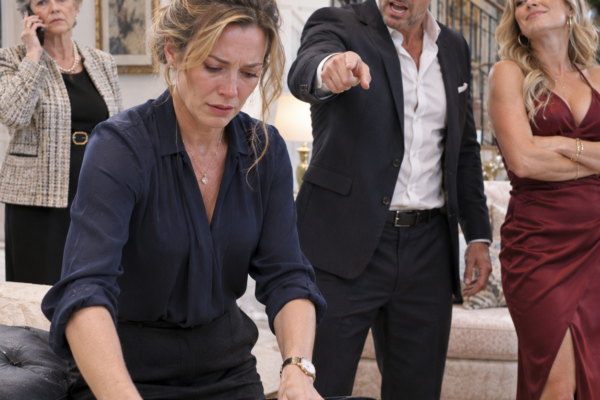
One afternoon, Ethan berated Emily, my longtime receptionist, because a visitor badge wasn’t ready.
“Do you know who I am?” he demanded.
Emily apologized.
“Your father’s in a meeting. It’ll only be five minutes.”
“Then find somebody competent.”
I stepped out of my office just in time to hear him say, “She works for us, Dad.”
“No,” I told him. “She works for me. And you will apologize.”
He rolled his eyes.
Chloe stood beside him.
“Dad, you’re embarrassing us over a receptionist.”
A week later, I received a call from a restaurant manager.
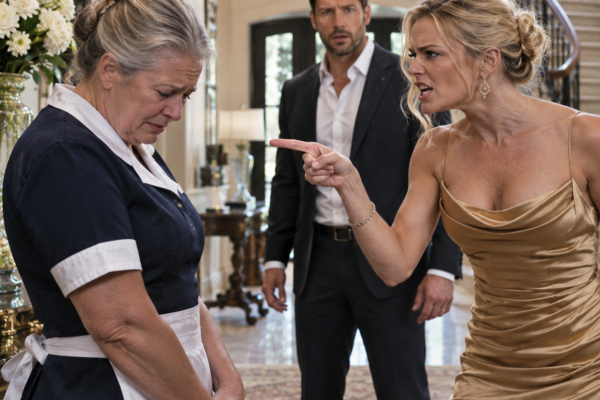
Chloe had demanded that a young waitress be fired after accidentally spilling water on her sleeve.
Ethan had supported her, threatening the manager with my name.
When I confronted them, Chloe shrugged.
“Why are you taking some waitress’s side over your daughter?”
Then came a meeting with Professor Hayes.
Ethan had demanded special treatment because I was a university donor.
Chloe had taken credit for research completed by a scholarship student named Anna.
Neither seemed ashamed.
They seemed offended that anyone had challenged them.
I cut their spending allowances.
They responded by taking a company vehicle without authorization.
That was when I finally confronted the question I’d avoided for years.
Did my children love me—or did they love what my money bought them?
Not long afterward, our household changed completely.
The company was in trouble.
Our accounts were no longer available for their spending.
The luxury cars disappeared.
We left the mansion and moved into a small two-bedroom rental across town.
Ethan slept on the sofa.
Chloe had to do her own laundry.
Both began taking the bus to campus.
They blamed me for everything.
“Build the company again,” Ethan snapped one evening. “You did it once.”
Chloe looked at the grocery bags on our kitchen counter and said, “I can’t believe we’re living like ordinary people.”
I tried to explain that expensive possessions weren’t what made a family worth having.
Neither wanted to listen.
Then, three days before graduation, I told them I was worried about paying for my medication.
Ethan told me groceries were more important.
Chloe didn’t even look up from her phone.
I went into my bedroom that night and sat alone for a long time.
I’d given my children every material advantage I could afford.
But I wasn’t sure I’d taught them how to love someone who had nothing left to give.
Now we stood outside their graduation hall.
Ethan was asking me to take my old car and disappear.
Chloe pushed the bouquets back toward me.
“Don’t give me those cheap flowers in front of everyone.”
I looked at them both.
“I only came because I’m proud you graduated.”
Ethan’s face hardened.
“Then prove it by leaving before our friends find out you’re our father.”
I held the flowers for another moment.
Then I turned toward the parking lot.
Behind me, someone called out.
“Mr. Bennett! Thank goodness you’re here!”
A man in academic robes was hurrying down the steps.
It was Dean Wallace.
He looked from my children to the bouquets in my hands, then back at me.
“Sir, the entire hall is waiting. We can’t begin without you.”
Ethan frowned.
“What do you mean you can’t begin without him?”
And for the first time that morning, my son looked at me as though he had no idea who his father really was.
Part 2:
My son told me to get out of his graduation before anyone discovered I was his father.
I was standing outside Hawthorne University’s main auditorium, holding two bouquets of flowers that had cost me eighteen dollars and change.
“Dad, please,” Ethan said, glancing toward his classmates. “You’re making this uncomfortable.”
His twin sister, Chloe, looked from my faded brown sedan to the flowers.
“Uncomfortable? He’s humiliating us.”
I stared at her.
The last time I’d seen that expression, she was eight years old and furious because I’d bought her the wrong color bicycle.
Back then, I’d exchanged the bicycle the following morning.
This time, there was nothing I could exchange.
“Chloe,” I said quietly, “I came to watch you graduate.”
She folded her arms across her academic gown.
“Then why couldn’t you come in something decent?”
I looked toward the car.
Rust along the fenders. A dent in the rear bumper. One hubcap missing.
It had been a good car for a long time, and although it wasn’t pretty, I’d maintained it carefully.
“It’s what I’m driving.”
Ethan stepped closer.
“That’s exactly the problem. People here know who we are.”
I waited.
He lowered his voice.
“They know what we used to have. If they see that thing, they’ll realize how far we’ve fallen.”
I looked at my son.
“You’re graduating today. Isn’t that worth celebrating?”
“Not if everyone remembers us as the kids whose father went broke.”
Chloe reached for Ethan’s arm.
“Just make him leave.”
My fingers tightened around the paper wrapped around the bouquets.
For a moment, I considered telling them everything right there on the steps.
I considered opening my phone, showing them the company’s latest financial statements, and watching their expressions change.
But then I remembered why I’d made the decisions that brought us to that morning.
I wasn’t trying to impress my children.
I was trying to discover whether there was still something in them worth reaching.
I turned toward the parking lot.
And that’s when I heard Dean Wallace calling my name.
“Mr. Bennett! Please, sir, don’t go. The ceremony cannot begin without you.”
I stopped.
My children stared at him.
For the first time in their lives, they were about to find out what happened when their father stopped buying his way out of every difficult conversation.
But to explain that morning, I have to go back almost thirty years.
Back to a warehouse with a leaking roof, a wife who believed in me, and two children who hadn’t yet learned that money could make other people seem small.
My name is Daniel Bennett.
At fifty-nine, I’d spent most of my adult life running Bennett Industrial Logistics, a regional transportation and warehouse-services company based in Connecticut.
It didn’t begin with a mansion.
It began with one rented warehouse, two delivery trucks, and a business loan that made me lose sleep for a year.
I was twenty-nine when I signed the first lease.
My wife, Rebecca, was twenty-seven.
She was teaching elementary school while I worked fourteen-hour days trying to convince manufacturers to trust a company nobody had heard of.
Our first office was a plywood partition in the corner of the warehouse.
It had a secondhand desk, two filing cabinets, and a portable heater.
Rebecca came by after school to help with invoices.
Sometimes she brought dinner in plastic containers because she knew I wouldn’t remember to eat.
Whenever I started worrying that the business would fail, she’d put her hand over mine.
“Daniel, do the work in front of you. Worrying about every possible disaster won’t finish today’s deliveries.”
She was right.
We paid our drivers when we said we would.
We kept our equipment in good condition.
And when we made a mistake, we admitted it and corrected the problem.
Customers noticed.
One contract became three.
Three became twelve.
Within ten years, we had several warehouses and a reliable regional transportation network.
By the time Ethan and Chloe were born, we could afford things that had once seemed impossible.
A beautiful house.
Vacations.
College savings.
A future without constant fear of an unpaid bill.
Rebecca was pleased about our success, but she never worshipped it.
She insisted the children say thank you to the people who served us.
She made them carry their dishes to the sink.
When they were old enough, they earned spending money by doing chores.
Once, when Ethan was ten, he told the woman cleaning our house that she should pick up his shoes because it was her job.
Rebecca heard him.
She walked into his room and told him to put the shoes away himself.
Then she made him apologize.
“She helps us keep our home clean,” Rebecca explained. “That doesn’t mean she’s here to clean up your bad manners.”
Ethan apologized.
He meant it.
I remember that because I sometimes wonder what kind of man he’d have become if Rebecca had lived.
She died when the twins were thirteen.
An aggressive cancer took her in less than a year.
The last months were difficult.
There were hospital visits, treatments, hope, disappointment, and nights when I sat beside her bed trying to imagine a future I didn’t want.
After the funeral, our house seemed enormous and empty.
I didn’t know what to do with two grieving teenagers.
I knew how to negotiate a shipping contract.
How to solve a warehouse problem.
How to manage payroll for hundreds of employees.
But I didn’t know how to make my children feel safe without their mother.
So I bought things.
At first, it was innocent.
A new video game when Ethan was having a difficult week.
A shopping trip with Chloe when she was missing Rebecca.
A vacation when neither wanted to stay home during the first Christmas without their mother.
Then the gifts became more frequent.
The requests became more expensive.
And the word no became something I avoided because I couldn’t bear another disappointed expression.
My longtime chief operating officer, Evelyn Price, noticed before I did.
She’d joined the company when we had only fifteen employees.
Rebecca had been one of her closest friends.
Evelyn knew our family well enough to speak plainly.
“Daniel, they’re grieving,” she told me one afternoon, “but giving them everything they ask for won’t teach them how to live with grief.”
I was exhausted.
“Let me get through this year.”
She looked at me.
“You’ve been saying that for three years.”
I didn’t listen.
The business kept growing.
So did the children’s expectations.
By eighteen, both drove expensive vehicles.
By twenty, Ethan had a habit of ordering restaurant meals without looking at prices.
Chloe treated shopping like a competitive sport.
Their credit cards were paid from accounts I funded, and I rarely examined the statements.
When Ethan wanted five thousand dollars for a weekend in Miami, I transferred it.
When Chloe wanted a newer car because her friends had one, I replaced hers.
I told myself they were enjoying opportunities I’d never had.
But somewhere along the way, enjoyment had become entitlement.
And entitlement had become contempt.
I didn’t recognize the difference until I heard my son shouting at a woman who had worked for our family business longer than he’d been alive.
It was a Tuesday afternoon.
I was leaving a meeting when I heard Ethan’s voice from the reception area.
“Five minutes? Are you kidding me?”
Emily Parker, my executive receptionist, stood behind her desk.
She was fifty-four, had worked for Bennett Industrial Logistics for nineteen years, and knew more about the company’s daily operations than half the people with senior titles.
She looked embarrassed.
“Your father is finishing a meeting, Ethan. I told him you’re here.”
“Then tell him to hurry up.”
“He’ll be with you shortly.”
Ethan leaned over her desk.
“Do you know who I am?”
I stopped in the doorway.
Emily remained professional.
“Yes, Ethan. Of course.”
“Then stop wasting my time.”
I walked forward.
“Ethan.”
He turned.
“Dad. Finally.”
I looked at Emily.
“Are you all right?”
She nodded.
“I’m fine, Mr. Bennett.”
Then I turned to my son.
“Apologize.”
He laughed.
“For what?”
“For the way you spoke to Emily.”
“Dad, seriously? She’s supposed to handle visitors.”
“She did.”
“She made me wait.”
“Because I was in a meeting.”
He glanced toward Chloe, who’d arrived with him.
She rolled her eyes.
“Dad, this is embarrassing. She’s just the receptionist.”
I felt something twist inside me.
“Emily,” I said, “would you excuse us for a moment?”
Then I looked at both children.
“In my office. Now.”
Once the door closed, Ethan dropped into a leather chair.
“This had better be quick.”
I remained standing.
“Emily works for me. She’s earned her position through nearly twenty years of excellent work. Neither of you has the right to speak to her like that.”
Ethan shrugged.
“She could’ve handled it better.”
“No. You could have.”
Chloe crossed her legs.
“Why are you making such a big deal about an employee?”
I looked at them both.
“Because you think my name makes you more important than somebody else.”
Ethan answered immediately.
“Doesn’t it give us privileges?”
The question stunned me.
Not because I hadn’t provided privileges.
Because he’d never considered that privileges came with responsibilities.
“Privileges don’t give you permission to humiliate people.”
He looked at his watch.
“Can we go now?”
I stared at him.
That was the moment I realized a lecture wouldn’t change anything.
But I still didn’t understand how deep the problem went.
Not until the restaurant called.
The manager’s name was Michael Torres.
He operated a popular restaurant near the university, a place where I’d taken clients for years.
He didn’t sound angry when he called.
He sounded disappointed.
“Mr. Bennett, I’m sorry to bother you, but your children were here this evening.”
I closed my office door.
“What happened?”
“A server accidentally spilled a glass of water near your daughter’s table. Some landed on her clothes.”
“Was anyone hurt?”
“No. The server apologized and offered to help. Your daughter demanded that I fire her immediately.”
I rubbed my forehead.
“And Ethan?”
“He told me I’d regret refusing because of who their father was.”
I closed my eyes.
Michael continued.
“I explained that an accident didn’t justify firing an employee. They became disruptive, so I asked them to leave.”
“You did the right thing.”
There was a pause.
“Thank you, sir.”
“No, Michael. I’m the one who should apologize.”
I drove home furious.
Ethan and Chloe were sitting beside the pool, looking at their phones.
“Chloe, I spoke with the restaurant manager.”
She looked up.
“Oh, good. Did he apologize?”
“He told me what happened.”
“Then you know that waitress ruined my clothes.”
“With water?”
“An expensive blouse, Dad.”
“You demanded she be fired.”
“She was incompetent.”
I stared at her.
“People make mistakes.”
Chloe gave an exasperated laugh.
“Why are you taking her side?”
“Because she didn’t deserve to lose her job over an accident.”
Ethan looked up from his phone.
“Dad, the manager was rude to us.”
“He refused to fire somebody because you demanded it.”
“He knows who we are.”
I sat down opposite them.
“You keep saying that. What exactly do you think it means?”
Chloe answered without hesitation.
“It means people should treat us with some respect.”
“And what respect did you show the waitress?”
Neither replied.
I thought about Rebecca.
About Ethan apologizing for leaving shoes on the floor.
About the children she had tried to raise.
For the first time, I wondered whether I’d spent nine years undoing everything she’d taught them.
The next call came from Hawthorne University.
Professor Margaret Hayes taught a senior business seminar attended by both twins.
She asked whether we could meet privately.
I assumed she wanted to discuss a donation.
My company had funded a significant portion of a university building five years earlier, and I was accustomed to requests for additional support.
Instead, she closed her office door and placed two folders on the table.
“Mr. Bennett, I asked you here because your children have repeatedly invoked your financial support for the university when challenged about coursework.”
I felt my face grow hot.
“What kind of challenges?”
“Ethan demanded that I alter a presentation schedule because he wasn’t prepared. When I refused, he told me you funded half the building.”
I looked down.
“I’m sorry.”
“There’s more.”
She opened the second folder.
“Chloe submitted a group research project under her name and claimed credit for sections written by another student.”
“Was that established?”
“We reviewed the document history and the students’ explanations. The contributions were identifiable.”
She turned her monitor toward me.
A student named Anna Morales, who attended on scholarship, had produced most of the research and analysis.
Chloe had revised the formatting, removed Anna’s name from several sections, and submitted the document in a way that overstated her own contribution.
When confronted, Chloe said Anna should be grateful to have worked with someone who had connections.
I stared at the screen.
Professor Hayes folded her hands.
“I don’t want you to interfere with the academic process. The university will handle the conduct under its policies. But I thought you needed to know that your children are using your name to pressure other people.”
I looked at her.
“Thank you for telling me.”
That evening, I called Ethan and Chloe into my study.
I put the restaurant manager’s account, the notes from Professor Hayes, and Emily’s complaint in front of them.
“Tell me what these have in common.”
Ethan glanced at the papers.
“People overreacting.”
Chloe nodded.
“Everybody seems determined to make us look bad.”
I looked from one to the other.
“Not one of you thinks you did something wrong?”
Ethan shrugged.
“Dad, you gave us this life. Why are you angry that we understand what it’s worth?”
I sat back.
That sentence stayed with me.
Because he was partly right.
I’d given them everything.
I’d taught them that problems could be solved by money, connections, or somebody else’s inconvenience.
Now I was angry that they believed me.
I told them their unlimited spending arrangements were ending.
They would each receive a reasonable monthly allowance for necessary personal expenses while finishing school.
Tuition and ordinary educational costs remained covered.
But luxury purchases, expensive trips, and discretionary credit-card spending would no longer be unlimited.
Ethan stood.
“You’re punishing us with our own money!”
I looked up.
“Your own money?”
“We’re your children. Eventually everything you have comes to us.”
I felt something go cold.
“Not because you demand it.”
Chloe pushed her chair back.
“This is ridiculous.”
I didn’t argue.
The spending limits took effect the following morning.
Three days later, Chloe called me from a boutique.
Her card had been declined.
“Dad, fix it.”
“What’s wrong?”
“You know what’s wrong. You limited my card.”
“Yes.”
“Everyone was watching.”
“Then use the funds available in your personal account.”
“That’s humiliating.”
I looked at the invoices on my desk.
“Chloe, not being able to buy a luxury handbag isn’t humiliation.”
She hung up.
I thought the reduced allowance might encourage them to reconsider their habits.
Instead, Ethan found another way around the restriction.
He used an access card connected to my company to take a luxury vehicle from its executive fleet.
Chloe went with him.
They spent the evening downtown and returned it after midnight.
Security records showed the vehicle leaving without authorization.
My fleet manager called the following morning.
I confronted Ethan in the garage.
“Give me the key.”
He looked offended.
“We brought it back.”
“That doesn’t make taking it acceptable.”
“It’s a company car.”
“Exactly. Company property. Not your private vehicle.”
“I’m your son.”
“Which doesn’t make you an authorized driver.”
Chloe folded her arms.
“You’re acting like we committed a terrible crime.”
I took the keys.
“You used something that didn’t belong to you because you believed my rules didn’t apply to you.”
I disabled their access to company vehicles and accounts.
Then I went into my study, closed the door, and sat there until well after midnight.
Evelyn found me the next morning.
She’d reviewed the vehicle incident.
“I warned you, Daniel.”
“I know.”
“You can’t correct nine years of indulgence with one reduced credit limit.”
I stared at her.
“Then what am I supposed to do?”
She sat opposite me.
“Stop rescuing them from every ordinary consequence.”
I rubbed my forehead.
“They’re my children.”
“Yes. And they’re adults.”
That afternoon, I met David Mercer, an attorney and longtime friend who’d helped me through some of the company’s most difficult early years.
I described everything.
The disrespect.
The academic misconduct.
The unauthorized car.
The way Ethan had spoken about inheriting everything I owned.
David listened.
Then asked a question I hated.
“Daniel, if the money vanished tomorrow, what would remain between you and your children?”
I couldn’t answer.
He looked at me.
“Then perhaps it’s time they experienced a life where your wealth isn’t available to solve everything.”
I thought about it for a long moment.
Then I asked whether we could make that experience believable.
David hesitated.
“Daniel, be very careful what you’re considering. You cannot fabricate actual corporate insolvency, mislead lenders, or misuse company property to create a family lesson.”
“I don’t intend to hurt the business.”
“Then keep the business out of the deception. You can change where you live, restrict personal spending, and stop providing cars. Those are your choices.”
I looked at him.
“What if I told them I’d lost access to my fortune?”
David studied me.
“That’s a dangerous way to test love.”
I knew he was right.
And I did it anyway.
That decision would teach my children something important.
It would also teach me how much damage a father could do when he tried to replace an honest conversation with a carefully arranged lesson.
I didn’t bankrupt my company.
I didn’t stop paying employees, invent debts in company accounts, or create false filings with a bank.
Bennett Industrial Logistics remained profitable.
Evelyn continued running daily operations while I reduced my public involvement.
Our suppliers were paid, our employees received their salaries, and our contracts continued without interruption.
But I changed everything my children could see.
I ended their access to my personal credit accounts.
Returned the leased luxury vehicles they had been using.
Transferred the household staff to other legitimate assignments or arranged proper separations and compensation.
And moved out of the mansion.
The house wasn’t foreclosed.
The bank didn’t seize it.
I simply closed it temporarily, arranged for its maintenance, and decided we would live somewhere else.
David helped me rent a small two-bedroom house in an ordinary neighborhood twenty minutes from campus.
He also agreed, reluctantly, to explain to my children that I was facing serious financial restrictions and would no longer provide the lifestyle they knew.
The statement I made to them went further.
I said the company was in trouble.
That I’d lost control of the accounts.
That our former life was gone.
David had warned me against inventing a legal bankruptcy, so we made no false public announcements or forged paperwork.
But I knew what my children would believe.
And I let them believe it.
That was the part I would eventually regret.
The evening we told them, Ethan was sitting in the living room ordering clothes on his phone.
Chloe was reviewing a vacation itinerary.
David placed a folder on the coffee table.
“Your father is making major changes to his finances and living arrangements,” he said.
Ethan looked up.
“What changes?”
“The family won’t have access to its usual spending accounts or vehicles. You’re moving out of this house.”
Chloe laughed.
“What?”
I looked at her.
“We’re leaving tomorrow.”
“Where?”
“A rental across town.”
She stared.
“Why?”
I took a breath.
“The business is facing problems. We can’t continue living like this.”
Ethan’s expression changed.
“Then fix the business.”
“Not everything can be fixed overnight.”
“What about the house?”
“We’re leaving.”
Chloe looked toward David.
“There’s another account, right? Some kind of trust?”
David didn’t answer questions about accounts or legal status beyond his actual role.
Instead, he said, “Your father has arranged for your tuition to remain covered through graduation. Your academic programs can continue.”
Ethan stood.
“That’s not what we asked.”
I looked at him.
“I know.”
Chloe stared at me as though I’d personally betrayed her.
“You’ve ruined our lives.”
I wanted to say that nobody’s life was ruined because they couldn’t afford a luxury vacation.
But I was the one telling lies about how we’d arrived there.
So I said nothing.
The next morning, we each packed one suitcase of essential belongings.
I arranged for the rest of their personal possessions to remain secure at the house.
Ethan complained about leaving his watches.
Chloe argued about her clothes.
Neither asked where I would sleep.
The luxury cars were already gone.
We left in an old brown sedan I’d kept in a warehouse garage for years.
It was the first car I’d bought after Rebecca and I began earning enough to replace our unreliable vehicles.
I’d never sold it because it reminded me of the days when our future was uncertain.
It had rust.
A faded hood.
And an engine that needed a little patience on cold mornings.
But I’d recently had it inspected and serviced.
It was safe and dependable.
When Ethan saw it, he stopped walking.
“You cannot be serious.”
“Get in.”
“That’s what we’re driving?”
“Yes.”
Chloe looked horrified.
“People will think we’re poor.”
I opened the trunk.
“We’re going to be late if you keep standing there.”
They climbed in.
Neither spoke during the drive.
The rental house was small but clean.
Two bedrooms.
One bathroom.
A living room with a worn sofa.
A narrow kitchen.
And a little patch of backyard grass.
Chloe walked through the front door and stopped.
“Where’s my room?”
“Second door down the hall.”
Ethan glanced around.
“And mine?”
I pointed toward the sofa.
He stared.
“You expect me to sleep there?”
“For now.”
He looked toward the kitchen.
“Where’s the housekeeper?”
“There isn’t one.”
Chloe turned toward me.
“You mean we’re supposed to clean this place ourselves?”
“Yes.”
“Cook?”
“Yes.”
“Wash clothes?”
“Yes.”
Ethan threw his suitcase beside the sofa.
“This is insane.”
I looked around the room.
The house was better than the first apartment Rebecca and I rented after our wedding.
It had heating, running water, clean beds, and a grocery store nearby.
Yet my children were standing in the living room as though I’d brought them to a disaster shelter.
I reminded them that their tuition remained covered.
They could complete their degrees.
They had food, clothing, and a place to live.
The rest would require adjustment.
They barely listened.
The following Monday, I offered to drive them to campus.
Chloe looked out at the brown sedan.
“Absolutely not.”
“How are you getting there?”
“The bus.”
Ethan nodded.
“We’re not arriving in that thing.”
I told them the bus took nearly an hour.
“Then we’ll leave earlier,” he replied.
I watched them walk toward the stop.
A part of me felt satisfied.
Finally, they were experiencing something millions of students managed every day.
Another part of me remembered Rebecca standing beside our first car, laughing because the heater worked only when the engine was moving.
She’d never been ashamed of that car.
I wondered how I’d raised two children who were.
Their first week was miserable.
Ethan complained that strangers looked at him on the bus.
Chloe couldn’t believe people had to carry groceries from the stop.
They argued over whose turn it was to wash dishes.
Ethan left his laundry in the bathroom until Chloe dumped it onto the living-room floor.
I made a household schedule.
They called it humiliating.
I called it ordinary adulthood.
But the worst moment came one evening when Ethan returned from campus in a rage.
He threw his backpack onto the sofa.
“Ryan asked why I didn’t have my car.”
“What did you tell him?”
“That it was being serviced.”
I nodded.
He stared at me.
“Do you know how embarrassing it is to lie to your friends because your father lost everything?”
I felt the words strike harder than he intended.
“Ethan, your education is paid for. You have somewhere to live. You’re healthy.”
“That’s not enough.”
“What would be enough?”
He looked directly at me.
“Get the company back.”
I remained silent.
“You built it once,” he continued. “Build it again.”
I thought about the thirty years I’d worked.
The missed birthdays.
The sleepless nights.
The risks Rebecca and I had taken.
And the people who still relied on the business.
My son believed the company had been a machine that produced money for his use.
He didn’t know the people who worked there.
He didn’t understand what it took to keep it operating.
And when he believed I’d lost it, he didn’t ask whether I was frightened or disappointed.
He demanded that I manufacture another fortune.
I went into the kitchen and stared at the grocery list.
For the first time, I wondered whether my plan had already proved its point.
Then I realized I was still watching my children for evidence that they loved me.
And the longer I watched, the less I liked what I was seeing.
The medication incident happened three weeks before graduation.
It began with a small white bottle on the kitchen counter.
My blood pressure had been elevated during a routine examination, and my doctor had prescribed medication.
The prescription was real.
I’d already filled it.
But instead of telling Ethan and Chloe that, I placed an old pharmacy printout beside the grocery list and said I was worried about what the next refill would cost.
That was my worst decision during the entire experiment.
I was no longer teaching them about budgets.
I was creating a false choice between my health and their comfort.
Evelyn had warned me that manipulating people with fear was not the same as helping them grow.
I ignored her.
Ethan was standing near the refrigerator eating cereal from the box.
Chloe sat at the table scrolling through her phone.
“Kids,” I said, “I may need to put off picking up my medication. We’ve only got about forty dollars for groceries this week.”
Ethan barely looked up.
“Then use it for groceries.”
I waited.
“Your medication?”
He shrugged.
“You can probably get it later.”
Chloe put down her phone long enough to ask whether there was enough money for coffee.
I looked at them.
Neither asked whether I was feeling ill.
Neither asked what the prescription was for.
Neither offered to make even a small adjustment.
I nodded and went into my bedroom.
Then I sat on the edge of the bed, staring at the wall.
I had been hoping they would surprise me.
They hadn’t.
But I couldn’t pretend the test was fair.
I’d deliberately withheld the information they needed to understand my actual situation.
And I was judging them for not responding with compassion to a crisis I’d invented.
That night, I called Evelyn.
“I think I’ve gone too far.”
She didn’t soften the answer.
“You have.”
I closed my eyes.
“I wanted to know whether they’d care if I had nothing.”
“And now?”
“Now I’m not sure whether they ever learned how.”
She paused.
“Daniel, you’re treating their worst instincts like a verdict on their character. You helped teach those instincts. That means you have work to do, too.”
“I know.”
“Then stop setting traps. Tell them the truth.”
I looked toward the hallway.
I could hear Ethan and Chloe arguing about laundry.
“I will.”
“When?”
“After graduation.”
Evelyn sighed.
“Don’t make the ceremony another punishment.”
I promised I wouldn’t.
Then I made one more decision that should have been simple but somehow felt enormous.
I bought flowers.
Two bouquets from a grocery store.
Nothing expensive.
Just fresh flowers wrapped in brown paper.
I remembered Rebecca bringing small bouquets home from the market and putting them in an old glass pitcher because she thought every kitchen deserved something beautiful.
I wanted to bring something that came from love instead of a credit-card limit.
The graduation ceremony was being held at Hawthorne University’s main auditorium.
I’d been invited to deliver the commencement address months earlier, before the family crisis began.
The university had asked because of my work building a company and funding vocational scholarships and engineering programs.
I had accepted privately.
Then the conflict with Ethan and Chloe made me question whether I should speak at all.
Dean Margaret Wallace convinced me to honor the commitment.
“Mr. Bennett,” she told me, “our graduates deserve to hear about building a life through work and responsibility. Your family’s difficulties don’t erase the work you’ve done.”
I agreed.
But I asked that the speech be kept focused on the graduating students.
My children weren’t going to become a public example of failure.
They had already made enough mistakes without their father using a microphone to humiliate them.
On graduation morning, I washed the brown sedan.
I cleaned the windows.
Removed an old parking permit from the windshield.
And checked the flowers in the passenger seat.
Then I drove to campus.
When I reached the main steps, Ethan and Chloe were standing with a group of students.
They looked wonderful.
Chloe wore a navy dress beneath her academic gown.
Ethan had chosen a dark suit and polished shoes.
Seeing them together, I remembered the day Rebecca and I brought them home from the hospital.
Two tiny babies.
Two separate cribs.
A father who stayed awake half the night because he couldn’t believe how lucky he was.
I parked and got out.
“Congratulations, sweetheart.”
Chloe turned.
Her smile disappeared.
“Dad?”
I held out her bouquet.
“I brought these.”
She looked past me.
Then her face flushed.
“You actually drove that rusty thing here?”
Ethan came over.
“Dad, what are you doing?”
“I’m here for graduation.”
“Everyone can see you.”
I looked at the flowers.
“I wanted to celebrate you.”
Chloe pushed the bouquet away.
“Don’t give me those cheap flowers in front of everyone.”
A few students nearby had gone quiet.
Ethan noticed.
His expression hardened.
“Dad, please leave.”
I stared at him.
“Ethan—”
“Now. Before everyone finds out you’re our father.”
That was when I understood something Evelyn had been trying to tell me for months.
My children hadn’t simply become dependent on wealth.
They’d learned to measure people’s worth by visible signs of it.
A good car.
An expensive watch.
A large house.
And now, because they believed I’d lost those things, they were ashamed to be associated with me.
I felt an ache so deep I could barely speak.
“All right,” I said.
I turned toward the car.
Then a voice called from the steps.
“Mr. Bennett!”
Dean Wallace was hurrying toward me in her academic robes.
Her face showed genuine concern.
“We’ve been looking everywhere for you. The graduates are seated, and the ceremony is ready to begin.”
She glanced at the flowers.
“Is everything all right?”
I forced a smile.
“Everything’s fine, Dean.”
Ethan frowned.
“Why are you looking for him?”
Dean Wallace turned.
“Because your father is delivering our commencement address.”
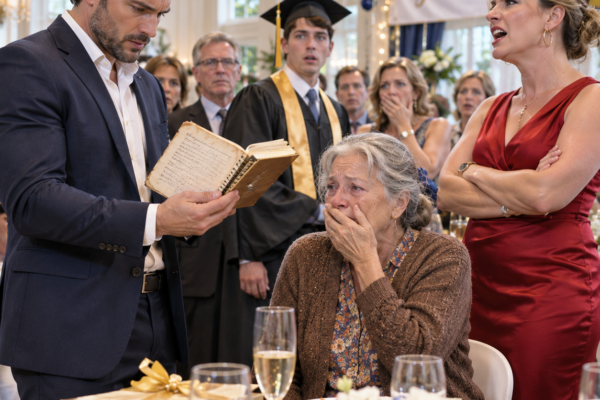
Chloe stared.
“What?”
The dean looked confused.
“Mr. Bennett is our invited speaker.”
Ethan took a step back.
“But he lost everything.”
The dean looked at me.
Then she said something I would remember for years.
“Your father’s contribution to this university was never limited to the size of his bank account.”
I looked toward my children.
Both were suddenly silent.
Then I followed Dean Wallace into the building.
I still had a speech to give.
And I wasn’t going to let what happened on the steps take that moment away from the students who’d earned it.
The auditorium was full.
Hundreds of graduates sat in dark academic gowns while their families filled the seats behind them.
I walked backstage with Dean Wallace and handed the two bouquets to an usher.
“Would you mind keeping these safe for me?”
“Of course, Mr. Bennett.”
I looked toward the stage.
For a moment, I wanted to leave.
Not because I was afraid to speak.
I’d addressed company employees, investors, and industry conferences for years.
But my children’s words were still in my ears.
Before everyone finds out you’re our father.
I wondered whether I had failed them so completely that nothing I said could reach them.
Then I remembered Rebecca.
On the morning of my first major business presentation, she’d adjusted my tie in the warehouse office and told me something I’d never forgotten.
“Don’t try to sound important. Just tell people something true.”
I took a breath.
When Dean Wallace introduced me, I walked onto the stage.
She described the company I’d built and the scholarship programs our foundation supported.
She thanked me for helping students who wanted to enter business, engineering, and technical fields.
I looked across the audience.
I could see Ethan and Chloe in the graduating class.
Neither was smiling.
I began.
“When I started my first business, I rented a warehouse with a leaking roof and owned two delivery trucks that were older than some of the employees driving them.”
A few people laughed.
“My wife and I spent evenings doing invoices at a secondhand desk because we couldn’t afford administrative help.”
I paused.
“For years, I believed success meant reaching a point where I never had to worry about money again.”
I looked toward the rows of graduates.
“I was wrong.”
The room grew quiet.
“Money is useful. It provides security, opportunity, and choices. But it doesn’t tell you whether you’re a decent person.”
I told them about a mechanic who had once repaired one of our trucks after his shift ended because a customer shipment had to arrive at a hospital.
About a warehouse supervisor who admitted an expensive mistake before anyone discovered it.
About a young employee who worked nights to finish an engineering degree.
And about Emily, whose patience and professionalism had kept the company functioning through difficult years.
“Every one of those people helped build something important,” I said. “Not because their names appeared on the building, but because they did their work honestly and treated others with respect.”
I didn’t mention Ethan or Chloe.
I didn’t discuss the rental house.
I didn’t announce that I’d been pretending to be financially ruined.
That truth belonged in a private conversation, not a commencement address.
I finished with something Rebecca used to say.
“Be proud of what you accomplish. But never confuse what you own with what you’re worth. And when you meet someone whose work makes your life easier, remember to thank them.”
The audience stood to applaud.
I looked down at my notes.
For a moment, I could almost hear Rebecca laughing at how uncomfortable I was with the attention.
After the ceremony, I found Ethan and Chloe waiting near a side hallway.
Their expressions were different now.
Not admiring.
Not yet.
Mostly confused.
“Dad,” Ethan said, “we need to talk.”
I nodded.
“Yes. We do.”
Chloe looked toward the lobby.
“Dean Wallace said the university still receives support from your foundation.”
“It does.”
“But if the company failed—”
“The company didn’t fail.”
Neither spoke.
I continued.
“I never lost it.”
Ethan stared at me.
“What?”
“I never lost the company. The financial restrictions in our household were real. The loss of the business wasn’t.”
Chloe took a step backward.
“You let us believe we were broke?”
“Yes.”
“For months?”
“Yes.”
Ethan’s face reddened.
“So this was all some kind of test?”
I looked at him.
“Yes. And I should have handled it differently.”
Chloe began crying.
“You made us leave our home.”
“I moved us into another home. The estate was never taken by the bank.”
“You lied to us.”
“Yes.”
Ethan shook his head.
“That’s unbelievable.”
I didn’t defend myself.
“You’re right to be angry about the deception.”
He looked at me.
“Then why did you do it?”
I took a breath.
“Because I was frightened that you’d come to love my money more than me. Every attempt to talk about your treatment of people ended with you telling me what my name entitled you to.”
Chloe wiped her eyes.
“So you made us suffer?”
“I took away a lifestyle you were accustomed to. And I lied about why. I won’t pretend that was the only way to teach responsibility.”
Ethan stared at the floor.
Then he asked quietly, “What about your medication?”
My chest tightened.
“I had it. I shouldn’t have let you believe I was choosing between medicine and groceries.”
He looked up.
“You were watching to see what we’d say.”
“Yes.”
He shook his head.
“That was cruel.”
I swallowed.
“It was.”
We stood in silence.
Then Chloe looked toward the auditorium doors.
“What happens now? Do we get our cars back?”
I closed my eyes.
There it was again.
The first question after learning the family fortune remained intact.
But this time, I didn’t turn it into another trap.
“No,” I said. “Your unlimited spending is over. The cars and company accounts aren’t yours to use. Those boundaries stay.”
Ethan looked angry.
“For how long?”
“Until you’re independent enough not to need them. And even then, company assets are not personal toys.”
Chloe shook her head.
“So we still have to live in that rental?”
“For now, yes.”
She stared at me.
I continued.
“You’re graduating today. You’re adults. You can choose where to live and how to earn your money. I’ll provide reasonable support while you make that transition, but I won’t buy your respect anymore.”
Ethan looked toward the bouquets an usher had brought out.
They were resting on a nearby table.
He didn’t reach for them.
“I don’t know what I’m supposed to say to you.”
I nodded.
“Neither do I.”
I picked up the flowers.
Then handed one bouquet to each of them.
“You don’t have to say anything today. You can be angry. Just don’t pretend what happened on the steps was acceptable.”
Chloe took hers.
Ethan hesitated, then accepted the other.
I looked at them both.
“I love you. But love doesn’t mean protecting you from every consequence, and it doesn’t give me the right to manipulate you because I’m frightened.”
Then I walked away.
For once, I didn’t try to solve everything before dinner.
The months after graduation were difficult.
Ethan and Chloe didn’t suddenly become kinder because they’d learned I was wealthy.
For the first few weeks, they barely spoke to me.
Ethan accused me of treating them like children.
Chloe said she couldn’t trust anything I told her.
Both had a point.
I apologized for the deception without withdrawing the boundaries I’d set.
I also began meeting regularly with a family counselor.
The first session was uncomfortable.
Ethan described feeling controlled.
Chloe described the fear of believing our family had lost everything.
When it was my turn, I admitted that I’d spent years using money to avoid grief, conflict, and difficult parenting.
I talked about Rebecca.
About how frightened I’d been after she died.
And about how I’d given my children everything because I couldn’t give them their mother back.
The counselor asked a question I hadn’t expected.
“Daniel, did you ever tell them that?”
I looked at my children.
“No.”
Neither knew what to say.
We didn’t solve everything that afternoon.
But for the first time, we spoke about something more important than spending limits.
Ethan eventually took an entry-level job at a delivery and inventory company unaffiliated with mine.
He learned to follow schedules, deal with customers, and complete tasks without announcing who his father was.
His supervisor didn’t know me.
That was intentional.
Chloe took a position at a café while completing the corrective academic work required after the university’s review of her research submission.
Professor Hayes had required the group contributions to be properly credited, and Chloe’s final evaluation reflected her actual work.
Anna received recognition for the research she had completed.
Chloe didn’t like the consequences.
But she fulfilled them.
At the café, she learned what it felt like when a customer blamed her for something beyond her control.
One afternoon, a woman complained about an incorrect order and demanded that Chloe be fired.
Her manager refused.
Chloe called me afterward.
“Dad, I think I understand what I did to that waitress.”
I was sitting in my office.
I put down my pen.
“Tell me.”
“She apologized. It was an accident. And I tried to take her job because I was embarrassed.”
I didn’t rush to reassure her.
She continued.
“I was awful.”
“Yes,” I said gently. “You were.”
She was quiet.
Then she asked whether I could help her contact the restaurant.
I gave her Michael Torres’s number.
Chloe wrote a private apology to the waitress, Maya, acknowledging what she’d done without asking Maya to forgive her.
Ethan visited Emily at the office, by appointment, and apologized for the way he’d spoken to her.
He didn’t blame the stress of his classes.
He didn’t claim it was a misunderstanding.
He simply said he’d treated her disrespectfully and was sorry.
Emily accepted the apology.
Then she told him something I wish he’d heard years earlier.
“Ethan, I never needed you to think I was important. I needed you to remember I was a person.”
He came home quiet that evening.
For a long time, he didn’t speak.
Then he told me what she’d said.
I nodded.
“She’s right.”
“I know.”
It was the first time I’d heard him say those words without sounding resentful.
By autumn, both children had moved into separate apartments.
They paid their own rent with wages and modest savings.
I helped with the security deposits as a clearly defined gift, not an unlimited promise to cover whatever they wanted.
Neither apartment was large.
Ethan’s building had a shared laundry room.
Chloe’s kitchen was barely big enough for two people to stand in.
But they were beginning to take pride in keeping places of their own.
Sometimes they still complained.
Sometimes Ethan bought something he couldn’t comfortably afford.
Sometimes Chloe called me after a terrible day and expected me to make it better.
The difference was that they were learning to solve problems without assuming my money was the answer.
I was learning something, too.
A father doesn’t earn trust by testing his children until they fail.
He earns it by being honest, maintaining fair boundaries, and showing the same respect he expects in return.
I couldn’t change the years I’d spent spoiling them.
And I couldn’t pretend my deception had been harmless simply because it revealed their selfishness.
But we could do better with the years ahead.
The following spring, almost a year after graduation, Ethan and Chloe invited me to dinner.
They’d chosen a modest Italian restaurant near Chloe’s apartment.
When I arrived, both were already seated.
Ethan stood to greet me.
Chloe hugged me.
Then she handed me a small package.
Inside was a framed photograph from graduation.
It showed the three of us standing outside the auditorium after the ceremony.
I recognized the flowers.
Chloe was holding the bouquet I’d brought her.
Ethan had his tucked beneath one arm.
For several seconds, I couldn’t speak.
“We still owe you something,” Chloe said.
I looked up.
She took a breath.
“A real apology.”
Ethan nodded.
“We were ashamed of you because we thought you didn’t have money anymore.”
Chloe’s eyes filled.
“You came to celebrate us, and I treated you like you didn’t belong there.”
I set down the frame.
Ethan leaned forward.
“We were wrong about the people we bullied, too. Not just you. We treated people like their jobs made them less important.”
I watched him.
He continued.
“I’ve been thinking about what you said at graduation. About the people who helped build your company.”
I nodded.
“They mattered.”
“I know. The people at my job matter, too. I didn’t understand that before.”
Chloe reached across the table.
“I’m sorry, Dad.”
I took her hand.
“What you said that morning hurt me,” I told them. “Both of you.”
She nodded.
“I know.”
“And I hurt you by lying. I’m sorry for that, too.”
Ethan looked down.
For a while, the three of us sat quietly.
Then I said, “I forgive you.”
Chloe began crying.
I squeezed her hand.
“But forgiveness doesn’t mean we pretend none of this happened. We keep treating each other better. That’s what matters.”
Ethan nodded.
“We will.”
I believed he meant it.
Not because he’d said the perfect words.
Because I’d spent the previous year watching him make different choices when nobody was paying him to make them.
After dinner, we walked outside.
The old brown sedan was parked beneath a streetlight.
Chloe stopped beside it.
“Dad, you’re still driving this thing?”
I smiled.
“Sometimes.”
She touched the faded hood.
“It’s kind of terrible.”
“It is.”
Ethan laughed.
“But it runs.”
“Every morning.”
Chloe looked at me.
Then she smiled.
“You know, I remember you and Mom driving something like this when we were little.”
“It’s the same car.”
Her mouth fell open.
“Seriously?”
I nodded.
“Your mother loved it. She said it reminded her that we could be happy before we had much money.”
Ethan looked through the window.
For a moment, he was quiet.
Then he said, “You should keep it.”
“I intend to.”
We stood beside the car a little longer.
Then Chloe hugged me again.
“I love you, Dad.”
I held her tightly.
“I love you, too.”
Ethan joined us, awkwardly wrapping one arm around each of us.
For a moment, I remembered Rebecca standing in our first warehouse, laughing as the twins raced between boxes while I tried to finish invoices.
I wished she could have seen us.
Not because everything was fixed.
It wasn’t.
But because we were finally learning the lesson she’d tried to teach us when the children were small.
That respect isn’t something money can purchase.
That honest work has dignity.
And that a person’s value doesn’t disappear when the expensive things do.
When I drove home that night, the old sedan rattled a little over the rough pavement.
The radio faded in and out.
And the heater made its familiar clicking noise.
I laughed.
For months, I’d used that car to make my children believe I was a man who’d lost everything.
Now I understood what I’d nearly lost by trying to teach them a lesson through fear.
Not my company.
Not my house.
Not my fortune.
My relationship with the two people Rebecca and I had loved more than anything.
I pulled into the driveway, switched off the engine, and looked at the graduation photograph sitting on the passenger seat.
Then I carried it inside.
The next morning, I placed it on my desk beside Rebecca’s picture.
Two photographs.
Two reminders.
One of the family we’d been.
And one of the family we were still learning to become.