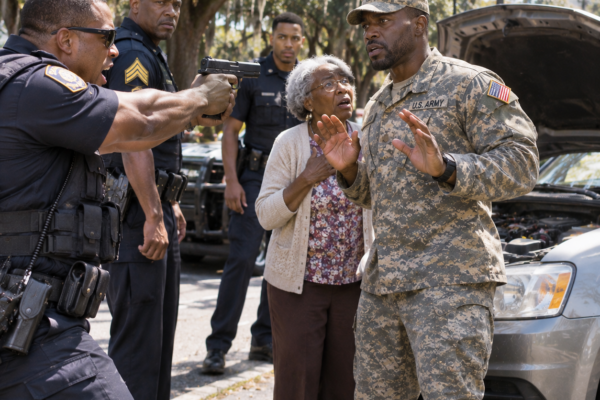
“Your Grandson Can Sign the Confession or Stay Locked Up,” the Sergeant Told Me About My 17-Year-Old Boy, Arrested on His Way Home From Work. I Brought a Judge’s Signed Order Demanding Access to Him. The Captain Called It Fake, Handcuffed Me, and Ordered the Cameras Shut Off—but He Hadn’t Asked Why I Knew Exactly Which Records to Preserve.K
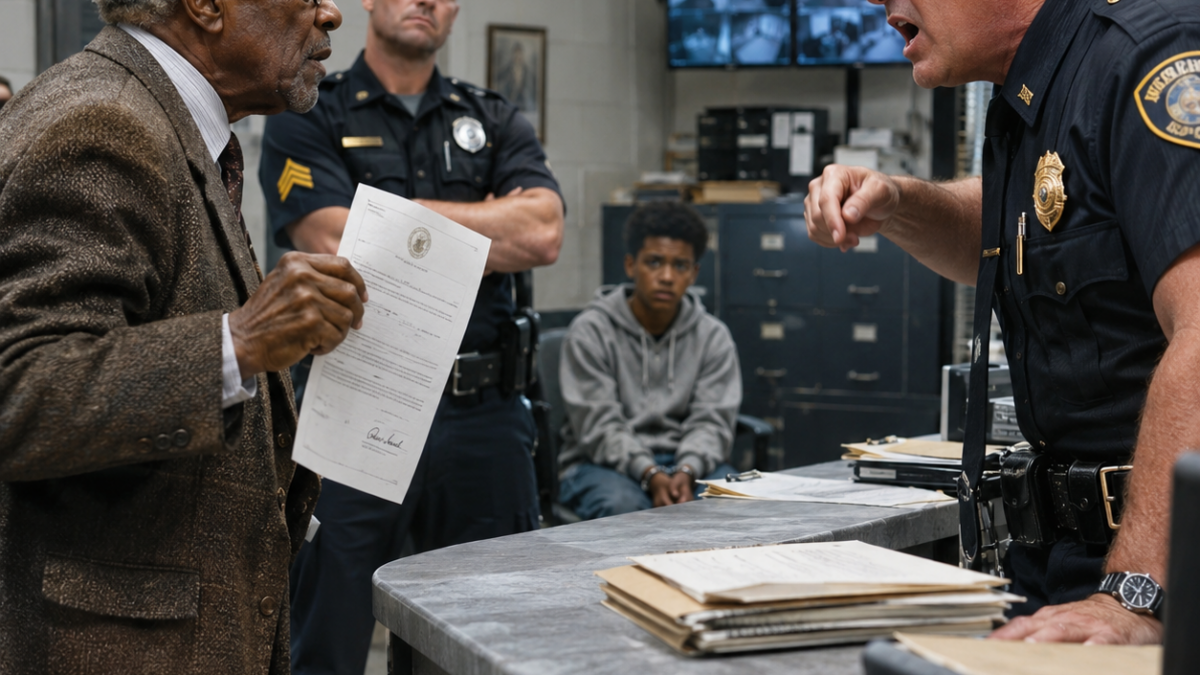
“Your Grandson Can Sign the Confession or Stay Locked Up,” the Sergeant Told Me About My 17-Year-Old Boy, Arrested on His Way Home From Work. I Brought a Judge’s Signed Order Demanding Access to Him. The Captain Called It Fake, Handcuffed Me, and Ordered the Cameras Shut Off—but He Hadn’t Asked Why I Knew Exactly Which Records to Preserve.
“Take that piece of paper off my desk before I arrest you, too.”
Sergeant Brent Dugan shoved the court order toward me with two fingers, as though the document were something filthy.
I stood at the front counter of the Briar Glen Police Department in Virginia, wearing the same gray wool coat I’d owned for eleven years. My handbag hung from my left shoulder, and my right hand rested on the counter to keep it from trembling.
“That order was signed by Judge Amelia Ross at 10:36 this morning,” I said. “It requires your department to give my grandson access to his attorney and produce him for a hearing this afternoon.”
Dugan glanced at the embossed seal.
“Lady, anybody with a printer can make something look official.”
“Then call the clerk and verify it.”
“I don’t take instructions from people who walk in off the street.”
“My grandson is seventeen years old.”
“And he’s being questioned about an armed robbery. Maybe you should’ve raised him better.”
I felt those words land somewhere beneath my ribs.
My name is Ruth Ellison. I’m sixty-seven, and I’ve raised my grandson Micah since his mother died six years ago. He’s a quiet boy who fixes broken radios, earns straight A’s, and works evenings at Goodman’s Hardware to save for college.
The previous night, two officers had taken him from a bus stop after his shift.
They said a Black teenager wearing a navy hoodie had helped rob a pharmacy.
That description matched hundreds of boys in our city.
Micah had been wearing his work shirt beneath the hoodie. His employee badge was still clipped to the pocket.
He told the officers he’d been riding Route 14 when the robbery occurred.
They didn’t believe him.
By morning, he’d been held overnight, and the department still hadn’t allowed the attorney we’d retained to speak privately with him.
Now the sergeant was telling me the court order was worthless.
“Where is my grandson?” I asked.
Dugan leaned across the counter.
“You don’t seem to understand how this works. We decide when he’s finished here.”
A door opened behind him.
Captain Miles Corbett entered carrying a paper coffee cup and a folder. He was in his fifties, with carefully combed silver hair and the relaxed manner of a man accustomed to being obeyed.
“What’s the problem?”
Dugan gestured toward me.
“Grandmother’s waving around some fake court document, demanding we release the robbery suspect.”
I corrected him.
“I’m requesting compliance with a signed order. It doesn’t direct an unconditional release. It directs access to counsel and requires Micah’s appearance before the court.”
Corbett picked up the document.
He read the heading, stopped at the case number, and looked at me.
“Where did you get this?”
“From my attorney, after the court issued it.”
His expression tightened.
“Who told you we were questioning the boy?”
“Your officers did. And Micah requested a lawyer last night.”
Corbett set down his coffee.
“Sergeant, take her into custody for obstruction.”
For a moment, I thought I’d misheard him.
“Captain, I’m standing at a public counter presenting a court order.”
“You’re interfering with an active investigation.”
“Then identify the conduct you believe is unlawful.”
He stepped closer.
“You think using fancy legal language makes you smarter than everybody in this building?”
“No. I think the law applies inside this building.”
Dugan came around the counter.
“Hands behind your back.”
I didn’t resist.
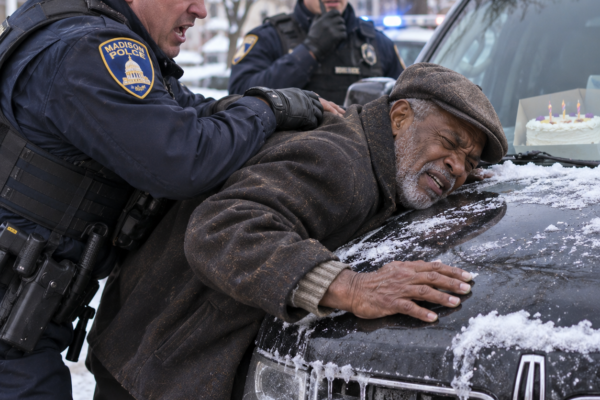
The handcuffs closed around my wrists, cold and painfully tight. My handbag slipped from my shoulder and struck the tile.
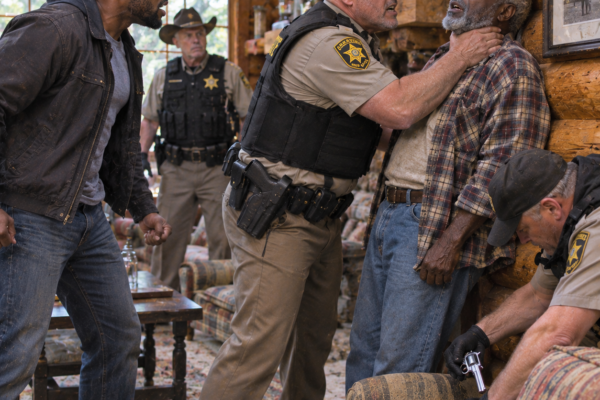
Across the lobby, a young Black policewoman stopped typing.
Her nameplate read GRANT.
“Captain,” she said carefully, “the court’s electronic service notice came through earlier. I saw the docket number.”
Corbett turned toward her.
“Officer Grant, return to your duties.”
“But sir, we can verify—”
“I gave you an order.”
She fell silent.
Through an open hallway door, I caught sight of a boy sitting in an interview room.
Navy hoodie.
Short black curls.
Shoulders drawn inward.
Micah.
His wrists were restrained in front of him, and an officer was pushing a typed statement across the table.
My grandson shook his head.
The officer leaned closer.
I couldn’t hear every word, but I heard enough.
“Sign it, and we can get you home.”
“Micah!” I called.
He turned.
“Grandma?”
Dugan grabbed my arm.
“Keep moving.”
I looked directly at the security camera above the front desk.
“Officer Grant, please record the time and preserve the footage of this encounter. My attorney will be requesting it.”
Corbett’s expression changed.
He glanced toward the camera, then toward a civilian employee beside the records-room door.
“Vincent. I want the front-desk system taken offline for maintenance.”
The employee hesitated.
“Right now, Captain?”
“Right now.”
I watched Officer Grant lower her eyes toward her keyboard.
Then, without looking up, she pressed several keys.
Corbett didn’t notice.
But I did.
And as Dugan led me toward the holding rooms, I knew that young officer had just made a decision that might be far more important than anything I could say about my own name.
Part 2:
“Take that piece of paper off my desk before I arrest you, too.”
Sergeant Brent Dugan shoved the court order toward me with two fingers, as though the document were something filthy.
I stood at the front counter of the Briar Glen Police Department in Virginia, wearing the same gray wool coat I’d owned for eleven years. My handbag hung from my left shoulder, and my right hand rested on the counter to keep it from trembling.
“That order was signed by Judge Amelia Ross at 10:36 this morning,” I said. “It requires your department to give my grandson access to his attorney and produce him for a hearing this afternoon.”
Dugan glanced at the embossed seal.
“Lady, anybody with a printer can make something look official.”
“Then call the clerk and verify it.”
“I don’t take instructions from people who walk in off the street.”
“My grandson is seventeen years old.”
“And he’s being questioned about an armed robbery. Maybe you should’ve raised him better.”
I felt those words land somewhere beneath my ribs.
My name is Ruth Ellison. I’m sixty-seven, and I’ve raised my grandson Micah since his mother died six years ago. He’s a quiet boy who fixes broken radios, earns straight A’s, and works evenings at Goodman’s Hardware to save for college.
The previous night, two officers had taken him from a bus stop after his shift.
They said a Black teenager wearing a navy hoodie had helped rob a pharmacy.
That description matched hundreds of boys in our city.
Micah had been wearing his work shirt beneath the hoodie. His employee badge was still clipped to the pocket.
He told the officers he’d been riding Route 14 when the robbery occurred.
They didn’t believe him.
By morning, he’d been held overnight, and the department still hadn’t allowed the attorney we’d retained to speak privately with him.
Now the sergeant was telling me the court order was worthless.
“Where is my grandson?” I asked.
Dugan leaned across the counter.
“You don’t seem to understand how this works. We decide when he’s finished here.”
A door opened behind him.
Captain Miles Corbett entered carrying a paper coffee cup and a folder. He was in his fifties, with carefully combed silver hair and the relaxed manner of a man accustomed to being obeyed.
“What’s the problem?”
Dugan gestured toward me.
“Grandmother’s waving around some fake court document, demanding we release the robbery suspect.”
I corrected him.
“I’m requesting compliance with a signed order. It doesn’t direct an unconditional release. It directs access to counsel and requires Micah’s appearance before the court.”
Corbett picked up the document.
He read the heading, stopped at the case number, and looked at me.
“Where did you get this?”
“From my attorney, after the court issued it.”
His expression tightened.
“Who told you we were questioning the boy?”
“Your officers did. And Micah requested a lawyer last night.”
Corbett set down his coffee.
“Sergeant, take her into custody for obstruction.”
For a moment, I thought I’d misheard him.
“Captain, I’m standing at a public counter presenting a court order.”
“You’re interfering with an active investigation.”
“Then identify the conduct you believe is unlawful.”
He stepped closer.
“You think using fancy legal language makes you smarter than everybody in this building?”
“No. I think the law applies inside this building.”
Dugan came around the counter.
“Hands behind your back.”
I didn’t resist.
The handcuffs closed around my wrists, cold and painfully tight. My handbag slipped from my shoulder and struck the tile.
Across the lobby, a young Black policewoman stopped typing.
Her nameplate read GRANT.
“Captain,” she said carefully, “the court’s electronic service notice came through earlier. I saw the docket number.”
Corbett turned toward her.
“Officer Grant, return to your duties.”
“But sir, we can verify—”
“I gave you an order.”
She fell silent.
Through an open hallway door, I caught sight of a boy sitting in an interview room.
Navy hoodie.
Short black curls.
Shoulders drawn inward.
Micah.
His wrists were restrained in front of him, and an officer was pushing a typed statement across the table.
My grandson shook his head.
The officer leaned closer.
I couldn’t hear every word, but I heard enough.
“Sign it, and we can get you home.”
“Micah!” I called.
He turned.
“Grandma?”
Dugan grabbed my arm.
“Keep moving.”
I looked directly at the security camera above the front desk.
“Officer Grant, please record the time and preserve the footage of this encounter. My attorney will be requesting it.”
Corbett’s expression changed.
He glanced toward the camera, then toward a civilian employee beside the records-room door.
“Vincent. I want the front-desk system taken offline for maintenance.”
The employee hesitated.
“Right now, Captain?”
“Right now.”
I watched Officer Grant lower her eyes toward her keyboard.
Then, without looking up, she pressed several keys.
Corbett didn’t notice.
But I did.
And as Dugan led me toward the holding rooms, I knew that young officer had just made a decision that might be far more important than anything I could say about my own name.
The holding room had a metal bench, two fluorescent lights, and a telephone behind a scratched plastic shield. Dugan removed the handcuffs once the door was secured. I rubbed the red marks on my wrists and asked whether I was being booked, cited, or merely detained.
He laughed. “You’re in no position to interview me.”
“Then please make sure your report records the time you brought me here.”
He slammed the door.
I had spent seventeen years as a federal district judge, after serving eleven years on the state bench. I’d heard cases involving unlawful searches, civil-rights claims, government misconduct, and families whose lives had been overturned by a single false accusation. I retired two years earlier after realizing I was bringing case files to Thanksgiving dinner and missing birthdays I could never get back.
None of that was relevant to whether I deserved to be handcuffed for presenting a lawful court order. I wanted the officers to recognize my grandson’s rights without first recognizing my name.
But I wished, sitting on that bench, that I had told Dugan who I was before the handcuffs closed.
It was an ugly admission. My wrists hurt, and I was frightened. I wanted to reach for every protection my career could offer. Then I thought of Micah, who had no such protection and had been sitting in an interview room for most of the night.
He’d called me at 10:54 p.m. Thursday. The call lasted twenty-three seconds.
“Grandma, I’m at the police station. They think I did something. I’m telling them I was on the bus.”
“Have you asked for a lawyer?”
“Yes. They said somebody was coming.”
Then an officer took the phone.
I called the station, identified myself as Micah’s legal guardian, and asked about his detention. The woman who answered confirmed he was there but declined to discuss the allegations. She told me to wait for a call from an investigator.
At midnight, I called Celeste Ward, an attorney I’d known professionally for years. She drove to the station and requested access to Micah. A desk officer told her the interview was ongoing. She waited, asked for the supervisor, and eventually received a message saying no further information would be provided overnight.
By seven Friday morning, we’d gathered the documents needed for an emergency application to the juvenile court. Celeste filed the petition and supporting declaration, including the station’s refusal to arrange private access to counsel. A judge reviewed the matter that morning, obtained the department’s preliminary response, and issued a signed order requiring the police to permit confidential consultation with counsel and produce Micah for a hearing at three o’clock.
The police department had received the electronic service notice before Celeste handed me a certified copy.
I wasn’t carrying a magical document that automatically ended a criminal investigation. The court had ordered specific things the department could verify and comply with. I came because Micah had asked me to be there, and Celeste was gathering the witnesses and records we would need for the hearing.
Now the police had both of us in custody.
I could hear footsteps beyond the holding-room door. Once, a muffled voice said, “He still won’t sign.” I stood, approached the door, and asked whether the boy had seen his lawyer. Nobody answered.
I went back to the bench and tried to steady my breathing.
Micah’s mother, my daughter Jasmine, died when he was eleven. A driver ran a red light on a rainy Saturday morning. She’d been on her way home from buying a birthday cake for him. For months afterward, Micah refused to celebrate his birthday. At twelve he began fixing appliances because, as he told me once, broken things were easier to understand than people.
He could dismantle a radio, identify a faulty component, and put the whole machine back together. He struggled when an adult accused him of something he hadn’t done. His voice became quieter. He repeated the same facts, more carefully each time, believing that enough precision would make somebody listen.
That was why I feared the interview room.
I knew my grandson would tell the truth. I also knew a frightened seventeen-year-old could be persuaded that signing something untrue was the only way to get home.
A little before noon, Officer Grant appeared at the holding-room door. She was carrying a bottle of water and a paper cup.
“Mrs. Ellison?”
I looked up.
“Is Micah all right?”
She hesitated. “He’s still here.”
“Has his attorney been admitted?”
“I can’t discuss the investigation.”
“I’m not asking you to discuss evidence. I’m asking whether the department has complied with a court order.”
She looked behind her, then stepped closer.
“I entered the preservation request into the incident system,” she said quietly. “The time is recorded, and an automated copy went to the city’s evidence-retention administrator.”
I studied her face.
“Thank you, Officer Grant.”
She glanced toward the hallway again.
“I also recorded that the court notice had arrived before you came in.”
“Did Captain Corbett direct you to change that entry?”
“Not yet.”
The last two words worried me.
I asked her name.
“Talia.”
“Talia, please don’t take risks you can’t explain honestly later. Keep your own reports accurate and follow the proper evidence procedures. If anyone pressures you to change them, speak to your attorney or an independent investigator.”
She nodded.
I reached for the water.
Before leaving, she said, “Your lawyer’s outside. She’s asking for you.”
For the first time since Dugan shut the door, I felt something other than fear.
Celeste arrived ten minutes later with a county sheriff’s deputy and an official copy of the court’s service acknowledgment. She had also contacted the magistrate’s office to challenge my detention. The deputy wasn’t there to arrest anyone. He was there to facilitate a transfer if the municipal officers continued holding me without a lawful basis.
Corbett met them in the lobby.
I heard most of the conversation later from Celeste and the preserved recording.
She introduced herself, identified the existing order, and requested the legal basis for my detention.
Corbett claimed I’d tried to force my way into a restricted area.
Celeste asked whether there was video.
He said the camera system had been under maintenance.
She held up the acknowledgment showing when the preservation notice had been logged.
“Then the recording should remain available,” she said. “And the court is waiting for your explanation about Micah Ellison.”
Corbett stared at her.
“You people seem determined to make a public spectacle out of this.”
“My client is being held for delivering a court order. Her grandson is being questioned after asking for counsel. We would prefer not to spend another minute arguing about whether either of those things happened.”
A few minutes later, Dugan reopened the holding room.
“Come on. You’re leaving.”
“Am I being charged?”
“Not at this time.”
“Please return my belongings.”
He brought my handbag, coat, and the certified order. The document had a coffee stain near the lower corner.
When I emerged into the lobby, Celeste reached for me. I let her examine my wrists and then asked about Micah.
“His attorney is with him now,” she said. “They finally let her in.”
I closed my eyes.
That was the first genuinely good news I’d received in fourteen hours.
Then Celeste added, “The court hearing is still scheduled for three. We have some evidence I want you to see.”
Outside, the afternoon sky had cleared. I sat in her car with the heater running while she opened a laptop.
The first document was Micah’s employee time record. He had clocked out of Goodman’s Hardware at 9:19 p.m. Thursday.
The robbery had occurred at Patterson Pharmacy at 9:41.
The distance between the store and the hardware shop was about four miles. That alone wouldn’t prove Micah couldn’t have reached it. But the next documents were more significant.
His transit card had been scanned on Route 14 at 9:27.
The bus’s location record placed it crossing the James River at 9:41, well away from the pharmacy.
And a still frame from the vehicle’s security camera showed Micah sitting beside a window, wearing his hardware-store shirt and holding a plastic bag.
I leaned toward the screen.
“That’s him.”
“Yes,” Celeste said. “We have a preliminary video confirmation from transit. The agency is preserving the original file, and we’ll seek authenticated records. Your grandson’s school mentor helped us identify the route and the times.”
Micah had spent the previous year developing a school project that compared published bus arrival times with actual vehicle positions. He called it HomeLine. The application didn’t secretly track people. It used public transit arrival data and let riders save trip receipts from their own accounts.
I remembered watching him demonstrate it at our kitchen table.
He’d wanted a system that helped students working late shifts tell their families when to expect them.
Now that same attention to bus schedules had helped Celeste find evidence the police hadn’t bothered to check.
“Will the judge see it today?” I asked.
“That’s the plan. The prosecutor has also been notified. We’re not assuming the video alone resolves everything until the source is verified, but it’s compelling.”
I looked at the image of Micah on the bus.
His shoulders were relaxed. He was looking down at his phone. He had no idea that thirty minutes later two officers would stop him because of the color of his hoodie and the broad description of a teenager involved in a robbery.
I touched the screen.
“Bring him home,” I whispered.
At three o’clock, I sat in the back of a juvenile courtroom while Micah appeared beside his attorney. The judge was not someone I’d worked with during my time on the federal bench. Celeste had made sure the matter proceeded through the ordinary assignment process, with no request for personal consideration.
Micah saw me and straightened.
I smiled as reassuringly as I could.
The prosecutor had already received the transit information. After consulting with the investigating officers and reviewing the preliminary evidence, she informed the court that the Commonwealth wasn’t requesting continued secure detention. The court ordered Micah released into my care while the investigation continued, subject to the routine requirements the judge explained.
I didn’t celebrate in the courtroom.
Micah’s case hadn’t yet been formally dismissed, and the pharmacy robbery remained unsolved. I listened, signed the required guardian paperwork, and waited until a court officer brought him through the side door.
Then my grandson crossed the hallway and put his arms around me.
He was taller than I was, but he folded himself against my shoulder the way he had when he was eleven.
“Grandma,” he whispered, “I kept telling them where I was.”
“I know.”
“They wouldn’t listen.”
“I know, baby.”
His voice cracked.
“I thought if I didn’t sign, they’d never let me go.”
I held him tighter.
“You did the right thing asking for your lawyer.”
He pulled away just enough to look at my wrists. The red marks were still visible.
“Did they hurt you?”
“I’m all right.”
“Grandma.”
I heard Jasmine in his voice. She’d never allowed me to hide pain behind that phrase.
“They handcuffed me,” I said. “And we’re going to address that properly. But right now, I’m taking you home.”
He nodded.
Celeste drove us. Micah sat in the back seat holding a paper bag of clothes and personal belongings. He didn’t speak for most of the journey.
When we reached our house, he went straight to his room and shut the door.
I stood in the hallway listening.
The silence was worse than anything he’d said in court.
That evening, I heated leftover chicken and rice, set two plates on the table, and called Micah downstairs.
He said he wasn’t hungry.
I took his plate to his room anyway.
He was sitting on the floor beside his unfinished robotics project. A small circuit board rested on his knees, but the soldering iron was unplugged.
“Can I come in?”
He nodded.
I placed the food on his desk and sat on the edge of the bed.
For a long time, we said nothing.
Then he asked, “Grandma, why did they keep telling me I was lying?”
I looked at him.
“Because they decided you were involved before they checked the evidence.”
“But I told them about the bus. I told them my teacher could show them the project records. I gave them my work supervisor’s number.”
“I know.”
“One officer said I was making up an alibi because I’d watched too many crime shows.”
My throat tightened.
“What else did they say?”
Micah stared at the circuit board.
“They said the judge wouldn’t believe me. They said if I signed that statement, they’d tell everybody I cooperated and maybe I could still go home.”
He wiped his nose with his sleeve.
“I almost did it.”
I reached for his hand.
“I was so tired,” he continued. “They kept asking the same questions. I hadn’t slept. And every time I told them I wanted my lawyer, they said somebody would be there soon.”
He looked up.
“Would they have believed the confession if I’d signed it?”
“It could have caused serious problems,” I answered. “Your attorney would have challenged how it was obtained, especially after you requested counsel. But a false statement can still hurt someone badly.”
He closed his eyes.
“I kept thinking about Mom.”
I felt my chest tighten.
“What about her?”
“She used to tell me that if I told the truth, grown-ups would figure things out.”
I looked down at our joined hands.
Jasmine had believed that. So had I.
I had spent much of my career insisting that evidence could overcome prejudice, dishonesty, and mistakes. But I’d also seen innocent people wait years for evidence that should have been examined at the beginning.
“Your mother was trying to teach you something good,” I said. “Telling the truth was the right thing to do. The adults questioning you were responsible for listening and following the law. They failed you.”
Micah studied my face.
“Are you going to make them sorry?”
It was the first time he’d spoken with anger.
I understood it.
Part of me wanted to walk into the police station, find Corbett, and make him experience one hour of what he’d put my grandson through.
But revenge wouldn’t teach Micah what I wanted him to learn.
“I’m going to do everything I lawfully can to make sure they answer for their decisions,” I said. “And I’m going to make sure what happened to you is documented accurately.”
He thought about that.
“Will they believe you because you were a judge?”
“Some people might listen more closely because of that.”
“That doesn’t seem fair.”
“No,” I said. “It doesn’t.”
He leaned against my shoulder.
I stayed until he was ready to eat.
The following Tuesday, the Commonwealth’s attorney informed Micah’s lawyer that the prosecution would not proceed with the allegations against him. The transit agency had authenticated its video and location records. Micah was clearly visible on the bus at the time of the robbery, several miles from the pharmacy. His employer confirmed his shift and departure time.
The attorney filed the appropriate motion, and the juvenile court dismissed the pending matter.
Micah asked whether that meant it had never happened.
I wanted to tell him yes.
Instead, I explained that the legal record could be corrected, and his attorney would help us address the remaining records under Virginia’s juvenile confidentiality and expungement procedures where available.
The experience itself couldn’t be erased.
But he no longer faced a criminal accusation.
I thought that might be the end of our immediate crisis.
Then Celeste received the police department’s incident report about my detention.
It said I had become disruptive, attempted to enter a restricted hallway, and refused repeated instructions to leave.
It claimed Dugan had briefly restrained me for officer safety.
It did not mention the court order.
It did not mention my peaceful compliance.
And it described the security cameras as temporarily unavailable because of scheduled maintenance.
Celeste read the report aloud in my living room.
When she finished, Micah was standing in the doorway.
“They’re lying about you too,” he said.
“Yes.”
He looked almost relieved.
I didn’t understand until later that he’d begun to wonder whether something about his own behavior had caused the officers to distrust him. Seeing them produce a false account of my conduct helped him recognize that the dishonesty was theirs.
But I was less comforted.
The report had been signed by Dugan and approved by Corbett.
Two men had placed an inaccurate account in an official record even after knowing that an attorney and a court had been involved.
They were counting on the recording being unavailable.
Fortunately, they hadn’t understood how the building’s recording system worked.
Vincent Hale, the civilian technician Corbett had ordered to take the cameras offline, maintained the station’s local security equipment. The cameras sent video to a recorder in the building, but the system also transmitted archived footage to a city-managed storage service.
Vincent could disable the live display. He could restart local equipment for authorized maintenance. He couldn’t personally remove an already archived recording from the independent storage account.
After Corbett ordered him to take the system offline, Vincent had opened a maintenance ticket describing the instruction. He recorded the time, the captain’s name, and the absence of any equipment fault.
When the captain subsequently asked whether footage from the lobby could be deleted, Vincent told him the archived copies were subject to retention rules and couldn’t be removed through the maintenance console.
Corbett was furious.
That exchange became part of the evidence because Vincent kept the work order and later gave a sworn statement to outside investigators.
Officer Talia Grant had also protected the record.
The keys I watched her press weren’t a secret command that defeated police computers. She had entered a preservation flag into the ordinary incident-management system and attached the court’s electronic service acknowledgment. The action created a timestamped record in an evidence-retention queue administered outside Corbett’s immediate control.
She then wrote a supplemental report describing my arrival, the documents I’d presented, her attempt to verify them, and the order to detain me.
When her supervisor returned the report with instructions to remove the reference to the court notice, she refused.
Two days later, she received a warning that her probationary employment could be reconsidered.
That was when Talia consulted an attorney and submitted her account through an independent state investigative channel.
I met her properly several weeks later.
She came to Celeste’s office wearing plain clothes and carrying a small folder. Her attorney accompanied her.
I stood when she entered.
“Officer Grant.”
“Mrs. Ellison.”
“Please call me Ruth.”
She smiled nervously.
“I don’t think I can do that.”
We sat across from each other.
She was twenty-eight, the oldest of four children, and had become a police officer after watching her mother struggle to obtain help during a neighborhood break-in.
“I wanted people to feel safer when an officer arrived,” she explained. “That’s why I joined.”
I asked what she’d thought when Corbett ordered my arrest.
“I knew it was wrong.”
“Then why didn’t you stop him?”
She looked down.
“Because I was scared.”
I let her continue.
“I’ve been an officer less than two years. Corbett decides assignments. Dugan trains new people. I thought if I challenged them in front of everybody, they’d take my badge before lunch.”
Her voice trembled.
“Then I saw your grandson through the interview-room window. He looked younger than seventeen.”
I thought of Micah sitting at our kitchen table, unable to eat.
“What made you preserve the record?”
Talia looked at me.
“You didn’t ask me to get you out. You asked me to keep the evidence.”
I nodded.
“I knew I could document what I saw without changing anything. So I did.”
She took a breath.
“I should’ve done more that morning.”
“Perhaps,” I said. “But you’ve done something important since.”
Her attorney had already explained that cooperation didn’t automatically protect her from every employment consequence. She still had to answer questions truthfully about her own actions and omissions.
Talia accepted that.
“I don’t want them to call me brave,” she said. “I want the next officer standing at that desk to know there are orders you don’t follow.”
The independent investigation began with the events surrounding Micah’s detention and my arrest.
It didn’t immediately become a statewide corruption case.
Investigators obtained the station footage through formal legal process. They compared it with access logs, dispatch records, court-service acknowledgments, and the signed police reports.
The recordings established several things.
Micah had requested counsel during the initial custodial questioning.
The questioning had continued afterward.
An officer had presented him with a statement implicating himself as a lookout during the robbery.
The officer had offered favorable treatment if he signed it, without any documented authority to make that promise.
I had entered the station peacefully with a valid court order.
Dugan had cuffed me after Corbett directed him to do so.
And the official account describing my conduct did not match the recording.
The investigators also noticed that Corbett’s administrative account had submitted a request to shorten retention of several interview-room files.
The request hadn’t succeeded because the files were already associated with active cases and preservation flags.
But it raised a new question.
Why had a police captain attempted to change retention settings on evidence connected to an unlawful detention?
The answer took months to uncover.
At first, investigators reviewed twenty-six older incidents in which interview recordings were listed as corrupted, unavailable, or deleted after technical faults.
Some really had involved equipment failures.
But nine cases presented discrepancies between the official reports and surviving records.
In several, interview times had been changed after the original reports were submitted.
In others, recordings that investigators expected to find were missing from the department’s evidence system, although fragments or archive copies remained elsewhere.
A private contractor called Atlantic Civic Systems had been responsible for maintaining the department’s recording equipment.
Its owner, Dennis Corbett, was the captain’s brother.
That family relationship didn’t establish wrongdoing by itself. But municipal purchasing records showed Atlantic had repeatedly received emergency repair payments after camera failures, often under purchase authorizations approved by Captain Corbett.
The investigators began examining the contracts, repair invoices, system logs, and banking records.
Their findings eventually expanded the case beyond Micah.
I first realized how many people had been affected when Celeste introduced me to a woman named Gloria Jenkins.
Gloria was fifty-four and worked as a nursing assistant.
Her son, Andre, had been arrested the previous year after police accused him of participating in a burglary.
Andre had signed a statement after a lengthy interview. His mother insisted he’d been at work when the burglary occurred, but the case had ended with a plea agreement because he feared the consequences of going to trial.
After the allegations about missing recordings became public, his attorney requested a review of the interview evidence.
A recovered archive segment showed an officer repeatedly rejecting Andre’s denials and suggesting facts that later appeared in his written statement.
The recording didn’t prove Andre’s innocence.
But it raised serious questions about the reliability of the statement and whether the defense had received all relevant evidence before the plea.
His attorney sought post-conviction relief.
Gloria sat beside me at Celeste’s office holding a photograph of her son in his graduation gown.
“They told me he confessed,” she said. “That’s all anybody wanted to talk about.”
I looked at the photograph.
“Have you been able to speak with him?”
“Every week.”
She touched the edge of the frame.
“He keeps saying he wishes he’d waited for his lawyer.”
I knew exactly what Micah would have done without someone intervening.
I put my hand over Gloria’s.
“I hope his attorney gets a full and fair review.”
She nodded.
“I just want somebody to look at the whole thing.”
So did I.
By then, investigators had identified several other cases requiring independent examination.
One involved a warehouse worker who’d lost his job after an arrest later dismissed.
Another concerned a nursing student whose college disciplinary file still referenced charges the prosecutor had declined to pursue.
A third involved an older man questioned about an outstanding warrant belonging to someone with a similar name.
The circumstances differed.
Not every person was innocent of every allegation.
But each case deserved accurate records and a process that wasn’t manipulated to make the department look successful.
The financial investigation uncovered another disturbing pattern.
Atlantic Civic Systems had billed the city for emergency recovery services on dates when internal maintenance records showed no corresponding equipment failure. Some invoices described extensive restoration work that independent examiners couldn’t verify.
Bank records also revealed payments from Atlantic to a consulting company partly controlled by Captain Corbett’s wife.
The investigators didn’t treat every payment as criminal. They examined contracts, actual services, approval authority, and the intent behind the transactions.
But the evidence was substantial enough for state investigators and federal prosecutors to begin coordinating a broader public-corruption inquiry.
By the time I learned the details, the case had grown far beyond anything I could have discovered by simply demanding answers at the front desk.
And I had to confront something uncomfortable.
I’d spent years believing that legal knowledge was the best protection against abuse of authority.
I still believed knowledge mattered.
But the people who’d manipulated the records had counted on exhaustion, fear, limited resources, and the difficulty of challenging official reports.
They hadn’t needed everyone to believe them forever.
They’d needed each family to give up before someone found the next missing recording.
The first public hearing about the police department took place four months after Micah came home.
By then, Captain Corbett and Sergeant Dugan had been placed on administrative leave. Atlantic Civic Systems was under investigation, and the city had commissioned an outside audit of its evidence-retention practices.
The hearing was held in the council chamber of Briar Glen City Hall.
I arrived with Celeste and Micah.
I hadn’t planned to bring my grandson. But when I told him about the meeting, he’d asked whether he could attend.
“Are they going to talk about me?” he asked.
“Some of the testimony will concern what happened to you.”
“Then I want to hear it.”
I studied him.
He’d begun sleeping through the night again, although he still startled when unfamiliar cars slowed near our driveway. He had returned to school and resumed working at Goodman’s Hardware, but he no longer took the evening bus without texting me when he boarded.
I worried that attending the hearing would bring everything back.
His counselor thought he should be allowed to decide, provided he understood what might happen.
So we went together.
The council chamber was nearly full.
Residents sat beside reporters, attorneys, police employees, and several families whose cases were being reviewed.
Gloria Jenkins waved to us from the third row.
Talia Grant sat near the aisle with her attorney.
Corbett and Dugan were present with their own lawyers.
As I entered, Dugan looked directly at me.
For a moment, he seemed confused.
Then the city clerk introduced the next speaker.
“Judge Ruth Ellison, retired judge of the United States District Court, Eastern District of Virginia.”
Dugan’s expression changed.
I saw him lean toward his attorney.
Corbett looked down at the papers in front of him.
For months, they had known my name through legal correspondence and investigation records. But neither had ever asked much about the woman they’d handcuffed at the station. Apparently, the fact that I was a retired federal judge had not made much impression until they heard it announced before a roomful of witnesses.
I took the chair at the witness table.
A council member thanked me for agreeing to speak.
I looked toward Micah.
He was sitting beside Celeste, hands folded over his knees.
Then I began.
“Four months ago, I entered the Briar Glen Police Department carrying a court order concerning my seventeen-year-old grandson. The department had already received electronic notice of that order. Instead of verifying it and complying, its officers detained me and continued questioning him.”
I described what happened without embellishment.
The words Dugan used.
The order Corbett gave.
The handcuffs.
Micah in the interview room.
The camera-maintenance instruction.
I explained that the station recordings and official documents supported my account.
When a council member asked whether I had identified myself as a judge, I shook my head.
“No.”
“Why not?”
“Because I was there as Micah’s grandmother and legal guardian. The rights at issue didn’t depend on my former occupation.”
I looked toward the audience.
“If a court order is valid, the department must respect it whether it’s delivered by a retired judge, a factory worker, or a grandmother who’s never finished high school.”
I turned back toward the council.
“And if a seventeen-year-old requests counsel during custodial questioning, the officers’ obligation to honor that request doesn’t depend on whether his family can afford an expensive attorney.”
A man near the back began applauding.
The chair asked everyone to remain quiet.
I continued.
“My grandson was fortunate. We found his transit records quickly. We had legal assistance. A young officer preserved important information. A civilian technician documented an improper request. Other families weren’t so fortunate.”
I stopped for a moment.
“Please don’t measure the success of this review by whether the people who mistreated us lose their jobs. Measure it by whether the next family can obtain an accurate report, preserve the evidence, and receive a fair hearing without first proving they know someone important.”
When I finished, I returned to my seat beside Micah.
He took my hand.
“Grandma?”
“Yes?”
“I think Mom would’ve liked that.”
For the first time that morning, I almost cried.
The hearing continued for three hours.
Residents spoke about complaints that had gone unanswered.
A former police employee described confusion over who was authorized to change evidence-retention classifications.
A city technology auditor explained why the station’s local administrators should never have possessed the ability to shorten retention periods without independent approval.
Talia testified about the preservation flag she’d entered and the pressure she’d faced after refusing to alter her report.
She didn’t deliver a grand speech.
She answered the questions, admitted when she didn’t know something, and explained what she had personally seen.
That mattered more.
After the hearing, Micah and I walked toward the parking lot.
We passed Corbett near the side entrance.
He was speaking quietly with his attorney.
When he noticed me, he stopped.
For a second, I thought he might apologize.
Instead, he said, “You could’ve told us who you were.”
I stared at him.
“Would that have changed how you treated Micah?”
He didn’t answer.
I continued toward the car.
Micah caught up beside me.
“Grandma, that was the first time I saw him look scared.”
I glanced back at the building.
“He has a right to defend himself,” I said. “Just as you did.”
Micah frowned.
“Even after what he did?”
“Yes.”
He thought about that as we drove home.
Then he asked, “Is that hard for you?”
“Very.”
He smiled a little.
“Good. Because I thought you were going to tell me it was easy.”
I laughed.
Nothing about the following months was easy.
The criminal investigation proceeded separately from the city’s employment and policy reviews. Prosecutors examined the altered reports, retention requests, financial transactions, and statements from the officers and civilian staff.
Dugan eventually entered a guilty plea to offenses arising from my unlawful detention and his falsification of the official account. His agreement required him to acknowledge that I’d presented a valid court order and hadn’t physically obstructed the officers.
Corbett fought the allegations longer.
But investigators obtained internal messages linking him to improper record changes and questionable payments involving Atlantic Civic Systems. Vincent’s maintenance records contradicted the claim that an equipment failure had caused the station’s footage to become unavailable.
After further proceedings, Corbett was convicted on federal charges involving obstruction, false records, and a conspiracy connected to the municipal contracts. His brother faced separate charges, with the financial claims resolved through their own legal process.
The sentencing hearings occurred more than a year after Micah’s arrest.
I attended the portion at which the court permitted me to give a victim-impact statement.
I didn’t ask for the harshest sentence possible.
I described Micah’s fear, the nights he couldn’t sleep, and the damage caused by officials who used their authority to create false records.
I told the court what I’d seen with my own eyes.
Then I sat down.
The judge imposed sentences according to the evidence, the convictions, and the applicable law. The defendants retained their legal rights, including the ability to challenge rulings through the normal appellate process.
I didn’t feel triumphant.
I felt tired.
And relieved that the formal record finally described what had happened instead of what the officers had wanted everyone to believe.
The city reforms moved more slowly than the criminal case headlines suggested.
An independent evidence administrator took responsibility for long-term camera retention.
Requests to delete or reclassify recordings required documented review and could no longer be approved solely within the officer’s chain of command.
Juvenile interview procedures were revised, with clear requirements for documenting requests for counsel and ensuring court orders reached the appropriate supervisors.
Every misconduct complaint received a tracking number and an acknowledgment that could be checked outside the police department.
The city also established civilian review of serious complaints, with authority defined by ordinance rather than dependent on the personal preferences of the police chief.
None of those changes guaranteed that the system would never fail again.
But they gave people ways to challenge it.
Gloria’s son obtained a new judicial review of his case. After examining the previously undisclosed interview recording and other evidence, the court granted relief from his conviction. The prosecution ultimately declined to retry him.
Other cases required separate proceedings. Some allegations weren’t substantiated. Others led to corrections, settlements, or additional investigations.
I wanted every affected person to receive an honest review.
I did not want investigators to manufacture certainty simply because the public expected dramatic results.
Talia’s career took an unexpected turn.
She remained employed through the independent review, though not without difficulties. Several officers stopped speaking to her. One supervisor questioned whether she was loyal enough to work patrol.
She requested reassignment to a community-services unit while the department addressed the retaliation complaints.
When I saw her at a city meeting months later, she told me she’d begun helping train recruits on accurate reporting and the duty to intervene when another officer acted improperly.
“Do they listen?” I asked.
“Some do.”
“And the others?”
She smiled.
“I make them explain their answers.”
I laughed.
“You would’ve been a good lawyer.”
“Don’t tell my mother that. She’s been saying it for years.”
I thought about the day Talia had watched me being led away in handcuffs.
She hadn’t been able to stop Corbett.
But she’d protected a record he wanted to control.
That decision had helped investigators reconstruct the truth.
Vincent also stayed with the city. He worked with independent auditors to separate camera maintenance privileges from evidence deletion authority.
He refused interviews and didn’t seek public attention.
When I thanked him, he shrugged.
“I wrote down what happened because the work order was wrong. That’s what I was supposed to do.”
I wished every public employee understood their responsibilities that plainly.
Micah’s future unfolded on a different schedule.
During the investigation, he’d missed an important scholarship presentation for a summer engineering program.
At first, he refused to contact the selection committee.
“They’ll think I’m the kid who got arrested,” he said.
I suggested he speak with his school counselor and explain that he’d been unable to attend because of a resolved legal matter. He didn’t need to disclose more than he was comfortable sharing.
His teacher, Mr. Patel, helped arrange another presentation date.
Micah spent two weeks rebuilding his HomeLine demonstration. He had discovered that the original version stored more trip history than necessary, and he wanted to improve its privacy protections.
“You shouldn’t have to give away every place you’ve been just to prove where you were one night,” he told me.
I watched him test the system at our kitchen table.
He’d added a feature that saved a rider’s selected trip receipt with a timestamp while allowing older records to expire automatically. He also included a clear explanation of what information the transit agency, the application, and the individual user controlled.
The project wasn’t a universal alibi machine.
It couldn’t prove who was holding a phone or whether a person had committed a crime.
But it could help people document a journey and identify records that might be available from an independent source.
Micah understood those limits better than most adults who heard about his arrest.
At the rescheduled presentation, he spoke for eighteen minutes. He demonstrated the system, answered questions about consent and data retention, and explained why transportation reliability mattered to students working evening shifts.
He didn’t mention Corbett or Dugan.
He didn’t describe the interview room.
He spoke about engineering.
Three weeks later, the committee awarded him a substantial scholarship toward an engineering program at a Virginia university.
He came home carrying the acceptance letter in his backpack.
I was making cornbread when he entered the kitchen.
“Grandma?”
“I’m busy, sweetheart. If that sink is full of circuit-board parts again, I’m not cleaning it.”
He held out the envelope.
I wiped my hands and opened it.
Then I read it again.
And again.
“Micah.”
He grinned.
“I got it.”
I pulled him into my arms so quickly that the letter crumpled between us.
He laughed.
“Grandma, you’re crushing the scholarship.”
“I don’t care.”
“You’ve been telling me to keep my paperwork organized since I was six.”
“I’m making an exception.”
We celebrated that evening with fried chicken, sweet potatoes, and the peach cobbler his mother used to make.
At dinner, Micah asked whether I thought Jasmine would’ve been proud.
I looked at the chair where my daughter used to sit.
“She would’ve been proud of you long before that letter came.”
He lowered his eyes.
“I still think about the station sometimes.”
“I know.”
“Sometimes I hear somebody knock on a door, and for a second I think it’s those officers.”
I reached across the table.
“You can keep talking with your counselor when you’re away at school. And you can call me whenever you need to.”
He nodded.
“Are you going to be okay here by yourself?”
I laughed.
“I was taking care of myself before you were born.”
He raised an eyebrow.
“That’s not what I asked.”
I looked at him carefully.
My daughter had raised a boy who could recognize when I was hiding behind confidence.
“I’ll miss you,” I admitted. “But I’ll be all right.”
He smiled.
“Good.”
The summer before he left for college, we drove together to the Briar Glen bus terminal.
Micah wanted to photograph the Route 14 schedule for the final report accompanying his project.
The evening buses were arriving beneath a sky washed pink by the setting sun.
A young woman in a grocery-store uniform stepped off one bus carrying a backpack and a paper bag. An older man waited nearby with a folding cane. Two teenagers laughed as they compared something on their phones.
I watched them.
Ordinary people finishing ordinary days.
Most would reach home without ever needing to prove where they’d been.
But I knew how quickly an ordinary day could change when someone in authority decided a person looked suspicious.
Micah took his photographs and returned to my side.
“Ready, Grandma?”
“Almost.”
I looked toward the bus that had carried him across the river on the night of the robbery.
For months, I’d imagined that vehicle as the last place he’d been safe before everything went wrong.
Now I could see it differently.
It had also carried the evidence that helped bring him home.
A record made for an ordinary transportation purpose had contradicted an accusation powerful people wanted him to accept.
Micah followed my gaze.
“You know,” he said, “I used to think if I built something good enough, people would listen to me.”
“And now?”
“I still want to build good things. I just don’t think I can control what everybody believes.”
I nodded.
“That takes some of us a lifetime to learn.”
He slipped his camera into his backpack.
“Grandma, can I ask you something?”
“Anything.”
“When they arrested you, were you scared?”
I considered telling him I had been angry instead.
I had been angry.
But that wasn’t what he needed to hear.
“Yes,” I said. “Very.”
He looked surprised.
“I’d never seen you scared before.”
“I’ve been scared plenty of times. I was scared when your mother was born. I was scared when she got sick as a little girl. I was scared the day we lost her, and every morning afterward when I wondered whether I knew how to raise you.”
He stood quietly beside me.
“I was scared when the officers put those handcuffs on me because I didn’t know what was happening to you. And I was afraid they might hurt you while I sat behind a locked door.”
Micah reached for my hand.
“You came anyway.”
I squeezed his fingers.
“Of course I did.”
For a moment, we watched the passengers board the next bus.
Then he asked, “If you could do that day over, would you tell them you were a judge?”
I thought about Corbett’s face at the public hearing.
The way he’d looked at me when he finally understood the title I’d once held.
And I thought about the grandmother who would stand at that same counter tomorrow, carrying nothing more impressive than a photograph of her child and asking for an explanation.
“No,” I said. “I’d still expect them to respect the court order without knowing anything about me.”
Micah nodded.
“Good.”
He started toward our car.
I followed him, walking a little slower than I had two years earlier.
The bus doors closed behind us.
Traffic moved along the avenue, and a father lifted a sleepy little girl into the back seat of a minivan.
I could hear Micah humming to himself as he unlocked our car.
For the first time since that night at the police station, the sound of him preparing to travel somewhere didn’t fill me with dread.
He had a future waiting for him.
Not because I’d once been a federal judge.
Not because someone powerful had decided to show us mercy.
But because the facts had survived, good people had refused to change them, and my grandson had kept working toward the life he’d chosen.
I climbed into the passenger seat and handed Micah the keys.
“Your turn to drive.”
He smiled.
“Are you sure?”
“Absolutely. Just remember the speed limit.”
He laughed and started the engine.
We pulled away from the terminal, heading home through the ordinary evening traffic.