At Grandma’s Will Reading, My Uncle Inherited Her Manhattan House and Investment Accounts, His Wife Got Six Paintings, and I Got One Dollar After Three Years of Caring for Her. My Cousin Laughed, “Don’t Spend It All in One Place.” I Walked Out Without Begging—Then Grandma’s Other Attorney Called and Told Me to Pack for Three Days.k
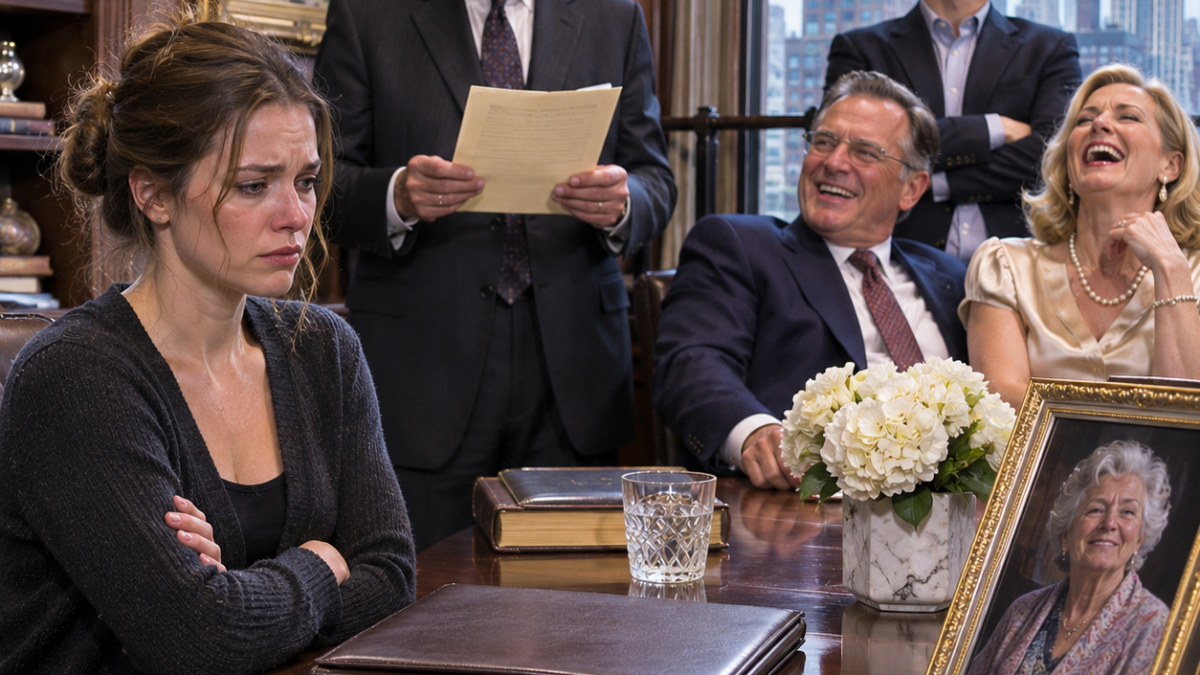
At Grandma’s Will Reading, My Uncle Inherited Her Manhattan House and Investment Accounts, His Wife Got Six Paintings, and I Got One Dollar After Three Years of Caring for Her. My Cousin Laughed, “Don’t Spend It All in One Place.” I Walked Out Without Begging—Then Grandma’s Other Attorney Called and Told Me to Pack for Three Days.
Part 1:
“One dollar.”
The attorney said it without looking up from Grandma’s will.
I thought I’d misheard him.
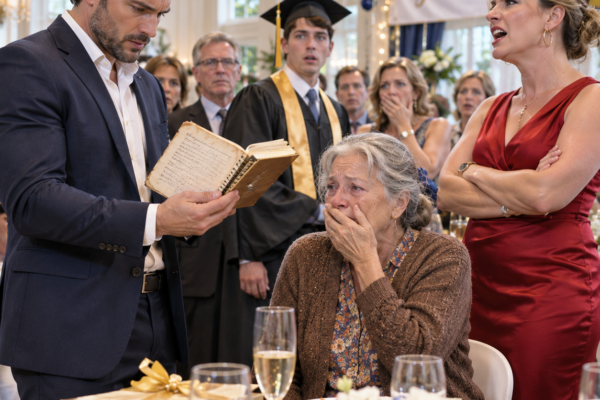
“To my granddaughter, Lucy Harlan, daughter of my late son, Daniel Harlan, I leave the sum of one dollar, contained in the envelope provided to her this morning.”
Across the conference table, my uncle Gordon leaned back in his leather chair.
His wife, Celeste, covered a smile with her hand.
And my cousin Wade actually laughed.
“Don’t spend it all in one place, cuz.”
Nobody told him to stop.
I looked down at the small white envelope in front of me.
Inside was a single dollar bill.
Not a check.
Not a symbolic share of the estate.
One actual dollar.
My grandmother, Josephine Harlan, had died eleven days earlier at eighty-six.
For the last three years of her life, I’d been the person changing her sheets, preparing her medicine, making her meals, and sitting beside her bed when the pain or loneliness became too much.
I’d missed nursing classes to take her to appointments.
Turned down a hospital internship because she needed someone at home.
Spent entire nights in the chair beside her bed because she was frightened of falling asleep alone.
My uncle visited on holidays.
Sometimes.
His wife sent flowers with expensive cards.
Wade came when he needed money.
Yet here we were, inside a Manhattan law office, watching them inherit almost everything I’d known Grandma to own.
The attorney continued.
“The residence on Seventy-Fourth Street, to my son, Gordon Harlan.”
Gordon nodded as though a business arrangement had finally been completed.
“My remaining individually held investment accounts, to my son, Gordon Harlan.”
Celeste squeezed his arm.
“The six paintings listed in Schedule B, to my daughter-in-law, Celeste Harlan.”
She smiled openly.
Then the attorney reached my name.
One dollar.
I sat completely still.
Grandma had never promised me her money.
I’d never asked for it.
When my father died, she took me into her life without making me feel like an obligation.
She helped me through school, encouraged me to become a nurse, and told me that caring for people was meaningful work even when nobody thanked you.
I loved her.
That was why I stayed.
But there is a difference between not expecting an inheritance and discovering, in front of people who already look down on you, that the woman you cared for apparently thought you deserved less than the price of a subway ride.
Gordon turned toward me.
“Three years changing my mother’s sheets, Lucy. You didn’t really think that bought you a house, did you?”
I felt my face grow hot.
“No, Uncle Gordon.”
“Good. Because we’re listing the property Monday.”
I looked at him.
“Monday?”
“You have thirty days to move your things out. I expect the house cleared.”
Celeste leaned forward.
“Please don’t make this difficult. Gordon has responsibilities, and settling an estate is complicated enough.”
I almost asked whether she’d ever wondered who handled those responsibilities while Grandma was alive.
Then I remembered the nights Gordon had ignored my calls.
The Christmas I ate dinner beside Grandma’s hospital bed while his family went skiing.
The afternoon he told me her care was becoming “a management problem.”
I could have said all of it.
Instead, I folded the dollar bill and returned it to the envelope.
The attorney cleared his throat.
“There is one final provision.”
Gordon sat forward.
“Go ahead.”
“Any private arrangements I have made elsewhere shall be administered separately by the designated fiduciary and counsel.”
Gordon frowned.
“Private arrangements? What does that mean?”
“The will doesn’t elaborate.”
“Who handles them?”
“Separate counsel, apparently.”
Gordon looked irritated.
“Find out.”
The attorney closed the folder.
The reading was over.
As everyone stood, Wade walked past my chair.
“One dollar,” he murmured, smiling. “That’s brutal.”
I looked at him.
“Goodbye, Wade.”
Then I left.
Outside, February wind swept between the buildings, carrying a light flurry of snow.
I walked down Seventy-Fourth Street toward the house I’d shared with Grandma.
Everything looked the same.
The brownstone steps.
The brass number beside the door.
The window where she used to sit and watch people walking their dogs.
But nothing felt like home anymore.
That night, I packed her sweaters into a cedar chest.
Underneath them, I found the old blue cardigan she’d worn during her final winter.
I held it against my face and remembered our last conversation.
She’d been drifting in and out of sleep.
“Lucy,” she’d whispered. “Somebody’s going to knock.”
“Who, Grandma?”
“A stranger. With a letter. Or maybe a key.”
I’d brushed the hair away from her forehead.
“Who should I trust?”
She’d looked at me with surprising clarity.
“You’ll know. Just open the door.”
Then she’d closed her eyes.
A moment later, she asked whether it was snowing at Sparrow Hill.
I’d assumed she was confused.
I’d never heard of Sparrow Hill.
Now, sitting alone in her bedroom, I found myself wondering whether she’d been trying to tell me something.
At 9:16 that evening, my phone rang.
An unfamiliar New York number.
I almost ignored it.
Then I answered.
“Lucy Harlan?”
“Yes.”
“My name is Miriam Banks. I was your grandmother’s attorney on a separate matter.”
I sat upright.
“She mentioned you?”
“Many times.”
I looked toward the white envelope lying beside Grandma’s photograph.
Miriam’s next words made me grip the phone.
“Tomorrow morning, seven o’clock. Meet me at the curb outside the house. Pack enough clothes for three days.”
“Where are we going?”
“Somewhere your grandmother wanted you to see.”
I stared at the dollar.
“Why didn’t she tell me?”
Miriam was silent for a moment.
Then she asked, “Lucy, do you still have the envelope from today’s reading?”
“Yes.”
“Bring it.”
“Why?”
Her voice softened.
“Because your grandmother left you that dollar for a reason. And Gordon Harlan must not be the person who explains it to you.”
Part 2:
My grandmother left me one dollar, and my cousin Wade laughed so hard that the attorney had to ask him to be quiet.
“Don’t spend it all in one place, cuz.”
He was sitting across the polished conference table in a Manhattan law office, wearing a jacket that didn’t fit properly and a grin I’d seen at every family gathering since we were children.
My uncle Gordon didn’t laugh.
He did something worse.
He leaned back in his chair, looked directly at me, and said, “Three years changing my mother’s sheets, Lucy. Did you honestly believe that entitled you to her money?”
I felt every person in the room turn toward me.
“No,” I answered.
“Good. Because people need to understand the difference between helping family and earning an inheritance.”
His wife, Celeste, placed her hand over his.
“Gordon, darling, let’s not upset the girl.”
The girl.
I was twenty-eight years old.
I’d spent the last three years caring for a dying woman while Celeste attended charity luncheons and sent flowers she never bothered to arrange herself.
But I didn’t say that.
I looked down at the white envelope in front of me.
Inside was a single dollar bill.
My name is Lucy Harlan, and until that afternoon, I believed I knew my grandmother better than anyone alive.
Her name was Josephine Harlan, though nearly everybody who loved her called her Jo.
She was eighty-six when she died.
She’d raised two sons, buried one of them, survived her husband, and built a financial life that nobody in our family understood particularly well.
My father, Daniel, was the younger son.
He died in a highway accident when I was fourteen.
Afterward, Grandma became the person I could always count on.
She came to school concerts.
Attended graduation.
Called every Sunday.
And when I told her I wanted to become a nurse, she said, “Then learn how to stay with people when there’s nothing left to fix. That’s the part they don’t teach enough.”
I hadn’t understood her meaning then.
I would eventually.
Three years before her death, she began having serious health problems.
She still lived in her brownstone on East Seventy-Fourth Street.
At first, she needed help with groceries, meals, and appointments.
Then she needed assistance bathing and moving around the house.
Eventually, the nights became difficult.
Pain.
Confusion after medication changes.
Fear of falling.
Long hours when she simply wanted someone nearby.
I was already in nursing school.
I arranged classes around her care.
When that became impossible, I reduced my course load.
Later, I deferred a clinical placement.
I told myself it was temporary.
Grandma had spent her life helping me.
Surely I could give her a few years.
Uncle Gordon disagreed.
He called her care a management problem.
He offered to hire people, but rarely stayed long enough to meet them or understand what they needed to do.
When I called about a medical decision, he was often busy.
When I asked him to visit, he said he was managing several important investments.
He had a business in Manhattan, a townhouse in New Jersey, and a calendar full of meetings.
Apparently, he never had an hour to sit beside his mother.
Celeste was much the same.
She sent impressive bouquets.
Sometimes she sent expensive blankets.
Once she arranged for a gourmet dinner delivery that Grandma couldn’t eat.
But when Grandma asked whether she’d come for tea, Celeste always seemed to have another commitment.
Wade, Gordon’s only son, visited infrequently.
He’d once been a promising junior analyst at a Midtown financial firm.
Then his jobs became less stable, and he began borrowing money from relatives.
Grandma never told me how much she’d given him.
I knew only that he disappeared for months and returned with promises.
That was our family.
Not especially close.
Not openly cruel most of the time.
Just divided between people who had time for Grandma and people who believed someone else would handle her needs.
When the attorney began reading her will, I didn’t expect to inherit the house.
I did expect someone to acknowledge that I’d been part of her life.
Instead, Gordon inherited the Seventy-Fourth Street property and the investment accounts remaining in her personal estate.
Celeste received six paintings.
Wade got nothing beyond what Gordon might eventually give him.
And I received one dollar.
The attorney, Mr. Fielding, was a careful man who read each provision exactly as written.
After announcing my inheritance, he continued to a final paragraph.
“Any private arrangements I have made elsewhere shall be handled separately by the designated fiduciary and counsel.”
Gordon sat forward.
“What private arrangements?”
Mr. Fielding adjusted his glasses.
“The will doesn’t identify them.”
“Then find out.”
“Mr. Harlan, I can’t disclose documents I don’t possess.”
Gordon looked irritated.
“You’re my mother’s estate attorney.”
“For the property governed by this will, yes.”
Celeste leaned closer to him.
“Maybe it’s a charitable donation.”
He ignored her.
Then he turned toward me.
“Lucy, the house will be listed Monday. You have thirty days to move out.”
The reading had barely finished.
I stared at him.
“I still have Grandma’s medical equipment to return. And her things—”
“Take whatever personal belongings you’re entitled to. The rest will be inventoried.”
“She has clothes and letters in her room.”
“Then pack them.”
He stood.
“I’ve spent enough time on this.”
I wanted to shout.
I wanted to ask how much time he’d spent holding her hand during the last week.
How many medications he could name.
Whether he knew which blanket she liked when her feet were cold.
Whether he’d ever heard her cry because she was frightened of dying.
Instead, I closed my envelope.
“Goodbye, Uncle Gordon.”
I walked out before he could answer.
Outside, February wind swept along the sidewalk.
A little snow had collected beside the curb.
I held the envelope inside my coat pocket, feeling the single dollar through the paper.
I’d never wanted Grandma’s money.
But I couldn’t understand why she’d chosen to humiliate me publicly.
That was what hurt.
Not the amount.
The choice.
I spent the afternoon packing books in her bedroom.
I folded her blue cardigan, cleaned out a drawer, and placed her reading glasses in their case.
Every object seemed to carry a memory.
The cardigan she’d worn when we watched old movies.
The small brass bell she’d rung when she needed water.
The crossword book beside her bed.
She completed crosswords in ink, even when I suggested she use a pencil.
“If I’m wrong,” she’d say, “I’ll just have to live with it.”
I smiled despite myself.
Then I found a photograph tucked inside her bedside drawer.
It showed Grandma standing on a wooden porch, much younger than I’d ever known her.
Beside her stood a woman with white hair and a broad, laughing face.
Behind them were trees and a narrow dirt path.
There was no date.
On the back, Grandma had written two words.
Sparrow Hill.
My stomach tightened.
I’d heard that name before.
During her final week, Grandma woke one night and asked whether it was snowing at Sparrow Hill.
I thought she’d been confused by medication.
When I told her it was snowing in New York, she smiled.
Then she took my hand.
“Lucy, somebody’s going to knock.”
“Who?”
“A stranger. With a letter, or a key.”
I told her to rest.
She tightened her fingers around mine.
“Promise you’ll open the door.”
“I promise.”
Now I stared at the photograph.
What had she been trying to tell me?
At 9:16 that evening, an unfamiliar number appeared on my phone.
I answered.
“Lucy Harlan?”
“Yes.”
“My name is Miriam Banks. I was your grandmother’s attorney on a separate matter.”
I stood very still.
“What matter?”
“I’d rather explain in person.”
“Why weren’t you at the reading?”
A pause.
“Because your grandmother asked me not to be.”
I sat on the edge of the bed.
“Did she know about the dollar?”
“Yes.”
“Did she know Gordon would laugh?”
Miriam was quiet.
“She knew more about that room than you might imagine.”
I closed my eyes.
Then she said, “Pack for three days. Seven tomorrow morning, outside the house.”
“Where are we going?”
“Somewhere she wanted you to see.”
I looked toward the photograph.
“Sparrow Hill?”
Miriam didn’t answer immediately.
Then she asked, “Do you still have the dollar?”
“Yes.”
“Bring it, Lucy.”
And before I could ask another question, she added, “Your grandmother left you much more than an explanation. But you’re going to have to see it before you’ll understand.”
The call ended.
I sat in the dark for a long time.
Then I placed Grandma’s photograph, her blue cardigan, and the white envelope into my overnight bag.
For the first time since the will reading, I wasn’t thinking about what Gordon had inherited.
I was thinking about a place I’d never visited.
And why Grandma had spent her final days asking whether it was snowing there.
At seven the next morning, a dark-green station wagon stood outside Grandma’s brownstone.
A woman in her late sixties was leaning against the driver’s door with a paper coffee cup in her hand.
She wore a wool coat, brown leather gloves, and sensible shoes.
“Lucy?”
I nodded.
“Miriam Banks.”
She shook my hand.
Her grip was firm.
She took one look at my overnight bag.
“Good. You’re traveling light.”
“Should I have brought more?”
“We can get whatever you need.”
She opened the passenger door.
Inside, the car smelled faintly of coffee and old leather.
I recognized the small silver charm hanging from the rearview mirror.
It had belonged to Grandma.
I touched it.
“She gave you that?”
Miriam nodded.
“The car, actually. Years ago, after she paid my first legal bill.”
I stared at her.
“Grandma bought you a car?”
“She believed young lawyers should have reliable transportation.”
I climbed in.
Miriam fastened her seat belt.
Then she said, “Before we leave, you should know your grandmother anticipated yesterday.”
I looked at her.
“The reading?”
“The reactions.”
“Then why do it that way?”
Miriam considered her answer.
“Because Gordon has spent years treating her money like something already belonging to him. She wanted to keep certain arrangements beyond his reach until her instructions were ready to be carried out.”
I looked down at the dollar in my hand.
“So she let him humiliate me?”
“She was aware you might feel humiliated. I’m not going to pretend that was kind.”
That surprised me.
Miriam continued.
“Your grandmother made difficult choices. Some were wiser than others. But nothing about that dollar means she valued you less.”
I looked out the window.
I wanted to believe her.
We drove north through the city, crossed into the Hudson Valley, and continued toward smaller towns where houses grew farther apart and snow remained piled along the roads.
After nearly two hours, Miriam handed me a folder.
Inside were three reports from physicians who had evaluated Grandma over the previous three years.
I recognized the dates.
I’d driven her to every appointment.
At the time, she’d told me the visits were routine assessments.
The doctors asked questions about memory, dates, finances, and decision-making.
Grandma answered them patiently.
Sometimes she finished a crossword in the waiting room.
I remembered teasing her for doing one in pen.
“Why do you have these?” I asked.
“Because your grandmother expected Gordon to challenge her decisions.”
I examined the reports.
Each documented an independent evaluation of her mental capacity at the relevant time.
The physicians had not merely asked whether she could remember the season.
They’d assessed her understanding of her property, family relationships, and the consequences of decisions she was making.
Miriam had also preserved the legal records showing when the relevant documents were prepared and executed.
“Grandma planned all this?”
“Very carefully.”
“Why didn’t she tell me?”
“She feared your uncle would pressure you into revealing information before the arrangements were secure.”
I looked away.
That sounded like Gordon.
If he believed I knew about an undisclosed account or property, he would have demanded details.
And if I refused, he would’ve accused me of manipulating Grandma.
“Did she think I’d tell him?”
“No,” Miriam answered. “She thought he’d make your life miserable trying to find out.”
That was harder to argue with.
The interstate gave way to a two-lane road.
We passed farms, old stone walls, and a church with a white steeple.
Finally, Miriam turned onto a narrow lane beneath bare maple trees.
A weathered wooden sign stood beside the entrance.
SPARROW HILL.
Beyond it, the road climbed gently through snow-covered fields.
I saw small cottages scattered across the slope.
A larger farmhouse.
A garden enclosed by a low fence.
And a modest chapel with a plain wooden cross near its door.
Nothing about the place looked expensive.
It looked peaceful.
And a little worn.
Miriam stopped beside the farmhouse.
Before I could open the door, a large shaggy dog came bounding toward the car.
He stopped beside my window and barked twice.
Miriam laughed.
“That’s Pepper.”
The dog wagged his tail hard enough to shake his entire body.
“Does he do that to everybody?” I asked.
“Only people he’s expecting.”
A woman came out of the farmhouse.
She was short, silver-haired, and wrapped in a heavy cardigan despite the cold.
She looked at me for a long moment.
Then her eyes filled with tears.
“Lucy Harlan.”
“Yes.”
She came down the steps.
“Come here, child. Let me look at you.”
Before I understood what was happening, she wrapped both arms around me.
“You look like your father around the eyes.”
I stiffened.
“You knew him?”
“Since he was little.”
She stepped back.
“I’m Opal. Your grandmother’s oldest friend.”
I stared.
“Grandma told me about an Opal who lived upstate.”
Opal smiled.
“That’s me.”
Then she took my hand.
“Come inside. We have coffee, and I’ve been trying to remember whether you like eggs.”
I followed her into a warm kitchen smelling of bread and woodsmoke.
A man with thick white eyebrows sat repairing a wooden chair near the window.
Opal introduced him as Augie.
“Thirty-nine years working on the railroad,” she said. “Now he fixes everything that breaks up here.”
Augie looked over his glasses.
“Everything except the furnace in cottage six. That thing’s got a personal grudge.”
A woman in a brown sweater walked through the room carrying sheet music.
“Sister Frances,” Opal said. “She plays violin every evening.”
“Badly,” Augie added.
Sister Frances turned.
“Only because you lack musical education.”
They smiled at one another.
I stood near the doorway, bewildered.
These people spoke like family.
But they weren’t related.
And every one of them seemed to know me.
Opal noticed my expression.
“Your grandmother talked about you constantly.”
“She did?”
“Oh, Lucy. For years.”
She reached into a drawer and removed an old Christmas card.
Inside was a pressed violet.
“When you were nine, did you get a card from someone named Opal?”
I stared.
“Yes.”
“I sent it. Your grandmother said you liked flowers.”
I remembered the card.
I’d kept it in a shoebox with other childhood treasures.
I never realized the sender was part of a life Grandma had kept separate from ours.
Then a woman in scrubs entered the kitchen.
She introduced herself as Kendra, one of Sparrow Hill’s caregivers and the person responsible for coordinating much of the daily routine.
She looked exhausted.
But when she saw me, she smiled.
“Jo’s Lucy.”
I nodded.
“Apparently.”
Opal laughed softly.
“You have no idea how many times we’ve heard that name.”
Miriam placed her folder on the kitchen table.
“Lucy, we should talk.”
Everyone grew quiet.
Opal poured coffee.
Then Miriam opened the folder.
She showed me a deed describing 280 acres of land.
A trust agreement.
A financial statement.
And a schedule listing twelve cottages and the main farmhouse.
I read the title.
THE SPARROW HILL TRUST.
I looked up.
“What is this?”
Miriam folded her hands.
“Your grandmother established Sparrow Hill years ago. The land, cottages, and designated investment accounts were transferred into a separate trust during her lifetime.”
“Why?”
Opal answered quietly.
“Because some people have nowhere else to go.”
I looked toward the window.
Twelve cottages stood across the snowy fields.
“Who lives here?”
“Ten people now,” Kendra said. “Some need daily assistance. Others need more help than they’ll admit.”
Miriam continued.
“The trust owns these 280 acres, the buildings, and approximately $3.6 million in investment assets.”
I stared at her.
Three point six million dollars.
The number didn’t fit the kitchen.
Or the cracked chair Augie was repairing.
Or the worn cardigan Opal wore.
“Grandma owned all this?”
“She placed it in trust years ago. It isn’t part of the personal estate Gordon inherited.”
I glanced at the documents again.
“Then who’s the beneficiary?”
Miriam looked directly at me.
“You are.”
I stopped breathing for a second.
“What?”
“You’re the designated beneficiary and successor trustee.”
I sat back.
Outside, Pepper barked.
Somewhere farther down the hill, a door opened and closed.
I thought of Gordon’s laugh at the reading.
Celeste’s smile.
The single dollar in my envelope.
And then I looked down at a trust agreement that seemed to place a whole community in my hands.
But Miriam wasn’t smiling.
“Before you decide what this means,” she said, “you need to see the operating budget.”
She turned the page.
The income from the investments was approximately $180,000 a year.
The cost of running Sparrow Hill was around $600,000.
I did the subtraction.
Four hundred twenty thousand dollars short.
Every year.
Miriam nodded.
“The difference comes out of principal. As the investments shrink, their income shrinks, too. Care costs keep rising.”
I stared at the figures.
“So this isn’t going to last.”
“Not at the current rate.”
“How long?”
“Potentially less than seven years before the care model becomes impossible to sustain.”
I looked toward the cottages.
“What happens to everyone then?”
Kendra answered.
“We start trying to find placements. County facilities, nursing homes, wherever there’s room.”
“Do they have family?”
Opal looked down at her coffee.
“Some do.”
She paused.
“Having family isn’t the same as having somewhere to go.”
Miriam slid the trust agreement toward me.
“Your grandmother included one important condition. You must serve as trustee and maintain the operation for one full year before you can choose to sell the land or close Sparrow Hill.”
I looked at her.
“And after a year?”
“You can make that decision under the terms she established.”
I stared at the financial statement.
Two hundred eighty acres.
Twelve cottages.
Ten people who depended on the place.
A trust that was losing more than four hundred thousand dollars a year.
I thought about the dollar Gordon had laughed at.
For the first time, I understood why Grandma hadn’t called this an inheritance in the ordinary sense.
She hadn’t handed me a fortune.
She’d handed me a responsibility.
And I had no idea whether I was capable of carrying it.
I asked Miriam what would happen if I refused.
She didn’t pretend the answer was simple.
“The trust would be administered under its existing provisions until a court appointed an appropriate successor or authorized a different arrangement. We would continue paying for care as long as the funds allowed.”
“And then?”
She looked toward Kendra.
“Eventually, we’d have to find another way to house everyone.”
Kendra folded her arms.
“We’ve already contacted facilities about possible placements. Some residents need specialized care. Others don’t meet the criteria for the services available nearby.”
I looked around the kitchen.
Augie was carefully smoothing the edge of the chair he’d been repairing.
Sister Frances had returned with a kettle.
Opal was slicing bread.
These weren’t figures on a balance sheet.
They were people.
But I couldn’t make a decision about their future because I was still grieving.
“I need time,” I said.
Miriam nodded.
“Of course.”
“Three months. I’ll stay three months, learn how the place works, and then decide whether I can complete the year.”
Kendra smiled faintly.
“Three months is fair. Most people take longer than that to remember everyone’s breakfast.”
I looked at Miriam.
“Can we do that?”
“Yes. The one-year period begins with your formal acceptance of the appointment, which we can document today.”
I looked at the trust again.
Then I signed the acknowledgment.
The first thing Opal did was take the pen from my hand.
“Now that the paperwork’s finished, you have something more important to do.”
“What?”
“Tell everybody Jo isn’t coming back.”
I froze.
“Don’t they know she died?”
“We know,” Opal said gently. “Miriam told me. But we’ve been waiting for someone from the family to say it properly.”
I looked toward the door.
Ten strangers.
A grandmother I’d loved.
A place I didn’t understand.
And somehow, I was expected to tell these people their friend was gone.
We gathered in the chapel that afternoon.
There were no elaborate decorations.
Just wooden chairs, a small table, and a window looking toward the winter fields.
Opal sat beside Augie.
Kendra stood near the back.
Sister Frances held a folded handkerchief.
I stood in front of them with Grandma’s blue cardigan in my hands.
“My grandmother died at home eleven days ago,” I said.
My voice shook.
“I was holding her hand.”
Nobody moved.
“She wasn’t in pain at the end. She was tired, but she wasn’t alone.”
Opal covered her mouth.
I looked down at the cardigan.
“I didn’t know about Sparrow Hill. But she spoke of this place during her final days. I think she wanted to come back.”
Sister Frances began to cry.
Augie bowed his head.
Then Opal stood.
“Sixty-five years ago this May, Josephine stepped off a Greyhound bus in this county. She was nineteen years old.”
I looked at her.
Grandma had never told me that story.
Opal continued.
“She had two dresses and a hairbrush in a paper sack. One eye was swollen shut.”
The chapel was silent.
“She’d married at seventeen. The man she married hurt her. The night he broke her wrist, she got on the first bus leaving town.”
I gripped the cardigan.
“My husband was the postmaster,” Opal said. “He found her sitting outside after the bus station closed. He brought her home.”
She smiled through tears.
“Jo slept on our porch for a week. Too frightened to come inside.”
I stared at her.
My grandmother had always seemed unshakable.
She was the person who made other people feel safe.
I’d never imagined she’d once been a terrified young woman with nowhere to go.
“She eventually started working,” Opal continued. “Waited tables. Went to nursing school. Rebuilt her life.”
Years later, Grandma married the man who became my grandfather.
They raised their sons.
He helped her invest, and together they built a comfortable financial life.
But Opal said Grandma never forgot the porch.
After Grandpa died, she returned to the property where she’d once found shelter.
She sat outside for three days.
Then she announced that she wanted to build small homes for people who’d been left behind.
“People arrive at the worst moments of their lives,” Opal said. “Jo wanted them to find a door that opened.”
I looked around the chapel.
Augie had worked on the railroad for thirty-nine years. His son hadn’t called in four years.
Sister Frances had been displaced after the school where she’d lived and worked for decades closed.
One elderly couple had lost their farm after their children arranged a sale without making a workable plan for their care.
Dr. Evelyn Mayfield had practiced medicine for most of her adult life. Now her memory was beginning to fail, and distant relatives had little involvement in her care.
Kendra had arrived at Sparrow Hill when she was sixteen, carrying a paper sack much like the one Grandma had brought decades earlier.
She never left.
Now she helped care for the people who came after her.
I looked down at the blue cardigan.
Grandma had spent her life building a place where the abandoned could belong.
And I hadn’t known.
After the gathering, Opal showed me a cabinet filled with letters.
Some were dated years earlier.
Others were recent.
Most were written in Grandma’s unmistakable handwriting.
She’d written about Sparrow Hill’s residents.
Their illnesses.
Their birthdays.
The first spring flowers.
Their worries.
And again and again, she’d written about me.
Lucy stayed awake with me all night.
Lucy brought flowers into my room, though I told her she had enough to do.
She doesn’t know how much kindness matters when you’re frightened.
I sat on the floor reading until evening.
For three years, I’d believed Grandma’s world had grown smaller and smaller around her bedroom.
But her letters showed that her heart had remained large enough to hold an entire hillside of people.
That night, Miriam handed me one more envelope.
It was addressed in Grandma’s handwriting.
My Lucy.
Inside was a short letter.
That room full of laughter was a test of what you would do when you believed you had nothing to gain. I knew you would be hurt, and I’m sorry for that.
I watched you care for me without promises or bargains. I didn’t choose you because you would never be angry. I chose you because even when you were tired, you never treated a helpless person as an inconvenience.
The dollar isn’t your inheritance. It’s a receipt. Keep it to remember what money can measure—and what it cannot.
Whatever you decide after your year, make that decision for the people who live here, not for the people who laughed at you.
I read the letter twice.
Then I folded it carefully.
I still wished Grandma had trusted me enough to tell me while she was alive.
But for the first time, I understood that she hadn’t left me one dollar because my care meant nothing.
She’d left me the dollar because the real inheritance could never be explained in a crowded lawyer’s office.
The following morning, Kendra woke me at six.
“Dr. Mayfield had a difficult night,” she said. “She’ll sleep late. But Augie wants breakfast at eight, and he won’t stop asking whether the eggs are ready.”
I pulled on my sweater.
“How does he like them?”
“Boiled. Ten minutes. Hard.”
I smiled.
That sounded like something Grandma would’ve remembered.
By the end of my first week, I knew the residents’ names.
By the end of the second, I understood why the operating budget frightened Miriam.
The cottages needed maintenance.
Winter heating costs were enormous.
Two residents required help with medication and mobility.
Dr. Mayfield needed more supervision than the existing staff could consistently provide.
And qualified aides were difficult to recruit to a rural property several miles from the nearest town.
I examined the expenses with Kendra.
Some could be reduced.
Most couldn’t without making the residents less safe.
Miriam showed me three possibilities Grandma had been exploring.
A fundraising program.
A state grant application due in eleven weeks.
And a court-authorized modification to the trust’s administrative terms so a charitable foundation could support specific care services through an eligible nonprofit arrangement.
The third required time.
The second required paperwork none of the staff had enough hours to prepare.
The first required persuading people who’d never heard of Sparrow Hill that it deserved their help.
“This isn’t a gift,” I told Miriam.
She smiled sadly.
“No, Lucy.”
I looked toward the cottages.
“It’s a job.”
I began working.
And that was when Gordon discovered what Grandma had left me.
He called on a Sunday evening.
“I found the trust,” he said without greeting.
I sat at the kitchen table.
“Good evening to you, too.”
“Two hundred eighty acres, Lucy. Twelve buildings. Millions in investment accounts.”
“Yes.”
“Why didn’t you tell me?”
“Because I learned about it three days ago.”
He ignored that.
“I’ve had someone examine the land. It’s worth far more than you think.”
“People live here.”
“We can discuss that when I come.”
“Uncle Gordon—”
“I’ll be there tomorrow.”
He ended the call.
I stared at my phone.
Then looked out the window at Sparrow Hill beneath the evening snow.
Grandma had warned me that someone would come knocking.
Now I knew exactly who was coming next.
Gordon arrived shortly after ten the next morning.
He drove a black Mercedes up the gravel lane, parked beside the farmhouse, and stepped out wearing a cashmere coat that looked absurdly expensive against the snowy fields.
A younger man climbed out behind him.
He carried rolled maps and a tablet.
Gordon didn’t introduce him.
Instead, he looked around.
“Three hours in the car for this?”
I stood on the porch.
“Good morning, Uncle Gordon.”
He ignored me.
The younger man opened his map across the hood of the Mercedes.
Gordon pointed toward the lower pasture.
“Five-acre lots. Maybe smaller if zoning allows. Keep the best views, avoid the wetlands, and we’d have more than fifty marketable parcels.”
The younger man nodded.
“Depending on access and approvals.”
“Two hundred thousand per lot, conservative.”
I stared.
Gordon had been on the property less than two minutes.
He’d already turned the residents’ homes into imaginary building lots.
“People live here,” I said.
Gordon glanced toward the cottages.
“Temporarily.”
“Some have been here for years.”
“That doesn’t make this a permanent business model.”
He looked at the younger man.
“Show her the numbers.”
The man reluctantly displayed a preliminary land valuation.
Under an optimistic development scenario, the property might support a gross sales value of eight to ten million dollars.
Those were projections, not guaranteed proceeds.
They depended on subdivision approvals, access improvements, environmental restrictions, infrastructure costs, and market demand.
Gordon seemed interested only in the largest number.
“Do you understand what your grandmother left you?” he asked.
“Yes.”
“Apparently not.”
He folded his arms.
“I can have a buyer lined up. We sign an agreement now, with closing after your one-year restriction expires.”
I stared at him.
“You’ve already talked to buyers?”
“I’m exploring options.”
“Without asking me?”
“Lucy, you’re twenty-eight. You don’t know how to handle property like this.”
He took out another sheet.
“Here’s what I propose. Five hundred thousand dollars to you when we sign a binding arrangement, subject to legal approval. Another two and a half million when the sale closes. I manage the transaction and retain the remainder through the partnership structure.”
I read the paper.
“You’d take the rest?”
“I’d assume the risk and arrange the sale.”
“Grandma left the trust to me.”
He sighed.
“And I’m trying to help you make something of it.”
I looked toward cottage seven, where a curtain moved behind the window.
“Where would the residents go?”
“The county can find placements. I’ll fund two years of transitional care.”
“That’s not what I asked.”
Gordon’s voice hardened.
“People don’t get to occupy millions of dollars of real estate indefinitely because my mother was sentimental.”
I felt anger rise.
“She wasn’t sentimental. She was keeping promises.”
“You think promises pay the heating bill?”
“No. That’s why I’m working on the budget.”
He laughed.
“You’re a nursing student, Lucy. Not a financial manager.”
I put the proposal back into his hand.
“I’m not signing.”
He stared.
“You’d rather watch the trust run out of money?”
“I’d rather spend my year finding out whether Sparrow Hill can survive.”
Gordon looked at Miriam, who’d joined us on the porch.
“This trust was created when my mother was elderly and increasingly dependent on Lucy. I’ll challenge her capacity. Undue influence. Whatever is necessary.”
Miriam’s expression remained calm.
“The original transfers and trust documents were prepared years before Josephine’s final illness. We also have independent assessments relevant to later amendments.”
Gordon sneered.
“Doctors can be mistaken.”
“Of course,” Miriam said. “That’s why their records are available for proper review.”
I stepped forward.
“Uncle Gordon, I drove Grandma to those appointments. Three physicians, over three years. She understood exactly what she owned.”
He looked at me with open dislike.
“You turned her against her own family.”
“No,” I said. “She made her choices.”
He stepped closer.
“Then I’ll see you in court.”
I stood still.
“You’re entitled to seek legal advice.”
He looked as though he wanted to say something else.
Then he turned, climbed into the Mercedes, and slammed the door.
The younger man hurried after him.
As they drove away, Opal appeared beside me.
“Well,” she said, “that was unpleasant.”
I almost laughed.
“You heard?”
“Hard not to.”
She looked down the hill.
“Your grandmother used to say Gordon could tell you the price of anything and forget to ask whether it mattered.”
I watched the Mercedes disappear.
“Do you think he can take Sparrow Hill?”
Opal looked toward Miriam.
Miriam answered.
“He can file a challenge. He can’t simply take control because he dislikes the trust’s terms.”
I nodded.
But I was frightened.
Gordon had money, lawyers, and years of experience making people feel small.
I had a failing care operation and eleven weeks to submit a grant application.
Then, three days later, Wade arrived.
He was standing beside the road when I came back from town with groceries.
He wore the same badly fitting jacket from the will reading.
His hair was unwashed, and he looked as though he hadn’t slept properly in days.
I stopped the car.
“Wade?”
He turned.
“Hey, cuz.”
“Where’s your car?”
He looked away.
“Don’t have it anymore.”
I got out.
“Where are you staying?”
He tried to smile.
“Here and there.”
“Wade.”
His expression crumpled.
He told me he’d lost his job the previous November.
Gordon had cut him off in December.
His apartment lease ended in January.
Since then, he’d been sleeping in his car until he lost that, too.
For the last several weeks, he’d spent nights wherever he could find shelter.
The drinking had started long before the job loss.
It had only gotten worse.
I looked at him.
“Why did you laugh at the reading?”
He closed his eyes.
“Because for once, I wasn’t the one Dad was humiliating.”
I said nothing.
He swallowed.
“It was cruel. I know.”
“Yes,” I said. “It was.”
He nodded.
“I’m sorry.”
Behind us, the wind moved through the bare trees.
He glanced down the driveway.
“Dad brought me here to see what you’d stolen. Then he left. I thought he’d come back.”
“He’s not coming back for you today, Wade.”
His shoulders dropped.
“I figured.”
I thought of Grandma’s letter.
Then I thought of Opal’s porch.
“There are empty cottages,” I said.
He looked up.
“Lucy, I don’t want charity.”
“Good. Because this isn’t a free vacation.”
He blinked.
“You’ll pay what rent you can. You’ll work. And if you’re going to stay here, you need to get help for the drinking.”
He stared at me.
I pointed toward the farmhouse.
“Kendra knows the community resources. There’s a recovery meeting in town on Tuesday evenings.”
“Today’s Tuesday.”
“Then you have somewhere to be.”
For the first time, Wade smiled without making a joke at somebody else’s expense.
“I haven’t slept in a real bed in seven weeks.”
I opened the passenger door.
“Then get in.”
He moved into cottage four.
The first morning, he helped Augie repair a porch step.
The second, he carried supplies between cottages.
On the third, he asked to see the trust’s financial statements.
I hesitated.
Then remembered he’d worked in financial analysis before his life unraveled.
I gave him copies of the operating budget.
He spent an afternoon at the kitchen table with a calculator.
When he finished, he looked at me.
“Lucy, your grandmother wasn’t wrong to think this place could be saved.”
I sat opposite him.
“Then why are we losing four hundred thousand dollars a year?”
“Because everything is paid through one structure that isn’t designed to accept the outside support you’re applying for. There are grants, service reimbursements, and charitable funding arrangements we’re not using.”
“Miriam knows. We’re petitioning to modify the administrative terms.”
“Good. I can help with the applications.”
I studied him.
“You’re serious?”
He looked down.
“I spent two years doing analysis at a firm in Midtown. I’m not an idiot, Lucy. I just made a mess of my life.”
I softened.
“I know.”
He met my eyes.
“Give me sixty days. I’ll work at that table and show you something useful. If I can’t, I’ll leave.”
I considered it.
Then nodded.
“Sixty days. And keep going to those meetings.”
He smiled.
“Deal.”
That night, I heard Kendra shouting from the back porch.
“Lucy! Dr. Mayfield’s missing!”
The curtain in cottage seven was open.
Her coat was gone.
And beyond the lower pasture, the creek was rising with snowmelt.
We found her shoes beside the path.
Then heard a voice in the darkness.
“I’m waiting for my son!”
I grabbed a flashlight.
Kendra ran toward the creek.
I followed with blankets.
Dr. Mayfield was standing in shallow water beneath the footbridge, trembling so badly she could barely speak.
She was wearing a thin sweater.
Her hands were blue with cold.
“My son said he’d pick me up,” she whispered.
I stepped carefully toward her.
“Dr. Mayfield, it’s Lucy. Let’s get you somewhere warm.”
“He’ll come looking.”
“We can call him from the house.”
She looked at me uncertainly.
Then let me take her arm.
Kendra helped us get her to safety, and emergency medical personnel examined her.
She had mild hypothermia but no serious injury.
Another few minutes in the cold could have been disastrous.
When we returned to Sparrow Hill, I stood beside the kitchen sink and started crying.
Not loudly.
Just the exhausted tears of someone who’d been holding too much for too long.
Kendra came beside me.
“We need better memory-care coverage,” she said gently.
“I know.”
“Door alarms. More trained aides. A proper nighttime rotation.”
“I know.”
I looked toward the operating budget on the table.
The numbers were already terrible.
Now there would be more costs.
But I couldn’t leave Dr. Mayfield’s safety to chance.
I dried my face.
Then picked up the telephone.
There had to be a way to keep Grandma’s promise without putting the people she loved in danger.
And I was done treating those two things as separate problems.
By morning, I had a list.
Not a beautiful plan.
Not an inspiring speech.
A list of things that needed to happen if Sparrow Hill was going to survive.
Dr. Mayfield needed appropriate memory-care supervision and safer door systems.
The cottages needed a maintenance schedule.
The residents needed consistent medical visits.
The aides needed better pay and enough coverage to take time off without leaving someone vulnerable.
And we needed money.
A great deal of it.
Wade worked at the kitchen table while I coordinated with Kendra, Miriam, and the care providers.
We consulted professionals about the safest arrangements for Dr. Mayfield, including whether her needs could continue to be met at Sparrow Hill.
We installed approved door-alert systems and improved overnight staffing.
We also arranged additional assessments and reviewed the emergency procedures for every resident.
Nothing about the changes was inexpensive.
But after the night at the creek, I refused to pretend that good intentions could substitute for proper care.
Meanwhile, Miriam prepared the trust petition.
Grandma’s existing documents gave me a period of responsibility before I could choose to sell or close the operation, but certain administrative restrictions made it difficult to receive charitable support for resident services.
We asked the court to approve a limited modification that would permit an eligible nonprofit partner to receive and administer designated care funding under appropriate oversight.
The change wouldn’t give Gordon control.
It wouldn’t force a sale.
And it wouldn’t remove the residents’ protections.
It would allow Sparrow Hill to pursue the kind of outside assistance Grandma had wanted.
At the hearing, Gordon’s attorney raised questions about the trust’s validity and Grandma’s capacity.
Miriam presented the execution records, testimony from the professionals involved, and the independent medical assessments.
Gordon’s challenge faced a difficult problem.
Grandma had established the principal arrangement years before her final illness.
And the later decisions had been carefully documented.
The court declined to invalidate the trust on the evidence presented.
It also approved the narrowly defined administrative changes necessary for the proposed charitable support, subject to the applicable reporting and oversight requirements.
I walked out of the courthouse feeling as though I’d been holding my breath for months.
Miriam touched my arm.
“Your grandmother planned well.”
I nodded.
“She did.”
Then I thought of the trust budget waiting on the kitchen table.
“Now we have to make the numbers work.”
Wade submitted the state grant application before the deadline.
It took weeks of documentation.
Care assessments.
Budgets.
Staffing plans.
Letters from medical providers.
Detailed explanations of what the money would support.
Some nights, I found him asleep at the kitchen table with his face resting beside an open spreadsheet.
He’d wake, apologize, and make another cup of coffee.
He also kept attending recovery meetings.
At first, he returned quiet and embarrassed.
Later, he began talking about what he’d learned.
The work didn’t cure everything.
But he was taking responsibility for his life instead of waiting for Gordon to rescue him.
One afternoon, Wade came into the kitchen holding his phone.
“My old supervisor contacted me.”
I looked up.
“From Midtown?”
He nodded.
“He knows someone at a care foundation. They’re interested in supporting the memory-care program once the new funding structure is operating.”
I stared at him.
“Really?”
“Really. But they want proper reporting and a realistic long-term budget.”
I smiled.
“Then they’re going to love you.”
He laughed.
It was the first easy laugh I’d heard from him since he’d arrived.
Over the following months, the foundation completed its review.
A local grocery owner agreed to provide regular food donations.
The county helped coordinate qualifying medical home visits.
A volunteer fundraising committee formed, and people from nearby towns began supporting Sparrow Hill.
Not everybody could give money.
Some brought supplies.
Others repaired fences.
A retired nurse offered scheduled volunteer support within the limits of her training and role.
A local church organized transportation for residents who wanted to attend services or community events.
The work became a little less lonely.
One evening, Miriam arrived with an updated financial projection.
The expected annual deficit had fallen sharply.
The foundation was prepared to provide multiyear support for designated care programs.
The state grant remained pending, but the application had passed its initial review.
With the new arrangements, the projected shortfall was moving toward a little over $100,000 annually, rather than more than $400,000.
It wasn’t financial independence.
But it was a path toward sustainability.
The trust’s principal might last decades rather than disappear within a handful of years, provided costs and investment results remained reasonably close to the projections.
I studied the numbers.
Then I looked at Wade.
“You did this.”
He shook his head.
“We did.”
He glanced toward the cottages.
“And Grandma started it.”
Gordon called again in late autumn.
His voice sounded different.
Gone was the confident man who’d arrived at Sparrow Hill calculating how many houses could be built on its land.
He told me his business had collapsed.
Creditors had called several loans.
The Seventy-Fourth Street property had gone to the bank.
Celeste had left, taking the paintings Grandma had given her.
He was staying in a hotel near the airport.
“My mother ruined me from the grave,” he said bitterly.
I sat quietly.
Then he added, “And you helped her.”
I looked out at the chapel.
“No, Uncle Gordon. I didn’t make your business decisions.”
“You could’ve sold Sparrow Hill.”
“Not during the first year. And I wasn’t going to destroy it just to cover debts I didn’t create.”
He said nothing.
I thought about Grandma arriving at Opal’s porch with a paper sack.
About Wade sleeping in his car.
About Dr. Mayfield waiting beside the creek for a son who hadn’t come.
Then I said, “When you’re ready, there’s an empty cottage here.”
Gordon gave a harsh laugh.
“You want me to live in one of those little houses?”
“I’m offering you a place to start over. There’s work to do. And Wade’s here.”
He was silent.
“You don’t owe me anything,” I said. “But the door isn’t locked.”
Then I ended the call.
Two weeks later, Wade told me his father had found a recovery meeting near the airport hotel.
A month after that, Gordon called to ask how Wade was doing.
He didn’t apologize.
He didn’t ask to visit.
But he called again the following week.
It wasn’t redemption.
It was a beginning.
And I had learned not to dismiss beginnings simply because they were small.
The first anniversary of Grandma’s death arrived with snow on the fields.
We held a gathering in the chapel.
Opal read one of Grandma’s old letters.
Sister Frances played her violin, not especially well, while Augie pretended not to cry.
Kendra stood beside Dr. Mayfield, who was having a good morning and remembered enough to ask whether Jo would be joining us.
I took her hand.
“She’s here in the way she taught us to care for each other.”
Dr. Mayfield smiled.
Then Miriam stood.
She had three pieces of news.
The state grant had been approved: $240,000 over three years, designated for eligible care improvements.
The foundation had finalized a ten-year funding commitment, subject to the program’s reporting and performance requirements.
And the trust’s one-year operating restriction had been satisfied.
Miriam looked at me.
“Lucy has now served the full year required by Josephine’s instructions. Under the trust, she may consider selling the property or ending the operation.”
The room grew still.
Ten people looked toward me.
I thought about the brownstone in Manhattan.
The dollar at the will reading.
Gordon’s development proposal.
The night we found Dr. Mayfield beside the creek.
The spreadsheets.
The hearings.
The long days when I’d wanted to go back to the city and finish nursing school without being responsible for an entire community.
Then I looked at Opal.
She was sitting in the same chair Grandma used when she visited.
I stood.
“We’re not selling.”
Opal covered her mouth.
“We’re staying,” I said.
Augie wiped his eyes with the back of his hand.
Wade smiled.
And Kendra, who rarely cried in front of anyone, began crying openly.
After the gathering, Miriam handed me one final envelope.
“Josephine asked me to keep this until today.”
I opened it.
Inside was a handwritten note.
Lucy, I knew you’d think the dollar was a joke at your expense. I hope you understand now that it was never meant to measure your worth.
I wanted you to know that money could never repay the care you gave me. And I wanted Sparrow Hill to belong to someone who would understand that a house matters because of the people waiting inside it.
Keep the dollar. Someday, when someone else arrives here with nothing, perhaps you’ll remember that the smallest amount can still mean a door is open.
I folded the letter.
Then Miriam gave me a second envelope.
This one was addressed to Gordon.
She explained that Grandma had directed her to release it only when he came to Sparrow Hill.
So we kept it.
For another two months.
Then, one cold morning, a car pulled slowly up the driveway.
Gordon stepped out.
He was thinner.
His hair had gone almost entirely gray.
He carried one small suitcase.
Wade came onto the porch.
For a moment, father and son stared at each other.
Then Gordon said, “I wasn’t sure you’d want to see me.”
Wade stepped down.
“I’m here, Dad.”
They embraced awkwardly.
I stood back and let them have the moment.
Later, Gordon came into the farmhouse.
He looked at the kitchen table.
The calendars.
The care schedules.
The stacks of forms.
The worn wooden chairs.
Then he looked at me.
“I thought this place was worthless if nobody sold it.”
I didn’t answer.
He lowered his eyes.
“I was wrong.”
Miriam handed him Grandma’s envelope.
He opened it slowly.
Inside was one dollar.
And a note.
To my son, Gordon: one dollar.
It’s the same receipt I left Lucy. It won’t buy anything worth having at the bank.
Here, it buys a door—if she’s willing to open it.
Gordon read it twice.
Then he sat down and began crying.
I pulled out the chair beside him.
“Breakfast is at eight,” I said.
He looked up.
“What’s that supposed to mean?”
“It means you can stay. Wade will show you cottage nine. You’ll help with the grounds until we figure out what comes next.”
He wiped his face.
“And you don’t hate me?”
I thought about the will reading.
His cruel smile.
The house he’d tried to take from me.
The promises he’d made about selling land he didn’t own.
“I was angry with you,” I said. “For a long time.”
He nodded.
“I know.”
“But Grandma built this place for people who needed somewhere to begin again. I’m not going to close the door just because you’re family.”
He looked down at the dollar in his hand.
“I’m sorry, Lucy.”
I believed he meant it.
That didn’t erase everything.
But I didn’t need it to.
The following spring, we buried Grandma’s ashes behind the chapel beside the memorial stone she’d placed for my grandfather.
She’d left instructions.
Nobody was to wear black unless they already owned some.
There would be cornbread afterward.
And somebody was to make sure Augie got his eggs cooked for ten full minutes.
At the graveside, Opal told the story of a nineteen-year-old girl who once slept on a stranger’s porch because she was too frightened to come inside.
Then she told us how that girl grew up and spent her life building doors for other people.
I placed the little white envelope beside Grandma’s photograph.
Inside was the same dollar the family had laughed at.
I never spent it.
I didn’t need to.
A year earlier, I’d walked out of a Manhattan law office believing Grandma had left me nothing.
Now I stood on a hillside overlooking twelve cottages, surrounded by people who had taught me more about family than any inheritance document ever could.
The trust still needed money.
The cottages still needed repairs.
Dr. Mayfield still required careful supervision.
Wade still attended his meetings.
Gordon was learning that work and forgiveness were things he had to earn a day at a time.
And I was finally arranging to complete the nursing education I’d postponed while caring for Grandma.
Nothing was magically fixed.
But the doors were open.
One evening, after the memorial, I stood on the porch as snow began falling across Sparrow Hill.
A car approached slowly along the lane.
A woman stepped out beside an elderly man carrying a small suitcase.
She looked frightened.
“Excuse me,” she called. “They said there might be room here.”
I thought about Grandma.
Her paper sack.
Opal’s porch.
The dollar in my pocket.
I walked down the steps.
“There’s room,” I said.
Then I opened the door and led them toward the fire.