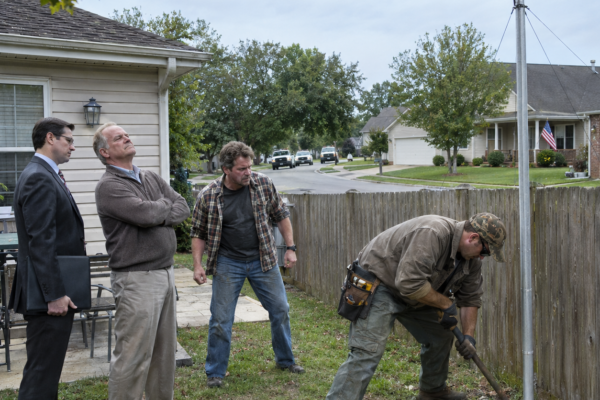
“Pay $186,400 to Fix Our Entrance,” the HOA President Ordered After 28 Luxury Homes Started Using My Private Bridge. She Threatened $250-a-Day Fines, Demanded I Upgrade Its Rails, and Claimed Her Residents Had Every Right to Cross My Land. I Asked for the Recorded Easement. She Smirked—Until I Found One Line Buried in the County’s Original Development File..k
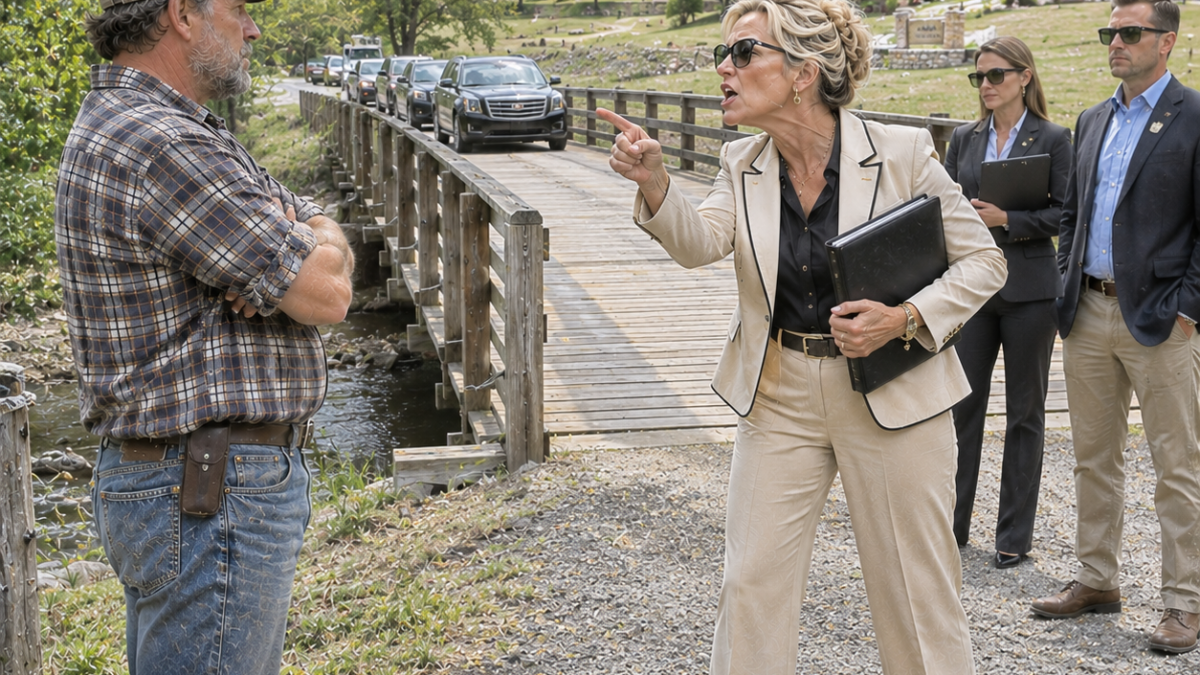
“Pay $186,400 to Fix Our Entrance,” the HOA President Ordered After 28 Luxury Homes Started Using My Private Bridge. She Threatened $250-a-Day Fines, Demanded I Upgrade Its Rails, and Claimed Her Residents Had Every Right to Cross My Land. I Asked for the Recorded Easement. She Smirked—Until I Found One Line Buried in the County’s Original Development File.
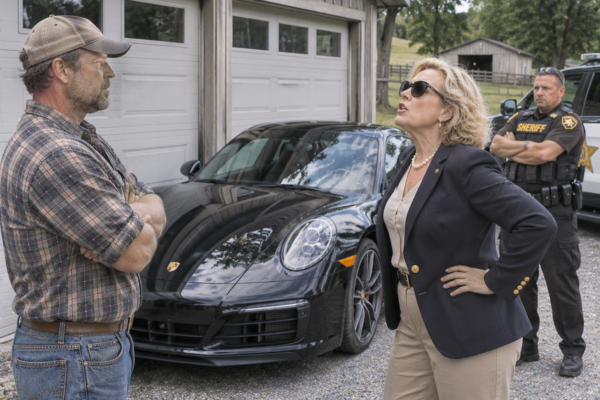
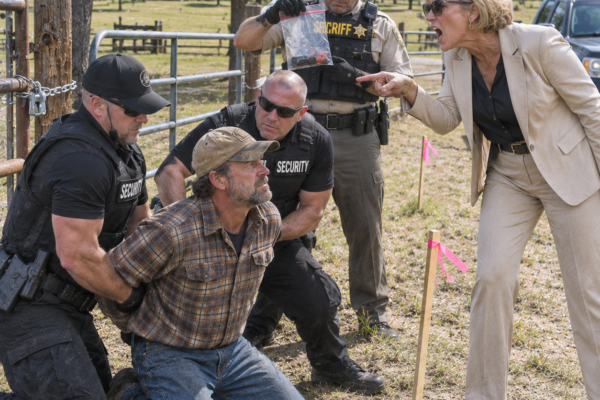
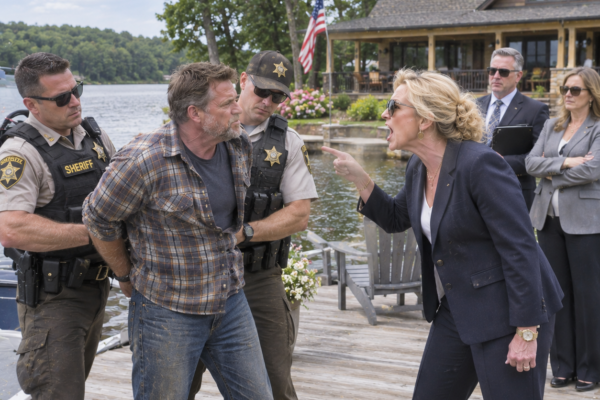
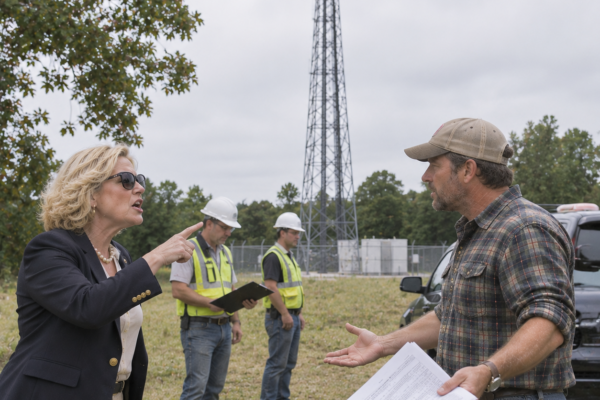
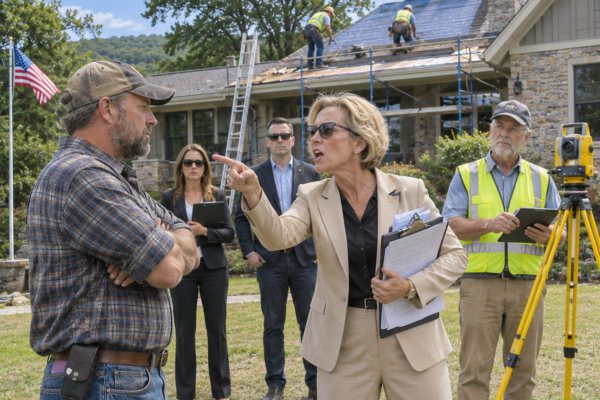
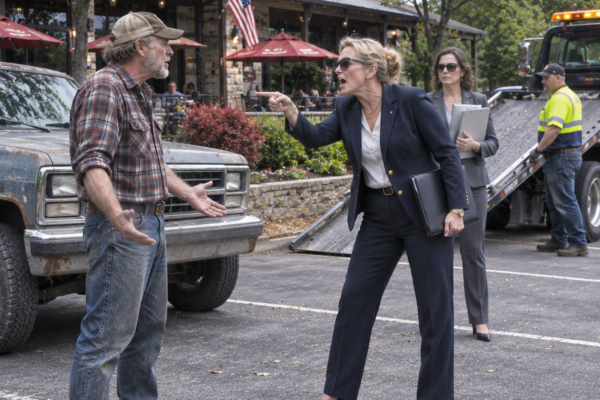
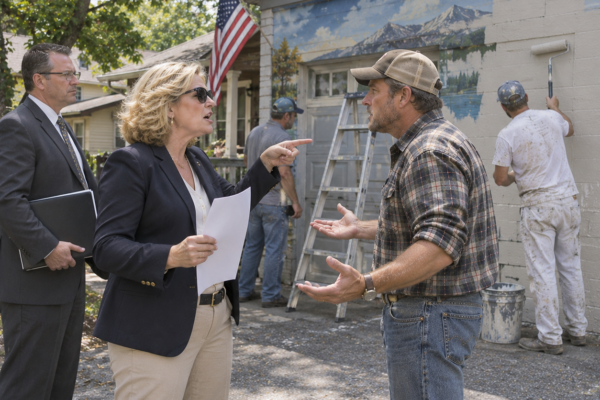
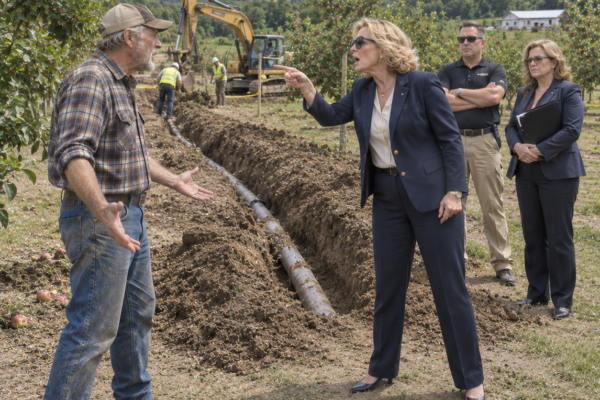
The president of Cedar Hollow Estates handed me a $186,400 repair bill while standing in the middle of my private bridge.
Behind her sat twenty-eight luxury homes, each with a three-car garage, a landscaped driveway, and owners who had apparently been told my bridge belonged to their neighborhood.
“Mr. Rowan, this infrastructure needs to be brought up to our community’s safety standards,” she announced.
I looked down at the four-page estimate.
Steel reinforcement.
New guardrails.
Heavy-duty decking.
Structural improvements for residential traffic.
Total: $186,400.
Then I looked at the woman smiling across from me.
“Lenora, why would I pay nearly two hundred thousand dollars to accommodate a subdivision I don’t belong to?”
Lenora Vance, president of Cedar Hollow Estates Homeowners Association, adjusted her sunglasses.
“Because your bridge is our primary entrance. Twenty-eight families depend on it.”
“Your residents started using it without asking.”
She gave a short, condescending laugh.
“Mr. Rowan, you need to understand something about modern property development. Infrastructure that serves a community creates responsibilities.”
“Then show me the recorded easement.”
Her smile tightened.
“The association has already reviewed the relevant maps.”
“That’s not what I asked.”
She stepped closer.
“People like you always think owning a few acres means you can ignore everyone around you.”
I stared at her.
My name is Isaiah Rowan. I’m forty-eight years old, and I own eleven acres along Cedar Creek, including the steel-and-timber bridge my property has depended on for decades.
I’d bought that land twenty years earlier, long before Cedar Hollow Estates existed.
The farmhouse needed a roof.
The metal workshop was falling apart.
And the bridge was old enough that some of its bolts looked like they belonged in a museum.
But I’d rebuilt the shop, repaired the house, and maintained that bridge because it connected my property to Ridgeline County Road.
It wasn’t designed to carry an entire subdivision.
It was a single-lane private crossing built in the 1960s for farm vehicles and light equipment.
For years, the heaviest regular traffic had been my pickup, my welding trailer, and the propane delivery truck.
Then developers purchased the three hundred acres beyond my northern property line.
They announced a luxury subdivision.
Twenty-eight expensive houses.
Curving streets.
Stone entrances.
And a promise of peaceful country living.
I didn’t object.
Before construction began, I went to the county planning office and reviewed the approved site plan.
The project had its own access arrangements.
Its construction crews would use an entrance from Falls Grade Road.
And the completed subdivision was supposed to have a permanent crossing of its own.
Nothing in the plan required my bridge.
For almost two years, construction proceeded exactly as expected.
Concrete trucks used the northern road.
Lumber deliveries followed the approved construction entrance.
And my bridge remained quiet.
Then, one Tuesday morning, I heard tires rolling across timber.
I looked through my kitchen window.
A silver SUV was crossing my bridge toward the county road.
Before I finished filling the coffee pot, two more vehicles followed.
Three cars in ninety seconds.
On a bridge that had averaged four crossings a day for most of my adult life.
I pulled on my boots.
At the far end of the crossing, someone had installed a professionally made cedar sign.
CEDAR HOLLOW ESTATES — RESIDENT ACCESS
Two posts held it upright.
Both were sunk in concrete.
Both stood eleven feet inside my recorded property line.
Someone had come onto my land, dug holes, poured concrete, and installed a neighborhood entrance sign without asking me.
I called the developer.
The developer directed me to the HOA.
That’s how I met Lenora Vance.
She told me the bridge had become community infrastructure and that I needed to accept my new responsibilities.
I asked for a recorded right-of-way.
She didn’t provide one.
Two days later, her $186,400 demand arrived.
Then came a second letter.
This one threatened $250 per day in fines for failing to comply with the HOA’s infrastructure standards.
It warned that unpaid penalties could result in a lien against my property.
I wasn’t a member of her association.
My land wasn’t subject to its covenants.
But Lenora was treating me as though she’d acquired my bridge simply because twenty-eight families wanted to drive across it.
Meanwhile, the traffic grew heavier.
Moving vans.
Landscaping trailers.
Delivery trucks.
One afternoon, a boom truck rolled across the span, making the timber deck shudder beneath its tires.
I began recording every crossing.
Within two weeks, my notebook contained more than three hundred vehicle entries.
Then I noticed new gouges in the decking.
A slight movement near one abutment.
And a change in the way the steel settled under heavy loads.
That was when the argument stopped being about money.
Someone could get hurt.
I hired an independent engineer and requested the complete development file from the county.
At the records office, a clerk named Marin Sloan brought me a folder nearly four inches thick.
I began with the approved plat.
Then the access drawings.
Then the permit conditions.
I was halfway through the file when I reached a document that made me sit perfectly still.
A construction obligation had never been completed.
A road had been closed without the expected replacement being accepted.
And buried in a later landscaping submission was a single sentence identifying my private crossing as the subdivision’s permanent entrance.
I read it four times.
There was no signature from me.
No easement.
No recorded conveyance.
Yet somebody had represented my property as the solution to a major development obligation.
I looked at the clerk.
“Marin, I need certified copies of every page connected to this.”
She looked at my expression.
“Mr. Rowan, is something wrong?”
I turned the development plan toward her.
“I think somebody sold twenty-eight families an entrance they never owned.”
Then I noticed the original construction cost listed beside the missing infrastructure.
And suddenly I understood why Lenora had been so determined to make me pay $186,400.
Part 2:
Lenora Vance handed me a repair estimate for $186,400 while standing on a bridge she didn’t own.
She had walked out from Cedar Hollow Estates that afternoon in polished leather shoes, carrying a cream-colored folder with the homeowners association’s logo embossed in gold.
Behind her were twenty-eight finished houses.
In front of her was my farmhouse.
And beneath both our feet was a single-lane steel-and-timber bridge that had belonged to my property since the 1960s.
“Mr. Rowan, this crossing needs substantial upgrades,” she said. “We can’t have twenty-eight households depending on infrastructure that doesn’t meet our standards.”
I glanced at the estimate.
Six pages, including the cover letter and contractor qualifications.
Structural steel reinforcement. Replacement decking. Upgraded guardrails. Approach improvements. Engineering and inspection fees.
The total was printed in bold.
$186,400.
I looked at her.
“Lenora, I didn’t build your subdivision.”
She smiled patiently.
“That’s not the issue.”
“I didn’t invite your residents to use my driveway.”
“The crossing now serves the community.”
“And I never agreed to that.”
Her smile tightened.
“Mr. Rowan, you need to stop thinking like one man with a driveway and start thinking like a member of a growing community.”
I folded the estimate.
“I’m not a member of your HOA.”
“Your property directly affects us.”
“That doesn’t make it yours.”
She lowered her sunglasses.
“Honestly, do you understand how development infrastructure works?”
I studied her for a moment.
Then I asked the question that would eventually unravel everything she’d been trying to accomplish.
“Where’s your recorded easement?”
She didn’t answer.
Instead, she told me the association had already reviewed the maps.
I asked again.
She warned that delaying necessary upgrades might put residents at risk.
I asked a third time.
Finally, her voice hardened.
“You’re being deliberately difficult.”
I handed the estimate back.
“No, Lenora. I’m asking you to prove you have a legal right to use something you’re demanding I pay to rebuild.”
Her face reddened.
“Expect to hear from our attorneys.”
I watched her walk away.
Then I stood on the bridge for another minute, listening to the creek run beneath the timber deck.
At forty-eight, I’d spent most of my adult life making a living with my hands.
I owned a small welding and fabrication business, did occasional repair work for local farms, and maintained eleven acres beside Cedar Creek in southwestern Missouri.
I’d bought the property twenty years earlier.
The farmhouse roof leaked.
The workshop was a collapsing metal shell.
The driveway had weeds growing through the gravel.
But the land was quiet, the creek was beautiful, and the bridge gave me direct access to Ridgeline County Road.
It wasn’t an impressive bridge.
Two steel main beams supported heavy timber decking, with simple guardrails and concrete abutments on either bank.
A rancher had built the original crossing in the 1960s because he wanted to reach the county road without driving several miles around the creek.
It was meant for personal vehicles, farm pickups, and light equipment.
Not a parade of fully loaded commercial trucks.
I’d replaced the decking twelve years earlier and kept the steel painted a dark green.
Every spring, I checked for corrosion and loose fasteners.
Every autumn, I cleared debris after heavy rain.
The bridge belonged to my property, and its maintenance was my responsibility for the use it was intended to carry.
For almost twenty years, that arrangement worked.
Some days, only my pickup crossed.
Other days, a customer arrived with a broken trailer hitch or a farmer brought equipment to my shop.
The propane truck visited twice each winter.
That was about it.
Then a development company bought the three hundred acres beyond my northern boundary.
The new subdivision was called Cedar Hollow Estates.
Twenty-eight homes, each advertised as an upscale country retreat.
I wasn’t against the development.
That might surprise people, considering what happened later.
But I had no problem with families buying houses on land the developer legally owned.
I only wanted the project to respect the land I owned.
The week the development notice appeared, I visited the county planning office.
I asked to see the approved site plan.
The plans showed a temporary northern construction entrance from Falls Grade Road and a future permanent two-lane bridge roughly half a mile downstream from mine.
The proposed permanent crossing was on land controlled by the developer.
It would connect Cedar Hollow’s internal streets to the county road, accommodate emergency vehicles, and include pedestrian access.
Nothing crossed my property.
Nothing depended on my bridge.
That was why I didn’t object to the development.
I figured the worst I’d experience would be construction noise and more lights on the far hillside.
For nearly two years, the project proceeded the way I expected.
Excavators arrived through the northern entrance.
Concrete mixers used Falls Grade Road.
Lumber trucks traveled along the new streets.
I could see the dust rising from my back field.
I watched the houses take shape.
Foundations.
Framing.
Roofs.
Stone veneer.
Three-car garages.
At night, streetlights began glowing along streets named Ren Hollow Lane and Silver Birch Court.
The subdivision looked expensive.
But its construction didn’t interfere much with my life.
Then, on a Tuesday morning in early spring, everything changed.
I was standing at my kitchen sink, filling the coffee pot, when I heard tires rolling across the bridge.
It was a sound I knew immediately.
Timber decking has a particular rhythm under moving weight.
My own truck produced a short, familiar sequence.
But this vehicle sounded different.
I looked through the window.
A silver SUV was crossing from the subdivision side toward the county road.
I barely had time to register it before another appeared.
Then a third.
Three vehicles in ninety seconds.
On a bridge that had averaged fewer than five crossings a day for years.
I put on my boots.
At the northern approach, I found a sign that hadn’t been there the night before.
It was a handsome cedar board with gold lettering against a green background.
CEDAR HOLLOW ESTATES — RESIDENT ACCESS
Beneath that, smaller letters instructed private community guests to register.
The sign stood on two pressure-treated posts set in fresh concrete.
Both posts were eleven feet inside my recorded property line.
I stared at them.
Somebody had come onto my land, dug holes, poured concrete, and installed a neighborhood entrance sign without even speaking to me.
I photographed the sign from several angles.
Then I walked the length of the bridge.
Fresh tire scuffs marked the deck.
Two timbers near the center had deep gouges I didn’t remember seeing before.
I touched one with my boot.
Something heavy had dragged across it.
I went back to the house and called the development company.
A receptionist transferred me to a property management office.
The manager gave me the number for Cedar Hollow Estates HOA.
That’s how I first spoke to Lenora Vance.
I told her vehicles were using my private bridge and somebody had installed association signage on my property.
I asked who had authorized it.
She sounded cheerful until I mentioned the property boundary.
Then her voice changed.
“The board has reviewed the site mapping, Mr. Rowan.”
“Then you know the bridge isn’t on HOA land.”
“The crossing serves our community.”
“That isn’t the same thing.”
“These matters have already been resolved at the development level.”
I waited.
“What does that mean?”
“It means the appropriate people approved the arrangements.”
“Then send me the recorded easement.”
There was a pause.
She didn’t provide an instrument number.
Didn’t identify a deed.
Didn’t offer the name of anyone who’d signed an agreement with me.
Instead, she asked whether I’d ever worked in land development.
“No,” I said. “I run a fabrication shop.”
“I thought so,” she replied. “These documents can be difficult for people without professional experience.”
I looked toward the bridge.
“Lenora, you don’t need a development degree to understand which side of a property line you’re standing on.”
She sighed.
“Our legal department will be in touch.”
Two days later, the $186,400 invoice arrived.
The first letter demanded upgrades.
The second, a week later, threatened daily fines of $250 for noncompliance.
It cited the association’s governing documents, none of which applied to my property.
It also warned that unpaid charges could result in a lien.
That was when I understood Lenora wasn’t trying to correct a simple misunderstanding.
She was trying to make me financially responsible for a subdivision’s entrance.
And she was counting on the threat of expensive litigation to make me surrender.
I replied by certified mail.
Four sentences.
I was not a member of Cedar Hollow Estates.
The association had no authority to assess my parcel under its governing documents.
The bridge was private property.
And I requested proof of any recorded access right the HOA claimed.
The letter was delivered.
Lenora never supplied the easement.
Instead, the traffic got worse.
Moving trucks crossed with heavy furniture.
Delivery vans arrived throughout the day.
Landscaping contractors hauled trailers of sod and river rock.
One afternoon, a boom truck crossed toward the subdivision carrying equipment for a streetlight installation.
The bridge shook hard enough that I walked outside.
I watched the rear wheels roll across the decking.
A heavy metallic sound came from beneath the span.
Not a break.
Not a crash.
A sharp movement that shouldn’t have happened.
I stood there until the truck disappeared around the bend.
Then I walked down to the creek.
The water was low enough to expose part of the east abutment.
Near the bearing point, I noticed a fine crack in the concrete.
I couldn’t say whether it was new.
But it worried me.
I began keeping a notebook beside the kitchen window.
Every vehicle.
Every date.
Every time I could identify.
Within two weeks, I’d logged more than three hundred crossings.
I installed two weatherproof cameras on my workshop, aimed toward the bridge approaches.
I wasn’t trying to watch the residents inside their homes.
I was trying to document the traffic moving across my structure.
I also sent Lenora another written notice expressing concern about heavy vehicles and requesting that unauthorized commercial traffic stop.
She responded by accusing me of holding twenty-eight families hostage.
The following Thursday, she came to my workshop.
I was cutting steel for a handrail job when her sedan pulled into the gravel turnaround.
She waited until I removed my hearing protection.
Then she began.
“Mr. Rowan, there are children living back there. Families who have invested their savings. Are you seriously going to endanger them because you want to prove a point?”
I let her finish.
She talked about community obligations.
The need for cooperation.
The cost of lawyers.
And how much money a prolonged dispute could cost someone in my position.
Finally, I asked her something I’d been wondering for weeks.
“Lenora, if my bridge is so important to your community, why did your developer build twenty-eight houses without securing the right to use it?”
For a moment, she had no answer.
I watched her expression change.
Not confusion.
Calculation.
Then she straightened.
“The board will communicate through counsel from now on.”
She got into her car and drove away.
I stood in the shop doorway watching her leave.
She hadn’t denied what I’d said.
And she hadn’t explained where the subdivision’s promised entrance had gone.
That was the moment I decided to stop asking Lenora questions.
I was going to ask the county instead.
The county records office occupied the second floor of a brick building with faded carpeting, excellent air-conditioning, and the kind of fluorescent lights that made everybody look tired.
I arrived twenty minutes after opening.
A clerk named Marin Sloan met me at the land records counter.
She was in her thirties, with reading glasses pushed into her hair and a manner that suggested she enjoyed a complicated records search more than most people enjoyed a weekend off.
“What can I help you find?”
“Everything involving my parcel and the Cedar Hollow Estates development.”
She smiled.
“That could be a substantial file.”
“I brought coffee.”
She laughed.
“Then let’s get started.”
We began with my deed and the recorded survey.
The bridge stood entirely on my property.
Both abutments.
Both wing walls.
The steel span.
And approximately ninety feet of the northern gravel approach.
There was no dedicated public roadway crossing my land.
No recorded residential access easement.
No document granting Cedar Hollow Estates the right to use my bridge as its entrance.
Marin located one easement near the northern portion of my parcel.
It dated from 1981.
For a moment, I thought we’d found the document Lenora had been relying on.
Then we read it.
The easement permitted the installation and maintenance of electrical distribution lines and a buried water main along a twenty-foot corridor.
It didn’t grant vehicular access.
It didn’t identify my bridge as a road.
It didn’t authorize twenty-eight households to drive across my property.
Marin pulled up an older composite map.
A hatched strip marked the utility corridor near the subdivision’s southwestern boundary.
Viewed at a small scale, it looked vaguely like a connection toward the county road.
She pointed at the notation.
“Someone looking only at this drawing could mistake that for a general access corridor.”
“But the recorded instrument doesn’t say that.”
“Correct.”
I requested certified copies.
Then we turned to the development file.
It was nearly four inches thick.
Planning applications.
Engineering drawings.
Permit conditions.
Financial assurances.
Correspondence.
Revised site exhibits.
I started at the beginning.
The preliminary plat was dated a little more than three years earlier.
I recognized it immediately.
It was the same development plan I’d examined before construction began.
I turned to the sheet titled Access and Circulation.
A note beside a proposed structure downstream read:
PERMANENT PRIMARY ACCESS BRIDGE — DEVELOPER RESPONSIBILITY
The drawing showed a two-lane bridge across Cedar Creek.
It included a pedestrian walkway and dimensions intended to accommodate emergency apparatus.
The proposed crossing was approximately half a mile downstream from mine, entirely on the developer’s frontage.
There was no connection to my private bridge.
I turned the page.
The northern entrance from Falls Grade Road was identified as temporary construction access.
Then I found the permit condition that made everything clear.
The temporary route was to remain open and serviceable until the permanent primary bridge was completed, inspected, and accepted.
It was not supposed to close merely because construction crews finished the houses.
The developer had to provide the replacement first.
I read that condition twice.
“Marin, can you find the acceptance record for the permanent bridge?”
She searched.
There were inspection records for drainage structures, streets, and utilities.
Certificates associated with several completed phases.
An amended landscape plan.
But no final acceptance of the proposed bridge.
No as-built drawing showing it had been constructed.
No completion report.
Then I found a cost estimate.
The developer’s original financial exhibit assigned approximately $1.7 million to the permanent crossing.
Design.
Permits.
Approaches.
Abutments.
Steel span.
Creek-bank stabilization.
A million and seven hundred thousand dollars.
I sat back.
Lenora had demanded $186,400 from me to upgrade an existing private bridge.
Meanwhile, the developer had never built the $1.7 million bridge the county had approved as the subdivision’s permanent entrance.
“Could there have been an amendment?” I asked.
Marin nodded.
“That’s what we need to check.”
We searched the later submissions.
The approved development plans had not been formally amended to replace the permanent crossing with mine.
But five months earlier, an updated landscaping exhibit had been submitted.
I found the relevant note near the bottom of the sheet.
Small print.
Easy to overlook.
It read:
Existing Rowan crossing to serve as permanent residential access.
I stared at it.
My last name.
My bridge.
My land.
Presented as the permanent solution to a development obligation without a single signature from me.
The document didn’t contain a recorded easement.
It didn’t demonstrate that anyone had acquired rights to my crossing.
And it hadn’t been approved as a substitution for the original bridge requirement.
It was simply an assertion, buried inside a later submission where someone hoped it would be accepted without scrutiny.
I asked Marin to certify the original access plan, the permit condition, the cost estimate, the landscaping exhibit, and the relevant recording history.
She studied the documents.
“Mr. Rowan, has anyone ever asked you to sign an access agreement?”
“No.”
“Have you sold a right-of-way?”
“No.”
“Then you should probably have an attorney review all this.”
“I intend to.”
By the time I walked out, I understood why Lenora kept refusing to produce an easement.
There wasn’t one in the recorded documents.
And if the county enforced the original development approval, somebody would have to address the missing $1.7 million bridge.
I drove home with a binder that weighed more than the lunch I’d missed.
But I wasn’t finished investigating.
I wanted to know what the homeowners had been promised when they bought their houses.
I found the original Cedar Hollow sales brochure at a local real-estate office.
The broker had kept a printed copy from the development’s first marketing campaign.
On the second page, beneath a heading about exclusive community features, I found a photograph of my bridge.
Autumn leaves framed the dark green steel.
The creek reflected the morning sky.
The caption read:
EXCLUSIVE HISTORIC BRIDGE ENTRANCE
I stared at the photograph.
It was unmistakably my crossing.
The same guardrails.
The same timber deck.
The same cottonwood trees behind the northern approach.
A bridge I’d maintained for twenty years had been marketed as a neighborhood amenity before the first resident moved in.
The broker confirmed that the brochure had been distributed months before the first home closing.
I purchased a copy and requested documentation of its publication date.
Then I found two additional versions in the county development materials.
All three showed my bridge.
None mentioned that it was privately owned.
None explained that the planned permanent subdivision bridge hadn’t been constructed.
I began thinking about the homeowners differently.
They hadn’t all decided to trespass on a stranger’s land.
Many had purchased their houses believing the entrance belonged to the development.
Some had probably relied on that understanding when deciding whether to buy.
That didn’t grant them a right to my bridge.
But it meant they’d been given a story that wasn’t supported by the land records.
And Lenora was using their reliance to pressure me.
I took everything to a property attorney named Robert Ellis.
Robert reviewed the documents over two appointments.
He agreed that the recorded evidence strongly supported my ownership and that the HOA hadn’t identified a valid permanent access right.
He also warned me not to underestimate the practical problem.
“Isaiah, you have twenty-eight occupied homes behind this crossing.”
“I know.”
“Even if the developer never secured an easement, you can’t treat a potential access interruption like a simple driveway dispute. We need to account for emergency response and the residents’ safety while the underlying obligation is resolved.”
“I don’t want anyone trapped.”
“Good. Then we’ll put that in writing.”
Before filing anything, he recommended an independent engineering assessment.
I called Grant Hensley.
Grant was a licensed structural engineer in his fifties who specialized in rural bridges and small transportation structures.
He spent an entire day inspecting my crossing.
He examined the deck, guardrails, steel members, bearings, and both abutments.
He used a level, crack gauge, and other instruments to document movement and deterioration.
By late afternoon, he’d worked his way beneath the span.
I waited beside my pickup.
He climbed up from the creek bank, removed his gloves, and sat on the tailgate.
“I’ve got some concerns.”
My stomach tightened.
“How bad?”
“The bridge was built for light rural use. For that purpose, it’s held up reasonably well. But there are signs of loading beyond what it was intended to carry.”
He showed me the photographs.
Two steel stringers had visible permanent deformation.
Several deck timbers showed crushing near their bearing points.
At the east abutment, a crack had developed alongside evidence of slight rotation and settlement.
He couldn’t assign every defect to a particular vehicle from visual inspection alone.
But the pattern was consistent with repeated excessive loading.
“Can it safely carry the subdivision’s traffic?” I asked.
“I’m not willing to certify that without further analysis and a formal load rating. I would recommend restricting traffic, particularly heavy vehicles, until we establish the structure’s safe capacity.”
I looked toward the houses beyond the trees.
“What about emergency vehicles?”
“That concerns me most. A fully loaded fire apparatus could impose demands well beyond the kind of traffic this bridge was built for.”
I felt sick.
I had been angry about Lenora’s invoice.
Now I was afraid somebody could be injured on the bridge she insisted belonged to her neighborhood.
Grant continued.
“Do you have records showing the traffic that’s been crossing?”
“Two weeks of recent footage. And older shop cameras that might show the construction period.”
“Let’s look at them.”
For two evenings, we reviewed recordings from cameras I’d installed years earlier to protect equipment outside my workshop.
Most of the footage was ordinary.
Customers arriving.
My own pickup.
Farm deliveries.
Deer wandering near the driveway.
Then Grant stopped one video.
A concrete mixer crossed my bridge.
Not a household SUV.
A loaded mixer bearing the development contractor’s markings.
The recording was dated during the final months of Cedar Hollow’s construction.
We checked another day.
A dump truck carrying base rock.
Another.
A flatbed loaded with scaffolding.
Then a tanker.
Then a truck hauling a compact excavator.
For months, some of the developer’s contractors had been using my private bridge while the approved northern construction route remained available.
I hadn’t noticed because most of the work happened while I was away at jobs or working in the back fields.
Grant enlarged several frames.
The vehicles were identifiable.
Their approximate loading could be evaluated against their configurations and project records.
He compared the observations with the bridge’s condition.
“Isaiah, this is important. Your bridge wasn’t simply worn out by ordinary use.”
I looked at the screen.
The concrete mixer had just rolled onto the timber deck.
“And Lenora wants me to pay for the repairs.”
Grant shook his head.
“First, we establish the actual engineering findings. Then your attorney can deal with responsibility.”
His final report documented the structural conditions, likely loading causes, recommended restrictions, and the repair work needed.
He made one point particularly clear.
The bridge shouldn’t continue carrying unrestricted residential and commercial traffic without a formal load rating and appropriate safety measures.
I read the report at my kitchen table.
Twenty-eight families depended on a crossing that had never been intended to carry their traffic.
The developer had bypassed its own planned entrance.
Lenora had tried to transfer the resulting repair costs to me.
And the bridge itself was showing the consequences.
I could have responded by locking the entrance and refusing all use immediately.
Part of me wanted to.
But families with children lived in those houses.
Somebody might need an ambulance.
Somebody might need a fire engine.
I wasn’t going to solve one injustice by creating another danger.
So I called Robert.
“We need a safe alternative,” I told him. “Before this gets any worse.”
He agreed.
We prepared formal notices to the county planning department, public works, the fire district, the developer, and the HOA.
We included Grant’s report.
We requested an immediate traffic-safety assessment, interim load restrictions, and the reopening of the temporary northern access route.
I made my position clear.
I intended to end unauthorized use of my bridge, but I wanted the necessary alternative in place through a coordinated process.
Nobody would be able to claim I had trapped twenty-eight families without warning.
The notices went out.
And four days later, Lenora called an emergency HOA meeting.
She wanted every homeowner in one room.
And she wanted me standing in front of them.
The emergency meeting was scheduled for seven o’clock on a Wednesday evening.
I arrived ten minutes early.
Cedar Hollow’s clubhouse looked like a place designed to impress people who were considering buying expensive houses.
Stone fireplace.
High ceiling.
Polished floors.
Framed photographs of the development in different seasons.
The kind of room where nobody expected an argument about a privately owned farm bridge.
Nearly forty people had gathered.
Some wore business clothes.
Others had come straight from work.
A few had young children with them.
I recognized several residents from the cameras, people who drove across my bridge every morning without knowing I was the man responsible for keeping it standing.
I sat near the back with a canvas bag containing my documents.
Lenora stood beside a projector screen.
She wore a navy suit and the same confident expression she’d worn while handing me the repair estimate.
She began by describing the association’s commitment to safety.
Then she spoke about the importance of cooperation between neighboring landowners.
Three minutes into the meeting, she turned toward me.
“Unfortunately, one neighboring property owner has decided to jeopardize our community’s access rather than accept his responsibilities.”
Several heads turned.
I remained seated.
She continued.
“For years, our residents have relied on the historic bridge entrance. Now Mr. Rowan is refusing to maintain it to the standards required for community safety.”
A man in the front row raised his hand.
“Is the bridge dangerous?”
“We have reason to believe substantial upgrades are necessary,” Lenora replied.
“Then why are we still driving over it?”
She hesitated.
“We’re pursuing a responsible solution.”
Another woman asked whether the bridge belonged to Cedar Hollow.
Lenora smiled.
“The crossing has served as our community entrance since residents began moving in.”
That wasn’t an answer.
But it sounded convincing enough that several people nodded.
Then she looked at me.
“Mr. Rowan, would you care to explain why you’re refusing to cooperate?”
I stood.
“Yes, ma’am.”
I walked toward the front.
Then I asked her one question.
“Would you show everyone the recorded easement that gives Cedar Hollow Estates the right to use my bridge?”
Her smile froze.
“We’ve reviewed the mapping extensively.”
“I understand. But can you identify the recorded easement?”
She clicked her presentation remote.
A map appeared on the screen.
A hatched strip ran toward the county road near my northern property boundary.
“There,” Lenora said. “The established access corridor.”
I took two certified documents from my bag.
“This is the actual recorded instrument from 1981.”
I held up the first page.
“It grants utility companies the right to install and maintain electric distribution equipment and a buried water main. It doesn’t grant anyone a right to drive across my land.”
I placed the second document beside it.
“This is the recorded survey showing the bridge and both approaches inside my property.”
Lenora looked toward the map.
I looked at her.
“Could you point to the language granting your residents vehicular access?”
She didn’t move.
A woman in the third row spoke.
“A utility easement isn’t a road.”
Nobody answered.
I turned toward the homeowners.
“I’m not here because I want your families stranded. I’m here because somebody has been using my bridge as the entrance to a development without securing the right to do so. And now that the bridge needs work, your HOA wants me to pay $186,400 to accommodate traffic I never authorized.”
A man near the fireplace frowned.
“But we were told that entrance came with our houses.”
I looked at him.
“I believe you. I’ve seen the brochure.”
Lenora interrupted.
“Mr. Rowan is deliberately confusing the issue.”
I took the original marketing packet from my bag.
“This is the brochure. That’s my bridge in the photograph. I’ve owned it for twenty years. Nobody asked to buy it or obtain an easement.”
I showed the residents the cover.
One woman shook her head.
“I remember that exact picture.”
Another man leaned forward.
“Then what entrance were we supposed to have?”
I paused.
“That’s a question the original county plan answers.”
Before I could continue, a man near the end of the front row stood.
He introduced himself as Wade Hollis, the association treasurer.
Wade was a retired regional freight operations manager, a compact man with gray hair and the unhurried manner of somebody who’d spent years examining shipping costs.
“I have a budget question,” he said.
Lenora looked irritated.
“Wade, can this wait?”
“No.”
He opened a folder.
“I’ve reviewed three years of association financial statements. I can’t find a reserve allocation or disclosure for the permanent bridge described in the original development approval.”
The room grew quiet.
Lenora adjusted her microphone.
“The board identified a more efficient solution.”
Wade looked at her.
“What solution?”
“The existing community entrance proved adequate.”
“But the development plan included a separate bridge estimated at $1.7 million.”
Several homeowners began talking.
Lenora raised her hand.
“Pursuing redundant infrastructure would have been fiscally irresponsible.”
I looked at her.
“Lenora, are you saying the fiscally responsible solution was to use my bridge for free?”
Nobody laughed.
The question hung in the room.
A woman near the aisle said quietly, “But he doesn’t even belong to our HOA.”
Lenora clicked off the projector.
“This matter requires additional legal review. The board will take it under advisement.”
Then she adjourned the meeting.
I hadn’t shouted.
I hadn’t accused every resident of trespassing.
I’d shown them two recorded documents and asked where the right to use my property came from.
That had been enough to change the entire conversation.
Twenty minutes later, Wade found me in the parking lot.
He carried a manila envelope.
“Mr. Rowan, I think you should see this.”
I looked at him.
“What is it?”
“Correspondence from the association’s management account. I obtained it through my duties as treasurer.”
He handed me the envelope.
Inside were messages between Lenora and Everett Callaway, a representative of the development company.
Most discussed ordinary project matters.
But two were different.
The first concerned the expense of the proposed permanent bridge and whether the temporary Falls Grade Road access could be closed after the houses received occupancy approvals.
The second contained one sentence I read several times.
If Rowan objects, the association can apply pressure through maintenance liability.
I looked up.
Wade nodded grimly.
“I checked the date. She wrote that months before sending you the first invoice.”
My anger rose.
This wasn’t somebody misunderstanding a map.
Lenora had planned to use the cost of maintaining my private bridge as leverage against me.
I asked Wade whether he would be willing to authenticate the correspondence if necessary.
“Yes,” he said. “I kept the records because the association has a responsibility to its members. I didn’t become treasurer so somebody could hide a million-dollar infrastructure problem.”
We shook hands.
Then he went back inside.
I drove home slowly.
For weeks, Lenora had treated me as though I were an obstacle to community progress.
Now I understood that she’d known exactly where the missing infrastructure obligation belonged.
And she’d tried to move that obligation onto me before anyone looked closely enough to notice.
The following Thursday, the county convened a joint meeting.
Planning officials attended.
So did the public works director, an engineer representing the fire district, Everett Callaway, Lenora, the HOA’s attorney, Wade, and me.
Grant Hensley attended as the independent engineer who’d inspected my bridge.
The meeting took place in a plain conference room on the third floor of the county administration building.
There was no judge.
No jury.
No courtroom audience.
Just a long table, several government officials, and enough documents to explain what had gone wrong.
Lenora’s attorney opened by arguing that Cedar Hollow’s residents had relied on my bridge since moving in.
He said the crossing had effectively become part of the neighborhood’s transportation system.
He also emphasized the safety problems that could arise if I restricted access.
I agreed with one part.
The safety problem was real.
But it hadn’t been created by my refusal to give away property rights.
It had been created by the developer’s failure to complete its approved entrance.
When my turn came, I opened my binder.
I presented the deed.
The survey.
The 1981 utility easement.
The approved preliminary plat.
The condition requiring the temporary northern route to remain open until the permanent bridge was accepted.
The marketing brochure.
Grant’s engineering report.
And the timestamped recordings of construction vehicles using my bridge.
Then I placed Lenora’s email on the table.
Wade confirmed where he’d obtained it.
Lenora’s attorney leaned over to speak privately with her.
She didn’t answer him.
The planning director examined the original permit condition.
Then she turned toward Everett Callaway.
“Where is the completion certification for the permanent access bridge?”
Everett adjusted his collar.
“The project underwent several value-engineering reviews.”
“That’s not what I asked.”
He glanced toward Lenora.
“We determined that the existing crossing could meet community needs.”
“Was an amended access plan approved?”
He hesitated.
“I believe a circulation exhibit was submitted.”
The planning director pulled out the later landscaping drawing.
She pointed to the small note identifying my bridge.
“This?”
“Yes.”
“Mr. Callaway, an annotation on a landscaping exhibit does not transfer ownership of private land or satisfy a condition requiring construction and acceptance of a new bridge.”
Nobody spoke.
Then the public works director asked when the Falls Grade Road entrance had been closed.
Everett admitted it had been decommissioned at the end of construction.
“Who authorized that closure?”
He looked through his folder.
He couldn’t produce an approval.
The room went quiet.
Grant Hensley then explained his findings.
My bridge was not simply an old structure in need of cosmetic maintenance.
It had suffered damage consistent with heavy loading beyond its intended service.
The construction footage identified project vehicles using it during the development period.
He couldn’t assign every repair dollar to one truck from a photograph.
But his report provided engineering support for the conclusion that excessive traffic had contributed materially to the deterioration.
He also explained why unrestricted use could not continue without a formal load rating.
The fire district representative focused on emergency access.
Whatever the property dispute’s eventual outcome, twenty-eight occupied homes needed a safe and reliable way for emergency vehicles to reach them.
Everyone agreed.
Then the planning director summarized the problem.
“The development was approved with a temporary route and a required permanent bridge. The temporary route was closed before the permanent bridge was completed and accepted. The community subsequently relied on a privately owned structure for which no access agreement has been demonstrated.”
She looked toward Lenora.
“That sequence doesn’t create a new obligation for Mr. Rowan to provide the missing infrastructure.”
Lenora finally spoke.
“Surely the county isn’t suggesting we should spend nearly two million dollars when a bridge already exists.”
The director looked at her.
“The existing bridge belongs to someone else.”
Lenora folded her arms.
“And twenty-eight families depend on it.”
“Yes,” the director replied. “Which is why the approved access requirements need to be addressed immediately.”
Then the public works director asked Everett one more question.
“What is the status of the project’s performance bond?”
Everett stopped moving.
Lenora looked toward him.
For the first time since I’d met her, she appeared genuinely frightened.
Everett Callaway opened his folder.
He looked at the planning director, then the public works director, as though he were hoping one of them would change the question.
Finally, he said, “The bond remains in place.”
I sat forward.
The planning director nodded.
“That’s what our records show.”
Lenora turned toward Everett.
“Why is that relevant?”
He didn’t answer.
The director did.
“The developer posted financial security to guarantee completion of the required public improvements. The permanent access bridge was one of those improvements. Since it was never completed and accepted, the county has not released the security.”
I looked down at the original development estimate.
One point seven million dollars.
The obligation Lenora had tried to transfer to me had been secured from the beginning.
The county already had a mechanism for holding the developer responsible for fulfilling its approved construction obligations.
That didn’t mean the money would appear overnight or that building a bridge would be simple.
The county still had to follow the appropriate enforcement procedures.
The developer would have opportunities to respond.
Engineering, permitting, and construction would take time.
But the financial responsibility hadn’t vanished.
It had simply been ignored while everybody used my bridge.
Everett began discussing changing costs and unexpected engineering challenges.
The planning director listened.
Then she asked whether an approved amendment had eliminated the permanent crossing.
He admitted there wasn’t one.
She turned to the public works director.
“We need a coordinated restoration plan for the temporary Falls Grade Road access, with the fire district involved.”
The fire district representative nodded.
“That’s essential. We can’t leave occupied homes dependent on a crossing whose safe loading capacity hasn’t been established.”
Grant agreed.
He recommended immediate limits on heavy vehicles, an expedited load-rating review, and a managed interim arrangement until an approved alternative was functioning.
I looked around the table.
“This is what I’ve been asking for. I don’t want anybody trapped. But I won’t accept permanent traffic across my land or pay to repair damage caused by somebody else’s construction project.”
The planning director nodded.
“That position is understood.”
For the first time in months, I believed the people in the room were discussing the actual problem.
Not Lenora’s version of it.
Not the glossy brochure.
Not the HOA’s violation notices.
The approved development obligations and the condition of the physical infrastructure.
Before the meeting ended, county officials outlined the next steps.
The developer would be directed to restore the temporary northern route within thirty days, subject to the required safety review and emergency-access arrangements.
The fire district would coordinate interim response planning while the private bridge’s loading restrictions were implemented.
The county would pursue compliance with the original permanent-bridge condition and review the existing financial security.
The HOA would need to stop representing my crossing as its property.
And no further use of my land could be assumed merely because residents had been told it belonged to the development.
Lenora left without speaking to me.
Everett followed her.
Wade remained behind.
He looked at the documents on the table.
“Isaiah, I don’t know how we let this happen.”
I closed my binder.
“Most of the homeowners had no reason to suspect the developer hadn’t built the entrance.”
“But the board should’ve checked.”
“Yes,” I said. “It should have.”
He nodded slowly.
“I intend to make sure it does from now on.”
Within a week, workers began inspecting the closed Falls Grade Road entrance.
Brush had grown along portions of it.
Drainage needed attention.
Several sections required grading and fresh gravel.
The fire district reviewed vehicle turning movements and access conditions before the restored route could be placed in service.
In the meantime, my bridge carried only the limited traffic allowed under the interim safety arrangement.
Heavy deliveries were redirected or postponed.
Residents received instructions about the temporary restrictions.
I didn’t like seeing cars continue crossing the span.
But I understood that an orderly transition was safer than abruptly leaving families without access.
The county, developer, and fire district were finally handling the situation as an infrastructure problem.
Not a battle of wills.
While those repairs progressed, Cedar Hollow residents began visiting my property.
Some wanted to apologize.
Others wanted answers.
One afternoon, a woman named Priscilla Vaughn stopped beside the workshop.
She was in her late fifties and had purchased one of the first completed houses.
“Mr. Rowan, I hope you don’t mind me coming by.”
“Not at all.”
She carried a folder from her home closing.
Inside was the original sales brochure.
My bridge appeared on the second page.
“I asked the sales agent about this entrance,” she told me. “He said it belonged to the development. He told me the bridge was one of the community’s special features.”
I nodded.
“I believe you.”
She looked toward the creek.
“My husband has mobility problems. We specifically asked whether emergency vehicles could reach the house easily.”
“What were you told?”
“That everything had been reviewed and approved.”
She lowered her eyes.
“We paid more than four hundred thousand dollars for our home, Isaiah. We didn’t know we were buying into a problem that could’ve kept an ambulance from reaching us.”
I felt a heaviness in my chest.
“I’m sorry they put you in that position.”
She shook her head.
“You didn’t. That’s why I’m here.”
She looked back at the bridge.
“I was angry with you when Lenora told us you were demanding money. Now I know she was trying to make you pay for something the developer should have provided.”
I considered the woman standing beside me.
She hadn’t written the violation notices.
She hadn’t placed the sign on my land.
She’d bought a house based on representations made by professionals she thought she could trust.
“You have a right to be angry,” I told her. “Just make sure you’re angry with the right people.”
She smiled faintly.
“I think we’re finally figuring that out.”
The next regular HOA meeting was different from the first.
Wade presented a timeline.
He began with the preliminary plat and the original $1.7 million bridge requirement.
Then the permit condition requiring temporary access to remain open.
Then the sales brochures.
Then the closure of Falls Grade Road.
He showed the later landscaping exhibit naming my crossing as the permanent entrance.
He displayed Lenora’s invoice and the $250 daily fine notices.
Finally, he presented her email about applying pressure through maintenance liability.
Nobody needed a dramatic speech to understand what had happened.
The documents spoke clearly.
Lenora stood and insisted she’d been trying to protect the association from an unnecessary expense.
“If Mr. Rowan had simply cooperated, we wouldn’t be in this situation,” she said.
I was sitting in the back.
I answered without standing.
“Cooperation doesn’t mean I hand you my bridge.”
That was all I said.
The board voted four to one to remove Lenora as president, following its governing procedures.
Wade was appointed to lead the association until the next election.
Lenora remained a homeowner.
Her house was still hers.
She simply no longer controlled the board.
Within a month, Cedar Hollow retained new counsel.
The association withdrew every fine, assessment, and enforcement notice issued against my parcel.
It acknowledged in writing that my bridge was private property and that it had no recorded right to use it as the subdivision’s permanent entrance.
I put that letter in my fireproof box beside the deed.
Then the developer reached a formal compliance arrangement with the county concerning the performance security and the outstanding infrastructure requirements.
By midsummer, the temporary northern road was open and had received the necessary access approvals.
Residents began using it.
School buses.
Delivery vehicles.
Ordinary traffic.
My bridge finally became quiet again.
The repair issue was resolved separately.
Grant’s report and the archived construction recordings provided the basis for a negotiated settlement with the developer and its insurer.
They accepted responsibility for the damage attributable to the construction traffic and funded the required restoration.
The work was substantial.
The deformed steel members were repaired or replaced as specified by the engineer.
The east abutment was stabilized and repaired.
The timber deck was replaced.
The guardrails were restored in their original profile.
Final inspections and load-rating documentation confirmed the bridge’s appropriate use after repairs.
I didn’t receive the HOA’s demanded $186,400 invoice as my responsibility.
I didn’t become the subdivision’s permanent bridge-maintenance contractor.
And I didn’t grant Cedar Hollow an easement.
My settlement was about restoring my private structure and making sure it wouldn’t be used as the subdivision’s entrance again.
A few people suggested I should have demanded a much larger payment.
Maybe I could have pursued broader claims.
But I wasn’t interested in turning the dispute into a contest over who could extract the most money.
I wanted my land respected and the bridge restored.
The settlement accomplished that.
Construction on Cedar Hollow’s new permanent bridge began the following autumn.
A crew established work areas downstream.
Concrete trucks returned, this time using the approved northern access.
Heavy equipment began preparing the abutments.
Steel reinforcement rose above the foundations.
On still mornings, I could hear machinery working across the valley.
I didn’t resent the noise.
For once, the work was happening exactly where it was supposed to happen.
On land the developer had the right to use.
Under plans that had been properly reviewed.
To provide infrastructure promised before the first houses were sold.
My own bridge was finished before Cedar Hollow’s.
The restored timber decking felt solid beneath the pickup tires.
The steel had been primed and painted the same dark green I’d maintained for years.
The repaired abutment no longer showed the movement that had worried Grant.
And the old cedar sign was gone.
The association sent a maintenance contractor to remove its posts and concrete foundations.
I watched from the workshop.
When he finished, I raked the ground smooth and spread grass seed over the disturbed soil.
Then I installed a modest swing gate at the northern approach.
It wasn’t meant to punish anyone.
It simply made clear that the crossing was private.
A small sign read:
PRIVATE DRIVE — NO COMMUNITY THROUGH ACCESS
A few weeks later, I saw Lenora one last time.
She’d come to retrieve association records from the clubhouse and stopped near the county road on her way out.
I was standing beside the new gate, checking a hinge.
She approached slowly.
For a moment, she examined the repaired bridge.
The fresh decking.
The painted steel.
The restored guardrails.
Then she looked at me.
“Well, Isaiah,” she said, “in the end, you managed to get yourself practically a new bridge for free.”
I set down my wrench.
I thought about the months of heavy traffic.
The damage to my property.
The threatening letters.
The $186,400 demand.
The homeowners who’d been misled.
And the missing $1.7 million structure that had nearly been replaced by an obligation imposed on me.
Then I answered.
“No, Lenora. I got back the bridge your development broke.”
She looked away.
There wasn’t much else to say.
Behind her, beyond the trees, a crane was lifting the first major girder for Cedar Hollow’s permanent crossing.
Twenty-eight households were finally getting the legal entrance they’d been promised.
And I still owned every square foot of the land I’d purchased.
Lenora returned to her car.
She didn’t threaten me.
Didn’t mention the HOA’s lawyers.
Didn’t demand another repair.
She simply drove away.
I finished tightening the hinge and walked across the bridge.
The creek moved gently beneath the decking.
Autumn leaves floated along the water.
A truck passed on Ridgeline County Road, then disappeared behind the trees.
For a few minutes, everything was quiet.
I thought about my father.
He’d taught me to keep documents because he believed a man’s word should mean something, but he also knew memories could change when money was involved.
If he were alive, I think he would’ve understood exactly why I kept that fireproof box in the hallway closet.
The deed.
The survey.
The bridge records.
The settlement.
All of it mattered.
But the papers weren’t what made the property valuable to me.
It was the mornings when fog settled over Cedar Creek.
The satisfaction of a finished welding job.
The farmhouse I’d repaired with my own hands.
And the bridge that had carried me home for twenty years.
Lenora had looked at that crossing and seen an opportunity to save her subdivision $1.7 million.
She’d assumed the man who owned it wouldn’t know enough to challenge her.
But a property line doesn’t disappear because the neighboring development is expensive.
An easement doesn’t appear because somebody draws a yellow line on a map.
And a private landowner doesn’t become responsible for twenty-eight houses simply because an HOA president wants him to.
I reached the far end of the crossing and looked back.
The dark green steel shone in the afternoon light.
A few hundred yards downstream, the new subdivision bridge was taking shape.
For the first time since Cedar Hollow’s residents began using my driveway, the two properties had a future that didn’t depend on an argument.
They would have their bridge.
I would have mine.
And everybody would know the difference.
I closed the gate, turned the key, and drove toward my farmhouse.
The crossing was quiet again.
Exactly the way it had been before twenty-eight luxury homes appeared across the creek.
And after everything Lenora had tried, that was worth far more to me than the repair bill she’d once demanded I pay.