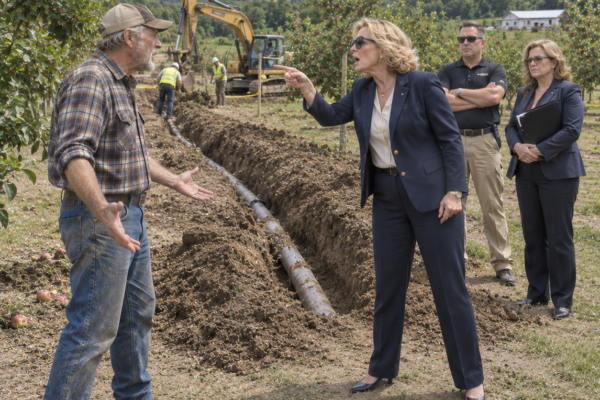
“Take Down That Junk Weather Pole by Friday,” the HOA President Ordered After Fining Me $250 a Day for the 10-Foot Mast Behind My House. I Told Her Three Times to Check the County Records. She Brought an Attorney and Removal Crew Anyway—and the Moment a Pry Bar Touched the Anchor Plate, Three County Vehicles Turned Onto Our Street..k
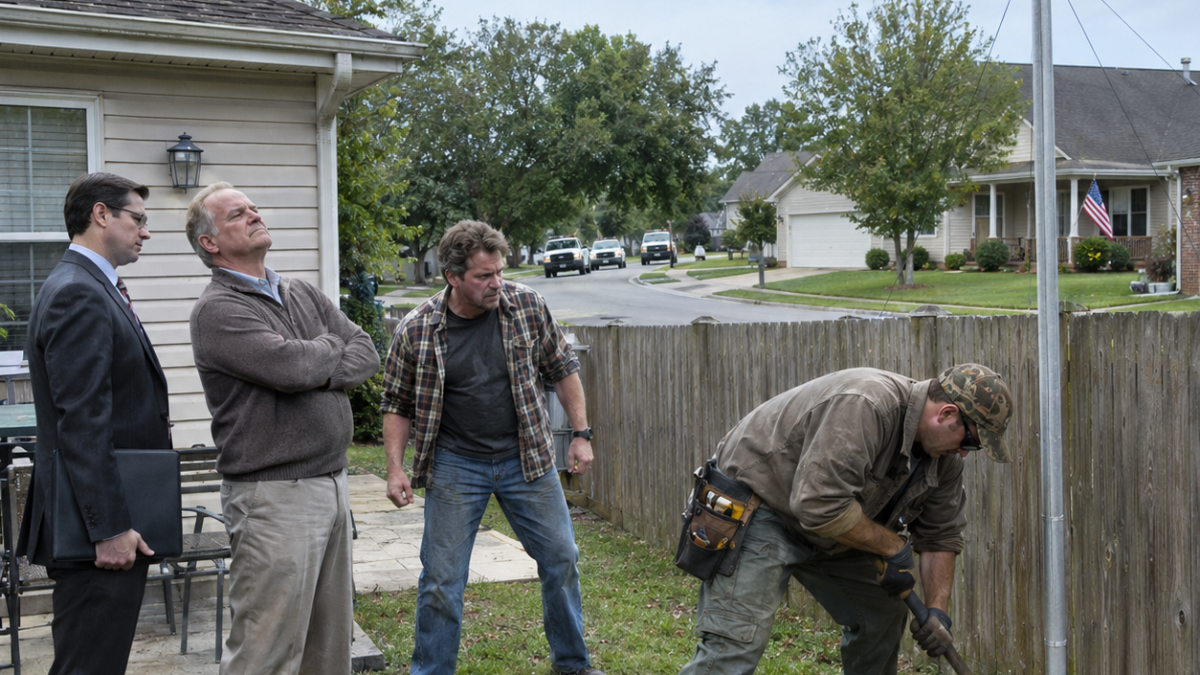
“Take Down That Junk Weather Pole by Friday,” the HOA President Ordered After Fining Me $250 a Day for the 10-Foot Mast Behind My House. I Told Her Three Times to Check the County Records. She Brought an Attorney and Removal Crew Anyway—and the Moment a Pry Bar Touched the Anchor Plate, Three County Vehicles Turned Onto Our Street.
Diane Hargrove called the weather station behind my house “junkyard science.”
Then she fined me $250 a day until I removed it.
I asked her three times to check the county land records before she touched anything.
She laughed every time.
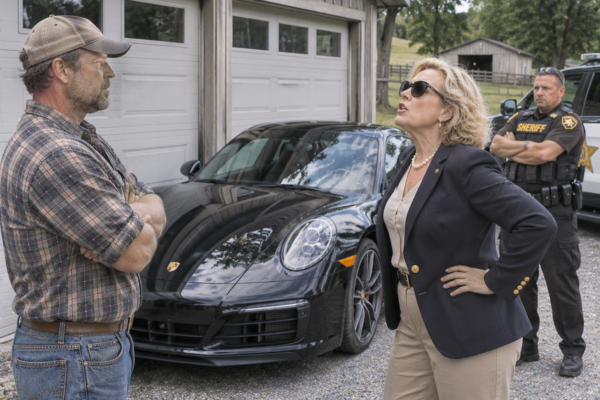
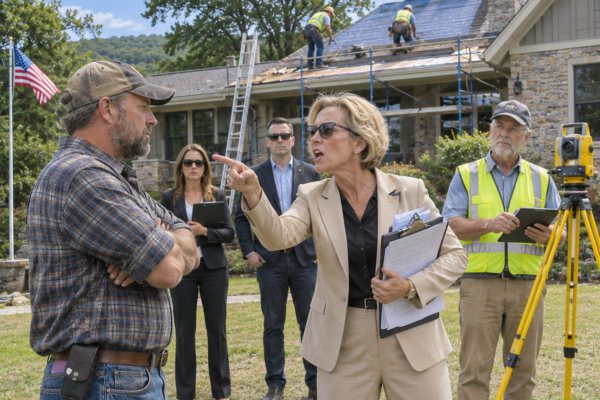
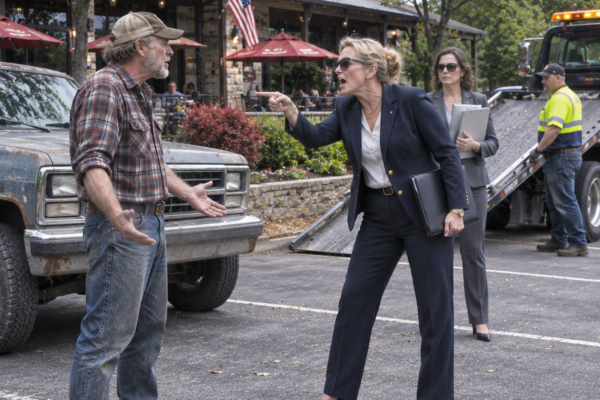
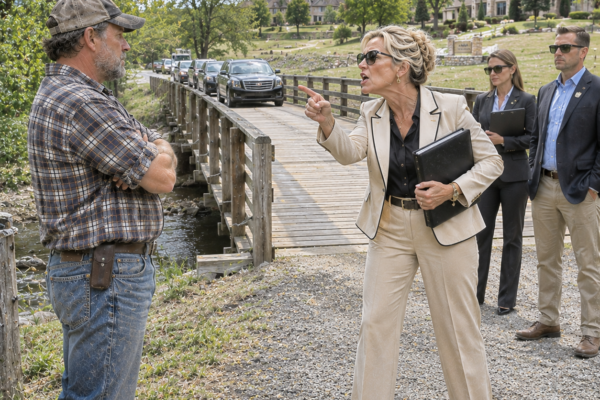
Friday morning, at 7:40, she arrived with two board members, the HOA attorney, a landscape-removal company, a flatbed truck, and a small excavator.
I was standing on my porch with coffee when she walked up my driveway holding a leather folder against her chest.
“The deadline has passed, Mr. Avery.”
“Good morning, Diane.”
“This is no longer optional.”
Behind her, two contractors started pulling on work gloves.
One of them looked toward the ten-foot galvanized mast standing behind my house.
It wasn’t pretty.
An anemometer turned at the top.
A wind vane moved beneath it.
A temperature and humidity shield sat halfway down the pole, along with a tipping-bucket rain gauge, barometric sensor, telemetry box, and a little green diode that blinked every few seconds.
For eight years, nobody in Brier Glenn Estates had cared.
Then Diane became HOA president.
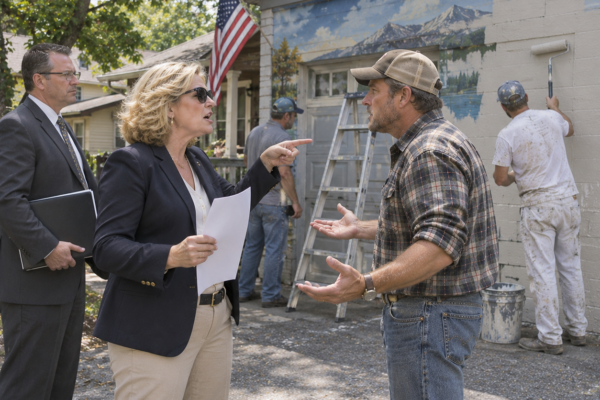
Three days after winning the election, she walked into my backyard without asking, looked up at the mast, and said:
“That thing has to go.”
I asked whether she had checked the records attached to my parcel.
She told me she didn’t need paperwork to know an ugly metal pole hurt property values.
At the first board meeting, she called it a “toy.”
Then “junkyard science.”
She told nineteen residents that knowing a few technical terms didn’t put me above the HOA.
I didn’t argue.
I asked that every directive be given to me in writing.
Diane agreed eagerly.
Four days later, she signed the $250-a-day fine herself.
What Diane never asked was who owned the mast.
She assumed I did.
I didn’t.
Eight years earlier, our county emergency management office had identified a serious weather-data gap on the western side of the ridge.
The airport station twenty-two miles east sat on flat ground.
Our side didn’t.
Wind accelerated through the creek gap.
Heavy rain stalled against the slope.
Cold air pooled in the valley.
During severe weather, conditions at the airport could look completely different from conditions around Brier Glenn.
The county needed a permanent observation point.
My back lot was almost exactly where its siting study wanted one.
So I signed a recorded public-safety instrumentation and access easement.
The county installed Station 14.
The county owned every sensor, every bolt, every wire, and the concrete pad beneath it.
I simply owned the land around it and, because I had spent twenty-six years working in telecommunications and remote instrumentation, I was allowed to perform basic visual checks when requested.
The easement was public record.
I told Diane where to look.
She chose not to.
Now her removal crew stood twenty feet from Station 14.
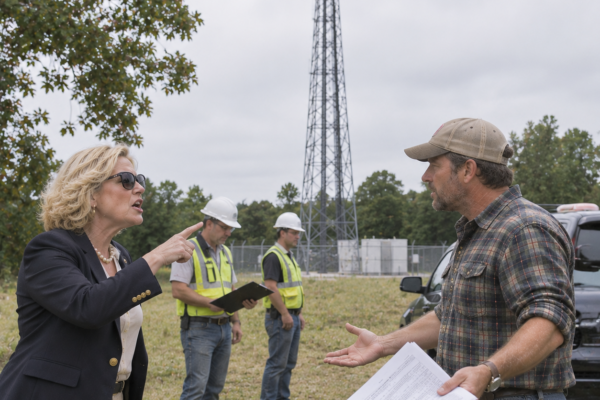
I walked over to the contractors.
“Gentlemen, has anyone told you that equipment may belong to the county?”
Both men stopped.
Diane moved between us.
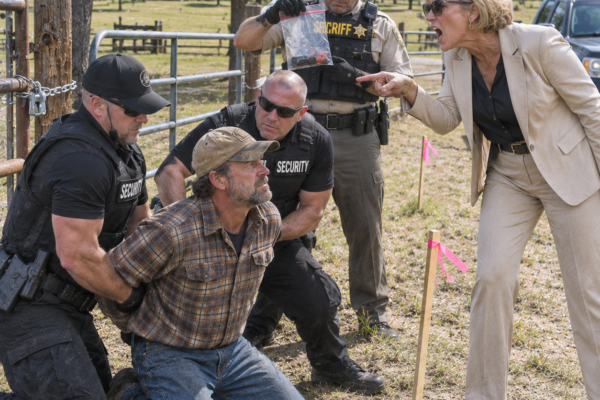
“Don’t listen to him. The HOA has authorized abatement.”
I pointed toward the stainless-steel placard riveted to the telemetry housing.
“Read that before you touch anything.”
The older contractor did.
PROPERTY OF COUNTY EMERGENCY MANAGEMENT
STATION 14
The HOA attorney, Caleb Sloan, read it too.
His expression changed.
“Diane,” he said quietly, “did the association obtain a title report on this parcel?”
She didn’t answer his question.
“Caleb, don’t let him drag this out.”
Then she looked at the contractor.
“Move the weather station.”
The older man hesitated.
Then crouched at the base of the mast and opened the protective cage around the anchor assembly.
He put a pry bar against the plate.
Nobody heard an alarm.
There wasn’t one outside.
But twenty-two miles away, Station 14 registered movement outside its tamper threshold.
At 8:19, three county vehicles turned onto Brier Glenn Drive.
Diane watched them approach.
Then she smiled at me.
For about ten more seconds, she still thought they had come because I had called for help.
She had no idea the station had called for itself.
Part 2:
Diane Hargrove called the weather station behind my house “junkyard science.”
Then she fined me $250 a day until I removed it.
I asked her three times to check the county land records before she touched anything.
She laughed every time.
Friday morning, at 7:40, she arrived with two board members, the HOA attorney, a landscape-removal company, a flatbed truck, and a small excavator.
I was standing on my porch with coffee when she walked up my driveway holding a leather folder against her chest.
“The deadline has passed, Mr. Avery.”
“Good morning, Diane.”
“This is no longer optional.”
Behind her, two contractors started pulling on work gloves.
One of them looked toward the ten-foot galvanized mast standing behind my house.
It wasn’t pretty.
An anemometer turned at the top.
A wind vane moved beneath it.
A temperature and humidity shield sat halfway down the pole, along with a tipping-bucket rain gauge, barometric sensor, telemetry box, and a little green diode that blinked every few seconds.
For eight years, nobody in Brier Glenn Estates had cared.
Then Diane became HOA president.
Three days after winning the election, she walked into my backyard without asking, looked up at the mast, and said:
“That thing has to go.”
I asked whether she had checked the records attached to my parcel.
She told me she didn’t need paperwork to know an ugly metal pole hurt property values.
That was Diane.
She had arrived in Brier Glenn six years earlier.
She wasn’t the loudest neighbor then.
Not at first.
She chaired the landscaping committee.
Then architectural review.
Then she ran for president on a promise to make Brier Glenn look “premium.”
I’m still not sure what that meant.
We were forty-six homes built along a shallow ridge outside a mid-sized county town.
Nice houses.
Mature trees.
A clubhouse.
A community pool.
Enough decorative stone at the entrance to make visitors think we were more expensive than we really were.
Before Diane, our president was Walter Prime, a retired mail carrier.
Walter believed the HOA existed for three reasons.
Keep the pool functioning.
Pay the landscaper.
Prevent residents from turning their front yards into used-car lots.
He knocked on my door exactly twice in six years.
Once because a tree limb had fallen across the walking path.
Once because his daughter had graduated and he had leftover ribs.
That was my preferred style of governance.
Diane had a different philosophy.
Within a month of taking office, she announced a “visual standards initiative.”
She drove the neighborhood slowly.
Took photographs.
Sent warnings about sheds, fences, porch furniture, driveway stains, mailbox colors, and plantings.
One resident received a notice because his basketball goal looked “commercial.”
Another got one because an outdoor hose reel was visible from the street.
Then Diane discovered Station 14.
My name is Desmond Avery.
I’m fifty-two years old, and I live at the final address on Brier Glenn Drive where the pavement ends and the land drops toward the creek.
I spent twenty-six years working in telecommunications and remote instrumentation.
Cellular repeaters.
Radio links.
Water-level monitors.
Environmental sensors.
Remote telemetry units.
The kind of equipment most people never notice until it stops working.
I retired earlier than planned after my knees started complaining about climbing towers and the company reorganized half my department.
These days, I consult occasionally, repair old radios, and enjoy a life that is much quieter than the one I had before.
Station 14 sat about forty feet behind the rear corner of my house.
It made no meaningful noise.
No floodlights.
No rotating beacon.
Nothing dramatic.
The only visible activity was the anemometer turning and one green status diode blinking through the telemetry housing.
For eight years, the Kramers on one side and Mrs. Delacroix on the other had ignored it.
Mrs. Delacroix once asked whether the little cups measured wind.
I said yes.
She said, “Good. Tell them to measure less of it in January.”
That was the entire dispute.
Then Diane walked into my backyard three days after her election.
No call.
No knock.
I was cleaning leaves from the rain-gauge funnel when I heard shoes on the side path.
Diane rounded the corner with Ray Whitaker and Mara Dunn behind her.
Ray was the board treasurer.
Mara kept minutes.
Diane stopped at the mast.
Hands on hips.
“That thing has to go.”
I stayed beside the rain gauge.
“Morning.”
“It’s visible from the walking path.”
“It’s been visible for eight years.”
“That doesn’t mean it’s compliant.”
“Have you checked the records?”
“I don’t need land records to know what I’m looking at.”
“That might be where we disagree.”
Her eyes narrowed.
“What exactly is it supposed to be?”
“You should check the county records before you issue anything.”
Diane gave me a small smile.
The kind that pretends patience while communicating contempt.
“Mr. Avery, I understand men your age sometimes need little projects.”
Ray glanced at her.
Mara looked at the ground.
Diane continued.
“But Brier Glenn has standards. We cannot have hobby equipment lowering property values.”
I looked at Station 14.
Then at her.
“You should still check the records.”
“I’ll keep that in mind.”
She didn’t.
Three days later, a certified violation notice arrived.
Seventy-two hours to remove or relocate the structure.
She cited three covenant provisions.
One prohibited unauthorized antennas and transmission equipment.
Another restricted owner-installed metal structures visible from common areas.
The third was a broad architectural-harmony clause.
I sat at my kitchen table with a pencil and read all three.
The antenna rule exempted installations required or authorized through governmental authority.
The metal-structure language applied to owner-installed structures.
I had installed nothing.
The architectural clause deferred to recorded easements and encumbrances.
Diane had managed to cite three rules that each contained the reason she couldn’t do what she wanted to do.
I sent an email.
Diane,
Before the association takes any action regarding the installation behind my house, please review the county land records affecting my parcel.
Desmond Avery
That was it.
No lecture.
No threat.
No explanation.
She replied eleven minutes later.
Attend Tuesday’s board meeting.
Tuesday evening, the clubhouse held nineteen residents.
That was a crowd by Brier Glenn standards.
Diane had made enforcement her signature issue, so people had started attending because nobody knew whose shed or fence might be next.
Diane sat in the center of the board table.
Ray and Mara sat beside her.
At the far end sat Caleb Sloan, the HOA attorney.
I knew Caleb by reputation.
Competent real-estate lawyer.
Not flashy.
The kind of man who actually read what was put in front of him.
Unfortunately, nobody had put the right documents in front of him.
When my violation came up, Diane read the letter.
Then she started performing.
“This is exactly the kind of accumulated visual clutter our new standards are intended to address.”
She looked toward me.
“Mr. Avery insists his structure is somehow special.”
“I didn’t say that.”
“You’ve refused to comply.”
“I asked you to check the county records.”
She waved one hand.
“We’re talking about a pole.”
“It’s more than a pole.”
“Then explain it.”
I looked at Caleb.
“Has counsel reviewed a title report on my parcel?”
Diane’s face tightened.
“That’s irrelevant.”
Caleb looked up for the first time.
I saw it.
He had no idea what I was talking about.
Diane leaned toward her microphone.
“Mr. Avery, knowing a few technical terms does not put you above the rules.”
I waited three seconds.
Then said:
“I never said I was above the rules.”
“Then do what an adult does and take it down.”
A couple of people laughed nervously.
I didn’t.
“If the association intends to continue, I want every directive in writing.”
That pleased her.
“Absolutely.”
Mara wrote it into the minutes.
Caleb made a note.
I went home.
Four days later, Diane delivered more than I asked for.
A formal fine.
$250 per day.
Accruing until Station 14 was removed.
Signed in blue ink.
DIANE HARGROVE
PRESIDENT
The notice also warned that continued noncompliance could lead to association-funded removal, with costs assessed back to me.
I photographed it.
Added it to my file.
Then opened the fireproof box in my hall closet.
Inside were my deed and the recorded easement.
The document was called:
PUBLIC SAFETY INSTRUMENTATION AND ACCESS EASEMENT.
Eight years earlier, the county emergency management office had identified a problem.
Its primary weather observations came from the regional airport twenty-two miles east.
The airport sat on flat ground.
Brier Glenn didn’t.
A ridge ran north-south between us.
Our creek bottom trapped cold air.
Thunderstorm outflows accelerated through the western gap.
Heavy rain often stalled against the slope.
One July storm dropped nearly three inches around my house while the airport recorded less than half an inch.
For aviation, the airport station was excellent.
For local emergency decisions on our side of the ridge, it wasn’t enough.
The county wanted a supplemental observation site.
They needed open exposure.
Reliable communications.
Power nearby.
A position that represented the western valley rather than the airport plain.
My back lot fit.
A county engineer named Martin Doyle came out with a survey crew.
We walked the property for nearly two hours.
They chose a small defined pad area near my rear lot line.
The county offered a modest annual consideration in exchange for a permanent easement and service access.
I signed.
The county recorded it.
Then county contractors installed Station 14.
I did not buy it.
Did not design it.
Did not own it.
I had one unusual provision in the maintenance addendum.
Because I had relevant certification, I could perform visual checks, clear the rain-gauge funnel, reseat approved external connectors when requested, and report equipment condition.
Nothing more.
If a sensor failed, the county came.
If calibration was due, the county came.
If software changed, the county handled it remotely.
That arrangement saved them an occasional forty-minute drive.
I received no salary.
The annual consideration barely covered a couple utility bills.
I liked the station because I understood what it did.
Signals mattered to me.
Data mattered.
Ground truth mattered.
So did recorded documents.
I considered sending Diane the easement.
Then decided not to.
People later asked whether I was setting a trap.
I wasn’t.
I had told her where the answer was.
Twice.
The county clerk’s system could retrieve it in less than two minutes using my parcel number.
I wasn’t hiding anything.
I was simply not doing the work for someone who had already decided she knew better.
The following week, Diane began driving past my house.
Slowly.
Sometimes twice a day.
Once she stopped while I was checking the telemetry enclosure.
“What are you doing?”
“Checking a connector.”
She laughed.
“Doesn’t matter. Next week it won’t be there.”
I stayed crouched.
She added:
“You know there are weather apps now.”
“Yes, ma’am.”
“You don’t need that thing.”
I finished torquing the connector.
She drove away.
That was Thursday.
The same afternoon, Tessa Monroe called.
Tessa was the county meteorologist responsible for integrating local station data into emergency-management operations.
Direct woman.
No wasted words.
“Desmond, Station 14 looks clean. Any hardware issues?”
“No. Feed’s solid.”
“Rain gauge?”
“Cleared Sunday.”
“Wind sensor?”
“Normal.”
“Good. We’ve got a front coming through tomorrow.”
“I saw.”
“Could be stronger on your side.”
“Tessa?”
“Yes?”
“What happens if someone intends to move Station 14?”
Silence.
Not long.
Long enough.
“Who intends to move it?”
“I’m forwarding you something.”
I sent everything.
The original violation.
My email.
Board notice.
Fine.
Community bulletin announcing removal work Friday morning.
Nineteen minutes later she replied.
Do not physically interfere with anyone.
This is being escalated.
I wrote:
Understood.
That evening Diane emailed the entire community.
The association, she said, would be “removing an unapproved exterior structure that had remained in violation despite repeated opportunities for voluntary compliance.”
Then she wrote:
No homeowner stands above the standards all residents agreed to follow.
I read that sentence four times.
Not because it made me angry.
Because of the irony.
Friday morning arrived still and humid.
The first truck turned onto Brier Glenn Drive at 7:40.
CLEAR VIEW LANDSCAPE & REMOVAL.
Flatbed.
Small excavator.
Trailer.
A second pickup carried tools and two workers.
Diane arrived ninety seconds later.
She parked across the edge of my driveway.
Caleb Sloan arrived next.
Then Ray and Mara.
I stepped outside with coffee.
Diane walked toward me.
“The deadline has passed.”
“Good morning.”
“This isn’t a negotiation.”
“I understand.”
The contractors started putting on gloves.
I walked toward them.
“I’m Desmond Avery. Before you touch that installation, were you told it may be part of a county public-safety system?”
Both stopped.
The older contractor looked toward Diane.
She immediately stepped forward.
“Don’t engage with him. The HOA authorized removal.”
I pointed.
“Read the placard.”
The contractor walked closer.
So did Caleb.
Four-by-six stainless plate.
Riveted into the telemetry enclosure.
PROPERTY OF COUNTY EMERGENCY MANAGEMENT
STATION 14
INSTALLATION REFERENCE 14-WV
The contractor read it twice.
Caleb removed his glasses.
Put them back on.
“Diane.”
“What?”
“Did we obtain a title report?”
She turned toward him.
“We’ve already been through this.”
“That isn’t what I asked.”
“Caleb, don’t let him stretch this out.”
He stared at her.
I could almost see the moment he understood she had never given him the parcel records.
Diane looked at the contractor.
“Move that weather station.”
The older man hesitated.
Then did what contractors sometimes do when a paying client gives a direct instruction and the opposing homeowner isn’t their customer.
He approached the base.
Station 14’s anchor bolts were protected by a small hinged cage.
He opened it.
There was a magnetic contact inside.
The mast also had tilt and vibration monitoring.
Not because anybody expected an HOA president to attack it.
Because remote public equipment gets tamper detection.
The contractor put a pry bar against the anchor plate.
Nobody heard anything.
Twenty-two miles away, somebody did.
At 8:19, the first county vehicle turned onto our street.
White pickup.
Amber light bar.
County seal.
Then a dark utility vehicle.
Then a communications van.
No sirens.
No dramatic speed.
They came slowly.
That made everyone watch.
Diane smiled slightly.
I think she believed I had called them.
Grant Ellison stepped out of the second vehicle.
Gray hair.
Khakis.
County emergency-management polo.
Tessa came around the passenger side holding a tablet.
A technician got out of the van with a hard case and camera.
Diane walked toward Grant.
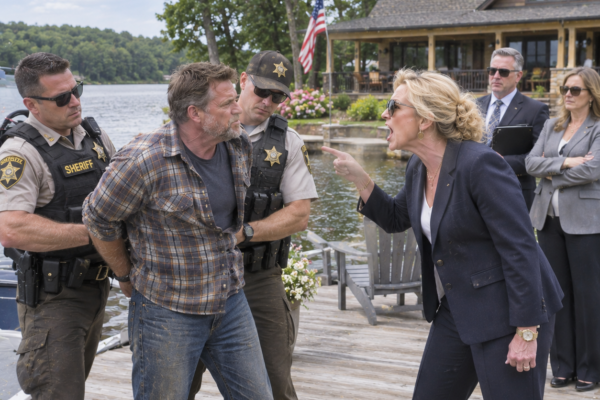
“I’m Diane Hargrove, president of the Brier Glenn Estates Homeowners Association. This is an internal community matter.”
Grant did not take the hand she offered.
“It stopped being an internal matter at 8:16.”
Then he walked past her.
Tessa went directly to the station.
The contractor had already removed the pry bar.
Grant crouched at the base.
He looked at the cage.
Anchor plate.
Fresh marks in the galvanizing.
Conduit.
Ground strap.
Tamper seal.
Tessa read diagnostics from the tablet.
The technician photographed everything with a scale ruler in frame.
Nobody said much.
That kind of quiet documentation changes the mood of a scene faster than shouting.
After several minutes, Grant stood.
“Who authorized movement of Station 14?”
Nobody answered.
Ray looked at Mara.
Mara looked at Diane.
Caleb closed his folder.
The contractor stepped away from the mast.
I looked at Diane.
Then everyone looked at Diane.
“The association did,” she said.
“The installation violates our architectural covenants.”
Grant’s voice stayed level.
“The homeowners association is directing the county to relocate emergency-warning instrumentation?”
Diane’s face changed.
“It was represented to us as homeowner equipment.”
“By whom?”
She hesitated.
“We received complaints.”
“That wasn’t my question.”
She pointed toward me.
“Mr. Avery refused to cooperate.”
Grant turned slightly.
“Did Mr. Avery tell the association this was county equipment?”
“He refused to provide documentation.”
I took out my phone.
“I can answer that.”
Diane glared.
I opened the first email.
Read it aloud.
Before the association takes any action regarding the installation behind my house, please review the county land records affecting my parcel.
Then the second message after the board meeting.
Again requesting parcel review before enforcement.
Then I told Grant about the first conversation in my backyard.
Three warnings.
Same instruction.
Check the land records.
Grant listened.
Then asked Tessa:
“Pull the parcel.”
She already had it.
She handed the tablet to Caleb first.
I noticed that.
So did Diane.
The document header filled the screen.
PUBLIC SAFETY INSTRUMENTATION AND ACCESS EASEMENT.
Parcel number.
Metes and bounds.
Recording stamp.
Book.
Page.
Date.
County emergency management.
My signature.
Martin Doyle’s.
Caleb read it for a long time.
Then handed the tablet back.
“Diane.”
She looked at him.
“I asked whether there were recorded encumbrances before I drafted the violation letter.”
Nobody moved.
He didn’t say what she had told him.
He didn’t need to.
Grant continued.
“This equipment is actively transmitting to the county operations center.”
Diane folded her arms.
“Is that truly necessary? We all have weather information on our phones.”
Tessa looked up from the tablet.
“The airport station is twenty-two miles east on the other side of the ridge.”
“So?”
Grant answered.
“Conditions in the western valley frequently diverge from airport observations.”
He looked toward the mast.
“We have strong storms expected this afternoon. Station 14 is one of the observations supporting situational awareness for this side of the county.”
Diane’s arms slowly unfolded.
Grant continued.
“We currently have a pry mark on the anchor plate of active county equipment.”
“It wasn’t damaged.”
“That is being assessed.”
“The contractor barely touched it.”
“Because the tamper alert worked.”
Diane looked at me.
“You called them.”
Tessa answered before I could.
“The station called us.”
That was the first moment I saw real fear on Diane’s face.
Not terror.
Recognition.
She had finally encountered a system she couldn’t talk over.
Grant asked:
“Where is the service corridor?”
Tessa pointed behind the houses.
The recorded easement included a fifteen-foot access route from the end of the cul-de-sac to Station 14.
County trucks used it for scheduled maintenance.
Tessa and the technician walked it.
Seven minutes later, they returned.
Her expression had changed.
“The corridor is obstructed.”
Grant looked at her.
“How?”
“Decorative fencing at two points. Masonry gate. Three stone planters. Clear opening is six feet.”
“What’s required?”
“Twelve for the service vehicle.”
Grant looked toward the board members.
“Who authorized those improvements?”
Silence.
Then Ray said quietly:
“Diane did.”
Mara nodded.
“Under discretionary appearance spending.”
Diane turned toward them.
“The board reviewed the rendering.”
“We saw a rendering,” Mara said. “We didn’t approve construction inside an easement.”
“You knew about the gate.”
“I did not know there was an easement because nobody had shown us the parcel record.”
Caleb closed his eyes briefly.
Grant looked at him.
“Counsel?”
Caleb answered carefully.
“I was not provided the title documents before the enforcement action or the corridor improvements.”
Diane stared at him.
“You drafted the violation.”
“Based on information you provided.”
“That’s outrageous.”
“No, Diane. It’s accurate.”
Grant looked between them.
“Then we have two separate matters.”
He pointed toward Station 14.
“Attempted interference with county instrumentation.”
Then toward the rear lots.
“Obstruction of a recorded emergency-access easement.”
Diane finally turned on me.
“If he had simply explained this properly—”
I interrupted.
Only time that morning.
“I told you three times to check the records.”
“That is not the same as explaining—”
Caleb opened his folder.
“Actually, Diane.”
He pulled out the printed email chain.
“You forwarded these to me as evidence of noncompliance.”
He read my first message.
Then the second.
Neutral tone.
No drama.
When he finished, nobody defended her.
Grant issued instructions.
All removal activity stopped.
The contractor packed up.
County technicians documented the anchor mark.
The HOA had to restore access to the service corridor.
Until permanent obstructions were removed, Brier Glenn had to guarantee immediate county access at its own expense.
County legal counsel would contact Caleb that afternoon.
Then Grant looked directly at Diane.
“Mrs. Hargrove, Mr. Avery is not the person obstructing this community today.”
That was all.
No shouting.
No arrest.
No handcuffs.
Honestly, it was worse for her that way.
The county vehicles left around nine fifteen.
Clear View backed away with the excavator still strapped to its trailer.
Caleb left on the phone.
Ray and Mara drove away together.
Diane sat in her SUV for almost four minutes.
Then she left.
Tessa stayed.
She ran a full diagnostic.
No internal sensor damage.
Telemetry stable.
Anchor plate cosmetically marked but structurally sound.
The county replaced it later anyway.
“Tamper alert hit at 8:16 and forty seconds,” she told me.
“Fast response.”
“We would have come for any station.”
“I know.”
“It isn’t about you.”
“I know that too.”
That was why it didn’t feel like revenge.
The storm arrived that afternoon.
Earlier and harder on our side of the ridge than forecast guidance based only on broader regional observations suggested.
At 2:50, the sky turned the color of dull steel.
By 3:10, wind moved through the oaks hard enough to show the pale undersides of leaves.
Station 14 showed pressure falling sharply.
Humidity high.
Rain beginning.
Then the wind jumped.
Thirty-eight miles an hour sustained.
A gust over sixty.
At the airport, conditions were considerably weaker at that moment.
The county operations center already had radar.
National Weather Service products.
Lightning data.
Other stations.
Station 14 did not magically predict the storm by itself.
That would be nonsense.
What it did was confirm that the western valley was deteriorating faster than the airport observation suggested.
Emergency management issued a targeted county alert for our western communities.
Every phone in Brier Glenn screamed at 3:26.
Mine.
Mrs. Delacroix’s.
Ray’s.
Mara’s.
Diane’s.
Eleven minutes later, the worst wind reached us.
Nothing catastrophic happened.
No tornado.
No deaths.
No injuries.
But limbs came down.
A forty-year-old poplar fell across Holly Court.
Power went out for almost five hours.
We got more than two inches of rain in under an hour.
Mrs. Delacroix later told me the alert gave her enough time to bring her chairs and wind chimes inside and move away from the rear windows.
She didn’t know why I smiled when she told me.
The irony didn’t need explaining.
Diane had told me to use a weather app like a normal person.
Every weather app ultimately depends on instruments somewhere.
Radar.
Satellites.
Airport stations.
Buoys.
Ground stations.
Ugly equipment collecting real measurements.
Station 14 was one small part of that chain.
The thing she wanted removed because it didn’t look premium had helped confirm what was happening over her own roof.
Grant called that night.
“Station performed well.”
“Still ugly?”
He laughed.
“It doesn’t need to be pretty.”
The special HOA meeting happened the following Thursday.
There weren’t enough chairs.
More than forty residents came.
People stood against the walls.
The questions had changed.
Nobody cared anymore whether Station 14 looked attractive.
They wanted to know how much Diane’s decision would cost them.
Why had HOA money hired a removal contractor?
Why had counsel been asked to write a violation letter without a parcel search?
Why was a decorative gate blocking a recorded county access corridor?
Who approved the planters?
Were my $250-a-day fines valid?
Could the county sue the association?
Diane opened the meeting.
“This situation resulted from an unfortunate misunderstanding.”
I was sitting in the third row.
Same seat as before.
She continued.
“With better communication from all parties, I believe this could have been avoided.”
Then she looked at me.
I almost admired the commitment.
I had written a speech.
Three pages.
I left it at home.
Instead I carried a manila folder to the front.
I placed four documents on the table.
First email.
Second email.
Recorded easement.
Fine notice.
Then the Clear View work authorization.
Both enforcement documents carried Diane’s signature.
I faced the room.
“A misunderstanding is when people don’t have enough information.”
Nobody moved.
“I told Diane three times where the information was.”
I touched the easement.
“She decided she didn’t need to read it.”
Then I sat down.
Diane started to answer.
Caleb placed one hand flat on the table.
“Diane.”
She stopped.
Caleb addressed the room.
He looked tired.
More tired than usual.
“My firm has completed a review.”
Nobody whispered.
“The fines against Mr. Avery are unsupported and will be rescinded.”
A murmur moved across the room.
“The county installation is protected by a recorded easement predating the relevant association actions.”
He continued.
“The association will incur the cancellation cost for the contractor.”
“County inspection and documentation costs.”
“Legal expenses.”
“And the cost of restoring the fifteen-foot access corridor.”
A resident raised his hand.
“How much?”
Caleb looked at Ray.
Ray answered.
“Preliminary contractor estimate is just over nineteen thousand dollars for the gate, masonry, fencing, and landscaping relocation.”
People reacted.
Not loudly.
The kind of reaction where twenty people say “what?” at slightly different volumes.
Someone asked:
“And legal?”
“Still accumulating.”
Another voice:
“Who approved the gate?”
Mara answered.
“The president approved the project under discretionary appearance spending.”
Diane snapped:
“The board saw it.”
Mara looked at her.
“We saw a rendering. We were never told it crossed a recorded county easement.”
Ray leaned toward his microphone.
“This board failed.”
That quieted everyone.
He continued.
“Diane signed the enforcement action. But the rest of us allowed a process where one officer could commit funds and direct property action without adequate verification.”
That was important.
He didn’t pretend one bad president explained everything.
Systems matter.
The board had become lazy.
Diane’s confidence had replaced review.
Ray made a motion.
“I move that Diane Hargrove be removed as president effective immediately, subject to the officer-removal authority in our bylaws.”
Mara seconded.
Diane stared.
“You can’t possibly be serious.”
Ray didn’t answer her.
The vote proceeded.
Name by name.
Not close.
Diane remained a director temporarily because removing an officer was different from recalling an elected board member.
But she was no longer president.
Her spending authority ended.
Her ability to issue unilateral enforcement directives ended.
When the vote finished, she sat quietly.
No security.
No police.
Nobody cheered.
That was appropriate.
This wasn’t a sporting event.
It was a board correcting its own failure.
The meeting moved on.
The corridor restoration took three weeks.
The decorative gate was removed.
The masonry piers came out.
New ones were built farther from the easement.
The opening widened.
Planters moved to the main boulevard.
They actually looked better there.
The county inspected the corridor when work finished.
Tessa drove a service truck through it herself.
Plenty of clearance.
The anchor plate at Station 14 was replaced.
Not because it had failed.
Because the county didn’t leave damaged hardware in service when replacement was straightforward.
My fines disappeared.
Every one.
The HOA sent me a written rescission.
No balance.
No violation.
No removal obligation.
No attorney charges.
I framed none of it.
I put it in the fireproof box.
Then the board rewrote its enforcement procedures.
The new rule was one paragraph.
Any proposed enforcement, construction, landscaping, removal, or architectural action affecting a utility, recorded easement, government installation, or parcel boundary required a documented records search and legal review before work authorization.
One paragraph.
The association spent more than nineteen thousand dollars learning why it needed that paragraph.
Diane resigned from the board before residents could complete a recall petition.
She did not move away.
She still lives in Brier Glenn.
I see her SUV sometimes.
She no longer slows near my house.
That is fine with me.
I was asked twice to run for her seat.
I said no twice.
People seemed surprised.
“You know the rules better than anyone now,” Ray told me.
“That doesn’t mean I want your job.”
“You’d be good at it.”
“That sounds like punishment.”
He laughed.
I meant it.
I never wanted Diane’s chair.
Wanting the chair too badly had been part of her problem.
Several months later, Ray became president.
Mara stayed secretary.
They added a retired surveyor named Laura Mills to the board.
That was probably the smartest thing Brier Glenn ever did.
Meetings became boring.
I loved them.
Nobody called sheds “visual threats.”
Nobody announced premium initiatives.
When a homeowner wanted to install a fence near a drainage easement, Laura checked the plat first.
Took fifteen minutes.
Saved everybody weeks of nonsense.
Caleb remained HOA counsel.
He came by my house once after the case ended.
Not socially.
He wanted to deliver the final corridor documents.
I invited him in for coffee.
He looked through the kitchen window toward Station 14.
“I owe you an apology.”
“You didn’t know.”
“I should have asked.”
“Maybe.”
“That was your warning to everyone else.”
I nodded.
He looked uncomfortable.
“I drafted a violation letter without reviewing title.”
“Based on your client’s representation.”
“That doesn’t erase my responsibility.”
I respected that.
“Then don’t do it again.”
“I won’t.”
He laughed.
“Fair.”
Before leaving, he stood beside the mast.
“So this is the famous station.”
“It was famous for about two weeks.”
“Doesn’t look like much.”
“That’s the idea.”
He read the county placard.
This time carefully.
Mrs. Delacroix became Station 14’s biggest defender.
Completely unintentionally.
One afternoon I found her standing beside the rear fence with her granddaughter.
She pointed toward the anemometer.
“That’s the thing that helped tell us the storm was coming.”
I walked over.
“Part of the system.”
She nodded.
Her granddaughter asked:
“Does Mr. Desmond control the weather?”
Mrs. Delacroix answered before I could.
“No. He can barely control his leaves.”
Accurate.
Winter came.
Station 14 recorded cold pooling in the valley exactly as it always had.
Spring brought thunderstorms.
Summer brought heat.
The green diode kept blinking.
Nobody complained.
A year after Diane’s removal, Brier Glenn installed new landscaping near the clubhouse.
Ray brought the plan to legal review before anybody signed a contract.
The designer wanted a decorative brick wall near a drainage corridor.
Laura found the easement.
The wall moved six feet on paper.
Cost of correction:
Zero.
Ray emailed me afterward.
Thought you’d appreciate this.
I did.
That was how I knew the neighborhood had actually learned something.
Not because Diane lost her title.
Because the next mistake got prevented before it became expensive.
People like to tell stories like mine as though the satisfying part is watching an arrogant HOA president get embarrassed.
I understand that.
I won’t pretend I felt nothing when Grant asked who authorized the removal and every face turned toward Diane.
There was satisfaction.
I’m human.
But that wasn’t what stayed with me.
What stayed with me was the storm.
Wind driving rain against my kitchen windows.
Power out.
Phone alert glowing in the dark.
Station 14 continuing to transmit through backup power.
That was the part that stripped away the petty neighborhood drama.
Diane thought we were fighting about a metal pole.
We weren’t.
She thought she was enforcing aesthetics against a stubborn homeowner.
She wasn’t.
The station existed because weather on our side of the ridge did not always match weather twenty-two miles away.
Its usefulness had nothing to do with whether it looked good behind my shed.
That is the trouble with judging infrastructure by appearance.
Most useful systems are not decorative.
Drainage culverts are ugly.
Utility transformers are ugly.
Fire hydrants are not usually chosen by interior designers.
Neither are weather stations.
You keep them because of what they do.
One Saturday morning, Tessa came for quarterly calibration.
She parked at the end of the restored corridor and drove the county service truck all the way through.
No blocked gate.
No stone planters.
She stepped out.
“Look at that.”
“What?”
“Access.”
“Very premium.”
She laughed.
We checked the rain gauge.
She replaced a sensor shield.
Ran comparison readings.
Everything normal.
Before leaving, she said:
“Grant told me they’re adding another station north of the ridge.”
“Good.”
“Different design.”
“Prettier?”
“No.”
“Even better.”
She drove away.
I stood beside Station 14 with coffee.
Dry leaves had collected around the pad.
I swept them aside.
The anemometer turned in a light southwest wind.
Green diode blinked.
Once.
Pause.
Again.
Same rhythm I had watched for eight years.
Nothing about the mast had changed.
The neighborhood had.
Diane spent five weeks insisting no homeowner stood above Brier Glenn’s rules.
She was right.
I didn’t.
But the lesson she never considered worked in the other direction too.
The HOA did not stand above county land records.
It did not stand above recorded easements.
It did not own equipment simply because that equipment sat inside the subdivision.
And no president, no matter how confidently she held a clipboard, could erase a public-safety obligation by calling it ugly.
In the end, Diane never moved Station 14.
The only thing she successfully moved out of Brier Glenn was herself from the president’s chair.
The mast is still behind my house.
Ten feet of galvanized steel.
Still unattractive.
Still blinking.
Still measuring the wind whether anybody approves of the view or not.