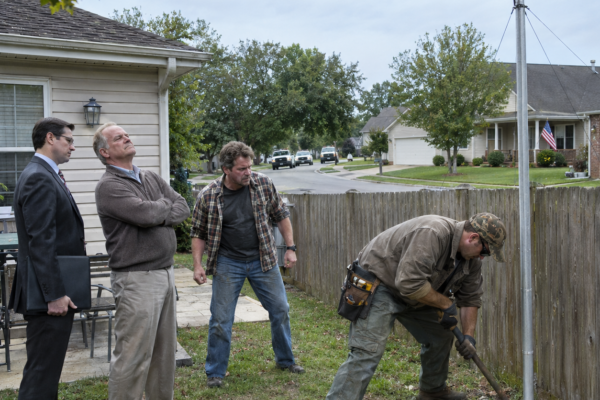
“You Grow Apples—Don’t Pretend You Understand Infrastructure!” the HOA President Snapped When I Found a Hidden Sewer Pipe Beneath My 38-Acre Orchard. I Had Refused Her Easement 18 Months Earlier. Now 17 Apple Trees Were Dying, Two Irrigation Lines Were Crushed, and Her Crew Had Left a 700-Foot Scar Underground. Then I Checked the Parcel Number on Her “Official” Map…k
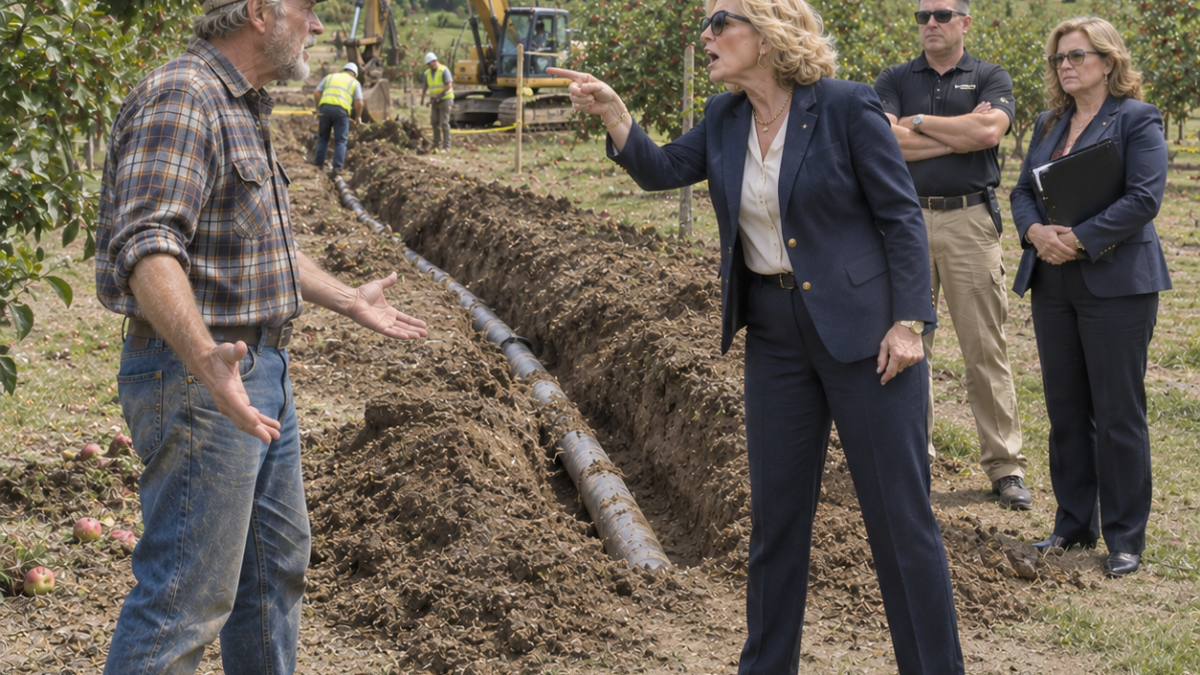
“You Grow Apples—Don’t Pretend You Understand Infrastructure!” the HOA President Snapped When I Found a Hidden Sewer Pipe Beneath My 38-Acre Orchard. I Had Refused Her Easement 18 Months Earlier. Now 17 Apple Trees Were Dying, Two Irrigation Lines Were Crushed, and Her Crew Had Left a 700-Foot Scar Underground. Then I Checked the Parcel Number on Her “Official” Map…
The first apple tree died on a Tuesday.
By Friday, six more had started dropping their leaves.
And by the following week, a perfectly straight line of dying trees cut diagonally through the healthiest section of my thirty-eight-acre orchard.
I’ve been growing apples, pears, and cherries for twenty years. I’ve seen drought, frost, root rot, and every kind of insect that can turn a good harvest into a disaster.
But diseases don’t normally kill trees in a straight line.
Construction crews do.
I discovered that on a Thursday morning outside Rocky Mount, Virginia, when my excavator uncovered a layer of crushed gravel buried beneath the soil.
Under the gravel was a black plastic pipe nearly a foot in diameter.
It ran directly beneath my apple trees toward the luxury subdivision on the other side of my eastern fence.
Silver Ridge Estates.
The same development whose HOA president had demanded permission to run utilities through my orchard eighteen months earlier.
The same woman I’d told no.
I climbed out of the excavator and stared into the hole.
The pipe wasn’t on my property survey.
It wasn’t listed among my recorded easements.
And nobody had ever asked permission to dig up my family’s land.
Then I noticed something else.
The pipe was vibrating faintly.
Whatever it carried, it was already in use.
I was photographing the exposed section when a white SUV rolled up beside my eastern gate.
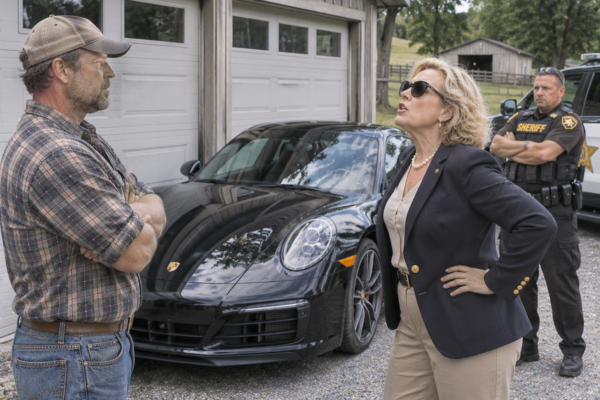
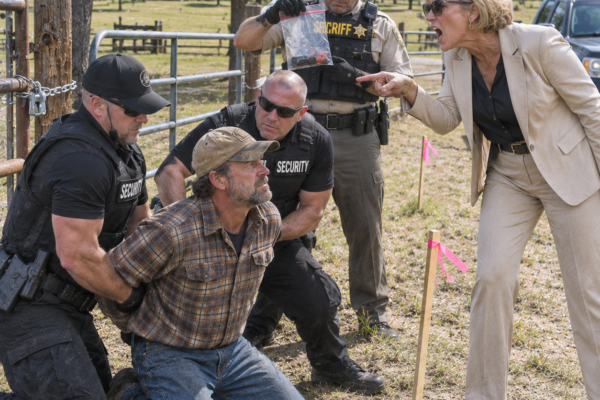
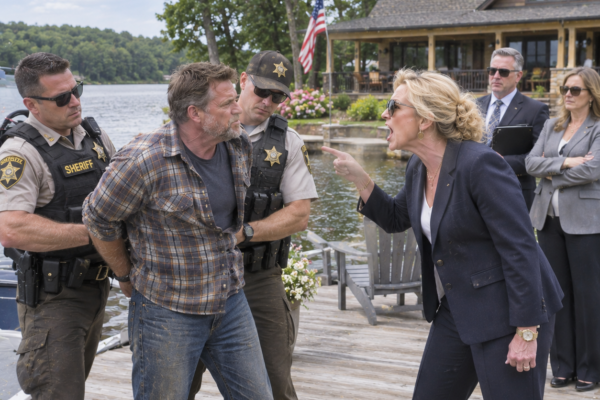
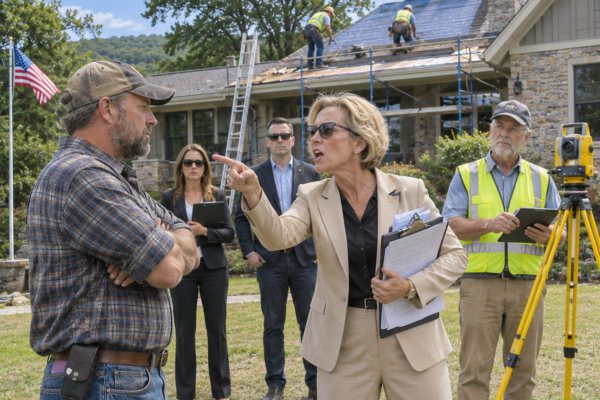
Tessa Langford stepped out wearing a cream blazer and carrying a leather folder.
She was president of Silver Ridge Estates, a community of expensive new homes overlooking the Blue Ridge foothills.
Behind her came the association’s property manager.
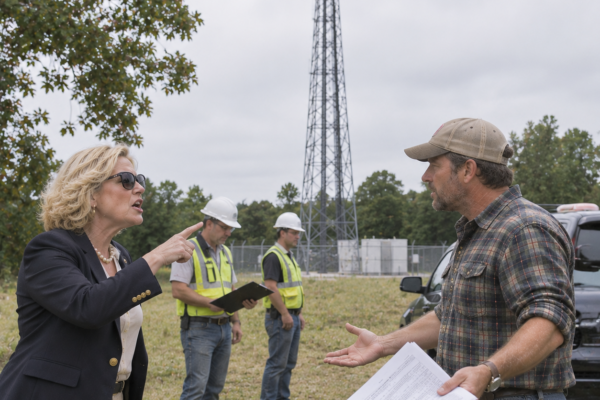
Tessa took one look at my excavation and shouted, “Stop digging immediately!”
I straightened.
“Good morning to you too.”
“You’re interfering with public sanitation infrastructure!”
I looked into the hole.
“Public infrastructure? On my private property?”
She marched toward the disturbed ground.
“That line is essential to our community. You have absolutely no authorization to interfere with it.”
I couldn’t believe what I was hearing.
“Tessa, this is my orchard.”
“That doesn’t give you the right to endanger utility services!”
“Who buried it here?”
“Our engineering contractors.”
“Who authorized them?”
“The association.”
“Who gave the association permission to cross my land?”
She pressed her lips together.
Then she gave me the same contemptuous smile I’d seen eighteen months earlier.
“Mr. Weller, you grow apples. Please don’t pretend you understand infrastructure planning better than qualified engineers.”
I felt my hands tighten.
“My grandfather cleared this land before your subdivision existed. I know where my property line is.”
She opened her folder.
“Then perhaps you should familiarize yourself with our utility easement.”
I reached for the paperwork.
She pulled it back.
“You may examine the relevant page, but these documents remain association property.”
She showed me a printed sheet bearing a county recording reference and a shaded utility corridor.
At first glance, it looked official.
There was a parcel description.
A reference number.
A survey exhibit.
And language granting access for underground utilities.
But the address at the top wasn’t mine.
I looked at her.
“Tessa, this doesn’t describe my property.”
She barely glanced down.
“These systems often reference neighboring parcels. You wouldn’t understand the engineering details.”
“Then explain why a sewer pipe is running beneath seventeen dying apple trees.”
Her voice hardened.
“Those homes are worth millions of dollars. The association isn’t going to jeopardize its infrastructure over a few trees.”
I stared at her.
“A few trees?”
She shrugged.
“You’re being emotional.”
That did it.
I had spent twenty years caring for this orchard.
My grandfather had cleared the first fields with a mule. My father had planted some of the oldest surviving trees. And I’d spent enough cold mornings pruning branches and repairing irrigation equipment to know exactly what those trees represented.
They weren’t decorations.
They were my livelihood.
I pointed toward the excavation.
“Eighteen months ago, you offered to buy an easement. I refused. I suggested routing the utilities along the public road.”
“That route was prohibitively expensive.”
“Then you should’ve paid for it or found another lawful solution.”
Tessa stepped closer.
“You need to understand something, Nolan. Families are already living in those homes. If you interfere with this pipeline, you’ll be responsible for any disruption to their services.”
I looked at the pipe again.
“Are you telling me people are already connected to it?”
She said nothing.
I took out my phone and started recording.
“Then say it clearly. Did your association install an operating sewer line beneath my orchard without my permission?”
Tessa’s expression changed.
She snapped her folder shut.
“This conversation is over.”
She turned and walked back to her SUV.
But before leaving, she lowered the window.
“You’ll regret making this difficult. We have far more resources than you do.”
I watched her drive away.
Then I called a surveyor.
By that evening, I’d found something else that made my stomach turn.
One of my trail cameras had recorded heavy equipment entering the orchard at two in the morning during a week I’d been out of town.
The footage showed workers removing part of my fence, laying down steel plates, and driving excavators between my fruit trees.
They returned for three consecutive nights.
Then they covered the trench, repaired the fence, and scattered grass seed over the disturbed ground.
I sat in my kitchen watching those recordings over and over.
Whoever had planned this didn’t expect me to notice until it was too late.
The following morning, I drove to the Franklin County Circuit Court Clerk’s Office to check the easement reference Tessa had shown me.
The document was real.
The county recording number was real.
But the property it described was almost two miles away.
I stared at the certified copy.
Then I looked at the photograph of Tessa’s folder.
Someone had paired an authentic recorded document with a utility map that had nothing to do with my orchard.
And that raised a question far more disturbing than why a sewer pipe had been buried beneath my trees.
If the association had to use somebody else’s easement to justify the pipeline, what else had it connected without permission?
Part 2:
“Put that dirt back in the hole, Nolan. Right now.”
Tessa Langford stood beside my excavator in spotless cream-colored slacks, looking down at the black plastic sewer pipe I’d just uncovered beneath seventeen dying apple trees.
I had never seen her wear work boots.
I doubted she’d ever dug a hole deeper than the one required to plant a rosebush.
But there she was, ordering me to bury evidence of a utility line somebody had installed without my permission.
“Good morning, Tessa.”
“This isn’t funny.”
“Neither is finding a sewer pipe under my orchard.”
She glanced at the exposed section.
“That’s newly approved sanitation infrastructure.”
“Approved by whom?”
“The development’s engineering department.”
“On whose land?”
She pressed her lips together.
Then she gave me the kind of smile people use when they’re explaining something to a child.
“Mr. Weller, you grow apples. Please don’t pretend you understand infrastructure planning better than qualified engineers.”
I looked at the pipe.
Then at the line of dying trees stretching toward Silver Ridge Estates.
“Well, I’m qualified enough to know I didn’t put that thing there.”
The community manager standing behind her shifted uncomfortably.
Tessa opened a folder and held up a document.
“The association has a recorded utility easement.”
“Then give me a copy.”
“These are association records.”
“An easement across my property would be recorded with the county.”
She moved the page closer.
I noticed the parcel reference immediately.
It wasn’t mine.
I asked her to hold the document still.
She pulled it away.
“You’re obstructing essential public services, Nolan. If you damage that line, you could interrupt sanitation service for an entire neighborhood.”
I felt the first cold knot forming in my stomach.
“Is this pipe already carrying sewage?”
She didn’t answer.
I looked down into the excavation.
A faint vibration traveled through the exposed section.
It wasn’t proof of what the line carried, but something was clearly moving through the system.
“Tessa, how many homes are connected to this?”
Her face tightened.
“That’s none of your concern.”
“It’s under my property. That makes it my concern.”
She snapped the folder shut.
“Fill the hole. Stop interfering with our infrastructure. And expect to hear from our legal department.”
Then she turned and walked toward her SUV.
I called after her.
“Eighteen months ago, you asked me for permission to put a utility line here. I told you no.”
She stopped without turning around.
“I remember.”
“Then somebody owes me an explanation.”
She opened her car door.
“You’ll receive one from our attorneys.”
The SUV disappeared down the orchard access road.
I stood beside the excavator, staring at the pipe.
I’d spent twenty years making a living from fruit trees.
In all that time, I’d dealt with drought, hail, early freezes, insects, and the occasional thief stealing apples by the bucket.
But I’d never dealt with a woman who believed a homeowners association could bury a sewer line beneath thirty-eight acres of privately owned farmland and then order the farmer not to ask questions.
My name is Nolan Weller.
I was fifty-four years old when all this happened, and my orchard sat in the Blue Ridge foothills outside Rocky Mount, Virginia.
My grandfather purchased the first piece of land in the 1940s.
He cleared the rocky sections with a mule and a plow, built the original packing shed, and planted the first apple trees along the eastern slope.
My father expanded the operation.
He added pears, cherries, and better irrigation.
By the time the land came to me, the orchard had grown to thirty-eight acres.
Some people look at an apple tree and see something decorative.
I see years of work.
Pruning in freezing weather.
Monitoring pests.
Protecting blossoms from late frost.
Checking irrigation lines during August heat.
Hiring seasonal workers.
Sorting, grading, packing, and transporting fruit.
And waiting through entire growing seasons before you know whether your planning paid off.
I supplied several independent grocers and a handful of cideries in neighboring counties.
The business wasn’t enormous.
But it was dependable.
I employed three regular workers and hired additional crews during harvest.
Some seasons were better than others.
I’d learned to put money aside when the crop was good and not panic when nature reminded me who was really in charge.
The orchard was my livelihood.
It was also my family’s history.
I knew which trees my father had grafted.
I knew where my grandfather had buried an old water line.
And I knew the eastern boundary because I’d repaired that fence more times than I could count.
So when Silver Ridge Estates began construction beyond it, I paid attention.
At first, I didn’t object to the development.
The land beyond my fence had been pasture for years.
Its owners had every right to sell it.
The developers planned 160 homes in the newest phase, with landscaped streets, a clubhouse, walking trails, and views toward the mountains.
Their advertising promised peaceful country living.
I remember laughing at the phrase while listening to bulldozers clear the hills.
But I didn’t interfere.
They could build their houses.
I could grow my fruit.
All I expected was that we respect each other’s property.
Then Tessa Langford arrived.
It was eighteen months before I discovered the pipe.
She drove a white SUV bearing the Silver Ridge Estates logo and came to my farmhouse carrying a rolled set of engineering drawings.
She introduced herself as the HOA president.
She also explained that she was coordinating with the developer’s investors on infrastructure planning.
That second part caught my attention.
Most HOA presidents I’d encountered dealt with landscaping, community budgets, and complaints about parking.
Tessa seemed unusually involved in construction decisions.
We sat at my kitchen table.
She unrolled a drawing showing a ten-meter-wide utility corridor crossing my eastern orchard.
The route went directly through several productive rows.
“We’d like to purchase a permanent easement,” she said.
I examined the plan.
“For what?”
“Sanitary sewer infrastructure serving the new homes.”
I followed the proposed route with my finger.
It cut across an established drainage channel, passed near two irrigation laterals, and approached the protection area around my main irrigation well.
“That’s not going to work.”
She smiled.
“You haven’t heard our offer.”
I looked up.
“The construction itself would damage mature trees. And I’d be giving up the right to use that corridor normally for the rest of my life.”
“We would compensate you.”
“How much?”
She named an amount that wouldn’t have covered replacing the mature trees along the route, let alone the long-term loss of productive ground.
I shook my head.
“No.”
Her smile weakened.
“Mr. Weller, this is a generous offer.”
“Not to the man who grows the apples.”
She looked annoyed.
“The developer would restore the surface after installation.”
“Restoring the surface isn’t the same as restoring an orchard. You cut through mature roots, compact the soil, and disturb drainage. It can take years before the damage becomes visible.”
She began rolling up the drawing.
“You’re making this more complicated than necessary.”
I pointed toward the county road east of the development.
“Why not take the sewer line along that right-of-way?”
“Our engineers have evaluated that.”
“And?”
“It adds substantial expense. We’d need a pump station and additional approvals.”
“Then that’s the cost of building there.”
She stared at me.
I continued.
“The road route doesn’t cross working farmland. You should pursue it.”
Tessa’s expression hardened.
“Your property values will increase because of our development.”
“Maybe.”
“Then you should recognize the benefits of cooperation.”
I stood.
“Rising land values don’t give you permission to bury a sewer pipe under my trees.”
She collected her papers.
“I hope you’ll reconsider.”
“I won’t sign that easement.”
She left without shaking my hand.
I thought the matter was finished.
It wasn’t.
Over the following months, complaints began arriving.
First, the HOA claimed my tractor was operating too early in the morning.
Then someone complained about fruit trucks leaving dirt on the county road.
Another letter demanded that I install ornamental fencing so residents wouldn’t have to look at my equipment shed.
Tessa even wrote to the county alleging that my irrigation practices were interfering with the subdivision’s landscaped sight lines.
I answered each complaint.
My orchard was outside the HOA.
The land was in agricultural use.
My access road and property rights were documented.
I also worked with county officials when any legitimate concern required attention.
Eventually, the letters slowed.
I assumed somebody had explained to Tessa that an HOA didn’t acquire authority over neighboring farmland simply because its members disliked the view.
Then, one afternoon, I saw her talking to Cole Danner near the eastern slope.
Cole represented the developer’s investment group.
He was a tall man in his late forties who wore expensive work jackets without ever getting them dirty.
I was repairing an irrigation coupling near the fence when I heard Tessa say, “If we run it straight through that grade, we don’t need the additional pump station.”
Cole looked toward my orchard.
“What about the landowner?”
Tessa said something I couldn’t hear.
Then they walked away.
I didn’t think much of it at the time.
I’d already refused the easement.
I had no reason to believe they’d install the pipe anyway.
That assumption cost me months.
The first visible problem appeared in late May.
I was walking the eastern rows with my longtime employee, Luis Ortega, when he stopped beside a young apple tree.
“Boss, look at these leaves.”
I examined the branch.
The leaves were curling and turning brown.
A nearby tree showed similar symptoms.
So did the one beyond it.
We checked the irrigation schedule.
Nothing unusual.
I examined the trunks for insects and disease.
No obvious explanation.
Then Luis walked farther down the row.
“Nolan, come look at this.”
A straight diagonal band of trees was showing stress.
The trees outside that band looked healthy.
I stood there for a long time.
Bad weather doesn’t normally leave a perfectly straight scar across an orchard.
Neither do most diseases.
I knelt beside one of the affected trees.
The soil felt different.
More compacted.
Less natural.
A narrow seam of unusually young grass ran between the rows.
I fetched my small excavator and carefully opened a test area beside one of the dead trees.
I stopped as soon as I encountered crushed stone and unfamiliar construction material.
Then I used hand tools to expose enough of the area to understand what I was looking at.
The gravel layer had been placed deliberately.
Below it lay a large black plastic pipe.
It ran toward Silver Ridge Estates.
My stomach sank.
I backed away, photographed the location, and marked the excavation so nobody would accidentally walk or drive into it.
Then I called Luis.
“Come see this.”
He looked down.
“That’s a sewer line.”
“Looks like one.”
“Who put it here?”
“That’s what we’re going to find out.”
I had barely finished speaking when Tessa’s SUV came up the access road.
Her arrival was so quick that I wondered how she knew I’d found the pipe.
After she left, I made two phone calls.
The first was to a surveyor.
The second was to an attorney.
Then I did something that changed the investigation.
I checked my trail cameras.
I kept them along the eastern windbreak to monitor deer entering the orchard.
Most recordings showed animals moving through the trees.
A few showed delivery trucks near the access road.
But one camera had captured something very different.
At 2:06 a.m., nearly four months earlier, a tracked excavator entered through the eastern fence.
It was followed by a small loader and a truck carrying sections of pipe.
The timestamp was clear.
The crew removed part of the fence.
They laid steel plates across the ground.
Then they began digging.
I watched the footage with my mouth open.
The machinery moved between rows of trees my father had planted.
Nobody had contacted me.
Nobody had asked permission.
I continued watching.
The crew returned on two more consecutive nights.
By the end of the third, they had excavated a diagonal route nearly seven hundred feet long, placed the pipe, and covered the trench.
On the final recording, workers repaired the fence and scattered grass seed across the disturbed ground.
The operation had taken place during a week when I was away delivering a sorting machine for repairs.
Somebody had known I wouldn’t be home.
The cameras didn’t record every foot of the work, but they showed enough.
Equipment.
Workers.
Vehicle markings.
Dates.
And a construction route that had no business crossing my land.
I froze a frame showing the contractor’s logo on a truck.
MALLORY UNDERGROUND WORKS.
Then I called the number listed in the business directory.
A man named Reed Mallory answered.
I introduced myself.
“I own the orchard beside Silver Ridge. Your equipment was on my property in February.”
He was quiet.
Then he asked what I meant.
“I have video of your crew removing my fence and installing a pipe.”
Another silence.
“Mr. Weller, I’m not at liberty to discuss a client’s project.”
“Then you’ll be hearing from my attorney.”
He asked me to send a photograph.
I sent three still frames.
Ten minutes later, he called back.
“Those are my trucks.”
“Did your crew install the sewer line?”
“Yes. But we were told the utility corridor was approved.”
“Who told you?”
“Mrs. Langford and the developer’s representative.”
“Did you see a recorded easement?”
“Yes.”
“Read me the recording reference.”
He did.
I wrote down the number.
Then I checked it against the county’s online index.
The reference belonged to a parcel almost two miles from my orchard.
I looked at the screen.
Then at the photograph of Tessa’s document.
The numbers matched.
But the properties didn’t.
For several seconds, I sat completely still.
Then I said, “Reed, whoever gave you that document showed you an easement for somebody else’s land.”
He didn’t answer.
I continued.
“Your crew dug seven hundred feet through my orchard. Seventeen apple trees are dying. And your client is telling me I have no right to ask why.”
Reed exhaled.
“Mr. Weller, I need to speak with our attorney.”
“That’s a good idea.”
When the call ended, I stared at the phone.
I’d spent my life believing that if you checked your boundaries and kept your records straight, people would generally respect them.
Now I had video of a construction crew secretly installing a sewer pipe beneath my land using a recorded easement from an unrelated parcel.
And the woman responsible for the HOA was threatening me for discovering it.
The following morning, Gavin Reddick arrived with his survey crew.
Gavin was a licensed surveyor with thirty years of field experience.
He’d helped my father establish several irrigation improvements and knew the orchard’s older boundary monuments.
He walked the route with me.
Located the parcel corners.
Compared the county records.
And surveyed the exposed pipe and disturbed corridor.
By late afternoon, his conclusion was clear.
The pipeline crossed entirely within my legal boundary.
No recorded sewer easement authorized the route.
It passed through three productive sections of the orchard and came within roughly one hundred feet of my main irrigation well.
Gavin stopped beside the test excavation.
“How long has this been here?”
“At least four months, according to the camera.”
He shook his head.
“Then we need to document the condition before anybody touches anything else.”
We walked the damaged rows.
Seventeen apple trees had suffered severe root damage.
Nine pear trees showed signs of soil compaction and stress.
Two irrigation laterals had been crushed.
And a natural drainage swale had been leveled by construction equipment.
Gavin photographed each location.
Luis helped us identify which trees had been healthy before the installation.
We pulled orchard maintenance records to support that history.
Then Gavin looked toward the subdivision rooftops.
“Nolan, this isn’t a minor encroachment.”
I glanced at the seven-hundred-foot scar.
“No.”
“It’s an entire unauthorized utility corridor.”
That evening, I took the survey, camera footage, and deed records to attorney Caroline Pierce.
She examined the materials without interrupting.
Then she looked at me.
“Do not dig into that pipe again. Do not close a valve. Do not block the line.”
“I wasn’t planning to.”
“Good. If it’s carrying sewage, we need the appropriate authorities involved before anybody changes its operation.”
I nodded.
She tapped the incorrect easement reference.
“And somebody needs to explain why a contractor was given paperwork describing a completely different parcel.”
I looked toward the window.
“That’s exactly what I intend to find out.”
Caroline’s first letter went to four recipients.
Silver Ridge Estates HOA.
The development company.
Mallory Underground Works.
And the county planning office.
She enclosed the independent survey, photographs, and relevant deed references.
The letter demanded that the parties preserve all construction records, stop further unauthorized work on my property, and identify the entity responsible for operating the line.
It also requested immediate involvement by the appropriate wastewater regulators because the pipe appeared to be active.
Tessa replied within hours.
Her message was short and furious.
The pipeline is essential infrastructure already serving occupied residences. Any action interfering with its operation will expose Mr. Weller to liability for resulting damages.
I read it aloud to Caroline.
She didn’t sound surprised.
“She’s trying to shift responsibility for the system onto you.”
“Can she?”
“She can threaten it. That doesn’t mean she has a valid claim.”
I looked toward the orchard.
“She keeps saying it’s already serving houses. How many?”
“That’s one of the questions we’re going to ask.”
Two days later, we met Tessa and Cole Danner at the Silver Ridge association office.
Their attorney attended.
The office had glass walls, expensive furniture, and a framed aerial photograph showing the subdivision surrounded by green hills.
My orchard appeared in the lower corner.
The photograph had been cropped just enough to make the eastern fence difficult to see.
Tessa sat at the head of the table.
Cole took the chair beside her.
Their attorney placed a folder in front of Caroline.
“We understand Mr. Weller has concerns about the utility alignment,” he began.
“Concerns?” I repeated.
“Let’s start with the recorded right-of-way.”
Caroline opened our certified deed records.
“Your clients claim an existing utility easement. The recording number they supplied describes a different parcel approximately two miles away.”
The attorney glanced toward Tessa.
She looked annoyed.
“That’s an administrative discrepancy.”
“Then produce the correct instrument,” Caroline said.
“The development was designed around future utility access.”
“Design intentions don’t convey property rights.”
Cole leaned forward.
“Nolan, nobody is denying that some construction crossed your land. We’re offering to compensate you.”
I stared at him.
“You installed the pipe after I refused the easement.”
He spread his hands.
“What’s done is done.”
“That’s not how property ownership works.”
Tessa interrupted.
“One hundred sixty families now depend on that infrastructure.”
I looked directly at her.
“One hundred sixty?”
She hesitated.
“Approximately.”
“Are all those houses connected?”
“That’s an operational matter.”
Caroline opened her notebook.
“Then we need the operating permit, pressure or acceptance testing records, applicable construction approvals, connection authorizations, and evidence that the receiving wastewater system has capacity for those homes.”
The developer’s attorney looked toward Cole.
Cole looked at Tessa.
Nobody produced anything.
Finally, their attorney said they would review the request.
I thought about the map Tessa had shown me beside the excavator.
“Where did that easement exhibit come from?”
She lifted her chin.
“Our development files.”
“Why does the first page belong to Silver Ridge while the attached corridor exhibit describes another parcel?”
Her expression hardened.
“Mr. Weller, you’re turning an ordinary paperwork error into a conspiracy.”
I leaned forward.
“Your contractor used that paperwork to dig through my orchard while I was out of town.”
She didn’t answer.
I continued.
“Then your crew covered the trench, repaired my fence, and scattered seed over the soil. Was hiding the construction an administrative error too?”
Cole shifted.
“Nobody was trying to hide anything.”
“Then why work at two in the morning?”
He looked toward their attorney.
The attorney suggested ending the meeting.
Before we left, Cole offered a much larger payment for a retroactive easement.
He added free lifetime access to the clubhouse, fitness center, and other amenities.
I nearly laughed.
He thought a swimming pool membership would make me forget seventeen damaged apple trees and a sewer line running near my irrigation well.
“No,” I said.
Cole looked irritated.
“We’re trying to reach a reasonable agreement.”
“So am I. Remove the line through a safe, properly approved process and restore the land.”
Tessa stood.
“That will never happen. No authority is going to disrupt utilities serving an entire community because one farmer dislikes where a pipe was placed.”
I looked at her.
“Then I guess we’ll find out what the authorities think.”
On the drive home, Caroline called the county records office to confirm the complete chain of title.
We obtained certified copies showing the narrow water-conveyance easement along my northern boundary.
That was the only relevant recorded utility right affecting that section of land.
Nothing authorized a residential sewer main across the orchard.
We also confirmed there was no executed agreement bearing my signature and no documented condemnation proceeding granting the developer the property interest it claimed.
Then Caroline requested the official construction and wastewater records.
The county’s available documents showed a capped future connection on the development side of the boundary.
It was a proposed stub awaiting further approvals.
The approved drawings did not show a seven-hundred-foot main crossing my orchard.
Nor did they authorize 160 additional homes to send wastewater through that route.
The connection records didn’t match what Tessa had said in the meeting.
That raised a question with consequences far beyond my apple trees.
Where was the sewage from those occupied homes actually going?
Caroline sent our evidence to the Virginia Department of Environmental Quality and the local authorities responsible for wastewater oversight.
I included the nighttime construction footage, the certified parcel records, Gavin’s survey, photographs of the damaged orchard, and Tessa’s written statement acknowledging that the line was operating.
Three days later, a state environmental engineer called.
Her name was Elise Maron.
“Mr. Weller, I’m reviewing your report concerning the Silver Ridge wastewater system.”
“Yes, ma’am.”
“I’d like to arrange an inspection.”
“You’re welcome on my property.”
She asked about the exposed line, the trees, the well, and whether I’d seen evidence of sewage escaping.
I told her there was no visible surface discharge near the test area.
But the system had not been inspected as far as I knew, and the route passed alarmingly close to my irrigation well.
Elise was careful.
“We need to establish what the line carries, how it’s connected, and whether it’s operating under the appropriate approvals.”
“Can you tell from the county plans?”
“The plans show a future capped connection. They don’t authorize the line you’ve described.”
I looked toward the kitchen window.
“So it isn’t supposed to be operating.”
“Not under the documents we’ve reviewed.”
She paused.
“Mr. Weller, when you examined that pipe, were you certain the flow was coming from occupied homes?”
“No. That’s what Tessa implied.”
“Then we’ll verify it.”
Elise arrived on Thursday morning with two technicians.
Gavin joined us to identify the surveyed route.
Caroline attended as well.
Luis stood near the packing shed, watching the state vehicles roll into our yard.
“Finally,” he said.
I nodded.
“Let’s see what they find.”
The inspection began with the exposed section on my property.
The technicians photographed the pipe markings, measured its diameter, and checked the accessible fittings without disturbing the operating system unnecessarily.
Then Elise examined the construction plans.
She traced the approved route with one finger.
The future capped stub ended inside the development.
The pipe beneath my orchard continued far beyond it.
“This isn’t what the approved plan shows,” she said.
Gavin unfolded his survey.
“Here’s the actual alignment.”
Elise compared the two.
Then she looked toward Silver Ridge.
“We need to examine the development’s connection records and access structures.”
The responsible operators had been notified, and the necessary access arrangements were in place.
Tessa arrived while the team was preparing to inspect the first manhole near the eastern boundary.
She climbed out of her SUV with the association’s attorney following.
“What exactly do you think you’re doing?” she demanded.
Elise introduced herself.
“We’re inspecting a wastewater line that appears to be operating outside its approved configuration.”
Tessa pointed toward me.
“This man has been excavating around our system. He could have damaged it himself.”
Elise looked toward the documented excavation.
“Mr. Weller reported the pipe and stopped digging. We have photographs and records of the construction that preceded his discovery.”
Tessa’s face reddened.
“You’re taking his word over our engineers?”
“I’m reviewing evidence.”
Tessa crossed her arms.
“You can’t open private infrastructure without authorization.”
“Our agency has arranged lawful inspection access with the responsible parties. If you believe there’s a legal issue, your counsel can address it through the proper process.”
Tessa looked toward her attorney.
He didn’t interrupt.
Elise continued.
“Please provide the line’s commissioning approval and acceptance testing records.”
Tessa opened her folder.
She produced a preliminary engineering drawing.
Then a construction schedule.
Then a letter about future utility expansion.
None was the document Elise had requested.
Finally, Tessa said, “Those records are maintained by the developer.”
Elise made a note.
“Then we’ll obtain them from the developer.”
She turned toward the technicians.
“Proceed.”
The manhole cover was lifted using proper equipment.
The technicians lowered their instruments.
The readings showed continuous wastewater flow.
Not a dormant stub.
Not a pressure test.
An operating sewer system.
Elise watched the measurements stabilize.
Then she asked for the historical flow data available from the receiving network.
Tessa remained standing near the SUV.
Nobody addressed her.
The technicians compared the flow pattern with occupancy records and the development’s internal sewer layout.
The volumes varied in ways consistent with residential use.
Higher demand in the morning.
Lower flow during the middle of the day.
Another increase toward evening.
Elise asked the operator to assist with tracing the connections.
The team carried out controlled dye tests at selected authorized locations within Silver Ridge.
The tracing results confirmed that wastewater from occupied houses was reaching the pipe beneath my orchard.
Then the investigators compared the physical connection network with official records.
That’s where the situation became worse.
The newest homes weren’t shown as having final approved connections to the system operating through my land.
Several records still described temporary arrangements or future service.
Some occupancy and utility approvals were incomplete or inconsistent.
But the houses were occupied.
Their bathrooms worked.
Their kitchens drained.
And their wastewater was moving through the pipe beneath my trees.
The inspection continued through the afternoon.
Engineers examined service laterals, accessible junctions, and records for the newest phase.
Additional concealed connections were identified beneath recently completed landscaping.
By the time the count was reconciled, Elise had a number.
One hundred sixty.
Every home in the newest phase was connected to an operating wastewater network that hadn’t received the required approval.
I stood beside her truck as she reviewed the findings.
“All one hundred sixty?”
“That’s what the physical connection survey and records show.”
I looked toward the rows of rooftops beyond the fence.
“That’s an entire neighborhood.”
“Yes.”
“And none of those connections was authorized to use this route?”
“Correct. The system was supposed to remain capped pending approval of the necessary infrastructure and capacity.”
Tessa walked toward us.
“This was an extended operational testing phase,” she announced.
Elise turned.
“Mrs. Langford, an operating residential sewer network carrying wastewater from 160 occupied homes is not a test of a capped line.”
Tessa’s expression tightened.
“Our engineering team will dispute that interpretation.”
“Your engineering team can provide its records.”
Elise looked toward the manhole.
“The lack of approval doesn’t change what the instruments show.”
For a moment, Tessa seemed unable to decide whether to argue or leave.
Then she pointed toward me.
“This entire investigation started because he refused to cooperate with a development that benefits this county.”
Elise looked at her.
“Mr. Weller didn’t install these connections.”
Nobody answered.
“He also didn’t authorize the line to begin operating.”
Tessa’s jaw tightened.
Elise closed her notebook.
“Who did?”
The question remained unanswered.
But the inspection wasn’t finished.
A technician examining the control equipment found a dated service label indicating when the connection had been activated.
The date was approximately four months earlier than the earliest commissioning date shown in the development’s official schedule.
Elise requested the operating logs.
Then she examined the treatment system’s permitted capacity.
The receiving facility had not been approved for the additional flow represented by all 160 homes.
Some pressure and acceptance testing records were incomplete.
The installed alignment also differed from the original hydraulic design, leaving unresolved questions about flow velocity and the condition of downstream joints.
Elise didn’t announce that the entire system was about to collapse.
She didn’t need to.
The lack of proper authorization, incomplete testing, and capacity deficiencies were serious enough without exaggeration.
The agency issued formal violation notices and required emergency corrective action.
Further unauthorized connections were prohibited.
New occupancy approvals tied to the deficient infrastructure were placed on hold through the responsible authorities.
The developer had to arrange temporary wastewater management, additional monitoring, and a plan to bring the system into compliance without exposing existing residents to sewage backups.
Elise also ordered further assessment of the buried route and environmental testing near my well.
Tessa began protesting.
Elise turned toward her.
“Mrs. Langford, these people purchased homes expecting safe, lawful utility service. That expectation doesn’t disappear because your project is expensive.”
I watched Tessa’s expression change.
For eighteen months, she’d described me as an obstacle to progress.
Now the state was examining an entire community’s wastewater system because her chosen shortcut had bypassed the rules intended to protect it.
I didn’t feel victorious.
I felt furious.
One hundred sixty families were relying on a line nobody had properly authorized.
And the people responsible had tried to make a farmer ashamed of asking questions.
Before leaving, Elise spoke to me privately.
“Mr. Weller, we’re not ordering an uncontrolled shutdown that would put these households at risk. The operator will need emergency measures while the permanent correction is determined.”
I nodded.
“That’s how it should be.”
“We’ll also need access for environmental testing.”
“You’ll have it.”
She looked toward the damaged orchard.
“I’m sorry your property was put in this position.”
I stared at the dying trees.
“Don’t apologize for somebody else’s decision.”
Then I asked her something.
“How much money would a developer save by taking the shortcut through my land instead of building the approved route?”
Elise considered the question.
“I don’t have the project estimate.”
I looked toward Silver Ridge.
“Somebody does.”
And now I knew exactly where to look.
The first phone call from one of my customers came the next morning.
It was a cider maker named Harold Finch who’d been buying my apples for eleven years.
“Nolan, I heard something about a sewer problem on your farm.”
I closed my eyes.
“Where did you hear that?”
“Somebody shared the state inspection notice. Is your irrigation water contaminated?”
“There’s no evidence of that. The state is arranging testing.”
He hesitated.
“You know I trust you. But I need something in writing before I take the next shipment.”
I understood.
Harold made cider for customers who expected the fruit to come from a properly managed farm.
He couldn’t ignore a possible contamination issue.
Neither could I.
“I’ll get the testing done,” I promised.
When we hung up, I looked at the orchard through my kitchen window.
For twenty years, my reputation had depended on the quality of what I grew.
Tessa hadn’t just damaged trees.
She’d created uncertainty about the safety of my irrigation source and the reliability of my business.
That afternoon, Luis found me beside the packing shed.
“Are we going to lose the cider contracts?”
“I don’t know yet.”
He looked toward the eastern rows.
“My brother’s been asking whether we’re going to have enough work during harvest.”
I hated hearing that.
Luis had worked with me for twelve years.
He had a wife, two children, and a mortgage.
The wages I paid him mattered to his family.
So did the wages of everyone else who worked here.
“We’re going to keep the operation going,” I told him. “And we’ll document every loss.”
He nodded.
Then he looked at the dead apple trees.
“Your father planted those.”
“I know.”
For a moment, neither of us spoke.
Then Luis picked up his pruning shears.
“Well, we’ve still got healthy trees that need taking care of.”
He walked away.
I watched him go.
That was what Tessa never understood.
An orchard didn’t become worthless because somebody damaged part of it.
But the damage spread into everything surrounding those trees.
Work schedules.
Harvest planning.
Irrigation management.
Customer confidence.
And families who depended on the crop.
I wasn’t fighting over a few pieces of wood and some roots.
I was defending a working business.
The state required Silver Ridge’s developer to fund emergency wastewater management while the system was evaluated.
Temporary holding equipment and backup pumping capacity arrived.
Monitoring crews worked around the clock.
The developer also had to submit a corrective plan within ten days.
Tessa tried to persuade the board to assess homeowners for the expense.
That proposal didn’t go well.
The association secretary, a woman named Helen Briggs, requested a complete explanation of the violations before allowing the special assessment to proceed.
She wanted to know why the board had been told the system was fully approved.
She asked who authorized its operation.
And she demanded copies of the engineering reports.
Tessa called her obstructive.
Helen refused to change the minutes to suggest the board had approved an assessment it hadn’t properly voted on.
For the first time, somebody inside Silver Ridge was challenging Tessa’s version of events.
Then Reed Mallory called.
His voice sounded different from the first time we’d spoken.
“Mr. Weller, I need to meet you.”
“About what?”
“The construction records.”
I sat down.
“What about them?”
“I should’ve told you more when you first called. I was afraid of what it would mean for my company.”
I didn’t answer.
He continued.
“I’ve got the original change orders and emails. They’re going to explain why the work happened.”
I looked toward the orchard.
“Then bring them to my attorney.”
We met at the county planning office three days later.
Caroline attended.
So did Elise, in connection with the state’s investigation.
Reed arrived carrying a laptop and a thick binder.
He looked like a man who hadn’t slept properly in a week.
He began with the original engineering plan.
It showed the sewer route along the public road.
Then he opened a revised drawing.
That drawing crossed my orchard.
“Tessa directed the change,” he said.
“Why?” Caroline asked.
Reed opened a cost comparison.
The shortcut eliminated nearly seven hundred feet of the planned route.
It avoided the need for an additional pump station.
And it allowed the developer to leave an expensive decorative wall undisturbed.
Combined with the shortened construction schedule, the estimated savings approached $1.8 million.
I stared at the figure.
One point eight million dollars.
That was what my trees had apparently been worth to them.
Reed continued.
“The investors wanted the new phase occupied before their financial reporting deadline.”
He showed us an email from Cole Danner.
The message stressed the importance of completing utility service before the end of the quarter.
Another message, from Tessa, instructed the contractor to proceed using the revised alignment.
Caroline examined the record.
“Where is the executed right-of-way agreement?”
Reed shook his head.
“There wasn’t one.”
I looked at him.
“You knew?”
He swallowed.
“I asked about it. I was given a document packet.”
“The one with the wrong parcel reference?”
“Yes.”
“Did you check it?”
“Not carefully enough.”
He lowered his eyes.
“I should have stopped the work until it was verified.”
I wasn’t interested in giving him immediate absolution.
He’d directed men and equipment onto my land.
His crew had damaged the trees.
But he was finally admitting what the records showed.
Caroline turned another page.
It was an email from Tessa to Reed and Cole.
Do not contact Weller directly. Construction should proceed during the scheduled agricultural absence to avoid unnecessary conflict.
I felt cold.
She’d known I was away.
She hadn’t merely hoped I wouldn’t notice.
She’d arranged the work around my absence.
Then Reed showed us another message.
This one was even worse.
Weller will probably sue once he discovers the installation. By the time anything reaches court, the line will already be buried and operational. He’ll eventually accept compensation rather than finance litigation.
I read it twice.
Tessa had expected me to find out.
She’d calculated that I’d be too frightened of legal bills to challenge a completed project.
Cole had replied to an earlier warning with similar language.
Once the system is installed, we’ll have an established reality to work from. The remaining land issues can be resolved afterward.
I looked at Reed.
“Why didn’t you come forward when you saw these instructions?”
He rubbed his face.
“Because I was afraid of losing the contract. And once the work was done, I was afraid of what admitting it would cost.”
I held his gaze.
“That fear didn’t stop your equipment from tearing through my orchard.”
“No,” he said. “It didn’t.”
He provided the original electronic messages, server records, and change-order history for authentication.
He also agreed to cooperate with the investigators.
That didn’t erase his company’s responsibility.
But it gave us a documented trail showing the unauthorized route had been deliberate.
The next development was financial.
Caroline’s investigation identified a consulting agreement between Tessa’s private company and the investment group behind Silver Ridge.
The contract included a performance bonus tied to completing utility connections for all 160 homes before the fiscal-quarter deadline.
I stared at the document.
“So she wasn’t just trying to save the developer money.”
“No,” Caroline said. “She also stood to receive a personal financial benefit.”
“Did the HOA board know?”
“Not according to the directors we’ve spoken with.”
That explained Tessa’s determination.
The rushed schedule.
The hidden construction.
The pressure to sign a retroactive easement.
And her refusal to acknowledge problems after the state inspection.
She had a personal incentive to make the unauthorized system appear completed on time.
The public meeting that followed was unlike anything Silver Ridge had experienced.
The clubhouse was filled.
Residents stood along the walls.
Several had brought copies of the state violation notices.
Others carried letters from the developer explaining the emergency utility arrangements.
Tessa sat at the front beside Cole and the association’s attorney.
Helen Briggs opened the meeting.
She began by describing what the board had learned.
The unauthorized route.
The missing approvals.
The 160 connections.
The inadequate receiving-system capacity.
And the emergency measures now required.
A man near the front stood up.
“Mrs. Langford, did you know our homes were connected before the system was approved?”
Tessa looked annoyed.
“The development was completing a routine commissioning process.”
Helen interrupted.
“That’s not what the state findings say.”
Tessa turned sharply.
“Helen, you’re undermining the association!”
“No,” Helen replied. “I’m asking why we weren’t told the truth.”
Then Caroline presented the relevant documents with the meeting organizers’ permission.
She didn’t reveal privileged investigative material.
She showed authenticated records establishing the construction route, the incorrect easement packet, and the timeline of the unauthorized installation.
Reed was present.
Tessa accused him of manufacturing the emails to avoid liability.
He calmly confirmed the records and explained that the original electronic messages and supporting metadata had been preserved.
Cole tried to blame the land issue entirely on Tessa.
Then Caroline displayed the correspondence copied to him.
He stopped speaking.
A woman in the second row raised her hand.
“My husband and I bought our house last year. We were told the sewer connections had passed inspection.”
Another resident stood.
“We’ve got two children. What happens if the temporary system fails?”
A third asked why the HOA president had a private consulting agreement connected to the completion deadline.
Tessa’s face reddened.
“Do you understand how much I’ve done to protect the value of your homes?”
The room fell quiet.
Then the first woman spoke again.
“Protect our homes from what? The truth?”
Tessa looked toward me.
“This greedy orchard owner has been determined to interfere with our community since the day construction began.”
I stood.
“I refused to sell an easement. That was my right.”
She pointed at me.
“Your refusal put hundreds of families in this position!”
I shook my head.
“No. Your decision to install the pipeline anyway put them here.”
For a moment, nobody moved.
Then Helen addressed the room.
“These homeowners deserve a properly permitted wastewater system. And Mr. Weller deserves to have his property rights respected.”
The directors voted to suspend Tessa from her position pending the investigation.
She left the meeting furious.
But nobody followed her.
The legal process continued.
An insurer warned that intentional unauthorized conduct might fall outside parts of the applicable coverage.
The project’s lender suspended additional construction disbursements.
Further home sales and closings were delayed while utility and title questions were resolved.
Cole was removed from management of the project.
The investors appointed an independent firm to oversee corrective construction.
Tessa and Cole continued arguing that the existing line should remain where it was.
They offered to purchase the easement at a higher price.
I refused.
They suggested transferring the line to a public utility authority.
The authority declined to assume responsibility for an unauthorized installation without valid land rights and the necessary approvals.
Finally, they requested permission for temporary continued operation while a replacement was built.
I didn’t oppose a carefully controlled transition that protected residents.
But I refused permanent use of my land.
At one hearing, I explained my position directly.
“The 160 families living in Silver Ridge didn’t sneak excavators onto my property. They didn’t choose the route. They didn’t falsify the maps. And they shouldn’t have sewage backing up into their houses because somebody else ignored the law.”
I paused.
“But those families also don’t have the right to make my orchard a permanent sewer corridor.”
The judge listened.
The court allowed only strictly conditioned temporary operation under the regulators’ oversight while the replacement project proceeded on a defined schedule.
The developer had to fund monitoring and emergency backup equipment.
It also had to secure proper land rights and permits for the new route.
The Virginia Department of Environmental Quality approved the final corrective plan.
The replacement line would run along the public road east of Silver Ridge.
Exactly where I’d suggested eighteen months earlier.
It would include the pump station, receiving-system upgrades, capacity approvals, and required testing.
All 160 home connections had to be properly inspected and documented.
And after the replacement system entered service, the unauthorized pipe would be removed from my orchard.
Tessa came to the fence one afternoon while surveyors were marking the new route.
She wasn’t HOA president anymore.
But she still carried herself as though she could order people around.
“You’ve cost this development millions,” she said.
I leaned against the gate.
“No, Tessa. You tried to save millions by using land you didn’t own.”
She looked toward the orchard.
“You could’ve signed the easement when I first offered it.”
“You could’ve accepted my answer.”
“You’re destroying the value of people’s homes.”
“Then perhaps the people who sold them those homes should’ve built the infrastructure legally.”
She stared at me.
I continued.
“Eighteen months ago, I told you to use the public-road route. Your engineers said it would cost too much. Now the state is requiring that same route, plus everything necessary to repair the damage your shortcut caused.”
Her expression hardened.
“You’re enjoying this.”
I shook my head.
“Seventeen apple trees are dead. Nine pear trees are damaged. My irrigation system needs repairs. I’ve had customers question whether my water is safe. What part of that sounds enjoyable?”
For once, she had no answer.
I opened the gate and walked back toward the packing shed.
That was the last conversation we ever had.
The replacement construction lasted months.
The new pump station was built.
The receiving line was upgraded.
The developer paid the required capacity costs.
The system was inspected and tested before the transition.
Only after the new service was operating properly did the regulators authorize decommissioning the illegal line beneath my orchard.
I was there when the removal crews began.
Environmental engineers supervised the work.
Gavin documented the excavation against the surveyed alignment.
Agricultural soil specialists assessed the disturbed ground.
Technicians monitored my irrigation well.
And contractors carefully removed the pipe sections after the system had been isolated and managed safely.
The damage was worse than I’d expected.
Mature roots had been cut through.
Topsoil had been mixed with imported fill.
The old drainage swale had been flattened.
Several irrigation fittings were temporary repairs that never should’ve been left beneath a productive orchard.
Then, near the well protection area, a worker found something that made everyone stop.
A small leak had developed at one of the sewer joints.
It was not a catastrophic rupture.
But it was enough to justify every concern I’d raised about a line operating near my irrigation source without proper testing.
Elise’s team increased sampling.
The results showed localized contamination near the defective joint, but the well itself showed no measurable contamination.
I remember the relief I felt when she told me.
For months, I’d been afraid that somebody else’s cost-cutting decision might destroy the water source my orchard depended on.
The well was still safe.
The damaged soil would be addressed through the approved remediation plan.
And long-term monitoring would continue.
During removal, the crew lifted one section of pipe from the trench and set it on the ground.
Reed Mallory, who was present as part of the investigation and corrective work, pointed toward the manufacturer’s marking.
“Nolan, look at that date.”
I stepped closer.
The pipe’s production and purchase records placed its acquisition before Tessa had formally offered me the easement.
That detail mattered.
It meant the materials for the shortcut had been ordered before I’d even been given the supposed opportunity to approve the route.
The construction records already showed the plan had been deliberate.
Now the procurement history reinforced the timeline.
Tessa hadn’t simply become impatient after I refused.
The developer had begun preparing the unauthorized shortcut while presenting the easement request as though my decision mattered.
The completed investigation documented the false location records, unauthorized hookups, deficient approvals, and deliberate changes to the route.
Tessa was permanently removed from the association’s leadership.
Her private consulting contract was terminated.
The developer’s management was replaced.
Evidence involving the misleading records, financial incentives, and conduct of the responsible parties was referred to the appropriate state investigators for further action.
I didn’t pretend I knew what every criminal or professional proceeding would ultimately produce.
Those decisions belonged to the authorities.
My own civil case was resolved through a substantial settlement.
The responsible parties funded the removal and agricultural restoration.
They paid to replace the lost trees, repair the irrigation system, restore drainage, and address the damaged soil.
The settlement also compensated me for documented lost harvest income, including the years before young replacement trees would become productive.
My legal and survey expenses were covered.
Long-term well monitoring was funded.
And the agreement barred the responsible parties from pursuing another pipeline easement through the orchard.
I didn’t become rich from the settlement.
Most of the money was committed to repairing the harm and keeping the business operating through several reduced harvests.
But I didn’t lose the orchard.
I didn’t lose my customers.
And I didn’t have to accept a permanent sewer line as the price of living next to Silver Ridge.
The restoration took the better part of another year.
We rebuilt the drainage swale.
Repaired the irrigation system.
Restored the soil profile as closely as possible.
And replanted the damaged sections with young apple and pear trees suited to the site.
Luis helped oversee the planting.
One chilly morning, he stood beside me looking at the new rows.
“Your father would’ve wanted to see this.”
I nodded.
“He would’ve been angry about what happened.”
Luis smiled faintly.
“Your grandfather would’ve been angrier.”
I laughed.
“Probably.”
The trees looked small compared with the older orchard.
Their branches were thin.
Their trunks needed support.
It would be years before they produced a full harvest.
But they were alive.
And they were growing in soil that no longer concealed an unauthorized sewer line.
Silver Ridge changed too.
A new HOA board took office.
It demanded accurate infrastructure records and regular reporting from the development’s replacement management team.
Survey work near my boundary was scheduled with proper notice.
No one referred to my orchard as association property.
No one threatened me with liability for refusing to surrender it.
Tessa eventually sold her home and left the community.
I never heard from her again.
Then, one spring morning, Elise returned for a final scheduled round of well sampling.
The test results confirmed that the irrigation water continued to meet the applicable standards.
She handed me the report.
“Everything looks good, Nolan.”
I looked at the numbers.
For the first time in a long while, I felt I could trust the ground beneath my feet again.
Elise glanced toward the eastern rows.
“Did you keep a section of the old pipe?”
I looked at her.
“Why would I?”
“Some people like a reminder of what they fought through.”
I shook my head.
“I’ve got plenty of reminders.”
I pointed toward the young apple trees.
“Those are the only ones I need.”
She smiled.
After she left, I walked down the eastern slope.
The new trees had started blooming.
Tiny white flowers appeared along their branches.
Bees moved between the blossoms.
The repaired irrigation system clicked softly as it began another cycle.
Beyond the fence, the rooftops of Silver Ridge Estates rose over the hill.
I could see the road where the replacement sewer line now ran.
It was longer than the shortcut.
It had required the pump station Tessa wanted to avoid.
And it had cost the developer more money than doing the job properly would have cost in the first place.
But it was legal.
It was inspected.
It had adequate capacity.
And it didn’t run beneath my apple trees.
I stopped beside the first replacement tree.
Its branches were still small enough that I could touch the highest blossom without reaching.
I thought about my grandfather clearing this land with a mule.
My father planting the older rows.
The seasons I’d spent pruning, harvesting, and worrying about weather.
Then I thought about the woman who had looked at my work clothes and decided I was too ignorant to understand what she’d done.
Tessa believed a buried pipe would eventually become permanent simply because removing it would be difficult.
She believed construction costs, legal expenses, and pressure from 160 homeowners would force me to surrender.
She believed I would sign whatever agreement she placed in front of me once the line was operating.
But she’d mistaken my refusal to sell for a refusal to understand.
I understood perfectly.
I knew the land.
I knew what the trees were worth.
And I knew a community’s need for wastewater service didn’t give its leaders permission to steal a route through someone else’s property.
The only map I kept from the entire dispute was Gavin’s final survey.
It showed my thirty-eight acres with their proper boundaries.
No diagonal sewer corridor.
No false easement.
No unexplained utility line running through the orchard.
Just the land my family had worked for generations.
I folded that map and placed it in the same drawer as my grandfather’s original property records.
Then I returned to the trees.
The spring air smelled of blossoms and damp earth.
Luis was preparing the irrigation schedule for the week.
A delivery truck waited beside the packing shed.
And the orchard was moving into another growing season.
Tessa had tried to hide a seven-hundred-foot sewer line beneath my soil, believing that once it was buried, I’d have no choice but to accept it.
What she never understood was that the truth had been moving through that pipe every day.
One hundred sixty households.
One hundred sixty unauthorized connections.
And a problem too large to stay buried forever.
She thought hiding the sewer pipe beneath my orchard would make her deception permanent.
Instead, the day my trees began dying was the day the ground finally started telling the truth.