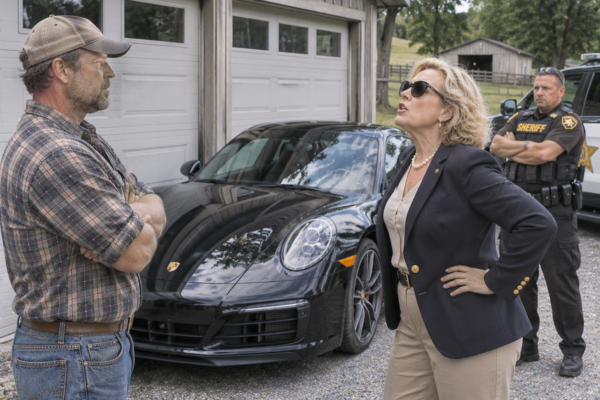
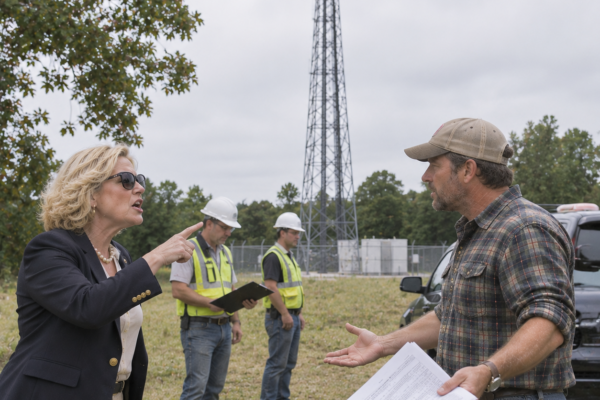
“Handcuff Him! This Is HOA Property!” the HOA President Screamed as Deputies Restrained Me on the Dock of My Own Lake House. I’d Owned Those 2.4 Acres for 12 Years, but She Claimed I Owed $38,600 and Had No Right to Enter. I Asked One Deputy to Check Her Parcel Number—Then He Looked at My Face and Whispered a Title I Hadn’t Heard in Years….k

“Handcuff Him! This Is HOA Property!” the HOA President Screamed as Deputies Restrained Me on the Dock of My Own Lake House. I’d Owned Those 2.4 Acres for 12 Years, but She Claimed I Owed $38,600 and Had No Right to Enter. I Asked One Deputy to Check Her Parcel Number—Then He Looked at My Face and Whispered a Title I Hadn’t Heard in Years…
The first click of the handcuffs made Marjorie Kessler smile.
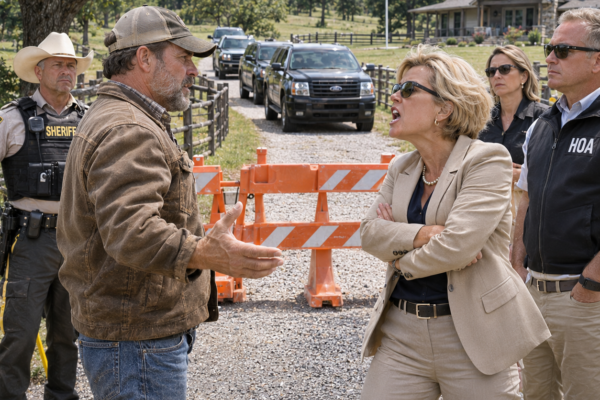
She stood on my private dock at Blackwater Lake, clutching a folder of HOA documents while two sheriff’s deputies treated me like a trespasser on property I’d owned for twelve years.
“Finally!” she snapped. “Maybe now he’ll understand that Cedar Ridge Shores doesn’t tolerate people who ignore our rules!”
I stood perfectly still, my hands restrained behind my back.
I was sixty-two years old, recently retired from law enforcement, and had spent my life dealing with people who believed a convincing lie was more powerful than a documented fact.
But never once had I imagined being handcuffed on my own dock because an HOA president claimed she owned my lake house.
“Ma’am,” I said calmly, “I’ve never belonged to your association.”
Marjorie laughed.
“That’s not what the county records say, Mr. Whitmore.”
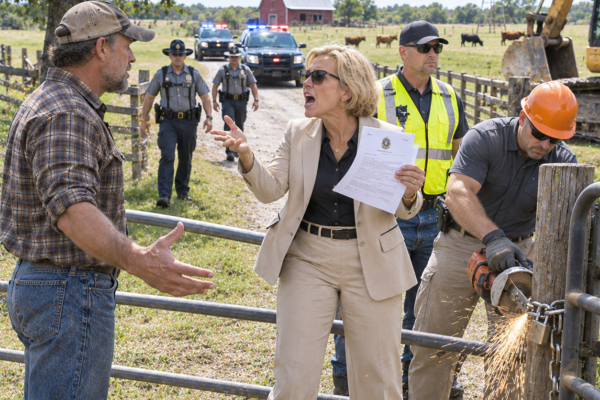
She waved a document inches from my face.
“This property was officially annexed six months ago. You’re occupying association-managed land without authorization.”
I looked toward the house.
The cedar siding was just as I’d left it.
The old porch swing still hung beside the front window.
My fishing rods were probably still stacked inside the mudroom.
But everything else had changed during the three weeks I’d been away.
A large sign now stood beside my driveway.
CEDAR RIDGE SHORES — PRIVATE HOA PROPERTY.
Someone had installed an electronic lock on my gate.
Two new security cameras were pointed directly toward my yard.
Three unfamiliar SUVs occupied my gravel parking area.
And a laminated HOA MEMBERS ONLY sign had been fastened to the railing of the dock where I used to drink my morning coffee.
I hadn’t given anyone permission to install any of it.
I hadn’t received a notice.
I hadn’t signed an easement.
And I’d certainly never agreed to hand over the waterfront property I’d purchased more than a decade earlier.
When I arrived that afternoon, Marjorie was directing two workers who were measuring my shoreline.
I asked them to stop.
She ordered me to leave.
I asked to see her proof of ownership.
She called the sheriff.
By the time Deputies Lucas Roark and Trevor Hale arrived, Marjorie had an entire folder ready.
A purported boundary correction.
A map with official-looking stamps.
A written trespass notice.
An affidavit alleging I’d threatened HOA employees.
And a claim that I had refused previous warnings.
Every allegation about my supposed confrontation was false.
I’d been working out of state.
When I told the deputies my original deed was inside the house, Marjorie immediately shouted that I wasn’t allowed to enter.
“The residence itself is under HOA management!” she announced.
I looked at Lucas.
“Deputy, I’ve owned this home for twelve years. My recorded deed is in a fireproof box beneath the stairs.”
Marjorie interrupted.
“Don’t let him inside! He could destroy evidence!”
I took one step toward the house.
Lucas asked me to stop.
I complied immediately.
Then, after Marjorie repeated her accusation that I’d threatened her staff, the deputies temporarily restrained me while they tried to verify the conflicting claims.
I disagreed with their decision.
But I didn’t resist.
I’d spent too many years in law enforcement to make a tense encounter worse by arguing physically.
Marjorie seemed delighted.
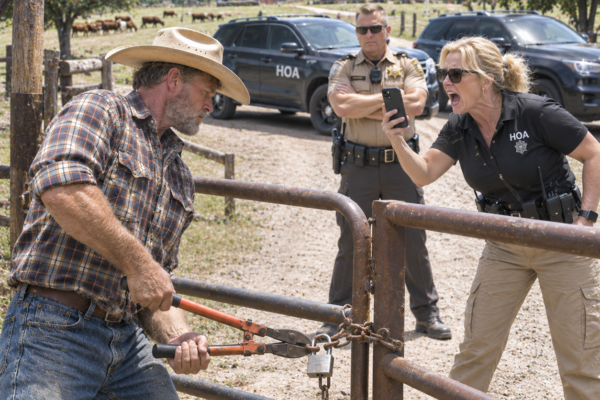
She raised her phone and started recording.
“Everyone is going to see what happens when you challenge this association,” she said.
I looked toward the folder in her hand.
Then I remembered something I’d noticed when she first showed me the paperwork.
The parcel number was wrong.
Not slightly wrong.
Not one transposed digit.
It didn’t match the number on my original deed.
I knew mine by heart.
After twelve years of taxes, insurance renewals, property records, and improvements, it was practically memorized.
“Lucas,” I said, “would you do me a favor?”
He looked toward me.
“What do you need, sir?”
“Read the parcel number on Mrs. Kessler’s document. Then compare it with the county’s property map.”
Marjorie rolled her eyes.
“We’ve already established ownership!”
“Then confirming the number shouldn’t be difficult,” I said.
Lucas walked to his cruiser.
He entered the number into the county system.
For a few seconds, he studied the screen.
Then he looked toward my house.
Back at the screen.
And finally at me.
His expression changed.
He stepped out of the cruiser and looked more closely at my face.
“Whitmore?” he said quietly.
I nodded.
Trevor moved closer.
Lucas stared at me for another moment.
Then, almost under his breath, he said:
“Chief?”
Marjorie’s phone lowered slightly.
“What did you call him?”
Lucas didn’t answer her.
He was looking at the records again.
And I could see the moment he realized that the parcel Marjorie claimed to have annexed wasn’t even the property where we were standing.
The land described in her document was almost half a mile away.
Marjorie began shouting that the county database was outdated.
But Lucas was no longer listening to her.
He looked toward Trevor.
Then toward the handcuffs around my wrists.
“Sir,” he said carefully, “I think we need to review exactly what happened here.”
I held his gaze.
“That’s all I’ve been asking you to do.”
Marjorie stepped forward, furious.
“You’re not going to release him just because you know him!”
I looked at Lucas.
“She’s right about one thing. Don’t make a decision because you recognize me.”
Then I glanced toward the property records on his screen.
“Make it because the evidence says you should.”
What none of us knew yet was that Marjorie’s fabricated boundary wasn’t an isolated mistake.
And the folder she had brought to my dock was about to become the first piece of evidence in an investigation involving several stolen shoreline claims, hundreds of thousands of dollars in HOA assessments, and a private marina project nobody had properly explained to the homeowners paying for it.
Part 2:
The first click of the handcuffs made Marjorie Kessler smile.
I remember that more clearly than I remember the sound of the lake that afternoon.
She stood on my private dock wearing a cream-colored jacket and expensive sunglasses, holding a folder full of documents that supposedly gave her homeowners association control over my property. Her phone was raised, recording every second.
“Now perhaps you’ll learn some respect for Cedar Ridge Shores,” she said.
I looked past her toward the house I’d owned for twelve years.
The old wooden porch swing moved in the afternoon breeze. My fishing boat sat beneath its cover. Pine needles had gathered along the walkway while I’d been away.
Everything should have been familiar.
Instead, there were strangers in my yard, an electronic lock on my gate, and two deputies restraining me because a woman I’d never met insisted that I was trespassing.
“Lucas,” I said, keeping my voice level, “please check the parcel number again.”
Deputy Lucas Roark glanced toward the cruiser parked above the driveway.
He’d initially treated the matter as a possible trespassing complaint, complicated by a sworn statement alleging I’d threatened association workers. I’d told him those allegations were false and offered to retrieve my deed.
Marjorie had insisted that entering the house would constitute another violation.
When I moved toward the door, Lucas ordered me to stop.
I complied.
Even so, the deputies decided to temporarily restrain me while they verified the complaints. I believed that decision was unjustified, but I kept my hands visible and followed their instructions.
I’d spent too many years wearing a badge myself to confuse cooperation with surrender.
Now Lucas opened the patrol-car laptop and entered the parcel number Marjorie had supplied.
He studied the results.
Then he looked toward the house.
Then toward me.
“Whitmore?”
“That’s right.”
He stepped closer.
“Garrett Whitmore?”
I nodded.
Trevor Hale, the second deputy, came around the front of the cruiser.
He looked at me carefully.
Then Lucas said the word I hadn’t heard directed at me in years.
“Chief?”
Marjorie lowered her phone.
“What did you call him?”
Nobody answered.
Lucas looked toward Trevor.
Recognition spread across both their faces.
Years earlier, they’d served under me on the county’s major-crimes task force. I’d supervised investigations involving property fraud, financial schemes, organized theft, and officials who’d convinced themselves their titles made them untouchable.
Lucas had been a young deputy then.
Trevor had worked several complex cases with us before transferring to patrol supervision.
I hadn’t seen either man in years.
“Chief Whitmore,” Trevor said quietly. “I didn’t recognize you.”
“Apparently not.”
He looked toward the handcuffs.
“I’m sorry, sir.”
“Don’t apologize yet. Check the documents.”
Lucas nodded.
He returned to the computer.
This time he brought up the county’s parcel map and compared the recorded legal descriptions.
The lot identified on Marjorie’s supposed boundary correction was almost half a mile away, near the Cedar Ridge Shores clubhouse.
It wasn’t the land beneath my house.
It wasn’t my dock.
And it wasn’t any part of the 2.4-acre property I’d purchased twelve years earlier.
Lucas studied the map.
Then he looked toward Marjorie.
“Mrs. Kessler, this document identifies a different parcel.”
She marched toward him.
“Your database is outdated.”
“The parcel identifiers don’t match.”
“The association had the boundary corrected.”
“Then we need the recorded instrument describing this particular property.”
She pointed at me.
“He’s standing on HOA land! Arrest him!”
Trevor raised a hand.
“Ma’am, you don’t decide who gets arrested.”
I looked toward Lucas.
“Don’t remove those cuffs because you remember me.”
He paused.
“Sir?”
“If the evidence supports holding me, then hold me. If it doesn’t, correct the mistake. My old job shouldn’t make any difference.”
For several seconds, nobody spoke.
Then Lucas finished comparing the records and reviewed the initial complaint again.
The documents Marjorie had presented did not establish ownership or HOA authority over my parcel. Nor was there verified evidence of the alleged threats.
Trevor removed the handcuffs.
I rubbed my wrists once.
Then I asked the deputies to preserve copies of every document she’d provided and accurately record the circumstances of the detention.
Lucas nodded.
“We’ll document it, sir.”
Marjorie looked furious.
“This is favoritism! You know him!”
I turned toward her.
“No, Marjorie. The map is wrong whether they know me or not.”
She stepped closer.
“That lake house was annexed into Cedar Ridge Shores six months ago.”
“Then show me the valid document establishing that.”
She opened another folder.
This one contained a deed-like instrument bearing an official-looking county recording stamp.
I examined the first page.
The recording date was six weeks earlier.
“Who filed this?”
“Our attorneys.”
“Did you receive permission from the property owner?”
“The association already had the authority.”
I looked at Lucas.
“I’d like to retrieve my deed now.”
He stepped aside.
I walked into my own house.
The air inside smelled faintly of cedar and the coffee grounds I’d forgotten to throw away before leaving for my consulting trip.
I went to the closet beneath the stairs and opened the fireproof box.
Inside was the recorded deed, a title policy, the original survey, tax records, and the closing documents from twelve years earlier.
I carried the folder outside.
Then I laid everything on the picnic table beside the dock.
My deed showed that I owned the house and 2.4 surrounding acres.
The survey defined the shoreline boundary and private dock area.
The title records identified ordinary utility rights but no declaration placing my property under Cedar Ridge Shores.
Most importantly, the subdivision’s original development records expressly excluded my lot from the HOA.
Cedar Ridge Shores had been established after the lake house was built.
My purchase had followed the recorded chain of title.
There had never been an agreement bringing the property into the association.
Marjorie barely looked at the documents.
“They’ve been superseded.”
“By what?”
“Our corrective boundary filing.”
I looked toward the county stamp on her paperwork.
“A recording stamp doesn’t prove the information inside the document is true.”
Her expression hardened.
“Mr. Whitmore, you currently owe $38,600 in assessments, penalties, and legal expenses. I suggest you worry about that instead.”
I stared at her.
“Thirty-eight thousand six hundred dollars?”
“Correct.”
“For belonging to an association I’ve never joined?”
“You became a member when the property was annexed.”
I looked at Lucas.
He appeared as astonished as I was.
“Marjorie,” I said, “who signed the documents authorizing this supposed annexation?”
She hesitated.
Only half a second.
But after nearly thirty years in law enforcement, I’d learned that an unexpected pause could be worth remembering.
“Our management company handled the necessary paperwork.”
“Then I’ll be speaking with them.”
She snapped her folder shut.
“You’re making a very expensive mistake.”
I looked around the yard.
At the cameras pointed into my windows.
At the unauthorized lock on my gate.
At the HOA sign bolted beside my driveway.
“No,” I said. “Somebody made a mistake. And I intend to find out who.”
The deputies completed their incident report and told Marjorie to leave the disputed property while the legal questions were addressed through the appropriate channels.
She refused at first.
Then Lucas made clear that she couldn’t order the sheriff’s department to enforce an unverified HOA ownership claim.
Finally, she gathered her papers and marched toward her SUV.
Before climbing inside, she looked back.
“This isn’t over, Garrett.”
I met her stare.
“You’re right about that.”
She drove away.
The deputies stayed another few minutes.
Lucas apologized again for the handcuffs.
I told him the department needed to review the decision independently, not simply treat it as a mistake that disappeared because we’d worked together.
He agreed.
Then Trevor glanced toward the lake.
“You still fish here?”
“Whenever I get the chance.”
He smiled faintly.
“Some things don’t change.”
After they left, I stood on the dock and looked toward the far shoreline.
I’d spent three weeks working out of state, hoping to come home to peace and quiet.
Instead, somebody had used the time to transform my private property into what looked like an HOA recreation area.
I needed to know why.
That evening, as I was removing the laminated sign from my dock railing, a man approached along the shoreline path.
He was in his late sixties, wearing a faded denim jacket.
I recognized him.
Russell Keen owned a cabin farther along the lake.
We’d talked fishing a handful of times but never become particularly close.
He stopped beside my gate.
“Garrett, heard about what happened.”
“News travels fast.”
He glanced toward the cameras.
“Marjorie’s been doing this to other people.”
I lowered the sign.
“What do you mean?”
He looked toward Cedar Ridge Shores.
“Five shoreline properties, maybe more. They’ve been changing boundary maps, claiming old private docks are association property, sending fines to people who don’t even live here full-time.”
“Are the owners members?”
“Some are. Some aren’t.”
“What happened to them?”
Russell looked down.
“Most paid to make the letters stop. One widow sold a piece of waterfront land after they threatened to take her to court.”
“Sold to whom?”
“The association. For a fraction of what the property was worth.”
I looked toward the water.
“Why would Cedar Ridge need so much shoreline?”
Russell hesitated.
Then he said, “There’s talk of a marina.”
I turned back toward him.
“What kind of marina?”
“I don’t know all the details. Forty-something boat slips, maybe a bigger clubhouse. They’ve been working on it quietly.”
He looked toward my house.
“Your property sits right in the middle of the shoreline they want.”
I thought about Marjorie’s folder.
The incorrect parcel number.
The forged-looking document.
The thirty-eight thousand dollars in alleged assessments.
And the fact that she’d moved onto my land during the three weeks I was away.
For the first time, her actions began to make sense.
She wasn’t trying to enforce a rule.
She was trying to acquire something.
And I was standing in the way.
I didn’t sleep much that night.
Not because I was frightened of Marjorie.
I was angry that she’d managed to turn a routine property dispute into a law-enforcement encounter in which an innocent homeowner had been restrained on his own dock.
And I was troubled by how carefully the encounter appeared to have been prepared.
She hadn’t arrived with one mistaken map.
She’d brought a notice of annexation, a purported recorded instrument, a sworn allegation of threatening behavior, photographs, and a demand for my removal.
Those weren’t things someone assembled in five minutes.
Somebody had worked on that file.
Somebody had decided what story the deputies should believe.
And somebody had expected me to be away long enough for the new signs and locks to become an established fact.
I made coffee at five the next morning and opened my laptop.
First, I downloaded the county property records.
Then I reviewed the original Cedar Ridge Shores subdivision documents.
The development had been created years after the first lakefront cabins appeared. Its recorded declaration applied to a defined collection of lots, with provisions for adding property under specific conditions.
My parcel wasn’t one of them.
It was expressly excluded on the original plat.
More importantly, nothing in the recorded chain of title showed that I or any previous owner had conveyed the property to Cedar Ridge Shores or subjected it to the association’s declaration.
A homeowners association couldn’t simply acquire a lake house because its president redrew a map.
At eight-thirty, I called my longtime attorney, Calvin Pierce.
Calvin had handled my real estate matters since before I retired.
He was a patient man, which was fortunate because I was not feeling particularly patient.
“Garrett,” he said, “tell me what happened.”
I told him everything.
When I reached the part about being handcuffed, he interrupted.
“Did the deputies release you after checking the records?”
“Yes.”
“Good. We’ll address the detention and the false allegations separately. Right now, I want every document you have.”
By noon, he was sitting at my kitchen table.
He examined the deed, Marjorie’s papers, and the photographs of the new improvements.
Then he opened the county’s recorded instrument index.
“There is a filing here,” he said.
I leaned closer.
A document titled Corrective Boundary Instrument had been recorded six weeks earlier.
It purported to correct the legal description affecting my lakefront parcel.
Attached was an acknowledgment claiming I’d appeared before a notary and signed the instrument.
I stared at the signature.
It looked enough like mine to fool someone who didn’t examine it carefully.
But the capital W was wrong.
The spacing between my first and last names was wrong.
And the signature had a rounded, deliberate appearance that looked nothing like the one I’d used for decades.
“I never signed this.”
Calvin nodded.
“Then we need to challenge the instrument and establish how it got recorded.”
I pointed toward the notary acknowledgment.
“I’ve never met this person either.”
“Let’s identify her.”
The notary was employed by North Star Community Management, the outside company responsible for Cedar Ridge Shores’ administrative work.
Calvin explained that a recording stamp didn’t authenticate the underlying transaction.
The county office accepted documents that met recording requirements. It didn’t independently verify every signature or determine whether someone truly possessed the rights they claimed to convey.
That meant the instrument could create a cloud on my title without actually giving the HOA a lawful ownership interest.
“Can we get it removed?” I asked.
“We can pursue judicial relief correcting the record. But we need to preserve the original filing and establish the facts first.”
I looked at the signature again.
“Somebody knew I wouldn’t be here to object.”
Calvin closed the folder.
“Let’s find out who.”
The next day, I began tracing Cedar Ridge Shores’ proposed marina.
Russell had heard rumors.
The county planning records showed considerably more.
The association and its development advisers had discussed a project called Cedar Ridge Private Marina.
The concept included forty-two boat slips, a rebuilt clubhouse overlooking the water, guest docking facilities, and enhanced access for homeowners.
The promotional material described an uninterrupted private shoreline.
That phrase interested me.
I printed the preliminary site plan and laid it across my kitchen table.
The proposed marina extended along a crescent of lakefront property.
Most of the shoreline was already controlled by Cedar Ridge Shores.
But several older private parcels interrupted the planned access route.
Mine was one of them.
Russell’s was another.
An elderly widow’s former property sat between two parcels the association had already purchased.
I traced the project boundary with a pencil.
The marina couldn’t be built exactly as advertised without additional rights across those private holdings.
That didn’t mean the association couldn’t negotiate with willing owners.
It meant it had to negotiate.
And if the owners refused, the plans had to change.
Marjorie appeared to have selected a different solution.
Declare the properties incorporated.
Charge the owners for violations.
Threaten legal action.
Then pressure them to sell or surrender easements.
I remembered Russell mentioning the widow.
Her name was Eleanor Maddox.
She’d owned a small waterfront parcel for more than twenty years.
After months of alleged HOA penalties and threats, she’d sold the shoreline portion to an association-controlled acquisition entity at a substantial discount.
Calvin began reviewing her transaction with her permission.
He also contacted the other affected property owners.
The pattern was unsettling.
Different amounts.
Different threats.
Different documents.
But the same repeated claim: Cedar Ridge Shores had acquired authority over property the owners believed remained privately theirs.
One man had paid $9,200 in alleged violations.
Another had been billed for unauthorized dock use.
A couple who lived at the lake only during summer had received letters threatening legal expenses if they refused to acknowledge a boundary correction.
I made a list.
Five properties.
Five sets of disputed records.
And one marina project that appeared to benefit from acquiring them.
Then my telephone rang.
The caller identified herself as Felicia Grant.
She was the Cedar Ridge Shores treasurer.
Her voice was quiet.
“Mr. Whitmore, I need to talk to you about the lake-access assessments.”
“Go ahead.”
“Not over the phone.”
I waited.
“Marjorie can’t know I’m speaking with you.”
We arranged to meet the following evening at a restaurant several miles from the lake.
Felicia arrived carrying a folder.
She was in her late fifties, with tired eyes and the nervous movements of someone who’d spent days debating whether to make a difficult decision.
“I’ve been reviewing the association’s finances,” she said.
I let her speak.
“A special assessment was approved for shoreline acquisition and marina improvements. Homeowners have paid nearly $640,000 into it over the past year.”
“That’s a substantial amount.”
She nodded.
“Marjorie told the board the money was being used for appraisals, acquisition negotiations, preliminary engineering, and property consultants.”
“Was it?”
Felicia opened the folder.
Bank statements.
Payment summaries.
Invoices.
And a series of transfers to a company called Kessler Waterfront Consulting LLC.
I looked at the name.
“Related to Marjorie?”
“She says it’s an independent firm.”
“Do you believe that?”
Felicia shook her head.
“Not anymore.”
She explained that payments had been approved under broad descriptions such as acquisition services and shoreline consulting.
Some lacked meaningful supporting reports.
Others described work that appeared to overlap with services already billed by outside engineering or legal firms.
The documents didn’t establish exactly where every dollar had gone.
But enough money had moved to the consulting company that the arrangement demanded an explanation.
“Why are you bringing this to me?” I asked.
Felicia stared at her hands.
“Because residents trusted me to watch the money. And I kept accepting explanations because Marjorie said everything was being handled.”
She looked up.
“I don’t want another family losing its land because I was too afraid to ask questions.”
I told her to preserve the records properly and avoid altering or deleting anything.
Then I called Calvin.
By the following morning, he’d checked the company’s public registration.
Kessler Waterfront Consulting LLC was registered under the name of Marjorie’s adult sister.
Its mailing address, however, was Marjorie’s own home.
I looked at the record for a long time.
The relationship was suspicious.
It wasn’t proof by itself that Marjorie had stolen anything.
But the combination of disputed shoreline acquisitions, association money, and a family-connected consulting company made the matter too serious to treat as an ordinary HOA disagreement.
I called Lieutenant Owen Barrett.
Owen currently led the county’s property-fraud investigations unit.
I’d known him professionally years earlier.
But when he answered, I didn’t begin with our history.
“My name is Garrett Whitmore. I’m reporting suspected fraudulent instruments affecting several privately owned lakefront properties. I also have financial records that may be relevant.”
Owen listened.
Then he asked whether I’d made a formal complaint.
“Not yet.”
“Bring the documents in. We’ll handle the intake and determine the appropriate investigative steps.”
“I don’t want special treatment.”
“You won’t get any.”
“Good.”
After the call, I looked out at Blackwater Lake.
The water was calm.
A fishing boat moved slowly along the far bank.
From a distance, nothing suggested that a neighborhood dispute could involve falsified deeds, financial transfers, and a development worth millions.
But I’d seen enough cases to recognize the danger of assuming that people who wear respectable clothes are incapable of serious misconduct.
Marjorie had a reputation to protect.
A marina to build.
And apparently a great deal of money moving through accounts that hadn’t been properly explained.
I had a lake house.
And I had a folder.
That was enough to begin.
Marjorie responded to the investigation by having my pickup truck towed.
I discovered it at six-thirty on a Wednesday morning.
I came downstairs, made coffee, looked out the kitchen window, and noticed an empty driveway.
For a moment, I thought I’d parked beside the garage.
Then I remembered pulling into my usual spot the previous evening.
The truck was gone.
I checked my security footage.
At 2:14 a.m., a tow truck had entered my driveway.
Its operator photographed the vehicle, attached the recovery equipment, and removed it without knocking on my door.
The work was completed in less than twenty minutes.
I watched the recording twice.
Then I called the towing company.
The dispatcher told me the vehicle had been removed at the request of Cedar Ridge Shores for unauthorized parking on association-controlled property.
“Ma’am, my driveway isn’t association property.”
“I’m only reading what’s on the authorization.”
“Can you send me a copy?”
She did.
At the top was my address.
Beneath it was the same incorrect parcel number Marjorie had used on the dock.
And at the bottom was her signature.
I almost laughed.
Not because having my truck towed was amusing.
It wasn’t.
The company wanted storage and towing charges, and I had to arrange transportation to recover my own vehicle.
But Marjorie had just signed another document asserting authority over land she didn’t own.
This time there was a timestamped commercial work order and video showing the consequences.
I forwarded everything to Calvin and Owen.
Then I recovered the truck, paid the disputed charges to prevent further storage costs, and kept every receipt.
When I got home, I placed the authorization beside the earlier boundary instrument.
The same false parcel number appeared on both.
Marjorie hadn’t merely repeated a verbal mistake.
She’d used the supposed correction as the basis for tangible action against my property.
That distinction mattered.
By then, Owen’s unit had formally opened a property-fraud investigation. He kept the investigation separate from my former law-enforcement relationships and made sure the necessary records were obtained through ordinary procedures.
I gave a statement.
I supplied the original footage.
And I provided the names of other owners who had agreed to speak with investigators.
Russell submitted his records.
Eleanor Maddox provided the correspondence leading to her discounted shoreline sale.
Felicia cooperated with the financial review.
Calvin pursued the civil title dispute at the same time.
He filed the necessary action to challenge the recorded boundary instrument and sought relief preventing the association from using it to interfere with my possession of the property.
I wanted the false document corrected.
I wanted the unauthorized locks and cameras removed.
And I wanted Marjorie to stop pretending the lake house belonged to Cedar Ridge Shores.
But the criminal investigation was beginning to uncover something larger.
The next important call came from Evelyn Stratton.
She was chief executive of North Star Community Management, the company Marjorie had hired to administer Cedar Ridge’s financial records, resident accounts, notices, and compliance files.
She sounded direct and cautious.
“Mr. Whitmore, I understand you’ve raised questions about a notarized instrument involving our company.”
“Yes.”
“I’d like to review the records with you.”
Calvin attended the meeting.
Evelyn’s office was in a modern commercial building about thirty minutes from the lake.
She sat across from us with a legal pad and a company laptop.
At first, she seemed to believe the dispute was an ordinary argument over association authority.
Then Calvin placed the corrective boundary instrument on the table.
Evelyn examined the notary acknowledgment.
“That’s one of our employees.”
“Did your firm verify that I personally signed this?”
She frowned.
“That’s what I need to determine.”
I laid my original signature examples beside the instrument.
Then I showed her the towing authorization and the incorrect parcel reference.
Evelyn looked at the documents for a long moment.
“These are the same parcel numbers.”
“Yes.”
“And that parcel isn’t yours?”
“It’s nearly half a mile away.”
Her expression changed.
She asked us to remain while she contacted her records administrator.
When she returned, she carried several pages of system logs.
“The document was generated through an account assigned to our notary employee,” she said.
“Does that establish she signed it?”
“No. It establishes which credentials were used. We need to investigate who actually accessed the system and what happened.”
That was the answer I wanted.
Careful.
Specific.
Not an accusation unsupported by the evidence.
Evelyn continued.
“The activity occurred outside normal business hours.”
Calvin made a note.
“Who else had access?”
“A regional manager could access portions of that workflow.”
“Who?”
“Martin Hales. He was assigned to Cedar Ridge.”
She looked toward her administrator.
“And I want to know why a large batch of project files was deleted thirty-six hours before Mr. Whitmore returned to his property.”
I leaned forward.
“Deleted?”
“That’s what the log shows.”
The files involved Cedar Ridge’s boundary corrections and property-acquisition records.
Their deletion had occurred suspiciously close to the date Marjorie’s crew installed the new signs and locks.
Evelyn immediately ordered the relevant accounts secured, the server backups preserved, and further changes restricted while independent specialists examined the activity.
She placed Martin Hales on administrative leave.
She also arranged for the underlying records to be made available to investigators through the proper process.
Later, the notary employee explained that she’d been told the documents represented copies of agreements already signed by the property owners.
She denied witnessing me sign anything.
That explanation didn’t resolve every question.
But it raised serious concerns about the use of her credentials and the representations made to her.
The company’s forensic review recovered deleted files from server backups.
Those records included emails, draft boundary exhibits, and internal communications connecting Martin to Marjorie’s acquisition project.
One message referred to the need to complete shoreline corrections while certain owners were away.
Another instructed staff to prioritize Garrett Whitmore’s parcel before his expected return.
I stared at that sentence.
Marjorie had known my consulting schedule.
I’d told a neighbor I would be out of state for three weeks.
Somewhere between ordinary community gossip and her planning process, that information had become an opportunity.
She’d moved while she believed I couldn’t object.
Evelyn looked embarrassed.
“Mr. Whitmore, I can’t tell you how sorry I am that records produced through our systems were used this way.”
I studied her.
“Then make sure nothing else disappears.”
She nodded.
“That’s already underway.”
I believed her.
And that became important because several days later, Marjorie called an emergency HOA meeting.
The notice identified me by name.
Its stated purpose was to consider permanently excluding me from Cedar Ridge Shores property and authorizing additional enforcement against my lake house.
I wasn’t a member.
I didn’t have a vote.
But the allegations concerned me, and the association’s counsel confirmed that I could attend and respond.
Calvin advised me to be careful.
Owen gave similar advice.
“Garrett, we’re still following the financial records. Don’t announce details that could compromise the investigation.”
“I won’t.”
“We’re also concerned the disputed money could be moved if the people involved realize how much documentation we’ve obtained.”
“I understand.”
He paused.
“And Garrett?”
“Yes?”
“This is our investigation now. Let us do the law-enforcement work.”
I smiled faintly.
“I retired for a reason, Owen.”
The clubhouse was packed the night of the meeting.
Every chair was occupied.
Residents stood along the back wall and crowded near the doors.
Marjorie took the podium in a dark blue suit.
Behind her was a projection screen.
The first image she displayed was a photograph of me standing on my dock in handcuffs.
The room murmured.
Marjorie smiled.
“This is the individual who has been disrupting our marina improvement project.”
I sat near the back beside Calvin.
She continued.
She accused me of trespassing.
Refusing lawful assessments.
Threatening board personnel.
Interfering with association security.
And obstructing improvements that would benefit the entire neighborhood.
Then she declared that the county had certified Cedar Ridge Shores’ ownership of my lakefront parcel.
I raised my hand.
She ignored me.
I stood anyway.
“Marjorie, which county document establishes that ownership?”
She looked irritated.
“The corrective boundary instrument.”
She held it up.
“The same document your association relied upon when charging me $38,600?”
“Yes.”
“The same document you used to authorize towing my truck?”
“Yes.”
“And the same document you presented to the deputies when you accused me of trespassing?”
“Yes, Garrett. How many times do I have to explain this?”
I looked around the room.
“Thank you. I wanted everyone to understand which document you’re relying on.”
A man near the front raised his hand.
“Mrs. Kessler, is that the same boundary plan connected to the marina assessment?”
Marjorie nodded.
“Of course. It’s part of our acquisition program.”
I sat down.
The association had just heard its president publicly connect the disputed instrument to the enforcement actions and the marina project.
Then the clubhouse doors opened.
Evelyn Stratton entered.
Marjorie stopped speaking.
“What are you doing here?”
Evelyn walked to the microphone.
“I’m here because North Star Community Management’s records have been cited as proof of property ownership, and that representation needs correcting.”
Marjorie stared at her.
Evelyn continued.
“Our company has not certified that Mr. Whitmore’s property belongs to Cedar Ridge Shores. We have identified serious irregularities in documents generated through our systems and have preserved the relevant records for independent investigation.”
The room erupted into murmurs.
Marjorie struck the podium.
“You’re overstepping your authority!”
Evelyn didn’t raise her voice.
“I’m the chief executive of the company whose records you’re using. I believe I’m qualified to explain what we’ve found.”
She informed the residents that North Star had restricted access to affected administrative systems to protect the records while the investigation continued.
Then another set of doors opened.
Lucas Roark and Trevor Hale entered with Lieutenant Owen Barrett.
This time, they hadn’t come to remove me from my lake house.
Owen spoke to the association’s attorney and explained that investigators were executing lawful record-preservation and search procedures involving relevant offices and financial materials.
Teams were also working at other locations.
He didn’t declare Marjorie guilty.
He didn’t turn the meeting into an improvised trial.
He simply confirmed that the matter was the subject of a formal investigation and that relevant evidence had to be preserved.
Marjorie looked toward me.
“This is your doing!”
I stood.
“No, Marjorie. You filed the paperwork. You collected the money. You ordered the enforcement. I asked the county to check whether those things were lawful.”
She opened her mouth.
Then looked toward Owen.
For the first time since I’d returned to Blackwater Lake, she seemed to understand that shouting wouldn’t make the documents disappear.
But the most revealing evidence hadn’t been found yet.
That came from the records investigators recovered after the meeting.
And from what Marjorie tried to do with the money that same night.
The search records told a story Marjorie couldn’t explain with a boundary correction.
Investigators recovered spreadsheets describing five shoreline parcels targeted for acquisition.
Each property had a column for its current owner, estimated market value, anticipated purchase cost, and outstanding association penalties.
Mine was listed as a priority.
Beside my name was a note:
Owner away three weeks. Complete site control before return.
I stared at the words when Calvin later showed me the relevant records released through the proceedings.
Marjorie hadn’t simply known I was gone.
She’d built her schedule around it.
Another spreadsheet contained financial projections for the proposed marina.
Forty-two boat slips.
A rebuilt clubhouse.
Guest dock facilities.
Membership premiums.
And development arrangements projected to generate several million dollars if the shoreline could be assembled as planned.
My lake house wasn’t the most valuable property in the project.
But its location mattered.
It interrupted the continuous shoreline access needed for the proposed dock arrangement.
That explained why Marjorie had tried to move so quickly.
She wanted my land controlled before I came home, reviewed the records, and refused.
Investigators also examined the financial transfers Felicia had reported.
The association had collected nearly $640,000 in special lake-access assessments.
A substantial portion had been transferred to Kessler Waterfront Consulting LLC.
The consulting company’s public registration named Marjorie’s sister.
But the bank records, internal correspondence, and payment instructions raised questions about who actually controlled its activities.
Some invoices described acquisition research.
Others billed for negotiations that affected homeowners said had never occurred.
The evidence suggested that association funds had been directed to a family-connected business without the disclosure and oversight members had been promised.
Marjorie’s sister eventually cooperated with investigators, providing records of the company’s operations and explaining which decisions she’d made herself and which had been directed by others.
That evidence was examined alongside the recovered management-company files.
The timeline was becoming clear.
Boundary documents were created.
Owners received assessments and legal threats.
Some paid.
Others sold at reduced prices.
Association funds moved to the consulting company.
And Marjorie’s marina project moved closer to the shoreline control it needed.
Then the financial investigation triggered another event.
Late on the night of the clubhouse meeting, the bank flagged an attempted transfer of nearly $270,000 from an HOA-controlled account to an outside account.
The transaction was held and, through the appropriate legal process, the funds were preserved while investigators reviewed the attempted movement.
The timing was difficult to ignore.
Marjorie had learned that North Star was preserving records.
She knew investigators were examining the marina acquisitions.
And within hours, somebody had attempted to move a large sum from the association’s funds.
That didn’t establish the purpose of the transfer by itself.
But the authorization trail became significant evidence in the case.
Calvin called me the following morning.
“Garrett, the records are considerably stronger than they were a week ago.”
“How strong?”
“Strong enough that the county is pursuing the property-fraud issues aggressively. We’ll continue our civil case, but the criminal investigators will determine what charges the evidence supports.”
I looked toward the lake.
“Any word from Marjorie?”
“Only through her lawyer.”
“Good.”
I didn’t want to speak with her.
I wanted the matter resolved through records, courts, and proper accountability.
But Marjorie apparently had another plan.
She arrived at my lake house the following afternoon.
Alone.
No board members.
No security volunteers.
No clipboard.
Her white SUV stopped outside the gate, and she walked down the gravel drive carrying a leather handbag.
I was repairing a loose board on the porch.
When I saw her, I set down the screwdriver.
“Marjorie, you’ve been told not to enter this property without permission.”
She stopped near the gate.
“I need five minutes.”
“Then say what you need to say from there.”
She looked toward the house.
The HOA cameras were still in place, although their use had been challenged and the relevant access restricted pending the legal proceedings.
My own security camera was recording the driveway.
I didn’t mention it.
Marjorie clasped her hands.
“This whole situation has gotten out of control.”
I waited.
“We can settle it.”
“Through our attorneys.”
“Not everything needs lawyers, Garrett.”
I almost laughed.
She’d spent weeks threatening me with penalties and legal bills.
Now she wanted a private conversation.
“What are you offering?”
She took a breath.
“We cancel the assessments.”
I nodded.
“Those assessments were never valid.”
“We reimburse your towing expenses.”
“Those expenses resulted from your authorization.”
“We remove the gate lock and cameras.”
“You installed them without permission.”
Her face tightened.
“I’m trying to resolve this reasonably.”
“Then keep going.”
She looked toward the lake.
“The association can abandon its claim to your shoreline and pay you a settlement.”
“In exchange for what?”
She hesitated.
Then she answered.
“A public statement that this was an administrative misunderstanding. That nobody intentionally misled you or the other homeowners.”
I stared at her.
“You want me to tell people something I don’t know to be true.”
“It would help everyone move forward.”
“Would it help the residents whose assessment money was transferred to your consulting company?”
Her eyes widened.
“You don’t understand those transactions.”
“Then explain them to the investigators.”
She stepped closer.
“You think those deputies will protect you forever because you used to be their boss?”
I looked at her.
“They aren’t protecting me, Marjorie.”
Her expression hardened.
“They’re investigating what happened.”
She glanced toward the road.
Two unmarked county vehicles were approaching the entrance.
I hadn’t arranged a confrontation. Investigators had been following developments in the case and were coming to speak with me about the records they’d obtained. I’d already agreed to make myself available that afternoon.
Owen Barrett climbed out of the first vehicle.
He stopped beside the gate and addressed Marjorie calmly.
“Mrs. Kessler.”
She turned.
“What is this?”
Owen identified himself and informed her that investigators had obtained further evidence relating to the disputed filings and financial transactions.
Her attorney had been advised of the formal process.
Owen then told her that an arrest warrant had been issued on specified charges supported by the investigation.
Marjorie stepped backward.
“This is a civil property dispute!”
“The property dispute is being handled in civil court,” Owen said. “The criminal allegations concern false instruments, financial transactions, and related conduct.”
She looked toward me.
“You planned this!”
I shook my head.
“No, Marjorie. I came home and found strangers on my dock. Everything after that began with the documents you used to justify it.”
She stared at me.
Then at Owen.
For the first time, she had no demand to make.
The deputies conducted the arrest according to the warrant.
There was no struggle.
No theatrical shouting.
Just a woman who’d spent months claiming authority over other people’s property now being held accountable through the legal system she’d tried to manipulate.
As she was escorted toward the vehicle, she looked toward my wrists.
The same wrists she’d watched being handcuffed on my dock.
I met her eyes.
“You should have checked the parcel number, Marjorie.”
She looked away.
And that was the last time she came onto my property.
Marjorie’s arrest didn’t end everything overnight.
There were still court filings, financial reviews, witness statements, and property records that needed to be corrected.
But the balance of power had changed.
For months, she’d used the association’s money and reputation to pressure people who didn’t have the time or resources to challenge her.
Now the association itself had to confront what she’d done.
The Cedar Ridge Shores board called a special meeting.
This time, Marjorie wasn’t at the podium.
Felicia Grant presented the financial records, assisted by independent forensic accountants retained through the association’s new oversight arrangements.
Evelyn Stratton attended to explain North Star’s internal review.
Residents learned about the defective boundary documents, the unauthorized account activity, the questionable acquisition expenses, and the financial relationships that had never been properly disclosed.
Several homeowners were furious.
Others looked embarrassed.
They’d supported the marina because they genuinely wanted better amenities.
They’d paid their special assessments believing the money would be spent lawfully.
Now they were discovering that their enthusiasm had been used to finance an acquisition effort built partly on false claims against neighboring owners.
A retired teacher stood and asked a question that silenced the room.
“How many people did we hurt while we were trying to build this marina?”
Nobody answered immediately.
Then Felicia said, “That’s one of the things we’re going to find out.”
The board voted unanimously to remove Marjorie from her leadership position under the association’s governing procedures.
A new administration withdrew the disputed enforcement claims and suspended the marina expansion.
Independent accountants reviewed the special-assessment collections and related expenditures.
The association pursued recovery of improperly diverted money, addressed the losses through the available legal and insurance processes, and established a reimbursement program for affected members.
The board also adopted stricter controls over vendor payments, related-party contracts, and property-acquisition approvals.
No single officer would again be allowed to approve transactions benefiting a family-connected business without independent review.
The management company strengthened its access controls and document-authentication procedures.
Evelyn made certain the recovered records remained preserved for investigators.
I respected her for that.
She couldn’t undo what had happened through North Star’s systems.
But she’d refused to protect her company’s reputation by hiding evidence.
That mattered.
The civil case involving my lake house reached a resolution several months later.
The court determined that the purported corrective boundary instrument did not establish a valid transfer of my property or subject it to Cedar Ridge Shores.
The relevant records were corrected through the required legal process.
The association formally acknowledged that my 2.4-acre parcel had never been part of its governing territory.
It withdrew the $38,600 assessment demand.
It reimbursed my towing expenses and resolved my recoverable legal costs under the court’s order and settlement terms.
The unauthorized HOA cameras, signs, and gate lock had to be removed within thirty days.
A contractor arrived one cool October morning to take everything down.
I watched from the porch.
The large PRIVATE HOA PROPERTY sign came out first.
Then the cameras.
Finally, the electronic lock was removed from the gate.
When the contractor finished, he approached me with a clipboard.
“Mr. Whitmore, would you mind confirming the work is complete?”
I walked down the driveway and examined the gate.
The old latch was back in place.
I opened it.
Closed it.
Then opened it again.
It swung freely.
I signed the completion form.
“Looks good.”
He nodded.
“Have a nice day, sir.”
As his truck disappeared down the road, I stood beside the gate for a long moment.
It was such a simple thing.
A gate opening the way it always had.
Yet after months of interference, it felt like reclaiming a part of my ordinary life.
The legal proceedings concerning the other property owners took longer.
Russell and several neighboring families submitted evidence showing how the disputed boundary instruments had affected them.
Some had paid fines they never owed.
Others had entered agreements under pressure.
Eleanor Maddox had sold valuable shoreline rights at a steep discount after repeated threats of legal action.
Those claims weren’t identical.
Each required its own review.
But the broader resolution provided a path for compensation and correction of the affected property records.
Eleanor received a negotiated settlement addressing part of the financial loss she had suffered.
Russell recovered money tied to the disputed assessment and shoreline claims against his property.
Other families obtained refunds, title corrections, or separate settlements based on their circumstances.
I wished every person could have been restored to exactly where they’d been before Marjorie started.
Life doesn’t always work that way.
Some families had moved.
Some had lost months of peace.
Some had spent savings on attorneys.
A corrected deed could protect a property.
It couldn’t give someone back a year spent frightened of losing their home.
The criminal proceedings continued separately.
The recovered files, financial records, witness accounts, and attempted account transfer became part of the evidence reviewed by prosecutors.
Marjorie ultimately faced multiple charges concerning the fraudulent property documents and financial misconduct.
After extensive proceedings, she entered a guilty plea to several offenses, with restitution obligations and penalties determined by the court.
Other individuals involved in preparing and processing the disputed records were investigated according to their own conduct.
I followed the cases through my attorney.
I didn’t give television interviews.
I didn’t write a book.
I didn’t post a photograph of Marjorie being arrested.
That surprised some people.
One neighbor asked whether I wanted to expose her publicly after everything she’d done.
I told him the court records already established what mattered.
I’d never wanted Marjorie to become a spectacle.
I’d wanted her to stop taking advantage of people.
Those were different goals.
I also declined several invitations to join the new HOA board.
The first invitation came from Felicia.
“We could use somebody with your experience.”
I laughed.
“Felicia, I spent most of my career running investigations. I retired because I wanted fewer meetings, not more.”
She smiled.
“You’d be good at it.”
“Maybe. But I don’t belong to the association, and I intend to keep it that way.”
She accepted that.
Later, she helped establish an independent committee to oversee completion of the financial corrections.
For a while, residents regarded her with suspicion because she’d served as treasurer during Marjorie’s presidency.
But the records showed she’d eventually raised questions, preserved evidence, and cooperated with the investigation.
Slowly, people began trusting her again.
A year after the first confrontation, Blackwater Lake looked much the way it had when I bought my house.
The pine trees still leaned over the shore.
Fishing boats crossed the water in the mornings.
The old dock creaked whenever I walked toward the end.
There was no new private marina.
No forty-two-slip development interrupting the shoreline.
The proposal had been abandoned under the reorganized association’s plans.
One Saturday afternoon, two familiar vehicles came up my driveway.
Lucas Roark climbed out of the first.
Trevor Hale stepped out of the second.
Neither wore a uniform.
Lucas carried a paper bag.
Trevor held a small cooler.
“We brought lunch,” Lucas said.
I looked at the bag.
“Hope there’s something besides gas-station sandwiches.”
Trevor laughed.
“Still giving orders, Chief?”
“Only when it improves the food.”
We carried everything down to the dock.
For a while, we ate and talked about old cases.
Men we’d worked with.
Investigations that had taken months.
Mistakes we’d made.
Things we’d learned the hard way.
Then Lucas looked toward the spot where I’d stood in handcuffs.
“I owe you an apology.”
I shook my head.
“We’ve already talked about it.”
“Not enough.”
He rested his elbows on his knees.
“I let her documents and accusations push me into treating a property dispute like it was a dangerous confrontation. I should’ve slowed down and verified more before restraining you.”
I looked at him.
“Yes. You should have.”
He nodded.
“Our supervisors reviewed the incident. We went through the decision, what we missed, and how to handle disputed ownership complaints better.”
“Good.”
Trevor looked toward me.
“Would you really have let us take you in if the records had gone the other way?”
“Of course.”
He raised an eyebrow.
“Even knowing us?”
“Especially knowing you.”
I set down my sandwich.
“A badge isn’t supposed to mean your friends get better treatment. It means you have a responsibility to get the facts right, even when the person in front of you is somebody you know.”
Lucas nodded slowly.
“That was always your rule.”
“It still is.”
We sat quietly.
A breeze moved across the water.
Then Trevor chuckled.
“What still gets me is that parcel number.”
I smiled.
“She could’ve checked it herself.”
“Would’ve saved everybody a lot of trouble.”
“Maybe.”
I looked toward the clubhouse visible through the trees on the far shoreline.
“But the wrong number wasn’t the whole problem.”
Lucas turned toward me.
“What was?”
“She knew people were afraid of the HOA’s money, its attorneys, and its authority. She thought that meant nobody would question whatever paper she put in front of them.”
I looked at the dock.
“She forgot that authority has to come from somewhere. A title. A law. A valid agreement. An actual property right. It doesn’t come from printing a boundary you wish existed.”
Neither man spoke.
Then Lucas smiled.
“Still sounds like the chief.”
I laughed.
“That’s unfortunate. I thought retirement cured that.”
We stayed until the sun began slipping behind the trees.
When they finally left, I walked back down to the dock with my fishing rod.
The water was calm.
The unauthorized cameras were gone.
The HOA signs were gone.
The gate opened with its old latch.
And the deed in my fireproof box still described the same 2.4 acres I’d purchased twelve years earlier.
Marjorie Kessler had tried to turn those acres into association property with a falsified document and a lot of confidence.
She’d brought deputies to my dock.
She’d celebrated when the handcuffs closed around my wrists.
She’d demanded money I didn’t owe and tried to take my land for a marina I had never agreed to support.
But the paperwork she’d relied on so heavily became the evidence that exposed her.
Her false parcel number led to the disputed boundary filing.
The disputed filing led to the other shoreline properties.
Those properties led to the assessment records.
And the money led investigators to a scheme much larger than one lake house.
I cast my line into the water.
The lure landed beyond the dock with a soft splash.
For the first time in months, I didn’t have a lawyer to call before dinner.
I didn’t have a new assessment notice waiting on the counter.
And I didn’t have an HOA president standing on my property telling me where I was allowed to walk.
I had the lake.
My house.
And the quiet I’d come home looking for.
Marjorie believed the handcuffs proved she’d won.
What she never understood was that winning an argument wasn’t the same as proving a fact.
In the end, neither my old rank nor her HOA presidency determined who owned that shoreline.
The recorded title and the evidence did.
And when the sun finally settled behind Blackwater Lake, I was sitting exactly where I belonged.
On my own dock.
On my own land.
Without anybody else’s permission.