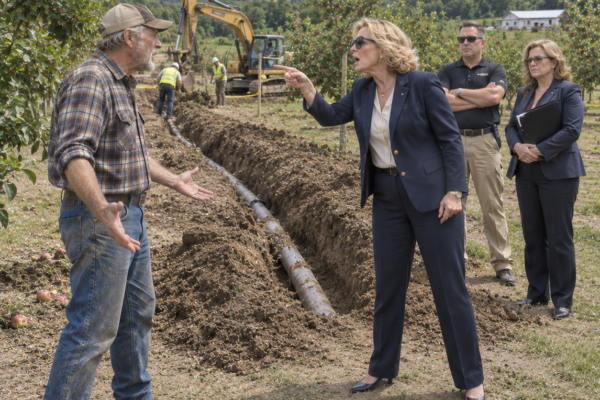
“Your Property Ends Where I Say It Ends!” the HOA President Screamed as Her Crew Planted New Boundary Stakes Through My Late Wife’s Lakefront Garden. She Ordered Me to Tear Down Our 1987 Dock Within 30 Days or Pay $500 a Day. But I’d Spent 30 Years Investigating Fraud—and Her New “Official” Survey Contained Something She Never Expected Me to Check….k
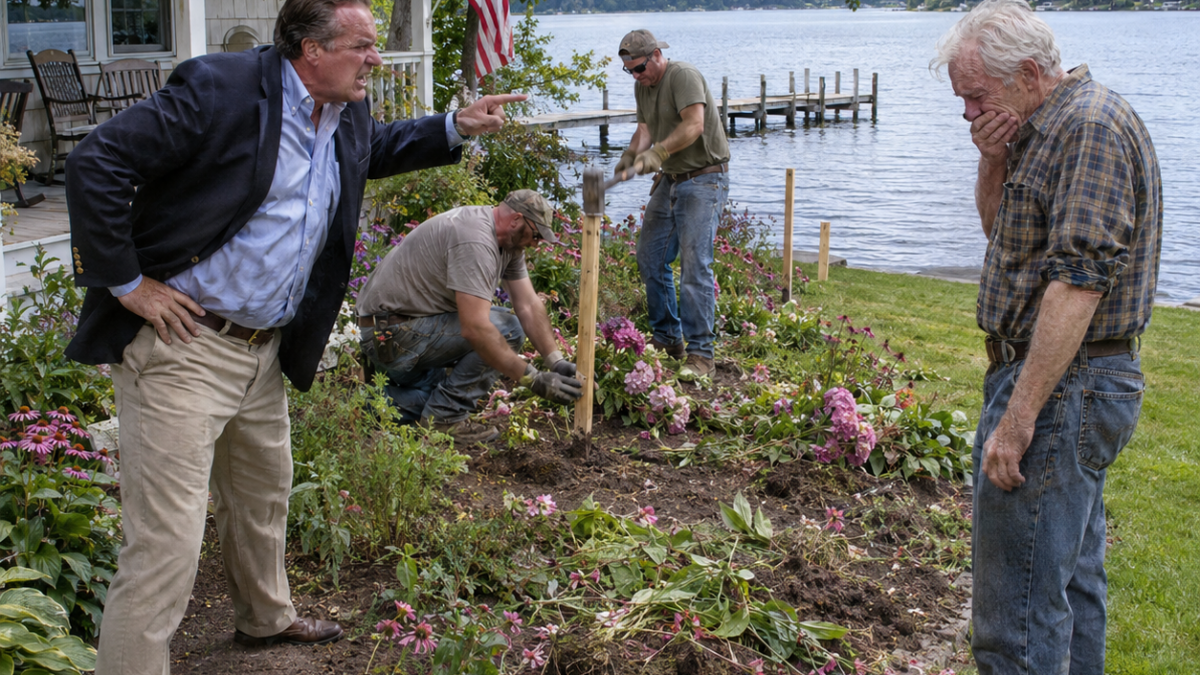
“Your Property Ends Where I Say It Ends!” the HOA President Screamed as Her Crew Planted New Boundary Stakes Through My Late Wife’s Lakefront Garden. She Ordered Me to Tear Down Our 1987 Dock Within 30 Days or Pay $500 a Day. But I’d Spent 30 Years Investigating Fraud—and Her New “Official” Survey Contained Something She Never Expected Me to Check…
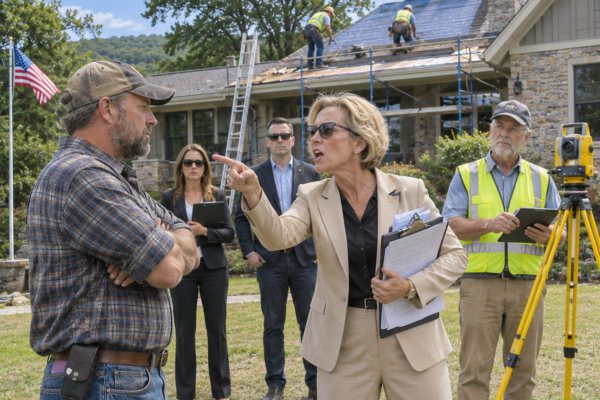
“Move that marker another fifteen feet toward the water. Mr. Reed doesn’t own this shoreline anymore.”
I heard those words at 7:18 on a Tuesday morning, just as I stepped onto the dock my late wife’s father had built in 1987.
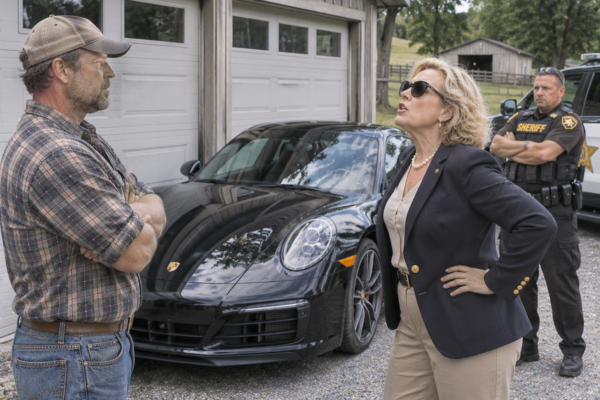
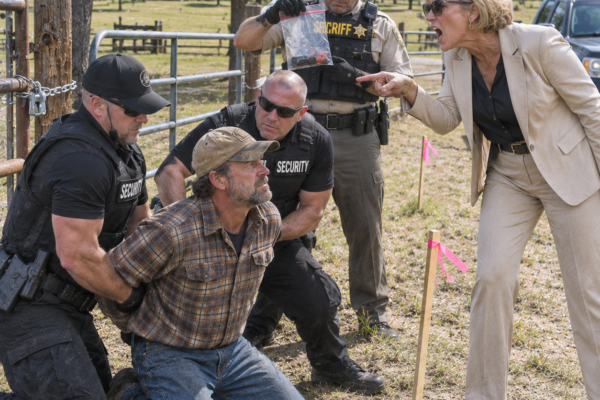
Two men wearing shirts bearing the logo of Thornton & Associates were hammering orange-topped stakes into the ground beside Eleanor’s tulip garden.
And standing behind them, directing every measurement, was Clara Thornton.
President of the Lakeside Estates Homeowners Association.
Attorney.
Owner of the enormous white mansion overlooking the eastern end of Willow Lake.
And, apparently, a woman who believed she could redraw property boundaries simply by pointing at them.
“Excuse me,” I called. “What are you doing on my land?”
Clara turned slowly.
“Correcting an outdated boundary, Mr. Reed.”
One of the men stopped hammering.
I walked toward the nearest stake.
It stood less than six feet from the tulips Eleanor had planted five years earlier.
“That marker is inside my property.”
Clara smiled.
“Not anymore.”
I stared at her.
“According to whom?”
“The association’s amended lakefront survey. Your property ends where I say it ends.”
She said it with the confidence of someone accustomed to having people surrender before asking a second question.
I looked past her toward my cedar dock.
“So you’re claiming the dock too?”
“Naturally. It extends approximately fifteen feet into our designated common lake-access corridor.”
“That dock was built eight years before your HOA existed.”
“Then it’s an old violation.”
She opened a cream-colored folder.
“You have thirty days to remove it. After that, the association will assess a five-hundred-dollar daily penalty.”
I felt something tighten in my chest.
That dock wasn’t just lumber and hardware.
It was where Eleanor and I had spent our summers.
Where we’d watched thunderstorms cross the lake.
Where she’d once told me that growing old together wouldn’t be frightening as long as we had somewhere quiet to sit.
She’d been gone three years.
And now a woman with an expensive blazer was telling me to tear down one of the last places that still felt full of her.
“My deed goes back to 1952,” I said. “This property has never been part of your association.”
Clara’s smile vanished.
“Mr. Reed, I’m an attorney. I suggest you stop embarrassing yourself by pretending to understand property law.”
I looked at the men holding the equipment.
“Are either of you licensed surveyors?”
Neither answered.
Clara snapped her folder shut.
“They’re working under my authorization.”
“That wasn’t my question.”
She stepped closer.
“Listen carefully, Lucas. I’ve spent millions improving this lakefront. I will not allow one stubborn widower with a rotting dock to interfere with the community’s future.”
I looked at her.
“Then send me the recorded instrument that supposedly transferred my shoreline to your HOA.”
She gave a short laugh.
“You’ll receive the necessary paperwork.”
Then she turned and told her men to continue.
I took out my phone and photographed every stake, every measuring instrument, and the license plate of their black SUV.
I didn’t touch the markers.
Not yet.
Because before retirement, I had spent thirty years as an investigative journalist exposing corruption across three states.
I’d learned one valuable lesson.
When somebody is desperate to move a boundary, the first thing you examine isn’t the line. It’s who benefits from moving it.
That afternoon, my seventy-eight-year-old neighbor, Mrs. Davis, arrived carrying an apple pie.
When I told her about Clara’s claim, she went pale.
“Lucas, the Millers lost their lakefront home after months of fines. Another family was pressured into giving up their garden. Clara’s been doing this for years.”
“Why hasn’t anyone stopped her?”
Mrs. Davis lowered her voice.
“Because she’s the HOA president and a lawyer. People are afraid of what it would cost to fight her.”
After she left, I opened the county’s online property map.
My boundary appeared to stop fifteen feet short of the water.
The land around Eleanor’s dock had been relabeled:
HOA COMMON LAKE ACCESS.
But the older deed in my desk described the property extending to the natural shoreline.
And Eleanor’s father had carefully documented the dock’s construction in 1987.
Something didn’t match.
Four days later, I stood inside the county Register of Deeds office examining an amendment filed in 2018.
It contained an official-looking survey exhibit, signatures, and language claiming a five-meter strip along the lake had become association-controlled land.
I turned to the approval certificate.
Then to the voting records.
A number caught my eye.
I read it again.
And again.
The clerk noticed my expression.
“Mr. Reed, is something wrong?”
I looked up.
“Could you certify this entire filing, including the vote count?”
“Of course.”
I glanced back at the document.
“Good,” I said. “Because I think I’ve just found the first piece of evidence that could bring down Clara Thornton’s entire operation.”
Part 2:
The first orange survey stake went into the ground six feet from my late wife’s tulips.
The second landed beside the stone path she had built with her own hands.
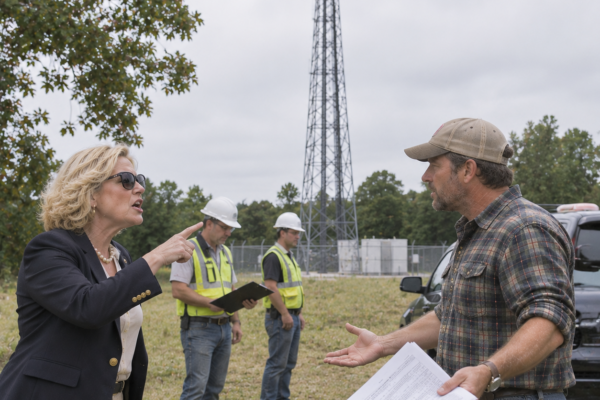
By the time I came down from the dock, a third man was unfolding a map across the hood of a black SUV, and Clara Thornton was standing in my yard giving orders as though she owned every inch of it.
“Another fifteen feet toward the water,” she said. “That’s the corrected association boundary.”
I stopped beside the first stake.
“Clara, what makes you think you have permission to do this?”
She turned.
Her charcoal blazer looked expensive enough to pay my property taxes for a year.
“Mr. Reed. Good morning.”
“It was until you started hammering markers into my garden.”
She gave me a patient smile.
“These men are correcting the lakefront boundary. The association approved updated shoreline measurements.”
“Who approved them?”
“The board.”
“Who owns the land they’re measuring?”
“The association, according to the amended documents.”
I looked toward my dock.
“So you’re telling me my property no longer reaches the lake?”
“That’s correct.”
“Since when?”
“Since the 2018 boundary amendment.”
I studied her face.
She wasn’t nervous.
She wasn’t even trying to sound reasonable.
She spoke like a person who’d repeated the same claim often enough to forget somebody might challenge it.
“Show me the recorded transfer,” I said.
Her expression tightened.
“You’re confusing a transfer with a boundary correction.”
“No, Clara. I’m asking whether I signed anything surrendering my land.”
“You weren’t required to.”
I stared at her.
She opened her folder and pulled out an official-looking notice.
According to the letter, my cedar dock extended approximately fifteen feet into an HOA-controlled lake-access corridor.
I had thirty days to remove it.
After that, I’d supposedly owe five hundred dollars a day until the structure was gone.
The document bore two titles beneath her signature.
Clara Thornton, Esq.
President and Legal Counsel, Lakeside Estates HOA.
I looked at the notice.
Then at the dock.
Eleanor’s father had built those weathered boards in 1987, when the nearest houses were separated by woods and the lake was still quiet enough to hear frogs calling from the opposite bank.
Clara’s association hadn’t even existed then.
I folded the paper.
“I’m not removing anything.”
Her smile vanished.
“Mr. Reed, I strongly advise you to take this seriously.”
“I do.”
“Then cooperate.”
“I am taking it seriously enough to ask for the actual property records.”
She stepped toward me.
“Your property ends where I say it ends.”
The sentence hung between us.
Thirty years of investigating public corruption had taught me that the most dangerous people weren’t always the ones shouting.
Sometimes they were the ones who believed their signature could turn a lie into a legal fact.
I looked at the two men.
“Are you licensed surveyors?”
One lowered his measuring device.
“We’re field technicians, sir. We were given a layout.”
“By whom?”
He glanced toward Clara.
She immediately interrupted.
“That’s not relevant.”
“It will be when my attorney asks.”
Clara’s face reddened.
“Are you threatening me?”
“No. I’m asking you to leave my land.”
She stared at me.
Then she ordered the men to pack up.
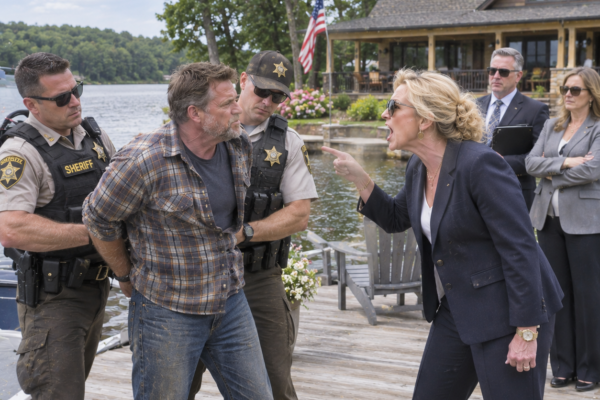
Before walking away, she pointed toward the dock.
“Thirty days, Lucas. After that, the penalties begin.”
I watched the SUV disappear through the trees.
Then I photographed every stake before touching anything.
I measured their positions against the old stone path and the corner of Eleanor’s garden.
I recorded the time.
And I opened a new folder on my laptop.
WILLOW POINT — BOUNDARY INVESTIGATION.
It had been three years since I’d retired from investigative reporting.
Apparently, retirement had just ended.
My name is Lucas Reed.
I was sixty-four that spring, and for most of my adult life, I’d made a living investigating people who believed the rules applied only to everyone else.
I’d exposed county officials steering contracts toward relatives.
I’d followed questionable land purchases through three states.
I’d spent months tracking a housing development that had hidden inspection failures until families began losing their homes.
There was nothing glamorous about most of it.
A lot of my work involved public records, reluctant witnesses, financial statements, and hours sitting in offices where nobody wanted to answer a straightforward question.
But I loved the work.
I believed ordinary people deserved to know when somebody was abusing power.
Then Eleanor became ill.
She was the strongest person I’d ever known.
She’d spent much of her life fighting for civil rights, helping low-income families navigate housing disputes, and speaking up when neighbors were treated unfairly.
When we were younger, I used to joke that she had more courage in her little finger than I had in my entire reporting notebook.
She’d smile and tell me courage wasn’t worth much unless you used it.
We’d been married thirty-six years.
When the doctors told us her illness was progressing, I stopped traveling.
We moved permanently to Willow Point Lodge, the lakefront property her grandparents had acquired in 1952.
It had been in Eleanor’s family for generations.
A cedar-sided house.
A stone fireplace.
A narrow gravel drive through old oaks.
A wooden dock extending into Willow Lake.
And a shoreline garden where she grew tulips, lavender, and whatever else caught her imagination at the nursery.
Her father had built the dock when Eleanor was young.
Her mother had planted the first willow near the water.
Eleanor and I had spent countless weekends repairing the house, replacing weathered boards, and promising ourselves that one day we’d have time to enjoy it properly.
When she died, the place became both my refuge and the hardest place in the world to live.
Every room remembered her.
Her books were still on the shelves.
Her blue gardening gloves hung beside the back door.
And every spring, the tulips returned.
I kept the property because leaving felt like abandoning another piece of her.
For three years, I sat on that dock most mornings with my coffee, listening to the water and trying to learn how to live with her absence.
Clara Thornton had interrupted that peace with a clipboard and a threat to tear down the dock.
But she’d made one mistake.
She assumed I was simply an aging widower who would become frightened by legal language.
She didn’t know what I used to do for a living.
And she certainly didn’t understand how much patience I had for following a paper trail.
The afternoon after her visit, Mrs. Davis arrived carrying an apple pie.
She was seventy-eight, a retired librarian, and one of the few people who’d been living along Willow Lake longer than Eleanor’s family.
Everybody called her Mrs. Davis, even though her first name was Ruth.
She’d decided years ago that Lucas and Eleanor were family, and she never arrived empty-handed.
I set the pie on the counter and made coffee.
She looked through the kitchen window toward the orange stakes.
“Clara’s been here.”
“Unfortunately.”
Ruth sat down slowly.
“Did she threaten your dock?”
“Five hundred dollars a day if I don’t remove it.”
She closed her eyes.
“Oh, Lucas.”
“You know something?”
She looked toward the lake.
“The Millers got fifteen thousand dollars in fines over their porch. Clara claimed the color violated a rule that hadn’t existed when they painted it.”
I frowned.
“Did they fight?”
“For a while. Then the lawyer bills started getting bigger than the fines.”
Ruth lowered her voice.
“And they weren’t the only ones. Three families near the water have left in the last four years.”
“Why?”
“Boundary disputes. Assessment letters. Threats of liens.”
She took a breath.
“Clara keeps telling people the association owns more of the shoreline than it used to.”
I looked toward the window.
“Does it?”
“That’s what nobody seems able to establish.”
She told me about her own garden.
A narrow strip behind her house had once belonged to her family.
Clara’s office had sent a letter claiming the land was now part of a common access corridor.
Ruth stopped planting there because she couldn’t afford to fight.
“She even told me the old stone edging would have to go,” Ruth said.
“Was that part of your recorded lot?”
“My husband always said it was. But he’s been gone twelve years, and I didn’t know how to prove it.”
I reached across the table.
“Then we’ll find out.”
She looked worried.
“Lucas, Clara’s a lawyer.”
“So were plenty of people I investigated.”
“She has money.”
“That doesn’t change a deed.”
Ruth studied me.
Then she smiled faintly.
“Eleanor would have liked hearing that.”
I looked toward the photograph on the mantel.
“I hope so.”
After Ruth left, I opened my laptop and pulled up the county’s online geographic information system.
The map was useful for finding parcel numbers and seeing how properties fit together.
But I’d dealt with enough land records to know digital tax maps weren’t substitutes for deeds or boundary surveys.
Still, what I saw bothered me.
The line surrounding Willow Point Lodge appeared to stop roughly fifteen feet short of the shoreline.
Beyond it was a narrow strip labeled HOA COMMON LAKE ACCESS.
The strip ran past my dock.
Then past Ruth’s garden.
And farther east toward several properties I knew had once been privately owned.
I opened the property information for the adjoining parcels.
The labels didn’t make sense.
Some reflected old subdivision lots.
Others appeared to show common property where family deeds described private shoreline.
I started a list.
Parcel numbers.
Owners.
Recording dates.
Recorded plats.
Then I pulled out the old survey Eleanor’s father had commissioned in 1987.
It showed the dock’s location and the relationship between the shoreline, property corners, and older boundary monuments.
My current deed traced back to Eleanor’s grandparents’ 1952 acquisition.
The descriptions required professional interpretation, but neither document identified a five-meter HOA strip cutting across our family parcel.
Lakeside Estates hadn’t been incorporated until 1995.
The dock had been standing for eight years before the association existed.
I leaned back.
There were several possible explanations.
A mapping error.
A misunderstood right of access.
An improperly recorded amendment.
Or something more deliberate.
I didn’t know which one yet.
What I knew was that Clara had threatened daily fines and removal of a structure based on a boundary claim she wouldn’t explain.
So I did what I’d done for thirty years.
I started with the primary records.
The county Register of Deeds office opened at eight-thirty the following morning.
I arrived before nine.
A clerk named Denise helped me locate the documents tied to the Lakeside Estates declaration.
There were original plats from the mid-1990s.
Recorded declarations.
Later amendments.
And a particularly important filing dated October 2018.
It was labeled:
AMENDED DECLARATION AND LAKEFRONT ACCESS EXHIBIT.
I read the document carefully.
It purported to establish a five-meter common-access strip along portions of the lakefront.
The attached exhibit included shorelines associated with several older private parcels.
The filing contained an officer’s certification stating that the amendment had been properly approved.
But the supporting vote summary listed sixty-seven affirmative votes.
The declaration required approval from seventy-five percent of 149 eligible owners for amendments affecting property rights.
That meant at least 112 votes.
Sixty-seven wasn’t close.
I checked the numbers again.
Then I looked at the certification.
Something was very wrong.
Even if the vote had been sufficient, the HOA couldn’t simply acquire land from owners outside its declaration without the required property rights.
And my property was outside the association.
But someone had recorded an amendment claiming authority over the shoreline anyway.
I asked Denise for certified copies of the complete filing.
She printed the pages.
When she handed them over, I asked whether the recording office had verified the election.
She shook her head.
“The recording office doesn’t resolve the truth of every statement submitted in an instrument. That’s a matter for the appropriate legal process.”
I nodded.
“I understand.”
I placed the documents in my folder.
Then I asked for the related subdivision maps, historical recordings, and references to the survey exhibit.
By noon, I had enough paperwork to fill a small briefcase.
I also had the first serious question in what was beginning to look like a much larger investigation.
Who had certified that the 2018 amendment was properly approved when its own supporting numbers showed otherwise?
The answer, I suspected, would tell me more about Clara Thornton than any confrontation in my garden ever could.
The next letter arrived ten days later.
This one wasn’t satisfied with threatening the dock.
It demanded twelve thousand dollars in alleged assessments for shoreline maintenance, environmental remediation, and unauthorized improvements.
It also threatened a lien against Willow Point Lodge and possible foreclosure proceedings if I didn’t pay.
I stood in my kitchen reading the notice.
Eleanor’s favorite coffee mug was beside me.
The morning sunlight was falling across the same table where we’d spent countless evenings planning our retirement.
Clara was threatening to use a homeowners association I didn’t belong to as a means of endangering the home my wife had inherited from her family.
I read the notice a second time.
Then I laughed.
Not because it was funny.
Because I’d seen this strategy before.
Create a questionable obligation.
Make the number frightening.
Threaten consequences more expensive than the alleged debt.
And hope the target pays rather than fights.
I photographed the envelope and scanned every page.
Then I drove to Clara’s house.
Her mansion stood at the eastern end of Willow Lake, behind a curved driveway lined with ornamental trees.
It was a massive white colonial-style building with tall columns, broad windows, and a newly expanded deck overlooking the water.
The property looked as though it belonged on the cover of an expensive architecture magazine.
The landscaping was immaculate.
The stone retaining walls looked new.
And the deck extended much farther toward the lake than I’d remembered.
I didn’t enter the gated yard.
I used the intercom beside the public approach.
A few moments later, Clara came outside.
She wore a dark suit and carried her phone.
“Mr. Reed. I assume you received our correspondence.”
“I did.”
“Then perhaps we can settle this before it becomes unnecessarily expensive.”
I held up the notice.
“Your HOA is demanding twelve thousand dollars from someone who isn’t a member.”
She smiled.
“The association has authority over the common lake-access corridor.”
“Show me the instrument that legally conveyed my shoreline to that corridor.”
“The 2018 amendment.”
“That amendment wasn’t properly approved.”
Her expression changed.
“You’re not qualified to interpret association law.”
“I know enough arithmetic to understand that sixty-seven isn’t seventy-five percent of 149.”
For a moment, she stopped moving.
Then she smiled again.
“You’re relying on incomplete information.”
“Then provide the complete voting record.”
“I don’t discuss privileged association matters with nonmembers.”
I stared at her.
“That’s convenient.”
She stepped closer to the gate.
“Lucas, if you want to challenge the association, retain counsel. Otherwise, comply with the notice.”
I glanced toward her new deck.
“While I’m doing that, maybe a licensed surveyor should examine your expansion.”
Her eyes narrowed.
“What does my property have to do with this?”
“Historical records show the old shoreline boundary behind your home well short of where that deck now stands.”
“That’s private property.”
“So is mine.”
Her jaw tightened.
“Be careful about making accusations you can’t prove.”
I nodded.
“That’s excellent advice, Clara. I intend to follow it.”
I left without saying another word.
I didn’t know whether her deck crossed anybody’s legal boundary.
Not yet.
But the older maps suggested it was worth checking.
And the fact that she’d gone rigid when I mentioned it told me I’d finally asked a question she didn’t enjoy.
That afternoon, I found Daniel Hayes.
Daniel was a property attorney whose name appeared in a 2022 case involving Lakeside Estates.
His client had challenged several boundary notices and an allegedly improper assessment.
The case had been dismissed with prejudice after an unfavorable resolution, and Daniel had apparently spent months battling the association’s procedural motions.
His office was small, on the second floor of a brick building downtown.
There were mismatched chairs in the waiting room and a framed photograph of a mountain landscape behind the receptionist’s desk.
Daniel was younger than I’d expected, with tired eyes and a careful manner.
He listened while I explained why I was there.
When I mentioned Clara, he set down his pen.
“Clara Thornton?”
“That’s the one.”
He looked at my folder.
“She’s representing the association herself?”
“Her name is on the notices as president and legal counsel.”
He sighed.
“That’s an arrangement that deserves scrutiny.”
I opened the folder.
For the next hour, I showed him everything.
The 1952 deed.
The 1987 dock survey.
The original 1995 declaration.
The 2018 amendment.
The voting record.
The twelve-thousand-dollar demand.
The photographs of the new stakes.
And the property map showing a purported common-access strip across Eleanor’s shoreline.
Daniel read quietly.
He made notes.
Occasionally, he asked a question.
When he reached the vote summary, he stopped.
“One hundred forty-nine eligible owners?”
“According to the association’s certification.”
“Seventy-five percent required?”
“Yes.”
“Sixty-seven affirmative votes?”
“That’s what the filing says.”
He checked the language again.
“Even setting aside the vote, this amendment doesn’t establish a valid transfer of your separately owned shoreline.”
I nodded.
“That’s what I thought.”
“But we should establish the exact legal boundaries through an independent survey. The county GIS display isn’t enough.”
“I agree.”
He looked toward the photographs of Clara’s stakes.
“And the claimed common strip across existing member lots raises additional questions about the association’s authority and what the owners actually consented to.”
He leaned back.
“Lucas, this may be more than one defective amendment.”
I studied him.
“What happened in your previous case?”
He was silent for a moment.
Then he answered.
“My client was an elderly homeowner. Clara assessed repeated penalties and claimed an access right over part of his property. We fought for almost a year.”
“What went wrong?”
“He ran out of money. A settlement ended the dispute, and the resulting dismissal prevented him from bringing those same claims again.”
Daniel looked at the older case file.
“I couldn’t persuade him to continue. He was exhausted.”
I understood.
I’d seen powerful defendants use the cost of litigation as a weapon.
Not every legal victory came from being right.
Sometimes it came from being able to afford the fight longer than the other person.
Daniel looked at me.
“Why are you willing to take this on?”
I thought about Eleanor.
About the dock.
About Ruth’s abandoned garden.
“Because I’ve spent thirty years investigating people who used paperwork to frighten ordinary families. I can’t pretend I don’t recognize the pattern simply because I’m retired.”
Daniel studied the documents again.
Then he nodded.
“All right. Let’s build a case.”
We agreed on three priorities.
First, stop the immediate threats to my property through a formal demand and, if necessary, court relief.
Second, commission an independent survey to establish where the boundaries actually stood.
Third, investigate the history of the 2018 amendment and the families affected by it.
Daniel would handle the legal proceedings.
I would do what I knew best.
Find records.
Interview witnesses.
Establish timelines.
And follow every lead until the documents either supported our suspicions or proved them wrong.
That last part mattered.
I’d seen investigations fail because people became too attached to the story they wanted to tell.
I wouldn’t make that mistake.
If Clara had a legitimate boundary claim, I wanted to understand it.
If she didn’t, I wanted evidence strong enough that she couldn’t explain it away.
The survey began the following week.
Daniel retained Lydia Flores, a licensed professional land surveyor with experience resolving older shoreline descriptions.
Lydia and her crew spent several days examining the properties.
They located original monuments.
Reviewed recorded plats.
Compared older survey calls with physical features.
And examined the relationship between the natural shoreline, the dock, and the claimed access corridor.
She also explained why the lake itself complicated things.
Water levels moved.
Shorelines could change through erosion or gradual natural processes.
And a historical reference to the water’s edge required careful interpretation.
“Don’t let anybody tell you a digital map is a deed,” she said as we walked beside the dock.
I smiled.
“That’s what I’ve been telling people.”
She looked toward the orange stakes Clara’s crew had installed.
“These don’t match the controlling boundary information we’ve recovered.”
“How far off are they?”
“Enough that they require explanation. I’m not giving you a conclusion until the calculations and records are complete.”
I liked her immediately.
She wasn’t interested in winning my approval.
She was interested in getting the measurements right.
While Lydia worked, Ruth Davis brought me another box.
This one contained photographs.
Actual printed photographs, stored in envelopes with handwritten dates.
Birthday parties from the early eighties.
Summer cookouts.
Children fishing from old docks.
Eleanor smiling beside the willow tree before we were married.
I stared at that one for a long time.
Ruth noticed.
“She was beautiful, wasn’t she?”
I swallowed.
“Always.”
She sat beside me.
“She’d be proud of what you’re doing.”
I looked down.
“I’m not sure she’d approve of how much time I’m spending on Clara Thornton.”
Ruth smiled.
“She would tell you to finish the work, then come back to the living.”
That sounded exactly like Eleanor.
We continued examining the photographs.
Several showed old fence posts and stone borders that had marked the lakefront lots decades before Lakeside Estates existed.
One photograph, dated 1983, clearly showed Ruth’s garden extending to the edge of an older shoreline path.
Another showed Eleanor’s father working on the dock in 1987.
Those photographs weren’t substitutes for a survey.
But they provided historical context and helped Lydia identify features described in older records.
Then Ruth mentioned her grandson.
“Kevin’s good with computers. He makes those aerial pictures with his little flying machine.”
“A drone?”
She nodded.
“That’s it. He says I should stop calling it a flying lawn mower.”
I laughed.
Kevin was seventeen and had been experimenting with photography and mapping software for years.
He showed me aerial images he’d taken for local conservation projects.
When I explained what I needed, his eyes lit up.
“You want to compare the historical shoreline with the modern structures?”
“Exactly. But only through lawful flights and with permission from the property owners involved.”
He nodded.
We arranged the necessary permissions and worked with an experienced, properly authorized drone operator for the mapping flights.
Kevin handled much of the image processing.
He combined permitted aerial photographs with historical imagery and available survey control information.
The resulting model didn’t legally establish ownership.
But it revealed a striking physical pattern.
Several narrow strips along the lake had been fenced, landscaped, or treated as association common property after 2018.
Some owners had stopped maintaining their former gardens.
A few older paths had been blocked.
And near Clara’s mansion, the new deck and landscaping extended dramatically toward the water.
When Lydia examined the model alongside her survey work, she asked for additional measurements near Clara’s property.
I watched her study the drawings.
“Something wrong?”
“There’s a substantial discrepancy between the older boundary information and the way the new construction has been represented.”
“How substantial?”
“One part of the deck and landscaped terrace extends roughly twelve meters beyond the line shown in the controlling records. We need to determine whose rights are affected and whether there’s an applicable easement or separate authorization.”
I looked toward the lake.
Clara had threatened to remove my dock because it supposedly extended fifteen feet into a corridor she controlled.
Now the independent survey was raising questions about nearly forty feet of construction near her own mansion.
But I didn’t celebrate.
Not yet.
I wanted a verified finding.
And Lydia was determined to give us exactly that.
Meanwhile, I began contacting the former homeowners Ruth had mentioned.
The first family was the Millers.
They’d lived on the lake for twenty-six years before selling their home.
Mrs. Miller answered my call cautiously.
When I explained who I was, she went quiet.
“You’re fighting Clara?”
“Trying to establish what happened.”
She sighed.
“Then you have no idea what you’re walking into.”
I asked whether we could meet.
Two days later, I sat at their kitchen table in a town forty miles away.
They showed me a thick folder of association notices.
Fifteen thousand dollars in alleged penalties.
Repeated warnings.
Attorney letters.
Claims that their dock and part of their porch violated common-property rules.
Mr. Miller looked at the paperwork.
“We thought if we hired a lawyer, she’d finally leave us alone.”
“What happened?”
“The costs kept growing. Clara sent another notice every time we answered the last one.”
His wife wiped her eyes.
“We sold because we couldn’t take it anymore.”
I asked whether the buyer was associated with Clara.
They didn’t know.
But they gave me permission to examine the public transaction records.
The property had been purchased by an investment company.
The company later sold it at a substantial profit.
Another former owner described a nearly identical dispute.
Then a third.
Not every case involved the same facts.
Some owners had genuinely violated ordinary association rules.
I separated those from the shoreline disputes.
But among the properties targeted by the 2018 boundary claims, the pattern was growing difficult to ignore.
Pressure.
Fines.
Legal threats.
Owners who became exhausted.
And valuable lakefront space treated as though it belonged to the association.
Then I received an unexpected call.
A man named Thomas Kline wanted to meet.
He’d served on the Lakeside Estates board until resigning in 2020.
He said he had documents I needed to see.
We met at a coffee shop downtown.
Thomas arrived carrying a manila envelope.
He looked around before sitting.
“Clara threatened to sue me personally if I refused to support the shoreline amendment,” he said.
I opened my notebook.
“Did you vote for it?”
“No.”
“Then why do the minutes claim the board approved it unanimously?”
He pushed the envelope toward me.
“That’s what I came to show you.”
Inside were emails.
Meeting notes.
Draft resolutions.
And correspondence between Clara’s office and the firm that had prepared the shoreline exhibits.
One email was especially revealing.
We need to secure those waterfront parcels before property values rise further.
Another instructed the survey consultant to revise the proposed common-access exhibit to favor the expansion plan discussed with Clara.
I stared at the page.
“Did the board actually approve those changes?”
Thomas shook his head.
“We argued about them for months. Several directors opposed them. The minutes were changed afterward.”
I looked up.
“Who changed them?”
He took a breath.
“Clara’s office circulated the final version.”
I placed the document beside the recorded amendment.
For the first time, the evidence wasn’t merely about a missing vote.
It suggested somebody had created a false account of what the board had approved.
And the name connecting the boundary map, legal notices, and disputed minutes was Clara Thornton.
I didn’t publish Thomas Kline’s documents the morning he handed them to me.
That surprised him.
“You’re a journalist,” he said. “Isn’t this exactly the kind of story you’d put on the front page?”
“It is. Which is why I need to verify it first.”
He looked at me.
I continued.
“If these emails are genuine, they matter. If they’re incomplete or altered, Clara will use that to discredit everything else. I won’t give her the opportunity.”
Thomas nodded slowly.
“Then tell me what you need.”
I asked him to preserve the original messages and make his email account available for independent verification through counsel.
Daniel arranged for the records to be reviewed.
We also contacted the former board secretary.
Her personal notes conflicted with the official minutes in several important places.
The draft minutes recorded objections to the lakefront amendment.
The approved version described unanimous support.
A director listed as present had been out of state on the meeting date.
And the recorded amendment’s certification asserted that the necessary owner approval had been obtained, even though the supporting vote tally showed only sixty-seven affirmative votes.
Seventy-five percent of 149 eligible owners required 112.
That wasn’t an interpretive disagreement.
It was a missing forty-five votes.
Daniel was cautious about calling it fraud before a court examined the evidence.
I was too.
But our file was becoming difficult to explain as a series of innocent clerical mistakes.
Lydia’s final survey made the picture even clearer.
Eleven lakefront families had been directly affected by the disputed boundary claims.
Across those parcels, the association had asserted control over strips totaling approximately three thousand square meters.
Some areas were still occupied by their original owners.
Others had been landscaped or used as common space.
A few had been affected by sales or agreements made while the owners were under pressure.
The HOA hadn’t legally acquired fee title to all that land.
But it had been acting as though it controlled it.
And that false assertion of control had caused real damage.
The survey also confirmed the problem near Clara’s mansion.
Portions of her new deck, landscaping, and retaining-wall improvements crossed the established boundary into land associated with the neighboring lakefront parcel and access area.
The measured encroachment reached nearly twelve meters at its farthest point.
I stared at the survey.
Then I remembered Clara’s words.
Your property ends where I say it ends.
She’d been using that principle on everybody except herself.
Daniel studied the results.
“Now we have evidence that can be presented to a court,” he said.
I looked at the stack of documents.
“And to the residents.”
He raised an eyebrow.
“You want to go public?”
“I want them to see what their association has been doing before somebody else loses a home.”
He considered that.
“Then we need to be disciplined. We can present verified documents and witness accounts. We shouldn’t turn unproven criminal allegations into public declarations.”
I nodded.
“Agreed.”
Ruth helped organize a neighborhood gathering.
Several homeowners secured use of the community green for a Saturday barbecue under the applicable rules.
Kevin arranged the presentation equipment.
Daniel reviewed the material we intended to display.
We invited current residents and former owners whose properties had been affected.
Word spread quickly.
By the time Saturday arrived, more than a hundred people had gathered beneath the trees.
There were folding chairs, picnic tables, coolers, and enough barbecue to feed twice the crowd.
Ruth brought three apple pies.
Kevin set up a screen near the pavilion.
Someone suggested livestreaming the presentation to the neighborhood group.
We arranged it with the organizers and obtained permission from the people who would speak.
I stood near the microphone, looking at the faces in front of me.
For thirty years, I’d interviewed people who feared losing their jobs, businesses, or homes if they spoke publicly.
Now I was one of them.
I thought about Eleanor.
She used to stand beside me before difficult interviews and remind me that fear didn’t mean I should abandon the work.
It meant the work mattered.
I picked up the microphone.
“My name is Lucas Reed. My wife grew up on this lake, and I’ve spent much of my life here. I’m not asking anyone to take my word about your property rights. I’m asking you to look at the records.”
Kevin displayed the original subdivision map.
Then the 2018 amendment.
I explained the voting requirement.
One hundred forty-nine eligible owners.
Seventy-five percent approval.
At least 112 affirmative votes.
The documented tally showed sixty-seven.
People began whispering.
I continued.
“Even a properly approved HOA amendment couldn’t simply take land from a nonmember without the necessary property rights. My property was never part of this association.”
I displayed the 1952 deed, the later chain of title, and Lydia’s survey.
Then Kevin showed the aerial comparisons.
The images revealed how the claimed access strip followed the shoreline past multiple homes.
The old photographs showed historical gardens, paths, and docks.
The professional survey identified where the present claims departed from controlling property records.
I didn’t have to tell the residents what conclusion to reach.
They could see why the questions mattered.
Then Ruth stood.
She walked to the microphone carrying an old photograph.
Her hands shook slightly.
“This is my husband standing beside our garden in 1983,” she said.
She held up the picture.
“Clara told me that part of our lot belonged to the association. I stopped planting there because I was afraid of being sued.”
She looked toward the crowd.
“I’ve lived here forty years. I never imagined I’d become frightened to plant flowers on my own property.”
A woman near the front wiped her eyes.
The Millers spoke next.
They described the fifteen thousand dollars in penalties, the legal expenses, and their decision to sell.
Mr. Miller’s voice cracked when he explained how exhausted they’d become.
“We didn’t want to get rich from a lawsuit. We wanted to live in our home without opening another threatening letter every morning.”
Then Thomas Kline described the disputed board minutes.
He explained that he’d opposed the amendment and that the recorded description of unanimous support didn’t match the meetings he remembered.
I displayed the verified correspondence.
We need to secure those waterfront parcels before property values rise further.
The crowd began asking questions.
Who had authorized the survey changes?
Why had the board accepted the vote count?
Why were certain lakefront homeowners receiving repeated penalties?
And why had Clara’s own expansion never been listed as a violation?
Then a black Mercedes pulled up beside the green.
Clara stepped out.
She wore a fitted dark suit and carried a leather folder.
I watched her approach.
Her expression was controlled.
But I noticed how tightly she held the folder.
She stopped near the microphone.
“This gathering is spreading serious misinformation,” she announced. “The association has acted within its legal authority.”
Daniel stood.
“Then perhaps you can clarify the approval record.”
He displayed the vote summary again.
“Your declaration required 112 votes. The records show sixty-seven. Do you have evidence of additional valid approvals?”
Clara stared at the screen.
“The amendment was properly certified.”
“By your office.”
“It was recorded.”
“Recording doesn’t establish the truth of a false certification or transfer land the association doesn’t own.”
Her face reddened.
“Mr. Hayes, you lost the last case you brought against this association. Don’t pretend you’re suddenly an expert.”
Daniel didn’t react.
He simply held up the records.
“Please answer the question.”
Clara looked toward the residents.
“You people have no idea what it takes to maintain a premium lakefront community. I’ve invested millions here. Without strong oversight, your property values would collapse!”
The crowd grew quiet.
I noticed several people exchanging looks.
She’d stopped explaining the boundary.
Now she was defending her investments.
Ruth stood again.
“You told me I had to obey the law, Clara. But you were changing the rules to benefit yourself.”
Clara turned toward her.
“Mrs. Davis, I won’t be lectured by someone who doesn’t understand property management.”
Ruth’s voice remained calm.
“I understand when somebody tells me I can’t plant flowers in my own garden.”
For several seconds, Clara looked as though she wanted to shout.
Then she closed her folder.
“This entire presentation is defamatory. You’ll hear from my attorneys.”
She walked away.
Her Mercedes left the parking area so quickly that several people turned to watch.
I looked at the crowd.
Nobody was laughing.
People were angry.
But it was a different kind of anger from the furious shouting Clara had brought with her.
Residents were asking for records.
They wanted an independent audit.
They wanted to know who’d authorized the legal expenses and whether the board had been told the truth.
By the end of the following week, homeowners representing roughly eighty percent of the association had signed a petition demanding independent review and new leadership.
The livestream had been viewed by more than four hundred people.
And for the first time, Clara’s title wasn’t enough to end the conversation.
Three weeks after the barbecue, Daniel filed the civil lawsuit.
Eleven affected families joined or brought coordinated claims with their own interests represented.
The case challenged the validity and application of the 2018 amendment, the disputed property claims, the improperly imposed assessments, and the damage caused by the association’s conduct.
We also sought appropriate relief concerning Clara’s encroaching improvements and the cloud the defective records had placed on our property rights.
The court proceedings would take time.
But Clara could no longer treat the dispute as a private argument between an HOA president and one stubborn widower.
She was facing people who had assembled the documents she never expected anybody to read together.
Clara fought the lawsuit the way she’d fought everything else.
She filed motions challenging our claims.
She questioned the plaintiffs’ standing.
She argued that the amended declaration had been relied upon for years and that undoing it would disrupt the community.
She even accused me of organizing a publicity campaign to damage her reputation.
Daniel answered each filing.
He didn’t make speeches about corruption.
He cited the records.
And when Clara’s legal team tried to bury us in procedural disputes, he reminded the court that the central question remained unresolved.
What legal authority permitted the HOA to claim ownership or control over shoreline property it hadn’t lawfully acquired?
The case eventually proceeded to a three-week civil trial.
The courtroom was crowded on the first morning.
Ruth sat beside me.
The Millers occupied a bench behind us.
Kevin attended with his parents when his school schedule permitted.
Clara sat at the defense table wearing a dark suit.
She looked composed.
But she’d stopped smiling at me.
Our first major witness was Lydia Flores.
She explained the older property descriptions, controlling survey evidence, shoreline conditions, and the new boundary calculations.
Her maps showed where the association’s 2018 exhibits departed from the legally established property lines.
She also identified the approximate three thousand square meters of shoreline over which the HOA had asserted unsupported control across the affected parcels.
Then she addressed Clara’s mansion.
The disputed deck and landscaping extended well beyond the established boundary in certain areas.
Clara’s attorney challenged the measurements.
Lydia answered every question with the source documents and field observations.
She didn’t become defensive.
She didn’t speculate about Clara’s motives.
She simply explained what the land records and physical evidence established.
Then came the voting records.
Daniel displayed the original declaration.
Seventy-five percent approval required.
One hundred forty-nine eligible owners.
One hundred twelve affirmative votes necessary.
The documented vote count was sixty-seven.
He followed that with the recorded certification claiming the amendment had been properly approved.
Then he introduced the former board members’ testimony and the conflicting minutes.
Thomas explained what had happened during the meetings.
The former secretary identified changes between the draft and final records.
The verified emails established how Clara’s office had coordinated the disputed language and survey exhibits.
One message drew particular attention.
Make sure the new markers favor the expansion plan we discussed.
Daniel asked the witness from the survey company what that instruction meant.
The witness acknowledged that revisions had been requested without the supporting property-owner authorizations being supplied.
That testimony didn’t need dramatic music.
The courtroom was silent.
Ruth testified next.
She held the old photograph of her husband beside their garden.
She explained the threatening letters and why she’d stopped using part of her property.
The Millers described their experience.
Other homeowners testified about assessments, disputed access strips, and the effect the enforcement campaign had on their decisions.
I testified about my dock, Eleanor’s family deed, Clara’s statements, and the documents I’d collected.
Then Clara took the stand.
Daniel questioned her about the 2018 amendment and the boundary exhibits.
He asked whether she’d known the declaration required at least 112 affirmative votes.
She acknowledged the requirement.
He asked whether the records showed only sixty-seven.
She said the paperwork might not reflect all approvals.
He asked her to identify the missing approvals.
She couldn’t.
Then he asked about the instructions sent to the survey consultant.
“Did you direct the firm to revise its boundary exhibits to favor the expansion of association-controlled lakefront?”
Clara adjusted her glasses.
“There may have been misunderstandings concerning the scope of the work.”
“Did the landowners consent to convey their property?”
“The association believed it had authority.”
“Did Mr. Reed convey his shoreline?”
“No.”
“Did Mrs. Davis convey the portion of her garden shown as common access?”
Clara hesitated.
“No.”
Daniel allowed the answer to settle.
Then he asked why the association had nevertheless threatened those owners with penalties for using the land.
Clara began explaining the importance of property values.
This time, the judge interrupted and directed her to answer the question.
For three weeks, we’d waited for that moment.
Not for Clara to be embarrassed.
For her to stop hiding behind titles and speak to the facts.
After the evidence closed, we waited for the ruling.
Judge Eleanor Prescott issued her decision two days later.
I remember her first name because it was also my wife’s.
That coincidence stayed with me as I sat beside Ruth and listened.
The court found that the 2018 amendment hadn’t satisfied the required approval process.
It also concluded that the association couldn’t acquire property rights in separately owned land merely by adopting or recording an amendment to its governing documents.
The disputed claims over the affected shoreline parcels were rejected.
The judgment required correction of the relevant records and markers, withdrawal of unsupported assessments, and appropriate remedies for the property damage and interference established at trial.
Clara’s encroaching improvements would have to be addressed through the court-approved corrective process.
The court also entered financial relief totaling $280,000 for the eleven affected families, allocated according to their proven claims.
The evidence concerning the altered records and disputed certifications was referred to the appropriate investigative authorities.
I sat very still.
Ruth reached for my hand.
“We did it, Lucas,” she whispered.
I looked at her.
“Yes, we did.”
But what mattered most wasn’t the amount of money.
It was that the court had finally said, in language Clara couldn’t reinterpret, that the association’s authority had limits.
A recorded false claim didn’t create a property right.
A lawyer’s signature didn’t excuse a defective approval.
And a wealthy HOA president couldn’t take a neighbor’s shoreline simply because she believed her development would look better with it.
The consequences continued after the civil judgment.
Investigators examined the evidence surrounding the disputed records.
Clara eventually entered a plea in the resulting criminal case, receiving eighteen months of probation and restitution obligations under the court’s terms.
Separate professional disciplinary proceedings examined her conduct as an attorney.
Those proceedings ultimately resulted in her disbarment.
Her law practice ended.
She left her association position and, after the necessary property and financial matters were addressed, sold her mansion.
Lakeside Estates held new elections.
The directors who’d enabled the abuses were replaced.
An independent audit reviewed the association’s finances and disputed assessments.
The homeowners approved stronger disclosure and voting requirements, including an eighty-five-percent approval threshold for certain major changes to common-property arrangements, with roughly ninety-two percent supporting the reforms.
Those rules couldn’t authorize the association to acquire nonmembers’ property without consent.
But they made it harder for one person to conceal important decisions behind paperwork.
Daniel became an outside legal adviser to the reformed association, with his role and fees subject to transparent board review.
And for the first time in years, the neighborhood began to feel like a place where people could disagree without being threatened with financial ruin.
Nine months after the trial, my share of the recovered compensation arrived.
It was approximately twenty-five thousand dollars.
I sat at the kitchen table staring at the check.
Outside, Eleanor’s tulips were beginning to bloom again.
I thought about putting the money into savings.
Then I thought about replacing the dock.
Then I remembered something Eleanor had said years earlier while we were sitting by the lake.
“Lucas, beautiful things aren’t diminished by being shared. They’re diminished when someone decides nobody else deserves them.”
I looked toward the window.
For months, I’d fought to keep Clara from taking the shoreline.
Now I found myself thinking about how to share part of it without surrendering the rights we’d worked so hard to defend.
I called Daniel.
“I have an idea.”
He sounded cautious.
“Should I be worried?”
“Probably.”
I explained that I wanted to dedicate a defined portion of my lakefront property as a place neighbors could enjoy, with clear rules, proper access, and a permanent structure to protect it from future misuse.
Not an HOA takeover.
Not an informal arrangement that some future president could reinterpret.
A legally established community space.
Daniel helped me work through the options.
We consulted the appropriate local authorities about permitted improvements and access.
We established the ownership and maintenance arrangements carefully.
The private cabin and the rest of my property remained separate.
The designated lakefront area was placed under a properly structured charitable arrangement with independent oversight, written access rules, and restrictions intended to preserve its community purpose.
We called it Eleanor Lakefront Commons.
The project took months.
We repaired the old dock and installed accessible improvements where the terrain and applicable approvals allowed.
We added picnic tables.
Native wildflowers.
Benches beneath the willow trees.
And a small gathering area overlooking the water.
Ruth claimed one section for a medicinal herb garden.
She planted chamomile, lavender, and mint, then insisted that every visitor learn the difference between plants used traditionally and actual medical treatment.
Kevin helped design a modest solar-powered lighting and Wi-Fi setup for the commons.
He was delighted when I told him his grandmother would supervise the herb garden.
“That means she’s going to supervise everything,” he said.
I laughed.
“Probably.”
The opening ceremony took place one year after the neighborhood barbecue.
More than two hundred people came.
Families spread blankets on the grass.
Children explored the garden.
Former residents returned to see what had become of the shoreline they’d once been told they couldn’t use.
The Millers came.
So did Thomas, Lydia, Daniel, and several members of the new HOA board.
Ruth stood beside me near the dock, holding one of Eleanor’s photographs.
When it was time to speak, I looked out over the crowd.
Then toward the lake.
For thirty years, I’d made a living telling stories about people who abused power.
I’d written about officials who falsified records, businesses that hid misconduct, and families who lost almost everything while trying to prove the truth.
But standing on that dock, I realized something those investigations had sometimes made me forget.
The purpose of exposing wrongdoing wasn’t simply to watch the guilty face consequences.
It was to make life better for the people they’d harmed.
I stepped toward the microphone.
“My wife Eleanor believed everybody deserved dignity, especially people who didn’t have enough money or influence to demand it.”
I looked at Ruth.
“She would have loved seeing neighbors enjoy this shoreline together.”
Then I looked across the crowd.
“We fought for property rights because those rights matter. Nobody should lose their home or land because someone powerful finds it inconvenient.”
I paused.
“But protecting what’s ours doesn’t mean we can’t choose to share it.”
A little boy near the front was holding a fishing pole almost twice his height.
I smiled.
“Eleanor would have wanted you to enjoy this lake. Just remember to pick up your trash before you leave.”
People laughed.
I looked toward the water again.
“Welcome to Eleanor Lakefront Commons.”
The applause was warm.
But it was the ordinary sounds afterward that stayed with me.
Children laughing.
Neighbors talking.
Ruth explaining her chamomile plants.
Kevin showing someone how the solar equipment worked.
People walking down toward a dock that had once been threatened with demolition.
That evening, after everyone left, I sat at the end of the cedar boards with a cup of coffee.
The moon was rising over Willow Lake.
The water was still.
Behind me, the new picnic tables stood beneath the trees.
The tulips Eleanor had planted were blooming beside the path.
I thought about Clara Thornton.
About the morning she’d stood in my garden and announced that my property ended wherever she decided.
She’d believed a legal title, an HOA presidency, and a stack of official-looking documents gave her the right to control other people’s lives.
She’d underestimated the people she was trying to frighten.
Ruth, who refused to forget where her garden had been.
The Millers, who found the courage to tell their story.
Thomas, who preserved the records.
Daniel, who agreed to fight again after an earlier defeat.
And an old investigative journalist who’d gone to the county records office because somebody threatened his wife’s dock.
I took another sip of coffee.
For three years after Eleanor died, I’d believed retirement meant learning how to live quietly with what I’d lost.
But perhaps she’d been right about something else too.
A life didn’t become smaller because the person you loved was gone.
It became smaller when you stopped using what remained of it for something meaningful.
I looked toward her tulips.
“Don’t let them make you small, Lucas.”
I could almost hear her saying it.
I smiled.
“I didn’t, sweetheart.”
Then I watched the moonlight move across the lake.
The dock was still there.
The shoreline was protected.
The neighbors had their gardens back.
And the land Clara had tried to control through fear had become a place where families could gather because its rightful owner had freely chosen to share it.
That difference mattered more than anything else.
Clara Thornton had spent years trying to take the lakefront away from people who owned it.
We spent the next year making sure it could be enjoyed without anyone having to surrender what belonged to them.
And every spring, when Eleanor’s tulips came back, I was reminded that the best thing we’d preserved wasn’t just a boundary.
It was the right to decide what kind of community we wanted to leave behind.