The HOA President Sent Two Bulldozers Onto My Family’s Land and Told the Crew to Start Digging a Foundation for Her New “Model Home.” She Claimed My 72 Acres Had Been Annexed After I Refused to Join Her HOA. I Showed the Foreman My Deed, Called the County—and Then the Permit Inspector Asked Linda Why Her Approval Listed a Parcel She Didn’t Own.k
The HOA President Sent Two Bulldozers Onto My Family’s Land and Told the Crew to Start Digging a Foundation for Her New “Model Home.” She Claimed My 72 Acres Had Been Annexed After I Refused to Join Her HOA. I Showed the Foreman My Deed, Called the County—and Then the Permit Inspector Asked Linda Why Her Approval Listed a Parcel She Didn’t Own.
I woke up to the sound of diesel engines where there should have been birds.
At first, I thought somebody was working on the county road.
Then my coffee cup rattled slightly against the porch railing.
That got my attention.
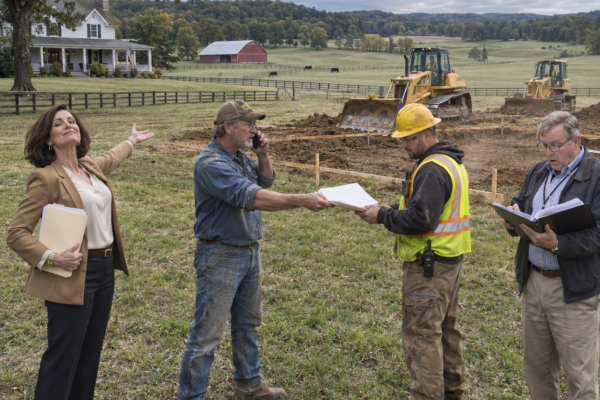
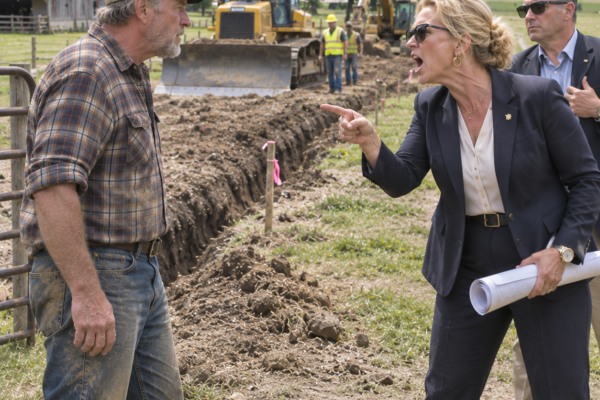
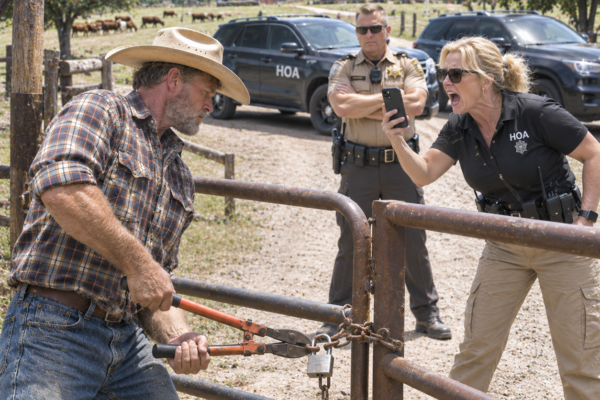
I walked around the side of my cabin and saw two bulldozers coming through the east gate of my family’s property.
Behind them came a dump truck, a skid steer, and a white pickup carrying three men in reflective vests.
They weren’t lost.
They drove straight past my pasture, crossed the old hay field, and stopped on a rise about two hundred yards from my house.
Then the first bulldozer dropped its blade.
I ran.
“Stop!”
The operator lifted the blade and shut down.
A foreman climbed from the white pickup.
“Can I help you?”
“That depends. Why are you grading my field?”
He looked confused.
“This is Lot 1A. Pine Hollow model-home site.”
“No. This is Cole Farm.”
He checked a clipboard.
“Permit says Pine Hollow Estates expansion parcel.”
I pointed toward the fence they had opened.
“My grandparents bought this land fifty-three years ago. Nobody from Pine Hollow owns one inch of it.”
The foreman’s face changed.
Then a black Cadillac SUV rolled through the gate.
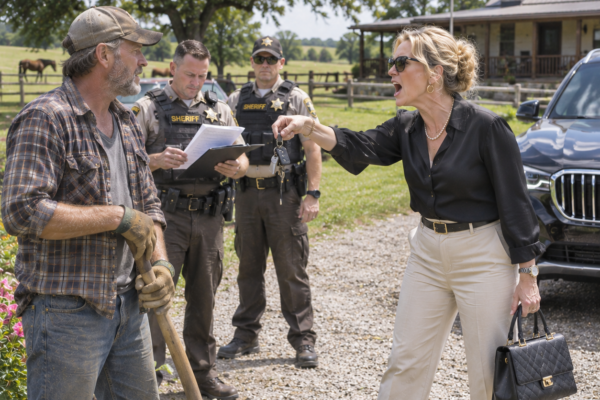
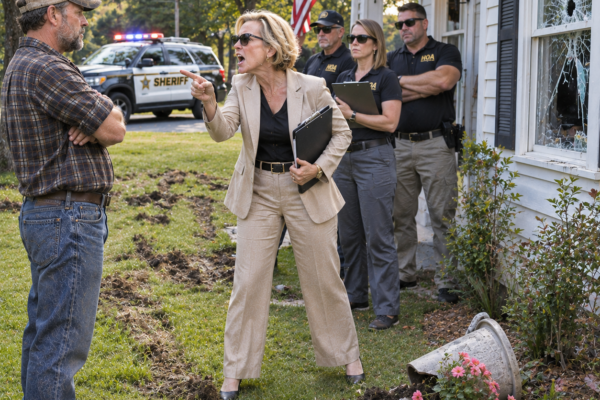
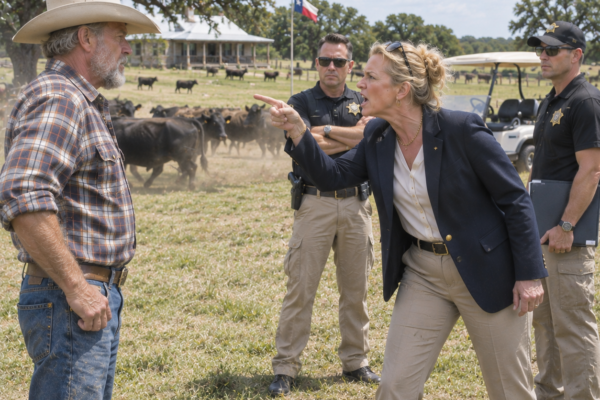
Linda Hargrave stepped out.
President of the Pine Hollow Estates Homeowners Association.
She wore cream slacks, oversized sunglasses, and the satisfied smile of someone arriving to inspect progress on something she already considered hers.
“Nathan,” she said. “I was hoping we could avoid a scene.”
I stared at her.
“Why are bulldozers on my property?”
“Because the expansion was approved.”
“What expansion?”
“The eastern annexation.”
“There is no eastern annexation.”
She opened a leather folder and removed several pages.
“You were notified.”
“No. You asked me to join your HOA. I said no.”
“That was before the planning commission approved the revised development boundary.”
I looked at the paperwork.
There was a county zoning stamp.
A site plan.
A building permit.
And a large rectangle drawn directly over the same rise where my grandfather had planted apple trees decades earlier.
At the bottom, the proposed structure was labeled:
PINE HOLLOW SIGNATURE MODEL RESIDENCE
I looked at Linda.
“This is your house?”
“It will also function as a model home for the next phase.”
“On my land?”
“On land incorporated into the development.”
I laughed once.
She didn’t.
Three months earlier, Linda had come to my cabin carrying an HOA membership package.
Pine Hollow Estates had been built a quarter mile east of my property.
Big homes.
Stone entrance.
Matching mailboxes.
Private pool.
The kind of neighborhood where people could spend thirty minutes arguing about whether taupe was too close to beige.
Linda told me my property created a “visual gap” in the community plan.
She wanted me to voluntarily join.
I declined.
My grandparents had bought the land long before Pine Hollow existed.
I had inherited it after my father died.
I had no mortgage, no HOA covenant, and no interest in giving strangers authority over what color I painted my barn.
Linda didn’t like hearing no.
She told me eventually development would “surround” me.
I told her geography did not change deeds.
Apparently she had decided to test that.
Now she pointed toward the bulldozer.
“We have contractors scheduled, Nathan. Delays are expensive.”
“So is trespassing.”
“You’re misunderstanding what has happened.”
“No, Linda. I’m standing on my property watching you dig it.”
She stepped closer.
“The county approved the permit.”
“A building permit doesn’t transfer ownership.”
The foreman looked between us.
I turned to him.
“Do not move another yard of dirt until the county verifies title.”
Linda snapped:
“You work for Pine Hollow Development, not him.”
The foreman shook his head.
“I work for Clarkson Construction, ma’am. And if there’s a title dispute, I’m stopping.”
Smart man.
I called the county planning office.
Then the sheriff’s non-emergency line.
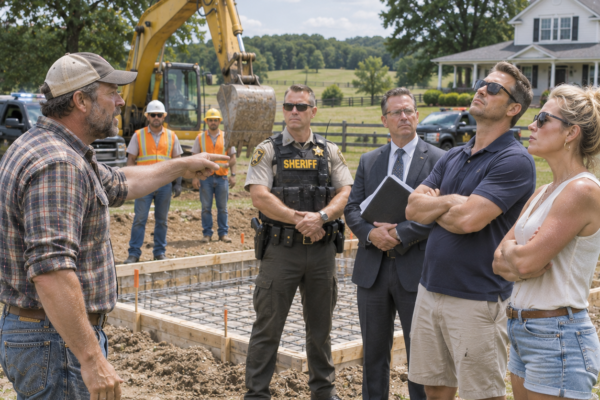
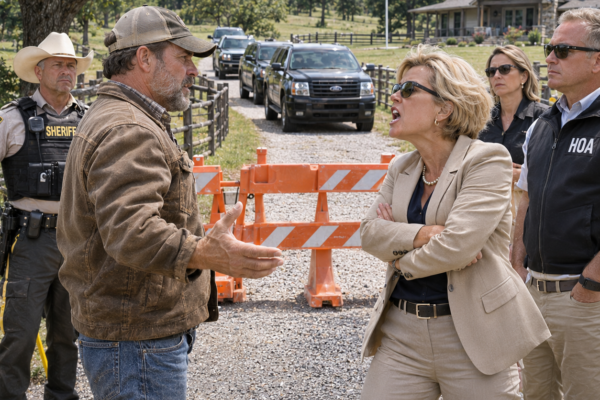
Forty minutes later, Deputy Marcus Reed arrived.
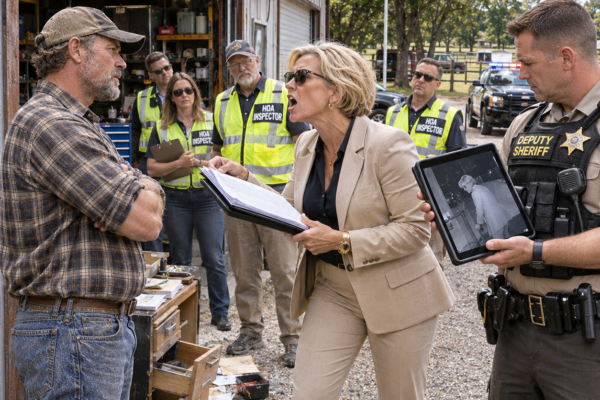
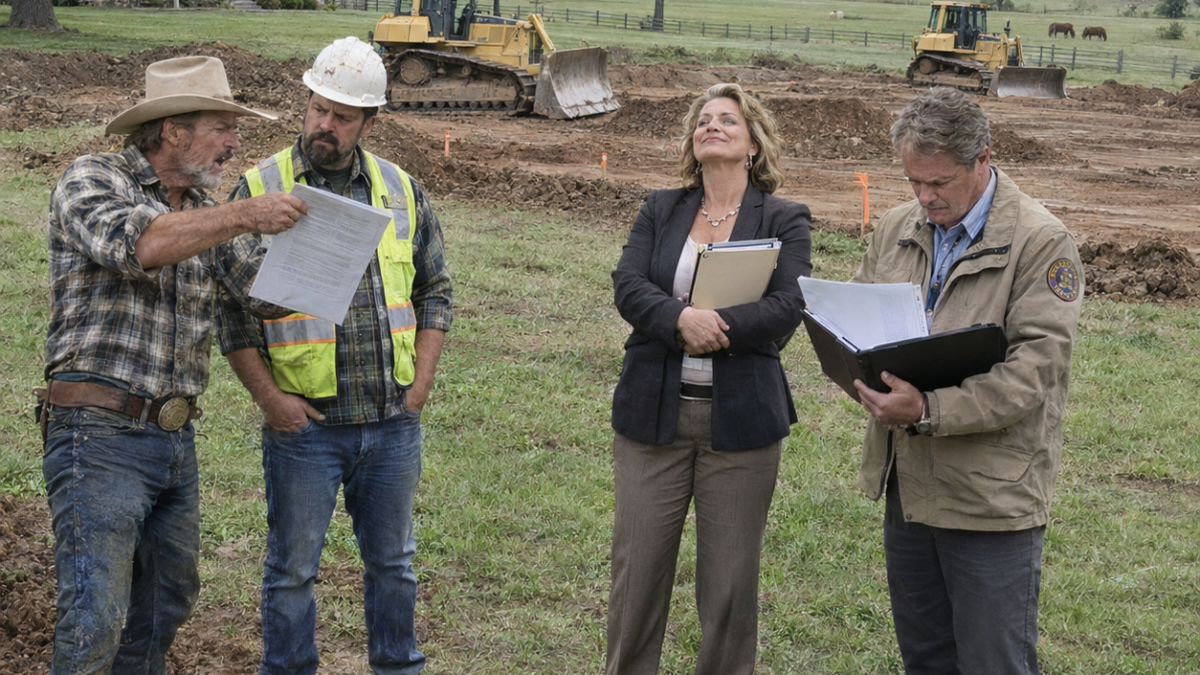
Ten minutes after him came county permit inspector Helen Brooks.
Helen asked Linda for the full permit packet.
She read the first page.
Then the second.
Then turned to the parcel map.
Her eyebrows lifted.
“Mrs. Hargrave, who submitted this ownership certification?”
Linda’s confidence slipped.
“The developer did.”
Helen pointed toward a parcel number.
“This belongs to Mr. Cole.”
Linda said nothing.
Helen continued.
“And the permit application represents Pine Hollow Development as either owner or authorized agent of the owner.”
“We were approved for annexation.”
“That isn’t what I asked.”
Linda looked toward me.
Helen did too.
“Mr. Cole, did you sign an owner authorization?”
“No.”
“Did you sell or option this parcel?”
“No.”
“Grant an easement?”
“No.”
Helen closed the folder.
“Then nobody is moving another machine until I understand how this permit got issued.”
Linda’s face went pale.
And that was before Helen noticed the signature attached to the application wasn’t mine.
Part 2:
I woke up to the sound of diesel engines where there should have been birds.
At first, I thought somebody was working on the county road.
Then my coffee cup rattled slightly against the porch railing.
That got my attention.
I walked around the side of my cabin and saw two bulldozers coming through the east gate of my family’s property.
Behind them came a dump truck, a skid steer, and a white pickup carrying three men in reflective vests.
They weren’t lost.
They drove straight past my pasture, crossed the old hay field, and stopped on a rise about two hundred yards from my house.
Then the first bulldozer dropped its blade.
I ran.
“Stop!”
The operator lifted the blade and shut down.
A foreman climbed from the white pickup.
“Can I help you?”
“That depends. Why are you grading my field?”
He looked confused.
“This is Lot 1A. Pine Hollow model-home site.”
“No. This is Cole Farm.”
He checked a clipboard.
“Permit says Pine Hollow Estates expansion parcel.”
I pointed toward the fence they had opened.
“My grandparents bought this land fifty-three years ago. Nobody from Pine Hollow owns one inch of it.”
The foreman’s face changed.
Then a black Cadillac SUV rolled through the gate.
Linda Hargrave stepped out.
President of the Pine Hollow Estates Homeowners Association.
She wore cream slacks, oversized sunglasses, and the satisfied smile of someone arriving to inspect progress on something she already considered hers.
“Nathan,” she said. “I was hoping we could avoid a scene.”
I stared at her.
“Why are bulldozers on my property?”
“Because the expansion was approved.”
“What expansion?”
“The eastern annexation.”
“There is no eastern annexation.”
She opened a leather folder and removed several pages.
“You were notified.”
“No. You asked me to join your HOA. I said no.”
“That was before the planning commission approved the revised development boundary.”
I looked at the paperwork.
There was a county zoning stamp.
A site plan.
A building permit.
And a large rectangle drawn directly over the same rise where my grandfather had planted apple trees decades earlier.
At the bottom, the proposed structure was labeled:
PINE HOLLOW SIGNATURE MODEL RESIDENCE
I looked at Linda.
“This is your house?”
“It will also function as a model home for the next phase.”
“On my land?”
“On land incorporated into the development.”
I laughed once.
She didn’t.
My name is Nathan Cole.
I was thirty-eight when Pine Hollow Estates tried to build a model home on land my family had owned since before most of the roads around us were paved.
The property covered seventy-two acres outside Lexington, Kentucky.
Not some giant cattle empire.
Just enough land to feel private.
Pasture.
Hay.
A creek.
Woods.
An old barn.
A small orchard.
And the cabin I built after Dad died.
My grandparents bought the first forty acres in 1973.
Granddad worked at a machine shop.
Grandma taught elementary school.
They spent years adding small neighboring parcels whenever they could afford them.
Dad inherited the whole place.
Then I did.
Growing up, I never imagined I would live there permanently.
I went to college.
Worked construction management.
Spent six years in Nashville.
Then Dad got sick.
Pancreatic cancer.
By the time doctors found it, there wasn’t much time.
I moved back.
For eight months, I drove him to appointments, ran the farm, and pretended we had longer than we did.
After he died, I couldn’t bring myself to sell.
So I stayed.
I built a one-bedroom cabin near the creek where Dad and I used to fish.
Nothing fancy.
Metal roof.
Wide porch.
Wood stove.
Big enough for me and a dog if I ever got around to getting one.
Old Joe Mercer lived about a mile up the road.
Joe had known my grandfather.
Widower.
Retired lineman.
He brought apple pie whenever he thought I looked too thin.
For the first few years after I inherited the place, life was quiet.
Then Pine Hollow Estates appeared.
The development started on former pasture east of me.
Phase one had eighty-six homes.
Phase two added another forty.
Large houses.
Decorative stone walls.
Private streets.
Clubhouse.
Pool.
Walking trails.
I didn’t love having suburbia that close, but I wasn’t going to complain about what other people did on their land.
That principle mattered later.
Pine Hollow remained on its side.
I remained on mine.
Then Linda Hargrave became HOA president.
Linda was fifty-two.
Former real-estate broker.
Very polished.
Very organized.
She spoke like every conversation was being recorded for a training seminar on executive leadership.
Our first meeting happened on my porch.
She drove up without calling.
I was repairing a chainsaw.
She stepped out carrying a navy folder.
“Nathan Cole?”
“That’s me.”
“Linda Hargrave, Pine Hollow HOA.”
“I figured.”
She smiled.
“I’d like to discuss community integration.”
That phrase should have warned me.
She sat without being invited.
Opened the folder.
Inside was a membership agreement.
Covenants.
Dues schedule.
Architectural standards.
She explained that Pine Hollow planned future expansion and that my property had become “functionally integrated” with the community.
“What does that mean?”
“Your land forms the natural western edge of our growth corridor.”
“That sounds like geography.”
“It creates planning challenges.”
“For who?”
“For everyone.”
She pushed the membership agreement toward me.
“If you join voluntarily, we can work together on access, landscaping buffers, long-term value, and future development.”
I flipped through it.
HOA approval for exterior structures.
Parking restrictions.
Livestock limitations.
Fence standards.
Architectural review.
“You know I have a barn.”
“Yes.”
“And cattle.”
“Yes.”
“And farm equipment.”
“Existing uses could potentially be grandfathered.”
“Potentially?”
“The board would review.”
I closed the folder.
“No.”
Her smile stayed.
“I think you should take time.”
“I did.”
“You haven’t read everything.”
“I read enough.”
“Nathan, Pine Hollow will eventually surround much of this parcel.”
“Maybe.”
“At that point, remaining outside the association becomes impractical.”
“Not legally.”
Her expression shifted slightly.
“We’re trying to offer you an orderly path.”
“I already have an orderly path.”
“What’s that?”
“I own my land. You own yours.”
She stood.
“There are larger planning considerations than individual preference.”
I looked at the membership packet.
“Not on my deed.”
She left.
For about three weeks, nothing happened.
Then I received a letter from Pine Hollow’s management company.
It described my property as an “adjacent nonconforming parcel.”
I ignored it.
Another arrived suggesting I voluntarily maintain a landscaping buffer compatible with HOA standards.
Ignored.
Then Linda called.
“We’re trying to keep this cooperative.”
“I am cooperating.”
“You haven’t responded.”
“I’m not in your HOA.”
“That doesn’t mean your property has no effect on ours.”
“My cattle probably have an effect on yours too.”
“That’s exactly the issue.”
I laughed.
She didn’t.
The complaints started.
Tractor noise.
Dust.
An old stock trailer visible from the road.
A rooster, even though the rooster belonged to Joe and lived a mile away.
That one amused me.
Linda wrote as if proximity gave her authority.
I wrote back once.
Cole Farm is not part of Pine Hollow Estates and is not subject to its covenants. Please direct any genuine nuisance complaint to the appropriate county department.
That should have ended it.
Instead, the first strange thing happened.
Two survey stakes appeared near my eastern field.
Orange ribbon.
No company name.
I pulled them.
Not because stakes offended me.
Because nobody had permission to survey.
Three days later, a crew came back.
I met them.
They worked for a civil engineering firm hired by Pine Hollow Development.
Their work order showed a conceptual expansion study.
I told them they had no access.
The crew leader apologized.
He said the developer represented that permission had been arranged.
That word bothered me.
Arranged.
I called Linda.
“Why are surveyors on my property?”
“Planning study.”
“You don’t have permission.”
“It’s preliminary.”
“Preliminary trespass is still trespass.”
“We need data for the expansion.”
“Get it from your side.”
“Nathan, you’re making routine planning difficult.”
“Good.”
She hung up.
A month later, I received a certified letter from something called Pine Hollow Development LLC.
They offered $310,000 for fourteen acres along my eastern boundary.
I considered it for about six minutes.
Then declined.
The strip included part of the creek, the best hay ground, and the rise where Granddad’s orchard had once stood.
A week later, the offer became $400,000.
I declined again.
Linda called.
“That’s a generous number.”
“I know.”
“You could keep the cabin and most of your acreage.”
“I know.”
“Then why say no?”
“Because I don’t want to sell.”
“That isn’t an economic answer.”
“It doesn’t need to be.”
Silence.
Then:
“You may regret being inflexible.”
I wrote down the date and time.
Dad had taught me something useful.
When ordinary conversations start sounding like warnings, document them.
Two months passed.
Then I left for three days to help my cousin move equipment from a farm he had sold.
When I returned, there were no machines yet.
But I noticed a new laminated notice attached to my east gate.
PROPOSED PINE HOLLOW PHASE III — DEVELOPMENT ACCESS
I tore it down.
Called county planning.
A clerk told me no final Phase III subdivision plat had been approved.
That should have reassured me.
It didn’t.
Then came the morning of the bulldozers.
I had been home less than a week.
Coffee.
Porch.
Diesel.
The construction foreman’s name was Russell Clarkson.
He owned Clarkson Construction.
When I told him the land was mine, he didn’t argue.
That alone made him smarter than Linda.
He opened his permit set.
The county permit number was real.
The zoning stamp looked real.
The parcel number was mine.
Then Linda arrived.
She claimed annexation.
She told Russell to proceed.
He refused.
“I need title verification.”
“You have a permit.”
“A permit is not title.”
I liked Russell immediately.
Linda did not.
She shoved the paperwork toward me.
The plan showed a 5,800-square-foot house.
Three-car garage.
Pool.
Stone terrace.
At the bottom:
MODEL RESIDENCE / FUTURE PRESIDENTIAL HOME — L. HARGRAVE
I looked at her.
“This was supposed to be yours?”
“After the sales period.”
“So you planned to build yourself a house on property you don’t own.”
“You’re oversimplifying.”
“That feels pretty simple.”
She explained the county had approved an adjusted development boundary.
I knew enough from construction work to hear the trick.
A planning boundary is not ownership.
Zoning does not transfer title.
Annexation into a planning area does not make private land belong to a developer.
And an HOA certainly cannot annex a neighboring farm by vote.
I called county planning.
Then the sheriff.
Deputy Marcus Reed arrived first.
He knew Old Joe.
Didn’t know me well.
He asked everyone to stay calm.
That was easy.
Nobody was yelling yet except Linda.
County permit inspector Helen Brooks arrived next.
She was in her early sixties.
Safety vest.
Reading glasses.
Zero interest in neighborhood politics.
She asked for the permit packet.
Read.
Then asked:
“Who submitted ownership authorization?”
Linda said:
“The developer.”
Helen looked at Russell.
“Did your company verify?”
“We verified the permit, not title. Owner authorization was represented in the permit package.”
Helen looked at me.
“Mr. Cole, did you authorize Pine Hollow Development?”
“No.”
“Sell them this parcel?”
“No.”
“Option?”
“No.”
“Easement?”
“No.”
She turned back to Linda.
“This application lists Pine Hollow Development as authorized agent for the owner.”
Linda folded her arms.
“There was an annexation approval.”
Helen’s tone sharpened.
“Annexation into what?”
“The Pine Hollow development boundary.”
“That does not transfer ownership.”
“I understand that.”
“Then where is the owner authorization?”
Linda looked at the folder.
Helen turned a page.
There was a signature.
My name printed below it.
Nathaniel Cole.
I never use Nathaniel.
My birth certificate says Nathan.
No middle name.
No longer version.
Just Nathan Cole.
That was the first obvious problem.
The signature was worse.
It looked nothing like mine.
Helen looked at me.
“That your signature?”
“No.”
Linda stepped in.
“That document came from the development office.”
“Who signed it?”
“I don’t know.”
Helen pulled out her phone.
Called her office.
Asked them to suspend the permit immediately.
No further work.
No inspections.
No construction activity.
Then she photographed the existing grading.
The bulldozer had scraped less than a hundred feet before stopping.
Damage was limited.
Thank God.
Deputy Reed took a report for trespass and possible document fraud.
He did not arrest Linda.
That would have been ridiculous.
He preserved copies.
Got names.
Told the contractors they could remove equipment but not continue work.
Linda was furious.
“You are allowing one man to stop a county-approved development.”
Helen answered:
“One man owns the parcel.”
That sentence shut her up for maybe five seconds.
Then she started again.
“I want your supervisor.”
“You’ll get his number.”
“This permit went through proper channels.”
“Then proper channels will explain the authorization.”
Linda pointed at me.
“He has been obstructing this project for months.”
I said:
“By refusing to sell you my land?”
“You’re twisting everything.”
“No. That seems to be your specialty.”
Deputy Reed gave me a look.
I stopped.
I didn’t need the last word.
I needed the paperwork.
By noon, every machine was gone.
The scraped section remained.
A raw brown scar across the grass.
I stood there after everyone left.
That was the first time anger really hit me.
Not while Linda talked.
Not while Helen found the false signature.
Afterward.
Silence returned and I could see exactly where steel tracks crossed Granddad’s old orchard rise.
Most of the trees were gone by then.
Only six remained.
One bulldozer had passed within twelve feet of the oldest.
I called a lawyer.
Rebecca Ames.
Property and land-use attorney.
She came out that afternoon.
Walked the site.
Photographed the tracks.
Read every letter Linda had sent.
Read both purchase offers.
Then the permit packet.
Rebecca stopped at the owner-authorization page.
“This isn’t your signature.”
“No.”
“Not even close.”
“No.”
“And you never use Nathaniel?”
“Never.”
She smiled without humor.
“That’s sloppy.”
“Good?”
“Good for proving you didn’t sign it. Bad because somebody felt comfortable submitting it.”
The next morning, Rebecca filed a notice disputing any claimed authorization and demanded preservation of all records from Pine Hollow Development, the HOA, the county planning office, and the permit consultant.
Then she ordered a title report.
Clean.
Cole Farm.
Seventy-two acres.
My name.
No Pine Hollow covenant.
No development option.
No annexation agreement.
No access easement.
No construction authorization.
Nothing.
The county launched its own internal review.
That was when things became interesting.
The permit had been processed by an assistant planner named Derek Boone.
Derek had worked for the county eight years.
He knew Linda from her real-estate days.
Rebecca initially suspected something criminal.
The facts turned out less cinematic but still ugly.
Linda and the developer had submitted an application describing the project as part of an already-approved expansion.
Derek knew ownership documentation was incomplete.
Instead of rejecting the permit until proper owner consent arrived, he marked the ownership requirement as “pending verification” and allowed the file to advance.
That alone violated procedure.
Then someone later uploaded the fake owner authorization.
Derek never called me.
Never required notarization.
Never compared it with county property records beyond confirming the parcel number existed.
He simply changed the box to “verified.”
Why?
Emails answered that.
Linda wrote:
We cannot lose another construction window because Nathan Cole refuses to cooperate. Please keep this moving while legal cleans up the ownership piece.
Derek replied:
I’ll do what I can, but you need the authorization in the file before inspection.
Two days later, the fake authorization appeared.
Derek marked it complete.
That did not prove he forged anything.
It did prove he knowingly pushed a permit forward while ownership remained unresolved.
The county suspended him pending review.
Eventually, he was demoted and lost permit-approval authority.
Linda told everyone he had been fired because of me.
He wasn’t.
The truth was more specific.
He had ignored safeguards meant to stop exactly what happened.
Then Rebecca subpoenaed records from Pine Hollow Development during the civil case.
The document trail led to the development company’s administrative consultant.
A woman named Tara Mills.
She said Linda sent her a scanned signature page from an old delivery receipt connected to a fundraiser at my property.
Except I had never signed it.
The receipt came from Joe.
Joe Mercer.
His first initial was J.
Not N.
The signature wasn’t even intended to be mine.
Tara admitted she had been told to “format owner approval” using information supplied by Linda.
She said she believed Linda had authority to obtain the signature later.
Linda denied that.
Then Tara produced emails.
One from Linda:
Use the Cole parcel information. We cannot keep waiting for Nathan to come around.
Another:
Planning only needs something in the file so they can issue. We can straighten out the formal transfer before closing.
That was the sentence that turned the civil case.
Formal transfer before closing.
There had been no agreement.
No negotiation.
No option.
Yet Linda was already talking as though title transfer was just paperwork to complete later.
Rebecca looked at me.
“She thought construction would create leverage.”
“What does that mean?”
“She believed once enough money was spent, you’d sell rather than force removal.”
That made sense.
Terrible sense.
But sense.
Build the model home.
Pour the foundation.
Start framing.
Then come to me.
Look, Nathan, we’ve already spent half a million dollars. Let’s be reasonable.
Linda had tried to turn irreversible construction into negotiating power.
She underestimated how early I would catch it.
The bulldozer blade had been down less than a minute before I ran outside.
The court issued a temporary injunction within days.
No entry by Pine Hollow.
No construction.
No marketing of my parcel.
No representation that it belonged to the development.
No contact with contractors about work on Cole Farm.
Linda violated the spirit of that order almost immediately.
At an HOA meeting, she announced that my land remained “part of Pine Hollow’s long-term community plan.”
A resident recorded it.
Rebecca sent a warning.
Linda’s lawyer advised her to stop talking.
She didn’t.
Then she sued me.
Technically, Pine Hollow Development did.
The complaint claimed I had created detrimental reliance by allegedly participating in early planning discussions.
That was nonsense.
Their evidence was one conversation where I asked what they would pay.
I did ask.
When they offered $310,000.
Asking the number did not equal agreement.
The lawsuit also claimed I had “encouraged development expectations” by allowing survey access.
Except I hadn’t.
I had removed stakes and told the survey crew to leave.
The crew leader gave a declaration confirming it.
Their case weakened quickly.
Rebecca counterclaimed.
Trespass.
Property damage.
Wrongful construction activity.
Costs.
And declaratory relief confirming Pine Hollow had no rights in the parcel.
No million-dollar revenge fantasy.
Just actual damages and a clean judgment.
Old Joe became unexpectedly important.
He had been watching this whole mess from a mile away.
One evening, he came over carrying pie and a cardboard box.
“You might want these.”
“What are they?”
“Your granddad’s old survey copies.”
I stared.
“How do you have them?”
“He gave them to me when we rebuilt that east fence after the ’94 ice storm.”
Inside were photographs.
Survey notes.
A hand-drawn fence diagram.
And one old Polaroid showing my grandfather standing beside the same boundary marker Pine Hollow’s site plan had ignored.
Joe pointed.
“That marker hasn’t moved.”
Rebecca loved it.
Not because old photographs beat modern surveys.
Because they helped establish decades of consistent possession and boundary recognition.
The county’s modern survey said the same thing anyway.
Linda began losing support inside Pine Hollow.
At first, residents believed her version.
She told them I had agreed to sell and changed my mind.
Then she said I was trying to extort the development.
Then she said my parcel had been “effectively annexed.”
Each version required a different story.
Residents started asking questions.
The biggest question was money.
Why was their HOA president personally going to occupy the model home?
The answer came from meeting records.
Linda proposed that Pine Hollow build a “presidential residence and model property” as a showcase for the new phase.
During sales, it would host events.
After a defined period, she would have an option to purchase it below market as compensation for project development work.
Several board members claimed they never understood the arrangement that way.
One had voted for a model home.
Not for Linda receiving a discounted house.
Another had never seen the final option agreement.
That created an internal revolt.
Treasurer Melissa Ward requested all project contracts.
The numbers were ugly.
The HOA had already committed $92,000 toward landscape, signage, and shared infrastructure for Phase III.
Without owning the land.
The development company had spent more.
Architects.
Engineering.
Permit fees.
Contractor deposits.
Linda had pushed all of it forward before securing a deed.
Melissa asked at an emergency meeting:
“Did Nathan Cole ever sign a sale contract?”
Linda answered:
“He indicated willingness to negotiate.”
“That isn’t a contract.”
“He was being obstructionist.”
“Did he sign?”
“No.”
“Then why did we commit money?”
“Because the development was moving forward.”
“On what property?”
Linda looked at her.
That exchange circulated everywhere.
Pine Hollow residents began attending meetings in numbers nobody had seen before.
Then Rebecca obtained the most damaging email.
Linda to the developer:
Once we break ground, Nathan will understand the practical reality. Nobody forces removal after that kind of investment.
There it was.
The plan.
Not annexation.
Not confusion.
Leverage.
Construction first.
Consent later.
At mediation, Linda arrived with two lawyers.
I came with Rebecca.
Pine Hollow Development offered $525,000 for fourteen acres.
I said no.
$600,000.
No.
Then they proposed buying only the six-acre model-home area.
No.
Linda finally spoke directly.
“You’re being irrational.”
Rebecca said:
“Address counsel.”
Linda ignored her.
“Nathan, this solves everything.”
“No.”
“You keep seventy percent of the value and nearly all your acreage.”
“Not interested.”
“You’re refusing because it’s me.”
“No. I refused before you tried to build.”
She leaned forward.
“What do you want?”
“My land restored.”
“That’s it?”
“And my damages.”
“You would throw away hundreds of thousands to prove a point?”
I looked at her.
“I’m not throwing away anything. I’m keeping what I already own.”
Mediation failed.
The court hearing came three months later.
By then, Pine Hollow Development’s position was weak.
The title evidence was straightforward.
My deed.
County survey.
Tax records.
Historic fence.
No executed sale.
No easement.
No option.
No HOA membership.
No recorded annexation.
Their own emails showed they knew consent was unresolved.
The judge asked their attorney:
“What legal interest did your client possess when construction began?”
He answered:
“We believed acquisition was imminent.”
“That wasn’t my question.”
Silence.
The judge repeated it.
“What legal interest?”
“None recorded at that time.”
“Any signed purchase agreement?”
“No.”
“Option?”
“No.”
“License?”
“No.”
“Owner authorization?”
The attorney looked down.
“The document submitted has been disputed.”
“Disputed?”
Rebecca stood.
“My client never signed it. Their own consultant testified she created it from materials provided by Ms. Hargrave without witnessing any execution.”
The judge looked toward Linda.
Then back at counsel.
The ruling did not take long.
Pine Hollow had no interest in my property.
The permit application could not create one.
The preliminary development boundary could not create one.
The HOA could not annex privately owned neighboring land by internal vote.
The supposed authorization was invalid.
Pine Hollow Development was permanently barred from entering or representing ownership rights over Cole Farm absent a future written agreement I actually signed.
The scraped land had to be restored.
Damaged fencing replaced.
Soil repaired.
Drainage corrected.
My documented costs reimbursed.
Certain attorney fees were awarded under the circumstances because Pine Hollow continued advancing claims after receiving clear title documentation and the injunction.
Linda’s dream model home never made it beyond scraped dirt.
That mattered more than watching a completed house get demolished.
Because the best version of a property fight is the one where damage stops early.
The county revoked the permit permanently.
Derek Boone’s internal discipline became final.
No criminal case against him.
No dramatic bribery arrest.
He admitted he let personal familiarity and pressure from Linda influence the process.
He paid for that with his position.
Pine Hollow Development terminated its consulting arrangement with Linda.
Then sued the HOA and Linda separately over some of the costs.
That fight had nothing to do with me.
I stayed out.
The HOA board called a recall meeting.
Linda defended herself.
She said she had acted for long-term property values.
She said Phase III would have benefited everyone.
She said I had exploited a technical ownership issue to destroy years of planning.
That phrase made Melissa Ward laugh.
“A technical ownership issue?”
Linda glared.
Melissa held up my deed.
“This is the ownership issue.”
Residents voted.
Linda lost the presidency.
Not unanimously.
Some people still believed growth justified aggressive tactics.
But not enough.
Melissa became interim president.
Her first act was to suspend every Pine Hollow claim involving adjacent non-HOA parcels until independent counsel reviewed them.
There were three.
None belonged to the HOA.
That was another problem Linda had left behind.
Pine Hollow sent me a formal letter.
Not apology exactly.
Acknowledgment.
Cole Farm was outside the association.
Not subject to covenants.
No HOA enforcement authority.
No expansion right.
No shared access.
No annexation.
I put it in the file.
Then I went back to repairing my field.
The restoration contractor removed construction stone.
Loosened compacted soil.
Regraded the scraped area.
Replanted grass.
Rebuilt the fence.
One apple tree had root damage.
An arborist tried to save it.
For a while, it looked fine.
Then half the canopy died.
That tree had been planted by Granddad.
Of everything Linda damaged, that bothered me most.
Not financially.
Emotionally.
The court awarded replacement value, but replacement value is a strange phrase for a forty-year-old tree.
Money can buy another apple tree.
It cannot buy forty years.
I planted two.
One for Granddad.
One for Dad.
Old Joe helped.
He dug half a hole before sitting on the tailgate and announcing his back had retired without informing him.
“You’re supervising now?”
“Highly skilled supervision.”
“You brought pie?”
“In the truck.”
“Then you’re useful.”
We planted both trees along the edge of the old orchard.
Joe looked toward Pine Hollow.
“You think they’ll bother you again?”
“No.”
“Confident.”
“I have a better fence.”
“That stops paperwork?”
“No.”
“Then what does?”
I thought about it.
“People finally started reading it.”
That was the real ending.
Not Linda losing office.
Not the revoked permit.
Not the settlement.
People read.
Residents read contracts.
The county changed its permit process.
Owner authorization for privately held parcels required direct verification through title records and notarized signatures for certain development applications.
No more “pending verification” on land ownership.
No permit could advance to construction status until that was complete.
Pine Hollow adopted its own policy.
Any project involving land outside the HOA required independent title review and a recorded agreement before a dollar of association money could be committed.
Simple.
Boring.
Obvious.
The kind of rule organizations write after someone proves why obvious things still need to be written.
Linda eventually sold her Pine Hollow house.
I heard she moved to Florida.
Maybe true.
Maybe neighborhood gossip.
I never checked.
I had no interest in following her life.
For months, people expected me to hate the HOA.
I didn’t.
An HOA didn’t forge my authorization.
People did.
An HOA didn’t drive bulldozers onto my land.
People approved it.
Organizations are paperwork and money until human beings decide what to do with them.
Pine Hollow under Melissa was different.
Still picky.
Still too many rules for my taste.
But different.
One Saturday, Melissa drove to my gate.
Stopped outside.
Called me.
“Can I come in?”
That question alone told me things had changed.
“Yes.”
She walked up carrying a folder.
I looked at it.
She laughed.
“Nothing to sign.”
“Good start.”
“The HOA wants to put a walking trail along our western boundary.”
“Your side?”
“Entirely.”
“Okay.”
“We want to make sure drainage won’t cross into your field.”
She handed me the engineering plan.
Everything stopped three feet inside Pine Hollow land.
Swales directed water east.
No easement request.
No access request.
No hidden expansion.
“Looks fine.”
“That’s all?”
“That’s all.”
She smiled.
“Linda would have scheduled a committee.”
“That explains why Linda has more free time now.”
Melissa laughed.
Then became serious.
“I’m sorry.”
“You didn’t do it.”
“The association did.”
“I appreciate that.”
She left.
The trail was built.
Not one worker entered my property.
Amazing what happens when people ask permission before construction.
The next year, Joe died.
Eighty-one.
Heart failure.
Peacefully at home.
His daughter asked me to speak at the funeral.
I told the story about the apple pie.
Not Linda.
Not Pine Hollow.
Not bulldozers.
Joe deserved better than becoming a supporting character in somebody else’s property dispute.
Afterward, his daughter gave me an old envelope.
“Dad said this belonged to you.”
Inside was a photograph.
My grandfather.
Dad as a teenager.
Joe.
All three standing beside the east fence.
Behind them was the rise Linda tried to claim.
Granddad held a post driver.
Dad was laughing.
Joe had written on the back:
East line rebuilt after storm — March 1994.
I framed that photograph.
It hangs in my cabin.
Not the court judgment.
Not the permit revocation.
That photo.
Because that was what I had been protecting all along.
Not just acreage.
Continuity.
My grandparents worked for that land.
Dad maintained it.
I inherited responsibility for it.
That responsibility did not disappear because somebody designed a beautiful house on top of a map.
I sometimes wonder what would have happened if I had been away one more week.
Foundation excavation.
Footings.
Concrete.
Maybe framing.
By the time I returned, Linda would have said exactly what her email predicted:
Look how much has already been invested.
Be practical.
Sell.
That was the strategy.
Turn trespass into leverage.
Make correction expensive enough that surrender seems reasonable.
She almost pulled it off.
Not because she had legal authority.
Because construction moves faster than lawsuits.
That is why the bulldozer stopping on the first morning mattered.
Russell Clarkson deserves more credit than anyone gives him.
He saw a title dispute and stopped.
He could have listened to Linda.
He didn’t.
Years later, I hired Clarkson Construction to replace one of my barns.
Russell came personally for the estimate.
When he pulled into the farm, he looked toward the old model-home site.
“No swimming pool?”
“Wrong story.”
“Right.”
He laughed.
Then:
“You know I nearly kept digging that morning.”
“I know.”
“The permit looked legitimate.”
“It was legitimate paperwork built on false information.”
“That bothered me for a long time.”
“Why?”
“Because contractors trust permits.”
“You’re supposed to.”
“But the permit doesn’t tell you who lied to get it.”
That sentence stayed with me.
Systems depend on honest inputs.
County stamps look powerful.
Signatures look powerful.
Maps look powerful.
But every system can be fed bad information.
That’s why verification matters.
Linda had counted on the symbol of authority doing the work.
County stamp.
HOA title.
Planning map.
Construction crew.
She assumed I would see all of it and believe the decision had already been made.
For a few minutes, I almost did.
Then I remembered something Dad used to say whenever somebody showed him a complicated contract.
“Start with the thing they can’t change.”
For this dispute, that thing was the deed.
Everything else came later.
Permit.
Site plan.
Annexation language.
Model-home contract.
None of it mattered if Pine Hollow didn’t own the ground.
They didn’t.
That simple fact survived every document Linda stacked on top of it.
Three years after the case, the east field looks normal.
The grass grew back.
The fence is straight.
The new apple trees are still small.
Pine Hollow’s walking trail runs along its own boundary.
Sometimes residents pass while I’m working.
Most wave.
I wave back.
No drama.
No war.
The model home was eventually built on property the developer actually owned.
Smaller lot.
Different design.
Linda didn’t get it.
Another family eventually bought it at market price.
That seems fair.
Pine Hollow Phase III happened too.
Just not on Cole Farm.
The developer redesigned access.
Removed my parcel from the plan.
Built west and south instead.
Turns out the future of suburban development did not depend on stealing my hill.
Imagine that.
The county’s new ownership-verification process has stopped at least two other questionable applications, according to Helen Brooks.
She retired last year.
Before she left, she stopped by the farm.
Not official.
She wanted apples.
The new trees weren’t producing yet, so I gave her some from the surviving old trees.
She looked toward the east rise.
“Hard to believe somebody almost built a house there.”
“I try not to.”
“You know what bothered me most?”
“The fake signature?”
“That too.”
“What then?”
“Everyone kept talking about whether the project was beneficial.”
She shook her head.
“That was never the first question.”
“What was?”
“Who owns the land?”
I smiled.
“That sounds familiar.”
She carried the apples to her car.
Then turned.
“You did one thing right.”
“Only one?”
“You didn’t climb on the bulldozer.”
I laughed.
“The thought crossed my mind.”
“I know.”
“How?”
“You looked at it.”
She drove away.
She was right.
For about three seconds that morning, I imagined getting into the machine and pushing every stake, form board, and pile of gravel back through Pine Hollow’s gate.
It would have felt good.
For three minutes.
Then I would have turned a clean case into a mess.
Damaged equipment.
Safety issues.
Criminal complaints.
Arguments about who escalated.
Instead, I called the people whose job was to stop it.
That is less cinematic.
It is also why the land was restored and the legal record stayed clean.
The older I get, the more I understand that protecting property doesn’t mean acting like an outlaw because you own dirt.
It means knowing which rights are yours and using them properly.
Sometimes the strongest thing you can do is refuse to create unnecessary problems for yourself.
I still keep Linda’s original HOA membership packet.
It sits in a drawer beside the revoked building permit.
The first page says:
WELCOME TO THE FUTURE OF PINE HOLLOW.
I never joined.
My future turned out fine.
The cabin remains beside the creek.
I still drink coffee on the porch.
Birds still make more noise than Linda ever managed to regulate.
The old barn still leans.
The field still grows hay.
And every spring, when I walk past the two new apple trees, I remember the morning engines crossed my gate.
I remember Linda saying the land had been annexed.
I remember the county permit sitting in her hand like a crown.
I remember thinking, for one frightening second, that maybe she had somehow done something I didn’t understand.
Then Helen Brooks asked one question.
Where is the owner authorization?
Everything collapsed from there.
Because that is the question people like Linda hate.
Not:
How important is the project?
Not:
How much money has been invested?
Not:
How many homeowners will benefit?
Not:
How official does the paperwork look?
Just:
Who said yes?
I didn’t.
And in the end, that was enough.
Pine Hollow kept its development.
I kept my farm.
The county fixed its process.
The HOA fixed its rules.
Linda lost the authority she had mistaken for ownership.
And the place where her model home was supposed to stand went back to doing exactly what my family had intended for it to do.
Nothing dramatic.
Grass.
Apple trees.
Open sky.
Mine.