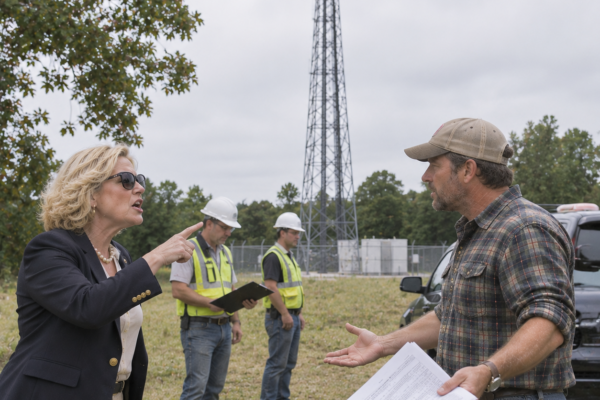
“Remove Those Unauthorized Cattle!” the HOA President Ordered After Marching Onto My Family’s 200-Acre Texas Ranch With Two “Compliance Officers.” Our Deed Went Back to 1923; Her Subdivision Was Only Five Years Old. When I Refused Her $5,000 Fine, She Sent a Golf Cart Through My Pasture, Scattered My Angus Herd, and Smiled—Until I Mentioned the Cameras…k
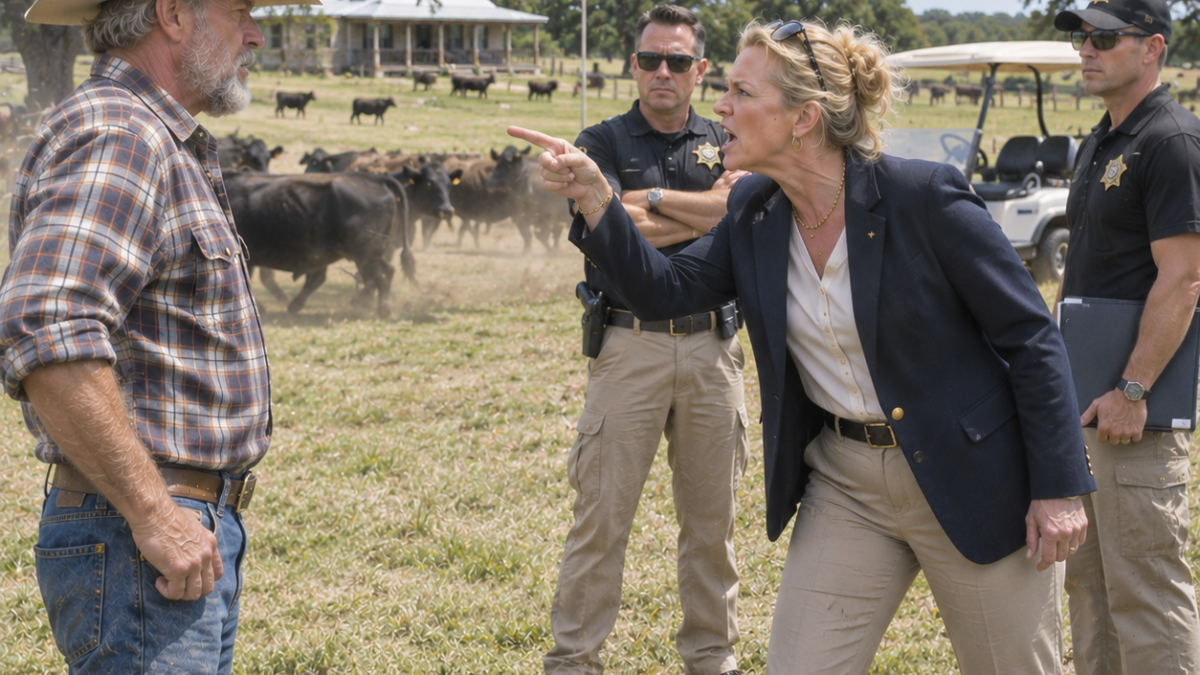
“Remove Those Unauthorized Cattle!” the HOA President Ordered After Marching Onto My Family’s 200-Acre Texas Ranch With Two “Compliance Officers.” Our Deed Went Back to 1923; Her Subdivision Was Only Five Years Old. When I Refused Her $5,000 Fine, She Sent a Golf Cart Through My Pasture, Scattered My Angus Herd, and Smiled—Until I Mentioned the Cameras…
The first time Karen Wheeler ordered me to remove my cattle, I thought she had wandered onto the wrong property.
The second time, she arrived with two HOA patrol officers and a clipboard.
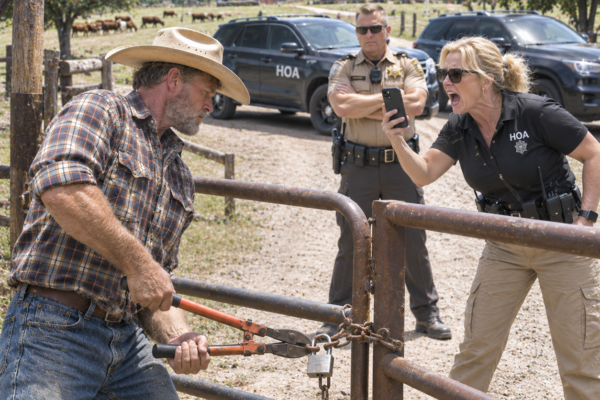
The third time, her people drove a golf cart through my pasture, frightened a herd of Black Angus cattle, and sent twenty-seven animals crashing through a section of fence my grandfather had helped build.
That’s when I stopped laughing.
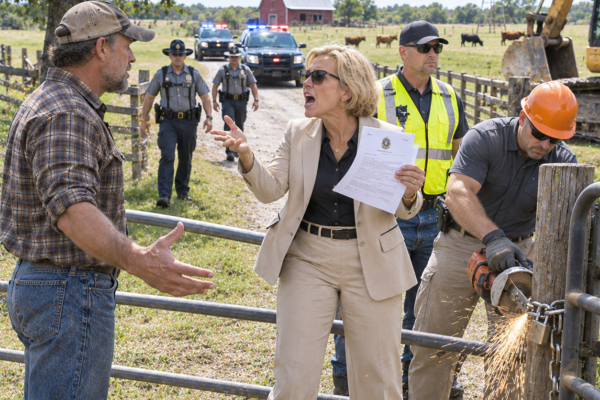
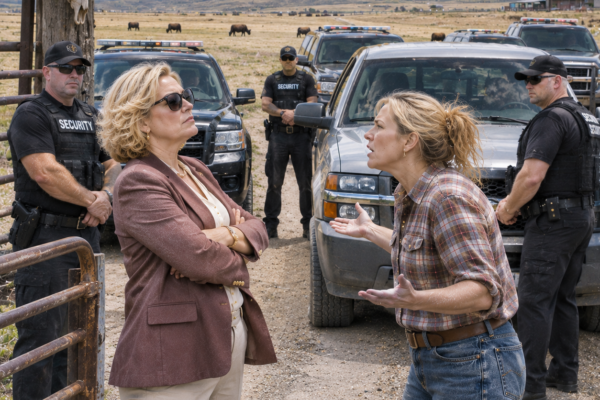
“Mr. Thompson, you’ve had thirty days to bring this property into compliance,” Karen announced, standing beside my broken fence as though the destruction were somehow my fault.
I looked at the frightened cattle gathering near the southern creek.
Then at the twisted wire hanging from two shattered cedar posts.
Then at Karen’s spotless white sneakers.
“Compliance with what, exactly?”
She lifted her clipboard.
“Whispering Meadows Homeowners Association regulations. Unauthorized livestock, improper agricultural activity, and substandard fencing. Your outstanding balance is five thousand dollars.”
I stared at her.
“Karen, this is a two-hundred-acre working ranch.”
“I’m aware.”
“My family bought this land in 1923.”
“That doesn’t exempt you from maintaining neighborhood standards.”
I almost laughed.
Her subdivision had existed for five years.
My great-grandfather had been raising cattle here when Calvin Coolidge was president.
And now a woman who couldn’t distinguish an Angus heifer from a dairy cow was standing on my property, demanding that I remove the animals that paid my bills.
My name is John Thompson. I’m fifty-eight years old, and my family operates a cattle ranch about thirty miles south of Dallas, Texas.
We’ve raised Black Angus cattle, grown hay, and worked this land for four generations.
I’ve survived droughts, bad markets, broken tractors, and a tornado that took half the roof off our equipment shed.
But until Whispering Meadows appeared next door, I’d never been threatened with legal action for doing what my family had been doing for more than a century.
Five years earlier, a developer purchased the neighboring pasture and built a subdivision filled with expensive homes, manicured lawns, ornamental trees, and identical mailboxes.
I didn’t object.
People had a right to buy homes wherever the zoning and development rules permitted.
And I had a right to continue operating my ranch.
For a while, we got along fine.
Then Karen Wheeler became HOA president.
The first certified letter accused me of maintaining an unattractive fence.
The second alleged that my cattle violated community appearance standards.
The third demanded I stop “unapproved agricultural activities” immediately.
I took that one to my attorney, Jim Davidson.
Jim had handled my family’s legal matters for twenty years.
He read the letter, adjusted his glasses, and started laughing.
“John, you’re not a member of Whispering Meadows.”
“That’s what I told them.”
“Your ranch isn’t subject to their declaration. They can’t invent jurisdiction over land outside their subdivision.”
I nodded.
“Then I’ll tell them to leave me alone.”
Jim’s smile disappeared.
“Do it in writing. And keep everything they send.”
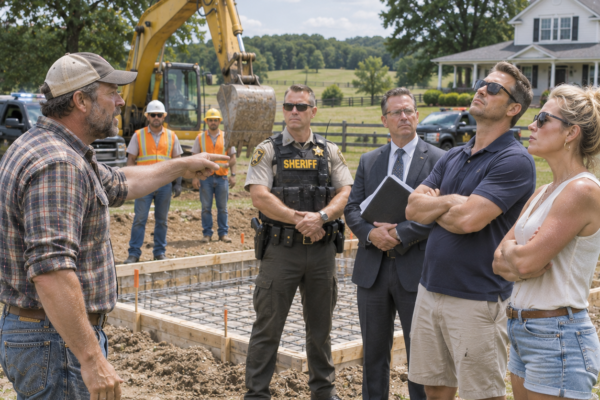
A week later, Karen appeared with Brad Peterson and Susan Martinez, two members of her so-called HOA compliance patrol.
All three wore matching polo shirts.
All three carried clipboards.
And all three walked through my gate without permission.
They began photographing my cattle, measuring the fence, and discussing violations as though they were government inspectors.
I drove over on my ATV.
“Can I help you folks?”
Karen smiled.
“We’re conducting an official compliance inspection.”
“Not on my property, you’re not.”
Brad stepped forward.
“According to our bylaws, neighboring properties that negatively affect community aesthetics fall under association oversight.”
I looked at him.
“Are you telling me your HOA rules apply to property that was here eighty years before your subdivision?”
He nodded.
“That’s correct.”
I took out my phone.
“Then let’s ask the sheriff.”
Deputy Roberts arrived fifteen minutes later.
He examined my gate, spoke with Karen, and reviewed the property information.
Then he delivered a sentence she clearly wasn’t expecting.
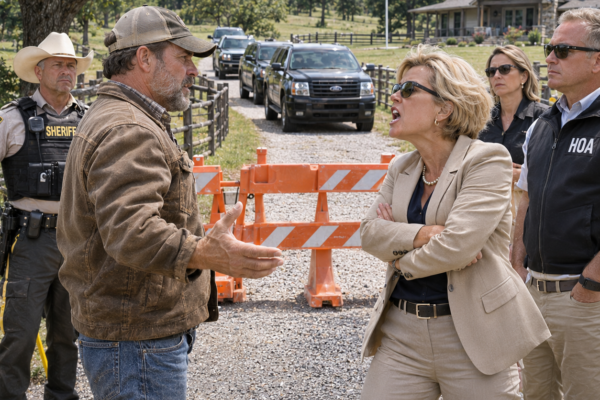
“Ma’am, Mr. Thompson has told you to leave his private land. Your HOA doesn’t have authority to inspect his ranch.”
Karen’s face turned red.
She threatened attorneys.
She threatened fines.
She threatened to report my cattle operation to the county.
Deputy Roberts pointed toward the gate.
“You’re free to raise a legitimate complaint through the proper channels. You’re not free to remain on this man’s property after being told to leave.”
Karen stormed away.
But she turned around before reaching her SUV.
“This isn’t over, Mr. Thompson.”
She was right.
The following week, her attorney demanded $5,000.
Then came anonymous complaints to Animal Control.
Someone reported imaginary sanitation problems.
Another person claimed my livestock were a threat to neighborhood safety.
We installed additional cameras and posted new no-trespassing signs.
Jim prepared legal papers to stop the harassment.
I hoped that would finally make Karen understand.
Then, on a Saturday morning, I heard cattle bawling near the eastern pasture.
I ran outside and saw a white golf cart bouncing across my field.
Two HOA representatives were aboard.
One was holding a thick envelope.
The other was driving straight toward a cluster of pregnant cows and young calves.
“Stop!” I shouted.
The driver accelerated.
The cattle scattered.
A heifer struck the fence.
Then three more animals pushed through behind her.
Cedar posts snapped.
Barbed wire collapsed.
And twenty-seven frightened cattle poured toward the creek.
I climbed onto my ATV and raced after them.
By the time we got the herd away from the road, one calf was limping, two fence sections were destroyed, and my workers had spent hours trying to prevent the animals from reaching traffic.
Karen arrived just as we were assessing the damage.
She looked at the broken fence.
Then at me.
And she smiled.
“Well, Mr. Thompson. I suppose now you’ll have to address that fencing violation.”
I stared at her.
Then I pointed toward the security camera mounted above my equipment shed.
“Karen, your people caused this.”
She shrugged.
“Prove it.”
I looked at the camera.
Then back at her.
“That’s exactly what I’m going to do.”
Part 2:
The golf cart came through my eastern pasture at 9:43 on a Saturday morning.
I know the exact time because I’ve watched the recording more times than I care to remember.
A white cart with a green Whispering Meadows logo bounced over the ruts beside my fence. Brad Peterson was driving. Susan Martinez sat beside him, clutching a large envelope and a clipboard.
Twenty-seven of my Black Angus cattle were grazing about sixty yards ahead of them.
Several cows had young calves.
Two were due to give birth within weeks.
Brad could plainly see the animals.
He accelerated anyway.
The first calf bolted toward its mother. Two cows turned sharply, trying to avoid the cart. Within seconds, the whole group was moving toward the old cedar-post fence along the southern edge of the pasture.
I was working near the barn when I heard the commotion.
Cattle make different sounds when they’re hungry, restless, or frightened. After growing up around them, you learn to recognize the difference.
What I heard that morning was fear.
I climbed onto my ATV and drove toward the noise.
By the time I reached the eastern field, a section of fence had collapsed.
Two cedar posts were broken.
Barbed wire hung loose across the grass.
And twenty-seven frightened animals were scattering toward the creek and the county road beyond it.
“Stop that cart!” I shouted.
Brad finally hit the brakes.
Susan stood up, waving the envelope.
“Mr. Thompson! We have legal papers!”
I looked at them.
Then at the cattle.
“Get out of my pasture!”
Brad held up both hands.
“We’re authorized representatives of the homeowners association.”
“You’re trespassing, and you’ve just scattered my herd!”
Susan looked offended.
“We’re attempting to serve official notices!”
“Then mail them!”
I drove past the golf cart and went after the cattle.
For the next three hours, I had no interest in HOA paperwork.
I had livestock to recover, a fence to repair, and a road to keep them away from.
My ranch foreman, Luis Herrera, arrived with his pickup and two hired hands.
We separated the cows from the calves carefully and began moving them toward a secure pasture.
One young calf was limping.
A heifer had a shallow cut along her flank.
Several animals were so agitated that we had to slow everything down to avoid creating another dangerous situation.
By the time the last cow was accounted for, my shirt was soaked with sweat and my patience was gone.
I returned to the broken fence.
Karen Wheeler was waiting beside her SUV.
She looked at the damaged cedar posts and smiled.
“Well, John. I suppose you’ll finally have to address your fencing violations.”
I stared at her.
“Your people caused this.”
She shrugged.
“Animals are unpredictable.”
“Not when somebody drives a golf cart straight toward them.”
She adjusted her sunglasses.
“Prove it.”
I pointed toward the camera mounted above my equipment shed.
“Gladly.”
Her smile vanished.
That was the moment I stopped thinking of Karen as an irritating neighbor and started treating her conduct as a serious threat to my ranch.
My name is John Thompson.
I’m fifty-eight years old, and my family has been raising cattle on two hundred acres in Ellis County, Texas, since 1923.
The ranch sits roughly thirty miles south of Dallas, beyond the last stretch of subdivisions and shopping centers where the landscape begins opening into pasture.
My great-grandfather, William Thompson, bought the original tract with money saved from years of farm labor.
He wasn’t wealthy.
Family stories say he arrived with two mules, a wagon, six cows, and a determination to never again work land that somebody else could take away from him.
He built a small farmhouse near the western creek and began clearing fields.
During the Depression, he held onto the land when several neighbors lost theirs.
My grandfather expanded the cattle herd.
My father added hay production and improved the watering system.
By the time I took over, the operation supported Black Angus cattle, seasonal hay crops, and a small direct-to-customer beef business.
I didn’t inherit a fortune.
I inherited land that required work every day.
Cattle don’t care whether you’re tired.
Water pumps don’t care whether it’s Sunday.
And fences have an irritating habit of breaking on the one afternoon you’ve promised your wife you won’t work.
My wife, Linda, had lived with those realities for thirty-two years.
She handled our accounting, customer orders, and enough paperwork to make the county clerk’s office look casual.
We raised two children here.
Our son, Michael, became a mechanic in Waxahachie.
Our daughter, Rachel, taught middle school near Fort Worth.
Both had spent their childhoods collecting eggs, bottle-feeding calves, and complaining about having to haul hay when their friends were swimming.
Neither complained much now.
The ranch had given them a good place to grow up.
It had given me something more important than money.
A reason to get out of bed every morning.
That’s why I paid attention when a developer bought the adjoining property five years earlier.
The land had been open pasture for decades.
Then one spring, survey flags appeared.
Bulldozers followed.
Within two years, an entire subdivision rose beyond my eastern fence.
Whispering Meadows.
Stone entrance columns.
Curving streets.
Identical mailboxes.
Brick houses with decorative shutters and yards trimmed so precisely they looked artificial.
The developer advertised quiet country living only minutes from city conveniences.
I chuckled when I saw the advertisements.
Their version of country living apparently included views of a cattle ranch they hadn’t considered asking about.
But I didn’t object.
They owned their property.
I owned mine.
If families wanted suburban houses next to a working ranch, that was their decision.
The first few years were peaceful.
Some residents stopped by to buy beef.
Children watched our cattle through the fence.
One family asked whether we could show their daughter how an egg got from a chicken to a grocery store.
I invited them over and let her collect half a dozen.
She went home grinning as though she’d discovered gold.
That’s the kind of relationship I wanted with Whispering Meadows.
Good neighbors.
Clear boundaries.
And enough mutual respect that nobody needed a lawyer.
Then Karen Wheeler became HOA president.
The first certified letter arrived in April.
I opened it at the kitchen table while Linda was preparing breakfast.
Across the top were the words:
WHISPERING MEADOWS HOMEOWNERS ASSOCIATION — FORMAL VIOLATION NOTICE.
I assumed they’d sent it to the wrong address.
Then I saw my name.
The letter listed three alleged violations.
Improper fence maintenance.
Unauthorized livestock.
Unapproved agricultural activities.
I read the third one twice.
“Linda, come look at this.”
She took the letter.
Her eyebrows rose.
“Unauthorized agriculture?”
“Apparently we’re running a cattle ranch without the permission of a subdivision that didn’t exist five years ago.”
She tried not to laugh.
Failed.
Then set the letter down.
“Maybe they want the cows to submit architectural applications.”
I smiled.
But I kept the notice.
I’d spent enough time dealing with agricultural regulations to know that even a foolish letter can become troublesome if somebody keeps repeating its claims.
A week later, another certified envelope arrived.
This one demanded compliance within thirty days.
It warned that continued violations could result in fines and legal action.
I called Jim Davidson.
Jim had handled our family legal matters for twenty years.
He knew the ranch boundaries.
He’d reviewed our mineral leases, grazing arrangements, equipment contracts, and several old property disputes.
When I read the HOA letter aloud, he interrupted me.
“John, remind me which subdivision you’re supposedly part of.”
“None.”
“And which declaration did you sign?”
“None.”
“Then their authority doesn’t extend to your land.”
“That’s what I thought.”
Jim explained that an HOA could enforce valid restrictions against property subject to its governing instruments.
It couldn’t simply extend those restrictions to neighboring land because it disliked agricultural activity.
He also reminded me that Texas provided legal protections for qualifying agricultural operations, though those protections weren’t a license to ignore legitimate health, safety, or environmental requirements.
My ranch complied with the rules that actually applied.
Whispering Meadows wasn’t one of them.
“I’ll send a formal response,” Jim said.
“Think that’ll stop them?”
“It should.”
He paused.
“But keep whatever they send next.”
I followed his advice.
Jim’s response identified the ranch’s parcel information, recorded deed, and long-established agricultural use.
It stated that the property wasn’t subject to Whispering Meadows’ declaration and demanded that the association stop issuing unsupported enforcement notices.
For eleven days, nothing happened.
Then Karen arrived.
It was a warm Saturday morning in June.
I was repairing a stretch of fence where two cows had pushed against a loose wire.
The work wasn’t glamorous.
I had a pair of fencing pliers, a bucket of staples, and a shirt already stained with sweat.
That’s when I noticed three people in matching polo shirts walking through my eastern gate.
Karen Wheeler led them.
She was in her early fifties, with a severe dark bob and an expression suggesting that being obeyed was her favorite recreational activity.
Behind her came Brad Peterson, a younger man with carefully styled hair, and Susan Martinez, who was taking pictures with her phone.
Their shirts read:
WHISPERING MEADOWS HOA PATROL.
I climbed onto my ATV and drove over.
“Morning. Can I help you?”
Karen stepped forward.
“Mr. Thompson. I’m Karen Wheeler, president of Whispering Meadows. These are members of our compliance committee.”
I nodded.
“You’re standing on private property.”
She smiled.
“We’re conducting an inspection.”
“No, ma’am. You’re not.”
She opened her clipboard.
“We’ve sent multiple notices concerning violations that affect our community.”
I looked toward my cattle.
“Such as?”
“Unauthorized livestock, fencing deficiencies, and agricultural activities inconsistent with neighborhood standards.”
I stared at her.
“Karen, this is a working ranch.”
“We’re aware.”
“It’s been a working ranch since 1923.”
“Historical use doesn’t exempt neighboring property from our community standards.”
I looked at Brad.
“Is that really what your bylaws say?”
He straightened.
“Properties adjacent to our development that negatively affect community aesthetics fall within our oversight.”
I tried to imagine the legal genius who’d written that sentence.
Then I asked a simpler question.
“Does your association own this land?”
“No,” Brad admitted.
“Am I a member?”
“No.”
“Did I agree to your restrictions?”
He hesitated.
“Not directly.”
“Then your bylaws don’t give you permission to walk through my pasture.”
Karen’s smile disappeared.
“We’ll finish our inspection.”
“No, you won’t.”
Susan raised her camera toward the cattle.
I stepped away from the animals so I wouldn’t excite them further.
Then I took out my phone.
“Karen, I’m asking all three of you to leave.”
She folded her arms.
“You’re being unnecessarily hostile.”
“I’m being clear.”
She turned toward Brad.
“Continue documenting.”
I called the sheriff’s office.
Deputy Aaron Roberts arrived about fifteen minutes later.
He knew my family and had purchased beef from us, but that didn’t give me any expectation of special treatment.
I wanted him to check the facts.
I explained what had happened.
Karen produced her bylaws.
Brad repeated the claim that neighboring properties affecting community aesthetics were under HOA oversight.
Roberts listened without interrupting.
Then he asked Karen a question.
“Is this property included in your association’s recorded declaration?”
She hesitated.
“Not formally, but our policies address neighboring impacts.”
Roberts looked toward the gate.
“Mr. Thompson has asked you to leave. Are you refusing?”
“We’re carrying out official association business.”
“That doesn’t authorize entry onto property outside your association.”
Karen’s face reddened.
“Deputy, you’re allowing him to violate our community standards!”
“Ma’am, your standards don’t automatically apply to his ranch.”
He pointed toward the gate.
“You need to leave the property. If you return after being given notice not to enter, it may become a criminal trespass matter.”
Karen stared at him.
For a moment, I thought she might argue until he placed her in the cruiser.
Then she gathered her clipboard.
“This isn’t over, Mr. Thompson.”
I leaned against my ATV.
“Didn’t think it was.”
She walked away with Brad and Susan following.
Roberts stayed long enough to document the encounter.
Before leaving, he looked toward the cattle.
“You’re going to have trouble with that woman.”
I sighed.
“Already am.”
He nodded.
“Keep your fences marked and your records organized. If they come back, report the specific incident.”
I thanked him.
Then I returned to my fence repairs.
By Monday, Jim had the deputy’s incident information.
He sent another letter.
This one made clear that Karen and her committee were not authorized to enter the ranch for private inspections.
It also warned that further interference would be documented and pursued through the appropriate legal process.
The following week, an envelope arrived from Dixon & Associates, the law firm representing Whispering Meadows.
The letter demanded $5,000 in accumulated fines.
It threatened additional penalties if I didn’t comply.
I read it at breakfast.
Then I called Jim.
“Well, they finally found a lawyer willing to send me a bill.”
He asked me to scan the notice.
When he finished reading, he said, “They’re still asserting authority they haven’t established.”
“Can they put a lien on my ranch?”
“Not merely because their board says you owe fines. They’d need a legally valid basis and the proper procedures. We’ll make sure they know those claims will be challenged.”
“What next?”
“We seek court relief to stop the unauthorized entries and enforcement threats. And we preserve every letter.”
I looked out the kitchen window.
A line of cattle was moving slowly across the northern field.
“Jim, I spent my whole life trying to keep this place running. I don’t want to spend my retirement arguing with a woman who thinks cows are a neighborhood violation.”
He chuckled.
“Then let’s make sure the judge understands that.”
It sounded reasonable.
It sounded straightforward.
But Karen didn’t want the dispute resolved.
She wanted me to surrender.
And the closer we came to putting the property records in front of a court, the more aggressive she became.
Over the next month, I learned that Karen Wheeler had an extraordinary amount of time available for someone who claimed to be managing a busy homeowners association.
Her people photographed my equipment shed from the road.
They left violation notices tied to fence posts.
One afternoon, I spotted Brad and Susan standing several feet inside my boundary, taking pictures of a group of heifers.
When I approached, Brad told me they were documenting conditions visible from Whispering Meadows.
“Then stand in Whispering Meadows,” I replied.
He looked annoyed.
“We have a right to photograph potential violations.”
“From somewhere you’re legally allowed to stand. Not from my pasture.”
They left.
But another notice arrived two days later.
This one alleged that my hay equipment created an unattractive industrial appearance.
I’d parked the baler beside the same equipment shed where my father had stored machinery for thirty years.
The whole thing was becoming ridiculous.
I installed additional cameras.
One covered the eastern gate.
Another overlooked the fence near the subdivision.
A third monitored the equipment shed and the adjoining pasture.
I also replaced the faded no-trespassing signs with new ones that could be read clearly from the road.
Linda helped me organize the footage.
We created folders labeled by date.
If someone entered the ranch, we saved the recording.
If a letter arrived, we scanned it.
If Karen called, we documented the conversation and asked her to communicate through Jim.
I didn’t want to spend my evenings building an evidence archive.
I’d rather have been watching baseball or sharpening the mower blades.
But Karen had made ordinary life impossible to enjoy without wondering what her committee might do next.
Then came the golf cart.
That Saturday began like any other.
Luis arrived shortly after seven.
We checked the cattle near the creek and planned to repair a small water-trough leak before the afternoon heat.
I was near the barn when I heard the first frightened bawling.
By the time I reached the pasture, Brad’s golf cart had already scattered the herd.
Twenty-seven cattle broke through the southern fence.
Susan was carrying an envelope addressed to me.
Later, she would claim they were attempting to deliver legal papers.
But they had entered through a gate marked PRIVATE PROPERTY, ignored the posted warnings, and driven a small motorized vehicle directly toward a cluster of cattle.
The camera showed the sequence clearly.
Brad turned the wheel toward the animals.
The cows began running.
He continued forward.
Then the fence collapsed.
By the time Karen arrived to inspect the damage and announce another alleged fencing violation, I’d been working for hours to recover the animals.
I was exhausted.
And I was furious.
But I remembered Jim’s advice.
Don’t argue about what the video can prove.
I called Deputy Roberts.
He arrived, inspected the damage, and took statements.
Brad claimed he hadn’t intended to frighten the herd.
Susan said they’d believed they had permission to use the agricultural access path.
Neither could identify who had granted that permission.
Karen tried to speak for both of them.
Roberts asked her to let them answer their own questions.
Then he looked at the broken fence.
“Mr. Thompson, do you have footage of the incident?”
“Yes, sir.”
We watched it on the tablet inside my pickup.
Brad’s cart appeared.
The cattle moved.
Brad kept driving.
The animals scattered.
Then the fence went down.
Roberts watched the footage twice.
He made a note.
“Preserve the original recording and give us a copy.”
I nodded.
He turned toward Karen.
“Ma’am, your association was already notified not to send personnel onto this property.”
She adjusted her sunglasses.
“They were serving legal documents.”
“That doesn’t give someone unrestricted access to a working cattle pasture.”
“It was an unfortunate accident.”
“Then why were they driving toward livestock?”
She didn’t answer.
Roberts documented the incident and explained that potential criminal issues would be evaluated through the proper process, while financial damages could also be pursued in court.
He didn’t promise arrests.
He didn’t declare the association guilty on the spot.
He simply recorded what happened.
That suited me.
I wanted the facts preserved.
A veterinarian named Dr. Anna Foster examined the injured animals that afternoon.
The calf’s limp was caused by a strained leg, with no fracture visible on examination.
The heifer needed treatment for the cut along her flank.
Several cows required monitoring for stress, particularly those late in pregnancy.
Thankfully, none died.
But that didn’t mean the incident was harmless.
Cattle can injure themselves or their calves when frightened into uncontrolled movement.
A stampede through fencing can also put drivers and nearby residents at risk.
We’d been lucky the animals moved toward the creek instead of the county road.
The veterinary invoice was only one part of the loss.
The fence needed urgent repair.
We had to hire extra help.
Luis and I spent the next two days restoring the damaged boundary and checking every animal.
I kept records of the additional labor.
The repair contractor estimated the replacement work at several thousand dollars.
Jim asked for every invoice.
Then he amended our civil claims to include the documented damage, interference with ranch operations, and the repeated unauthorized entries.
He also pursued injunctive relief against the association and the specific people responsible for the continued conduct.
When he reviewed the golf-cart recording, his expression turned grim.
“John, this is exactly why I told you to install the cameras.”
I nodded.
“I’d rather have an intact fence.”
“So would I.”
He closed his laptop.
“But now the court can see what happened without having to choose between your memory and theirs.”
That was the first moment I felt we might actually be able to stop Karen.
Not because I believed the legal process would be easy.
It wouldn’t.
The HOA had a lawyer.
It had association money.
And it had a president who seemed willing to spend both rather than admit she’d overstepped.
But I finally had evidence too clear to dismiss as a disagreement over neighborhood standards.
Jim prepared the case carefully.
He obtained certified copies of the ranch’s recorded deed and title information.
He collected historical aerial photographs showing agricultural activity long before Whispering Meadows was built.
He included property-tax records, livestock records, and evidence of the ranch’s ongoing commercial operation.
He reviewed the HOA declaration.
Its boundaries stopped at the subdivision.
Nowhere did it give the association authority to inspect or regulate adjacent private farmland.
The provision Brad had quoted about neighboring properties affecting aesthetics did not create a property right or bind landowners outside the association.
Jim also reviewed the relevant Texas agricultural protections.
He was careful not to claim that a ranch could never be regulated.
Legitimate government rules still applied.
But the fact that new homeowners disliked the sight or smell of an established agricultural operation didn’t authorize their private association to take over its management.
We had followed the law.
Karen simply wanted a different one.
A hearing was scheduled.
While we waited, the complaints multiplied.
First, somebody contacted Animal Control to report livestock being kept under unsafe conditions.
An officer arrived, examined the relevant areas, and found no evidence supporting the allegation.
Then the health department received a complaint about supposed manure runoff into the subdivision.
A county inspector visited.
I showed him the drainage features, animal areas, and property boundary.
No violation was found.
Next came a complaint about noise from agricultural equipment.
Then another about dust.
Then another alleging that my cattle endangered neighborhood children.
I didn’t dismiss the inspections.
Public officials have to investigate legitimate complaints.
And I had nothing to hide.
But the timing was exhausting.
Every visit took time away from the ranch.
I had to rearrange work, retrieve records, and walk inspectors through the same areas.
The officers were generally courteous.
Several apologized for the inconvenience.
One asked whether there was an ongoing neighborhood dispute.
I told him there was.
He nodded and said he’d document the outcome accurately.
I began keeping a separate log of the inspections.
Dates.
Agencies.
Allegations.
Findings.
Lost work time.
Then I sent the information to Jim.
He told me not to assume every complainant was acting in bad faith.
Some people might have genuine questions about agricultural operations.
But if we discovered evidence that the reports were knowingly false and coordinated to punish me, that would be a different matter.
“Don’t get angry at the inspectors,” he said.
“I’m not.”
“Good. Let them do their jobs. We want a record showing what the inspections actually found.”
I followed his advice.
In August, my daughter Rachel came to visit.
She found me at the kitchen table with three binders open and a fourth sitting beside the coffee pot.
“What’s all this?”
“Apparently what retirement looks like when your neighbor is an HOA president.”
She picked up one of the notices.
“Unauthorized livestock?”
“That’s right.”
“Dad, we’ve had cows here since before Grandma was born.”
“Don’t tell Karen. She might issue a retroactive fine.”
Rachel laughed.
Then she saw the photographs of the broken fence.
Her expression changed.
“This isn’t funny anymore.”
“No.”
“Are you okay?”
I thought about the sleepless nights.
The legal bills.
The cattle we’d nearly lost.
The way I kept watching the eastern fence whenever a strange vehicle came along the road.
“I’m tired,” I admitted.
She sat across from me.
“Mom says you’re barely sleeping.”
“There’s always something that needs doing.”
“Dad, you’re allowed to get help.”
I smiled.
“That’s why I’ve got Jim.”
She shook her head.
“I mean from us.”
That evening, Rachel and Michael helped Linda organize the inspection records.
Michael repaired a damaged camera mount.
Rachel created a spreadsheet listing the notices, complaints, and incidents.
Linda entered the financial losses.
For the first time in weeks, the work didn’t feel like something I was carrying alone.
When they left, Rachel hugged me beside the porch.
“Don’t let that woman make you hate being here.”
I looked toward the pasture.
“I won’t.”
I meant it.
But I was beginning to understand why some people sell their homes rather than fight an aggressive HOA.
The constant pressure gets into your head.
You start expecting trouble.
You stop enjoying ordinary things.
And eventually you wonder whether peace is worth more than being right.
That’s exactly what Karen seemed to be counting on.
Three months after the first confrontation, we went to court.
I wore pressed jeans, a blue button-down shirt, and my good work boots.
Linda insisted I wear the boots she’d cleaned the night before.
“At least let the judge see you own a decent pair,” she said.
I kissed her cheek.
“Yes, ma’am.”
Karen arrived with Brad, Susan, several board members, and their attorney.
They wore business suits.
They carried polished briefcases.
And they looked as though they expected the judge to be impressed by their professionalism.
Judge Elena Martinez was a woman in her sixties with a calm voice and a habit of asking questions people didn’t enjoy answering.
The HOA attorney began by arguing that my ranch harmed the appearance and value of Whispering Meadows.
He described livestock odors, agricultural machinery, dust, and fencing that allegedly failed to meet community expectations.
He claimed the association had a legitimate interest in protecting its residents.
Judge Martinez listened.
Then she asked a question.
“Counsel, is Mr. Thompson’s property subject to your client’s recorded declaration?”
The attorney hesitated.
“Not directly, Your Honor.”
“Then what instrument binds his property to these rules?”
He referred to the association’s bylaws.
She studied the relevant passage.
“These bylaws govern your association. Where is the basis for enforcing them against an outside landowner?”
He began explaining neighborhood aesthetics again.
The judge interrupted.
“That isn’t what I asked.”
I sat very still.
For months, Karen had answered every challenge by repeating that her association had a responsibility to maintain standards.
Now somebody was asking her lawyer to identify the legal authority behind that claim.
And he couldn’t.
Jim presented the historical records.
The 1923 acquisition.
The later family transfers.
The cattle-operation records.
The subdivision plat showing Whispering Meadows had been built adjacent to our ranch nearly a century later.
Then came the photographs.
The new homes standing behind the old pasture fence.
The agricultural equipment parked where similar equipment had been stored for decades.
And the boundary markers showing the HOA’s jurisdiction ended at its own property.
Jim addressed the court.
“Your Honor, my client isn’t demanding the right to violate public laws. He’s asking that a private association stop attempting to impose its restrictions on land it does not govern.”
The judge nodded.
Then Jim played the first security recording.
Karen, Brad, and Susan walking through my gate.
Me asking them to leave.
Brad claiming their bylaws extended to neighboring property.
The arrival of Deputy Roberts.
And the deputy explaining that the HOA couldn’t conduct an unauthorized inspection.
The judge watched without comment.
Next came the golf-cart footage.
The cart entering the pasture.
The cattle beginning to scatter.
Brad continuing forward.
Then the fence collapsing.
Karen shifted in her chair.
Jim played the section again.
He asked Brad whether he’d seen the cattle before driving toward them.
Brad admitted he had.
“Did Mr. Thompson give you permission to enter the pasture?”
“No.”
“Did you know the association had already received written notice not to enter?”
“I knew there was a dispute.”
“Did you see the no-trespassing signs?”
“Yes.”
“Then why did you drive in?”
Brad looked toward Karen.
“We’d been instructed to deliver the documents.”
“By whom?”
He hesitated.
Then answered.
“Mrs. Wheeler.”
Karen’s expression changed.
Jim placed the veterinary records and repair invoices into evidence.
He explained the injuries, the labor required to recover the cattle, the damaged fencing, and the disruption to ranch operations.
The HOA attorney argued that the incident was accidental and that the committee had merely been attempting to deliver notices.
Judge Martinez looked toward him.
“An accident can still create liability, Counsel. And delivering an envelope doesn’t necessarily authorize entry onto a private cattle pasture.”
Then she addressed the wider issue.
The association had received written notice that the ranch wasn’t subject to its declaration.
Its representatives had continued entering the land.
It had issued unsupported fines.
And its enforcement campaign had escalated after being told it lacked the authority it claimed.
She also considered the long-established agricultural operation and the applicable protections under Texas law.
The case required more than simply deciding whether Karen had been rude.
It required determining whether the defendants had intentionally interfered with private property rights and caused compensable harm.
Jim had built his evidence around that question.
And the evidence spoke clearly.
The court granted permanent injunctive relief prohibiting the association and those acting on its behalf from entering the ranch without authorization or enforcing Whispering Meadows rules against property outside its jurisdiction.
The unsupported $5,000 in fines was withdrawn.
The court also addressed the proven damages from the golf-cart incident and related conduct.
After considering the evidence and applicable standards, the financial judgment included $25,000 for established losses and $115,000 in exemplary damages tied to the defendants’ willful misconduct.
Recoverable litigation costs and fees were addressed under the applicable rulings, rather than simply assumed to be payable because I had won.
I stared at Jim.
He gave me a small nod.
Karen’s face turned scarlet.
“Your Honor, this could ruin our association!”
Judge Martinez looked at her.
“Mrs. Wheeler, the association’s financial consequences do not give it authority over land it does not govern.”
Karen started to speak again.
The judge continued.
“Your board had repeated opportunities to verify its authority and stop the unauthorized entries. Instead, the conduct continued.”
Karen sat down.
Outside the courthouse, Jim smiled for the first time that morning.
“Well, John. That should make the boundary clear.”
I looked at the judgment papers.
“I hope so.”
Linda took my hand.
“Can we finally go home and enjoy the ranch?”
I smiled.
“That’s the plan.”
I thought we’d finished the fight.
But one week later, the first new county complaint arrived.
And I discovered Karen had no intention of accepting the court’s decision quietly.
The new complaint alleged that my cattle were contaminating a creek that didn’t even flow into Whispering Meadows.
I stood in the kitchen reading the notice, wondering whether somebody had confused a topographic map with a children’s coloring book.
The next complaint accused me of operating an illegal slaughterhouse.
I didn’t operate a slaughterhouse.
We used licensed processing facilities.
Then came allegations about excessive dust, unauthorized burning, animal neglect, and dangerous equipment.
By the end of the month, I’d received visits from four different county departments.
Every time, I cooperated.
Every time, I provided the relevant records.
And every time an inspection found no violation, I asked for written confirmation.
One afternoon, an environmental inspector named Mike Rodriguez returned to check another complaint about manure runoff.
He’d already visited twice.
We walked the eastern boundary together.
Mike examined the drainage ditch and reviewed the reported location.
Then he sighed.
“John, are you having some kind of ongoing fight with the subdivision?”
I looked at him.
“That obvious?”
He nodded.
“Several reports we’ve received use almost identical wording. I’m not saying the same person submitted them, but the similarity is unusual.”
“Can anything be done?”
“People have a right to report legitimate concerns. But knowingly false reports and deliberate misuse of complaint procedures can raise separate issues. You should speak with your attorney.”
I nodded.
“Believe me, Mike. Jim and I are becoming better acquainted than either of us wanted.”
He smiled.
Then he handed me the inspection report.
No violation found.
Again.
That evening, I called Jim.
He listened while I described the repeated complaints.
Then he asked me to send every inspection notice and outcome.
“We need evidence of coordination,” he said.
“How do we get that?”
“Start with what we lawfully have. The dates, descriptions, and public statements. Don’t speculate about confidential complainant identities.”
Rachel helped us organize the records.
She noticed something I hadn’t.
Several complaints had been filed within hours of messages posted in a Whispering Meadows neighborhood social-media group.
One post, written by Brad Peterson, asked residents to report what he called the ranch’s ongoing nuisance conditions.
Another instructed them to describe livestock odors, fence hazards, and possible runoff.
Susan Martinez had shared a similar message with a list of county departments.
Then we found a post from Karen.
The court ruling does not mean residents must tolerate a nuisance next door. Everyone should continue documenting and reporting the conditions affecting our community.
By itself, that statement wasn’t necessarily improper.
People were allowed to raise real concerns.
But the comments beneath it were revealing.
One resident asked what to report if they hadn’t personally observed a violation.
Brad replied with suggested language.
Another homeowner said she’d never noticed a problem but would submit a complaint to support the neighborhood.
Susan thanked her.
Rachel looked at me.
“Dad, they’re asking people to report things they haven’t seen.”
I nodded.
“That’s what it looks like.”
We preserved the posts with their dates and available context.
Then Jim reviewed them.
He was careful.
“We can challenge knowingly false and coordinated harassment. We can’t demand that residents surrender their right to report actual problems.”
“Agreed.”
“The distinction will matter.”
I looked toward the eastern pasture.
“I don’t want anybody afraid to report a genuine animal-welfare problem. I want Karen to stop using county employees as her personal enforcement department.”
Jim nodded.
“Then that’s exactly how we’ll present it.”
We prepared a documented complaint for the county’s legal and administrative offices.
It included the court judgment, repeated inspection outcomes, the timeline of submissions, and the public posts encouraging residents to file allegations they hadn’t personally witnessed.
The matter was placed on the agenda for a commissioners court meeting to discuss the burden of repeated apparently baseless reports on county resources.
I was invited to speak.
The meeting room was packed.
Karen sat near the front with Brad and Susan.
Several Whispering Meadows residents were there.
So were a few neighboring farmers who’d heard what was happening.
I stepped to the microphone with my notes.
“My family has operated our ranch for more than a century,” I began. “We understand that our activities affect the surrounding area, and we take legitimate complaints seriously.”
I looked toward the commissioners.
“But since the court ruled that Whispering Meadows couldn’t enforce its rules on our property, we’ve been subjected to repeated allegations that inspections have not substantiated.”
I presented the timeline.
Then the inspection findings.
Then the social-media posts.
I explained the cost in lost work time and the pressure it placed on my employees.
Mike Rodriguez provided information through the proper administrative process concerning the inspections his department had conducted.
Another official addressed the resources required to investigate reports.
The commissioners asked careful questions.
They didn’t announce that every complaint had been malicious.
They didn’t impose an instant penalty on every resident whose report proved unfounded.
A complaint can be sincere even when an inspection finds nothing wrong.
But they did take the documented pattern seriously.
They directed county staff to review procedures for identifying duplicate reports, maintaining accurate records, and referring evidence of knowingly false statements or deliberate misuse of government processes to the appropriate authorities.
They also requested legal review of what enforcement measures were actually available under Texas law.
Then a commissioner looked toward Karen.
“Mrs. Wheeler, you’ve already been involved in litigation over this ranch. Why are members of your board encouraging people to submit allegations they haven’t personally observed?”
Karen stood.
“We’re protecting our residents.”
The commissioner looked at the printed posts.
“Protecting residents doesn’t require telling people what to claim if they don’t know whether something happened.”
Karen’s expression hardened.
She began talking about the smell of cattle.
The appearance of my machinery.
The effect on property values.
I listened.
I’d heard it all before.
Then the commissioner asked whether the association had evidence of an actual violation that hadn’t already been examined.
Karen couldn’t provide anything specific.
The meeting ended without the dramatic confrontation she seemed to expect.
But there was now a public record showing that the retaliation had continued even after the judgment.
And Jim believed that record could support further civil relief and enforcement of the existing injunction where the evidence warranted it.
A week later, he called.
“John, the HOA attorney wants to talk settlement.”
I set down the feed invoice I’d been reading.
“About what?”
“The continuing interference. Apparently the new evidence has caused concern among the directors.”
I leaned back.
“Good.”
“They’re also worried about costs, insurance coverage, and whether individual conduct has exposed certain board members to separate liability.”
I thought about Karen’s confidence outside the courthouse.
“Funny how quickly that changes.”
Jim agreed.
Then he said something important.
“We could spend another year litigating every incident. But I think we can get an enforceable agreement that protects the ranch without making you spend another year in court.”
“What would it include?”
“Withdrawal of any remaining unsupported claims. No association-directed interference with your operations. Written recognition that your land is outside their jurisdiction. Financial compensation for the additional documented losses. And enforceable consequences if the agreement is breached.”
I considered that.
“What about a huge penalty if they bother me again?”
Jim chuckled.
“Courts don’t automatically enforce enormous punitive contract penalties just because we write a big number on paper. I’d rather give you protections that will hold up when you need them.”
That sounded like Jim.
Never interested in putting the most frightening number in a letter.
Always interested in what could actually be enforced.
Over the following weeks, the lawyers negotiated.
The resulting settlement required the association to acknowledge in writing that it had no authority to regulate my ranch.
It resolved the additional harassment claims with a $50,000 payment covering agreed damages and costs.
It required the association to cease directing or coordinating unsupported enforcement activity against the property.
It also established procedures for addressing genuine concerns through ordinary lawful channels without using the HOA as an unofficial regulator of neighboring farmland.
The existing injunction remained in effect according to its terms.
Karen Wheeler and two directors closely involved in the misconduct resigned as part of the association’s leadership changes.
The association agreed to review the relevant governance failures and implement stronger oversight.
I signed the settlement after Jim explained every provision.
Then I went home.
I didn’t throw a party.
I didn’t drive past Karen’s house.
I didn’t post a victory message online.
I walked into the barn, checked the feed, and repaired a loose gate latch that had been bothering me for weeks.
Because after months of legal papers and sleepless nights, the ordinary work of the ranch felt like the best reward in the world.
About six weeks later, a pickup stopped outside my front gate.
A man in his early sixties climbed out carrying a brown paper bag.
He wore jeans, a plaid shirt, and a nervous smile.
“Mr. Thompson?”
“That’s me.”
“I’m Tom Mitchell. New president of Whispering Meadows.”
I looked at him.
“Should I get my lawyer on the phone?”
He laughed awkwardly.
“Hopefully not.”
Then he held up the bag.
“My wife made banana bread. She said I shouldn’t come over empty-handed after everything the old board put you through.”
That surprised me.
We sat on the porch.
Tom explained that most residents had never supported Karen’s campaign against my ranch.
Many had been embarrassed by it.
Some hadn’t realized how much association money was being spent on enforcement efforts against property outside Whispering Meadows.
The new board had reviewed its procedures and promised to focus on the things the HOA was actually responsible for maintaining.
Common areas.
Budgets.
Landscaping contracts.
The swimming pool.
Not my cows.
I nodded.
“That’s a good place to start.”
Tom looked toward the pasture.
“John, there’s something else I’d like to ask.”
I raised an eyebrow.
He smiled.
“Would you ever consider letting neighborhood families visit the ranch?”
I stared at him.
He continued.
“A lot of the kids have never seen a working cattle operation. They move here because their parents want country living, but they don’t really understand what happens on a ranch.”
I thought about the years before Karen became president.
Children watching calves through the fence.
Families buying beef.
The little girl who’d been delighted to collect eggs.
Then I thought about everything that had happened since.
I could’ve told Tom no.
Nobody would’ve blamed me.
But I didn’t want Karen’s behavior to define my relationship with every family in Whispering Meadows.
So I said, “Maybe twice a year. With advance registration, safety rules, and a little help organizing it.”
Tom grinned.
“Seriously?”
“Seriously.”
He shook my hand.
And just like that, something began changing between the ranch and the subdivision.
Our first open-house day was held the following spring.
Thirty families registered.
We arranged supervised tours of the barn, explained how we cared for the cattle, and showed the children how irrigation and hay production worked.
We kept visitors outside livestock handling areas and made sure nobody wandered into equipment zones.
Linda organized a small demonstration beside the chicken coop.
Children took turns collecting eggs under supervision.
Luis explained why cattle needed different pasture management throughout the year.
Michael brought over an old tractor engine and demonstrated a few basic maintenance principles.
Rachel helped with the educational signs.
A little boy asked me whether cows gave chocolate milk if they ate chocolate.
I told him we’d never tried the experiment.
He thought that was the funniest thing he’d ever heard.
By noon, the ranch was filled with laughter.
Not complaints.
Not threats.
Not people measuring my fence posts.
Just families enjoying a day outdoors.
Some residents bought beef to take home.
Others signed up for our seasonal customer list.
Several parents thanked me for showing their children what agricultural work really involved.
At the end of the event, Tom approached.
“John, I think you may have started something.”
I looked toward the children gathered around Linda’s chicken coop.
“Maybe.”
He smiled.
“The families are already asking when they can come back.”
“Tell them six months.”
He laughed.
“Deal.”
We held another event that fall.
Then again the following spring.
The visits became part of our calendar.
Whispering Meadows started describing the neighboring ranch as one of the area’s attractions rather than a nuisance.
Some of the residents became regular customers.
A few even volunteered to help with a local agricultural education program.
The irony wasn’t lost on me.
The HOA that had once demanded the removal of my livestock was now encouraging families to learn about them.
Karen sold her house and moved away.
I heard about it from Tom.
I didn’t ask where she’d gone.
The new owners were a young couple with two children.
They came to the next ranch open house and bought a box of beef.
Their little girl spent twenty minutes asking Luis questions about calves.
I liked them immediately.
One evening, long after the lawsuits and inspections had ended, I was repairing a section of fence along the eastern pasture.
The same stretch where Karen’s patrol officers had first walked through the gate with their clipboards.
The sun was dropping behind the trees.
A group of Angus cows grazed quietly near the water trough.
On the other side of the fence, the rooftops of Whispering Meadows glowed in the late afternoon light.
I could hear children playing somewhere beyond the houses.
For the first time in years, the sound didn’t make me wonder whether somebody was about to complain.
It just sounded like a neighborhood.
Linda walked over carrying two glasses of iced tea.
She handed me one.
“Thinking about Karen?”
I laughed.
“Not until you mentioned her.”
She smiled.
“That’s progress.”
I looked toward the pasture.
“My great-grandfather bought this land in 1923.”
“I know.”
“He probably never imagined a woman from a subdivision would show up a hundred years later and tell us we weren’t allowed to raise cattle.”
Linda laughed softly.
“No, I don’t imagine he did.”
I leaned against the fence.
“All that trouble because she couldn’t stand somebody telling her the rules stopped at the property line.”
Linda looked toward Whispering Meadows.
“At least most of the neighbors finally understood.”
I nodded.
That was what mattered.
Not the size of the judgment.
Not the settlement.
Not the resignation of an HOA president who’d mistaken a clipboard for legal authority.
What mattered was that my family still owned its land.
Our cattle were still grazing.
Our employees still had work.
And the people who lived next door had finally learned that being good neighbors didn’t mean trying to control one another.
The next morning, I went out before sunrise to check the herd.
The grass was damp.
The air smelled of hay and warm earth.
Beyond the eastern fence, the subdivision was quiet.
No HOA patrol.
No clipboards.
No golf carts bouncing toward frightened animals.
Just the familiar sound of cattle moving through the pasture.
I stopped beside the old cedar post my grandfather had helped set decades earlier.
Its surface was weathered and cracked.
The wire attached to it had been repaired more times than I could count.
But it was still standing.
I rested my hand against the wood.
For a century, four generations of my family had worked this land.
We’d endured droughts, storms, lean years, and plenty of mistakes.
Then a homeowners association tried to tell us that our way of life was a violation.
They threatened us.
Entered our property.
Damaged our fences.
Frightened our animals.
And tried to make us surrender through fines, legal expenses, and endless complaints.
But they learned something important.
A neighborhood’s desire for beautiful views doesn’t erase the rights of the people who were there first.
And no HOA president can create authority over somebody else’s land simply by writing a rule and demanding obedience.
I climbed onto my ATV and started toward the northern pasture.
There was work to do.
Cattle to feed.
Fences to inspect.
And another growing season ahead.
Karen Wheeler had spent months trying to make my family’s ranch disappear from the landscape.
Instead, her own neighbors ended up visiting it twice a year to learn why it had been worth protecting all along.