“Cut That Lock and I’ll Have You Arrested!” the HOA Patrol Chief Screamed While Filming Me at the Gate to My Family’s 640-Acre Ranch. She Claimed Her Board Now Controlled Our 1.8-Mile Private Road, and Two HOA SUVs Blocked My Entrance. I Cut the Lock Anyway—Then the Sheriff Asked for the Easement She Couldn’t Produce…k
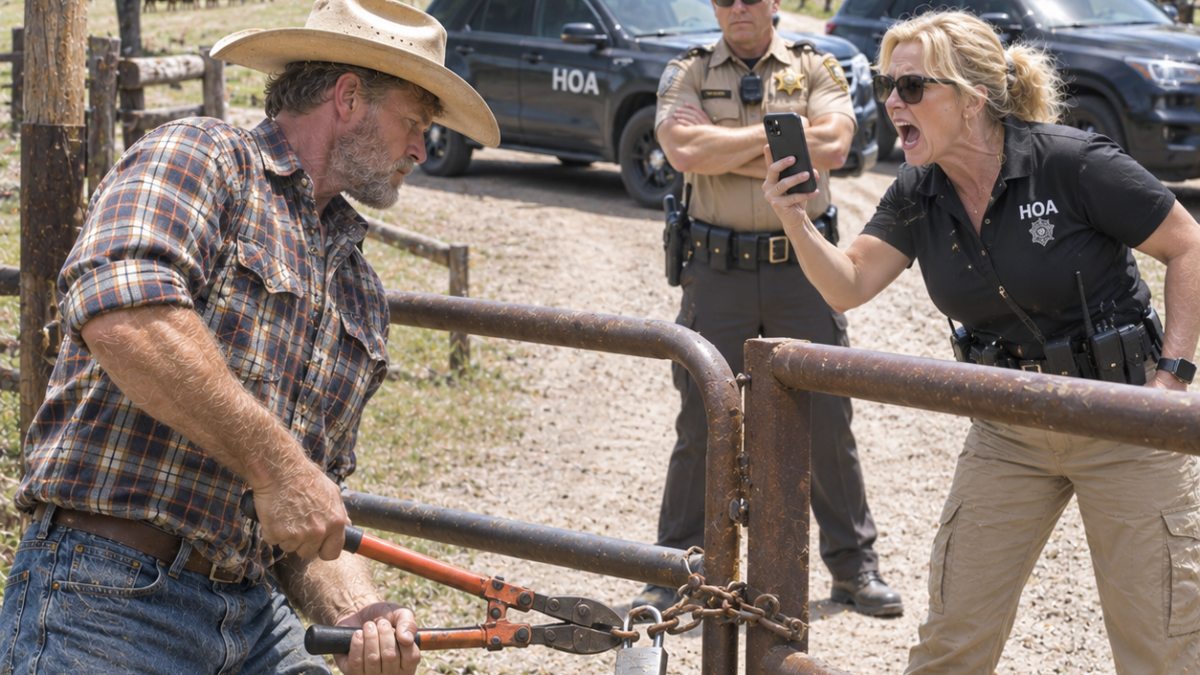
“Cut That Lock and I’ll Have You Arrested!” the HOA Patrol Chief Screamed While Filming Me at the Gate to My Family’s 640-Acre Ranch. She Claimed Her Board Now Controlled Our 1.8-Mile Private Road, and Two HOA SUVs Blocked My Entrance. I Cut the Lock Anyway—Then the Sheriff Asked for the Easement She Couldn’t Produce…
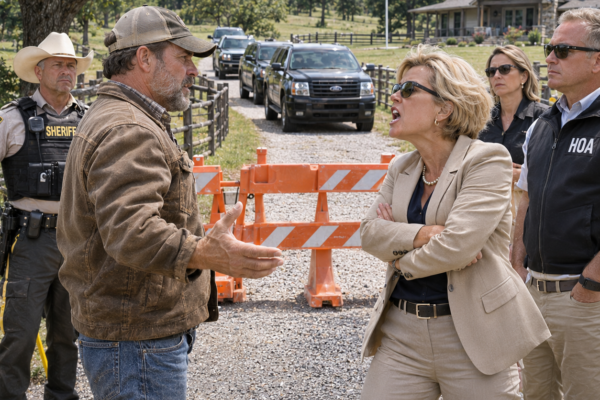
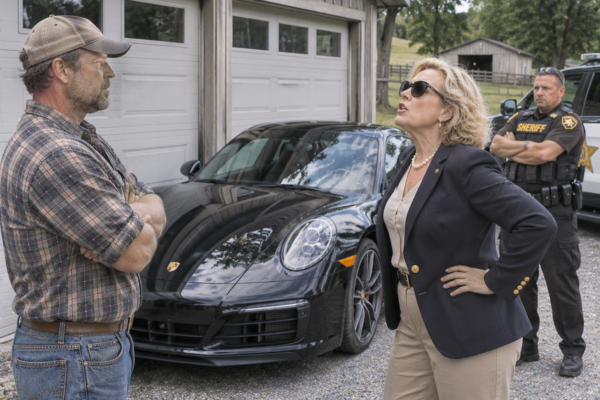
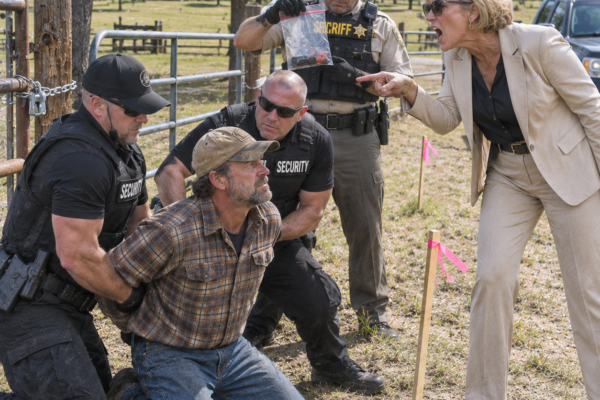
The woman in the black HOA uniform raised her phone and smiled as I brought the bolt cutters toward the heavy steel lock on my ranch gate.
“Go ahead, Mr. Whitmore. Destroy association property. I’m recording everything, and you’ll be arrested before breakfast.”
I looked at the lock.
Then at the new sign screwed into my gatepost.
SILVERCREST HOA — AUTHORIZED ACCESS ONLY.
I’d owned that gate for twenty-three years.
My family had owned the land behind it for nearly forty.
And until that morning, nobody had ever suggested I needed permission from a homeowners association to enter my own ranch.
“Marissa,” I said, “this is my gate.”
She laughed.
“Not anymore.”
At 6:20 that morning, I’d been returning from the north pasture after spending most of the night repairing a water-pump connection.
I was tired, hungry, and looking forward to breakfast.
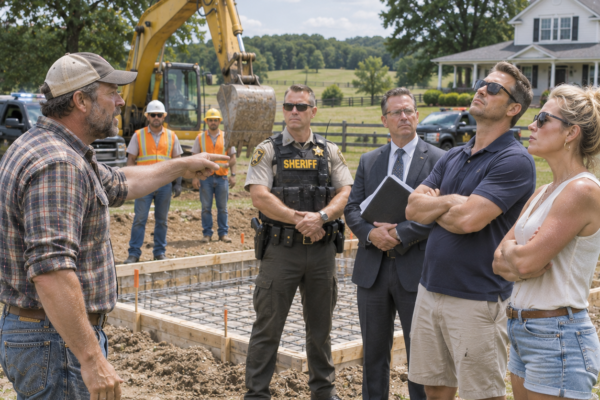
Instead, I found two SUVs marked SILVERCREST HOA PATROL parked outside my entrance.
Three people in matching uniforms stood around the gate.
And Marissa Keen, their supervisor, was filming me before I’d even climbed out of my truck.
My name is Caleb Whitmore. I’m fifty-eight years old, and I run High Mesa Ranch, a 640-acre cattle operation in western Colorado.
My grandfather bought the original property nearly four decades before the first Silvercrest house went up.
Our private gravel road runs 1.8 miles through the ranch, connecting the county highway to our working pastures, pump station, barns, and equipment sheds.
It has never belonged to Silvercrest Estates.
I’ve never joined their HOA.
And I’ve never signed an easement allowing their patrol vehicles, contractors, or residents to use it.
But eight months earlier, the association began treating our road like a shortcut.
First came a landscaping truck.
Then construction vehicles.
Then maintenance crews.
I repeatedly told them they were entering private property.
I sent certified letters to the HOA office.
I explained that heavy trucks could damage the culverts and interfere with moving cattle between pastures.
The association ignored every objection.
Now Marissa had taken matters further.
She’d locked me outside my own ranch.
I pointed toward the chain.
“Who authorized this?”
Marissa held up a sheet of paper with a silver HOA logo.
“Access Control Resolution 24B. The board has officially designated High Mesa Road as a community emergency-access route and utility corridor.”
I studied the document.
No county recording number.
No landowner signature.
No recorded easement.
Just an internal association resolution.
“Did the county approve this?” I asked.
“We don’t need county permission to manage our own access routes.”
I looked at her.
“Except this isn’t your access route.”
Her expression hardened.
“Your cooperation is no longer optional.”
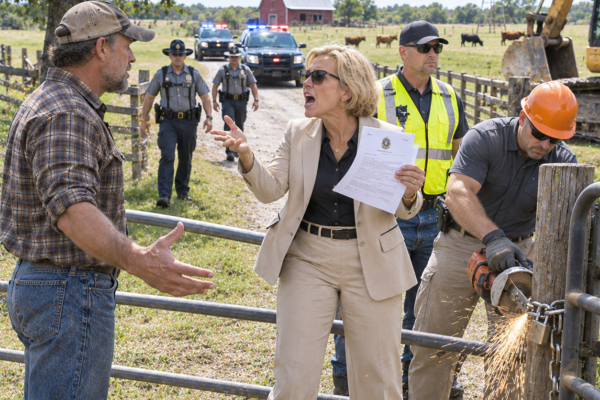
I took the cutters from my truck.
One of her patrol officers stepped backward.
Marissa raised her phone higher.
“If you cut that lock, I’m calling the sheriff!”
“Then make sure he knows which gate you’re standing in front of.”
I positioned the cutters around the exposed shackle.
The jaws closed.
There was a sharp metallic crack.
The lock dropped into the gravel.
Marissa gasped.
“You just committed a crime!”
I pushed the gate open.
She immediately ordered one of the SUVs across the entrance to block my truck.
Then she called 911.
“There’s a man destroying HOA security equipment and forcing entry onto restricted association property!”
I didn’t argue.
I didn’t touch the SUV.
I set the cutters back in my truck and waited beside the open gate.
Less than half an hour later, Sheriff Nolan Mercer arrived with a deputy.
Marissa rushed toward his vehicle.
“Sheriff! Arrest him! We have everything on video!”
Nolan looked at the broken lock.
Then at my gate.
Then toward the private gravel road disappearing between the pastures.
“Who owns this property?” he asked.
Marissa answered immediately.
“The HOA controls it.”
I opened my truck’s document folder.
“I own the land, Sheriff. Here’s my deed.”
Nolan examined the records.
Then he asked Marissa for the recorded easement giving Silvercrest the right to control my gate.
She handed him Resolution 24B.
He read it.
Turned it over.
Then looked at her.
“Ma’am, this is a decision made by your association. It doesn’t establish that your association owns this road.”
Marissa’s face reddened.
“We’ve been using it for months!”
“Did Mr. Whitmore give you permission?”
“No, but—”
“Then where is the legal right you’re relying on?”
She had no answer.
I thought that would settle everything.
But as Nolan prepared to leave, he asked me to step aside.
He lowered his voice.
“Caleb, there’s something you need to know. For the past three months, Silvercrest has been submitting information identifying your private road as part of its emergency-access network.”
I stared at him.
“To whom?”
“County dispatch and the departments reviewing their expansion plans.”
I looked toward the HOA sign.
Marissa hadn’t simply placed a lock on my gate.
Someone had been telling county agencies that my private road belonged to Silvercrest long before that morning.
And when the sheriff showed me the route designation entered into the emergency-access database, I noticed two words beside High Mesa Road.
WESTERN ACCESS.
I had never approved that name.
I had never seen that designation.
And I had no idea why a homeowners association would need to claim a working cattle road as its own.
But I was about to find out.
Part 2:
“Cut that lock, Mr. Whitmore. Please. I want the sheriff to see exactly what kind of criminal we’re dealing with.”
Marissa Keen held her phone at eye level, smiling as though she’d already won.
I stood beside the entrance to High Mesa Ranch with a pair of heavy-duty bolt cutters in my hands.
A black industrial lock hung from the chain on my gate.
It wasn’t mine.
Neither was the sign somebody had screwed into the cedar gatepost sometime during the night.
SILVERCREST HOA — AUTHORIZED ACCESS ONLY.
Two SUVs marked HOA PATROL sat along the gravel shoulder, and three uniformed association employees were watching me as though I were trying to break into a bank.
I looked at Marissa.
“You’re really going to have me arrested for opening my own gate?”
She tilted her head.
“For destroying HOA security equipment and entering a restricted access corridor. Yes.”
I glanced toward the ranch road winding between the pastures.
My grandfather had cut that road decades before Silvercrest Estates existed.
My father had hauled cattle along it.
I’d spent countless weekends repairing its drainage ditches and filling potholes after spring storms.
Now a woman in a black polo shirt was announcing that I no longer had permission to drive on it.
“Last chance,” Marissa said.
I positioned the cutter jaws around the lock.
The steel snapped with a sharp metallic crack.
The lock fell into the dust.
I pushed the gate open.
Marissa gasped dramatically.
“There! Everybody saw that!”
She turned toward her employees.
“Photograph everything. His truck, his license plate, the broken lock.”
Then she stepped closer.
“You just made the worst mistake of your life.”
I set the cutters in my truck bed.
“Marissa, I’ve made mistakes that cost more than that lock.”
She didn’t appreciate the humor.
Instead, she ordered one of her officers to park an SUV across the gate opening.
The driver hesitated.
Then he obeyed.
I didn’t move my truck.
I wasn’t going to risk hitting a vehicle or injuring someone just to prove I could get through.
Marissa called the sheriff’s office and reported that an armed, aggressive trespasser had destroyed association property.
I listened to her description.
When she got to the part about me threatening her officers, I shook my head.
That wasn’t even close to what had happened.
But her phone was recording.
So was my dashboard camera.
And I’d spent enough years working with livestock to know that when an animal is trying to get you to react, sometimes the smartest thing is to stand quietly outside its reach.
My name is Caleb Whitmore.
I was fifty-eight when Silvercrest Estates decided my family’s 640-acre cattle ranch ought to become its second driveway.
High Mesa Ranch sat in the mountains outside Montrose, Colorado, where summer mornings were cool, the pastures turned golden by August, and the winter wind could make a man question every decision that had led him outdoors.
My grandfather bought the property nearly forty years earlier.
Back then, much of the surrounding valley was ranchland.
There were no gated subdivisions.
No decorative entrance monuments.
No golf-cart patrols.
And certainly no homeowners association issuing rules about who could use a private cattle road.
My grandfather raised Herefords.
My father expanded into a mixed breeding and grazing operation.
I took over the daily management after Dad’s health began declining.
By the time this happened, I’d been responsible for the place for more than twenty years.
The ranch wasn’t an investment I kept for sentimental reasons.
It was a working operation.
We maintained fencing, irrigation pumps, cattle guards, feed storage, and several miles of private ranch roads.
I employed two full-time hands and brought in additional help during calving and shipping seasons.
My wife, Sarah, handled much of the bookkeeping until she retired from that responsibility and opened a small quilt shop in town.
Our son lived in Grand Junction and visited when his schedule allowed.
Our daughter taught elementary school in Delta.
The ranch had its problems.
Late snow.
Dry summers.
Machinery breakdowns.
Cattle getting into places cattle had no business being.
But it was ours.
And I knew every section of land well enough to navigate most of it without headlights.
High Mesa Road ran 1.8 miles from the county highway through the working center of the ranch.
It passed the lower cattle pasture, crossed a seasonal drainage on a culvert, and continued toward the equipment barns and northern pump station.
It wasn’t engineered for constant commercial traffic.
It was a private ranch road.
I used it for moving cattle, hauling feed, transporting equipment, and reaching parts of the property during emergencies.
When Silvercrest Estates was built beyond the eastern ridge, its original entrance connected to a separate county-maintained road.
That arrangement worked for years.
Then the developer announced a western expansion.
At first, I paid little attention.
They owned land beyond the ridge.
I owned my ranch.
I assumed we could coexist.
That was before their trucks began appearing on High Mesa Road.
The first landscaping vehicle drove through one January morning.
I stopped the driver near the lower pasture.
“You’re on private property.”
He looked confused.
“Dispatch told me this was the Silvercrest service entrance.”
“It isn’t.”
He apologized and turned around.
A few days later, another truck came through.
Then a maintenance van.
Then two SUVs belonging to the HOA patrol.
I contacted the association office.
I explained that High Mesa Road was private and that the subdivision had no permission to use it.
The office manager promised to notify the contractors.
The traffic continued.
In February, I sent a certified letter.
Then another in March.
Then another in April.
Each letter identified the property, the gate, and the unauthorized use.
Each requested that the HOA stop directing vehicles onto my ranch.
I kept the delivery confirmations.
The association acknowledged receiving some of the correspondence, but nobody provided a recorded easement or any other legal basis for using the road.
Instead, Marissa Keen began appearing.
She was supervisor of the Silvercrest HOA Patrol, a private security and compliance service contracted by the association.
She wore a black uniform shirt with a silver shield-shaped patch and drove an SUV with amber lights on the roof.
Those details were apparently meant to impress people.
They didn’t impress me.
The first time we spoke, she informed me that Silvercrest residents had been using the road for months.
“So?” I asked.
“So it’s an established access route.”
I stared at her.
“A delivery driver taking a wrong turn doesn’t establish a property right.”
She smiled.
“That’s your opinion.”
“No, ma’am. That’s my land.”
She warned that restricting access could interfere with community safety.
I told her any genuine emergency responder exercising lawful authority would receive appropriate access, but the HOA couldn’t turn that principle into permission for daily construction traffic.
She didn’t like that distinction.
Over the following months, the vehicles kept coming.
Sometimes they entered through the gate when ranch workers had left it open for equipment.
Sometimes someone moved the chain aside.
A few drivers claimed their navigation system directed them through.
Others said they’d been given a map showing the road as SILVERCREST WESTERN ACCESS.
I hadn’t authorized that name.
I had no idea where the map came from.
Then, on a cold morning in early June, I found Marissa’s lock.
I’d been out most of the night checking a water-pump connection in the north pasture.
The equipment had started cycling improperly, and I wanted the problem corrected before the cattle went through another hot day without reliable water.
By the time I reached the ranch entrance, I was tired enough to fall asleep sitting upright.
Instead, I found my gate chained shut.
Marissa had two patrol vehicles with her.
One of her employees was photographing the entrance.
Another was placing a laminated notice beside the new sign.
She held up a printed page.
ACCESS CONTROL RESOLUTION 24B.
According to Marissa, the HOA board had designated High Mesa Road as an emergency-access route, utility maintenance corridor, and secondary entrance serving Silvercrest.
I read the document.
It contained no recorded easement.
No county approval.
No agreement from the owner.
Not even the parcel number of High Mesa Ranch.
Just a declaration adopted by people who didn’t own the property.
“Who gave you authority to lock me out?” I asked.
“The board.”
“Which board?”
“The Silvercrest Estates HOA.”
“Am I a member?”
“No.”
“Does the HOA own this road?”
“We control access to it.”
“That’s not what I asked.”
She raised her phone.
“Mr. Whitmore, I’m documenting your refusal to comply.”
I looked toward the gate.
Then I cut the lock.
Less than thirty minutes later, Sheriff Nolan Mercer arrived with Deputy Ethan Brooks.
Marissa ran toward the patrol vehicle before Nolan had fully stepped out.
“Sheriff, I want him arrested. He destroyed thousands of dollars of HOA security equipment.”
Nolan looked toward the broken lock.
“Thousands?”
“The checkpoint is part of our community safety system.”
He turned toward me.
“Caleb, what happened?”
I handed him my deed and a copy of the subdivision boundary plat.
“This is my ranch. They placed their lock on my gate. I removed it.”
Nolan examined the paperwork.
Then he looked at Marissa.
“Do you have a recorded easement granting the association access to this road?”
She held up Resolution 24B.
He read it.
Then handed it back.
“Ma’am, this is an internal HOA resolution.”
“It’s legally binding.”
“On whom?”
“Anyone using the designated access route.”
Nolan looked toward the road.
“Mr. Whitmore owns this property. Is he a member of your association?”
Marissa hesitated.
“No, but that doesn’t matter.”
“It matters considerably.”
She changed her argument.
“The association has established a prescriptive easement. We’ve used the road openly for months.”
I looked at her.
“Eight months, Marissa. And I’ve been objecting in writing since the first week.”
Nolan nodded.
“A prescriptive right isn’t established merely because people drove down a road for several months. If the association believes it has an easement, it’ll need to establish that through the proper process.”
Marissa folded her arms.
“So you’re allowing him to destroy private property?”
“I’m not making a final civil determination about the lock. I’m documenting the circumstances and determining whether there’s a basis for criminal enforcement.”
He looked at the gate again.
“There isn’t sufficient evidence here to arrest Mr. Whitmore for trespassing on his own land.”
Marissa stared at him.
Then she announced that another lock would be installed by morning.
Nolan looked directly at her.
“I strongly advise against changing this gate again without lawful authority.”
She climbed into her SUV.
Before driving away, she lowered the window.
“You haven’t won anything, Mr. Whitmore.”
I looked at the broken lock lying beside the post.
“I got my gate open. That’s enough for breakfast.”
She drove off.
Nolan waited until her patrol vehicles disappeared.
Then he asked me to step aside.
“Caleb, there’s something else you should know.”
I looked at him.
“For the last three months, Silvercrest has been submitting information identifying this road as part of its emergency-access network.”
I frowned.
“To whom?”
“County dispatch received updated routing information. The development’s expansion materials also refer to your road as the western entrance.”
“Who approved that?”
“That’s what I think you need to find out.”
I stared toward the entrance.
Somebody had gone beyond installing a lock.
They’d begun persuading county agencies and contractors that High Mesa Road was no longer private.
And if those records weren’t corrected, the problem would keep coming back long after Marissa’s broken lock had been thrown away.
I thanked Nolan.
Then I called a lawyer.
Meredith Pike had been handling ranch-property disputes in western Colorado for almost twenty years.
She was fifty-one, wore silver-framed glasses, and kept an old county plat hanging behind her desk.
I’d hired her several years earlier to review a grazing-access agreement with a neighboring landowner.
She’d been thorough, direct, and unwilling to tell a client what he wanted to hear just to make him happy.
That’s exactly what I needed now.
I arrived carrying my deed, the HOA resolution, photographs, and copies of the certified letters.
Meredith spread everything across her desk.
She read the resolution first.
Then the survey.
Then my correspondence.
When she finished, she looked up.
“Caleb, why does Silvercrest need your road?”
I shrugged.
“Apparently it’s a wonderful place to drive.”
She didn’t smile.
“I’m serious.”
“So am I. I haven’t given them permission. I don’t know why they keep insisting.”
She opened a county planning document she’d already retrieved.
“Then look at this.”
The map showed Silvercrest Estates and a proposed expansion along the western ridge.
Eighty new residential lots were planned, many with views across the valley.
The expansion was connected to the existing subdivision by a narrow road that wound through a steep section of hillside.
Meredith pointed toward the western boundary.
“The developer needs adequate access for construction, emergency vehicles, and future residents.”
I studied the drawing.
“So?”
“High Mesa Road cuts almost eleven miles off the alternative route around the mountain.”
I looked closer.
The proposed secondary entrance ran straight onto my ranch road.
Not a nearby road.
Not a county right-of-way.
Mine.
“You’re kidding.”
“No.”
She pointed toward the existing entrance.
“Without your road, the developer may need a new bridge crossing and major improvements to the other access route. Certain subdivision approvals could require further review.”
I stared at the map.
“How much money are we talking about?”
“Potentially several million dollars in additional infrastructure expenses. But we need the actual engineering estimates before assigning a figure.”
I leaned back.
Suddenly Marissa’s lock made a great deal more sense.
Silvercrest wasn’t trying to control my gate because it cared about security.
It wanted my road because the entire western expansion had been planned around using it.
Meredith pulled out another document.
It was a promotional map distributed with the new development’s sales material.
Across my ranch was a thick blue line.
Beside it were the words:
SILVERCREST WESTERN ACCESS.
I looked at her.
“They’re selling lots based on access they don’t own?”
“That’s what the material suggests. We need to establish what buyers and regulators were actually told.”
She turned another page.
A development presentation described the road as an existing community access corridor.
No mention of High Mesa Ranch.
No mention of private ownership.
No mention of the four certified letters I’d sent objecting to its use.
“They’re trying to make it sound established,” I said.
Meredith nodded.
“And the longer people use it without correction, the more they’ll argue that the arrangement should continue.”
I rubbed my forehead.
“What do we do?”
“First, preserve your evidence. Second, clearly notify the HOA and developer that the road is private. Third, get an updated survey and complete title review.”
I nodded.
“And the gate?”
“Don’t turn this into a contest over how many locks each side can cut. Let us put the ownership dispute before a court if necessary.”
I thought about Marissa filming me.
“She wants footage of me losing my temper.”
“Then disappoint her.”
Meredith smiled faintly.
“People who think they’re entitled to something often become generous with evidence when they believe nobody can stop them.”
I went home and installed a weatherproof security camera above the gate.
Then I mounted a wooden sign.
HIGH MESA RANCH — PRIVATE PROPERTY
NO HOA ACCESS WITHOUT OWNER PERMISSION
I replaced the broken lock with my own.
I also made sure our hired hands knew not to confront anyone physically and to document unwanted entry rather than escalate it.
For two days, nothing happened.
On the third morning, Marissa returned with a locksmith.
I watched the approach on my phone.
She had one HOA patrol vehicle and an employee carrying a clipboard.
The locksmith wore a blue work shirt and looked uncertain.
I drove down to the gate.
“Morning, Marissa.”
She turned.
“Mr. Whitmore. We’re restoring authorized access.”
I looked at the locksmith.
“Has she told you this is private ranch property?”
He hesitated.
“I’m here on a work order.”
“Then you should know I haven’t authorized anybody to remove my lock.”
Marissa stepped between us.
“The HOA has already established control.”
“Through what document?”
“Resolution 24B.”
I looked at her.
“The sheriff explained that document doesn’t establish an easement.”
She smiled at her phone.
“Once we’ve controlled this gate long enough, Mr. Whitmore, you’ll have no practical way to take the road back.”
I stared at her.
“Would you repeat that?”
She lifted her chin.
“You’re delaying an inevitable arrangement.”
The locksmith looked increasingly uncomfortable.
I told him again that I objected to the work.
I also told Marissa I was documenting the incident and would seek legal relief.
Then I stepped back.
The locksmith called his dispatcher to verify the authorization.
After a tense conversation, he proceeded on the instructions supplied by his contracting customer, replacing my lock with a new HOA lock.
I didn’t interfere physically.
I recorded everything.
Marissa filmed the process herself.
When the new lock clicked shut, she smiled.
“There. Official access control restored.”
I looked toward the camera above the gate.
“You’re going to wish you’d checked with a real estate attorney.”
She laughed.
“You’re going to wish you’d been more cooperative.”
I drove home using the secondary ranch entrance.
Then I sent Meredith the footage.
She called immediately.
“Caleb, did you hear what she said about keeping control long enough?”
“Every word.”
“Keep the original video and don’t edit it.”
“I won’t.”
“That statement may be significant. It suggests she understands ownership is disputed and is trying to create control through conduct rather than a valid agreement.”
I looked toward the eastern ridge.
“She’s filming the whole thing too.”
“Good. Her original recording may be available through discovery.”
That wasn’t the end of the unauthorized traffic.
A week later, a Silvercrest construction truck carrying landscaping stone entered the ranch.
The truck was far heavier than the pickups and feed vehicles the road normally handled.
Near the seasonal drainage crossing, it drove across the old culvert.
The road surface collapsed beneath one side of the truck.
The driver stopped before the vehicle overturned, but the front wheel dropped into the damaged section and the truck became stuck.
Nobody was injured.
That was the only good news.
The culvert had been crushed.
Water and gravel began washing into the drainage channel.
The damage made the crossing unsafe for livestock trailers and several pieces of ranch equipment.
I photographed the scene, arranged for proper recovery, and brought in a road contractor to inspect the culvert.
His initial estimate exceeded $38,000.
My stomach sank.
That wasn’t the kind of repair I wanted to make in the middle of the grazing season.
I called Silvercrest.
Marissa answered.
“Your construction truck destroyed a culvert on my road.”
Her reply was immediate.
“The association isn’t responsible for damage occurring on property under our management.”
I stared at the phone.
“Under your management?”
“High Mesa Road is a recognized community-access route.”
“Then are you admitting Silvercrest directed that truck onto the road?”
“Of course. It’s our access route.”
I asked her to put the association’s position in writing.
She did.
The email arrived that afternoon.
It stated that Silvercrest could not be held liable for damage occurring along a road under its own management and control.
I forwarded it to Meredith.
She called back.
“Caleb, she’s documenting an assertion of control over your property while denying responsibility for the consequences.”
“Seems to be her favorite hobby.”
“Keep the email. We’re adding the culvert damage to the case.”
Then she paused.
“And get a temporary alternative crossing assessed. We don’t want somebody getting hurt.”
We arranged a safe detour for ranch traffic and blocked off the damaged culvert until repairs could begin.
For nearly three weeks, I had to drive equipment the long way around the lower pasture.
It added hours to ordinary work.
My foreman, Pete Hanson, started keeping a separate log of the extra time.
I hadn’t asked him to.
He simply brought me the notebook one evening.
“You ought to keep track of what they’re costing us,” he said.
I looked at the pages.
Dates.
Employees.
Equipment.
Extra travel.
Feed deliveries delayed.
Work postponed because of the crossing.
I nodded.
“Thank you, Pete.”
He looked toward the hills.
“Your grandfather would’ve run those people off with a shovel.”
I smiled.
“He probably would’ve tried.”
Pete laughed.
“But you doing it your way?”
“I have a feeling a judge will be more interested in invoices than shovels.”
He nodded.
“Then let’s give the judge some good invoices.”
The independent survey was completed the following week.
Everett Sloan had spent more than thirty years surveying ranches, subdivisions, and mountain properties.
He arrived with two assistants and enough historical maps to cover my kitchen table.
We walked the gate first.
Then the road.
Then the drainage ditches.
Then the points where Silvercrest’s western expansion approached the ranch boundary.
Everett located the controlling monuments and reconciled them with the recorded deeds and historical plats.
He confirmed what my family had known for decades.
The gate belonged to High Mesa Ranch.
The entire disputed 1.8-mile road lay within the ranch boundary.
The culvert and drainage ditches were on my property.
No recorded easement granted Silvercrest routine access.
And no declaration had ever brought High Mesa Ranch into its HOA.
Everett showed me the completed survey.
“Your property rights are clear from the controlling records,” he said.
“Then why does their map show an easement?”
“That’s what interests me.”
He opened a copy of Silvercrest’s western expansion submission.
A dotted line ran across my road.
It was labeled:
EXISTING ACCESS EASEMENT.
Everett placed it beside the historical plats.
“There’s no reference to a recorded instrument creating that right.”
He looked toward me.
“An easement has to come from a legally recognized basis. Drawing a line on a planning map doesn’t create one.”
I studied the submission.
“Who signed it?”
Everett pointed toward the certification block.
LORETTA VANCE — PRESIDENT, SILVERCREST ESTATES HOA.
I stared at the name.
Until then, most of my conflict had been with Marissa.
But the paperwork led higher.
To the person running the association.
And the woman who had allowed her patrol supervisor to keep treating my private road like something the HOA could simply claim.
Loretta Vance requested a meeting two days after Everett’s survey reached the association’s attorney.
She didn’t call me directly.
Her lawyer contacted Meredith and proposed an informal conference with the HOA board.
We agreed, provided the meeting was documented and no one attempted to describe the discussion as my consent to the road’s use.
The meeting took place in Silvercrest’s clubhouse.
Marissa was there.
So were Loretta, three directors, the association’s attorney, and a representative from the developer.
Loretta was about sixty, with carefully styled gray hair and the kind of calm expression that made her more intimidating than Marissa.
She didn’t shout.
She spoke as though every point had been decided before anyone entered the room.
“Mr. Whitmore,” she began, “we appreciate the opportunity to address this unfortunate misunderstanding.”
I looked at Meredith.
She remained silent.
Loretta continued.
“Silvercrest has invested substantially in maintaining High Mesa Road. We believe that long-established use and the expenditures made in reliance on that use create a legitimate interest in continued access.”
I leaned forward.
“Who asked you to maintain my road?”
She paused.
“We’ve been using it for the benefit of residents.”
“That wasn’t my question.”
“Our contractors have performed maintenance.”
“Without permission.”
Loretta folded her hands.
“You didn’t physically prevent the work when it began.”
Meredith opened her folder.
“That’s not accurate.”
She placed four certified letters on the table.
January.
February.
March.
April.
Each objecting to the association’s use.
Each delivered to the Silvercrest office.
Each accompanied by proof of receipt.
Loretta examined them.
Marissa looked toward the developer’s representative.
Nobody spoke for several seconds.
Then Loretta changed direction.
“We’re prepared to purchase an easement.”
I looked at her.
“No.”
“Seventy-five thousand dollars.”
“No.”
“One hundred fifty thousand.”
“No.”
She studied me.
“Two hundred fifty thousand dollars for permanent access. That’s a substantial amount for a gravel road.”
I felt anger rise.
Not because the money was insignificant.
It wasn’t.
But she was talking about the road as though it were an unused strip of dirt behind a warehouse.
That road crossed the working heart of my ranch.
It passed cattle pastures, a water-pump station, equipment storage, and the route I used to move animals between grazing areas.
Turning it into a subdivision entrance would change daily operations permanently.
I looked at Loretta.
“What happens when a livestock trailer meets an HOA resident trying to get to the clubhouse?”
She didn’t answer.
“What happens when seventy construction trucks a week start using a culvert that was never built for them?”
“Those issues can be addressed through improvements.”
“With whose permission?”
She looked impatient.
“We’d compensate you.”
I shook my head.
“You’re offering money for something I’m not willing to sell.”
Loretta finally lost her composure.
“That road is too important to this community to be controlled by one man’s decision!”
I looked directly at her.
“Then you should’ve considered that before building a development that depended on land belonging to somebody else.”
Her palm struck the table.
“Silvercrest will continue using the road until a court tells us otherwise.”
Meredith closed her folder.
“Thank you for clarifying your position.”
We stood and left.
By late afternoon, she’d filed for emergency relief.
The application included Everett’s survey, the certified objections, the gate footage, the towing and access records, the culvert damage, and Loretta’s refusal to stop using the road.
The judge reviewed the evidence and issued a temporary order protecting the property while the case proceeded.
The association and those acting under its direction were prohibited from using High Mesa Road without lawful authority, changing or installing locks on the gate, or sending patrol and contractor traffic onto the ranch.
The order was served through the required process.
Meredith sent copies to the association, its counsel, and the responsible contractors.
I arranged for the unauthorized lock to be removed and my own hardware restored.
Then I placed a laminated copy of the court order inside a waterproof holder beside the entrance.
For three days, the gate remained quiet.
I slept better than I had in weeks.
I finally repaired the section of fencing near the south pasture.
Pete began preparing for a cattle shipment.
Sarah and I ate dinner without a new HOA email interrupting us.
Then, on the fourth morning, my phone sounded a gate-camera alert.
Marissa was back.
She had two patrol SUVs with her.
I opened the live feed.
She stepped out, walked to the gate, and examined the court order.
One of her officers asked whether they should leave.
Marissa shook her head.
She read part of the order aloud.
Then she said, “This applies to the HOA board. We’re an independent patrol operation. We have separate security responsibilities.”
I stared at the screen.
The officer looked unconvinced.
“Ma’am, it says employees and agents acting on the association’s behalf.”
She waved him away.
“Don’t pretend to interpret court orders.”
Then she took a pair of bolt cutters from her vehicle.
My stomach tightened.
Not because I believed her explanation.
Because she was about to make the dispute far more serious.
She cut my lock.
The chain dropped.
She pushed the gate open.
Then she directed both SUVs onto the road.
I called Meredith.
She contacted the sheriff’s office and provided the relevant information.
I didn’t drive down to confront Marissa.
By then, I understood the importance of leaving the matter to the court and law enforcement.
Marissa drove nearly half a mile onto the ranch.
Then she found Sheriff Nolan Mercer waiting beside his patrol vehicle.
He wasn’t hiding.
He stood in plain view near a safe turnout, where he’d stopped after being notified of the potential order violation.
Marissa climbed out.
“Sheriff, we’re performing routine security duties.”
Nolan looked toward the gate.
“Did you cut Mr. Whitmore’s lock?”
She lifted her chin.
“The association has authorized our patrol operations.”
“Have you read the court order?”
“Yes.”
“Then why did you enter?”
“It applies to the HOA board, not private security personnel.”
Nolan held up his copy.
“Ma’am, the order addresses the association and those acting under its authority. Your contracting arrangement doesn’t give you permission to ignore it.”
Marissa crossed her arms.
“This is a civil dispute.”
“Compliance with a court order isn’t optional because you call it civil.”
He directed the patrol vehicles to leave the ranch.
He documented the entry and the damaged lock, and the incident was referred to the court for appropriate enforcement proceedings.
I watched the video later.
Marissa looked irritated, not frightened.
She still seemed convinced Loretta would protect her.
But when Meredith requested the association’s communications, the paper trail told a different story.
The discovery process produced internal emails and meeting materials.
Some were ordinary messages about scheduling patrols or maintaining landscaping.
Others were not.
One email from Loretta instructed staff to establish a consistent pattern of access through High Mesa Road.
Another urged the patrol team to maintain physical control of the gate.
Then came a message from Marissa.
We should control the entrance immediately and let the attorneys resolve the records later.
I read it twice.
Meredith turned another page.
A board member had warned that the county records showed no easement benefiting Silvercrest.
Loretta’s reply was brief.
We need to create a reality on the ground before everyone starts asking questions about paperwork.
I put the papers down.
For months, I’d wondered whether Silvercrest genuinely misunderstood its rights.
Now I had evidence that senior leadership knew no recorded easement had been established.
Rather than correct the maps, they had tried to make unauthorized access appear permanent.
Meredith showed me another series of emails.
Their dates lined up with the incidents at my gate.
A board meeting about western expansion.
Within forty-eight hours, a new lock appeared.
Another expansion meeting.
Within two days, Marissa arrived with the locksmith.
A later meeting reviewing access obstacles.
Shortly afterward, the association continued using the road despite the written objections.
Then, after the court order, Marissa cut my lock again.
That pattern alone didn’t establish every person’s role.
But combined with the messages, it showed the conduct was part of a coordinated effort rather than one patrol supervisor’s isolated temper.
The financial records made the problem even worse.
Silvercrest had been collecting a special road-infrastructure assessment from its own homeowners.
The assessment was presented as funding maintenance and improvements to the western access route.
My road.
A road the association didn’t own.
A road I’d never authorized it to use.
The residents had paid money for an arrangement they believed was lawful because their board said it was.
Meredith looked at me.
“Caleb, this isn’t only about your property anymore.”
I nodded.
“The homeowners have been paying for something the HOA couldn’t deliver.”
“And the expansion buyers may have relied on misleading access representations.”
I looked toward the map.
“Then they deserve to know.”
A special homeowners’ meeting was called.
This time, the turnout was enormous.
Residents filled the clubhouse.
Some had brought their assessment statements.
Others carried promotional brochures showing High Mesa Road as the western entrance.
Loretta stood at the front, looking less confident than I’d ever seen her.
She tried to blame the unauthorized gate operations on Marissa.
“Certain patrol decisions were made without the board’s full knowledge,” she told the room.
Marissa was standing near the side wall.
Her face turned bright red.
“That’s a lie.”
Loretta ignored her.
Marissa opened a folder.
“You told me to establish access. You told me to keep control of the gate.”
Loretta turned toward her.
“Marissa, this is not the place.”
Marissa raised a printed email.
“Then where is the place? Because I’m not taking responsibility for instructions you gave me.”
A murmur spread through the room.
Then Marissa read Loretta’s message aloud.
Create a reality on the ground before everyone starts asking questions about paperwork.
The room became silent.
I watched Loretta’s expression.
Her own patrol supervisor had just connected the disputed gate operations directly to the board leadership.
An elderly resident stood.
“Mrs. Vance, have we been paying road assessments for somebody else’s property?”
Loretta began explaining the value of the western expansion.
The man interrupted.
“That wasn’t my question.”
Another homeowner stood.
“Did the board know Mr. Whitmore had refused permission?”
Nobody answered.
Then Elliot Marsh, a director who’d initially supported the project, spoke.
“We received legal warnings that the road rights weren’t secured. I should’ve insisted we stop.”
The room grew louder.
One woman demanded an audit.
Another asked whether lot buyers had been misled.
A man near the back wanted to know who would pay for the damaged culvert and the lawsuit.
Loretta tried to regain control.
But the questions kept coming.
For months, she’d treated my ranch as an obstacle standing between her and an expensive expansion.
Now her own members were discovering that she had put their money and their association at risk.
A few days later, Silvercrest’s insurer notified the board that intentional misconduct and knowing violations of legal orders might fall outside certain portions of its liability coverage.
That warning changed everything.
Directors who’d previously remained silent requested that their objections be entered into the official minutes.
Two resigned within a week.
The expansion’s financing and marketing arrangements came under renewed review.
And Marissa, who’d spent months insisting that Silvercrest would protect her, found herself excluded from the leadership meetings.
I didn’t need to threaten any of them.
I simply needed the records to remain accurate.
The court would decide what those records meant.
The final hearing took place in the county courthouse on a cold November morning.
I arrived with Meredith, Everett Sloan, Pete Hanson, and three boxes of records.
Loretta sat at the defense table with the association’s attorney.
Marissa sat behind her.
Neither woman looked in my direction.
The courtroom wasn’t particularly large, but several Silvercrest homeowners had come to watch.
Some had supported the expansion.
Others had opposed it.
Most seemed tired of discovering that decisions made in their names had created legal problems they never wanted.
Meredith began with the simplest issue.
Who owned High Mesa Road?
Everett testified about his survey.
He explained how he’d located the original boundary monuments, compared the historical deeds, and verified the 1.8-mile route.
His conclusion was clear.
The gate, road, drainage ditches, and culvert were within High Mesa Ranch.
No recorded easement had been found granting Silvercrest the access rights it claimed.
Then Meredith displayed the association’s planning map.
EXISTING ACCESS EASEMENT.
“Mr. Sloan, did you locate the instrument creating this easement?”
“No.”
“Was the road dedicated to public use?”
“No.”
“Was High Mesa Ranch annexed into Silvercrest Estates?”
“No.”
“Did any property record give the HOA authority to replace Mr. Whitmore’s gate locks?”
“No.”
Loretta’s attorney questioned Everett about historical use and the possibility of an unrecorded right.
Everett acknowledged that the ultimate legal determination belonged to the court.
But he explained that the records supplied no support for Silvercrest’s claimed easement.
Meredith then introduced my certified objection letters.
All four.
Each received by the association.
Each stating that the road was private and the HOA lacked permission to use it.
The judge examined the delivery confirmations.
Then came the videos.
The first showed Marissa standing beside the gate while I cut the unauthorized HOA lock.
She told me I was committing a crime.
She claimed Silvercrest already controlled the entrance.
Then Meredith played the recording of the locksmith visit.
Marissa’s voice came through the courtroom speakers.
“Once we’ve controlled this gate long enough, Mr. Whitmore, you’ll have no practical way to take the road back.”
Nobody laughed.
The third recording showed her cutting my lock after the court had issued its temporary order.
Meredith asked whether Marissa had read the order before entering.
She admitted she had.
“Did an attorney advise you that the order didn’t apply to your patrol service?”
“No.”
“Did the judge grant your company an exemption?”
“No.”
“Then why did you cut the lock?”
Marissa looked down.
“I believed we had a separate security responsibility.”
Meredith waited.
“Based on what legal authority?”
Marissa didn’t answer.
That silence was more revealing than another argument would have been.
Next came the internal correspondence.
Loretta’s instruction to establish control.
The warning from a board member that no easement existed.
And the message telling staff to create a reality on the ground before questions arose about paperwork.
Loretta tried to characterize those messages as ordinary planning discussions.
But the dates aligned with the installation of the locks, the unauthorized contractor traffic, and the misleading access maps.
The court found that Silvercrest had not established the claimed easement and had repeatedly interfered with my property rights.
The temporary protections were strengthened while the remaining financial questions were resolved.
Meredith then presented our damages.
She didn’t ask the court to accept a dramatic number without supporting evidence.
Every loss had to be documented.
The culvert repair exceeded $38,000.
The road surface had suffered additional damage from heavy construction vehicles.
Gate hardware had been destroyed or replaced repeatedly.
The survey had cost money.
So had emergency repairs, additional ranch transportation, and work hours lost because the lower crossing was unusable.
Pete testified about the daily logs he’d kept.
An independent expert examined the repair costs and the economic effects of the unauthorized road use.
The evidence concerning Silvercrest’s promotional claims and the financial benefit it sought from using my road was also considered in evaluating the deliberate nature and consequences of its conduct.
The association contested several categories.
Not every amount Meredith initially claimed was recoverable.
The court reviewed the evidence and applicable remedies rather than simply awarding every number in our binder.
When the final judgment was issued, Silvercrest was required to pay approximately $486,000 in combined damages, recoverable costs, and other court-authorized financial relief.
I sat quietly while Meredith explained the allocation afterward.
It was a substantial judgment.
But I knew how much time, work, and money had gone into reaching it.
The ranch would still need repairs.
We still had to restore sections of the road.
And no amount of money could erase months of being told I had no right to enter my own property.
The permanent injunction mattered more to me.
Silvercrest and those acting on its behalf were prohibited from using High Mesa Road without my permission or another independently valid legal right.
They couldn’t install locks, cameras, checkpoints, or signs on the ranch.
They couldn’t direct ordinary HOA traffic onto the road.
The association had to correct its maps and marketing materials and notify contractors that the western access route was unavailable.
Any genuine government emergency authority remained unaffected.
I had never intended to obstruct firefighters, paramedics, or deputies responding to emergencies.
I simply refused to let an HOA convert that possibility into permission for routine subdivision traffic.
Separate proceedings addressed the improper road assessments collected from Silvercrest homeowners.
The association arranged an independent audit and a refund process for the amounts that had been collected or spent without adequate authority.
The western expansion plans were revised.
The developer had to pursue lawful access alternatives rather than continue advertising a route across my land.
That meant reconsidering the bridge and road improvements it had originally hoped to avoid.
The work would be expensive.
But its cost wasn’t my responsibility.
Shortly after the judgment, Loretta was removed as HOA president.
Marissa lost her supervisory position, and the patrol contract was restructured under new oversight.
The company adopted stricter rules prohibiting its personnel from changing gates, restricting access, or entering disputed private property without verified authorization.
I didn’t attend the board vote.
Sarah and I were busy repairing a water trough.
When Pete told me the news, I just nodded.
Then I picked up my wrench and finished the job.
A few weeks later, Meredith called.
“Caleb, have you thought about replacing the gate?”
“Why?”
“After everything that’s happened, you might want a new one.”
I looked toward the entrance.
The steel was scratched.
The old chain had been replaced.
Several marks remained where different cutters had bitten into the hardware.
“That gate’s still sound.”
“I know. But you could have a fresh one installed.”
I considered it.
Then shook my head, even though she couldn’t see me.
“No. I think I’ll keep it.”
“May I ask why?”
“Because those marks tell a story worth remembering.”
She laughed softly.
“That’s one way to look at it.”
After we hung up, I walked down to the gate.
The afternoon sun was dropping behind the western ridge.
The road lay quiet.
No HOA patrol vehicles.
No contractor trucks.
No strangers holding a resolution and demanding keys to my property.
Just the gravel road my grandfather had cut through the ranch decades earlier.
I was repairing a hinge when a white SUV slowed outside the entrance.
For a second, my shoulders tightened out of habit.
Then I saw the driver.
A woman in a plain work jacket stepped out.
She remained on the public side of the gate.
“Mr. Whitmore?”
“That’s me.”
“I’m Dana Foster, the new Silvercrest patrol supervisor.”
I set down my wrench.
“Something I can help you with?”
She nodded toward a small maintenance truck farther down the road.
“One of our contractors made a wrong turn. He needs enough room to turn around. Would you mind allowing him just inside your gate?”
I looked at her.
She wasn’t holding a clipboard.
She hadn’t installed a lock.
She wasn’t filming me.
And she hadn’t claimed any authority over the ranch.
She’d asked permission.
I smiled.
“Sure. Give me a minute.”
I unlocked the gate.
The contractor carefully turned around on the wide gravel turnout.
Dana thanked me.
Then the vehicle left.
I closed the gate and secured my lock.
She didn’t complain.
Didn’t threaten me.
Didn’t produce a resolution.
She simply said, “Have a good afternoon, Mr. Whitmore.”
“You too.”
I watched her drive away.
The difference between that encounter and my first morning with Marissa was almost ridiculous.
Both women had wanted access to the same road.
One had arrived with uniforms, threats, and a lock she had no right to install.
The other had arrived with a request.
Only one got what she wanted.
That evening, Sarah came outside while I was putting away my tools.
She looked toward the gate.
“Everything all right?”
“Yep.”
“Another HOA problem?”
“No. Just somebody asking permission.”
She smiled.
“Imagine that.”
I laughed and took her hand.
We walked back toward the house.
The cattle were moving slowly across the lower pasture.
The pump station was running normally.
Pete had finished repairing the fence near the drainage crossing.
And for the first time in months, the only vehicles using High Mesa Road belonged to people who had a right to be there.
I kept the broken black lock from that first morning in a drawer in the workshop.
Not as a trophy.
As a reminder.
Marissa had been absolutely certain her phone was recording evidence of my defeat.
She thought cutting the lock would prove I was a criminal.
Loretta believed that if the association controlled the road long enough, the law would eventually accept what they’d created.
They both confused confidence with authority.
They both believed the money behind an expensive subdivision made my family’s property rights inconvenient rather than binding.
And they both assumed one rancher would eventually give up rather than spend months fighting people with attorneys and board resolutions.
They were wrong.
The gate had never belonged to Silvercrest.
The road had never belonged to Silvercrest.
And a homeowners association couldn’t transform either into its property merely because doing so would make its expansion more profitable.
I locked the workshop, walked onto the porch, and sat beside Sarah as the evening light faded across High Mesa Ranch.
In the distance, I could see the rooftops of Silvercrest Estates beyond the ridge.
They were still there.
My ranch was still here.
There was enough room in the valley for both.
All that had ever been required was respect for the boundary between them.
And after everything we’d been through, the people on the other side of that boundary had finally learned the simplest rule of all.
If a road doesn’t belong to you, you don’t get to claim it by hanging your own lock on somebody else’s gate.