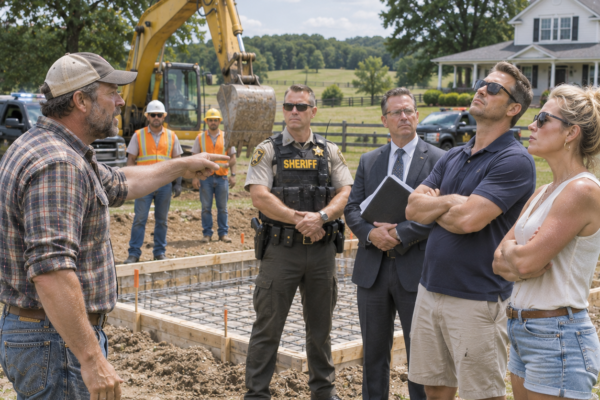
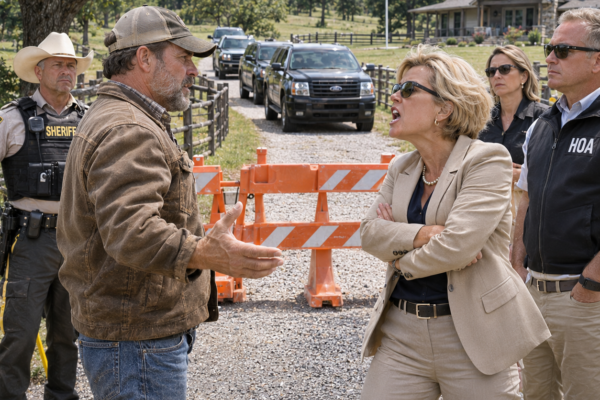
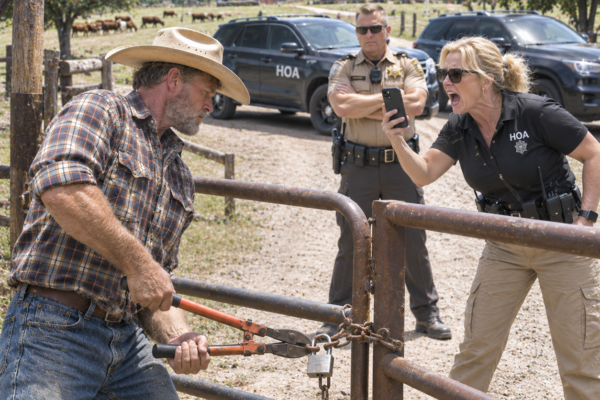
“Sign These HOA Papers or We’ll Shut Your Business Down!” the President Snapped After I Refused to Pay Dues on My Commercial Property. Weeks Later, Six HOA Inspectors Surrounded My Workshop, and Someone Broke In Overnight, Ransacked My Office, and Stole Thousands in Equipment. She Called It a “Routine Inspection”—Until a Deputy Asked Why My Security Cameras Had Recorded Her at 2:17 A.M.k
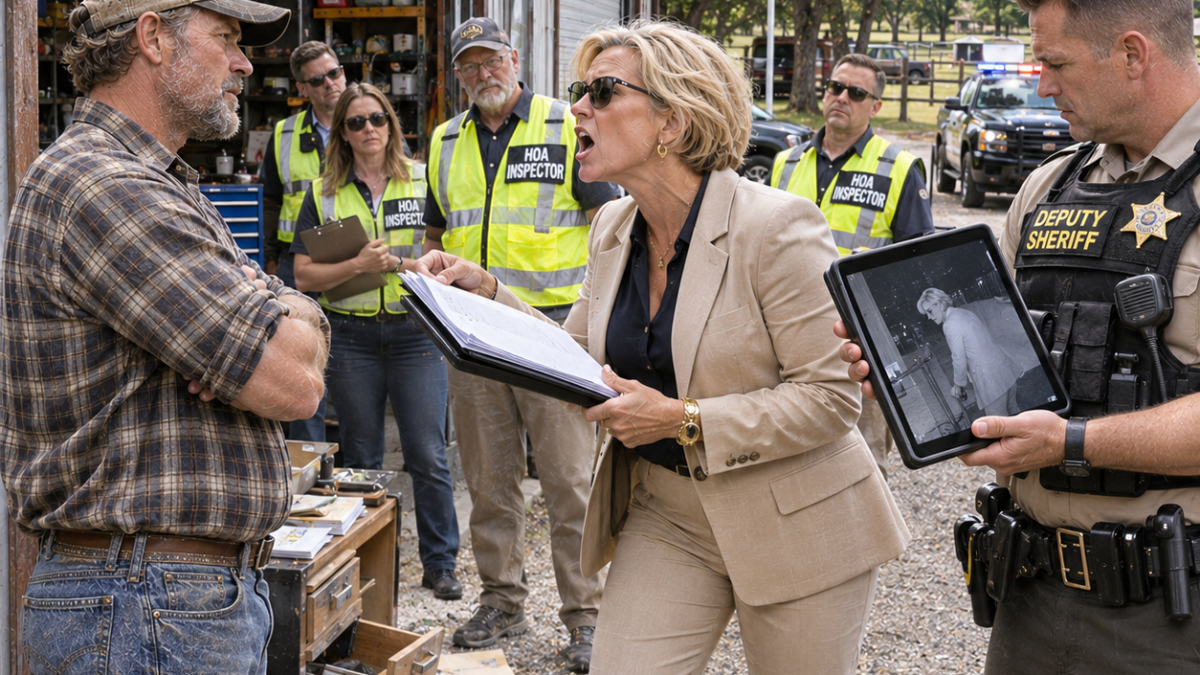
“Sign These HOA Papers or We’ll Shut Your Business Down!” the President Snapped After I Refused to Pay Dues on My Commercial Property. Weeks Later, Six HOA Inspectors Surrounded My Workshop, and Someone Broke In Overnight, Ransacked My Office, and Stole Thousands in Equipment. She Called It a “Routine Inspection”—Until a Deputy Asked Why My Security Cameras Had Recorded Her at 2:17 A.M.
Part 1:
At 6:42 on a Tuesday morning, I unlocked the front door of my fabrication shop and found my office destroyed.
Three filing cabinets stood open.
Customer contracts covered the floor.
My desk drawers had been emptied, the lock on my equipment room was broken, and somebody had dragged a heavy steel toolbox across the concrete, leaving two deep scratches behind it.
Then I noticed the missing machines.
Two portable welders.
A commercial plasma cutter.
Several cases of precision measuring equipment.
Thousands of dollars in tools I’d spent years buying.
I stood in the doorway, trying to understand what I was looking at.
Then my phone rang.
“Mr. Collins?” a woman asked.
“Speaking.”
“This is Gloria Pritchard, president of Willow Creek Estates Homeowners Association. I understand there may have been an issue with our compliance inspection.”
I looked at the splintered doorframe.
“An issue?”
“Our officers were conducting an authorized property review. I hope you won’t make this unnecessarily difficult.”
I stared into my ruined office.
“Gloria, somebody broke into my business last night.”
She sighed.
“That’s a very dramatic way to describe an inspection.”
My name is Nathan Collins. I’m forty-seven years old, and I own Collins Custom Fabrication, a small metalworking business outside Burlington, North Carolina.
I’d spent almost twenty years turning that business from a rented garage and two welding machines into a shop that employed four people and served contractors across the county.
We fabricated stair railings, farm gates, steel brackets, commercial fixtures, and custom parts that bigger shops didn’t want to bother making.
Three years earlier, I’d purchased a 2,800-square-foot commercial building near my house.
The location was perfect.
Easy access to the county road.
A large enough parking area for deliveries.
A separate office.
And a workshop where I could finally stop paying somebody else’s rent.
The property was commercially zoned, and more importantly, its recorded title and parcel history showed that it was not part of Willow Creek Estates or subject to the subdivision’s HOA covenants.
I’d checked those details before closing.
For the first few weeks, everything went smoothly.
Then Gloria appeared.
She was in her early sixties, wore expensive blazers, and spoke with the confidence of someone accustomed to getting her way.
She entered my office carrying a thick packet.
“Welcome to Willow Creek, Mr. Collins,” she announced. “These are the documents you’ll need to sign.”
I looked at the first page.
WILLOW CREEK ESTATES — MANDATORY MEMBERSHIP AGREEMENT.
The second page listed monthly assessments.
The third contained architectural restrictions.
The fourth required me to permit inspections by association personnel.
I handed the packet back.
“Thanks, but my property isn’t part of your HOA.”
Her smile vanished.
“All neighborhood property owners are required to participate.”
“I’m not a neighborhood homeowner. This is a separate commercial parcel.”
“You’re inside our community.”
“I’m next to your subdivision.”
She looked toward the workshop.
“Businesses like yours benefit from our maintained streets and landscaping.”
“My customers reach this building directly from the county road.”
Her expression hardened.
“Mr. Collins, refusing to cooperate is not a good way to introduce yourself to this community.”
I thought the conversation would end once I showed her the zoning records, deed, and recorded subdivision map.
Instead, the letters began.
First came a membership reminder.
Then a demand for unpaid association dues.
Then a notice claiming my building violated Willow Creek’s architectural standards.
Gloria objected to the color of my workshop doors, the placement of my delivery vehicles, and the fact that customers could see welding equipment through the open bay.
I sent her the property records again.
She ignored them.
Then I received a letter from an attorney representing the association.
It warned that my refusal to sign the membership agreement could result in accumulating fines, legal expenses, and further enforcement.
I responded through my own attorney, asking for the recorded document establishing the HOA’s authority over my parcel.
They never produced one.
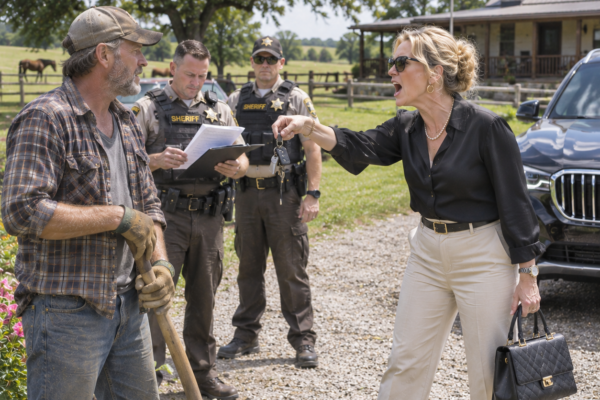
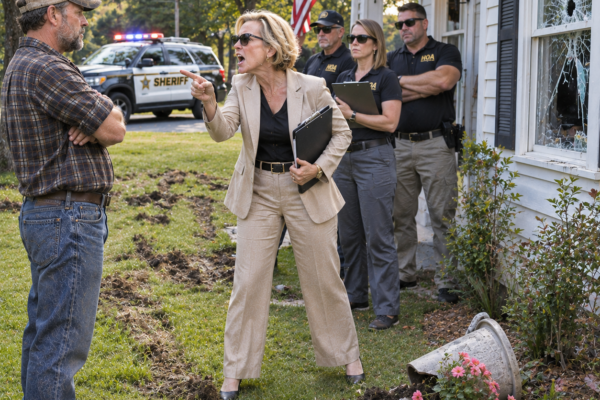
Instead, Gloria came to my business with six people wearing matching HOA compliance badges.
They formed a line across the parking lot.
She demanded immediate access to my office, storage room, and workshop.
I refused.
She smiled coldly.
“You can open those doors voluntarily, Nathan, or we can document your refusal and take the next steps.”
I pointed toward the county road.
“Leave my property.”
She turned toward her inspectors.
“Make a note. He’s obstructing enforcement.”
As they drove away, Gloria rolled down her window.
“You’ll regret making us do this the hard way.”
That evening, I checked the security cameras I’d installed when the dispute started.
All seven cameras were working.
I went home.
The next morning, I found the broken locks, empty tool cabinets, and scattered business records.
And before I’d even finished assessing the damage, Gloria was calling it a routine inspection.
I didn’t argue with her.
I ended the call, contacted the sheriff’s office, and preserved the overnight camera recordings.
Deputy Ryan Mercer arrived at 7:28.
He photographed the broken entrance, examined the damaged equipment room, and asked whether anyone had permission to enter.
“No.”
“Who has keys?”
“Me and two senior employees. Neither was here last night.”
He looked at the security-camera monitor.
“Did these cameras catch anything?”
I opened the recording from 2:17 a.m.
A white SUV stopped outside my building.
Three men climbed out behind a woman carrying a leather folder.
She stood beside my door while one of them worked at the lock.
The deputy leaned toward the screen.
“Mr. Collins, is that the woman who called you this morning?”
I nodded.
He watched another thirty seconds.
Then he said, “Don’t touch that recording. I need to see what happens after they get inside.”
He hadn’t yet seen who carried my equipment out.
And he hadn’t heard what Gloria said when she thought nobody was listening.
Part 2:
The first thing I noticed was the broken doorframe.
The second was the empty shelf where my two portable welders were supposed to be.
I stood inside my workshop at 6:42 on a Tuesday morning, staring at a mess that hadn’t been there when I locked up the night before.
Somebody had forced the front office door.
Then they’d gone through the equipment room, opened filing cabinets, emptied drawers, and removed tools I’d spent years acquiring.
There were papers everywhere.
A box of invoices lay overturned beside my desk. My computer monitor had been pushed sideways, and the metal cabinet where I kept customer job folders stood with both doors hanging open.
But the worst part was the equipment.
A plasma cutter was gone.
Two welders were missing.
Four cases containing precision measuring instruments had disappeared from the locked equipment room.
And a custom-made steel fixture I’d been building for a customer was lying on the floor beneath a pile of discarded packaging.
I didn’t touch anything.
I stepped back outside, took out my phone, and photographed the entrance.
Then the phone rang.
“Mr. Collins?”
“Speaking.”
“This is Gloria Pritchard from Willow Creek Estates. I understand there may have been some confusion regarding our compliance inspection.”
I looked at the splintered wood beside the lock.
“Gloria, someone broke into my business.”
She sighed.
“That’s an unnecessarily inflammatory description.”
“Somebody forced my doors and took equipment.”
“Our officers were conducting an authorized inspection. Any disagreement about the procedure can be addressed through the association.”
I stared at the phone.
“Your officers?”
“Yes. I warned you that refusing voluntary access would lead to enforcement.”
I said nothing for a moment.
Then I asked, “Are you telling me you sent people into my workshop last night?”
“We took the steps necessary to document noncompliance.”
I could barely believe it.
She wasn’t denying that people had entered.
She was trying to make it sound like a legitimate part of running a homeowners association.
“Gloria, I need you to stop talking.”
“Excuse me?”
“I’m reporting a break-in. Do not send anyone else onto this property.”
Her voice sharpened.
“Mr. Collins, threats won’t help your situation.”
I ended the call.
Then I contacted the Alamance County Sheriff’s Office.
My name is Nathan Collins. I’m forty-seven years old, and I own Collins Custom Fabrication, a small metalworking business outside Burlington, North Carolina.
I’d been a welder and fabricator most of my adult life.
The first business I ever owned was little more than a rented two-car garage with a used welding machine, a workbench, and a phone that barely rang.
I built farm gates.
Repaired trailer frames.
Welded brackets for contractors who needed something custom made before the next job started.
Sometimes I earned enough to pay myself.
Sometimes I didn’t.
For a while, my wife, Rachel, made more money working at a medical office than I earned running the shop.
She never complained.
When I came home discouraged, she’d ask how the work went, listen, and remind me that a small business didn’t become successful overnight.
She was right.
Over time, people began recommending me to other contractors.
I hired Arturo Reyes, a talented welder who could look at a damaged piece of equipment and figure out how to repair it before I’d finished explaining the problem.
A few years later, Eddie Wallace joined us.
Then came two younger employees, Chris and Mallory, who split their time between fabrication, finishing, deliveries, and office work.
We weren’t a large operation.
But we paid our bills, delivered what we promised, and took pride in doing the work correctly.
Three years before Gloria entered my life, I finally had enough saved to buy a building.
It was a 2,800-square-foot commercial property near my home.
The previous owner had operated a small industrial supply business.
The place needed paint, lighting improvements, and a lot of cleaning, but it had a spacious workshop, a loading door, an office, and enough parking for customer vehicles.
It sat directly off a county road.
The neighboring subdivision, Willow Creek Estates, was visible beyond the eastern fence.
I knew the subdivision had an HOA.
That didn’t concern me.
The parcel I was buying was separate from the residential lots and common property.
The county zoning records allowed the commercial use I intended.
More importantly, the title search, deed, and recorded subdivision documents confirmed that my parcel wasn’t subject to Willow Creek’s restrictive covenants.
That second point mattered more than the zoning classification.
Commercial zoning alone wouldn’t necessarily exempt a property from private restrictions if valid covenants actually applied.
But no recorded Willow Creek declaration burdened my land, and I hadn’t agreed to join its association.
My closing attorney had verified the distinction.
I thought I’d done everything necessary to prevent surprises.
Then, four weeks after I moved into the building, Gloria Pritchard walked through my office door.
She was about sixty, with silver-blonde hair, a navy blazer, and a large leather handbag.
She introduced herself as president of Willow Creek Estates Homeowners Association.
“Welcome to the neighborhood,” she said brightly.
“Thanks. Can I help you with something?”
“Just some administrative matters.”
She placed a packet on my desk.
The first page was labeled Mandatory Membership Agreement.
The second listed monthly HOA assessments.
The third gave the association authority to inspect exterior structures, parking areas, and building improvements.
The fourth required written approval before changing paint colors, signs, fences, or visible equipment storage.
I read the first page twice.
“Gloria, I think you’ve made a mistake.”
Her smile remained.
“How so?”
“This is a commercial property. It isn’t part of Willow Creek.”
“Every owner in our neighborhood participates.”
“I’m not in your subdivision.”
She glanced toward my workshop.
“You’re right beside it.”
“That’s different from being part of it.”
She smiled patiently.
“Our community has maintained its appearance for years, Mr. Collins. Businesses next to the homes have an obligation to help protect property values.”
“I understand why your residents care about appearances. But I haven’t agreed to these restrictions.”
“You will need to.”
“No, ma’am.”
Her smile disappeared.
I took out the closing folder and showed her the parcel map.
“This is Willow Creek’s recorded boundary. My building is outside it. The recorded covenants don’t describe my property.”
She barely looked at the map.
“Those documents are subject to interpretation.”
“Not about whether my parcel appears in them.”
Her face tightened.
“Mr. Collins, being difficult at the beginning is not going to help you build good relationships here.”
I handed back the membership packet.
“I’d prefer to start with everyone respecting the property records.”
She stood.
“We’ll send you the appropriate notices.”
That was our introduction.
For the next three weeks, Gloria behaved as though I’d personally insulted her.
First came a welcome letter reminding me that membership was mandatory.
Then a demand for $375 in monthly assessments.
Then a notice alleging my workshop doors were painted an unacceptable shade of gray.
I called the management office.
The woman who answered told me the president had requested immediate enforcement.
I explained that my property wasn’t in the association.
She said she’d pass the message along.
Two days later, I received a new violation.
My delivery trucks were apparently creating an unsightly commercial atmosphere.
I stood in my parking lot looking at the letter.
A fabrication shop was creating a commercial atmosphere.
That was exactly what it was supposed to do.
I called Gloria.
“You’re fining a commercial workshop for having commercial vehicles?”
“You’re negatively affecting the neighborhood’s image.”
“Then the association should have considered the neighboring commercial parcel before making promises about its surroundings.”
She went silent.
Then she said, “You need to understand that Willow Creek has influence in this area.”
“Influence isn’t ownership.”
“We’ll see about that.”
The first attorney letter arrived the following week.
It warned that my failure to sign the membership agreement could result in accumulating assessments, enforcement charges, attorney fees, and possible legal action.
I showed it to Rachel that evening.
She read the letter while we ate dinner.
“Can they do that?”
“Not without an enforceable obligation connecting this property to their HOA.”
“Then why are they threatening you?”
I shook my head.
“Because Gloria doesn’t like hearing no.”
Rachel set the letter down.
“Nate, don’t make the mistake of thinking this is harmless because the demand is ridiculous.”
She knew me too well.
I’d been treating the letters like an annoying customer who kept calling about a job we’d already completed.
But a person willing to send a lawyer’s letter over nonexistent dues might be willing to create other problems.
The next morning, I called Miranda Chen.
Miranda was a local attorney who handled business litigation and real-estate disputes. I’d used her services before when a contractor refused to pay an invoice.
She reviewed the deed, title materials, and association declaration.
Then she examined the letters.
“Have you signed anything with Willow Creek?”
“No.”
“Has any owner in your chain of title granted the association rights over the parcel?”
“Nothing like that appears in the records.”
She nodded.
“Then we’ll ask their counsel to identify the legal basis of the claims. They can’t simply declare you a member because the president wants to.”
She sent a formal response.
It explained the distinction between zoning and private covenants, identified my recorded parcel, and requested withdrawal of the unsupported assessments.
She also demanded that no association personnel enter or inspect the business without permission or lawful authority.
I hoped that would end the matter.
Instead, Gloria escalated.
One Monday morning, six people wearing matching polo shirts stood across my parking lot when I arrived.
They had clipboards, measuring tapes, and badges identifying them as Willow Creek Compliance Officers.
Gloria was waiting beside her white SUV.
“Good morning, Nathan.”
I stopped beside the entrance.
“What’s this?”
“A scheduled inspection.”
“I never scheduled an inspection.”
“The association did.”
She opened her folder.
“The exterior is noncompliant, and we have reason to believe the interior contains additional violations.”
I looked toward the workshop.
“Interior violations of what?”
“Improper equipment storage. Unapproved business operations. Possible hazardous materials.”
“We have the appropriate permits and safety procedures. And your association has no authority to inspect them.”
She turned to her companions.
“Document the refusal.”
One man lifted a camera.
I stepped toward him.
“Don’t photograph inside the building.”
He lowered it.
Gloria sighed.
“You’re making this much harder than necessary.”
“Then leave.”
Her expression changed.
“Mr. Collins, the association has a duty to protect its residents.”
“And I have a duty to protect my employees, customers, and property.”
She glanced toward the loading door.
“Open that.”
“No.”
“You’ll be charged for every day you obstruct our enforcement.”
I pointed toward the county road.
“You’re being told to leave. If you don’t, I’ll call the sheriff.”
For several seconds, nobody moved.
Then one of the inspectors quietly returned his measuring tape to his bag.
Gloria noticed.
“Nobody’s leaving until I say so.”
The man looked uncomfortable.
I took out my phone.
“Then the sheriff can tell you.”
She stared at me.
Then marched toward her SUV.
As the others followed, she rolled down her window.
“You’ll regret forcing us to do this the hard way.”
I watched them drive away.
Then I called Miranda.
“Gloria just brought six inspectors to my shop.”
“Did they enter?”
“No.”
“Did you tell them to leave?”
“Repeatedly.”
“Good. Send me the footage if you have it.”
That afternoon, I installed two additional cameras, bringing the total to seven.
One watched the front entrance.
Another covered the loading bay.
A third recorded the equipment room.
The remaining cameras covered the office, parking area, side door, and rear service entrance.
The recordings were stored locally, with important event clips backed up to a secure remote account.
I wasn’t trying to create a trap.
I was protecting a business I’d spent nearly twenty years building.
On Monday evening, I checked that every camera was recording.
Then I locked the doors and went home.
At 2:17 Tuesday morning, a white SUV pulled into my parking lot.
And the woman who stepped out of it was Gloria Pritchard.
The footage showed Gloria parking beneath the security light beside my office entrance.
She remained behind the wheel for almost a minute.
Then three men climbed out of a dark van that had stopped near the loading bay.
I recognized one of them.
He’d been part of the group Gloria brought to my shop the previous morning.
The man walked directly toward the front door carrying a tool bag.
Gloria got out and joined him.
She pointed to the lock.
He removed a pry bar.
The camera recorded him forcing the door.
At 2:21 a.m., they entered my business.
I watched the recording beside Deputy Ryan Mercer, a tall, soft-spoken man with close-cropped brown hair who seemed more interested in evidence than anyone’s opinion about it.
He had arrived at 7:28, photographed the damage, and asked me to preserve the video files.
Now we were watching the intruders move through my office.
The first man opened the filing cabinets.
The second went directly to the equipment room.
Gloria stood near my desk, directing them with gestures.
Then the office microphone picked up her voice.
“Check the back cabinets. He keeps the expensive stuff in there.”
I felt my stomach tighten.
Ryan paused the recording.
“Did you authorize any of these people to enter?”
“No.”
“Do any of them work for you?”
“No.”
“Did you provide them keys?”
“No. They forced the lock.”
He nodded.
Then resumed playback.
At 2:31, one man returned to the loading bay carrying a portable welder.
Another followed with a case of measuring equipment.
They loaded both into the van.
A few minutes later, they carried out the plasma cutter.
I stared at the screen.
These weren’t inspectors documenting alleged HOA violations.
They were removing my business equipment.
Gloria walked into the office again.
She opened my desk drawer and took out a customer folder.
The camera showed her leafing through invoices and signed work orders.
Then she said something that made Ryan stop the video again.
“Get the inventory sheets. We need to know what he can afford to lose.”
I felt the blood rush to my face.
“What kind of inspection is that?”
Ryan didn’t answer immediately.
He wrote down the timestamp.
Then he asked, “Do you recognize her voice?”
“Yes. It’s the same woman who called me this morning.”
“And she’s the HOA president?”
“Gloria Pritchard.”
He looked toward the damaged office door.
“Mr. Collins, I want the original recordings preserved, and I’ll arrange for investigators to obtain authenticated copies.”
I nodded.
He continued.
“I also want a complete inventory of everything missing. Don’t estimate what you think they might have taken. Check the actual records.”
“Understood.”
Before he left, Ryan asked whether Gloria had ever been given a key or written authorization to inspect the building.
I showed him Miranda’s formal notice expressly denying entry.
He read it.
Then looked toward the wrecked office.
“That makes the situation considerably clearer.”
The sheriff’s office began an investigation into the forced entry, theft, and property damage.
They photographed the building, documented tool serial numbers, interviewed my employees, and requested records related to the people shown on the cameras.
Gloria’s explanation was that the HOA had performed an authorized inspection.
But an inspection didn’t explain why portable equipment had been carried into a van.
It didn’t explain the forced lock.
And it certainly didn’t explain why the crew had opened drawers containing customer pricing and confidential business records.
Investigators sought and obtained evidence through the appropriate legal procedures.
Within days, two of the men shown in the recording had been identified.
The van was connected to a private property-services contractor that had performed work for Willow Creek.
Its owner supplied invoices and communications concerning the purported inspection.
According to those records, Gloria had represented that my business was subject to HOA enforcement and that the association had authority to secure property during its review.
One contractor told investigators he’d believed the equipment was being removed for temporary safekeeping.
That didn’t make his conduct lawful.
But it helped explain how Gloria had persuaded people to participate.
Then the third man made a statement that complicated matters further.
He said Gloria had instructed the crew not to record the inspection because she expected me to accuse them of trespassing.
I remember Miranda repeating that to me.
We were standing inside my office, looking at the empty cabinets.
“She expected you to report it,” Miranda said.
“Then why do it?”
“Apparently, she thought your cameras wouldn’t capture enough to establish what happened.”
I looked toward the small dome camera above the doorway.
The crew had noticed the exterior cameras.
One man had even covered a camera near the loading bay.
But they hadn’t found the interior equipment-room camera or realized the system had already preserved the recordings remotely.
I’d installed that camera after a previous incident involving missing customer materials.
It wasn’t hidden inside a private area.
It was plainly mounted above the equipment cage, facing the tools and entrance.
Gloria apparently hadn’t looked up.
That simple oversight would eventually matter more than every threatening letter she’d sent.
But the criminal investigation didn’t restore my equipment overnight.
For the next two weeks, keeping the business running became an exhausting problem.
Arturo came in early to help secure the damaged doors.
Eddie took inventory.
Mallory contacted customers whose files had been disturbed.
Chris spent two days checking whether finished orders had been damaged or misplaced.
We couldn’t simply replace every stolen tool and return to normal.
Some equipment was older and difficult to find.
Other machines required specialized accessories.
The missing measuring instruments needed replacing and calibration before we could use them for precision work.
Then there was the customer information.
Gloria’s crew had opened folders containing purchase orders, job estimates, supplier invoices, and contact details.
We had to determine whether any documents had been copied or removed.
Miranda helped us evaluate the business’s notification and record-security obligations.
I also contacted our insurer.
The claims representative examined the police report, inventory, photographs, receipts, and video evidence.
Some losses were covered.
Others were disputed.
The equipment deductible was substantial.
And insurance didn’t automatically reimburse the hours my employees spent repairing damage instead of completing paying jobs.
At one point, I sat in the office after everyone had left and calculated what the incident had cost us.
Missing and damaged equipment.
Door repairs.
Temporary replacements.
Professional inspections.
Delayed work.
Legal expenses.
The total was climbing far beyond what I could comfortably absorb.
Rachel found me there at nine that evening.
She stood in the doorway holding two paper bags from our favorite sandwich place.
“You missed dinner.”
I rubbed my eyes.
“I know.”
She set the bags down.
“Have you eaten anything since breakfast?”
“Coffee.”
“Nate.”
“I’m trying to figure out how to keep the shop running.”
She pulled up a chair.
“Then eat while you figure it out.”
I opened the sandwich.
For a while, neither of us spoke.
Then she looked around the damaged office.
“Twenty years.”
I glanced at her.
“What?”
“You’ve spent almost twenty years building this business. You’re not going to let one woman with an HOA badge make you lose it.”
I looked at the empty shelf.
“She shouldn’t have been able to do any of this.”
“No,” Rachel said. “She shouldn’t have.”
She reached across the desk.
“But now we deal with what’s actually happened. One thing at a time.”
The following Monday, we rented replacement equipment.
It was expensive, but it allowed us to complete the most urgent orders.
Arturo stayed late to help rebuild our schedule.
Eddie contacted suppliers and negotiated replacement pricing.
Mallory reorganized the customer files and confirmed which contracts were still on track.
By Friday, the workshop sounded like a workshop again.
Welders humming.
Metal being cut.
The air compressor cycling in the corner.
I was relieved to hear it.
Then Miranda called.
“The HOA’s attorney wants to discuss settlement.”
I looked at the clock.
“Already?”
“Apparently the board is concerned about the criminal investigation.”
“Are they withdrawing the violation notices?”
“They’ve offered to review them.”
I laughed without humor.
“Review them?”
“That’s their wording.”
“What about the stolen equipment?”
“They’re calling it a disputed inventory issue.”
I stood up.
“Miranda, three men carried my machines into a van at two in the morning. There’s no inventory dispute.”
“I agree. That’s why we aren’t accepting their description.”
She paused.
“There’s something else.”
“What?”
“The association’s treasurer contacted my office. She says the board hasn’t seen several of the invoices Gloria submitted for enforcement work.”
I looked toward the workshop.
“How much money are we talking about?”
“She doesn’t know yet. But she thinks the payments may be connected to more than your property.”
For a moment, I forgot about the missing equipment.
“More than my property?”
“That’s what we’re trying to establish.”
Two days later, I met the treasurer.
Her name was Susan Bell.
She was sixty-six, a retired accountant, and had lived in Willow Creek for nearly fifteen years.
She came into my office looking embarrassed.
“Mr. Collins, I owe you an apology.”
I offered her a chair.
“You didn’t break into my shop.”
“No. But I helped manage the association’s money while Gloria used its name to do things I didn’t understand.”
She placed a folder on the desk.
“I started looking at the compliance accounts after the sheriff contacted us.”
I waited.
Susan opened the folder.
“Gloria has been approving payments to a company called Neighborhood Safety and Compliance Services.”
“Who owns it?”
“That’s what troubled me.”
She turned a page.
The company was registered at an address associated with Gloria’s brother-in-law.
I looked at the invoice totals.
There were monthly charges.
Special inspection fees.
Administrative service payments.
And several unusually large invoices for what the statements called commercial boundary enforcement.
Some payments dated back years before I purchased my building.
I looked up.
“Why was the HOA paying for commercial boundary enforcement before I ever got here?”
Susan shook her head.
“I don’t know.”
Then she showed me another statement.
A payment for $9,850 had been authorized three days before Gloria’s crew broke into my workshop.
The description read:
SPECIAL PROPERTY INSPECTION AND INVENTORY CONTROL.
Susan looked at me.
“Mr. Collins, I think your business was one of several properties Gloria was using to justify payments the board never properly approved.”
I sat back.
The broken lock.
The stolen tools.
The endless violation notices.
Suddenly, Gloria’s obsession with forcing me to join the association looked very different.
And the person who’d treated my workshop like her personal property might have been using the same scheme to take money from her own neighbors.
Susan stayed for almost two hours.
She didn’t accuse Gloria of stealing money outright.
She was too careful for that.
Instead, she explained how the association’s accounts normally worked and why the recent payments troubled her.
Willow Creek collected regular assessments from approximately 180 residential properties. The money paid for landscaping, lighting, entrance maintenance, insurance, and other ordinary association expenses.
Certain larger contracts required board approval.
Invoices had to identify work actually performed.
And the treasurer was supposed to receive documentation sufficient to reconcile the accounts.
But Gloria had developed a habit of describing unusual payments as emergency compliance expenses.
When Susan questioned them, Gloria said the invoices involved confidential enforcement matters.
She insisted that sharing details might compromise pending legal action.
For several years, Susan had accepted those explanations.
Then my workshop appeared in the news after the break-in.
And Susan recognized the company whose name appeared on the contractor’s invoices.
“How much is missing?” I asked.
“I can’t give you a defensible number yet,” she replied. “That’s why I requested an independent audit.”
“Does the board know?”
“Three directors do. We’re calling a special meeting.”
I looked at the invoices spread across the desk.
“Have you told the sheriff?”
“Yes. I’ve agreed to provide the records.”
I nodded.
“Good.”
She gathered the papers.
Then she looked around my office.
“Mr. Collins, when Gloria first proposed the commercial-property membership program, she told the board it would help neighboring businesses share the cost of community improvements.”
I waited.
“She never explained that many of those businesses weren’t subject to our covenants.”
“That’s what I’ve been telling her for months.”
Susan looked ashamed.
“I believe you.”
After she left, I called Miranda.
We agreed that Susan’s information belonged with the investigators and the independent accountants.
It wasn’t my job to investigate Willow Creek’s finances.
My job was to document my losses, protect the business, and pursue the claims arising from what had happened on my property.
But I couldn’t stop thinking about the other business owners.
How many had signed Gloria’s membership agreement because they were afraid of legal trouble?
How many had paid dues they didn’t legally owe?
And how much money had Gloria collected by claiming authority over properties outside the subdivision?
The answers emerged gradually.
Willow Creek’s independent audit identified approximately $247,000 in transactions requiring further explanation across several years.
Some were inflated vendor payments.
Others lacked adequate documentation.
Several appeared to involve businesses connected to Gloria’s family.
A portion consisted of payments described as inspection fees for properties the HOA had no recorded enforcement authority over.
Investigators followed the money through bank records, vendor contracts, and invoices.
The evidence eventually supported allegations that Gloria had directed association funds to businesses controlled by people close to her and received financial benefits from some of those arrangements.
That investigation was separate from the break-in at my workshop.
But the two matters overlapped.
The invoice for the nighttime inspection had been approved under the same questionable payment process.
And messages recovered during the investigation indicated Gloria had expected to use the inspection to pressure me into signing the association’s membership agreement.
The goal wasn’t simply to make me pay dues.
She wanted a continuing stream of assessments, compliance charges, and inspection fees from businesses that had never agreed to be part of Willow Creek.
The larger the enforcement program appeared, the easier it became to justify additional payments to the companies providing those services.
My refusal threatened that arrangement.
So Gloria escalated.
Letters hadn’t worked.
Her six inspectors hadn’t worked.
Then she sent people into my building.
What she hadn’t anticipated was the security footage.
By the time the criminal investigators finished reviewing the recordings and supporting evidence, warrants had been issued in connection with the unlawful entry and theft.
The men involved were charged according to their individual conduct and the evidence establishing their roles.
Gloria also faced charges arising from her participation in the break-in and the related financial misconduct.
I didn’t see her arrested.
There was no dramatic confrontation in my parking lot.
I learned about the charges from the prosecutor’s office, the same way any other complainant would.
That was fine with me.
I didn’t need to watch Gloria being handcuffed to know that what she’d done was finally being taken seriously.
The next important event happened at Willow Creek’s special board meeting.
Susan invited me to attend the portion open to affected neighboring property owners.
I went with Miranda.
The clubhouse was crowded.
Residents stood along the back wall while directors sat behind a long table.
Gloria occupied the center chair.
She wore a dark red jacket and had an expression that suggested she was prepared to argue with everybody.
Susan opened with the audit findings.
She explained that the association had approved or paid substantial sums without the documentation required by its financial procedures.
Several payments were associated with vendors connected to Gloria’s relatives.
Others involved questionable enforcement against properties outside the subdivision.
A homeowner raised his hand.
“Did our association money pay for the people who broke into that man’s workshop?”
Susan looked toward the directors.
“An invoice connected to that incident was paid from the compliance account. The exact civil and criminal responsibilities are being addressed separately.”
The man turned toward Gloria.
“Why?”
Gloria leaned into her microphone.
“Because our community has a responsibility to protect itself from businesses that refuse reasonable standards.”
Another homeowner stood.
“Did we vote to make Mr. Collins join the HOA?”
Gloria hesitated.
“The president has enforcement authority.”
“That’s not what I asked.”
Susan placed the recorded subdivision map on the table.
“My review found no instrument making his parcel part of Willow Creek.”
A murmur spread through the room.
Gloria’s face reddened.
“These people have benefited from our neighborhood for years!”
I stood.
“Gloria, my customers enter directly from the county road. My property isn’t subject to your covenants, and I haven’t signed a membership agreement.”
She pointed at me.
“You’re trying to destroy this association!”
I shook my head.
“No. I’m trying to run a fabrication shop without people breaking down my doors.”
The room became quiet.
Then I continued.
“You sent six inspectors to my parking lot and ordered me to open my building. I refused. That night, people associated with your enforcement program forced their way inside and carried out my equipment.”
Gloria opened her mouth.
I raised one hand.
“You can dispute the claims through your lawyer. The evidence will be reviewed in court. But don’t tell your neighbors this was an ordinary inspection.”
I sat down.
A woman near the front looked toward Gloria.
“My husband and I have been paying special compliance assessments for three years. Were those payments approved?”
Susan answered that the accounts were under review.
Another resident asked why the association’s landscaping reserve had declined while enforcement expenses increased.
A third wanted to know whether the vendors had been competitively selected or properly approved.
The questions continued.
For years, Gloria had apparently controlled these meetings by speaking louder than anyone who challenged her.
This time, she couldn’t make the financial records disappear.
The board recessed for a closed session where its attorney advised the directors on the criminal investigation, fiduciary responsibilities, and the procedures for changing leadership.
Later that evening, the directors announced that Gloria had been removed from the presidency under the association’s governing documents.
Her authority to approve payments and direct contractors was terminated.
An independent management firm would temporarily handle the association’s finances.
And the board would review its enforcement activities against outside properties.
Gloria left without speaking to me.
I watched her walk toward the parking lot.
Then I turned to Miranda.
“Think she’ll finally leave my business alone?”
Miranda looked at me.
“She no longer controls the association. And there are now court proceedings that will address what she did.”
I nodded.
For the first time in months, that sounded like an actual answer.
The civil case continued.
Miranda presented the property records establishing that my building was not bound by Willow Creek’s covenants.
She documented the forced entry, stolen equipment, damaged doors, disrupted business operations, and legal expenses.
The security recordings showed the timing and circumstances of the entry.
Police reports and inventory records supported the losses.
The association’s new counsel reviewed those materials and began negotiating rather than repeating Gloria’s unsupported claims.
The settlement discussions took several weeks.
My insurer’s payments and recovery rights had to be reconciled so there would be no duplicate compensation for the same loss.
There were questions about the responsibility of the association, the outside contractor, and the individual participants.
Eventually, the parties reached a settlement totaling $78,600 in compensation and agreed recoverable costs, with the insurance reimbursements and applicable offsets addressed in the final agreement.
The settlement also required Willow Creek to withdraw every membership demand and purported violation notice against my parcel.
The association acknowledged in writing that its recorded governing documents did not impose those obligations on my property.
It agreed that its officers and contractors would not enter or inspect my business without permission or another valid legal basis.
And it issued a formal apology for the unauthorized enforcement campaign.
I read the agreement carefully before signing.
The money mattered.
I’d spent years saving for equipment, and Gloria’s actions had caused real losses.
But the written acknowledgment mattered just as much.
After months of letters insisting my shop belonged under Willow Creek’s authority, the association had finally admitted what the deed had established all along.
My property was separate.
Its rules didn’t apply.
And my refusal to join wasn’t a violation.
The criminal cases took longer.
The proceedings involving the break-in were resolved through guilty pleas and sentencing decisions based on each participant’s proven conduct and cooperation.
The financial investigation produced additional charges involving the diversion and misuse of association funds.
Gloria was convicted of offenses arising from the scheme and received a sentence that included incarceration, supervision, and financial obligations imposed through the appropriate proceedings.
The remaining financial recovery efforts continued independently.
Some former officers and vendors were required to provide additional records.
Residents received corrected account information.
Businesses that had been pressured into signing voluntary service agreements received notices explaining the difference between an enforceable recorded covenant and a contract they might have signed under disputed circumstances.
Those agreements were reviewed individually.
The subdivision’s actual homeowners couldn’t simply resign from recorded property obligations because they were unhappy with Gloria.
But owners of outside commercial parcels weren’t suddenly HOA members just because she had mailed them a packet.
Willow Creek eventually reorganized its board and financial procedures.
Large expenditures required documented approval.
Vendor conflicts had to be disclosed.
Enforcement claims involving outside property required legal review before any action could be authorized.
The HOA remained in operation.
It still maintained its landscaping, community lighting, and common areas.
It simply stopped pretending that every neighboring business belonged to it.
By then, my shop was beginning to recover.
We replaced the stolen equipment.
Repaired the doors.
Reorganized the office.
And completed the customer orders we’d struggled to keep on schedule.
Some jobs had been delayed.
A few customers had gone elsewhere.
But most stayed.
One contractor told me he’d heard about the break-in and was impressed that we’d still delivered his railing order within the revised schedule.
I told him the credit belonged to my employees.
Arturo had worked extra hours.
Eddie had found replacement tools when suppliers were backlogged.
Mallory had kept customers informed.
And Chris had helped rebuild our inventory system so missing equipment could be identified immediately.
They’d done all of that while wondering whether the business was going to survive.
One Friday afternoon, after the final settlement paperwork was signed, I ordered lunch for everyone.
We cleared space on the welding table and spread out sandwiches, potato salad, and drinks.
Arturo raised his soda.
“To having our tools stay where we leave them.”
Everyone laughed.
Eddie shook his head.
“That’s a pretty low standard for running a business.”
“Apparently not low enough for the HOA,” Mallory said.
We laughed again.
It was the first time the whole incident felt distant enough to joke about.
Later that afternoon, Rachel stopped by.
She found me standing near the front office door.
The damaged frame had been replaced.
A new security latch was installed.
The windows were clean.
Freshly painted trim covered the marks left by the break-in.
She looked around.
“Almost looks like nothing happened.”
“Almost.”
She stood beside me.
“Are you glad you bought this place?”
I considered the question.
There had been nights when I’d wondered whether buying a building beside a neighborhood was the biggest mistake I’d ever made.
Then I looked through the open workshop door.
Arturo was finishing a stainless-steel railing.
Eddie was checking measurements against a customer’s drawing.
Chris was organizing newly delivered material.
The sound of machines filled the air.
“Yes,” I said.
Rachel smiled.
“Good.”
She squeezed my hand.
“Because I don’t think I could stand helping you move all this equipment again.”
I laughed.
“Neither could I.”
Several weeks later, I received a letter from Susan Bell.
She’d been elected to the new Willow Creek board and wanted to thank me for cooperating with the financial review.
She wrote that several residents had been unaware of Gloria’s conduct and regretted what had happened to my business.
She also explained that the association had completed an initial reconciliation of the disputed accounts and established new oversight procedures.
At the end, she’d written a sentence by hand.
You were right to ask us to respect the property line.
I placed the letter in my filing cabinet beside the settlement agreement.
Then I went outside.
It was a cool North Carolina afternoon.
A delivery truck had just pulled away from the loading bay.
The parking lot was quiet.
Beyond the eastern fence, Willow Creek’s landscaped entrance stood beneath a row of young maple trees.
People were walking dogs along the sidewalk.
A couple pushed a stroller toward the neighborhood park.
There was nothing wrong with any of that.
I’d never been angry with the families who lived there.
Most had probably never heard of me before Gloria started telling them my business was violating community standards.
I wanted them to enjoy their homes.
I simply wanted them to let me enjoy the building I’d legally purchased.
The distinction had seemed impossible for Gloria to understand.
She’d walked into my office with a membership packet and assumed the title of HOA president gave her authority over everything nearby.
When I refused, she sent letters.
When the letters failed, she brought inspectors.
And when I still wouldn’t cooperate, she sent people into my workshop in the middle of the night.
All because she believed I was a small-business owner who couldn’t afford to challenge her.
In one sense, she’d been right about the financial risk.
I didn’t have unlimited resources.
The break-in had hurt us.
The stolen tools had interrupted work.
The legal expenses were frightening.
But she was wrong about what that meant.
Being a small business didn’t make us powerless.
And owning property outside a subdivision didn’t mean we had to surrender it because the neighboring HOA wanted another source of money.
I locked the front office.
Then I checked the equipment room.
Both welders were in their places.
The measuring cases sat neatly on the shelf.
The plasma cutter was secured beside the workbench.
Everything was where it belonged.
I stepped outside and turned the key in the new lock.
Three years earlier, I’d bought that building because I wanted room for my business to grow.
I’d spent nights repairing its lighting, weekends painting the walls, and more money than I cared to remember improving the shop.
Gloria had seen the same building and imagined another property she could control.
But the property records never gave her that authority.
And no number of threatening letters could change them.
I walked toward my truck.
The lights inside the workshop went out automatically behind me.
For a moment, I stopped and looked back at the building.
It wasn’t fancy.
It wasn’t particularly attractive.
There were delivery marks on the pavement, a little rust near the rear door, and a steel rack outside that still needed painting.
But it was mine.
I’d earned the money to buy it.
My employees had helped turn it into a working business.
And after everything Gloria Pritchard had done, its doors were still open every morning.
I smiled.
Then I climbed into my truck and drove home.
The next day, I had a fabrication order to finish.
And for the first time in months, the only inspection I needed to worry about was making sure our welds met the customer’s specifications.