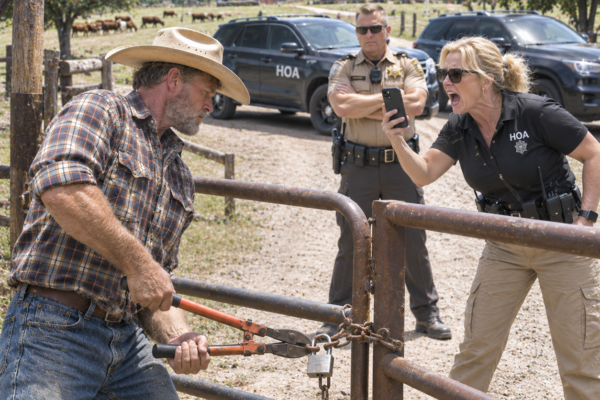
“Give Me the Gate Keys—I Bought This Ranch on Monday!” a Woman in a BMW Screamed While I Was Weeding the 10 Acres My Late Uncle Left Me. She Threatened to Have Me Arrested for Trespassing and Claimed My Own Realtor Had Sold It Behind My Back. Then Two Deputies Asked to See Her Closing Papers—and She Went Silent….k
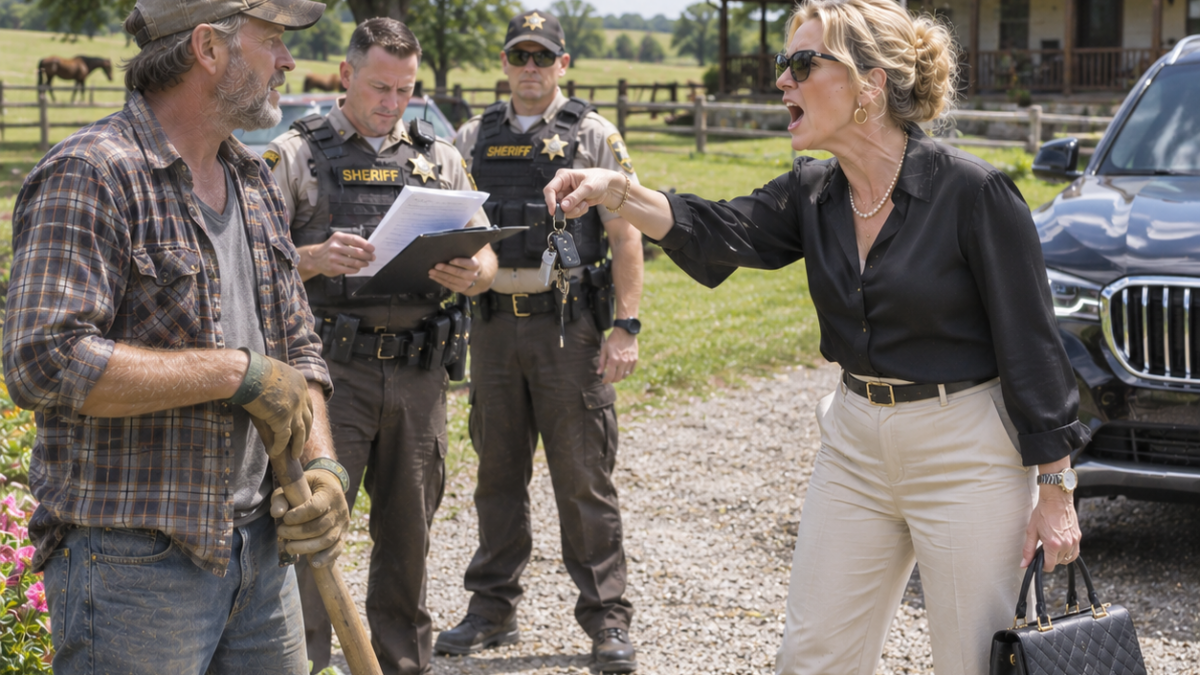
“Give Me the Gate Keys—I Bought This Ranch on Monday!” a Woman in a BMW Screamed While I Was Weeding the 10 Acres My Late Uncle Left Me. She Threatened to Have Me Arrested for Trespassing and Claimed My Own Realtor Had Sold It Behind My Back. Then Two Deputies Asked to See Her Closing Papers—and She Went Silent…
Part 1:
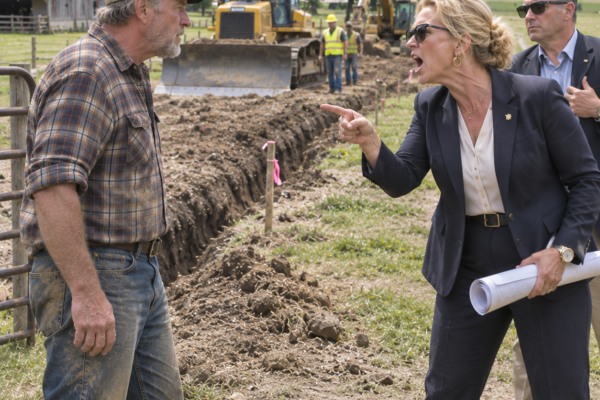
“Give me the gate keys. NOW! I bought this property on Monday, and you’re trespassing!”
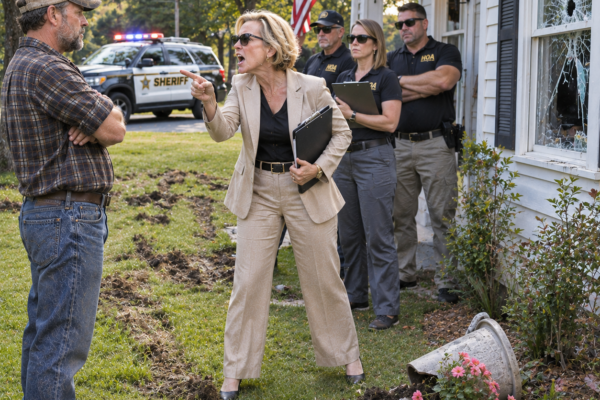
The woman screaming at me stood beside a gleaming black BMW, wearing a cream-colored pantsuit and heels that were slowly sinking into the gravel driveway.
I was holding a pair of muddy pruning shears.
Behind me stood the little farmhouse my late uncle had left me.
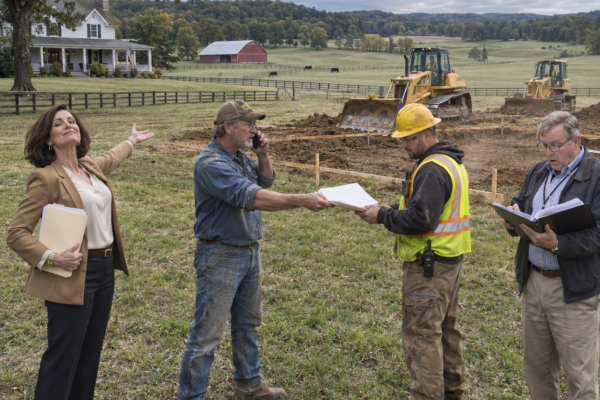
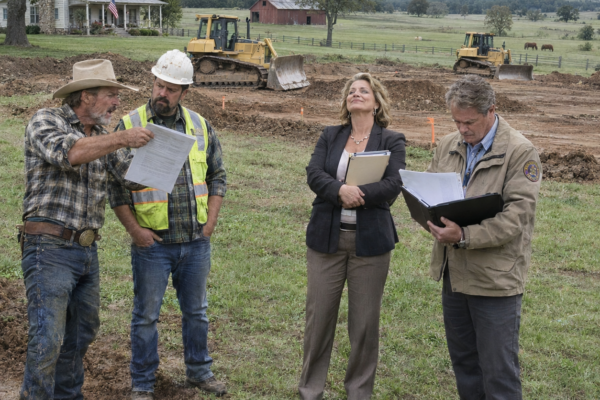
And surrounding us were ten acres of Missouri countryside that had been legally mine for more than a year.
I stared at her.
“Ma’am, who exactly are you?”
She looked offended that I would even ask.
“Karen Smith. The new owner. And if you don’t hand over those keys immediately, I’m calling the police.”
I looked at her BMW.
Then at my battered old pickup parked beside the barn.
Then back at the woman who had apparently decided to evict me from my own home before breakfast.
“There’s been a mistake,” I said. “This property isn’t for sale.”
Her face turned bright red.
“Don’t you dare lie to me! I paid for this ranch. The contract was signed, the closing was completed, and I have every right to take possession.”
“Who sold it to you?”
“Angela White.”
My stomach tightened.
Angela White was the real estate agent who’d helped me assess the property after my uncle died.
She was someone I trusted.
And she knew perfectly well I had no intention of selling.
“Angela didn’t sell you this land,” I said.
Karen gave a sharp, humorless laugh.
“That’s what a squatter would say.”
My name is Daniel Jones. I’m forty-five years old, and I inherited this ten-acre ranch outside Lebanon, Missouri, from my Uncle Raymond.
Uncle Ray never married.
He didn’t have children.
But for most of my life, he treated me like a son.
He taught me how to fix a fence, grow tomatoes, maintain an old pickup, and keep my word even when keeping it cost me something.
When he died, he left me the farmhouse, its surrounding fields, a small barn, and the gardens he’d cared for almost forty years.
I moved into the house the following spring.
On weekends, I spent most of my time outside, trying to bring his neglected flower beds and vegetable patches back to life.
That’s what I was doing that Saturday morning.
I was wearing dirt-stained jeans, an old flannel shirt, and Uncle Ray’s floppy gardening hat when Karen drove up the long gravel driveway without warning.
She didn’t ask whether she’d reached the right address.
She didn’t introduce herself politely.
She got out of her car, slammed the door, and demanded the keys.
Now she was standing inches from my face, insisting that the home my uncle had left me belonged to her.
“Karen, I have my recorded deed inside. I can show it to you.”
She folded her arms.
“I don’t need to see your fake paperwork.”
“It’s not fake.”
“Then why did Angela White sign a contract selling me the property?”
I took a breath.
“Let me call her.”
Karen stepped toward me.
“No. You’re not calling anybody until you give me those keys.”
I backed away.
“You’re not getting my keys.”
She pointed toward the farmhouse.
“Then I’ll have the sheriff remove you. And if you’ve damaged anything inside, I’m suing you.”
I was beginning to understand that arguing wouldn’t help.
But one detail bothered me more than her threats.
Karen had used Angela’s real name.
She knew the property had ten acres.
She knew the farmhouse came with a barn.
And she knew enough about the location to drive straight down a private road most people missed on their first visit.
Somebody had given her information about my property.
I just didn’t know who.
Karen pulled out her phone.
“I’m calling 911.”
“Go ahead,” I said. “I’ll call too.”
She looked startled.
I explained to the dispatcher that an unknown woman had entered my driveway, claimed she’d purchased my home, and was demanding that I leave.
Karen stood several yards away, shouting into her own phone.
“There’s a man occupying my property! He won’t surrender the keys! Send somebody before he destroys the place!”
I looked toward the farmhouse.
The porch steps still needed painting.
Uncle Ray’s rocking chair sat beside the front window.
And the flower beds behind Karen were filled with marigolds I’d planted from seeds stored in his old garden shed.
That was the property she claimed I’d stolen.
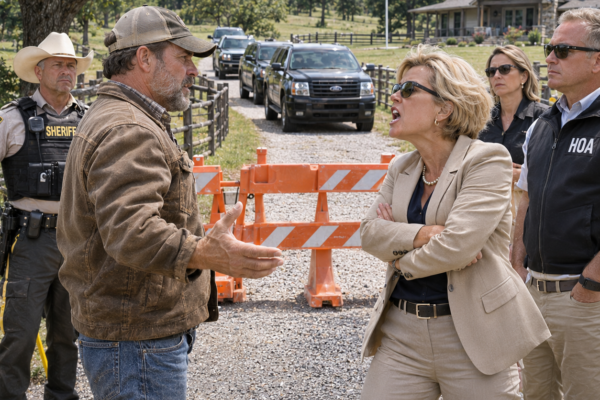
Two sheriff’s vehicles arrived twenty minutes later.
An older deputy with a gray mustache stepped out of the first.
A younger female deputy came from the second, her dark hair pulled into a neat bun.
Karen hurried toward them.
“Officers! Thank goodness! That man is refusing to leave my ranch!”
The older deputy looked toward me.
“Sir, what’s your name?”
“Daniel Jones.”
“Do you live here?”
“Yes. I own the property.”
I handed him the folder containing my deed and inheritance documents.
Karen began protesting.
“Those papers are fraudulent! My purchase closed on Monday!”
The female deputy turned toward her.
“Ma’am, do you have a copy of your deed or closing statement?”
Karen opened her expensive handbag.
She searched through it.
Then searched again.
Finally, she looked up.
“My documents are at home.”
The deputy remained calm.
“Can you tell us the name of the title company that handled the closing?”
Karen hesitated.
“Angela White handled everything.”
“Angela White is your real estate agent?”
“Yes!”
“Which title company received your payment?”
Karen stopped talking.
I watched her expression change.
For the first time that morning, she looked less angry than uncertain.
Then the older deputy glanced at the deed in his hand.
“Mr. Jones, you said you inherited this property last year?”
“That’s right.”
“Has anyone contacted you about selling it?”
“No. But my real estate agent mentioned receiving some strange inquiries recently.”
“What kind of inquiries?”
I thought back to our conversation.
Angela had called me two weeks earlier about a woman named Missy Smith who seemed unusually interested in the ownership history of Uncle Ray’s land.
At the time, we’d dismissed it as another person looking for rural property.
Now I wasn’t so sure.
The deputy took out his notebook.
“Mr. Jones, I think we need to speak with Angela White.”
Karen immediately interrupted.
“Why are you questioning him? I’m the victim here!”
The deputy looked at her.
“Ma’am, that’s what we’re trying to establish.”
Then he asked a question that made my blood run cold.
“Did the person who sold you this ranch ever meet you at the property before the closing?”
Karen opened her mouth.
Then closed it.
And I realized that this confrontation might involve something much worse than a stranger who had simply driven to the wrong address.
Part 2:
The woman standing in my driveway looked as if she’d dressed for a business meeting and accidentally wandered into a livestock auction.
She wore a cream-colored pantsuit, pearl earrings, and heels that were sinking into the gravel. Her short blonde hair was cut so precisely that I doubted a single strand had moved during the drive.
I was wearing an old flannel shirt, dirt-stained jeans, and a floppy gardening hat that had belonged to my late uncle.
One of us looked considerably more impressive than the other.
Unfortunately for her, appearances didn’t determine who owned the ten acres beneath our feet.
“Give me the gate keys,” she demanded.
I straightened slowly, still holding my pruning shears.
“Excuse me?”
“The keys. To the main gate and the house. I took possession of this property on Monday.”
I glanced toward my farmhouse.
Then toward the barn.
Then back at her.
“I’m sorry, ma’am. I think you’ve got the wrong place.”
Her eyes narrowed.
“Don’t play games with me.”
“I’m not.”
“I paid for this ranch. The transaction closed five days ago. You’re occupying it illegally.”
I stared at her for a moment.
Then I asked the simplest question I could think of.
“Who sold it to you?”
“Angela White.”
That made me stop smiling.
Angela White was a real estate agent I’d known for several years. She’d helped arrange an appraisal of this property when I inherited it from my uncle. We’d talked about its value, the condition of the farmhouse, and what it might cost to restore the old barn.
But she had never listed it for sale.
She had never received permission to negotiate a purchase.
And she certainly hadn’t sold it to this woman.
“My name is Daniel Jones,” I said. “I own this land. I inherited it from my uncle last year.”
The woman gave a sharp laugh.
“Then you’re either a liar or a scammer.”
“Neither.”
“Well, you can explain yourself to the police.”
She raised her phone.
I looked at the old pickup parked beside the barn.
My uncle had bought it secondhand twelve years earlier. The tailgate had a dent, and the driver’s seat was held together with more duct tape than I cared to admit.
For a brief moment, I wondered whether the woman had confused my home with a listing somewhere else.
But she knew Angela’s name.
That bothered me.
I took a step away from her.
“Before we call anybody, let’s make sure we’re talking about the same place. What’s the address on your paperwork?”
She folded her arms.
“You already know the address.”
“Humor me.”
She said the house number and road name.
Both were correct.
Then she added, “Ten acres, cedar farmhouse, detached barn, private entrance, and established gardens.”
My stomach tightened.
That description was accurate too.
“Whoever gave you those details doesn’t necessarily own the property,” I said.
Her face reddened.
“I am not standing here debating with a man dressed like a farmhand.”
I looked down at my clothes.
“That’s because I was gardening.”
“Well, your gardening days here are over.”
I didn’t respond.
She stepped closer.
“Keys. Now.”
I put the pruning shears on the stone border beside the flowers.
“No.”
She inhaled sharply.
Then she called 911.
I called too.
That was how a sunny Saturday morning that should have involved nothing more complicated than pruning shrubs turned into the beginning of the strangest property dispute of my life.
My name is Daniel Jones.
I was forty-five when this happened, and I lived on a little ten-acre ranch in the Ozark foothills outside Lebanon, Missouri.
Calling it a ranch was probably generous by Texas standards.
We didn’t run thousands of cattle.
There wasn’t a large herd or a row of shiny tractors.
We had a farmhouse, a barn, a chicken coop, a meadow, several fenced sections, and a garden large enough to keep a family busy for most of the year.
But Uncle Raymond Jones had always called it the ranch.
So did I.
Uncle Ray was my mother’s younger brother.
He never married or had children, but he was a constant presence throughout my childhood.
My father traveled for work, and when Dad was away, Uncle Ray was the person who taught me the practical things.
How to change a tire.
How to repair a gate hinge.
How to keep a lawn mower running when a replacement wasn’t in the budget.
How to plant tomatoes deep enough that their roots could survive a hot Missouri summer.
And how to admit when you didn’t know something.
“There’s no shame in being ignorant, Danny,” he’d tell me. “The shame comes when you decide staying ignorant is easier than learning.”
He was a carpenter by trade.
Not a famous one.
Not the kind who built luxury homes or appeared on renovation shows.
He built decks, repaired barns, remodeled kitchens, and occasionally helped neighbors who couldn’t afford professional work.
Most of the furniture in the farmhouse had been made or repaired by his hands.
The rocking chair on the porch.
The long kitchen table.
The narrow shelves in the hallway.
Even the little wooden box where he kept spare keys.
He was an ordinary man who took care of ordinary things.
And because of that, the place felt extraordinary to me.
After Mom died, I started visiting more often.
Uncle Ray was getting older.
His knees bothered him.
He couldn’t climb ladders as easily, and the gardens began growing faster than he could maintain them.
I’d drive out from Springfield on weekends, help with the work, and stay for supper.
We’d sit on the porch afterward, looking across the meadow as the sun dropped behind the oak trees.
He always offered me the same advice.
“Don’t spend so much time working that you forget what you’re working for.”
I used to laugh.
Then I’d go back to the city and work another sixty-hour week.
When he became ill, I took time off to help him.
We talked about the farm, his tools, and the projects he’d never finished.
We didn’t talk much about his death.
He didn’t like discussing it.
But he made me promise one thing.
“Whatever you decide to do with this place, Danny, make sure it’s your decision. Not somebody else’s.”
I thought he meant I shouldn’t feel obligated to keep the ranch.
Later, I understood his words differently.
He passed away in the winter.
His will left the property to me.
The estate’s attorney handled the probate process, and after the required proceedings, the real estate was transferred into my name.
The deed was recorded with the county.
I obtained title insurance when I refinanced the small remaining debt associated with improvements.
I paid the taxes.
I updated the homeowner’s insurance.
And the following spring, I moved into the farmhouse permanently.
At first, the place felt empty.
Every room reminded me of Uncle Ray.
His coffee mug was still hanging beside the stove.
His work boots sat near the back door.
His handwritten planting notes were in a kitchen drawer.
Some mornings, I’d reach for the phone to ask him a question before remembering he wasn’t there to answer it.
So I started working outside.
I repaired the old garden fence.
Replaced several broken window screens.
Cleaned the barn.
Pruned the apple trees.
And brought the flower beds back to life.
The work helped.
When the first marigolds bloomed along the driveway, I felt closer to him than I had in months.
That’s where I was standing when Karen Smith arrived.
She didn’t know any of that.
To her, the farmhouse was apparently a piece of real estate she’d purchased.
To me, it was the only place in the world where I could still feel my uncle standing beside me.
And I wasn’t about to hand it over because a stranger arrived in a BMW demanding keys.
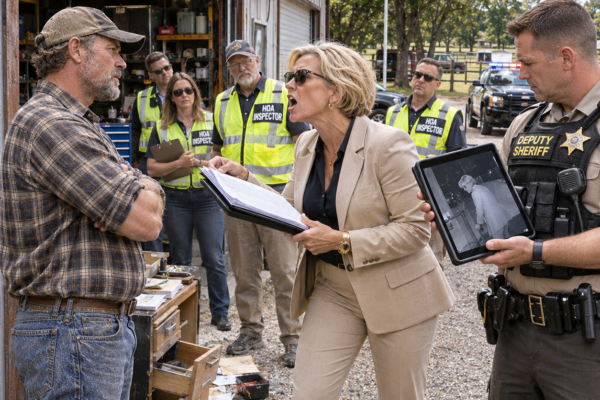
Two sheriff’s vehicles arrived shortly after ten.
The first came down the gravel drive slowly, followed by a second that stopped beside my pickup.
The older deputy who climbed out had a gray mustache and the deliberate movements of a man who’d been doing the job long enough not to rush into an argument.
His name was Deputy Frank Porter.
The younger deputy was a woman named Nina Ruiz.
She had her dark hair pulled back in a tight bun and carried a small notebook.
Karen hurried toward them.
“Thank goodness! I want this man removed immediately.”
Porter held up a hand.
“Let’s start with names.”
“Karen Smith. I’m the property owner.”
Ruiz looked toward me.
“And you, sir?”
“Daniel Jones. I live here.”
Karen interrupted.
“He claims he lives here. He’s a trespasser.”
I looked at Porter.
“I have the recorded deed and probate documents in the house. I can get them.”
He nodded.
“Go ahead, sir. We’ll stay here.”
Karen started protesting.
“Don’t let him go inside! He could destroy evidence!”
Porter turned toward her.
“Ma’am, we’re going to verify the information. Please let us do that.”
I went into the farmhouse, opened the fire-resistant document case in my office, and retrieved the relevant records.
The deed.
A copy of the probate distribution order.
The most recent property-tax statement.
My driver’s license showing the address.
And the title policy issued after I took ownership.
When I returned, Karen was telling Ruiz that she’d recently spent a large amount of money purchasing rural property and that nobody was going to cheat her out of it.
Porter examined the documents.
He checked the parcel information against the records available through his department.
Then he asked how long I’d lived there.
“Over a year. My uncle owned it before me.”
“Did you list it for sale?”
“No.”
“Sign a purchase agreement?”
“No.”
“Give anyone power of attorney?”
“No.”
He nodded.
Then he turned to Karen.
“Ma’am, can we see your closing documents?”
She opened her handbag.
Pulled out a wallet.
A cosmetics case.
A packet of tissues.
Then another small pouch.
Finally, she slammed the bag shut.
“They’re at home.”
“Do you have electronic copies?”
“Not on this phone.”
“Who handled the closing?”
“Angela White.”
“Is Angela White a title officer or a real estate agent?”
Karen hesitated.
“She’s the person who sold me the property.”
Ruiz made a note.
“Did you meet her in person?”
“Not exactly.”
“What does that mean?”
Karen looked annoyed.
“We handled everything electronically. That’s how people buy property now.”
Electronic real estate transactions were common enough.
That wasn’t the problem.
The problem was that Karen couldn’t name the title company, identify the seller, or produce a recorded deed establishing her ownership.
Still, Porter didn’t treat her as a criminal merely because her story appeared mistaken.
He asked for the phone number she’d used to communicate with the supposed agent.
Karen provided it reluctantly.
Then I mentioned something.
“Angela White is a real realtor here in the county. She’s helped me with property matters before.”
Both deputies looked toward me.
Karen smiled triumphantly.
“See? He admits she sold property!”
“No,” I said. “I said she’s a real estate agent. She never had permission to sell mine.”
Porter asked whether I could contact her.
I called.
Angela answered almost immediately.
“Daniel? Everything okay?”
“Not exactly. I’m standing in my driveway with two deputies and a woman who says you sold her Uncle Ray’s ranch.”
There was silence.
Then Angela said, “What?”
I explained what was happening.
Angela asked to speak with the deputy.
I put the call on speaker with everyone’s knowledge.
Porter introduced himself.
Angela confirmed that she had never listed my property, never negotiated its sale, and never signed a contract transferring it.
Then she mentioned something that made the conversation more interesting.
“Deputy, I received several unusual inquiries about that parcel a couple of weeks ago.”
“What kind?”
“A woman calling herself Missy Smith wanted to know whether the property was still part of an estate.”
I felt a chill.
Angela continued.
“She asked whether Daniel was the sole beneficiary, whether the deed had been recorded, and whether I had photographs from when I evaluated the property.”
Porter glanced toward me.
“Did you provide them?”
“I gave her no confidential information. But she was persistent. She seemed particularly interested in whether the landowner was away or planning to sell quickly.”
Karen’s face changed.
“Missy Smith?”
Ruiz turned toward her.
“Do you recognize that name?”
Karen hesitated.
“That’s the woman who introduced me to Angela.”
I stared at her.
“What?”
Karen folded her arms.
“Missy said she specialized in finding off-market properties. She contacted me after I told her I was looking for a country house.”
Porter asked whether Missy was a licensed real estate agent.
Karen didn’t know.
Ruiz asked for her telephone number.
Karen provided it.
Then the deputy asked a question.
“Did you ever meet Missy Smith in person?”
Karen’s face tightened.
“Once.”
“Where?”
“At a coffee shop.”
“And Angela White?”
“No. Missy said Angela was handling the legal paperwork remotely.”
Angela spoke from my phone.
“I wasn’t handling any sale.”
Karen shook her head.
“That’s impossible.”
Porter looked toward her.
“Ma’am, there appears to be a serious question about the transaction. Until we can establish otherwise, you don’t have authority to take possession of this property.”
Karen stared at him.
“You can’t be serious.”
“The records presently identify Mr. Jones as the owner.”
“But I paid for it!”
“That may mean someone defrauded you. We need to investigate.”
For one second, I thought she might finally understand.
Then she looked at me.
Her expression hardened.
“He planned this.”
I frowned.
“What?”
“He set me up. He took my money and now he’s pretending he doesn’t know anything!”
Porter stepped between us.
“Mrs. Smith, do not approach him.”
She pointed toward my house.
“I am not leaving without my keys!”
I kept my voice steady.
“Karen, you need to leave my property.”
She ignored me.
Then she marched toward the porch steps.
Ruiz moved to intercept her.
“Ma’am, stop.”
Karen tried to move around her.
“I’m going inside!”
“Stop right there.”
Karen finally halted.
Porter explained that she’d been told to leave and could not force entry into the house merely because she claimed a purchase had occurred.
But Karen wasn’t listening anymore.
She lunged toward the wooden key rack hanging near the open porch doorway.
I stepped back.
Ruiz blocked her path.
Karen shoved against the deputy’s arm and shouted that everyone was conspiring to steal her land.
Both deputies immediately took control of the situation.
Porter told her she was being detained.
She continued struggling and refused to follow his directions.
When the handcuffs closed, her expression turned from fury to disbelief.
“You can’t do this! I’m the owner!”
Porter remained calm.
“Ma’am, you’re being detained because of your conduct here, not because you reported a possible property fraud.”
She began shouting about lawsuits.
I watched from beside my pickup, feeling a strange mixture of relief and discomfort.
I wanted her off my property.
I wanted the threats to stop.
But as the deputies escorted her toward the cruiser, I also understood something.
If she’d really paid money to someone pretending to sell my ranch, she had been cheated too.
That didn’t excuse her behavior.
It didn’t give her the right to threaten me or force her way into my home.
But it meant there was another person involved.
Somebody who had persuaded her that she owned land I had never offered to sell.
And unlike Karen, that person might have known exactly what they were doing.
Before leaving, Deputy Porter asked me to come to the sheriff’s office the following week to provide a formal statement and copies of the relevant records.
He also advised me to preserve any communications connected to unusual purchase inquiries.
I agreed.
Then the cruisers drove away.
For several minutes, I stood alone in the driveway.
The BMW was still parked near my truck, awaiting arrangements for its removal.
My gardening gloves lay beside the flowers.
And the pruning shears were exactly where I’d set them down when Karen first demanded my keys.
I picked them up.
Then I looked toward Uncle Ray’s farmhouse.
Someone had tried to sell it.
Not because I wanted to leave.
Not because the land was available.
But because they believed they could make money by pretending it belonged to them.
I went inside and called Angela again.
This time, I had more questions.
Angela came to the ranch that afternoon.
She arrived in a dusty Subaru, parked beside my pickup, and walked toward the porch carrying a laptop and a thick file folder.
“I’m so sorry, Daniel.”
I shook my head.
“You didn’t sell it.”
“Of course I didn’t.”
“Then don’t apologize for what somebody else did.”
She sat at Uncle Ray’s kitchen table while I made coffee.
Angela was fifty-two, a licensed real estate agent who’d worked in the Lebanon area for almost twenty years.
She’d sold houses, small farms, hunting parcels, and commercial buildings.
She also knew that rural property records could be complicated.
Old family transfers.
Inherited land.
Easements that had never been clearly mapped.
Properties that passed through generations without anyone bothering to update descriptions until a dispute arose.
She’d helped me after Uncle Ray died because I wanted an accurate valuation before deciding how much money to put into repairs.
I’d never asked her to sell.
She opened her laptop.
“Here’s the first inquiry I received.”
The email had arrived seventeen days earlier.
It came from someone calling herself Missy Smith.
The message asked whether the Jones parcel was available for a private sale.
Angela had replied that it was not listed.
Missy asked whether the owner had recently inherited it.
Angela declined to discuss my personal circumstances.
Then Missy requested photographs.
Angela refused.
But the following day, Missy contacted her again.
This time, she claimed to represent a cash buyer interested in rural properties with barns and private entrances.
She asked whether the parcel had clear title.
Angela replied that she wasn’t authorized to negotiate a sale and couldn’t provide title information on behalf of the owner.
Missy stopped emailing after that.
I looked at the address.
The messages had come from a generic webmail account.
“Did she ever tell you where she worked?”
“She used the name Ozark Heritage Property Group.”
“Is that a real company?”
“Not one I recognized.”
Angela had checked the Missouri real estate license search after the calls began.
She couldn’t find a license matching the name and credentials Missy had provided.
But she’d assumed the woman was simply an inexperienced property scout.
“Then yesterday,” Angela said, “I received a strange telephone call.”
“From whom?”
“A man asking whether I was the listing agent for your ranch.”
I sat straighter.
“What did you tell him?”
“That it wasn’t listed.”
“What did he say?”
“He claimed he’d seen a private-sale advertisement.”
Angela turned her laptop toward me.
Someone had created a listing for my property.
Not on the local multiple-listing service.
On a website that advertised off-market homes and rural investment opportunities.
The photographs showed Uncle Ray’s farmhouse.
His barn.
The garden.
The gravel driveway.
Even the little wooden bridge crossing the seasonal creek.
I stared at the images.
Some came from old public property records.
Others were recent.
One showed the barn roof I’d repaired only two months earlier.
I felt a chill.
“Somebody’s been here.”
Angela nodded.
“Or they’ve photographed it from a location they could access. We need to establish how.”
I opened the listing.
PRIVATE OWNER SALE — TEN-ACRE OZARK RETREAT.
The asking price was $285,000.
I blinked.
Angela’s previous valuation had been considerably higher.
Even accounting for the work the house needed, the advertised price was suspiciously low.
“That’s how they attracted a buyer,” Angela said.
The description claimed the seller was relocating immediately and wanted a quick cash transaction.
It also said the sale was being coordinated by a trusted local agent.
Beneath that sentence was Angela’s name.
Her photograph.
And a version of her business logo.
I looked at her.
“That’s identity theft.”
“At minimum, it’s an unauthorized use of my identity and business materials.”
She clicked the contact link.
The email address looked almost identical to the domain used by Angela’s legitimate brokerage.
One letter was different.
Unless someone examined it carefully, they’d never notice.
I thought about Karen standing beside her BMW.
Angela White sold it to me.
Someone had apparently created an entire false transaction around a real property and a real agent.
Angela leaned back.
“I’m reporting the impersonation to my brokerage, the platform, and the authorities.”
“Can you find out who owns the website?”
“Investigators may be able to obtain registration, hosting, and payment records. We should preserve what we can see first.”
We saved the pages with timestamps.
We documented the web address.
We saved the photographs and the contact information.
Then Angela called her broker.
I called Deputy Porter and told him what we’d discovered.
He referred the information to the sheriff’s fraud investigator.
The investigator, Detective Megan Foster, contacted us the following Monday.
She asked for everything.
The emails.
Website records.
My deed.
The probate documents.
And the information Karen had supplied at the scene.
I met her at the sheriff’s office with Angela and my attorney, a local real estate lawyer named Thomas Bell.
Thomas had helped me complete Uncle Ray’s estate transfer.
He was a careful man who spoke slowly and rarely made promises about legal outcomes.
When I explained what happened, he looked at the deed.
“Your ownership is documented. But we need to verify whether anyone has attempted to record an instrument affecting the title.”
That was a frightening thought.
A fake advertisement was bad enough.
A forged deed in the county records could create a much larger problem.
Thomas requested updated title records.
Detective Foster began tracing the alleged sale.
The first significant finding came from Karen’s copy of her purchase agreement.
She’d provided it through counsel after her release.
The document carried a signature purporting to be Angela White’s.
Angela examined it.
“That’s not mine.”
The contract listed a company called Heritage Settlement Services.
It claimed the property had been sold through a private cash transaction.
Attached were photographs, an inspection waiver, a payment receipt, and something labeled a seller authorization.
Thomas read the seller authorization.
Then stopped.
“Daniel, come here.”
I leaned over his shoulder.
The document claimed that Raymond Jones, the original owner, had authorized the property to be sold.
His name appeared at the bottom.
Beside it was a signature.
I recognized the shape of Uncle Ray’s handwriting.
Whoever had created it had apparently copied an example from somewhere.
But the date was impossible.
The authorization was supposedly signed more than three months after Uncle Ray died.
I stared at it.
Then I felt my hands begin to shake.
For a year, I’d been trying to take care of the home he’d left me.
And somebody had used his name to create a false document after he was already buried.
Thomas looked at me.
“This is going to be important evidence.”
I nodded.
For a moment, I couldn’t speak.
It wasn’t merely a lie about property.
It was a lie using the name of a man who had trusted me to protect it.
Detective Foster examined the document.
Then asked whether I had certified copies of Uncle Ray’s death certificate and the probate records.
“I do.”
“Please provide them through your attorney.”
She marked the document for further examination.
I looked at the signature again.
Whoever had written it knew Uncle Ray had owned the land.
They knew his name.
They had found information about our family.
But they hadn’t checked the date carefully enough.
That mistake might finally show investigators how the supposed sale had been constructed.
And for the first time, I began wondering how many other families had been targeted the same way.
The next two weeks were miserable.
Not because Karen returned to the ranch.
She didn’t.
Her attorney had been informed of the trespass complaint, and the sheriff’s office had made clear that she wasn’t to come onto my property uninvited while the matter was being investigated.
But her accusations didn’t disappear.
Within days, a post appeared in a local community group claiming that a man outside Lebanon had refused to surrender a property after a completed real estate purchase.
It didn’t identify me by name.
It didn’t need to.
The description included enough details that several neighbors recognized the ranch.
One person commented that squatters were becoming a serious problem.
Another said property buyers needed stronger legal protection.
A third asked why the sheriff hadn’t removed the supposed occupant.
I sat at my kitchen table reading the comments.
The same house Uncle Ray had worked for decades to maintain was now being discussed as though I’d broken into it.
I wanted to answer every accusation.
Thomas advised against that.
“Daniel, don’t let the internet become a second courtroom.”
“But people think I stole my own home.”
“Then we correct the record through verified facts and the appropriate process. Don’t publish Karen’s financial information or speculate about who committed the fraud.”
I knew he was right.
Still, it was hard.
The ranch had always felt private.
Now strangers were discussing it as an investment opportunity, an alleged property crime, and a neighborhood scandal.
Angela’s brokerage issued a notice warning that someone had been impersonating a licensed agent in connection with a fraudulent real estate advertisement.
It confirmed the ranch had never been listed for sale through the firm.
The fake advertisement was removed after the platform reviewed the complaint.
But Detective Foster warned us that deleting a listing didn’t necessarily end a fraud operation.
The people behind it could simply create another account.
So Thomas helped me establish a property-record monitoring service.
We also contacted the county recorder’s office to understand how to be notified of new instruments affecting my parcel.
I checked the mail more carefully.
Updated the locks on the barn.
Changed the access codes to my security cameras.
And installed an additional camera covering the entrance.
I didn’t want to turn Uncle Ray’s peaceful little home into a fortress.
But I wasn’t going to make it easy for another stranger to show up demanding possession.
One morning, my neighbor Martha Bellamy stopped by with a jar of homemade blackberry preserves.
She lived two properties down and had known Uncle Ray for twenty-five years.
I’d never seen her angry before.
That morning, she looked furious.
“Daniel, somebody told me you’d sold Raymond’s place and refused to move out.”
I sighed.
“That’s the story going around.”
She placed the jar on my porch rail.
“Well, it’s nonsense.”
“I know.”
“Raymond would’ve laughed himself sick at the idea of you selling his garden without telling anybody.”
I smiled despite myself.
“He probably would’ve.”
Martha looked toward the driveway.
“Are you safe here?”
“Yes. The sheriff knows what’s happening.”
She nodded.
Then her expression softened.
“Your uncle would be proud of how you’re handling it.”
I looked toward the old rocking chair.
“I’m trying.”
She squeezed my shoulder.
“That’s all anybody can do.”
After she left, I went back to the flower beds.
I found myself pulling weeds harder than necessary.
Every time I glanced toward the driveway, I expected another expensive car to appear.
That was when I realized the scam had already taken something from me.
Not the deed.
Not the farmhouse.
Not the garden.
But the feeling that I could work outside without wondering whether a stranger might arrive and tell me to leave.
I hated that.
So I made myself keep gardening.
Every morning before work.
Every Saturday when the weather allowed.
I planted beans.
Repaired the trellis.
Turned the compost.
And tried to remember that being frightened by someone else’s actions didn’t mean I had to let those actions control the rest of my life.
Meanwhile, Detective Foster was making progress.
Karen’s attorney provided documentation of the alleged purchase.
The paperwork showed that Karen had agreed to pay $285,000 for the property.
She’d made the payment by wire transfer to an account supposedly belonging to Heritage Settlement Services.
Karen later explained that she’d recently inherited money after her mother died.
She’d wanted to move away from the city, buy a quiet rural home, and start over.
When Missy Smith contacted her about an off-market ranch available below its estimated market value, Karen believed she’d found the perfect opportunity.
Missy told her the seller was motivated and wanted a fast closing.
She showed Karen photographs of the farmhouse and gardens.
She provided a fabricated title report.
She introduced a person posing as Angela White through email.
And she claimed that the seller’s estate circumstances explained why the property could be purchased so cheaply.
Karen never met the owner.
She never walked through the house.
She never attended a closing at a legitimate title company’s office.
She signed electronically and transferred the money.
The supposed closing confirmation arrived on Monday.
On Saturday, she came for the keys.
I listened to the explanation during a meeting with Detective Foster and Thomas.
For the first time, I understood how Karen had been persuaded.
The scammer hadn’t simply sent a random email asking for money.
She’d constructed a believable transaction using real property details, a real agent’s name, an official-looking title report, and documents that resembled the ones ordinary buyers receive during a closing.
But Karen had ignored warning signs too.
The unusually low price.
The absence of a property inspection.
The unfamiliar settlement company.
The refusal to arrange a meeting with the seller.
The pressure to wire money quickly.
And the fact that her supposed deed hadn’t been recorded or independently verified.
None of that meant she deserved to lose her savings.
It meant the fraud had worked partly because she wanted the deal to be genuine.
Detective Foster traced the settlement account through banking records obtained during the investigation.
The receiving business was not a licensed or recognized local closing agency.
The account had been opened using company documents that investigators were examining for falsification.
Most of Karen’s payment had been transferred onward shortly after it arrived.
Some funds had gone to other accounts.
Some had been withdrawn.
A portion was later preserved through the investigation, but there was no guarantee the full amount could be recovered.
Karen had lost a terrifying amount of money.
I felt sorry for her.
Then I remembered her standing on my porch, demanding that the deputies arrest me.
Feeling sympathy for someone didn’t require pretending her conduct had been acceptable.
She’d been deceived.
Then she’d tried to make an innocent person pay for it.
Both facts could be true.
Thomas called me after the meeting.
“Daniel, the title search is complete.”
I sat up.
“Any new filings?”
“There’s an attempted transfer document that was submitted for recording, but it didn’t establish a valid conveyance. We’ve obtained the available record and are addressing it formally.”
My mouth went dry.
“Somebody tried to file a deed?”
“Yes. It appears connected to the same supposed transaction.”
“Is my property still mine?”
“The controlling title records support your ownership. We are taking the necessary steps to ensure the fraudulent document doesn’t remain a cloud over the parcel.”
I looked toward the kitchen window.
Beyond it, the barn stood in the afternoon sunlight.
Someone had tried to turn Uncle Ray’s home into a sale without either of us ever agreeing.
They’d gone beyond a fake advertisement.
Beyond a counterfeit contract.
They’d attempted to make the lie look official in the public record.
And now the question wasn’t merely who had cheated Karen.
It was how many times the same person had done this before.
The breakthrough came from a photograph Karen had almost deleted.
Detective Foster called me one Thursday afternoon and asked whether I could come to the sheriff’s office.
I arrived with Thomas.
Foster had a photograph displayed on her computer.
It showed a woman with dark shoulder-length hair sitting at a coffee shop.
She wore a green jacket and large sunglasses.
A black folder rested on the table in front of her.
“Do you recognize her?” Foster asked.
“No.”
“Karen Smith says this is Missy.”
I studied the image.
The woman looked to be in her forties.
There was nothing remarkable about her appearance.
The kind of person you might pass in a grocery store without remembering.
“Karen took the picture?” I asked.
“Yes. During their first meeting. She wanted to show a friend the woman helping her find the property.”
I looked closer.
“What happened to the friend?”
“She was skeptical about the price and advised Karen to have an independent title company review the transaction.”
I shook my head.
“Karen didn’t listen.”
“Apparently not.”
Detective Foster opened another file.
Investigators had obtained records connecting the fraudulent settlement communications to a small network of accounts and electronic services.
The photograph helped them compare the person calling herself Missy with individuals associated with those records.
The woman had also appeared in security footage from the coffee shop, which had been obtained through the investigation.
Her real name was Melissa Crane.
She’d previously worked in an administrative role for a real estate settlement business in another county.
That employment had ended years earlier.
Foster was careful to explain that Melissa’s former work didn’t establish guilt.
But it helped explain how someone might know what legitimate closing paperwork was supposed to look like.
The woman had enough industry familiarity to imitate the process.
She knew which documents buyers expected.
She knew how to make an email look like it came from a brokerage.
And she knew that a rushed buyer might focus on the house and price instead of independently checking the people holding the money.
The investigators also identified at least two other attempted transactions involving properties owned by people who had recently died.
In one case, a supposed seller had advertised a rural house while the actual heirs were still settling the estate.
In another, someone had used a deceased owner’s signature on a document dated after the death.
I thought about Uncle Ray.
“That’s how she chose the properties.”
Foster nodded.
“Public records can reveal property and estate information. The pattern suggests those records were part of the targeting process.”
“Can she actually transfer someone’s land with fake paperwork?”
“Fraudulent instruments can create serious title problems. Whether a transfer is legally effective depends on the facts and applicable law. That’s why independent verification and prompt action matter.”
Thomas agreed.
“The objective is to establish the legitimate chain of title and correct any false claims. We’re already doing that.”
I looked toward the photograph again.
Melissa Crane didn’t appear particularly threatening.
But she’d managed to frighten one innocent homeowner and take a large sum from another person by making each believe the other was committing a crime.
That required more than a convincing sales pitch.
It required an understanding of how easily trust could be borrowed from official-looking documents.
Over the next month, investigators developed the evidence necessary to pursue the suspected fraud.
Bank records connected relevant payments.
Communications linked the false brokerage identity to the supposed settlement service.
Electronic records and witness statements helped establish who had prepared and distributed the documents.
The investigation also examined how the photographs of my property had been obtained.
Some had been copied from publicly accessible sources.
Others had been taken from the road and areas where the farmhouse was visible without entering the property.
The fact that the images were real had helped make the sale believable.
The person advertising the house didn’t have to own it.
She only needed enough genuine details to persuade someone that she did.
When the authorities obtained the appropriate warrants, Melissa was arrested on charges arising from the fraudulent real estate transactions.
The investigation continued into other people who may have assisted with moving funds or creating false documents.
I didn’t attend the arrest.
I learned about it through Thomas and the publicly available court information.
I wasn’t interested in seeing Melissa humiliated.
I wanted to know whether the money could be recovered and whether anyone else was about to lose their savings or face a stranger demanding their home.
The answer to the second question was encouraging.
After investigators alerted the relevant businesses and other affected owners, another pending transaction was stopped before the buyer transferred the requested funds.
That family had been considering a property whose actual owner had no intention of selling.
A title professional noticed inconsistencies and refused to proceed without additional verification.
This time, the warning signs were recognized before a stranger arrived at someone’s door with a supposed deed.
I felt relieved.
But the effects of the fraud weren’t limited to money.
Karen’s criminal case was still pending.
The county prosecutor had reviewed the confrontation on my driveway and the deputies’ reports.
The allegations concerned her refusal to leave after clear warnings and her physical interference when the deputies tried to stop her from entering my house.
I wasn’t the person who decided the charges.
I provided a statement and cooperated.
Thomas explained that whatever the prosecutor concluded about Karen’s behavior, the fraudulent purchase itself didn’t give her ownership of the ranch.
Those were separate issues.
Then one Friday afternoon, I received a letter.
It came from Karen.
Not her lawyer.
Not a court.
Karen Smith herself.
The envelope was plain white.
My name and address were written in careful block letters.
I opened it at the kitchen table.
She began by acknowledging that she’d come to the property believing she’d bought it.
Then she admitted she’d ignored the warnings that the sale might be fraudulent.
She said she’d been ashamed and angry when the deputies questioned her.
Instead of listening, she’d accused me of stealing the land.
She acknowledged that she had no right to threaten me or force her way inside.
The final paragraph was short.
I understand now that you did not take anything from me. Somebody else stole my money. I am sorry I tried to make you pay for it.
I read it twice.
Then folded the page.
I wasn’t ready to become friends with Karen.
I didn’t owe her that.
But I appreciated that she had finally written the truth without attaching another demand.
A week later, her attorney contacted Thomas about resolving the remaining issues.
Karen agreed to acknowledge in writing that she had no ownership claim to my ranch and would not enter the property without permission.
The local charges were addressed through the court’s process, including conditions focused on her conduct and future compliance.
The prosecutor considered her cooperation with the fraud investigation and the circumstances of the original confrontation.
She was no longer insisting she owned the farmhouse.
She was working with investigators to recover what she could from the people who had actually deceived her.
And I could finally look at the driveway without expecting her BMW to appear.
But one matter remained unresolved.
The false deed.
Until the county records were corrected, I couldn’t fully relax.
Thomas told me the legal process was moving forward.
I wanted to believe him.
I also wanted to see the final document for myself.
The hearing about the false deed took place on a rainy Tuesday.
I arrived at the courthouse with Thomas and a folder containing every record I’d collected since inheriting the ranch.
The original deed.
The probate order.
Uncle Ray’s death certificate.
The title history.
The attempted transfer document.
And the supposed seller authorization bearing his signature three months after he’d died.
I’d looked at those papers so many times that I could have recognized most of them from across the room.
But I still felt nervous.
You can know you’re right and still worry when someone else’s dishonesty has forced you to defend the obvious in court.
Thomas presented the recorded history and the evidence concerning the disputed instrument.
The false seller authorization had never been signed by Uncle Ray.
I had never authorized a sale.
The supposed settlement company had never represented me.
And the purported transaction couldn’t establish a valid transfer of my ownership merely because Karen had paid money to someone claiming to act for the seller.
The court entered the necessary relief establishing the legitimate ownership and directing correction of the affected property records.
When the process was completed, Thomas arranged for an updated title examination.
The result was what I’d been waiting to hear.
The ranch remained legally mine.
There was no valid transfer to Karen Smith.
The fraudulent claim had been addressed.
And the public record no longer left the supposed sale hanging over my property.
Thomas called me that afternoon.
“Daniel, the corrected records are available.”
I was standing beside the chicken coop.
I closed the gate carefully.
“Are we finished?”
“With the title issue, yes.”
I leaned against the fence.
For a moment, I couldn’t speak.
Then I said, “Thank you, Thomas.”
“Your uncle left you good records. That made our work considerably easier.”
I looked toward the old farmhouse.
“That sounds like him.”
We ended the call.
I stood there for several minutes, listening to the chickens scratching beneath the apple tree.
All I’d wanted from the beginning was to live quietly on the land Uncle Ray left me.
I’d never tried to sell it.
Never offered it as an investment.
Never told anybody it was available.
Yet I’d spent months collecting documents, attending meetings, and defending my right to stay in a house that had already been mine.
I walked back to the farmhouse.
Inside, I opened the wooden key box Uncle Ray had made.
The gate keys hung exactly where he’d always kept them.
Beside them was a brass tag he’d stamped years earlier.
RAY’S PLACE.
I smiled.
Then I closed the box.
The criminal case against Melissa Crane continued.
Several months later, she entered a guilty plea to charges arising from the fraudulent transactions.
The court ordered restitution to the victims as part of the sentence.
The authorities recovered some money through preserved accounts and other proceedings, but not every dollar was immediately available.
Karen faced the possibility that she’d never recover everything she lost.
That seemed terribly unfair.
But the person responsible was the one who’d created the false sale, not the homeowner who refused to surrender his land.
Karen eventually withdrew the inaccurate public statements she’d made about me.
Through her attorney, she provided a written correction acknowledging that the purported property transaction had been fraudulent and that I hadn’t participated in it.
A few people who’d commented on the original story apologized.
Most simply stopped talking about it.
That was fine with me.
I didn’t need to win a popularity contest in a neighborhood group.
I needed to be able to pick tomatoes without wondering whether someone was going to accuse me of stealing the garden.
Angela’s brokerage also changed several procedures for handling inquiries involving inherited and off-market properties.
The staff began giving callers clearer warnings about fraudulent advertisements using legitimate agents’ names.
They encouraged buyers to independently verify brokerage contact information and closing arrangements before transferring funds.
Angela later told me that another prospective buyer had contacted the office after seeing an unusually inexpensive rural property advertised through an unfamiliar website.
The caller had been about to send a substantial deposit.
But instead of trusting the contact information in the advertisement, she’d called the brokerage’s published number.
The agent confirmed that the property wasn’t listed.
The buyer kept her money.
When Angela told me that, I felt better about the entire experience.
At least something useful had come from the trouble.
I also learned to take property security more seriously.
Not because I believed someone was going to steal the land from underneath me overnight.
But because I understood that publicly available records could be misused by people willing to fabricate a convincing story.
I kept certified copies of my deed and estate documents in a secure place.
I checked for unexpected property filings.
I made sure the insurance and tax records remained current.
And I stopped assuming that an official-looking document had been verified simply because it contained a stamp.
Uncle Ray had taught me plenty about tools and soil.
This ordeal had taught me something about paperwork.
Both could hurt you if you handled them carelessly.
By the following spring, the ranch was starting to look the way I’d imagined when I first moved in.
The barn had a new roof.
The chicken coop was repaired.
The vegetable garden was producing more than I could eat.
Martha Bellamy took half my extra zucchini every summer, although she insisted that nobody needed quite as much zucchini as I grew.
I planted another row anyway.
The old farmhouse settled back into its familiar routine.
Mornings with coffee on the porch.
Afternoons repairing whatever had broken.
Evenings watching deer move through the meadow.
And weekends spent in the garden with Uncle Ray’s floppy hat pulled down against the sun.
One Saturday morning, almost a year after Karen first arrived, I was pruning the same shrubs beside the driveway.
The weather was warm.
Bees moved through the marigolds.
My pickup sat near the barn with its windows down.
For a moment, I heard the sound of a vehicle coming along the gravel road.
I stopped working.
Looked toward the gate.
And felt that old knot tighten in my stomach.
Then I recognized Martha’s little blue car.
She pulled up beside the farmhouse and waved.
“Morning, Daniel! Got any tomatoes yet?”
I laughed.
“Not this early, Martha.”
She climbed out carrying a basket of fresh biscuits.
“Well, then I suppose you’ll have to settle for breakfast.”
We sat on the porch.
She asked whether I’d heard any more about the woman who tried to buy my property.
I shook my head.
“Not recently.”
“Good.”
She looked toward the garden.
“Your uncle would’ve been mighty upset about all that.”
I nodded.
“He would’ve.”
Then I smiled.
“But I think he’d be pleased with how it ended.”
Martha looked at me.
“Because you kept the ranch?”
“Partly.”
“What else?”
I considered the question.
“Because I didn’t let somebody else’s mistake turn me into a person I don’t want to be.”
She nodded slowly.
I continued.
“Karen was awful that morning. She came here demanding keys, accused me of lying, and tried to force her way into my house. I wasn’t going to tolerate any of that.”
“Of course not.”
“But she’d also been cheated. She’d lost money and didn’t understand what had happened.”
Martha looked thoughtful.
“So you can feel sorry for her and still expect her to answer for her behavior.”
“Exactly.”
She smiled.
“Raymond would’ve said something like that.”
I looked toward his old rocking chair.
“Probably with a few more colorful words.”
We both laughed.
After Martha left, I returned to the flower beds.
I worked along the stone border, pulling weeds and trimming the overgrown branches.
When I reached the place where Karen had stood shouting at me, I paused.
I remembered her BMW.
Her expensive clothes.
The way she’d held out her hand and demanded my keys as though the transaction had already been settled.
I remembered the deputies arriving.
The frightened look on her face when she couldn’t explain who had handled the closing.
And the strange, sick feeling I experienced when I realized someone had used Uncle Ray’s name to sell land he had never offered for sale.
Then I looked around.
The farmhouse was still there.
The barn was still there.
The fields stretched toward the distant trees.
Nothing about the place had changed simply because a stranger had arrived claiming to own it.
The documents mattered.
The law mattered.
The truth mattered.
And above all, the choices of the actual owner mattered.
I wasn’t keeping the ranch because it would make me rich.
I wasn’t keeping it to prove a point to Karen Smith.
I was keeping it because my uncle had spent decades building a life here, and he’d trusted me to decide what happened after he was gone.
One day, I might make a different decision.
I might pass it to family.
I might establish a conservation arrangement.
I might find someone who loved the place as much as Uncle Ray did.
But if that day ever came, the decision would be mine.
Not a stranger’s.
Not a scammer’s.
And certainly not a woman standing in my driveway demanding keys to a house she had never legally purchased.
I finished pruning the shrubs and gathered the cut branches into a wheelbarrow.
Then I walked toward the vegetable garden.
The soil was warm beneath my boots.
A breeze moved through the oak trees beside the barn.
And somewhere in the distance, a rooster crowed as though announcing something terribly important.
I smiled.
For the first time in a long while, I felt completely at peace.
Uncle Ray used to say that a good home wasn’t measured by what someone else would pay for it.
It was measured by how much of yourself you put into caring for it.
I finally understood exactly what he meant.
The little ranch was still mine.
The gate keys were still hanging in their wooden box.
And the only person deciding what happened to those ten acres was the person Uncle Ray had entrusted them to.
Me.
I went back to my gardening, right where that strange Saturday morning had begun.