The HOA President Sent Six Patrol Trucks Onto Our 1,140-Acre Wyoming Ranch and Boxed My Wife’s Pickup In Until She Signed Over Our Private Road. She Thought I Was Two Hours Away and Couldn’t Help Her. Then Headlights Appeared Beyond the Cattle Guard—My Truck in the Middle of Five Black Federal Vehicles Coming Straight Toward Our Gate..k
The HOA President Sent Six Patrol Trucks Onto Our 1,140-Acre Wyoming Ranch and Boxed My Wife’s Pickup In Until She Signed Over Our Private Road. She Thought I Was Two Hours Away and Couldn’t Help Her. Then Headlights Appeared Beyond the Cattle Guard—My Truck in the Middle of Five Black Federal Vehicles Coming Straight Toward Our Gate.
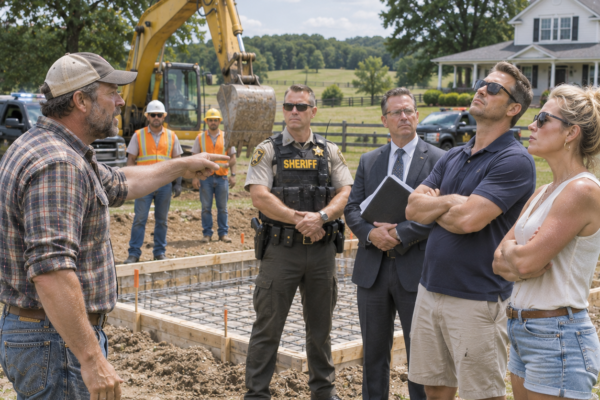
Laurel called me at 4:11 that afternoon and said six Black Ridge HOA patrol trucks were sitting inside our ranch gate.
Not outside.
Inside.
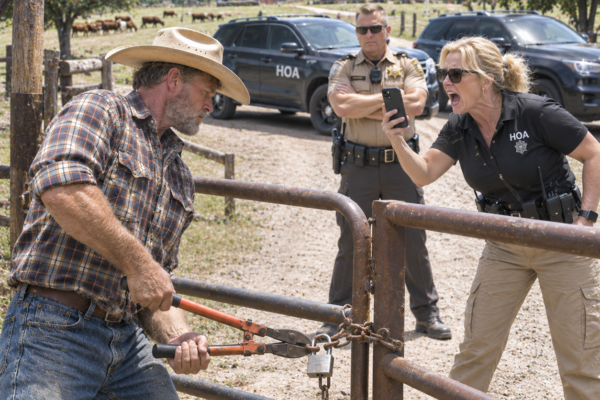
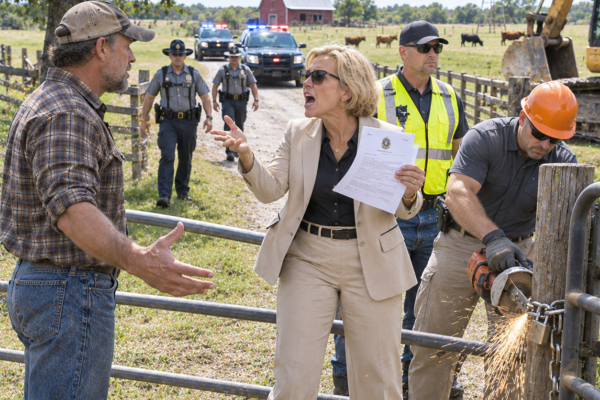
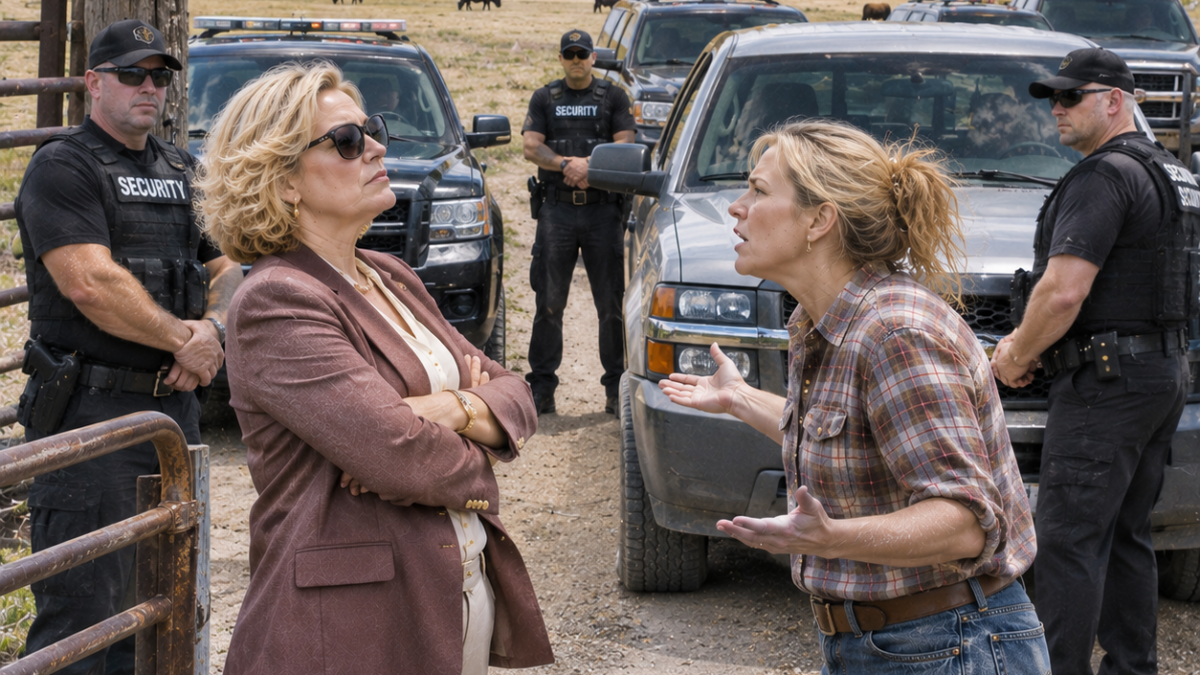
Three of them had boxed her pickup against the cattle guard, two blocked the road behind her, and another sat sideways across the feed lane.
I was almost two hours away.
“Are you locked in the truck?”
“Yes.”
“Did anyone touch you?”
“No.”
“Are they letting you leave?”
Laurel looked through the windshield.
“No.”
That answer changed everything.
My wife had been checking water troughs when the first gray SUV arrived.
Then another.
Then four more.
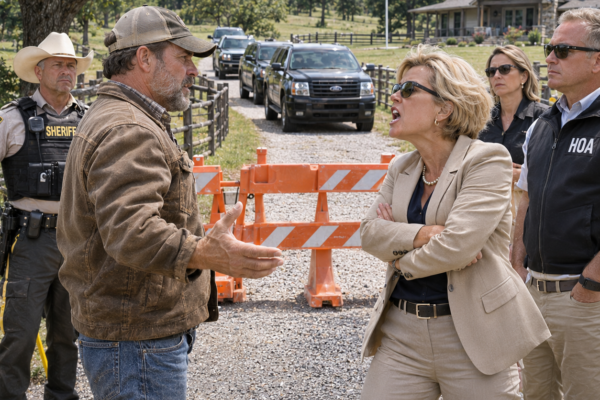
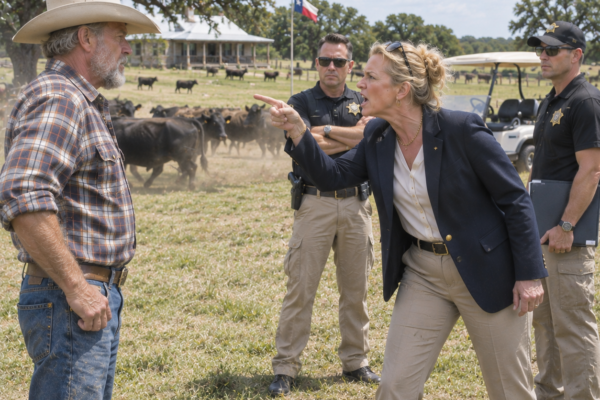
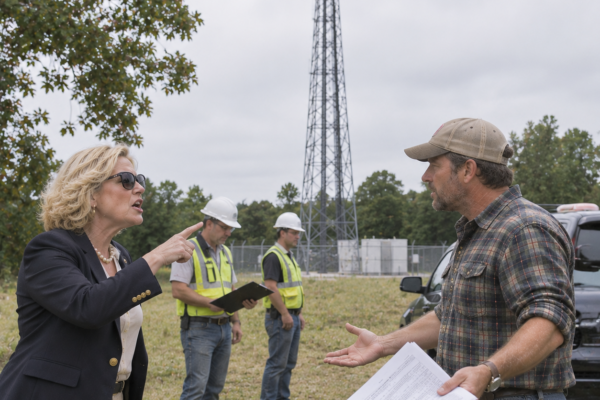
Priscilla Vance, president of Black Ridge Estates, stepped out carrying a folder marked EMERGENCY COMMUNITY ACCESS AUTHORIZATION.
She told Laurel the HOA now had legal rights to the ranch road running north through our property.
That road had belonged to the Whitaker family for two generations.
No easement.
No shared access.
No HOA rights.
Nothing.
Yet Priscilla demanded our gate codes, survey access, and Laurel’s signature on a statement acknowledging that Black Ridge had used the road continuously for more than twenty years.
That last part was the real reason she was there.
Three months earlier, developer Everett Sloan had offered me $280,000 for a permanent right-of-way across Whitaker Ranch so construction traffic could reach his planned $18 million Black Ridge Summit development.
I refused.
He came back at $450,000.
I refused again.
The road cut through grazing land, ran past our fuel shed, and crossed dry brush that became a fire hazard every summer.
Hundreds of construction trucks a week would have changed the ranch permanently.
After my second refusal, Priscilla suddenly produced an old “1997 community access easement.”
The problem was simple.
Our family had never granted one.
The signature looked wrong.
And a document examiner found signs that the paper had been created years after the date printed on it.
Then similar easements appeared on other properties surrounding Sloan’s development.
That was when my attorney stopped treating the matter as an HOA dispute.
Documents had crossed state lines.
Money had moved.
Landowners had been pressured into sales.
The information went to federal authorities.
By the afternoon Laurel was surrounded, I had just finished a closed-door meeting connected to that investigation.
Nobody at Black Ridge was supposed to know my schedule.
Yet Priscilla arrived during the exact window I was expected to be gone.
She placed the new “emergency authorization” on Laurel’s hood and told her to sign.
Laurel read the last paragraph.
It said her signature would acknowledge that the HOA had used our road openly and continuously for more than twenty years.
She looked at Priscilla.
“You don’t need my gate keys.”
Priscilla’s smile disappeared.
“You need me to legalize a lie.”
Then Laurel began recording.
Priscilla ordered Wade Toliver, head of the HOA patrol, to tighten the vehicles around her truck.
One blocked the front.
Two closed the sides.
Three sealed the road behind her.
Their engines stayed running.
Dash cameras stayed on.
Wade’s body camera stayed on.
Laurel asked one question after another.
“Am I free to leave?”
Wade said no.
“Is there a court order?”
Priscilla said the HOA had emergency authority.
“Will you move these trucks if I sign?”
“Yes.”
That was the sentence Laurel wanted.
Not because she planned it.
Because Priscilla was arrogant enough to say it while six HOA cameras were recording.
Forty minutes into the standoff, dust appeared beyond the cattle guard.
Wade lifted binoculars.
My pickup was coming home.
Priscilla smiled.
Then Wade stopped smiling.
Two black SUVs were ahead of me.
Three more were behind.
All five moved in formation.
The lead vehicle stopped at the gate.
A woman wearing a federal badge stepped out.
Then another door opened.
Then another.
Priscilla walked toward them as though backup had arrived for her.
She held up the fake access order.
“I’m President Vance. I need assistance with a woman obstructing a community right-of-way.”
The federal officer looked past her.
At Laurel’s truck.
At the six patrol vehicles surrounding it.
Then at me.
“Mr. Whitaker,” she said, “is that your wife?”
“Yes.”
She turned back toward Priscilla.
And for the first time that afternoon, Priscilla seemed to realize the vehicles behind me had not come to enforce her order.
Part 2:
Laurel called me at 4:11 that afternoon and said six Black Ridge HOA patrol trucks were sitting inside our ranch gate.
Not outside.
Inside.
Three of them had boxed her pickup against the cattle guard, two blocked the road behind her, and another sat sideways across the feed lane.
I was almost two hours away.
“Are you locked in the truck?”
“Yes.”
“Did anyone touch you?”
“No.”
“Are they letting you leave?”
Laurel looked through the windshield.
“No.”
That answer changed everything.
My name is Grant Whitaker.
I was forty-six years old when Priscilla Vance decided six private patrol vehicles could manufacture a property right my family had refused to give her.
Laurel was forty-three.
We ran Whitaker Ranch together.
All 1,140 acres of it.
Wyoming grassland.
Creek bottom.
Dry ridges.
Winter pasture.
Hay ground.
Enough fence to make a man reconsider every romantic idea he ever had about ranch ownership.
The Whitaker family had worked that land for two generations before Laurel and I took over.
My father used to say the ranch was mostly grass separated by expensive problems.
He wasn’t wrong.
Fences break.
Water freezes.
Cattle find holes you didn’t know existed.
Tractors fail when weather gives you the least time to fix them.
But the ranch was ours.
That mattered.
The road Priscilla wanted was ours too.
It entered from the county highway, crossed the cattle guard, passed our barns and fuel shed, then climbed north toward the high ridge behind the property.
No public right-of-way.
No HOA easement.
No historical community road.
Black Ridge Estates sat east of us.
Nice houses.
Private clubhouse.
Decorative stone entrance.
A homeowners association that had existed peacefully enough until Priscilla became president.
Then Everett Sloan announced Black Ridge Summit.
That was where everything started.
Everett was fifty-five and already wealthy from resort and second-home developments.
His proposed project sat in the hills beyond our northern boundary.
Eighty upscale homes.
Private lodge.
Pool.
Fitness center.
View lots.
Estimated project cost around eighteen million dollars before financing and land costs.
On paper, it sounded impressive.
On the ground, it had a problem.
Access.
The northern route was steep and narrow.
Rock cuts made heavy construction traffic difficult.
The practical approach crossed Whitaker Ranch.
Our road already handled livestock trailers, feed trucks, and emergency vehicles.
Everett saw it and saw money.
He came to my house with engineers and a proposal.
Permanent right-of-way.
Widen the ranch road.
Improve drainage.
Install turnouts.
Pay me $280,000.
I said no.
He seemed surprised.
“Grant, that’s a significant offer.”
“I know.”
“The improvements remain with the property.”
“I don’t want the improvements.”
“You’re talking about a road.”
“I’m talking about hundreds of construction trucks.”
“Temporary construction traffic.”
“Then permanent development traffic.”
“The HOA can manage that.”
“That makes me feel worse.”
He laughed as though I had made a joke.
I hadn’t.
The road ran close to our barns.
Past a diesel tank.
Through grazing ground.
Summer grass on that part of the ranch cured dry enough to burn from one hot exhaust system.
We also moved cattle across it.
A permanent easement would become a right somebody else controlled.
That wasn’t worth $280,000.
Everett returned with $450,000.
I said no again.
His attitude changed.
“Every piece of land has a number.”
“Maybe.”
“What’s yours?”
“Not this road.”
That was our last friendly conversation.
Two weeks later, Priscilla Vance called.
She claimed Black Ridge’s archives showed an access right already existed.
“Since when?”
“1997.”
“Black Ridge wasn’t fully developed then.”
“The corridor predates the current subdivision.”
“Send me the recorded easement.”
She emailed a scan.
The document looked old at first glance.
Yellowed background.
Typed legal description.
Signature from a prior Whitaker owner.
Except the signature bothered Laurel.
She was the one who noticed.
“That doesn’t look like your uncle’s name.”
The supposed grantor was my father’s older brother, Thomas Whitaker.
Thomas had owned a fractional interest before selling it to Dad.
Laurel had seen old ranch papers with his signature.
This one was wrong.
Letters too upright.
Initials too clean.
I hired a document examiner.
Preliminary conclusion:
The document likely wasn’t created in 1997.
The paper image and formatting were inconsistent with the claimed period.
That alone didn’t prove who made it.
But it was enough for my lawyer, Rachel Monroe, to start searching.
She found three other landowners near the Black Ridge Summit footprint who had encountered similar “historic” access claims.
One had sold after years of pressure.
Another spent tens of thousands fighting a road claim before settling.
A third had signed an acknowledgement that later became part of a larger access agreement.
The language was strikingly similar.
Rachel looked at me across her desk.
“This may be bigger than your road.”
“How much bigger?”
“I don’t know yet.”
Some payments and communications had crossed state lines.
Some financing documents incorporated the questionable easements.
Rachel made referrals through proper channels.
That was how I eventually met Assistant United States Attorney Miles Ardan.
There was no dramatic raid.
No secret badge.
No overnight arrest.
Just documents.
Interviews.
Preservation requests.
Financial records.
I became a cooperating witness because I had original ranch records and the supposed 1997 easement they wanted to compare.
Nobody at Black Ridge was told.
Then two weeks before the standoff, I received an anonymous call.
A man said:
“Withdraw your statement or you’ll lose your ranch access before you know what happened.”
He hung up.
I reported it.
That changed the federal investigators’ assessment of risk.
Not because I was important.
Because someone appeared to know I was cooperating.
The morning Laurel was surrounded, I drove two hours to meet Miles and investigators.
It was the most significant meeting yet.
We turned over documents linking the questionable easements to project-financing representations.
Because of the threat, Deputy U.S. Marshal Brooke Callahan and a small protective team coordinated my return.
That is why federal vehicles were with me.
They were not coming to settle an HOA dispute.
They were bringing a cooperating witness home after a documented threat.
Nobody knew what was happening at the ranch until Laurel called me.
When I answered, her voice was controlled.
Too controlled.
That frightened me more than panic would have.
“Six HOA patrol trucks are inside the gate.”
“What?”
“Priscilla is here.”
“What does she want?”
“Gate keys. Access codes. And my signature.”
My stomach dropped.
“On what?”
“Something saying Black Ridge has used our road for twenty years.”
I looked at Brooke.
She was sitting across from me in the conference room.
I put the call on speaker.
Laurel continued.
“They boxed my truck in.”
Brooke leaned closer.
“Mrs. Whitaker, my name is Brooke Callahan with the U.S. Marshals Service. Are you free to drive away?”
“No.”
“Has anyone physically touched you?”
“No.”
“Have they threatened you?”
“Priscilla says they’ll keep me here until Grant gets back unless I sign.”
Brooke looked at Miles.
That ended the meeting.
We left.
The drive home felt longer than two hours.
Brooke stayed in contact with local federal partners and the U.S. Attorney’s Office.
Nobody told Laurel to confront anyone.
She was told to remain inside her locked vehicle if she felt safer there, keep recording, and avoid escalating.
Laurel did exactly that.
Later, when I watched her video, I realized how calm she had been.
Priscilla stood outside her driver’s window wearing a cream blouse and dark jacket.
Wade Toliver stood behind her.
Wade ran Black Ridge’s private patrol contractor.
They weren’t sworn police.
They were security personnel employed by the HOA.
Marked SUVs.
Uniforms.
Radios.
Body cameras.
Enough visual authority to make ordinary residents nervous.
Priscilla laid the paperwork on the hood.
“Read it.”
Laurel did.
The title said:
EMERGENCY COMMUNITY ACCESS AUTHORIZATION.
It claimed recent conditions had activated long-standing Black Ridge access rights.
That was nonsense.
No HOA president can create a private easement by typing the word emergency.
But the dangerous part came near the signature line.
By signing, property owner acknowledges Black Ridge Estates and its predecessors have continuously and openly used the Whitaker Road corridor for a period exceeding twenty years.
Laurel looked up.
“This is what you need.”
Priscilla smiled.
“We need cooperation.”
“No. You need me to say you’ve used this road for twenty years.”
“It’s an acknowledgement of historical fact.”
“It’s false.”
“You’re not qualified to decide that.”
“I live here.”
“The association has records.”
“Then use your records. Why do you need my signature?”
Priscilla’s expression hardened.
Because Laurel had found the pressure point.
Everett’s developers needed evidence supporting a prescriptive or historical-access argument.
Existing records were weak.
A signed acknowledgement from the current owner could be used to strengthen their position dramatically.
Laurel understood that without being a lawyer.
“You don’t want gate keys,” she said.
“You want me to legalize a lie.”
Priscilla gave Wade a look.
Three patrol vehicles entered through the open feed lane.
Then three more.
They formed around Laurel’s pickup.
Front.
Sides.
Rear.
The engines remained running.
Laurel locked her doors.
Priscilla stepped beside the driver window.
“Grant isn’t here.”
Laurel said nothing.
“So today you’re going to make the reasonable decision.”
“No.”
Wade told her to step out.
She refused.
“Am I free to leave?”
He hesitated.
“Not until this is resolved.”
“Do you have a court order?”
“We’re operating under emergency community authority.”
“That isn’t law enforcement authority.”
Priscilla tapped the hood.
“Sign and this ends.”
Laurel noticed the cameras.
Dashboard camera in every patrol vehicle.
Wade’s body camera.
That changed her strategy.
She stopped arguing facts.
Started asking questions.
“Who ordered these trucks to surround me?”
Priscilla said:
“The HOA.”
“Who authorized you to detain me?”
“You aren’t detained.”
“Can I leave?”
No answer.
Laurel repeated it.
“Can I drive away?”
Wade said:
“Not right now.”
“Why?”
“Because this matter needs resolution.”
“If I sign, will you move the vehicles?”
Priscilla answered:
“Yes.”
That sentence mattered.
Laurel asked:
“And if I don’t sign?”
“We stay until Grant returns.”
Recorded.
Clear.
No ambiguity.
Priscilla checked her watch repeatedly.
That also mattered.
Laurel asked:
“Why does this have to happen today?”
“Because your husband has delayed Black Ridge Summit forty-seven days.”
“That’s not an answer.”
“The delay is costing people money.”
“How much?”
“Hundreds of thousands.”
“What happens at five o’clock?”
Priscilla looked at her.
“I don’t know what you mean.”
But she did.
Everett had a financing deadline.
We learned later that $6.4 million in scheduled construction funding depended on proof of lawful access being delivered by five that afternoon.
No access proof.
No disbursement.
That was why they could not wait.
That was why Laurel had to sign while I was away.
And that was why someone had gone to considerable trouble to predict when I would be gone.
At 4:49, Laurel saw dust on the road.
Wade lifted binoculars.
“My husband.”
Priscilla smiled.
“Good.”
Then Wade kept looking.
His posture changed.
“What?”
He didn’t answer.
My pickup came into view.
Two black SUVs ahead.
Three behind.
Priscilla told the patrol to hold position.
“Let them see we have control of the entrance.”
That sentence appeared on Wade’s body camera too.
The lead federal vehicle crossed the cattle guard and stopped.
Brooke stepped out.
Federal identification visible.
Other personnel followed.
I got out of my pickup.
The first thing I saw was Laurel’s truck surrounded.
Something inside me went cold.
Brooke asked:
“That your wife?”
“Yes.”
We walked toward them.
Priscilla approached us carrying the folder.
“I’m Priscilla Vance, president of Black Ridge Estates. Thank goodness you’re here.”
Brooke looked at her.
“What can we help you with?”
“This woman is obstructing a community access corridor and refusing an emergency order.”
Brooke took the paper.
Read the title.
Handed it to another federal officer for documentation.
Priscilla pointed toward me.
“Her husband is also involved.”
Brooke answered:
“We know exactly who Mr. Whitaker is.”
Priscilla smiled.
Then realized the sentence did not mean what she first thought.
“The escort has nothing to do with Black Ridge Estates.”
Silence.
I walked to Laurel’s truck.
She unlocked the door.
I opened it.
“You okay?”
“Yes.”
She handed me her phone.
“Everything’s on there.”
Brooke asked:
“Mrs. Whitaker, were you free to leave during this encounter?”
“No.”
Wade stepped forward.
“She was never formally detained.”
Laurel looked at him.
“Can I drive away right now?”
Nobody answered.
Brooke pointed toward the patrol vehicles.
“Move every vehicle back.”
Priscilla protested.
“This is HOA territory.”
I finally spoke.
“No.”
She looked at me.
“This is Whitaker Ranch.”
The patrol vehicles moved.
Laurel got out.
Brooke reviewed the document.
I retrieved the preservation notice from my truck.
It related to the ongoing investigation into the suspected fraudulent access documents.
Black Ridge Estates was among the entities instructed to preserve relevant records.
When Priscilla saw the name on the paperwork, her expression changed.
Brooke did not reveal investigative details she wasn’t authorized to discuss.
She simply explained that an active federal matter existed involving disputed access documents and that Grant Whitaker had supplied evidence that morning.
Because of the prior threat, the marshals had escorted me home.
That was enough.
Priscilla looked toward Wade.
Then at the paper she had brought.
Her “emergency authorization” was dated that morning.
A brand-new document designed to manufacture evidence of a twenty-year history.
Brooke asked:
“Why does this form require Mrs. Whitaker to acknowledge twenty years of use?”
Priscilla answered:
“Routine legal housekeeping.”
“If the easement already exists, why is this acknowledgement necessary?”
“Our counsel recommended additional documentation.”
“Which counsel?”
Priscilla hesitated.
Wade started collecting cones.
Brooke stopped him.
“Leave everything as it is for the moment.”
“It’s our equipment.”
“I understand. But recordings and digital data potentially relevant to an existing federal matter must be preserved.”
Wade’s face changed.
He looked at his body camera.
Then at the patrol trucks.
Laurel leaned toward Brooke.
“All six have dash cameras.”
Wade said:
“They’re company property.”
Brooke answered calmly:
“That doesn’t make the recordings disposable.”
One vehicle had remained farther back during the entire confrontation.
A patrol employee stayed inside it.
Laurel mentioned that.
Wade claimed he was coordinating.
Later, investigators learned that vehicle’s computer connected to the patrol’s camera-storage system.
Recordings were already syncing remotely.
That turned out to be fortunate.
Very fortunate.
Priscilla demanded an attorney.
Nobody argued with her.
She was entitled to counsel.
But before she stopped talking, Laurel had already captured the sentence:
If you sign, we’ll let you go.
Wade’s body camera had more.
A private conversation before the trucks entered.
Priscilla:
“Grant will be tied up at the federal building for at least five hours.”
Wade:
“You’re sure?”
Priscilla:
“We have one hour alone with the wife. Get the acknowledgement and we’re done.”
When investigators heard that, the question changed.
How did Priscilla know where I was?
At first, everyone feared an internal leak.
That was taken seriously.
The truth was different.
Everett Sloan had hired a private investigator.
The investigator followed me on multiple days.
He saw me enter the federal building twice.
Recorded arrival and departure times.
Everett used that pattern to estimate how long the meeting would last.
Then told Priscilla I would not be home before five.
No federal employee had leaked my schedule.
But the surveillance was still troubling.
Especially because Everett’s emails showed the real urgency.
One message:
Need acknowledgement today or financing collapses.
Another:
I don’t care how patrol keeps her there. Get signature before cutoff.
Wade had screenshots.
At 4:57, Priscilla’s phone rang.
Everett Sloan.
She stepped aside.
Laurel’s phone continued recording.
We could hear fragments.
“She hasn’t signed.”
“No, Grant came home.”
A pause.
“It’s not just him.”
Another pause.
Then:
“Federal.”
Her voice changed on that word.
She ended the call.
At 5:00, my attorney emailed.
No valid access evidence had been delivered.
The $6.4 million disbursement was suspended.
Everett called Priscilla again.
She didn’t answer.
The federal team did not arrest anyone at the ranch.
That surprises people when they hear the story.
Real investigations are not television.
Evidence gets preserved.
Statements documented.
Documents examined.
Warrants and subpoenas require proper process.
Brooke’s team focused on immediate safety and evidence preservation.
The patrol vehicles eventually left after recordings were secured from deletion and local law enforcement was advised of the trespass issue.
Before Priscilla left, she turned toward me.
“You think you won because federal agents showed up?”
“No.”
“What, then?”
I looked at the six patrol trucks.
“Your own cameras recorded what you did.”
She said nothing.
The next morning, Black Ridge emailed its residents.
The message claimed I had used federal connections to intimidate the community.
That story lasted about two days.
Then other landowners began calling.
Three at first.
Each had faced similar pressure.
One sent us an old easement.
Same formatting.
Same legal language.
Same suspicious numbering.
Then another surfaced.
And another.
Federal analysts compared them.
Same uncommon typographical error.
Same legal-description structure.
Same formatting pattern.
Judith Fenwick became crucial.
She was sixty-two and had worked for the county land-records office during the period when the alleged 1997 easement was supposedly recorded.
She looked at the file number.
Then laughed once.
Not because it was funny.
Because the mistake was obvious to her.
“That numbering system didn’t exist in 1997.”
“When did it begin?”
“2008.”
A document supposedly recorded in 1997 carried a filing code introduced eleven years later.
Judith checked archived indexes.
No original easement.
No rejected easement.
No access-corridor filing.
Nothing.
Priscilla changed her defense.
Everett had supplied the documents.
She had relied on them.
That argument ran into another problem.
The emergency authorization she carried to our ranch had a drafting credit at the bottom.
OFFICE OF THE PRESIDENT — BLACK RIDGE ESTATES HOA.
Her office.
Not Everett’s company.
Then investigators found a 2019 Black Ridge meeting record.
Priscilla had proposed “reconstructing the historical chain of access” because the original easement could not be located.
That sentence was devastating.
Years before Everett supposedly handed her a valid historic document, Priscilla already knew the original could not be found.
Then one conveniently appeared when the development needed access.
Wade began cooperating.
He resigned from the patrol company.
Turned over messages.
Body-camera data.
Dispatch logs.
Radio recordings.
He admitted Priscilla ordered six vehicles specifically to create pressure.
He said she told patrol not to allow Laurel to drive away until the acknowledgement was signed.
In exchange, his company expected a three-year HOA contract renewal.
Priscilla denied it.
Wade pointed to his body camera.
“You said it yourself.”
The patrol recordings were worse than Laurel’s phone.
Every time Laurel attempted to reverse, a truck moved.
One radio message said:
“Hold both exits. Nobody lets her out before Whitaker signs.”
That made the coercion impossible to reframe as a polite document delivery.
The financial side expanded too.
Black Ridge had entered a private agreement tied to Everett’s development.
If access was secured, the association stood to receive nearly $1.1 million in combined payments and improvements over time.
Some board members had never seen the full agreement.
Buried in it was a dangerous clause.
If the promised access failed and caused financing losses, Sloan Ridge Development could seek compensation from the HOA under certain representations the association had made.
Priscilla had committed Black Ridge to obligations far beyond what many directors understood.
Suddenly this was not just her legal problem.
Two hundred homeowners might be financially exposed.
That changed loyalties quickly.
An emergency HOA meeting filled the clubhouse.
Laurel and I were not members.
Our ranch lay outside Black Ridge.
We did not need to attend.
Wade did.
He sat in the back.
Priscilla opened by saying no Black Ridge document had ever been falsified.
A resident asked about Laurel.
Priscilla said:
“The patrol delivered routine paperwork. Mrs. Whitaker became confrontational.”
Wade stood.
He connected his phone to the clubhouse display.
Then played body-camera video.
Priscilla’s own voice filled the room.
Box her in.
Then:
If she signs, we leave.
Then:
Grant is tied up at the federal building. We have one hour alone with his wife.
Nobody needed a speech afterward.
Priscilla tried to leave.
Residents demanded answers.
The board suspended her as president pending investigation.
The patrol contract was terminated.
Independent counsel took over.
Everett and Priscilla’s alliance collapsed almost immediately.
A preservation notice went onto the HOA office.
That same night, security footage showed Everett carrying two boxes from the building.
He claimed Priscilla told him to collect project records.
Priscilla claimed he had no authorization.
Messages showed both had previously discussed moving originals if our access challenge succeeded.
The files were eventually recovered.
Investigators now had:
Questionable easements.
Financial emails.
Body-camera video.
Dash-camera footage.
Laurel’s recording.
Surveillance information.
Financing messages.
Association minutes.
Patrol communications.
And video showing project files leaving an office after preservation obligations were clear.
A federal court issued appropriate orders protecting records and assets relevant to the investigation.
Meanwhile, Black Ridge Summit stalled.
No access.
No disbursement.
Contractors began leaving.
Equipment sat idle.
Buyers who had placed deposits asked for refunds.
Subcontractors filed claims against Everett’s company.
Everett blamed the HOA.
The HOA blamed Everett.
Neither blamed themselves.
That part was almost impressive.
But Laurel and I had a more immediate goal.
The road.
Our attorney filed for a declaratory judgment confirming Black Ridge had no easement over Whitaker Ranch.
That civil case was separate from the broader federal investigation.
At the hearing, Black Ridge’s lawyers tried to preserve what remained of the access argument.
They claimed historical continuous use.
We had records.
Satellite imagery.
Gate logs.
Ranch photographs.
Maintenance receipts.
Fence records.
Family documents.
Nothing showed twenty years of Black Ridge use.
The road had been controlled by Whitakers.
Locked periodically.
Maintained privately.
Used by ranch vendors and invited visitors.
Not openly used by the HOA as a matter of right.
Then our attorney held up the document Priscilla tried to force Laurel to sign.
“Your Honor, if Black Ridge already possessed twenty years of continuous access, why did its president need Mrs. Whitaker to acknowledge that exact fact on the afternoon a financing deadline expired?”
The judge looked toward opposing counsel.
Their answer was something about administrative caution.
It didn’t survive the evidence.
The court found no valid easement had been established.
Black Ridge had no right to use the ranch road.
Sloan Ridge Development had no access through our property without an agreement directly from Laurel and me.
There would be no agreement.
Everett’s development lost its preferred route.
The project did not disappear overnight.
Developments rarely do.
But without that road and with financing already disrupted, its economics changed dramatically.
The $18 million plan stalled.
Some portions were later restructured.
Others died.
Everett’s legal problems continued separately.
So did Priscilla’s.
Black Ridge permanently removed her from the presidency.
A financial review found she had signed commitments beyond her granted authority.
The HOA pursued reimbursement and other remedies for losses tied to those decisions.
Other property owners reopened their own access disputes.
Two filed suits seeking to invalidate agreements they said had been obtained under similar pressure.
I was asked repeatedly whether I felt vindicated.
Not really.
Relieved.
There is a difference.
Vindication looks backward.
Relief lets you stop looking.
The ranch was the same place after the ruling.
Cattle still broke fences.
Pumps still froze.
Hay still needed cutting.
Laurel still told me I left tools in places tools did not belong.
Ordinary life returned.
That was what I wanted.
Weeks later, I mounted a new sign at the cattle guard.
WHITAKER RANCH
PRIVATE ROAD
NO HOA ACCESS
Laurel stood beside me.
“You think Priscilla really believed six trucks would make me sign?”
“No.”
She looked surprised.
“No?”
“She believed six trucks would make you feel alone.”
Laurel read the sign again.
“And?”
“She was wrong.”
That didn’t mean we had secret power.
I wasn’t a federal agent.
Laurel wasn’t politically connected.
We didn’t defeat Black Ridge because I happened to leave a federal building with an escort.
The investigation had already been underway because documents existed.
The escort happened because of a threat.
If Priscilla had chosen a different afternoon, the legal result would still have depended on the same thing.
Records.
Truth.
And Laurel refusing to sign something false.
The federal vehicles made the confrontation dramatic.
The evidence made it matter.
Several months later, Laurel received a package from the prosecutor’s office connected to her witness materials.
Inside were still images from the HOA patrol recordings.
Six photographs.
Each showed her pickup from a different angle.
Front vehicle.
Rear vehicle.
Left side.
Right side.
Feed lane.
Gate.
Each image had an exhibit number.
41A.
41B.
41C.
41D.
41E.
41F.
Six trucks.
Six cameras.
Priscilla had brought them because she wanted Laurel surrounded.
Instead, she created six independent views of the same event.
Laurel laid the photographs across the kitchen table.
Then she started laughing.
“What?”
“She really brought her own witnesses.”
I laughed too.
That became the private joke.
Not the federal convoy.
Not the fake order.
Her own cameras.
Priscilla believed surveillance created control.
For once, it created accountability.
We later learned how thoroughly those recordings preserved the scene.
Vehicle positions.
Radio instructions.
Time stamps.
Priscilla’s arrival.
Wade’s orders.
Laurel asking whether she could leave.
The trucks repositioning.
The demand for signature.
Even Priscilla checking the time as five o’clock approached.
It was almost impossible to imagine a better evidentiary record if investigators had designed the setup themselves.
Nobody had.
Arrogance had.
A year later, Black Ridge elected a new president.
A retired civil engineer named Martin Vale.
His first major policy required any claimed access right, easement, maintenance obligation, or historic corridor to be supported by a certified county record before the HOA could spend money enforcing it.
Not a scan.
Not a recreated exhibit.
Not a consultant’s summary.
Recorded document.
The association also eliminated the private patrol’s authority to intervene in civil property disputes.
Security could observe and report.
Not blockade.
Not detain.
Not pressure signatures.
Another policy required full board approval and independent counsel review for any agreement creating financial obligations above a specified threshold.
Those rules were boring.
That was their strength.
Good governance rarely produces exciting stories.
Bad governance produces six SUVs surrounding a rancher’s wife.
Martin came to our gate once.
He stayed outside until I walked down.
“Grant?”
“Yes.”
“Martin Vale. New Black Ridge president.”
“I heard.”
“I wanted to apologize.”
“You weren’t involved.”
“The association was.”
“That matters.”
He nodded.
Then held up a folder.
My stomach tightened automatically.
He noticed.
“Don’t worry. No signature line.”
I laughed despite myself.
“What’s in it?”
“A letter confirming Black Ridge disclaims any access right over Whitaker Road under current records and will not assert one without a future recorded agreement executed by you and Laurel.”
“Why bring it in person?”
“Because I thought somebody from Black Ridge should finally come to this gate asking permission before crossing it.”
That was a good answer.
I opened the gate.
“Come in.”
We sat on the porch.
No patrol.
No attorney.
No cameras beyond mine.
Martin explained how badly the association finances had been exposed.
Residents were furious.
Some at Priscilla.
Some at themselves.
Many directors admitted they had approved summaries without reading underlying agreements.
“People keep saying she fooled us.”
Martin looked toward the hills.
“I think that’s only partly true.”
“What’s the other part?”
“We liked what she promised.”
That was honest.
Priscilla had promised money.
Improved roads.
Development benefits.
Higher property values.
No one asked difficult questions because the outcome sounded profitable.
Then difficult questions arrived in six federal vehicles.
People blamed one woman.
She deserved plenty.
But systems fail because more than one person stops looking.
That lesson stayed with Black Ridge.
It stayed with me too.
When Everett first offered $280,000, I could have taken it.
At $450,000, plenty of people told me I was crazy not to.
Maybe financially I was.
But property ownership means deciding what trade you are willing to make.
It doesn’t mean every refusal is wise.
It means the refusal is yours.
That was what Everett and Priscilla never respected.
They believed the road was too valuable to remain under my control.
So they treated my ownership as an obstacle to be engineered around.
Old paperwork.
Pressure.
Fabricated history.
Financing deadlines.
And finally Laurel’s signature.
They did not want agreement.
They wanted the appearance of agreement.
There is a difference.
Real consent can say no.
Manufactured consent cannot.
The old fake 1997 easement still sits in our legal file.
Beside it is Judith Fenwick’s explanation of the numbering error.
Supposed recording year:
Numbering system:
introduced 2008.
Eleven years.
Such a small mistake.
One line of type.
Enough to expose an entire document.
I think about that sometimes.
People imagine fraud fails because of dramatic confessions.
Usually it fails because details disagree.
Date.
Font.
File number.
Signature stroke.
Metadata.
A phrase repeated in several documents.
A person who actually worked in the records office and remembers how things were numbered.
Truth is often boring that way.
It sits quietly until someone compares pages.
The same was true at the ranch.
Priscilla called Laurel’s confinement a meeting.
The camera showed trucks blocking every direction.
She called the signature voluntary.
The recording captured:
If you sign, we’ll let you go.
She called the timing routine.
Emails showed the five-o’clock financing deadline.
She called the road historically established.
The very document she needed Laurel to sign admitted the historical record wasn’t enough.
Contradictions.
One after another.
The larger federal matter took much longer than our civil access case.
I won’t pretend I knew every development.
Some evidence became public.
Some didn’t.
Everett faced investigations and litigation over project representations and document handling.
Priscilla faced consequences through the HOA and related proceedings.
Wade cooperated.
Other landowners challenged old agreements.
The important part for us was settled.
No easement.
No Black Ridge access.
No Sloan Ridge trucks.
Whitaker road remained Whitaker road.
The Black Ridge Summit sign eventually came down from the construction entrance north of us.
For months, the land behind it sat quiet.
Some equipment disappeared.
The chain-link fencing remained longer.
Then even that began coming down.
I never celebrated.
An unsuccessful development leaves workers unpaid too.
Contractors.
Laborers.
Families who had nothing to do with Everett’s decisions.
That is why I never enjoyed watching the project collapse.
I enjoyed only one thing.
Knowing its collapse would not happen by running hundreds of trucks through my ranch.
The county still needed development.
Black Ridge residents still needed roads.
Everett still had rights to whatever land he legitimately owned.
None of those realities required my road.
That was the line.
One evening, Laurel and I rode the north fence together.
Sun dropping behind the ridge.
The same part of the ranch Everett wanted for access lay quiet beneath us.
Laurel pointed down toward the road.
“You ever think about the money?”
“Which money?”
“The four hundred fifty thousand.”
“Sometimes.”
“Regret it?”
“Ask me after the tractor breaks again.”
She laughed.
Then:
“Seriously.”
I looked across the pasture.
“No.”
“Why?”
“Because if I regretted saying no, I could have changed my mind.”
“Before all this.”
“Yes.”
“And after?”
“After, the money stopped being the question.”
She nodded.
We rode on.
At the cattle guard, the new sign caught the evening light.
WHITAKER RANCH.
PRIVATE ROAD.
NO HOA ACCESS.
Some people online later called it petty.
Maybe.
I don’t care.
Signs are cheaper than arguments.
Months later, a delivery truck came toward the ranch carrying materials for what remained of Sloan’s project.
The driver slowed.
Looked at the sign.
Stopped.
Then backed up and turned around.
Our ranch camera caught the whole thing.
No confrontation.
No call.
No six-truck blockade.
Just a driver reading a boundary and respecting it.
Laurel watched the clip at the kitchen table.
“That’s better.”
“Much.”
“What do you think Priscilla would say?”
“I don’t care.”
That answer felt good.
For a long time, she had occupied too much space in our lives.
The hearings.
Calls.
Documents.
Interviews.
Questions about the patrol.
Questions about Everett.
Questions about financing.
Eventually, the best consequence was irrelevance.
She no longer decided anything about our gate.
That was enough.
I still think about the moment the federal convoy arrived.
Not because it made me feel powerful.
It didn’t.
The first thing I felt was fear.
My wife was surrounded by six vehicles.
Federal escort or not, seeing that is different from hearing about it on a phone.
I remember the angle of Laurel’s pickup.
The patrol truck six feet from her front bumper.
Wade standing near the door.
Priscilla holding the folder.
I remember Brooke asking:
“Is that your wife?”
And I remember answering:
“Yes.”
Everything else came afterward.
People like to retell the scene as though the federal vehicles were cavalry.
That’s not what happened.
They were already with me because of an investigation built from months of documents.
Priscilla did not accidentally choose the wrong ranch because I had powerful friends.
She walked directly into a case she had helped create.
That is different.
If Brooke had not been there, Laurel’s video still existed.
Wade’s camera still existed.
The fake document still carried the wrong numbering system.
Everett’s financing email still existed.
The road still belonged to us.
The law did not become true because black SUVs arrived.
The black SUVs arrived because enough evidence already existed for authorities to take the threat seriously.
That distinction matters.
Because the lesson is not:
Be careful who you bully. Their husband may return with federal officers.
I hate that lesson.
It implies ordinary people are safe only if they have impressive backup.
Laurel deserved to leave because she was free to leave.
The road was ours because the deed said it was ours.
The signature was invalid because it was false.
Those things were true before anyone wearing a federal badge reached the cattle guard.
The better lesson is simpler.
Keep your records.
Read what you sign.
Don’t sign what you know is false.
Document coercion.
Know where your property begins.
Know where somebody else’s authority ends.
And when a person brings six cameras to pressure you, let the cameras record.
Two years after the standoff, the old patrol contract is gone.
Black Ridge uses an ordinary security company now.
They watch the clubhouse.
Respond to alarms.
Call law enforcement when something actually requires law enforcement.
They do not patrol our ranch.
Martin’s board restored reserves slowly.
Residents began attending meetings.
Contracts got read.
Budgets got questioned.
People learned that “historic easement” is not a magic phrase.
Some probably resent us.
That is fine.
We don’t need to be loved by Black Ridge.
We need them to stay on their side of the fence.
Laurel framed one thing from the entire case.
Not a federal document.
Not the court ruling.
Not the fake easement.
One photograph.
Exhibit 41A.
Her pickup surrounded by patrol trucks.
She hung it inside the ranch office.
I asked why.
“To remember?”
She shook her head.
“To laugh.”
“At what?”
She pointed at the six vehicles.
“They thought this made me alone.”
That photograph means something different now.
At the time, six trucks looked like power.
Today they look like evidence.
Six engines.
Six cameras.
Six timestamps.
Six angles proving the same thing.
Priscilla came to Whitaker Ranch that afternoon needing one signature.
She believed enough pressure could turn no into yes.
Instead, Laurel kept her pen in her pocket.
And Priscilla’s own patrol recorded everything that happened next.
The ranch road is still here.
Narrow.
Dusty in summer.
Drifted in winter.
Cattle cross it.
Feed trucks use it.
Laurel drives it every morning.
I drive it every evening.
No resort traffic.
No HOA patrol.
No manufactured twenty-year history.
Just a private road doing the unremarkable job it had always done before somebody decided its value made our consent optional.
Sometimes that is what winning looks like.
Not taking something from the other side.
Just keeping what was already yours.