My Family Skipped My 80th Birthday for Cabo—Then My DIL Told Me to Clean Their Bathroom While They Were Gone.k
PART2:
“But my birthday dinner was today.”
“I know.”
“We planned it weeks ago.”
“I know, but this deal came up.”
“What deal?”
“Resort package.”
“Last-minute cancellation.”
“Practically half price.”
I stared at the roast.
“You could have called.”
“Tyson was supposed to.”
“Tyson isn’t answering.”
“He probably left his phone somewhere.”
Behind her, I heard one of the boys yell:
“Mom! Look!”
Tatum laughed away from the phone.
Then came back.
“Sorry.”
I said:
“I’ve been cooking all morning.”
“Well, freeze some of it.”
Freeze some of it.
Eighty years.
A dead husband.
One son.
Two grandsons.
And my birthday had been reduced to freezer management.
I said quietly:
“I bought groceries for everyone.”
Tatum sighed.
“Janine, we can’t control when opportunities come up.”
“You’re probably going to spend the weekend cleaning anyway.”
“That’s what you always do.”
My fingers tightened around the phone.
I don’t know whether she realized what she’d said.
Maybe she did.
Sometimes cruel people announce the truth accidentally because the truth has become ordinary to them.
I asked:
“When are you coming home?”
“Next weekend.”
“Maybe Friday.”
“The boys want to stay longer.”
Then, casually:
“Oh, and Janine?”
“Yes?”
“Could you clean the upstairs bathroom while we’re gone?”
“Marcus left toothpaste all over the sink and somebody got something on the floor.”
I said nothing.
She continued:
“And change the sheets in our room if you have time.”
Then somebody near her said something.
Tatum laughed.
“All right, I have to go.”
Click.
The call ended.
I stood in my kitchen holding the phone against my ear long after the line had gone silent.
Then I put it down.
Turned off the oven.
Removed the roast.
Covered the potato salad.
Wrapped the rolls.
Put most of the food in containers.
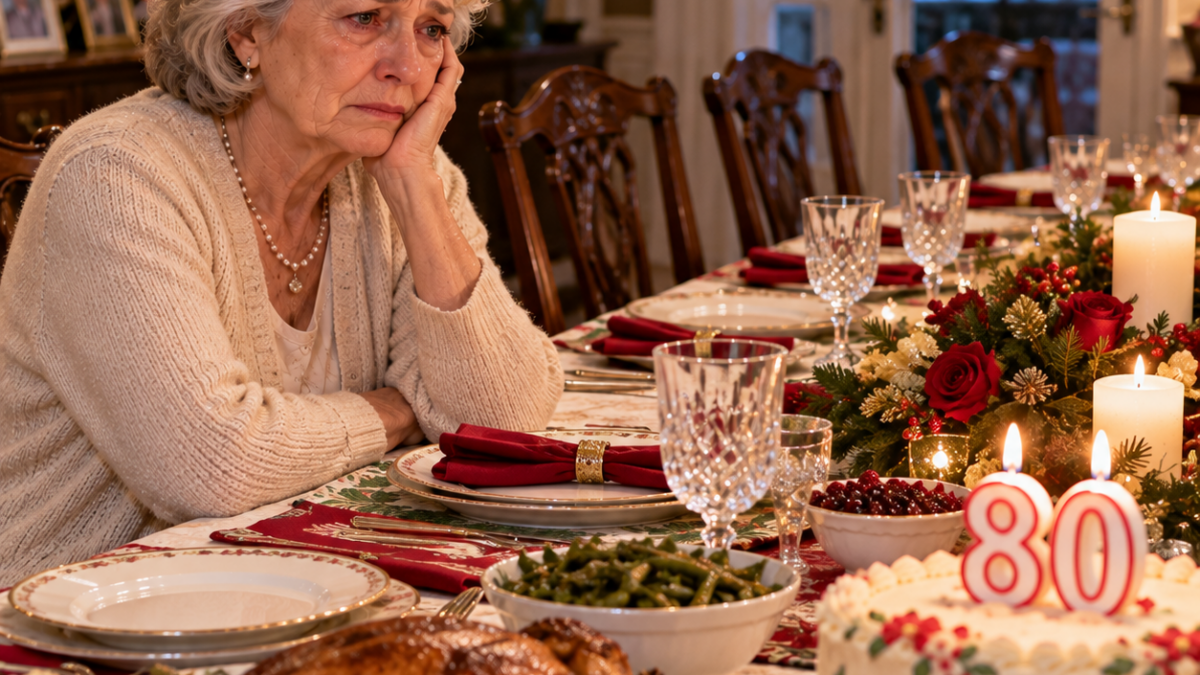
At six-thirty, I sat at the dining-room table alone.
I cut myself one piece of chocolate cake.
I had purchased two candles shaped like an eight and a zero.
I didn’t light them.
Not because I was devastated.
At least that’s what I told myself.
I didn’t want wax on the new tablecloth.
That was easier to believe.
I ate half the cake.
Then stopped.
The house was quiet.
Not empty.
That distinction suddenly mattered.
Because Tyson and Tatum lived there.
So did Marcus and Michael.
Their shoes were by the mudroom.
School papers covered part of the kitchen counter.
Tatum’s expensive coffee machine occupied more space than my toaster.
Tyson’s golf clubs leaned in the garage where Robert’s workbench used to stand.
Their coats filled the front closet.
Their furniture had slowly replaced mine in the living room.
I was surrounded by evidence of my family.
But there was nobody there for me.
They had moved back five years earlier.
Temporarily.
I remember that word because Tyson said it four times during the conversation.
“Just temporary, Mom.”
He had lost his sales position after a company merger.
Tatum was between jobs.
Their lease was ending.
The boys were eight.
They needed somewhere to land.
I had four bedrooms.
Robert had been dead by then for nearly six years.
Why wouldn’t I help?
They would stay six months.
Maybe eight.
Save money.
Get settled.
Then buy another place.
The first year passed.
Tyson found another job.
Tatum found work for a marketing company.
They stayed.
Housing prices were too high.
Then interest rates.
Then school district.
Then the boys were settled.
Then they wanted to save for a down payment.
Then there was always one more reason.
Somewhere around year two, Tatum asked if she and Tyson could use the primary bedroom because it had the larger bathroom.
I had been sleeping there since 1973.
Robert died in that room.
My jewelry box sat on the same dresser where he used to empty his pockets every evening.
I said no.
Tatum didn’t argue.
Not directly.
Instead she kept mentioning how difficult it was for two adults to share the smaller bedroom.
How the boys needed separate rooms soon.
How the primary suite had “wasted space” with just me in it.
One evening Tyson said:
“Mom, you don’t even use half that room.”
So I moved.
Guest bedroom.
I told myself it made sense.
That’s the dangerous thing about surrendering your life one practical decision at a time.
Every step looks reasonable alone.
The total only becomes visible after years.
I finished washing the birthday dishes.
Most had never been used.
Then I walked upstairs.
I stopped outside the primary bedroom.
Their bedroom now.
Door half open.
Tatum’s clothes covered Robert’s side of the closet.
A television large enough for a sports bar hung on the wall.
Their bathroom door stood open.
Toothpaste on the sink.
A wet towel on the floor.
Exactly as she’d said.
“Go clean the upstairs bathroom.”
I stood there.
Then closed the door.
I went downstairs.
Tyson’s tablet buzzed on the coffee table.
He had left it charging.
Normally, I wouldn’t touch it.
I didn’t go through their things.
I wasn’t that mother.
A notification lit the screen.
Tatum had posted a photograph publicly.
I could see it without opening anything.
She stood beside an infinity pool in a white sun hat and oversized sunglasses.
Tyson beside her.
The twins in the water.
Blue ocean behind them.
Caption:
Best family vacation ever. Sometimes you just have to treat yourself.
Family vacation.
That phrase hurt.
Not because I expected to go to Cabo.
Because a few hours earlier, I had been standing by my window waiting for that same family to turn into my driveway.
I stared at:
Treat yourself.
Then thought about the $600 I’d given Tyson two weeks earlier.
Car repair.
At least that’s what he said.
The $900 three months earlier.
Unexpected dental expenses.
The $300 I paid toward Marcus’s school trip.
The $450 Tatum needed because their insurance premium had gone up.
I was not poor.
Robert had left me financially secure.
We had saved.
Invested.
Paid the house off.
I received retirement income.
I could help my son without missing meals.
And that was exactly the argument I’d used every time something felt wrong.
I can afford it.
As though affordability answered every other question.
I went to my desk.
Pulled out the notebook where I tracked household expenses.
Then bank statements.
I had always kept records.
Robert teased me about it.
“Janine could reconstruct the Great Depression from receipts.”
That night, I was grateful.
I started listing money I’d transferred to Tyson during the previous year.
January: $850.
February: $400.
March: $1,200.
April: $600.
May wasn’t over.
Already $600.
Then expenses I had simply paid.
The boys’ phone plans.
Part of their car insurance.
Groceries far beyond what one eighty-year-old woman ate.
Streaming services.
Internet upgrades.
Repairs to Tyson’s vehicle.
A family gym membership charged to my card because it had started under a “free trial.”
I opened social media on my own phone.
Tatum posted often.
I hadn’t paid attention.
Now I looked at dates.
Three days after the February transfer for an “unexpected utility problem,” they had eaten at a restaurant where the tasting menu cost more than my monthly electric bill.
A week after the $1,200 March emergency, Tatum posted photographs from Nashville.
Hotel.
Concert.
New handbag.
April:
I helped them because Tyson said their car insurance renewal hit hard.
Four days later, golf resort.
Maybe they had separate money.
Maybe gifts.
Maybe points.
I knew that.
I didn’t want to invent wrongdoing simply because I was hurt.
Then Tyson’s tablet lit again.
Email preview.
Your Cabo San Lucas itinerary
I looked away.
Then back.
The tablet wasn’t password locked because the boys used it.
I sat down.
For ten minutes, I argued with myself.
It was his device.
But it was lying in my house.
And I already knew where he was.
I wasn’t looking for secrets about his marriage.
I wanted one answer.
Was the trip really last-minute?
I opened the travel email.
Booking date:
April 19.
My birthday:
May 10.
Three weeks.
Not last minute.
Not a sudden deal yesterday.
Three weeks.
They knew.
For twenty-one days, they had let me talk about the birthday.
Tatum asked what I was cooking.
Marcus requested apple pie.
Tyson told me he’d pick up ice.
Three days before they left, I asked if two o’clock still worked.
Tyson said:
“Perfect.”
Then they got on an airplane.
I closed the tablet.
My chest felt strangely calm.
Not numb.
Clear.
The hurt had stopped moving around.
It had found a shape.
This wasn’t forgetfulness.
It wasn’t bad communication.
They had decided telling me would be inconvenient.
Because if they told me, I might be hurt.
If I was hurt, they might have to confront what they were doing.
So they let me cook instead.
That realization changed something.
I looked around the living room.
Tyson’s recliner.
Tatum’s decorative pillows.
The twins’ gaming console.
Their framed family vacation photographs.
There was one photograph of Robert left on the mantel.
One.
I had gradually removed my life from my own rooms so theirs could fit.
And they had mistaken that generosity for evidence that the house already belonged to them.
I slept very little.
At six the next morning, I made coffee.
Sat at the kitchen table.
Sun came through the windows.
My birthday flowers were still fresh.
I called Harold Brennan.
Harold had been Robert’s friend before becoming our attorney.
Seventy-three now.
Semi-retired.
He handled my will, estate documents, and property matters.
He answered sounding worried.
“Janine?”
“Good morning.”
“Do you know what time it is?”
“Yes.”
“That worries me more.”
I almost smiled.
“Harold, I need to ask you something.”
“Anything.”
I looked around the house.
Then asked:
“How quickly can I take my house back?”
Silence.
Not surprise.
Professional caution.
“What do you mean by take it back?”
“My son and his family live with me.”
“I know.”
“I want them out.”
Another silence.
“Did something happen?”
“Yes.”
“Are you in danger?”
“No.”
“Has anybody threatened you?”
“No.”
“Are you safe right now?”
“Yes.”
“They’re in Mexico.”
He exhaled.
“All right.”
“Then we’re not doing anything impulsive.”
“I don’t want impulsive.”
“I want legal.”
“Good.”
“Because they may have occupancy rights even though you own the property.”
My stomach tightened.
“They don’t pay rent.”
“That does not necessarily mean you can throw belongings into the street or change locks while they’re away.”
“I wasn’t planning to.”
“Good.”
“Do you have a written lease?”
“No.”
“Any written agreement?”
“No.”
“Utilities in whose name?”
“Mine.”
“Property deed?”
“Mine alone.”
“Mortgage?”
“None.”
“Have they contributed toward property taxes?”
“No.”
“Major improvements?”
“No.”
“How long have they lived there?”
“Five years.”
He made a sound.
“Janine.”
“I know.”
“No.”
“You don’t.”
“Five years matters.”
“So what can I do?”
“We determine their legal status under state law.”
“We provide whatever notice is required.”
“If they refuse, we use the proper court process.”
My immediate fantasy of them returning to suitcases on the lawn disappeared.
Good.
It deserved to.
I didn’t want revenge strong enough to make me stupid.
Then Harold asked:
“Is eviction the only thing you want?”
I looked at the kitchen.
“No.”
“What else?”
“I think I want to sell.”
That time the silence was longer.
“This house?”
“Yes.”
“You’ve lived there almost fifty years.”
“Forty-seven.”
“Exactly.”
“Are you sure?”
“No.”
“That’s why I’m calling.”
He said:
“Come see me at ten.”
I showered.
Put on the dress I’d bought for my birthday dinner.
Not because I was making a statement.
Because it was new and I liked it.
Harold’s office hadn’t changed much in thirty years.
Dark wood.
Legal books nobody touched anymore.
Photograph of him and Robert fishing.
He made me tea.
Then listened.
I told him everything.
Cabo.
Birthday.
Bathroom.
Money.
Five years.
Bedroom.
When I finished, Harold removed his glasses.
“I’m going to ask you a question you may not like.”
“Go ahead.”
“Do you want them out because you’re angry today?”
I thought.
“No.”
“Would you have wanted them out last week?”
That was harder.
I looked at the tea.
“Maybe not.”
“Then wait before deciding something irreversible.”
I nodded.
He continued.
“But we can change financial arrangements immediately.”
“What arrangements?”
“Are they authorized on any of your accounts?”
“Tyson has access to one emergency account.”
“Remove it.”
“Any credit cards?”
“Authorized user on one.”
“Remove him if you wish.”
“Automatic transfers?”
“Sometimes.”
“Stop them.”
“Beneficiary changes?”
“Slow down.”
He smiled.
“Good.”
“You’re thinking.”
Then:
“What about the house?”
“I don’t want to spend the rest of my life in the guest room of my own home.”
That came out before I knew I was going to say it.
Harold looked at me for a long moment.
Then:
“That sounds less like anger.”
I started crying.
Quietly.
I hated it.
Harold handed me tissues.
“Robert would kill me if I let you apologize for crying in this office.”
That made it worse.
When I could speak, I said:
“They call it their house.”
“Do they?”
“Not directly.”
“But the boys say ‘our house.’”
“Tatum talks about remodeling the kitchen after…”
I stopped.
“After what?”
Harold asked.
I looked at him.
“After I’m gone.”
His face changed.
“Has she said that?”
“Yes.”
“More than once?”
“Yes.”
“She calls it planning.”
Harold leaned back.
“Janine.”
“This is still your house.”
“I know.”
“Do you?”
That hurt.
He continued more gently.
“You don’t have to die on their schedule.”
I laughed through tears.
“No.”
“I don’t.”
We made a plan.
Not dramatic.
First, financial separation.
Second, inventory.
Third, written notice that the living arrangement would end according to whatever legal notice period applied.
Fourth, appraisal.
Fifth, explore whether I actually wanted to sell.
No listing until I had somewhere else I wanted to live.
That mattered.
I wasn’t going to blow up my life solely to shock Tatum.
The best revenge would have been leaving them homeless while they vacationed.
The healthiest decision might be completely different.
I wanted the second.
That afternoon, I went to the bank.
Tyson’s authorized-user card was canceled.
His access to the emergency account was removed.
I changed online passwords.
Not because I believed he’d steal from me.
Because financial access had become unclear.
Clarity first.
I stopped the monthly transfer.
Then I called my financial adviser, Carol Jennings.
We reviewed ten years.
That was humbling.
I had given Tyson more than $86,000.
Not including food.
Housing.
Utilities.
Phone plans.
Insurance.
Child care.
I stared at the number.
“Eighty-six?”
Carol nodded.
“Direct transfers and documented payments.”
I laughed weakly.
“I thought maybe thirty.”
“Generosity becomes invisible when it’s repeated.”
She wasn’t judging me.
That was worse somehow.
I asked:
“Am I in financial trouble?”
“No.”
Relief.
“You’re fine.”
“But this pattern should stop if it no longer aligns with what you want.”
Exactly.
The following day, I toured a senior community.
I hated it.
Not because it was bad.
Because everybody spoke to me too loudly.
I was eighty.
Not furniture.
The next day, I toured a condominium complex near downtown.
Two bedrooms.
Elevator.
Balcony.
Small garden courtyard.
Restaurants within walking distance.
Library six blocks away.
No yard to maintain.
I liked it immediately.
That frightened me.
I hadn’t realized how tired I was of maintaining a large house for five people.
Housecleaning.
Groceries.
Laundry.
Repairs.
Noise.
Doors slamming.
Teenagers eating everything that wasn’t physically nailed down.
I loved my grandsons.
I also discovered I liked silence.
Three days after my birthday, I made an offer on a condo.
Contingent on selling my house.
Harold reviewed everything.
Then we met with a real-estate broker named Susan Grant.
She toured my house.
At the end, she stood in the kitchen.
“This could sell quickly.”
“How quickly?”
“Correctly?”
“Yes.”
“Not in a week.”
Good.
I appreciated that.
“But the market is strong.”
“If priced sensibly, we can likely get serious offers fast.”
I looked around.
“Do it.”
She stared.
“Are the other occupants aware?”
“Not yet.”
“That needs to be addressed before showings.”
“I know.”
Harold had already prepared the notice.
I did something Tatum would later describe as betrayal.
I emailed Tyson while he was still in Cabo.
Not about the birthday.
Not emotionally.
I wrote:
Tyson, when you return, we need to discuss your family’s living arrangements. I have decided I no longer want to share my home permanently. Harold Brennan is helping me handle the transition properly. You will receive written notice consistent with applicable requirements. I am also ending ongoing financial support and account access. This is not an emergency and nobody will touch your belongings while you’re away. We will talk when you’re home. Love, Mom.
I stared at it before sending.
Then sent.
He called within four minutes.
I didn’t answer.
Again.
Again.
Then Tatum.
Then Tyson.
Texts began.
What does this mean?
Mom call me NOW.
You’re selling?
You can’t do this while we’re out of the country.
That last one came from Tatum.
I replied once.
Nothing will be removed and no locks will be changed while you’re away. We will discuss it after you return.
Then I stopped.
For the first time in years, their panic did not become my emergency.
Tyson finally left a voicemail.
“Mom, please don’t do anything until we’re home.”
I listened.
Then said aloud:
“I’ve been waiting five years.”
The house went on the market quietly after the legal occupancy situation had been addressed and they had been formally notified.
Susan scheduled photography around their return date.
I packed my personal things.
Robert’s photographs.
My china.
Family documents.
Jewelry.
Clothes.
Things I actually wanted.
I also began realizing how little of the house belonged emotionally to me anymore.
Tatum had replaced curtains.
Furniture.
Wall colors.
Kitchen stools.
Master-bedroom bedding.
Decorations.
For years, I thought those changes meant the house was alive.
Now I saw how thoroughly I had disappeared from it.
On Friday afternoon, Tyson texted:
Landing tomorrow morning. We need to talk before you do anything else.
I answered:
Yes.
Saturday at eleven, their SUV turned into the driveway.
I watched from the front window.
Marcus got out first.
Then Michael.
Tan.
Happy.
Backpacks.
Tyson stepped out.
Tatum last.
She saw the real-estate photographer’s vehicle parked near the curb.
Then Susan’s car.
Her face changed.
At the same time, a middle-aged couple walked out the front door with Susan.
They were not the new owners.
Not yet.
They were prospective buyers completing a scheduled second viewing.
But from Tatum’s expression, she might as well have found strangers sleeping in her bed.
She froze beside the SUV.
The woman viewing the house smiled politely.
“Beautiful home.”
Tatum stared.
Then looked at me.
“What is happening?”
I walked onto the porch.
“I’m selling.”
Her suitcase handle slipped from her hand.
Tyson whispered:
“Mom.”
The buyers sensed trouble.
Susan quickly guided them toward their car.
“We’ll follow up later.”
Good broker.
Tatum marched toward me.
“You listed the house?”
“Yes.”
“While we were on vacation?”
“I began the process.”
“You had strangers inside our house?”
I looked at her.
“My house.”
She actually flinched.
That told me how long it had been since anyone had said it plainly.
“This is our home.”
“It has been your home.”
“It is not your property.”
Marcus and Michael stood by the SUV.
Confused.
I immediately regretted the timing.
They didn’t deserve to hear adults fight.
I told Tyson:
“Take the boys inside.”
Tatum said:
“No.”
“They need to hear what she’s doing.”
I looked at her.
“No.”
“They don’t.”
“Marcus.”
“Michael.”
“Your grandmother loves you.”
“Nothing happening here is because of you.”
Tyson finally did something I was proud of.
“Boys.”
“Inside.”
They went.
Then he returned.
Tatum exploded.
“You spiteful old woman.”
There it was.
Tyson said:
“Tatum.”
“No.”
“She waits until we’re gone and puts our house on the market?”
I said:
“You knew before you came home.”
“You emailed us after you’d already decided.”
“Yes.”
“Because you abandoned me on my birthday and told me to clean your bathroom.”
Her face tightened.
“So this is revenge.”
“No.”
“It started the conversation.”
“The decision came after I realized I’ve spent five years living like hired help in a house I own.”
“That is ridiculous.”
“Is it?”
“Who cooks most nights?”
She didn’t answer.
“Who does the grocery shopping?”
“Who pays utilities?”
“Who watches the boys?”
“Who washes the towels?”
“I do my own laundry,” she snapped.
That almost made me laugh.
“Congratulations.”
Tyson closed his eyes.
I continued.
“Who moved out of the primary bedroom?”
Tatum said:
“You agreed to that.”
“Yes.”
“I did.”
“That is part of what I’m changing.”
She looked at Tyson.
“Say something.”
He stared at me.
“Are you really selling?”
“Yes.”
“Where will you go?”
“I made an offer on a condo.”
His face fell.
“You already found somewhere?”
“Yes.”
“Mom…”
I saw genuine pain.
Not only financial panic.
He had imagined this house as permanent too.
Maybe not maliciously.
Children have a strange relationship with their parents’ homes.
They think of them as places that continue existing forever.
Even when the parent is eighty.
I said:
“I need a life that belongs to me while I’m still alive.”
That silenced him.
Tatum folded her arms.
“What are we supposed to do?”
There it was.
Not:
Why are you unhappy?
Not:
What happened to us?
Housing.
I answered honestly.
“You have income.”
“You have savings.”
“You have notice.”
“You find somewhere to live.”
“We don’t have enough for a house like this.”
“No.”
“You probably don’t.”
“So we’re supposed to downgrade because you’re having some birthday tantrum?”
Tyson snapped:
“Stop.”
She stared at him.
“No, Tyson.”
“Your mother is destroying our children’s stability.”
He looked at her.
“No.”
“We built our stability inside Mom’s house.”
“And apparently we forgot that.”
I looked at my son.
That was the first sign he understood.
Tatum didn’t.
Not then.
She marched inside.
Went upstairs.
Twenty minutes later, I heard drawers slamming.
The boys stayed in the den.
I sat with them.
Marcus asked:
“Are you mad at us?”
“No.”
“Are we moving?”
“Yes.”
“Why?”
I thought carefully.
“Because families sometimes need different homes.”
Michael said:
“Did we do something?”
“No.”
“Absolutely not.”
“You are my grandsons.”
“You can visit my new place whenever your parents and I arrange it.”
“Will it have Wi-Fi?”
I laughed.
“Yes.”
“Then okay.”
Children simplify what adults turn into apocalypse.
The next month was miserable.
There is no satisfying way to live with people after telling them they need to leave.
Tatum barely spoke to me.
Then spoke too much.
She called me selfish.
Vindictive.
Manipulative.
A terrible grandmother.
She told relatives I was throwing them onto the street.
I wasn’t.
Harold made sure I followed every required procedure.
Their occupancy ended legally.
They had time.
No sudden lockout.
No belongings dumped.
No tricks.
They found a rental townhouse twenty minutes away.
Smaller.
Three bedrooms.
No giant primary suite.
No yard service.
Tyson complained once.
Then caught himself.
“Sorry.”
“For what?”
“For almost complaining to the woman whose house I’ve been living in for free.”
“Progress.”
He laughed reluctantly.
Tatum did not.
The house received three offers.
One was from the couple who had been there when Tyson and Tatum returned from Cabo.
George and Melissa Palmer.
Early sixties.
Recently moved closer to their daughter.
They loved the garden.
Melissa loved the kitchen.
George admired Robert’s old workshop even though there was barely any of it left.
Their offer was fair.
No games.
I accepted.
Closing happened six weeks after my birthday.
Not one week.
Not magically.
Legally.
Cleanly.
By then, Tyson and his family had moved into the townhouse.
On closing morning, I walked through the house alone.
The rooms echoed.
Tatum’s furniture gone.
Twins’ posters gone.
Tyson’s recliner gone.
My guest bedroom—my bedroom for years—empty.
Then I opened the primary bedroom.
Empty too.
I stood where Robert’s side of the bed had once been.
Sunlight came through the windows.
I expected grief.
Instead, I felt something like forgiveness.
Not of Tatum.
Not yet.
Of myself.
For leaving that room.
For shrinking.
For telling myself sacrifice had no limit simply because motherhood didn’t.
I whispered:
“I’m sorry, Robert.”
Then imagined what he would have said.
Probably:
“About damn time.”
I laughed.
Closed the door.
At closing, George and Melissa signed.
I signed.
Keys exchanged.
The house became theirs.
That’s what ownership is.
Not inherited expectation.
Not whoever sleeps in the biggest room.
A deed.
A transaction.
A decision made by the person with the right to make it.
Afterward, I drove to my condo.
My condo.
Two bedrooms.
One became a guest room.
The larger bedroom became mine.
First night, I slept in the center of the bed.
No television on the wall.
No one else’s clothes in the closet.
I woke at six and didn’t make breakfast for anyone.
It felt scandalous.
Three weeks passed before Tyson visited.
Alone.
He brought coffee.
“I wasn’t sure what you liked anymore.”
That sentence broke my heart.
Because it was true.
He knew what Tatum drank.
What the boys ate.
What I cooked for him.
But he didn’t know how I took coffee.
“Black.”
“Mom, that’s depressing.”
“I’ve taken it black since 1968.”
He stared.
“Seriously?”
“Yes.”
“Wow.”
We sat on the balcony.
He apologized.
Not the quick version.
The real one.
“I knew about the trip.”
“I know.”
“I kept meaning to tell you.”
“Why didn’t you?”
He looked at his coffee.
“Because every day I waited made it harder.”
“That isn’t enough.”
“I know.”
“Then the day before we left, Tatum said telling you would just ruin your week.”
I stared.
“So letting me prepare the party seemed kinder?”
“When you say it out loud…”
“That’s why we say things out loud, Tyson.”
He nodded.
Then:
“I was a coward.”
I didn’t rescue him.
“Yes.”
He swallowed.
“I thought you’d forgive me.”
“I did.”
His head lifted.
“That doesn’t mean I restored the arrangement.”
He stared.
I continued.
“Forgiveness and access are different things.”
“I can love you and still never live with you again.”
“That hurt.”
I saw it.
Then he nodded.
“Fair.”
He told me their finances were worse than I’d realized.
They weren’t destitute.
But without free housing, groceries, and my recurring help, everything changed.
The Cabo vacation had gone partly on a credit card.
So had two other trips.
They owed more than thirty thousand dollars in consumer debt.
My monthly help wasn’t paying emergencies.
It was freeing their income to service a lifestyle.
Exactly what I’d suspected.
I asked:
“Are you fixing it?”
“Yes.”
“We canceled another trip.”
“Sold one car.”
“I’m picking up commission work.”
“Tatum is furious.”
“About which part?”
“All of it.”
I nodded.
Then:
“You cannot fix your marriage by making me the villain.”
“I know.”
“Does she?”
“No.”
Honest.
Tatum didn’t speak to me for almost four months.
She allowed the boys to visit because Tyson insisted.
I was grateful he did.
Marcus and Michael loved the condo.
Mostly because the building had a pool.
My revenge against Cabo, apparently.
One Saturday, they helped me hang photographs.
Michael held up one of Robert.
“Grandpa?”
“Yes.”
“Dad looks like him.”
“He does.”
They asked about Robert.
For an hour.
Stories I’d somehow stopped telling in the old house because life there revolved around their schedules.
The condo became mine faster than the house had stopped being mine.
I joined a bridge group.
Started attending Thursday lunches with women from the building.
Went to a theater matinee.
Bought a yellow chair Tatum would have called hideous.
I loved it.
At eighty, I discovered I liked yellow.
Apparently I’d been waiting decades for permission.
Six months after my birthday, Tatum called.
I almost didn’t answer.
Then did.
“Hello?”
“Janine.”
“Tatum.”
“Can we talk?”
“About?”
“You.”
“That sounds ominous.”
She didn’t laugh.
“Can I come over?”
I hesitated.
Then:
“Yes.”
She arrived carrying nothing.
No black folder.
No laundry.
No boys.
No demands.
She sat on the yellow chair.
Looked horrified by it.
Good.
Then said:
“I hated you.”
I nodded.
“I assumed.”
“I thought you destroyed our life over a birthday.”
“What do you think now?”
She looked around the condo.
“I think our life was built on yours.”
That was unexpected.
She continued.
“Tyson and I have been seeing a financial counselor.”
“Good.”
“And a marriage counselor.”
“Also good.”
“He told me I need to stop saying you kicked us out.”
“Why?”
“Because legally you didn’t.”
“Emotionally either.”
She looked at me.
“You ended an arrangement.”
“Yes.”
“We had time to move.”
“Yes.”
“You didn’t take our things.”
“No.”
“You didn’t keep the boys from us.”
“Of course not.”
She looked down.
“I hated that he kept correcting me.”
I waited.
Then:
“He asked me why I needed you to be cruel.”
That was an interesting question.
“What did you say?”
“Because then I didn’t have to admit what I did.”
There it was.
She began to cry.
I had seen Tatum cry before.
Usually angry tears.
These were different.
“I knew it was your birthday.”
“I know.”
“I booked Cabo three weeks earlier.”
“I know.”
Her head lifted.
“How?”
“Tyson’s tablet.”
She closed her eyes.
“Of course.”
Then:
“I told him we could celebrate later.”
“He said we should tell you.”
“I said it would make you dramatic.”
That hurt.
Still.
She continued.
“And when you called, I was embarrassed.”
“Instead of apologizing, I got mean.”
“Yes.”
“The bathroom…”
She covered her face.
“I can’t believe I said that.”
“You did.”
“I treated you like staff.”
“Yes.”
She looked at me.
No defense.
No explanation.
Just:
“I’m sorry.”
I let the silence stay.
Then asked:
“What exactly are you sorry for?”
She swallowed.
“For treating your help like it was owed.”
“For letting you cook for us and clean for us when I should have been contributing.”
“For taking over your bedroom.”
“For acting like the house was already ours.”
“For spending money while Tyson kept asking you for help.”
“And for missing your eightieth birthday when I knew how important it was to you.”
That was enough.
Not to erase everything.
Enough to begin.
I said:
“Thank you.”
She looked surprised.
“That’s it?”
“What did you expect?”
“I don’t know.”
“A hug.”
“Not yet.”
She nodded.
Fair.
Then I asked:
“Why did you tell me to clean the bathroom?”
Her face reddened.
“I was showing off.”
“To whom?”
“Friend from work.”
“She was beside me at the pool.”
“I wanted to sound…”
She stopped.
“Important?”
“Yes.”
“So making your eighty-year-old mother-in-law clean your bathroom made you important?”
“When you say it like that…”
“Tatum.”
“I was awful.”
“Yes.”
Then, unexpectedly, we both laughed.
Not because it wasn’t ugly.
Because sometimes an ugly truth becomes absurd once nobody is defending it anymore.
She visited again.
Then again.
Our relationship never became the mother-daughter fantasy people expect after reconciliation.
We were different women.
She thought my yellow chair was ugly.
I thought her handbags were ridiculous.
But we developed respect.
That mattered more.
Tyson and Tatum paid down their debt.
It took years.
No miracle inheritance.
No secret lottery.
No mother stepping in.
They downsized spending.
The boys stopped getting every new device the week it came out.
They survived.
More than survived.
They learned.
Tyson told me once:
“The weirdest thing is we’re less stressed now.”
“Even with less money?”
“Because we’re not performing rich.”
I smiled.
“That sounds expensive.”
“It was.”
He laughed.
Tatum went quiet when he said it.
Then nodded.
My house money changed my life too.
I invested most of the proceeds.
Set aside more than enough for long-term care.
Paid cash for the condo.
Updated my estate plan.
Tyson still inherited most of what remained eventually.
I didn’t disinherit him to teach a lesson from beyond the grave.
I did create trusts for Marcus and Michael so educational gifts couldn’t become household lifestyle money.
Harold approved.
“That’s not punishment.”
“No.”
“It’s planning.”
Exactly.
I also updated my medical power of attorney.
That was more emotional.
Tyson remained my primary.
My sister Evelyn became backup.
Tatum was not included.
Not because I hated her.
Because authority over my health required a kind of trust we were still rebuilding.
Years passed.
I turned eighty-one.
This time I planned nothing.
At nine that morning, the doorbell rang.
Tyson.
Tatum.
Marcus.
Michael.
Balloons.
Cake.
Breakfast.
No resort.
No excuse.
Tatum handed me a card.
Inside:
No bathrooms will be cleaned today.
I laughed until I cried.
At eighty-two, they took me to dinner.
At eighty-three, we traveled together.
Not Cabo.
Savannah.
Tatum paid for her own room.
She made sure I knew.
I told her:
“Congratulations on adulthood.”
She called me rude.
Progress.
At eighty-four, George and Melissa—the people who bought my old house—invited me for coffee.
That surprised me.
They had found an envelope in the attic addressed to Robert.
Old birthday card from Tyson when he was nine.
They thought I might want it.
I drove over.
The house looked different.
Blue door.
Different shrubs.
New dining-room light fixture.
I stood in the foyer expecting pain.
Nothing.
It wasn’t mine.
That’s remarkable.
For nearly fifty years, it had held my whole life.
Then ownership changed and somehow my identity survived.
Melissa showed me the kitchen.
They had removed Tatum’s giant coffee machine.
I approved.
George had restored part of Robert’s workbench.
That nearly made me cry.
He asked:
“Do you miss it?”
I thought.
“Parts.”
“Which?”
“The garden.”
“Robert.”
“My son when he was little.”
He nodded.
“Not the house?”
“No.”
Not anymore.
When I left, I drove back to my condo.
Yellow chair by the window.
Photographs.
Books.
Balcony flowers.
My life.
I understood something then.
I hadn’t sold my family home.
The family home had already disappeared long before I sold the building.
It disappeared when I stopped feeling like the person whose life mattered inside it.
Selling simply made the truth visible.
That was why the decision ultimately felt less like losing and more like returning.
Returning to myself.
People who hear the shortened version of my story love the dramatic part.
Eighty-year-old grandmother abandoned on birthday.
Daughter-in-law tells her to clean.
Grandmother secretly sells house.
Entitled family returns from Cabo to find new owners.
Satisfying.
But that isn’t exactly what happened.
I did not secretly sell an occupied house in seven days.
I didn’t throw children onto the sidewalk.
I didn’t trick anyone.
I didn’t forge documents or change locks.
I called an attorney.
I followed the law.
I gave notice.
I found another home.
I listed my property.
My son and his family moved.
Then I sold.
Less cinematic.
Far better.
Because the point wasn’t to shock Tatum.
The point was to reclaim a life.
And that took longer than one dramatic week.
The hard part wasn’t signing the sale contract.
It was accepting that helping my son did not require surrendering my independence.
It was admitting that love had turned into service because I kept saying yes.
Tatum took advantage.
Tyson allowed it.
But I participated too.
Every time something felt wrong and I told myself:
That’s what mothers do.
Every time I cleaned because arguing was harder.
Every time I paid because I could.
Every time I slept in the guest room and called it practical.
I was teaching them how to treat me.
That’s uncomfortable.
Useful truths usually are.
It does not excuse what they did.
Tatum knew my birthday mattered.
Tyson knew too.
They booked that trip anyway.
They lied by omission for three weeks.
She mocked my place in the household.
Those choices were theirs.
But once I saw the pattern clearly, the next choice belonged to me.
Stay.
Or change it.
I changed it.
The first year in my condo, I discovered an unexpected ritual.
Every Saturday morning, I cleaned one bathroom.
Mine.
Takes twelve minutes.
Sometimes while doing it, I remember Tatum saying:
“Go clean the upstairs bathroom while we’re gone.”
And I smile.
Not because I defeated her.
Because I no longer have an upstairs bathroom.
Excellent design decision.
Marcus and Michael are young men now.
College.
One studies engineering.
The other nursing.
They still visit.
Once Marcus asked me:
“Grandma, did you really sell the house because Mom told you to clean a toilet?”
I said:
“No.”
“That’s what Dad says.”
“Your father enjoys simplifying things.”
“So why did you sell?”
I thought about giving him the whole history.
Instead:
“Because I finally realized I was living in everyone else’s life instead of my own.”
He nodded.
Then:
“Was Mom horrible?”
I smiled.
“She behaved horribly.”
“Different thing.”
He thought.
“How?”
“People aren’t the worst thing they’ve ever done.”
“That doesn’t mean we pretend it didn’t happen.”
“It means we judge what they do afterward too.”
He liked that answer.
So do I.
Tatum earned her way back into my trust.
Slowly.
Not with one apology.
With years.
She stopped expecting money.
Asked before assuming.
Invited me because she wanted me there.
Helped me after cataract surgery without making me feel helpless.
When I had pneumonia at eighty-six, she stayed three nights in the guest room.
The same woman who once told me to clean her bathroom cleaned mine.
I noticed.
Said nothing.
Until she brought it up.
“You’re enjoying this, aren’t you?”
“What?”
“The bathroom.”
I smiled.
“A little.”
She rolled her eyes.
“Fair.”
Trust can return.
But it returns through behavior.
Not speeches.
Tyson became better too.
More honest.
He once told me:
“Mom, I thought the house was going to be mine.”
“I know.”
“Not legally.”
“But eventually.”
“Yes.”
“That’s why I didn’t see what we were doing.”
He looked ashamed.
“I treated your life like the waiting room before my inheritance.”
That sentence hurt.
Then healed something.
Because he’d finally found the exact problem.
I said:
“I wasn’t finished with it.”
“I know.”
“I know now.”
Good.
I wasn’t finished.
That’s the whole story.
People see eighty and assume conclusion.
Final chapter.
Sit quietly.
Give things away.
Don’t make sudden changes.
Don’t upset the younger people who will eventually sort your belongings.
Nonsense.
At eighty, I bought a condo.
Made new friends.
Travelled.
Joined a watercolor class and discovered I was terrible.
Bought theater tickets.
Dated once.
One date.
Arthur talked about cholesterol for forty minutes.
I retired from romance.
I made my own decisions.
Some were foolish.
They were mine.
I did not sell the house because I was preparing to disappear.
I sold it because I was still here.
That’s what Tyson and Tatum had forgotten.
Maybe what I had forgotten too.
I’m ninety now.
Yes.
Ten years since the Cabo birthday.
The condo is still mine.
I still live independently with some help.
Tyson handles heavier errands.
Tatum drives me to certain appointments.
Marcus fixes everything technological whether I ask or not.
Michael checks my medications like the nurse he became.
They help.
There is an enormous difference between help and control.
I know that now.
My ninetieth birthday was last month.
We had eight people at the table.
Same number I planned for eighty.
Tyson.
Tatum.
Marcus.
Michael.
Evelyn’s daughter because Evelyn and Frank are gone now.
Two close friends.
Me.
I made no roast.
We ordered Italian.
I made apple pie because some traditions deserve work.
At dinner, Tyson stood.
Raised his glass.
“I have something to say.”
I groaned.
“No speeches.”
“Too late.”
He looked at me.
“Ten years ago, we missed Mom’s birthday.”
Tatum covered her face.
“Tyson.”
“No.”
“We’re telling it correctly.”
He continued.
“We were selfish.”
“Mom could have spent the next decade punishing us.”
“Instead, she stopped letting us punish her.”
That silenced me.
Then:
“She taught me that helping someone doesn’t mean handing them ownership of your life.”
“And she taught me you’re never too old to change the arrangement.”
My eyes filled.
Then Tatum raised her glass.
“And never tell an eighty-year-old woman to clean your bathroom.”
Everyone laughed.
Including me.
We ate.
Talked.
Took pictures.
The family photos I thought I’d have ten years earlier finally happened.
I wore another new dress.
Blue this time.
After everyone left, Tyson stayed to help me clean.
I told him:
“Go home.”
“You’re ninety.”
“I’m aware.”
“I can wash dishes.”
“I own a dishwasher.”
He smiled.
Then kissed my forehead.
“Happy birthday, Mom.”
“Thank you.”
At the door, he stopped.
“You happy?”
Interesting question at ninety.
I looked around.
The yellow chair had been reupholstered.
Family photographs filled the wall.
My balcony plants were mostly alive.
Apple pie on the counter.
Dirty plates waiting for tomorrow.
I said:
“Yes.”
Not every day.
Not every hour.
But yes.
He nodded.
Then left.
I locked the door.
Sat in my chair.
And thought about my eightieth birthday.
The roast getting cold.
The empty chairs.
The phone against my ear.
Tatum’s voice from beside a swimming pool thousands of miles away.
“Go clean the upstairs bathroom.”
At the time, it sounded like the cruelest sentence anyone in my family had ever said to me.
Maybe it was.
But it also gave me something I apparently needed.
Clarity.
One sentence showed me exactly how small I had allowed my role to become.
Not mother.
Not grandmother.
Not owner.
Not eighty-year-old woman with a life.
Convenience.
Once I saw it, I couldn’t unsee it.
The house sale wasn’t revenge.
The financial boundaries weren’t revenge.
The condo wasn’t revenge.
They were corrections.
I corrected a situation I had helped create.
Then gave everyone—including myself—the chance to build something healthier.
That is why I don’t tell this story as:
My daughter-in-law abandoned me, so I sold the house out from under her.
That makes me sound powerful for one dramatic afternoon.
The truth makes me feel stronger.
My family forgot I had a life of my own.
For a while, I forgot too.
Then I remembered.
I got legal advice.
I took back control of my finances.
I gave proper notice.
I chose a home that suited me.
I sold the house I owned.
I stopped funding adulthood for people already old enough to manage their own.
And when they eventually apologized sincerely, I let our relationship become something new instead of spending the rest of my life demanding payment for the old one.
I lost a house.
I regained a son.
Eventually, I gained respect from my daughter-in-law.
And most importantly, I recovered the part of myself I had packed away years earlier when I moved into that little guest bedroom.
At eighty, everyone thought I was nearing the end of my story.
They were wrong.
I had simply reached the chapter where I stopped living as supporting cast in everyone else’s.
And for the first time in years, I finally became the owner of my own life again.








