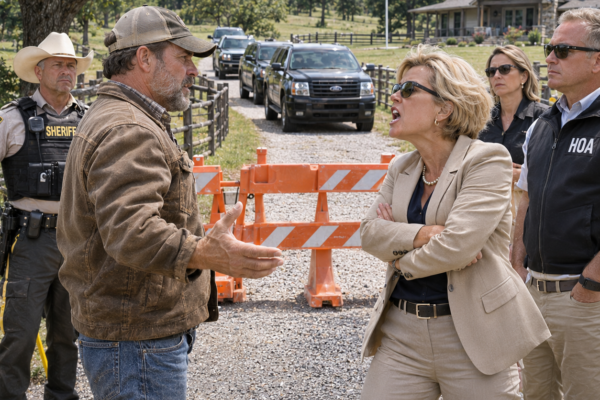
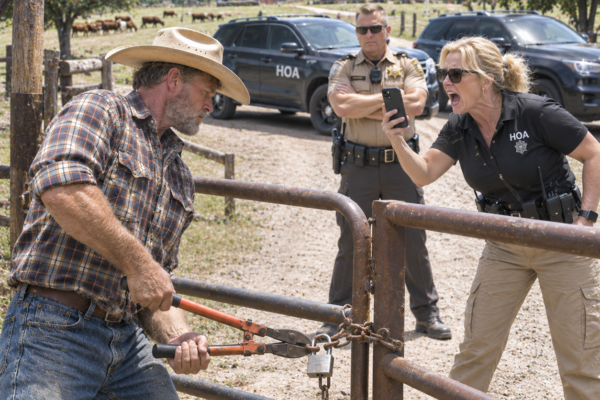
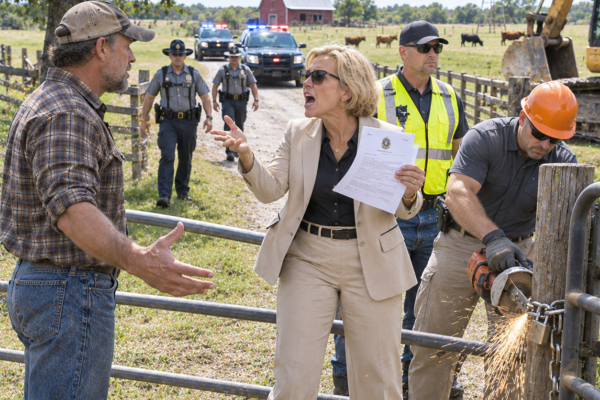
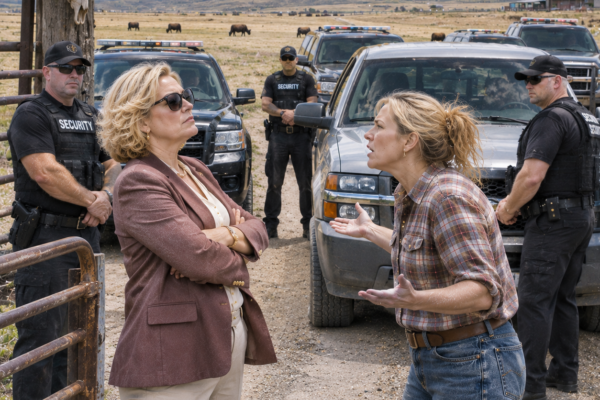
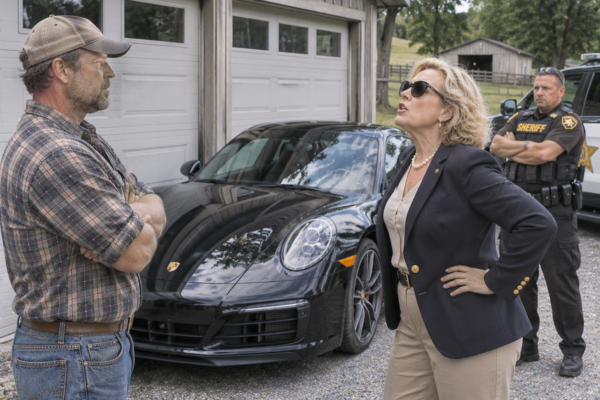
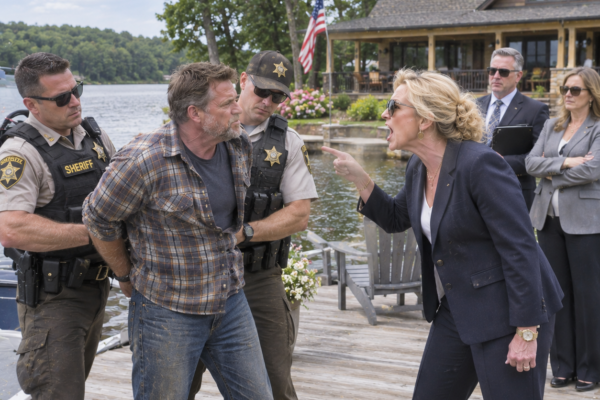
“I’ll Make You Disappear From This Neighborhood,” the HOA President Warned After Hitting Me With 11 Fines, Threatening Foreclosure, and Sending a Tow Truck for My Old Pickup. She Thought I Was Just a Broke Homeowner in Flannel. But When She Claimed 14 New Valet Spaces Behind Her Luxury Restaurant, I Asked One Question About Her Lease—and She Laughed..k
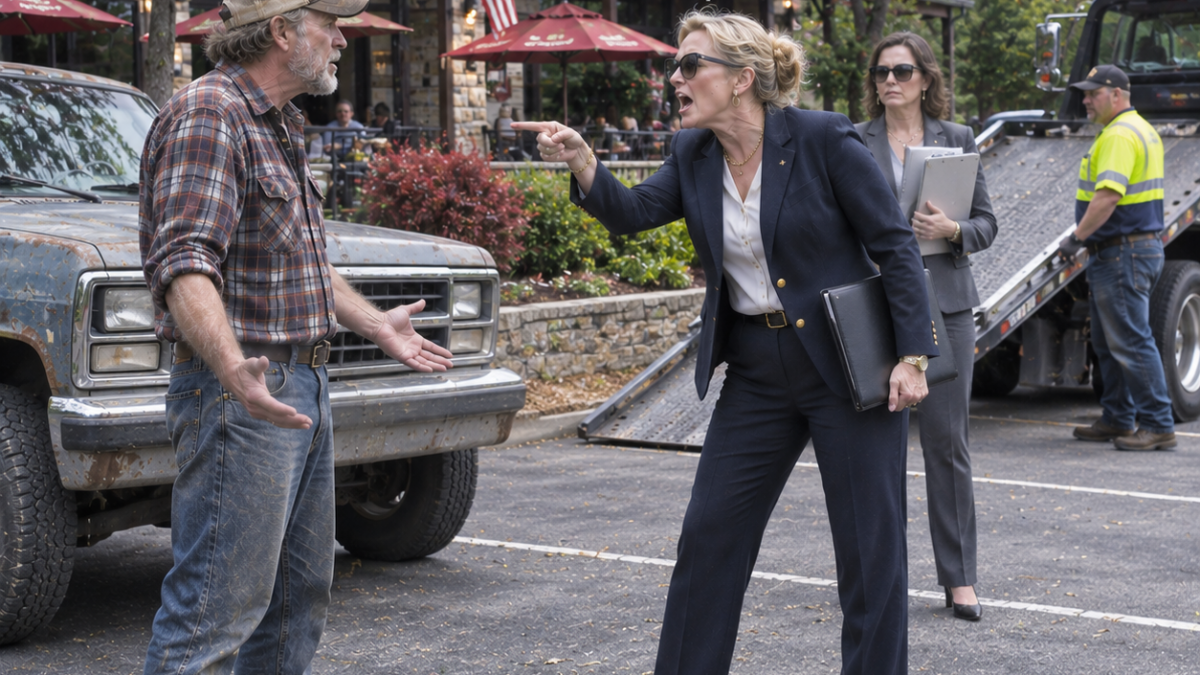
“I’ll Make You Disappear From This Neighborhood,” the HOA President Warned After Hitting Me With 11 Fines, Threatening Foreclosure, and Sending a Tow Truck for My Old Pickup. She Thought I Was Just a Broke Homeowner in Flannel. But When She Claimed 14 New Valet Spaces Behind Her Luxury Restaurant, I Asked One Question About Her Lease—and She Laughed.
“I’ll make you disappear from this neighborhood, Darius. I’ve done it to men with more money than you, and I’ll do it again.”
Cynthia Whitmore said those words at 9:15 on a Thursday night, standing between two parked cars outside the Brier Glenn clubhouse.
Fifteen neighbors were close enough to hear her.
Behind her, the gold letters of her luxury restaurant glowed against a copper awning.
WHITMORE & RYE.
It was the most expensive restaurant near our gated community, and Cynthia never missed an opportunity to remind everyone that she owned it.
She was also president of our homeowners association.
For six years, she’d controlled the board with the confidence of a woman who believed nobody could challenge her.
Now she was standing inches from my face, threatening to run me out of a house I had purchased less than two years earlier.
“You should be worrying about losing your home,” she whispered, “instead of asking questions about my business.”
I looked at her.
Then toward the fourteen newly striped parking spaces behind her restaurant.
“Cynthia, have you ever actually read your restaurant’s lease?”
She burst out laughing.
“You can’t even afford to eat there once a week. Don’t talk to me about my restaurant.”
I didn’t laugh.
I didn’t argue.
I simply took out my phone and called a woman named Rebecca Sloan.
When she answered, I said two words.
“Go ahead.”
Then I put my phone away.
Cynthia had no idea what that call meant.
And I wasn’t about to explain it in the parking lot.
My name is Darius Cole. I’m forty-eight years old, and I’ve spent nearly three decades working in commercial real estate.
I’ve been an appraiser, a developer, an investor, and the man sitting at conference tables explaining why somebody’s million-dollar idea doesn’t actually work on paper.
I learned a long time ago that the loudest person in a room is rarely the one who understands the documents best.
That’s why I don’t dress to impress anyone.
I drive a dented 2009 pickup truck.
I wear old flannel shirts.
And when I bought my brick house near the back of Brier Glenn, I had no interest in becoming important to the neighbors.
I wanted a quiet porch, two oak trees, and somewhere to drink coffee without discussing property investments.
Cynthia mistook that for weakness.
The first time we met, she saw me repairing a fence post and asked which homeowner employed me.
When I told her I owned the house, she looked genuinely disappointed.
Six weeks later, the violation notices started.
My pickup was supposedly an unauthorized commercial vehicle.
My trash cans had been visible four hours too long.
A like-for-like fence repair suddenly required architectural approval.
Then came more complaints.
By the middle of May, I’d received eleven citations totaling $1,475.
Cynthia threatened to record a lien against my home and pursue foreclosure if I refused to cooperate.
She even dispatched a tow truck to remove my pickup from my own driveway.
The driver took one look at my property survey, realized the truck was eighteen feet inside my private boundary, and refused to touch it.
Cynthia was standing down the street watching.
She walked away furious.
But the strangest thing was the timing.
Her campaign had become dramatically more aggressive after I asked a simple question at an HOA meeting.
Who authorized the fourteen valet parking spaces recently installed behind Whitmore & Rye?
Those spaces weren’t ordinary roadside parking.
They had fresh white lines, concrete wheel stops, custom black-and-gold signs, decorative planters, and newly installed lighting.
Someone had spent serious money turning that ground into an extension of Cynthia’s restaurant.
Yet the property records raised questions about who actually controlled the land.
When I asked the board for an explanation, Cynthia dismissed me.
“The association controls that area.”
“You’re certain?”
“Darius, I’ve lived here seventeen years. You’ve lived here two. I think I know who this neighborhood belongs to.”
I asked that her answer be entered into the meeting minutes.
She didn’t appreciate that.
The next week, I received another stack of violations.
Then the foreclosure threat.
Then the tow truck.
Meanwhile, I had begun examining the restaurant’s publicly filed expansion plans.
Cynthia wanted to add a covered patio, enlarge the kitchen, and increase seating from 140 guests to 235.
The project was worth approximately $1.18 million.
But a restaurant that size needed sufficient approved parking to support its permit.
Without those fourteen new spaces, her application faced a serious problem.
Suddenly, her determination to silence me made sense.
She wasn’t worried about the appearance of my pickup.
She was worried about what would happen if somebody asked who owned the ground behind her restaurant.
I retained a licensed surveyor.
He examined the property boundary, measured the new parking improvements, and prepared a certified exhibit.
Cynthia stormed outside while he was working.
“This man has no rights here!” she shouted, pointing at me. “Not one inch of this property belongs to him!”
The surveyor looked toward me.
I gave him a small nod.
He went back to work.
Nine days later, his completed report arrived.
I read it alongside the restaurant’s lease documents.
Then I called Rebecca.
And I finally understood why Cynthia had become so desperate to frighten me away.
Now, outside the clubhouse, she was threatening to make me disappear.
She didn’t know what Rebecca had prepared.
She didn’t know who would be attending the meeting her attorney was about to request.
And most importantly, she had never bothered to check one name buried in the paperwork governing the restaurant she’d built her entire reputation around.
The next morning, at 7:40, her attorney sent an email demanding that I come to Whitmore & Rye at eleven o’clock and sign an agreement promising never to interfere with the parking expansion.
I forwarded it to my attorney.
His reply contained only four words.
“Bring the ownership documents.”
Part 2:
Cynthia Whitmore told me she could make me disappear from Brier Glenn while standing less than sixty feet from the restaurant she believed made her untouchable.
It was a little after nine on a Thursday night.
The HOA meeting had just ended, and about fifteen residents were still scattered across the clubhouse parking lot. Some were unlocking their cars. Others lingered in small groups, discussing the resolution the board had passed against me.
Cynthia approached between a minivan and a hedge, wearing a cream-colored jacket and the smile I’d come to recognize as a warning.
“Darius, I want to make sure you understood what happened in there.”
“I understood.”
“I don’t think you did.”
She stepped closer.
“I’ve been in this neighborhood seventeen years. I’ve been president for six. I’ve made men far more difficult than you leave Brier Glenn.”
I glanced toward the clubhouse.
Marissa Grant, the vice president, was standing near the entrance. Elliot Vance, the treasurer, was putting papers into his briefcase.
Both could hear us.
“Is that right?” I asked.
Cynthia smiled.
“One took eighteen months. Another took nine. Neither understood what was happening until he was signing the closing papers.”
I didn’t answer.
She leaned closer.
“So let me be very clear. I’ll make you disappear from this neighborhood.”
Behind her, the copper awning of Whitmore & Rye glowed under the parking-lot lights. A valet in a black vest hurried toward the restaurant’s rear parking area carrying a set of car keys.
I watched him disappear behind the building.
Then I asked Cynthia a question.
“Have you ever actually read your restaurant’s lease?”
She laughed.
A full, delighted laugh.
“You can’t afford to eat there once a week, Darius. Don’t talk to me about my business.”
I looked at her for a moment.
Then I took out my phone and called Rebecca Sloan.
She answered on the second ring.
“Rebecca, go ahead.”
I ended the call.
Cynthia stared at me.
“What was that?”
“Good night, Cynthia.”
I walked toward my pickup.
She called after me, but I didn’t turn around.
I drove home, parked in my driveway, and went inside.
For the first time in months, I had no intention of responding to her next insult.
The paperwork would do that.
But to understand why a simple telephone call mattered, you need to know how a man who drove a dented pickup became the HOA president’s favorite target.
My name is Darius Cole.
I was forty-eight years old that summer, and I’d been involved in commercial real estate since I was barely old enough to legally buy a drink.
I started as an apprentice appraiser.
My first boss taught me how to inspect buildings without getting distracted by appearances. He’d walk me through a beautiful lobby, point to the polished marble, and then take me downstairs to show me rusting pipes and a leaking foundation.
“Never buy the lobby,” he’d say. “Buy what the records and the building can actually support.”
I learned that lesson early.
Over the years, I moved into acquisitions, development, and commercial-property management.
Some deals worked.
Others didn’t.
I made expensive mistakes and learned not to repeat them.
Eventually, I began investing through a small portfolio of limited liability companies.
I wasn’t a billionaire.
I wasn’t famous.
But I had built a comfortable life and acquired properties that produced dependable income.
I also learned there was very little advantage to advertising financial success to strangers.
I’d seen men spend thousands on watches while struggling to make payroll.
I’d watched property owners brag about their holdings moments before admitting their buildings were mortgaged beyond what the rent could support.
And I’d met more than a few people who became unpleasant the moment they discovered somebody else had more money.
I preferred to remain unremarkable.
My pickup was a 2009 Chevrolet with a dented tailgate.
The driver’s seat had a cracked seam.
There was a permanent coffee stain on the passenger-side carpet.
It started every morning, hauled what I needed, and had been paid off for years.
I wore flannel shirts because they were comfortable.
I wore work boots because I’d spent too much time walking construction sites to trust fancy shoes.
When I bought a house in Brier Glenn, a gated neighborhood outside Raleigh, North Carolina, I wasn’t looking for social status.
I wanted somewhere quiet.
The house was a sturdy brick two-story near the back of the development, with a wide porch and two mature oak trees.
The neighborhood was well maintained.
The HOA declaration looked ordinary enough.
The annual assessments were reasonable.
The rules about landscaping, exterior alterations, and common areas were specific.
I had worked with far more complicated property documents.
I read everything before closing and assumed I’d have no trouble living there.
For the first six weeks, I was right.
Then Cynthia Whitmore met me.
I was standing beside my driveway one Saturday morning, trying to straighten a fence post that had shifted during winter.
I had a level in one hand and a mug of coffee in the other.
A silver sedan slowed at the curb.
The window came down.
A woman in oversized sunglasses looked me over.
“Which house are you working on?”
“This one.”
“Are you the contractor?”
“No, ma’am. I’m the owner.”
She lowered her sunglasses.
For a moment, she seemed uncertain what to say.
“Oh. I didn’t realize that property had sold.”
“It did.”
She looked at the truck.
Then at my boots.
Then at the house.
“I’m Cynthia Whitmore. President of the Brier Glenn Homeowners Association.”
“Darius Cole. Nice to meet you.”
She didn’t offer her hand.
Instead, she reminded me that exterior modifications required approval and that annual dues were payable through the association portal.
I told her I’d reviewed the declaration.
She looked mildly surprised.
Then she drove away.
I stood there holding the level, watching her sedan disappear around the corner.
I’d met people like Cynthia throughout my career.
People who confused expensive clothes with intelligence.
People who assumed a man’s income could be calculated by looking at his vehicle.
People who treated strangers according to the amount of influence they appeared to possess.
I didn’t take it personally.
At least, not then.
The first violation notice arrived six weeks after I moved in.
It was taped to my front door in a plastic sleeve.
UNAUTHORIZED COMMERCIAL VEHICLE.
I looked toward my pickup.
No lettering.
No company name.
No equipment rack.
No business license displayed.
Just an old personal truck parked in my own driveway.
I read the section of the HOA declaration defining prohibited commercial vehicles.
My pickup didn’t meet the definition.
I photographed the vehicle, wrote a brief response, and mailed it to the association with delivery confirmation.
Eleven days later, another notice arrived.
This one concerned my trash cans.
I’d returned from a business trip around eight one evening and rolled them beside the garage instead of immediately putting them inside.
The rules required them to be screened earlier.
Technically, I had been late.
I acknowledged that.
But I also noticed the Nelsons two doors down regularly left theirs visible until the following morning.
Another home had a boat trailer sitting in its driveway for weeks.
Neither seemed to receive the same attention.
I didn’t complain about those neighbors.
I wondered why the rules were being enforced against me differently.
The third notice concerned landscaping.
The fourth concerned my fence.
Two wooden panels had warped, and I wanted to replace them with identical material in the same locations.
The declaration expressly exempted routine like-for-like maintenance from architectural review.
I checked the language twice.
I even confirmed the original fence permit.
Then I mentioned the repair to Cynthia when I saw her at the community mailboxes.
She immediately told me I’d need an architectural application and a review fee.
“Which section requires that?” I asked.
She looked irritated.
“Darius, the provision is that I’m the president.”
I stared at her.
“That’s not a provision.”
She folded her arms.
“You need to learn how things work here.”
Then she walked away.
That was when I bought a manila expanding folder.
Nothing expensive.
Just ordinary office supplies.
I wrote Cynthia’s name across the front and started filing everything.
Notices.
Photographs.
Copies of the covenants.
Written responses.
Proof of delivery.
Dates and times of conversations.
I had spent enough years in real estate to understand that a dispute without documentation quickly becomes a contest over whose version sounds more convincing.
Cynthia wanted a fight.
I wanted a file.
At the next HOA meeting, I raised my hand during the homeowners’ comment period.
About forty people were seated in folding chairs.
Cynthia presided from the front table.
Elliot Vance, the treasurer, sat beside her with his reading glasses pushed into his white hair.
Marissa Grant, the vice president, was taking notes.
I stood and introduced myself.
Then I asked whether the board had a written policy governing the selection and consistent enforcement of violations.
“I’ve received four notices in six weeks,” I said. “I’d like to understand the standard being applied.”
I didn’t mention the Nelsons.
I didn’t identify the boat-trailer owner.
I didn’t accuse anybody of corruption.
I simply asked for the rule.
Cynthia smiled.
“Some people need time to learn how to live in a community with standards.”
The room went quiet.
I waited.
Then I turned toward the secretary.
“Would you please enter that remark into the minutes? Verbatim, if possible.”
Cynthia’s smile faltered.
Only briefly.
But I saw it.
She’d expected me to argue.
Instead, I had asked the association to preserve her own words.
I sat down.
A week later, the first four notices totaled $350.
That wasn’t enough to seriously affect my finances.
But it was enough to tell me that Cynthia intended to make my life inconvenient.
I could have filed a formal enforcement appeal and left the matter there.
I did challenge the citations.
But then something happened that made the fines look like the smallest part of the problem.
Six black-and-gold signs appeared behind Whitmore & Rye.
The restaurant sat near the entrance to Brier Glenn, occupying a handsome two-story brick building constructed in 1986.
It had a copper awning, warm lighting, and a dining room that looked expensive even from the sidewalk.
Cynthia owned the restaurant business.
She was proud of it.
Every HOA holiday mixer seemed to take place there.
So did fundraising dinners, committee celebrations, and board appreciation events.
The association spent substantial money on catered meals in the private room.
I’d noticed the arrangement when I first moved in.
But a potential conflict of interest wasn’t automatically misconduct, and I had no reason then to assume the board hadn’t reviewed it.
The new parking spaces were different.
I was driving past the commercial strip one morning when I saw workers removing temporary barriers behind the restaurant.
Fourteen spaces had been striped in bright white paint.
Concrete wheel stops sat at the head of each.
Decorative planters marked the entrance.
Six newly installed lights lined the edge.
And the black-and-gold signs announced:
WHITMORE & RYE — VALET PARKING RESERVED.
The work was neat.
Permanent.
Expensive.
And the location bothered me.
I parked across the street and walked to a place where I could see the rear boundary.
Somebody had removed the old hedge.
The new landscaping made the parking area look like a natural extension of the restaurant.
But I knew that commercial strip.
I knew its layout.
Its loading configuration.
Its original development plans.
And I knew those fourteen spaces weren’t where they appeared to belong.
I took photographs.
Then I went home and opened the county parcel records.
I printed the relevant plat and sat at my kitchen table for nearly an hour.
I already suspected what the documents would show.
But after thirty years in real estate, I’d learned that being certain was no substitute for checking.
That night, I submitted a question for the next HOA meeting.
It was only one sentence long.
I wanted to know who had authorized the commercial parking improvements behind the restaurant and on what legal basis.
I didn’t mention Cynthia by name.
I didn’t mention the landowner.
I didn’t even identify the restaurant in the written question.
I asked about authorization.
Because if Cynthia answered that question publicly, there would be a record.
And if she refused, that would tell me something too.
The next meeting was on a Thursday.
The clubhouse was fuller than usual because the board was also reviewing a landscaping contract, which apparently interested more residents than the annual financial statement.
Cynthia moved through the agenda efficiently.
Pool maintenance.
Spring cleanup.
Insurance renewals.
Landscaping bids.
Then the secretary read my submitted question aloud.
I stood.
“I noticed fourteen new valet spaces behind the commercial building at the entrance. I’d like to know who authorized those improvements and whether the association has the property rights necessary to approve them.”
Cynthia didn’t open a document.
“The association controls that area,” she said. “The improvements were reviewed, and they benefit the community.”
I nodded.
“Controls it how?”
She looked annoyed.
“Through the association’s responsibility for the entrance.”
“Does the association own the parcel?”
She paused.
Then smiled.
“Darius, you’ve lived here less than two years. I’ve lived here seventeen. I think I know who Brier Glenn belongs to.”
A few people chuckled.
I noticed Elliot Vance look up sharply from his notes.
I also noticed Marissa stop writing.
I held Cynthia’s gaze.
“You’re certain?”
“Absolutely.”
I nodded once.
“Thank you.”
Then I sat down.
I didn’t tell her what I knew.
I didn’t mention the lease.
I didn’t ask another question.
She had given an answer before witnesses, and the secretary had recorded it.
That was enough for the evening.
Four days later, another violation notice appeared.
This one alleged that my fence repair created an architectural inconsistency.
The following week, I received two more citations.
Then a landscaping complaint.
Then a vehicle complaint.
Then another warning concerning my trash containers.
By the middle of May, the file contained eleven citations totaling $1,475.
I examined the dates.
The first four notices had arrived over six weeks.
The remaining seven appeared in a much shorter period, starting immediately after my question about the valet spaces.
That timing interested me.
It didn’t prove retaliation by itself.
But it provided a clear sequence.
I organized the notices chronologically, along with my responses and photographs.
Then Cynthia escalated again.
A letter arrived on association letterhead warning that continued noncompliance could result in a lien against my home and possible foreclosure proceedings, subject to applicable law.
The final paragraph emphasized that I could be responsible for legal fees.
I read it twice.
Then I placed it carefully in the folder.
I knew an HOA couldn’t automatically foreclose simply because its president disliked somebody.
The association would have to satisfy its governing documents and the applicable statutory procedures. Several of the alleged violations were disputed, and some appeared to lack support altogether.
But Cynthia’s purpose was obvious.
She wanted me to believe that asking questions could cost me my house.
I called my attorney, Nolan Price.
Nolan had handled real estate matters for me for eleven years.
He was fifty, rarely wasted words, and could communicate more skepticism with a raised eyebrow than most lawyers could express in a five-page letter.
I sent him the notices.
He called back.
“Are these properly assessed fines?”
“Not as far as I can establish.”
“Have you requested hearings?”
“Yes.”
“Any response?”
“Mostly more letters.”
He paused.
“Keep the records. Don’t ignore any formal deadlines.”
“I won’t.”
“Anything else?”
I hesitated.
“There’s a separate issue involving commercial parking at the entrance. I may need you on that soon.”
“What kind of issue?”
“Unauthorized improvements on land outside a restaurant lease.”
“Your portfolio?”
I looked at the file.
“Yes.”
He was quiet for a moment.
Then he said, “Get a survey.”
I smiled.
“Already thinking about it.”
The tow truck arrived on a Saturday morning.
I was sitting on my back porch when I heard its air brakes.
By the time I reached the front driveway, a young operator was walking around my pickup.
He carried a work order.
“Morning,” I said. “Can I help you?”
“Are you the owner of this truck?”
“Yes.”
“I’ve been dispatched to remove an unauthorized commercial vehicle from a common area.”
I looked at the truck.
Then at the concrete beneath its tires.
“Common area?”
“That’s what the order says.”
“May I see the address?”
He handed me the clipboard.
My street.
My house number.
My license plate.
And a description of the location as an association-controlled area adjacent to the roadway.
I walked to the edge of the driveway.
“Do you see that expansion joint?”
He nodded.
“That’s near the front of my property. My truck is parked eighteen feet farther inside the lot.”
The operator looked uncertain.
I went into the house and returned with the recorded lot plat.
I placed it on the hood of his truck.
He studied it.
Then looked toward my pickup.
Then back at the drawing.
“Sir, I’m not touching this vehicle.”
“Thank you.”
He called his dispatcher.
I heard him explain that the work order described a common area but the vehicle was clearly on a private residential driveway.
Then he climbed into his cab and drove away.
Cynthia was standing at the far end of the street.
She’d come to watch.
When the flatbed left without my pickup, she turned and walked toward her house.
I said nothing.
There was nothing useful to say.
That evening, I spread my records across the dining-room table.
The violation notices.
The foreclosure warning.
The tow order.
The minutes from the parking discussion.
I marked the dates on a legal pad.
Then I drew a line across the page at the meeting where I’d questioned the fourteen spaces.
Every significant escalation followed that date.
That didn’t settle her motive.
But it narrowed the possibilities.
I had a strong reason to examine the restaurant’s parking arrangement more closely.
The following morning, I called Rebecca Sloan.
Rebecca had managed Colbridge Properties’ commercial portfolio for nine years.
She was forty-five, had previously worked as a paralegal, and was the most reliable property manager I’d ever employed.
She handled rent collection, lease administration, tenant correspondence, repairs, insurance documentation, and operating-expense reconciliations.
She didn’t guess.
If she didn’t know something, she’d say so, then find out.
“Rebecca, I need the complete Whitmore & Rye tenant file.”
There was a brief pause.
“Everything?”
“Original lease. All amendments. Site exhibits. Assignment records. Correspondence. Any recent requests connected to expansion or financing.”
“Is there a tenant problem?”
“Possibly.”
“How urgent?”
“Today, if you can.”
“I’ll have it to you tonight.”
She didn’t ask for gossip.
She didn’t ask why I wanted it.
She simply did her job.
At eight that evening, a secure electronic file appeared in my inbox.
One hundred forty pages.
I printed the documents and began reading.
The original lease was precise.
Whitmore & Rye had the right to occupy approximately 6,200 square feet of restaurant space across two floors.
It had a defined rear loading area.
And it had exclusive use of twenty-six numbered parking spaces shown on Exhibit B.
Twenty-six.
Not forty.
I checked the amendments.
There were three.
The most recent concerned improvements to the kitchen ventilation system and a corresponding rent adjustment.
None added parking.
None expanded the leased premises.
None granted rights to the rear parcel.
The fourteen new valet spaces sat on land expressly excluded from the restaurant’s lease.
The site exhibit identified it as landlord-retained property reserved for future development or other lawful disposition.
Then I reached Section 14.
The provision prohibited the tenant from placing signs, structures, lighting, fixtures, or other improvements on property outside the leased premises without the landlord’s prior written consent.
It also prohibited occupying or using excluded land without authorization.
Violations could constitute defaults, subject to the notice and cure terms elsewhere in the agreement.
I read that section twice.
Then I looked at the photographs.
Six signposts.
Fourteen striped spaces.
Wheel stops.
Decorative lighting.
Three planters.
A replacement landscape bed.
An illuminated valet stand.
All installed on land excluded from the lease.
Rebecca’s correspondence file contained no request for consent.
No amendment.
No parking license.
No letter approving construction.
Nothing.
I sat back.
Somebody had invested substantial money in improvements the restaurant had no contractual right to install.
And Cynthia had repeatedly declared in public that her restaurant and the HOA controlled the property.
I could have instructed Rebecca to send a default notice immediately.
But there was something that bothered me.
Fourteen spaces were a strange investment for ordinary overflow parking.
The work included lighting, decorative landscaping, and a professionally designed valet configuration.
It looked permanent.
Cynthia had also become unusually aggressive when I asked about it.
Why?
I wanted to understand the entire plan before deciding how to respond.
So I hired Frank Delra.
Frank was a sixty-three-year-old licensed surveyor who’d worked on several of my previous acquisitions.
He arrived early Wednesday morning with a total station, a field assistant, and copies of the controlling property records.
I met him near the commercial strip.
“I need the boundary between the restaurant’s leased premises and the retained rear parcel established and documented,” I told him.
“And the improvements?”
“Every one of them. Signs, lighting, paving, planters, the valet stand. I want their positions shown against the property boundary and lease exhibit.”
Frank nodded.
“Certified exhibit?”
“Yes.”
He looked toward the restaurant.
“Somebody going to be unhappy?”
“Probably.”
He shrugged.
“Won’t be the first time.”
We’d been working for about forty minutes when the restaurant’s side door flew open.
Cynthia came across the gravel in a camel-colored coat, walking fast enough that her heels struck the ground like little hammers.
She went straight to Frank.
“Excuse me! Who authorized you to survey this property?”
Frank looked up.
“My client.”
She pointed toward me.
“He’s a resident. He’s not on the HOA board. He’s not a committee member. He has no standing to interfere with this restaurant!”
Frank looked at me.
I said nothing.
Cynthia turned back toward him.
“You need to pack up immediately.”
“I’m performing a lawful survey for my client, ma’am.”
“Your client doesn’t have permission.”
I finally spoke.
“So I have no rights here?”
Cynthia swung toward me.
“None, Darius. Not one inch. This is my restaurant. The association manages the entrance, and you have absolutely no claim to this property.”
Frank waited.
I gave him a slight nod.
He returned to his instrument.
“We’ll be finished this afternoon,” I told her.
Cynthia stared at us.
For several seconds, she seemed unable to understand why her orders weren’t working.
Then she marched back inside and slammed the door.
Frank watched her go.
“Interesting woman.”
“That’s one description.”
He looked toward the newly striped spaces.
“Let’s get the measurements right.”
Nine days later, his certified exhibit arrived.
Every one of the fourteen spaces lay on landlord-retained land.
So did all six signposts, the lighting circuit, the planters, the landscape improvements, and the valet stand.
The nearest encroaching improvement was approximately eleven feet inside the excluded parcel.
The farthest extended roughly sixty-three feet.
I placed the survey beside the lease.
There wasn’t much room for interpretation.
But the survey still didn’t answer the question that interested me most.
Why had Cynthia gone to such lengths to gain control of those particular fourteen spaces?
Rebecca found the answer.
She called at eight the following morning.
“Darius, you need to see something.”
“What?”
“A lender information request concerning Whitmore & Rye.”
I set down my coffee.
“Go on.”
“The restaurant submitted a financing package for an expansion. The lender requested confirmation of the tenant’s premises and parking rights.”
“Did we provide it?”
“Not yet. The plan submitted by the tenant doesn’t match the lease.”
I opened the documents she sent.
The proposed expansion was substantial.
A covered patio.
A larger kitchen.
A second-floor bar-service area.
And an increase in approved seating from 140 guests to 235.
Estimated construction cost: $1.18 million.
The application required a land-use modification and additional municipal approvals.
The proposed financing depended on securing those approvals.
And those approvals depended in part on adequate parking.
I studied the parking analysis.
The applicable formula started with one space for every three seats, subject to the jurisdiction’s approved reductions and credits.
At 235 seats, the basic calculation produced a much higher number than the restaurant could provide.
After the claimed shared-parking adjustments and transit-related credits, the application still required at least thirty-eight qualifying spaces.
Whitmore & Rye leased twenty-six.
With the fourteen new spaces, its submitted total was forty.
Without them, it couldn’t support the parking count in its expansion application.
I stared at the numbers.
Fourteen spaces.
That was the difference between a potentially approvable project and a proposal with a major deficiency.
I turned to the site plan.
Cynthia had represented all forty spaces as available to the restaurant.
Her signature appeared on the submission.
I looked at Rebecca’s accompanying note.
No consent, lease amendment, or parking agreement found. Lender should not rely on the additional fourteen spaces.
I sat in silence.
Now I understood why Cynthia was so desperate to silence me.
She wasn’t simply offended that a homeowner had questioned her judgment.
She had a $1.18 million expansion depending on parking rights she didn’t possess.
And every public question I asked threatened to expose that problem before the lender advanced the project.
The fines.
The foreclosure warning.
The tow truck.
All of them had followed my first question about the rear parcel.
I still wasn’t ready to accuse her of financial fraud.
Perhaps she genuinely believed the HOA had authority over the land.
Perhaps somebody had misinformed her.
But the signed financing plan made the discrepancy serious.
A bank doesn’t approve a major commercial loan based on how confident its applicant sounds.
It relies on documents.
And Cynthia had submitted a parking count that didn’t match the rights granted by her lease.
I called Nolan.
“Now I know why she wants those spaces.”
He listened while I explained.
Then he said, “Get the lender correspondence. Preserve the original site plan.”
“Rebecca has it.”
“Good. Don’t negotiate by telephone.”
I glanced toward the restaurant’s rooftop visible beyond the trees.
“Wasn’t planning to.”
Nolan paused.
“Are you ready to notify the tenant?”
“Almost.”
He didn’t ask why.
I think he knew I was trying to understand how deeply the HOA had become involved.
That answer arrived from Elliot Vance.
And it was worse than I expected.
Elliot caught me at the community mailboxes on a Tuesday evening.
He was sixty-one, retired from accounting, and had served as HOA treasurer for four years.
He’d always been polite to me, though never especially friendly.
That evening, he talked about the weather and asked how my fence repair was going.
I answered.
Then he leaned closer.
“You asked a fair question at that meeting, Darius.”
“About the parking?”
He nodded.
“I should’ve asked it myself.”
Before I could respond, he collected his mail and walked away.
Three days later, he called my house and asked whether I’d take a walk.
We met near the clubhouse after dark.
For the first mile, he talked about his late wife’s garden and how strange retirement had felt without her.
Then he stopped beneath a streetlight.
“I’ve been signing expenditure approvals for four years,” he said. “There are some invoices that bother me.”
I waited.
“Association money has been paying for improvements near Cynthia’s restaurant.”
“What kind of improvements?”
“Parking signage. Landscape lighting. Grounds work.”
“How much?”
He took a folded sheet from his pocket.
“$8,400 for signage, classified as community wayfinding.”
I nodded.
“$6,100 for the lighting, listed under entrance beautification. Another $3,100 for landscaping.”
“Anything else?”
He looked miserable.
“We pay a security contractor eleven hundred dollars a month. The contract covers the commercial strip and community entrance.”
“That could be legitimate.”
“Yes. But I requested their route sheets. More than sixty percent of the recorded patrol hours are spent around the restaurant during its closing hours.”
I looked toward the distant entrance lights.
“Does the rest of the commercial strip stay open that late?”
“No.”
Elliot rubbed his forehead.
“I’ve been telling myself the whole neighborhood benefits from having an attractive entrance.”
“Some of it might.”
“I know.”
“Did the board approve spending on Cynthia’s private business?”
“Not explicitly. The summary reports describe general community improvements.”
I considered that.
A president owning a business near the entrance wasn’t automatically improper.
The HOA might have valid authority to maintain landscaping or provide common-area security.
But spending association funds on a private restaurant’s exclusive valet parking would require a very different explanation.
“Don’t make accusations yet,” I told him.
He looked surprised.
“What?”
“Get the source documents. Invoices, contracts, scopes of work, approval signatures, payment records, route sheets. Put them in chronological order.”
“And then?”
“Let the members see what the money actually paid for.”
He nodded slowly.
“All right.”
Two weeks later, Cynthia called a special HOA meeting.
The notice was mailed to all 240 households.
For the first time, it identified me by name.
CONSIDERATION OF ENHANCED ENFORCEMENT MEASURES REGARDING DARIUS COLE.
I stood at my kitchen counter reading it.
Cynthia had taken what should’ve been an ordinary association governance issue and turned it into a campaign against one resident.
She wanted the entire neighborhood watching while she threatened me with escalating penalties.
I made a copy for my attorney.
Then I filed the original.
The clubhouse was packed that Thursday.
Nearly ninety residents attended, with some standing against the walls.
Cynthia spoke at length about protecting property values and maintaining community standards.
Then she addressed me.
“Certain homeowners have demonstrated a continuing refusal to cooperate with legitimate enforcement.”
I remained seated.
She continued.
“The association has the resources to pursue necessary legal remedies. Litigation is expensive, and some residents don’t understand how financially damaging prolonged proceedings can become.”
Several people turned toward me.
Cynthia paused, letting the warning settle.
I raised my hand.
She looked irritated but recognized me.
I stood.
“What happens if you’re wrong about the fourteen valet spaces behind your restaurant?”
Her expression changed.
“That isn’t on tonight’s agenda.”
“I understand. But if the association doesn’t own that land, how could it authorize improvements there?”
She struck her folder with her palm.
“You should be worrying about your own house, Darius, instead of interfering with my restaurant.”
I looked at the secretary.
“Please include that answer in the minutes.”
Then I sat down.
The enhanced-enforcement resolution passed eleven to four among those voting.
Many residents abstained or declined to participate.
Cynthia looked satisfied.
I collected my jacket and walked outside.
That’s when she followed me into the parking lot and threatened to make me disappear.
When I asked whether she’d read her lease, she laughed.
And when I called Rebecca, I wasn’t asking her to arrange some secret retaliation.
I was authorizing her to send the formal lease documents and survey through counsel, request the necessary meeting, and begin the proper process for addressing the unauthorized improvements.
Cynthia still believed I was a troublesome homeowner with an old truck.
By the following morning, that illusion would be difficult to maintain.
At 7:40 a.m., her attorney emailed Rebecca.
His name was Gerald Wilks.
He requested a meeting at eleven in the restaurant’s private dining room.
His client wanted me to sign a written acknowledgment agreeing not to interfere with the valet parking or expansion project.
Rebecca called.
“Do you want me to explain who owns the property?”
“No. Let’s meet in person.”
“Should I bring the entire file?”
“Yes.”
Then I called Nolan.
“I need the deed, the company ownership documents, the lease, the survey, and the default analysis.”
He said, “Eleven o’clock.”
Then he hung up.
We arrived at Whitmore & Rye ten minutes early.
The restaurant hadn’t opened for lunch.
A young employee was vacuuming near the dining-room entrance, and the smell of fresh bread drifted out from the kitchen.
Cynthia was seated at the head of the private-room table.
Gerald sat beside her with a legal pad.
A single page lay facedown at the place set for me.
Rebecca entered first, carrying an accordion file.
Cynthia immediately recognized her.
“Rebecca? Why are you here?”
“Because you requested a meeting concerning the rear parcel.”
Cynthia frowned.
“That’s a matter between the association and Mr. Cole.”
Rebecca set down her folder.
“It’s also a matter involving the restaurant’s landlord.”
Cynthia looked annoyed.
“Then where’s the landlord? I deal with Colbridge Properties. I’ve never even spoken to the actual owner.”
Rebecca gestured toward the chairs.
“The landlord’s representative is here.”
Nolan sat down.
I took the chair facing Cynthia.
Gerald looked at me, then at Nolan.
Nolan placed his business card on the table.
“Attorney for Colbridge Properties LLC.”
Gerald’s expression changed.
Cynthia was still talking.
“That’s fine. The landlord should know this resident has been harassing my staff and interfering with a permitted expansion that benefits the property.”
Rebecca remained silent.
Nolan opened the folder.
He placed three documents on the table.
The first was the recorded deed showing Colbridge Properties LLC as owner of the commercial building and rear parcel.
The second was the company’s organization record.
The third was its operating agreement, identifying the company’s managing member.
Cynthia leaned forward.
Her eyes moved across the page.
Then she stopped.
Beneath the words MANAGING MEMBER was my name.
DARIUS COLE.
And beneath it was my signature.
She read it again.
Gerald set down his pen.
The room went so quiet I could hear the kitchen ventilation system.
Cynthia slowly looked up.
“You?”
I nodded.
“You were right about one thing. Whitmore & Rye is your restaurant business.”
I allowed a moment for that to settle.
“But the building belongs to Colbridge Properties.”
She stared at me.
“So does the loading area. And the parcel behind the building where you installed fourteen valet spaces.”
Her mouth opened.
Nothing came out.
Gerald leaned toward her.
“Cynthia, don’t say anything else yet.”
She ignored him.
“You bought my building to get back at me!”
Rebecca took out the acquisition records.
The deed showed a purchase date more than six years earlier.
I hadn’t even moved into Brier Glenn at that point.
“I bought the property as part of a four-building portfolio,” I said. “Long before we met.”
Cynthia looked at the date.
Her expression seemed to collapse inward.
I continued.
“You were already a tenant when Colbridge acquired it. I had no reason to interfere with a business paying its rent.”
She turned toward Rebecca.
“You knew?”
Rebecca nodded.
“I’ve managed the property for Mr. Cole for nine years.”
Cynthia sat back.
For six years, she’d been calling Rebecca about roof repairs, rent adjustments, and annual operating-expense reconciliations.
But she’d never bothered to ask who stood behind the company collecting her rent.
Nolan opened the lease.
“Section 14,” he said.
He read the prohibition on installing improvements or using land outside the leased premises without the landlord’s written consent.
Then he laid Frank’s certified survey beside it.
“Fourteen parking spaces, six signs, six lighting fixtures, three planters, a valet stand, and associated improvements. All on excluded landlord property.”
Gerald examined the drawing.
Nolan continued.
“Colbridge has issued no written authorization for those improvements.”
Then he placed the lender’s site plan beside the survey.
“Your client represented forty parking spaces as available to the restaurant in its expansion financing package. The lease grants twenty-six. The additional fourteen are not included.”
Gerald’s face grew pale.
He turned toward Cynthia.
“Who approved the parking representation?”
She didn’t answer.
Nolan placed one final document on the table.
“The lease expires in seven months. Its renewal option must be exercised at least 180 days before expiration, subject to the agreement’s conditions, including the absence of uncured defaults at the time of exercise.”
Cynthia looked down at the documents.
“The contractor is scheduled,” she whispered.
Nobody spoke.
“The bank has our expansion plans. I have thirty-one employees.”
For the first time since meeting her, I heard genuine fear in her voice.
It would’ve been easy to enjoy that.
She’d threatened my home, tried to tow my truck, and used the HOA to make my life miserable.
Now she was discovering the business she’d used to intimidate people depended on a landlord she’d spent months insulting.
But the thirty-one employees hadn’t threatened me.
They hadn’t invented the parking rights.
They hadn’t sent me fines.
They were cooks, servers, dishwashers, bartenders, and managers with bills of their own.
I wasn’t going to punish them because their boss had acted like a bully.
So I gave Cynthia a way to fix the problem.
I slid a single sheet of paper across the table.
“Five things, Cynthia.”
She looked at it without touching it.
“First, the restaurant stops using the fourteen unauthorized spaces immediately.”
Gerald nodded slightly.
“Second, every improvement installed on Colbridge’s retained parcel gets removed at the tenant’s expense, and the ground is restored within thirty days, subject to a written resolution of the defaults.”
I turned to the next item.
“Third, if the restaurant needs additional parking, we can negotiate a legitimate agreement at market rent. I’m not opposed to your business expanding. I’m opposed to it using property without permission.”
Cynthia stared at me.
“Fourth, you stop using your HOA position to benefit the restaurant. No more association-funded improvements or preferential business arrangements without proper authorization and disclosure.”
I pointed to the final paragraph.
“And fifth, the association’s spending connected to your business goes through an independent audit selected by the membership.”
Gerald read the conditions.
“They’re firm, but there’s room for discussion,” he said carefully.
I nodded.
“There is. I don’t want thirty-one people losing their jobs.”
Cynthia finally looked up.
“You think you can dictate how Brier Glenn conducts its affairs because you own a building?”
“No. I can enforce my property rights as landlord. The HOA’s finances belong to its members, and they deserve answers.”
She pushed the paper away.
“The audit isn’t happening.”
“Cynthia—” Gerald began.
“I have eleven votes on that board,” she snapped. “You might own the restaurant building, Darius, but you don’t own this neighborhood.”
I looked at her.
“I never claimed I did.”
She stood.
“I’m done here.”
Gerald called her name again.
She walked out.
I watched the door close.
Then I turned toward Nolan.
“Send the necessary notices. Give her every opportunity to cure the defaults under the lease.”
He nodded.
“And the lender?”
“Provide accurate ownership and parking information through the proper channels. Nothing more.”
Rebecca gathered the documents.
I looked toward the dining room, where a young employee was setting tables for lunch.
I hoped Cynthia would reconsider.
She didn’t.
By the time she reached her house, Elliot and Marissa had already submitted a formal request for a special membership meeting to examine association expenditures.
Elliot’s evidence binder contained 206 pages.
He had arranged everything chronologically.
Invoices.
Payment approvals.
Vendor work orders.
Security patrol logs.
Bank records.
And the relevant board minutes.
Ten days later, the meeting took place in the elementary school cafeteria because the clubhouse couldn’t accommodate the crowd.
Nearly two hundred residents attended.
I sat in the fourth row.
Elliot stood at a folding table beside a projector.
He began with the signage invoice.
“$8,400,” he said.
The financial report classified it as community wayfinding.
But the contractor’s work order described signs bearing the words WHITMORE & RYE VALET PARKING.
Then came the lighting.
“$6,100, recorded under entrance beautification.”
The survey showed the fixtures were installed on land the HOA didn’t own.
Next was the landscaping.
“$3,100.”
Again, the work was associated with the unauthorized valet area.
Then Elliot displayed the security contract.
The association had paid $39,600 over three years.
According to the patrol logs, approximately sixty-two percent of the recorded hours were spent around the commercial strip during the restaurant’s closing period.
Elliot didn’t claim every dollar was improperly spent.
He explained that an independent audit would determine which expenses had a legitimate association purpose and which primarily benefited Cynthia’s private business.
Then he displayed the deed.
The survey.
And the documented parking arrangement.
When he finished, the room was silent.
Marissa stood.
“For years, we’ve relied on summaries instead of examining what the association was actually paying for. That has to change.”
The board withdrew all eleven citations against my property and rescinded the enhanced-enforcement resolution.
It also authorized an independent review of the disputed spending.
Under the association’s procedures, the directors voted to remove Cynthia from the presidency.
Two members who’d supported her only ten days earlier voted for her removal.
Afterward, Cynthia was allowed to speak.
She stood before the residents she’d governed for six years.
“This was orchestrated,” she said. “Darius Cole planned this entire situation to destroy me.”
I stood.
“I didn’t write those invoices. I didn’t install those parking signs. And I didn’t ask you to threaten me in front of witnesses.”
She stared at me.
I sat down.
There was nothing else to add.
The audit eventually identified expenses requiring reimbursement and corrective accounting. The association pursued those matters through its counsel and adopted stronger conflict-of-interest procedures.
Cynthia’s restaurant expansion never received approval.
Once the lender learned the fourteen spaces weren’t legally available under the existing lease, it declined to proceed on the proposed financing terms.
The construction contract was canceled.
The land-use application was withdrawn.
And Cynthia never completed the required cure of the lease defaults.
The renewal deadline passed without a valid exercise of the option.
The lease would expire at the end of its term.
I didn’t celebrate that either.
Whitmore & Rye had been operating for years.
Its employees had worked hard to make the restaurant successful.
Whatever Cynthia had done, they deserved better than becoming collateral damage.
Three weeks after Cynthia lost the presidency, two people came to my house.
Paul Fenner was the executive chef.
Dana Kersh was the general manager.
They sat on my porch beneath the oak trees, looking more nervous than either had probably felt during the busiest dinner service.
Paul spoke first.
“Mr. Cole, we’ve heard the restaurant might close.”
“That’s possible.”
Dana looked toward him.
“We have thirty-one employees. Some have been with us for years.”
I nodded.
“I know.”
She leaned forward.
“Would you consider leasing the building to a new operator?”
“What operator?”
Paul looked at Dana.
Then back at me.
“Us.”
They had a business plan.
They knew the kitchen, the customers, the supplier relationships, and the cost of operating the restaurant.
They also understood that the existing expansion couldn’t proceed without proper financing and parking rights.
We spent several weeks reviewing the proposal.
Cynthia eventually agreed to sell the restaurant’s operating assets and goodwill under a negotiated transaction.
Paul and Dana formed a company and raised their own investment capital. I provided a portion of the purchase financing on documented commercial terms.
After the old lease ended and the necessary arrangements were completed, their company signed a new five-year lease with Colbridge Properties.
It covered the restaurant building, the designated loading area, and the original twenty-six parking spaces.
They also negotiated a separate agreement for the fourteen rear spaces.
At market rent.
In writing.
With appropriate insurance, maintenance obligations, and clearly defined boundaries.
They paid for the parking rights Cynthia had spent months pretending she already possessed.
The difference was that they asked.
The new restaurant opened in February.
They called it The Oak & Ashgate.
The old copper sign came down.
A simple black steel sign with white lettering replaced it, properly installed with the landlord’s written approval.
Paul kept the kitchen team.
Dana retained the dining-room staff.
All thirty-one employees were offered the opportunity to continue under the new operation.
Some changed roles.
Some took additional training.
But the restaurant survived.
A few weeks after reopening, Dana invited me to dinner.
I went in my usual flannel shirt.
I parked my dented pickup in one of the ordinary spaces.
When I walked inside, the hostess greeted me warmly.
Not because she knew who owned the building.
Because that was how Dana expected guests to be treated.
Paul came out of the kitchen.
“How was everything?”
“Excellent.”
He smiled.
“Good. We’ve got a lot riding on this.”
I laughed.
“So do I.”
As I left, I looked toward the rear parking lot.
The fourteen spaces were neatly maintained.
The lights were working.
The landscaping looked better than before.
Nothing about the ground had physically changed.
Only the legal arrangement.
And that was the part Cynthia had never understood.
Property rights weren’t obstacles she could overcome through intimidation.
They were the foundation on which legitimate business was supposed to operate.
I drove home through Brier Glenn.
My pickup was still old.
My fence was still ordinary.
My oak trees still dropped acorns across the walkway.
And nobody had sent me a violation notice in months.
Cynthia had once looked at my truck and my flannel shirt and decided I was a man she could drive out of the neighborhood.
She had the presidency, a lawyer, influential neighbors, and a profitable restaurant.
I had documents.
She believed her title gave her control over everything she could see.
But she’d never checked who owned the building where she made her living.
I didn’t buy that property to punish her.
I’d owned it for more than six years before she ever learned my name.
And I didn’t set out to take her restaurant away.
I gave her an opportunity to correct the unauthorized use, separate her business from the HOA, and account for the money her fellow homeowners had spent.
She refused.
Two of her own employees eventually built a future in that same building by doing what she wouldn’t.
They negotiated honestly.
They paid for what they used.
And they treated people with respect.
One morning, I drove past The Oak & Ashgate with a cup of coffee in my truck’s holder.
I slowed down, as I always did.
The new sign caught the sunlight.
A delivery driver was unloading supplies near the kitchen entrance.
The rear parking lot was quiet.
Everything was operating the way a business should.
I remembered Cynthia standing between a minivan and a hedge, smiling while she promised to make me disappear.
Then I thought about the last set of property records I’d reviewed.
My name was still associated with the deed to my house.
Colbridge Properties still owned the building and the rear parcel.
And Cynthia’s name was no longer on the HOA president’s roster or above the restaurant entrance.
I finished my coffee and drove home.
There was a fence panel I wanted to repair that afternoon.
Same height.
Same material.
Same stain.
And for once, nobody was going to charge me a fee for fixing something that already belonged to me.