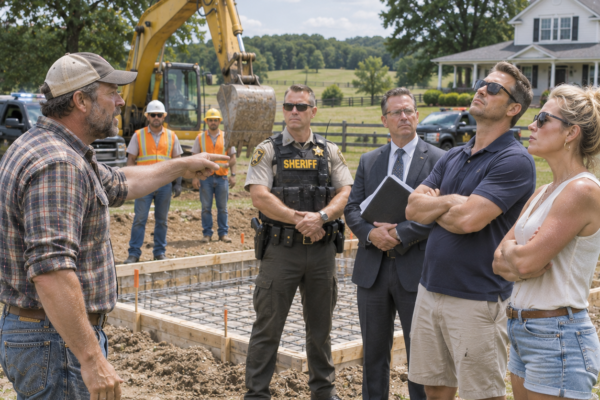
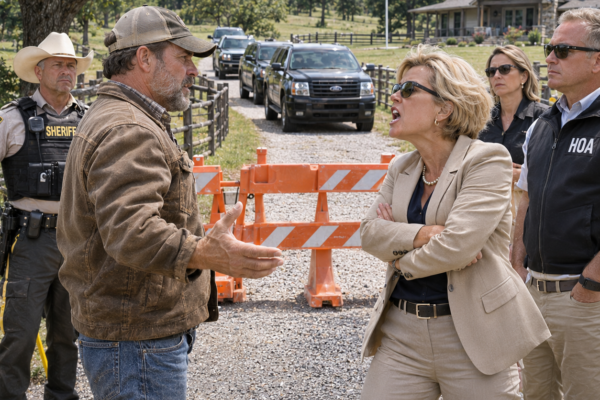
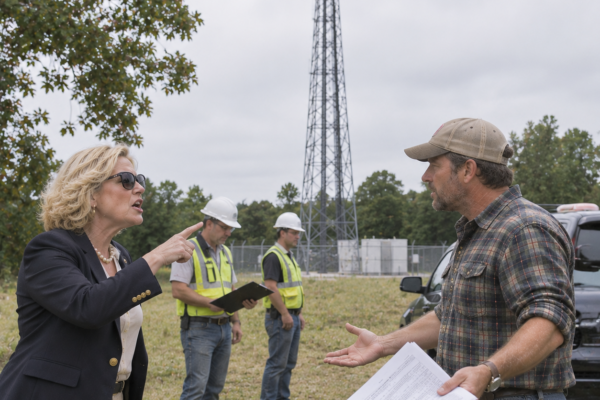
“He’s an Armed Squatter!” the HOA President Screamed While Her Security Guards Forced Me to My Knees on My Own 36 Acres. She’d Cut My Gate Lock, Planted Survey Stakes 60 Feet Inside My Boundary, and Ordered Them to Search My Coat. Then the Sheriff Arrived, Opened the Plastic “Evidence” Bag on Her Guard’s Belt—and Asked One Question She Couldn’t Answer.k
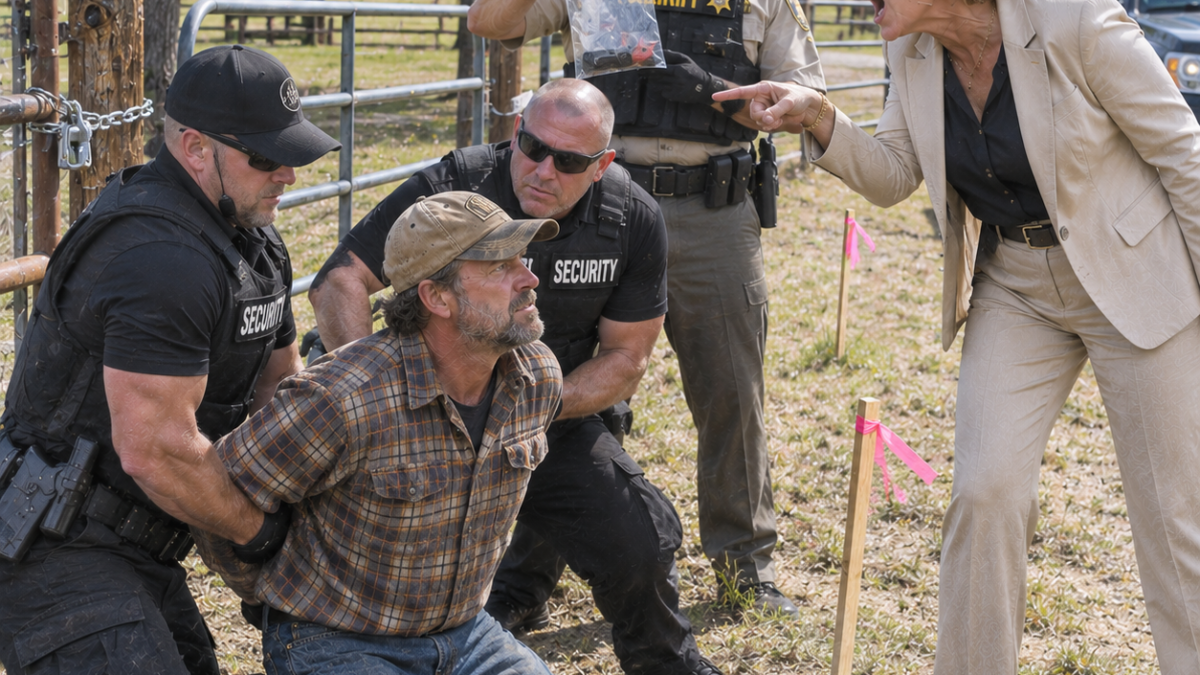
“He’s an Armed Squatter!” the HOA President Screamed While Her Security Guards Forced Me to My Knees on My Own 36 Acres. She’d Cut My Gate Lock, Planted Survey Stakes 60 Feet Inside My Boundary, and Ordered Them to Search My Coat. Then the Sheriff Arrived, Opened the Plastic “Evidence” Bag on Her Guard’s Belt—and Asked One Question She Couldn’t Answer.
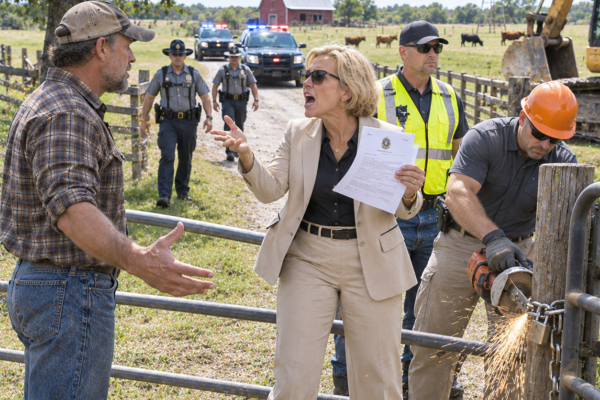
The first thing I saw when I returned home after nineteen days away was three HOA security trucks blocking the entrance to my property.
The second was a woman standing beside my broken gate, telling two armed-looking security guards that I was an intruder who needed to be removed.
“GET HIM OFF THIS LAND!” she shouted. “HE’S AN ARMED SQUATTER!”
I stopped beside my pickup.
“Ma’am, I own this property.”
She laughed.
“Not anymore.”
My name is Reed Langford. I’m forty-six years old, and my family has owned thirty-six acres on the western slope above Stonegate Ridge, North Carolina, since long before anybody thought of building luxury homes on the neighboring hillside.
My father worked that land for thirty-eight years.
When he died, he left it to me.
A modest farmhouse, a workshop, a gravel driveway, and thirty-six acres of pine woods and pasture.
I traveled frequently for work, sometimes remaining away for weeks. But no matter where I went, that property was home.
And until that Friday afternoon, nobody had ever questioned who owned it.
Now a professionally printed sign stood beside my entrance.
STONEGATE RIDGE COMMUNITY PRESERVE — AUTHORIZED ACCESS ONLY.
Two security cameras had been mounted on metal poles overlooking my driveway.
Bright orange survey stakes ran nearly sixty feet inside my recorded property line.
Someone had spread new gravel over the entrance road.
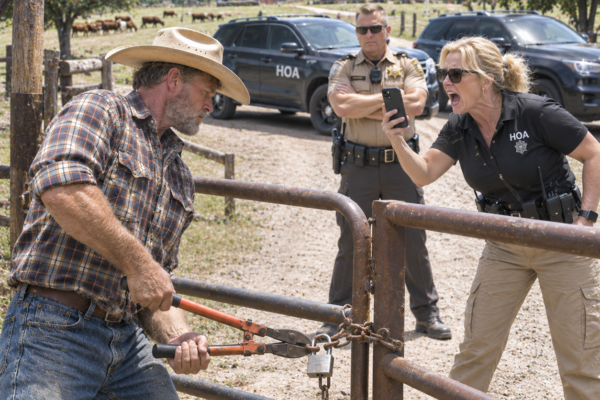
And the padlock I’d installed on my side gate had been cut clean through.
I photographed everything before approaching the house.
The front door was locked. Nothing obvious had been disturbed inside.
But the land around it looked as though somebody had started preparing it for a project I hadn’t authorized.
That was when the white SUV arrived.
The woman who stepped out wore a tailored gray suit, expensive sunglasses, and an expression that suggested she expected everyone to obey her.
“Mr. Langford,” she announced, “I’m Mara Kesler, president of Stonegate Ridge Homeowners Association.”
Two security guards followed her.
A third man, broad-shouldered and wearing a tactical vest, approached from the nearest truck.
Mara pointed toward my farmhouse.
“You’ve been occupying community conservation property without authorization.”
I stared at her.
“Since when?”
“Since the board approved its emergency annexation.”
She opened a leather folder and handed me a photocopied resolution.
According to the document, Stonegate Ridge had declared my thirty-six acres abandoned and incorporated them into its community preserve.
I looked at the paper.
There was an official-looking reference number near the bottom, a notary section, and a parcel identification number.
But something about the formatting bothered me.
I’d spent enough years examining property records to recognize when a document was trying too hard to look official.
“Where was this recorded?” I asked.
Mara smiled.
“The association approved it unanimously.”
“That’s not what I asked.”
She folded her arms.
“You were away, Mr. Langford. Your property wasn’t being maintained. The community had to take action.”
“My land didn’t become abandoned because I went to work.”
She looked at the security guards.
“Curtis, explain the situation.”
The large man stepped forward.
“I’m Curtis Vale, head of Stonegate Ridge Security. You’re required to leave until ownership is resolved.”
“Ownership isn’t in question.”
I turned toward my pickup.
“My deed is in the glove compartment. I’ll show you.”
Curtis immediately moved between me and the driver’s door.
“Stop right there.”
I stopped.
“I’m getting my property records.”
Mara’s voice sharpened.
“Don’t let him reach inside! He could have a gun!”
Curtis looked toward my jacket.
There was a legally carried pistol secured in a holster beneath it.
I hadn’t touched the weapon.
I hadn’t threatened anyone.
But suddenly all three guards were watching my hands.
“Keep your hands where we can see them,” Curtis ordered.
I raised them slightly, keeping my movements deliberate.
“You’re private security,” I said. “You have no authority to search me or confiscate my belongings.”
Mara was already dialing 911.
When the dispatcher answered, she described a dangerous trespasser on HOA property.
Then she claimed I’d threatened her staff and might be impersonating a law-enforcement officer.
I listened in disbelief.
Everything she said was being turned into a story designed to make me look guilty before a deputy ever arrived.
Curtis moved closer.
I told him not to touch me.
He ignored the warning.
Two guards grabbed my arms.
A third removed my pistol from its holster.
I chose not to struggle. With a firearm involved and three men surrounding me, resisting could turn an unlawful detention into something far worse.
They restrained my wrists and forced me to my knees beside my own truck.
Mara began filming.
She waited until I was already restrained, carefully leaving the beginning of the confrontation out of her video.
Curtis searched my jacket.
He took my phone and keys.
Then his fingers reached the inside pocket.
He pulled out a black leather credential wallet.
When he opened it, something metallic caught the afternoon sunlight.
Curtis stopped moving.
Mara came over.
For several seconds, she stared at what he’d found.
Then she said one word.
“Fake.”
I looked directly at her.
“Don’t touch those credentials again.”
She ignored me.
“Bag everything,” she ordered. “His phone, the gun, the wallet, the identification. All of it.”
Curtis hesitated.
“Mrs. Kesler, maybe we should—”
“I said bag it!”
He put my belongings into a clear plastic pouch marked EVIDENCE.
Then Mara leaned close enough for me to hear her whisper.
“Remember, Curtis. He claimed to be law enforcement after we caught him.”
I looked at the camera on his vest.
Then at the pouch hanging from his belt.
A siren sounded beyond the trees.
A sheriff’s cruiser turned onto my gravel road, followed by another.
Mara straightened her jacket and stepped forward to greet the deputies.
She was smiling again.
She thought the police were about to remove me from my own land.
But the sheriff’s first question wasn’t about my property.
And when he reached for the plastic bag, Curtis looked as though he wanted to disappear.
Part 2:
The first thing I saw when I returned home after nineteen days away was three HOA security trucks blocking the entrance to my property.
The second was a woman standing beside my broken gate, telling two armed-looking security guards that I was an intruder who needed to be removed.
“GET HIM OFF THIS LAND!” she shouted. “HE’S AN ARMED SQUATTER!”
I stopped beside my pickup.
“Ma’am, I own this property.”
She laughed.
“Not anymore.”
My name is Reed Langford. I’m forty-six years old, and my family has owned thirty-six acres on the western slope above Stonegate Ridge, North Carolina, since long before anybody thought of building luxury homes on the neighboring hillside.
My father worked that land for thirty-eight years.
When he died, he left it to me.
A modest farmhouse, a workshop, a gravel driveway, and thirty-six acres of pine woods and pasture.
I traveled frequently for work, sometimes remaining away for weeks. But no matter where I went, that property was home.
And until that Friday afternoon, nobody had ever questioned who owned it.
Now a professionally printed sign stood beside my entrance.
STONEGATE RIDGE COMMUNITY PRESERVE — AUTHORIZED ACCESS ONLY.
Two security cameras had been mounted on metal poles overlooking my driveway.
Bright orange survey stakes ran nearly sixty feet inside my recorded property line.
Someone had spread new gravel over the entrance road.
And the padlock I’d installed on my side gate had been cut clean through.
I photographed everything before approaching the house.
The front door was locked. Nothing obvious had been disturbed inside.
But the land around it looked as though somebody had started preparing it for a project I hadn’t authorized.
That was when the white SUV arrived.
The woman who stepped out wore a tailored gray suit, expensive sunglasses, and an expression that suggested she expected everyone to obey her.
“Mr. Langford,” she announced, “I’m Mara Kesler, president of Stonegate Ridge Homeowners Association.”
Two security guards followed her.
A third man, broad-shouldered and wearing a tactical vest, approached from the nearest truck.
Mara pointed toward my farmhouse.
“You’ve been occupying community conservation property without authorization.”
I stared at her.
“Since when?”
“Since the board approved its emergency annexation.”
She opened a leather folder and handed me a photocopied resolution.
According to the document, Stonegate Ridge had declared my thirty-six acres abandoned and incorporated them into its community preserve.
I looked at the paper.
There was an official-looking reference number near the bottom, a notary section, and a parcel identification number.
But something about the formatting bothered me.
I’d spent enough years examining property records to recognize when a document was trying too hard to look official.
“Where was this recorded?” I asked.
Mara smiled.
“The association approved it unanimously.”
“That’s not what I asked.”
She folded her arms.
“You were away, Mr. Langford. Your property wasn’t being maintained. The community had to take action.”
“My land didn’t become abandoned because I went to work.”
She looked at the security guards.
“Curtis, explain the situation.”
The large man stepped forward.
“I’m Curtis Vale, head of Stonegate Ridge Security. You’re required to leave until ownership is resolved.”
“Ownership isn’t in question.”
I turned toward my pickup.
“My deed is in the glove compartment. I’ll show you.”
Curtis immediately moved between me and the driver’s door.
“Stop right there.”
I stopped.
“I’m getting my property records.”
Mara’s voice sharpened.
“Don’t let him reach inside! He could have a gun!”
Curtis looked toward my jacket.
There was a legally carried pistol secured in a holster beneath it.
I hadn’t touched the weapon.
I hadn’t threatened anyone.
But suddenly all three guards were watching my hands.
“Keep your hands where we can see them,” Curtis ordered.
I raised them slightly, keeping my movements deliberate.
“You’re private security,” I said. “You have no authority to search me or confiscate my belongings.”
Mara was already dialing 911.
When the dispatcher answered, she described a dangerous trespasser on HOA property.
Then she claimed I’d threatened her staff and might be impersonating a law-enforcement officer.
I listened in disbelief.
Everything she said was being turned into a story designed to make me look guilty before a deputy ever arrived.
Curtis moved closer.
I told him not to touch me.
He ignored the warning.
Two guards grabbed my arms.
A third removed my pistol from its holster.
I chose not to struggle. With a firearm involved and three men surrounding me, resisting could turn an unlawful detention into something far worse.
They restrained my wrists and forced me to my knees beside my own truck.
Mara began filming.
She waited until I was already restrained, carefully leaving the beginning of the confrontation out of her video.
Curtis searched my jacket.
He took my phone and keys.
Then his fingers reached the inside pocket.
He pulled out a black leather credential wallet.
When he opened it, something metallic caught the afternoon sunlight.
Curtis stopped moving.
Mara came over.
For several seconds, she stared at what he’d found.
Then she said one word.
“Fake.”
I looked directly at her.
“Don’t touch those credentials again.”
She ignored me.
“Bag everything,” she ordered. “His phone, the gun, the wallet, the identification. All of it.”
Curtis hesitated.
“Mrs. Kesler, maybe we should—”
“I said bag it!”
He put my belongings into a clear plastic pouch marked EVIDENCE.
Then Mara leaned close enough for me to hear her whisper.
“Remember, Curtis. He claimed to be law enforcement after we caught him.”
I looked at the camera on his vest.
Then at the pouch hanging from his belt.
A siren sounded beyond the trees.
A sheriff’s cruiser turned onto my gravel road, followed by another.
Mara straightened her jacket and stepped forward to greet the deputies.
She was smiling again.
She thought the police were about to remove me from my own land.
But the sheriff’s first question wasn’t about my property.
And when he reached for the plastic bag, Curtis looked as though he wanted to disappear.
Sheriff Beckett Shaw stepped out of the first cruiser.
I’d known Beckett professionally for eleven years.
We’d worked together on criminal investigations across western North Carolina, and he’d once spent an entire November afternoon helping search for a missing teenager in the mountains.
He was a careful sheriff.
Never the loudest man in the room.
Usually the one who noticed what everybody else had overlooked.
That afternoon, he arrived with four deputies because dispatch had classified Mara’s call as a potentially dangerous encounter involving a firearm.
He took one look at me kneeling beside my truck, then at the private guards gathered around me.
His expression didn’t change.
“Who restrained this man?”
Mara hurried forward.
“Sheriff, thank goodness. This individual broke into community property, threatened our personnel, and attempted to pass himself off as a law-enforcement officer.”
Beckett held up one hand.
“I asked who restrained him.”
Curtis shifted.
“My team did.”
“Under what authority?”
“We were conducting a security detention.”
“Was he attacking someone?”
“No, but—”
“Had he pointed a firearm at anyone?”
Curtis looked at Mara.
“No.”
“Then tell me exactly what happened.”
Mara interrupted.
“He’s dangerous. We found a gun and a fake badge. Your deputies need to remove him immediately.”
Beckett looked toward the case holding my pistol.
Then toward the plastic pouch on Curtis’s belt.
“Who searched him?”
Nobody answered.
He turned toward me.
“Mr. Langford, are you injured?”
“My wrists hurt. Otherwise, I’m all right.”
“Did you consent to this search?”
“No.”
“Did you draw or threaten anyone with your weapon?”
“No, Sheriff.”
Beckett held out his hand.
“Let me see what they took.”
Mara stepped between him and Curtis.
“That’s association evidence.”
Beckett looked at her.
“Mrs. Kesler, your homeowners association isn’t a criminal evidence unit.”
“We detained a trespasser.”
“That doesn’t give your security company unlimited authority to search people.”
He gestured toward the pouch.
“Hand it over.”
Curtis unclipped it.
Inside were my phone, keys, credential wallet, identification card, and a small case-assignment card carried with my credentials.
The pistol was secured separately in a lockbox near the security truck.
Beckett examined the wallet.
He opened it.
Then stopped.
The badge bore the seal of the North Carolina State Bureau of Investigation.
The identification card carried my name and photograph.
The credentials identified me as Special Agent Reed Langford.
I worked on public-integrity and financial-crime investigations.
I’d spent eighteen years examining corruption, forged records, bribery, and schemes in which people used apparently legitimate institutions to take things they had no right to take.
Mara didn’t know any of that when she ordered her guards to search me.
At least, I didn’t think she did.
Beckett looked at the badge number.
Then at my face.
Then back at Mara.
“Mrs. Kesler, did your guards remove these credentials from his person?”
She folded her arms.
“They’re obviously fraudulent.”
“That’s not what I asked.”
She glanced at Curtis.
“That’s what they claim they found.”
Beckett turned to a deputy.
“Verify the credentials through dispatch.”
He didn’t rely solely on recognizing me.
He followed the procedure.
While the deputy contacted communications, Mara continued insisting I’d stolen the badge.
Beckett didn’t argue.
He simply waited.
Then the radio crackled.
“Credentials confirmed. Special Agent Reed Langford, North Carolina State Bureau of Investigation. Active status.”
Curtis lowered his eyes.
One of the younger guards took an involuntary step backward.
Mara’s face went pale.
Beckett approached me.
“Reed, we’re getting those restraints off.”
A deputy cut the plastic ties.
I stood slowly, rubbing my wrists.
For the first time since arriving home, I could move without somebody else’s permission.
Beckett turned toward Curtis.
“Who ordered you to search him?”
Curtis looked at Mara.
She answered immediately.
“He acted on his own.”
Curtis snapped his head toward her.
“What?”
Mara glared.
“You made the decision to detain him, Curtis.”
I watched his expression change.
Until that moment, he’d looked like a man who believed his boss would protect him.
Now he understood she was preparing to let him take the blame.
Beckett took my arm lightly.
“Reed, let’s get your property returned.”
“Not yet.”
He looked surprised.
“What do you mean?”
I nodded toward the plastic pouch.
“Document everything as it was received. Preserve the pouch, the contents, and the handling history. There’s a potential criminal case here.”
Beckett studied me.
Then nodded.
“I’ll have it collected and logged properly.”
I looked toward the security trucks.
“And I need to report the cut lock, unauthorized cameras, false boundary stakes, and the entry onto my land.”
“We’ll document those, too.”
Mara found her voice again.
“Are you two planning to use your professional relationship to harass this association?”
I turned toward her.
“No, Mara.”
She looked relieved for half a second.
Then I finished.
“I’m going to make sure independent investigators look at exactly what happened.”
Her expression hardened.
“Is that a threat?”
“No. It’s a report.”
Beckett directed his deputies to separate the guards and obtain individual statements.
Nobody was to compare stories or coordinate answers.
Their body-camera footage was to be preserved.
The HOA’s surveillance equipment would be identified and the footage sought through the appropriate legal process.
The property boundaries would be checked against the actual county records.
And the allegations in Mara’s 911 call would be compared with the statements and recordings.
I stepped away from the immediate investigation.
I’d been the person restrained.
My gun and credentials had been taken.
That made me a victim and witness, not the appropriate investigator to direct the case.
But one detail still bothered me.
The fake annexation resolution.
Its reference number.
Its formatting.
And the strange case-style code in the bottom corner.
I’d seen that combination before.
Not at Stonegate Ridge.
In a different investigation involving land acquisitions elsewhere in the county.
And when I realized where I’d seen it, the knot in my stomach tightened.
Because Mara hadn’t just put her hands on the wrong landowner.
She may have walked directly into an investigation that was already moving toward her.
I called my supervisor from the far side of the driveway.
Audrey Winslow had been with the State Bureau of Investigation for twenty-three years. She’d supervised major financial cases, public-corruption investigations, and enough difficult operations to know when an investigator needed to stop talking and start listening.
She answered immediately.
“Reed. I thought you were taking the weekend off.”
“That was the plan.”
“What happened?”
I looked toward the three security trucks.
“My property was occupied while I was away. An HOA president claims her board annexed thirty-six acres I own. Her private security guards restrained me, took my weapon and credentials, and called the sheriff.”
There was a pause.
“Are you hurt?”
“Not seriously.”
“Where’s your firearm?”
“Secured at the scene. Sheriff Shaw is handling it.”
“Good. Don’t touch anything you don’t need to.”
I took a photograph of the annexation resolution I’d been handed.
“I’m sending you a document. Look at the reference code.”
I heard her open the message.
For several seconds, she didn’t speak.
Then she said, “Where did this come from?”
“Stonegate Ridge HOA.”
Another pause.
“That’s the same formatting we flagged in the Ridgeway files.”
“That’s what I thought.”
“Reed, listen carefully. You’re now a complainant in a potentially related matter. You will not direct this investigation.”
“Understood.”
“I’m assigning Bryce Danner and a separate team. I’ll notify the prosecutor and coordinate with the sheriff’s office. You give statements and provide records like any other property owner.”
“That’s exactly what I want.”
Her voice softened.
“Are you sure you’re all right?”
I looked toward the gate.
The chain lay broken beside the post.
A sign had been planted where my father used to hang a hand-painted board reading LANGFORD FARM.
“I’m angry,” I admitted.
“That’s why you’re stepping back.”
She was right.
I ended the call and walked toward the house.
For a long time, I stood on the porch looking down the driveway.
My father had cleared that entrance with a borrowed tractor before I was born.
He’d hauled gravel himself.
Replaced the cattle guard twice.
And planted the two maples that shaded the gate.
When I was twelve, he taught me to repair a fence using a wire stretcher and a pair of pliers.
“Always know where your boundary is,” he’d told me. “But don’t confuse knowing what’s yours with thinking you own the world.”
Dad had never met Mara Kesler.
I could only imagine what he’d have said about somebody putting an HOA preserve sign on his land.
The thirty-six acres weren’t a huge commercial holding.
We had a small farmhouse, a workshop, two meadows, and wooded slopes that rose toward an old ridgeline.
I leased part of the pasture to a neighbor who kept cattle.
The rest remained mostly undisturbed.
I’d grown up there.
Buried my father in the family plot nearby.
And returned whenever work gave me a chance to breathe.
My job sometimes kept me away for weeks.
I investigated cases that required financial interviews, court records, subpoenas, and cooperation with agencies across the state.
I wasn’t a man who came home looking for confrontations.
But my absence had apparently convinced Mara that the property could be claimed without resistance.
Now I wondered whether she had selected it because I traveled.
Or whether there was another reason.
I already knew the name Ridgeway Land Holdings.
Six weeks earlier, Bryce and I had begun reviewing reports of suspicious property sales in the county.
Several owners had sold land bordering Stonegate Ridge for prices well below independent valuations.
On the surface, the transactions appeared voluntary.
But the former owners had described similar circumstances.
Unexpected HOA violation notices.
Threats of liens or code complaints.
Private security patrols.
Disputes over access roads.
Then a purchase offer arriving at just the right moment.
Ridgeway Land Holdings appeared repeatedly as the buyer.
We hadn’t established that the offers were criminal.
People sometimes sell land cheaply for ordinary reasons.
And an HOA dispute doesn’t automatically make a later sale fraudulent.
But the pattern warranted examination.
The paperwork Mara had handed me carried a reference format resembling documents from those earlier complaints.
That was more than enough reason to alert Audrey.
It wasn’t enough reason for me to search anyone’s office myself.
Back at the gate, Sheriff Shaw was reviewing the scene with his deputies.
One officer had measured the position of the survey stakes against the line identified in my recent property survey.
Another was photographing the new gravel and the cut padlock.
Then a deputy called Beckett toward Curtis’s truck.
“Sheriff, you should look at this.”
The rear hatch was open.
From where I stood, I could see several clear plastic pouches arranged along the edge of the cargo area.
They looked almost identical to the one that had held my credentials.
Each carried a handwritten name.
Beckett photographed what was plainly visible without allowing anyone to rummage through the contents.
Then he ordered the situation preserved while investigators sought the proper authority to examine the vehicle and any additional property.
I stepped away.
Whatever those pouches contained, I didn’t need to be the one looking inside them.
Later, after the vehicle was searched under a warrant, investigators identified six additional bags holding personal property connected to earlier HOA security incidents.
Old phones.
Keys.
Folded deeds.
Identification cards.
Permits.
Each pouch had been labeled with an owner’s name and a description such as Trespass Incident.
I learned about the contents through official case updates.
The discovery disturbed me more than my own detention.
Somebody had established a routine for taking property from people the HOA labeled trespassers.
And the bags suggested I hadn’t been the first.
That night, I slept poorly.
The farmhouse was quiet, but every passing car made me look toward the driveway.
I checked the doors twice.
Then I sat at the kitchen table and opened Dad’s land-record binder.
The deed was still there.
So was the recorded survey.
The legal description clearly placed all thirty-six acres outside Stonegate Ridge.
No recorded instrument transferred the property to the association.
No easement gave the HOA control of my entrance.
And there was no reason for Mara’s guards to be there.
I thought about what she’d said.
You were away. Your property wasn’t being maintained.
I’d been gone nineteen days.
I’d hired a local caretaker to check the house.
The pasture lease remained active.
The county taxes were current.
Nothing about that amounted to abandonment.
More importantly, even neglected land doesn’t simply become an HOA’s property because its board declares it a preserve.
On Monday, Audrey and Bryce met me at the sheriff’s office.
Bryce was thirty-nine, meticulous, and had an extraordinary talent for noticing inconsistencies in documents other people dismissed as clerical mistakes.
He placed Mara’s annexation resolution on the table.
“Reed, we found three problems immediately.”
I waited.
“First, the notary.”
He pointed to the signature block.
The document was dated in June.
The notary supposedly witnessing it had died the previous July.
Eleven months before the document was signed.
I stared at the name.
That alone meant the notarization couldn’t be genuine.
“Second,” Bryce continued, “the parcel identification number.”
He placed two printouts beside each other.
Mara’s document contained a number identifying my land.
But it differed by one digit from the number on an older HOA filing.
The older number belonged to a small pocket park Stonegate Ridge actually owned.
The rest of the document had been adapted to make it appear as though the association’s existing property interest applied to my parcel.
“Third,” Bryce said, “the board minutes.”
Audrey slid another record across the table.
The HOA had held regular meetings during the relevant period.
There was no recorded motion authorizing annexation of my property.
No vote.
No signed acquisition agreement.
Nothing supporting Mara’s claim of unanimous approval.
I looked at the papers.
“She didn’t even bother making the documents consistent.”
Audrey shook her head.
“That’s why we’re checking whether the inconsistencies were mistakes, deliberate alterations, or part of something broader.”
Bryce turned another page.
“We also compared the formatting with the Ridgeway files.”
The result was striking.
Several documents used the same unusual reference-number style, identical page layouts, and similar certification language.
Documents supposedly prepared for unrelated property disputes.
Yet they appeared to have originated from the same underlying template.
I thought about the private guards.
The badges.
The plastic evidence pouches.
The confident claim that an HOA could simply declare my land abandoned.
This was beginning to look less like one president losing control of a boundary dispute.
It looked organized.
Audrey made one more thing clear before I left.
“You’re not going to conduct interviews, Reed. Bryce and I will handle this.”
“I know.”
“If something happens at the property, call the sheriff. Don’t try to turn the next encounter into an investigation.”
I nodded.
Then I asked the question that had been bothering me since Friday.
“How many other owners are involved?”
Bryce looked toward Audrey.
She answered carefully.
“We’re reviewing seventeen recorded confrontations and at least four property purchases that warrant closer examination.”
Seventeen.
I sat back.
The number landed harder than I expected.
I’d spent years investigating people who abused institutions to take advantage of others.
Now the same machinery appeared to have reached my own front gate.
And for the first time, I wondered how many of those earlier property owners had been forced to their knees without a sheriff arriving in time to ask the right questions.
The search warrant for Stonegate Ridge’s security office was approved that Wednesday.
Audrey’s team had developed probable cause from the false annexation document, the detention, and the material recovered through the sheriff’s investigation.
The warrant authorized a search for specified records and electronic evidence connected to the suspected offenses.
It wasn’t permission to seize everything in the building simply because Mara was unpopular.
The distinction mattered.
By then, I’d learned that the easiest way to destroy a legitimate case was to let anger replace procedure.
While investigators searched the security office, another team obtained and reviewed records associated with Ridgeway Land Holdings through the necessary legal process.
The connection between the two investigations began taking shape.
Four parcels bordering Stonegate Ridge had been purchased for substantially less than their independently assessed values.
Each owner had faced a dispute with the HOA shortly before selling.
In two cases, the association claimed the property had been abandoned or improperly occupied.
In another, a widow had been accused of maintaining unsafe structures after refusing to grant the HOA access to her driveway.
A fourth owner had received repeated letters alleging violations of rules that didn’t apply to his land.
The disputes were not identical.
Some began with ordinary maintenance complaints.
Others involved boundary allegations.
But they tended to follow the same pattern.
An official-looking notice.
A visit from private security.
Threats of enforcement.
And then an offer to purchase the property.
One former owner had described the process as being squeezed between lawyers’ fees and the fear of losing his home.
Another said the HOA had treated him like a criminal for walking through his own gate.
Neither had known that Ridgeway Land Holdings was financially connected to people involved in the association’s management.
That connection became clearer when investigators examined the company’s payment records.
Ridgeway used a property-management consultant whose owners included someone closely connected to Mara.
Every time a pressured land purchase closed, consulting fees were paid.
The amounts varied.
But the timing repeatedly corresponded with the disputed acquisitions.
Audrey’s investigators weren’t relying on coincidence alone.
They obtained contracts, bank records, invoices, and communications documenting what the payments were supposedly for.
Then they compared those records with the HOA incidents.
The resulting timeline was difficult to explain innocently.
Meanwhile, Tessa Monroe, Stonegate Ridge’s accountant, asked to speak privately with investigators.
Tessa was forty-two and had worked for the association for nearly seven years.
She wasn’t part of its elected leadership.
She handled invoices, monthly statements, payroll, and payments to contractors.
For most of that time, Mara had controlled the major decisions.
Tessa explained that the president regularly approved security expenses tied to properties outside the association’s recorded boundaries.
The invoices were often described as preserve protection, boundary compliance, or owner-contact services.
Tessa had questioned several of them.
Mara told her that the activities were necessary to protect future community access.
At one point, Tessa had asked why Stonegate Ridge needed to monitor land it didn’t own.
Mara’s answer was short.
“We’re converting the holdouts.”
Investigators asked what that meant.
Tessa said Mara used the phrase when referring to neighboring owners who refused to sell.
I heard about that statement during a case update after the investigators determined what information could properly be shared with me.
I remember sitting in Audrey’s office and repeating the words.
“Converting the holdouts.”
Audrey nodded.
“That’s what the witness reported.”
I looked down at the documents on her desk.
“My father was a holdout, then. He never sold.”
“Reed, don’t make assumptions about the earlier years until we establish the timeline.”
She was right.
Still, I couldn’t help thinking about Dad.
He’d received offers for the western slope before he died.
Most were legitimate.
Developers wanted scenic land.
He wasn’t interested.
He used to say the mountain looked better with trees on it than with houses stacked across it.
Now I wondered whether Mara had seen my refusal to sell as the latest obstacle in a much larger development plan.
Bryce supplied the answer.
A regional developer was negotiating to acquire substantial interests in Stonegate Ridge for a major redevelopment and expansion project.
The plan required a second access route to the state highway.
The existing neighborhood entrance was steep and narrow, with limited room for expansion.
A new road through the western slope would improve access, increase development capacity, and raise the project’s expected value by millions.
There was one problem.
The most practical route crossed my thirty-six acres.
The proposed road would enter near my existing gate, climb the lower pasture, and cut across the wooded ridge behind the farmhouse.
A development engineer had marked the alignment on an early concept drawing.
The road passed directly through the place where Dad had planted apple trees.
It also crossed the small creek that fed our spring.
I stared at the map.
Mara hadn’t wanted my property preserved.
She’d wanted it cleared for a road.
The conservation language was a cover.
And the claim that I had abandoned the land was meant to make taking control of it appear like a community service.
Then Bryce found the spreadsheet.
It was recovered from an HOA office computer under a folder labeled Acquisitions.
Its title was:
LANGFORD PRESSURE PLAN — PHASE 3
When Audrey received the file, she had it reviewed alongside other recovered records before deciding what could be shown to me.
Eventually, I was allowed to examine the portions relevant to the planned activity against my property.
I sat at a conference table with the pages in front of me.
The first section called for creating a history of noncompliance.
Violation notices.
Maintenance allegations.
Photographs implying neglect.
The second section called for establishing an appearance of community control.
Signs.
Security cameras.
Survey stakes.
Vehicle access.
Regraded portions of the private road.
The third phase described a confrontation when I returned.
Personnel were to prevent me from accessing the house and characterize me as an unauthorized occupant.
The fourth phase was worse.
The plan called for a police incident identifying me as hostile or potentially armed.
An incident report would then be used to support an application for emergency restrictions on access while the HOA pursued the supposed annexation.
The final phase involved sustained pressure until I agreed to sell.
I read the document without speaking.
Then I went back to the first page.
The dates.
The task assignments.
The boxes marked complete.
This wasn’t Mara losing her temper when I contradicted her beside my gate.
She had planned to make me look dangerous.
Planned to remove me.
Planned to turn my own return home into evidence against me.
I looked up at Audrey.
“She knew I was coming back.”
“We’re investigating how she obtained that information.”
“Did somebody monitor the house?”
“The recovered records show surveillance and repeated observations of the property. We’re still establishing every source.”
I leaned back.
For weeks, I’d been working on an unrelated case, making sure witnesses felt safe and following rules designed to prevent innocent people from being harmed.
Meanwhile, someone had been planning to label me an armed squatter on land my family had owned for decades.
The thought made me physically ill.
Audrey let me sit with it.
Then she said, “Reed, this is why you’re not running the investigation.”
I nodded.
“I know.”
“You have every reason to be angry. But the people responsible need to be prosecuted on evidence that will survive scrutiny.”
I looked at the spreadsheet again.
“I don’t want them to do this to anybody else.”
“Neither do we.”
The most disturbing evidence came from the security contractor’s own cameras.
Curtis Vale’s team wore body cameras during many of its patrols.
Mara apparently believed that the recordings remained on the devices until somebody manually retrieved them.
That wasn’t how the system had been configured.
When the devices connected to their office network, footage uploaded automatically to a remote server operated under the security company’s service agreement.
Investigators obtained the relevant recordings through lawful process.
They found seventeen videos involving different property owners near Stonegate Ridge.
Not all of them showed a crime.
Some were ordinary disputes that had been handled badly.
Others showed security personnel asserting authority they didn’t have.
Several recorded owners being prevented from accessing private land.
One showed an elderly man repeatedly asking guards to leave his driveway while they photographed his house and described him as an unauthorized occupant.
In another, a woman stood crying beside a locked gate while security personnel explained that the association had reported her property as abandoned.
The recordings had dates.
The incidents had names.
And Bryce matched them against subsequent property transactions.
Again and again, the timeline pointed toward the same company.
Ridgeway Land Holdings.
Some owners had sold after months of pressure.
Others had resisted.
I was one of the latter.
The difference was that I’d happened to be carrying credentials that exposed the danger of Mara’s strategy.
Most people had no such protection.
Most people confronted by three security trucks didn’t know exactly where private security authority ended.
And most people didn’t have a sheriff who recognized their name the moment he arrived.
I thought about the six plastic bags in Curtis’s truck.
Every one belonged to somebody.
Somebody who’d been frightened.
Somebody who’d been told the HOA controlled their property.
Somebody who may have surrendered an important document or a set of keys because three uniformed men stood in the driveway and claimed they had authority.
For the first time, my anger was no longer primarily about my own thirty-six acres.
It was about how many people Mara had already hurt before choosing me as her next target.
And the video from my confrontation was about to make that pattern impossible for her to deny.
Curtis Vale requested an attorney two days after investigators obtained the security footage.
For the first time, Mara’s security chief seemed to understand that following an employer’s instructions wouldn’t necessarily excuse what he’d done.
Audrey made no promises about charges or sentencing.
She told him that any cooperation would be evaluated by the prosecutor and that his account would have to match the independent evidence.
Curtis began talking.
He confirmed that Mara had instructed him to stop me from reaching my home.
She’d told him to block access to my truck, watch for a weapon, and describe any resistance as a threat.
When he asked why an ordinary property dispute required that level of force, she said the owner was dangerous and needed to be removed before he interfered with community operations.
Curtis also described the moment he discovered my badge.
He’d opened the credential wallet, seen the SBI identification, and immediately realized that the situation was far more serious than Mara had suggested.
According to his statement, he’d tried to stop the detention.
Mara refused.
The body-camera footage confirmed it.
Investigators played the recording during their review.
Curtis stood beside me holding the open wallet.
“Mrs. Kesler,” he said, “this looks like real state identification.”
Mara reached for it.
She examined the badge.
Then the identification card.
Then the folded case-assignment card behind it.
The camera angle wasn’t perfect, but it clearly showed her opening the card and reading it for several seconds.
Curtis spoke again.
“We should let him go.”
Mara looked up.
“Bag it.”
“Ma’am, he might actually be—”
“Bag it. By the time anyone verifies it, the incident report will already exist.”
That statement mattered enormously.
Mara hadn’t simply mistaken my identity.
She’d been warned by her own security chief that the credentials appeared genuine.
She’d chosen to proceed anyway.
But the case-assignment card introduced an even more disturbing possibility.
It carried an internal reference to the public-integrity investigation involving suspicious land acquisitions.
No witness names.
No confidential source addresses.
But enough information that somebody familiar with Ridgeway’s dealings might recognize what it referred to.
And Mara had studied it.
The next evidence came from a warrant-based search of her home and personal electronic devices.
Investigators found a second phone in a locked desk drawer.
They recovered messages with Curtis, representatives of Ridgeway Land Holdings, and people associated with the developer.
Several messages described the plan to establish an enforcement incident against me.
One, sent before my return, said:
Langford usually travels armed. Tell dispatch he has a gun if he refuses to leave.
Another, sent after Curtis found my credentials, was even more revealing.
Don’t give the badge back. Keep it with the weapon.
Then:
If the sheriff asks, say we believed it was fake.
I remember Audrey telling me that last message had been recovered.
I sat silently for a long time.
Mara hadn’t been frightened by a stranger with a gun.
She’d arranged a situation in which her guards would restrain a lawful owner, confiscate his weapon, and describe him as dangerous.
And when evidence emerged that I was an investigator, she’d tried to make that evidence look suspicious, too.
The 911 recording supported the timeline.
She’d claimed I’d threatened her guards before they’d completed their confrontation with me.
She’d described my movements toward the glove compartment as aggression.
She’d asserted ownership based on an annexation resolution that investigators now had substantial reason to believe was deliberately falsified.
Every statement had served the same purpose.
Make me look like the criminal.
Then make the property dispute disappear beneath the resulting police report.
When I finally saw the complete timeline, one question troubled me more than the rest.
Had she wanted my land badly enough to risk a false arrest?
Or had she realized I was investigating the broader Ridgeway scheme and decided that discrediting me might protect her?
Audrey cautioned that intent had to be proven, not assumed.
But the messages, the altered documents, and Mara’s handling of my case card gave prosecutors a compelling body of evidence to examine.
Meanwhile, Mara was trying to save her presidency.
She called an emergency HOA meeting and accused the State Bureau of conducting a politically motivated attack on Stonegate Ridge.
She told residents that legitimate community security was being criminalized.
She claimed I’d used my badge to intimidate her guards.
And she insisted that the investigation was an attempt to steal authority from homeowners.
But the board members were no longer accepting her explanations without questions.
A director named Paul Hendricks asked about Ridgeway Land Holdings.
Another wanted to know whether the association had ever voted to annex my property.
A third asked why private security had been seizing keys and identification from people living outside the development.
Mara called the questions irrelevant.
Then Tessa Monroe arrived with her attorney.
She didn’t raise her voice.
She simply told the directors that the association’s payment records included security and consulting expenses tied to land acquisitions the board hadn’t approved.
Several homeowners demanded an independent audit.
Others requested access to the association’s contracts with its security provider.
By the end of the meeting, Mara’s authority was visibly weakening.
She still had the title.
But she no longer had the unquestioning obedience that had made her campaign possible.
The following evening, I was leaving the sheriff’s office after meeting with the investigator handling my property-damage complaint when Mara approached me in the parking lot.
She wasn’t wearing the expensive gray suit I’d seen at my gate.
She wore an ordinary cardigan and carried no leather folder.
“Reed,” she said.
I stopped several feet away.
“Mrs. Kesler.”
She looked around.
“Can we settle this privately?”
I didn’t answer.
She continued.
“I’ll have the preserve sign removed. The cameras, too. The association will repair your gate and restore the driveway.”
I watched her carefully.
“And?”
“We’ll withdraw the annexation resolution.”
“An HOA resolution never gave you ownership of my land.”
She looked irritated.
“Fine. We’ll acknowledge that.”
Then she took a breath.
“I can arrange compensation for the trouble.”
I thought about the plastic bags in Curtis’s truck.
The elderly man surrounded by security officers.
The woman crying at a locked gate.
The four below-market property sales.
And the spreadsheet describing how Mara intended to make me look like an armed criminal.
“You still think this is about my gate?” I asked.
Her face changed.
“I’m offering to make things right.”
“Then cooperate with the investigation and tell the people you’ve harmed the truth.”
She stared at me.
“You could stop this.”
“No,” I said. “I couldn’t. And I wouldn’t interfere even if I could.”
I walked toward my truck.
She called after me.
“Reed, you’re going to destroy this community!”
I turned.
“No, Mara. The people who live there deserve to know what their association has been doing.”
Then I left.
That was the last private conversation I ever had with her.
The following morning, investigators obtained a further search warrant supported by the evidence developed against Mara and the related businesses.
The financial records traced payments from Ridgeway’s development interests to consultants connected to her.
The recovered correspondence linked those payments to the pressured acquisitions.
And the video and message evidence showed that my detention had been directed rather than spontaneous.
By then, the prosecutor had enough to seek criminal charges.
Mara was still trying to control the situation when the arrest warrant was executed.
She was in the Stonegate Ridge clubhouse, speaking to a group of board members about what she called outside interference.
Sheriff Beckett Shaw arrived with officers assigned to the matter.
Mara stood as soon as she saw him.
“Sheriff, this is a private board meeting.”
Beckett approached the table.
He placed the warrant in front of her.
“This isn’t an HOA enforcement matter anymore, Mrs. Kesler.”
For several seconds, she stared at the document.
Then she looked toward the other directors.
Nobody stood to defend her.
Nobody demanded that Beckett leave.
The woman who’d ordered private guards to force me to my knees was escorted from the clubhouse under lawful arrest.
And for the first time, the authority she faced wasn’t something she could manufacture with a letterhead, a security contract, or a unanimous vote that had never happened.
The criminal case took more than a year to reach its conclusion.
The investigation had grown far beyond the incident at my gate.
Prosecutors examined fraudulent property documents, coercive acquisition practices, unlawful detentions, misleading emergency reports, and the financial relationships between HOA decision-makers and Ridgeway Land Holdings.
Not every suspicious transaction resulted in a criminal charge.
Some required separate civil proceedings.
Others involved former owners whose claims depended on facts different from mine.
But the strongest evidence established a coordinated scheme.
Mara had used her HOA presidency to manufacture authority over property Stonegate Ridge didn’t own.
Curtis and his security personnel had carried out confrontations designed to intimidate owners.
Ridgeway and its associated consultants had benefited when some of those owners sold below market value.
And when I returned home, Mara attempted to turn that same strategy into a police incident.
The prosecution presented the altered annexation document.
The notary record showing the supposed signer had been dead for eleven months.
The parcel number changed by a single digit.
The board minutes containing no annexation vote.
The financial records.
The seventeen security recordings.
And the messages detailing my planned detention.
Curtis testified about the instructions he’d received.
Tessa explained how the association’s accounts had been used to pay for activities connected to the acquisitions.
Bryce described the documented links between the property disputes and the subsequent sales.
I testified about returning to my land, finding the cut lock and surveillance cameras, and being restrained by men who had no authority to remove me.
The defense argued that Mara had acted in good faith to protect community property.
But the correspondence made that explanation difficult to sustain.
Especially the messages instructing Curtis to portray me as armed and hostile.
Especially the direction to withhold my credentials and claim they were fake.
And especially the spreadsheet describing the incident before it happened.
The jury convicted Mara on multiple felony charges arising from the fraudulent property scheme and related conspiracy, along with offenses connected to the detention and interference with the investigation.
She received a substantial prison sentence.
Curtis entered guilty pleas for his own conduct. His cooperation was considered in the resolution of his case, but it didn’t erase his responsibility for what he’d done.
Other participants faced separate proceedings based on their individual roles.
The civil consequences continued.
Former property owners challenged transactions they alleged had been obtained through fraud and intimidation.
Some reached settlements.
Others pursued restitution and additional remedies through the courts.
The state investigation into the associated businesses also resulted in further charges and financial recoveries.
Stonegate Ridge remained a neighborhood.
Its residents still owned their houses.
Children still played in their yards.
Neighbors still walked their dogs past the landscaped entrance.
But the system Mara had built around its association was dismantled.
The board removed her from office.
The contract with Curtis’s security company was terminated.
An independent review examined the association’s financial records and its previous property-enforcement activities.
The purported annexation of my land was formally repudiated, and any related defective filings were addressed through the appropriate recording and court procedures.
New controls required board authorization and documented legal review before the association could pursue enforcement involving property outside its boundaries.
The six plastic bags recovered from Curtis’s vehicle were no longer dismissed as forgotten belongings.
They had become part of the evidence documenting how previous owners had been treated.
And the people whose names appeared on them finally had investigators willing to examine their stories.
By the time everything was resolved, I was exhausted.
Not from the physical confrontation.
That had lasted less than an hour.
From the months of documents, testimony, hearings, and uncertainty that followed.
I’d spent much of my career investigating people who abused public and private institutions.
I knew the work could be slow.
I knew evidence had to be checked.
And I knew a case wasn’t stronger simply because the people involved behaved outrageously.
But understanding the process professionally didn’t make it easier when the property at the center of the case was my father’s farm.
One Friday afternoon, I finally drove back to the western slope with no hearing scheduled, no investigator waiting for another interview, and no urgent legal paperwork in the passenger seat.
The road curved through the trees exactly as it always had.
When I reached the gate, the Stonegate Ridge Community Preserve sign was gone.
So were the HOA surveillance cameras.
The orange stakes had been removed from my land under the supervision of a licensed surveyor.
The damaged gate had been repaired.
The unauthorized gravel work had been assessed and the affected portions restored.
The original property markers remained where the recorded survey placed them.
I got out of my truck and stood beneath the two maples Dad had planted.
The afternoon light moved through their branches.
For the first time since I’d come home nineteen days late from an assignment, the entrance looked like it belonged to my family again.
A vehicle approached behind me.
I turned.
Sheriff Beckett Shaw climbed out of his cruiser holding a small sealed property envelope.
“Reed,” he called. “Thought I’d save you a trip into town.”
I walked toward him.
He handed me the paperwork for the release of my credentials, which had been held as evidence through the necessary proceedings.
My pistol and other personal property had already been returned following the required examinations and clearances.
The credential wallet was the last item.
I signed the release acknowledgment.
Then Beckett handed it to me.
The black leather was slightly worn at the corners.
The metal badge inside looked exactly as it had before Mara’s guards took it.
I opened the wallet.
Then closed it again.
Beckett looked toward my gate.
“Funny thing about that badge.”
I waited.
“She thought putting it in an evidence bag would make you look guilty.”
I looked down at the wallet.
Then toward the place where Curtis had forced me to my knees.
“Instead,” I said, “she labeled the first piece of evidence against herself.”
Beckett smiled faintly.
Then he grew serious.
“You did the right thing letting Audrey’s team handle the investigation.”
“I didn’t always enjoy it.”
“I know.”
He looked toward the farmhouse.
“But that’s how you make the result hold up.”
We shook hands.
Then he climbed back into his cruiser and drove away.
I remained beside the gate for a while.
The wind carried the smell of pine needles and damp earth down from the ridge.
Somewhere in the woods, a woodpecker tapped at an old trunk.
The farmhouse stood at the end of the gravel drive, quiet and familiar.
I thought about Dad.
He’d never cared much about titles.
He respected hardworking people, whether they wore suits, uniforms, or muddy boots.
He believed a man’s word mattered.
But he also believed that no one should have to surrender what belonged to him simply because somebody louder demanded it.
Mara had called me an armed squatter.
She’d claimed my thirty-six acres had become community property while I was away.
She’d sent security guards to restrain me and attempted to turn their unlawful actions into evidence that I was dangerous.
But the recorded deed hadn’t changed.
The property boundary hadn’t moved.
And an HOA’s authority had never extended onto my land.
What changed was that someone finally examined the documents instead of accepting Mara’s version of reality.
I walked through the gate and followed the road toward the house.
Inside, the kitchen still smelled faintly of old coffee.
Dad’s photograph stood on the shelf beside the window.
He was leaning against the same gate, years younger than I was now, with a toolbox in one hand and a grin on his face.
I picked up the photograph.
For a moment, I imagined telling him what had happened.
The HOA president.
The security trucks.
The fake annexation.
The sheriff opening that plastic bag.
He would’ve shaken his head.
Then he probably would’ve asked whether I’d fixed the gate properly.
I laughed quietly.
I placed the photograph back on the shelf and stepped onto the porch.
From there, I could see the road winding down through the trees.
No security trucks.
No cameras pointed toward my front door.
No orange survey stakes pretending the land belonged to somebody else.
Just thirty-six acres my family had cared for long before Stonegate Ridge existed.
The badge was back in my pocket.
But I didn’t need it to know who owned the ground beneath my feet.
And nobody was ever going to change that with a fake document and three security trucks.