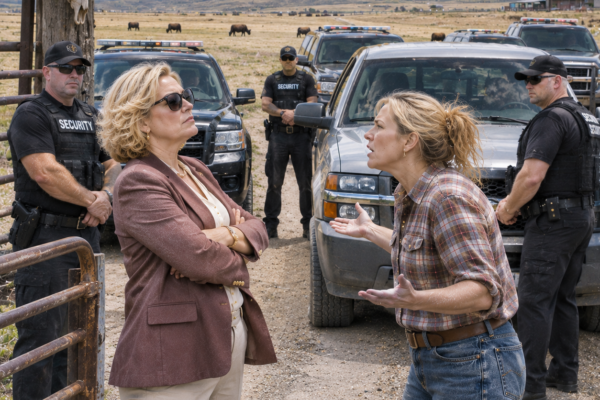
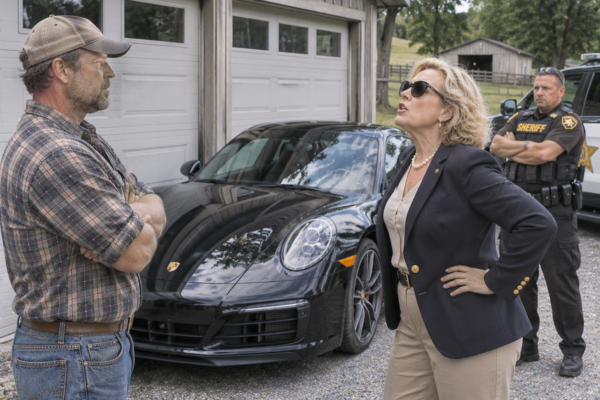
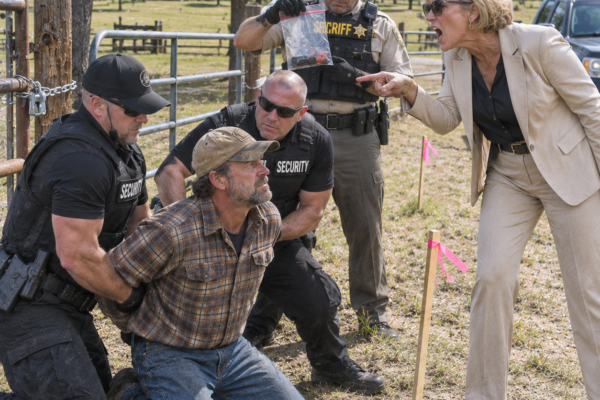
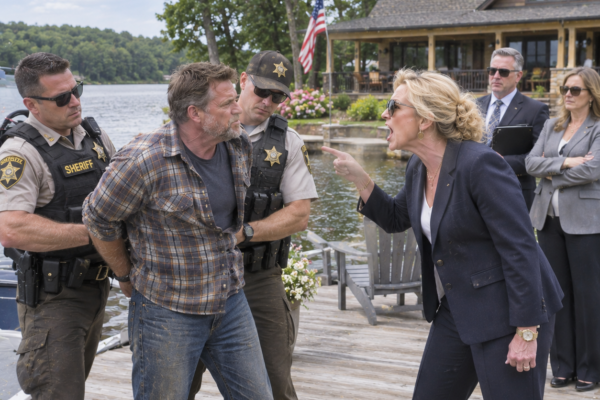
My New Neighbors Poured a Swimming Pool Foundation 38 Feet Inside My Family Farm, Then Laughed When I Told Them to Stop. “This Spot Gets the Best Sun—Don’t Be Selfish,” Chad Said. I Gave Them Seven Days and a Certified Survey. On Day Eight, Their Pool Crew Returned—and Found a Sheriff, My Attorney, and an Excavator Waiting.k
My New Neighbors Poured a Swimming Pool Foundation 38 Feet Inside My Family Farm, Then Laughed When I Told Them to Stop. “This Spot Gets the Best Sun—Don’t Be Selfish,” Chad Said. I Gave Them Seven Days and a Certified Survey. On Day Eight, Their Pool Crew Returned—and Found a Sheriff, My Attorney, and an Excavator Waiting.
I knew something was wrong when I saw concrete where my soybeans should have been.
Not a wheelbarrow.
Not a pile of lumber.
Concrete.
A rectangular foundation nearly forty feet inside the eastern boundary of the farm my father had left me.
Two workers were setting forms.
A mini-excavator sat beside them.
PVC pipe stuck out of the ground.
And beyond the trench, my new neighbor Chad Benson stood with his hands on his hips, explaining to somebody where the “deep end” would go.
I parked my truck in the field.
“What are you doing?”
Chad looked over.
“Building the pool.”
“On my land?”
He laughed.
“It’s right behind our house.”
“That wasn’t my question.”
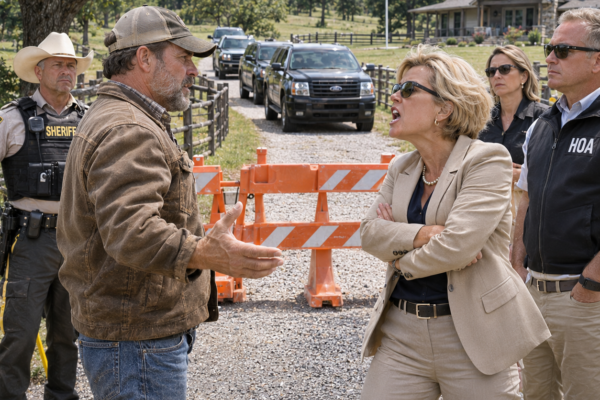
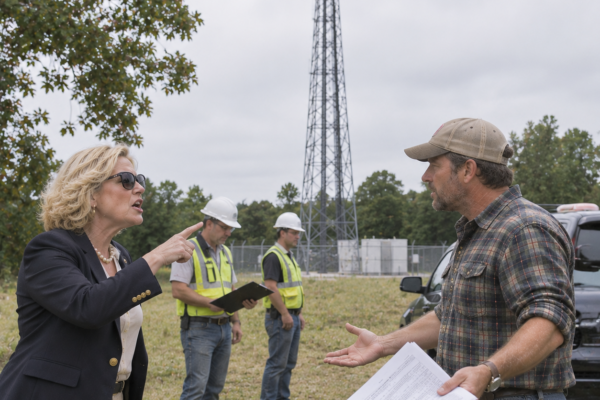
His wife, Stacy, came through the temporary opening they had cut in my fence.
She wore oversized sunglasses and carried a catalog of patio furniture.
“Oh, Daniel, don’t make this into some huge thing.”
I looked at the missing fence section.
Then at the concrete.
“How far do you think your property line comes?”
Chad waved vaguely toward my field.
“The realtor said the usable yard extends out here.”
“Your survey marker is thirty-eight feet behind you.”
He smiled.
“We need the pool in this spot. Best sunlight.”
“Then buy land in this spot.”
Stacy sighed.
“Seriously?”
“Yes.”
Chad laughed harder.
“To-may-to, to-mah-to. It’s grass.”
“It’s a working field.”
“Then work around it.”
That was the moment I understood reasoning wasn’t going to solve this.
I inherited Mercer Farm when my father died.
One hundred eighty-six acres outside Lexington, Kentucky.
Cattle.
Soybeans.
Hay.
A small orchard.
Enough machinery to ensure something expensive was always leaking.
My father had spent forty-two years building the place.
I wasn’t going to lose thirty-eight feet of it because a couple from the city decided their backyard deserved more sunlight.
I called my attorney, Rebecca Sloan.
She told me not to touch the construction.
“Get a surveyor.”
“I already know the line.”
“Knowing and proving are different things.”
The next morning, licensed surveyor Tom Weller drove two iron pins, stretched fluorescent line between them, and signed a boundary certification.
The pool excavation sat completely on my parcel.
Not a few inches.
Not a disputed corner.
Thirty-eight feet at the deepest point.
Rebecca sent Chad and Stacy formal notice by certified mail.
Stop construction immediately.
Remove all materials and equipment.
Restore the fence.
Contact counsel within seven days.
If they continued, we would seek injunctive relief and damages.
They signed for it.
Then kept building.
For seven days, I watched trucks cross the cut fence.
Gravel.
Plumbing.
Rebar.
A delivery of decorative tile.
On the sixth afternoon, Chad stood beside the trench while I checked cattle.
“Looks good, doesn’t it?”
I stared at him.
“You received the notice.”
“Yeah.”
“And?”
“My lawyer says property disputes take years.”
“Did he also tell you concrete cures faster?”
Chad grinned.
“You’re not actually going to tear up a fifty-thousand-dollar pool.”
“No.”
That answer pleased him.
Then I added:
“I’m going to let the court decide what happens to it.”
His smile faded slightly.
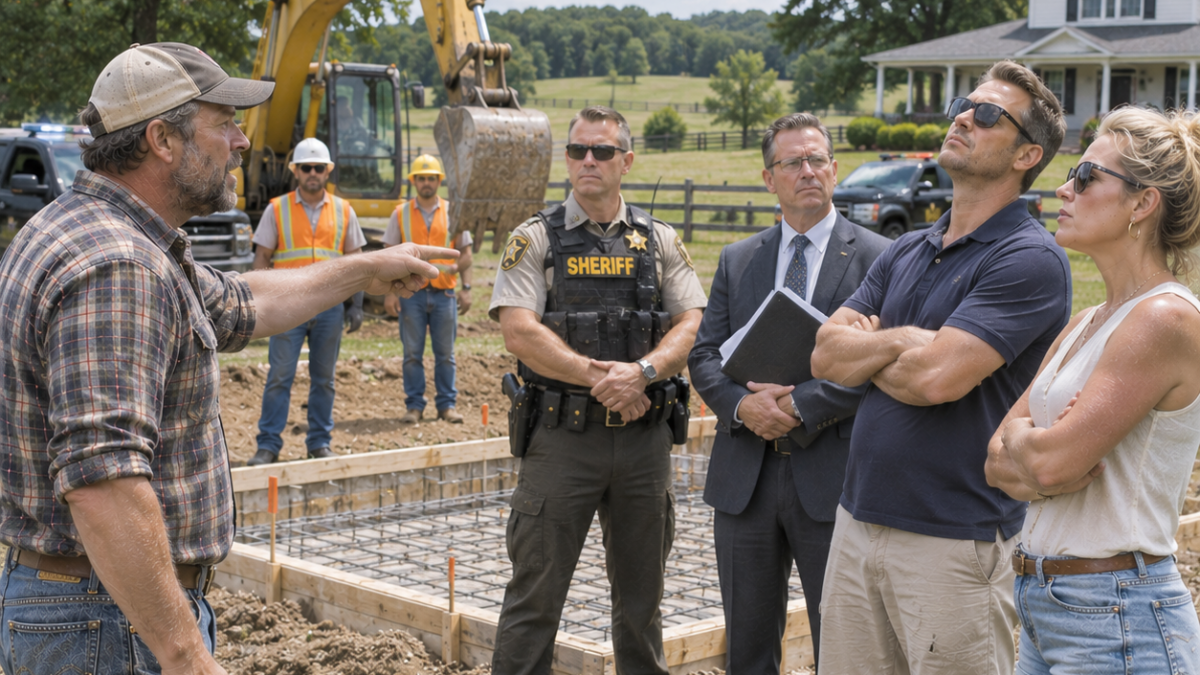
On the eighth morning, Chad’s pool company arrived at 7:26.
So did Rebecca.
So did Tom Weller.
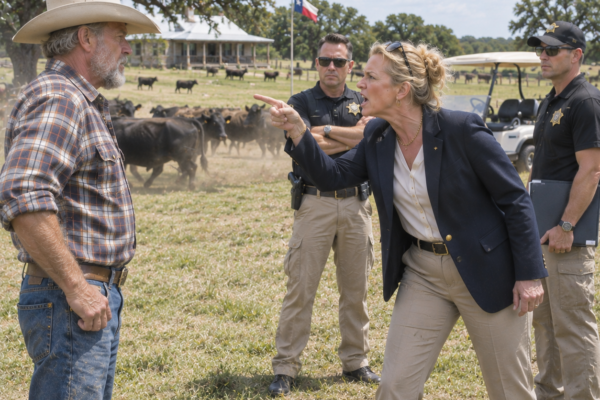
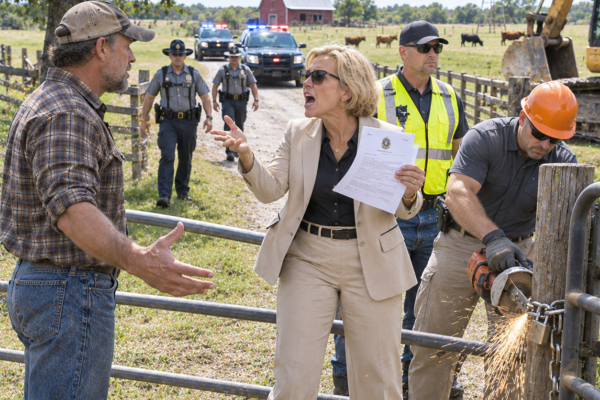
And at 7:41, a Boone County sheriff’s deputy pulled onto the farm road carrying a copy of the temporary injunction the judge had signed the afternoon before.
No more construction.
No entry onto my parcel except to remove equipment.
No alteration of the disputed area.
The contractor shut everything down immediately.
Chad came running across his yard.
“What the hell is this?”
Rebecca handed him the order.
“It means you should call your attorney.”
“This is our pool.”
Tom pointed toward the survey line.
“No. It’s his hole.”
Three weeks later, the court ruled on the boundary.
The deed was clear.
The survey was clear.
The old fence line was clear.
Chad and Stacy had no easement, no license, and no ownership interest in the land where they had started building.
The judge gave them ten days to remove everything and restore the field.
They didn’t.
So on day eleven, under a second enforcement order, a licensed excavation crew came to remove the unfinished structure.
I was standing beside the field when Chad walked over.
His face was red.
“You’re really doing this.”
“I gave you seven days before court.”
“You could have just let us finish.”
“On my property?”
“It was thirty-eight feet.”
“Exactly.”
“You ruined our backyard.”
I looked toward the machinery.
“No, Chad. You tried to expand your backyard with someone else’s deed.”
The excavator bucket dropped into the unfinished pool foundation.
And for the first time since my new neighbors arrived, Chad had nothing to say.
Part 2:
I knew something was wrong when I saw concrete where my soybeans should have been.
Not a wheelbarrow.
Not a pile of lumber.
Concrete.
A rectangular foundation nearly forty feet inside the eastern boundary of the farm my father had left me.
Two workers were setting forms.
A mini-excavator sat beside them.
PVC pipe stuck out of the ground.
And beyond the trench, my new neighbor Chad Benson stood with his hands on his hips, explaining to somebody where the “deep end” would go.
I parked my truck in the field.
For a few seconds, nobody paid attention.
The excavator engine idled.
A compressor rattled.
One worker carried a bundle of rebar across what had been soybean rows the week before.
I shut off my truck.
“What are you doing?”
Chad looked over.
“Building the pool.”
“On my land?”
He laughed.
Not nervously.
Not because he thought I was joking.
He laughed like my question itself was ridiculous.
“It’s right behind our house.”
“That wasn’t my question.”
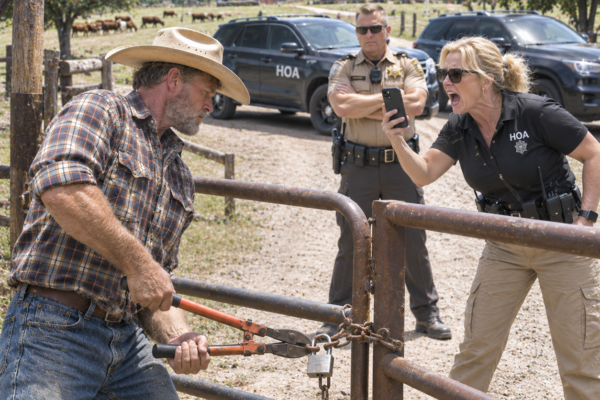
His wife, Stacy, came through the temporary opening they had cut in my fence.
She wore oversized sunglasses and carried a catalog of patio furniture.
“Oh, Daniel, don’t make this into some huge thing.”
I looked at the missing fence section.
Then at the concrete.
“How far do you think your property line comes?”
Chad waved vaguely toward my field.
“The realtor said the usable yard extends out here.”
“Your survey marker is thirty-eight feet behind you.”
He smiled.
“We need the pool in this spot. Best sunlight.”
“Then buy land in this spot.”
Stacy sighed.
“Seriously?”
“Yes.”
Chad laughed again.
“To-may-to, to-mah-to. It’s grass.”
“It’s a working field.”
“Then work around it.”
That was the moment I understood reasoning wasn’t going to solve this.
My name is Daniel Mercer.
I was thirty-seven when Chad and Stacy moved next door.
Mercer Farm had belonged to my family since my grandfather bought the first eighty acres in 1968.
Dad added land over the years.
By the time he died, the place covered 186 acres outside Lexington, Kentucky.
Not huge by Kentucky farm standards.
Big enough to keep one man tired.
We raised cattle.
Grew soybeans and hay.
Maintained a small orchard Dad had planted because my mother loved peach preserves.
There were two ponds, three equipment sheds, miles of fence, and an old red barn that leaned slightly west but had survived every storm anyone could remember.
I grew up there.
Fed calves before school.
Drove tractors before I was legally allowed to drive cars.
Left for college.
Came back every summer.
When Dad got sick, I returned permanently.
Cancer took him faster than either of us expected.
One October afternoon, I was standing beside his hospital bed listening to him explain which hydraulic line on the haybine needed replacing.
Two days later, he was gone.
Grief changes a place.
For months, the farm felt like a collection of reminders.
His coat on a nail.
His handwriting on feed records.
A socket wrench left on the workbench.
Even the coffee can where he stored fence staples.
But work has a way of forcing you forward.
Cattle still eat after funerals.
Fences still break.
Hay still needs cutting before rain.
By the second spring, the farm felt like mine without feeling less like his.
Jim Talbot lived east of us.
Jim had been there my entire life.
Good neighbor.
Retired electrician.
Always willing to lend a hand.
His property was only seven acres, mostly house, lawn, trees, and an old tobacco barn he used for storage.
Our eastern boundary ran behind his yard for several hundred feet.
There had never been trouble.
We both knew where the line was.
Old woven-wire fence.
Iron survey pins.
One limestone marker near the creek.
Jim never crossed without asking.
I never cared if his grandkids chased a baseball into my field.
That was how neighboring property worked when people respected each other.
Then Jim decided to move to Tennessee to be closer to his daughter.
He sold the house to Chad and Stacy Benson.
They came from Cincinnati.
Early thirties.
Chad worked remotely for a marketing company.
Stacy sold real estate.
Their house sold for more than Jim ever imagined it would.
I brought over a peach pie the first weekend.
Dad always said the easiest time to make a good neighbor was before you needed one.
Chad opened the door.
He looked at the pie.
Then at my work boots.
“You made this?”
“My aunt did.”
“Oh.”
Stacy appeared behind him.
She smiled politely.
“That’s sweet.”
I handed it over.
“If you need anything, I’m across the field.”
Chad looked past me toward the farm.
“Yeah. We’ve definitely got questions about that.”
I should have asked what he meant.
Instead I assumed he was curious about noise or livestock.
Three days later, I learned.
They complained about the rooster.
I had six chickens near the barn.
One rooster.
At sunrise, he crowed.
That is what roosters do.
Stacy texted me at 5:51 a.m.
Can you do something about the bird?
I replied:
Not really.
She wrote:
There have to be noise rules.
I explained our property was agricultural and the birds predated their purchase.
She responded with a thumbs-down emoji.
Next came the pigs.
I kept only four.
They lived more than four hundred feet from their house.
Chad complained about smell.
I moved a manure pile farther west.
Not because I had to.
Because being considerate costs less than being right every morning.
Then he complained about tractor noise.
I avoided early field work near their side when practical.
Then dust.
Then flies.
Then trucks delivering feed.
Then a portable grain auger he said “ruined the view.”
Every accommodation seemed to become proof that another demand might work.
One afternoon Chad stood at our boundary while I repaired fence.
“You ever think about putting up privacy trees?”
“Where?”
“Along here.”
“That would shade the field.”
“Would that matter?”
“To crops?”
He shrugged.
“I’m just saying, nobody wants to stare at machinery.”
“You bought a house beside a farm.”
“Right, but farms can still be attractive.”
I looked at him.
“Anything else?”
He smiled.
“You’re sensitive.”
That conversation stayed with me.
A month later, their landscaping company drove a skid steer into my field.
I stopped the operator.
He thought he was still inside the Benson property.
I showed him the line.
He apologized and backed out.
Chad was irritated.
“It’s six feet.”
“It’s still mine.”
“We were grading.”
“Grade your yard.”
“You’re impossible.”
That should have been the warning.
Instead, I thought the incident solved the confusion.
I even emailed Chad a copy of the county parcel map.
Boundary clearly marked.
I wrote:
Just so future contractors know where to stop.
He never replied.
Then came the pool.
It was a Tuesday morning.
I had been fixing a broken gate near the south pasture when one of my farmhands, Luis Ramirez, called.
“Daniel?”
“Yeah?”
“There’s construction by the Benson place.”
“On their side?”
“I don’t think so.”
I drove over.
The temporary fence opening was obvious.
So were tire tracks crossing my soybean rows.
The pool excavation was enormous.
Roughly sixteen by thirty-two feet.
Deep end already dug.
Concrete footings underway.
A trench for plumbing.
I couldn’t believe they had reached that stage without anyone calling me.
Then I remembered I had been working the opposite end of the property for several days.
Trees screened the view from the farmhouse.
They had apparently started while I wasn’t watching that side.
Chad acted like the entire thing was normal.
I asked the pool-company foreman who showed him the property line.
He pointed at Chad.
“Owner marked the site.”
“He owns that house.”
I pointed.
“He does not own this field.”
The foreman’s face changed.
“Mr. Benson?”
Chad raised both hands.
“This is an old boundary dispute.”
“No,” I said. “It isn’t.”
Stacy walked over.
“Daniel, this is exactly what we didn’t want.”
“What?”
“A scene.”
“You cut my fence and dug a swimming pool.”
“We didn’t cut it. The contractors removed a section temporarily.”
“That’s called cutting access into somebody else’s field.”
Chad rolled his eyes.
“The realtor explained the usable-yard concept.”
“Your realtor doesn’t control my deed.”
“The house was marketed as having an expansive rear area.”
“Marketing language is not a survey.”
Stacy said:
“Jim used this area.”
“No.”
“He told us the yard felt bigger because of the open land.”
“That doesn’t mean he owned it.”
Chad stepped closer.
“Look, we already signed a contract. There’s a deposit. Materials. Scheduling. We can’t just move the pool.”
“You can.”
“It will cost us thousands.”
“That isn’t my problem.”
“You’re telling us to destroy work because of some invisible line?”
“It isn’t invisible.”
I pointed.
Thirty-eight feet behind him, an iron pin sat beside the original fence corner.
The old wire fence had followed it before they opened the section.
“There.”
He looked.
Then shrugged.
“That’s absurd.”
“Why?”
“Because that leaves us with a smaller yard.”
“That’s the yard you bought.”
For the first time, Stacy lost the polished realtor voice.
“You’re being selfish.”
I looked at the concrete.
“You’re building a swimming pool on my farm.”
“We need this spot because of the sun.”
“Then you should have bought a house with a sunny pool lot.”
Chad laughed.
“To-may-to, to-mah-to.”
That phrase made me angrier than anything else.
Like ownership itself was pronunciation.
I told the foreman:
“No more work.”
He looked at Chad.
Chad said:
“You work for me.”
I answered:
“He’s standing on my property.”
That put the contractor in the middle.
He shut down for the day.
Chad followed me toward my truck.
“You cannot seriously expect us to abandon this.”
“I expect you to remove it.”
“Not happening.”
“One chance, Chad.”
He smiled.
“Or what?”
“I’ll handle it legally.”
He laughed directly in my face.
“Good luck.”
I drove home before I said something less useful.
My attorney Rebecca Sloan had represented Dad in a water-rights dispute years earlier.
She was forty-five, practical, and almost irritatingly calm.
I called from the kitchen.
“My neighbors are building a pool in the east field.”
Silence.
Then:
“You mean near the east field?”
“In it.”
“How far?”
“Thirty or forty feet.”
“Do you have a current survey?”
“Dad had one done five years ago.”
“Current enough, probably. But I want a surveyor on site.”
“I can see the pin.”
“Daniel.”
“I know.”
“Do not touch anything.”
“I know.”
“Do not use your tractor.”
“I know.”
“Do not fill the hole.”
“I wasn’t going to.”
“You paused.”
“I was imagining it.”
“Stop imagining.”
The next morning, Tom Weller came.
Licensed surveyor.
Had worked in the county for twenty-five years.
He found the existing monuments.
Checked deed calls.
Measured.
Then drove additional witness stakes.
Fluorescent pink line marked the boundary.
The result was worse than I estimated.
The nearest corner of the pool was twenty-nine feet inside my parcel.
The farthest edge sat thirty-eight feet inside.
Every part of it was mine.
Tom prepared a signed boundary certification.
Rebecca sent notice that afternoon.
Certified mail.
Personal service through a process server.
Email copies.
The pool contractor received separate notice.
Stop all construction.
No further entry without permission.
Remove equipment.
Preserve evidence.
Restore the fence.
Contact counsel.
Seven days.
Chad signed for the letter.
So did Stacy.
The contractor stopped for one day.
Then returned.
I called Rebecca.
“They’re back.”
“Photograph.”
“I’m looking at a concrete truck.”
“Photograph.”
“Can I stop them?”
“Verbally. From your side. No threats.”
I drove out.
The foreman looked embarrassed.
“Mr. Mercer, we were told their attorney cleared it.”
“Ask to see that in writing.”
He called Chad.
Chad arrived.
I showed him the survey.
He barely looked.
“Our lawyer says surveys can conflict.”
“Do you have another survey?”
“We’re getting one.”
“Then why are you pouring concrete?”
“Because delays cost money.”
I stared at him.
“So your solution is to spend more money inside the disputed area?”
“It isn’t disputed.”
“You received a survey.”
“You produced a survey.”
“From a licensed surveyor.”
“You paid him.”
That was Chad’s logic.
Any expert I hired was automatically mine.
I couldn’t argue him out of that.
So I stopped trying.
The contractor poured.
That hurt to watch.
Not emotionally.
Practically.
Fresh concrete makes a bad situation expensive.
I took photographs.
Time stamps.
Truck numbers.
Workers.
Every delivery.
On day three, rebar arrived.
Day four, plumbing.
Day five, gravel.
Day six, decorative tile samples.
Luis asked:
“Why don’t we just block the field entrance?”
“Rebecca told me not to.”
“They’re trespassing.”
“I know.”
“So?”
“So if I block their equipment in, they’ll say I interfered with property.”
Luis nodded.
“Lawyers make everything slow.”
“Yes.”
That afternoon, Chad found me checking cattle.
He stood beside the unfinished pool.
“Looks good.”
I stared at him.
“You received the notice.”
“Yep.”
“And?”
“My lawyer says property disputes take years.”
“Did he tell you concrete cures faster?”
He laughed.
“You’re not really going to tear up a fifty-thousand-dollar pool.”
“No.”
That pleased him.
Then I added:
“I’ll let the court decide.”
His smile changed.
He probably assumed court meant months.
Rebecca didn’t.
The next morning she filed for temporary injunctive relief.
The complaint was simple.
Recorded deed.
Survey.
Photographs.
Certified notice.
Continued construction.
Risk that every additional day increased the cost of restoring my land.
The judge scheduled an expedited hearing.
Chad and Stacy’s attorney appeared.
His name was Malcolm Pierce.
He argued there was a possible boundary ambiguity created by historical use.
Rebecca asked:
“What historical use?”
He referred to Jim Talbot allowing recreational use near the field edge.
That was interesting because Jim was alive.
And Rebecca had already called him.
Jim signed an affidavit.
His property ended at the old fence.
He never claimed the field.
Never permitted the Bensons to build there.
Never represented that he owned it.
He had allowed his grandchildren to retrieve balls and occasionally walked near the fence.
That was all.
The judge looked at Pierce.
“Do your clients possess a competing survey?”
“No, Your Honor.”
“Recorded deed showing ownership?”
“No.”
“Easement?”
“No.”
“Written license?”
“No.”
“Then why is construction continuing?”
Pierce said:
“My clients reasonably relied on representations during purchase.”
The judge answered:
“Then their potential claim may lie against the party who made those representations. It does not create title to Mr. Mercer’s land.”
Temporary injunction granted.
No construction.
No entry except removing movable equipment.
No alteration to the structure.
Preserve everything.
Sheriff’s office received a certified copy for enforcement assistance if necessary.
That was day seven.
Day eight, the pool crew arrived anyway.
I called Rebecca.
She told me not to confront.
Then called the sheriff.
Deputy Aaron Price arrived at 7:41.
Rebecca pulled in ten minutes later.
Tom Weller came because Rebecca wanted the surveyor available if anyone disputed the line.
The contractor had barely started unloading.
Deputy Price showed the foreman the order.
He stopped immediately.
Chad came running across his yard.
“What the hell is this?”
Rebecca handed his lawyer’s office-stamped copy to him.
“Temporary injunction.”
“You called police?”
“Mr. Mercer called the sheriff to prevent violation of a court order.”
“This is our pool.”
Tom pointed toward the fluorescent line.
“No.”
Chad looked at me.
“You’re enjoying this.”
“I’d rather be cutting hay.”
“You’re trying to humiliate us.”
“You dug the pool.”
Stacy arrived.
“This is insane.”
Rebecca said:
“Mrs. Benson, you need to speak through counsel now.”
“We live here!”
“Yes.”
“This is our backyard.”
Rebecca looked at the survey.
“No. That is.”
She pointed toward their actual property.
Deputy Price did not take sides beyond enforcing the order.
That mattered.
He didn’t say:
Daniel is right because Daniel called first.
He said:
“There is a court order. Nobody enters the restricted area except as permitted.”
The crew packed up.
For the first time, the field went quiet.
The permanent boundary hearing took place three weeks later.
By then, Chad had hired his own surveyor.
I respected that.
At least we would have something objective to compare.
His surveyor reached the same boundary.
Not approximately.
The same.
The iron pins matched.
Deed calls matched.
Fence history matched.
Chad’s lawyer shifted arguments.
Now he claimed adverse use.
That failed immediately.
Chad and Stacy had owned their property less than six months.
Jim had never claimed ownership.
There was no hostile continuous possession.
No easement.
No boundary acquiescence shifting ownership.
No written agreement.
Nothing.
The judge ruled the pool structure sat entirely on my land.
The court ordered the Bensons to remove it at their expense and restore the property within ten days under an approved remediation plan.
They had to restore the fence.
Repair soil compaction.
Remove construction debris.
Pay for damaged crop area.
The judgment also made clear they could not enter my property for removal except through licensed contractors, prearranged access times, and proof of insurance.
That was Rebecca’s idea.
“If they’re going to remove concrete with machinery,” she said, “we control the process.”
I agreed.
Chad did not.
He refused to schedule removal.
Day three passed.
Then five.
Then eight.
Rebecca sent notices.
Nothing.
On day ten, Pierce emailed.
His clients believed removal would be wasteful and wanted to negotiate purchase of the encroached area.
That surprised me.
“How much?”
Rebecca read the offer.
“Twenty-five thousand.”
I laughed.
The disputed area wasn’t huge, but selling a strip would create an ugly jog in my field boundary and put their pool closer to agricultural operations than I wanted.
“No.”
“They may increase.”
“No.”
“Think about it.”
“I did.”
She smiled.
“Okay.”
I wasn’t selling my field because someone poured concrete first and negotiated second.
That would reward exactly what they had done.
Day eleven arrived.
Because the removal deadline expired, Rebecca filed an enforcement motion.
The court authorized me to contract for removal and restoration, with reasonable documented costs recoverable from the Bensons subject to later review.
That changed everything.
I did not climb onto my excavator and smash the pool myself.
I wanted to.
I absolutely wanted to.
But Rebecca had drilled one principle into me:
Do not turn a clean property case into a damages fight over whether you acted reasonably.
So I hired Bluegrass Excavation.
Licensed.
Insured.
Bonded.
They prepared a demolition and restoration plan.
Concrete breakup.
Rebar removal.
PVC removal.
Backfill.
Topsoil.
Compaction correction.
Fence restoration.
Drainage grading.
The work was scheduled for Monday.
Chad knew.
His attorney knew.
The sheriff knew because Rebecca asked for a civil standby after Chad had previously interfered with equipment.
Monday morning, I stood beside the field at 7:00.
Bluegrass arrived.
Two dump trucks.
Excavator.
Skid steer.
Crew.
Deputy Price parked near the farm lane.
No lights.
No drama.
Just presence.
Chad walked over at 7:18.
His face was red.
“You’re really doing this.”
“I gave you seven days before court.”
“You could sell us the strip.”
“I don’t want to.”
“It’s thirty-eight feet.”
“Exactly.”
“You have one hundred eighty-six acres.”
“And you bought seven.”
“That’s different.”
“No.”
Stacy came behind him.
“You’re destroying fifty thousand dollars.”
I looked at the unfinished shell.
“I’m restoring my field.”
“You don’t even use this corner.”
“I planted soybeans here.”
“You have hundreds of acres.”
“You keep saying that like acreage changes ownership.”
Chad stepped closer.
Deputy Price watched.
Chad noticed and stopped.
“You ruined our backyard.”
“No. You tried to expand your backyard with someone else’s deed.”
Bluegrass started.
The excavator bucket broke the first section of unfinished concrete.
The sound was sharp.
Chad flinched.
I didn’t feel triumphant.
That surprised me.
Mostly I felt tired.
Demolition took two days.
Restoration took four more.
The contractor salvaged what could be salvaged.
Unused materials were returned to the Bensons.
Some fixtures belonged to their pool company and were removed intact.
Concrete went out in trucks.
The hole was backfilled.
Soil rebuilt.
Fence restored.
Tom rechecked the markers afterward.
Everything stayed on my side.
Bluegrass invoice:
$18,740.
Fence and crop repair added several thousand more.
Rebecca submitted costs to the court.
Chad objected.
He claimed I chose an unnecessarily expensive contractor.
The judge requested comparative estimates.
Rebecca had already obtained three.
Bluegrass was the middle bid.
Objection denied.
Then came damages from the original trespass.
Destroyed soybeans.
Soil compaction.
Fence damage.
Survey fees.
Certain attorney fees recoverable under the court’s enforcement order.
The Bensons were ordered to pay substantial costs.
Not millions.
Not their house.
Enough to make the pool the most expensive hole they had ever dug.
They considered appealing.
Their lawyer apparently talked them out of it.
For several weeks afterward, Chad avoided me.
Stacy did too.
I preferred that.
Then their realtor came to the farm.
Not Stacy.
The agent who had sold them the property.
Her name was Denise Fuller.
She looked embarrassed.
“Mr. Mercer?”
“Yes?”
“I wanted to clarify something.”
“Okay.”
“I never told them the field belonged to the house.”
That got my attention.
“Chad said the realtor described it as usable yard.”
“I said the open farmland made the property feel much larger.”
“Different sentence.”
“Very.”
“Did you give them a survey?”
“Yes.”
“Did they receive it before closing?”
“Yes.”
That mattered.
Rebecca later obtained the closing package during the remaining damages dispute.
There it was.
Survey.
Boundary.
Signature acknowledging receipt.
Chad and Stacy had received the correct property map before buying.
So the “realtor confusion” defense disappeared too.
Why had they done it?
I still don’t fully know.
Maybe Chad thought the farm was so large I wouldn’t care.
Maybe Stacy thought proximity created entitlement.
Maybe once the deposit was paid and contractor scheduled, admitting error felt more expensive than pushing ahead.
People make irrational decisions when money and pride start protecting each other.
The strange thing was that their original mistake could have been cheap.
Imagine the first morning.
I tell them the pool is on my land.
They stop.
Call surveyor.
Survey confirms it.
They relocate the pool.
Maybe lose a deposit.
Maybe pay redesign fees.
Painful.
Thousands.
Instead, Chad laughed.
Then kept building.
That laugh cost more than the original mistake.
Jim Talbot called me from Tennessee after hearing what happened.
“Lord, Daniel.”
“Yeah.”
“They built a pool?”
“Started one.”
“I told them the line.”
“I know.”
“I showed Chad the iron pin.”
“That’s helpful information.”
Jim sounded angry.
“They asked me before closing if I’d ever used your field.”
“What did you say?”
“I told them your dad let my grandkids run around sometimes.”
“That may be where they got their theory.”
“I also told them it was your field.”
“I believe you.”
He went quiet.
“Your father would’ve handled that differently.”
I smiled.
“He’d have buried the pool with the bulldozer.”
Jim laughed.
“Exactly.”
“Rebecca prevented the family tradition.”
“Probably wise.”
Dad had a temper.
Mine isn’t quite as quick.
Maybe that saved me.
I had plenty of legal right to protect my land.
The trick was using the right process.
When people hear the story, many say:
“I’d have filled the hole that first day.”
Maybe.
But imagine doing that.
Then Chad claims I destroyed his materials.
Contractor alleges equipment damage.
Someone gets hurt.
Police arrive during a shouting match.
Suddenly the question isn’t simply:
Who owns the land?
Now it becomes:
Who damaged what?
Who threatened whom?
Who acted reasonably?
Rebecca kept the case simple.
Deed.
Survey.
Notice.
Injunction.
Order.
Licensed removal.
Invoices.
Simple wins.
That autumn, I replanted the damaged area with winter cover crop.
The soil looked strange for a while.
Different texture.
Fresh grading.
But grass came.
Then spring soybeans.
From the farmhouse window, the pool site disappeared into the field.
No concrete.
No tile.
No inflatable flamingos.
Just crops.
That was exactly what I wanted.
Chad and Stacy eventually built a pool.
On their property.
Smaller.
Closer to the house.
They installed a privacy fence around it.
The contractor stayed carefully inside the surveyed line.
I watched from a tractor one afternoon while they poured the new shell.
Nobody crossed my fence.
Amazing what a court order can teach.
We never became friendly.
That was fine.
Good neighbors don’t have to share Thanksgiving.
They need to respect boundaries.
One morning, about a year after the dispute, Chad approached me while I was replacing fence wire.
He stopped on his side.
That detail did not escape me.
“Daniel.”
“Chad.”
He looked toward the farm.
“I was an ass.”
I kept working.
He continued.
“I thought because you had so much land, thirty feet didn’t matter.”
“It mattered to me.”
“I know.”
“Now.”
“Yes.”
He looked toward his house.
“I also thought you’d cave because the pool was already started.”
That was the first completely honest thing he ever said to me.
“Why?”
“Because tearing it out seemed ridiculous.”
“It was.”
He looked surprised.
“Then why did you?”
“Because leaving it would’ve meant concrete decides ownership.”
He frowned.
I put down the pliers.
“If somebody can build fast enough on your property and make removal expensive enough, then the deed stops meaning anything.”
He nodded slowly.
“I didn’t think of it that way.”
“I know.”
He apologized.
Not dramatically.
No handshake at first.
Just:
“I’m sorry.”
I accepted it.
That didn’t erase the invoices.
Didn’t restore six months of stress.
Didn’t make us friends.
But it ended something.
After that, Chad waved occasionally.
Stacy mostly avoided me.
Their complaints about rooster noise stopped.
So did the tractor texts.
Maybe they learned.
Maybe their lawyer told them to leave the farmer alone.
Either worked.
The farm changed too.
I installed better boundary fencing.
Not because the old fence was unclear to anyone reasonable.
Because clarity is cheaper than litigation.
Tom Weller set several additional witness posts.
I added small signs where the Benson yard met the field.
MERCER FARM
PRIVATE AGRICULTURAL PROPERTY
Nothing angry.
Nothing about pools.
Luis wanted one that said:
NO SWIMMING POOLS BEYOND THIS POINT.
I almost let him.
Rebecca vetoed it.
“You already won.”
“It would be funny.”
“It would be provocative.”
“Also funny.”
“No.”
Lawyers ruin good signs.
A year later, the story had become local legend.
The feed-store clerk called me “Pool Man.”
A cattle buyer asked whether I had installed a diving board in the soybean field.
Someone photoshopped a blue swimming pool into an aerial photograph of the farm.
I laughed.
By then I could.
At the time, nothing was funny.
Watching strangers dig into land your father spent his life maintaining does something strange to you.
It makes property feel less like acreage and more like memory.
That east field wasn’t valuable because thirty-eight feet of soil was irreplaceable.
It mattered because Dad had taught me to drive a tractor there.
Because Mom used to bring lemonade to us along that fence.
Because Jim and Dad repaired the old boundary together after an ice storm.
Because ownership is partly the right to decide what changes and what stays.
Chad had skipped the decision.
That was the offense.
Not the pool.
The assumption.
One Sunday afternoon, I took Dad’s old survey out of the file cabinet.
Folded paper.
Coffee stain near one corner.
His handwritten note beside the east boundary:
Jim fence good. Pin at creek buried under rock.
That was Dad.
Three words where anyone else would write a page.
The survey Chad received before closing showed the same line.
There had never been a mystery.
Only inconvenience.
I think that explains many property fights.
People call boundaries confusing when they don’t like where the boundary is.
The line was perfectly clear.
It just left Chad’s best sunny pool spot on the wrong side.
That didn’t turn it into ambiguity.
After the case ended, Rebecca mailed me a closing packet.
Judgment.
Final cost order.
Satisfaction of payment.
Survey.
Photographs.
She wrote on a sticky note:
Keep this forever.
I did.
It lives in the farmhouse safe now.
Not because I expect another pool.
Because property history matters.
Someday I may sell.
Someday a niece or nephew may inherit.
The record should show what happened.
Where the line is.
Why the fence sits where it does.
What the court confirmed.
That is how disputes stay dead.
The following spring, Jim visited from Tennessee.
He came to the farm before going anywhere else.
We walked the east field.
He stopped where the pool had been.
“You can’t tell.”
“Not much.”
He kicked the soil.
“Good beans.”
“Best sunlight.”
He grinned.
I laughed.
Then we walked toward the fence.
On Chad’s side, his completed pool gleamed behind a privacy fence.
Jim looked.
“He finally got one.”
“Yep.”
“Without stealing Kentucky.”
“Barely.”
We stood there for a minute.
Chad saw us from his patio.
He raised a hand.
I raised mine.
Jim looked at me.
“That peaceful now?”
“Mostly.”
“Worth everything?”
That question stopped me.
Legal fees.
Lost time.
Stress.
Survey.
Court.
Contractors.
I thought about it.
“Protecting the land was worth it.”
“The fight?”
“No.”
That distinction mattered.
I did not enjoy going to court.
I did not enjoy watching concrete get demolished.
I didn’t enjoy seeing Chad lose money.
What I enjoyed was looking at the field afterward and knowing a deliberate trespass had not become permanent simply because fixing it was expensive.
That was enough.
Farmers spend a lot of time thinking about permanence.
Fence lines.
Water.
Soil.
Trees.
Things that outlive individual seasons.
A pool foundation seems permanent when concrete cures.
It isn’t.
A deed is more permanent.
A surveyed boundary is more permanent.
A recorded judgment is more permanent.
That was the lesson Chad learned the hard way.
The other lesson was mine.
Being patient is not the same as surrender.
For months before the pool, I had accommodated them.
Moved manure.
Adjusted work hours.
Explained the rooster.
Ignored insults.
I thought being a good neighbor meant reducing conflict whenever possible.
Mostly it does.
But accommodation without boundaries can teach the wrong person that every boundary is negotiable.
When Chad drove a skid steer six feet into my field, I should have been firmer.
When he complained about farm noise after buying beside a farm, I should have stopped apologizing.
Not because courtesy was wrong.
Because courtesy was being misread as weakness.
After the pool case, I changed one sentence I used with people.
Before, when someone asked to cross land, I often said:
“Sure, no problem.”
Now I say:
“Yes, with permission.”
Small difference.
Important difference.
Permission confirms the right remains mine.
A local utility crew needed to cross the north pasture later that year.
I gave written permission for one day.
A neighboring farmer needed temporary access during harvest.
Written permission.
Jim’s grandkids visited and wanted to walk to the creek.
“Of course.”
No document needed there.
I’m not insane.
But I became more conscious about the difference between kindness and abandonment of rights.
Chad’s pool taught me that.
The county deputy, Aaron Price, stopped by the farm months later because he bought hay from me.
We loaded six bales into his trailer.
He looked toward the east field.
“Pool still gone?”
“Unless somebody built one under the beans.”
He laughed.
“You know what I remember?”
“What?”
“Chad telling me you were destroying his property.”
“I remember.”
“He kept saying ‘my pool.’”
“Yep.”
Aaron tightened a strap.
“Funny word, my.”
“How?”
“People attach it to whatever they paid for.”
I thought about that.
Chad had paid a contractor.
Paid a deposit.
Bought materials.
So in his mind, the pool became his.
But ownership of a structure does not create ownership of the land beneath it.
That distinction was the whole case.
I paid Bluegrass to demolish it.
That didn’t make the field Bluegrass property.
Money buys exactly what the contract can lawfully sell.
Nothing more.
The Bensons eventually paid the final judgment.
Their homeowner’s insurance didn’t cover intentional construction after notice.
That part hurt them.
They arranged payments through counsel.
I didn’t chase them personally.
Rebecca handled it.
Once satisfied, we filed the appropriate paperwork.
Clean ending.
No lingering lien war.
No revenge.
A few people thought I should have demanded more.
Emotional distress.
Punitive damages.
Something dramatic.
I wasn’t interested.
I wanted actual loss.
Restoration.
Costs.
Clear boundary.
Done.
That was Dad’s style too.
He could be furious for ten minutes.
Then he wanted to know:
“What fixes it?”
So I kept asking that.
What fixes the field?
Remove the structure.
What fixes the boundary dispute?
Survey and judgment.
What fixes future confusion?
Fence and records.
What fixes the neighbor relationship?
Time.
Not everything needs punishment.
Some things need correction.
The strangest part came two years later.
Stacy knocked on my door.
I hadn’t seen her up close in months.
She held an envelope.
“Can I ask you something?”
“Sure.”
“We’re selling.”
I didn’t react.
“Okay.”
“The buyer’s title company asked about the court case.”
“That makes sense.”
“They want a copy of the final boundary judgment.”
“I have one.”
“Our lawyer does too.”
“Then use theirs.”
She nodded.
“I know.”
She hesitated.
“I just wanted to tell you we disclosed everything.”
“That’s good.”
“We showed them the survey.”
“Also good.”
“They know the farm isn’t part of the lot.”
I almost smiled.
“That is an improvement.”
She looked embarrassed.
“I deserved that.”
Maybe.
I didn’t say it.
She continued.
“Chad got a job in Nashville.”
“Good luck.”
“Thanks.”
Then:
“I’m sorry too.”
Not as direct as Chad’s apology.
Enough.
They moved that summer.
The new owners were a middle-aged couple named Paul and Denise Harper.
Before they closed, Paul walked over to the farm.
I saw him stop at the fence.
Wait.
Then call.
“Mr. Mercer?”
“Daniel.”
“I’m buying the Benson place.”
“I heard.”
“Can I come across?”
“Yes.”
He stepped through the gate.
That question immediately made me like him.
He carried a survey.
“I want to make sure I understand this line.”
We walked it.
Pin.
Fence.
Creek marker.
I showed him where the pool had been.
He looked shocked.
“They really built thirty-eight feet over?”
“Started to.”
“Why?”
“Sunlight.”
He stared at me.
“That’s insane.”
“Looks better on your side.”
He laughed.
The Harpers still live there.
Their dogs occasionally chase rabbits along my fence.
Paul texts before walking near the creek.
Denise buys eggs.
Their grandchildren love watching calves.
Normal neighbors.
There is a temptation after a bad experience to become hostile.
Build taller fences.
Trust nobody.
Treat every mistake like the beginning of another war.
I didn’t want that.
Chad and Stacy were two people.
Not humanity.
The pie tradition returned.
When the Harpers moved in, Aunt Caroline baked peach pie.
Paul brought the empty plate back two days later.
Chad never returned his.
I consider that the second-largest offense.
Years have passed now.
The pool story gets shorter every time I tell it.
Neighbor built pool on my land.
Wouldn’t stop.
Court stopped him.
Pool came out.
That is the skeleton.
The details matter more.
The certified letter he ignored.
The survey he dismissed because I paid for it.
The concrete poured after notice.
The claim that thirty-eight feet shouldn’t matter because I owned 186 acres.
The assumption that construction cost created leverage.
That was the core.
Chad believed once he spent enough money, saying no would become unreasonable.
That logic appears everywhere.
“We’ve already started.”
“We already paid.”
“We already scheduled it.”
“We already promised people.”
“We already built it.”
Those statements describe sunk costs.
They do not create property rights.
A person who spends money before securing permission has created a problem for himself.
Not an obligation for the owner.
That is what Judge Harris effectively told them.
Not in those words.
But close.
At the final enforcement hearing, Chad’s lawyer argued removal was economically wasteful.
The judge looked at him.
“Whose economic decision created the structure?”
“Mr. and Mrs. Benson’s.”
“After receiving notice?”
“Partially, yes.”
“Then the cost of removal cannot be converted into a property right.”
I wrote that down afterward.
Rebecca laughed.
“You collecting judicial quotes now?”
“That one is good.”
“It is.”
I still have it in the file.
The east field is hay this year.
I rotate crops.
Standing near the boundary last week, you could never guess there had been a swimming pool excavation there.
Bluegrass did good work.
The soil settled.
Drainage returned.
Grass took over.
The only permanent change is one extra boundary marker beside the fence.
Bright yellow cap.
Easy to see.
Paul maintains his side.
I maintain mine.
Sometimes sunlight reflects from his actual pool and reaches the field.
Best sunlight.
Chad was right about that.
Wrong land.
The morning after the Bensons moved away, I walked to the boundary.
Their house sat empty.
No moving truck.
No barking dog.
Nothing.
I thought I might feel victorious.
I didn’t.
I felt grateful the story was over.
Dad used to say the best fence is the one nobody talks about.
He meant a good boundary disappears into daily life.
It is there.
Understood.
Respected.
Nobody needs to stand beside it arguing.
That is how the eastern fence feels now.
A fence.
Not evidence.
Not conflict.
Not a line Chad wanted to negotiate.
Just a fence.
I prefer it that way.
When Dad left me the farm, I thought inheritance meant receiving land.
It does.
But it also means becoming responsible for decisions someone else no longer gets to make.
Which field gets planted.
Which tree gets cut.
Whether land gets sold.
Who crosses.
Who doesn’t.
The burden is part of ownership.
So is the right to say no.
If Chad had asked:
“Daniel, would you sell us forty feet for a pool?”
I would have considered it.
Probably still said no.
But there would have been nothing offensive about the question.
What made the entire mess different was skipping the question.
Building first.
Then expecting cost and inconvenience to force permission afterward.
That isn’t negotiation.
It is pressure.
And pressure only works if the owner decides avoiding conflict is more important than preserving the boundary.
For seven days, Chad believed I would make that calculation.
He saw a farmer with too much land.
A concrete shell.
A contractor already paid.
He thought the practical answer was obvious.
Let it go.
I didn’t.
Not because thirty-eight feet of field was worth months of stress by itself.
Because after thirty-eight feet comes the next assumption.
Then the next.
Property boundaries survive because they remain boundaries even when crossing them would be convenient.
That is why I kept Dad’s survey.
Why Rebecca insisted on a new one.
Why Tom drove those witness stakes.
Why the judge issued the injunction.
Why Bluegrass removed the concrete.
And why, today, when I stand at that fence, I see hay instead of somebody else’s pool.
The field never needed a dramatic ending.
It needed its original shape back.
That’s what it got.