The HOA President Sent Four Men in Fake “HOA COP” Vests to Pry Open My Garage and Seize My Locked Firearms After I Challenged Her Fines. They Had Crowbars, Bolt Cutters, and a Typed “Confiscation Order.” Miriam Thought I’d Panic When They Claimed Police Authority—Until My Security System Captured Who Gave Them the Orders..k
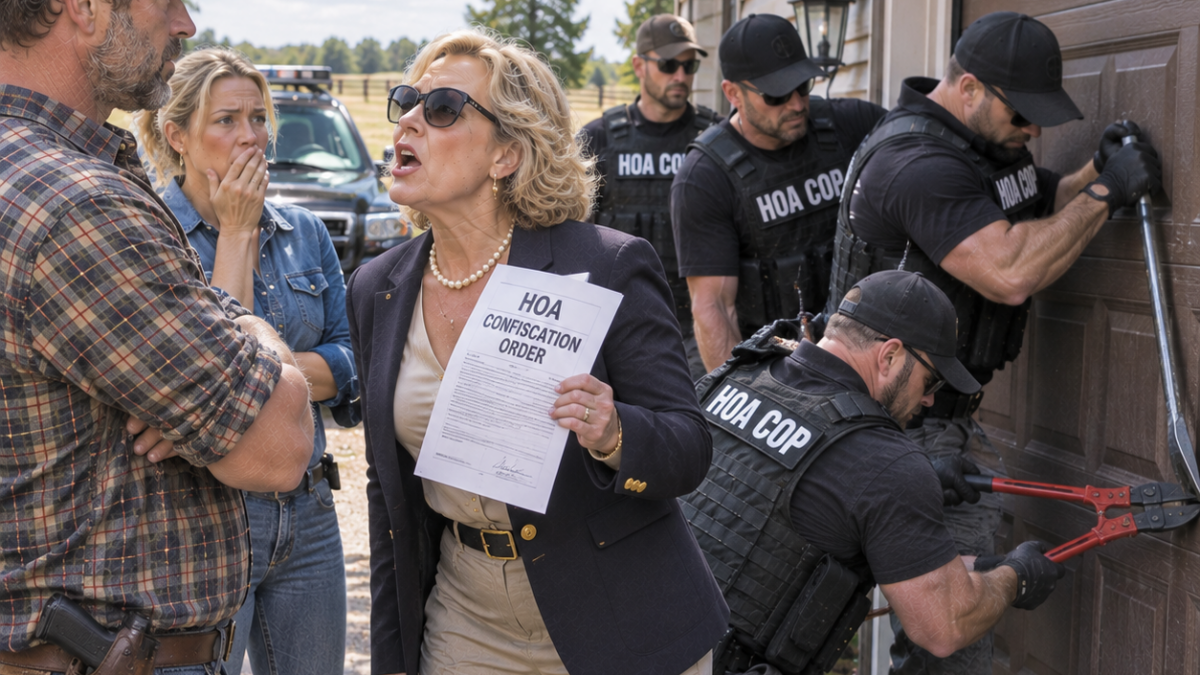
The HOA President Sent Four Men in Fake “HOA COP” Vests to Pry Open My Garage and Seize My Locked Firearms After I Challenged Her Fines. They Had Crowbars, Bolt Cutters, and a Typed “Confiscation Order.” Miriam Thought I’d Panic When They Claimed Police Authority—Until My Security System Captured Who Gave Them the Orders.
The first sound was metal twisting against metal.
I was standing in my kitchen with my old friend Marcus when something slammed against the garage side door.
Then came another scrape.
Longer this time.
The unmistakable sound of a pry bar biting into a doorframe.
Marcus looked at me.
“You expecting anybody?”
“No.”
I opened the security feed on my phone.
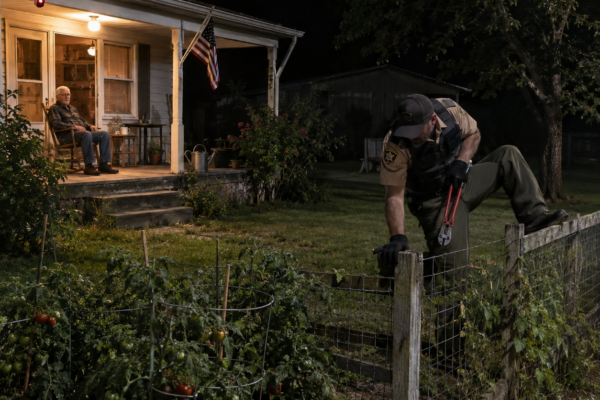
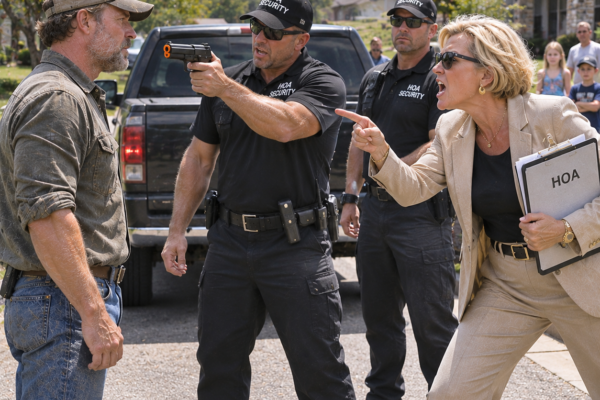
Four men stood behind my garage.
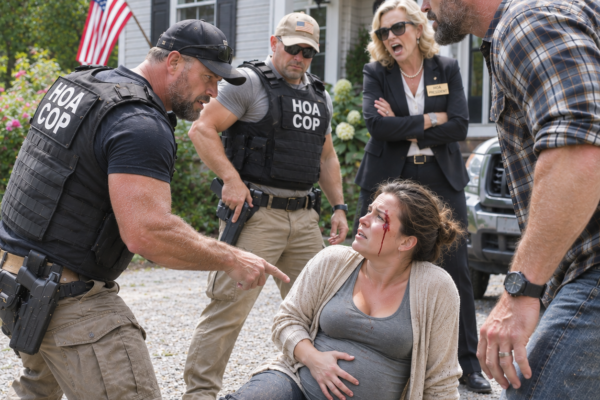
Reflective tactical-style vests.
Black pants.
Cheap badges hanging from their chests.
Across the backs of two vests, somebody had stenciled:
HOA COP
One man carried bolt cutters.
Another had a crowbar wedged into my door.
A third held a clipboard.
Then the microphone above the garage picked up a voice.
“Check the racks first. Cole said the weapons are the priority.”
Everything inside me went cold.
Miriam Cole.
President of Willow Creek Estates.
For six months, Miriam had tried to make my life miserable because I refused to accept fines for rules that either didn’t exist or didn’t apply.
My truck.
My closed garage.
A storage cabinet no one could see from the street.
Then somebody smashed my windshield and slashed two tires.
A note appeared under the wiper:
NEXT TIME WE TAKE MORE.
I reported everything.
Installed better cameras.
Added cloud backup.
Moved one camera to cover the garage door from inside.
I had spent twenty-four years in the Army and retired after commanding soldiers overseas.
That background taught me many things.
The most useful one that afternoon was this:
Don’t turn a situation you understand into one you no longer control.
So I did not grab a pistol and charge outside.
I called 911.
Then I locked the door connecting the garage to the house.
Marcus pulled up the rear camera.
“Fourth guy’s watching the alley.”
“I see him.”
“Think they’re armed?”
“Unknown.”
One of them struck the garage door again.
The latch plate bent.
Marcus looked at me.
“You want to stay inside?”
“Yes.”
He raised an eyebrow.
“That isn’t the answer twenty-year-old you would’ve given.”
“Twenty-year-old me was an idiot.”
The side door finally gave way.
Two men entered.
The camera showed them standing inside my garage, looking around as though a badge bought them ownership.
One pointed toward my locked gun safe.
“There.”
The man with the clipboard said:
“Photograph everything before removal. Miriam wants proof.”
I felt my jaw tighten.
Marcus heard it too.
I called through the garage intercom.
“You are being recorded. You are inside a private residence without permission. Leave immediately.”
Both men froze.
The taller one looked up toward the camera.
“This is official HOA enforcement.”
“No HOA has police authority. Leave.”
“We have an emergency confiscation order.”
“From what court?”
Silence.
“What law-enforcement agency?”
No answer.
Then the shorter man stepped directly beneath the camera.
“Commander, Miriam said you’d pull this sovereign-citizen nonsense.”
I almost laughed.
“Show the order to the camera.”
He did.
One sheet of paper.
Willow Creek letterhead.
No judge.
No case number.
No sheriff.
Signed:
Miriam Cole, HOA President.
I said:
“That is not a warrant.”
“It authorizes us to remove unregistered weapons.”
“You don’t know whether anything in this garage is registered, and you have no authority to seize anything.”
The taller man walked toward the safe.
I repeated:
“Do not touch it.”
He reached for the handle anyway.
Marcus whispered:
“Sheriff?”
“Eight minutes out.”
The man with the crowbar forced open a metal storage cabinet beside the safe.
Nothing inside but camping equipment, old uniforms, extension cords, and a broken radio.
He swore.
Then the lookout shouted from outside.
“Someone’s coming.”
The two men started backing toward the door.
I stayed inside.
I did not chase them.
I did not need to.
My cameras had their faces.
Their vehicle.
Their plate.
Their badges.
Their voices.
And Miriam’s name.
Five minutes later, actual sheriff’s deputies blocked their SUV before it reached the subdivision entrance.
By sunset, investigators had recovered the fake vests, the crowbars, the bolt cutters, and the so-called confiscation order.
The next morning, one of the four men asked for a lawyer.
Another asked for a deal.
And on his phone was a message sent at 1:12 that afternoon.
Miriam Cole: Make sure Grant understands this is his last warning. If he refuses access, go in anyway. The garage is where he keeps the guns.
That was when the smashed windshield, the slashed tires, and six months of HOA harassment stopped looking like separate incidents.
Part 2:
The first sound was metal twisting against metal.
I was standing in my kitchen with my old friend Marcus when something slammed against the garage side door.
Then came another scrape.
Longer this time.
The unmistakable sound of a pry bar biting into a doorframe.
Marcus looked at me.
“You expecting anybody?”
“No.”
I opened the security feed on my phone.
Four men stood behind my garage.
Reflective tactical-style vests.
Black pants.
Cheap badges hanging from their chests.
Across the backs of two vests, somebody had stenciled:
HOA COP
One man carried bolt cutters.
Another had a crowbar wedged into my door.
A third held a clipboard.
Then the microphone above the garage picked up a voice.
“Check the racks first. Cole said the weapons are the priority.”
Everything inside me went cold.
Miriam Cole.
President of Willow Creek Estates.
My name is Grant Mercer.
I was fifty-one when four fake enforcement officers tried to break into my garage because an HOA president decided ordinary fines were no longer frightening enough.
I had spent twenty-four years in the United States Army.
For much of that time, I held command positions.
Infantry first.
Then operations.
Several deployments.
Enough responsibility to learn that panic spreads faster than information and that the person shouting the loudest usually understands the least.
I retired at forty-six.
My daughter Rachel was finishing college then.
My marriage had ended years earlier without drama.
My ex-wife and I remained civil.
I wanted quiet.
A normal house.
A two-car garage.
Neighbors whose biggest disagreement involved trash cans.
Willow Creek Estates seemed perfect.
It sat outside Fayetteville, North Carolina, far enough from the city to feel suburban but close enough that groceries didn’t require planning an expedition.
Two hundred twelve homes.
Pool.
Clubhouse.
Walking trail.
HOA.
I read every covenant before closing.
That habit came from years of signing military paperwork where one sentence could matter more than thirty pages of briefing slides.
Willow Creek’s covenants were annoying but ordinary.
Grass height.
Exterior paint.
Parking.
Fences.
Architectural approvals.
Nothing unusual.
The president when I moved in was a retired accountant named Harold Spears.
Harold believed HOA government should be boring.
I liked him immediately.
The most serious conversation we ever had involved my mailbox post being two inches too low after somebody hit it with a car.
Then Harold moved to Arizona.
Miriam Cole ran for president.
She won by twelve votes.
Within two months, Willow Creek stopped being boring.
Miriam was fifty-four.
Former property manager.
Highly organized.
Always carried a clipboard.
She spoke slowly when angry, which somehow made her more irritating.
Her campaign promise had been “consistent standards without exceptions.”
What that meant in practice was enforcement for things nobody had cared about before.
Decorative planters.
Visible garden hoses.
Driveway basketball hoops.
Patio furniture colors.
One homeowner received a warning because his garbage bin remained visible until 6:15 on pickup day.
Another was fined over a bird feeder.
My first violation concerned my truck.
A black Ford F-250.
Privately registered.
No company markings.
I kept it clean.
Parked in my driveway because my garage contained a woodworking bench, storage cabinets, and Rachel’s old Jeep when she visited.
Miriam’s notice said:
COMMERCIAL-SCALE VEHICLE PROHIBITED IN FRONT DRIVEWAY.
Fine:
$150.
I checked the covenant.
It prohibited commercial vehicles displaying company identification, commercial equipment, or vehicles exceeding a specified weight classification.
My truck was below the limit and had no commercial markings.
I emailed:
Please identify the exact covenant provision violated.
Miriam replied:
The board has authority to interpret community aesthetics.
I asked:
Please provide the board vote adopting this interpretation.
No answer.
A week later, another notice appeared.
$300.
At the hearing, board treasurer Carol Benson asked Miriam the same question.
“Where does the rule say privately registered pickups are prohibited?”
Miriam said:
“The intent of the restriction is obvious.”
Carol answered:
“Intent is not a new covenant.”
The board voted three to two to remove the fine.
Miriam looked at me when the vote finished.
“You enjoy making examples out of people.”
“I asked you to show me the rule.”
“That’s what I mean.”
Our relationship never improved.
The next dispute involved my garage.
I kept the garage closed almost all the time.
Inside were tools.
Camping equipment.
Old uniforms.
Three locked cases containing firearms I legally owned.
A gun safe bolted to the floor.
A workbench.
Nothing stored outside.
Nothing visible unless the garage door opened.
Miriam sent a violation for “unauthorized exterior storage.”
I asked what item she meant.
She responded:
Items observed in garage during community inspection.
That bothered me.
“When did you inspect my garage?”
No answer.
I checked my cameras.
Three days before the violation, Miriam had walked up my driveway while I was gone.
She stood near one garage window and looked through the glass.
Then photographed something.
I sent the footage to the management company.
Their director, Holly Price, called me.
“She was not authorized to inspect through your window.”
“I figured.”
“I’m withdrawing the violation.”
“I also want the board told.”
“It will be addressed.”
Miriam called me that evening.
“You embarrassed me.”
“You looked through my garage window.”
“I was conducting compliance work.”
“From private property without permission.”
“The driveway is visible to the community.”
“That does not make it common area.”
She lowered her voice.
“Grant, you need to decide whether every little thing is worth a battle.”
“I’m not the one issuing fines.”
She hung up.
Then came the parking citation.
A date.
A time.
Claim that my truck blocked a sidewalk.
My driveway had no sidewalk crossing it.
I sent photographs.
Fine withdrawn.
Then a notice claiming a trailer had remained overnight.
I did not own a trailer.
Withdrawn.
Then an allegation that my American flag violated size restrictions.
It didn’t.
Withdrawn.
After the fourth appeal, Rachel came home from college for a weekend.
She read the pile.
“Dad, this woman has a hobby.”
“Apparently.”
“Her hobby is you.”
“Not flattering.”
Rachel was twenty-two.
Smart.
Sarcastic.
Had inherited almost none of my patience.
“If somebody did this to me, I’d put every letter on Facebook.”
“No.”
“Why?”
“Because then the argument becomes entertainment.”
“And?”
“I don’t need an audience.”
She rolled her eyes.
“You’re very fifty.”
“I’m fifty-one.”
“Worse.”
I started a folder.
Every letter.
Every response.
Every hearing decision.
Every photo.
Every timestamp.
Years in command had taught me documentation beats memory.
People remember what supports them.
Paper remembers dates.
The harassment moved beyond letters in October.
I came outside at 5:45 one morning and found my windshield spiderwebbed.
Not shattered completely.
Hit hard near the driver’s side with something blunt.
Two tires had clean sidewall cuts.
Under the wiper was a piece of copier paper.
Black marker.
NEXT TIME WE TAKE MORE.
I stood there for a long time.
That felt different.
An HOA fine is bureaucracy.
Property damage plus a threat is criminal.
I called the sheriff.
Deputy Ryan Bell arrived.
Photographed everything.
Bagged the note.
Checked cameras.
My existing doorbell camera caught only part of the driveway.
A hooded figure appeared near the edge around 2:13 a.m., but the angle was poor.
No face.
No plate.
No useful identification.
Ryan looked at the HOA letters on my kitchen table.
“You think this is related?”
“I think timing is interesting.”
“That’s not the same thing.”
“I know.”
He nodded.
“Good answer.”
I gave him Miriam’s information anyway.
No accusation.
Just context.
He told me:
“Keep the cameras running. If this is intimidation, sometimes people escalate when it doesn’t work.”
That sentence stayed with me.
I upgraded the system.
Front driveway.
Side gate.
Rear alley.
Garage exterior.
Garage interior.
Cloud backup.
Battery backup.
Motion lighting.
No booby traps.
No trip wires.
No armed confrontation fantasy.
Just observation.
Marcus Hall helped.
Marcus and I had served together years earlier.
He had been one of my senior NCOs when I commanded a battalion element overseas.
After retiring, he started a commercial-security company.
Not armed guards.
Cameras.
Access control.
Alarm design.
He lived forty minutes away.
When I called, he came the next Saturday with a tool bag and coffee.
“You’ve got one blind spot.”
“Where?”
“Rear corner beside the garage.”
“I know.”
“Then why do you still have it?”
“I was waiting for free labor.”
He laughed.
“Officers never change.”
We installed a small camera under the garage eave.
Another inside, angled toward the side door and gun safe.
Cloud feed.
Independent power.
Marcus added tamper alerts.
“That’s excessive.”
“You called me because someone smashed your windshield.”
“Fair.”
Rachel visited again.
She saw the new cameras.
“This is becoming a prison.”
“No.”
“Fort Knox?”
“No.”
“Dad.”
“What?”
“You told me not to let anxiety win.”
“That doesn’t mean I ignore threats.”
She understood.
Still, I made a point not to let security become our life.
I kept walking the neighborhood.
Kept going to the pool.
Kept speaking to neighbors.
Miriam hated that.
She expected me to become isolated.
Instead, people started talking.
An older neighbor named Helen Park stopped me near the mailbox pavilion.
“I heard about your truck.”
“Word travels.”
She lowered her voice.
“Miriam has done things before.”
“What things?”
“Pressure.”
“That’s vague.”
“She likes people afraid of consequences.”
“Has she damaged property?”
Helen looked away.
“I don’t know.”
That meant she suspected something.
Another neighbor, Doug Willis, told me he had received a threat of a lien over a garden shed even though his appeal was still pending.
Miriam later apologized and called it an “administrative notice.”
She had a pattern.
Push first.
Correct later if challenged.
Most people did not challenge.
At the next HOA meeting, I brought my police report.
Not because I could prove Miriam damaged my truck.
I couldn’t.
I wanted the board aware that harassment had escalated beyond annoying letters.
I placed photographs on the table.
Windshield.
Tires.
Threat note.
Carol Benson looked disturbed.
Miriam looked bored.
She said:
“We should be careful not to imply the association is connected to unrelated vandalism.”
“I didn’t.”
“You brought it to an HOA meeting.”
“Because the note came after repeated enforcement disputes.”
“Grant, you’re making enemies.”
The room went quiet.
I looked at her.
“What does that mean?”
“It means your confrontational style has consequences.”
Carol immediately said:
“Miriam.”
Miriam smiled.
“I’m speaking generally.”
I wrote the sentence in my notebook.
You’re making enemies.
After the meeting, Marcus called.
“How’d it go?”
“President told me I’m making enemies.”
“Helpful.”
“Very.”
“You report that?”
“Adding it to the file.”
“Good.”
Two weeks later, Miriam issued what she called a “final compliance directive.”
Truck.
Garage.
“Unregistered weapons storage visible during inspection.”
That phrase stopped me.
How did she know what was inside the locked cases?
She didn’t.
She had assumed.
North Carolina law did not require the kind of firearm registration she seemed to imagine anyway.
More importantly, an HOA had no authority to seize weapons.
I sent the notice to Holly Price.
She called me almost immediately.
“We did not approve this language.”
“Who did?”
“Miriam.”
“Did the board?”
“No.”
“Does Willow Creek employ security?”
“Not for enforcement.”
“Any outside contractor?”
“No.”
I asked Holly to confirm that by email.
She did.
I forwarded the email to Carol.
Carol replied:
I am requesting a board review. Do not permit anyone onto your property unless you personally authorize them or actual law enforcement presents lawful authority.
That was Friday.
Monday afternoon, Marcus came to finish configuring the garage camera.
We were in my kitchen when the pry bar hit.
I opened the feed.
Four men.
HOA COP vests.
Crowbar.
Bolt cutters.
Clipboard.
Black SUV.
One stood near the alley.
Three at the door.
Marcus leaned over the screen.
“Those are not cops.”
“I know.”
“Private security?”
“Not legitimate.”
“Call.”
I called 911.
Gave dispatcher the address.
Four men forcibly entering detached garage.
Possible fake law-enforcement markings.
Unknown weapons.
We were inside the house.
No confrontation underway.
Dispatcher told us to stay safe, avoid contact, and remain on the line.
The garage door frame cracked.
I locked the connecting door.
Marcus looked at me.
“You armed?”
“Yes.”
“Accessible?”
“Yes.”
“You getting it?”
“No.”
He nodded.
That was the right answer.
A firearm is useful when deadly force is actually necessary.
Introducing one to a situation where I had a locked interior door, cameras, distance, and deputies coming would increase risk for everyone.
The side door opened.
Two men entered.
One stayed outside.
Fourth remained by the SUV.
They looked around.
The interior microphone captured them clearly.
“Check the racks first.”
Then:
“Commander keeps unregistered weapons in here. HOA wants them confiscated.”
Marcus whispered:
“That sentence alone is unbelievable.”
“Keep listening.”
The leader walked toward my safe.
I activated the garage intercom.
“You are being recorded.”
He stopped.
“This is private property. Leave now.”
The shorter man looked around for the speaker.
“Sir, we have legal authority.”
“What agency?”
“Willow Creek Compliance.”
“That is not law enforcement.”
“We’re HOA police.”
“No such organization exists.”
The leader held up a piece of paper.
“Emergency confiscation order.”
“Show it to the camera.”
He hesitated.
Then held it up.
Willow Creek letterhead.
No court.
No warrant.
No agency.
Signed by Miriam.
Marcus whispered:
“She actually signed that?”
“Apparently.”
The man said:
“You have prohibited materials stored in violation of community safety rules.”
“You have no authority to search or seize anything.”
“We’re already inside.”
“Yes. That is the problem.”
He walked toward the gun safe.
I said:
“Do not touch it.”
He tried the handle.
Locked.
Then one of the others forced open a metal cabinet beside it using the crowbar.
Camping stove.
Old uniforms.
Rope.
Tool cases.
Nothing they wanted.
He cursed.
The man outside shouted:
“Movement on the street.”
The leader asked:
“Police?”
“Maybe.”
That word changed them.
They began retreating.
I did not open the interior door.
Did not chase.
Did not block them.
Dispatcher told me deputies were less than five minutes away.
The SUV pulled out.
My front camera caught the plate.
A patrol unit intercepted them before they reached the main road.
Second unit arrived at my house.
Deputy Bell again.
He recognized me.
“This related to the windshield?”
“I think you’re about to tell me.”
We waited until deputies confirmed all four men detained before entering the garage.
Damage:
Doorframe.
Lock.
Metal cabinet.
Minor tool damage.
Nothing taken.
Gun safe untouched beyond handle marks.
The cameras had everything.
Deputy Bell watched the first section.
Then looked at me.
“You stayed inside?”
“Yes.”
“Good.”
Marcus smiled.
“You hear that, Colonel? Somebody finally likes your judgment.”
“Retired colonel.”
“Still annoying.”
Bell ignored us.
The fake badges looked laughable on camera.
Up close, less funny.
They were designed to deceive.
Metal shields.
POLICE lettering.
No legitimate agency.
The vests said HOA COP.
The men initially claimed they were private security conducting a civil repossession.
That story fell apart quickly.
No security-company markings.
No valid contract.
No repossession interest.
No court order.
No property belonging to the HOA.
And video of them calling themselves police.
Investigators obtained warrants and other lawful process for the SUV and phones.
I stayed out of that part.
By evening, Detective Lauren Shaw called.
“We found your HOA paperwork.”
“In their vehicle?”
“Yes.”
“What else?”
“I can’t discuss everything yet.”
“Understood.”
“Do you know why your firearms were mentioned in HOA records?”
“No.”
“You ever give Miriam an inventory?”
“Absolutely not.”
“Any reason she’d know you have a gun safe?”
“She looked through my garage window months ago.”
There was a pause.
“That report exists?”
“Video and management-company correspondence.”
“Send it.”
I did.
The next morning, one of the four men—Jason Pollard—asked through counsel to cooperate.
Jason had worked event security.
No police training.
No law-enforcement commission.
No authority to arrest residents.
He said Miriam had contacted their group through a local contractor who occasionally supplied parking attendants and event security.
She wanted men who “looked official.”
She provided the vests.
Badges.
Violation paperwork.
Addresses.
Cash.
Instructions.
Jason said the original assignment had been intimidation.
Deliver notices.
Make residents believe enforcement had escalated.
Then my name became different.
According to Jason, Miriam said:
“Mercer thinks rules don’t apply to him because he was some Army commander.”
She told them I had firearms.
Said they were “unregistered.”
Said the HOA had the right to inspect and remove them.
Jason admitted he knew that sounded wrong.
He went anyway.
Why?
Money.
Simple answer.
The phone messages were worse.
Miriam:
Grant needs to understand appeals are over.
Then:
If he refuses garage access, go in. We have safety authority.
Then:
Weapons are priority. Photograph everything and remove anything not compliant.
Jason asked:
What if he calls cops?
Miriam replied:
You are enforcement. Act like it.
That line ended any claim that the men had independently exaggerated their role.
Then investigators found a conversation about my windshield.
One of the four men wrote:
He replace tires yet?
Miriam:
Yes. Didn’t get message.
Another:
Next step garage.
That was enough for detectives to dig deeper.
Security footage from a convenience store near Willow Creek showed the same black SUV entering our neighborhood around the time my truck was vandalized.
Cell-site data and phone records required proper legal process, but over time investigators built a stronger timeline.
One man eventually admitted he and Jason had slashed the tires.
Another struck the windshield.
Jason claimed Miriam ordered “something that gets his attention.”
Whether she specifically ordered each act became a matter for prosecutors.
I did not care about proving a more dramatic version than evidence supported.
The evidence was already bad enough.
Willow Creek’s board held an emergency meeting.
Miriam attended with an attorney.
Carol chaired because the other directors voted to suspend Miriam’s presidential authority during the investigation.
Miriam protested.
She said the men were unauthorized contractors who had misunderstood a limited compliance assignment.
Holly Price produced her email to me.
Management had explicitly said no outside enforcement vendor was authorized.
Carol produced board minutes.
No vote.
No contract.
No budget item.
Then finance records showed something stranger.
Several checks from an HOA discretionary-account line had been reimbursed to Miriam as “community safety expenses.”
No receipts.
Amounts totaling $6,400 over four months.
The board demanded documentation.
She produced handwritten invoices from a company called Carolina Community Enforcement.
The company did not appear in state corporate records under that name.
The address belonged to a mailbox store.
Phone number went to Jason’s personal cell.
Carol asked:
“Did you create a private enforcement force using HOA money?”
Miriam replied:
“I contracted compliance support.”
“Without board approval?”
“The president has emergency discretion.”
“Show me the bylaw.”
She could not.
Willow Creek removed her as president that night.
Not from the board yet.
Officer removal was easier than director recall.
But her authority was gone.
She sent a mass email anyway.
Claimed she had been targeted for “protecting community safety from a heavily armed former military resident.”
That phrase angered me.
Not because she mentioned my service.
Because she was trying to make lawful ownership sound threatening.
My attorney, Rebecca Sloan, told me not to respond.
“Not one email.”
“She’s telling two hundred families I’m dangerous.”
“I know.”
“She’s making me sound like a militia compound.”
“I know.”
“So I just sit here?”
“Yes.”
I hated that advice.
It was correct.
Within forty-eight hours, the sheriff’s office issued a public clarification because rumors were interfering with witness interviews.
No evidence showed I threatened any resident or HOA board member.
The investigation concerned unauthorized entry, impersonation, property damage, and related conduct.
That neutral statement did more than any angry post I could have written.
Neighbors started talking.
Helen Park told detectives Miriam had once threatened to send “enforcement officers” over her fence.
Doug Willis produced an email where Miriam wrote:
Compliance personnel may enter side yards if necessary to document violations.
The covenants did not authorize that.
Another family reported two men in dark vests had visited over a shed dispute.
They had not entered the home.
But they implied they could issue citations.
The pattern widened.
Then came my civil attorney.
His name was Thomas Avery.
Former Army himself, though we did not know that when I hired him.
He read the file.
Looked at the photos.
Watched the garage video.
Then asked:
“Did you display a weapon?”
“No.”
“Touch anyone?”
“No.”
“Prevent them from leaving?”
“No.”
“Threaten them?”
“No.”
“I told them they were trespassing and police were coming.”
Thomas nodded.
“You gave them nothing.”
“That was the plan.”
“Good plan.”
We filed claims against the appropriate parties after the criminal investigation reached a point where civil discovery would not interfere.
Property damage.
Trespass.
Harassment.
Costs from the vandalism where supported.
Claims arising from the unauthorized enforcement scheme.
The HOA itself faced potential liability because Miriam used office authority, resident records, HOA money, and HOA letterhead.
The insurer opened a coverage investigation.
Intentional criminal conduct is complicated for insurance.
Some claims involved the association.
Some involved Miriam personally.
Some involved contractors.
Nobody wrote me a magical hundred-thousand-dollar check the next day.
It took months.
Meanwhile, Miriam filed her own civil complaint.
She claimed I had damaged her reputation by accusing her of crimes.
Problem:
I had barely spoken publicly.
She alleged I had threatened her contractors.
Video contradicted that.
She alleged the garage team entered under HOA inspection authority.
The covenants gave the HOA no right to force entry into a locked garage.
She alleged weapons created an imminent safety concern.
No inspection had established any violation.
No emergency existed.
No law-enforcement agency had been contacted.
No court order existed.
Thomas read the complaint.
“This is useful.”
“Why?”
“She has committed to a story.”
Discovery is unpleasant for people who have multiple stories.
Miriam said the contractors were independent.
Emails showed detailed instructions.
She said she never authorized entry.
Message:
If he refuses garage access, go in.
She said HOA money was never used.
Reimbursement records showed thousands in “community safety” expenses.
She said my firearms were visible from the street.
Her earlier inspection photo had been taken through a side garage window from inside my property.
She said she feared me.
Yet she repeatedly sent people to my house without police assistance.
Contradictions accumulated.
The criminal cases against the four men moved separately.
Charges varied depending on individual conduct.
North Carolina prosecutors—not Miriam, not me, not a television narrator—decided what statutes applied.
There was no automatic federal ten-year sentence simply because a fake badge existed.
The men had impersonated law enforcement in a manner handled primarily under applicable state law, along with breaking-and-entering, property-damage, conspiracy, and other charges supported by the evidence.
Jason cooperated.
His outcome reflected that.
Two others entered pleas.
The fourth contested portions longer.
Nobody spent decades in federal prison.
They did end up with criminal records, probation or custodial consequences depending on conduct, fines, restitution obligations, and the permanent inconvenience of explaining why they once wore fake police badges for an HOA president.
Miriam’s case took longer.
Prosecutors examined whether she directed the break-in, vandalism, impersonation, or theft attempt.
Her messages were strong evidence.
So were the financial records.
Eventually, she entered a negotiated plea to charges prosecutors believed they could prove without forcing every homeowner through a long trial.
The precise criminal labels mattered less to me than the result:
Formal accountability.
Probation and court supervision.
Restitution.
Restrictions arising from her conduct.
No more HOA authority.
The civil settlement came later.
The HOA insurer paid covered portions of property damage and certain claims.
The association reimbursed unauthorized fines and my documented expenses.
Miriam contributed personally toward settlement of claims arising from actions outside legitimate board authority.
The exact total remained confidential.
That suited me.
I had no interest in turning a legal settlement into neighborhood scoreboard material.
What became public was the governance reform.
That part mattered.
Willow Creek retained independent counsel.
Thirty-one enforcement actions from Miriam’s tenure were reviewed.
Seventeen fines were reversed.
Eight homeowners received account credits.
Two liens that had been threatened but not properly authorized were withdrawn before filing.
The board adopted rules requiring specific covenant citations for every violation.
No more:
“Community standards.”
No more:
“Board interpretation.”
If you were fined, the notice had to show the actual provision.
Outside vendors required board approval.
No president could hire “compliance personnel” alone.
No contractor could wear police-style insignia.
No contractor could enter enclosed private property without consent, lawful emergency authority, or court authorization.
No board officer could inspect through windows.
Carol Benson ran for president.
She won easily.
Her campaign slogan was not inspiring.
READ THE DOCUMENTS.
I voted for her.
Rachel came home the weekend after the election.
She looked at the new policy packet.
“You broke the HOA.”
“I improved it.”
“You made it boring.”
“Exactly.”
“Old-man victory.”
“I’ll accept that.”
She walked into the garage.
The damaged door had been replaced.
New frame.
Stronger lock.
The metal cabinet still had a dent where the crowbar struck it.
I kept the dent.
Rachel noticed.
“You could replace that.”
“I could.”
“Why don’t you?”
“Reminder.”
“Of Miriam?”
“No.”
“Of what?”
I thought for a moment.
“That I almost opened the house door.”
She looked at me.
“But you didn’t.”
“No.”
“What would’ve happened?”
“I don’t know.”
That was the truth.
Maybe nothing.
Maybe I would have ordered them out and they would have left.
Maybe one swung the crowbar.
Maybe Marcus intervened.
Maybe somebody saw the locked firearm safe and panicked.
Maybe I drew a weapon.
Maybe a man died over a fake HOA order.
People like clean stories.
Experienced commander confronts intruders.
Training takes over.
Bad guys lose.
Real violence does not promise that ending.
Every additional person.
Every weapon.
Every movement.
Every misunderstanding.
Adds uncertainty.
I had spent years teaching younger soldiers that mission success sometimes meant not firing.
Funny that retirement finally gave me a domestic example.
Marcus came by a few weeks later.
We stood in the garage.
He looked at the repaired door.
“Kind of miss the old hole.”
“You can pay for another.”
“No.”
He pointed at the safe.
“They really thought they were going to carry that out?”
“Apparently.”
“It weighs six hundred pounds.”
“Criminal planning was not their strength.”
He laughed.
Then became serious.
“You know I would’ve followed you out.”
“I know.”
“That why you stayed inside?”
“One reason.”
“Smart.”
“You used to say I overthought everything.”
“You did.”
“Still do?”
“Yes.”
We drank coffee on the workbench.
For the first time in months, the garage felt like a garage again.
Not evidence.
Not a crime scene.
Not a symbol.
Just tools.
Wood scraps.
Storage.
A safe.
Old gear.
That mattered.
The hardest part after the case wasn’t money.
It was neighborhood perception.
Miriam had spent months describing me as dangerous.
“Armed former commander.”
“Hostile resident.”
“Militarized household.”
Words shape people.
A few neighbors avoided me for a while.
One parent stopped letting her son ride his bike past my house.
I never confronted anyone.
Eventually facts replaced rumor.
People saw me mowing the lawn.
Bringing Carol’s trash bin in when she hurt her ankle.
Helping Doug change a tire.
Ordinary behavior.
Miriam’s story required me to remain a character.
Life turned me back into a neighbor.
Helen Park apologized one afternoon.
“I should have spoken earlier.”
“About what?”
“Miriam.”
“You didn’t know what she was doing.”
“I knew she scared people.”
“That’s different.”
“I kept my head down.”
I understood that.
People often imagine abuse continues because everyone approves.
Sometimes it continues because nobody wants to become next.
Helen said:
“You didn’t seem scared of her.”
“I wasn’t.”
“Why?”
“That’s not quite true.”
She looked surprised.
“I wasn’t afraid of Miriam personally.”
“What were you afraid of?”
“Making a mistake because I was angry.”
She nodded slowly.
That was the real fear.
I knew what Miriam could do administratively.
Letters.
Fines.
Rumors.
I also knew what I could do physically if provoked.
That placed more responsibility on me, not less.
The afternoon they entered the garage, I had two pistols stored upstairs.
Legal.
Accessible.
I deliberately left them there.
Marcus did too.
That choice never appeared in the court filings.
No one awarded a medal for it.
It may have been the most important decision I made.
A year after the incident, the sheriff’s department returned certain copies and property records once cases concluded.
Detective Lauren Shaw stopped by personally.
She handed me a folder.
“You keeping all this?”
“Probably.”
“Why?”
“I’m developing an unhealthy relationship with binders.”
She smiled.
Then:
“Can I ask you something?”
“Sure.”
“When you heard them breaking in, why didn’t you confront them?”
“Dispatcher told me not to.”
“Before that.”
I thought about it.
“Because I knew they wanted confrontation.”
She nodded.
“That’s what Jason told us.”
“What?”
“Miriam expected you to come outside angry.”
“Why?”
“So they could document you as threatening.”
That landed harder than I expected.
Lauren continued.
“The plan wasn’t just to seize property. They were told to record you if you became aggressive.”
I stared at her.
“Record me?”
“Jason said Miriam believed if they got video of ‘the Army guy losing control,’ she could use it at an emergency board hearing.”
For a few seconds, I said nothing.
Then I laughed.
Lauren looked puzzled.
“What?”
“She was setting a trap.”
“Looks that way.”
“And I stayed in the kitchen.”
“Yes.”
Marcus heard later.
He laughed for five straight minutes.
“Colonel, your greatest tactical victory was doing absolutely nothing.”
“That summarizes retirement.”
The revelation explained several things.
The fake vests.
The aggressive language.
The attempt to provoke me.
Miriam didn’t merely want my property searched.
She wanted an incident.
Video of me threatening uniformed-looking men.
Then she could tell Willow Creek:
See?
He’s dangerous.
The scheme depended on me behaving exactly like the stereotype she had built.
Armed veteran.
Short temper.
Unstable.
I refused the role without knowing it existed.
That became personal.
Not because I was ashamed of military service.
I’m proud of it.
But veterans spend enough time being flattened into characters.
Hero.
Threat.
Broken man.
Weapon.
Miriam tried to use one of those characters against me.
She failed because my actual behavior did not match her story.
Carol’s HOA reforms included one policy I hadn’t suggested.
No enforcement decision could rely on a resident’s lawful occupation, veteran status, disability, family status, or other unrelated personal characteristic.
She called me before proposing it.
“Too much?”
“No.”
“Useful?”
“Yes.”
“Then I’m doing it.”
Carol was the kind of president Willow Creek needed.
Not because she was weak.
Because she understood limits.
She once said at a meeting:
“The board’s authority ends exactly where the documents say it ends, even when we wish it didn’t.”
Miriam would have hated that sentence.
I loved it.
Rachel graduated and moved to Raleigh.
Before she left, she gave me a small framed print for the garage.
Black letters.
White background.
CAMERAS BEFORE COMBAT.
I stared at it.
“You made this?”
“Ordered it.”
“It’s terrible.”
“You’re hanging it.”
“I absolutely am not.”
She hung it herself above the workbench.
It is still there.
Marcus thinks it’s the funniest object in my house.
One evening, nearly two years after everything happened, I attended the annual HOA meeting.
Not because I suddenly loved meetings.
Carol wanted enough homeowners present for quorum.
The agenda was dull.
Pool resurfacing.
Landscaping contract.
Reserve study.
Streetlights.
I was delighted.
During open comment, a new resident raised his hand.
“Does Willow Creek have security?”
Carol said:
“We contract a licensed patrol company for clubhouse alarms and common-area checks.”
“Do they enforce HOA violations?”
“No.”
“Can they come onto our property?”
“Not without ordinary legal authority or your consent.”
“Can the HOA issue police citations?”
“No.”
“Can the president?”
“No.”
He looked confused.
“Why is that in the welcome packet?”
The room laughed.
Carol looked at me.
I looked away.
Afterward, the new resident approached.
“What’s the joke?”
I said:
“Long story.”
“How long?”
“About four fake cops.”
He stared.
“You’re kidding.”
“No.”
Carol called from across the room:
“Don’t encourage him.”
I went home.
My truck was in the driveway.
No fine.
Garage closed.
No inspection notice.
The normality felt almost luxurious.
I think that is what people misunderstand about winning these disputes.
You don’t actually want a dramatic ending.
You want boredom back.
You want letters about pool hours instead of threats.
You want your garage to contain tools instead of evidence markers.
You want neighbors to wave without wondering which side they picked.
You want a woman like Miriam to become irrelevant.
That happened.
She sold her house eventually.
Moved somewhere outside the county, according to gossip.
I never checked.
The urge to know disappeared.
For months, she had occupied too much mental space.
Every car slowing near my driveway.
Every letter.
Every strange sound outside.
Once the cases ended, I made a deliberate decision.
No more Miriam.
Her name stayed in legal files.
Not in daily conversation.
That was freedom.
The four men didn’t become monsters in my memory either.
They were adults who made terrible decisions for money.
Some worse than others.
One cooperated.
One showed genuine remorse during restitution proceedings.
Another blamed everyone else.
People are messy.
Justice doesn’t require turning everyone into a cartoon villain.
Miriam’s conduct was serious precisely because it didn’t need exaggeration.
She weaponized HOA authority.
Used resident information.
Funded intimidation without authorization.
Encouraged men to impersonate enforcement officers.
Sent them onto private property.
Directed them toward legally owned firearms she had no authority to inspect or seize.
And, based on messages, tried to provoke a confrontation she could later use against me.
That is enough.
No secret assassination squad needed.
No military hand-to-hand fight.
No judge banning her from every HOA in America.
Reality was already outrageous.
I kept one of her original violation letters.
The first truck fine.
$150.
Compared with everything later, it seems almost funny.
That was the beginning.
A bad interpretation of a parking covenant.
It could have ended there.
Board says no.
President accepts decision.
Everyone moves on.
Instead, Miriam treated every successful appeal as personal defiance.
Each time formal authority failed her, she moved farther outside formal authority.
Fine.
Inspection.
Threat.
Vandalism.
Fake enforcement.
Break-in.
That progression matters.
Abuse rarely starts at maximum volume.
It grows when small overreaches work.
That is why Carol’s reforms focused on process rather than personality.
Specific rule.
Recorded vote.
Appeal.
Independent management review.
Documented vendor authority.
Those mechanisms sound boring because they are.
Boring systems are difficult for bullies.
They create friction.
Miriam hated friction.
She wanted instant compliance.
One morning, I found Helen standing near my driveway.
She pointed at Rachel’s sign visible through the open garage.
“Cameras before combat?”
“My daughter.”
“Good advice.”
“Unfortunately.”
“You miss combat?”
“No.”
She looked surprised.
“Never?”
“I miss people.”
“Not the excitement?”
“Excitement is overrated.”
She nodded.
“I think most of us spend our twenties wanting interesting lives and our fifties trying to keep plumbers from charging emergency rates.”
“Exactly.”
She walked away.
I closed the garage.
That afternoon, I finally replaced the dented cabinet.
Not because I wanted to forget.
Because the door stopped closing properly.
I moved the old uniforms into a plastic bin.
Camping equipment onto a shelf.
Tools into drawers.
I looked at the gun safe.
The object Miriam had built so much fear around.
It looked exactly like what it was.
A locked steel box.
No menace.
No political statement.
No HOA concern.
Just private property.
That was the final irony.
Miriam claimed she acted for community safety.
Her actions created the only genuine dangerous situation.
Four men with crowbars.
Fake authority.
A forced entry.
A homeowner with a military background and legal firearms nearby.
Every responsible person would design a system to avoid that combination.
She manufactured it.
Then hoped I would lose control.
I didn’t.
Not because I was fearless.
Because I understood what losing control costs.
That lesson came from the Army.
It mattered in Willow Creek more than any fighting technique ever could.
People occasionally ask what I would have done if the men had entered the house instead of the garage.
Different facts.
Different response.
Protect life first.
Call law enforcement.
Use force only when lawful and necessary.
I don’t romanticize the hypothetical.
Nobody should.
The best defensive outcome is the one where nobody gets shot.
That afternoon, nobody did.
Four men were arrested.
Evidence preserved.
Property recovered.
Miriam’s scheme exposed.
My daughter kept her father.
The men kept their lives.
That is a better ending than an action scene.
Rachel came home for Christmas last year.
She walked into the garage.
Looked at the framed sign.
“You never took it down.”
“I forgot.”
“You dusted around it.”
“Coincidence.”
She smiled.
Then pointed toward the new cabinet.
“You finally replaced the damaged one.”
“It was broken.”
“Sentimental era over?”
“Maybe.”
She opened a drawer.
Inside was the original fake confiscation order.
She stared.
“You kept this?”
“Legal file overflow.”
“Dad.”
“What?”
“You’re sentimental about evidence.”
“I’m organized.”
She held it up.
Miriam’s signature at the bottom.
No judge.
No court.
No authority.
One sheet of paper that four men had treated like a warrant.
Rachel shook her head.
“She really thought signing her name made this official.”
“That was her problem.”
“What?”
“She confused authority with wanting something badly enough.”
Rachel put the paper back.
Outside, Willow Creek’s holiday lights were coming on.
Tasteful white lights around the clubhouse.
Carol had apparently survived another year without creating a police force.
I considered that progress.
The next day Marcus came by.
We sat in the garage.
Rachel’s ridiculous sign above us.
He looked at it.
“Still ugly.”
“Yes.”
“Still accurate.”
Unfortunately.
He nodded toward the fake order drawer.
“You ever think about throwing all that stuff away?”
“No.”
“Why?”
“Records.”
“You think Miriam’s coming back?”
“No.”
“Then why records?”
I thought about the answer.
“Because memory turns stories into whatever feels best.”
“And paper?”
“Paper keeps the embarrassing parts.”
He laughed.
“That why you never wrote a memoir?”
“Exactly.”
The embarrassing part of my story was how close anger came to making me stupid.
When I heard those men talking about my firearms, my first instinct was not patience.
When I saw them pry my door, I wanted to walk outside.
Marcus would have followed.
We were both trained.
Both capable.
Both confident.
That combination can be dangerous when confidence outruns necessity.
Instead, we stayed behind a locked door and watched.
That decision felt passive.
It wasn’t.
Restraint is action when escalation is available.
The Army taught me that too.
Miriam believed she understood men like me.
She thought rank meant ego.
Military service meant aggression.
Firearms meant threat.
She built her entire plan around provoking the caricature.
What she encountered instead was an old commander sitting in a kitchen, drinking bad coffee, waiting for the sheriff.
That was probably the most insulting thing I could have done to her plan.
Nothing.
I gave her nothing.
No violent video.
No threat.
No damaged contractor.
No excuse.
Only evidence.
When the sheriff’s office eventually closed its final investigative file connected to my property, Detective Shaw sent me a short email.
Case disposition complete. No further action required from you.
I read it.
Printed it.
Then almost laughed.
After two years, the most satisfying sentence was not a judge’s ruling.
Not an apology.
Not a settlement number.
No further action required.
That was all I had wanted from the beginning.
No more action.
I filed it.
Closed the drawer.
Went outside.
My F-250 sat in the driveway where Miriam once said it could not sit.
The lawn was trimmed.
The garage door was closed.
Rachel’s old Jeep was gone.
The flag moved lightly in the afternoon wind.
A neighbor waved.
I waved back.
Nothing happened.
No tactical vests.
No fake badges.
No clipboard.
No one came to inspect anything.
For the first time in a long time, Willow Creek felt exactly like what I thought I had bought.
A quiet suburban neighborhood.
And if my past as an Army commander mattered at all, it wasn’t because I knew how to defeat four men in a garage.
It was because I knew when not to fight them.
Miriam sent men to my home expecting force to prove her story.
What defeated her instead was a locked door, a camera feed, a 911 call, and the patience to let her own instructions speak for themselves.