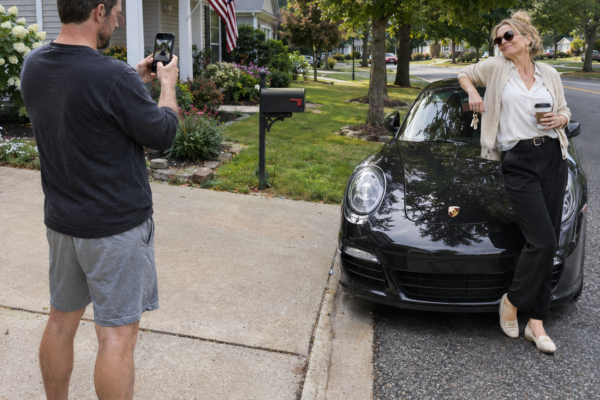
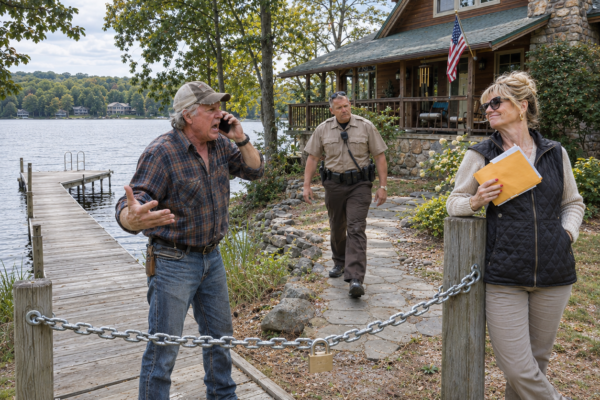
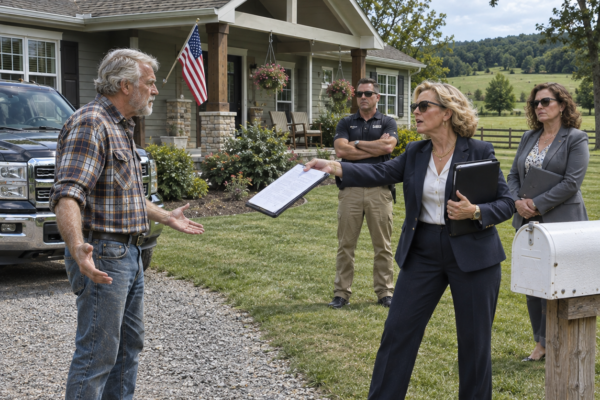
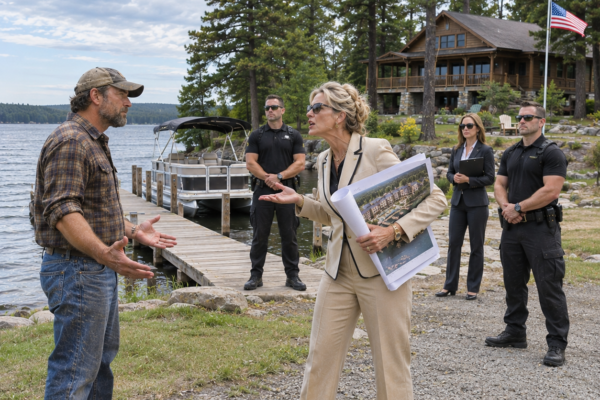
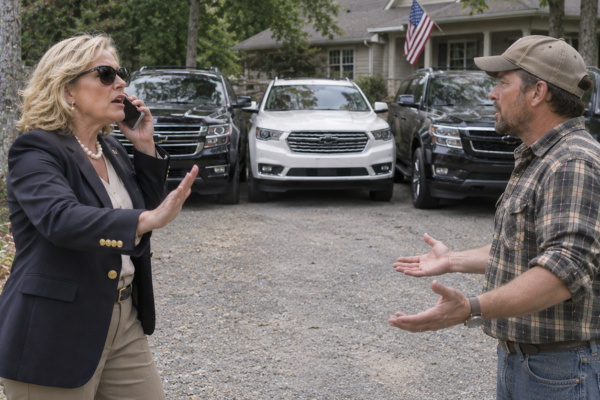
“Give My Daughter That Pink Porsche for FREE!” the HOA Committee Chair Screamed Eight Days After I Surprised My Surgeon Wife With Her Dream Car. When We Refused, Her Family Threatened Our Careers, Slashed All Four Tires, and Sent a Tow Truck to Our Driveway With a Judge’s Order. Then My Attorney Examined the Paperwork and Asked One Terrifying Question….k
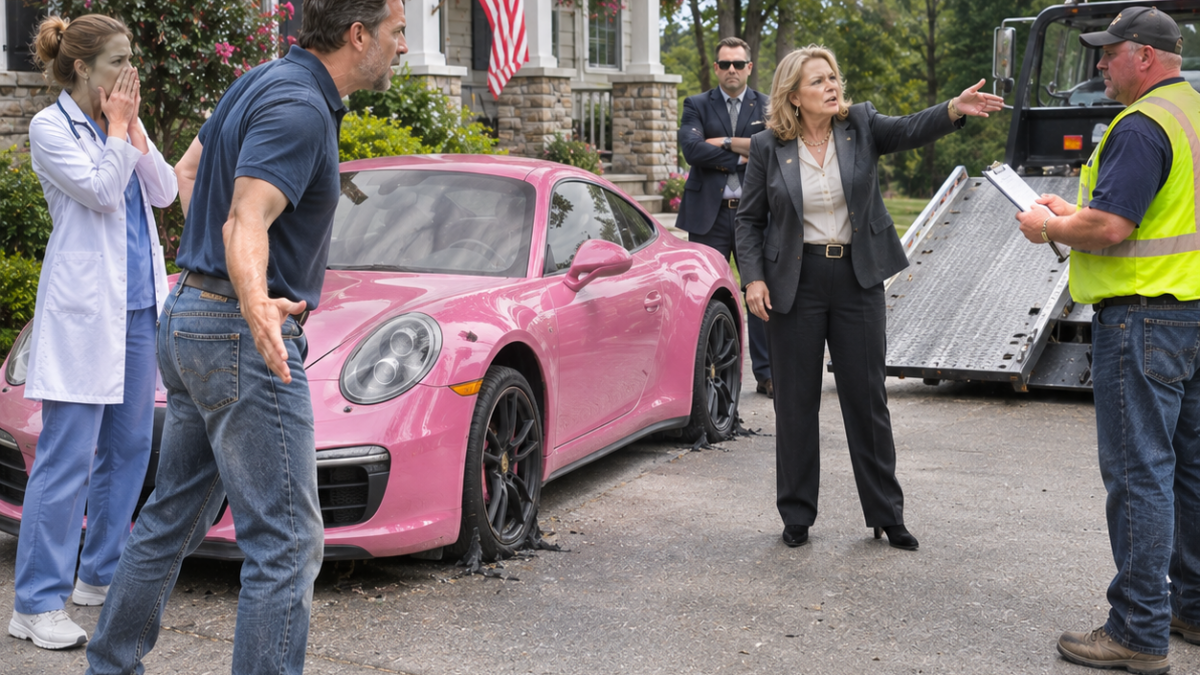
“Give My Daughter That Pink Porsche for FREE!” the HOA Committee Chair Screamed Eight Days After I Surprised My Surgeon Wife With Her Dream Car. When We Refused, Her Family Threatened Our Careers, Slashed All Four Tires, and Sent a Tow Truck to Our Driveway With a Judge’s Order. Then My Attorney Examined the Paperwork and Asked One Terrifying Question…
The first time Trish Harrington demanded the keys to my wife’s pink Porsche 911, I thought she was joking.
The second time, her eighteen-year-old daughter screamed so loudly that three neighbors came outside.
And the third time, a tow truck showed up at our house with a court order claiming the Harringtons had a legal interest in the car.
But the part that still makes my blood boil happened eight days after I surprised my wife with the gift she’d dreamed about for more than a decade.
“Give Britney the keys, Darius. Your wife has had her fun.”
Trish stood in the middle of my driveway wearing a bright pink blazer, her arms folded as though she were negotiating the return of something we’d stolen.
Beside her, Britney Harrington was practically bouncing with rage.
“Mom! That’s MY color! Daddy promised me a pink Porsche before they even got theirs!”
My wife, Amara, slowly lowered the microfiber cloth she’d been using to polish the driver’s-side mirror.
“Excuse me?”
Britney pointed at the car.
“I want it. Today.”
I looked at Trish.
“Are you seriously asking us to give your daughter a Porsche 911?”
“Not asking,” Trish replied. “I’m offering you the opportunity to avoid an unpleasant situation.”
“Then what’s your offer?”
She smiled.
“Nothing. You’ll transfer it to Britney as a goodwill gesture.”
I actually laughed.
The Porsche had been my tenth-anniversary gift to Amara.
I’d spent three years saving for it, working extra consulting contracts and coordinating with a specialty shop to recreate the exact ballet-slipper pink she’d admired since medical school.
Amara was a pediatric surgeon in Atlanta. She’d survived years of residency, sleepless nights, and the kind of work that required steady hands when a child’s life depended on them.
She had never demanded expensive things.
She’d never even asked me to buy that car.
But I’d remembered the photograph she’d shown me years earlier, and I wanted to see her face when it finally appeared in our driveway.
When it arrived on a flatbed truck with a giant ribbon, she’d cried into my shoulder.
Now a spoiled teenager wanted me to hand over the keys because she liked the color.
“The car belongs to my wife,” I said. “It’s not for sale.”
Britney stamped her foot.
“Mom, MAKE THEM!”
Trish’s smile disappeared.
Then she looked directly at Amara and said something that made the entire driveway go silent.
“People like you should be grateful you’ve been allowed to live in a neighborhood like Oakridge. Don’t start acting as though you’re better than everyone else.”
Amara went completely still.
We both knew what she meant.
We were a Black couple who’d worked our way into a comfortable life. I’d built my technology consulting company from a college dorm room. Amara had put herself through medical training.
We’d earned our home.
We’d earned our stability.
And Trish had just suggested that neither belonged to us.
“Get off our property,” Amara said.
Britney shouted a racial slur.
I took out my phone and began recording.
Trish grabbed her daughter’s arm.
“You’ll regret humiliating us,” she hissed.
Then they left.
I hoped that would be the end of it.
It wasn’t.
Two days later, somebody left a threatening note on Amara’s windshield at the hospital.
Then Gregory Harrington, Trish’s wealthy banker husband, appeared at our house.
He offered twenty percent above the Porsche’s purchase price.
When I refused, he smiled and mentioned his connections to hospital donors, county committees, and local business leaders.
“It would be unfortunate,” he told me, “if your wife’s professional reputation or your consulting contracts suddenly came under scrutiny.”
That was when I realized we weren’t dealing with a teenager’s tantrum anymore.
We were dealing with people accustomed to using money and influence to punish anyone who said no.
The following Monday, Amara walked outside at 7:30 a.m. and screamed.
All four Porsche tires had been slashed.
An ugly message was smeared across the driver’s door in bright lipstick:
PINK BELONGS TO BRITNEY.
Amara stood beside the damage, shaking.
“These people are trying to destroy us over a car.”
I held her hand.
“We’re documenting everything. We’re getting a lawyer. And they’re not taking anything from you.”
We reported the vandalism.
Within days, one of my biggest clients suspended our contract.
Amara received an anonymous complaint about her conduct at work.
And then, just when I thought things couldn’t get worse, a tow truck rumbled into our driveway.
Two men stepped out carrying an official-looking court document.
“Mr. Palmer? We’re here to take possession of the pink Porsche 911.”
My stomach dropped.
“On whose authority?”
One man handed me the papers.
A judge had signed an emergency order concerning a disputed ownership claim.
The names at the top were unmistakable.
HARRINGTON v. PALMER.
I looked at the document again.
Then I saw the judge’s name.
Whitfield.
The same judge Gregory Harrington had once bragged about knowing personally.
I immediately called our attorney, Raymond Ellis.
He asked me to photograph every page.
When he reached the signature block, he went quiet.
Then he asked, “Darius, have you or Amara ever received a summons, a complaint, or notice of a hearing about this car?”
“No. Never.”
Raymond took a long breath.
“Then don’t sign anything, don’t agree to a voluntary transfer, and keep the officers there until I verify exactly what this order says.”
I looked toward the driveway.
A black SUV was turning onto our street.
Trish and Britney climbed out before it had fully stopped.
Britney pointed at the tow truck and shrieked with delight.
“Mom! They’re finally taking my Porsche!”
Amara stepped onto the porch beside me.
Her face was pale, but her voice was steady.
“That’s my car.”
Trish smiled.
“Not for much longer, sweetheart.”
And as Raymond read the paperwork over the phone, I heard him say something that changed everything.
“Darius, there’s a serious problem with how this order was obtained.”
Part 2:
The morning I watched a tow truck lift my wife’s custom pink Porsche off our driveway, Britney Harrington stood across the street filming the whole thing on her phone.
She was eighteen years old, wearing a designer pink tracksuit, and smiling as though she’d just won a luxury car on a game show.
Her mother, Trish, stood beside her with the same satisfied expression I’d seen when she first demanded that we give Britney the Porsche for free.
My wife, Amara, was standing barefoot beside me in her bathrobe.
She’d come home exhausted after a difficult hospital shift and had barely slept four hours.
Now she was watching strangers prepare to take away the anniversary gift I’d spent three years saving to buy.
“That is my car,” she told the tow operator.
He looked uncomfortable.
“Ma’am, we’re acting under a court order.”
“Then show me where a judge decided somebody else owns it.”
The man handed her the paperwork.
She read the first page.
Then she looked up.
“This doesn’t say they own it. It says the vehicle is being held while ownership is disputed.”
The operator nodded.
“That’s what we’re supposed to do.”
Across the street, Britney shrieked.
“Mom! Tell them to bring it to our house!”
Trish grabbed her daughter’s wrist.
“Not yet, sweetheart.”
I turned toward them.
“You knew this would happen.”
Trish smiled.
“Sometimes people need a little encouragement to make the right decision.”
Beside me, our attorney Raymond Ellis was speaking with the deputy who’d arrived from the sheriff’s civil-process unit to verify and supervise the order.
Raymond had checked the court docket.
The order was genuine.
That didn’t mean it had been properly obtained.
And it certainly didn’t mean the Harringtons had any right to my wife’s Porsche.
But until a judge changed the order, resisting its execution could make our situation worse.
Raymond stepped toward us.
“Darius, Amara, listen carefully. We have grounds to challenge this immediately. The vehicle is going into neutral custody, not to the Harringtons. Nobody gets to drive it.”
Britney’s smile disappeared.
“What?”
Trish turned sharply.
“That isn’t what we were told.”
Raymond looked at her.
“Whatever you were told, Mrs. Harrington, this isn’t a prize ceremony. Your daughter has no authorization to touch that vehicle.”
Britney began protesting.
Amara ignored her.
She looked at Raymond.
“How quickly can we get before another judge?”
“I’m filing the emergency motion today.”
Then he looked toward the Porsche.
“Take photographs of every inch before they move it.”
I already had my phone out.
I photographed the tires.
The repaired paint.
The wheels.
The odometer.
The interior.
The vehicle identification number.
And the towing equipment.
I recorded the mileage on the operator’s receipt before signing an acknowledgment of the vehicle’s removal, making clear that we disputed the underlying order.
The deputy documented the condition.
Then the Porsche was raised onto the flatbed.
As the truck pulled away, I watched Amara wipe a tear from her cheek.
She didn’t cry because we’d lost an expensive toy.
She cried because a woman who despised her had found a way to make the law appear to support taking something we’d worked years to earn.
And I promised myself that whoever had helped the Harringtons accomplish that would have to answer for it.
My name is Darius Palmer.
I’m thirty-nine years old, and my wife and I live in Oakridge, a comfortable neighborhood outside Atlanta, Georgia.
I own a technology consulting business.
Amara is a pediatric surgeon.
We have been married ten years.
Neither of us was born into money.
I grew up above my mother’s sewing shop, in an apartment so small I could hear her machine running through the floorboards at night.
My father left when I was young.
Mom worked long hours making alterations and repairing clothes for people who often had far more money than she did.
She never taught me to resent them.
But she did teach me to recognize the difference between confidence and arrogance.
“Money doesn’t make a person good,” she used to say. “It just gives them more opportunities to show what kind of person they already are.”
I remembered that lesson often.
I worked my way through college studying computer science.
My first consulting business consisted of a secondhand laptop, a folding table in my dorm room, and a telephone that rang far less often than I wanted.
It took years before I could afford to hire employees.
There were months when I barely covered expenses.
There were contracts I lost.
Clients who paid late.
And nights when I fell asleep over spreadsheets wondering whether I should take a regular job.
Then the business began growing.
One satisfied client referred another.
We expanded into cloud infrastructure and security consulting.
Eventually, I had a steady team and enough income to stop worrying about whether the company would survive the following quarter.
Amara’s path was even harder.
She’d dreamed of becoming a doctor since she was a little girl.
Her mother worked as a nursing assistant.
Her father drove delivery trucks.
They pushed her to study, but they couldn’t pay for medical school.
Amara earned scholarships, took loans, and worked whenever her schedule allowed.
Then came residency.
Long hours.
Sleepless nights.
Patients whose faces she never forgot.
And the enormous responsibility of operating on children.
The first time I saw her after a thirty-hour hospital shift, she was sitting in our kitchen wearing scrubs and eating cereal straight from the box.
She looked up and smiled.
“Don’t judge me.”
I kissed her forehead.
“Wouldn’t dream of it.”
We built our marriage during those years.
Not with luxury vacations or extravagant gifts.
With packed lunches, shared calendars, cheap dinners, and the understanding that neither of us could succeed unless we supported each other.
When we finally bought our house in Oakridge, it felt almost unreal.
It had a broad driveway, mature trees, a spacious kitchen, and a backyard large enough for summer cookouts.
We’d lived there peacefully for five years.
Our neighbors were friendly.
The community was well maintained.
The HOA had rules, but most were ordinary neighborhood standards.
For years, the association had been led by a reasonable man named Harold Taylor.
He kept the board focused on budgets, landscaping contracts, and common-area maintenance.
Trish Harrington chaired the architectural committee.
That position gave her a say in certain exterior modifications covered by the HOA documents.
It did not give her any authority over who could own a car.
Unfortunately, Trish seemed unable to understand where her authority ended.
She lived in the largest house near the end of our street.
Her husband, Gregory, was a senior banking executive with investments in several businesses around Atlanta.
Their daughter, Britney, had grown up surrounded by money and apparently believed wanting something was the same as being entitled to receive it.
I had never had a serious argument with them before the Porsche arrived.
But I’d noticed little things.
Trish made comments about how Oakridge was “changing.”
Sometimes she said it while looking directly at Amara and me.
She complained when a family with young children bought a house near the clubhouse.
She questioned whether certain residents were “the right fit” for the neighborhood.
She spoke to landscapers and maintenance workers as though they were invisible until she needed something.
Amara noticed it too.
One evening, after a neighborhood cookout, she said, “That woman has a remarkable talent for making people feel unwelcome without saying anything you can easily quote.”
I laughed.
“Then let’s hope she stays occupied with other people’s paint colors.”
I should have known better.
The trouble began with a photograph.
Years earlier, while Amara was still in medical training, she’d shown me a magazine picture of a Porsche 911 finished in the softest pink I’d ever seen.
Not hot pink.
Not bubblegum pink.
Something delicate, almost the color of ballet slippers.
She’d stared at the photograph for several seconds.
“One day,” she said.
I remembered the way she smiled.
Over the years, whenever she mentioned her dream car, she always ended by saying it wasn’t practical.
There were student loans to repay.
Retirement accounts to fund.
Business expenses.
Family obligations.
And other things that mattered more.
She never asked for the Porsche.
That made me want to buy it even more.
Three years before our tenth anniversary, I started a separate savings account.
Whenever my consulting business completed a particularly profitable project, I transferred some of my own compensation into it.
I also began researching the car.
A dealership helped me find the configuration I wanted.
Then I worked with a specialty automotive shop to achieve the exact custom color.
The paint process took longer than expected.
There were sample panels, color approvals, scheduling delays, and conversations about preserving the factory finish underneath.
I kept everything secret.
By the time the car was ready, I had more emails about ballet-slipper pink than I ever expected a grown man to receive.
But the surprise was worth it.
The Porsche arrived on a Saturday morning.
Amara had just returned from the hospital.
She was wearing wrinkled scrubs, her hair pulled back, and the exhausted expression she got after a difficult surgery.
A flatbed truck pulled up with the Porsche under a protective cover.
I asked her to come outside.
She looked irritated.
“Darius, if you’ve ordered another piece of exercise equipment we don’t have room for, I’m going back to bed.”
I laughed.
“Just come here.”
The driver removed the cover.
The morning sunlight fell across the soft pink paint.
Amara stopped moving.
For several seconds, she didn’t speak.
Then she put both hands over her mouth.
“Darius.”
I smiled.
“Happy tenth anniversary, sweetheart.”
She looked at the car.
Then at me.
Then back at the car.
“No.”
“Yes.”
“No, you didn’t.”
“I did.”
Her eyes filled.
“You remembered?”
“Every detail.”
She started crying.
Then she hugged me so tightly I nearly lost my balance.
Across the street, our neighbors came outside.
Mrs. Chen applauded from her porch.
The Johnsons called congratulations.
Someone shouted that Amara deserved every bit of it.
For that morning, I felt like the luckiest husband in Georgia.
My wife, who spent her days caring for children and often came home carrying the emotional weight of other families’ suffering, was laughing like a little girl.
She climbed into the driver’s seat.
She touched the steering wheel.
Then she looked at me.
“I don’t even want to drive it. What if somebody scratches it?”
I laughed.
“Then we’ll fix the scratch.”
She shook her head.
“I can’t believe you did this.”
Neither could I.
We took our first drive that afternoon.
Amara insisted on choosing the music.
I insisted we stop for ice cream.
She parked three spaces away from every other vehicle.
And when we returned home, she sat in the garage for another ten minutes just looking at it.
For eight days, everything was perfect.
Then Trish and Britney Harrington marched up our driveway.
Amara and I were washing the Porsche.
She was cleaning the driver’s-side mirror while I worked on the wheels.
I heard a loud gasp.
Then a voice.
“That’s the car!”
I turned.
Britney stood at the bottom of our driveway, dressed head to toe in pink.
Her mother was beside her in a matching blazer.
Britney pointed toward the Porsche.
“That’s MY color!”
Amara looked up.
“Excuse me?”
Britney marched toward us.
“Daddy promised me a pink Porsche. I’ve been telling everyone for months.”
I stood.
“Well, that’s exciting. I hope you enjoy yours when it arrives.”
She glared at me.
“I want that one.”
I looked toward Trish.
She nodded as though her daughter’s statement were perfectly reasonable.
“Britney’s order has been delayed,” she explained. “Your car is almost identical to what she wanted.”
“Then I guess she’ll have to wait,” I said.
Trish smiled.
“I think we can arrange something more convenient.”
I thought she meant buying another car from the dealership.
Then she said, “You’ll transfer this one to Britney.”
Amara straightened.
“I’m sorry?”
“Your husband can get you another. Surely that isn’t a hardship.”
I stared at Trish.
“You’re asking us to give away a Porsche?”
Britney stamped her foot.
“For free! I want it for free!”
I laughed because the demand was so absurd that I genuinely believed she was playing some kind of joke.
Nobody else laughed.
Amara set down the cloth.
“This is my anniversary gift. It’s not available.”
Trish’s expression hardened.
“Doctor Palmer, there’s no reason to be difficult.”
“You came onto my driveway and demanded my car.”
“I’m trying to find a reasonable solution.”
“To a problem your daughter invented?”
Britney’s face turned bright red.
“Mom! Make her give it to me!”
Then Trish looked Amara up and down.
Her voice changed.
“People like you should be grateful to live in a neighborhood like this. Don’t start behaving as though you’re superior to the families who built its reputation.”
The words hit like a slap.
I knew what she meant.
So did Amara.
We’d heard versions of it before.
From people who assumed we were visitors in places we belonged.
From people who asked whether we could really afford the things we’d bought.
From people who treated our success as something suspicious.
Amara’s expression went cold.
“Get off my property.”
Britney shouted a racial slur so ugly that Mrs. Chen turned around on her porch.
I took out my phone and began recording.
Trish noticed.
“What do you think you’re doing?”
“Documenting this conversation.”
She grabbed Britney’s wrist.
Then she stepped close enough that I could smell her perfume.
“You’ll regret embarrassing my family.”
I kept the phone steady.
“Leave.”
She pulled her daughter toward the sidewalk.
As they walked away, Britney was still screaming about the Porsche.
Amara stood beside the car.
Her hands were shaking.
I put my arm around her.
“Are you okay?”
She nodded, but her eyes were wet.
“She really thinks she can demand something we’ve worked for.”
I looked toward the Harrington house.
“No. She thinks she can punish us for refusing.”
I didn’t know how right I was.
Two days later, Amara found a note on the Porsche’s windshield at the hospital.
It had been written in thick black marker.
This car doesn’t belong to you. Give it to its rightful owner or face the consequences.
She photographed it before removing it.
Then she placed it in an envelope and brought it home.
I added it to the file I’d started after the driveway confrontation.
At that point, I still hoped the Harringtons would become embarrassed and stop.
Instead, Gregory arrived.
He pulled a black Mercedes into our driveway on Friday afternoon.
He climbed out wearing a tailored suit and the polished smile of a man accustomed to being welcomed into rooms where important decisions were made.
“Mr. Palmer.”
I stood beside the garage.
“Gregory.”
“I understand our families have had a misunderstanding.”
“Your wife demanded my wife’s car. Your daughter shouted a racial slur. I’m not sure what’s unclear.”
His smile tightened.
“Trish and Britney can be emotional.”
“That’s one way to describe it.”
He straightened his cuffs.
“I’d like to resolve this privately.”
“Then ask them to stop harassing us.”
He gave a quiet laugh.
“I’m prepared to offer twenty percent above what you paid for the Porsche.”
I looked at him.
“No.”
“You haven’t even heard the terms.”
“I heard the only term that matters. You’re asking to buy my wife’s anniversary gift. It’s not for sale.”
He nodded slowly.
“Everyone has a price, Darius.”
“Not everything is a transaction.”
His expression changed.
He took one step closer.
“I’ve built relationships with people throughout this county. Hospitals. Financial institutions. Community boards. Businesses that might be important to someone in your position.”
I stared at him.
“What’s your point?”
He lowered his voice.
“It would be unfortunate if an unnecessary neighborhood conflict began affecting your professional opportunities.”
I felt my stomach tighten.
“Are you threatening my business?”
“Of course not.”
He smiled.
“I’m simply reminding you that successful people benefit from maintaining good relationships.”
“And my wife’s hospital?”
He paused.
“Gregory, are you threatening her job too?”
He looked toward the Porsche.
“I would hate for this to become unpleasant.”
I stepped back.
“Then leave.”
His smile disappeared.
He returned to the Mercedes without another word.
After he drove away, I called Amara.
“We need a lawyer.”
She didn’t hesitate.
“I already know who to call.”
That evening, we met Raymond Ellis.
He’d handled several business matters for me and had a reputation for being meticulous.
He listened to everything.
The demand for the car.
The racial remarks.
The note.
Gregory’s visit.
Then he looked at our photographs and recordings.
“Keep documenting,” he said.
“We are,” Amara replied.
“Don’t confront them. Don’t accept private arrangements. If they damage property or threaten you again, report the specific conduct.”
I leaned forward.
“Do you think this will stop?”
Raymond considered the question.
“I think people who are accustomed to getting what they want sometimes become more aggressive when they finally encounter someone who refuses.”
He looked at the Porsche’s title documents.
“But wishing for another person’s car doesn’t create a legal interest in it.”
I thought that settled the central question.
It should have.
Instead, the Harringtons began finding new ways to make our lives difficult.
At 7:30 the following Monday morning, Amara walked out to the garage.
A moment later, she screamed.
I ran outside barefoot.
The Porsche was sitting low against the driveway.
All four tires had been cut.
Not punctured by nails.
Slashed.
Deep tears ran across the sidewalls.
Then I saw the message on the driver’s door.
Someone had used bright lipstick to write:
PINK BELONGS TO BRITNEY.
Amara stood beside me in stunned silence.
For ten years, I’d watched my wife face situations that would make most people fall apart.
She could remain calm during a complicated operation.
She could explain terrible news to frightened parents.
She could make difficult decisions while everybody around her was panicking.
But now she was shaking so hard that I took her hands to steady them.
“They came here,” she whispered.
I nodded.
“To our home.”
“I know.”
“They couldn’t stand being told no, so they came here and did this.”
Her voice broke.
I wanted to drive straight to the Harrington mansion.
I wanted to demand that Gregory explain why his daughter believed our possessions belonged to her.
Instead, I called the police.
We photographed the damage before moving anything.
The responding officers took a report and asked about the dispute.
When I mentioned the Harringtons, one of them exchanged a glance with his partner.
“Those are serious accusations,” he said.
“I’m reporting what happened to our car. I’m not claiming I saw the person who did it.”
“Do you have cameras?”
“Yes, but our driveway camera was partially blocked by a delivery truck during the period when the damage may have occurred.”
He nodded.
“We’ll review what you have.”
The footage wasn’t enough to identify the vandal.
It showed a dark vehicle passing during the night, but the plate was obscured.
I found that frustrating.
But I wasn’t going to claim more than the evidence established.
Raymond arranged for the video to be preserved.
The car went to a specialist body shop for tire replacement, inspection, and paint repair.
Amara had to borrow a colleague’s car to reach the hospital.
For several days, she barely spoke about the Porsche.
Then my largest local client called.
His name was Howard Bennett.
His company accounted for a substantial portion of my consulting revenue.
He sounded uncomfortable.
“Darius, our board has decided to suspend new work under your contract.”
I sat up.
“Why?”
“We’re conducting a review.”
“A review of what?”
There was a pause.
“Concerns were raised about vendor conduct and reputational risk.”
I stared at my computer.
“What concerns?”
“I can’t discuss the board’s private deliberations.”
I thought about Gregory’s visit.
Successful people benefit from maintaining good relationships.
“Howard, did Gregory Harrington contact somebody on your board?”
He didn’t answer directly.
“Darius, I’m sorry. This wasn’t my decision.”
After the call, I sat in my office for nearly an hour.
I had employees depending on the contracts I brought in.
Salaries.
Benefits.
Families.
Gregory wasn’t simply threatening my pride.
He was potentially threatening people who had nothing to do with the Porsche.
That evening, Amara came home looking exhausted.
She sat on the sofa without taking off her shoes.
“Something happened at work,” she said.
My stomach tightened.
“What?”
“An anonymous complaint.”
“About what?”
“My professionalism. The way I communicate with colleagues. Whether I represent the hospital’s values.”
I felt anger rise through my chest.
“Was there any evidence?”
“My department head says there isn’t. He’s treating it through the normal review process.”
She stared at her hands.
“But somebody wanted the allegation attached to my name.”
I sat beside her.
Neither of us had proof that Gregory had arranged those complaints.
But the timing was impossible to ignore.
And he’d already suggested that our careers might suffer if we refused him.
I contacted Raymond.
He asked for every relevant email and business communication.
Then he recommended a private investigator.
Her name was Sophia Rodriguez.
She had spent years working in law enforcement before becoming a licensed investigator.
When we met, she listened to our account without interrupting.
Then she looked at the documents.
“Your strongest evidence is what the Harringtons said directly, what they did in public, and what can be independently verified.”
I nodded.
“Can you find out whether Gregory contacted my client?”
“We can examine lawfully available records and identify witnesses. If litigation becomes necessary, your attorney can seek relevant communications through discovery.”
She glanced toward Amara.
“And the hospital complaint?”
“Confidential,” Amara said.
“Then we respect the hospital’s process. We don’t try to obtain protected records improperly.”
For the first time in days, I felt that someone was approaching the problem without treating Gregory’s influence as an insurmountable obstacle.
Sophia began interviewing neighbors who’d witnessed the driveway confrontation.
Mrs. Chen confirmed that she’d heard Britney use a racial slur.
The Johnsons had seen Trish approach us.
Other residents had heard Trish complain about our Porsche and claim it was unfair that Britney didn’t have the same car.
Those statements didn’t identify the vandal.
But they established the hostility.
And then the Harringtons did something far worse than vandalize a car.
They went to court.
It happened the following Monday at 9:15 a.m.
Amara was asleep upstairs.
I was answering emails in my home office when I heard a heavy diesel engine.
A flatbed tow truck had pulled into our driveway.
Two operators stood beside it.
One carried a folder.
“Mr. Palmer?”
“Yes.”
“We have a court order concerning the Porsche 911.”
I stared at him.
“What order?”
He handed me the paperwork.
The case caption read:
HARRINGTON v. PALMER.
The filing claimed that the Harrington family had arranged to acquire a particular custom Porsche and that Amara and I had improperly taken possession of a vehicle associated with their transaction.
There were references to deposits.
A supposed allocation agreement.
A disputed vehicle identification number.
And a sworn statement claiming that we were preparing to move the car beyond the court’s reach.
A judge had issued temporary relief directing that the Porsche be preserved in neutral storage pending an expedited hearing.
I looked at the signature.
Judge Charles Whitfield.
Gregory’s country-club friend.
I called Raymond immediately.
He verified that a court order existed on the docket.
Then he asked whether we’d been notified of any hearing.
We hadn’t.
He requested photographs of the filing.
A sheriff’s civil-process deputy arrived to verify and supervise the execution of the order.
The paperwork was authentic.
That was what made it so frightening.
Somebody had used a real courtroom and a real judicial order to turn a manufactured ownership claim into an immediate problem for my wife.
Raymond arrived before the tow truck departed.
He examined the papers and made sure the Porsche would be secured in neutral custody rather than released to the Harringtons.
Trish and Britney showed up shortly afterward.
Britney was delighted.
She began filming.
Trish told Amara that this was what happened when people refused reasonable offers.
Amara stood beside me while the car was loaded.
Her face was pale.
But when Trish smiled and said we’d finally learned our place, my wife stepped forward.
“I’ve earned everything I have,” she said. “You don’t get to decide what belongs to me.”
Trish laughed.
“The judge seems to disagree.”
Raymond turned toward her.
“The judge hasn’t determined ownership, Mrs. Harrington. And I’d be careful about celebrating before the court examines the evidence behind your petition.”
Trish’s smile faded.
The Porsche disappeared down the street.
Britney stopped filming when she realized it wasn’t being delivered to her.
I watched the tow truck turn the corner.
Then I looked at Raymond.
“Tell me how we fight this.”
He opened his briefcase.
“First, we establish what the Harringtons claimed. Then we show the court exactly why those claims aren’t true.”
We spent the next two days assembling records.
The original vehicle order.
The dealership’s purchase agreement.
Payment confirmations.
The custom paint shop’s invoices.
Shipping documents.
Insurance records.
The title and registration in Amara’s name.
And every dated email showing that we’d arranged the Porsche long before the Harringtons approached us.
Sophia contacted the dealership through proper channels.
Its records were unequivocal.
The Porsche had been ordered for me.
The custom work had been completed under our agreement.
The dealer had never received a valid purchase authorization from the Harringtons for that vehicle.
The dealership also confirmed that its records did not support the alleged deposit and allocation documents included with the court petition.
Raymond examined the supposed agreement carefully.
The dealer’s letterhead looked authentic.
The vehicle details were convincing.
But the claimed transaction date conflicted with the dealer’s underlying records.
One signature belonged to an employee who had not worked for the dealership on the stated date.
The document wasn’t simply suspicious.
It was contradicted by independent business records.
Sophia had another discovery.
Public photographs showed Gregory socializing with Judge Whitfield at charity events and country-club functions.
Their families had even vacationed together.
That relationship didn’t automatically prove judicial misconduct.
But it raised an obvious question about whether Whitfield should have disclosed the connection before considering an emergency application involving Gregory’s family.
Raymond filed an emergency motion challenging the order, supported by the dealership records and evidence concerning the lack of notice.
He also raised the potential conflict.
Whitfield recused himself after the issue was brought before the court.
The matter was reassigned for emergency review.
Judge Elena Ramirez would hear it.
Two days before the hearing, Raymond called.
“The dealership has authenticated the original sales records. They’ve also supplied a sworn statement contradicting the Harringtons’ paperwork.”
I looked at Amara across the kitchen.
She was sitting with a cup of tea, reading a medical journal.
For the first time in nearly a month, I saw a little hope in her face.
“Is that enough to get her car back?”
“It gives us a strong foundation.”
“And Whitfield?”
“Questions about his handling of the application will be examined separately. Right now, we focus on vacating the order.”
I nodded.
“Understood.”
Raymond continued.
“The court also needs to know that the Harringtons’ claim arose after the demands, threats, and alleged vandalism.”
I looked toward our empty garage.
“They thought getting a judge involved would make us surrender.”
“Perhaps.”
Raymond paused.
“But a court order obtained through false statements can create serious consequences for the people responsible.”
The emergency hearing was scheduled for Monday morning.
I barely slept the night before.
Amara did.
Or at least she tried.
At six, I found her standing in the garage.
She was looking at the empty space where the Porsche belonged.
I walked up beside her.
“Ready?”
She nodded.
“More than ready.”
Then she looked at me.
“Darius, even if we get the car back, I don’t want to just pretend this never happened.”
I took her hand.
“Neither do I.”
She squeezed my fingers.
“They called us thieves. They tried to damage our careers. And they used a judge to take something that belongs to me.”
Her voice grew stronger.
“I want the truth on the record.”
I nodded.
“Then that’s what we’re going to do.”
The Fulton County courthouse was quieter than I expected.
I had imagined a crowd of reporters, angry lawyers, and people arguing in the hallways.
Instead, the courtroom was nearly empty when Amara and I arrived.
Raymond met us outside the door.
Sophia stood beside him with a folder containing the authenticated dealership records.
“You both ready?” Raymond asked.
Amara nodded.
“I’ve been ready since they touched my car.”
Ten minutes later, the Harringtons arrived.
Gregory wore a dark suit.
Trish wore another bright pink blazer.
Britney followed behind them, chewing gum and looking at her phone.
Their attorney, William Caldwell, carried a thick briefcase.
He appeared considerably less confident than his clients.
When Judge Ramirez entered, everyone stood.
She reviewed the emergency motion and the original order before looking toward Caldwell.
“Counsel, I have several concerns about the basis on which this vehicle was seized.”
Caldwell stood.
“Your Honor, my clients have a substantial ownership claim.”
“Then explain the evidence supporting that claim.”
He began describing an arrangement to acquire a custom Porsche.
The judge interrupted.
“Do your clients have a purchase agreement with the dealership identifying this vehicle as theirs?”
Caldwell referred to the document attached to the original petition.
Judge Ramirez turned toward the sworn statement Raymond had filed.
“The dealership disputes its authenticity.”
Caldwell hesitated.
“That remains a factual question.”
“Then let’s examine the underlying evidence.”
Raymond stood.
He explained the chronology.
Our order had been placed months earlier.
The Porsche had been purchased and delivered through documented transactions.
The vehicle was titled and registered to Amara.
The Harringtons hadn’t even contacted the dealership about a comparable configuration until after seeing Amara drive hers.
He then addressed the allegation that we were preparing to remove the vehicle from Georgia.
“There is no supporting evidence of an intended sale or transfer, Your Honor. My clients were keeping the vehicle at their residence. The original petition omitted material information about the dispute between these families.”
The judge reviewed the dealership affidavit.
Then she looked toward Caldwell.
“Why wasn’t this ownership documentation addressed in the emergency application?”
He shifted his weight.
“My clients believed the documents they supplied were sufficient.”
“Belief doesn’t replace evidence, Counsel.”
Britney suddenly spoke.
“Daddy promised me that Porsche!”
Every head turned.
Judge Ramirez looked at her.
“Young lady, you will not interrupt these proceedings.”
Britney’s face reddened.
“But it’s supposed to be mine!”
The judge’s expression remained unchanged.
“A promise from your father does not establish title to another person’s vehicle.”
Britney sank into her chair.
For the first time since meeting her, I heard no response.
The judge continued reviewing the record.
She questioned the absence of notice and whether the claimed emergency justified taking the car without first allowing us to respond.
She also noted the evidence that the Harringtons had sought the very vehicle they’d previously demanded from us.
Finally, she ruled.
The Harringtons had not established grounds for continued seizure.
The original temporary order was vacated.
The Porsche would be released to Amara through the appropriate process, and the court would retain the relevant records for consideration of sanctions and other remedies.
The ownership dispute, to the extent the Harringtons intended to pursue it, would have to proceed under the ordinary rules of civil litigation.
Amara gripped my hand.
I could feel her trembling.
Judge Ramirez looked toward Caldwell.
“These proceedings also raise questions concerning representations made to obtain extraordinary relief. Counsel should understand that the court will examine those matters separately.”
Then she addressed the conduct surrounding the earlier proceeding.
The possible conflict involving Judge Whitfield and the documented concerns about the original application would be referred through the proper judicial oversight channels.
Raymond had also filed a request for protection against further harassment.
The judge directed that the parties address the necessary evidence and conditions through the appropriate hearing process rather than treating the vehicle ruling as an automatic decision on every allegation.
It wasn’t the dramatic courtroom explosion Britney had apparently expected.
Nobody was dragged away screaming.
Nobody was sentenced that morning.
But my wife’s car was coming home.
And the Harringtons’ carefully constructed legal claim had collapsed under the weight of ordinary records.
As we left the courtroom, Gregory approached.
“Mr. Palmer.”
I stopped.
He looked exhausted.
“Perhaps we can resolve the remaining issues privately.”
I stared at him.
“You threatened my business. Your family threatened my wife. Then you had her car taken.”
His jaw tightened.
“We have differences of opinion about what occurred.”
“Then let the evidence settle those differences.”
Raymond stepped beside me.
“Any settlement proposal goes through counsel, Mr. Harrington.”
Gregory looked away.
We walked out together.
In the parking lot, Amara stopped and hugged me.
For a long moment, she didn’t say anything.
Then she whispered, “I thought they were going to get away with it.”
I held her.
“So did I.”
That afternoon, we went to the storage facility.
The Porsche was sitting inside a secured section of the building.
Its soft pink paint looked almost luminous beneath the overhead lights.
Amara walked toward it slowly.
She opened the driver’s door.
Sat down.
Placed both hands on the steering wheel.
Then she began crying.
I stayed beside the open door.
After a moment, she looked up at me.
“They made me feel like I didn’t deserve this.”
I crouched beside her.
“Amara, you don’t have to justify owning something you bought legally.”
She wiped her eyes.
“I know.”
“Not to Trish. Not to Britney. Not to anybody.”
She nodded.
Then she started the engine.
We drove home separately.
I followed her in my truck.
When we turned onto our street, Mrs. Chen was watering her flowers.
She saw the Porsche and immediately began clapping.
“Welcome home, Doctor Palmer!”
Amara smiled and honked.
Other neighbors stepped outside.
Some waved.
A few raised their phones.
The Harrington house was quiet.
I didn’t know whether they were watching.
For once, I didn’t care.
But getting the Porsche back wasn’t the end of the case.
It was the beginning of accountability.
Raymond filed a civil action seeking compensation for the losses we’d suffered.
The claims included property damage, abuse of legal process, reputational harm, and interference with business relationships, where supported by the evidence.
The suit sought $1.2 million.
That was the amount claimed, not a guaranteed recovery.
We still had to establish liability and damages.
Sophia continued documenting the Harringtons’ actions through lawful investigation.
Discovery revealed communications between Gregory and a director at the company that had suspended my consulting contract.
Those messages showed Gregory pressing the director to reconsider doing business with me after our refusal to sell the Porsche.
The director had initially claimed the decision was unrelated.
The emails told a different story.
Our lawyers also obtained evidence concerning the campaign against Amara.
The hospital had investigated the anonymous complaint and found no substantiated clinical misconduct.
Later, relevant communications produced through legal proceedings linked the complaint to someone acting at Trish’s request.
The hospital’s leadership confirmed Amara’s professional standing and corrected the record.
My wife never asked for special treatment.
She wanted her work evaluated fairly.
That’s exactly what she received.
Then came the question of the tires.
For weeks, we’d suspected Britney.
Suspicion wasn’t proof.
But messages produced during discovery showed that she’d discussed damaging the car shortly before the incident.
One message referred to making sure Amara wouldn’t be driving it for a while.
Other evidence placed a vehicle associated with the Harrington household near our driveway during the relevant period.
Investigators examined those records along with the physical evidence and camera footage.
The resulting findings became part of the broader proceedings.
The Harringtons’ lawyers had stopped calling the dispute an unfortunate misunderstanding.
Meanwhile, the judicial conduct review examined the handling of the emergency seizure order.
The court records and subsequent authorized inquiries raised concerns about undisclosed communications and Judge Whitfield’s personal relationship with Gregory.
Formal judicial oversight proceedings followed.
Whitfield was removed from involvement in our case, and the appropriate disciplinary authorities reviewed his conduct.
I didn’t confuse that process with an automatic criminal conviction.
A judge’s friendship with someone appearing before him could create a conflict requiring disclosure or recusal.
Proving deliberate wrongdoing was a separate matter.
But the allegations were serious, and the system was finally examining them.
Then Gregory’s financial problems surfaced.
At first, I thought they were connected entirely to our lawsuit.
They weren’t.
Regulators had already been reviewing suspicious transactions involving his banking activities.
The publicity surrounding our case brought additional attention to his use of personal influence, but the underlying financial investigation had begun before the Porsche dispute.
Federal investigators eventually obtained warrants and records related to suspected fraudulent transfers and money laundering.
One morning, government vehicles arrived at the Harrington residence.
Agents executed an authorized search.
Documents and electronic equipment were collected.
Gregory later faced federal charges arising from financial misconduct unrelated to any legitimate claim over our Porsche.
He retained counsel and contested the allegations before ultimately entering a guilty plea to several charges.
He received a substantial federal prison sentence, including ten years of imprisonment, under the court’s judgment.
I didn’t celebrate watching his life collapse.
I thought about the people affected by his financial crimes.
The customers.
The employees.
The investors.
People who might never have heard of Amara Palmer or a pink Porsche but had suffered because a powerful man believed rules were for somebody else.
Our civil case continued.
Eventually, the Harrington family agreed to settle for $750,000, resolving the covered claims under a negotiated agreement.
The settlement also included a written public apology acknowledging the harassment, discriminatory remarks, and improper pressure directed at us.
Trish and Britney agreed to participate in community education and service activities addressing discrimination and respectful conduct.
I insisted that the apology describe what had actually happened.
Not “regrettable tensions.”
Not “a misunderstanding between neighbors.”
They had demanded a car they didn’t own.
They had made racially insulting remarks.
And they had attempted to use their family’s influence against us when we refused.
The apology appeared in a local newspaper.
Amara read it at our kitchen table.
When she finished, she set it down.
For a moment, she was silent.
Then she said, “They finally had to say it.”
I looked at her.
“Does it help?”
She nodded.
“Not because I needed them to approve of me. Because now they can’t pretend they didn’t do it.”
Trish was removed from her HOA committee position.
Harold Taylor and the board reviewed what had happened and adopted stricter policies prohibiting discriminatory enforcement, harassment, and misuse of association positions.
The HOA also clarified that a committee chair had no authority to interfere with residents’ privately owned vehicles or use the association’s name to threaten unrelated professional consequences.
I attended the meeting where the changes were adopted.
I didn’t give a speech.
I sat beside Amara and listened.
The policy passed unanimously.
Afterward, Mr. Taylor approached us.
“Dr. Palmer, Mr. Palmer, I’m sorry the association didn’t respond sooner.”
Amara looked at him.
“Then make sure the next family doesn’t have to fight this hard to be treated fairly.”
He nodded.
“We will.”
Britney’s life changed too.
With her father’s financial troubles and the family’s assets under scrutiny, the money she’d always taken for granted was no longer available in the same way.
I heard she’d started working part-time at a clothing store.
Months later, she approached me outside a grocery store.
I almost didn’t recognize her.
She wore a plain polo shirt, her hair pulled back, and no designer sunglasses.
“Mr. Palmer?”
I turned.
“Britney.”
She looked nervous.
“I wanted to apologize.”
I waited.
She swallowed.
“What I said to you and Dr. Palmer was racist. And what I did over that car was wrong.”
I looked at her.
“Yes, it was.”
She nodded.
“My parents always made me feel like if I wanted something badly enough, somebody else should make it happen.”
I didn’t respond.
She wiped her eyes.
“I’m learning that isn’t how life works.”
I studied her for a moment.
Then I said, “You can become a better person than the one who stood in my driveway.”
She nodded.
“I’m trying.”
“Then keep trying. And remember that what you do matters more than what you say afterward.”
She thanked me and walked away.
I didn’t tell her everything was forgiven.
That wasn’t a decision I could make for Amara.
But I hoped she’d meant what she said.
We had spent enough time dealing with the consequences of her entitlement.
I didn’t wish her a lifetime of repeating it.
As for Trish, she gradually disappeared from neighborhood activities.
The Harrington mansion was eventually listed for sale.
The familiar black SUVs vanished from the driveway.
The pink decorations Britney used to place on the front lawn disappeared.
And our street became quiet again.
Amara and I decided to do something useful with part of the settlement.
We established a scholarship program for students from underrepresented and financially disadvantaged backgrounds pursuing medical and technical careers.
It was something Amara had wanted to do since medical school.
She remembered how difficult it had been to pay for books, exams, and ordinary living expenses while completing her training.
I remembered my mother’s sewing shop.
The folding table in my dorm room.
The clients who’d taken a chance on me when I had little more than determination and a laptop.
We worked with professional advisers to establish the program properly.
We created an application and review process.
And in the first year, twenty students received awards.
One was a young woman named Aaliyah who wanted to become a biomedical engineer.
She sent us a handwritten letter.
She explained that the scholarship would help pay for laboratory materials and reduce the number of hours she needed to work during the semester.
Amara read the letter twice.
Then she cried.
I smiled.
“You’ve been doing a lot of that since the Porsche arrived.”
She laughed through her tears.
“Different reasons.”
I put my arm around her.
“Better reasons.”
My consulting company recovered from the disrupted contract.
The documented interference became part of the settlement.
Several existing clients reaffirmed their relationships with us.
New opportunities followed.
I was grateful, but I didn’t pretend a lawsuit had magically made every problem disappear.
We’d lost time.
We’d spent money.
We’d lived through weeks of anxiety.
And Amara had suffered something no financial award could fully erase: the knowledge that people had tried to destroy her professional reputation because she wouldn’t surrender a car.
Still, we moved forward.
The following spring, on a warm Saturday evening, Amara came downstairs carrying the Porsche keys.
She wore jeans, a white blouse, and the same smile she’d had when she first saw the car.
“Want to go for a drive?”
I looked up from my laptop.
“Where?”
“Anywhere.”
I laughed.
“That sounds like a plan.”
We walked into the garage.
The Porsche sat beneath the lights, its ballet-slipper pink paint gleaming as beautifully as the day it arrived.
Amara ran her fingertips gently across the hood.
For a moment, she was quiet.
Then she looked at me.
“Do you remember when I first showed you that magazine picture?”
“Of course.”
“I never really thought I’d own one.”
I smiled.
“I know.”
She looked toward the driver’s seat.
“I used to think the car represented everything I’d worked for. Medical school. Residency. All those nights when I was too tired to remember what day it was.”
“It still does.”
She nodded.
“But now it reminds me of something else.”
“What?”
“That nobody gets to tell us we don’t deserve what we’ve honestly earned.”
I took her hand.
“That’s right.”
She smiled.
“And nobody gets to demand it just because they like the color.”
I laughed.
“Especially that.”
We climbed into the car.
Amara started the engine.
The garage door opened.
Then she eased the Porsche onto the driveway.
Across the street, Mrs. Chen waved from her garden.
Amara waved back.
We drove past the clubhouse, through the entrance, and onto the open road.
The sun was setting behind the Georgia pines.
Soft light reflected across the windshield.
For the first time in months, there was no legal document waiting on my desk that required an emergency answer.
No threatening note on our windshield.
No tow truck in the driveway.
No wealthy family trying to convince us that their desires mattered more than our rights.
Just my wife beside me.
The road ahead.
And the sound of the engine we’d waited so many years to hear.
I thought about the first day Trish Harrington demanded the keys.
She’d stood in our driveway and told us that people like us should remember our place.
She had assumed money and influence gave her family the right to take whatever they wanted.
But she’d made one enormous mistake.
She believed our dignity was something she could threaten until we surrendered.
It wasn’t.
Amara turned toward me at a red light.
“You’re quiet.”
I smiled.
“Just thinking.”
“About what?”
“About how this all started.”
She laughed.
“With a spoiled teenager who thought she owned the color pink?”
“With me wanting to make my wife happy.”
Her expression softened.
Then she reached across the center console and squeezed my hand.
“You did.”
The light turned green.
She pressed the accelerator.
And as we drove into the evening, I realized the Harringtons had never understood the most important thing about that Porsche.
It wasn’t valuable to us because other people admired it.
It wasn’t valuable because somebody else wanted it.
It mattered because it represented years of sacrifice, love, and promises kept.
Trish and Britney had tried to take the car.
Gregory had tried to make us afraid of losing everything else.
They’d threatened our careers, damaged our peace, and dragged us into a courtroom over something that had never belonged to them.
But when it was over, the Porsche was back in our garage.
Our careers were intact.
Our marriage was stronger.
And the people who’d believed their money placed them above the rules had finally faced consequences.
Amara smiled as the road curved toward the hills.
“Next anniversary,” she said, “let’s just go to dinner.”
I laughed.
“Deal.”
She glanced at me.
“And Darius?”
“Yeah?”
“You’re driving the restaurant car.”
I grinned.
“Absolutely.”
The pink Porsche continued down the highway beneath the evening sky.
It was still my wife’s dream car.
It was still ours.
And nobody—not an HOA committee chair, not a banker, not a judge’s friend, and certainly not a spoiled teenager—was ever going to make us apologize for owning it.