“Your Island Is Part of Our Community Now,” the HOA President Sneered After Her Pontoon Boat Pulled Up to My Private Dock. She Had a $3 Million Resort Plan, Drone Photos Accusing Me of Environmental Damage, and Security Guards Wearing Badges They Had No Right to Carry. I Refused to Surrender My Aunt’s Island—But Karen Had No Idea Who She Was Threatening..K
“Your Island Is Part of Our Community Now,” the HOA President Sneered After Her Pontoon Boat Pulled Up to My Private Dock. She Had a $3 Million Resort Plan, Drone Photos Accusing Me of Environmental Damage, and Security Guards Wearing Badges They Had No Right to Carry. I Refused to Surrender My Aunt’s Island—But Karen Had No Idea Who She Was Threatening.
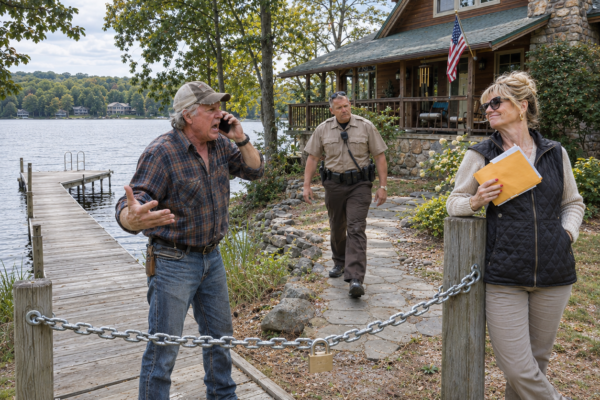
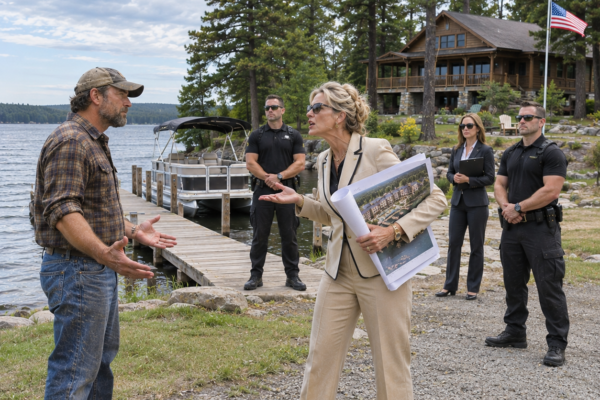
The first time Karen Wilson stepped onto my private island, she told me I had thirty days to remove my cabin or surrender the property to her homeowners association.
She didn’t ask permission to dock.
She didn’t introduce herself politely.
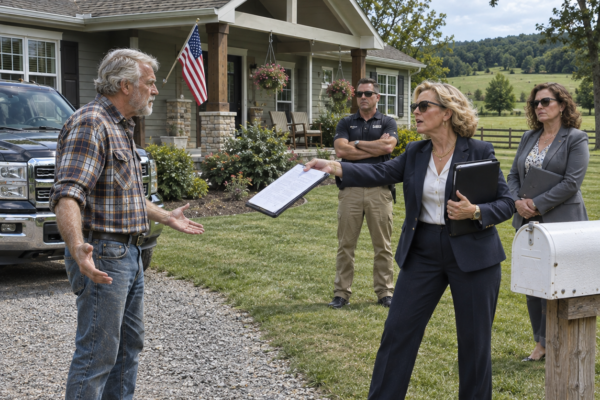
She arrived in a white luxury pontoon boat with a lawyer, a woman carrying a leather portfolio, and the kind of smile people wear when they believe the outcome has already been decided.
“Mr. Marshall,” she announced, stepping onto my dock, “we have a serious problem with your property.”
I was standing knee-deep in Lake Pinewater, clearing leaves from a water intake.
My thirteen-year-old son, Sam, was fishing off the other end of the dock.
Our golden retriever, Scout, slept beneath the picnic table.
Until that moment, it had been a perfect Saturday.
“What problem?” I asked.
Karen looked toward my cabin.
“Your island is sitting in the middle of a community-managed lake, and none of its structures meet Pinewater Reserve’s architectural standards.”
I climbed onto the dock.
“My island isn’t part of Pinewater Reserve.”
She laughed.
“That’s what everyone says until they understand how community jurisdiction works.”
Her lawyer, Brad Mercer, opened a folder.
“Last month, the HOA voted unanimously to extend its authority over the lake and all associated recreational structures.”
I stared at him.
“You voted to take control of somebody else’s property?”
Karen’s smile disappeared.
“Don’t twist our words, Mr. Marshall. We’re trying to preserve the environment and protect the investments of two hundred wealthy families.”
“My aunt owned this island thirty years before your subdivision existed.”
“Then your aunt should’ve anticipated that the surrounding community would eventually evolve.”
I looked at her.
My aunt Eleanor had spent almost forty years creating that little island in the Missouri Ozarks.
She’d reinforced its shoreline, planted trees, obtained the necessary permits, and made sure the separate parcel was properly recorded.
When she died three years earlier, she left the island and its adjoining mainland property to me.
Her final letter contained one instruction.
Theo, take care of my island. It’s where our family learned how to be happy without needing anything expensive.
I’d honored that promise.
I built a small off-grid cabin, installed solar panels, maintained the shoreline, and reinforced the dock so my children could swim safely.
The whole place was barely an acre.
But to me, it was priceless.
Karen didn’t see a family sanctuary.
She saw a waterfront development opportunity.
Her assistant, Jill, opened a presentation portfolio.
Inside were enlarged drone photographs of my property.
Red circles surrounded my solar panels, rainwater collection equipment, dock, and shoreline.
“These improvements constitute environmental violations,” Jill announced.
“According to whom?” I asked.
“The association’s environmental review committee.”
I looked at the photographs.
Something was wrong.
One image showed a large patch of disturbed shoreline beside my cabin.
Except there wasn’t any disturbed shoreline there.
I’d planted native grass in that exact location the previous summer.
“Who took these pictures?”
Karen folded her arms.
“Our consultants.”
“Then your consultants need to explain why that photograph doesn’t match what’s actually here.”
Brad stepped forward.
“Mr. Marshall, I’d advise you not to make accusations you can’t substantiate.”
I turned the page.
There was a proposed enforcement schedule.
Thirty days to remove unauthorized structures.
Forty-five days to surrender recreational access.
And a final paragraph suggesting that the HOA could assume control of the parcel if I failed to comply.
I almost laughed.
“You can’t vote yourselves ownership of an island.”
Karen leaned closer.
“Do you have any idea what the lakefront property around here is worth?”
“Quite a bit, apparently.”
“Three million dollars, Mr. Marshall. That’s the estimated value of this island as part of our planned luxury development.”
She seemed to think the number would impress me.
Instead, it explained everything.
“You’re planning to build on my land.”
She smiled again.
“There’s a beautiful future available here. A private wellness retreat, luxury accommodations, upgraded docks. Your little cabin doesn’t fit that vision.”
“My cabin isn’t for sale.”
“Everything is for sale at the right price.”
“Not this.”
Karen’s expression hardened.
“Then we’ll have to address your environmental violations through the appropriate authorities.”
I glanced toward Sam.
He’d stopped fishing and was watching us.
That was enough.
“Take your boat and leave,” I said.
Brad started to protest.
I held up my hand.
“This is private property. I’m asking you to leave.”
Karen stared at me for several seconds.
Then she turned toward the pontoon.
“You’ll regret being difficult, Mr. Marshall.”
She climbed aboard.
Jill followed.
Brad was last.
Before stepping onto the boat, he glanced at the cabin.
“You might want to reconsider before the inspections begin.”
I watched them motor away.
Sam came over.
“Dad, can they really take Aunt Eleanor’s island?”
“No,” I told him. “Not just because they voted on it.”
But I knew something he didn’t.
People who want land badly enough don’t always stop when the deed says no.
On Monday morning, I went to the county records office and requested Pinewater Reserve’s recent filings.
The clerk, Drew Haskins, had known me for years.
He brought out a stack of applications, environmental complaints, and development maps.
Then he placed one final document in front of me.
A luxury resort proposal submitted by Coastal Delta Holdings.
The proposed development included floating cabins, a private marina, and a two-story villa.
The villa was drawn directly over my little cabin.
Beside it was a line labeled:
CURRENT STRUCTURE — SCHEDULED FOR REMOVAL.
I looked at the filing date.
Karen had submitted that plan three weeks before she ever came to my island.
And when I reached the final page, I discovered she had already requested an inspection that could prevent my family from accessing the property.
The date was Friday.
Four days away.
Part 2:
The first time Karen Wilson stepped onto my private island, she told me I had thirty days to remove my cabin or surrender the property to her homeowners association.
She didn’t ask permission to dock.
She didn’t introduce herself politely.
She arrived in a white luxury pontoon boat with a lawyer, a woman carrying a leather portfolio, and the kind of smile people wear when they believe the outcome has already been decided.
“Mr. Marshall,” she announced, stepping onto my dock, “we have a serious problem with your property.”
I was standing knee-deep in Lake Pinewater, clearing leaves from a water intake.
My thirteen-year-old son, Sam, was fishing off the other end of the dock.
Our golden retriever, Scout, slept beneath the picnic table.
Until that moment, it had been a perfect Saturday.
“What problem?” I asked.
Karen looked toward my cabin.
“Your island is sitting in the middle of a community-managed lake, and none of its structures meet Pinewater Reserve’s architectural standards.”
I climbed onto the dock.
“My island isn’t part of Pinewater Reserve.”
She laughed.
“That’s what everyone says until they understand how community jurisdiction works.”
Her lawyer, Brad Mercer, opened a folder.
“Last month, the HOA voted unanimously to extend its authority over the lake and all associated recreational structures.”
I stared at him.
“You voted to take control of somebody else’s property?”
Karen’s smile disappeared.
“Don’t twist our words, Mr. Marshall. We’re trying to preserve the environment and protect the investments of two hundred wealthy families.”
“My aunt owned this island thirty years before your subdivision existed.”
“Then your aunt should’ve anticipated that the surrounding community would eventually evolve.”
I looked at her.
My aunt Eleanor had spent almost forty years creating that little island in the Missouri Ozarks.
She’d reinforced its shoreline, planted trees, obtained the necessary permits, and made sure the separate parcel was properly recorded.
When she died three years earlier, she left the island and its adjoining mainland property to me.
Her final letter contained one instruction.
Theo, take care of my island. It’s where our family learned how to be happy without needing anything expensive.
I’d honored that promise.
I built a small off-grid cabin, installed solar panels, maintained the shoreline, and reinforced the dock so my children could swim safely.
The whole place was barely an acre.
But to me, it was priceless.
Karen didn’t see a family sanctuary.
She saw a waterfront development opportunity.
Her assistant, Jill, opened a presentation portfolio.
Inside were enlarged drone photographs of my property.
Red circles surrounded my solar panels, rainwater collection equipment, dock, and shoreline.
“These improvements constitute environmental violations,” Jill announced.
“According to whom?” I asked.
“The association’s environmental review committee.”
I looked at the photographs.
Something was wrong.
One image showed a large patch of disturbed shoreline beside my cabin.
Except there wasn’t any disturbed shoreline there.
I’d planted native grass in that exact location the previous summer.
“Who took these pictures?”
Karen folded her arms.
“Our consultants.”
“Then your consultants need to explain why that photograph doesn’t match what’s actually here.”
Brad stepped forward.
“Mr. Marshall, I’d advise you not to make accusations you can’t substantiate.”
I turned the page.
There was a proposed enforcement schedule.
Thirty days to remove unauthorized structures.
Forty-five days to surrender recreational access.
And a final paragraph suggesting that the HOA could assume control of the parcel if I failed to comply.
I almost laughed.
“You can’t vote yourselves ownership of an island.”
Karen leaned closer.
“Do you have any idea what the lakefront property around here is worth?”
“Quite a bit, apparently.”
“Three million dollars, Mr. Marshall. That’s the estimated value of this island as part of our planned luxury development.”
She seemed to think the number would impress me.
Instead, it explained everything.
“You’re planning to build on my land.”
She smiled again.
“There’s a beautiful future available here. A private wellness retreat, luxury accommodations, upgraded docks. Your little cabin doesn’t fit that vision.”
“My cabin isn’t for sale.”
“Everything is for sale at the right price.”
“Not this.”
Karen’s expression hardened.
“Then we’ll have to address your environmental violations through the appropriate authorities.”
I glanced toward Sam.
He’d stopped fishing and was watching us.
That was enough.
“Take your boat and leave,” I said.
Brad started to protest.
I held up my hand.
“This is private property. I’m asking you to leave.”
Karen stared at me for several seconds.
Then she turned toward the pontoon.
“You’ll regret being difficult, Mr. Marshall.”
She climbed aboard.
Jill followed.
Brad was last.
Before stepping onto the boat, he glanced at the cabin.
“You might want to reconsider before the inspections begin.”
I watched them motor away.
Sam came over.
“Dad, can they really take Aunt Eleanor’s island?”
“No,” I told him. “Not just because they voted on it.”
But I knew something he didn’t.
People who want land badly enough don’t always stop when the deed says no.
On Monday morning, I went to the county records office and requested Pinewater Reserve’s recent filings.
The clerk, Drew Haskins, had known me for years.
He brought out a stack of applications, environmental complaints, and development maps.
Then he placed one final document in front of me.
A luxury resort proposal submitted by Coastal Delta Holdings.
The proposed development included floating cabins, a private marina, and a two-story villa.
The villa was drawn directly over my little cabin.
Beside it was a line labeled:
CURRENT STRUCTURE — SCHEDULED FOR REMOVAL.
I looked at the filing date.
Karen had submitted that plan three weeks before she ever came to my island.
And when I reached the final page, I discovered she had already requested an inspection that could prevent my family from accessing the property.
The date was Friday.
Four days away.
I stared at the paperwork until Drew cleared his throat.
“Theo, you all right?”
I looked up.
“Did anyone tell her she could demolish a private residence?”
“No. It’s a proposed development plan, not an approved demolition permit.”
“Then why does it say scheduled?”
Drew adjusted his glasses.
“Because whoever prepared that drawing is acting like the land is already theirs.”
I studied the application.
Coastal Delta Holdings had identified the island as part of a proposed three-million-dollar private wellness development. The figure wasn’t a county appraisal of my little island. It was the value the investors expected from controlling the island, the adjoining access arrangements, and the planned resort facilities.
That distinction didn’t make the proposal less disturbing.
They were marketing a property I had never agreed to sell.
“Anything else?” I asked.
Drew pulled up the filing history.
“There’s an environmental complaint attached. Somebody alleged unauthorized fill, polluted runoff, and removal of shoreline vegetation.”
“All on my island?”
“Yes.”
“Who filed it?”
“Pinewater Reserve, through Karen Wilson.”
“Has anyone verified it?”
“Not yet. The field visit requested for Friday is part of an initial review.”
I leaned back.
“She told me it was an enforcement inspection.”
Drew shook his head.
“A complaint doesn’t make her an inspector. And a scheduled visit doesn’t give the HOA possession of anything.”
I knew that.
But Karen had been counting on me not knowing.
There was something else she hadn’t counted on.
My full name was Theodore Marshall.
And for the previous nine years, I’d been the elected sheriff of the county.
Karen apparently knew me only as the man with an off-grid cabin, a small fishing boat, and faded work clothes.
My family had always valued privacy at the lake. I didn’t park a marked sheriff’s vehicle on the shore, and I didn’t spend weekends telling strangers what I did for a living.
I preferred being a father there.
Not Sheriff Marshall.
But my profession had taught me to pay attention when somebody used confident language to conceal missing authority.
It had also taught me something equally important.
Having a badge doesn’t entitle you to investigate your own enemies.
This was my property.
My family’s safety.
My personal dispute.
If crimes had occurred, my deputies shouldn’t have to choose between loyalty to me and independent judgment.
I had no intention of giving Karen that argument.
I thanked Drew, paid the ordinary copying fees, and took the public documents to my personal attorney.
Cassidy Lane worked out of a brick office near the county courthouse. She’d represented local landowners for more than twenty years, and she possessed an impressive ability to make people regret sending threatening letters.
She listened while I described Karen’s visit.
Then she examined the plat, the HOA resolution, and the Coastal Delta proposal.
“What does Pinewater actually own?” she asked.
“Common areas on the eastern shore. A private access road. A boat launch for its residents. Some shoreline easements.”
“The lake itself?”
“Not all of it. The underlying property interests are divided among several owners. My island is separately deeded, and I have documented access from Eleanor’s old mainland parcel.”
She nodded.
“And your cabin?”
“Approved under the permits applicable when it was built. The shoreline work was reviewed, too.”
“Bring me every record.”
“I already did.”
I placed Eleanor’s old binder on her desk.
Cassidy opened it.
Inside were decades of surveys, deeds, recorded access agreements, land-use correspondence, and environmental approvals.
Aunt Eleanor had been a remarkable woman.
She taught high school mathematics for thirty-four years, painted landscapes after retirement, and believed that any important document deserved a duplicate stored somewhere dry.
Her island had started as a raised patch of ground in the lake before I was born. She’d improved it over time under the approvals required for the work.
The county recognized it as a separate taxable parcel.
It wasn’t a sovereign territory or some magical exemption from state law.
It was simply private land.
Private land that Pinewater Reserve did not own.
Cassidy spent nearly an hour reviewing the documents.
Finally, she looked at me.
“Your ownership is well supported. This environmental complaint is a separate issue, so we’ll respond with the actual permits and recent site photographs.”
“And the resort plan?”
“We put Coastal Delta on formal notice that the property isn’t available and that nobody has authority to represent otherwise.”
She paused.
“Theo, there’s one thing I want you to do immediately.”
“What’s that?”
“Get out of the official investigation.”
“I already planned to.”
“Good. Notify your chief deputy and the prosecutor that you’re an interested property owner. If there’s a criminal investigation later, ask for outside investigators.”
I nodded.
She leaned back.
“Then let me handle the land dispute. You handle being a witness.”
That afternoon, I formally documented my personal conflict of interest and arranged for any criminal allegations involving my island to be referred outside my chain of command.
I also notified the county prosecutor.
I didn’t know whether we’d reach that point.
But I wasn’t going to wait until somebody accused me of using the sheriff’s office as a private security company.
When I got home, my wife, Mara, was standing on the porch.
She had Sam’s fishing tackle in one hand and our daughter Lucy’s pink life jacket in the other.
“Is this going to get worse?” she asked.
I looked toward the lake.
“I hope not.”
She studied my face.
“Theo.”
I sighed.
“Yes. I think it might.”
“Then we keep the kids off the island until it’s settled.”
I hated hearing that.
The island was where Lucy had learned to swim.
Where Sam had caught his first bass.
Where Mara and I had spent our anniversary after Aunt Eleanor died.
It was the one place my family could escape the noise of my job.
Now Karen was making my wife afraid to take our children there.
I took the life jacket from Mara.
“You’re right.”
She looked at me.
“Promise me something.”
“Anything.”
“Don’t let being sheriff convince you that you have to solve this yourself.”
I put my arms around her.
“I won’t.”
At the time, I believed I could keep that promise without much difficulty.
Then Pinewater built its pier.
Three days after Karen’s pontoon visit, a construction crew appeared on the eastern shoreline.
By lunchtime, they’d installed temporary barriers and unloaded treated lumber, floating dock sections, and steel supports.
A large sign identified the project as the Pinewater Community Pier.
I watched from Eleanor’s mainland dock through binoculars.
The new structure pointed directly toward my island.
That alone wasn’t illegal.
Pinewater owned shoreline property, and it could pursue improvements there subject to the necessary approvals.
But I knew what Karen had proposed.
The development drawings showed the pier as the departure point for private resort shuttles.
The same shuttles that would someday carry paying guests to a villa built over my cabin.
I photographed the construction from my property and sent the images to Cassidy.
She checked the county permits.
The HOA had permission for a modest dock replacement.
What it was building appeared substantially larger.
Cassidy contacted the planning department and requested an independent review.
I didn’t order a deputy to stop the work.
I didn’t threaten the contractors.
I didn’t march across the lake wearing my badge.
I wanted the actual permitting authority to decide whether Pinewater was complying with its approvals.
That afternoon, Karen saw me watching.
She stood on the half-finished pier, holding her phone.
Then she waved cheerfully.
I didn’t wave back.
She called across the water.
“Getting nervous, Mr. Marshall?”
I lowered my binoculars.
She cupped one hand beside her mouth.
“Imagine how beautiful this lake will look when everything is finished!”
I said nothing.
Then she added, loudly enough for the workers to hear:
“Your island is going to be the jewel of our development!”
I looked at the cabin behind me.
Its cedar siding had weathered to a soft brown.
Aunt Eleanor’s old wind chime hung beside the door.
My children’s painted steppingstones lined the path.
Nothing about the place resembled a luxury resort.
That was precisely why we loved it.
On Thursday, the day before the environmental visit, I received a call from a man who introduced himself as Nolan Price.
He said he represented Pinewater Lake Watch.
“Mr. Marshall, we’re conducting a routine compliance inspection of your dock and shoreline.”
“Who authorized it?”
“Pinewater Reserve.”
“That isn’t an agency with authority to inspect my property.”
“We have jurisdictional concerns.”
“Then send your concerns to the county.”
He sighed.
“Sir, it would be easier if you cooperated.”
“You’re welcome to send your credentials and the legal basis for your request to my attorney.”
He paused.
Then he hung up.
I called Cassidy.
“Looks like Karen hired private inspectors.”
Cassidy asked for the number.
When I gave it to her, she went quiet.
“Theo, that number belongs to Northern Apex Risk Solutions.”
“Security firm?”
“Private security and surveillance. I encountered them in another property dispute.”
“Are they licensed here?”
“That’s one of the questions I’m checking.”
Then she added, “Don’t let anybody onto the island based solely on an HOA credential.”
“I wasn’t planning to.”
“Good.”
But she knew as well as I did that people who want to enter private property don’t always wait for permission.
The next morning, I met the actual environmental reviewer on the mainland.
Her name was Denise Harper.
She worked with the relevant state environmental office and had been assigned to assess the complaint submitted by Pinewater.
She was polite, professional, and uninterested in Karen’s opinions about how my cabin looked.
I provided the permits, maintenance records, and photographs.
Denise explained what the visit could and couldn’t establish.
She could examine the specific environmental issues within her agency’s authority. She couldn’t transfer property ownership, enforce HOA architectural standards, or decide that my cabin should become part of a resort.
I agreed to a properly documented site visit.
We traveled to the island together.
She examined the shoreline plantings, drainage, and structures identified in the complaint.
Then she compared the conditions with the submitted drone images.
At the place where Pinewater’s photograph showed exposed soil and runoff entering the water, native grass grew thickly beside the bank.
Denise crouched to examine it.
“How long has this been established?”
“Planted last summer. I have dated photographs.”
She took her own pictures.
Then she looked at the complaint image.
“This doesn’t accurately represent the conditions I’m seeing.”
I nodded.
“No, ma’am.”
She wouldn’t speculate about whether the photograph had been deliberately altered.
That required examining the original files and how they were prepared.
But she documented the discrepancy.
By the end of the visit, she’d found no obvious emergency condition that required closing my island.
She explained that the review and any outstanding questions would be completed through the normal process.
Karen didn’t get the immediate closure she’d wanted.
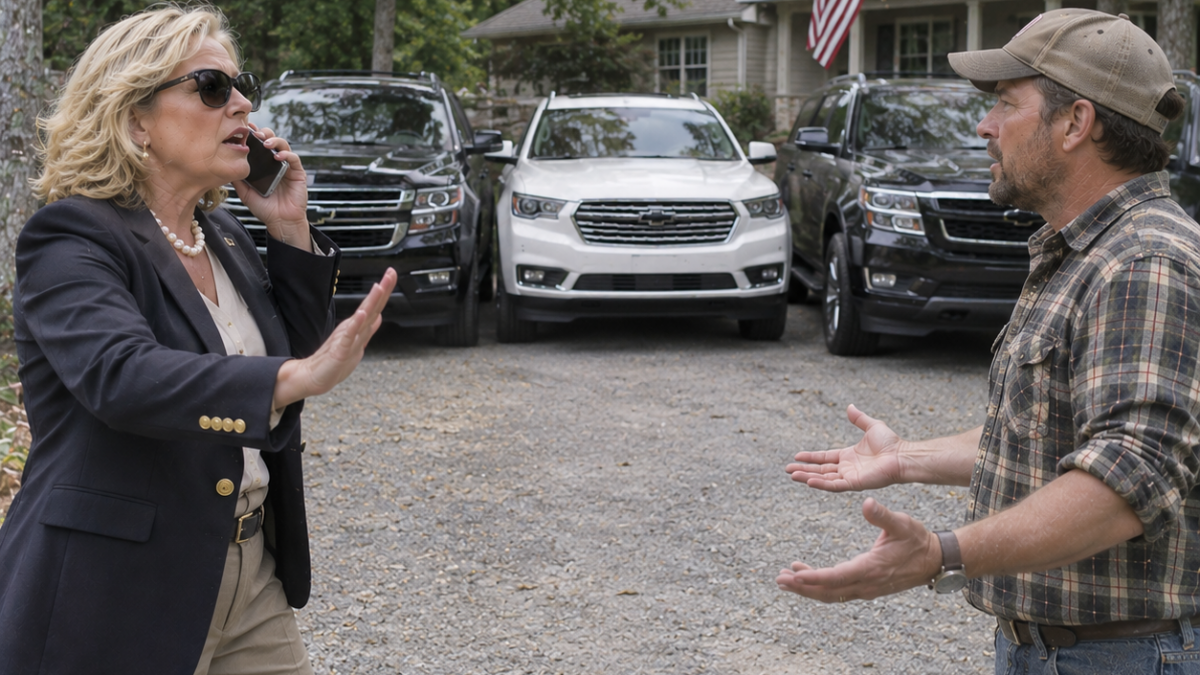
And by Monday afternoon, she was furious enough to call me herself.
“You interfered with an environmental investigation!”
I stood beside my workshop, looking out toward the lake.
“I cooperated with the authorized reviewer.”
“You manipulated the process.”
“How?”
“You know exactly how.”
“Karen, the reviewer saw the island. She examined the records. If you disagree with her findings, use the proper process.”
Her voice sharpened.
“You think your connections will protect you.”
I looked at the phone.
“What connections?”
She laughed.
“Don’t pretend you’re just some ordinary little property owner.”
For a moment, I thought she’d finally discovered who I was.
Then she continued.
“People like you always know somebody at the county who will do you favors.”
I almost smiled.
She still didn’t know.
“Karen, my attorney will respond to any legitimate concerns. Don’t come onto my property without permission.”
“You’re making a terrible mistake, Mr. Marshall.”
She hung up.
Two mornings later, someone entered my cabin while I was away.
And that was when the dispute stopped being a fight over paperwork.
I found the cabin door open at 10:46 on a Wednesday morning.
At first, I thought the wind had caught it.
Then I noticed the broken latch.
I stepped off the dock and stopped.
Through the front window, I could see drawers hanging open and papers scattered across the floor.
Two men stood inside.
Both wore dark blue uniforms.
Both had equipment belts.
And one had a silver badge clipped to his chest.
I stayed outside the doorway.
“Who are you?”
The older man turned.
“Property compliance officers.”
“From what agency?”
“Northern Apex Risk Solutions. We’re authorized by Pinewater Reserve.”
“You’re inside a private residence without my permission.”
He lifted a folder.
“We have an inspection order.”
“From a court?”
“From the association.”
“Then you don’t have a court order.”
The younger man stepped toward me.
“Sir, we’re going to need you to remain outside while we complete our inspection.”
I looked past him.
Aunt Eleanor’s filing cabinet had been opened.
One drawer was lying on the floor.
My family photographs were scattered across the kitchen counter.
I felt anger rise so fast that I had to concentrate on keeping my voice steady.
“Put down what you’re holding and leave.”
The older man touched the pepper spray on his belt.
“Don’t threaten us.”
“I haven’t threatened you. I’m telling you to leave my property.”
A boat engine sounded behind me.
Then someone called my name.
“Theo!”
It was Noah Barrett, a longtime friend who taught wilderness safety courses and occasionally helped me maintain the island.
I’d asked him to meet me that morning to repair a dock cleat.
He came up the path, saw the uniforms, and stopped.
“What’s going on?”
“These men entered my cabin without permission.”
Noah looked at the older man’s badge.
“Those aren’t sheriff’s deputies.”
The younger guard shifted.
“We’re certified private security personnel.”
“Then why are you searching his house?” Noah asked.
The older man stepped toward the doorway.
“Both of you need to back away.”
His hand moved again toward the spray canister.
I raised my hands.
“Nobody needs to do anything foolish.”
Then I turned to Noah.
“Go back to the dock and call 911.”
The younger guard looked surprised.
“You’re calling the police?”
“Yes.”
He stared at me.
Then he said, “Mrs. Wilson told us the homeowner was refusing compliance.”
I looked directly at him.
“Did she tell you she owns the island?”
He didn’t answer.
“Did she tell you there was a warrant?”
Still nothing.
The older guard stepped past him and started toward the boat.
“We’re finished here.”
“Don’t remove anything,” I said.
He ignored me.
I didn’t try to stop him physically.
Noah was already reporting the trespass.
I photographed the men and their boat from a safe distance as they left.
The boat carried the words PINEWATER LAKE WATCH.
The same phrase Nolan Price had used when he called.
By the time the responding authorities arrived, the two men were gone.
I gave a statement.
Noah did the same.
Then I provided the camera footage and the documentation I’d already preserved.
Because of my position as sheriff, the criminal investigation was referred to the Missouri State Highway Patrol and the county prosecutor.
I didn’t supervise the case.
I didn’t direct the interviews.
I didn’t decide who would be arrested.
I was the complainant whose cabin had been entered.
That wasn’t always comfortable.
I’d spent years being the person responsible for investigating incidents like this.
Now I had to trust other professionals to do their jobs.
They did.
An investigator named Sergeant Olivia Grant interviewed me the next afternoon.
She had a calm manner and a habit of asking questions that forced people to separate what they’d actually seen from what they merely suspected.
“Did you recognize either man?”
“No.”
“Did you see them take any property?”
“No. The cabin was searched, but I haven’t confirmed anything missing.”
“Did either identify himself as a sworn peace officer?”
“Not in those words. They used badges and the title ‘compliance officer,’ and one carried equipment that could easily confuse somebody.”
She nodded.
“We’ll determine exactly what representations they made.”
Then she asked about Karen.
I showed her the letters and the messages.
I explained the environmental complaint.
The resort plan.
The attempted inspection.
The security company’s connection to Pinewater.
Olivia listened.
Finally, she said, “I understand why you suspect coordination. But we’re going to establish it through records.”
“That’s what I want.”
She closed her notebook.
“Good. Because I don’t intend to build a case around who you are.”
I nodded.
“Neither do I.”
After she left, I went back to the island.
The place looked violated.
There wasn’t a better word for it.
Aunt Eleanor had kept a little wooden box of photographs in the bedroom.
I found it overturned.
Her handwriting covered the backs of several pictures.
Theo, age nine, first fish.
Eleanor and Margaret, summer picnic.
Sam learning to swim.
I sat on the edge of the bed and gathered them.
For a moment, I forgot about resort developments and lawyers.
I was simply angry that strangers had put their hands on things that belonged to my family.
That evening, Mara helped me put the cabin back in order.
She found Eleanor’s old recipe book beneath a chair.
“Why would security guards be searching through recipes?” she asked.
“I don’t think they were looking for recipes.”
“What were they looking for?”
I looked toward the filing cabinet.
“The original property records, maybe. Something they could use.”
Mara shook her head.
“Or they wanted you to know they could get inside.”
I hadn’t considered that.
But she was right.
The search might have been intended to frighten me as much as to find anything.
Before leaving, we checked the locks and secured the doors.
Then Mara touched my arm.
“No children here until this is over.”
I nodded.
“I know.”
She looked out at the water.
“I hate that they’ve taken this away from us.”
I couldn’t answer.
Because I hated it, too.
Two days later, I discovered the damaged solar conduit.
The cabin’s lights flickered when I switched on the inverter.
I shut the system down and inspected the exterior run.
A section of protective conduit had been opened.
The insulated cable inside had been cut.
It wasn’t normal wear.
The cut was clean, and the conduit cover showed marks consistent with tools.
I photographed everything without disturbing it further.
Then I checked the rainwater equipment.
Beneath a removable cover near the utility cabinet, I found a small black device that didn’t belong to me.
It had an antenna, a rechargeable battery, and a serial number.
I didn’t know what it did.
I certainly didn’t assume it was a GPS tracker simply because it looked expensive.
I contacted Sergeant Grant.
She arranged for the device to be collected and examined.
Later, an electronics specialist identified it as a cellular monitoring unit capable of reporting movement or equipment activity depending on how it had been configured.
A device like that couldn’t tell anyone where a stationary island was located.
Everyone already knew that.
But it could potentially tell someone when the cabin was occupied, when equipment was running, or when activity had been detected.
That possibility frightened Mara more than the broken door.
“Somebody might have been watching to see when we left?”
“Possibly.”
“With the kids?”
I reached for her hand.
“We don’t know exactly what it was transmitting yet.”
She looked at me.
“Theo, I don’t care if Karen owns the biggest house on the lake. Nobody gets to watch our family through a device hidden on our property.”
She was right.
And for the first time, I began to wonder whether Karen understood how far the people working for her were willing to go.
Cassidy filed for a temporary restraining order against unauthorized entry and interference with my property.
She also served preservation demands on Pinewater Reserve, Coastal Delta, and Northern Apex.
We asked the court to require the parties to keep relevant communications, work orders, inspection instructions, security records, and development documents intact.
The judge granted narrowly tailored temporary protections after reviewing the evidence then available.
The order didn’t declare everyone at Pinewater guilty of wrongdoing.
It didn’t transfer anyone’s property.
It simply prohibited specific interference while the dispute proceeded.
Karen responded through a neighborhood newsletter.
She accused me of being hostile to environmental responsibility.
She described my island as an illegally developed obstacle to community improvement.
And she claimed I was using my position in law enforcement to intimidate honest residents.
That last accusation hurt.
Not because it was true.
Because I’d made a deliberate effort to avoid exactly that conflict.
Cassidy recommended a simple response.
No public argument.
No angry social media posts.
No confrontation at the clubhouse.
Just the court papers, the official documents, and the independent investigation.
I followed her advice.
For almost a week, the lake remained quiet.
Then, at 3:14 on a Tuesday morning, a fire alarm sounded from my island.
I was staying at the mainland house.
The children were asleep upstairs.
My phone lit up with an alert from the dock’s monitoring system.
HEAT DETECTED — WEST DOCK.
I opened the camera feed.
Orange light filled the screen.
The dock was burning.
I called 911 immediately.
Then I woke Mara.
“The island dock’s on fire.”
She sat upright.
“What?”
“Keep the kids here. Don’t go near the water.”
I drove to our mainland landing.
From the shore, I could see flames rising above the trees on the island.
The fire had reached the wooden walkway connecting the dock to the main path.
The cabin stood farther back, but the surrounding grass was dry.
I wanted to take my boat across.
Every part of me wanted to get over there and fight the fire myself.
Instead, I stayed at the landing and gave the arriving fire crew everything I knew.
Access points.
Fuel storage locations.
The cabin layout.
The position of the solar batteries.
A rescue boat took firefighters across with the appropriate equipment.
They worked in darkness, their lights moving through smoke while crews onshore prepared additional supplies.
By dawn, the fire was out.
The dock was badly damaged.
Several sections had burned through.
The cabin had survived.
So had most of Aunt Eleanor’s shoreline plantings.
But the fire had destroyed the part of the island where my children had spent more summer afternoons than I could count.
I stood beside the charred boards after the fire marshal cleared the immediate area.
Something pale lay near the edge.
A partially melted laminated card.
I didn’t touch it.
I pointed it out to the investigator.
The surviving corner bore part of Pinewater Reserve’s logo.
It wasn’t proof that Karen had started the fire.
A contractor’s card could have been dropped days earlier.
A piece of plastic might have blown onto the dock.
But it was evidence worth preserving.
And it wasn’t the only evidence.
One of the cameras had transmitted a short recording before failing.
The footage showed a boat approaching the island shortly before the fire.
Two figures stepped onto the dock.
One carried a bag.
The image was dark and incomplete.
No faces were visible.
Sergeant Grant arranged for the video to be preserved and examined alongside the fire scene.
The fire marshal documented indications that the fire had been deliberately set, subject to further laboratory and investigative findings.
I stood at the edge of the burned dock, looking across the lake.
On the eastern shore, Pinewater’s new pier gleamed in the morning sunlight.
Karen’s resort dream was still printed on glossy paper.
My children’s dock was blackened timber.
I felt sick.
Then furious.
Then something worse.
For the first time, I genuinely wondered whether the next attempt would hurt somebody.
I called Cassidy.
“The dock burned.”
She was silent.
Then she asked, “Is everyone safe?”
“Yes.”
“Thank God.”
“I need this stopped.”
“I know, Theo.”
I stared at the wreckage.
“No more letters. No more fake inspectors. No more games.”
Her voice remained steady.
“Then we take the evidence to the court and let the independent investigators do their work.”
I looked toward the water.
It wasn’t the answer I wanted in that moment.
I wanted Karen standing in front of me, forced to explain why people connected to her development project kept appearing on my property.
But Cassidy was right.
Anger wouldn’t restore the dock.
And my badge wouldn’t make a weak case stronger.
We needed evidence.
Fortunately, Karen had left more of it behind than she realized.
The first useful break came from the boat.
Investigators obtained footage from a camera at a privately owned fishing dock on the western shore.
It showed a dark utility boat crossing the lake at 3:02 that morning.
The boat had a distinctive white repair patch on its starboard side.
A second camera near the public access road showed the same vessel being loaded onto a trailer shortly after four.
The trailer belonged to Northern Apex Risk Solutions.
When Sergeant Grant told me, I sat down.
The private security company.
Again.
The same company whose employees had entered my cabin.
The same company connected to the monitoring device.
And now one of its boats had been recorded near the island shortly before the fire.
But I knew the difference between a powerful lead and proof.
“Have they identified who was aboard?” I asked.
“That’s being established.”
“Anything I can do?”
“Continue giving us access to your property records and footage. Let us handle the rest.”
I nodded.
I wasn’t going to jeopardize the case by trying to conduct my own investigation.
Meanwhile, Cassidy obtained additional records through the civil proceedings.
Those documents explained why Karen had become so desperate.
Coastal Delta Holdings had been courting investors for a luxury wellness development estimated at more than three million dollars.
The centerpiece was the island.
The problem was that the developer didn’t own it.
The original proposal described the island as a potential acquisition.
Later versions had quietly changed that wording.
One presentation called it an “anticipated community-controlled recreational parcel.”
Another referred to the removal of “existing temporary structures.”
My cabin wasn’t temporary.
My deed wasn’t uncertain.
And my aunt hadn’t spent decades building a vacation retreat so a neighboring HOA could casually erase it from a map.
Then Cassidy found an email from Aaron Wilson.
Aaron was Karen’s husband.
He owned several businesses, including an interest in Northern Apex.
His message was addressed to Karen and a Coastal Delta executive.
The Marshall parcel must be resolved before the next financing review. We cannot have an occupied private residence in the center of the proposed resort.
A later message from Karen was even more revealing.
Environmental enforcement should establish that the existing improvements are unsuitable. Once access is restricted, the owner may become more willing to negotiate.
I read that sentence three times.
She hadn’t filed the environmental complaint because she’d discovered a problem.
She wanted the complaint to create a problem.
The doctored photographs made more sense now.
So did the aggressive inspections.
They were trying to make the island difficult enough to own that I’d eventually surrender it.
Cassidy looked at me across her desk.
“Theo, they weren’t simply hoping you’d sell.”
“What were they hoping?”
“That you’d lose access, spend money defending yourself, and decide the fight wasn’t worth the trouble.”
I looked down at the documents.
“All for a resort.”
“All for control of land they didn’t own.”
There was another piece.
One of the original drone images had been recovered from the contractor’s document-production records.
The native image showed my shoreline intact.
The version submitted with Pinewater’s complaint showed exposed soil and apparent runoff entering the lake.
The images weren’t identical.
A digital examination found that the submitted illustration combined elements from different images, including a photograph of disturbed earth from another construction site.
An annotation in the design file described it as an “impact visualization.”
But the environmental complaint had presented it as an image of existing conditions.
That distinction mattered.
A proposed illustration could show what someone feared might happen.
A photograph submitted as evidence was supposed to show what actually existed.
Karen had used the second to advance the first.
And she had signed the complaint.
By then, several Pinewater homeowners had begun asking questions.
One was Marjorie Bell, a retired accountant who’d served on the association board before Karen became president.
She contacted Cassidy after receiving notice of the civil proceedings.
“I’ve been reviewing the HOA’s financial statements,” Marjorie said. “There are payments I can’t explain.”
Cassidy asked what kind.
“Consulting fees. Security assessments. Development planning. We were told these expenses were for ordinary community improvements.”
“Who received them?”
Marjorie named several companies.
One was Northern Apex.
Another was a consulting business associated with Aaron Wilson.
A third had no obvious connection to ordinary neighborhood maintenance.
The payments had been approved under descriptions such as shoreline safety, environmental coordination, and community access planning.
Marjorie had requested supporting contracts.
Karen refused.
Then she warned Marjorie that distributing financial information could expose her to legal action.
Marjorie didn’t back down.
She retained counsel and helped other board members request an independent audit.
That was when the first fractures appeared inside Pinewater Reserve.
Most homeowners didn’t want my island.
They wanted the landscaping maintained, the boat launch repaired, and their association fees used responsibly.
They hadn’t voted to acquire a private island.
They hadn’t authorized masked surveillance of my family.
They certainly hadn’t agreed to have security personnel enter somebody else’s cabin.
Karen had persuaded some residents that my island was damaging the lake.
But once they saw the permits, the original photographs, and the resort documents, her explanations began falling apart.
At a special board meeting, she tried to regain control.
I attended with Cassidy at the board’s invitation.
Karen sat at the center of the long table wearing an immaculate cream blazer.
Brad Mercer was beside her.
Jill occupied a chair near the projector.
The room was crowded.
Karen began with a statement accusing me of waging a campaign against the association.
“Mr. Marshall has consistently refused reasonable environmental oversight,” she announced. “He has used threats, legal pressure, and his personal connections to obstruct a project that would benefit this entire community.”
A man near the front raised his hand.
“What about the burned dock?”
Karen’s expression hardened.
“That incident remains under investigation.”
“Wasn’t your security company involved?”
“My association contracts with licensed professionals.”
A woman in the second row stood.
“Why did they go inside his cabin?”
Karen looked toward Brad.
He cleared his throat.
“The details of that incident are disputed.”
Then Marjorie stood.
“Karen, why were we never shown the agreement with Coastal Delta?”
Karen frowned.
“Which agreement?”
“The development proposal that places a private villa on Mr. Marshall’s property.”
“We’ve discussed future possibilities for improving the lake.”
“Not acquiring his island.”
Karen’s voice rose.
“Because the negotiations were preliminary!”
I stood.
“Karen, there haven’t been any negotiations.”
She turned toward me.
“Sit down, Mr. Marshall.”
I remained standing.
“You’ve never made an authorized purchase offer through my attorney. I haven’t agreed to sell, and I haven’t given your developer permission to represent my property as available.”
Brad whispered something to her.
Karen ignored him.
“You don’t understand the interests of this community.”
“I understand that your plans show my cabin scheduled for removal.”
“That’s conceptual!”
“Then why did you ask the county to restrict access before presenting your investors with the next phase?”
Her face tightened.
“You’re twisting unrelated matters.”
Cassidy stepped forward.
“Mrs. Wilson, the relevant documents have been provided to the board’s independent counsel. They can determine what the association actually authorized.”
A board member named Peter Grayson spoke.
“That’s what we’re trying to do.”
He held up a document.
“Karen, I checked the minutes from the meeting where you said the HOA voted to extend jurisdiction over the lake.”
She looked at him.
“And?”
“There’s no such vote recorded.”
The room went quiet.
Peter continued.
“There was a motion to study shoreline maintenance. Nothing authorizing the association to claim a private island.”
Karen stared.
“You’re misreading the minutes.”
“Then show us the resolution.”
Brad began searching through his folder.
He didn’t find one.
Another director asked why Northern Apex had been paid for surveillance services never presented to the board.
Marjorie asked why the consultant receiving some of those payments shared an ownership connection with Aaron Wilson.
Karen called the questions inappropriate.
Then she called them disrespectful.
Then she accused everyone of undermining years of hard work.
But nobody had yet produced the authority she’d claimed during her first visit to my dock.
Finally, Peter asked the question that ended the argument.
“Karen, did you personally tell Mr. Marshall that the HOA could take his property if he didn’t remove his cabin?”
She looked toward me.
“That statement has been taken out of context.”
“I was there,” I said.
“And so was your lawyer.”
Brad stared down at the table.
Peter turned to him.
“Mr. Mercer, can our HOA legally acquire that island just by passing a resolution?”
Brad took a long breath.
“No. A board resolution cannot independently transfer a third party’s real property.”
Several residents began talking at once.
Karen turned sharply toward her attorney.
“Brad!”
He looked at her.
“That’s the law.”
For a moment, the room was silent.
Then Marjorie asked for a motion to suspend Karen from her officer duties while the association’s finances and development dealings were independently reviewed.
The directors voted.
Karen lost the presidency that evening.
She left the meeting without looking at me.
But her removal didn’t end the case.
The independent criminal investigation had been moving forward while the HOA argued about meeting minutes.
Northern Apex’s business records identified the men who entered my cabin.
They had been directed to obtain photographs and locate property documents concerning the island.
One of the men eventually cooperated with investigators.
He described instructions to search for original access agreements, shoreline permits, and anything that might complicate the proposed resort development.
His account was corroborated by messages recovered through lawful investigative procedures.
Another employee provided information about the equipment installed near my cabin.
The monitoring unit had been configured to report activity at the utility area.
Its serial number matched equipment assigned to Northern Apex under a contract associated with the Wilson businesses.
The fire investigation took longer.
The investigators had the boat footage, the trailer records, and the financial connections.
But they needed more.
That evidence came when records and testimony established who had operated the boat the night the dock burned.
Two Northern Apex employees had been sent to the island.
One admitted participating in the fire after receiving instructions to make the dock unusable before Coastal Delta’s next financing review.
The account was corroborated by messages, payment records, and evidence recovered during the investigation.
Aaron Wilson was connected to the arrangement.
Further records supported the prosecutor’s allegations that Karen had participated in the broader scheme to pressure me through unlawful property interference and falsified claims.
She had spent months describing herself as a protector of the community.
Now prosecutors were examining whether she’d helped organize a plan to destroy property she wanted for a private business opportunity.
I didn’t celebrate when charges were filed.
I thought about Mara.
How she’d begun checking the windows whenever a boat passed after dark.
How Sam had stopped asking to go fishing.
How Lucy cried the first time she saw photographs of the burned dock.
And how Aunt Eleanor’s cabin had become a place my children were afraid to visit.
The civil court issued further orders protecting my property from unauthorized interference.
The environmental complaint was resolved on its actual evidence rather than the HOA’s misleading illustrations.
Pinewater’s proposed expansion could not proceed onto my island without a lawful property interest and the required approvals.
The new HOA board canceled its arrangement with Coastal Delta and withdrew the unsupported jurisdictional claims.
The association also commissioned an independent financial audit.
That review found significant spending irregularities involving security and development-related services, including payments to businesses connected to the Wilson family that hadn’t received the approval the governing procedures required.
Homeowners were furious.
Their dues had helped finance a campaign many hadn’t known existed.
The association sought recovery where supported by the records and cooperated with investigators.
The proceedings took months.
There were hearings, document requests, witness interviews, and disagreements about responsibility.
Karen denied wrongdoing.
Aaron challenged the charges against him.
Several Northern Apex employees faced separate proceedings.
Eventually, the criminal cases reached their conclusions.
The employees directly involved in the dock fire admitted their roles through negotiated pleas.
Aaron was convicted on charges arising from the arson and related criminal conduct.
Karen was convicted of offenses connected to the fraudulent property scheme and unlawful activities the evidence showed she had knowingly supported.
Both received prison sentences.
The sentences were based on the conduct proven in their cases, not on the fact that they’d challenged a sheriff.
That distinction mattered to me.
A person shouldn’t receive special punishment for harassing someone with a badge.
But neither should a badge make its owner less entitled to protection when somebody breaks into his home and burns his property.
My civil claims were resolved separately.
The responsible parties and their insurers, to the extent coverage applied, reached a settlement addressing documented losses and restoration costs.
The new Pinewater board acknowledged my ownership, confirmed that its covenants did not apply to the island, and agreed to stop representing the property as part of the association’s amenities.
The oversized pier project was reviewed against its permit and modified to comply with the approvals that actually existed.
The island stayed mine.
It wasn’t transferred to a developer.
It wasn’t converted into a luxury wellness retreat.
And no HOA vote could change that.
When the legal proceedings were finally behind us, I called the contractor who’d helped Aunt Eleanor reinforce the shoreline years earlier.
His son now ran the business.
We designed a replacement dock with stronger supports, improved lighting, and materials chosen for durability and easier maintenance.
I replaced the damaged solar wiring.
Repaired the cabin door.
Restored the security equipment.
And made sure the shoreline was stabilized without disturbing the native vegetation Eleanor had loved.
I couldn’t bring back the exact boards where Sam caught his first fish.
I couldn’t recover every old mark in the wood or the memories attached to them.
But I could make the island safe for my family again.
The first weekend we returned, Lucy stood on the new dock holding a fishing pole.
“Dad?”
“Yeah, sweetheart?”
“Are the bad people gone?”
I sat beside her.
“The people who hurt this place can’t come back and do what they did.”
She looked toward the opposite shore.
“Can other people visit?”
“Of course. Friends, family, people we invite.”
She thought about that.
“Even people from Pinewater?”
I smiled.
“Yes. Living in a neighborhood doesn’t make somebody bad.”
She nodded seriously.
“Then they just have to ask first.”
“Exactly.”
Sam came down the path carrying a tackle box.
He inspected the new dock.
“It’s different.”
“I know.”
He looked at the reinforced railing.
“Better, though.”
“In some ways.”
He set the tackle box down.
Then he pointed toward the water.
“Remember when Aunt Eleanor showed me how to bait a hook?”
I smiled.
“She showed all of us.”
“She said fish don’t care how much your fishing pole costs.”
I laughed.
“That sounds like Eleanor.”
Mara came out of the cabin with sandwiches.
Scout followed her, tail wagging.
For the first time in months, nobody was talking about lawyers.
Nobody was reading threatening letters.
Nobody was watching a security boat circle our property.
We ate lunch at the picnic table.
Then the children went fishing.
Mara sat beside me on the dock.
“You know what bothered me most?” she asked.
I looked at her.
“The fire?”
“Before that.”
I waited.
“Watching those people walk onto the island like they were entitled to decide what happened here.”
I nodded.
“Karen never understood why you kept it,” she continued.
I looked toward the little cabin.
“She understood its price.”
“That’s different.”
“Very.”
The sun lowered over Lake Pinewater, turning the water gold.
Across the lake, lights appeared in the houses along the eastern shore.
Pinewater Reserve still existed.
Its residents still maintained their gardens, walked their dogs, and enjoyed the lake.
The difference was that its new leadership understood that community rules had boundaries.
An association could manage the property and responsibilities entrusted to it.
It couldn’t simply claim a neighboring parcel because somebody saw an opportunity to make money.
That evening, I took Aunt Eleanor’s letter from the drawer where I’d been keeping it.
The paper had softened with age.
Her handwriting was still strong and unmistakable.
Theo, take care of my island.
I looked around.
The cedar cabin.
The repaired shoreline.
The new dock.
My wife laughing at something Lucy had said.
Sam leaning over the water, trying to untangle his fishing line.
For a long time, I’d thought honoring Eleanor’s wishes meant preserving every board, every path, and every tree exactly as she’d left them.
But it meant something more than that.
It meant protecting the place where our family could be together without having to prove anything to anybody.
Karen Wilson had seen a three-million-dollar resort opportunity.
Aunt Eleanor had seen a quiet place where children could catch fish and adults could forget their troubles for a while.
I knew which one mattered to me.
I folded the letter and put it back in its envelope.
Then I walked down to the dock.
Sam looked up.
“Dad, can you help me with this line?”
“Sure.”
I knelt beside him.
The knot was a mess.
It took me several minutes to work it loose.
When I finished, Lucy held up a tiny fish she’d just caught.
“Dad! Look!”
I laughed.
“That’s a beauty.”
“It’s smaller than my hand!”
“Still counts.”
Mara came to the doorway.
“Dinner in twenty minutes.”
I waved.
The wind stirred the branches above the cabin.
The lake moved gently against the dock.
Somewhere across the water, a boat engine started, then faded into the distance.
I didn’t reach for my phone.
I didn’t look for my badge.
I didn’t wonder what Karen was planning next.
There was nothing left for her to plan here.
I was off duty.
I was a husband.
I was a father.
And I was standing on the little island my aunt had trusted me to protect.
For the first time in a long while, that was all I needed to be.
I sat beside Sam, cast my line into the water, and watched the ripples spread across the lake.
Behind us, the cabin lights came on.
The island was home again.
And nobody else got to vote on that.