The HOA President Parked Her Black Porsche Inches From My Driveway for 23 Mornings, Then Smirked, “The Curb Is Common Property—Learn to Live With It.” Police Said She Was Technically Legal, and the Board Refused to Help. So I Documented Every Morning, Found One Clause She Had Never Read, and Hired the One Contractor She Couldn’t Bully Into Leaving..k
The HOA President Parked Her Black Porsche Inches From My Driveway for 23 Mornings, Then Smirked, “The Curb Is Common Property—Learn to Live With It.” Police Said She Was Technically Legal, and the Board Refused to Help. So I Documented Every Morning, Found One Clause She Had Never Read, and Hired the One Contractor She Couldn’t Bully Into Leaving.
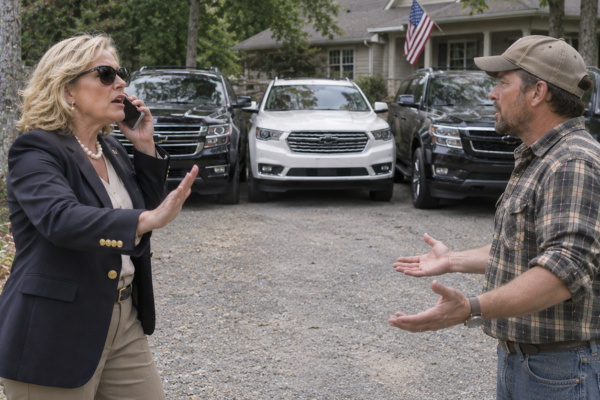
At 7:18 on a Tuesday morning, Eleanor Price walked out of her house carrying a stainless-steel travel mug and stopped dead in the middle of the street.
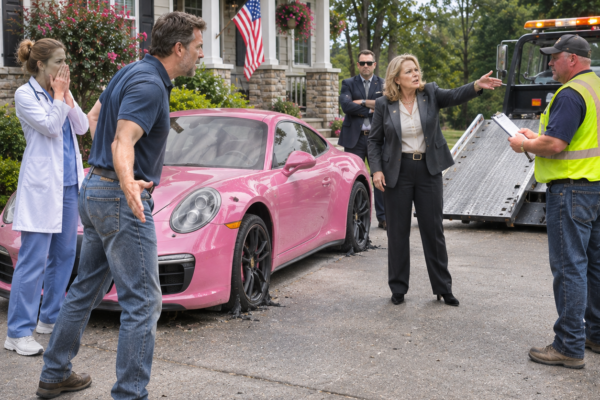
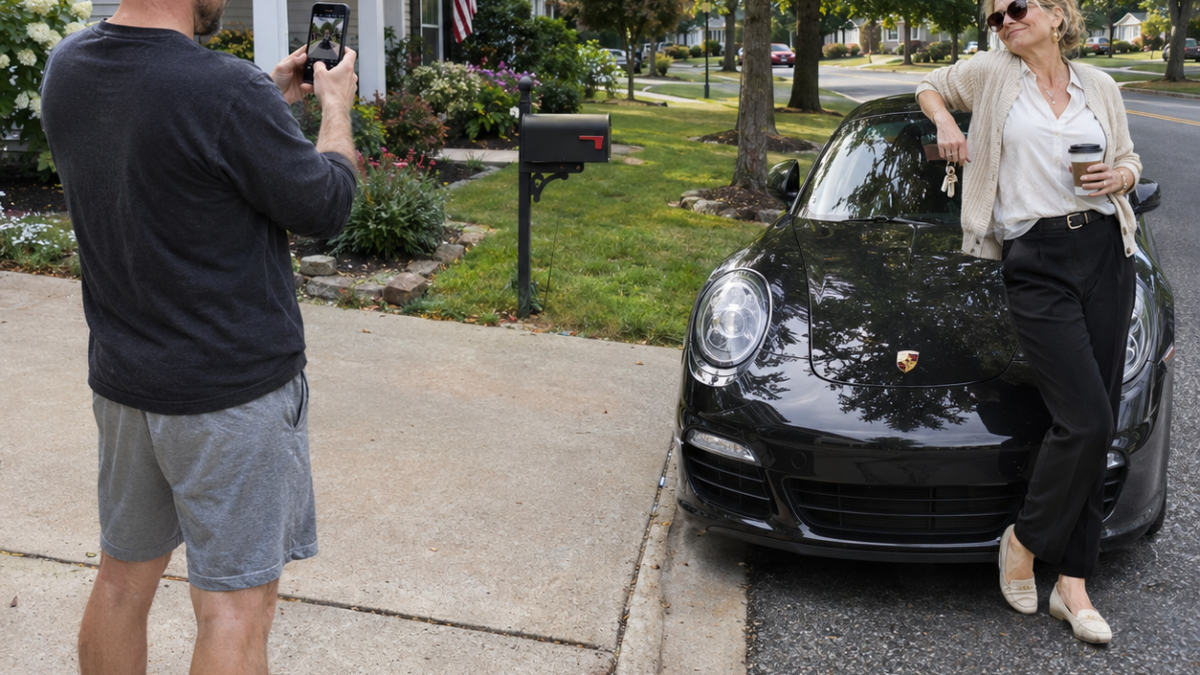
Her black Porsche 911 was no longer parked inches from my driveway.
It was sitting on four heavy-duty wheel dollies beside a licensed recovery truck, with a court-authorized parking-abatement contractor preparing to load it.
Nothing had been scratched.
Nothing had been broken.
Nothing had been dismantled by me.
That part mattered.
Eleanor apparently didn’t care.
“What are you doing to my car?”
Her voice carried halfway down Oakridge Lane.
Curtains opened.
A garage door stopped halfway up.
Mr. Patterson, two houses down, came outside holding a coffee mug and made absolutely no effort to pretend he wasn’t watching.
The contractor, a broad-shouldered man named Luis Moreno, kept working.
Eleanor pointed at me.
“Marcus! Stop him!”
I leaned against my porch railing.
“Morning, Eleanor.”
“You’re finished. I’m calling the board. I’m calling the police. You’re done, old man.”
I took a sip of coffee.
“I think the board already knows.”
She stared at me.
Then at Luis.
Then at the laminated document clipped to his work order.
“What is that?”
Luis answered without looking up.
“Court authorization and private-access abatement order, ma’am.”
Eleanor’s face changed.
Only slightly.
But I saw it.
For twenty-three mornings, she had parked her Porsche so close to my driveway that backing out required a three-point maneuver around a blind corner.
Not technically across the driveway.
Never enough for police to ticket her.
Just close enough to make leaving my own home difficult.
That was the point.
She had other places to park.
Her own driveway was empty.
The curb in front of her house was empty.
Guest spaces were available three houses away.
But Eleanor Price was president of the Oakridge Estates Homeowners Association, and once she discovered I didn’t like her Porsche beside the stone-paver driveway my late wife and I had built together, that exact spot became her favorite parking place.
I had asked politely.
Twice.
I had left a written note.
I had gone to the HOA board.
I had called the non-emergency police line.
Officers told me the same thing both times.
She was being inconsiderate, but unless she actually blocked the driveway or violated a marked parking restriction, they couldn’t tow her.
Eleanor treated that answer like a coronation.
“See?” she told me after the second officer left. “Maybe you should learn to be more neighborly.”
Then she parked even closer the next morning.
What she didn’t know was that I had stopped arguing.
I started documenting.
Photographs.
Times.
Distances.
Video of my truck trying to exit.
Her certified letters.
HOA meeting minutes.
Her own emails calling the location “a useful reminder that common areas belong to everyone.”
I spent forty years rebuilding engines and solving mechanical problems.
Retirement hadn’t changed the way my mind worked.
If a problem keeps returning, you don’t hit it harder.
You find the part everyone else overlooked.
The part Eleanor overlooked was buried in Oakridge’s own recorded road-use agreement.
The street curb was association-maintained.
The pavement was common-access roadway.
But the four-foot apron immediately beside my driveway had a sight-line restriction dating back to the original subdivision approval.
No unattended vehicle could remain there repeatedly if it interfered with safe ingress or egress from Lot 14.
The HOA had been responsible for enforcing that restriction for twenty-two years.
Eleanor had personally refused to enforce it.
My attorney sent notice.
The board ignored it.
Then we filed for limited injunctive relief.
Eleanor didn’t even attend the hearing.
She called it “ridiculous driveway drama.”
The judge didn’t.
The order gave the HOA seventy-two hours to enforce the recorded access restriction.
If it failed, I could use a licensed contractor to abate the obstruction at documented cost, with no self-help damage to the vehicle.
The board did nothing.
Eleanor parked there again.
So Luis arrived.
Now she stood in the street staring at the paperwork she had mocked for three weeks.
Then she reached for her phone.
“911,” she said loudly. “I’m reporting vehicle theft.”
Luis finally stopped working.
“Ma’am, before you do that, you may want to read page two.”
She didn’t.
She called anyway.
And when the first patrol car turned into Oakridge Estates eleven minutes later, Eleanor smiled at me as though she had finally found the audience she wanted.
She had no idea the officer already had a copy of the order.
Part 2:
At 7:18 on a Tuesday morning, Eleanor Price walked out of her house carrying a stainless-steel travel mug and stopped dead in the middle of the street.
Her black Porsche 911 was no longer parked inches from my driveway.
It was sitting on four heavy-duty wheel dollies beside a licensed recovery truck, with a court-authorized parking-abatement contractor preparing to load it.
Nothing had been scratched.
Nothing had been broken.
Nothing had been dismantled by me.
That part mattered.
Eleanor apparently didn’t care.
“What are you doing to my car?”
Her voice carried halfway down Oakridge Lane.
Curtains opened.
A garage door stopped halfway up.
Mr. Patterson, two houses down, came outside holding a coffee mug and made absolutely no effort to pretend he wasn’t watching.
The contractor, a broad-shouldered man named Luis Moreno, kept working.
Eleanor pointed at me.
“Marcus! Stop him!”
I leaned against my porch railing.
“Morning, Eleanor.”
“You’re finished. I’m calling the board. I’m calling the police. You’re done, old man.”
I took a sip of coffee.
“I think the board already knows.”
She stared at me.
Then at Luis.
Then at the laminated document clipped to his work order.
“What is that?”
Luis answered without looking up.
“Court authorization and private-access abatement order, ma’am.”
Eleanor’s face changed.
Only slightly.
But I saw it.
For twenty-three mornings, she had parked her Porsche so close to my driveway that backing out required a three-point maneuver around a blind corner.
Not technically across the driveway.
Never enough for police to ticket her.
Just close enough to make leaving my own home difficult.
That was the point.
She had other places to park.
Her own driveway was empty.
The curb in front of her house was empty.
Guest spaces were available three houses away.
But Eleanor Price was president of the Oakridge Estates Homeowners Association, and once she discovered I didn’t like her Porsche beside the stone-paver driveway my late wife and I had built together, that exact spot became her favorite parking place.
I had lived in Oakridge Estates for twenty-two years.
My wife, Marlene, and I bought the house when the neighborhood was still young enough that half the oak trees along the street needed support stakes.
She loved the place immediately.
Not because it was luxurious.
It wasn’t.
Thirty-seven brick and siding homes, one small park, a clubhouse that smelled faintly of chlorine from the community pool, and enough mature trees to make every fall a full-time leaf-removal operation.
Marlene liked quiet things.
Birds at sunrise.
Fresh-cut grass.
The sound of our garage door opening when I got home from work.
And for reasons I never completely understood, she hated asphalt driveways.
“It looks sad,” she told me.
“How does pavement look sad?”
“It just does.”
So fifteen years ago, we paid far too much money to replace ours with gray interlocking stone pavers.
I complained about the cost for exactly six months.
Then admitted she had been right.
The driveway curved gently toward the garage beneath two old oaks.
Marlene planted roses beside the mailbox.
I installed low landscape lights.
We built it together over three weekends, arguing about edge spacing and drinking iced tea on overturned buckets.
It was the last major home project we completed before cancer rearranged our lives.
After she died, I kept that driveway cleaner than most people keep their kitchens.
Not because I worshiped paving stones.
Because every time I swept leaves from them, I remembered her standing there telling me one row was crooked.
I was sixty-seven when Eleanor became HOA president.
Retired mechanic.
Occasional restoration work for friends.
One unfinished 1967 Chevrolet pickup in my garage.
Enough tools to make a hardware store jealous.
And no interest whatsoever in neighborhood politics.
For most of my years in Oakridge, the HOA had been harmless.
Annual dues maintained the park, pool, entrance sign, and common landscaping.
The board reminded people to clean up after dogs.
Once they asked Tom Garner to remove a boat from his front lawn after it sat there for eleven months without moving.
Reasonable stuff.
Then Eleanor Price was elected.
She arrived in a black Porsche 911 wearing oversized sunglasses and a white blazer.
At her first meeting as president, she used the phrase “protecting the Oakridge brand” four times.
We were not a brand.
We were thirty-seven houses and a pool with one broken lounge chair.
But Eleanor liked language that made ordinary authority sound corporate.
Within two months, violation notices multiplied.
Trash cans visible from the street.
Fence discoloration.
Holiday lights left up seven days too long.
Mr. Patterson got a warning because the wheels on his garbage bin faced the wrong direction after pickup.
Mrs. Klein received a letter because two of her porch planters were different heights.
My first violation involved the Chevy.
I had rolled the truck halfway out of my garage while working on the rear axle.
Still entirely on my driveway.
Not blocking the sidewalk.
Not leaking anything.
Eleanor sent me a notice citing Rule 14B.
VISIBLE AUTOMOTIVE REPAIR ACTIVITY.
She called the truck “an unsightly mechanical project.”
That offended me more than it should have.
The Chevy was beautiful.
At least it would be eventually.
I responded politely.
The rule prohibited long-term outdoor storage of dismantled vehicles, not temporary work on a registered project vehicle during daylight hours.
She sent back a warning anyway.
I paid nothing.
Nothing happened.
Then came a recycling-bin letter.
Then a notice about faded shutters.
Then a suggestion that my side-yard workbench might be visible from “certain street angles.”
I ignored most of it.
Eleanor liked conflict.
I had spent forty years fixing machines.
The fastest way to ruin a repair is to argue with the machine.
You observe.
Measure.
Find the actual failure.
That was how I treated Eleanor.
Until the Porsche.
The first morning, it was parked legally on the curb near my driveway.
Very near.
Its rear bumper sat perhaps eighteen inches from the edge of my driveway apron.
I could still back out.
Barely.
I walked across the street and knocked on Eleanor’s door.
She answered wearing expensive athletic clothes and holding a green smoothie.
“Morning.”
“Yes?”
“Could you move the Porsche back a few feet?”
“Why?”
“It makes backing out difficult.”
She looked past me.
“It’s legally parked.”
“I didn’t say it wasn’t.”
“Then what’s the issue?”
“Courtesy.”
Her face showed genuine confusion.
Not because she didn’t understand the word.
Because courtesy wasn’t a rule she had written.
“It’s common curb space, Marcus.”
“I know.”
“You’ll manage.”
Then she closed the door.
I did manage.
The next morning, the Porsche was there again.
Same position.
The third morning, closer.
I knocked again.
She spoke through the doorbell camera.
“Marcus, it’s legal parking.”
“It’s making it harder to see traffic when I back out.”
“Then back out more carefully.”
“Your driveway is empty.”
“So?”
“So why park here?”
A pause.
Then:
“Because I can.”
That was when I understood.
Not parking.
Power.
She had found something technically permissible that irritated me.
And because I had challenged her on the Chevy notice, she intended to use it.
I went back home.
Day four, I left a note under the wiper.
Please leave a little more clearance beside the driveway. It creates a sight-line issue when exiting. Thank you.
The next morning, the note was crumpled inside my mailbox.
No envelope.
No comment.
Just the message.
I started taking photographs.
Not because I planned some grand legal strategy.
Because I had lived long enough to know repeated nonsense becomes harder to deny when dates are attached.
Day five.
Day six.
Day seven.
Same Porsche.
Same position.
Sometimes Eleanor parked three feet away.
Sometimes eighteen inches.
Once close enough that my truck’s mirror passed within less than a foot of her rear quarter panel.
Mr. Patterson noticed.
“She got nowhere else to park?”
“Plenty.”
“Then why there?”
“Because I asked her not to.”
He nodded.
“That sounds like Eleanor.”
Mrs. Klein stopped me while walking her terrier.
“She fined me seventy-five dollars over planters.”
“I heard.”
“Then waived it after I threatened to bring the actual covenant to the meeting.”
“That also sounds like Eleanor.”
“Someone needs to stand up to her.”
“I’m trying to back out of my driveway, Ruth. I’m not running a revolution.”
She laughed.
At the time, I meant it.
The first police call happened after I nearly clipped the Porsche.
I used the non-emergency number.
Officer Blake arrived twenty minutes later.
Young man.
Polite.
He measured the distance from the driveway.
Then explained the problem.
“The city ordinance prohibits parking across a driveway or within the marked restricted zone, but she’s technically outside it.”
“She’s obstructing my visibility.”
“I agree it’s inconsiderate.”
“Can you ask her to move?”
“Yes.”
“Can you ticket her?”
“Not based on where she is right now.”
He talked to Eleanor.
From my porch, I watched her transform.
Soft voice.
Hands folded.
Concerned expression.
“Oh, officer, I would never intentionally inconvenience anyone. Mr. Jones has been upset with the HOA over several unrelated matters. I’m afraid he’s taking it personally.”
Blake returned.
“She says she’ll try to give you more room.”
The next morning, she parked closer.
That was when I called my attorney.
Her name was Lydia Grant.
My nephew recommended her after hearing me complain at Thanksgiving.
Lydia specialized in property disputes and association law.
She listened to the entire story.
Then asked:
“Marcus, what do you want?”
“I want her to park somewhere else.”
“You’re not trying to have her removed as president?”
“No.”
“Not seeking damages?”
“No.”
“Not trying to punish her?”
“No.”
She smiled.
“That makes my job easier.”
I brought her my documents.
HOA bylaws.
Subdivision map.
Parking rules.
My photographs.
Police incident number.
The letter from Eleanor.
Lydia flipped through everything.
Then paused at the original recorded subdivision plan.
“Where did you get this?”
“Closing file.”
She read the notes.
Then pulled the county version online from her office system.
One notation caught her attention.
Sight-line reservation adjacent to Lot 14 driveway.
“What’s that?”
“Potentially your answer.”
The original developer had created a no-standing sight triangle beside my driveway because the road curved slightly there.
Over the years, Oakridge had repaved the street and removed an old curb marking.
But the recorded access condition had never been formally abandoned.
It required the association, as successor maintainer of the private roadway, to keep that area reasonably clear of unattended vehicles when necessary for safe ingress and egress.
I stared at her.
“So Eleanor’s illegally parked?”
“Slow down.”
Lydia pointed at the language.
“This isn’t necessarily a criminal parking prohibition. It’s a recorded private access restriction. Different issue.”
“Meaning?”
“Meaning the HOA may have a duty to enforce it even if city police won’t issue a ticket.”
That was better than anger.
That was leverage.
Lydia sent the HOA a letter.
No threats.
No drama.
She enclosed the recorded plan and requested that Oakridge enforce the sight-line restriction.
The board did nothing.
Eleanor emailed me personally.
Your attorney’s interpretation is incorrect. The curb is common association property and remains available to all residents.
Lydia smiled when I forwarded it.
“Perfect.”
“Why?”
“Because she just acknowledged the HOA controls the curb.”
“Isn’t that her argument?”
“Yes. Which means they cannot claim later that enforcement is someone else’s responsibility.”
For another week, Eleanor parked there.
I photographed every morning.
Then came the board meeting.
I explained the restriction.
Eleanor dismissed it.
“That notation is more than twenty years old.”
“So is the subdivision.”
“It’s obsolete.”
“Has it been legally removed?”
She looked at Lydia, who attended beside me.
Lydia answered.
“We found no recorded release.”
Eleanor turned back to the board.
“This is absurd. We are not redesigning community parking because Marcus doesn’t like my car.”
Mr. Patterson spoke from the audience.
“Park in front of your own house.”
A few people laughed.
Eleanor’s face tightened.
“This is not a popularity contest.”
“No,” Lydia said. “It’s a recorded-access question.”
The board voted to refer it to counsel.
Then did nothing for another ten days.
Eleanor became bolder.
One morning, she passed while I was maneuvering my truck around the Porsche.
“Careful.”
I stopped.
“What?”
“Wouldn’t want you to scratch it.”
She smiled.
Then walked away.
I took another photograph.
That afternoon, Lydia filed a narrowly tailored petition in county court.
Not a lawsuit for millions.
Not some dramatic demand that Eleanor lose her house.
We asked for declaratory and injunctive relief confirming the recorded sight-line restriction and requiring the HOA to enforce it.
The court scheduled an expedited hearing because the issue involved access safety.
Eleanor did not attend.
She sent an email calling it “an absurd personal vendetta.”
The HOA’s lawyer attended.
After reviewing the recorded plat, historical developer documents, photographs, and police notes, Judge Renee Foster asked one question.
“Does the association dispute that the restriction remains of record?”
The HOA lawyer answered:
“No, Your Honor.”
“Does it dispute responsibility for maintaining the private roadway?”
“No.”
“Then why has this vehicle been permitted to occupy the restricted sight area repeatedly after written notice?”
He hesitated.
“The board believed the restriction was outdated.”
“Belief is not a recorded amendment.”
That was it.
Judge Foster ordered the HOA to enforce the access restriction within seventy-two hours.
If it failed, I could hire a licensed contractor to remove an unattended vehicle from the restricted area using reasonable, non-destructive methods, with documented charges allocated according to later court review.
The order expressly prohibited me from damaging, entering, dismantling, or otherwise altering the vehicle myself.
That sentence made Lydia look at me.
“You hear that?”
“I’m old, not deaf.”
“I know you own tools.”
“I’m not touching the Porsche.”
“Good.”
The board received the order Friday.
Nothing happened.
Saturday, Eleanor parked elsewhere.
Sunday, elsewhere again.
I thought maybe she had finally stopped.
Monday morning, 7:23, I heard the Porsche.
She parked in the exact restricted area.
Closer than ever.
Then she stepped out, looked directly toward my window, and smiled.
I called Lydia.
“She’s back.”
“Photograph it.”
“I already did.”
“Do not touch the car.”
“I know.”
“Call Moreno Recovery. They have the order.”
Luis arrived the next morning after verifying the car had remained in the restricted area overnight.
Because the Porsche sat low and the steering was locked, he used wheel dollies rather than dragging it.
No damage.
No disassembly.
No midnight revenge.
Just a licensed contractor doing exactly what the court had authorized because the association refused to act.
That was the morning Eleanor came outside.
“What are you doing to my car?”
Luis kept working.
“Court-authorized relocation.”
She pointed at me.
“You’re finished!”
“Morning, Eleanor.”
“I’m calling the board. I’m calling the police. You’re done, old man.”
“I think the board already knows.”
She called 911.
Officer Blake came back, this time with Sergeant Mills.
Eleanor rushed toward them.
“He’s stealing my Porsche.”
Mills looked at Luis.
“Paperwork?”
Luis handed her the order.
Mills read it.
Then looked at me.
“You touch the car?”
“No.”
“Contractor only?”
“Yes.”
She looked at Eleanor.
“Ma’am, this appears to be a court-authorized civil removal.”
“This is insane.”
“You can contact your attorney.”
“He’s harassing me.”
Mills looked at the order again.
“From what I’m reading, he petitioned the court and followed the procedure provided.”
“He caused this.”
“No,” Mr. Patterson called from his driveway. “Your parking did.”
Eleanor glared at him.
Mills gave him a look.
“Let’s not help.”
The Porsche was transported to a secure storage yard less than three miles away.
Eleanor could retrieve it immediately after arranging payment under the court’s procedures or challenge the charges.
No parts removed.
No permanent damage.
No cinematic car carcass left in the street.
The truth was less spectacular.
It was also much harder for Eleanor to attack legally.
She tried anyway.
Three days later, I received a lawsuit.
$500,000 in claimed damages.
Emotional distress.
Harassment.
Defamation.
Wrongful deprivation of transportation.
Interference with HOA duties.
Lydia read it and smiled.
“That’s ambitious.”
“Should I be worried?”
“You should always take litigation seriously.”
“That wasn’t comforting.”
“Good. Serious people preserve evidence.”
She filed our answer.
Then discovery began.
That was when Eleanor made her biggest mistake.
She had sued personally.
That opened questions about motive.
Communications.
Board authorization.
Association actions.
Lydia requested emails concerning me, my driveway, parking policy, and enforcement.
The production was ugly.
Eleanor had written to one board member:
He needs to learn that association authority does not stop at his property line simply because he thinks it does.
Another:
Parking there costs nothing and irritates him. Eventually he will stop challenging me.
That one hurt her.
Badly.
Then came the fines.
My Chevy.
Shutters.
Recycling bin.
Several had never been approved through the process required by Oakridge’s own rules.
Other residents had similar experiences.
Mrs. Klein.
Mr. Patterson.
Tom Garner.
Eleanor had been issuing preliminary notices as though they were final board determinations.
The board had simply trusted her.
That trust collapsed during discovery.
Then the finances surfaced.
Not millions.
Nothing sensational.
But enough.
Eleanor had reimbursed herself for “executive community expenses.”
Dry cleaning before HOA meetings.
Car detailing before a realtor event.
Home security camera installation she claimed was necessary because of “resident hostility.”
A consulting payment to her cousin’s real-estate company.
Total questioned amount:
$6,840.
The treasurer, Warren Cole, had asked for receipts months earlier.
Eleanor told him presidential expenses did not require line-by-line approval.
They did.
The board called an emergency meeting.
Standing room only.
Eleanor sat at the front with her lawyer.
I sat in the back beside Lydia.
Richard Hale, the vice president, opened.
“We are here to address governance concerns raised during pending litigation.”
Eleanor interrupted.
“This entire process exists because Marcus Jones refuses to accept community rules.”
Someone muttered:
“Maybe stop parking by his driveway.”
Laughter.
Eleanor slammed her hand on the table.
“This is exactly the harassment I’m talking about.”
Richard raised his voice.
“Eleanor, enough.”
She stared at him.
He continued.
“We have documentation showing you deliberately parked in the disputed location to provoke a resident.”
“That email was sarcasm.”
“We have enforcement notices issued without required review.”
“Administrative efficiency.”
“We have reimbursements that appear personal.”
“Executive expenses.”
Warren held up the receipts.
“Dry cleaning is not an executive HOA expense.”
“My appearance represents Oakridge.”
Mrs. Klein whispered loudly:
“My begonias apparently represent it too.”
More laughter.
Eleanor’s lawyer leaned toward her.
She ignored him.
“This neighborhood looked like chaos before I became president.”
Mr. Patterson stood.
“It looked peaceful.”
Applause.
Eleanor pointed toward me.
“This is all because of him.”
I stayed seated.
Richard shook his head.
“No. This is because we failed to supervise the president properly.”
That mattered.
He didn’t make Eleanor the only problem.
The board had allowed her to accumulate authority because nobody wanted to do the boring work of governance.
They owned that.
Then they acted.
Under Oakridge’s bylaws, the board voted to remove Eleanor as president.
She remained a director pending a membership recall.
Her authority to issue notices ended immediately.
Her spending authority was frozen.
Independent counsel took over the lawsuit.
Two days later, Oakridge withdrew support for Eleanor’s claims.
Her personal lawyer continued briefly.
Then reality arrived.
The court had already authorized the vehicle removal.
No damage occurred.
The storage yard had photographs proving condition before and after.
Her own emails demonstrated deliberate provocation.
Her emotional-distress claim looked increasingly weak.
Her defamation claim identified statements I had never made publicly.
Her attorney recommended settlement.
The lawsuit was dismissed with prejudice under a negotiated agreement.
No admission from me.
No payment to Eleanor.
She covered a substantial portion of my legal fees personally, while the HOA’s insurer addressed another portion connected to association conduct.
The board reimbursed legitimate expenses associated with the access proceeding.
Most importantly, the agreement confirmed the recorded sight-line restriction and prohibited Eleanor from parking within it again.
That should have ended everything.
But Oakridge still had to deal with Eleanor.
The recall meeting happened thirty days later.
Residents had never attended anything in such numbers.
Thirty-four of thirty-seven homes were represented.
Eleanor stood before them and defended her presidency.
She talked about property values.
Standards.
Order.
Respect.
Then Mrs. Klein raised her hand.
“Respect for who?”
Eleanor stopped.
Mrs. Klein continued.
“You fined me over planters.”
“I enforced standards.”
“You threatened Mr. Patterson over a garbage bin.”
“Consistency matters.”
“You used HOA money for dry cleaning.”
“That has been explained.”
“No. It has been renamed.”
The room went quiet.
Then Warren presented the audit.
Some expenses were repaid voluntarily before the meeting.
Others remained disputed.
The board had already referred the matter to association counsel and the insurer.
This was not a criminal trial.
No one pretended it was.
The recall vote was about trust.
Thirty-one votes for removal.
Two against.
One abstention.
Eleanor lost her board seat.
For the first time since I had known her, she said nothing.
She gathered her papers.
Walked out.
The Porsche never came back to the disputed spot.
She retrieved it from storage the day after the court order was clarified.
The charges were modest.
Mostly transport and storage.
No dealership reconstruction.
No destroyed windshield.
No mechanic’s lien.
That part of the original story people later told around Oakridge grew more dramatic every time it passed from one neighbor to another.
Somebody eventually claimed I had taken the car apart bolt by bolt.
Someone else claimed the wheels were stacked beside my garage.
Mr. Patterson swore he heard I removed the windshield.
None of that happened.
I corrected people at first.
Then gave up.
The real story was better anyway.
I beat Eleanor without touching her car.
That annoyed her far more.
For several weeks after the recall, she avoided me.
If I stepped onto my porch, her blinds closed.
If I walked toward the mailbox, she went inside.
I didn’t enjoy it.
Not exactly.
Victory over a neighbor feels different from victory in a courtroom drama.
You still see the person afterward.
You still collect mail twenty yards apart.
You still hear their garage door.
One evening, Eleanor was standing beside her Porsche when I walked out.
She looked tired.
No blazer.
No sunglasses.
Just jeans and a gray sweater.
“Marcus.”
“Eleanor.”
“You happy?”
“About what?”
“You know.”
“I’m glad the parking issue is over.”
She laughed bitterly.
“That’s all you ever say.”
“Because that’s all I wanted.”
“You destroyed my reputation.”
“No.”
“You sued the HOA.”
“I asked the court to enforce a recorded access restriction.”
“You embarrassed me.”
“You parked there after a court order.”
Her jaw tightened.
“You could have let it go.”
“So could you.”
We stood there.
Two older people on opposite sides of a suburban street, both exhausted by a conflict that began over fifteen feet of curb.
Then Eleanor said:
“You never respected my authority.”
I thought about that.
“No.”
She looked surprised.
“I respected the office when it stayed inside its authority.”
“That’s the same thing.”
“It isn’t.”
She stared at me.
Then walked inside.
Three months later, a FOR SALE sign appeared in her yard.
I heard she was moving closer to her daughter.
Maybe that was true.
Maybe she simply wanted out.
Either way, the house sold quickly.
On moving day, I was sweeping leaves from the stone pavers.
Eleanor came outside.
Her Porsche was already gone.
She looked toward my driveway.
Then toward me.
For a second, I thought she might say something.
She didn’t.
She got into a black SUV and left.
The new owners were a young couple named Nathan and Julie Chen.
Their first week in Oakridge, Julie walked over carrying a plate of cookies.
“Hi. We’re your new neighbors.”
“That’s usually how this works.”
She laughed.
“Nathan wanted to ask about the oak trees. We love yours.”
“Marlene planted them.”
“Your wife?”
“Yes.”
“She had good taste.”
“She would have enjoyed hearing that.”
Nathan joined us later.
He knew nothing about Eleanor.
At least not much.
That was refreshing.
The HOA changed too.
Richard Hale served as interim president.
Then residents elected Paige Morris, a retired school administrator who had the radical habit of reading documents before enforcing them.
The board adopted a simple rule:
Any enforcement involving access, boundaries, parking rights, or easements required legal verification first.
No more invented authority.
No more “I think the HOA can.”
Either the documents supported it or they didn’t.
Warren tightened financial controls.
Two signatures for reimbursements over a set amount.
Quarterly reports online.
Receipts available to members.
Again, boring.
Again, useful.
They asked me to join the board.
I declined.
Then they asked me to serve as a volunteer property-rights adviser.
I declined again.
Then Paige said:
“Once a quarter.”
“No.”
“Thirty minutes.”
“No.”
“Coffee.”
“What kind?”
“That was embarrassingly easy.”
So I agreed to review property-related questions four times a year.
It was less painful than expected.
The first meeting involved a fence.
The second involved drainage.
The third involved a homeowner who believed the association owned part of his side yard.
We checked the plat.
It didn’t.
Problem solved in twelve minutes.
No police.
No lawyers.
No Porsche.
I started enjoying the lack of drama.
My Chevy restoration finally got finished.
Marlene had always wanted it painted deep blue.
I did exactly that.
One Saturday, I rolled it onto the driveway.
Paige happened to walk past.
“Visible automotive activity.”
I stared at her.
She smiled.
“Relax, Marcus.”
“That joke could get you recalled.”
She laughed.
I spent the afternoon polishing the truck beneath the same oak trees Marlene planted.
The driveway was empty.
Quiet.
Exactly how I liked it.
Mr. Patterson stopped by.
“You know people still tell the story about you dismantling Eleanor’s Porsche.”
“I never dismantled anything.”
“I know.”
“So why don’t you correct them?”
He grinned.
“Because my version has you putting the engine on her porch.”
“Harold.”
“What?”
“That’s slander against my mechanical judgment. I’d never set a Porsche engine on concrete.”
He laughed so hard he had to sit down.
That became the running joke.
But underneath the jokes, Oakridge genuinely changed.
People started attending meetings again.
Not because they loved HOA politics.
Because they understood what happens when everyone assumes somebody else is paying attention.
Eleanor had not seized power in a coup.
We handed it to her through indifference.
She volunteered.
We let her.
She wrote policies.
We barely read them.
She issued notices.
Most people paid rather than challenge them.
By the time residents realized she treated authority like ownership, she had spent two years practicing.
That lesson mattered more to me than the driveway fight.
A community does not stay reasonable automatically.
Reasonable people have to participate.
Not obsessively.
Just enough.
Ask questions.
Read minutes.
Vote.
Check whether the rule actually exists.
One autumn evening, I found Marlene’s old notebook in the garage.
She used it for project lists.
Paint bedroom.
Fix porch light.
Plant roses.
Choose driveway pavers.
Beside the last item, she had written:
Gray. Clean lines. Everything in its proper place.
I sat on the workbench for a long time.
That sentence explained more than the parking dispute ever could.
Eleanor thought I cared because the driveway was mine.
That was only partly true.
I cared because it was ours.
Mine and Marlene’s.
A physical thing we had built together.
When Eleanor used it as a prop in a power game, she was stepping into a memory she didn’t understand.
That didn’t give me the right to damage her property.
It didn’t make revenge legal.
It did give me a reason not to surrender just because fighting back was inconvenient.
I’m glad Lydia stopped me from thinking like a mechanic instead of a property owner.
Because I had imagined stupid solutions.
Wheel dollies of my own.
Jacking up the Porsche.
Maybe even removing the wheels temporarily.
Nothing destructive.
Still foolish.
The kind of thing that feels satisfying for ten minutes and expensive for two years.
The better answer was slower.
Documents.
Court.
Licensed contractor.
Chain of responsibility.
No ambiguity.
Eleanor wanted me angry.
Angry people make mistakes.
Instead, I became tedious.
Photographs.
Dates.
Certified mail.
Recorded plat.
Hearing.
Order.
That defeated her far more effectively than a wrench ever could.
Two years after Eleanor moved, Oakridge held a spring picnic.
Nathan grilled burgers.
Julie organized games for the kids.
Mrs. Klein brought potato salad.
Mr. Patterson brought beer even though the HOA technically prohibited alcohol in the park.
Paige saw it.
Looked at him.
Looked at the cooler.
Then said:
“Red cups.”
Progress.
Someone had printed a joke parking sign and placed it beside my chair.
MARCUS JONES
AUTHORIZED PARKING DICTATOR
I threw it in the trash.
They put it back.
Eventually I surrendered.
Lydia attended too.
She sat beside me with lemonade.
“Do you miss litigation?”
“Every day.”
“Liar.”
“Deeply.”
She looked toward my house.
“Driveway clear?”
“Perfectly.”
“Then I suppose my work here is done.”
I raised my cup.
“You know what bothers me?”
“What?”
“If Eleanor had just moved the Porsche five feet, none of this would have happened.”
“That is true of many lawsuits.”
“Five feet.”
“Pride is often more expensive than distance.”
That sounded like something attorneys practice saying in mirrors.
I told her so.
She didn’t deny it.
That evening I walked home as the sun dropped behind the oaks.
The Chevy sat in the garage.
The roses beside the mailbox were blooming.
Marlene’s birdbath leaned slightly because the ground beneath it had settled again.
I would fix it tomorrow.
At the street, I stopped beside the driveway.
The sight-line area Eleanor had fought over was empty.
No special paint.
No dramatic sign.
Just curb.
The HOA had added the restriction to its digital property map so nobody would forget it again.
That was enough.
I walked halfway up the pavers.
Then turned.
From there, I could see Oakridge Lane curving between the trees.
Children on bicycles.
A dog pulling its owner toward something interesting.
Nathan waving from across the street.
Nothing dramatic.
That was the reward.
Not watching Eleanor lose office.
Not winning a legal argument.
Not seeing her Porsche loaded onto a truck.
Normal life.
For months, Eleanor had turned a parking spot into a stage.
When she left, the stage disappeared.
That is what power struggles look like after they’re over.
Ordinary spaces become ordinary again.
My driveway returned to being a driveway.
My garage returned to being a garage.
My mornings returned to coffee and mechanical problems that stayed solved once you fixed them properly.
I still keep the blue binder.
Photographs.
Letters.
Copies of the court order.
Eleanor’s emails.
Everything.
Paige once asked why.
“Insurance?”
“No.”
“Sentimental value?”
“Absolutely not.”
“Then why?”
“Because people forget.”
She nodded.
“Fair.”
If another president ever decides a clipboard changes property rights, the binder is ready.
I doubt it will happen.
Not soon.
Oakridge learned.
So did I.
I learned that being patient does not mean being passive.
That documentation is often stronger than anger.
That leadership without restraint becomes control.
And that the most satisfying solution to a bully is not always the one that makes the best story.
Sometimes the best solution is the one that leaves you with no criminal complaint, no damaged Porsche, no question about who crossed the line.
Just a court order.
A licensed truck.
A cleared driveway.
And a quiet Tuesday morning after everyone finally understands the boundary.