I Bought a Bowl for a Cat Who Might Never Come Home—For Eleven Days, It Sat Untouched.k
part2:
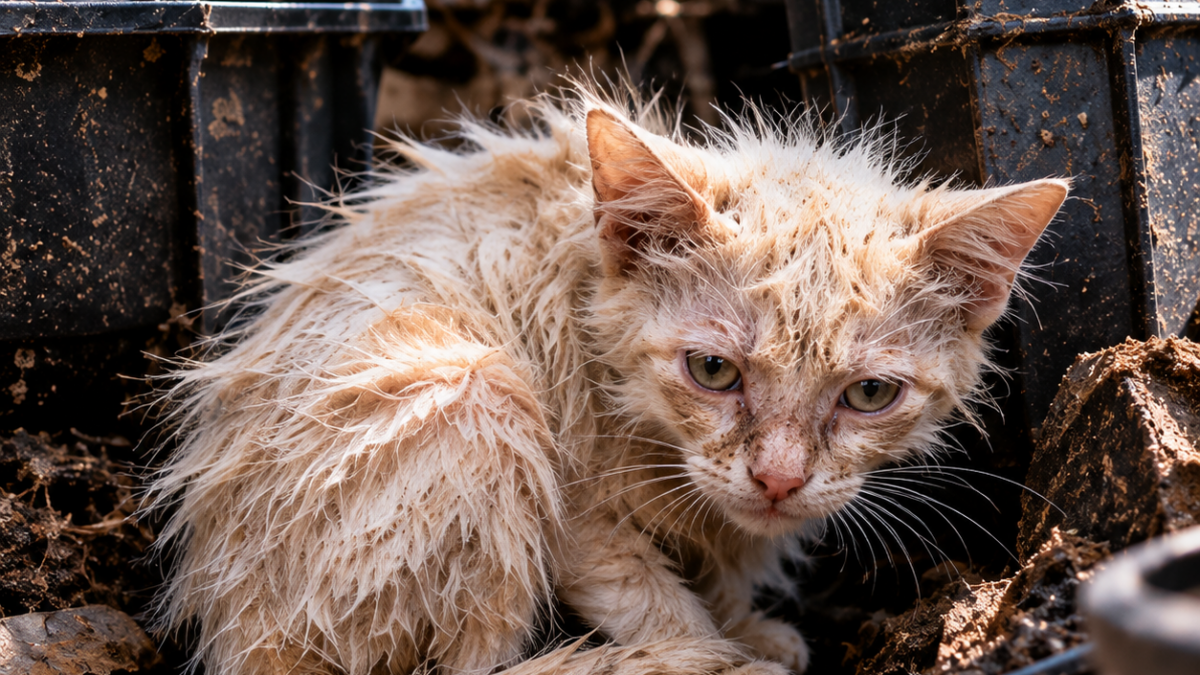
Greg had wrapped her in his sweatshirt.
It was dark gray and much too large for her.
Only her face showed.
Even then, I could see how narrow it was.
Her eyes looked enormous because there was so little else left.
“She’s alive,” Greg said.
“I know.”
“She barely moved when I found her.”
I crouched beside him.
“Has she tried to drink?”
“Little bit.”
“Eat?”
“No.”
I touched the sweatshirt near her shoulder rather than touching her directly.
She didn’t react.
That frightened me more than if she’d scratched me.
“Do we know how long she’s been here?”
Greg shook his head.
“No idea.”
“The building’s been empty awhile.”
“Could she have gotten in recently?”
“Maybe.”
He pointed toward a broken lower pane.
“But there’s no food in here.”
I looked around.
He was right.
The greenhouse smelled of damp soil, old fertilizer, and cold concrete.
Nothing edible.
No bowls.
No bedding.
No sign that anyone had intentionally been feeding an animal.
The wind pushed through broken glass and made the loose plastic sheeting overhead rattle.
I looked at the tiny shape in Greg’s arms.
“Let’s go.”
He helped me settle her into the carrier.
I had borrowed it from the rescue volunteer on my way over.
We lined the bottom with towels.
Greg lowered the cat carefully.
She didn’t resist.
Didn’t even stand.
She simply folded against the towel.
I closed the carrier door.
Her eyes remained half shut.
On the drive, I kept the heater higher than was comfortable.
The carrier sat on the passenger seat.
At every red light, I checked her.
“Still with me?”
No response.
“I know you’re not going to answer.”
Another light.
“You don’t have to do anything.”
“I just need you to keep breathing.”
That became my entire conversation with her.
Keep breathing.
Traffic felt impossibly slow.
Every car in front of me seemed to move at half speed.
At one point I actually considered using my horn at a driver who was going exactly the speed limit.
I didn’t.
Barely.
The veterinary clinic knew we were coming.
A technician met me at the door.
The moment she looked inside the carrier, her expression changed.
“Okay.”
That one word frightened me.
Not panic.
Urgency.
They took the cat immediately.
I filled out paperwork without knowing what to write under “name.”
I left it blank.
Breed?
Unknown.
Age?
Unknown.
Owner?
Unknown.
Color?
Cream.
Sex?
Female, apparently.
Found where?
Abandoned greenhouse.
I stared at that line for a long time.
Abandoned.
I didn’t know whether she had actually been abandoned by a person.
Maybe she’d wandered in.
Maybe she’d been born outside.
Maybe she’d lost her mother.
Maybe somebody had dumped her.
I had no facts.
So I wrote:
Found inside vacant greenhouse.
Then I waited.
Forty minutes later, Dr. Stephen Marshall came into the consultation room.
He sat rather than standing.
Doctors do that when they don’t want the conversation to feel rushed.
“She is severely malnourished.”
I nodded.
“Dehydrated.”
“Respiratory infection.”
“Her body temperature is dangerously low.”
“Her blood sugar was low too.”
I swallowed.
“Can you fix all that?”
“We can treat it.”
That wasn’t what I’d asked.
He knew.
“She needs warming.”
“Fluids.”
“Careful nutrition.”
“Antibiotics.”
“We have to go slowly because when an animal has been severely underfed, feeding too aggressively can create additional problems.”
I looked through the glass window in the door.
“Is she going to live?”
He paused.
Not dramatically.
Just long enough to make me understand the answer before he spoke.
“We’re going to do everything we can.”
I hated that sentence.
I understood why he used it.
It was honest.
Still hated it.
“What are her chances?”
“It’s too early.”
“She’s very compromised.”
“But she made it here.”
“That matters.”
I nodded.
“Can I see her?”
“For a minute.”
They had placed her in a warmed enclosure.
A heating pad beneath part of it.
Warm air.
Blanket.
Fluids running through a tiny catheter.
She looked even smaller surrounded by medical equipment.
Her fur was dirty cream.
Not white.
Not beige.
Something in between.
Her ears were too large for her face.
One had a tiny darker patch near the tip.
Her nose was pale pink.
When she breathed, her sides barely moved.
I stood there afraid to touch the glass.
“Does she have a name?”
The technician asked.
“No.”
Then, for reasons I still can’t explain, I said:
“Maisie.”
The name arrived before I had decided to choose one.
The technician smiled.
“Maisie?”
“Yes.”
I looked at the cat.
“Maisie.”
No reaction.
Still, the blank line on the paperwork stopped bothering me.
I went home without her.
That was when I bought the bowl.
It happened accidentally.
I stopped at a pet-supply store because Dr. Marshall had said if Maisie recovered enough to leave, she would need small meals, soft bedding, and a quiet place to adjust.
“If.”
Everything was if.
If she stabilizes.
If the antibiotics help.
If she starts eating.
If her temperature holds.
If her blood work improves.
I walked through the store feeling foolish.
I didn’t even know whether I would be taking her home.
I had never promised to adopt her.
I had volunteered for transportation.
That was all.
Then I saw a small ceramic bowl on a shelf.
Cream-colored on the outside.
Pale blue inside.
Tiny paw prints around the rim.
It wasn’t expensive.
I put it in the cart.
Then wet food.
A blanket.
A small litter tray.
A cat bed that cost more than my own pillows.
A toy mouse.
Another toy mouse because apparently one was insufficient.
I stood in the checkout line staring at the cart.
The woman ahead of me smiled.
“New kitten?”
I almost said yes.
Instead:
“Maybe.”
She gave me a confused look.
I didn’t explain.
At home, I washed the bowl.
Dried it.
Placed it on the kitchen floor beside a water dish.
Then stood looking at it.
It seemed absurdly optimistic.
I nearly put it away.
I didn’t.
The first night, I slept badly.
At 6:20 the next morning, I called the clinic.
A technician told me Maisie’s temperature had improved slightly overnight.
She had not eaten voluntarily.
They were supporting her carefully.
“She made it through the night.”
I held the phone tighter.
“That’s good?”
“That’s good.”
Not victory.
Good.
I went to work.
My job normally required enough concentration to keep my mind occupied.
Not that day.
Every half hour, I thought about the clinic.
At lunch, I called again.
Stable.
That word became precious.
Stable.
Not better.
Not safe.
Stable.
I went to see her after work.
She lay beneath the warming lamp.
Eyes closed.
“Hi, Maisie.”
Nothing.
I pulled a chair beside the enclosure.
The technician said I could stay as long as I didn’t interfere.
So I sat.
I told Maisie things she had no possible reason to care about.
The traffic.
My terrible lunch.
A coworker who had accidentally replied to an entire email chain.
The fact that I’d bought her a bowl.
“You should probably survive.”
I whispered.
“I’ve already spent money.”
No response.
I smiled anyway.
Day two was almost identical.
Her temperature held.
Her hydration improved.
Her lungs still sounded congested.
She ate a tiny amount with assistance.
I visited.
She slept.
Day three, she opened her eyes when I spoke.
Only for a moment.
I noticed.
The technician did too.
“That’s new.”
I leaned closer.
“Maisie?”
Her eyes closed again.
Still.
New.
Day four, she ate a little food on her own.
Not much.
Dr. Marshall warned me not to turn every spoonful into proof that everything would be fine.
Recovery like hers could reverse quickly.
I understood.
Or tried to.
That evening, I came home and found myself kneeling beside the ceramic bowl.
I had not moved it.
Four days.
Untouched.
I ran one finger around the rim.
“You have a bowl.”
I said to an empty kitchen.
“So we’re going to need you to use it.”
I started leaving the radio on quietly during the day.
The house felt too silent otherwise.
I didn’t own pets.
Hadn’t for years.
My childhood family had dogs, but adulthood had been simpler without animals.
Work.
Travel.
Spontaneous weekends.
No veterinary appointments.
No litter boxes.
No worrying about what was being destroyed while I was away.
I had always said:
“Maybe someday.”
Apparently someday had arrived as a nearly unconscious cat behind broken greenhouse trays.
Day five brought a setback.
Maisie ate poorly.
Her breathing sounded worse.
The clinic adjusted medication.
When I arrived, Dr. Marshall met me before I reached her enclosure.
My stomach dropped.
“What happened?”
“Her respiratory infection is still significant.”
“Her lungs aren’t terrible, but she’s exhausted.”
“We’re monitoring closely.”
“Is she worse?”
“Today, yes.”
One word.
Today.
That meant tomorrow could differ.
I clung to it.
I sat beside her for nearly two hours.
I didn’t talk much.
There was nothing left to say.
At some point, I whispered:
“You don’t know me.”
Her ear moved.
Barely.
“You don’t owe me anything.”
I swallowed.
“But if you’re tired…”
I stopped.
Because I didn’t want to finish.
I didn’t want to tell her she could let go.
Didn’t want to selfishly demand that she stay.
So I said:
“Just keep trying while you can.”
I went home.
Didn’t turn on the kitchen light.
I could see the ceramic bowl from the hallway.
I hated it then.
It looked like evidence of a future I’d invented too soon.
I considered putting it in a cabinet.
Instead, I left it.
Day six was Thursday.
I almost didn’t visit because I was exhausted.
The clinic closed regular appointments early that evening, though hospitalized animals remained staffed overnight.
I left work late.
Sat in my car.
Thought:
She won’t know whether I’m there.
Then immediately felt ashamed.
Not because that thought was cruel.
Because it was probably true.
Still, I drove over.
A technician named Rachel met me.
“She ate.”
“How much?”
“Enough that we noticed.”
That was the first genuinely good news.
“Can I see her?”
“Of course.”
Maisie was awake.
Not fully alert.
But awake.
Her head remained low.
Her eyes followed movement.
I opened the small access door.
“Hi.”
She looked toward me.
I put one finger through.
No expectation.
I’d been doing the same thing every evening.
Usually nothing happened.
This time, she shifted.
A tiny movement beneath the blanket.
Then one cream-colored paw appeared.
Slowly.
Weakly.
She stretched it toward my hand.
The pads touched my finger.
That was all.
No purr.
No dramatic meow.
No sudden transformation.
Her paw rested there for maybe three seconds.
Four.
Then slipped back onto the blanket.
I stopped breathing.
Rachel was behind me.
“Did you see that?”
I whispered.
“I saw.”
“Was she trying to…”
“I don’t know.”
She smiled.
“But she reached.”
I stood there another twenty minutes.
Maisie didn’t do it again.
Didn’t matter.
I drove home crying.
Not sad crying.
Not exactly happy either.
Something in between.
Hope hurts when you’re afraid to trust it.
I kept wiping my face at stoplights.
At home, I filled the little bowl with water.
Then laughed at myself.
She wasn’t there.
I emptied it.
Dried it.
Put it back.
Day seven, Maisie ate twice.
Day eight, she stood.
Only briefly.
The technician called me at work.
“She stood up by herself.”
I walked into the stairwell because I couldn’t talk normally in front of coworkers.
“For how long?”
“Maybe ten seconds.”
“That’s it?”
“Ten seconds is ten seconds she couldn’t do last week.”
Correct.
Day nine, she moved from one side of the enclosure to the other.
Day ten, she gave the technician what was described to me as “an extremely offended look” during medication.
I was delighted.
“That’s personality.”
Rachel said.
“That’s improvement.”
When I arrived, Maisie actually lifted her head after hearing my voice.
“Hey.”
Her ears turned.
I crouched.
“Do you know me?”
She blinked slowly.
I chose to interpret it as yes.
Dr. Marshall did not encourage my scientific methodology.
“Don’t assign too much meaning.”
“I’m not.”
“You absolutely are.”
I smiled.
He smiled too.
Then his expression became more serious.
“If she keeps progressing, we may discuss discharge soon.”
My chest tightened.
“Soon?”
“Not tomorrow.”
“But soon.”
I drove home and looked at my apartment differently.
Electrical cords.
Houseplants.
A tall bookcase.
Open spaces beneath furniture.
I had prepared almost nothing.
The expensive cat bed sat in the spare room.
The ceramic bowl still waited in the kitchen.
I spent the entire evening researching cat safety.
Then became convinced my home was a death trap.
Plants.
I checked them.
Two were potentially toxic.
They moved to my office where a cat would not have access.
Loose cords.
Secured.
Cleaning supplies.
Cabinet locks.
Windows.
Screens checked.
A decorative string of lights I hadn’t used in two years suddenly looked dangerous.
Removed.
The next day, I bought a scratching post.
Then another because the first looked unstable.
I bought a covered bed.
A carrier.
Food recommended by the vet.
A soft brush.
Three toys.
By the end, my living room looked as though I had been preparing for a cat invasion.
Maisie was still at the clinic.
Day eleven.
The bowl had remained untouched for eleven days.
That morning, Dr. Marshall called.
“Her temperature is normal.”
I sat upright.
“Normal normal?”
He laughed.
“Yes.”
“She ate breakfast.”
“Her hydration is significantly improved.”
“Breathing is better.”
“We’ll keep her a little longer, but I think you can start expecting her home.”
Expecting.
Not hoping.
Expecting.
That word nearly undid me.
I went into the kitchen.
Picked up the ceramic bowl.
Held it against my chest.
Ridiculous.
Absolutely ridiculous.
I didn’t care.
Maisie came home on day thirteen.
Nearly two weeks after she had been found.
The clinic sent her with medication.
Feeding instructions.
Follow-up appointment.
A warning that her recovery was not finished.
She was stronger.
Not healthy yet.
Still thin.
Still tired.
Still recovering.
Dr. Marshall placed the carrier on the counter.
“You understand she may hide.”
“Yes.”
“She may not behave affectionately.”
“Okay.”
“Don’t overwhelm her.”
“I won’t.”
“Give her one quiet room initially.”
“I prepared the spare bedroom.”
“Good.”
He looked at me.
Then smiled.
“You bought things already.”
“A few.”
“How many?”
“That’s private.”
He laughed.
Maisie made a small sound from the carrier.
We both looked down.
I crouched.
“Ready?”
She blinked.
I signed the final paperwork.
Owner:
Me.
That line felt strange.
Wonderful.
Terrifying.
At home, I carried the carrier into the spare room.
Closed the door.
Opened the carrier.
Then sat several feet away.
Maisie stayed inside.
Five minutes.
Ten.
Twenty.
I began wondering whether she’d ever emerge.
Then one paw appeared.
Then her head.
She smelled the carpet.
Looked toward me.
Back toward the carrier.
Finally stepped out.
Every movement careful.
She explored about three feet of the room.
Then discovered the wicker basket.
It had been sitting beside the radiator for years.
Originally meant for magazines.
Mostly empty.
I’d placed a folded towel inside after cleaning the room.
Maisie climbed into it.
Turned once.
Collapsed into a tight ball.
I looked at the expensive cat bed two feet away.
Then the old basket.
“You’re kidding.”
She closed her eyes.
Apparently not.
The expensive bed remained unused.
For months.
The ceramic bowl, however, finally got its moment.
I filled it with a small amount of the food Dr. Marshall had recommended.
Set it beside her water.
Maisie watched me.
I moved back.
She waited until I sat across the room.
Then climbed out of the basket.
Walked slowly.
Stopped beside the bowl.
Smelled it.
For one terrible second, I thought she would walk away.
Then she ate.
Slowly.
Tiny bites.
I sat absolutely still.
My eyes filled.
I felt ridiculous again.
She was eating.
That’s all.
A cat eating from a bowl.
But I had spent eleven days staring at that empty dish and wondering whether the animal it was meant for would ever see it.
Now she was there.
Cream-colored fur.
Still too thin.
Head bent over the rim.
Alive.
She finished maybe half.
Then returned to the basket.
That was enough.
The first week at home was quiet.
Maisie slept.
A lot.
She slept curled so tightly that sometimes I had to look twice to make sure she was breathing.
Always facing the doorway.
At first I thought that was coincidence.
Then I moved the basket slightly.
She repositioned herself.
Doorway.
Every time.
She wanted to see what was coming.
Sudden noises terrified her.
A pan dropped in the kitchen.
She vanished beneath the bed.
The vacuum cleaner stayed in the closet for almost three weeks because I couldn’t bear the thought of frightening her.
Once, a delivery driver knocked loudly.
Maisie disappeared behind the sofa.
It took forty minutes before she came out.
I sat on the floor.
Didn’t reach.
“It’s okay.”
She watched me from beneath the furniture.
“I know that’s meaningless.”
“But it’s okay.”
Eventually she crawled out.
She seemed surprised by food.
That was the hardest part.
Every time I filled the ceramic bowl, she appeared nearby.
Not eagerly.
Uncertainly.
She would sit several feet away and stare.
Then look at me.
Then the bowl.
As though she expected some condition.
Some trick.
Some reason it might disappear.
I began developing a routine.
Morning.
Food.
Fresh water.
Medication.
Quiet voice.
Evening.
Food.
Fresh water.
Sit near the basket.
No demands.
Sometimes she ate while I remained in the room.
Other times she waited until I left.
I never forced it.
Recovery continued the same way it had at the clinic.
Slow.
Uneven.
One day she seemed energetic.
The next, tired.
She gained weight.
Then plateaued.
The respiratory infection finally cleared.
Her coat changed.
That surprised me.
The dirty, dull cream fur became soft and pale.
A little darker along her ears and tail.
Her eyes looked brighter.
She started grooming herself properly.
The first time I saw her washing one paw, I almost called Rachel.
Then decided the veterinary staff had probably endured enough of me.
At her two-week follow-up, Dr. Marshall weighed her.
“Up eight ounces.”
I grinned.
“That’s good?”
“That’s very good.”
Maisie sat on the exam table looking furious.
Her posture had changed.
At the first appointment, she barely had posture.
Now she wanted everyone to understand she objected.
Dr. Marshall listened to her lungs.
“Much clearer.”
Checked gums.
Eyes.
Hydration.
Then:
“She looks like a different cat.”
I looked at her.
“Almost.”
He smiled.
“You can say it.”
“What?”
“That you were worried she wasn’t going to make it.”
“I was worried she wasn’t going to make it.”
“So was I.”
That stopped me.
“You didn’t tell me.”
“You already knew.”
Fair.
He scratched gently beneath Maisie’s chin.
She tolerated it for two seconds.
Then moved away.
“Keep feeding as directed.”
“Continue slowly.”
“And let her become whatever kind of cat she becomes.”
“What does that mean?”
“Don’t expect gratitude.”
I laughed.
“I don’t.”
“People rescue animals and sometimes unconsciously expect them to understand what happened.”
“They don’t.”
“That’s often healthier.”
I looked at Maisie.
She was trying to investigate the edge of the exam table.
“I don’t want her to remember.”
“Good.”
That sentence stayed with me.
I don’t want her to remember.
At home, Maisie’s world gradually expanded beyond the spare room.
Hallway first.
Then living room.
Kitchen.
She treated every doorway like a border crossing.
Approach.
Stop.
Observe.
Advance.
Retreat.
Return later.
The kitchen interested her because of the bowl.
The living room interested her because of sunlight.
The bathroom interested her for reasons known only to cats.
My bedroom frightened her initially.
Too large, maybe.
Too many places to hide.
Then she discovered the corner beside the dresser.
Another safe place.
The wicker basket remained headquarters.
I moved it beside the radiator permanently.
Bought a soft cushion.
Placed it inside.
Maisie removed it.
I put it back.
She removed it again.
I surrendered.
Old towel.
Apparently superior.
One evening, about three weeks after she came home, I was reading on the sofa.
Maisie emerged from the hallway.
Walked into the living room.
Usually she would follow the wall.
That evening, she crossed the center of the room.
Stopped six feet from me.
Sat.
I pretended not to notice.
Five minutes.
Then she moved closer.
Three feet.
Sat.
I kept reading the same paragraph without understanding a word.
Then she came within arm’s reach.
I didn’t move.
She smelled my hand.
Walked away.
That was the whole interaction.
I texted a friend:
SHE SNIFFED MY HAND VOLUNTARILY.
My friend replied:
You need hobbies.
Correct.
The next week, Maisie touched my ankle with her tail.
Then acted as though it had been accidental.
A few days later, she sat beside the sofa.
Then jumped when I moved my foot.
Progress wasn’t a staircase.
More like waves.
Forward.
Back.
Forward again.
I learned not to measure every day.
That’s something caring for a recovering animal teaches you quickly.
If you stare too closely, nothing changes.
Then one afternoon you realize the cat who couldn’t lift her head is now standing at the kitchen door waiting for dinner.
One morning you notice her coat doesn’t show every rib.
One evening she jumps onto a chair.
You can’t identify the exact day she became stronger.
She simply becomes.
A month after she came home, I tried using the vacuum.
I moved slowly.
Maisie disappeared.
Expected.
But instead of hiding for forty minutes, she returned after six.
Sat in the hallway.
Glared at the machine.
I turned it off.
“You defeated it.”
Her tail moved once.
Victory.
By then, she had begun making tiny noises.
Not full meows.
More like chirps.
The first happened at breakfast.
I was opening her food.
She sat near the ceramic bowl.
I moved too slowly.
“Mm.”
I froze.
“What?”
“Mm.”
I stared at her.
“Was that a complaint?”
She looked at the food.
“Interesting.”
I delayed another five seconds just to test.
“Mmrr.”
Definitely complaint.
“Okay.”
“I understand.”
The bowl went down.
She ate.
I laughed for five minutes.
A cat who had once been too weak to hold up her head was now criticizing food-service speed.
Exactly the recovery I wanted.
There were harder days too.
One night, thunder rolled over the neighborhood.
Maisie panicked.
She wedged herself beneath my bed.
Wouldn’t come out.
I lay on the floor nearby.
Didn’t reach for her.
Just talked.
The storm lasted almost two hours.
At some point, I fell asleep with my cheek against the carpet.
I woke around midnight.
The storm was over.
Maisie was sitting six inches from my face.
Watching.
“Hi.”
She blinked.
Then walked away.
No gratitude.
Dr. Marshall had been right.
Perfect.
Another time, I forgot and moved the wicker basket while cleaning.
Maisie entered the room.
Stopped.
Looked at the empty spot.
Then at me.
Her expression was so deeply offended that I immediately put it back.
“Sorry.”
She climbed in.
Apparently forgiveness granted.
The rainy Sunday happened nearly six weeks after she came home.
It had rained all night.
Soft, steady rain.
The kind that turns every window gray.
I slept late.
Made coffee.
Was halfway through the kitchen when I realized Maisie wasn’t in her basket.
I looked toward the hallway.
Nothing.
Living room.
Nothing.
Then I saw her.
Sitting on the kitchen windowsill.
I had no idea when she’d learned she could jump there.
Her front paws were tucked close.
Tail curled along the sill.
She was watching droplets slide down the glass.
Not hiding.
Not facing the doorway.
Watching rain.
I stopped.
There was something about that image I couldn’t explain.
Maybe because it was the first time she looked peaceful rather than merely safe.
Safety is defensive.
Peace is something else.
For weeks, Maisie had positioned herself where she could monitor entrances.
Even while sleeping.
That morning, her back was partly toward the room.
She trusted the space enough to look outside.
I stood quietly.
Then my coffee mug touched the counter.
Small sound.
Maisie turned.
Our eyes met.
I expected her to jump down and leave.
Instead, she stretched.
Climbed from the sill.
Dropped onto the chair.
Then floor.
And walked toward me.
Tail straight up.
I knew enough about cats by then to understand what that posture meant.
Confident.
Friendly.
Happy to see me.
Maisie came to my feet.
Rubbed one side of her face against my ankle.
Then the other.
I didn’t move.
“Hi.”
She looked up.
Then gave a tiny chirp.
I crouched.
Held out one hand.
She touched her forehead to my fingers.
The same cat who had once put one weak paw against me through a veterinary enclosure was asking to be touched.
I scratched gently between her ears.
She leaned into it.
And I started crying.
Again.
Apparently Maisie had turned me into someone who cried regularly in kitchens.
She didn’t care.
She walked toward her bowl.
Of course.
“Right.”
“Emotional moment over.”
“Breakfast.”
After that Sunday, things changed faster.
Not instantly.
Maisie still startled easily.
She still retreated when visitors came.
Still disliked loud voices.
Still slept in the wicker basket.
But she had begun choosing me.
That was different.
If I sat at the kitchen table, she sometimes settled beneath my chair.
If I worked at home, she appeared in the doorway.
Then entered.
Then sat near the desk.
Eventually on the desk.
Then on whatever paper I actually needed.
One afternoon, I stood up from my reading chair to get tea.
When I returned, Maisie was sitting in it.
Perfectly centered.
I stared.
“That is my chair.”
She closed her eyes.
I sat somewhere else.
A pattern began.
Every chair became hers the moment I stood.
Dining chair.
Desk chair.
Sofa.
The blanket I was using.
Sometimes I would stand for less than thirty seconds.
Turn back.
Cat.
“You weren’t even interested in that chair.”
No reaction.
“Before I stood up.”
Nothing.
She had discovered property law.
Possession.
Immediate.
Absolute.
No appeals.
At night, she still slept in the basket.
Until one Wednesday.
I woke around 2:00 a.m. because something moved near my pillow.
I opened my eyes.
Cream-colored face.
Two enormous eyes.
Maisie stood on the bed.
I didn’t move.
She stepped closer.
Turned three times.
Then curled beside the pillow.
Not touching me.
Close.
I lay awake almost an hour because I was afraid moving would make her leave.
Eventually I slept.
In the morning, she was gone.
The next night, she came back.
Closer.
Within a week, Maisie slept beside my pillow every night.
Sometimes her back touched my hair.
Sometimes one paw rested against my shoulder.
If I moved too much, she’d make an irritated sound.
Apparently I had become the disruptive roommate.
The wicker basket remained.
She still used it during the day.
Especially when the radiator was warm.
I never replaced the towel.
Some traditions are not worth challenging.
At her three-month veterinary check, Dr. Marshall stared at the scale.
Then at Maisie.
Then at me.
“What?”
I asked.
“She has opinions now.”
Maisie had just attempted to push his hand away.
“I know.”
“This is excellent.”
He listened to her lungs.
Clear.
Weight appropriate.
Hydration normal.
Coat healthy.
He checked her teeth.
Estimated she was younger than we’d first thought.
Probably around a year.
Maybe slightly less.
There was no way to know exactly.
“Any problems eating?”
“No.”
“Any vomiting?”
“No.”
“Litter box?”
“Normal.”
“Energy?”
I laughed.
“She knocked a roll of paper towels down the stairs yesterday.”
“Excellent.”
“Your standards are strange.”
“For this cat?”
“Destruction is encouraging.”
Maisie tried walking off the exam table.
He caught her gently.
Then looked at me.
“You did well.”
I shook my head.
“She did.”
“Both can be true.”
I didn’t argue.
On the drive home, Maisie complained from the carrier the entire way.
At the first appointment, I’d begged her to keep breathing.
Three months later, I was saying:
“Yes, I hear you.”
“We’re going home.”
“No, the traffic isn’t my fault.”
“Please stop yelling.”
Perfect.
I eventually contacted the property owner of the abandoned greenhouse.
Not because I expected answers.
I simply wondered whether anyone knew where Maisie had come from.
Nobody did.
Workers had seen stray cats occasionally around the area.
No one remembered a cream-colored one.
There were no reports matching her.
No microchip.
No collar.
No missing-cat notice.
Nothing.
Her history ended at the greenhouse.
At first, that bothered me.
I wanted to know.
How long had she been there?
Did someone abandon her?
Had she belonged to someone?
Was she born outside?
Had she once had a home?
Why was she so thin?
How had she survived?
Then I realized those answers would change nothing useful.
Maisie didn’t need a biography of suffering.
She needed breakfast.
Warmth.
Veterinary care.
Safe windows.
A wicker basket.
Apparently my chair.
That was enough.
People sometimes asked:
“Do you think she remembers?”
I never knew what to say.
Probably something.
Animals learn.
Fear comes from somewhere.
Her reaction to loud noises didn’t appear from nothing.
Her habit of watching doorways probably had a reason.
But memory isn’t a story for her the way it is for me.
She doesn’t sit by the radiator remembering the greenhouse.
At least I don’t think she does.
She responds to now.
The food arrives.
The door is safe.
Nobody drags her from the basket.
Rain hits the window.
My pillow is available.
That’s what I wanted.
I didn’t rescue her so she could spend her life understanding she had been rescued.
I wanted the rescue to become irrelevant.
Normal life was the goal.
And eventually, Maisie became wonderfully normal.
She steals hair ties.
I have no idea where she takes them.
Every few months, I move the sofa and discover a collection.
She attacks shoelaces.
She ignores every toy I intentionally purchase but will chase a receipt across the floor for twenty minutes.
She once spent an entire afternoon trying to catch the shadow of a plant.
She learned that opening the refrigerator sometimes means chicken.
Now she appears from anywhere in the apartment when she hears the seal release.
I have tested this.
Bedroom.
Living room.
Basket.
Deep sleep.
Refrigerator opens.
Cat.
Her hearing is supernatural where chicken is concerned.
She also developed a strange obsession with clean laundry.
Dirty clothes?
No interest.
Fresh towels straight from the dryer?
Apparently luxury bedding.
I once folded an entire stack.
Turned around for five seconds.
Maisie was sleeping on top.
I took a photograph instead of moving her.
That tells you who controls the apartment.
Visitors find it difficult to believe she was once timid.
She hides for the first few minutes.
Then curiosity wins.
If someone sits quietly, she’ll emerge.
Circle.
Inspect.
Sometimes accept a hand.
Sometimes not.
She decides.
I like that about her.
Choice matters when fear once controlled so much.
The ceramic bowl is still in the kitchen.
Same one.
Cream outside.
Blue inside.
Tiny paw prints.
It has a small chip on one edge now.
I could replace it.
I won’t.
Every morning, Maisie sits beside it while I prepare breakfast.
If I’m slow:
“Mmrr.”
“Yes.”
“I know.”
“You’re starving.”
She is not starving.
Not remotely.
That word still carries weight for me.
Sometimes I look at her while she eats.
Healthy body.
Soft coat.
Tail relaxed.
And I remember how the first water I saw her drink barely stayed down because she was too exhausted to manage even that.
No.
Different story.
Different animal.
That’s how I prefer to see it.
She’s not the greenhouse cat forever.
She’s Maisie.
One summer afternoon, Greg—the maintenance worker who found her—came by.
He hadn’t seen her since that day.
He stood in my living room holding a paper bag.
“Where is she?”
I pointed.
Maisie was asleep in my chair.
Greg stared.
“That’s her?”
“Apparently.”
He laughed.
“She looks…”
“Normal?”
“Fat.”
“She is not fat.”
Maisie opened one eye.
Greg lowered his voice.
“Healthy.”
“Better.”
He had brought her a toy.
Small stuffed sunflower.
Maisie ignored it.
Of course.
Then she noticed the paper bag.
Immediately climbed inside.
Greg laughed so hard he had to sit down.
“I thought she was dead when I found her.”
I looked at Maisie.
Only her tail visible from the bag.
“So did I.”
He grew quiet.
“Why didn’t she run?”
“I don’t know.”
“She just shut her eyes.”
“I remember.”
He looked toward me.
“I thought she’d given up.”
Maybe.
Or maybe she simply had nothing left.
The difference doesn’t matter now.
Maisie emerged from the paper bag.
Walked toward Greg.
Stopped.
Smelled his shoe.
Then walked away.
Greg smiled.
“She doesn’t remember me.”
“I hope not.”
He looked surprised.
“Really?”
“Yes.”
“You saved her by finding her.”
“That doesn’t mean she needs to remember being found like that.”
Greg nodded.
Then looked at the cat disappearing toward the kitchen.
“Fair.”
Maisie eventually discovered the sunflower toy three weeks later.
It became her favorite for approximately six hours.
Then disappeared beneath the refrigerator.
Cat priorities.
A year after I found her, I drove past the old greenhouse.
It had been demolished.
New building going up.
I pulled into the parking lot.
Not sure why.
The broken glass was gone.
Planting tables gone.
Cold concrete.
All of it.
For a moment, I tried identifying the exact corner where Greg had found her.
I couldn’t.
The building footprint had changed.
That felt strangely comforting.
The place no longer existed.
Not for Maisie.
Not even physically.
I stayed five minutes.
Then drove home.
When I opened the door, Maisie came running from the hallway.
Tail up.
She chirped.
Walked directly past me toward the grocery bag.
No sentimental reunion.
Apparently she smelled chicken.
I laughed.
“Nice to see you too.”
That evening, rain began.
Maisie climbed onto the windowsill.
Same window.
Same quiet fascination.
I sat at the kitchen table.
Watched her.
She followed one drop down the glass.
Then another.
Eventually she jumped down.
Walked over.
Climbed onto my lap.
That was new.
She had never done it before.
I froze.
She turned twice.
Settled.
Put her head against my stomach.
Started purring.
Loud.
I didn’t realize how loud a small cat could be.
I sat there almost an hour because I refused to disturb her.
My leg went numb.
I accepted the consequences.
Afterward, lap sitting became routine.
Apparently she’d been testing the service.
Now every evening, I sit on the sofa.
Maisie arrives.
If I have a laptop, she walks across it.
If I have a book, she sits on it.
If I have nothing, she curls directly into my lap.
No appreciation for personal productivity.
Excellent recovery.
There are still moments when old fear appears.
A dropped object.
A stranger at the door.
A thunderstorm.
Then she returns faster.
That’s progress too.
Safety doesn’t mean never being afraid.
It means fear no longer controls the whole day.
I understand that better because of her.
I used to think rescue stories were about dramatic moments.
Someone finds the animal.
Vet saves it.
Animal goes home.
Happy ending.
The real story is mostly repetition.
Medicine on time.
Food at seven.
Food at six.
Clean litter.
Quiet voice.
Follow-up visit.
Wait.
Try again tomorrow.
Another ounce.
Another step.
Another night.
Healing is boring when it’s going well.
That’s wonderful.
Maisie’s life became so ordinary that eventually I stopped tracking everything.
At first, I kept notes.
Weight.
Food.
Medication.
Behavior.
Sneezes.
Water intake.
The notebook became obsessive.
Then one day I realized I hadn’t written anything for a week.
Nothing had happened.
Maisie ate.
Slept.
Played.
Stole my chair.
That was the best blank week of my life.
I stopped keeping the notebook.
The veterinary bills were substantial.
People asked me whether I regretted that.
No.
I don’t say that because money is meaningless.
It isn’t.
I was fortunate I could pay.
Not everyone can.
There were moments I looked at the numbers and winced.
Hospitalization.
Medication.
Tests.
Follow-ups.
Special food.
Then I would come home and find Maisie asleep beside my pillow.
The question answered itself.
Still, I never told her.
She contributes nothing financially.
Terrible roommate.
No rent.
No groceries.
No utilities.
Occasional household pest control if the pest is imaginary.
I have explained this.
She remains indifferent.
A friend once said:
“You know she has no idea what you did for her.”
“Good.”
“You don’t want her to?”
“No.”
“Why?”
Because gratitude was never the point.
That’s something Maisie taught me without trying.
People sometimes do kind things and secretly want the recipient to carry the kindness forever.
Remember what I did.
Remember what you owe me.
Remember who saved you.
Animals make that impossible.
Maisie didn’t know the price of the clinic.
Didn’t know I cried in parking lots.
Didn’t know the ceramic bowl waited eleven days.
Didn’t know I rearranged my home.
She knew whether breakfast appeared.
Whether my hand was gentle.
Whether the room was warm.
Whether she could sleep without being disturbed.
That’s enough.
Maybe people should be allowed that too sometimes.
Not every kindness needs to become a debt.
Three years have passed now.
Maisie is still small.
Not painfully small.
Just petite.
Her cream fur is thick.
Her tail looks larger than seems biologically necessary.
The darker patch on one ear remains.
She still sleeps beside my pillow.
Every night.
Usually with one paw extended toward my face.
I wake occasionally with whiskers against my nose.
Not ideal.
I wouldn’t change it.
She still steals my chair.
The speed has improved.
I can stand up, take three steps, turn around.
Occupied.
“You were asleep.”
Blink.
“You have another bed.”
Blink.
“Several.”
Eyes close.
Argument lost.
The expensive cat bed I bought before she came home was eventually donated to a shelter.
Unused.
The wicker basket remains beside the radiator.
The towel has been replaced.
I’m not completely helpless.
Although when I tried replacing it with a nicer blanket, Maisie dragged the blanket out.
So the basket contains a towel again.
Compromise.
Every November, around the date Greg found her, I become more sentimental than I want to admit.
Maisie doesn’t.
Last anniversary, I bought her an expensive salmon treat.
She smelled it.
Walked away.
Then tried eating a cardboard corner from the packaging.
Perfect.
I texted Greg a photograph.
He replied:
Still weird.
Yes.
Healthy enough to be weird.
That is all I ever wanted.
Sometimes late at night, when she’s asleep beside me, I think about that first veterinarian’s office.
Warming lamp.
Fluids.
Tiny chest barely moving.
Dr. Marshall saying:
“We’ll do everything we can.”
I had wanted certainty.
He couldn’t give it.
Nobody could.
That’s one of the hardest parts of caring.
You have to love before you know the outcome.
You buy the bowl without knowing whether it will be used.
You name the cat without knowing whether you’ll be saying the name for years or days.
You keep showing up even when she doesn’t recognize you.
There is no guarantee.
Maybe that’s why that ceramic bowl means more to me than anything else I bought.
It represented confidence I didn’t actually feel.
I bought it while afraid.
Left it on the floor while afraid.
Every day it stayed empty.
Then one day it wasn’t.
That is enough symbolism for one kitchen dish.
The bowl has no idea either.
Like Maisie.
Lucky them.
This morning, I woke at 5:43 because Maisie was standing on my chest.
Not beside me.
On me.
She stared directly into my face.
“What?”
“Mmrr.”
“No.”
“Too early.”
“Mmrr.”
“Seven.”
She stepped closer.
One paw on my throat.
“Threatening me is illegal.”
Purr.
I got up.
Walked to the kitchen.
She ran ahead.
Healthy.
Fast.
Tail high.
Then sat beside the little cream-and-blue bowl.
Waiting.
I filled it.
She ate.
Afterward, she jumped onto the windowsill.
Morning rain had started.
Small drops on the glass.
She watched them for several minutes.
Then turned.
Walked toward me.
Rubbed against my ankle.
And went to steal my chair.
No memory ceremony.
No awareness that there was once a greenhouse.
No understanding of how close everything came to ending before it began.
Just breakfast.
Rain.
A warm room.
My chair.
Her life.
Exactly as it should be.
I don’t need Maisie to remember the maintenance worker who found her curled behind those trays.
I don’t need her to remember the warming lamp.
The IV line.
The antibiotics.
The days she couldn’t eat.
I don’t need her to understand why I sat beside her enclosure every evening or why one tiny paw against my finger made me cry all the way home.
I certainly don’t need her to know how much the veterinary bill cost.
The ceramic bowl knows nothing.
The cat knows nothing.
And I’m grateful.
Because I never wanted Maisie’s story to end with:
She almost died.
I wanted it to continue until that part became a small beginning she didn’t have to carry.
Today, she steals my chair.
Sleeps beside my pillow.
Complains when breakfast is late.
Watches rain.
Chases receipts.
Rejects expensive toys.
Takes up far more space in my life than a cat her size should logically be capable of occupying.
And every once in a while, when she is asleep with one paw resting against my hand, I remember day six.
That tiny paw reaching through the opening.
Three seconds.
Maybe four.
I thought she was telling me she wanted to live.
Maybe she wasn’t.
Maybe she was simply reaching toward something warm.
It doesn’t matter anymore.
She did live.
She came home.
And the little ceramic bowl that waited eleven days in an empty kitchen hasn’t been empty for very long since.








