I Was About to Give My Son Everything—Then I Heard What He Was Saying Behind the Wall
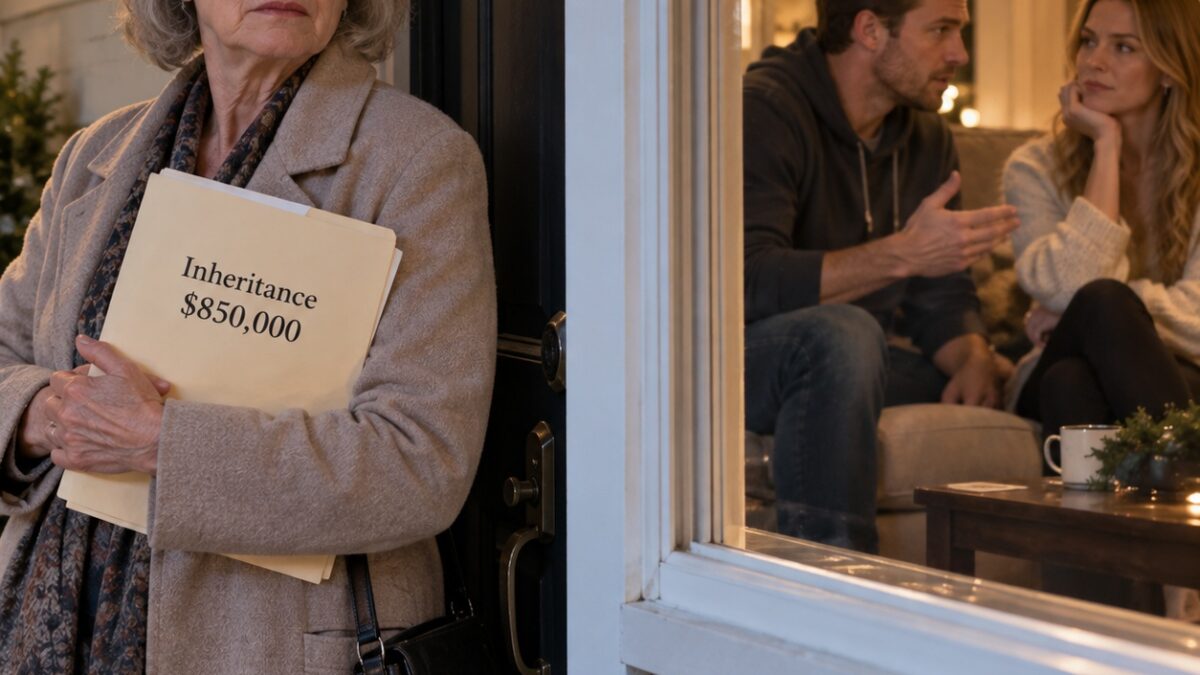
I walked back to my Toyota, opened the passenger door, and slid Arthur’s folder beneath an old reusable grocery bag.
For several seconds, I stood with one hand on the roof of the car.
My knees felt weak.
I wanted to cry.
I wanted to storm through the front door and ask Mason whether the woman who had sold jewelry for his tuition was really “basically stupid.”
I wanted to ask Harper whether my chicken parmesan tasted different when she knew I was apparently not dying fast enough.
Instead, I sat behind the wheel.
Locked the doors.
And looked at myself in the rearview mirror.
The face staring back at me looked older than it had that morning.
Not fragile.
Just tired.
I splashed water beneath my eyes.
Waited until I could breathe normally.
Then I walked inside.
“I’m home!”
My voice sounded cheerful enough to fool even me.
Mason came around the corner.
“Hey, Mom. How’d everything go?”
He hugged me.
I let him.
That may be the hardest thing I did all week.
“Fine.”
Harper appeared behind him and kissed my cheek.
“We were just talking about dinner.”
Of course.
“What sounds good?”
Mason grinned.
“Chicken parm?”
“Sure.”
I made it.
That night, I breaded chicken while Harper scrolled on her phone and Mason watched camera reviews at my kitchen table.
Nobody asked what Arthur’s lawyer said.
Nobody remembered why I had gone.
I served dinner.
Washed dishes.
Wiped counters.
At eleven, I locked my bedroom door.
Then I opened Arthur’s folder.
There was a handwritten letter inside.
Eleanor,
You were the only person who never treated me like I owed them something.
You showed up because you cared.
Use this to finally do something for yourself.
Arthur
I read it twice.
Then whispered:
“For myself.”
The words sounded unfamiliar.
I had spent forty years doing things for other people.
Mason.
My husband before he died.
Customers.
Employers.
Family.
Arthur.
Myself had always been what remained after everyone else finished needing things.
That night, I decided remaining would no longer be enough.
The following morning, I called Arthur’s estate attorney.
His name was Samuel Green.
He answered on the second ring.
“Mrs. Brooks?”
“Eleanor.”
“Is everything all right?”
“No.”
That got his attention.
I closed my bedroom door.
“I need another attorney.”
“For the estate?”
“For me.”
Silence.
“What kind?”
“Elder law. Estate planning. Someone who handles power of attorney and guardianship.”
Samuel’s tone changed immediately.
“Has someone asked you to sign something?”
“Not yet.”
“Has someone threatened guardianship?”
“Not to my face.”
Long silence.
Then:
“Can you come in today?”
“Yes.”
“Come alone.”
I almost laughed.
“Gladly.”
Before leaving, I told Mason I had errands.
“Need me to drive?”
He had not offered to drive me anywhere in months.
“No.”
“You sure?”
“Very.”
He smiled.
“Okay.”
I drove to Samuel’s office and told him everything.
Not emotionally.
Chronologically.
Mason’s comments.
The nursing home.
The staged memory problems.
The power-of-attorney plan.
The guardianship.
Arthur’s inheritance.
Samuel did not interrupt.
When I finished, he leaned back.
“Do you have an existing power of attorney?”
“Yes.”
“Who?”
“Mason.”
He closed his eyes for half a second.
“When did you sign it?”
“After my gallbladder surgery four years ago.”
“Broad?”
“I don’t remember.”
He stood.
“I want a copy.”
His assistant retrieved it from the documents I had brought for Arthur’s estate planning.
Samuel read.
Then handed it to me.
It was broader than I remembered.
Financial transactions.
Real property.
Banking.
Insurance.
Legal proceedings.
Retirement assets.
I stared.
“He can sell my house?”
“Potentially under certain circumstances, yes.”
My stomach turned.
“But I’m competent.”
“Correct.”
“He can’t just do whatever he wants.”
“No.”
“Still.”
“Still.”
Samuel pressed a button on his desk phone.
“Ask Laura Bell if she has thirty minutes today.”
Five minutes later, another attorney entered.
Laura was in her early sixties.
Silver hair.
Dark blue suit.
The kind of eyes that made you feel lying would be exhausting.
Samuel summarized.
Laura listened.
Then asked:
“Mrs. Brooks, do you want your son to continue as attorney-in-fact?”
“No.”
“Good.”
She opened a yellow pad.
“Then we revoke it today.”
I blinked.
“That simple?”
“The document is revocable while you have capacity.”
“What about the banks?”
“We notify them.”
“House?”
“Recorder notification depending on your jurisdiction and what was recorded.”
“Everything?”
“Everything we reasonably can.”
She continued.
“We also create a new durable power of attorney with someone you trust.”
That question hurt.
Who did I trust?
Arthur was dead.
My closest friend Linda lived forty minutes away and had arthritis severe enough that I hated asking for anything.
I thought of my niece Beth, Arthur’s goddaughter.
Forty-five.
CPA.
Practical.
Kind.
We spoke maybe twice a month.
“She doesn’t know any of this.”
“She doesn’t need to accept today.”
I nodded.
“What else?”
“Health-care directive.”
“I have one.”
“Who’s agent?”
“Mason.”
Of course.
We changed that too.
Then my will.
My existing will left nearly everything to Mason.
House.
Savings.
Personal property.
He was my son.
Who else would I have named?
Laura asked:
“What do you want now?”
I stared at her.
“I don’t know.”
“Then don’t make emotional permanent decisions today.”
That surprised me.
“You think I should leave him something?”
“I think you should separate protection from punishment.”
I liked her instantly.
“First, protect yourself.”
She held up one finger.
“Revoke authority.”
Second.
“Document your capacity.”
Third.
“Secure assets.”
Fourth.
“Then decide long-term estate wishes after you are not in acute shock.”
That made sense.
“How do I document capacity?”
“Independent physician evaluation.”
“I’m not senile.”
“I know.”
“That feels insulting.”
“It may later become excellent evidence.”
I thought about Mason’s plan.
Move things.
Tell her she forgot.
Create witnesses.
Suddenly the evaluation felt less insulting.
“When?”
“Tomorrow morning if possible.”
Samuel arranged it.
We spent four hours changing documents.
Revocation of financial power of attorney.
New temporary authority naming Beth and Laura’s professional fiduciary backup.
Health-care proxy revoking Mason.
HIPAA authorization limiting access.
Advance directive.
Emergency contact updates.
Bank notices.
Investment-account restrictions.
Credit freeze instructions.
Then Laura recommended something I had not expected.
“Do not deposit Arthur’s $850,000 into an account your son knows.”
“I wasn’t planning to.”
“Good.”
“And the farm?”
“Do nothing impulsive.”
“Could Mason inherit automatically if something happens to me?”
“Not if we structure it correctly.”
I stared.
“You think I’m in danger?”
Laura did not answer too quickly.
“I think you overheard people discussing a plan to create false evidence of incapacity for financial gain.”
She chose each word carefully.
“That deserves caution.”
My skin went cold.
“I don’t think Mason would physically hurt me.”
“You don’t need to decide that today.”
Again, calm.
“Change the locks on your bedroom.”
Already done mentally.
“Move critical documents.”
“Yes.”
“Photograph valuables.”
“Yes.”
“Keep medication secure.”
That one scared me.
“Medication?”
“If someone intends to manufacture confusion, access to medication is relevant.”
I hated that she was right.
We also set a new rule with Arthur’s estate.
No distributions directly into accounts previously linked to Mason.
The investment inheritance would move into a new account at a different institution.
The farm would transfer through an estate structure we would review before final recording.
Before I left, Laura said:
“Do not tell Mason what you changed.”
“How long?”
“Until notice is necessary.”
“What if he brings me something to sign?”
“Take it.”
“Sign?”
“No.”
“I figured.”
“Say you want your attorney to review it.”
“He’ll become suspicious.”
“He is already planning against you.”
Hard to argue.
Then Laura said:
“And Eleanor?”
“Yes?”
“Start writing down everything.”
So I did.
A notebook.
Dates.
Times.
Exact language.
Day one after overhearing:
Mason: “Mom, didn’t you already tell me that?”
I hadn’t.
Day two:
“Mom, you were up three times last night.”
I wasn’t.
Day three:
Harper placed my car keys in the laundry room.
I searched for twenty minutes.
Then Harper “found” them.
“Maybe you put them there?”
No.
I had placed them on the entry table.
I knew because I had taken a photograph.
The night before, I started photographing ordinary things.
Keys.
Medication.
Appointment calendar.
Wallet.
Mail.
Ridiculous?
Maybe.
Useful?
Very.
On day four, Harper moved my dentist appointment card from the refrigerator.
Then asked:
“Didn’t you say your appointment was today?”
“No. Friday.”
“You sure?”
I opened my phone.
Friday.
Her smile disappeared.
I wrote it down.
The physician evaluation happened the next morning.
Dr. Patel had been my doctor for twelve years.
Laura had called ahead only to explain I needed a documented capacity assessment.
Dr. Patel looked confused.
“Any memory concerns?”
“Not mine.”
I told him why.
His expression hardened.
He conducted a proper evaluation.
Orientation.
Recall.
Executive function.
Medication review.
Health history.
Then he wrote a detailed note.
No clinical evidence of cognitive impairment.
Independent decision-making capacity intact.
No concerns regarding ability to manage personal, financial, or medical affairs.
I nearly framed it.
Instead, I gave copies to Laura and Samuel.
Then I went home and made soup.
That was the strangest week of my life.
Every ordinary household action happened beneath an invisible war.
Mason asked whether I wanted him to handle bills.
“No.”
He offered to “organize” my banking.
“No.”
Harper asked whether I had thought about “downsizing.”
“No.”
Then came the performance.
“Mom, you already paid this electric bill, right?”
“Yes.”
“You sure?”
“Yes.”
“I found the envelope unopened.”
I looked at it.
Wrong month.
Previous promotional insert.
They were getting sloppy.
I started wondering whether I should simply throw them out.
Laura advised patience for several days.
“Why?”
“Because if they actually present a document or attempt unauthorized financial action, that clarifies intent.”
“I already heard intent.”
“Correct.”
“But legally?”
“Evidence improves.”
I hated how law worked.
Still, I trusted her.
So I waited.
On Thursday evening, I told Mason and Harper I was visiting Linda.
Then drove around the block.
Parked on a side street.
Walked through my rear gate.
The kitchen door lock Mason had promised to repair for eight months still did not latch correctly.
His laziness finally became useful.
I entered quietly.
Fifteen minutes later, I heard Harper.
“Thank God.”
Mason laughed.
“She’s barely gone.”
“My face hurts from fake smiling.”
Then Mason said:
“Couple more weeks and we move to phase two.”
I stopped breathing.
Harper asked:
“You found a lawyer?”
“Yeah.”
“He drafted the power of attorney.”
My hand tightened against the wall.
“I tell Mom it’s so I can help with banking and paperwork. Once she signs, I control the house.”
“And you can sell it?”
“Yep.”
“Without telling her?”
“If the document stays broad enough.”
Harper whistled.
“You’re scary.”
“She trusts me.”
“She worships you.”
“Exactly.”
Then Mason said:
“She’s too good for her own good. Basically stupid.”
The words hurt differently the second time.
Stupid for buying his first car.
Stupid for tuition.
Stupid for free housing.
Stupid for loving him without receipts.
Harper asked:
“What if she won’t sign?”
“Then guardianship.”
“What?”
“I say she’s becoming senile. Get witnesses. Document memory problems. Petition the court.”
“You can do that?”
“Harder. But yeah.”
Then Harper asked:
“Wouldn’t it just be easier if she died?”
Silence.
For one second, I hoped Mason would react.
He did.
“Don’t say that.”
Relief came.
Then:
“But yeah. It would simplify everything.”
I walked out the way I came.
I sat in my Toyota around the corner for ten minutes.
No tears.
I had finished crying.
The next morning, I called Laura.
“He has the power-of-attorney document.”
“Good.”
“Good?”
“Good evidence.”
“He’s talking about guardianship.”
“I expected that.”
“He said my death would simplify things.”
Long silence.
Then:
“Eleanor, I want you out of that house temporarily.”
I stared.
“My house?”
“Yes.”
“Why should I leave?”
“Because safety is more important than symbolic ownership for the next seventy-two hours.”
I hated it.
But I went.
Linda welcomed me immediately.
“What happened?”
I told her enough.
She swore for almost a full minute.
Linda had been my closest friend since high school.
Widowed twice.
Zero patience.
“I always hated that boy’s beard.”
I laughed unexpectedly.
“This is not about his beard.”
“It can be two things.”
I stayed.
Meanwhile, Laura arranged a security company to change my house locks during a window when Mason and Harper were out.
Not bedroom locks.
Exterior.
Every one.
Front.
Back.
Garage.
She also had a process server deliver notice that their permission to reside in my home was terminated according to applicable tenancy law, with required time to vacate.
I wanted them out immediately.
Laura said:
“Do this correctly.”
So we did.
The notice included no accusation.
No inheritance.
No nursing home.
No eavesdropping.
Just:
Permission withdrawn.
Vacate by required date.
No authority to act on Eleanor Brooks’s behalf.
Existing power of attorney revoked.
That last line triggered the explosion.
Mason called me fourteen times.
I did not answer.
Harper six.
Then text messages.
MOM WHAT IS THIS?
Why did you revoke POA?
Where are you?
We need to talk.
You cannot evict us.
This is insane.
Then:
Are you confused?
I screenshot that one.
Of course.
Within hours, the exact narrative began.
Mom is confused.
Laura smiled grimly when I forwarded it.
“Predictable.”
Mason called Beth.
My niece.
That surprised me.
Beth called me afterward.
“Aunt Eleanor?”
“Yes.”
“Mason says you suddenly changed your estate documents because someone is manipulating you.”
I laughed.
“Who?”
“He didn’t know.”
“Convenient.”
“He asked whether Uncle Arthur left you anything.”
My body went still.
“How does he know?”
“He said you had a folder.”
Of course.
He saw it that afternoon.
Didn’t ask.
Remembered later.
“What did you say?”
“That Arthur’s estate is private.”
I loved Beth instantly all over again.
“Thank you.”
“What is happening?”
I told her.
Everything.
She did not interrupt.
Then:
“You want me to be your POA?”
“If you’re willing.”
“I am.”
No hesitation.
“Are you sure?”
“Yes.”
“Mason may hate you.”
“He already barely likes me.”
Fair.
Beth drove down the next morning.
We met at Laura’s office.
Laura explained fiduciary duties.
Independent accounting.
No gifts to herself.
Recordkeeping.
Capacity boundaries.
Beth listened like a CPA.
Then signed acceptance.
For the first time in days, I felt safer.
That afternoon, Mason and Harper showed up at Linda’s house.
We knew because Linda’s doorbell camera recorded them.
Mason knocked.
“Mom?”
I remained inside.
Laura had told me not to engage.
“Mom, I know you’re here.”
Harper stood behind him.
Then Mason’s tone changed.
“This is exactly what I mean.”
I froze.
He looked directly toward the camera.
“You are acting irrationally.”
There.
Performance.
He continued.
“You suddenly left your house, changed documents, and are staying with a friend. We’re worried.”
Linda whispered:
“That little bastard.”
I nearly laughed.
Mason knocked again.
“Mom, please let us help.”
Help.
The same man who planned to move my keys and manufacture dementia now stood on a porch performing concern for a camera.
I stayed silent.
He eventually left.
The next day, a certified letter arrived from an attorney.
Not Mason’s original lawyer.
A different one.
It stated that Mason was concerned about my recent “abrupt and uncharacteristic financial and residential decisions.”
It requested a voluntary family meeting.
It suggested an independent capacity evaluation.
Laura nearly laughed.
“We already have one.”
“Do we respond?”
“Oh yes.”
Her letter was six pages.
Attached:
Dr. Patel’s capacity assessment.
Revocation documents.
Statement that I had independent counsel.
Notice that I did not consent to Mason accessing medical or financial information.
And one sentence:
Any further representation that Mrs. Brooks lacks capacity should be supported by competent evidence rather than familial disagreement with her decisions.
I wanted that embroidered on a pillow.
Two days later, Mason’s attorney withdrew from the matter.
Not necessarily because Mason had done something wrong.
Maybe because facts changed.
Still satisfying.
Then Mason made the mistake that moved everything into a more serious category.
He went to my bank.
Not the new inheritance bank.
My old checking account.
He presented the old power of attorney.
The revoked one.
He tried to add himself as joint signer.
The bank had already received revocation.
They refused.
Then notified me.
The branch manager documented the attempt.
Laura’s expression became very still.
“Was he served with the revocation before this?”
“Yes.”
“Timestamp?”
“Yes.”
She looked at Beth.
“Now we have something cleaner.”
Unauthorized attempted use of revoked authority.
We filed a police report.
Not because I expected Mason to be arrested immediately.
Because documentation mattered.
Mason called from another number.
This time, I answered with Laura present.
“Mom, what are you doing?”
His voice shook.
“Protecting myself.”
“From me?”
“Yes.”
Silence.
Then:
“That is insane.”
“No.”
“You called police?”
“Yes.”
“I went to the bank to make sure your bills were being paid.”
“You have never paid one of my bills.”
“That isn’t the point.”
“It is exactly the point.”
“You are proving everything I’m worried about.”
I almost admired the audacity.
“You mean my dementia?”
Silence.
Mason did not know how much I had heard.
“Who said dementia?”
“You did.”
Long silence.
“What?”
“Three weeks ago.”
He breathed.
“Mom—”
“Behind the kitchen wall.”
Nothing.
“You said you would move things.”
“Mason?”
Harper whispered somewhere behind him.
“You said you would tell me I repeated myself.”
“Mom, listen—”
“You said you would manufacture memory problems.”
“That’s not—”
“You said guardianship was phase two.”
Silence.
Then Harper:
“Oh my God.”
Mason’s voice changed.
“You were spying on us?”
I laughed.
“In my house?”
“Mom.”
“You called me stupid.”
“I was angry.”
“You were laughing.”
“I didn’t mean—”
“You said my death would simplify everything.”
That ended him.
No words.
Then:
“You heard that?”
“Yes.”
Silence.
I continued.
“And I heard enough before that to change every document you were depending on.”
Mason’s breathing became heavy.
“What documents?”
“My documents.”
“Mom, please.”
“No.”
“This is a misunderstanding.”
“It isn’t.”
“Harper and I were venting.”
“Power-of-attorney drafts are an unusual form of venting.”
His voice sharpened.
“You went through my things?”
“No.”
“I heard you.”
“You don’t understand.”
“Explain.”
He did not.
“Tell me why you had a lawyer draft a power of attorney.”
Silence.
“To help you.”
“Why were you planning guardianship if I refused?”
No answer.
“Why were you moving my belongings?”
“Mom—”
“Why did you tell Harper you could make me question myself?”
He started crying.
That almost broke me.
Mason had always cried rarely.
As a child, he tried to hide it.
Now hearing him cry triggered forty years of instinct.
Comfort him.
Tell him we’ll fix this.
I gripped the phone tighter.
Laura watched me.
Not coldly.
Supportively.
Mason whispered:
“I’m sorry.”
First one.
“You’re sorry I heard you.”
“No.”
“Yes.”
“I was scared.”
“Of what?”
“That Harper and I would have nothing.”
There it was.
Not my health.
His future.
“You thought stealing my future would fix yours?”
“No.”
“You planned to remove me from my house.”
“I wasn’t really going to.”
“You contacted a lawyer.”
Silence.
“You went to my bank with revoked documents.”
“I didn’t know what else to do.”
“You could get a job.”
That hit.
He stopped crying.
Then anger returned.
“I’ve been trying.”
“For three years?”
“You don’t understand the market.”
“Maybe not.”
I looked around Laura’s office.
“But I understand my mortgage.”
Silence.
“My utility bill.”
Silence.
“The groceries you eat.”
“Mom—”
“The internet Harper complains about.”
“Stop.”
“No.”
For the first time in his adult life, I did not stop when Mason became uncomfortable.
“I understand exactly how much of your life I have been financing.”
He hung up.
I stared at the phone.
Laura let silence sit.
Then:
“How do you feel?”
“Terrible.”
“Good.”
I looked at her.
“That means you still love him.”
I cried.
Not because I wanted him back in my house.
Because I did love him.
That was the tragedy.
Boundaries are easiest with people you do not love.
Mason and Harper vacated before the deadline.
Mostly.
They took clothes.
Electronics.
Photography gear.
Furniture they had bought.
They left six trash bags.
Two broken lamps.
A mattress.
And approximately three years of resentment.
I hired movers for the rest.
Changed locks again.
Installed cameras.
Then I returned home.
The first night alone, I sat in my living room and listened to the refrigerator hum.
No YouTube.
No Harper complaining.
No delivery drivers.
Silence.
I expected peace.
Instead, grief.
I missed Mason’s coffee mug on the counter.
His shoes by the door.
Harper’s stupid expensive shampoo in the bathroom.
I hated myself for missing those things.
Linda came over with pizza.
“You look miserable.”
“I am.”
“Want them back?”
“No.”
“Then be miserable.”
I stared.
“That is terrible advice.”
“It is excellent advice.”
She took a slice.
“You can be sad and still be right.”
I held onto that.
Meanwhile, Arthur’s estate moved forward.
The farm transferred to me.
The first time I drove out as owner, I stood beside Arthur’s farmhouse and cried harder than I had at his funeral.
Five hundred acres.
Pasture.
Timber.
Two ponds.
An equipment barn.
Old farmhouse.
Lease income from a neighboring cattleman.
Arthur had kept everything in excellent condition.
His foreman, Eli Dawson, met me beside the barn.
“Your brother loved this place.”
“I know.”
“He worried about you.”
I looked at him.
“Why?”
“He said you’d give away your last dollar if somebody looked sad enough.”
I laughed through tears.
“That sounds like him.”
“He made me promise something.”
“What?”
“If anybody came out here after he died talking like they owned you, call the lawyer.”
My body went cold.
“What?”
Eli shrugged.
“He didn’t name anyone.”
Arthur had known something.
Not Mason’s plan specifically.
But my weakness.
Giving.
Sacrificing.
Letting people turn love into entitlement.
I walked through the farmhouse.
Arthur’s boots.
Coffee cup.
Old photographs.
Then I found a small envelope in his desk.
Eleanor only.
Inside:
You spent your life rescuing people who learned nothing except that you would rescue them again.
Don’t use what I leave you to continue the lesson.
Arthur.
I sat in his chair for twenty minutes.
That became the turning point.
Until then, part of me still thought the inheritance could eventually help Mason after he apologized.
Maybe pay his debts.
Maybe buy him housing.
Arthur’s note forced me to ask:
Would that be help?
Or another rescue?
I did not decide immediately.
Laura had been right.
Permanent decisions should not be made inside fresh betrayal.
So I created structure.
The $850,000 moved into diversified investments.
No large withdrawals.
The farm income stayed separate.
My house went into a revocable trust.
Beth became successor trustee only after incapacity established under clear medical standards or my death.
One person could not simply declare me confused.
The trust required independent evaluation by two physicians if incapacity were ever claimed.
No Mason.
No Harper.
Then my will.
I took three weeks.
Laura asked:
“What do you want your estate to say about your values?”
I frowned.
“Not sure I knew wills had values.”
“They reveal them.”
I thought.
I wanted Mason to receive something.
That surprised everyone except me.
He was still my son.
But I did not want his inheritance to reward or incentivize control.
So we created a trust provision.
Mason would receive a fixed amount at my death.
Enough that I was not pretending he never existed.
Not enough to hand him everything.
The majority would fund two things:
A scholarship in Arthur’s name for adult students returning to vocational or agricultural education.
And a local elder-advocacy nonprofit that provided legal help to seniors facing financial exploitation or questionable guardianship.
Laura raised an eyebrow.
“Subtle.”
“I’m sixty-eight. I’m done being subtle.”
The farm?
Beth received a first option to manage or acquire under favorable terms if she wanted.
If not, conservation restrictions would protect much of it while income supported the scholarship trust.
My house?
Could be sold, with proceeds distributed under the trust.
Mason would not automatically own the place he had planned to take.
I slept better after signing.
Then came the family war.
Word spread.
Not about the inheritance amount initially.
About Mason being “evicted by his elderly mother during a mental health crisis.”
That was Harper’s framing.
Aunt Carol called.
“Eleanor, are you okay?”
“Very.”
“Mason says you suddenly turned on him.”
“No.”
“He says a lawyer convinced you he was stealing.”
“No.”
“Then what happened?”
I told her.
Not every word.
Enough.
Silence.
“He said he wanted guardianship?”
“Yes.”
“He moved your things?”
“Yes.”
“He went to your bank?”
“Yes.”
Carol swore.
Then:
“Why didn’t you tell us?”
“Because I’m not campaigning.”
That became my rule.
I did not recruit relatives.
If they asked, I told facts.
Some believed me.
Some thought Mason was “just scared about my aging.”
Those people received less access to my life.
I stopped explaining.
Months passed.
Mason found work.
Actual work.
Assistant manager at a camera store.
Not glamorous.
Stable.
Harper took an administrative job at a dental office.
They rented a small apartment.
For the first time in three years, they paid their own electric bill.
Kendra—Mason’s cousin—sent me a picture after seeing them at a family gathering.
“They look tired.”
I replied:
“So do people with jobs.”
Maybe harsh.
Also true.
Mason did not contact me for six weeks.
Then a letter arrived.
Handwritten.
Mom,
I have started this five times.
Every version sounded like an excuse.
I don’t know how to explain what I did without making it worse.
Harper and I were scared.
We were broke.
Living in your house made me feel like I had failed.
Instead of fixing that, I started resenting you for making my failure visible.
Every time you bought groceries, I felt ashamed.
Every time you paid a bill, I told myself you were controlling me even though you never asked me for anything.
Then I started thinking about the house.
I knew I would probably inherit it someday.
I let “someday” become “should.”
That was when I became dangerous.
The things I said about your memory were not jokes.
I was really planning to manipulate you.
I am ashamed.
When you heard me say you were stupid, I was describing the exact kindness I had spent my life depending on.
You trusted me because you loved me.
I treated that trust like a weakness.
I don’t expect forgiveness.
I am not asking for money.
I am not asking to come home.
I am sorry.
Mason
I cried.
Then called Laura.
“He wrote.”
“What do you want to do?”
“I don’t know.”
“Good.”
“Good?”
“Means you are thinking instead of reacting.”
I waited another week.
Then wrote:
I received your letter.
I believe you are sorry.
I am not ready to trust you.
Those are different things.
I love you.
Do not mistake love for restoration of access.
Mom
That was all.
He did not respond.
Three months later, we met.
Public place.
Coffee shop.
Beth sat two tables away at my request.
Mason looked thinner.
Older.
For the first time, not like my little boy.
“Hi, Mom.”
“Hi.”
He sat.
No hug.
“Thank you for coming.”
I nodded.
We talked about ordinary things first.
Work.
Weather.
Arthur’s farm.
Then Mason said:
“Can I ask something?”
“Yes.”
“Did Uncle Arthur leave you money?”
There it was.
My stomach tightened.
He saw my face.
“No.”
He raised his hands.
“That came out wrong.”
“It came out honestly.”
“I’m not asking for it.”
“Why ask?”
“Because I keep wondering whether you found out that day.”
I stared.
He had reconstructed timing.
“Yes.”
“How much?”
“That is not your business.”
He nodded.
“Okay.”
Then:
“Was it a lot?”
“Mason.”
“Sorry.”
I nearly ended the meeting.
Then he whispered:
“I think I need to know whether I was planning to steal from you before or after you became rich.”
That stopped me.
“What?”
He looked ashamed.
“If I knew you had money, then maybe I could tell myself greed changed me.”
His eyes filled.
“But I didn’t know.”
No.
He had planned everything when he thought my greatest assets were an old house, modest savings, and Social Security.
That made it worse in one way.
Clearer in another.
“You wanted what I already had.”
“Yes.”
Silence.
He swallowed.
“I think I needed to admit that.”
We sat quietly.
Then I told him something I had not planned.
“Arthur left me $850,000.”
Mason closed his eyes.
Not greed.
Pain.
“God.”
“And the farm.”
“Five hundred acres?”
“Yes.”
He leaned back.
“I was talking about putting you in a two-thousand-dollar-a-month nursing home while you had that folder.”
“Yes.”
He covered his face.
I let him.
He whispered:
“I’m disgusting.”
“No.”
He looked up.
“What?”
“You did something disgusting.”
I spoke carefully.
“Do not turn accountability into self-destruction.”
He stared.
“If you decide you are permanently disgusting, then you get to stop doing the work of becoming trustworthy.”
Mason cried.
I did not hug him.
That was hard.
But necessary.
Instead I handed him a napkin.
“You want a relationship?”
“Yes.”
“Then build one.”
“How?”
“Slowly.”
“What does that mean?”
“No money.”
He nodded immediately.
“No banking access.”
“Yes.”
“No medical authority.”
“Yes.”
“No moving into my house.”
His face flushed.
“Obviously.”
“No borrowing my car.”
“Okay.”
“No emergency credit cards.”
“Okay.”
“And if I say no, you do not punish me emotionally.”
He swallowed.
“Okay.”
“That is where we start.”
We did.
Slowly.
Sunday coffee once a month.
Then lunch.
Then Thanksgiving.
Harper did not come at first.
That was my choice.
She sent an apology letter.
Hers was weaker.
More explanation.
She blamed stress.
Debt.
Mason’s influence.
I replied politely.
Not ready.
She respected it for six months.
That helped.
Eventually, we met.
Harper cried.
“I was awful to you.”
“Yes.”
She looked surprised.
People expect forgiveness language to soften truth.
I did not.
“You complained about living in my house while paying nothing.”
“Yes.”
“You encouraged Mason’s plan.”
“Yes.”
“You joked about my death.”
She covered her mouth.
“I think about that every day.”
“Good.”
She flinched.
Then I softened.
“Not forever.”
She looked at me.
“But long enough to understand why I don’t trust you.”
“Yes.”
She nodded.
“I understand.”
“Do you?”
“I’m trying.”
That was enough for one meeting.
The bank matter ended without charges.
Law enforcement documented the attempted use of revoked authority, but prosecutors did not pursue it after reviewing the circumstances and lack of completed financial loss.
I was initially disappointed.
Then relieved.
I did not want prison.
I wanted protection.
I had it.
The nursing-home lawyer Mason had contacted turned out never to have represented him beyond drafting a generic POA after Mason described a “mother who wanted help with finances.”
When Laura informed him of the real context, he terminated communication immediately.
That gave me another lesson.
Professional-looking documents do not mean the professional knows the plan behind them.
The guardianship petition was never filed.
Thank God.
But Laura explained what would have happened if it had been.
Medical evidence.
Capacity hearings.
Court review.
Potential guardian ad litem.
Not the instant takeover Mason had imagined.
He had overestimated his knowledge.
Underestimated my rights.
Still, if I had signed the broad power of attorney voluntarily?
Much easier to exploit.
That frightened me.
So I started speaking.
Not publicly at first.
At church.
Then the senior center.
Laura invited me to join a panel on financial planning for older adults.
I hated microphones.
Went anyway.
I told the room:
“Do not appoint someone because they will inherit from you anyway.”
People laughed nervously.
I continued.
“Do not sign because your child says it is routine.”
I held up my revocation copy.
“Know what authority you are giving.”
Afterward, an older woman named Denise approached.
“My daughter handles everything.”
“Do you trust her?”
“Yes.”
“Good.”
“Should I be worried?”
“No.”
I smiled.
“Trust and safeguards can coexist.”
That became my message.
I did not want every parent suspicious of their children.
Most adult children are not Mason at his worst.
But love is not a substitute for structure.
Independent bank alerts.
Clear POA limits.
Multiple agents where appropriate.
Capacity standards.
Professional advice.
I learned those things at sixty-eight.
Better late than never.
Arthur’s farm became my refuge.
I spent two days there every week.
Eli taught me which fences needed replacing.
I learned the difference between things I had ignored my entire life because Arthur handled them.
Pasture leases.
Timber plans.
Equipment depreciation.
Property-tax classifications.
I sold none of it.
Not immediately.
People assumed I would.
Instead, I hired management help and kept the farm operating.
The first year generated enough income to cover most carrying costs.
I used a small portion of the inheritance to repair the farmhouse.
New roof.
Electrical upgrade.
Septic work.
Then I did something for myself.
Finally.
I converted Arthur’s old sunroom into a sewing studio.
Large cutting table.
Good lighting.
New machine.
Not for customers.
For me.
I started making quilts.
The first one was terrible.
Linda said:
“It has character.”
“It has structural problems.”
“Same thing.”
I laughed.
That quilt still sits on the farm couch.
Crooked corners.
Uneven stitching.
Mine.
Arthur would have teased me.
Then asked for one.
A year passed.
My relationship with Mason improved.
Not restored.
Improved.
There is a difference.
He kept his job.
Then started doing photography on weekends.
Cash only at first.
Small weddings.
Graduation portraits.
Family sessions.
He paid off one credit card.
Then another.
He never asked me for money.
Not once.
That impressed me more than any apology.
At Christmas, he gave me a framed photograph of Arthur’s farmhouse at sunrise.
No expensive gift.
No dramatic note.
On the back:
For yourself.
I cried.
He had remembered Arthur’s letter.
I never told him the entire text.
Only that phrase.
For yourself.
I hung the photograph in my sewing room.
Harper and I remained distant longer.
She eventually found her own apartment with Mason after they renewed their lease somewhere else.
Their marriage had been strained.
Unsurprising.
Schemes built from mutual resentment do not become healthy partnerships automatically.
They started couples therapy.
Again, not my business.
I only noticed behavior.
Harper stopped making jokes at my expense.
Started asking before visits.
Brought food without turning it into performance.
One Thanksgiving she offered to wash dishes.
I said:
“You don’t have to.”
“I know.”
Then she did.
Small things.
Trust rebuilds through boring repetition.
That was another lesson.
People want dramatic forgiveness.
Tears.
Hugs.
One speech.
Real trust came back in teaspoons.
Mason calling when he said he would.
Harper respecting no.
No requests for money.
No passive-aggressive comments.
No asking Beth about my estate.
Years.
Not weeks.
Arthur’s scholarship launched three years after his death.
The first recipient was a thirty-nine-year-old single father studying diesel mechanics.
Second was a fifty-two-year-old woman training in agricultural bookkeeping.
I attended the ceremony.
The nonprofit director introduced me.
“This fund exists because of Arthur Green’s commitment to second chances.”
I almost laughed.
Arthur hated sentimental speeches.
Still, second chances fit.
Not blind chances.
Structured ones.
Mason attended one ceremony eventually.
He sat in the back.
Afterward:
“Is this where most of the inheritance is going?”
I looked at him.
He immediately raised his hands.
“Sorry.”
I laughed.
“No.”
Then surprised myself.
“Part of it.”
He nodded.
“Good.”
No resentment.
At least none visible.
“Does that bother you?”
He thought.
“Three years ago?”
“Yes.”
“Now?”
He looked toward the scholarship recipients.
“No.”
Then:
“If you left me all of it, I’d always wonder if I’d learned anything.”
That was the first time I believed change had reached deeper than behavior.
I smiled.
“You’ll still get something.”
He looked horrified.
“Mom.”
“What?”
“I don’t want to know.”
“Good.”
“Please don’t tell me.”
I laughed.
“Fine.”
When I turned seventy-two, I sold my original house.
Not because Mason had contaminated it.
At least not entirely.
It had become too large.
Too many stairs.
Too much maintenance.
I bought a smaller single-story home closer to Linda and my doctor.
Mason helped me move.
I watched him carry boxes out of the house he once planned to own.
That irony was not lost on either of us.
At one point he stood in the empty living room.
“This used to feel huge.”
“You were four when you moved in.”
“I know.”
He looked around.
“I thought owning this would fix my life.”
I said nothing.
He continued.
“That sounds ridiculous now.”
“It sounded practical then.”
He winced.
“You remember that word?”
“Every word.”
“I’m sorry.”
“I know.”
He helped load the final box.
At closing, I signed the sale documents myself.
Beth attended only because we planned lunch afterward.
No one questioned my capacity.
No one moved my keys.
No one told me I had repeated myself.
That mattered.
My new house had a blue front door.
I chose blue because I liked it.
That sounds trivial.
It wasn’t.
For years, every decision had been practical.
Affordable.
Durable.
Necessary.
The blue door was unnecessary.
I loved it.
Linda hated it.
“Looks like a blueberry exploded.”
“Go home.”
She visited anyway.
At seventy-five, I revisited my estate plan.
Laura had retired.
Her daughter, also an attorney, handled the review.
Mason had been trustworthy for seven years.
Did I change the will?
Somewhat.
I increased his fixed share.
Not to everything.
Never everything.
The elder-advocacy fund remained.
Arthur’s scholarship remained.
The farm structure remained.
Why?
Not punishment.
Values.
My estate had grown beyond a family inheritance.
I wanted it to do more than reward bloodline.
Mason understood.
When I eventually told him that much, he said:
“I think Uncle Arthur would like that.”
“He would complain about administrative expenses.”
“Definitely.”
We laughed.
That laughter did not erase the first laughter I heard through my living-room window.
Both existed.
One cruel.
One healed.
Life contains layers.
At seventy-seven, I suffered a mild stroke.
Very mild.
Temporary weakness in my left hand.
Speech unaffected.
Cognition intact.
But the event forced every old fear back into the room.
Hospital.
Doctors.
Capacity.
Who makes decisions?
Beth arrived first.
Mason arrived second.
He stood beside my bed looking terrified.
“Mom.”
“I’m fine.”
“You had a stroke.”
“Tiny.”
“No stroke is tiny.”
“Doctor said mild.”
He reached toward my hand.
Stopped.
“Can I?”
I nodded.
He held it.
Later, the neurologist asked routine orientation questions.
Date.
Location.
President.
Reason for hospitalization.
Mason left the room voluntarily.
I noticed.
Afterward I asked:
“Why?”
He looked confused.
“What?”
“You left during the cognitive exam.”
His face changed.
“I didn’t want you thinking I was watching.”
Tears filled my eyes.
“Mason.”
“I know.”
That old wound remained in him too.
“I’m not afraid of you.”
“Maybe I am.”
“Of what?”
“Becoming that person again.”
Honest.
“You won’t avoid it by leaving every room.”
He looked at me.
“You avoid it by behaving differently.”
He nodded.
The stroke changed one thing.
I updated my medical proxy.
Beth remained primary.
Mason became alternate.
That decision took me weeks.
When I told him, he cried.
“I don’t deserve that.”
“Maybe not the old you.”
He looked at me.
“But I’m appointing the current one.”
Trust as present tense.
That was important.
He never used the authority.
I recovered.
Two years later, Beth joked that she planned to remain first forever because Mason’s face during medical paperwork was unbearable.
He agreed.
Fine.
I reached eighty.
The age Harper once joked I might stubbornly reach.
Actually, she said ninety.
Still working on it.
For my eightieth birthday, Mason organized a small party at Arthur’s farm.
Not a surprise.
I hate surprises now.
He asked.
Thirty people.
Scholarship recipients from previous years.
Linda.
Beth.
Eli’s family.
Harper.
Mason.
A few church friends.
No huge decorations.
No expensive gifts.
After dinner, Mason stood.
“I’m going to embarrass my mother.”
I pointed.
“Careful.”
People laughed.
He held a piece of paper.
“When I was in my forties, I mistook being dependent on my mother for being entitled to her life.”
The room went quiet.
I had not expected this.
“I said things about her I cannot take back.”
My eyes filled.
“I planned things I am ashamed to describe.”
Harper looked down.
Mason continued.
“She protected herself.”
He smiled faintly.
“Very effectively.”
People laughed.
“She also did something I did not deserve.”
My throat tightened.
“She gave me enough distance to either become better or prove I wasn’t going to.”
He looked at me.
“Thank you for not confusing forgiveness with access.”
That line.
I started crying.
He had learned.
Not from the money.
Not from the will.
From the boundary.
Afterward, I told him:
“You didn’t need to tell everyone.”
“I wanted to.”
“Why?”
“Because for years, part of me hoped if enough time passed, we could act like it wasn’t real.”
I nodded.
“And?”
“It was real.”
“Yes.”
He took my hand.
“But it isn’t all that’s real anymore.”
Exactly.
That is the ending people misunderstand when I tell this story.
They expect me to say I cut Mason out forever.
Moved to the farm.
Spent the inheritance.
Left everything to charity.
Died laughing while he got nothing.
Maybe that would be satisfying in a certain kind of story.
It was not my life.
My son did something horrifying.
I protected myself.
I changed every document.
Removed every authority.
Secured every account.
Documented my capacity.
Made him leave.
Refused money requests.
Let consequences become real.
Then I watched.
Not his words.
His behavior.
Years.
He changed.
Not perfectly.
Not because consequences are magic.
Because he decided shame would become responsibility instead of resentment.
Harper changed more slowly.
Still changed.
I changed too.
That part matters.
I had spent decades teaching Mason that I would absorb every consequence.
Skipped dinner.
Paid tuition.
Paid wedding.
Paid rent.
Paid debt.
Opened the door.
No deadline.
No rent.
No boundaries.
I thought unconditional giving made me a good mother.
Sometimes it made me an easy mother to exploit.
That is not the same as blaming myself for his plan.
His plan belonged to him.
Completely.
But after protecting myself, I had to look at the pattern I wanted to stop repeating.
Love can be unconditional.
Access should not be.
Money should not be.
Authority absolutely should not be.
Those distinctions changed my final decades.
I became kinder because I stopped giving from fear.
When I helped, I chose.
When I said no, I did not spend three days apologizing.
When relatives hinted about loans, I asked for written budgets.
Some stopped calling me generous.
I slept better.
Arthur had told me:
Use this to finally do something for yourself.
People assume he meant spend the $850,000.
Travel.
Buy a car.
Luxury.
I did some of that.
I went to Italy with Linda.
Bought a reliable SUV.
Replaced my mattress.
Got hearing aids earlier than I might have.
Took quilting classes.
Those were wonderful.
But the biggest thing I did for myself was not spending.
It was protecting.
My name.
My choices.
My capacity.
My right to age without someone turning normal aging into a weapon.
That was Arthur’s real gift.
Money created options.
The betrayal forced me to use them.
I wish I had learned without hearing my son call me stupid.
Still, I learned.
The nursing home Mason mentioned still exists.
I drove past it once.
Not intentionally.
Traffic detour.
A beige building behind a row of trees.
I pulled over.
Sat in the car.
Two thousand dollars a month, Mason had said.
Cheap place.
His mother warehoused.
Her own Social Security helping pay.
I cried.
Then laughed.
Not because nursing homes are shameful.
Some are excellent.
Some families need them.
The cruelty was not the building.
It was removing my choice.
Deciding where I would live because my continued ownership inconvenienced him.
That was what I refused.
Years later, if I ever need assisted living, I will choose it myself while I can.
My updated plan includes preferences.
Facilities.
Care standards.
Budget.
People authorized.
That is empowerment.
Planning for aging is not surrendering to it.
Another lesson.
The elder-advocacy nonprofit eventually asked me to speak at a fundraiser.
I told my story publicly for the first time.
No last names.
No dramatic exaggeration.
Afterward, a man in his seventies approached.
“My daughter wants POA.”
“Do you trust her?”
“Yes.”
“Then why are you worried?”
“My son says once I sign, she can take everything.”
I smiled.
“Go to your own lawyer.”
Not daughter’s.
Not son’s.
Yours.
“Ask what the document actually permits.”
He nodded.
That became my universal advice.
Independent advice.
Not suspicion.
Clarity.
One year later, he wrote me a letter.
His daughter had become limited financial agent with safeguards.
Their relationship improved because everyone understood boundaries.
That felt better than revenge.
At eighty-two, I keep Arthur’s original handwritten letter in a fireproof box.
Next to it:
The revoked POA.
Dr. Patel’s capacity evaluation.
My updated trust.
Mason’s first apology letter.
Five documents.
Each marks a different version of my life.
Trust given.
Trust threatened.
Capacity defended.
Control reclaimed.
Trust rebuilt.
I sometimes take them out.
Not often.
Proof is important when truth is contested.
Once truth settles, proof can rest.
Mason knows about the box.
He never asks what is inside anymore.
That may be the clearest evidence of change.
Harper gave me a quilt for my eightieth birthday.
She made it herself.
Badly.
Worse than my first.
I loved it.
On the back she stitched:
FOR YOURSELF.
I cried so hard she cried too.
Life is strange.
People can wound you in rooms where years later they stand washing dishes.
People can change.
People can also refuse.
You do not owe access while waiting to find out which one they choose.
That is what I would tell any parent in my position.
Do not rush forgiveness because someone shares your blood.
Do not rush permanent punishment because you are hurt.
Protect yourself first.
Then let time reveal character.
Character is repetitive.
So is manipulation.
So is change.
Watch the pattern.
Mason’s worst pattern was entitlement.
His better pattern became consistency.
He showed up.
Worked.
Paid his bills.
Asked.
Accepted no.
No inheritance could teach me more than that.
When I die, he will receive something.
I will not tell him how much.
He genuinely does not want to know.
Last year, he joked:
“Please leave me one ceramic figurine. I deserve that.”
I pointed at him.
“You mocked those.”
“I know.”
“You called them creepy.”
“They are.”
I threw a napkin at him.
He laughed.
I did too.
One sits on his bookshelf now.
A ridiculous porcelain goose.
He hates it.
Perfect.
People sometimes ask whether I regret overhearing that conversation.
No.
I regret that it existed.
I am grateful I heard it.
Those are different.
If the window had been closed, I might have walked inside smiling.
Told Mason about the inheritance.
Maybe written him a check.
Maybe signed his power of attorney later because he said it would make paperwork easier.
Maybe ignored misplaced keys.
Maybe questioned my memory.
Maybe ended up in a courtroom defending my capacity.
Maybe worse.
One open window changed the course of my life.
But the window did not save me.
What saved me was believing what I heard.
That sounds obvious.
It isn’t.
People spend years explaining away betrayal because the alternative hurts too much.
He was joking.
He was stressed.
He wouldn’t really do it.
She didn’t mean that.
Family talks.
Anger talks.
I almost did that too.
Then I heard the lawyer.
The POA.
The staged dementia.
Guardianship.
Specificity removed denial.
A plan is different from a fantasy.
So I acted.
Quietly.
That mattered.
If I had stormed inside, Mason would have denied everything.
Destroyed documents.
Changed tactics.
Warned Harper.
Maybe accelerated the plan.
Instead, I smiled.
Cooked chicken parmesan.
Washed dishes.
Locked my door.
Called my own lawyer.
People love dramatic confrontation because it feels powerful.
Sometimes power looks like not showing your hand until your paperwork is finished.
That was new for me.
I had always solved conflict immediately.
Apologize.
Smooth it over.
Feed everybody.
This time I let knowledge sit quietly.
By the next afternoon:
POA revoked.
Health proxy changed.
Estate protected.
Bank warned.
Capacity documented.
The tools Mason planned to use became useless.
That was the real turning point.
Not when I eventually told him I heard.
By then, the danger had already been reduced.
Arthur’s $850,000 never made me a millionaire for long.
Markets moved.
Farm expenses existed.
Taxes happened.
I gave money away.
Used money.
Invested.
But the amount is not the story.
The timing is.
I discovered financial freedom the same afternoon I discovered the person I loved most was counting on my financial vulnerability.
That contrast woke me up.
When Mason called me “too good for my own good,” he almost understood the problem.
Almost.
Kindness without boundaries can become self-erasure.
The answer was not becoming cruel.
I never became cruel.
I became specific.
Yes, you may visit.
No, you may not access my bank.
Yes, I love you.
No, you may not live here.
Yes, I forgive parts of what happened.
No, forgiveness does not rewrite documents.
Yes, I trust you more now.
No, I will never again make one person the only gatekeeper to my life.
Specific.
Clarity saved more than anger ever could.
The last time Mason and I discussed the original afternoon, he asked:
“What were you thinking when you heard us?”
I told him the truth.
“I was thinking about giving you money.”
He went pale.
“What?”
“Driving home from Arthur’s attorney.”
“How much?”
I smiled.
“You really want to know?”
“No.”
Then, after a pause:
“Yes.”
“I thought maybe a hundred thousand.”
He closed his eyes.
“God.”
“For a down payment. Equipment. Maybe debt.”
He laughed bitterly.
“I was plotting to take your house while you were deciding whether to give me a house.”
“Basically.”
He looked sick.
“Mom.”
“What?”
“I am so sorry.”
“I know.”
Then I said something I had never said before.
“I’m glad I didn’t give it to you.”
He opened his eyes.
“So am I.”
That answer closed something inside me.
The old Mason would have regretted losing $100,000.
The current Mason regretted who he had been.
That was enough.
Not to erase.
To continue.
At my eightieth birthday, after everyone left, I sat on Arthur’s porch.
Sunset over pasture.
Mason sat beside me.
No agenda.
No money talk.
He said:
“Uncle Arthur saved you.”
I shook my head.
“No.”
“The inheritance—”
“Helped.”
I looked at him.
“But Arthur did not change the documents.”
“Laura did.”
“I instructed Laura.”
He smiled.
“Fair.”
“I saved myself.”
That was important to say.
Not arrogance.
Ownership.
For decades, I credited survival to sacrifice.
My husband.
My son.
Work.
Duty.
At sixty-eight, I finally did something different.
I protected myself because my life was mine even if nobody needed me.
That is why Arthur’s note mattered.
For yourself.
I had to learn that I was enough reason.
Not because Mason deserved punishment.
Not because Harper deserved humiliation.
Because Eleanor deserved protection.
That lesson came late.
Still came.
If you are reading this at thirty, learn it earlier.
If you are sixty-eight, it is not late.
If you are eighty, still not late.
Your life does not become community property because you spent decades giving pieces of it away.
Your child can be your child without being your financial agent.
Love can survive no.
If it cannot, it was depending on access more than love.
Mine survived.
Barely at first.
Then differently.
Better.
I no longer believe sacrifice proves love.
Sometimes sacrifice is love.
Sometimes habit.
Sometimes fear.
Sometimes the easiest way to avoid conflict.
The afternoon I stood outside my own house with Arthur’s folder under my arm, I heard the cost of that confusion.
Mason believed I would sign because I trusted him.
He believed I would doubt myself because I had always trusted his version of things.
He believed I would surrender because I had spent my life surrendering small things for him.
He was wrong.
Not because I stopped loving him.
Because for the first time, I included myself among the people I loved.
That changed everything.
The house was mine.
My mind was mine.
The inheritance was mine.
The farm was mine.
My future was mine.
And eventually, even my forgiveness was mine to give slowly, carefully, and only in the form I chose.
I never forgot the sentence Mason whispered.
“She’s too good for her own good. Basically stupid.”
For years it hurt.
Now it almost makes me smile.
He was wrong about one word.
Good was never the problem.
Unprotected was.
Once I learned the difference, nobody ever mistook my kindness for permission again.








