My Parents Left Grandma at a Nursing Home—Then She Handed Me Grandpa’s Envelope.k
My Parents Left Grandma at a Nursing Home—Then She Handed Me Grandpa’s Envelope
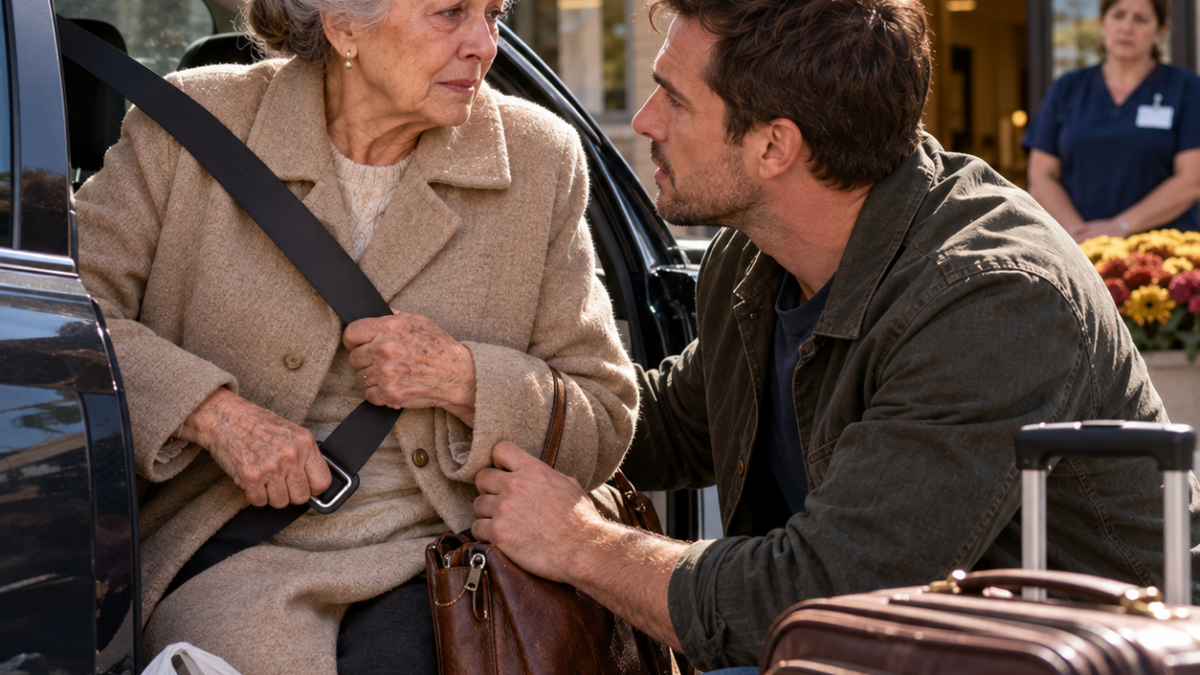
Three hours after my parents told my grandmother they were taking her to lunch, a nursing home called me to say her suitcase was sitting in their lobby and the people who had brought her there had disappeared. When I arrived after driving 190 miles from Indianapolis, Grandma Eleanor didn’t cry or ask me to call my father—she walked straight to my car carrying one brown suitcase and a grocery bag full of medication. Then she buckled her seat belt, handed me an envelope with HOUSE DEED written across it in my late grandfather’s handwriting, and said, “Don’t call them, Daniel; drive to the courthouse.”
My name is Daniel Mercer.
I was thirty-four years old then, living in Indianapolis and working as an operations manager for a medical-supply distributor.
My grandmother lived alone in the Ohio house where she’d spent forty-seven years with my grandfather, Thomas.
Grandpa had died six years earlier.
Grandma stayed.
She was seventy-nine, stubborn, organized, and still sharp enough to remember the exact amount she’d paid for every appliance she’d ever purchased.
Eight months before that nursing-home phone call, she underwent hip surgery.
My father, Michael Mercer, convinced her to sign a power of attorney while she recovered.
Grandma trusted him.
He was her only son.
At first, the arrangement made sense.
Dad paid a few bills.
Picked up prescriptions.
Moved money between her checking and savings accounts when insurance reimbursements were delayed.
Then Grandma recovered.
She started driving again.
Cooking.
Going to church.
Balancing her own checkbook.
But Dad never stopped “helping.”
The afternoon the nursing home called me, the administrator sounded uncomfortable before she’d even finished introducing herself.
“Your grandmother listed you as her emergency contact.”
“Is she hurt?”
“No.”
“Then what’s wrong?”
“She was brought here for admission.”
My stomach tightened.
“Admission?”
“Yes.”
“By who?”
“A man and woman identifying themselves as her son and daughter-in-law.”
My parents.
“They told Ms. Mercer they were taking her to lunch.”
The administrator paused.
“According to your grandmother, she didn’t know this was a nursing facility until they brought her inside.”
I put my coffee down.
“Where are they?”
“We don’t know.”
“They said they needed additional paperwork from the car.”
“They left.”
“How long ago?”
“Almost three hours.”
I called Dad.
Voicemail.
Mom.
Voicemail.
I didn’t pack properly.
I grabbed my wallet, charger, jacket, and drove.
When I reached the facility, Grandma was sitting upright beside her suitcase wearing her dark blue church coat.
No tears.
No confusion.
Just fury.
I knelt.
“Grandma.”
She looked at me.
Then toward the exit.
“Let’s go.”
In the car, I reached for my phone.
“I’m calling Dad.”
Her hand covered mine.
“No.”
“Grandma—”
“Not yet.”
Then she gave me the bank statement.
$12,000.
$18,000.
$25,000.
Three withdrawals.
Six weeks.
“Dad did this?”
“He says it was for my care.”
I looked at the suitcase in the rearview mirror.
Grandma gave a bitter little laugh.
“I suppose this is the care.”
Then she handed me Grandpa’s envelope.
“Courthouse first.”
“Then the bank.”
“And after that?”
“My house.”
“Why?”
She stared straight ahead.
“Because if I’m right, they weren’t putting me somewhere safe.”
Her voice dropped.
“They were clearing me out.”
PART2 AND FULL STORY IN THE FIRST COMMENT
I wanted to ask a hundred questions.
Instead, I started the car.
The nursing-home administrator had already given me copies of the incomplete admission packet with Grandma’s permission.
I didn’t read them while driving.
Grandma held them on her lap.
Every few minutes, she’d look down and shake her head.
Finally I asked:
“What did they tell you at lunch?”
“They didn’t take me to lunch.”
“I know.”
“I mean before.”
“Oh.”
“Your mother called at nine.”
“She said she’d found a new restaurant with a garden.”
“I put on this coat because she said it was nice.”
Grandma smoothed the lapel.
“I packed nothing.”
I looked in the mirror at the suitcase.
“Then whose suitcase is that?”
“Mine.”
“But you said—”
“It was already in their trunk.”
That chilled me.
“You didn’t pack it?”
“No.”
“What is inside?”
“I don’t know.”
We were stopped at a red light.
I turned.
“You haven’t opened it?”
“I’ve been waiting for you.”
I pulled into the next gas station.
Not because the suitcase was some kind of bomb.
Because I suddenly needed to know exactly how much planning had gone into that morning.
We parked along the side.
I got out.
Opened the rear door.
Grandma joined me.
The suitcase was one I’d seen in her hall closet for years.
Brown Samsonite.
Grandpa had bought the set for their twenty-fifth wedding anniversary.
I put it on the back seat.
Unzipped it.
Inside:
Three nightgowns.
Underwear.
Two sweaters.
A pair of slippers.
Toiletries.
A framed photograph of Grandpa.
A small Bible.
Four paperback mysteries.
Socks.
A second pair of shoes.
Nothing random.
Nothing that looked as though somebody had hurriedly thrown things together.
Someone had packed for a stay.
Not lunch.
Grandma picked up the photograph of Grandpa.
Her fingers shook.
“They went through my bedroom.”
I said nothing.
She continued:
“I keep this photograph on the nightstand.”
“You’re sure?”
She looked at me.
“Daniel.”
“Right.”
“Sorry.”
She put it back.
Then removed the grocery bag of medications.
Those had been packed too.
Prescription bottles.
Blood-pressure medicine.
Cholesterol medicine.
Pain reliever.
Vitamin D.
A printed medication list.
Grandma stared at the list.
“I didn’t make this.”
“Dad?”
“Probably.”
Her anger was changing.
Not disappearing.
Becoming colder.
More focused.
Grandma had spent thirty-five years as a high-school secretary.
People underestimated school secretaries because they assumed the principal ran everything.
Grandma knew better.
She knew which teacher was absent, which child had been picked up, which permission slip was missing, who had called, when they had called, and exactly where every form was supposed to go.
When she became angry, she documented.
Grandpa used to joke that she could ruin a man’s week with a three-ring binder.
She closed the suitcase.
“Courthouse.”
We continued.
The county recorder’s office closed at four-thirty.
We arrived a little before three.
Grandma knew exactly which counter she wanted.
A woman named Patricia Meyers came over after Grandma explained that she needed certified copies of every instrument recorded against her property during the previous twelve months.
Patricia asked for identification.
Grandma handed over her driver’s license.
She gave the property address.
Parcel number from memory.
Patricia typed.
Then stopped.
Her eyes moved toward Grandma.
Then me.
“Ms. Mercer?”
“Yes?”
“Do you have an attorney?”
Grandma’s face didn’t change.
“Why?”
Patricia turned the monitor slightly but not enough for us to read private internal information beyond the relevant filing.
“There was a deed recorded nine days ago.”
My stomach dropped.
“What kind?”
I asked.
Patricia looked at Grandma.
Grandma nodded permission.
“Quitclaim deed.”
“Grantor listed as Eleanor Mercer.”
“Grantees Michael Mercer and Susan Mercer.”
My parents.
I looked at Grandma.
She went completely still.
“I did not sign a deed.”
Patricia said:
“The document isn’t signed by you directly.”
She printed an unofficial view first.
At the bottom:
Eleanor Mercer, by Michael Mercer, Attorney-in-Fact
Dad had used the power of attorney.
Grandma took the paper.
Read.
Her mouth tightened.
Consideration:
Ten dollars and other valuable consideration.
The house I’d spent every Christmas in since childhood.
The front porch Grandpa built.
The oak tree he planted the year Dad was born.
The kitchen where Grandma made cinnamon rolls.
Transferred to my parents for ten dollars on paper.
Grandma whispered:
“He did it.”
I moved closer.
“Grandma.”
She handed the page back to Patricia.
“Certified copy.”
Patricia nodded.
Then:
“You may also want a certified copy of the power of attorney if it was recorded.”
“It was?”
Grandma asked.
Patricia searched.
“Yes.”
Recorded eight months ago.”
That made sense.
A real-estate transaction executed by an attorney-in-fact would often require documentation of authority.
Grandma asked:
“Can I revoke it here?”
Patricia shook her head carefully.
“We record documents.”
“We don’t give legal advice or draft revocations.”
“But if you execute a valid revocation, it may be recorded depending on the circumstances.”
“You need an attorney.”
That was exactly the kind of answer I wanted.
Not a clerk playing lawyer.
Not somebody promising she could fix title at a counter.
Grandma looked at me.
“Call Rachel.”
“Who?”
“Rachel Kim.”
Then she frowned.
“You don’t know Rachel?”
“No.”
“You met her at Grandpa’s funeral.”
“Grandma, there were two hundred people at Grandpa’s funeral.”
“She wore a green coat.”
That did not help.
Grandma took out her phone.
Called.
Rachel Kim was a local attorney.
Estate planning.
Probate.
Real estate.
She had prepared Grandma’s power of attorney after the surgery.
That surprised me.
I had assumed Dad had brought some generic form.
Rachel answered.
Grandma said:
“Rachel, Michael used my power of attorney to deed my house to himself.”
There was silence long enough that even I heard it.
Then Rachel:
“Are you safe?”
“Yes.”
“Where are you?”
“Recorder’s office.”
“Stay there.”
“I’ll meet you in twenty minutes.”
She arrived in eighteen.
Green coat.
Grandma gave me a look.
I didn’t acknowledge it.
Rachel was in her early fifties, calm, with the posture of someone who had learned not to react dramatically until she had documents in front of her.
She read the deed.
Then the recorded power of attorney.
Then she looked at Grandma.
“You did not authorize this?”
“No.”
“Did you discuss gifting the house to Michael?”
“Never.”
“Selling it to him?”
“Never.”
“Have you received any payment?”
“Not one dollar.”
“Have you told him he could have the house?”
“No.”
Rachel nodded.
“Okay.”
“First, we revoke the power of attorney.”
“Second, we notify institutions we know have relied on it.”
“Third, we address the deed.”
I asked:
“Can we just remove it?”
“No.”
Good.
Again.
Real answer.
Rachel explained that once a deed had been recorded, we weren’t going to make it vanish by asking nicely at the counter.
If Dad voluntarily executed a deed returning the property, that was one route.
If he didn’t, Grandma could seek court relief to set aside the transaction based on lack of authority, breach of fiduciary duty, self-dealing, undue influence, or other grounds supported by the actual facts and Ohio law.
The exact legal theory would depend on the power of attorney language and evidence.
Rachel reviewed the relevant sections.
Then her expression changed.
“What?”
Grandma asked.
Rachel pointed.
“When we prepared this, you specifically refused broad gifting authority.”
Grandma nodded.
“I remember.”
“Michael’s authority to make gifts is limited.”
“To customary gifts consistent with your prior pattern and best interests.”
“He does not have express authority here to transfer your entire residence to himself.”
My chest loosened slightly.
Not because the problem was solved.
Because somebody had finally said something that sounded solid.
Rachel looked at me.
“Daniel.”
“Yes?”
“Do not call your parents yet.”
Grandma nodded.
“I told him.”
Rachel almost smiled.
Then:
“Mrs. Mercer, are you willing to sign a revocation now?”
“Yes.”
“Do you understand that revoking it doesn’t automatically reverse actions already taken?”
“Yes.”
“Do you want Michael to retain any financial authority?”
“No.”
“Healthcare authority?”
“No.”
“Any authority?”
“None.”
Rachel prepared the revocation at her office.
Grandma signed.
Witnessed.
Notarized.
Copies went to the recorder.
Her bank.
Investment institution.
Insurance contacts.
Doctor.
Anyone else we could identify.
Then Grandma insisted on the bank.
It was nearly five.
We reached the branch where she’d banked for more than twenty years.
The branch manager, Calvin Shaw, recognized her.
“Eleanor.”
He smiled.
Then saw Rachel.
Me.
The file.
Smile disappeared.
We went into his office.
Grandma placed the bank statement down.
“I need to know where these went.”
Calvin looked at Rachel.
Rachel said:
“Mrs. Mercer has revoked Michael Mercer’s power of attorney.”
“She is asking about transactions in her own accounts.”
Calvin nodded.
He pulled up records.
I stayed quiet.
This was Grandma’s money.
Grandma’s attorney.
Grandma’s questions.
Not mine.
The $12,000 withdrawal had been a cashier’s check.
Payable to:
Mercer Renovation Group LLC
I frowned.
Dad didn’t own a renovation company.
The $18,000 went by electronic transfer to an account at another bank.
Name:
Susan Mercer
My mother.
The $25,000?
Cashier’s check.
Payable to a recreational-vehicle dealership.
Grandma stared.
“An RV?”
Calvin looked uncomfortable.
“That is what the instrument shows.”
Grandma closed her eyes.
My parents had bought an RV two months earlier.
They told everyone they’d financed it.
Dad called it their retirement plan.
Mom had posted pictures.
White-and-silver Class C.
Caption:
Finally doing something for ourselves.
I felt sick.
Grandma opened her eyes.
“What is Mercer Renovation Group?”
Calvin couldn’t know.
But Rachel could search public business records.
She did.
LLC registered four months earlier.
Managing member:
Michael Mercer.
Address:
My parents’ home.
Dad had created a company.
Then written himself a $12,000 check from Grandma’s account under authority she gave him to help pay her bills.
Grandma asked:
“Any more?”
Calvin hesitated.
“There are other transactions.”
“How much?”
“Over what period?”
“Since Michael began acting as agent.”
Calvin printed a transaction history.
Not all suspicious.
Utilities.
Insurance.
Pharmacy.
Property tax.
Groceries.
Normal.
Then:
$4,800.
$7,500.
$3,200.
$9,000.
Transfers and checks outside Grandma’s normal spending patterns.
Rachel highlighted them.
“Total?”
Calvin calculated.
Roughly $79,000 beyond transactions that appeared readily connected to Grandma’s ordinary expenses.
Not $55,000.
Seventy-nine.
Grandma sat silently.
I wanted to say something comforting.
There wasn’t anything.
Finally:
“Can you stop him accessing anything else?”
Calvin nodded.
“With this revocation and your direct instruction, we’re placing appropriate restrictions and review on agent access.”
He also recommended the bank’s fraud department examine the transactions.
Not because every use by a power-of-attorney agent is automatically criminal.
Because Grandma disputed them.
The bank needed its own process.
Rachel asked for copies of every relevant check and transfer record that Grandma was entitled to obtain.
We left after six.
The sky had gone dark.
I asked:
“Hotel?”
Grandma shook her head.
“My house.”
“Grandma, if they transferred the deed—”
“I lived there this morning.”
Rachel said:
“Ownership is disputed, but we need to think about immediate safety.”
“Do Michael and Susan have keys?”
“Yes.”
“Could they be there?”
“Yes.”
Grandma looked at me.
“So?”
Rachel didn’t rise to it.
“If they are there, do not confront them.”
“We can request law enforcement assistance if necessary.”
Grandma sighed.
“I want my slippers.”
“You packed slippers.”
“Those are the bad slippers.”
I almost laughed.
It was the first normal thing anyone had said in five hours.
We drove to the house.
Rachel followed.
As we turned onto Grandma’s street, my stomach tightened.
There was a vehicle in the driveway.
Not Dad’s.
A white van.
Logo:
HENDERSON ESTATE SERVICES
I parked across the street.
Grandma stared.
“What is that?”
I said:
“Stay here.”
She snapped:
“I will do no such thing.”
Rachel intervened.
“Everyone stays until we know what’s happening.”
She called the nonemergency police line.
Explained that an elderly homeowner had returned to her residence after a disputed power-of-attorney transaction and found unknown workers on site.
Officer arrived twelve minutes later.
Then we approached.
Front door open.
A man carrying a cardboard box walked out.
He stopped.
“Can I help you?”
Grandma said:
“This is my house.”
The man’s face changed.
“Mrs. Mercer?”
“Yes.”
“Oh.”
That single syllable told us everything.
He put the box down.
“My name is Kevin Henderson.”
“Your son hired us.”
“To do what?”
“Pack household contents.”
Grandma stared past him.
Inside, her living room had become a warehouse.
Boxes.
Labels.
Furniture wrapped.
Pictures removed from walls.
Grandpa’s recliner gone.
Grandma walked inside.
Not fast.
The officer followed.
Rachel too.
I stayed beside her.
Every room had been touched.
China cabinet emptied.
Books boxed.
Closets half-cleared.
Dining-room table gone.
Guest bedroom stripped.
Grandma reached the kitchen.
Her hand went to the counter.
The ceramic rooster Grandpa bought as a joke on their fortieth anniversary was missing.
“Where are my things going?”
Kevin looked miserable.
“Storage.”
“Where?”
He checked paperwork.
“Henderson facility on Route 16.”
“Who authorized it?”
“Michael Mercer.”
“What did he tell you?”
“That you were moving permanently into assisted living.”
Grandma closed her eyes.
The officer asked:
“Do you have work authorization?”
Kevin handed it over.
Dad had signed.
As “property owner.”
Not attorney-in-fact.
Property owner.
The new deed had already changed how he represented himself to other people.
Then Grandma saw the lockbox.
Attached to the front railing.
Real-estate lockbox.
She walked toward it.
“What is that?”
Kevin shook his head.
“Not ours.”
Rachel photographed it.
A neighbor came outside.
Mrs. Delaney.
Seventy-six.
She crossed the lawn.
“Eleanor?”
Grandma turned.
Mrs. Delaney’s eyes widened.
“Oh my God.”
She hugged Grandma.
Then whispered:
“I thought you’d moved.”
“I didn’t.”
“Michael said you were going into memory care.”
Everything inside me went cold.
Grandma pulled away.
“What?”
Mrs. Delaney looked confused.
“He was here yesterday.”
“With a Realtor.”
“They took pictures.”
“He said your doctors told him you couldn’t safely live alone.”
Grandma stared.
“My doctor said no such thing.”
Rachel asked:
“Do you know the Realtor’s name?”
Mrs. Delaney pointed at the lockbox.
“Card might be in it.”
The police officer called dispatch to document the situation.
No one ripped the box off the railing.
No one opened it without authorization.
Rachel used public listing data.
Grandma’s address wasn’t active yet.
But a real-estate agent named Heather Collins had apparently been contacted.
Rachel called.
Heather answered.
After confirming Grandma was present and represented by counsel, she became extremely cooperative.
Dad had contacted her three days earlier.
Said he now owned the property.
Provided recorded deed.
Said his mother had entered long-term memory care.
Wanted the house listed quickly.
Cash offers preferred.
Target price:
$238,000.
I knew Grandma’s neighborhood.
That was low.
Not absurdly low.
But low enough for speed.
Heather had recommended listing around $285,000 after preliminary review.
Dad pushed for faster sale.
“Why?”
Grandma asked.
Rachel had the phone on speaker.
Heather hesitated.
“He said he needed liquidity.”
That word hung in the room.
Liquidity.
Grandma looked around at the boxes.
They had put her in a nursing home.
Transferred her house.
Moved her money.
Packed her belongings.
Prepared a quick sale.
And called it care.
Grandma asked Heather:
“Did Michael say I have dementia?”
Another hesitation.
“Yes.”
“Did he show you medical documentation?”
“No.”
“He said he had power of attorney and title had already been transferred.”
Rachel stepped in.
“Do not list or market the property.”
Heather said:
“Understood.”
“I’ll freeze everything on my side.”
Good.
Then Grandma asked:
“What happened to my dining table?”
Kevin checked.
“Storage.”
“And Thomas’s chair?”
“Storage.”
“And the ceramic rooster?”
He blinked.
“I’m sorry?”
I almost laughed.
Grandma said:
“Kitchen rooster.”
Kevin looked at one worker.
The worker called from the hall:
“Wrapped with decorative ceramics.”
Grandma nodded.
“Good.”
Priorities.
Rachel asked the police officer how he wanted to document possible financial exploitation.
He explained that the circumstances could be reported and referred for investigation, including to adult protective services or the appropriate investigative unit, but that officers on scene were not going to adjudicate the validity of a deed or announce criminal guilt in Grandma’s kitchen.
Again:
Good.
He took the report.
Photographed.
Collected names.
Grandma made a formal statement.
The moving company stopped work voluntarily once they understood the authority was disputed.
They agreed to hold everything already transported without releasing it until ownership and authorization were clarified.
By eight-thirty, the house was quiet.
Half empty.
Grandma stood in the living room looking at pale rectangles where pictures had hung.
I said:
“You’re coming home with me tonight.”
She looked at me.
“To Indianapolis?”
“Yes.”
“No.”
“Grandma.”
“This is my house.”
“I know.”
“Then why am I leaving?”
Rachel said:
“Because Michael has keys.”
Grandma turned.
“We change the locks.”
“Tonight?”
“Yes.”
I had forgotten who I was talking to.
Rachel called a locksmith she’d used for estate clients.
He arrived at nine-fifteen.
The police report number was documented.
Grandma showed identification.
Rachel had copies of title history and the dispute.
The locksmith replaced exterior locks.
Garage code reset.
Alarm code changed.
Grandma gave me one key.
Then:
“Not your father.”
“I figured.”
At ten-thirty, we sat in a mostly empty kitchen eating takeout soup with plastic spoons because the silverware had been packed.
Grandma looked exhausted.
I asked:
“Do you want me to call them now?”
She took one spoonful.
“No.”
“When?”
“Tomorrow.”
“You’re really making them wait?”
She looked at me.
“They made me wait three hours in a nursing-home lobby.”
Fair.
I slept on her couch.
Or tried.
At 11:47, Dad called.
At 11:49, Mom.
At 12:03, Dad.
Texts followed.
DANIEL CALL ME NOW.
WHERE IS MOM?
Then:
THIS IS NONE OF YOUR BUSINESS.
That one almost impressed me.
Grandma was asleep.
I muted the phone.
At 6:10 the next morning, I woke to the smell of coffee.
Grandma stood in the kitchen wearing a robe.
“Where did that come from?”
“Mrs. Delaney.”
She had brought coffee, eggs, bread, two mugs, a skillet, and silverware at six in the morning after learning half Grandma’s kitchen had been packed.
Neighbors can be better emergency infrastructure than governments sometimes.
I sat.
Grandma poured.
Then:
“Today we make a list.”
“Of what?”
“Everything missing.”
Of course.
By eight, we had:
Dining table.
Six chairs.
Grandpa’s recliner.
Two end tables.
Television from den.
Three lamps.
Hallway photographs.
China.
Silverware.
Bedding.
Most winter clothes.
Jewelry box.
Important documents from filing cabinet.
That last one worried me.
“What documents?”
“Tax records.”
“Insurance.”
“Grandpa’s military papers.”
“Old deeds.”
Then she smiled slightly.
“Except the one I hid.”
The envelope.
I had nearly forgotten.
“What exactly is special about the deed Grandpa labeled?”
Grandma took it from her purse.
Inside was the original warranty deed from when she and Grandpa purchased the property decades earlier.
Nothing magical.
No secret ownership clause.
No buried fortune.
But behind it was something else.
A handwritten letter.
Grandpa’s writing.
Dated three months before he died.
Eleanor,
Michael asked again whether we should put his name on the house so things will be easier someday. I told him no. The house is yours if I go first. If you ever want to give it to him, that is your decision, not mine and not his. Don’t sign anything because somebody tells you it will make life easier for everyone else. Make them explain every page.
Tom
I read it twice.
Grandma said:
“He wrote that after your father asked us to add him to the deed.”
“When?”
“Six years ago.”
“Why didn’t anyone know?”
“Because it wasn’t anyone’s business.”
“What did Dad say when Grandpa refused?”
“He got angry.”
“How angry?”
“Your grandfather told him to leave.”
I sat back.
This hadn’t started after hip surgery.
Dad had been thinking about the house for years.
Grandma said:
“When he asked me to sign the power of attorney, I remembered this.”
“Then why sign?”
“Because I needed help.”
She looked at me.
“And because he is my son.”
There was no stupidity in that.
Trust isn’t stupidity.
Dad had been trustworthy in many ways for sixty years.
People are complicated.
A man can drive his mother to surgery, sit beside her bed, mow her lawn, bring groceries, and still convince himself he’s entitled to control her money.
Good acts don’t vaccinate someone against bad ones.
At nine, Rachel arrived with another attorney from her office and a paralegal.
They began building the case.
Not emotionally.
Chronologically.
Power of attorney date.
Scope.
Medical recovery.
Bank transactions.
Quitclaim deed.
Nursing-home drop-off.
Moving contract.
Real-estate contact.
Grandma’s medical records.
Communications with Dad.
Documents from the house.
Then Rachel asked:
“Eleanor, do you have any diagnosis of dementia?”
“No.”
“Mild cognitive impairment?”
“No.”
“Has a physician ever told you not to live alone?”
“No.”
“Any recent driving restriction?”
“No.”
“Any falls after surgery?”
“One.”
“Where?”
“Church parking lot.”
“Did you fall because you were confused?”
“I tripped over Linda Foster’s purse.”
I covered a laugh.
Rachel didn’t.
Professional.
She asked:
“Would you consent to an independent capacity evaluation?”
Grandma looked offended.
Then thought.
“Yes.”
“Why?”
“Because if Michael is telling people I’m incompetent, I want something current.”
Smart.
Rachel arranged a geriatric evaluation through Grandma’s medical network.
Not a doctor chosen to “prove” a predetermined result.
An independent assessment.
That afternoon, we finally called Dad.
Grandma wanted speakerphone.
Rachel present.
Recorded only after legal advice and according to applicable rules? Better we can avoid recording detail. Rachel took notes.
Dad answered immediately.
“Daniel, what the hell are you doing?”
Grandma spoke.
“I’m here.”
Silence.
Then:
“Mom.”
“Where are you?”
“My house.”
Another silence.
Longer.
“You shouldn’t be there.”
Grandma’s eyes narrowed.
“Why?”
“Because we moved you.”
“You abandoned me.”
“We did not abandon you.”
“You left.”
“Admissions was taking forever.”
“You said you’d be right back.”
“We had paperwork to handle.”
“For three hours?”
Mom’s voice came faintly in the background.
Then Dad:
“You weren’t supposed to call Daniel.”
Grandma almost smiled.
“Apparently the nursing home disagreed.”
Dad sighed.
“Mom, this is exactly why we made the decision.”
“What decision?”
“You aren’t safe alone.”
“Who says?”
“We do.”
“Which doctor?”
Silence.
Grandma continued:
“What diagnosis?”
“Mom.”
“What doctor?”
“You forget things.”
“I am seventy-nine.”
“Everybody forgets things.”
“You left the stove on last month.”
Grandma stared at the phone.
“No.”
“Yes.”
“No.”
“You told us.”
“I told you I forgot a pot on the stove while I answered Mrs. Delaney’s door.”
“That is leaving the stove on.”
“For six minutes.”
“See?”
Grandma looked at Rachel.
Rachel remained quiet.
Grandma said:
“Did you transfer my house to yourself?”
Dad paused.
“It was estate planning.”
“No.”
“It was to protect the asset.”
“From what?”
“Long-term care costs.”
That explanation had enough plausibility to be dangerous.
Medicaid planning and asset protection are real areas of elder-law practice.
But they require careful lawful planning, often well in advance, with informed consent and attention to lookback rules, tax effects, and the person’s goals.
Dad had apparently learned three phrases and used them like a crowbar.
Grandma asked:
“Which elder-law attorney advised you?”
Silence.
“Michael.”
“I did research.”
“Online?”
“Mom.”
“Which attorney?”
“No one.”
Grandma closed her eyes.
“Did you use my money to buy your RV?”
Dad’s breathing changed.
“It wasn’t like that.”
“Twenty-five thousand dollars.”
“We borrowed it.”
“From me?”
“Yes.”
“Where is the note?”
“What note?”
“The loan document.”
“Family doesn’t need—”
“Where is the note?”
No answer.
“What is Mercer Renovation Group?”
Another pause.
“My company.”
“What did my twelve thousand dollars buy?”
“We did work on your house.”
“What work?”
“Repairs.”
“Name them.”
“Mom, you’re turning this into—”
“What repairs?”
He finally said:
“Roof maintenance.”
“Gutter work.”
“Bathroom work.”
Grandma looked at me.
I knew enough about the house.
Roof replaced three years earlier.
Gutters intact.
Bathroom untouched.
“Who performed the work?”
Dad snapped:
“I did.”
“With what materials?”
“This is ridiculous.”
“How much was material?”
“I don’t have invoices in front of me.”
“So get them.”
Mom’s voice suddenly came through.
“Eleanor, we were trying to help you.”
Grandma answered:
“You packed my suitcase without asking.”
“We were worried.”
“You took me to a nursing home without telling me.”
“You would’ve refused.”
“Yes.”
“Because I didn’t want to go.”
Mom began crying.
“You don’t understand how hard this has been on us.”
I had to look away.
That sentence.
Grandma did not.
“What has been hard, Susan?”
“Taking my money?”
“Packing my house?”
“Selling it?”
Mom stopped.
Dad said:
“We were not selling anything without making sure you were settled.”
Rachel looked at me.
He had just acknowledged contemplated sale.
Grandma asked:
“Why did you tell a Realtor you owned it?”
Silence.
“How do you know that?”
Grandma laughed once.
“You emptied my house.”
“Did you think nobody would talk to me?”
Dad’s voice hardened.
“Daniel has no right interfering.”
I finally spoke.
“Dad.”
“Stay out of this.”
“No.”
“You drove three hours and inserted yourself into something you don’t understand.”
“I drove because a nursing home called after you disappeared.”
“We did not disappear.”
“You left Grandma there.”
“She needed care.”
“She wasn’t admitted.”
“That was their administrative failure.”
No.
I felt something snap.
Not rage.
Clarity.
“Dad.”
“What?”
“You left your seventy-nine-year-old mother in a lobby with a suitcase you packed, then ignored your phones while movers emptied her house.”
Silence.
“If you want to explain that later, fine.”
“But stop calling it an administrative failure.”
Mom began crying harder.
Dad said:
“You’ve always judged us.”
That almost made me laugh because it wasn’t true.
I had spent most of my life avoiding judging them at all.
Grandma lifted one finger.
My turn over.
She said:
“Michael.”
“What?”
“My power of attorney is revoked.”
Silence.
“My bank knows.”
Silence.
“My attorney knows.”
Longer silence.
“The county recorder has the revocation.”
Dad finally said:
“You can’t do that.”
Rachel’s eyebrows lifted.
Grandma smiled.
“I already did.”
“Mom.”
“And we’re challenging the deed.”
“That house is legally ours now.”
Rachel wrote something down.
Grandma said:
“We’ll let the court decide.”
Dad exploded.
“There doesn’t have to be a court.”
“Then deed it back.”
Silence.
The simplest question of the day.
If Dad believed this had all been about care and estate planning, he could reverse course.
Return the house.
Explain the money.
Start over honestly.
He didn’t.
Instead:
“We need to talk as a family.”
Grandma looked at the phone.
“We are.”
Then she hung up.
Dad did not deed the house back voluntarily.
That decision changed everything.
Rachel filed for emergency civil relief.
Her firm sought an order preventing further transfer, sale, mortgage, or encumbrance of the property while ownership was litigated.
The court granted temporary protections based on the evidence presented, subject to the normal process that followed.
My parents hired a lawyer.
A good one.
His first letter sounded nothing like Dad.
It said the deed had been executed under valid authority as part of a good-faith plan for Eleanor’s financial welfare.
The nursing-home placement had been motivated by legitimate concern.
The bank transfers included reimbursements, loans, and expenses incurred on Eleanor’s behalf.
It requested that everyone avoid inflammatory accusations until records were reviewed.
Fair.
That was what lawyers do.
And frankly, his involvement improved things.
Dad stopped calling.
Mom stopped texting.
Evidence replaced shouting.
The court case didn’t instantly turn on Grandpa’s handwritten letter.
That letter mattered emotionally.
It showed prior family discussion.
But Grandpa could not control Grandma’s property after his death.
What mattered legally was Grandma’s ownership, her current competence, the power-of-attorney language, Dad’s fiduciary obligations, the deed transaction, financial records, and evidence of whether Grandma had authorized or benefited from what he did.
The independent medical evaluation came back.
Grandma had normal age-related memory variation but no finding that she lacked capacity to manage her basic personal and financial decisions.
She scored well.
The physician noted she could explain her assets, medications, residence, family relationships, and the consequences of legal and financial decisions.
Dad’s “memory care” story weakened.
Then the nursing home produced its file.
My parents had not only dropped Grandma off.
They had represented her as requiring long-term placement because of “progressive cognitive decline.”
No physician certification accompanied that statement.
Admissions staff had requested more information.
Dad said he would retrieve it from the car.
Then left.
The facility never completed admission because required materials and consents were missing.
One intake note documented that Grandma repeatedly stated:
I do not consent to living here. My son brought me without explaining where we were going.
That note became one of the most painful documents I’ve ever read.
Grandma read it once.
Then slid it across Rachel’s desk.
“Keep that.”
She didn’t want to see it again.
Adult protective services opened its own investigation after receiving referrals from the facility, bank, and law enforcement.
Again, separate process.
They interviewed Grandma alone.
Not with me.
Not with Rachel speaking for her.
Alone.
That mattered.
They asked whether I was pressuring her.
Whether I wanted money.
Whether she felt safe in her home.
Whether anyone had threatened her.
Whether she understood the deed dispute.
Grandma told me later:
“I think they expected me to be offended.”
“Were you?”
“No.”
“They should ask.”
That was Grandma.
The bank’s fraud review uncovered more.
The $25,000 RV payment was clearly unrelated to Grandma’s care.
Dad eventually characterized it as a family loan.
There was no promissory note.
No repayment schedule.
No evidence Grandma had approved it.
The $18,000 transfer to Mom had been used partly to pay credit-card balances.
Mom claimed Dad told her Grandma had gifted the money.
Grandma denied it.
That distinction mattered because Mom’s knowledge wasn’t automatically the same as Dad’s.
The $12,000 to Mercer Renovation Group was supposedly reimbursement for work.
Dad produced receipts.
Some were real.
Lumber.
Paint.
Hardware.
But they totaled under $2,700.
Several purchases were made months before Grandma’s surgery and appeared connected to my parents’ own home.
Another transfer, $9,000, had gone toward a deposit on a kitchen remodel at my parents’ house.
The contractor confirmed Dad paid from a business account funded partly by Grandma’s transfer.
Then there were smaller payments.
Insurance on the RV.
A credit-card payment.
One transfer to a brokerage account.
The total disputed amount grew to just over $83,000 after forensic review.
Not every dollar was treated identically.
Some legitimate expenses were mixed in.
Rachel was careful about that.
Grandma was too.
When someone said:
“Your son stole eighty-three thousand dollars,”
Grandma corrected them.
“We are determining what was authorized and what wasn’t.”
Even angry, she wanted accuracy.
I learned a lot from that.
Dad’s company records also revealed something else.
Mercer Renovation Group wasn’t a functioning renovation business.
It had no regular customers.
No employees.
No meaningful revenue besides transfers related to Dad and Grandma.
It appeared to have been created primarily to receive and move money.
Dad’s attorney stopped describing that part as reimbursement once the records developed.
Meanwhile, Grandma rebuilt her house.
Not literally.
The furniture came back from storage.
Kevin Henderson personally supervised the return.
Nothing major was missing.
One picture frame cracked.
Two wine glasses broken.
Ceramic rooster survived.
Grandma inspected it like a museum curator.
“Good.”
I laughed.
“What?”
“Nothing.”
She pointed.
“Your grandfather hated this rooster.”
“Then why keep it?”
“Because he bought it.”
Apparently marriage.
Mrs. Delaney organized neighbors to help unpack.
For three days, Grandma’s house filled with people.
Someone made lasagna.
Someone brought folding chairs.
A church friend rehung photographs.
I reassembled the dining table.
Grandma directed everyone from the center like a general who had spent a lifetime waiting for an army.
At one point, I found her sitting in Grandpa’s recliner.
She looked around.
Everything almost normal.
I asked:
“You okay?”
“No.”
Honest.
“Want me to stay another week?”
“No.”
“Grandma.”
“I am not replacing your father’s control with yours.”
That shut me up.
She softened.
“Stay until Sunday.”
“Then go home.”
“You have a job.”
“A life.”
“I have neighbors.”
“I have Rachel.”
“I have a telephone.”
“And I have new locks.”
I smiled.
“Yes, ma’am.”
I drove back to Indianapolis on Sunday.
First time in more than a week.
The apartment felt wrong.
Too quiet.
My coffee cup from the original phone call was still beside the sink.
A brown ring had dried inside.
I stood looking at it.
One week.
That was all.
Seven days earlier, I thought the biggest problem was that my parents had abandoned Grandma at a nursing home.
Now:
Power of attorney abuse.
Deed litigation.
Bank investigation.
APS.
Police.
Civil court.
Family collapse.
I called Grandma.
“I’m home.”
“Good.”
“You locked the doors?”
“Yes.”
“Alarm set?”
“Daniel.”
“Fine.”
She sighed.
Then:
“Thank you.”
I sat.
“For what?”
“Coming.”
That was the first time her voice broke.
Not in the nursing home.
Not at the courthouse.
Not in the empty house.
Now.
Safely back in her kitchen.
She whispered:
“I didn’t know if anybody would believe me.”
My throat tightened.
“Why?”
“Because Michael had already started telling people I was confused.”
There it was.
The deepest injury.
Not the money.
Not even the house.
He had begun weakening her credibility before removing her choices.
Grandma continued:
“When someone says an old woman is confused, people stop asking her questions.”
I closed my eyes.
“I believe you.”
“I know.”
“Now.”
She ended the call.
That sentence stayed with me.
When someone says an old woman is confused, people stop asking her questions.
It became the center of the whole case.
Dad had not declared Grandma legally incompetent.
He couldn’t simply do that.
But he had used the suggestion strategically.
Realtor.
Nursing home.
Neighbors.
Mom.
Me, indirectly.
Once people accepted:
Eleanor is declining,
his decisions began to look like caregiving instead of control.
It was frighteningly effective.
Until Grandma spoke for herself.
The temporary court order protecting the house remained in place while both sides exchanged information.
Depositions came months later.
I wasn’t present for Dad’s.
Rachel told me only what Grandma authorized her to share.
Dad admitted he had decided months earlier that Grandma should move into care.
Why?
Three incidents.
The pot left on the stove for several minutes.
A missed dental appointment.
A check Grandma wrote twice to the electric company, causing a temporary overpayment.
That’s it.
None was meaningless.
Aging adults can decline.
Families should notice changes.
But instead of arranging an evaluation, Dad reached a conclusion.
Then built decisions around it.
He also admitted he had not told Grandma he intended to transfer the house because he believed she would object.
That was devastating.
His defense depended partly on acting for her benefit.
But he knew she would say no.
He simply decided her no was evidence she needed his judgment.
That’s the trap.
If Grandma agreed:
See? She understands.
If Grandma disagreed:
See? She’s confused.
No answer could protect her.
Rachel called it circular control.
Dad’s attorney called it concern under difficult circumstances.
The court would decide the legal effect.
Then came Mom’s deposition.
Hers changed how I saw her.
She had known Dad was moving money.
She believed Grandma had authorized more than she actually had.
Dad repeatedly told Mom:
“Mom wants us to use some now instead of waiting until she’s gone.”
That sentence made me sick.
Inheritance thinking.
As if future possibility converts present ownership.
Mom knew about the nursing home plan.
She packed the suitcase.
That hurt Grandma more than anything Dad did.
“Your mother chose my nightgowns,” she said afterward.
I didn’t know what to say.
Mom admitted Grandma had not been told.
Why?
Because “she would’ve made a scene.”
Mom also admitted they planned to leave Grandma at the facility while returning to pack the house.
But she claimed they intended to return later that afternoon.
Then why ignore calls?
Dad told her not to answer because he wanted admissions staff to “settle Mom down.”
Mom followed his lead.
Three hours became abandonment because neither wanted Grandma to have an ally before the plan became difficult to reverse.
Mom cried through much of her deposition.
I didn’t hear it directly.
Grandma did.
Afterward she sat in Rachel’s conference room.
I asked:
“Do you feel sorry for her?”
Grandma looked at me.
“Yes.”
“Does that change anything?”
“No.”
Both can be true.
That phrase became useful.
Dad loved his mother.
And used her money without permission.
Mom believed she was helping.
And packed Grandma’s suitcase in secret.
Grandma could miss them.
And refuse to trust them.
I could love my parents.
And believe Grandma.
Human beings are inconveniently capable of holding contradictions.
A year earlier, I might have wanted a simple answer.
Good people.
Bad people.
I stopped getting one.
What we got instead were choices.
And consequences.
The civil house case resolved before the criminal investigation did.
Once financial records, the power-of-attorney language, Grandma’s capacity evidence, Dad’s testimony, and the circumstances of the self-transfer were fully developed, Dad’s position weakened significantly.
His attorney approached Rachel about settlement.
Terms:
Dad and Mom would execute corrective deeds returning any interest to Grandma.
They would disclaim any claim based on the disputed transfer.
They would pay a substantial portion of Grandma’s attorney fees.
They would agree not to place any lien or claim against the property.
The settlement would not decide every bank transaction.
Those issues remained separate.
Grandma asked Rachel:
“If I say no?”
“We continue.”
“How long?”
“Possibly many more months.”
“Cost?”
Rachel answered honestly.
Grandma looked at me.
“What do you think?”
I almost answered.
Then stopped.
“It’s your house.”
She smiled.
“Good answer.”
She settled.
Not because Dad deserved mercy.
Because she wanted clean title while she was alive.
The corrective deeds were signed.
Recorded.
Grandma received certified copies.
She made me drive her to the courthouse anyway.
Patricia Meyers was working.
Grandma walked to her counter.
“Do you remember me?”
Patricia smiled.
“I do.”
Grandma handed over the recording information.
“I want a certified copy.”
Patricia printed it.
Grandma read every line.
Then said:
“Now it’s mine again.”
Patricia looked at her.
“It was always your home.”
Grandma smiled faintly.
“Paper matters.”
She bought three certified copies.
One for Rachel.
One for the safe.
One for her purse.
I asked:
“You’re carrying a deed now?”
“Yes.”
“Why?”
“Because I can.”
Fair.
Dad’s access to the bank accounts never returned.
Grandma changed beneficiaries where she wanted.
Updated estate documents.
Not out of revenge.
At least that was what she said.
She removed Dad as executor and named a professional fiduciary with me as alternate.
I asked:
“Why not just me?”
“Because you have a life.”
“That’s not an answer.”
“Yes, it is.”
She also updated medical directives.
Named me healthcare agent.
Then added a second person.
Mrs. Delaney.
I laughed.
“Seriously?”
“She notices everything.”
True.
Grandma’s will remained private.
She refused to tell anyone who inherited what.
Good.
People behave differently when they think affection has a dollar amount attached.
The financial case became more difficult.
Power-of-attorney misuse can involve both civil and criminal questions depending on authority, intent, transactions, proof, and state law.
Not every bad use becomes a dramatic theft conviction.
Investigators worked through the records.
Bank.
LLC.
RV dealership.
Contractors.
Mom’s accounts.
Grandma’s care expenses.
Emails.
Texts.
One message from Dad to Mom was especially ugly.
Once Mom is settled, we sell fast before Daniel gets involved.
Mom replied:
He’ll be furious.
Dad:
It’s not his business. The house was always going to us eventually.
That sentence destroyed something in me.
Eventually.
There it was again.
Inheritance treated as current entitlement.
Dad genuinely seemed to believe Grandma’s house was already his in everything but timing.
Her continued ownership had become administrative delay.
The prosecutor eventually charged Dad with offenses related to exploitation of an older adult, misuse of funds, and fraudulent aspects of the property transaction based on the evidence the state believed it could prove.
I won’t pretend every allegation became a conviction.
It didn’t.
Dad’s attorney challenged intent.
Pointed to his years of caregiving.
Legitimate expenses.
The fact Grandma had voluntarily signed the POA.
Family practices of informal lending.
No written objections before certain dates.
All relevant.
The case ended in a negotiated plea to core financial-exploitation and fraud-related offenses.
Dad accepted responsibility for using Grandma’s funds for his own benefit without authorization and for the improper real-estate transfer.
He received a custodial sentence followed by supervision, restitution obligations, and restrictions related to fiduciary roles.
Not decades.
Not some cinematic life sentence.
Serious consequences.
Mom was not treated identically.
Evidence showed she had benefited and participated in the nursing-home plan and packing the house, but her knowledge of some financial transactions differed from Dad’s.
She entered a separate resolution involving lesser charges, restitution responsibility, probation, and mandatory financial-accountability conditions.
The court treated them according to their conduct.
Not according to my anger.
Grandma attended Dad’s sentencing.
I sat beside her.
Mom was seated farther back.
Dad wore a dark suit.
He looked thinner.
For the first time in my life, my father looked old.
His attorney spoke about his work history.
No prior serious criminal record.
Years caring for family.
Stress after his own retirement problems.
Financial pressure.
Dad had lost money in an investment I hadn’t known about.
The RV.
Home renovation.
Debt.
None excused what he’d done.
They explained why Grandma’s money began looking attractive.
Then the prosecutor spoke.
Not theatrically.
Bank transfers.
House deed.
Nursing-home placement.
Packing the residence.
Attempted sale.
Misrepresentation of cognitive decline.
Pattern.
Then Grandma stood for her statement.
Rachel helped her carry the pages to the lectern.
Grandma looked at Dad.
My father couldn’t look back.
She began:
“Michael, I have spent most of this case trying to understand whether you thought I was incapable or merely inconvenient.”
The courtroom went completely still.
“You said you were protecting me.”
“You protected me from my bank account by spending it.”
“You protected me from my house by putting it in your name.”
“You protected me from living alone by leaving me somewhere I did not agree to live.”
Dad closed his eyes.
Grandma continued:
“You told people I was confused.”
“I am old.”
“I forget names.”
“I walk into rooms and sometimes forget why.”
“I ask Daniel the same question twice.”
A few people smiled faintly.
Grandma didn’t.
“But forgetting is not permission.”
Then:
“The worst thing you took was not money.”
“It was the assumption that I could speak for myself.”
That broke me.
I looked down.
Grandma’s voice shook.
“You made people stop asking me what I wanted.”
Then she said something I didn’t expect.
“I love you.”
Dad finally looked up.
“I love you.”
“But love does not make my money yours.”
“Love does not make my house yours.”
“And being my son did not make you my owner.”
Mom cried behind us.
Dad cried too.
Grandma finished:
“I want you to become someone I can know again.”
“I do not know whether that will happen.”
“But I hope it does.”
She sat.
No applause.
Thank God.
It wasn’t theater.
The judge imposed sentence.
Restitution.
Conditions.
Then it was over.
Except nothing is over after a judge speaks.
Families still have birthdays.
Holidays.
Medical appointments.
Memories.
Dad served his sentence.
Mom completed probation.
The RV was sold.
Proceeds went partly toward restitution.
My parents sold their remodeled house too.
Not because the court ordered every detail of their life.
Because they couldn’t afford to keep it after legal expenses and restitution.
They moved into a smaller rental.
The irony would have been easy to enjoy.
I didn’t.
At least not for long.
Watching your parents lose the life they built does not become fun simply because their decisions caused it.
I was angry.
Not cruel.
Grandma received most of the disputed money back over time through restitution, recovered funds, asset sales, insurance/bank resolutions where applicable, and civil settlement.
Not instantly.
Not perfectly.
Some attorney fees remained.
Some money had been spent and could not be magically recreated.
Grandma said:
“I’ve paid tuition before.”
I looked at her.
“For what?”
“Learning who should have power of attorney.”
Dark humor.
She was good at it.
She lived alone another four years.
Not because she needed to prove anything.
Because she wanted to.
Eventually, at eighty-three, she stopped driving at night.
Her decision.
At eighty-four, she hired help twice a week for cleaning and groceries.
Her decision.
At eighty-five, she fell in the bathroom.
No fracture.
But it scared her.
She called me.
“I think it’s time.”
My stomach tightened.
“For what?”
“To look at places.”
I drove to Ohio.
We toured three senior communities.
Not nursing homes.
Independent living with assisted services available if needed.
Grandma inspected everything.
Menus.
Emergency-call buttons.
Staffing.
Laundry.
Transportation.
Medication support.
Library.
She rejected the first because the dining room smelled like “boiled surrender.”
I have no idea what that meant.
The second had tiny windows.
The third had a garden.
A real one.
Not Mom’s imaginary lunch garden.
Grandma stood beside raised flower beds.
Looked around.
“This one.”
“You sure?”
“Yes.”
“Want another week?”
“No.”
“Another tour?”
“No.”
“Grandma—”
She looked at me.
“Daniel.”
“Right.”
She signed her own paperwork.
Read every page.
Rachel reviewed the contract.
Grandma chose a one-bedroom apartment overlooking the courtyard.
Then she went home.
Packed.
This time herself.
Not one suitcase.
Boxes.
Labels.
Decisions.
She gave furniture away.
Sold some.
Kept Grandpa’s recliner.
Kept the ceramic rooster.
Of course.
The morning she moved, she stood in the empty living room.
I expected tears.
She walked from room to room quietly.
Then touched the wall near the hallway where Grandpa had marked Dad’s height as a child.
Several pencil lines still visible beneath old paint.
She whispered:
“Forty-seven years.”
I stood beside her.
“You don’t have to go.”
She smiled.
“Yes, I do.”
“Why?”
“Because staying only to prove Michael couldn’t move me would still mean Michael made the decision.”
That was Grandma.
She had won back more than a house.
She had won back the right to choose when to leave it.
She sold the property at market value.
Her decision.
With an independent Realtor.
Independent attorney.
Her signature.
Her proceeds.
Before closing, she handed me Grandpa’s envelope.
“Keep this.”
“The original deed?”
“Yes.”
“What do I do with it?”
“Remember.”
I opened the letter again.
Don’t sign anything because somebody tells you it will make life easier for everyone else. Make them explain every page.
Grandpa had been dead more than a decade by then.
Still teaching.
Grandma moved into the senior community on a Thursday.
I drove her.
When we pulled into the parking lot, I had a flash of that first nursing-home lobby.
Brown suitcase.
Church coat.
Abandoned.
Grandma must have seen my face.
“This is different.”
“I know.”
“No.”
She touched my arm.
“Say it.”
“What?”
“Why is it different?”
I looked at her.
“Because you chose it.”
She smiled.
“Good.”
We carried boxes upstairs.
Her new neighbors introduced themselves.
One woman named Ruth brought banana bread.
Grandma judged the texture immediately.
“Dry.”
I whispered:
“She can hear you.”
“I know.”
Perfectly herself.
Dad was released before Grandma moved.
He wrote letters from custody.
At first, they were awful.
Not threatening.
Defensive.
He wrote about how hard caring for an aging parent had become.
How nobody appreciated the pressure.
How he thought the house transfer would simplify Medicaid planning.
How Daniel—me—had escalated everything.
Grandma read the first two.
Then stopped.
Months later, another arrived.
Different.
Short.
Mom,
I keep writing explanations because explanations let me avoid one sentence.
I used your money because I wanted it.
Grandma stared at that line for a long time.
Then continued.
I told myself I deserved reimbursement for helping you. I told myself the house was going to be mine someday. I told myself the RV was a loan. I told myself the nursing home was safer. Every explanation had enough truth in it to hide what I was doing from myself.
Then:
You said I stopped asking what you wanted. That’s true. I started treating disagreement as proof you needed me to decide.
And:
I am sorry.
Grandma folded the letter.
“What do you think?”
I asked.
She looked toward the senior-community garden.
“I think he’s beginning.”
“Beginning what?”
“To tell the truth.”
She wrote back.
One paragraph.
I didn’t read it.
Not my relationship.
Dad visited six months later.
Grandma asked me to be there but not in the room at first.
I sat in the lobby.
Same kind of lobby where I found her years earlier.
Funny how places carry echoes.
Dad arrived carrying no folder.
No paperwork.
No gifts.
He looked at me.
“Daniel.”
“Dad.”
We hadn’t spoken face-to-face in almost two years.
He said:
“Thank you for getting her that day.”
I stared.
Of all things.
“Okay.”
Then he went upstairs.
They spoke for an hour.
When Dad came down, his eyes were red.
He stopped beside me.
“She didn’t forgive me.”
I didn’t answer.
Then:
“But she said I can come back next month.”
That was something.
Grandma later said:
“He wanted absolution.”
“I gave him a calendar.”
I laughed.
“What does that mean?”
“He can behave correctly repeatedly.”
“Then we’ll see.”
That may be the best definition of rebuilding trust I’ve ever heard.
Dad came back.
Monthly at first.
He took her to lunch.
Real lunch.
Grandma made him tell me the restaurant name once.
Petty.
Earned.
He never handled her money again.
If he paid for something, he kept the receipt.
If Grandma reimbursed him, she wrote a check.
No cash.
No “we’ll settle later.”
Boundaries can look absurd after trust breaks.
They are scaffolding.
Eventually, you may not need all of them.
At first, you do.
Mom took longer to visit.
Shame.
Grandma believed that.
Not fear.
Mom had been the one who packed the suitcase.
She couldn’t get past it.
Finally, on Grandma’s eighty-sixth birthday, Mom came.
She brought flowers.
Grandma looked at them.
Then at her.
“You packed my blue nightgown.”
Mom started crying before she even sat down.
“I know.”
“That one scratches.”
Mom laughed through tears.
“I know.”
“Why did you pack it?”
“I wasn’t thinking.”
Grandma nodded.
“That’s the problem.”
Mom sat.
Then apologized.
Not only for the nursing home.
For ignoring Grandma in the car.
For pretending the destination was lunch.
For helping pack the house.
For believing Dad’s story about the money because questioning him would’ve forced her to admit something was wrong.
Grandma asked:
“Did you know he transferred the house?”
Mom said:
“Not until after.”
“Did you know he planned to sell it?”
“Yes.”
“Did you think I agreed?”
Mom cried.
“No.”
There it was.
Grandma closed her eyes.
Then:
“Thank you for telling the truth.”
They rebuilt something.
Not what they had.
Something else.
More careful.
Probably more real.
My relationship with my parents changed too.
Dad apologized.
Eventually.
Not one sweeping speech.
Specific pieces.
He apologized for telling the nursing home Grandma was cognitively declining without medical basis.
For ignoring my calls.
For blaming me.
For treating future inheritance as present ownership.
That last one mattered.
He said:
“I started counting Mom’s house before she was gone.”
I nodded.
“Yes.”
“I don’t know when I became that person.”
I said:
“Probably slowly.”
He agreed.
That’s the frightening answer.
Most people don’t wake up transformed.
They cross one line.
Then normalize it.
Then cross another.
Dad paid one bill for Grandma.
Reasonable.
Then another.
Then moved money without telling her because it was “easier.”
Then reimbursed himself.
Then borrowed.
Then stopped distinguishing borrowing from taking.
Then transferred the house because it was “going to be his eventually.”
Then moved Grandma because the house needed to become liquid.
Each step used the previous one as justification.
The final act looked outrageous.
The first one probably looked helpful.
That’s why oversight matters even inside families.
Especially inside families.
People hear “power of attorney” and imagine ownership.
It isn’t.
It’s authority to act for someone else under defined legal duties and limits.
Grandma taught me that with one sentence:
“Power to help me isn’t power to become me.”
I wrote it down.
Years later, when a coworker’s mother asked him to serve as financial agent, he called me.
“What should I do?”
I said:
“Get a lawyer.”
He laughed.
“Seriously.”
“Yes.”
“Don’t copy some form online.”
“Understand exactly what authority you’re accepting.”
“Keep records.”
“Never mix money.”
“Never assume future inheritance is yours.”
“And if you’re tempted to do something that benefits you, get independent advice before touching it.”
He went quiet.
“Something happen in your family?”
“Yes.”
“Want to tell me?”
“No.”
Fair.
Grandma died at eighty-eight.
Peacefully.
Not in the house.
Not in a hospital emergency.
In her apartment, after a short illness, with family coming and going.
I was there.
Dad was there.
Mom too.
We weren’t magically repaired.
Families rarely are.
But nobody was fighting.
Grandma’s last week had a clarity that felt almost unfair.
One afternoon, she asked me for Grandpa’s envelope.
I brought it.
She held the deed.
Then the letter.
“Burn the deed after I go.”
I stared.
“What?”
“It’s useless now.”
“The house belongs to someone else.”
“But Grandpa wrote on it.”
“The envelope.”
“Keep the letter.”
“Burn the old deed.”
“Why?”
She smiled.
“Because people confuse paper with ownership.”
I laughed.
“You spent years carrying certified deeds.”
“Yes.”
“Because they mattered then.”
“Now they don’t.”
That was Grandma too.
Documents matter when they describe reality.
When reality changes, the paper becomes history.
She handed me Grandpa’s letter.
Then:
“Daniel.”
“Yeah?”
“Don’t become everybody’s emergency contact.”
I laughed.
“You literally made me yours.”
“I know.”
“I made one mistake.”
She smiled.
Then her face softened.
“You came.”
I swallowed.
“Of course.”
“No.”
She squeezed my hand.
“You came before you knew whether I was right.”
That sentence stopped me.
I thought back to the nursing-home phone call.
I hadn’t known.
Maybe Grandma was confused.
Maybe my parents had legitimate reasons.
Maybe she had refused care she desperately needed.
I drove anyway.
Not because I’d already judged the facts.
Because someone I loved was sitting alone 190 miles away.
Sometimes showing up comes before understanding.
Understanding comes next.
Grandma said:
“That mattered.”
She died three days later.
Her estate was handled by the professional fiduciary she’d chosen.
Clean.
Boring.
Exactly what she wanted.
Dad received something.
Mom too.
I received something.
Grandma left significant amounts to charities, church, and a scholarship fund for students caring for aging relatives.
Nobody received the old house because she’d already sold it years earlier.
Perfect.
No one could fight over what wasn’t there.
The estate letter to Dad included no lecture.
Only an ordinary inheritance distribution and a personal note.
He never showed me the note.
I didn’t ask.
Dad and Mom eventually bought a small condo.
No RV.
Dad worked part-time after release.
Not glamorous.
Estimating jobs for a legitimate construction company.
He was good at it.
Numbers had never been his problem.
Entitlement was.
Mom volunteered at a food pantry.
Their marriage survived.
Different.
Quieter.
My relationship with them became civil, then warmer.
Never careless again.
There are things I don’t share.
Financial details.
Passwords.
Property plans.
Not because I expect another scheme.
Because adulthood doesn’t require total access to prove love.
Dad once asked whether I trusted him.
We were sitting at a restaurant after Grandma died.
I said:
“About what?”
He frowned.
“Me.”
“Trust isn’t one thing.”
He looked hurt.
Then thought.
“Fair.”
I trusted him to arrive on time.
To help fix a sink.
To sit with me at a funeral.
I did not name him power of attorney.
Different categories.
That was healthy.
The old nursing home called me once by accident almost two years after Grandma’s death.
Their system still had my number attached to an archived inquiry.
A receptionist asked for Eleanor Mercer.
I stood in my Indianapolis kitchen again.
For a second, time folded.
Brown suitcase.
Church coat.
Coffee.
190 miles.
I said:
“She passed away.”
The receptionist apologized.
I hung up.
Then sat at my table.
That first call had changed my family.
But not because a nursing home exposed everything.
The nursing home simply refused to complete an admission without proper process and called the emergency contact when the people who brought Grandma disappeared.
The rest happened because Grandma still had enough control to say:
Take me out.
Drive to the courthouse.
Drive to the bank.
Drive home.
People later told the story like she had outsmarted my parents with Grandpa’s secret deed.
She hadn’t.
The deed wasn’t magical.
The envelope wasn’t a legal weapon.
Grandpa’s handwritten letter didn’t cancel a power of attorney.
What saved Grandma was much less cinematic.
She was competent.
She asked questions.
A nursing-home employee listened.
A county clerk checked records.
An attorney read the power of attorney.
A bank traced transactions.
A Realtor stopped a listing.
A moving company paused.
A doctor evaluated her independently.
Investigators followed money.
A court reviewed evidence.
A family lie had to pass through systems where no one person’s confidence was enough.
That’s what failed Dad.
Verification.
For months, he’d been telling people:
Mom is declining.
Mom needs help.
Mom can’t manage the house.
Mom wants us to take over.
As long as nobody asked Grandma directly, the story worked.
Then someone did.
That’s the lesson I kept.
Not:
Never trust family.
I hate that lesson.
Family trust is good.
Grandma trusted me too.
Trust gave her somewhere to go.
The better lesson is:
Trust should not require blindness.
Help should remain accountable.
Authority should have limits.
And an older person does not stop owning her life merely because the people around her become more confident than she is.
Grandma lost some memory as she aged.
Of course she did.
At eighty-seven, she once called me three times in ten minutes to ask what day I was visiting.
Then remembered, with perfect precision, that I owed her $14 from a grocery trip in 2019.
Human cognition is rude that way.
She could need help and still have rights.
She could forget and still choose.
She could eventually decide assisted living was right without making my parents right for trying to force it years earlier.
Those distinctions matter.
After Grandma died, I finally read Grandpa’s letter again.
If you ever want to give it to him, that is your decision, not mine and not his.
That was the heart of everything.
Decision.
Not house.
Not money.
Not nursing home.
Decision.
Dad’s greatest wrongdoing wasn’t wanting Grandma safe.
It wasn’t even wanting the house eventually.
Families think about inheritance.
People worry about aging parents.
Those feelings are normal.
The line was deciding that because Grandma might someday need help, her choices could be replaced now.
Once Dad crossed that line, every other boundary became easier to cross.
Her money.
Her signature authority.
Her home.
Her belongings.
Her location.
Her credibility.
By the morning they dropped her at that facility, they weren’t asking Grandma to cooperate.
They were arranging reality around her.
Then she called me.
Actually, she didn’t even call me.
The nursing home did.
Grandma simply refused to disappear quietly.
A year after she died, I drove through Ohio and passed the street where her house had been.
I wasn’t planning to stop.
Then I did.
The new owners had painted the front door green.
Grandpa would’ve hated that.
The oak tree was bigger.
Someone had installed a basketball hoop near the driveway.
Children’s bikes lay beside the garage.
I sat in my car across the street.
Not sad exactly.
The house had moved on.
Good.
It had never been a sacred object.
It was where my grandparents lived.
Then it belonged to someone else.
That’s how property is supposed to change hands.
Owner chooses.
Paper follows.
Money changes.
Keys transfer.
No secret suitcase.
No abandoned lobby.
No person erased from the decision.
I drove away.
In my glove compartment was Grandpa’s letter.
I keep it there now.
Not the deed.
I burned that after Grandma died, just like she asked.
The paper curled in a metal fire pit behind my apartment building.
For a second, I felt wrong destroying something so old.
Then I remembered Grandma.
People confuse paper with ownership.
The deed had done its work.
The house had been sold.
Grandma had chosen.
The letter mattered more.
A few months ago, Dad and I had lunch.
He’s older now.
Slower.
We were talking about nothing important.
Then he said:
“Do you still think about that nursing home?”
“Yes.”
“Me too.”
He stared at his coffee.
“I thought if we got her inside, she’d settle.”
I didn’t answer.
He continued:
“I thought the hardest part would be getting her through the door.”
“What was the hardest part?”
I asked.
He looked at me.
“Admitting I knew she didn’t want to go.”
There it was.
Years later.
Still true.
He said:
“I convinced myself refusal was part of the problem.”
“I know.”
“I don’t know how I got there.”
I did.
Slowly.
But I didn’t say it again.
He already knew.
Then:
“When you drove up there…”
He stopped.
“What?”
“I hated you.”
I almost laughed.
“That’s flattering.”
“You made me look like the bad guy.”
“No.”
His eyes met mine.
“I know.”
He said it quietly.
“You didn’t make me look like anything.”
That was probably the closest we ever came to fully resolving it.
Not forgiveness.
Not punishment.
Truth.
Dad paid the bill.
Grandma made the choices.
I showed up.
Years passed.
That’s life.
If I close my eyes, I can still see Grandma in that nursing-home lobby.
One brown suitcase.
Grocery bag.
Church coat.
Back straight.
Hair pinned.
Everybody around her probably saw an elderly woman whose family had left.
I saw my grandmother.
Angry.
Thinking.
Already three moves ahead.
She never asked me to rescue her.
That’s what I misunderstood at first.
She asked me to drive.
Courthouse.
Bank.
House.
She chose the route.
I held the steering wheel.
That difference became the most important thing she ever taught me.
Helping someone does not mean taking over.
Love doesn’t require replacing their judgment with yours.
Sometimes the best thing you can do for a person you love is put them in the passenger seat and ask:
“Where next?”
Then listen when they answer.
Grandma’s answer changed our family.
First the courthouse.
Then the bank.
Then home.
And years later, when she finally chose to leave that house on her own terms, I drove her again.
Same woman.
Same seat.
Different suitcase.
This time she knew exactly where she was going.
And this time, nobody had taken the choice away from her.








