The HOA Took Over My Private Drawbridge—Then Their 43-Car Convoy Reached the Canal.k
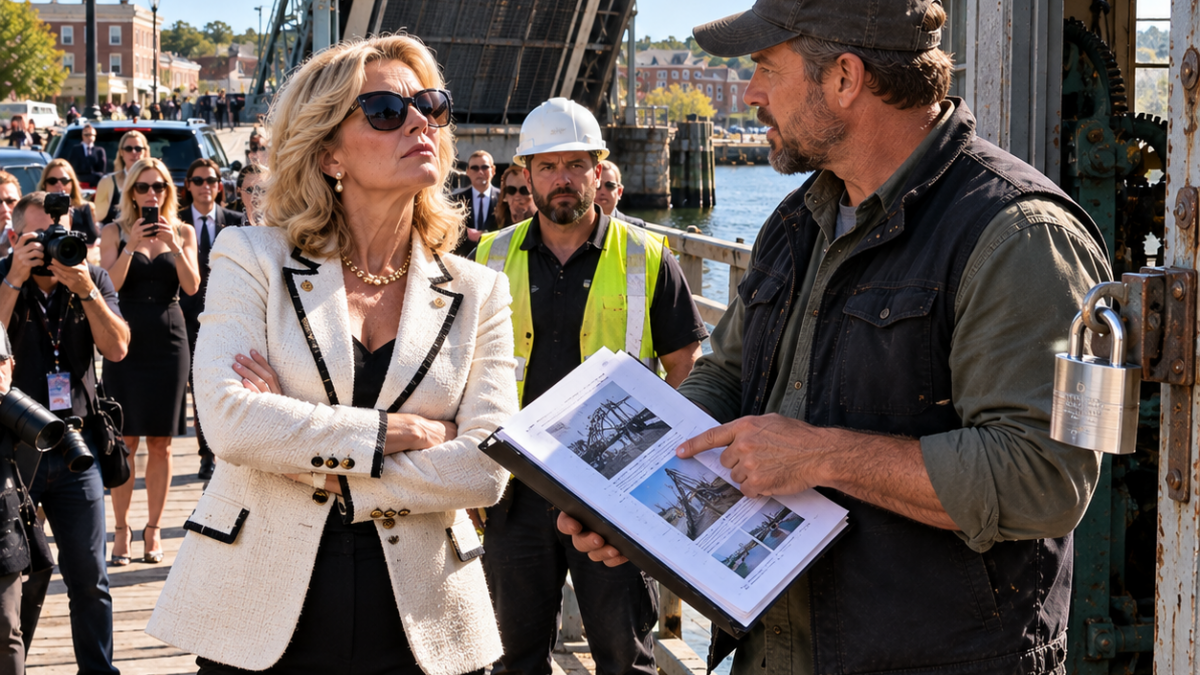
part2:
Lydia did not arrive in Alder Crest as a villain.
That is important.
People like simpler stories, but simple stories teach very little.
She was fifty-one, organized, polished, and unusually good at making other people’s unfinished ideas sound like projects she had already completed.
During her first year as president, she renegotiated the landscaping contract.
Saved the association money.
Repaired the clubhouse roof.
Got a drainage problem fixed after three boards had argued about it.
Residents loved her.
I barely knew her.
That changed when she started talking about Brier Lock.
At first it was harmless.
The bridge appeared in the HOA newsletter under a photograph of autumn leaves.
Brier Lock Bridge, the caption said.
Fine.
Then:
THE BRIDGE SERVING ALDER CREST.
Still basically true.
Then:
ALDER CREST’S HISTORIC SOUTHERN ENTRANCE.
I emailed the board.
Technically, the bridge was outside the subdivision and privately owned.
I wasn’t angry.
I simply didn’t want decades of repetition turning bad wording into an argument later.
Lydia responded:
Thank you for the clarification.
The following month’s newsletter called it:
THE HISTORIC GATEWAY TO ALDER CREST.
Same implication with prettier language.
I called her.
“Lydia.”
“Graham.”
“Please stop describing my bridge as though it belongs to the association.”
She laughed.
“Everybody knows you own the structure.”
“Then the newsletter can say so.”
“You’re being overly technical.”
“I maintain a ninety-seven-year-old lift bridge.”
“Technical is how it stays out of the canal.”
That annoyed her.
I could hear it.
“We’re trying to create a sense of community.”
“Do that without suggesting ownership you don’t have.”
She sighed.
“Fine.”
For two months, nothing happened.
Then she asked for a key to the control house.
I said no.
She wanted one “for emergencies.”
I explained that emergency responders had approved access arrangements and my contact information.
No HOA director needed mechanical control.
She argued that residents depended on the bridge.
I agreed.
“That is why people who aren’t trained don’t operate it.”
She called the arrangement outdated.
I called it safe.
Conversation over.
At least I thought so.
Brier Lock wasn’t operated casually.
Most traffic crossed while the span remained down.
When boats requiring clearance approached, I raised it according to the navigation schedule.
The bridge still used much of its original machinery, although certain electrical and safety systems had been modernized.
There was an interlock between the traffic gates, approach sensors, deck locks, and lifting controls.
If the system detected an unsafe condition, the bridge refused to move.
That annoyed impatient people.
It also prevented vehicles from being carried upward on steel decking because someone pressed the wrong control at the wrong time.
I kept maintenance logs.
Every opening.
Fault.
Inspection.
Lubrication.
Replacement.
Seal number.
My father had done the same.
His handwriting filled the older books.
Before that, my grandfather’s.
Owning Brier Lock wasn’t romantic when I was younger.
It meant grease.
Rust.
Inspection invoices.
Insurance.
Callouts during storms.
People complaining when maintenance added fourteen minutes to their commute.
But I loved the structure.
Machines develop personalities if you spend enough years listening to them.
The east bearing produced a deeper note during cold weather.
The west gate motor took half a second longer after heavy rain.
The main gear train settled into load with a particular vibration I could feel through the control-room floor.
If something changed, I usually heard it before an instrument told me.
Which is why I noticed immediately when I returned from the parts warehouse that Saturday afternoon.
It was 2:38.
Six SUVs sat on my property.
Two lighting vans.
A wardrobe truck.
Three expensive sedans.
People everywhere.
A photographer had a tripod near the railing.
A woman in a cream dress was standing beside a makeup table.
Another person held a reflector.
And Brier Lock was raised roughly thirty-five degrees above the canal.
I stopped my truck.
Left the engine running.
Watched.
Something sounded wrong.
Not grinding.
Not failure.
The absence of something.
The normal sequence of relay clicks had not occurred.
Then I saw a man walking out of my control house.
He wore a contractor’s jacket.
No uniform.
No identification.
He wiped his hands on his jeans.
My eyes went to the door.
The brass padlock I had installed was gone.
A silver lock hung in its place.
For several seconds, I felt nothing.
Then anger came so hard I had to stay in the truck.
Somebody had cut my lock.
Entered the control room.
Operated the bridge.
Then installed another lock to keep me out.
My property.
My machinery.
My responsibility.
I shut off the engine.
Got out.
Lydia was posing near the west railing.
Dark green dress.
Expensive coat draped over a chair.
Tessa Monroe, a commercial photographer I knew by reputation, was shooting toward the canal so the raised steel deck framed Lydia against the Bell Haven skyline.
Lydia saw me.
Checked her watch.
“Oh, good.”
That was her first response.
Not:
Graham, we need to explain something.
Not:
There was an emergency.
“Oh, good.”
“We should be finished within an hour.”
I looked at the bridge.
“Who raised it?”
She pointed toward the contractor.
“Mason.”
The man from the control house looked at me.
“Mason Dillard.”
I said:
“Are you certified to operate this structure?”
He hesitated.
Lydia answered for him.
“He provides technical support.”
I looked at Mason.
“That isn’t what I asked.”
He stared toward the ground.
“No.”
“Who gave you access to my control room?”
Lydia said:
“I did.”
“With what authority?”
She looked irritated.
“The association has access rights.”
“Across the bridge.”
“Yes.”
“So you guaranteed access by lifting it out of the roadway?”
Someone nearby laughed before realizing nobody else was.
Lydia’s expression sharpened.
“This is a controlled photo session.”
“You emailed me.”
“I replied.”
“You denied something reasonable.”
“I denied closing and operating my bridge for an HOA photo shoot.”
“Which is why we handled it ourselves.”
There it was.
I looked at the silver padlock.
“You cut my lock.”
“The association needs dependable access.”
“You locked me out.”
“Temporarily.”
I stepped toward the control house.
Mason moved as though he might stop me.
Then thought better of it.
Lydia said:
“Graham, don’t create drama.”
I stopped.
Turned.
“Who told you the bridge could be operated by somebody who has never been trained on it?”
She folded her arms.
“It’s a bridge.”
I almost laughed.
Instead:
“Yes.”
“That is exactly why this matters.”
Behind her, two crew members were removing the small metal sign from the railing.
PRIVATE HISTORIC STRUCTURE.
AUTHORIZED OPERATOR ONLY.
I pointed.
“Put that back.”
One man looked at Lydia.
She said:
“It ruins the shot.”
I repeated:
“Put it back.”
Something in my voice apparently settled the issue.
They reattached it.
Then I went to the exterior inspection cabinet.
A numbered wire seal was supposed to secure the interlock access panel.
The seal was cut.
Not missing.
Cut.
Both ends still hung from the latch.
I crouched.
Looked through the narrow gap.
My anger disappeared.
Fear replaced it.
The interlock cabinet wasn’t decorative.
Inside were relays and safeguards connecting the traffic-control sequence to the lifting machinery.
An unauthorized person opening it meant I no longer knew whether the safety chain was intact.
I stood.
“Mason.”
He looked over.
“Did you open this?”
He didn’t answer.
“Mason.”
Lydia said:
“He was troubleshooting.”
“What?”
“The system kept refusing to lift.”
I stared at her.
“Why?”
She shrugged.
“He said a sensor was preventing operation.”
“Was anyone on the approach?”
“Crew vehicles.”
I looked toward Mason.
“What did you do?”
He said:
“I only checked the relay panel.”
“Did you bypass anything?”
“No.”
Lydia said:
“Graham, enough.”
I took photographs.
Cut seal.
Serial number.
Control-house lock.
Deck position.
Vehicles.
Open panel marks.
Time.
Lydia laughed.
“This is absurd.”
I called Everett Sloan.
Everett was a bridge-safety engineer with the state transportation office who specialized in older movable structures and coordinated with historic preservation because Brier Lock was listed.
He answered on the second ring.
“Graham?”
“Someone entered Brier Lock’s control house without permission.”
Silence.
“Did they operate it?”
“Yes.”
“Any damage?”
“I don’t know.”
“Safety seal?”
“Cut.”
His voice changed.
“Interlock cabinet?”
“Opened.”
“Stop operation.”
“Already planning to.”
“Where’s the deck?”
“Thirty-five degrees.”
“Do not cycle it again.”
“I’m sending photographs.”
“Do it.”
I sent them.
Then opened a weatherproof auxiliary cabinet mounted away from the public controls.
Lydia watched.
“What are you doing?”
“Taking the bridge out of service.”
She stepped toward me.
“You cannot do that.”
I looked at her.
“I own it.”
“Alder Crest has passage rights.”
“Passage rights do not require me to operate a bridge whose safety system may have been altered.”
“You’re punishing residents.”
“No.”
“I’m stopping machinery until somebody qualified says it’s safe.”
I turned the emergency isolation control.
The brake system engaged.
A heavy metallic clunk traveled through the structure.
The bridge froze.
Lydia stared.
Then smiled in disbelief.
“You’re serious.”
“Yes.”
“We need this down within an hour.”
“No.”
“You don’t understand.”
“Then explain.”
She looked at the photographer.
The lighting crew.
The vehicles.
Then said:
“We have an event.”
“That has nothing to do with bridge safety.”
“It has everything to do with today.”
“Not with that relay cabinet.”
She looked toward Mason.
“Put the bridge down.”
Mason didn’t move.
“Mason.”
He looked at me.
Then the cut seal.
Then back at her.
“I don’t think I should.”
Her face changed.
“You work for me.”
“Not on this bridge.”
That was the first crack.
Not the last.
At 3:57, Everett called.
He had reviewed the photographs.
“Keep it secured.”
“How long?”
“Until I get there.”
“Can it be lowered manually?”
“Not before we know what was touched.”
“What if Lydia signs responsibility?”
He actually laughed.
“No.”
“Thought so.”
“I’m forty minutes out.”
I hung up.
Lydia was staring at her phone.
Messages.
Calls.
She finally said:
“Graham.”
“What?”
“Lower it once.”
“No.”
“Five minutes.”
“No.”
“We don’t need to open it again afterward.”
“You’re still asking me to move a seventy-ton historic structure with an unknown interlock condition.”
“It worked ten minutes ago.”
“That proves almost nothing.”
Her patience disappeared.
“The HOA will accept liability.”
“You cannot personally sign away my regulatory obligations or everybody else’s safety.”
“Stop hiding behind regulations.”
I looked at her.
“Stop treating safety like paperwork standing between you and a photograph.”
She turned away.
Her phone rang.
She answered.
“Yes.”
Pause.
“No.”
“Keep them together.”
Another pause.
“Four twenty.”
Then she hung up.
I asked:
“What happens at four twenty?”
She said nothing.
Tessa looked uncomfortable.
One assistant started packing equipment.
At 4:09, Lydia received another call.
This time I heard:
“Bell Haven Square.”
“Forty-three cars.”
“Catering van.”
“Sound truck.”
“VIPs.”
I stared.
“You have forty-three vehicles coming here?”
Lydia looked at me.
“That is none of your concern.”
“It becomes my concern when they expect to cross my bridge.”
“They have legal passage.”
“Existing residents may.”
“Depending on the agreement.”
“And the bridge is temporarily unsafe.”
“You’re doing this deliberately.”
“No.”
“You knew.”
“I knew what?”
“The Heritage Founders Gala.”
I had heard of it.
Annual HOA event.
Never attended.
Lydia continued:
“The convoy is part of the gala presentation.”
Of course.
A convoy.
She had staged forty-three vehicles to cross Brier Lock as a visual spectacle.
I could already picture it.
Luxury cars.
Photography.
The bridge as backdrop.
Alder Crest’s historic gateway.
I asked:
“Did you apply for any traffic-control permit?”
“For driving?”
“For moving forty-three coordinated vehicles as a procession through local roads.”
She hesitated.
Interesting.
Her phone rang again.
She answered.
Then said:
“Keep moving.”
I looked at her.
“You’re sending them here?”
“Yes.”
“Lydia.”
“When they arrive, you’ll understand how unreasonable this is.”
That sentence told me her strategy.
Pressure.
Once forty-three cars were idling at the gate, once guests were angry, once caterers were calling, once local business people and board members were staring across the canal, she believed I would lower the bridge just to make the problem disappear.
At 4:36, the first vehicle appeared on the eastern approach.
Black sedan.
It stopped at the traffic gate.
A second pulled up behind it.
Then a third.
Then five.
Ten.
Vehicles kept appearing.
SUVs.
Catering van.
Two luxury rentals.
Sound truck.
Decorating crew.
People leaned out windows.
Phones came up.
Horn.
Another horn.
Within minutes, the east-bank road was filled.
Forty-three vehicles.
Exactly.
Brier Lock stood raised between us.
The canal beneath it looked absurdly narrow compared with the chaos on each side.
Lydia’s phone exploded.
She answered one call after another.
“Yes, I know.”
“No, don’t turn around.”
“Hold there.”
“We’ll be moving.”
“Five minutes.”
Another call.
“The caterers?”
“Keep the food warm.”
Then:
“Where is the board?”
I stood near the control house.
Mason stayed away from it.
Good decision.
Lydia finally approached.
Quiet now.
“Graham.”
“No.”
“You don’t even know what I’m asking.”
“Yes, I do.”
“Lower it once.”
“No.”
“Forty-three vehicles.”
“That doesn’t change the equipment.”
“These people have somewhere to be.”
“Take the north route.”
“Twenty-two miles.”
“Yes.”
“You’re being vindictive.”
I looked at the cut seal.
“No.”
“You cut my lock.”
“You put an untrained contractor in my control room.”
“You told him to defeat a safety condition.”
“And now you want me to move the bridge because your schedule is inconvenient.”
“This is not revenge.”
“It’s maintenance.”
Her voice tightened.
“You will regret embarrassing this community.”
I nodded.
“Maybe.”
“But nobody is driving across until Everett clears the bridge.”
She walked away.
A few minutes later, angry homeowners began calling me.
I don’t know how she gave out my number that quickly.
First man:
“What the hell are you doing?”
“Bridge safety inspection.”
“Lydia says you shut it down over a disagreement.”
“Lydia cut my control-room lock.”
Silence.
Then:
“What?”
I sent him a photograph.
Next caller.
Same thing.
Then another.
I stopped answering.
Instead, I sent three things to Rebecca Tate, the HOA vice president.
Photograph of the cut lock.
Photograph of the broken seal.
Copy of the 1998 passage agreement.
Rebecca called almost immediately.
“Graham.”
“Yes.”
“What happened?”
“You tell me what Lydia told the board.”
“She said you approved bridge access for today’s events.”
“I approved ordinary passage under the agreement.”
“No event.”
“No operation.”
“No photo shoot.”
Rebecca went quiet.
“She said you signed an event authorization.”
“I did not.”
“I’m sending you something.”
Thirty seconds later, a PDF arrived.
BRIER LOCK SPECIAL EVENT AUTHORIZATION.
Bridge owner grants Alder Crest Homeowners Association permission to occupy, photograph, temporarily close, and operate the bridge for authorized event purposes on Saturday…
At the bottom:
GRAHAM ROURKE.
Beside it:
A signature.
Not mine.
I sat down on the concrete step outside the control house.
Read it again.
Then again.
Rebecca whispered:
“Is that your signature?”
“No.”
“You’re sure?”
“I’ve been signing my name for forty-six years.”
“So yes.”
“Do not confront her yet.”
Rebecca sounded shocked.
“Why?”
“Because I want copies of whatever file that came from before anything disappears.”
She inhaled.
“Okay.”
“Send the full project folder.”
“What project?”
Silence.
Then:
“You don’t know.”
My skin went cold.
“Know what?”
Before she answered, Lydia shouted from behind me.
“Graham!”
I turned.
She was on the phone.
“County transportation wants to speak with you.”
I walked over.
She held out her phone.
I didn’t take it.
“Who?”
“Wade Callahan.”
I knew Wade.
County transportation director.
I called him from my own phone.
He answered:
“Graham.”
“Wade.”
“I have Lydia telling me you’ve created a traffic emergency.”
“I shut down Brier Lock after unauthorized entry into the control house and tampering with a sealed safety system.”
Pause.
“That part was omitted.”
“I suspected.”
“Is the bridge private?”
“You already know that.”
“I’m looking at records now.”
“County does not own it.”
“Correct.”
“Any public-road designation I need to know about?”
“No.”
“Recorded passage agreement for Alder Crest.”
“Private easement.”
“Correct.”
He sighed.
“Then the county can’t order you to operate a private bridge while a safety issue is active.”
“That is my understanding.”
“Also.”
“What?”
“Did Lydia obtain an event-procession permit?”
“I was about to ask you.”
“No.”
“Forty-three coordinated vehicles are blocking East Canal Road.”
“That sounds like a county problem.”
“It now is.”
Wade ended the call.
Ten minutes later, Lydia received instructions:
Disband the convoy or reroute it.
She chose reroute.
That was where the comedy began.
Not because I enjoyed it.
Maybe a little.
A forty-three-vehicle convoy cannot turn around elegantly on a narrow canal road.
Catering vans were trapped in the middle.
Luxury cars blocked pickups.
Sound truck sat near the rear.
Drivers had different navigation apps.
Some tried three-point turns.
One backed into a hedge.
Nobody was injured.
But the grand procession Lydia had planned dissolved into horns, confusion, and phone calls.
Tessa stopped photographing.
She walked over.
“Graham?”
“Yes.”
“Did you really deny permission for today’s shoot?”
I pulled up my Thursday email.
Showed her.
She read.
Then looked toward Lydia.
“She told me the bridge was rented for the afternoon.”
“No.”
“She said you had signed an agreement.”
“I just saw the agreement.”
“I didn’t sign it.”
Tessa’s face changed.
Then she said:
“There is something else.”
“What?”
“This shoot isn’t only for the gala.”
I waited.
“Lydia ordered two image sets.”
“One for association publicity.”
“Another for a development package.”
“What development?”
“I don’t know.”
“She had presentation boards near the wardrobe truck.”
“One said something about waterfront expansion.”
I turned toward Lydia’s white SUV.
Rear hatch open.
Inside, behind garment bags, I could see three large presentation boards.
One visible title:
ALDER CREST WATERFRONT EXPANSION.
PRIVATE HISTORIC BRIDGE ACCESS.
My bridge.
Private historic bridge access.
I walked closer.
Did not touch anything.
Took photographs from where I stood.
There was a map.
Land east of the canal divided into sixty-four future lots.
A new development.
Road network.
Arrow across Brier Lock.
Direct to Bell Haven.
Suddenly everything made sense.
The bridge photo.
The convoy.
The pressure.
The forged authorization.
Lydia wasn’t simply staging herself for a glossy HOA newsletter.
She wanted investors and a developer to believe Alder Crest controlled Brier Lock strongly enough to promise it as the primary route for sixty-four additional homes.
I called Rebecca.
“Send me everything.”
She did.
Board minutes.
Developer correspondence.
Agenda.
The first minutes said:
President Fairmont reports bridge owner has agreed in principle to expansion-compatible access.
False.
Another:
Counsel to draft final bridge-access commitment after owner approval.
Never happened.
Then an agenda for that evening.
SPECIAL BOARD SESSION.
Consideration of Waterfront Expansion Access Resolution.
Rebecca said:
“The developer has an option on those sixty-four lots.”
“When does it expire?”
“Tonight.”
“What time?”
“Midnight.”
There it was.
Urgency.
Lydia’s favorite weapon.
The Heritage Gala was not the main event.
It was theater.
Forty-three vehicles gliding over Brier Lock would demonstrate to the developer that Alder Crest controlled the route.
Photographs would turn that visual demonstration into marketing material.
Then the board would vote.
Then the developer could exercise its purchase option before midnight.
Only afterward, I suspected, would Lydia come to me with a “finished deal” and tell me too many people were depending on it to say no.
Momentum as leverage.
I asked Rebecca:
“Are you canceling tonight’s meeting?”
“I was about to.”
“Don’t.”
Silence.
“What?”
“Hold it.”
“Graham.”
“I want to hear Lydia describe the bridge rights in front of the board and developer.”
“Are you sure?”
“Yes.”
Then Everett arrived.
State vehicle.
Technician with him.
He looked once at the raised bridge and said:
“Please tell me nobody is touching controls.”
“Nobody.”
Mason stood nearby.
Everett introduced himself.
Then entered the control house after I removed the unauthorized silver lock.
We found my original brass lock later in Mason’s equipment bag.
Cut shackle.
Inside the control room, Everett inspected the panel.
Then the interlock cabinet.
He stopped.
“Graham.”
“What?”
“Come here.”
One relay socket was empty.
Palm-sized electromechanical unit.
Gone.
I felt sick.
“Which relay?”
“Approach permissive.”
I looked toward Mason.
Everett did too.
“Mason.”
He swallowed.
“Lydia said the bridge wouldn’t lift.”
“Why?”
“Sensor showed obstruction.”
“Was there an obstruction?”
“Lighting van was partly on the approach.”
Everett stared.
“So you removed the relay?”
“I thought it was only blocking the sequence.”
“It was.”
Mason’s shoulders loosened.
Everett continued:
“That’s its job.”
Silence.
“That interlock prevents bridge movement while the approach isn’t secure.”
Mason looked pale.
“I didn’t know.”
“Which is why you were not qualified to modify it.”
Lydia walked in.
“Can you put it back?”
Everett looked at her.
“Where is it?”
She looked at Mason.
He reached into his jacket pocket.
Produced the relay.
Everett stared at it.
Then:
“This bridge is closed.”
“You have the part.”
“That’s not how safety certification works.”
“Plug it back in.”
“No.”
“You’re the state inspector.”
“I am the engineer currently responsible for determining whether an unauthorized modification affected the system.”
“Then determine it.”
“I am.”
“It will remain out of service until the relay is reinstalled, interlock continuity is checked, approach logic is tested, mechanical locks are verified, and full cycles are completed.”
“How long?”
“Tomorrow at the earliest.”
Lydia’s face went white.
“The gala is tonight.”
Everett looked at me.
Then her.
“I inspect bridges.”
“I do not schedule galas.”
That sentence traveled quickly.
By 5:20, most of Lydia’s convoy was still crawling around the twenty-two-mile detour.
Caterers were late.
Sound system late.
Decorators late.
Several VIP guests turned around.
The rented luxury cars had time-limited contracts; two drivers left for other bookings.
The clubhouse, Rebecca later told me, looked absurd.
White tablecloths.
Flowers.
No food.
No music.
Half the guests.
Regional reporter asking why the ceremonial convoy never arrived.
Lydia drove away from Brier Lock furious.
Before leaving, she pointed at me.
“This is not over.”
I said:
“No.”
“It isn’t.”
For once, we agreed.
Everett and the technician stayed.
We logged every finding.
Photographed relay.
Cut seal.
Control-house damage.
Changed lock.
Tool marks.
Maintenance readings.
Then Everett issued a written hold under the bridge’s operating permit and safety requirements.
Nothing moved that night.
At 6:35, Rebecca picked me up.
We took the long road to Alder Crest.
The irony was not lost on either of us.
“You realize residents are going to hate you tonight.”
She said.
“Some already do.”
“Lydia told them you closed the bridge because she used it for a photo.”
“She left out the safety relay.”
“Yes.”
“Convenient.”
Rebecca was quiet.
Then:
“I should have called you months ago.”
“About what?”
“The development.”
“You were told I’d agreed.”
“Yes.”
“Why didn’t you verify?”
She looked through the windshield.
“Because Lydia was the president.”
“That isn’t an answer.”
“I know.”
Then:
“She had negotiated everything else.”
“Roof.”
“Pool.”
Landscaping.”
“We stopped checking.”
That was an honest answer.
Not flattering.
Useful.
When we reached the clubhouse, the Heritage Founders Gala looked like a wedding after a power outage.
Food had finally arrived.
Warm, not hot.
Sound equipment being assembled while guests stood around drinking.
Some had left.
The developer representatives remained because the midnight option deadline mattered more than elegance.
Lydia stood beside them.
When she saw me, anger flashed.
Then vanished under a professional smile.
“Graham.”
“Lydia.”
She turned to the others.
“This is the neighboring property owner I mentioned.”
Neighboring property owner.
Interesting description for the man who owned the bridge at the center of her presentation.
I said nothing.
Rebecca whispered:
“Wait.”
The board’s special session began at seven fifteen.
Lydia had decided to proceed.
Maybe she believed momentum could still save her.
The lights dimmed.
Projector came on.
First slide:
A beautiful photograph of Brier Lock at sunset.
Gold lettering:
THE HISTORIC GATEWAY TO ALDER CREST.
I almost admired the audacity.
Lydia began.
She described sixty-four high-value homes.
Expanded tax base.
Potential amenity improvements.
Partnership with the developer.
Then transportation.
“The development will enjoy direct access to Bell Haven through our existing historic bridge corridor.”
Our.
I raised my hand.
She ignored me.
I spoke.
“Who controls the bridge?”
The room turned.
Lydia kept her eyes on the screen.
“The association possesses established access rights.”
“That isn’t what I asked.”
Rebecca said:
“Answer him.”
Lydia finally looked at me.
“Alder Crest has long-term bridge rights.”
“Yes.”
I stood.
“Existing listed parcels have a limited recorded right of passage.”
I placed a copy of the 1998 agreement on the front table.
“Not ownership.”
“Not operation.”
“Not commercial use.”
“And not automatic access for sixty-four parcels that did not exist when this agreement was executed.”
The developer’s attorney reached for the document.
Lydia said:
“Our counsel believes the language is expandable.”
Rebecca looked at her.
“Which counsel?”
Silence.
The developer representative, a man named Jonathan Pierce, asked:
“Do you have a written opinion?”
Lydia said:
“We’ve had discussions.”
I placed the special-event authorization beside the agreement.
“Did those discussions include this?”
Rebecca stood.
“This document was in our project file.”
Jonathan looked at it.
Then at me.
“Your signature?”
“No.”
The room changed.
Not loudly.
People simply stopped moving.
Lydia said:
“It came from Graham’s office.”
I looked at her.
“I don’t have an office.”
“Your representative.”
“Name?”
She reached for her phone.
“Produce the email.”
“I don’t have to do this here.”
Rebecca said:
“Yes.”
“You do.”
Lydia searched.
Scrolled.
Then:
“It may have been forwarded.”
“From whom?”
“I don’t remember.”
Mason Dillard sat against the side wall.
Everett had asked him to remain available for investigation.
Rebecca looked at him.
“Mason.”
He stood reluctantly.
“Did you receive that authorization?”
“Yes.”
“From whom?”
His eyes went to Lydia.
“She emailed it.”
Lydia snapped:
“Because it had been provided to me.”
Mason said:
“You told me it gave us full operational access.”
She stared at him.
“You were hired to provide technical support.”
“You told me to cut the lock.”
Gasps.
There it was.
Public now.
She said:
“I told you to ensure access.”
“No.”
Mason’s voice strengthened.
“You told me the owner’s lock wasn’t valid because the HOA controlled the bridge today.”
“I asked if you had authority.”
“You sent me that form.”
Lydia’s attorney wasn’t there.
If she had one, I suspect he would have told her to stop talking.
Jonathan closed his folder.
“We’re suspending our participation tonight.”
Lydia turned.
“No.”
He looked at her.
“We were told bridge access was resolved.”
“It is.”
“No.”
I said.
Jonathan looked at me.
“Would you grant access to the proposed development?”
“Not based on anything I’ve seen.”
Lydia stepped forward.
“Graham.”
“No.”
“You haven’t even reviewed the economic package.”
“That is true.”
“So how can you—”
“Because nobody asked me.”
That stopped her.
I continued:
“You’ve spent months telling everyone I agreed in principle.”
“I didn’t.”
“You staged forty-three vehicles across my bridge to prove operational control.”
“You didn’t have it.”
“You signed a document carrying a signature that isn’t mine.”
“You sent a contractor into my control room.”
“And today he removed a safety relay because your photo crew was sitting where the bridge’s sensors told the system not to move.”
Nobody spoke.
Then:
“If your sixty-four-lot project depends on this bridge, I should have been the first conversation.”
“Not the last obstacle.”
Rebecca turned toward the developer file.
She was looking for something.
Pages.
Emails.
Then stopped.
“Lydia.”
“What?”
“What’s the option deadline?”
Lydia said nothing.
Jonathan answered:
“11:59 tonight.”
Several board members turned.
Rebecca looked at Lydia.
“You knew?”
“Yes.”
“How long?”
“Weeks.”
“Why didn’t the board know tonight was the final deadline?”
“It was in the package.”
“On page seventy-three?”
“It’s there.”
Rebecca continued searching.
Then found another email.
Her expression changed.
“What is this?”
Lydia looked.
Said nothing.
Rebecca read:
“Upon successful approval of Alder Crest bridge-access integration, Lydia Fairmont will be offered a paid seat on the development’s Community Integration Advisory Committee following completion of her HOA term.”
The room erupted.
Lydia held up both hands.
“That is not compensation for the vote.”
Rebecca said:
“Did you disclose this?”
“It was preliminary.”
“Did you disclose it?”
“No.”
“Were you going to?”
“Yes.”
“When?”
“Once the project moved forward.”
Someone in the audience laughed angrily.
A board member named Peter Shaw stood.
“You wanted us to vote tonight on a project that could give you a paid position?”
“Not immediately.”
“That isn’t the point.”
She said:
“The advisory role reflects my experience.”
Rebecca’s voice sharpened.
“Then you disclose it before asking us to vote.”
The developer’s attorney stood.
“This meeting should not proceed.”
Lydia pointed at him.
“You knew about the advisory position.”
“We knew your board would receive whatever disclosures were legally required.”
“I was going to disclose.”
Rebecca said:
“After the presentation?”
No answer.
That was the end.
Not legally.
Politically.
Rebecca made a motion.
Not to approve the development.
To suspend Lydia’s authority as HOA president to negotiate, sign, or represent the association in external agreements pending review.
Lydia immediately reached for the bylaws.
“You can’t.”
Rebecca had prepared.
“Article six, section four.”
“Temporary suspension of officer authority by board vote where pending conduct may expose the association to legal or financial risk.”
Quorum present.
Enough votes.
Lydia looked around.
For the first time that day, she seemed to understand that confidence was no longer moving anyone.
Vote.
One hand.
Then another.
Then another.
By the end, Lydia had lost executive authority.
The developer left.
No bridge commitment.
No access resolution.
No signed land contract.
Midnight came.
The purchase option expired.
I know that because Jonathan emailed Rebecca at 12:14.
The developer elected not to exercise it.
The sixty-four lots remained unsold.
The next morning, I was at Brier Lock before sunrise.
Everett arrived at seven.
Technician.
Electrical specialist.
We reinstalled the proper relay.
Checked wiring.
Verified no conductors had been moved.
Tested traffic gates.
Approach sensors.
Deck locks.
Emergency stop.
Manual systems.
Then cycle test.
One lift.
Lower.
Inspection.
Second.
Third.
Everything worked.
No permanent mechanical damage.
I felt relief I had not allowed myself to feel the day before.
Machines can be repaired.
People, sometimes.
Records, sometimes.
Trust?
Slower.
While Everett reviewed the operating agreement, he called me over.
“Clause eleven.”
“I know.”
“Read the exact wording.”
I did.
Unauthorized interference by beneficiary, officers, agents, employees, contractors, or representatives with bridge operation suspended preferential passage until owner and beneficiary executed satisfactory safety assurances following inspection.
I looked at him.
“So passage is still suspended.”
“Contractually?”
“Yes.”
“Safety hold can be removed.”
“Easement consequence is separate.”
I called Julia Moreno.
Yes, same lawyer I later used on another property issue.
She reviewed the agreement remotely.
Then said:
“Do not make this revenge.”
“I wasn’t planning to.”
“Good.”
“The clause gives you leverage.”
“Use it to restore boundaries, not to punish every resident for Lydia.”
That was exactly what I wanted.
Rebecca called an emergency resident meeting for noon.
Without Brier Lock, hundreds of people had taken the twenty-two-mile detour to work.
Tempers were high.
Lydia attended despite being suspended.
She sat in the front row.
Before Rebecca could finish explaining the safety findings, Lydia stood.
“One man has closed the only convenient access our community has used for decades.”
Murmurs.
She continued:
“This is retaliation.”
“He is exploiting an old contract to punish you for a personal disagreement.”
I let her finish.
Then stood.
“I have four conditions.”
The room quieted.
“First.”
“No HOA officer, employee, or contractor holds a key to the control house.”
“Second.”
“No event, commercial shoot, or staged activity on the bridge without written permission.”
“Third.”
“All association publications identify Brier Lock as privately owned and used by Alder Crest under recorded passage rights.”
“Fourth.”
“Those rights apply only as the agreement actually provides.”
“No future development receives bridge access automatically.”
A man near the back asked:
“That’s it?”
“Yes.”
Lydia laughed.
“He wants us to humiliate ourselves.”
I looked at her.
“How?”
“By publicly declaring we don’t control the bridge.”
“You don’t.”
She stood.
“We have relied on it for twenty-five years.”
“Correct.”
“We maintain a relationship with the owner.”
“Correct.”
“It serves our community.”
“Correct.”
“Then why force this language?”
“Because yesterday your contractor cut my lock because you told him the HOA controlled the structure.”
Silence.
I continued:
“You used a document with a signature I did not make.”
“You marketed bridge rights for sixty-four new houses.”
“You removed a safety relay so your photo crew could keep a raised bridge in the frame.”
“Nothing about the four conditions changes the legitimate access your residents have always used.”
“It only removes claims you never had.”
Rebecca said:
“I support the proposal.”
One resident raised his hand.
“What about emergencies?”
I explained existing emergency-response arrangements stayed intact.
Another:
“Maintenance closures?”
I would continue posting schedules.
Another:
“Can bridge access disappear every time Graham gets annoyed?”
“No.”
Julia had helped draft the new acknowledgment.
It preserved existing passage subject to safety, maintenance, and the original terms.
Nobody was giving me arbitrary power to trap residents on a whim.
That mattered.
Lydia said:
“This is surrender.”
I said:
“No.”
“This is the agreement you were supposed to respect yesterday.”
Vote.
Overwhelming.
Yes.
Lydia voted no.
So did four others.
The rest approved.
Rebecca and I signed the safety acknowledgment.
The HOA formally recognized private ownership.
Everett lifted the operational hold.
I went back to Brier Lock.
Entered the control house.
My hand rested on the old lever.
For the first time since I was a boy, it felt heavy.
Not physically.
History.
My father had operated that same control.
My grandfather had written maintenance notes in pencil.
Now, after one absurd day, the bridge had become evidence in a governance crisis.
I checked gauges.
Signals.
Interlock.
Released the brake.
The gear train engaged.
Old steel groaned.
Counterweights moved.
The span began descending.
Slow.
Controlled.
The deck settled.
Locks seated.
Traffic gates opened.
First car crossed.
A woman driving a blue Subaru.
She waved.
I waved back.
Then another.
Pickup.
SUV.
Minivan.
Normal traffic.
Lydia stood near the roadside.
She watched.
No special convoy.
No photographer.
No VIPs.
Just residents using the exact right they had always possessed.
Nothing more.
Nothing less.
That should have ended it.
It didn’t.
Tessa came to my house that evening.
She carried a small hard drive.
“I want you to have this.”
“What is it?”
“Every frame from yesterday.”
“You don’t have to.”
“Yes.”
“I do.”
She looked embarrassed.
“I photographed the whole thing believing the bridge had been rented.”
“That wasn’t your fault.”
“I still don’t want those images used under Lydia’s story.”
I accepted the drive.
After dinner, I opened it.
Hundreds of photographs.
Lydia near the railing.
Lighting crew.
Raised deck.
Luxury cars.
Mason.
Presentation boards.
One image stopped me.
Lydia stood in the center foreground.
Perfect posture.
Arm extended toward the east-bank property.
Smile.
Bridge rising behind her.
And in the background, slightly out of focus but unmistakable:
Mason stepping from my control house.
In his right hand:
My cut brass padlock.
The photograph contained almost everything.
Lydia’s performance.
My bridge.
The land she wanted to market.
The unauthorized contractor.
The broken lock.
All in one frame she had commissioned to prove her authority.
I stared at it.
Then called Rebecca.
“We need another meeting.”
The board’s document review had already started.
It was worse than I expected.
Not criminal-mastermind worse.
Governance worse.
Lydia had gradually centralized nearly every outside relationship.
Vendors called her.
Lawyers received instructions through her.
Marketing materials went through her.
Board members got summaries rather than primary documents.
Most of that was not prohibited.
It was simply unhealthy.
The forged authorization remained the most serious document.
The board hired outside counsel.
A handwriting examiner later confirmed the signature was not mine.
Digital file metadata showed the document had been created on a computer associated with an HOA office account.
That did not, by itself, prove exactly who physically created the false signature.
The board referred the matter to its attorney, insurer, and local authorities.
I gave a statement.
I did not demand an arrest.
I wanted the record preserved.
The criminal side, if any, was not mine to manufacture.
Mason cooperated.
He provided his contract.
Emails.
Texts.
One text from Lydia said:
Owner approval attached. If bridge sensor blocks camera setup, make the system cooperate. Need deck held at 35 degrees until Tessa finishes hero shots.
“Make the system cooperate.”
That line made Everett furious.
Mason had interpreted it as permission to remove the approach relay.
Could Lydia argue she never specifically told him to pull a safety component?
Yes.
And she did.
But she had hired someone without bridge qualifications, given him unauthorized access, and instructed him to overcome a safety condition.
That was enough for the board.
At the next membership meeting, Lydia came prepared to recover.
She had talking points.
Printed packets.
Statements.
She said the previous weekend had been exaggerated by people hostile to economic growth.
She blamed Mason.
“He exceeded instructions.”
She blamed me.
“Graham used a maintenance issue to sabotage a community opportunity.”
She blamed Rebecca.
“This board abandoned negotiation at the first sign of controversy.”
Some residents nodded.
Not many.
Then Rebecca called Tessa forward.
Tessa explained the photo assignment.
Two sets of images.
Gala.
Development package.
She testified that Lydia had personally directed her to frame the raised bridge as “exclusive controlled access.”
Then Mason spoke.
Not dramatically.
He stood near the wall and said:
“Lydia sent me the authorization.”
“She gave me the replacement lock.”
“She told me I could enter the control house.”
“She told me to keep the bridge raised.”
“She told me the owner couldn’t interfere with an HOA-authorized event.”
Lydia shouted:
“That is not what I said.”
Mason looked at her.
“I have the messages.”
Silence.
Rebecca projected Tessa’s photograph.
Huge.
Same screen that had displayed THE HISTORIC GATEWAY TO ALDER CREST.
Now everyone saw Lydia smiling in the foreground while Mason carried my cut padlock in the background.
Nobody laughed.
I walked forward.
Placed the 1998 agreement on the table.
Then the false authorization.
Then my Thursday email denying permission.
Three documents.
Simple sequence.
No.
Fake yes.
Broken lock.
I said:
“I don’t need anyone here to dislike Lydia.”
“She accomplished useful things for this community.”
“She also represented a bridge she did not own as an asset she could promise to a development.”
“She was told no.”
“She proceeded anyway.”
“That is the issue.”
One resident asked:
“Are you suing us?”
“No.”
That surprised people.
“You’re not?”
“I expect the association or its insurer to cover physical damage, inspection costs, and whatever my attorney identifies as appropriate.”
“But I am not trying to bankrupt my neighbors.”
Several people looked relieved.
I continued:
“The question tonight isn’t what I want.”
“It’s whether you want Lydia continuing to speak for you.”
That was where I sat down.
Rebecca moved for a no-confidence vote and removal of Lydia from the presidency under the bylaws.
Counsel confirmed procedure.
Quorum.
Notice.
Ballots.
The result was not close.
Lydia Fairmont was removed as president.
Not dragged out.
Not handcuffed.
No dramatic security escort.
She sat there while the result was read.
Her expression did not change.
Then she collected her papers.
Before leaving, she looked at me.
“This is what you wanted.”
I shook my head.
“No.”
“What did you want?”
“For you to leave my bridge alone.”
She walked out.
Rebecca became interim president.
Formal election scheduled.
The sixty-four-lot project died.
Not because a judge canceled it.
The developer’s purchase option had expired.
Without confirmed bridge access, the economics no longer worked at the offered land price.
They could still develop someday using the public-road network around the canal.
Maybe fewer lots.
Maybe different pricing.
But Alder Crest could not promise my bridge.
The marketing materials disappeared.
Every brochure.
Website reference.
Presentation.
The big HISTORIC GATEWAY sign hanging in the clubhouse was removed.
Someone asked whether I wanted it.
“No.”
“Why?”
“I already own the bridge.”
That got a laugh.
Repairs were modest.
New control-house lock.
Replacement safety seal.
Relay inspection.
Electrical testing.
Engineering report.
Some door hardware.
The bigger cost was the gala disaster and professional fees.
HOA insurance covered part of the property-related claim subject to policy terms.
The association paid its deductible.
Mason’s contractor coverage became involved too.
Lawyers sorted allocation.
I stayed out of most of it.
I did not become rich.
Nobody wrote me a million-dollar check.
I got reimbursed for the actual damage and inspection-related expenses attributable to the unauthorized incident.
That was enough.
The special-event signature matter took longer.
After investigation, Lydia maintained she believed an assistant had produced the form based on prior verbal authority.
No assistant admitted creating my signature.
The evidence established the document was false but did not cleanly establish beyond every dispute who physically placed the signature.
The prosecutor did not pursue a major felony case based solely on assumptions.
Some residents hated that.
I didn’t.
Removing a bad president and creating a criminal conviction are different standards.
I did not need the state to turn my property dispute into a morality play.
The HOA’s civil and governance record was clear enough.
Rebecca won the formal election.
Her first act was almost comically boring.
She created a bridge liaison policy.
One person communicated with me.
Everything written.
No board member possessed a control-house key.
Maintenance schedule shared monthly.
Emergency contacts confirmed annually.
Event requests submitted at least thirty days in advance.
Any marketing reference to Brier Lock had to identify it as privately owned.
Most importantly:
No future property outside the original benefited parcels could claim access without a new negotiated agreement involving me or whoever owned the bridge later.
Everyone signed.
Then the story slowly became ordinary.
For several months, residents were awkward around me.
Some apologized.
Most had done nothing.
I told them that.
One man named Paul said:
“I called you that afternoon.”
“I remember.”
“I was pretty rude.”
“You thought I had randomly closed your commute.”
“Yes.”
“Then you learned more.”
“Yes.”
“We’re fine.”
He shook my hand.
Another woman said:
“I voted for Lydia three times.”
“So did most people.”
“She was good at the job.”
“At parts of it.”
She nodded.
That distinction mattered.
I did not need Lydia rewritten into someone who had never done anything useful.
That would make the lesson easy and false.
Good administrators can become dangerous when repeated success convinces them process is for slower people.
Lydia had learned that acting decisively produced results.
Then she stopped distinguishing between decisions she was authorized to make and outcomes she simply wanted.
The bridge exposed the difference.
A year later, Alder Crest hosted another Heritage Gala.
Rebecca emailed me.
Subject:
BRIER LOCK REQUEST — ACTUAL REQUEST THIS TIME.
I laughed.
They wanted photographs near the western approach.
No bridge closure.
No control-room access.
No staging on mechanical equipment.
Thirty guests.
Two hours.
Liability certificate attached.
I approved.
Tessa photographed it.
She insisted on including a small plaque visible in one frame:
BRIER LOCK DRAWBRIDGE — 1927 — PRIVATELY OWNED HISTORIC STRUCTURE.
Rebecca later sent me the photo.
“Too much?”
“No.”
“Too little?”
“No.”
“Miracle.”
That gala went perfectly.
No convoy.
People drove independently.
Food arrived.
Music arrived.
Nobody got stranded.
No viral story.
Success.
Mason left bridge-related technical work entirely.
He apologized to me once.
At first I didn’t want to hear it.
Then I let him speak.
“I thought she had authority.”
“She gave me the paperwork.”
“I should’ve checked.”
“Yes.”
“I shouldn’t have touched the relay.”
“Yes.”
“I thought it was a nuisance sensor.”
“That phrase should terrify anyone around machinery.”
“I know now.”
He looked embarrassed.
“I’ve been doing controls work fourteen years.”
“That makes it worse.”
“Yes.”
I appreciated that he didn’t defend himself.
Then:
“I lost a major client because of this.”
“I’m sorry.”
He looked surprised.
“You are?”
“I don’t want you financially destroyed.”
“I want you to never bypass safety because a client is impatient.”
He nodded.
“Done.”
Grant—different story, different man—once told me expensive mistakes become professional education.
Mason learned.
So did I.
I upgraded the control house.
Not because the original system was inadequate.
Because someone had proved motivated people would violate assumptions.
Security camera.
Door sensor.
Tamper alarm on interlock cabinet.
Remote notification.
No remote operating capability.
I never wanted the bridge controllable from a phone.
Some machines deserve a human standing in front of them.
Everett approved the upgrades.
He retired two years later.
At his retirement lunch, he gave me the cut brass padlock.
Evidence had been released.
He had mounted it on a small block of wood.
Plaque:
MAKE THE SYSTEM COOPERATE.
I laughed.
“You’re terrible.”
“Put it in the control house.”
“No.”
“Why?”
“Lydia already turned that bridge into theater once.”
“Fair.”
I keep it in a drawer.
Not displayed.
I don’t need a trophy.
The maintenance log remained more important.
On the day of the incident, I had written:
Unauthorized control-room entry.
Owner absent.
Safety seal cut.
Approach interlock relay removed.
Bridge secured at approximately 35° pending inspection.
The following day:
Relay reinstalled.
Full operational sequence inspected.
Safety hold cleared.
Passage restored under confirmed agreement terms.
Two entries.
That’s how machinery remembers drama.
Briefly.
Accurately.
No emotion.
I like that.
Lydia remained in Alder Crest.
People assumed she would move.
She didn’t.
Her house was paid for.
Her friends were there.
She lost the presidency, not citizenship.
For the first year, she avoided Brier Lock.
Took the twenty-two-mile route more often than necessary, according to people who noticed.
Eventually that stopped.
One autumn afternoon, I was inside the control house finishing lubrication when her SUV pulled up.
She parked.
Got out.
Expensive coat.
No clipboard.
No photographer.
She stood beside the new ownership sign.
I stepped outside.
She looked at it.
Then at the camera.
Then at me.
“So this is what you wanted.”
Same sentence as the meeting.
I said:
“No.”
She laughed coldly.
“Everybody now has to be reminded the bridge is yours.”
“They needed the reminder because you kept telling them it was yours.”
“I never said it belonged to me personally.”
“You told people the HOA controlled it.”
“We use it.”
“Yes.”
“Every day.”
“Yes.”
“Without Alder Crest, that bridge would barely serve anyone.”
“Maybe.”
“So why are you so obsessed with ownership?”
I thought about that.
Then answered:
“Because use and ownership are different.”
She looked toward the steel span.
“I was trying to increase property values.”
“I know.”
“I was trying to secure the community’s future.”
“I believe you.”
That surprised her.
She looked at me.
I continued:
“The problem wasn’t that you wanted something good for Alder Crest.”
“The problem was that when I said no, you decided my answer was an inconvenience rather than a boundary.”
She said nothing.
“I might have negotiated.”
“You never asked.”
“You told everyone I already agreed.”
She looked away.
Then:
“The development would’ve brought millions into the area.”
“Maybe.”
“And your bridge stopped it.”
“No.”
“Your plan required a bridge you did not control.”
“That stopped it.”
For several seconds, only water moved.
Then she asked:
“Do you hate me?”
“No.”
That seemed to bother her more.
“You should.”
“Why?”
“Wouldn’t that make your story cleaner?”
I almost smiled.
“Yes.”
“But I don’t.”
“What do you feel?”
“Tired, mostly.”
She looked at me.
Then laughed once.
Unexpected.
“Fair.”
She returned to her SUV.
The traffic gate was open.
Bridge down.
She drove across.
I did not close it in front of her.
Didn’t make her wait.
Didn’t exercise power for theater.
She had passage rights as a resident.
So she crossed.
One car.
No convoy.
No special treatment.
No control.
That was enough.
Three years passed.
The vacant sixty-four-lot parcel eventually sold to another developer.
Smaller project.
Thirty-eight homes.
Different road plan.
No Brier Lock dependency.
The developer contacted me once.
Not to demand.
Ask.
“Would you consider emergency-only access for fire equipment during construction?”
I sent the request to counsel.
We negotiated a temporary emergency access license.
Limited term.
No residential passage.
Insurance.
Restoration.
Written.
Simple.
Rebecca told me Lydia heard and said:
“Of course Graham says yes to them.”
I laughed.
Because that was the lesson she still partly missed.
I didn’t object to access.
I objected to having my answer invented.
Ask.
Document.
Respect no.
Then maybe yes becomes possible.
The thirty-eight homes were built.
Nobody overloaded Brier Lock.
The bridge remained primarily what it had been for decades.
A shortcut for existing Alder Crest residents.
A crossing for my property.
A historic mechanical structure.
Not a marketing promise.
Not a development asset.
Not a symbol of Lydia Fairmont.
Tessa gave me a framed print a few years later.
The photograph.
Lydia standing radiant on the raised approach.
Water behind her.
Steel gears exposed.
Mason exiting the control house with the cut lock in his hand.
I almost refused it.
Then accepted.
It hangs in my workshop now.
Not the control house.
People see it and assume it celebrates Lydia’s downfall.
It doesn’t.
To me, it captures a particular kind of human error.
Everything in the photograph looks impressive.
Confident woman.
Historic bridge.
Beautiful light.
Expensive production.
The image says control.
The evidence says the opposite.
Behind the presentation was a broken lock.
A defeated safety relay.
A false authorization.
A right of passage being stretched into an ownership claim.
Appearance and authority had separated completely.
That is why I kept it.
I became more careful afterward too.
It is easy to tell a story where Lydia learns everything and I learn nothing.
Not true.
I had treated the 1998 agreement as self-explanatory.
It wasn’t.
I knew its limitations.
Rebecca eventually understood them.
Most residents didn’t.
I could have communicated better long before Lydia became president.
So under the new arrangement, every new board member receives:
Recorded agreement.
Ownership map.
Safety rules.
Emergency contacts.
Operating limitations.
One page in plain English.
Brier Lock is privately owned.
Alder Crest residents listed under the recorded agreement possess passage rights.
The HOA does not operate the bridge.
The HOA cannot transfer or enlarge those rights without agreement.
Maintenance and safety closures may occur.
Simple.
No mystery.
Good boundaries should not depend on institutional memory.
People leave.
Stories change.
Paper stays.
Usually.
The original bridge agreement is now digitized in several places.
Lawyer.
HOA.
My records.
Recorder.
No one person can conveniently reinterpret it by controlling the only copy.
Rebecca once joked:
“You don’t trust us.”
I said:
“I trust systems more than memories.”
She nodded.
“After Lydia, fair.”
That became our relationship.
Professional.
Friendly enough.
When she eventually left the board, the new president, Martin Ellis, came to see me.
He stood inside the control house.
Looked at the gears.
“Can I ask something stupid?”
“Preferred.”
“Why not automate all of this?”
“Parts are automated.”
“I mean remotely.”
“Phone.”
“Cloud system.”
“Because a bridge built in 1927 deserves fewer passwords.”
He laughed.
Then:
“Seriously.”
“Reliability.”
“Cybersecurity.”
“Preservation restrictions.”
“And because operation should remain deliberate.”
He nodded.
“Lydia would hate that answer.”
“Probably.”
Martin ran the HOA four years.
We barely spoke.
Best president they ever had.
That is not sarcasm.
Governance works well when property owners don’t need to know the president’s personality.
Dues paid.
Pool maintained.
Meetings held.
Arguments resolved.
Nobody built a branding campaign around infrastructure they didn’t own.
Boring.
Perfect.
I am fifty-three now.
Brier Lock is approaching its hundredth birthday.
We are already planning the centennial inspection.
Gear measurements.
Steel testing.
Electrical upgrades.
Paint.
Bearing review.
Historic documentation.
People have suggested a public celebration.
I said yes.
Of course.
The county will participate.
Historic preservation.
Alder Crest.
Bell Haven.
Tessa wants to photograph it.
We will close the bridge under an approved traffic plan.
Notice residents.
Coordinate navigation.
Inspect afterward.
Permission.
Planning.
Safety.
Everything Lydia skipped.
Someone on the centennial committee asked whether we should call it:
ALDER CREST’S HISTORIC GATEWAY.
Everyone went silent.
Then laughed.
I said:
“No.”
We settled on:
BRIER LOCK DRAWBRIDGE — 100 YEARS ACROSS BELL HAVEN CANAL.
Nothing about ownership in the event title.
The plaque already handles that.
My father would have liked the centennial.
He hated HOA meetings.
He loved machines.
When I was twelve, he let me operate the bridge for the first time.
His hand stayed over mine.
“Never force it.”
He said.
“If something refuses to move, find out why.”
That sentence became more important than either of us knew.
Never force it.
Mason encountered a sensor refusing movement.
Lydia’s schedule demanded motion.
Instead of asking why, they removed the obstacle.
That was the entire day in miniature.
Machine says no.
Owner says no.
Agreement says no.
They treated each no as something to work around.
Until the accumulated workarounds collapsed.
I think about that whenever the bridge refuses a sequence now.
Usually simple.
Gate sensor misalignment.
Debris.
A contact.
I stop.
Check.
Fix.
Then move.
Not because delay is pleasant.
Because resistance is information.
People are sometimes the same way.
No can be information too.
It tells you your plan depends on something you don’t yet have.
You can negotiate.
Redesign.
Wait.
Or decide the person saying no is the problem.
Lydia chose the last option.
That made everything expensive.
Her gala.
Her project.
Her presidency.
Her credibility.
None of it needed to happen.
If she had come to me months earlier with the development plan, I don’t know what I would have said.
Probably no to sixty-four additional households crossing Brier Lock daily.
The structure wasn’t designed for that volume.
But maybe we could have studied alternatives.
Limited emergency access.
Bridge reinforcement funded by developer.
Separate route.
Different density.
Something.
Negotiation requires reality.
You cannot negotiate when one side has already announced your consent.
That’s not a deal.
It’s pressure.
The residents eventually understood that.
At first, some blamed me for losing the development.
Property values.
Potential amenities.
Investment.
Then a traffic engineer presented projected vehicle counts.
Hundreds of additional trips per day.
Bridge maintenance accelerated.
Approach congestion.
Operating wear.
Suddenly people became less romantic about “waterfront expansion.”
One resident told me:
“I guess Lydia never showed us this.”
“No.”
“What did she show?”
“Renderings.”
He laughed.
“Of course.”
Renderings are beautiful.
Maintenance schedules aren’t.
Reality usually hides in the boring pages.
The developer advisory job became its own scandal even after Lydia left.
Not criminal.
Ethical.
Board policy changed.
Any director with a financial interest related to an association transaction had to disclose and recuse as required.
Again:
Obvious.
Until it isn’t.
Rebecca told me later:
“The worst part is, if Lydia had disclosed the advisory offer, the board might still have considered the project.”
“Maybe.”
“She didn’t need to hide it.”
“No.”
“Why did she?”
“Because she thought disclosure created resistance.”
Rebecca nodded.
“That was always her thing.”
Efficiency.
Yes.
Lydia saw resistance as waste.
Questioning as obstruction.
Process as delay.
People admired that until process was the only thing separating a photo shoot from a bridge accident.
The broken safety seal did more than strand a convoy.
It exposed the philosophy underneath everything.
If the system says no, override it.
If the owner says no, invent permission.
If the board might hesitate, give it a deadline.
If investors need proof, stage it.
If residents ask questions, call the dissenting person difficult.
Every step reduced friction.
Until all that friction returned at once.
Forty-three vehicles on the wrong bank.
The phrase still makes people laugh in Bell Haven.
There are jokes.
T-shirts.
Someone made a cartoon of Lydia standing with a remote control while cars pile up behind her.
I don’t enjoy those much.
Public humiliation can become another kind of laziness.
It lets everyone pretend one ridiculous person caused everything.
The board trusted without verifying.
The developer accepted bridge assumptions without speaking to the owner.
Mason relied on fake authorization.
Tessa relied on client representations.
Residents repeated “our bridge” for years.
Lydia drove the failure.
But many small acts of uncritical trust gave her room.
That is why reforms mattered more than ridicule.
Rebecca once asked whether I wished the bridge had stayed closed longer.
“No.”
“Really?”
“Why would I?”
“Leverage.”
“I had enough.”
“You could have forced more concessions.”
“Like what?”
She thought.
“Money.”
“Board control.”
“Permanent restrictions.”
I laughed.
“I don’t want to run Alder Crest.”
“No sane person does.”
“Exactly.”
I reopened as soon as safety was confirmed and lawful terms were acknowledged.
Anything beyond that would have turned protection into punishment.
There is a line.
Owning something doesn’t mean you should use it to dominate people either.
Lydia taught me that from the opposite direction.
The bridge gives me power.
Residents rely on it.
That creates responsibility.
If I closed it because somebody criticized me, I’d be abusing private leverage even if I could physically turn the key.
Authority and restraint belong together.
That may be why her final crossing remains one of my strongest memories.
She expected me to hate her enough to make the bridge personal.
I didn’t.
Gate lifted.
She drove.
Same as anyone else.
Her legal right survived her loss of political power.
I respected it.
Because the whole conflict had begun with somebody refusing to respect mine.
Years later, Lydia and I crossed paths at a grocery store.
Cereal aisle.
Very glamorous.
She had aged.
So had I.
We both stopped.
“Graham.”
“Lydia.”
Awkward.
Then she said:
“I saw the centennial announcement.”
“Next year.”
“I remember when it was ninety.”
“Machines age faster around you.”
She actually laughed.
Then:
“Is Alder Crest participating?”
“Yes.”
“Good.”
She looked at the cart.
Then:
“I was wrong about the bridge.”
I said nothing.
She continued:
“I don’t mean the project.”
“I still think the project could have been valuable.”
“I mean believing that because the community depended on the bridge, the community should control it.”
That was more than I expected.
I said:
“Thank you.”
She nodded.
“I also should have told the board about the advisory role.”
“Yes.”
“Still direct.”
“Still accurate.”
She smiled faintly.
Then:
“I wasn’t trying to hurt anyone with the relay.”
“I know.”
“I truly didn’t understand what Mason was doing.”
“I believe you.”
She looked relieved.
I added:
“But you told an unqualified person to solve a safety refusal you didn’t understand.”
Relief gone.
“You always have to finish the sentence.”
“Yes.”
She shook her head.
Then:
“Goodbye, Graham.”
“Goodbye, Lydia.”
That was probably our last real conversation.
I heard she moved two years later.
Closer to her daughter.
No dramatic departure.
No foreclosure.
No exile.
She sold her home.
Crossed Brier Lock with the moving truck like any other resident.
I watched from the control house.
Didn’t wave.
Didn’t celebrate.
The truck disappeared.
The bridge remained.
That is the thing about physical infrastructure.
People build identities around it.
Campaigns.
Slogans.
Promises.
Then people leave.
Steel stays.
Water keeps moving.
Maintenance continues.
The bridge does not care who won the meeting.
It needs grease.
Inspection.
Paint.
Bearings.
Truth is sometimes like that.
Less interested in personalities than people are.
The centennial celebration finally happened.
Hundreds attended.
We closed Brier Lock under a county-approved traffic plan.
Yes, the residents took the detour.
This time willingly.
A historic engineer gave a talk.
Tessa displayed photographs from different decades.
One of my grandfather.
One of my father.
One of me inside the control house.
Not Lydia’s image.
I had told Tessa not to use it.
“This day isn’t about that.”
She agreed.
At noon, we demonstrated a full lift.
Traffic gates down.
Approach clear.
Sensors confirmed.
Deck locks released.
Machinery engaged.
The old span rose.
People applauded.
I found that funny.
The bridge had done the same thing thousands of times with nobody clapping.
Then it lowered.
Locks seated.
Inspection complete.
Gate reopened.
Children crowded around the preservation display.
One boy asked:
“Do you own the bridge?”
“Yes.”
“Can you do anything you want with it?”
That question caught me.
I looked at his father.
Then back at him.
“No.”
“Why?”
“Because ownership doesn’t erase safety rules.”
“Or contracts.”
“Or other people’s rights.”
He looked disappointed.
“So what’s the point of owning it?”
I smiled.
“Excellent question.”
His father laughed.
I said:
“It means I have rights and responsibilities nobody else gets to invent for me.”
The boy stared.
“That sounds boring.”
“It is.”
He ran off.
Maybe that is the problem with stories about power.
The accurate definition is boring.
Rights.
Duties.
Limits.
Records.
Consent.
Inspection.
The exciting version is:
I own it, so I can do anything.
Or:
I’m president, so I can decide.
Lydia believed the second version.
The bridge spent one afternoon teaching us the first.
After the centennial crowd left, I stayed inside the control house.
Evening light on the canal.
Quiet.
I opened the maintenance log.
New book now.
The old one from Lydia’s photo shoot lives in the archive cabinet.
I wrote:
Centennial demonstration completed.
Systems normal.
No defects.
Traffic restored 15:42.
Then I thought about the old entry.
Unauthorized control-room entry.
Bridge secured pending inspection.
Two lines separated by years.
One crisis.
One celebration.
Same machine.
I closed the log.
Outside, headlights approached from Alder Crest.
Three cars crossed.
Then a pickup.
Then nothing for a while.
The bridge rested low across the water.
Exactly where most people expected it to be.
That may be why the original dispute became possible.
People stop noticing the systems they rely on.
They stop asking who owns them.
Who maintains them.
What agreements make access possible.
Convenience becomes expectation.
Expectation becomes entitlement.
Then somebody like Lydia comes along and says:
This is ours.
And because everyone has used it for years, the sentence feels true.
Until the owner says:
Show me where.
That is the question that mattered.
Show me the right.
Show me the permission.
Show me the authority.
Lydia had photographs.
Slogans.
Board minutes.
A project plan.
A convoy.
A fake authorization.
What she did not have was the one thing all the rest depended on.
My agreement.
She tried to substitute momentum.
It almost worked.
If Mason had never touched that safety relay, maybe the photo shoot would have finished.
The convoy would have crossed.
Investors would have watched.
The board might have voted.
The developer might have exercised the option.
Then I would have been confronted with a signed land deal, dozens of promises, and everyone asking me to be reasonable after the fact.
Maybe litigation.
Maybe years.
Instead, an impatient effort to make the bridge “cooperate” forced the entire structure of assumptions into daylight before midnight.
That relay might have prevented an accident.
It also prevented a lie from becoming much harder to unwind.
I don’t call that fate.
Safety systems are designed to stop unsafe sequences.
That one did exactly that.
The human mistake was refusing to listen.
I still have Tessa’s framed photograph.
White mat.
Black frame.
Lydia at the center.
Radiant.
Confident.
Brier Lock rising behind her.
At first glance, it looks like a promotional masterpiece.
If you don’t know the story, you would believe she owned everything in the frame.
The bridge.
Water.
Land.
Future.
That’s why the photograph is useful.
Images can make control look real.
So can titles.
So can a crowd.
So can forty-three cars arriving at exactly the time somebody planned.
But control has to come from somewhere legitimate.
Ownership.
Contract.
Law.
Consent.
Without one of those, the picture is only a picture.
That afternoon, Lydia tried to turn mine into proof.
Instead, the photograph captured the moment before her entire plan stopped moving.
The cut lock was already in Mason’s hand.
The safety seal was already broken.
The false signature already existed.
The developer deadline was already ticking.
The bridge was already refusing to cooperate.
She just didn’t know yet that every shortcut she had taken was about to arrive at the same place.
A raised span.
A blocked road.
And one question she should have asked before any of it began:
“Graham, may we use your bridge?”
Maybe I would have said no.
Maybe we would have negotiated.
Maybe the sixty-four-home project would have been redesigned.
We’ll never know.
Because she never asked.
She decided.
Then she built a spectacle around that decision and assumed the rest of us would accept it because changing course had become inconvenient.
I didn’t need revenge.
I didn’t need to trap residents for days.
I didn’t need to sue Alder Crest into bankruptcy.
I didn’t need Lydia arrested in front of her gala guests.
I needed the bridge inspected.
The false claims withdrawn.
The actual agreement respected.
Once those things happened, I put Brier Lock back into service.
That mattered to me.
The bridge was never a weapon.
It was infrastructure.
It connected people.
That is still what it does.
Most mornings now, I hear tires crossing while I drink coffee.
Residents going to work.
School drop-offs.
Delivery vans.
People who barely think about me.
Exactly right.
Occasionally the span rises for a boat.
Traffic waits.
Machinery turns.
Steel groans.
Then the bridge lowers and everyone continues.
No one owns the crossing simply because they need it.
No one loses a right simply because somebody else finds that right inconvenient.
And nobody gets to transform a temporary privilege into permanent control through confidence, branding, or a glossy photograph.
Brier Lock will probably outlive me.
Someday another owner will keep the logs.
Grease the gears.
Argue with somebody impatient.
The recorded agreement will remain.
So will the clause Lydia forced everyone to finally understand.
I hope the next owner never needs it.
But if anyone ever starts calling the bridge theirs simply because they’ve crossed it enough times, every document is waiting.
The deed.
The preservation records.
The passage agreement.
The maintenance history.
And somewhere in my workshop, one photograph of a woman standing proudly in front of a raised bridge, believing she had finally created the image that would prove she controlled it.
She hadn’t.
By the time the shutter clicked, the evidence of the opposite was already visible behind her.








