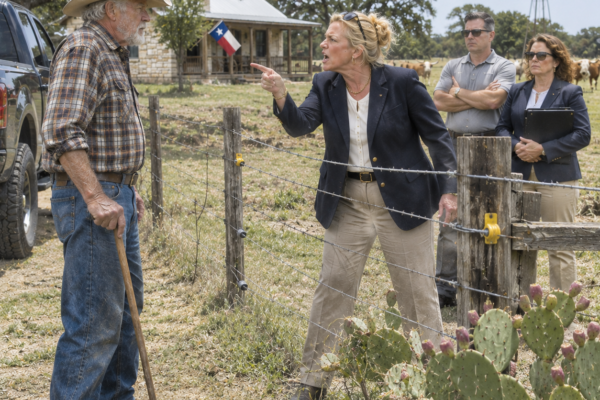
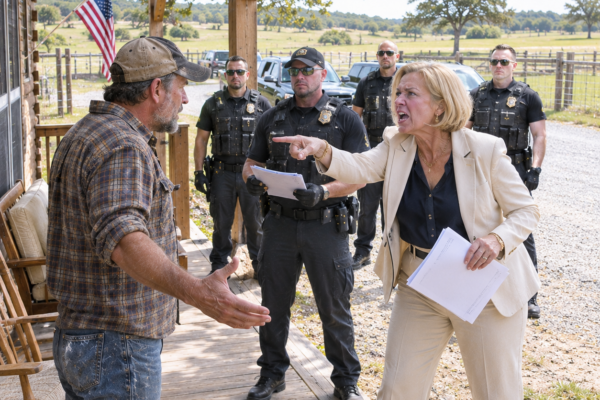
The HOA President Fined Us $3,500 Over a Black Mailbox and Pink Roses, Then Called Police When My Wife Refused to Pay. Brenda Smirked Until the Responding Officer Looked at Sarah, Dropped His Notepad, and Said, “Ma’am… I Know You.” What Brenda Didn’t Know Was That We Had Already Found Three Years of Missing HOA Money..k
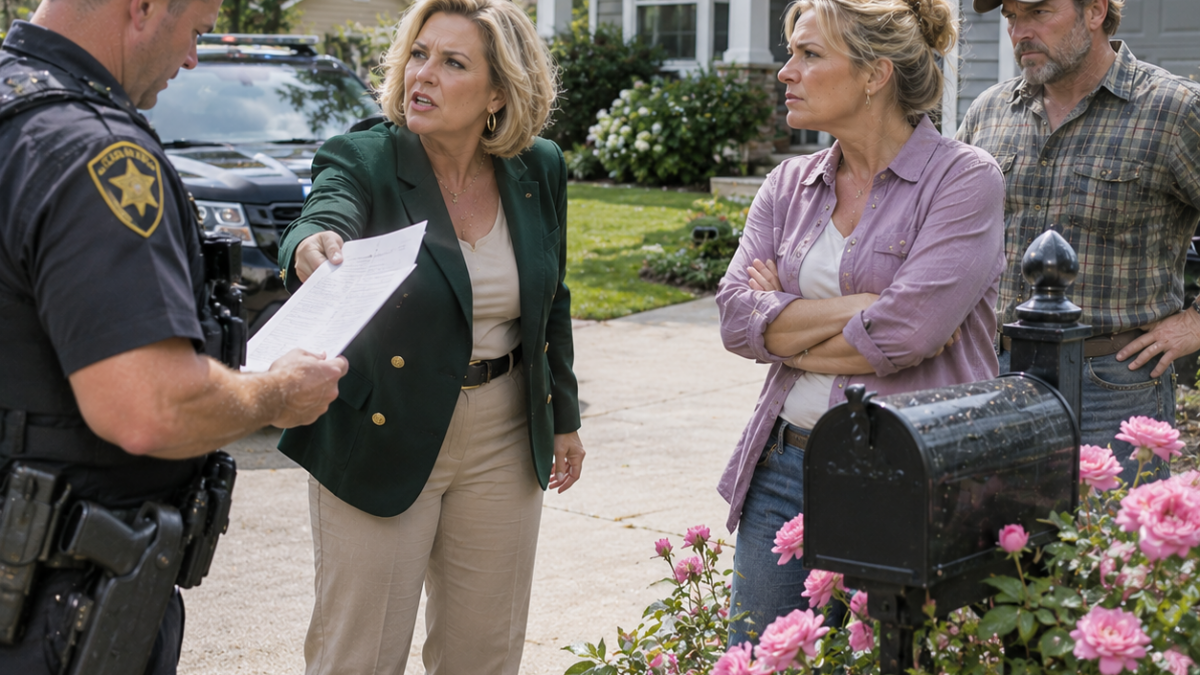
The HOA President Fined Us $3,500 Over a Black Mailbox and Pink Roses, Then Called Police When My Wife Refused to Pay. Brenda Smirked Until the Responding Officer Looked at Sarah, Dropped His Notepad, and Said, “Ma’am… I Know You.” What Brenda Didn’t Know Was That We Had Already Found Three Years of Missing HOA Money.
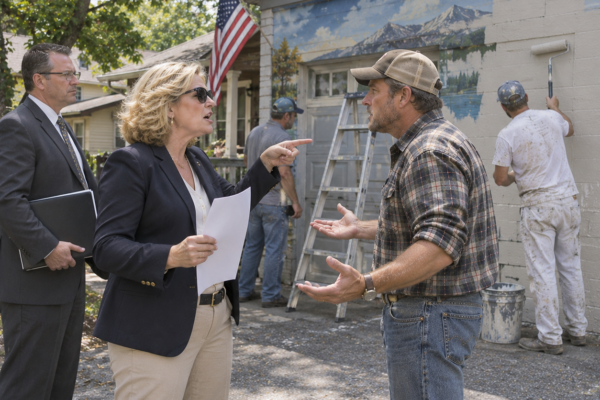
The first thing Brenda Vance said when my wife opened the door was, “You have forty-eight hours.”
Sarah stood there in slippers, holding a mug of tea.
“For what?”
Brenda lifted her clipboard.
“To cure seventeen violations and pay thirty-five hundred dollars in assessments.”
It was seven in the morning.
I hadn’t finished my first cup of coffee.
We had lived in Meadowbrook Heights for twenty-three days.
And apparently our roses were already criminals.
I came downstairs and stopped behind Sarah.
Brenda wore a navy blazer with gold buttons and the expression of a woman delivering a court judgment.
“Two thousand for unauthorized landscaping,” she said. “Your rose color isn’t approved. One thousand for the mailbox. Meadowbrook requires bronze hardware, and yours is matte black. The remaining five hundred is administrative processing.”
Sarah took another sip of tea.
“Could you show me where those amounts are authorized?”
Brenda blinked.
“They’re HOA fines.”
“I understand what you’re calling them. I’m asking which provision authorizes those amounts and what hearing process applies.”
That was the first crack.
Small.
But visible.
Most people probably argued about whether their roses were really pink enough.
Sarah asked where the authority came from.
Brenda shuffled papers.
“We don’t need to debate technicalities on your porch.”
“If you’re demanding thirty-five hundred dollars, the technicalities seem important.”
Brenda’s mouth tightened.
Our neighbor, Mrs. Higgins, was watering a plant across the street.
She looked toward us.
Then toward Brenda.
And quietly said, “Ask what happened to the Morgans.”
Brenda spun around.
Mrs. Higgins disappeared inside.
Sarah heard her.
So did I.
Brenda shoved the violation packet toward Sarah.
“Most residents learn very quickly that it’s easier to cooperate.”
Sarah took the pages.
“Then I’ll review these.”
“You have forty-eight hours.”
“I heard you.”
Brenda walked away smiling.
The moment the door closed, I said, “Why didn’t you just tell her?”
Sarah looked at me.
“Tell her what?”
“You know exactly what.”
My wife, Sarah Dawson, was a federal district judge.
Not an HOA lawyer.
Not a prosecutor.
Not somebody who could use her office to settle a neighborhood argument.
But she had spent years listening to witnesses, reading financial records, and spotting when someone’s paperwork didn’t match their confidence.
Sarah laid Brenda’s packet on the kitchen counter.
“Because my job is irrelevant to whether this fine is valid.”
“She’d back off immediately.”
“That’s precisely why I don’t want to use it.”
She flipped to the second page.
Then the third.
Her expression changed.
“What?”
“This signature block.”
“What about it?”
“The notice says the board approved these penalties unanimously three nights ago.”
“So?”
“So we were at the welcome dinner that night.”
I shrugged.
“Maybe they met afterward.”
“Maybe.”
She picked up her phone.
“But I’m going to ask for the minutes.”
Three days later, Brenda returned.
The thirty-five hundred dollars had become eight thousand.
She brought an attorney-looking man with a briefcase and a contractor carrying a clipboard.
“Continued noncompliance,” Brenda announced.
Sarah studied the new notice.
“Two thousand dollars in late charges in three days?”
“Yes.”
“Fifteen hundred in legal consultation fees?”
“Yes.”
“And a thousand dollars in lien preparation costs?”
“You were warned.”
A voice came from the sidewalk.
“No, she wasn’t.”
Mike Vasquez, the HOA treasurer, walked toward us.
Brenda went rigid.
Mike held up his phone.
“I checked the board portal. There hasn’t been a vote on any of this.”
“Mike, this is an executive enforcement matter.”
“I’m treasurer.”
“That doesn’t mean—”
“It means if the association just assessed eight thousand dollars, I should probably know where it was authorized and where the money is supposed to go.”
Brenda’s face changed.
Sarah didn’t smile.
She simply asked for a formal membership meeting.
That Saturday, thirty-eight homeowners packed the clubhouse.
Sarah brought one manila folder.
Brenda brought four binders.
For forty minutes, Sarah asked questions.
Who approved the fines?
Where were the minutes?
Which account received payments?
Why did several notices show identical “administrative costs” despite completely different alleged violations?
Why did the HOA bank statement Mike produced show transfers into an account none of the other directors recognized?
Brenda answered less confidently with every question.
By the end of the meeting, the board voted to freeze every disputed assessment until an independent review was completed.
Walking home, I felt triumphant.
Sarah didn’t.
“She’s been doing this a long time,” she said.
“How do you know?”
“Because this system is too organized to have been invented for our mailbox.”
That evening Mrs. Higgins came to our door carrying a cardboard box.
Inside were eight years of letters.
Fines.
Threats.
Foreclosure notices.
Settlement agreements.
And one document from the Morgan family, who had sold their home after the HOA claimed they owed more than $42,000.
Sarah read until almost midnight.
Then she closed the box.
“This isn’t an HOA argument anymore.”
“What is it?”
“Potential fraud.”
She did not call a friend at the FBI and start running her own investigation.
She did something much less dramatic and much smarter.
She contacted her personal attorney, the court’s ethics officer, and then made a formal referral through channels that kept her completely outside any investigation that might follow.
After that, Sarah and I became witnesses.
Nothing more.
For two weeks, life looked normal.
Then Detective Aaron Holloway knocked on our door.
He wasn’t assigned to any criminal case involving us.
He simply stood on the porch with one hand resting near his belt and said:
“Mrs. Dawson, I’m hearing concerns that your resistance to HOA enforcement is becoming disruptive.”
Sarah looked at him.
“What police report are you acting on?”
He paused.
“This is an informal conversation.”
“Then I’d prefer it remain outside my house.”
His jaw tightened.
“You can make things easy or difficult.”
“How?”
“Pay what you owe. Stop antagonizing community leadership.”
I felt my stomach tighten.
Sarah remained still.
“Detective, are you ordering us to pay a private civil assessment?”
“I’m telling you problems have a way of becoming complicated.”
That was the moment Sarah stopped treating him like an annoying local detective and started treating every word as evidence.
She did not threaten him.
Did not reveal what had been referred.
Did not invoke her office.
She simply said:
“Then please put whatever official instruction you’re giving us in writing.”
Holloway stared at her.
Then left.
Four days later, an anonymous text hit my phone.
PAY TOMORROW OR THIS STOPS BEING ABOUT MONEY.
I showed Sarah.
She photographed the screen.
Then called the number our attorney had given us.
That Friday, Brenda came back with Holloway nearby and a uniformed officer she apparently expected to validate everything.
The officer stepped out of his cruiser, walked toward Sarah, and stopped.
His face changed.
“Judge Dawson?”
Brenda looked between them.
“What judge?”
The officer removed his sunglasses.
“I’ve testified in Judge Dawson’s courtroom.”
For the first time since she had walked up our driveway with that $3,500 fine, Brenda Vance had absolutely nothing to say.
And what she didn’t know was that an independent investigation had already been underway for eleven days. Pasted text(20261125-015202)
Part 2:
The first thing Brenda Vance said when my wife opened the door was, “You have forty-eight hours.”
Sarah stood there in slippers, holding a mug of tea.
“For what?”
Brenda lifted her clipboard.
“To cure seventeen violations and pay thirty-five hundred dollars in assessments.”
It was seven in the morning.
I hadn’t finished my first cup of coffee.
We had lived in Meadowbrook Heights for twenty-three days.
And apparently our roses were already criminals.
I came downstairs and stopped behind Sarah.
Brenda wore a navy blazer with gold buttons and the expression of a woman delivering a court judgment.
“Two thousand for unauthorized landscaping,” she said. “Your rose color isn’t approved. One thousand for the mailbox. Meadowbrook requires bronze hardware, and yours is matte black. The remaining five hundred is administrative processing.”
Sarah took another sip of tea.
“Could you show me where those amounts are authorized?”
Brenda blinked.
“They’re HOA fines.”
“I understand what you’re calling them. I’m asking which provision authorizes those amounts and what hearing process applies.”
That was the first crack.
Small.
But visible.
Most people probably argued about whether their roses were really pink enough.
Sarah asked where the authority came from.
Brenda shuffled papers.
“We don’t need to debate technicalities on your porch.”
“If you’re demanding thirty-five hundred dollars, the technicalities seem important.”
Brenda’s mouth tightened.
Our neighbor, Mrs. Higgins, was watering a plant across the street.
She looked toward us.
Then toward Brenda.
And quietly said, “Ask what happened to the Morgans.”
Brenda spun around.
Mrs. Higgins disappeared inside.
Sarah heard her.
So did I.
Brenda shoved the violation packet toward Sarah.
“Most residents learn very quickly that it’s easier to cooperate.”
Sarah took the pages.
“Then I’ll review these.”
“You have forty-eight hours.”
“I heard you.”
Brenda walked away smiling.
The moment the door closed, I said, “Why didn’t you just tell her?”
Sarah looked at me.
“Tell her what?”
“You know exactly what.”
My wife, Sarah Dawson, was a federal district judge.
Not an HOA lawyer.
Not a prosecutor.
Not somebody who could use her office to settle a neighborhood argument.
But she had spent years listening to witnesses, reading financial records, and spotting when someone’s paperwork didn’t match their confidence.
Sarah laid Brenda’s packet on the kitchen counter.
“Because my job is irrelevant to whether this fine is valid.”
“She’d back off immediately.”
“That’s precisely why I don’t want to use it.”
She flipped to the second page.
Then the third.
Her expression changed.
“What?”
“This signature block.”
“What about it?”
“The notice says the board approved these penalties unanimously three nights ago.”
“So?”
“So we were at the welcome dinner that night.”
I shrugged.
“Maybe they met afterward.”
“Maybe.”
She picked up her phone.
“But I’m going to ask for the minutes.”
My name is Mark Dawson.
I’m a software architect, which sounds more glamorous than it is.
Most days I design systems from a home office while drinking too much coffee and arguing with people over video calls about things nobody outside the industry would care about.
Sarah and I bought our house in Meadowbrook Heights after twenty-two years of marriage.
For most of that time, we lived in a modest place closer to downtown.
Then the company I helped build was acquired.
Sarah had been on the federal bench for several years.
We finally had the money to buy something larger.
Three-car garage.
Garden.
Guest room for our daughter when she visited.
Enough space that Sarah could sit on the back patio without hearing traffic.
The house cost more than either of us ever imagined spending when we were younger.
That made Brenda notice us.
Sarah was convinced of that.
Brenda had pulled the public property records before we finished unpacking.
She mentioned our purchase price during her first visit.
Not directly.
More like:
“Given the value of your property, I’m sure you understand why Meadowbrook maintains premium standards.”
Sarah remembered that sentence.
She remembered everything.
Meadowbrook itself was almost absurdly polished.
Perfect lawns.
Stone entrance.
Decorative fountain.
Private roads.
Community pool.
A clubhouse where every chair matched.
People debated shades of white on the neighborhood app.
Not white versus beige.
Antique white versus ivory.
I thought it was funny.
Sarah called it what happens when intelligent adults run out of genuine crises.
Most of the HOA rules were ordinary.
Exterior paint approvals.
Fence heights.
Pool regulations.
Parking.
Architectural review.
Nothing about them suggested the kind of fines Brenda brought to our door.
The mailbox was the easiest example.
Our mailbox had been matte black when we bought the house.
The previous owner installed it six years earlier.
Brenda’s notice called it a new unauthorized modification.
The landscaping claim was stranger.
Sarah had replaced three dead rose bushes.
Same bed.
Same location.
Similar height.
Brenda claimed the new flowers were “inconsistent with the approved neighborhood color palette.”
I searched the covenants.
There was no approved rose-color palette.
There was an architectural guideline suggesting cohesive landscaping.
That was it.
Then there was the five-hundred-dollar “orientation noncompliance processing fee.”
I searched for that too.
Nothing.
Sarah requested the HOA’s enforcement schedule.
The property manager sent a PDF.
The maximum first-offense fine listed for most violations was $100 after notice and an opportunity for a hearing.
I read the page twice.
“Brenda asked for thirty-five hundred.”
“I noticed.”
“So she made it up?”
“Possibly.”
“You sound annoyingly calm.”
“Because right now we know only that her notice doesn’t match the schedule we received.”
“That’s lawyer language.”
“That’s evidence language.”
Sarah emailed Brenda.
Please provide:
The specific governing provision supporting each alleged violation.
The notice and hearing history.
The board resolution authorizing each fine.
The minutes reflecting approval.
The account to which payment should be made.
Brenda replied three hours later.
PAYMENT INSTRUCTIONS ARE ALREADY PROVIDED. FAILURE TO PAY WILL RESULT IN ESCALATION.
Sarah printed it.
Three days later, Brenda returned.
This time she had company.
A thin man named Gregory Pace carried a leather briefcase.
The other man wore a contractor’s polo and stared at his shoes.
Brenda handed Sarah a new notice.
Total due:
$8,000.
“Continued noncompliance,” Brenda said.
Sarah scanned the page.
“Two thousand in late charges.”
“Yes.”
“After three days?”
“Correct.”
“Fifteen hundred in legal consultation.”
“Mr. Pace is association counsel.”
Gregory Pace shifted.
He was not, we later learned, HOA counsel.
He was a solo practitioner who had performed two real-estate closings for Brenda personally.
Sarah looked at him.
“Are you representing Meadowbrook Heights in this matter?”
Pace hesitated.
“I’m advising President Vance.”
“Personally or as HOA counsel?”
Brenda interrupted.
“That distinction is irrelevant.”
“It isn’t to me.”
Then Sarah reached the last line.
“Lien preparation cost, one thousand dollars.”
“Correct.”
“You’re preparing a lien?”
“If necessary.”
“Before any hearing?”
“You waived your opportunity by refusing compliance.”
“I never received a hearing notice.”
“You received multiple opportunities to pay.”
“That isn’t the same thing.”
Brenda smiled.
“You’re trying to bury a simple community matter in technicalities.”
A voice came from behind her.
“No. She’s asking you basic questions.”
Mike Vasquez stood at the bottom of our driveway.
Mike lived three houses down.
Quiet man.
Late fifties.
Worked in commercial insurance.
And, more importantly, served as Meadowbrook’s treasurer.
Brenda stiffened.
“Mike, this is an executive enforcement matter.”
He walked closer.
“Why does this notice say the board voted unanimously?”
Brenda’s expression barely changed.
“Because it did.”
“When?”
“Tuesday.”
“We didn’t meet Tuesday.”
Pace looked at Brenda.
She ignored him.
Mike continued.
“I’m treasurer. Where are these assessments being posted?”
“Operations.”
“What account?”
“Mike.”
“What account?”
Sarah said nothing.
Neither did I.
Mike looked at the contractor.
“Why are you here?”
The man finally spoke.
“I was told to estimate replacement of the mailbox and landscaping.”
“On whose authorization?”
“Ms. Vance.”
Mike looked at Brenda.
“You hired a contractor to modify their property without a board vote?”
Brenda snapped:
“Nothing has been hired. He is assessing.”
“Using what budget?”
“This conversation is over.”
Sarah stepped in.
“I’d like a formal board meeting.”
Brenda turned.
“That won’t be necessary.”
“It is if you intend to demand eight thousand dollars.”
“These matters are handled confidentially.”
Sarah smiled.
“Then I’ll submit the request under the member-meeting provisions.”
Mike nodded.
“I’ll second it.”
Brenda stared at both of them.
For the first time, she looked worried.
The meeting happened Saturday.
Word traveled.
Thirty-eight homeowners showed up.
I expected shouting.
Sarah warned me not to make it a performance.
“Ask what we need to know.”
“I’m not the one good at cross-examination.”
“You’re not cross-examining anyone.”
“What am I doing?”
“Listening.”
Brenda sat at the front with three binders and Gregory Pace.
Sarah sat beside me carrying one manila folder.
Mike had bank statements.
The vice president, Helen Torres, had the bylaws.
Brenda opened with a speech about preserving community value.
Sarah waited.
Then asked:
“Could we begin with the board minutes authorizing our assessment?”
Brenda opened a binder.
“These enforcement decisions fall under presidential authority.”
“That isn’t what the notice says.”
“What?”
Sarah held it up.
“It says the board voted unanimously.”
Brenda glanced toward Pace.
He looked down.
Helen asked:
“Did we vote?”
Mike answered.
“No.”
Another director shook his head.
Brenda’s explanation changed.
She said “unanimous” referred to prior adoption of the enforcement policy.
Sarah asked for that policy.
Brenda produced a schedule.
The numbers didn’t match our fines.
Sarah asked where previous fine payments went.
Brenda said the association operating account.
Mike opened a statement.
“Not all of them.”
The room changed.
He explained that several homeowners had received instructions to pay assessments through a separate payment portal.
The portal deposited money into an account labeled Meadowbrook Compliance Services.
The name sounded official.
Mike had never seen it in the HOA’s banking package.
Brenda said it belonged to a collection vendor.
Mike asked for the contract.
She couldn’t produce it.
Mrs. Higgins raised her hand.
“I paid them.”
Everyone turned.
She was tiny.
White hair.
Voice barely above conversational level.
“Two years ago. Eleven thousand four hundred dollars.”
Helen looked shocked.
“For what?”
“Fence violations, attorney fees, late fees.”
“Eleven thousand?”
Mrs. Higgins nodded.
“They told me they’d record a lien.”
Brenda interrupted.
“Older accounts are outside today’s agenda.”
Sarah turned toward Mrs. Higgins.
“Do you still have the paperwork?”
“Yes.”
“How much of it?”
“All of it.”
That was when I saw Sarah’s expression change.
Not triumph.
Concern.
By the end of the meeting, the board froze all pending assessments.
They appointed an outside accountant.
Brenda protested until Helen called the vote.
Four to one.
Walking home, I said:
“You got her.”
Sarah shook her head.
“No.”
“She just lost control of the fines.”
“Mark.”
“What?”
“That separate account has been receiving money from homeowners, and the treasurer didn’t know it existed.”
“Meaning?”
“Meaning we stop guessing.”
That evening Mrs. Higgins brought us a cardboard box.
Inside were eight years of letters.
Notices.
Threats.
Copies of cashier’s checks.
A settlement agreement.
And documents from the Morgans.
The Morgans had owned a house near the east gate.
According to the paperwork, the HOA fined them over exterior modifications.
The balance climbed.
Attorney fees appeared.
A lien followed.
Eventually, they sold under pressure.
Mrs. Higgins knew them.
“They were terrified,” she said.
“Where did they move?” Sarah asked.
“Arizona. Their daughter took them in.”
“Did Brenda handle the sale?”
Mrs. Higgins nodded.
“She referred the buyer.”
That mattered.
The buyer was an LLC.
The LLC renovated and resold the property four months later for a substantial profit.
At that point Sarah stopped reading.
She looked at me.
“This may involve criminal conduct.”
“So what do we do?”
“Nothing ourselves.”
That surprised me.
“You don’t want to investigate?”
“No.”
“You’re a federal judge.”
“Exactly.”
She explained it carefully.
A judge cannot turn private knowledge into a personal law-enforcement operation.
She could preserve evidence.
She could retain personal counsel.
She could make an appropriate referral if she had a good-faith basis.
Then she had to get out of the way.
That night she called her personal attorney.
The next morning she spoke with the court’s ethics officer.
By afternoon, a referral had gone through proper channels to state authorities and, because some transactions appeared to cross state lines through electronic payment systems, to federal investigators.
Sarah did not ask for updates.
She did not pull databases.
She did not call prosecutors she knew and demand action.
We became witnesses.
That was all.
It was harder than it sounds.
For two weeks, Brenda kept acting like nothing had changed.
She emailed residents claiming a “small faction” was undermining the board.
She blamed the accounting review on political hostility.
Then Detective Aaron Holloway came to our house.
I knew him by sight.
He lived outside Meadowbrook but drove through often.
He had attended two HOA events.
That had never seemed strange.
Now it did.
He wore plain clothes with his badge clipped at the belt.
“Mrs. Dawson?”
Sarah stepped onto the porch.
“Yes.”
“We’ve received complaints about harassment directed toward HOA officers.”
“Is there a case number?”
He blinked.
“This is informal.”
“Then who complained?”
“I’m not discussing complainants.”
“What conduct are you investigating?”
He looked at me.
“Repeated confrontations. Threats. Interference with lawful community governance.”
I felt heat rising in my chest.
Sarah stayed calm.
“Are you ordering us to do something?”
“I’m advising you to stop escalating.”
“How?”
“Pay what you owe. Follow the rules. Let the HOA do its job.”
Sarah’s expression changed.
Barely.
“Detective, are you giving us an official police instruction to pay a private civil assessment?”
He stared at her.
“We can do this the easy way or the hard way.”
“What does the hard way mean?”
“Problems have a way of becoming more complicated.”
Sarah nodded.
“Then please put your instruction in writing.”
He stepped closer.
“You think being difficult helps you?”
“No. I think clarity helps everyone.”
Holloway left.
I waited until his car disappeared.
“That was a threat.”
“Yes.”
“What do we do?”
“We document it.”
Sarah wrote down every word while the memory was fresh.
Our lawyer forwarded the account to the investigators handling the referral.
Four days later, I received the text.
PAY TOMORROW OR THIS STOPS BEING ABOUT MONEY.
Unknown number.
I felt sick.
Sarah looked at it.
For the first time since Brenda appeared, she looked angry.
Not scared.
Angry.
She photographed the screen.
Then called our attorney.
I asked:
“Does this change things?”
“It may.”
“Are we in danger?”
“I don’t know.”
That was the most frightening answer she could have given me.
The local police department increased patrols after our lawyer reported the threat.
No one told us what investigators were doing.
Then Brenda called.
She said an “independent verification officer” would come Friday afternoon to document our noncompliance.
Sarah asked for his name.
“Officer Luis Vasquez.”
Mike’s brother.
That was almost funny.
Luis was a patrol officer in a neighboring precinct.
Sarah knew him professionally because he had testified in federal court on unrelated matters years earlier.
More importantly, Mike later told us Luis had no connection to Brenda.
She apparently assumed any police uniform would intimidate us.
Friday afternoon, Brenda arrived first.
Holloway parked half a block away.
Then Luis Vasquez pulled up in a marked cruiser after being dispatched to what he had been told was a neighbor dispute.
He got out.
Brenda rushed toward him.
“Officer, thank you. Mrs. Dawson has been refusing lawful assessments and threatening community officials.”
Luis raised a hand.
“I’ll speak to everyone separately.”
Sarah opened the front door.
Jeans.
Sweater.
Coffee mug.
She walked down the driveway.
Luis looked at her.
Stopped.
“Judge Dawson?”
Brenda’s smile disappeared.
Luis removed his sunglasses.
“I didn’t know you lived here.”
Sarah gave him a small nod.
“Recently.”
Brenda stared.
“What judge?”
Luis looked at her.
“Federal Judge Sarah Dawson.”
For several seconds nobody spoke.
Holloway, sitting in his car, visibly shifted.
Brenda looked at Sarah.
“You’re a judge?”
“Yes.”
“You never told me.”
“You never asked.”
“You let me—”
Sarah interrupted.
“My occupation has nothing to do with whether your assessments were valid.”
Brenda’s face flushed.
“This is entrapment.”
“No.”
“You set me up.”
“No.”
Luis looked confused.
“What exactly am I here to verify?”
Brenda started speaking rapidly.
Mailbox.
Roses.
Harassment.
Noncompliance.
Sarah did not hand him some magical FBI folder.
She did not order anybody arrested.
She simply said:
“Officer Vasquez, we have counsel. There is also an independent investigation concerning some of these matters. I don’t want to interfere with your call.”
Luis’s expression sharpened.
“What investigation?”
“I’m not at liberty to discuss it.”
That was all.
But Holloway heard enough.
His car pulled away before Luis finished taking statements.
Later we learned that departure mattered.
Investigators had already been examining Holloway’s connection to Brenda.
Bank records showed payments from a property-management company linked to her associates.
His official reports appeared in several disputes involving homeowners who later sold under financial pressure.
In one case, he had documented a “disturbance” that was later cited in an HOA foreclosure filing.
In another, he used department resources to obtain vehicle and personal information unrelated to a criminal investigation.
The investigation expanded.
Not because Sarah was a judge.
Because records supported it.
Subpoenas went out.
Bank accounts were traced.
The separate compliance account led to Meadowbrook Compliance Services LLC.
That company was controlled through Brenda’s cousin.
Payments moved from the LLC to contractors.
Some work was legitimate.
Some invoices were inflated.
Some jobs never happened.
Several targeted homeowners were referred to the same closing attorney.
Properties were later purchased by interconnected LLCs.
Renovated.
Resold.
The pattern was ugly.
But it was not the cartoonish empire I imagined when Mrs. Higgins handed us the box.
It was smaller.
More believable.
And that made it worse.
People had lost real money.
One retired couple sold after being told their HOA debt had reached $38,000.
Another homeowner paid nearly $17,000 to stop threatened foreclosure proceedings.
The Morgans sold their home for hundreds of thousands less than its later resale price.
Investigators identified payments flowing back to people connected to Brenda.
Holloway’s role was narrower but serious.
He had used police authority to pressure certain residents and had prepared misleading reports that made civil disputes look more threatening than they were.
He had also accessed law-enforcement databases without a legitimate purpose.
That is where federal civil-rights and computer-access questions entered the case.
RICO was not some magic word Sarah announced from our porch.
Prosecutors considered enterprise and conspiracy theories only after tracing the financial structure.
Months passed.
Brenda remained in Meadowbrook.
The board removed her as president during the accounting review.
She stayed a director temporarily under the bylaws.
Helen Torres became interim president.
Mike took control of all association accounts.
The first independent audit found more than $186,000 in questionable or unauthorized assessment collections over several years.
Not all of it was stolen.
Some represented legitimate fines processed improperly.
Some had been paid to real vendors.
Some could not initially be accounted for.
The important thing was that the HOA finally knew it had a problem.
Residents started talking.
Mrs. Higgins stopped whispering.
She stood at a meeting and read one of Brenda’s old letters aloud.
Another family brought settlement paperwork.
Then another.
The atmosphere changed.
Brenda’s authority had depended partly on people believing they were alone.
Once everyone compared documents, patterns appeared.
The criminal investigation remained confidential.
Until it wasn’t.
One Tuesday morning, two federal agents and a state investigator came to our house.
Not to raid anything.
To interview Sarah and me formally.
We sat at our dining table.
They asked about the first fine.
Every conversation.
Holloway’s visit.
The text.
They took copies of documents but preserved originals.
One agent, Daniel Mercer, asked Sarah:
“When did you first suspect this was larger than an HOA dispute?”
“The separate account.”
“Why?”
“Because the treasurer didn’t know it existed.”
“Did you conduct any independent investigation after making the referral?”
“No.”
“Why not?”
“Because I’m a witness with a conflict, not an investigator.”
He nodded.
That answer mattered.
Sarah’s restraint protected the case.
Three weeks later, grand jury subpoenas became public through court filings connected to third parties.
Meadowbrook erupted.
Brenda sent a neighborhood email calling herself the victim of a “politically motivated campaign.”
Sarah did not respond.
Neither did I.
Helen did.
One sentence.
The association will cooperate fully with all lawful inquiries and will not comment on an active investigation.
For once, our HOA communicated like adults.
Then came the arrests.
Not on our lawn.
No fleet of agents hiding behind hedges.
No dramatic signal from Sarah.
At six-thirty on a Thursday morning, Brenda was arrested at her home under a federal warrant.
Two agents.
One state investigator.
Quiet.
Professional.
Holloway was arrested separately at the police department after reporting for duty.
Others were charged later.
The indictment alleged wire fraud, conspiracy, money laundering-related offenses, and, in Holloway’s case, federal civil-rights violations arising from misuse of official authority.
Not everyone named in the investigation was guilty.
Not everyone Brenda had worked with was part of the scheme.
Prosecutors separated legitimate contractors from people who knowingly participated.
That distinction mattered.
Brenda’s lawyer attacked Sarah immediately.
He suggested the investigation existed only because Brenda unknowingly targeted a federal judge.
Sarah expected that.
So did prosecutors.
The government’s response was simple.
The referral began with documents.
The financial investigation was independently supervised.
Sarah had not directed investigators.
Had no access to the case file.
Made no charging decisions.
Would play no judicial role in any related proceeding.
Any federal criminal case involving Brenda was assigned outside Sarah’s district courtroom and handled under conflict procedures.
That took the conspiracy theory out of the defense.
I was deposed.
Then testified before a grand jury.
Months later, I testified at a hearing.
Mrs. Higgins testified too.
So did Mike.
The Morgans returned from Arizona.
Seeing them was harder than I expected.
They were both in their seventies.
Mr. Morgan walked with a cane.
He looked at our neighborhood like a place that had betrayed him.
Brenda eventually entered a plea agreement.
Not because she suddenly became remorseful.
Because the records were overwhelming.
Bank transfers.
Emails.
False board minutes.
Payment instructions.
Property transactions.
Messages with contractors.
Communications with Holloway.
The text threat was tied not directly to Brenda’s phone but to an associate who pleaded separately.
The case established that Brenda had orchestrated a multi-year scheme using fabricated or inflated HOA assessments to pressure selected residents, diverting money through entities she helped control and steering distressed property opportunities toward connected buyers.
She pleaded guilty to conspiracy to commit wire fraud and related financial offenses.
Her sentence was substantial.
Eleven years in federal prison.
Not eighteen.
Not twenty.
Enough to reflect years of conduct, financial harm, obstruction, and abuse of vulnerable homeowners.
Holloway went to trial.
He was convicted on several counts involving deprivation of rights under color of law and unauthorized use of law-enforcement systems, along with conspiracy-related conduct.
He received a shorter but still serious federal sentence.
Two city employees who had knowingly falsified inspection material pleaded guilty to lesser charges.
Several contractors were never charged because evidence showed Brenda had misled them too.
The HOA itself was not “dissolved overnight.”
That would have hurt everyone who still owned homes there.
Instead, a court-approved administrator temporarily supervised finances while residents elected a new board and pursued recovery.
Mike became president reluctantly.
His acceptance speech lasted thirty seconds.
“I don’t want this job. That may be the best reason to give it to me.”
Everybody laughed.
Then he got to work.
The association sued to recover diverted funds.
Insurance covered some losses.
Asset forfeiture and restitution orders recovered additional money.
Not everyone was made completely whole.
That is another part stories often simplify.
The Morgans received restitution.
Mrs. Higgins received reimbursement for improper assessments plus interest through a combination of settlement and restitution.
Several other families recovered substantial amounts.
Others had losses that could not be fully repaired.
Years of stress do not fit neatly on a check.
Neither does losing a house you never wanted to sell.
One afternoon, Mrs. Higgins sat with us on the porch.
She held the restitution letter in her lap.
“I should feel happy.”
“You don’t?” I asked.
“I feel tired.”
Sarah nodded.
“That’s normal.”
Mrs. Higgins looked toward Brenda’s empty house.
“She made me think I was stupid.”
“You weren’t.”
“I knew something was wrong.”
“You were frightened.”
“That feels like the same thing.”
Sarah shook her head.
“It isn’t.”
Mrs. Higgins cried.
Quietly.
Sarah held her hand.
That moment mattered more to me than Brenda’s sentencing.
People sometimes imagine justice as a judge’s gavel and a villain being led away.
Most of the time it looks like an elderly woman finally believing she wasn’t foolish for being afraid.
The Meadowbrook board rewrote its enforcement procedures.
No president could issue fines alone.
Every fine had to reference a specific governing provision.
Notice and hearing rights had to be documented.
Payments went only through accounts controlled by the association’s bank.
No outside “compliance portal” without board approval and audit access.
Liens required independent legal review.
Financial statements were posted quarterly.
Members could inspect records through a formal process without begging Brenda for permission.
The separate account disappeared.
So did a lot of fear.
People came outside again.
We had a block party that summer.
Nothing fancy.
Kids ran through sprinklers.
Mike burned hamburgers.
Mrs. Higgins brought potato salad.
The Morgans came back for the afternoon.
That was emotional.
They walked past their former house.
The new owners invited them inside.
I thought they might decline.
They didn’t.
Sarah and I stayed on the porch later that night after everyone left.
“You know,” I said, “you could have told Brenda what you did on day one.”
Sarah took a sip of wine.
“Yes.”
“She would have disappeared.”
“From our porch.”
“Exactly.”
“And gone to somebody else.”
I looked across the street.
Mrs. Higgins’s porch light glowed through the trees.
“So you knew?”
“No.”
“Knew what?”
“That it was this big.”
She shook her head.
“I suspected the paperwork was wrong. Then I suspected fraud. Everything after that belonged to investigators.”
“You weren’t tempted to dig?”
“Of course.”
“You?”
“I’m human.”
I laughed.
“What stopped you?”
“The same thing I tell lawyers in court. Process matters most when you’re convinced you’re right.”
That sounded exactly like Sarah.
Months later, Brenda’s old house sold.
A family with two children moved in.
Their first week, the mother knocked on our door.
“Hi. We’re the Porters.”
“Mark.”
“I know.”
That made me nervous.
She smiled.
“Mike gave us the neighborhood welcome packet.”
“Ah.”
“My daughter wants to know whether your roses are really illegal.”
I stared at her.
Then started laughing.
Sarah came to the door.
“What?”
The woman repeated it.
Sarah looked toward the rose bed.
“Only the dark pink ones.”
The woman’s eyes widened.
Sarah held the expression for two seconds.
Then smiled.
“I’m kidding.”
That was when I knew Meadowbrook had recovered enough to laugh.
The matte-black mailbox is still there.
We never changed it.
During the board reform, Mike proposed an amendment clarifying that existing mailboxes were grandfathered unless unsafe.
It passed unanimously.
The roses survived too.
Sarah planted three more.
Dark pink.
Almost offensively so.
I accused her of provocation.
She called it horticulture.
A year after Brenda’s sentencing, I found the original violation packet in a file drawer.
$3,500.
Seventeen violations.
Forty-eight hours.
I carried it to the kitchen.
Sarah was reading.
“Remember this?”
She looked over her glasses.
“Unfortunately.”
“You kept saying her paperwork was the problem.”
“It was one problem.”
“Do you think she would’ve stopped if we paid?”
“No.”
“Why?”
“Because successful coercion teaches the wrong lesson.”
I sat across from her.
“So what was the right lesson?”
Sarah closed the book.
“That nobody’s rights become more important because they have money, status, or connections.”
I smiled.
“Coming from a federal judge living in a two-and-a-half-million-dollar house.”
“That is exactly why it matters.”
She was right.
The moment everyone remembers from our story is Officer Vasquez recognizing her.
Judge Dawson?
You live here?
It is dramatic.
I understand why people repeat it.
But it was not the reason Brenda lost.
If Sarah had been a teacher, nurse, cashier, retiree, or unemployed widow, Brenda’s conduct would have been just as wrong.
That was the whole point.
Sarah’s title helped expose how differently Brenda behaved once she realized the person she had chosen to bully possessed status.
Brenda went from commanding to frightened in seconds.
Not because the facts changed.
Because her perception of Sarah did.
That was the ugliest part.
She respected power.
Not people.
In the end, the federal case did not turn on Sarah’s title.
It turned on records.
Money.
Emails.
False notices.
Bank accounts.
Property transfers.
Threats.
Witnesses.
And years of people preserving pieces of truth because some part of them knew what was happening wasn’t normal.
Mrs. Higgins kept letters.
Mike kept bank statements.
The Morgans kept settlement papers.
Sarah kept Brenda’s first fine.
I kept the threatening text.
None of us had the whole story.
Together, we had enough for investigators to find it.
Two years later, Meadowbrook Heights looks almost exactly the same from the gate.
Green lawns.
Stone entrance.
Fountain.
Cars too expensive for my comfort.
People still argue on the community app about paint colors.
Last month there was a seventy-comment discussion about whether basketball hoops should face the street.
Human beings remain human beings.
The difference is that nobody is afraid of a clipboard anymore.
Mike’s board sometimes sends violation notices.
Real ones.
When someone painted an exterior wall bright purple without approval, they received one.
When a resident parked an RV on the private road for three months, they received one.
Rules still exist.
But now the notice tells people exactly which rule applies.
How long they have to cure it.
How to request a hearing.
Who voted.
Where any payment goes.
That is what legitimate authority looks like.
Specific.
Reviewable.
Boring.
Brenda wanted authority to feel mysterious.
The less people understood, the more power she had.
Sunlight ruined that.
Sarah still refuses to discuss the case publicly beyond what appeared in court records.
She says judges should not turn themselves into protagonists.
I remind her that she is absolutely the protagonist in our household.
She tells me to unload the dishwasher.
Marriage remains humbling.
One Saturday morning, I was trimming roses when Officer Luis Vasquez walked past with Mike.
Luis was off duty.
He stopped at the mailbox.
“Still black.”
“Dangerously black.”
“Any fines?”
“Not yet.”
Sarah came outside.
Luis smiled.
“Morning, Judge.”
She gave him a look.
“Sarah is fine when I’m holding pruning shears.”
“Yes, ma’am.”
He looked at the roses.
“Wrong shade?”
“Apparently.”
We all laughed.
Then he became serious.
“I wanted to tell you something.”
Sarah waited.
“My brother says Mrs. Higgins is doing well.”
“She is.”
“And the Morgans bought a smaller place near their daughter.”
“I heard.”
Luis nodded.
“Good.”
There was nothing else to say.
He and Mike kept walking.
I returned to the roses.
A few minutes later, Sarah came beside me.
“You missed one.”
“Where?”
She pointed.
I clipped it.
Then she looked down the street.
“Quiet.”
“Real quiet.”
She smiled.
That word meant something different now.
When we moved to Meadowbrook, we thought quiet meant no traffic and thick windows.
After Brenda, quiet meant nobody afraid to open their mail.
Nobody wondering whether an HOA president could invent a debt.
Nobody seeing a detective on the porch and assuming the system was already against them.
Quiet meant ordinary life had returned.
That evening, Sarah and I sat on the porch.
The matte-black mailbox caught the last sunlight.
The roses moved in a light breeze.
Across the street, Mrs. Higgins was arguing cheerfully with a sprinkler.
A child rode a bicycle past.
Mike waved from his car.
I looked at Sarah.
“You know what still bothers me?”
“What?”
“Brenda charged us five hundred dollars for missing an orientation.”
Sarah smiled.
“Truly the crime of the century.”
“I would have attended.”
“No, you wouldn’t.”
“I might have.”
“You complained about the welcome dinner being too long.”
“That dinner was ninety minutes.”
“It was forty-five.”
“Felt longer.”
She laughed.
Then leaned back.
For a long time, neither of us spoke.
I thought about that first morning.
Brenda on our porch.
Clipboard.
Gold buttons.
Thirty-five hundred dollars.
Forty-eight hours.
She thought she was walking up to another expensive house occupied by people who would write a check because fighting felt inconvenient.
She was wrong about us.
But the more important truth was that she had been right about too many people before us.
Not because they were weak.
Because they had jobs.
Children.
Mortgages.
Illnesses.
Aging parents.
Lives too full to spend months decoding fake legal threats.
Brenda built her scheme around exhaustion.
That was what made it predatory.
Sarah never forgot that.
Neither did I.
If there is one thing I took from the whole mess, it isn’t “be careful who you bully because they might be a judge.”
I hate that lesson.
It implies people deserve dignity because they might secretly be powerful.
The better lesson is much simpler.
The person you are bullying should not need to be powerful at all.
Mrs. Higgins should not have needed a federal judge next door.
The Morgans should not have needed investigators.
A homeowner should not need legal training to ask where a $3,500 fine came from.
Authority should be able to answer ordinary questions.
What rule?
What vote?
What account?
What process?
What right to appeal?
Brenda could not answer those questions because the confusion was the point.
Now Meadowbrook answers them in writing.
The old fear is gone.
And every morning when I walk down the driveway for the newspaper, I pass the same black mailbox Brenda once claimed was worth a thousand-dollar fine.
I usually touch the top as I go by.
Not for luck.
Not as a trophy.
Just because it makes me smile.
It is still matte black.
The roses are still the wrong shade of pink.
Sarah is still a federal judge.
I am still the guy who forgets where he leaves his coffee.
And Meadowbrook Heights is finally just a neighborhood again.
That is enough.