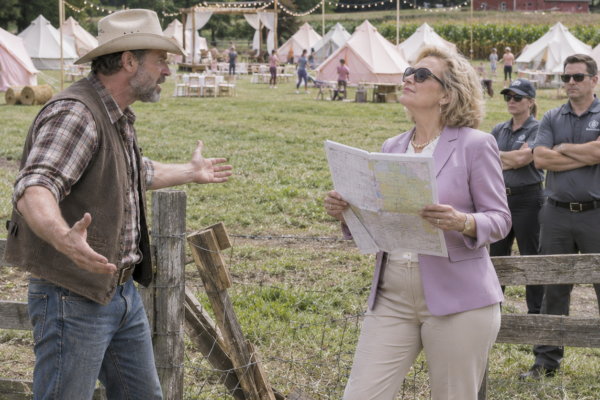
“It’s Just an Inconvenience,” the Developer Sneered After I Found a Hidden Sewage Pipe Running Across My 15 Acres and Leaking Into My Creek. The Cedar Ridge HOA President Ordered Me to Stop Interfering With Their Luxury Resort Community. Then I Discovered an Easement Bearing My Signature—One I’d Never Signed—and the County Inspector Asked to See the Original….k
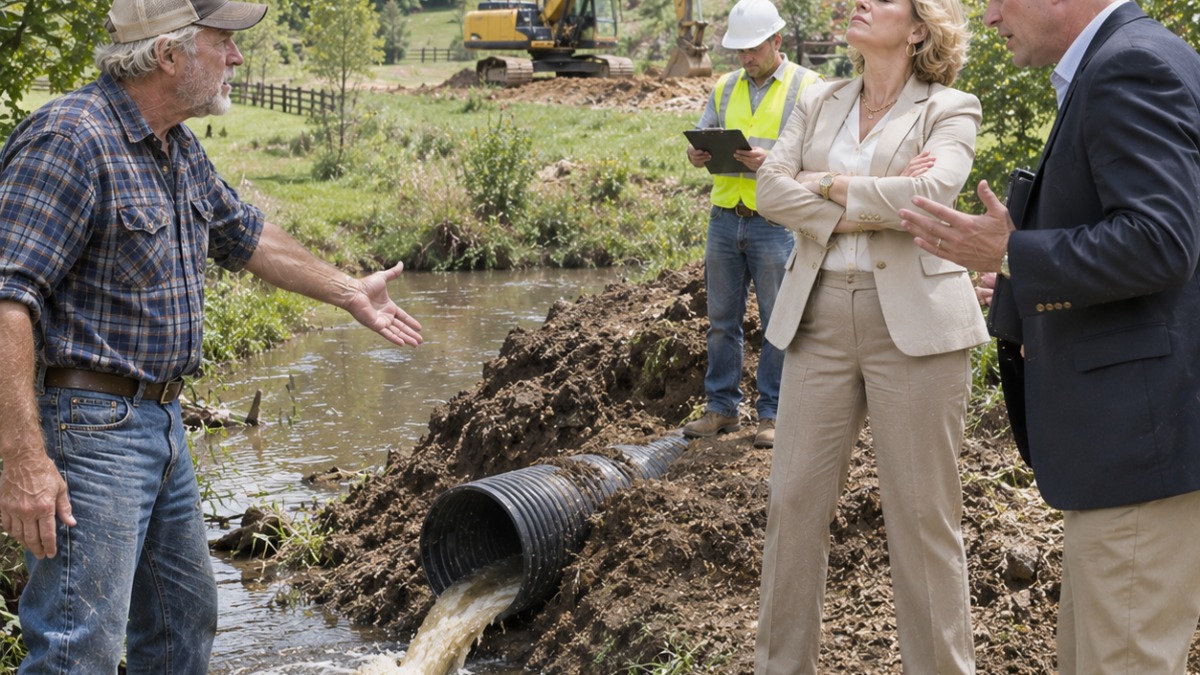
“It’s Just an Inconvenience,” the Developer Sneered After I Found a Hidden Sewage Pipe Running Across My 15 Acres and Leaking Into My Creek. The Cedar Ridge HOA President Ordered Me to Stop Interfering With Their Luxury Resort Community. Then I Discovered an Easement Bearing My Signature—One I’d Never Signed—and the County Inspector Asked to See the Original…
The first time I smelled sewage in the creek behind my cabin, I thought something had died upstream.
The second time, the water had turned brown.
The third time, I found a buried industrial pipe crossing my property without my permission.
And when I demanded answers, the director of a multimillion-dollar luxury development told me to stop causing trouble.
“Mr. Carter, you’re making an inconvenience sound like an environmental disaster.”
I stood beside the creek with my boots sinking into the muddy bank.
Ten feet away, an exposed section of thick black pipe disappeared beneath the roots of an old sycamore.
A faint stream of discolored water was seeping from the disturbed ground nearby.
“Richard, there’s a sewage line running through my land.”
Richard Halston, development director of Cedar Ridge Estates, sighed into the phone.
“We’re talking about essential infrastructure serving a residential community.”
“Then why is it buried on my property?”
“The routing was handled during construction.”
“By whom?”
“Our engineering contractors.”
“With whose permission?”
He went quiet.
Then he said something that made my blood boil.
“Evan, fifteen acres of woodland isn’t worth jeopardizing a development that represents millions of dollars in investment. You need to look at the bigger picture.”
I looked at the creek.
The same creek I’d listened to every morning for eight years.
The same water that flowed past my cabin, where I planned to spend the rest of my life.
“You’ve got thirty days to produce proof of your legal right to use my land and a plan to correct this,” I said. “I’m reporting the suspected contamination immediately.”
Richard’s voice hardened.
“I’d think carefully before starting a fight you can’t afford to finish.”
Then he hung up.
My name is Evan Carter. I’m forty-six years old, and I own fifteen acres in Willow Creek Valley, North Carolina.
I bought the property because I wanted quiet.
A small cedar cabin.
A meadow filled with wildflowers.
Woods thick enough to hide the county road.
And a cold creek running along the lower edge of my land.
There were no luxury amenities.
No security gates.
No HOA.
Just trees, water, and enough solitude to hear the wind moving through the leaves.
Then Cedar Ridge Estates began construction beyond my northern boundary.
The developer promised expensive homes overlooking an artificial lake, a private clubhouse, tennis courts, and a resort-style swimming pool.
Their brochures called it untouched wilderness living.
That phrase always amused me.
They were bulldozing hillsides to sell people the experience of living near untouched land.
Still, I didn’t object.
They owned their property.
I owned mine.
I assumed we’d respect the boundary between us.
For the first year, that arrangement worked.
Then the smell started.
At first, it came only on hot afternoons.
A sour, unpleasant odor drifting through the trees.
Later, I noticed patches of brown water downstream from a section of creek bank that had recently been disturbed.
I stopped collecting water from the creek and followed the discoloration upstream.
That’s when I found the pipe.
It was too large to be ordinary household drainage.
The surrounding soil had been compacted by heavy equipment.
And the route led straight toward Cedar Ridge Estates.
I photographed everything.
Then I called Mark Delaney, the development’s property manager.
He told me the pipe was probably an old utility line.
“Grandfathered in,” he said casually.
“Mark, your development is barely two years old.”
He cleared his throat.
“Then perhaps it’s part of an existing infrastructure arrangement.”
“Show me the easement.”
He promised to check.
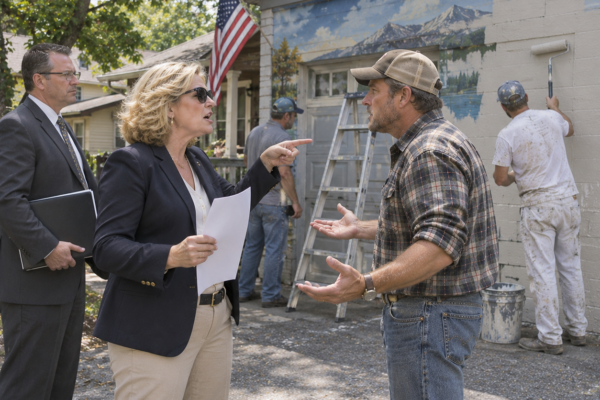
Instead, the following morning, a woman arrived at my cabin in a white SUV.
Her name was Patricia Wexler, president of the newly formed Cedar Ridge Estates HOA.
She wore a cream-colored blazer and carried a folder bearing the development’s gold-lettered logo.
“Mr. Carter,” she announced, “your complaints are creating unnecessary concern among our homeowners.”
I stared at her.
“Your developer buried sewage infrastructure across my land.”
She smiled.
“According to our records, that corridor was legally approved.”
“Then show me.”
“Those are confidential development documents.”
“Not if they supposedly grant rights across my property.”
Her smile vanished.
“You need to understand something. Cedar Ridge has over two hundred families invested in this community. We cannot let one neighboring landowner disrupt essential services because he dislikes our development.”
“I don’t dislike your development. I dislike sewage leaking into my creek.”
She looked toward my old cabin.
Then she said, “Some people would be grateful that a development like ours increased the value of their little property.”
I stepped toward the gate.
“Get off my land.”
Patricia’s face reddened.
“You’re going to regret making this adversarial.”
After she left, I drove to the county Register of Deeds office.
I requested everything recorded against my parcel.
That’s where I discovered the document.
A utility easement supposedly granting Cedar Ridge permission to install, operate, and maintain an underground wastewater pipeline across my fifteen acres.
It had my full legal name.
My parcel number.
A detailed route description.
And a signature that looked enough like mine to fool someone who didn’t know me.
But I had never signed it.
Never discussed it.
Never received compensation.
And never authorized anybody to bury a sewage line beneath my creek.
Then I noticed the dates.
The developer’s construction drawings showed work on the route beginning months before the supposed easement had been executed.
I took the records to the county’s environmental office.
An inspector examined the photographs and asked whether I had any water-quality results.
“Not yet,” I answered.
He looked again at the pipeline route.
Then at the recorded easement.
Finally, he asked, “Mr. Carter, can you tell me who witnessed this signature?”
I shook my head.
“No. Because I wasn’t there.”
The inspector picked up his telephone.
And as he requested an urgent site assessment, I realized Cedar Ridge’s beautiful artificial lake, manicured gardens, and resort swimming pool might be hiding a problem much larger than one illegal pipe.
Part 2:
The first time Richard Halston offered me money to forget about the sewage pipe beneath my property, I asked him a simple question.
“Richard, how much would you charge somebody for dumping sewage into your backyard?”
He didn’t answer.
I stood beside the creek, looking at the thick black pipe emerging from a patch of disturbed soil. The ground smelled rotten. A brownish trickle was seeping toward the water, and the ferns along the bank had started turning yellow.
Richard was the development director of Cedar Ridge Estates, a luxury residential project worth tens of millions of dollars.
I was a forty-six-year-old man with fifteen acres, an old cabin, and a creek I’d spent years protecting.
In his mind, that made me the smaller problem.
“Evan,” he said, “we’re dealing with essential infrastructure. There are over two hundred households involved.”
“Then those households deserve infrastructure built legally.”
He exhaled.
“You don’t understand the cost of rerouting a major wastewater line.”
“I understand the cost of putting one through land you don’t own.”
“We can discuss compensation.”
“You can discuss removing it.”
His tone changed.
“Be careful. Environmental litigation can become expensive, especially for an individual.”
I looked down at the water.
“Is that a threat?”
“I’m encouraging you to be realistic.”
“Then here’s something realistic. I’m reporting this to the county and the state. If the line is leaking sewage, it needs to be addressed immediately. And I want evidence of whatever right you claim to have across my land.”
There was silence.
Then Richard said, “You have no idea how complicated you’re making this.”
He hung up.
I stood there with my phone in my hand, listening to the creek move around the stones.
For eight years, that sound had been one of the reasons I loved the place.
Now there was another sound beneath it.
A faint mechanical hum coming through the buried pipe.
Something was moving below my feet.
And whoever installed it had apparently assumed I’d never find out.
My name is Evan Carter. I own fifteen acres in Willow Creek Valley, North Carolina, in a rural county where the roads still have names like Mill Branch and Old Orchard Lane.
I wasn’t born wealthy.
I worked in industrial equipment maintenance for nearly twenty years, eventually becoming a regional service supervisor.
The job paid reasonably well, but it kept me traveling.
Hotels.
Factories.
Distribution centers.
Long drives home in the dark.
By my late thirties, I wanted a different life.
My marriage had ended amicably several years earlier, and my daughter was grown and living in Charlotte.
I wanted somewhere quiet enough to think.
A place where I could build a workshop, grow vegetables, and spend my weekends doing something other than staring at a highway.
That’s how I found Willow Creek.
The property was mostly woods, with an open meadow near the center and a small cedar cabin set above the creek.
The cabin had two bedrooms, a stone fireplace, and a porch overlooking the lower pasture.
It wasn’t impressive.
The kitchen cabinets didn’t match.
The bathroom floor creaked.
And the roof needed replacing within the first year.
But the land was beautiful.
On summer mornings, mist settled between the trees.
Deer crossed the meadow before sunrise.
And the creek ran cold and clear along the southern boundary.
I bought the property with a conventional mortgage, using savings I’d accumulated over years of overtime.
I made improvements gradually.
A new roof.
A gravel driveway.
A workshop behind the cabin.
A small garden enclosed by split-rail fencing.
My daughter, Hannah, visited whenever her schedule allowed.
She called the place Dad’s Wilderness Kingdom.
I called it home.
The first time Cedar Ridge Estates appeared in the valley, it was nothing more than a large development sign beside the county road.
CEDAR RIDGE ESTATES — LUXURY LIVING SURROUNDED BY NATURE.
The rendering showed elegant houses around an artificial lake, a clubhouse with enormous windows, tennis courts, walking trails, and a swimming pool that looked like something at a Florida resort.
I remember standing beside the sign, shaking my head.
They were promising untouched wilderness views while preparing to clear hundreds of trees.
But it wasn’t my business.
Their land was north of mine.
My boundary was well established, and I had no interest in joining their HOA.
The first construction year was noisy but uneventful.
Bulldozers cleared roads.
Concrete trucks came and went.
A temporary construction entrance was built near the highway.
Occasionally, I heard blasting from the higher slopes.
Then the streets began taking shape.
Large homes appeared behind stone entrance columns.
The artificial lake filled.
The clubhouse opened.
And the developer started advertising membership in Cedar Ridge’s private amenities as though it were the greatest privilege a family could purchase.
For a while, everything seemed ordinary.
Then I began smelling something strange.
At first, it happened only during the hottest afternoons.
A sour, organic odor drifted through the trees near the creek.
I assumed a deer had died somewhere upstream.
That happens in the country.
I walked the banks looking for the source.
Found nothing.
A week later, the smell returned.
Then again.
After a heavy rain, I noticed a brown tint in the water.
Not the usual muddy runoff that follows a storm.
This discoloration seemed to originate from a particular section of bank.
There was a thin, oily-looking film near the stones and a patch of vegetation that had begun dying.
I stopped using creek water for my garden until I knew what was happening.
Then I started investigating.
I walked upstream with my phone, a notebook, and a pair of rubber boots.
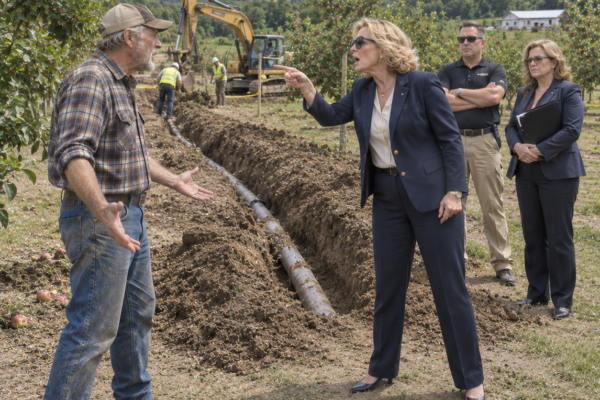
About three hundred yards from my cabin, I noticed a narrow line of disturbed ground cutting through the woods.
At first, it looked like an old utility trench.
The soil was more compacted than the surrounding earth.
Small stones had been pushed into the surface.
Several young saplings were missing.
Then I saw the pipe.
A section of black plastic had become exposed where erosion had removed part of the soil.
It was thick.
Far too large for an ordinary household drain.
The line continued north toward Cedar Ridge.
Near the creek crossing, discolored water was seeping from the ground.
I photographed the location and carefully marked it on my survey.
I didn’t touch the pipe.
I didn’t dig into it.
I had spent enough years maintaining industrial equipment to know that an unknown pressurized line is not something a person should casually open.
Instead, I called the development’s management office.
Mark Delaney answered.
I explained what I’d found.
He told me it was probably an old utility line.
“Grandfathered in,” he said.
“Mark, Cedar Ridge started building two years ago.”
“That doesn’t mean the infrastructure is new.”
“Then who owns the pipe?”
“I’d have to check.”
“Is it a wastewater line?”
Another pause.
“Mr. Carter, I wouldn’t jump to conclusions.”
I looked at the discolored water.
“I’m not jumping. I’m asking.”
He promised someone would contact me.
Nobody did.
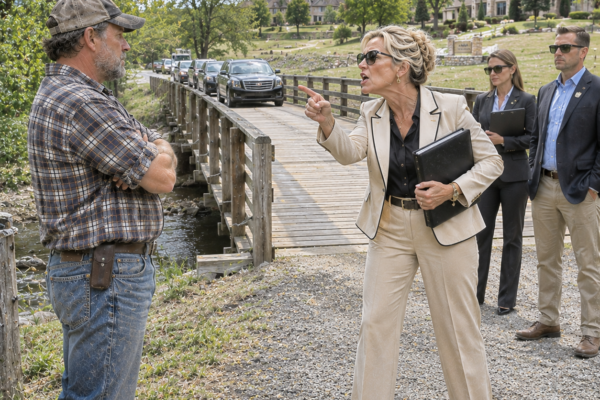
The next morning, I received a visit from Patricia Wexler.
Patricia had recently become president of the Cedar Ridge Estates HOA.
She wore expensive clothes, drove a white SUV, and carried herself with the confidence of someone who assumed every room belonged to her.
She stopped beside my gate and looked toward the cabin.
“Mr. Carter?”
“That’s me.”
“I’m Patricia Wexler. I represent the homeowners at Cedar Ridge.”
I nodded.
“Are you here about the wastewater pipe?”
She gave a small, irritated smile.
“I’m here about the disruptive complaints you’ve been making to the developer.”
I stared at her.
“Disruptive?”
“The association has spent considerable money building a desirable community. We won’t allow one neighboring landowner to interfere with essential services.”
“Your services shouldn’t cross my land without permission.”
“According to our records, the corridor was approved.”
“Show me the easement.”
“That’s confidential development information.”
“If it grants rights across my property, it concerns me.”
Her expression hardened.
“Mr. Carter, you should understand that Cedar Ridge has more than two hundred families whose homes are worth considerably more than that little cabin.”
For a moment, I couldn’t believe she’d said it.
Then she looked toward the creek.
“Sometimes progress requires a little cooperation from people who happened to get here first.”
I stepped toward the gate.
“You’re on private property, Patricia.”
She lifted her chin.
“I’m aware.”
“Then leave.”
She looked shocked.
“Excuse me?”
“Leave my property.”
Her face reddened.
“You’re going to regret making this adversarial.”
I closed the gate after she drove away.
Then I went inside and took out the file containing my deed, survey, and title insurance documents.
Until that morning, I’d thought the wastewater line might be an engineering mistake.
An improperly marked boundary.
A contractor using an outdated drawing.
A problem somebody would correct once the evidence was presented.
Patricia’s visit changed my mind.
She hadn’t been surprised by the pipe.
She’d been annoyed that I’d found it.
And that was a very different thing.
I drove to the county Register of Deeds office the following morning.
The building was an ordinary brick structure beside the courthouse, with a parking lot full of pickup trucks and a lobby that smelled faintly of old paper and floor polish.
A records specialist named Linda Mercer helped me locate the instruments associated with my parcel.
The original deed was there.
The subdivision boundary information was there.
And then she found something I had never seen before.
A recorded utility easement.
It described a corridor crossing my property from the Cedar Ridge development to a wastewater connection farther down the valley.
It identified me as the granting landowner.
It included my parcel number, a route exhibit, and a date from the previous year.
At the bottom of the document was a signature.
Evan Carter.
I stared at it.
“That’s supposed to be mine?”
Linda looked at the page.
“That’s the name on the instrument.”
“I didn’t sign this.”
She immediately became more formal.
“I can provide a certified copy of the recorded document, but I can’t determine whether a signature is authentic.”
“I understand.”
I leaned closer.
The signature looked similar to mine at first glance.
The capital E was close.
The last name had the same general shape.
But the middle letters were wrong.
I always made the crossbar on my t a certain way.
Whoever had written this hadn’t.
Then I examined the acknowledgment.
A notary’s name appeared beneath a stamp.
I didn’t recognize it.
And the recorded date raised another question.
According to construction activity I’d photographed from my property, crews had been working near the corridor long before the easement was supposedly signed.
I ordered certified copies.
Then I asked Linda how a disputed document could have been recorded.
She explained that the recording office accepted instruments that met applicable formal requirements; recording didn’t establish that every factual statement inside a document was true.
That distinction mattered.
A recorded document could create a serious title problem even if the signature had been forged.
It wouldn’t automatically become a valid grant merely because it had a recording number.
But it also wouldn’t disappear simply because I said it was false.
I left with the papers in an envelope and called an attorney.
Her name was Dana Whitfield.
She practiced real estate and environmental law in the region and had handled disputes involving drainage, easements, and construction damage.
We met that afternoon.
Dana read the document twice.
Then she asked me to write my signature on a blank sheet.
I did.
She placed it beside the copy.
“I see the differences,” she said.
“So it’s forged.”
“It’s disputed. We need evidence establishing how the signature got there and whether the acknowledgment is genuine.”
I nodded.
She examined the route description.
“Did the seller disclose this easement when you bought the property?”
“No. It was supposedly created years after I purchased the land.”
“Did anyone offer you compensation?”
“No.”
“Did anyone ask permission to conduct a utility survey?”
“No.”
She looked up.
“Then we have two related problems. A possible fraudulent recorded instrument and a potentially unauthorized wastewater installation.”
“Plus whatever is leaking into the creek.”
“That is the most urgent issue.”
She picked up my photographs.
“We need qualified environmental sampling, an independent survey, and an official inspection. Do not excavate or block the line yourself.”
I looked at her.
“I wasn’t planning to cut it.”
“Good. Because if it’s carrying sewage, interfering with it could endanger people downstream or cause a backup into occupied homes.”
That stopped me.
I had been so angry about the trespass that I hadn’t fully considered the number of households connected to the system.
Dana leaned forward.
“We can protect your land without creating another environmental emergency. We’ll make the operator and regulators address the hazard.”
I agreed.
The next several days were filled with appointments and paperwork.
A licensed surveyor named Leah Morgan came out first.
She carried a survey instrument, field notebook, and copies of the recorded plats.
We walked the northern boundary together.
She located the old iron monuments and confirmed their relationship to the newer subdivision survey.
Then she marked the suspected pipeline route.
The trench crossed my northern property line, traveled through the wooded section, passed close to the creek, and continued toward a lower utility connection.
Leah stopped beside a disturbed patch of ground.
“Did you authorize this clearing?”
“No.”
“There’s a utility marker under that brush.”
She photographed it.
Then she looked at the recorded easement exhibit.
“The route matches the corridor described here.”
I nodded.
“Except I never granted it.”
She lowered the drawing.
“Then somebody designed this around a property right they may not have had.”
The independent laboratory came next.
A technician collected water samples upstream and downstream of the seep.
He also sampled the suspicious discharge under a documented procedure.
I didn’t ask him to guess what was in the water.
I wanted test results that would withstand scrutiny.
When the preliminary report arrived, the results supported contamination by wastewater.
Indicators associated with fecal pollution were elevated downstream.
Ammonia concentrations were significantly higher near the seep.
The report wasn’t enough by itself to establish the precise source of every contaminant.
But combined with the exposed force main and site conditions, it gave the environmental authorities a clear reason to investigate.
Dana submitted the records to the county environmental health department and the North Carolina Department of Environmental Quality.
She also notified the local wastewater utility that the line appeared to connect to infrastructure under its jurisdiction.
Within a week, state and local inspectors arrived.
One of them was Caleb Porter, an environmental compliance inspector who spoke quietly and took careful notes.
He examined the creek first.
Then the pipe.
Then the survey.
“Do you know whether this is a gravity line or a pressurized main?” he asked.
“I suspect a force main based on its construction and alignment, but I haven’t touched it.”
He nodded.
“That’s the right approach.”
The inspectors coordinated with the utility operator and obtained the relevant engineering plans.
The line was a private wastewater force main associated with Cedar Ridge’s lift station.
It carried sewage from the development toward an authorized downstream collection-system connection.
The route itself, however, was not the one shown in the original approved design package.
The first engineering plan had routed the main along a public utility corridor closer to the county road.
That alternative was longer.
It required additional excavation and coordination.
And it cost more money.
A later construction drawing showed the shortcut through my property.
Caleb placed the two drawings side by side on the hood of his truck.
“Here’s the approved alignment,” he said.
He traced one line with his finger.
“Here’s the route that appears to have been installed.”
His finger crossed the boundary of my fifteen acres.
I looked at the drawings.
“So they changed the route.”
“That’s what the records indicate. We need to determine what approvals were obtained and whether the actual installation matches the permitted plans.”
I pointed toward the easement.
“And somebody created this to justify it.”
“That document is also under review.”
For the first time, the problem was being described by people who didn’t work for Cedar Ridge.
And the more they examined it, the worse the records looked.
The inspectors found evidence of leakage near a damaged joint in the private main.
They also identified deficiencies in the development’s wastewater monitoring and maintenance records.
The line needed immediate attention.
The creek required further assessment.
And the development would have to demonstrate that its wastewater system was operating safely and lawfully.
Caleb turned to me before leaving.
“Mr. Carter, please keep clear of the damaged line. If the conditions change, contact us immediately.”
I looked toward the brown water.
“How quickly can you make them stop using it?”
“The responsible agencies and utility operator are evaluating the necessary corrective steps. The priority is stopping contamination without causing an uncontrolled sewage release somewhere else.”
That wasn’t the dramatic answer I wanted.
But it was the responsible one.
And I had no intention of becoming the person who made the contamination worse.
When the inspectors left, I walked back toward my cabin.
My phone rang before I reached the porch.
Richard Halston.
I answered.
“Evan, I’m told you’ve involved state environmental regulators.”
“Yes.”
“Do you have any idea what that’s going to do to our construction schedule?”
I looked toward the creek.
“Do you have any idea what your pipeline has done to my land?”
He exhaled.
“We could have worked this out privately.”
“I tried.”
“You gave us an ultimatum.”
“I asked you to explain a pipe you buried without my permission.”
He didn’t answer.
I continued.
“And now I’ve found a recorded easement bearing a signature I didn’t write.”
There was a long silence.
Then Richard said, “Our legal department handled the land agreements.”
“Then your legal department has something to explain.”
His tone became cold.
“You should understand that developments like ours have substantial resources.”
“So do the county records.”
I ended the call.
Ten minutes later, Patricia Wexler sent me an email accusing me of threatening the health and safety of Cedar Ridge homeowners.
She claimed my complaints could interrupt their essential services.
She called my actions irresponsible.
And she warned that the HOA would pursue legal remedies if I interfered with community infrastructure.
I forwarded the message to Dana.
Her reply came twenty minutes later.
Let them explain the disputed easement and the wastewater leak. Do not respond directly.
I printed Patricia’s email.
Placed it in the folder.
And began to understand that Cedar Ridge’s managers were more frightened of admitting what they’d done than of the contamination itself.
The next surprise came from a man named Daniel Price.
He called my attorney’s office two days after the state inspection.
Daniel had worked as a civil engineer on Cedar Ridge’s original construction project.
He wasn’t employed by the developer anymore.
Dana invited him to meet with us, and he arrived carrying a worn document tube and a small box of files he’d retained through authorized project records.
He looked uncomfortable from the moment he sat down.
“I should have come forward sooner,” he said.
Dana didn’t interrupt.
Daniel spread an engineering drawing across the conference table.
It showed the wastewater system as it had been approved for construction.
The original route stayed outside my property.
Then he opened another drawing.
This one crossed my land.
“The developer wanted the shorter alignment,” he explained.
“Why?” I asked.
“Cost. The approved route involved more rock excavation and a longer connection. The shortcut was considerably cheaper.”
“How much cheaper?”
“Early estimates put the difference well into six figures.”
I stared at the drawing.
“Then why didn’t they ask to buy an easement?”
Daniel looked toward Dana.
“I recommended they negotiate one before changing the route.”
“And?”
“I was told the land arrangements were being handled.”
He pointed to a notation in the margin of an internal review copy.
PROPERTY RIGHTS TO BE CONFIRMED BEFORE CONSTRUCTION.
The words were underlined.
Then came a second notation.
DO NOT RELEASE FOR INSTALLATION.
I felt my face grow hot.
“They built it anyway.”
Daniel nodded.
“Construction advanced before the necessary documents were resolved. I raised the issue. My role on the project ended not long afterward.”
Dana asked about the document bearing my supposed signature.
Daniel shook his head.
“I never saw a completed easement when I was working there.”
“Do you know who prepared it?”
“No. But I know the route was already being installed when the developer was still asking how to obtain the property rights.”
That information went to the investigators through Dana.
The disputed acknowledgment was examined separately.
The named notary provided records that didn’t support the claimed signing.
Additional evidence raised serious questions about how the document had been prepared and submitted.
A recorded easement that Cedar Ridge had been treating as its legal foundation was now the subject of a potential fraud investigation.
But while those records were being examined, the environmental problem was growing.
The damaged force main continued to require emergency management.
The regulators directed the responsible operator to implement corrective measures, increase monitoring, and prepare a lawful replacement route.
Cedar Ridge arranged temporary wastewater storage and pumping support under the utility operator’s supervision.
The developer complained about the expense.
Richard called the temporary system an unreasonable burden.
At one meeting, he told a county official that the entire issue was being driven by one difficult landowner.
The official reportedly asked him whether that landowner had installed the damaged pipe.
Richard had no answer.
Meanwhile, Dana sought court relief addressing the unauthorized use of my property and the disputed easement.
Her filing requested a declaration of the parties’ property rights, protection against further unauthorized work, and an order requiring responsible, regulator-supervised corrective action.
We weren’t asking a judge to order sewage into anybody’s backyard.
We were asking that the illegal route be replaced without creating a new hazard.
The judge issued temporary protections against new unauthorized construction on my parcel and required the parties to coordinate the emergency work with the responsible environmental agencies.
I agreed to allow necessary inspection and stabilization access under a written arrangement.
I didn’t like Cedar Ridge’s contractors coming onto my land.
But the line was there, and abandoning it in place while it leaked would have been worse.
The response crews had to reach the equipment safely.
So I gave permission for defined work under supervision.
The workers exposed a section of the force main and documented the defective joint.
A licensed environmental contractor installed a temporary containment berm and collection system near the contaminated seep.
The berm protected the creek bank and directed polluted surface seepage into a recovery area for controlled removal.
It did not block the creek or obstruct the wastewater pipe.
Caleb’s team inspected the work.
Temporary pumping arrangements were established to manage sewage while the damaged section was isolated and the permanent route was planned.
I stood beside the contractor’s foreman as he looked at the exposed line.
“Whoever laid this knew the land had been cleared for it,” he said.
I looked at the trench.
“Without asking me.”
He shook his head.
“That part’s above my pay grade.”
“Apparently it was above somebody else’s too.”
He didn’t laugh.
Neither did I.
For the first time, I could see how much earth had been disturbed.
Roots had been cut.
Large stones had been removed.
The trench had crossed a section of meadow I’d always considered untouched.
Then somebody had covered everything and waited for the grass to grow back.
The line had remained hidden until erosion exposed it.
That bothered me almost as much as the contamination.
The developer hadn’t merely borrowed space.
It had changed part of my land and then acted as if nothing had happened.
While the emergency work continued, Patricia launched a campaign inside Cedar Ridge.
She sent homeowners a newsletter accusing me of holding the community’s wastewater system hostage.
She described the developer’s use of my property as a routine infrastructure matter.
She warned that my legal demands could lead to increased HOA costs.
Then she scheduled a residents’ meeting.
Dana advised me to attend only if I wanted to.
I went.
The clubhouse was enormous.
Polished stone floors.
Tall windows overlooking the artificial lake.
A bar serving coffee and pastries.
Everything looked expensive.
Everything smelled clean.
I wondered how many residents knew what was happening beneath the landscaped grounds.
Patricia stood at the front of the room beside Richard.
She displayed a photograph of my cabin.
Underneath it, she had written:
PRIVATE LANDOWNER DISPUTE THREATENS CEDAR RIDGE SERVICES.
I felt my hands tighten.
She began speaking about community unity.
Then financial responsibility.
Then the danger of allowing outsiders to interfere with essential infrastructure.
When she finally acknowledged me, her smile was cold.
“Mr. Carter, perhaps you’d like to explain why you’ve chosen to put hundreds of families at risk.”
I stood.
“I haven’t.”
She laughed.
“Your lawsuit says otherwise.”
“My lawsuit says your developer installed a wastewater line across my property using an easement I never signed.”
Richard leaned toward his microphone.
“That’s a disputed characterization.”
“Then show everyone the original signed document.”
He didn’t answer.
I continued.
“State inspectors have documented a leak. There’s an unapproved route. The regulators are directing corrective work. I haven’t stopped anybody’s sewage service. I’m asking you to fix what was installed improperly.”
A man in the second row raised his hand.
“Is our drinking water affected?”
I shook my head.
“The issue involves your private wastewater system and contamination near my creek. The public drinking-water system is separate. The agencies are evaluating the environmental and operational impacts.”
He nodded.
Patricia interrupted.
“So you admit there’s no reason for homeowners to panic.”
I turned toward her.
“There’s a reason to demand accurate information. That’s different from panic.”
Several people murmured in agreement.
A woman stood near the aisle.
“Why didn’t the developer tell us about the leaking line?”
Richard began explaining the complexity of utility maintenance.
Then someone else asked why the original route had been changed.
Another homeowner asked who had signed the easement.
Patricia tried to end the discussion.
But the questions continued.
For the first time, I saw her lose control of a room filled with people she believed would automatically take her side.
After the meeting, a resident named Laura Bennett approached me.
She was in her early sixties, with gray hair and a tired expression.
“Mr. Carter, I’m sorry about what Patricia said.”
I nodded.
“Thank you.”
“My husband and I moved here for retirement. We didn’t know there was a problem with the sewage system.”
“Most homeowners didn’t.”
She looked toward the artificial lake.
“Is everything going to be safe?”
“That’s what the inspectors are working to establish.”
She studied me.
Then she said, “I think somebody should have listened when you first complained.”
I looked toward the clubhouse doors.
“So do I.”
The following week brought heavy rain.
And the rain exposed how fragile Cedar Ridge’s wastewater arrangements had become.
The storm arrived on a Friday afternoon.
By six o’clock, the sky over Willow Creek Valley was nearly black.
Rain hammered my cabin roof, and water rushed through the roadside ditches.
I checked the creek from my porch.
It was rising quickly.
That wasn’t unusual after heavy rain, but the contamination problem made me nervous.
I called the environmental response number and reported the conditions.
Caleb’s team was already aware of the weather.
The contractor had inspected the containment system earlier that day, and additional monitoring was scheduled.
At Cedar Ridge, however, something else was happening.
The development was preparing for its annual summer gala.
The event had been advertised for weeks.
White tents around the resort pool.
Live music.
A catered dinner.
An outdoor bar.
Families from all over the subdivision.
The HOA had spent thousands of dollars promoting the evening as a celebration of Cedar Ridge’s luxurious lifestyle.
Patricia refused to cancel.
According to records that emerged later, the wastewater operator had warned the development that the temporary bypass equipment required close monitoring during heavy rainfall.
The private lift station had also been experiencing intermittent high-level alarms.
The rain increased the amount of unwanted stormwater entering the wastewater collection system.
That additional flow reduced the available capacity.
A properly managed system would have required immediate adjustments and possibly restrictions on portions of the facility.
But Richard wanted the gala to proceed.
And Patricia didn’t want hundreds of guests hearing that the community’s wastewater infrastructure was under emergency management.
I didn’t know any of that at the time.
I was sitting inside my cabin with a cup of coffee, watching the rain strike the windows.
At 5:42, my phone rang.
It was Caleb.
“Mr. Carter, I’m checking whether you’ve noticed any new discharge along the creek.”
“Not from the cabin. The water’s too high to inspect safely.”
“Good. Stay clear of the bank. We’ve got crews monitoring the temporary arrangement.”
He sounded busy.
I asked whether the development was having problems.
“There’s an operating issue at the private lift station,” he said. “The responsible utility personnel are addressing it.”
“What kind of issue?”
“A combination of increased flow and equipment limitations. We’re coordinating the response.”
I looked toward the dark trees.
“Do you need me to open the access gate?”
“Not right now. If we do, we’ll call.”
After we hung up, I made myself leave the creek alone.
That was harder than it sounds.
When something threatens land you’ve spent years protecting, every instinct tells you to go outside and check it.
But I knew the risks.
Floodwater.
Unstable banks.
Unknown contamination.
So I stayed inside.
Around seven, the rain began to ease.
A low rumble of thunder moved across the valley.
Then I heard something I hadn’t expected.
Sirens.
At first, I assumed there had been an accident on the county road.
But the sound came from the direction of Cedar Ridge.
One siren.
Then another.
Then several more.
I stepped onto the porch.
Beyond the trees, I could see emergency vehicle lights moving along the development’s upper road.
My phone rang again.
This time it was Laura Bennett.
She sounded frightened.
“Evan, are you home?”
“Yes. What’s wrong?”
“Something’s happened at the clubhouse.”
I stood straighter.
“What happened?”
“There’s sewage coming up near the pool.”
I felt my stomach drop.
“Are people still there?”
“They’re getting everyone out. I was at the dinner. We smelled something terrible, and then brown water started coming across the lower terrace.”
I gripped the phone.
“Laura, stay away from the water. Follow the emergency crews’ instructions.”
“I am.”
Her voice shook.
“My grandson was swimming when they told everybody to get out.”
“Is he okay?”
“Yes. He got out. But there were children in the shallow end, and people were slipping on the deck.”
I closed my eyes.
Then she said, “Evan, Patricia told everyone this was because of your lawsuit.”
For a moment, I couldn’t speak.
The development had installed a line across my property without valid permission.
It had failed to address the leak until regulators became involved.
And now, during a wastewater emergency, Patricia was blaming the person who reported the problem.
“Laura, listen to me. I haven’t touched their sewage system. Every bit of emergency work on my property has been supervised by the responsible contractors and regulators.”
“I know. I told her that.”
“Right now, the important thing is getting everybody safe.”
She promised to call once she reached home.
Then I phoned Caleb.
He answered on the third ring.
“We have an overflow at Cedar Ridge,” he said before I could speak.
“What happened?”
“The lift station was overwhelmed. The emergency bypass couldn’t keep up with the increased flow, and wastewater backed up through part of the private collection system.”
I looked toward the flashing lights.
“Did it reach the swimming pool?”
“We have reports of sewage-contaminated water entering the lower pool-deck area. The pool has been closed as a precaution, and the health department is assessing the contamination.”
He paused.
“Emergency crews are handling the scene. Please don’t come over.”
“I won’t.”
What I learned over the following days was worse than the first reports.
The temporary wastewater arrangements had been necessary because Cedar Ridge’s installed pipeline was defective and improperly routed.
But the development had also failed to maintain adequate operational safeguards during the emergency.
A high-level alarm at the lift station had activated before the gala reached its busiest period.
The operating logs showed warnings that the system was approaching capacity.
Staff had reported the odor.
And the low-lying manhole near the clubhouse had begun showing signs of surcharge.
Instead of stopping the event immediately, management had tried to keep everything looking normal.
Then the system overflowed.
Wastewater escaped near the lower service area.
The storm-drain system carried contaminated water across portions of the pool terrace.
Some of it entered the swimming pool through the deck overflow channel.
The water was no longer safe for swimmers.
Staff evacuated the pool and surrounding area.
Emergency responders secured the affected sections.
The health department closed the facility pending cleaning, testing, and approval to reopen.
People who might have been exposed were given appropriate public-health guidance.
No one had been seriously injured, according to the information later released.
But several guests were evaluated after falls or possible contact with contaminated water.
The entire gala ended with families leaving through emergency exits while crews worked to contain a sewage overflow.
I never celebrated that.
Not for a second.
I had argued with Richard and Patricia for weeks.
I wanted them held accountable.
But the residents didn’t deserve to have a contaminated pool turned into the centerpiece of their summer celebration.
The children certainly didn’t.
Those families had paid for homes, amenities, and a functioning wastewater system.
They had every right to expect that the infrastructure beneath their neighborhood had been built and operated responsibly.
Richard called me the next morning.
His voice sounded exhausted.
“Evan, we need to resolve this.”
I stood beside my kitchen counter.
“We’ve needed to resolve it since I found the pipe.”
“Yesterday was a disaster.”
“I heard.”
“The community is furious.”
“They should be.”
He took a breath.
“We’re prepared to discuss a permanent reroute and a financial settlement.”
I looked toward my window.
The creek was still running high.
“Richard, the first thing I want is a lawful wastewater solution that doesn’t endanger anybody. Then the contamination gets cleaned up and my property restored.”
“And the easement?”
“I never signed it.”
“We’ll have our attorneys review that.”
“Your attorneys have had weeks.”
He was quiet.
I continued.
“Your company can’t keep treating an unauthorized pipe as a minor inconvenience because admitting the truth is expensive.”
Richard said nothing.
Then he asked, “What would it take to settle this?”
I looked down at the stack of environmental reports on my kitchen table.
“Start by telling the truth in writing.”
He didn’t laugh this time.
He didn’t threaten me with his company’s resources.
He simply said, “I’ll speak to our counsel.”
And for the first time, I believed Cedar Ridge understood that the problem wasn’t going away.
The sewage overflow had forced everything into public view.
The following week, the state released additional findings concerning the wastewater system.
The development faced enforcement proceedings over the unauthorized installation, the leak, the operating failures, and the resulting discharge.
The health department required the pool area to remain closed until the contamination had been properly addressed.
The wastewater operator had to maintain controlled service while a permanent solution was constructed.
And the developer had to fund the work.
The original approved route along the public corridor was reconsidered.
This time, the cost of building it properly was no longer the deciding factor.
The regulators wanted an arrangement that met applicable standards.
The utility wanted reliable access and maintenance capability.
The homeowners wanted assurance they wouldn’t experience another overflow.
And I wanted the unauthorized line removed from my land after safe replacement service was established.
All of those goals could be met.
But only if Cedar Ridge stopped searching for shortcuts.
The investigation into the easement continued while the wastewater system was being repaired.
Dana obtained the available originals and supporting records through the civil proceedings.
The evidence showed that the signature on the recorded instrument hadn’t come from me.
The notary acknowledgment also failed to match the records of the person whose seal had supposedly been used.
Additional communications revealed that Cedar Ridge’s management had known the shortcut was being constructed before the required property rights were secured.
The matter was referred to the appropriate authorities for investigation of the suspected document fraud.
Richard and the development company retained attorneys.
I didn’t get to decide whether anyone would face criminal charges.
That belonged to investigators and prosecutors.
But the civil consequences were immediate.
The disputed easement was challenged in court.
The developer could no longer rely on it as uncontested proof of permission.
And the company agreed to stop asserting a permanent wastewater right across my property as part of the eventual settlement and title correction.
Then the HOA board began asking questions of its own.
At a special meeting, residents confronted Patricia about the newsletters blaming me for the emergency.
Laura Bennett stood and read one of those messages aloud.
Then she held up the environmental agency’s findings.
“Patricia, you told us Mr. Carter was threatening our utilities. The report says the developer installed a defective line on land it didn’t have proper authorization to use.”
Patricia tried to interrupt.
Laura continued.
“You told us he caused the trouble by involving regulators. But the reports show the problems already existed.”
Richard was sitting near the front.
Several homeowners turned toward him.
A man asked why the original pipeline route had been abandoned.
Another asked why the lift-station alarms hadn’t resulted in earlier action at the gala.
A third wanted to know who would pay the emergency response costs.
Nobody seemed interested in Patricia’s speeches about protecting property values anymore.
Eventually, the HOA board voted to replace her as president under its governing procedures.
Her departure didn’t solve the wastewater problem.
But it ended her ability to use the association’s name to intimidate me.
The developer’s financial consequences were substantial.
Regulatory penalties and corrective orders followed the documented violations.
The company had to pay for emergency operations, system improvements, environmental testing, and remediation.
The proper wastewater route required major construction.
An independent environmental consultant developed a restoration plan for my property and the affected creek corridor.
The contaminated soil around the defective joint was removed and managed appropriately.
The damaged bank was stabilized.
Native vegetation was replanted.
Monitoring continued over multiple sampling rounds.
Only after the replacement line had been tested and placed into service could the unauthorized pipe be safely disconnected and removed.
That was important to me.
I’d spent weeks looking at the exposed section and wishing I could make it disappear.
But removing it prematurely would have risked another sewage emergency.
I wanted the problem corrected, not transferred to somebody else’s backyard.
The final civil settlement compensated me for the documented property damage, loss of use, necessary professional expenses, and other resolved claims.
It also required the developer to fund the agreed restoration and address the disputed easement through the proper recording and court procedures.
The amount was more than enough to make the repairs my land needed.
I didn’t receive it as a reward for humiliating Cedar Ridge.
I received it because the developer had used my property without permission and damaged it.
Those are two very different things.
The restoration took months.
There were days when trucks lined my driveway.
Days when surveyors worked in the meadow.
Days when contractors hauled away contaminated soil.
And days when the sound of construction equipment made me wonder whether the valley would ever be quiet again.
But gradually, the work ended.
The temporary containment system was removed under environmental supervision.
The disturbed ground was graded and stabilized.
New grass appeared.
The creek bank began growing green again.
And the water-quality results improved until the responsible agencies confirmed that the required restoration and monitoring conditions had been satisfied.
One afternoon, Caleb stopped by for a final scheduled inspection.
We walked down to the creek together.
He checked the monitoring points and reviewed the latest report.
Then he looked toward the bank where the exposed pipe had once been.
“Looks considerably better,” he said.
I nodded.
“Will the creek recover completely?”
“Natural systems take time. The required testing shows substantial improvement, and the monitoring results are meeting the applicable targets. We’ll continue following the approved plan.”
I looked at the water flowing over the stones.
“That’s all I wanted.”
Caleb gave me a sideways glance.
“I suspect you wanted an explanation too.”
I smiled faintly.
“That would’ve been nice.”
He nodded.
“Well, the records finally provided one.”
After he left, I stayed beside the creek.
The air smelled like wet leaves and clean earth.
No sour odor.
No machinery humming beneath the ground.
No muddy seep beside the sycamore.
Just water.
Moving through the valley the way it had long before anybody arrived with a luxury development brochure.
A few weeks later, Laura Bennett invited me to a neighborhood gathering at Cedar Ridge.
I hesitated.
After everything that had happened, the last place I expected to feel welcome was the development that had spent months blaming me for its problems.
But Laura insisted.
“This isn’t an HOA hearing, Evan. Just a few neighbors having dinner. Some of us want to thank you.”
I went.
The gathering was held on a lawn near the clubhouse.
The swimming pool had reopened after completing the required cleanup and health inspections.
Children were playing nearby.
Families sat at picnic tables.
The atmosphere was considerably less polished than the old summer gala.
No elaborate decorations.
No speeches about luxury.
Just people talking over plates of barbecue.
Laura introduced me to several homeowners.
One man shook my hand.
“My wife and I didn’t understand what was happening until the reports came out.”
Another told me he’d initially believed Patricia’s claims.
Then he apologized.
I didn’t ask anyone to feel guilty.
The developer had controlled much of the information.
The residents had trusted the people managing their infrastructure.
That trust had been abused.
At the end of the evening, Laura walked with me toward the parking lot.
“Are you glad you fought them?” she asked.
I thought about the question.
“I wish I hadn’t needed to.”
She nodded.
“That’s fair.”
I looked toward the houses beyond the lake.
“They could have asked for an easement. They could have paid for a proper route. They could have acknowledged the leak when I first reported it.”
“But they didn’t.”
“No.”
“And you didn’t back down.”
I smiled.
“I wasn’t going to give them permission to contaminate my creek just because they had more money than I did.”
Laura reached for my hand.
“Then I’m glad you were there.”
I drove home beneath a sky full of stars.
When I pulled into my driveway, my cabin porch light was glowing.
The woods were dark and quiet.
I could hear the creek through the open truck window.
For the first time in a long while, that sound didn’t make me worry about what might be flowing through it.
The following morning, I took my coffee down to the bank.
I sat on the flat stone where I’d spent so many mornings before Cedar Ridge began construction.
The creek was moving steadily around the rocks.
A kingfisher landed on a branch overhead.
Somewhere beyond the trees, the luxury development continued with ordinary life.
Residents walked their dogs.
Children rode bicycles.
The clubhouse opened for breakfast.
Their wastewater system was operating on a properly established route.
And my fifteen acres were still mine.
Richard Halston had once told me I was making an inconvenience into something bigger than it needed to be.
But the problem had never been my refusal to cooperate.
It was the decision to hide an unauthorized pipe beneath somebody else’s land, cover the mistake with questionable paperwork, and keep the system operating until the consequences became impossible to ignore.
They had looked at my modest cabin and assumed its owner wouldn’t have the resources or determination to challenge them.
They had mistaken a quiet life for a weak one.
They had mistaken an expensive development for a right to control the surrounding valley.
And they had mistaken my patience for permission.
I finished my coffee and watched the water move past my boots.
The creek didn’t care how much the houses at Cedar Ridge cost.
It didn’t care who chaired the HOA or which developer had the most influential attorney.
It simply followed the land.
And after months of fighting to protect it, I could finally sit there without smelling sewage or wondering what somebody had buried beneath the trees.
I stood, picked up my empty mug, and started back toward the cabin.
Behind me, the creek kept running.
Clear.
Steady.
And no longer carrying a secret the developer thought I’d never discover.